Login
LoginEthereum Founder Vitalik Buterin Reverses Stance: Why ZK-SNARKs Are Now Ethereum’s ‘Magic Pill’
Ethereum co-founder Vitalik Buterin has publicly walked back a position he held for nearly a decade, showing Ethereum’s renewed stance about self-sovereignty, verification, and the future role of cryptography.
In a recent post on X, Buterin said he no longer agrees with a 2017 statement in which he dismissed the idea of users fully validating blockchains themselves as a “weird mountain man fantasy,” arguing that both technology and real-world experience have reshaped his view.
The idea of average users personally validating the entire history of the system is a weird mountain man fantasy. There, I said it.
— vitalik.eth (@VitalikButerin) June 9, 2017
The comment revisits a long-running debate in blockchain design that dates back to Ethereum’s early years.
What Changed Since 2017? ZK Proofs Rewrite a Classic Blockchain Argument
In 2017, Buterin sparred publicly with blockchain theorist Ian Grigg over whether blockchains should store full state, such as account balances and smart contract data, directly on-chain.
Grigg argued that chains only needed to record transaction ordering, with state reconstructed locally and discarded.
Buterin was a vehement opponent of such a design at the time, citing that such a design would require users to constantly rerun the whole transaction history or utilize third-party RPC services to get the current state.
At the time, Buterin claimed that Ethereum was better compromised with the design where state roots are pegged to block headers.
Using Merkle proofs and an honest majority assumption for proof-of-work or proof-of-stake, users would be able to check a certain value without going through a single intermediary.
— Cryptonews.com (@cryptonews) February 19, 2024
Vitalik Buterin: Verkle Trees Implementation to Benefit Ethereum Stakers and Network Nodes
Ethereum co-founder @VitalikButerin has highlighted the advantages of implementing Verkle Trees within Ethereum’s staking protocol.#CryptoNews #newshttps://t.co/Ep7l0NaPr9
Making the entire chain completely self-validating, he said, was in theory attractive but computationally impractical to ordinary users, unless the network grossly constrained its capacity.
The difference, as explained by Buterin, is the maturation of zero-knowledge cryptography, specifically zk-SNARKs.
These cryptographic evidences enable a user to prove that a group of calculations has been done right without re-running all the processes or showing the data behind the scenes.
Why Vitalik Buterin Now Sees ZK-SNARKs as Ethereum’s Safety Net
To him, it is like finding an inexpensive, one-size-fits-all solution after years of trade-off disputes. He claimed that with zk-SNARKs, Ethereum could obtain the security of full verification without necessarily subjecting users to prohibitive costs.
I no longer agree with this previous tweet of mine – since 2017, I have become a much more willing connoisseur of mountains. It's worth explaining why.https://t.co/SRvRtuFKQu
— vitalik.eth (@VitalikButerin) January 26, 2026
First, the original context. That tweet was in a debate with Ian Grigg, who argued that blockchains…
Buterin said this advance allows Ethereum to revisit trade-offs that were once accepted reluctantly, especially around scalability, decentralization, and verification. He also acknowledged that his earlier thinking relied too heavily on idealized assumptions.
In practice, he noted, networks experience outages, latency spikes, service shutdowns, and regulatory or social pressure that can push intermediaries to censor applications or users. In those moments, reliance on third parties or developer intervention can become a single point of failure.
That perspective underpins his renewed support for what he described metaphorically as the “mountain man’s cabin,” a fallback option that allows users to directly interact with the chain when everything else breaks.
Inside Ethereum’s Growing Push Toward ZK-Based Scaling
There has been a growing focus on Zk-SNARKs in the roadmap of Ethereum, especially in the form of zero-knowledge rollups.
These layer-2 networks reduce fees significantly by offloading thousands of transactions and making a single cryptographic proof to Ethereum.
Even projects like zkSync, StarkNet, Scroll, and others are already based on these methods, but with various trade-offs in the size of the proof, transparency, and the cost of calculation.
Mid-2025 community proposals stated that off-chain personal data and using cryptographic proofs might be a solution to align Ethereum with European rules on data protection.
— Cryptonews.com (@cryptonews) June 9, 2025
Ethereum community member Eugenio Reggianini has proposed a technical framework to align Ethereum with EU GDPR rules.#eth #eu #ethereumhttps://t.co/zDmQpFh647
ZK-SNARKs were mentioned as a method of enabling validators to verify that data is correct without access to it, minimizing on-chain access.
On the protocol layer, Buterin has additionally admitted that there are certain remnants of legacy design that now pose a bottleneck to Ethereum’s ambitions to go zero-knowledge.
In late 2025, he proposed removing the modular exponentiation precompile, a feature he originally introduced, after it proved to be a major bottleneck for generating zk proofs.
The post Ethereum Founder Vitalik Buterin Reverses Stance: Why ZK-SNARKs Are Now Ethereum’s ‘Magic Pill’ appeared first on Cryptonews.

 Masked gunmen steal crypto USB in France as prosecutors reveal tax official sold government database access identifying crypto investors to criminal gangs for 800 euros per operation.


 @RevolutApp may buy a US bank with a national charter to fast-track its American expansion and bypass the lengthy process of obtaining its own licence.
 The OCC has conditionally approved five crypto firms, including
  Revolut launches zero-fee stablecoin swaps for its 65 million users as crypto trading drives 298% revenue growth in its wealth division.
 Telegram CEO Pavel
  Governments are expected to start treating AI data centers and energy-backed computing power as strategic infrastructure in 2026, similar to how oil reserves are managed.
 The FBI recorded $9.3 billion losses spread across various crypto-related investment scams, extortion, ATM and kiosks, among others, in 2024.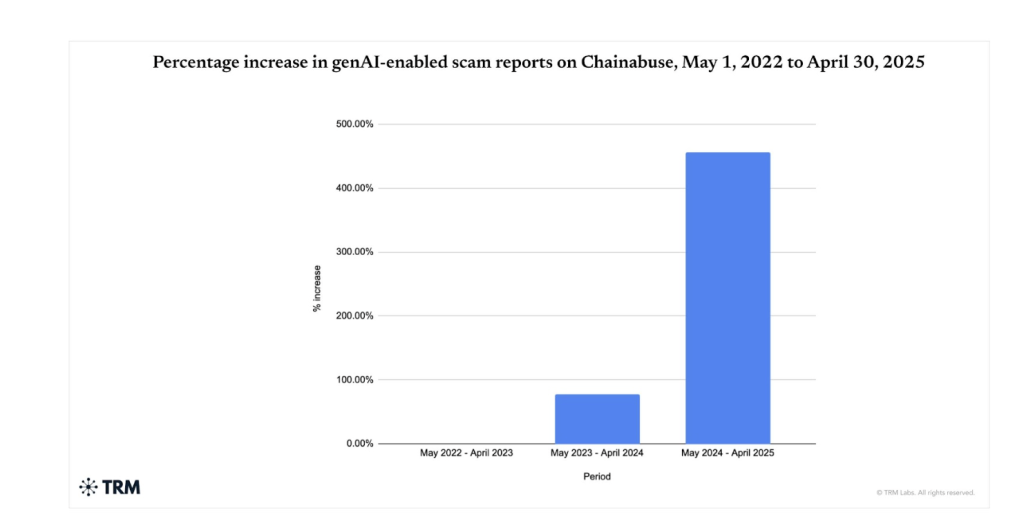

 South Korea's Supreme Court rules Bitcoin on exchanges can be legally seized under Criminal Procedure Act, establishing precedent as regulators expand asset freeze powers and AML enforcement.
 ANNOUNCING



 UK appoints digital lead to coordinate financial market tokenization, signaling institutional interest in blockchain-based infrastructure.
 BNB (@cz_binance)
  The SEC has given a key green light to the Depository Trust and Clearing Corporation’s (DTCC) push into blockchain-based markets.

 SEC seeks 10-year officer ban for Caroline Ellison and eight-year prohibitions for Gary Wang and Nishad Singh following FTX fraud cooperation and permanent injunctions.
 OneCoin’s legal chief pleaded guilty to money laundering and wire fraud charges, according to a statement released today from the U.S. Attorney’s Office for the Southern District of New York.
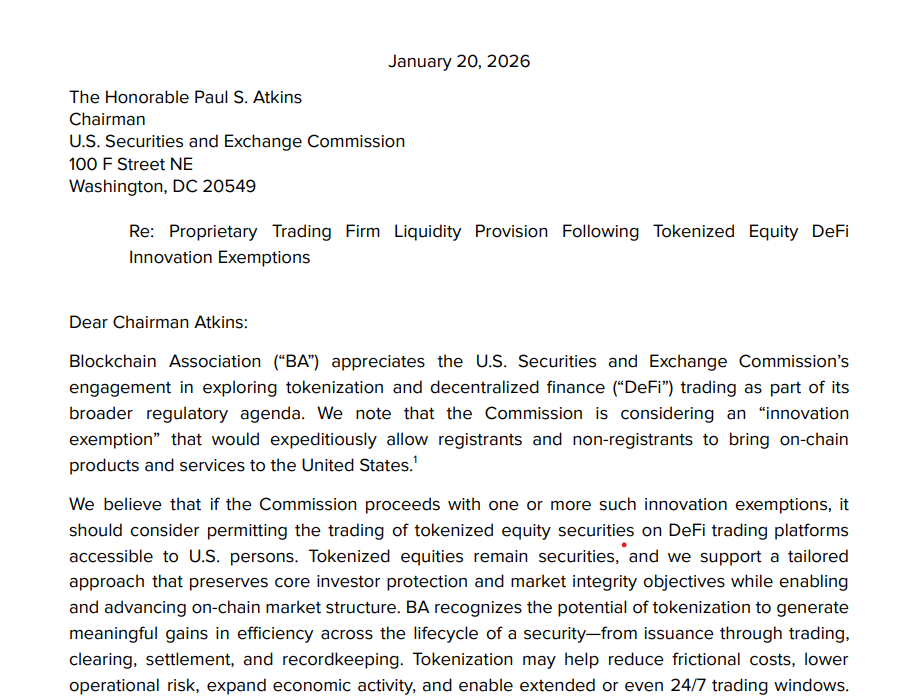
 The
The  Coinbase says crypto market structure bill more complex than stablecoin framework but global competition will force congressional action this year.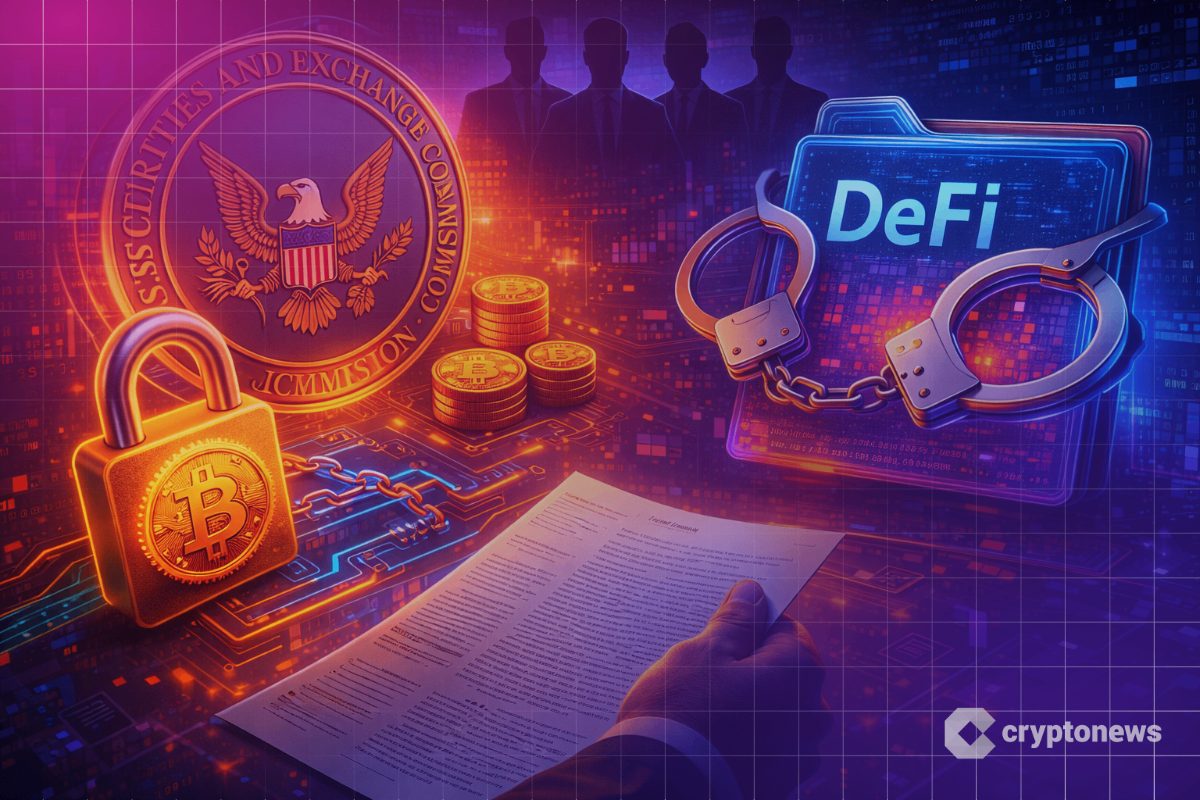


 (@suji_yan)
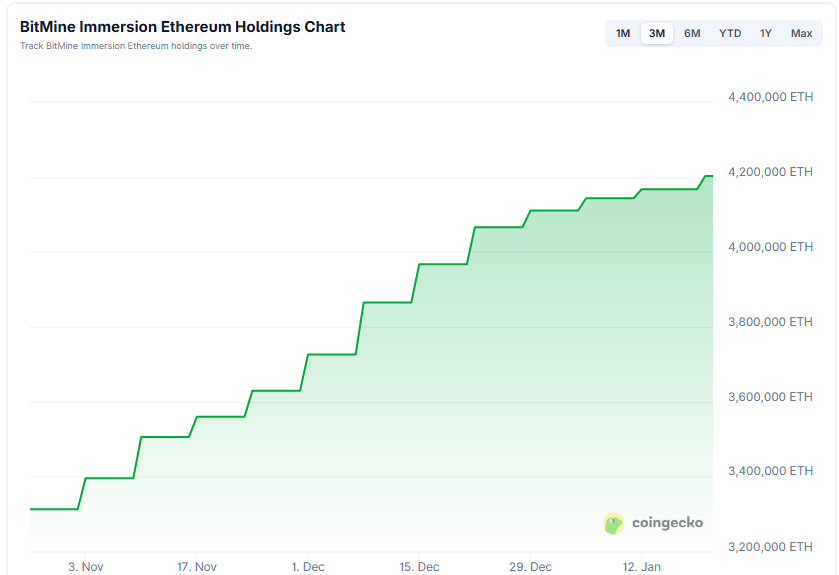
 Tom Lee

 The Senate finally confirms
  Michael Selig becomes CFTC chairman as Caroline Pham exits agency after implementing major crypto regulatory reforms including spot trading approval and prediction market relief.