❌

Reading view

There are new articles available, click to refresh the page.

Chainlink (LINK) Stuck In A Box: What The Current Price Channel Means For Traders

Chainlink’s native token, LINK, continues to trade within a clearly defined price channel, reflecting a period of consolidation as the broader crypto market is yet to establish a clear market direction. Meanwhile, renowned analyst Ali Martinez provides some key insights on the LINK market, highlighting the potential price targets for the next breakout.

Chainlink In Compression Phase Between $12-$15 β€” What Next?Β 

In a recent X post, Martinez shares an analysis of the LINK 12-hour chart, which shows the altcoin has been range-bound between key support at $11.89 and resistance near $14.64, a structure that has remained intact over multiple trading sessions stretching back to 2025. This price behavior implies that neither bulls nor bears have been able to assert sustained control as each attempt to push higher has been capped near the upper boundary of the channel, while pullbacks have consistently found buyers around the $11.89 support zone.Β 

Chainlink

From a technical standpoint, the channel highlights a phase of consolidation following earlier volatility. Therefore, this structure may be laying the groundwork for a more decisive move once the price escapes the current boundaries.Β 

The $14.64 resistance level remains the key hurdle for bullish continuation. A confirmed breakout above this zone, ideally supported by rising volume, could reignite upside momentum with potential targets set at $17.00. On the downside, a loss of the $11.89 support could change the technical outlook, exposing LINK to deeper retracements, with potential around $10.00. For now, however, this support has held firm, reinforcing the validity of the channel and keeping bearish momentum in check.

LINK Market Overview

At press time, LINK trades at $12.21, reflecting a major loss of 10.95% in the last seven days amid a general market downturn. However, the monthly loss of just 1.09% indicates that downside momentum remains relatively contained, suggesting that recent selling pressure may be corrective rather than structural and that many new market entrants could soon return to profit if prices stabilize.

In other news, Chainlink has completed the acquisition of Atlas, the order flow auction protocol developed by FastLane. According to the blockchain team, this move strengthens Chainlink’s value capture stack by expanding the reach of Chainlink SVR into the new DeFi ecosystem, thereby helping improve MEV recapture.Β  With a market cap of $8.65 billion, Chainlink is ranked as the 13th largest digital asset in the world.

Chainlink

Bitcoin Supply Overhang Likely To Cap Rallies Above $98,400, Glassnode Says

On-chain analytics firm Glassnode has pointed out in a new report how Bitcoin is facing supply overhang beyond the $98,000 region.

Bitcoin Could Find Resistance Beyond $98,000

In its latest weekly report, Glassnode has discussed about how the recent Bitcoin rally stalled near the Realized Price of the short-term holders (STHs). The β€œRealized Price” is an on-chain metric that tracks the cost basis of the average investor or address on the BTC network.

The STH Realized specifically measures the average acquisition level of traders who purchased within the past 155 days. As the below chart shows, this indicator is located at $98,400 right now.

Bitcoin STH Realized Price

This level is around where the recent recovery run hit an obstacle, potentially due to selling from underwater recent buyers who used the rally to exit near their break-even mark.

Glassnode explained:

The recent rejection near the Short-Term Holder cost basis at ~$98.4k mirrors the market structure observed in Q1 2022, where repeated failures to reclaim recent buyers’ cost basis prolonged consolidation.

The STH Realized Price provides a look at the average break-even level of a broad section of the market. For a more granular look, another indicator called the UTXO Realized Price Distribution (URPD) exists.

Bitcoin URPD

From the chart of the Bitcoin URPD, it’s visible that a notable amount of the STH supply has a cost basis between the current level and $98,000 (colored in blue). This supply represents the tokens that were redistributed by top buyers into newer market participants during the price rally.

Not all top buyers sold, however, as it’s apparent in the graph that at levels around and above $100,000, the long-term holder (LTH) supply is becoming a notable force (shaded in red).

Coins count under the LTH cohort once they mature past the 155-day age bracket. The fact that LTH supply is building up at these levels suggests some bull market entrants are willing to hold.

The analytics firm noted:

This unresolved supply overhang remains a persistent source of sell pressure, likely to cap attempts above the $98.4k STH cost basis and the $100k level. A clean breakout would therefore require a meaningful and sustained acceleration in demand momentum.

It now remains to be seen how Bitcoin’s upcoming price action would look, particularly in the context that major supply clusters are still sitting underwater.

BTC Price

Bitcoin has been following a downward trajectory since its rejection from the STH Realized Price as its value is now trading around $89,100.

Bitcoin Price Chart

Calculating the Capacitance and ESR Specifications for the Output Capacitor in Your Switching-Mode Power Supply

[Dr Ali Shirsavar] drawing schematics and equations on the whiteboard

[Dr Ali Shirsavar] from Biricha Digital runs us through How to Select the Perfect Output Capacitor for Your Power Supply. Your switching-mode power supply (SMPS) will require an output capacitor both to iron out voltage swings due to loading and to attenuate ripple caused by switching. In this video we learn how to calculate the required capacitance, and when necessary the ESR, for your output capacitor.

To begin [Dr Ali] shows us that in order to calculate the minimum capacitance to mitigate voltage swings we need values for Ξ”i, Ξ”v, and Ts. Using these we can calculate the minimum output capacitance. We then need to calculate another minimum capacitance for our circuit given that we need to attenuate ripple. To calculate this second minimum we need to change our approach depending on the type of capacitor we are using, such as ceramic, or electrolytic, or something else.

When our circuit calls for an electrolytic capacitor the equivalent series resistance (ESR) becomes relevant and we need to take it into account. The ESR is so predominant that in our calculations for the minimum capacitance to mitigate ripple we can ignore the capacitance and use the ESR only as it is the feature which dominates. [Dr Ali] goes into detail for both examples using ceramic capacitors and electrolytic capacitors. Armed with the minimum capacitance (in Farads) and maximum ESR (in Ohms) you can then go shopping to find a capacitor which meets the requirements.

If you’re interested in capacitors and capacitance you might enjoy reading about Measuring Capacitance Against Voltage and Getting A Handle On ESR With A Couple Of DIY Meters.

How Accurate is a 125 Year Old Resistance Standard?

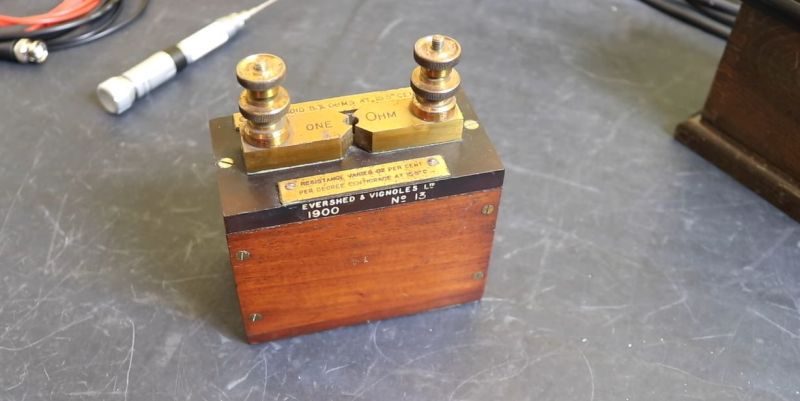
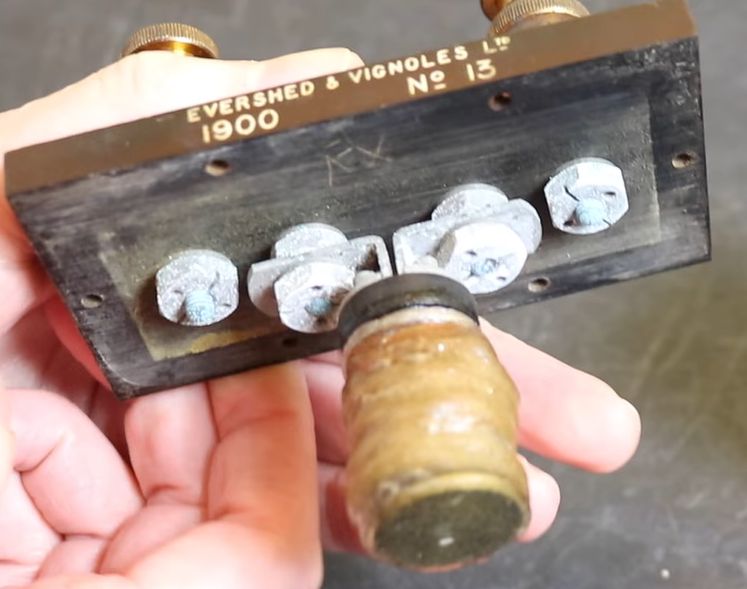
Internals of the 1900 Evershed & Vignoles Ltd 1 ohm resistance standard. (Credit: Three-phase, YouTube)

Resistance standards are incredibly useful, but like so many precision references they require regular calibration, maintenance and certification to ensure that they stay within their datasheet tolerances. This raises the question of how well a resistance standard from the year 1900 performs after 125 years, without the benefits of modern modern engineering and standards. Cue the [Three-phase] YouTube channel testing a genuine Evershed & Vignoles Ltd one ohm resistance standard from 1900.

With mahogany construction and brass contacts it sure looks stylish, though the unit was missing the shorting pin that goes in between the two sides. This was a common feature of e.g. resistance decade boxes of the era, where you inserted pins to connect resistors until you hit the desired total. Inside the one ohm standard is a platinoid resistor, which is an alloy of copper, nickel, tungsten, and zinc. Based on the broad arrow mark on the bottom this unit was apparently owned by the UK’s Ordnance Board, which was part of what was then called the War Office.

After a quick gander at the internals, the standard was hooked up to a Keithley DMM7510 digital bench meter. The resistance standard’s β€˜datasheet’ is listed on top of the unit on the brass plaques, including the effect of temperature on its accuracy. Adjusting for this, the measured ~1.016 Ξ© was within 1.6% tolerance, with as sidenote that this was with the unit not having been cleaned or otherwise having had maintenance performed on it since it was last used in service. Definitely not a bad feat.

This may be the grossest eye pic everβ€”but the cause is what’s truly horrifying

By: Beth Mole

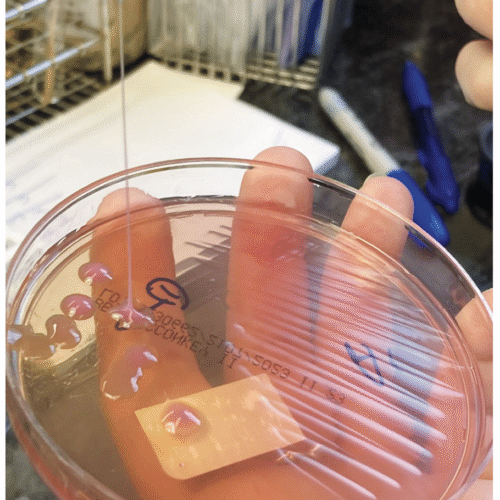
A generally healthy 63-year-old man in the New England area went to the hospital with a fever, cough, and vision problems in his right eye. His doctors eventually determined that a dreaded hypervirulent bacteriaβ€”which is rising globallyβ€”was ravaging several of his organs, including his brain.

According to the man, the problems started three weeks before his hospital visit, when he said he ate some bad meat and started vomiting and having diarrhea. Those symptoms faded after about two weeks, but then new problems beganβ€”he started coughing and having chills and a fever. His cough only worsened from there.

At the hospital, doctors took X-rays and computed tomography (CT) scans of his chest and abdomen. The images revealed over 15 nodules and masses in his lungs. But that's not all they found. The imaging also revealed a mass in his liver that was 8.6 cm in diameter (about 3.4 inches). Lab work pointed toward an infection, so doctors admitted him to the hospital and provided oxygen to help with his breathing, as well as antibiotics. But his chills and cough continued.

Read full article

Comments

Β© NEJM 2026

This may be the grossest eye pic everβ€”but the cause is what’s truly horrifying

By: Beth Mole

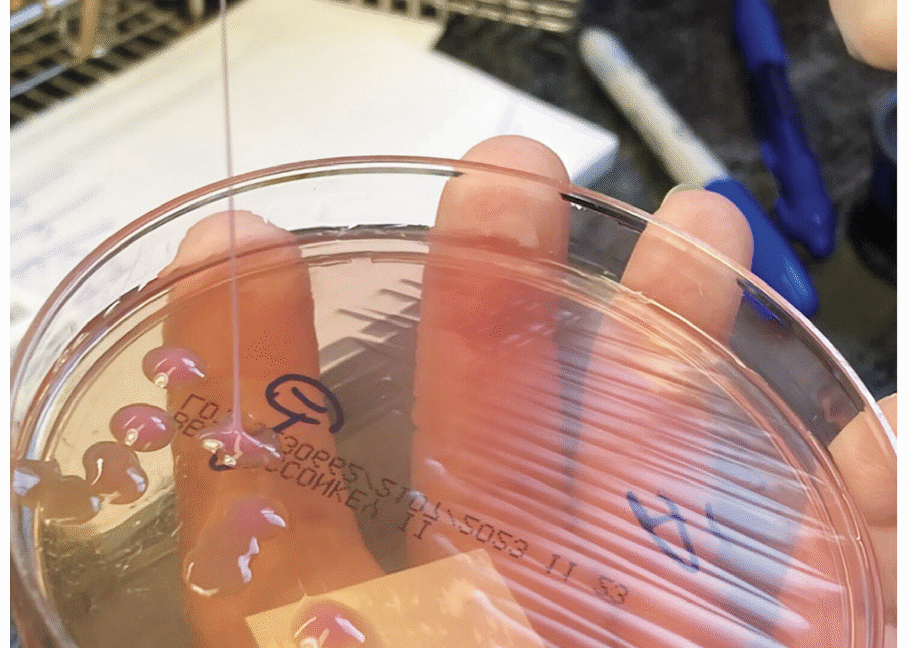
A generally healthy 63-year-old man in the New England area went to the hospital with a fever, cough, and vision problems in his right eye. What his doctors eventually figured out was that a dreaded hypervirulent bacteriaβ€”which is rising globallyβ€”was ravaging several of his organs, including his brain.

According to the man, the problems had started three weeks before his hospital visit, when he said he ate some bad meat and started having vomiting and diarrhea. Those symptoms faded after about two weeks, but then new problems began; he started coughing and having chills and a fever. His cough only worsened from there.

At the hospital, doctors took X-rays and computed tomography (CT) scans of his chest and abdomen. The images revealed over 15 nodules and masses in his lungs. But, that's not all they found. The imaging also revealed a mass in his liver that was 8.6 cm in diameter (about 3.4 inches). Lab work pointed toward an infection. So, doctors admitted him to the hospital and provided oxygen to help with his breathing, as well as antibiotics. But his chills and cough continued.

Read full article

Comments

Β© NEJM 2026

❌