Reading view

There are new articles available, click to refresh the page.

Rocketdyne redux: Seattle area’s oldest rocket factory to get new ownership under old name

Rocket engines at Aerojet Rocketdyne in Redmond
Matt Dawson, an engineer at Aerojet Rocketdyne’s facility in Redmond, Wash., processes a set of MR-80 rocket engines for NASA’s Perseverance rover mission in advance of its launch in 2020. (Aerojet Rocketdyne / L3Harris File Photo)

A decades-old rocket factory in Redmond, Wash., is due to be rebranded with a time-honored name: Rocketdyne.

If all goes according to plan, the facility will become part of a joint venture created under the terms of an $845 million deal involving L3Harris Technologies and AE Industrial Partners.

L3Harris took control of the Redmond facility in 2023 when it acquired Aerojet Rocketdyne for $4.7 billion. Now L3Harris plans to sell a majority stake in its Space Propulsion and Power Systems business to AE Industrial, while retaining 40% ownership of the newly created Rocketdyne venture. The transaction is expected to close in the second half of 2026, subject to regulatory approvals and other conditions.

L3Harris will retain full ownership of the business line focusing on RS-25 rocket engines. Those engines, derived from space shuttle technology and used on NASA’s Space Launch System, are primarily manufactured in California.

For decades, the Redmond facility has built propulsion systems for space vehicles ranging from NASA’s space shuttles to Mars rovers to the Artemis moon program. Redmond-built thrusters are due to be used on NASA’s Orion spacecraft for the upcoming Artemis 2 mission, which will send four astronauts on a 10-day trip around the moon and back.

The facility traces its lineage back to Rocket Research Co., which was founded by former Boeing engineers in 1960 in Seattle. Rocket Research relocated to the 80-acre Redmond campus in 1968 and has gone through a string of name changes and acquisitions since then.

According to a 2022 presentation for the Redmond Historical Society by Jack DeBoer, a program manager at the site, the Redmond facility has been managed through the years by Rockor, Olin Aerospace, Primex Technologies, General Dynamics, Aerojet, GenCorp and Aerojet Rocketdyne.

Because of its heritage, the Redmond site could be regarded as the Seattle area’s oldest continuously operated facility exclusively dedicated to rocket production — as opposed to Boeing, which has played a leading role in aviation as well as space technology.

Today, more than 400 employees work at the Redmond campus. The sign at the entrance currently reads simply “L3Harris.”

The Rocketdyne name has its own tangled history: It was founded in California in 1955 as a division of North American Aviation and built the F-1 engines that were used on Saturn V rockets during the Apollo era.

It became part of Rockwell International in 1967 and was acquired in turn by Boeing in 1996 and by United Technologies in 2005. In 2013, Rocketdyne was sold to GenCorp, which merged it with Aerojet to form Aerojet Rocketdyne.

Amazon supersizes its Walmart rivalry with new big-box retail concept

A rendering of the future Amazon superstore outside of Chicago, from an Orland Park, Ill., planning document.

Amazon has spent two decades trying to disrupt Walmart’s dominance. Now, it appears the e-commerce giant is taking those efforts to a whole new scale.

A new proposal for a massive, 229,000-square-foot Amazon facility in suburban Chicago looks and feels a lot like a classic Walmart superstore but with distinctive Amazon elements, including the ability to order items via app or kiosk for fulfillment from the back of the store.

The company describes the plans as part of its culture of experimentation — calling it “a new concept that we think customers will be excited about.” Amazon says the store will offer fresh groceries, household essentials, and general merchandise, making it convenient for customers to shop a broad selection of items in one trip.

“This could just be another experiment, but as experiments go, it reveals a degree of Walmart jealousy that we didn’t expect,” wrote analysts Mike Levin and Josh Lowitz of Consumer Intelligence Research Partners (CIRP), in a report to subscribers this morning.

CIRP notes that while Amazon dominates e-commerce, online shopping accounts for less than 20% of U.S. retail spending, leaving the vast majority of consumer dollars on the table. 

Amazon has tried a variety of physical retail formats over the years, with mixed results, in addition to its acquisition of Whole Foods for $13.7 billion in 2017. Whole Foods CEO Jason Buechel was named a year ago to oversee Amazon’s Worldwide Grocery Stores business, including its Amazon Fresh stores.

The company says it already serves more than 150 million grocery shoppers in the U.S., generating over $100 billion in grocery sales in 2024.

But with data showing that 93% of Amazon customers still shop at Walmart, CIRP suggests this new superstore concept is Amazon’s admission that capturing the remaining addressable market requires building a physical moat that rivals the scale and utility of its biggest competitor.

While the footprint screams “traditional big box,” the plans signal that Amazon is attempting to put its own spin on the superstore format.

Filings with the Village of Orland Park indicate that a large portion of the building’s floor plan is designated for “back of house” operations that support in-store and pickup orders. Part of the idea is to solve a headache that plagues modern grocery stores: the clash between in-store shoppers and gig-economy workers.

During an Orland Park planning commission hearing, an Amazon rep described a tech-enabled experience where the digital and physical worlds merge for general merchandise.

A customer might find a sweater on the rack in blue, but want it in red. Instead of searching through piles of inventory, they could use a dedicated app or in-store kiosk to request the item from the back room, picking it up at the front counter when they are finished shopping.

This is similar to an Amazon experiment at its Whole Foods locations — building a “store within a store” to bridge the gap between niche organic offerings and mass-market items.

Amazon last fall unveiled an automated micro-fulfillment center attached to a Whole Foods in Plymouth Meeting, Pa. The concept allows shoppers to browse organic produce in the aisles while simultaneously ordering non-Whole Foods items — like Tide Pods, Pepsi, or Doritos — via an app. Robots in the back pick the items, and the full order is ready for the customer on site.

The Orland Park superstore appears to be an industrial-sized evolution of that experiment.

“We like to explain it as: ‘It’s the best that Amazon has to offer under Whole Foods, Fresh and their online offerings,’ ” said Katie Jahnke Dale, a lawyer representing Amazon at the hearing.

The site plan includes dedicated queuing areas for delivery drivers and separate pickup lanes for customers, streamlining the flow of goods without disrupting the in-store experience.

The planning commission voted 6-1 to recommend approval of the project. The proposal now heads to the Orland Park Village Board of Trustees for a final vote, which is scheduled for Jan. 19. If approved, village officials estimate the store could open in late 2027.

Seattle-area tech company sues New York acquisition advisor, alleging botched $5.2M deal

A Kirkland, Wash.-based tech company is suing its New York-based acquisition advisor, alleging it was pushed into a $5.2 million acquisition that was supposed to generate $1 million annually but has instead required ongoing cash infusions just to stay afloat.

The lawsuit, filed on behalf of SmarTek21, a longtime technology consulting services firm, accuses TGP GP Management of “egregiously defective due diligence” in its May 2025 acquisition of IT Avalon, another U.S.-based tech consulting company.

According to the complaint, Tortuga Growth Partners, a New York-based private equity firm, acquired a minority stake in SmarTek21 in 2024. Its affiliate, TGP GP Management, a management and acquisition advisory firm, entered into an agreement to advise SmarTek21 on acquisitions and related matters.

TGP responded in a statement: “TGP strongly disputes the allegations in this complaint and stands by the comprehensive due diligence process conducted for the IT Avalon acquisition.”

The lawsuit was filed Dec. 18 in King County Superior Court in Seattle by Totem Lake Investments II, the majority owner of SmarTek21. Totem Lake Investments is led by SmarTek21 CEO Alkarim Lalji. The suit seeks at least $6 million in damages, plus punitive damages and other relief.

According to the complaint, TGP almost immediately began pressuring SmarTek21 to acquire IT Avalon, as a complementary business that would augment SmarTek21’s existing model and diversify its customer base. The suit says TGP represented that IT Avalon would generate at least $1 million annually in free cash flow, before other benefits from the combination.

The complaint alleges that TGP’s principal Ashray Prasad dismissed concerns raised by SmarTek21 executives about IT Avalon’s deteriorating finances in the days before closing. According to the suit, Prasad repeatedly called Lalji urging him to close the deal — placing many of these calls while Lalji was undergoing treatment for a serious medical condition.

The lawsuit alleges TGP pursued the IT Avalon acquisition out of “enthusiasm for transaction fees, publicity, and the appearance of quick deal-making.”

According to the suit, IT Avalon’s revenue had been declining since 2022, and its operating income had dropped significantly, while its vendor relationships deteriorated.

TGP structured the deal so that any working capital shortfall would be offset against future earnout payments to IT Avalon’s sellers. But that proved worthless, the suit alleges, because IT Avalon had almost no chance of hitting the revenue targets that would trigger those payments.

In its statement, TGP disputed these claims.

“IT Avalon is a strong technology business with valuable client relationships,” it said. “The combined entity now benefits from an expanded client base, talented personnel, and a robust pipeline of opportunities. We intend to vigorously defend against these baseless claims.”

The dispute illustrates the complicated nature of private equity-led technology roll-up strategies, in which smaller companies are combined to create larger platforms.

The acquisition of IT Avalon in May was the second in six months for SmarTek21, following its earlier combination with Retro Rabbit, a South Africa-based product design firm, according to a press release by Tortuga Growth Partners announcing the IT Avalon deal at the time.

“We are building a category-defining platform,” said TGP’s Prasad, who is also a member of SmarTek21’s board of managers, in the press release. He added that the completion of the second acquisition over that time frame reflected “the momentum behind SmarTek21’s growth.”

According to the company’s public materials, SmarTek21 provides product engineering and enterprise software services to Fortune 250 clients in industries including financial services, healthcare, and telecom. It says it has more than 650 associates across the U.S., India, and South Africa.

IT Avalon, founded in 2012, provides technology consulting services to clients in financial services, healthcare, gaming, and hospitality. The May press release announcing the deal described the company as having a 95% client retention rate.

Lalji and SmarTek21 did not respond to requests for comment. See the full complaint below.

SmarTek21 v. TGP Management by GeekWire

Landline phones in 2025? How this tech industry veteran is helping kids connect

Tin Can co-founder and CEO Chet Kittleson. (Tin Can Photo)

If you’re looking for an uncommon thinker, how about a tech industry veteran developing and selling landline phones in 2025 — and selling out of them in the process?

Chet Kittleson is the co-founder and CEO of Tin Can, a Seattle startup making Wi-Fi enabled landline phones designed to let kids talk to friends and family with just their voices. No screens, no AI. 

GeekWire recognized Kittleson as one of our Uncommon Thinkers for 2025, a program presented in partnership with Greater Seattle Partners honoring inventors, scientists, and entrepreneurs transforming their industries in unexpected ways.

In this episode, he talks about the moment at school pickup that sparked the idea, why his own kids don’t own devices, what happened when they eliminated screens on family road trips, and the $12 million seed round led by Greylock that will fuel the company’s next chapter.

Listen below, subscribe wherever you listen, and keep reading for takeaways and highlights.

It’s a “connection factory,” not a nostalgia play. Kittleson pushes back on the idea that Tin Can is primarily about retro appeal.

“People always ask us about nostalgia and retro. … I don’t think it’s about that. I think it’s about connection,” he said. “We found a form factor that is familiar, and that’s certainly been beneficial. And people love nostalgia. … But we feel like we’re more of a connection factory than we are bringing back the bell bottoms.”

The landline was kids’ first social network — we just forgot. Kittleson grew up in La Conner, Wash., using the family phone to organize roller hockey games and playdates.

“As a social network, the landline had 100% penetration. Everybody had one,” he said. “I think we all forgot that we were major beneficiaries of that as kids.” When he mentioned this to other parents at school pickup, they all started reciting their childhood best friends’ phone numbers from memory.

Texting isn’t connection — it’s just communication. Kittleson cited a study in which stressed kids were split into three groups: one texted their mom, one called their mom, one saw their mom in person.

The kids who called or saw their mothers released oxytocin and calmed down. The texting group? “There was no chemical effect. It was like nothing happened,” Kittleson said. “It’s not connection. You are communicating, but that’s not the same thing as connecting.”

The new funding brings hardware expertise to the table. The $12 million round was led by Greylock and includes participation from David Shuman, chairman of the board at Oura, the smart ring company.

“We are a bunch of technologists with very little hardware experience,” Kittleson said. Shuman, he said, is contributing an immense amount of knowledge on supply chain, manufacturing, and cash flow.

His mom made him an uncommon thinker. When Kittleson was a kid, he wrote terrible songs. His uncle gently told him he wasn’t a great singer. His mom supported him, no matter what.

“Whatever you want to do, if you work hard enough, if you believe, if you’ve got the guts, you can do it,” she told him. That, Kittleson said, made him “more inclined to be open to the idea that I could be the reason something like the landline comes back.”

Subscribe to GeekWire in Apple Podcasts, Spotify, or wherever you listen.

Audio editing by Curt Milton

Event Recap: Business of Cannabis NY 2025

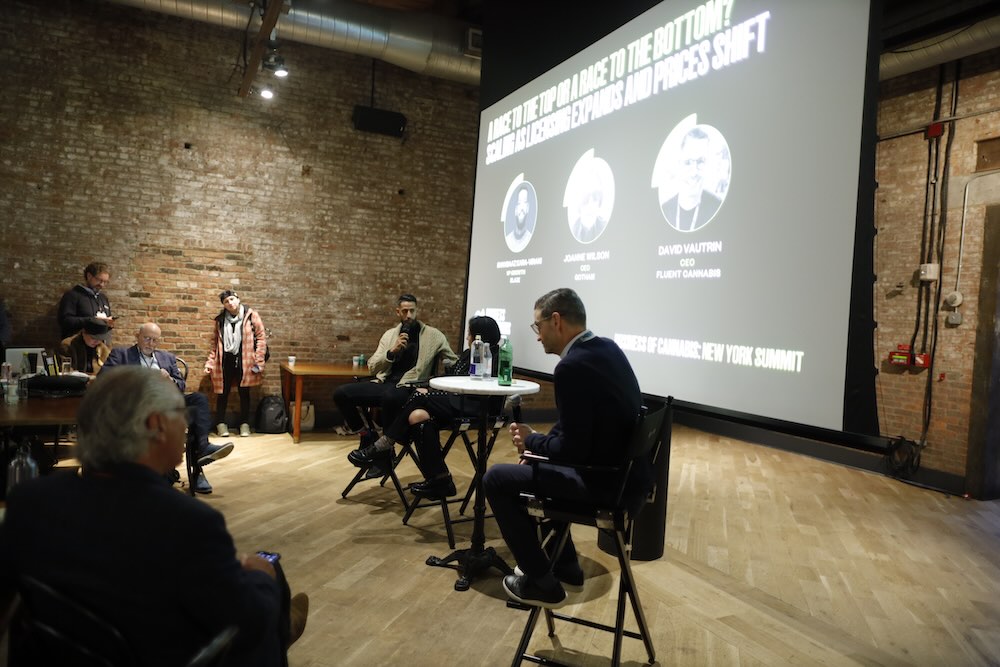
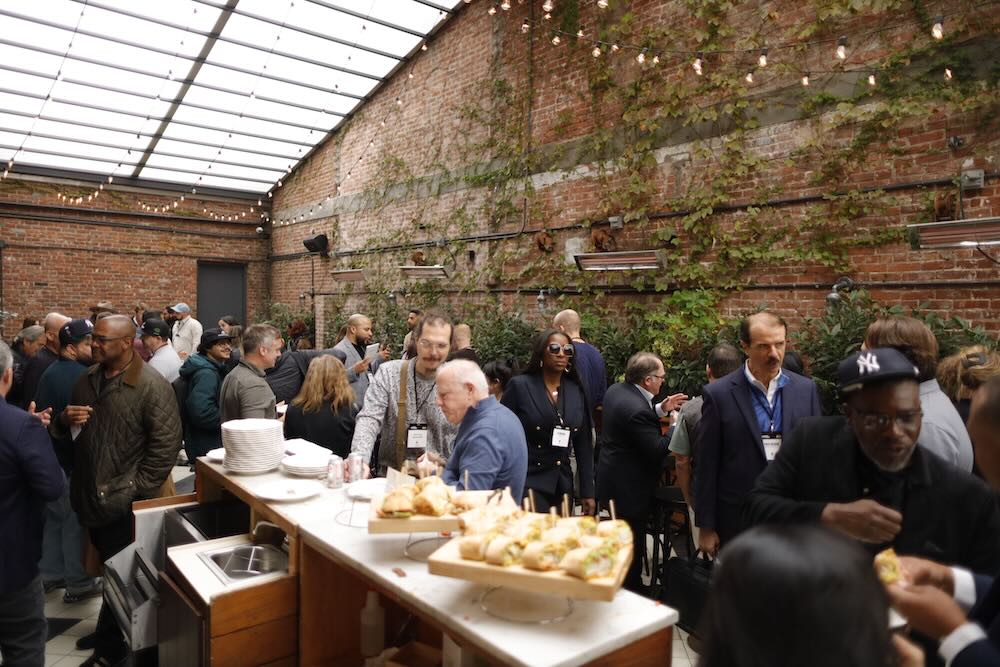
The Business of Cannabis: New York Summit took place earlier this month on November 6 at the Wythe Hotel in Williamsburg, New York. The crowd was composed of dispensary owners, growers, legal experts, marketing professionals, educators and brand leaders. The historic brick-walled space overlooking the East River was filled with conversation, cautious optimism, and shared curiosity about what the next chapter of New York’s legal cannabis market might bring.

The energy in the room was shaped by the industry’s complex moment. New York’s cannabis market has expanded rapidly since legalization, but the state’s industry has also been confronted with major challenges, including delayed licensing and confusion within the Office of Cannabis Management. For many entrepreneurs and advocates who gathered at the summit, the recent election of New York City Mayor Zohran Mamdani was viewed as the biggest variable in what might come next.

The Cannabis-Friendly Mayor

During a candidate debate, Mamdani was asked, “Have you ever purchased anything in a cannabis shop, and what did you buy?”

“I have, I have purchased marijuana at a legal cannabis shop,” Mamdani replied with a chuckle.

Laughter was heard from the audience at the debate, but the comment was received differently within the cannabis industry. Mamdani’s admission was regarded as more than a humorous moment; it was seen as a rare display of candor by an elected official when addressing cannabis. His words were quickly circulated across industry circles and social media feeds, prompting discussions about the type of administration he might lead and how open he might be to engaging with those who have built the city’s legal market from the ground up.

In the days following the election, curiosity was replaced by a mix of excitement and anxiety. Operators, brand founders and policy advocates questioned whether the new mayor might signal a more collaborative approach to regulation and enforcement.

The Mamdani Effect

When Mamdani’s potential impact on the New York market was discussed, CuraLeaf’s executive vice president and regional leader Robert Sciarrone offered his view. “It’s too early to tell in New York, to see what the new mayor is going to do here,” Sciarrone said. “I’m just happy to hear that he visited a shop in New York during the debates.”

Sciarrone’s remarks were met with nods and agreement from attendees. For many, the comment served as a reminder that even small signs of understanding from elected officials carry importance. A mayor who has stepped inside a licensed cannabis store, observed its operations, and spoken with its staff may have developed a deeper appreciation for the work behind compliance and community impact.

Rather than focusing on uncertainty, Sciarrone encouraged the community to take initiative and advocate whenever possible. “Like any regime change, everybody is on a menu for a hot topic for them to bite down on. It’s our responsibility as operators in the state to get out in front of it and have conversations with Mamdani and make sure he understands that we are fighting for our business. All we can do is hope he listens. I can’t predict what’s going to happen, but all I know is we have to talk about it or else…we’re on a menu. We’ve to get out there with urgency and have a good conversation.”

Taking Action

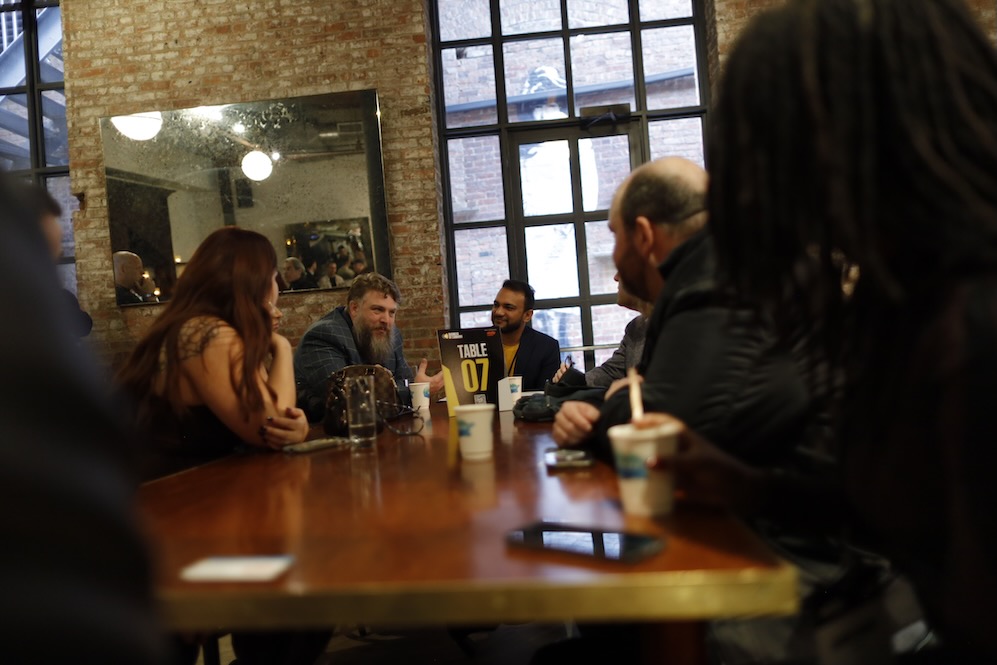
His call to action was echoed throughout the event. In smaller breakout sessions and hallway discussions, strategies were developed. Some participants concentrated on job creation, SKU analysis and tax revenue, while others discussed strategies for engagement with the Office of Cannabis Management. Many operators spoke about the need to humanize their stories so that the mayor and his team could better understand that behind every dispensary counter and cultivation license are individuals building legitimate businesses after years of prohibition. Above all, concern was expressed about the hemp market and the impact of illegal markets on cannabis. The event took place just days ahead of President Trump’s signing of the new federal budget bill, which bans hemp-derived THC and will surely bring additional challenges for those working in the hemp consumables space.

The Wythe’s atmosphere was described as a crossroads between celebration and vigilance. Attendees congratulated one another for surviving the turbulence of recent years but repeatedly returned to a shared theme: the urgent need for city and state cannabis operators in New York to form a cohesive coalition. The absence of such a coalition within the state was described as one of the most harmful issues facing the market today, hindering collaboration and collective political negotiation. A sense prevailed that New York’s cannabis market might either fragment or flourish depending on its engagement with new political leadership.

Collaboration Between Competitors

As the day concluded, sunlight streamed through the tall industrial windows, and attention shifted toward next steps. Contact information was exchanged, working groups were organized, and commitments were made to attend future events such as the upcoming MJBizCon in Las Vegas.

For those in attendance of the Business of Cannabis event, the takeaway was clear: New York’s cannabis industry cannot wait for clarity from above. Messaging must be created that both challenges and educates. The future of the market will depend not only on new regulations, but also on relationships, persistence and the willingness to continue discussions even when outcomes remain uncertain.

The post Event Recap: Business of Cannabis NY 2025 appeared first on Cannabis Now.

Astrix Security emerges from stealth to help organizations spot rogue third-party apps

Astrix Security, an Israeli cybersecurity startup that provides access management for third-party app integrations, has emerged from stealth with $15 million in funding. The startup was co-founded in 2021 by CEO Alon Jackson and CTO Idan Gour, both former members of Israel’s famed intelligence division Unit 8200, to help organizations monitor and control the complex […]

Recorded Future launches its new $20M Intelligence Fund for early-stage startups

Threat intelligence company Recorded Future is launching a $20 million fund for early-stage startups developing novel data intelligence tools. The Intelligence Fund will provide seed and Series A funding to startups that already have venture capital funding, Recorded Future says, as well as equip them with resources to help with the development and integration of intelligence […]
❌