❌

Reading view

There are new articles available, click to refresh the page.

Google Play Drops International Crypto Exchange Apps In South Korea

Starting January 28, 2026, Google Play will stop allowing downloads and updates of overseas crypto exchange and wallet apps in South Korea unless those platforms prove they are registered with the country’s Financial Intelligence Unit (FIU).

Registration Proof Must Be Uploaded

According to Google’s new rule, developers listing crypto exchange or custodial wallet apps must upload evidence that their VASP registration has been accepted by the FIU through the developer console. This is not a technical tweak β€” it ties app distribution directly to local regulatory approval.

The result is immediate and practical. For Android users in Korea, apps from major overseas platforms will no longer be available for new installs or for updates through Google Play. Existing installations might keep working for a while, but they will not receive app updates or security fixes via the official store.

Local Crypto Platforms Lead Compliance

Based on reports, 27 domestic platforms have completed FIU registration, including well-known names such as Upbit and Bithumb. That leaves several major international exchanges without the needed paperwork, pushing them outside Google Play’s Korean marketplace.

For many users, this change will be felt quickly. If you rely on an overseas app to manage positions or move funds, the inability to download updates may make routine tasks harder and raise security risks. Web access to exchanges will remain an option, but it’s less convenient and sometimes less secure than using an official app.

Foreign exchanges face several demands to gain FIU acceptance. They often must set up a local legal entity, put in place anti-money-laundering systems, and obtain national information security certifications before their VASP filings are accepted. These steps can be costly and time consuming.

How The Market Might Shift

Some analysts say the move will push more trading volume toward Korea-registered firms. Others warn that it could encourage risky workarounds β€” such as downloading APKs from third-party sites or using VPNs β€” which expose users to fraud and malware. Reports say that upgrades to app-store rules follow earlier enforcement moves and aim to close gaps in oversight.

App availability will be tied to regulatory paperwork. If a platform shows FIU acceptance in Google’s console, its app can stay listed and updated. If not, the app will be removed or blocked from being updated in Korea’s Play Store.

Featured image from Unsplash, chart from TradingView

Russians Offered Ready-made Crypto Exchange Accounts Amid Restrictions

Russians Offered Ready-made Crypto Exchange Accounts Amid Restrictions

Russian crypto traders have been looking to obtain unrestricted accounts for global exchanges as their access to such platforms is limited. Over the past year, the offering of such accounts on the dark web has increased significantly, cybersecurity experts told the Russian press.

Supply of Crypto Exchange Accounts for Russian Users Doubles in a Year of Sanctions

More and more ready-to-use accounts for cryptocurrency exchanges are being sold to Russian residents. While this is not a new phenomenon β€” such accounts are often employed by fraudsters and money launderers β€” the current growth in supply has been attributed to the restrictions imposed by the trading platforms on customers from Russia, as a result of compliance with sanctions over the war in Ukraine.

Russian residents have been buying these accounts despite the dangers, including the risk that whoever created them could maintain access after the sale, the Kommersant reported. But they are inexpensive and offers on darknet markets have doubled since early 2022, Nikolay Chursin from the Positive Technologies information security threat analysis group told the business daily.

According to Peter Mareichev, an analyst at Kaspersky Digital Footprint Intelligence, the number of new ads for ready-made and verified wallets on various exchanges reached 400 in December. Proposals to prepare fake documents for passing know-your-customer procedures also rose, the newspaper revealed in an earlier article last month.

Simple login data, username and password, is typically priced at around $50, Chursin added. And for a fully set up account, including the documents with which it was registered, a buyer would have to pay an average of $300. Dmitry Bogachev from digital threat analysis firm Jet Infosystems explained that the price depends on factors such as the country and date of registration as well as the activity history. Older accounts are more expensive.

Sergey Mendeleev, CEO of defi banking platform Indefibank, pointed out that there are two categories of buyers β€” Russians that have no other choice as they need an account for everyday work and those who use these accounts for criminal purposes. Igor Sergienko, director of development at cybersecurity services provider RTK-Solar, is convinced that demand is largely due to crypto exchanges blocking Russian accounts or withdrawals to Russian bank cards in recent months.

Major crypto service providers, including leading digital asset exchanges, have complied with financial restrictions introduced by the West in response to Russia’s invasion of Ukraine. Last year, the world’s largest crypto trading platform, Binance, indicated that, while restricting sanctioned individuals and entities, it was not banning all Russians.

However, since the end of 2022, a number of Russian users of Binance have complained about having their accounts blocked without explanation, as reported by Forklog. Many experienced problems for weeks, including suspended withdrawals amid prolonged checks, affected customers said. The company told the crypto news outlet that the blocking of users from Eastern Europe and the Commonwealth of Independent States was related to the case with the seized crypto exchange Bitzlato.

Do you think the restrictions will push more Russians towards buying ready-made accounts for cryptocurrency exchanges? Share your thoughts on the subject in the comments section below.

Bitzlato Exchange Busted as US Deals β€˜Blow to Crypto Crime,’ Arrests Owner

Bitzlato Exchange Busted as US Deals β€˜Blow to Crypto Crime,’ Arrests Owner

Cryptocurrency exchange Bitzlato, better known to the Russian-speaking segment of the market, has been taken down as part of an β€œinternational cryptocurrency enforcement action,” the U.S. Justice Department announced. The Russian owner of the platform has been arrested for his role in the alleged transmission of illicit money. Bitzlato claimed it was hacked.

US, France Hit Cryptocurrency Exchange Bitzlato, Russian Co-founder Detained in Miami

U.S. authorities have apprehended Anatoly Legkodymov, a resident of China, on charges that his Hong Kong-registered crypto trading platform, Bitzlato, processed illicit funds worth hundreds of millions of dollars. The Russian, a co-founder and majority owner of the exchange, was arrested by the FBI in Miami on Tuesday, a high-ranking official from the United States Department of Justice (DOJ) revealed.

Speaking during a press conference, Deputy Attorney General Lisa Monaco said that Justice Department agents and prosecutors, working with the U.S. Treasury Department and French law enforcement, have β€œdisrupted Bitzlato, a China-based cryptocurrency exchange, notorious for laundering criminal proceeds from the darknet” and ransomware attacks. She also stated:

Today, the Department of Justice has dealt a significant blow to the crypto crime ecosystem.

Legkodymov is accused of operating the exchange as a β€œhigh-tech financial hub that, in his own words, catered to β€˜known crooks’,” Monaco explained. She went on to allege that Bitzlato was a β€œcrucial financial resource” for Hydra, the largest darknet market, with Russian roots, which was shut down in April, last year, by the German police with the support of U.S. agencies.

According to the DOJ, Hydra buyers funded illicit purchases from crypto accounts hosted at Bitzlato while sellers of drugs, stolen financial information and hacking tools sent criminal proceeds to accounts at the exchange, collectively amounting to $700 million in direct and indirect transfers between 2018 and 2022.

The deputy attorney general also said that the participants in the operation have engaged in a β€œcoordinated campaign of disruption.” This included law enforcement actions in a number of European countries and the seizure of Bitzlato’s servers. By midday Wednesday, Bitzlato’s website was replaced by a notice saying that the service had been seized by French authorities, Reuters reported.

Crypto Exchange Bitzlato Claims It Was Hacked, Halts Withdrawals

Also on Wednesday, the operators of Bitzlato announced on Telegram, that the exchange had suffered a hacking attack. They told users that withdrawals had been suspended indefinitely and asked them to refrain from sending coins to the platform until the issue is resolved.

β€œOur service was hacked, part of the funds was withdrawn from the service,” the exchange said, noting that the attackers were able to steal a small portion of the funds without specifying the amount. It also sought to assure customers in a second message that their assets were not lost, stating:

For all victims, we guarantee a refund.

β€œAs a security measure, we have disabled the service, we ask you not to replenish the wallets of our service until the work is restored,” Bitzlato reiterated, adding that its team was working on the problem. At the time of writing, the platform is still offline.

The hack presumably took place after on Tuesday the exchange announced maintenance scheduled for Thursday, Jan. 19, β€œaimed at improving the operation of the service and its security.” The notice informed users it will halt transactions between 5 and 9 a.m. Moscow time.

β€œWe strongly recommend that you organize your work activities taking into account the amendments in order to avoid unpleasant situations,” the platform advised customers, informing them that it plans to disable deposits, withdrawals and trading.

Bitzlato launched in 2016 under the name Changebot and later became a cryptocurrency exchange offering peer-to-peer (P2P) trading services. It lists pairs of the Russian ruble with BTC, ETH, USDT, and other digital coins which can be bought and sold with a variety of payment methods.

Online crypto exchangers like Bitzlato are popular in Russia and the former Soviet space but as crypto assets are yet to be fully regulated in the region, they are often targeted by authorities across the Commonwealth of Independent States. A report recently revealed that the Belarusian judiciary has imposed a hefty fine on the operator of one such platform.

Do you expect other similar operations against crypto trading platforms in the near future? Share your thoughts on the subject in the comments section below.

Russian Government to Track Crypto Transactions With Help From Anti-Drug Organization

Russian Government to Track Crypto Transactions With Help From Anti-Drug Organization

Russian institutions have responded to a call from Π° public movement for joint efforts to identify cryptocurrency transfers related to drug trade. The anti-drug organization, Stopnarkotik, recently asked the interior ministry and the central bank to investigate alleged connections between U.S.-sanctioned crypto exchange Suex and a darknet market operating in the region.

Russian Authorities Respond to Stopnarkotik’s Request for Action Against Drug Trade

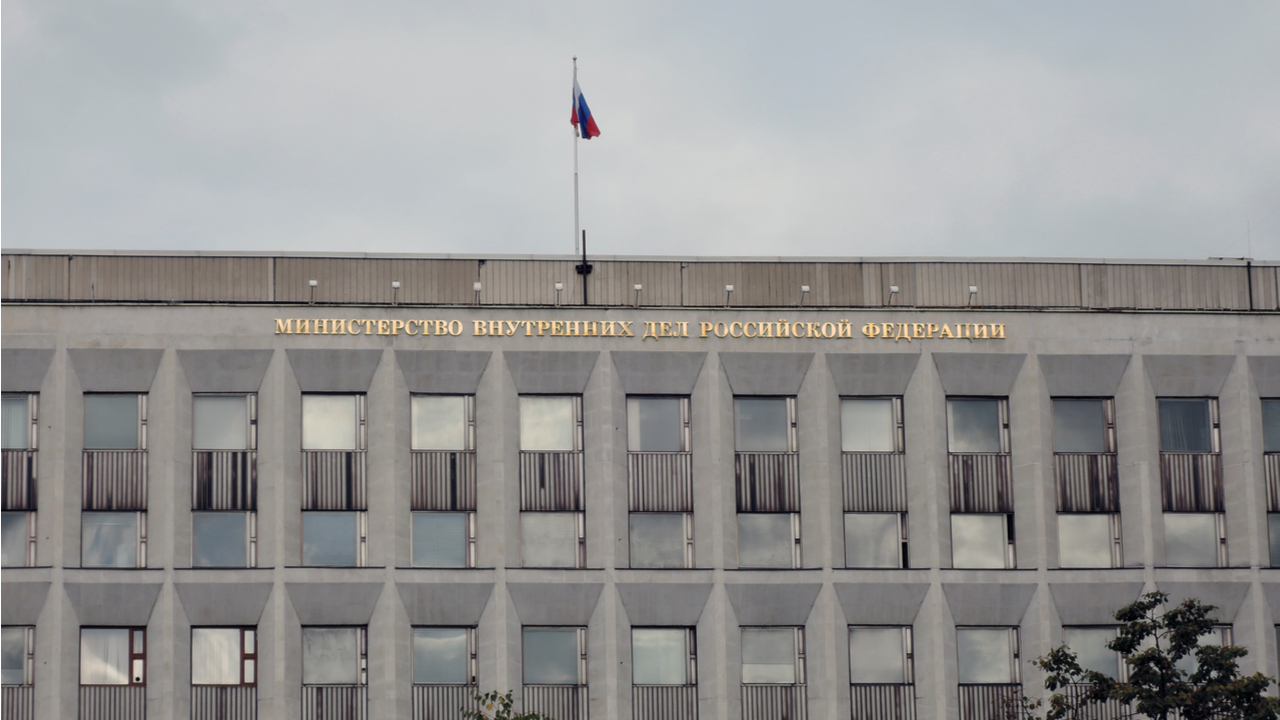
The Ministry of Internal Affairs of the Russian Federation (MVD) and Bank of Russia have agreed to cooperate with the All-Russian Public Movement Stopnarkotik on identifying financial flows involving cryptocurrencies obtained as a result of drug sales. The Russian online news portal Lenta.ru reported on the agreement, quoting a letter from a high-ranking MVD official.

The letter signed by Major General Andrei Yanishevsky, head of the Drug Control Department at the Interior Ministry, has been issued after a working meeting with representatives of the anti-drug organization. It comes in response to Stopnarkotik’s call for the two institutions to carry out an investigation focused on Suex, a Russia-based OTC crypto broker, and its links to other companies and banks.

In September, the U.S. Treasury Department blacklisted the Czech-registered entity Suex OTC s.r.o. which operates out of physical offices in Moscow and Saint Petersburg. The crypto platform is suspected of processing hundreds of millions of dollars in coin transactions related to scams, ransomware attacks, darknet markets, and the infamous Russian BTC-e exchange.

Since launching in 2018, Suex is believed to have received over $481 million in BTC alone. Close to $13 million came from ransomware operators such as Ryuk, Conti, and Maze, over $24 million was sent by crypto scams like Finiko, $20 million came from mixers, and another $20 million from darknet markets such as the Russia-targeting Hydra, blockchain forensics firm Chainalysis detailed in a report.

In its request to the Russian authorities, following the announcement of the U.S. sanctions, Stopnarkotik noted that Suex had been β€œinvolved in money laundering for the largest drug-selling platform.” The organization pointed out that the market’s drug trafficking in the Russian Federation amounts to an estimated $1.5 billion a year or more.

It also mentioned the name of one of Suex’s co-founders and highlighted its alleged connections with other crypto companies and financial institutions such as Exmo, a major digital asset exchange in Eastern Europe, financial services company Qiwi, a leading payment provider in Russia and the CIS countries, as well as the Ukraine-based Concord Bank.

Stopnarkotik asked Bank of Russia to provide its assessment on the matter, check if the operations of Suex and other entities are being conducted in accordance with the law in Russia, and consider blocking Russian payments to a Ukrainian organization.

β€œWe received a response from the Ministry of Internal Affairs and the Central Bank. We also had a personal meeting with the Ministry of Internal Affairs so that they had an understanding of how we receive information, including about money laundering,” the movement’s chairman, Sergei Polozov, has been quoted as saying. He added that the Russian Interior Ministry is ready to accept Stopnarkotik’s data and work together with the organization.

Do you expect the cooperation between Stopnarkotik and Russian government institutions to develop further? Tell us in the comments section below.

❌