
 Login
LoginESP with EEG — No, Not That ESP!
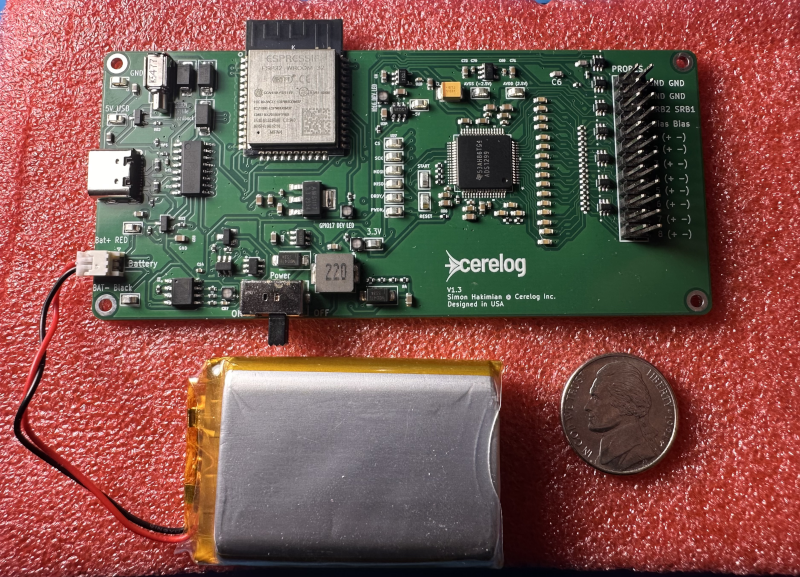
While EEG research might help you figure out extrasensory perception, we won’t be betting on it. However, if you want to read EEG data and use an ESP32, [Cerelog-ESP-EEG] might be the right project for you. The commercial project is an 8-channel biosensing board suitable for EEG, EMG, ECG, and brain-computer interface studies. However, the company says, “We love the hacker community! We explicitly grant permission for Personal & Educational Use.” We love you too.
They do require you to agree not to sell boards you are building, and they give you schematics, but no PC board layout. That’s understandable, although we’d guess that achieving good results will require understanding how to lay out highly sensitive circuits.
What you do get is the schematic and the firmware source. They note that you may have to modify the firmware if you want to switch modes, change gain, or enable haptic feedback, among other things. At the application layer, the device is compatible with Lab Streaming Layer, and there is a fork of OpenBCI (brain control interface) that understands how to talk to the board.
Even if you don’t want to directly clone the device, there’s a ton of information here if you are interested in EEG or any other small signal acquisition. We’ve seen a number of interfaces like this, but we are still waiting to see a killer application.
