Ethereum extended its pullback as sellers held control, with key support and resistance zones in focus. Notably, Ethereum (ETH) has traded lower over the past 24 hours, falling about 2.9% to roughly $2,858.
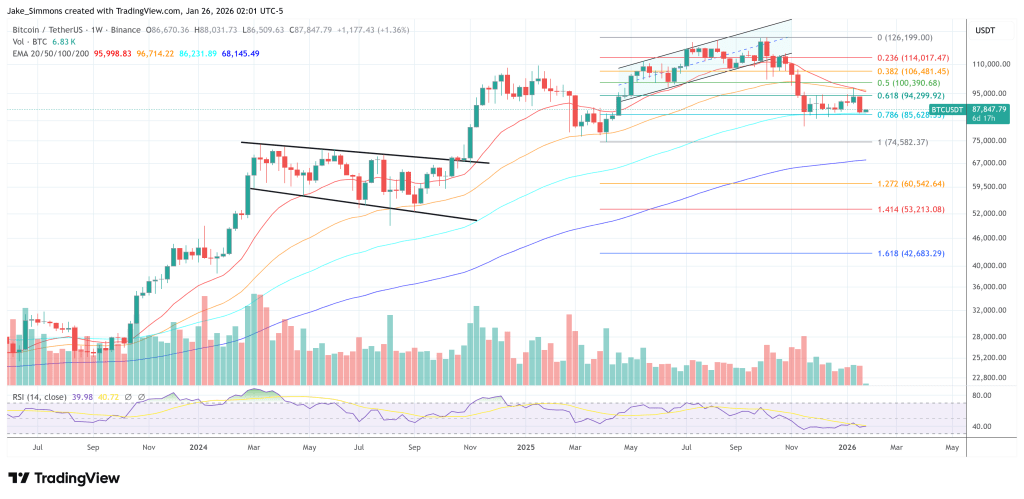
The XRP open interest (OI) has now collapsed to a 14-month low, hitting levels XRP last witnessed when it traded below $1. This comes as the XRP price continues to slide to new lows, having recently collapsed to a new yearly floor of $1.8 amid a broader market collapse that has seen Bitcoin (BTC) drop to $86,000.
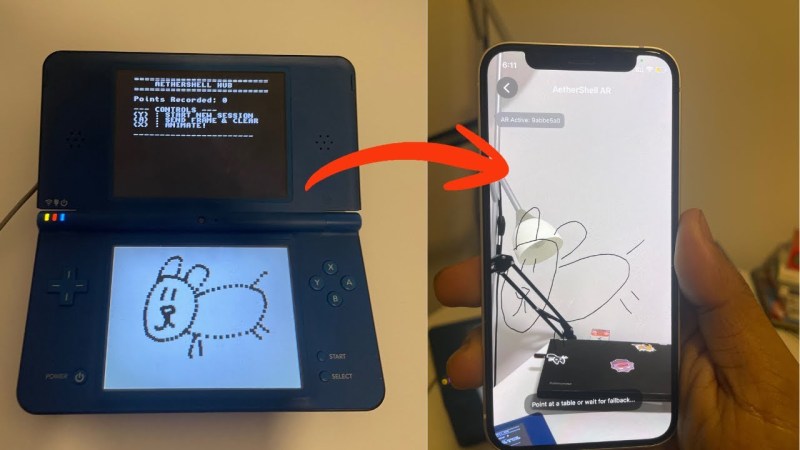
The concept is straightforward enough. The Nintendo DSi runs a small homebrew app which lets you use the stylus to make simple line drawings on the lower touchscreen. These drawings are then trucked out wirelessly as raw touch data via UDP packets, and fed into a Gemini tool which transforms them into animation frames. These are then sent to an iPhone app, which uses ARKit APIs and the phone’s camera to display the animations embedded into the surrounding environment via augmented reality.
One might question the utility of this project, given that the iPhone itself has a touch screen you can draw on, too. It’s a fair question, and one without a real answer, beyond the fact that sometimes it’s really fun to play with an old console and do weird things with it. Plus, there just isn’t enough DSi homebrew out in the world. We love to see more.
Today’s tech-driven world can make emotional connections seem even further away when you never take the time to meet someone. Youth are always looking for a new way to express and be understood, but most tech gadgets are considered cold, functional, and impersonal. Even though there’s a deluge of smart devices, precious little is built to interact […]
ClarityCheck is a digital safety platform and online verification tool that helps people proactively know who to trust in the digital landscape. People are increasingly asked to trust strangers who contact them for deliveries, job offers, dates, and more, often without a lot of information to back up their claims. By verifying who exactly is […]
Avocado toast for breakfast? It might sound strange to some but for others this surprisingly refreshing and filling toast is an absolutely perfect way to start the day. The amount of toppings that you can pair with the avocado is simply limitless. Which means you can have a new style of avocado toast every day of the week without the worry of your taste buds becoming bored.
Super Lemon Haze pairs harmoniously with the bright citrus notes of the sun dried tomatoes and fresh avocado. Its fast hitting and powerful high promotes a balanced feeling between the body and mind. It is a great uplifting sativa-dominant strain that provides excellent pain management and energy for the day with long lasting effects. A perfect match for the sustained energy that the ingredients of the dish imparts as well. Are you ready for a new found love of avocado toast?
Mise en place:
1/2 cup fresh sautéed spinach with 1 clove minced garlic and 1 tablespoon Super Lemon Haze olive oil 1 whole ripe avocado 2 slices focaccia 4 slices of pan fried applewood smoked bacon 4 slices of sundried tomatoes in olive oil or soaked in water then blotted with a paper towel 4 slices of fresh mozzarella 1 teaspoon of pesto
Salt and pepper to taste
Directions:
Step 1: Toast the focaccia bread in the oven or toaster very lightly.
Step 2: Mash the avocado in a small bowl with a fork and then season with salt and pepper to taste.
Step 3: Spread the avocado evenly on the lightly toasted focaccia bread slices. Make sure to spread it out to the edges of the bread.
Step 4: Now spread the Super Lemon Haze sautéed spinach and garlic evenly over both slices of the avocado toast.
Step 5: Roll the mozzarella slices in the pesto sauce until coated. Place two slices of pesto mozzarella evenly over the sautéed spinach on both halves.
Step 6: Now place two sundried tomatoes on top of the pesto mozzarella on each slice.
Step 7: Adorn each halve of toast with two pieces of bacon however you choose. It can be in strips, crumbles, or bits.
Step 8: Lightly toast the bread in an oven on a sheet tray until the mozzarella is gooey and bubbly.
Step 9: Enjoy with a friend, by yourself, or place both toast sides together for the ultimate stoney focaccia sandwich.
Dosage:
If one gram of Super Lemon Haze tests at 20 percent THC, twenty percent of 1,000 mg would be 200mg. Sub the number of your THC percentage and do the math to figure out your dosing for the vegetable oil. Remember, this recipe yields two slices of avocado toast or one large sandwich, so be sure to dose accordingly. When you make your canna-oil be sure to dose it by the tablespoon for an accurate dosage. If you want a smaller dose in this recipe, cut the cannabis down to a smaller portion in either the olive oil or the amount of olive oil you put in the pan. If you want a larger dose, add the amount you desire into the olive oil you make or into the pan.
Strain Suggestions:
I would recommend any strains whose terpenes would compliment the citrusy flavor of the avocado and tomatoes. Strains that possess citrus, lemon, or even lime would pair best. Lemon Skunk, Lemon Drop, Lemon Haze, Red Headed Stranger, Lime OG, or Key Lime Pie. Be creative and have fun with it!
Solana price has continued to fall even as meme-driven activity across the network has sharply picked up. SOL was trading near $122 at press time, down 3.3% over the past 24 hours. Over the week, the price has ranged between…
On-chain investigator ZachXBT says a $40 million-plus theft from US government crypto seizure wallets may trace back to John Daghita, an alleged threat actor who goes by “Lick,” and a contractor relationship tied to Daghita’s family.
The $40 Million+ Govt Crypto Wallet Robbery
In a Jan. 25 post, ZachXBT pointed to Command Services & Support (CMDSS), describing it as a firm with “an active IT government contract in Virginia,” and alleging it was “awarded a contract to assist the USMS in managing/disposing of seized/forfeited crypto assets.” ZachXBT added: “It still remains unclear at this point how John obtained access from his dad.”
In case you are curious how John Daghita (Lick) was able to steal $40M+ from US government seizure addresses.
John’s dad owns CMDSS, which currently has an active IT government contract in Virginia.
The allegation lands against a backdrop of earlier tracing work published Jan. 23, where ZachXBT linked wallet activity and recorded chats to the same persona. “Meet the threat actor John (Lick), who was caught flexing $23M in a wallet address directly tied to $90M+ in suspected thefts from the US Government in 2024 and multiple other unidentified victims from Nov 2025 to Dec 2025,” ZachXBT wrote.
ZachXBT’s thread centers on a dispute in a Telegram group chat between “John” and another threat actor, Dritan Kapplani Jr., in what the community calls “band for band (b4b)”, an on-the-spot contest to prove who controls more funds. ZachXBT said the interaction was “fully recorded,” and claims the footage includes screen-shared wallet balances and contemporaneous transfers that help establish control.
According to the thread, the recording shows John screen-sharing an Exodus wallet displaying a Tron address holding $2.3 million. In a second segment, ZachXBT said “another $6.7M worth of ETH” moved into an Ethereum address while the argument continued.
3/ In part 1 of the recording Dritan mocks John however John screenshares Exodus Wallet which shows the Tron address below with $2.3M:
TMrWCLMS3ibDbKLcnNYhLggohRuLUSoHJg pic.twitter.com/jvcjIVEpaE
ZachXBT framed the key evidentiary point as ownership continuity across addresses: “The recording captures that John clearly controls both addresses. Additional addresses can likely be found in the recordings. I then began tracing backwards to verify the source of funds.”
That tracing, ZachXBT said, connects the cluster to a March 2024 transfer of $24.9 million from a US government address tied to the Bitfinex crypto hack seizure. He also claimed $18.5 million “currently sits” at a cited address.
Beyond that 2024 linkage, ZachXBT asserted the primary address he tracked was tied to “$63M+ inflows from suspected victims and government seizure addresses in Q4 2025,” listing multiple transactions and chains, and separately flagged an additional 4.17K ETH ($12.4 million) flow from MEXC into the same cluster.
The Jan. 25 post attempts to explain a potential access path: if CMDSS was involved in US Marshals Service crypto asset management, the question becomes whether contractor-side systems, credentials, or processes provided an opening, intentionally or otherwise. ZachXBT stressed that the exact mechanism remains unknown.
Shortly after the post, ZachXBT said CMDSS’s X account, website, and LinkedIn “were all just deactivated,” and claimed Daghita “began trolling again on Telegram.”
On X, the claims drew sharp reactions from prominent Bitcoin commentators. Nakamoto Inc. CEO David Bailey wrote: “The son of the CEO of the company hired by the US Marshalls to safeguard the nation’s Bitcoin, stole $40m from it and now appears to be running. Treasury must secure the private keys from the Justice Department ASAP before more is stolen.”
Prominent Bitcoin advocate and co-founder of the Satoshi Nakamoto Institute Pierre Rochard framed the situation in national-security terms, posting, “This is a national security crisis,” and urging Congress to pass the BITCOIN Act.
Account takeover didn’t disappear — it evolved Account takeover (ATO) and credential abuse aren’t new.What’s changed is how attackers do it and why many traditional defenses no longer catch it early. Today’s ATO attacks don’t always start with: Instead, they increasingly rely on: The result: fewer alerts, more successful takeovers. This shift reflects a broader …
Discover how to secure AI orchestration workflows using post-quantum cryptography and AI-driven anomaly detection for Model Context Protocol (MCP) environments.
The Financial Conduct Authority has begun seeking final feedback on a set of proposals aiming to apply traditional finance standards to the UK crypto sector.
California-based Karman Industries "says it has developed a cooling system that uses SpaceX rocket engine technology to rein in the environmental impact of data centers," reports the Los Angeles Times, "chilling them with less space, less power and no water."
Karman has developed a cooling system similar to the heat pumps in the average home, except its pumps use liquid carbon dioxide as refrigerant, which is circulated using rocket engine technology rather than fans. The company's efficient pumps can reduce the space required for data center cooling equipment by 80%.
Over the years, data centers have used fans and air conditioning to blow cold air on the chips. Bigger facilities pass cold liquid through tubes near the chips to absorb the heat. This hot liquid is sent outside to a cooling yard, where sprawling networks of pipes use as much water as a city of 50,000 people to remove the heat. A 50 megawatt data center also uses enough electricity to power a mid-sized city... Cooling systems account for up to 40% of a data center's power consumption and an average midsized data center consumes more than 35,000 gallons of water per day...
U.S. data centers will consume about 8% of all electricity in the country by 2030, according to the International Energy Agency... The cooling systems are projected to use up to 33 billion gallons of water by 2028 per year... To serve this seemingly insatiable market, Karman has developed a rotating compressor that spins at 30,000 revolutions per minute — nearly 10 times faster than traditional compressors — to move heat...
About a third of Karman's 23-person team came from SpaceX or Rocket Lab, and they co-opted technologies from aerospace engineering and electric vehicles to design the mechanics for the high-speed motors. The system uses a special type of carbon dioxide under high pressure to transfer heat from the data center to the outside air. Depending on the conditions, it can do the same amount of cooling using less than half the energy. Karman's heat pump can either reject heat to air, or route it into extra cooling, or even power generation.
The company "recently raised $20 million," according to the article, "and expects to start building its first compressors in Long Beach later this year...."
We know this one is a few years old, but unless you’re deep into the cycling scene, there’s a good chance this is the first time you’ve heard of [Ali Clarkson’s] foray into home made rope spokes.
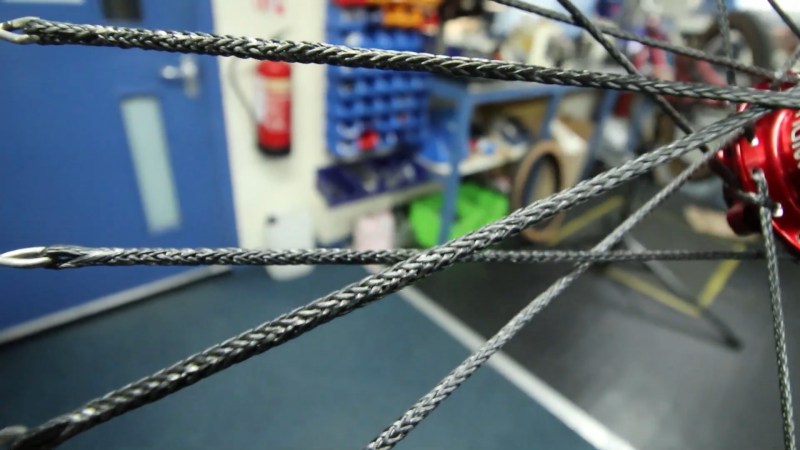
The journey to home-made rope spoke begun all the way back in 2018, shortly after the company Berd introduced their very expensive rope spokes. Berd’s spokes are made of a hollow weaved ultrahigh molecular weight polyethylene (UHMWPE) rope with very low creep. They claim wheels stronger than steel spoke equivalents at a fraction of the weight. Naturally forum users asked themselves, “well why can’t we make our own?” As it turns out, there are a handful of problems with trying this at home.
There are a number of ways to skin this proverbial cat, but they all center around some very special nautical ropes, namely, Robline DM20. This rope has excellent wear and creep characteristics, in a hollow weave much like what Berd developed. The hubs also require the addition of a bevel around the spoke holes to prevent wear. Beyond those two similarities, there are quite a number of ways to lace the spokes between the hub and wheels.
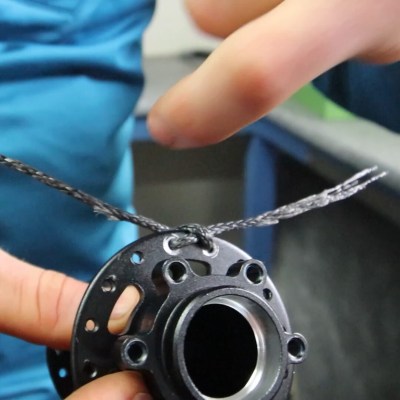
As detailed by [Ali Clarkson], one method involves creating loops out of bike spokes, with a custom jig and some brazing. Then a length of rope is passed through the hub and a special hitch is used to keep it in place. Two loops are made in the ends of this length of rope and passed through the spoke ends made earlier. Finally everything is brought up to tension and trued much like a normal wheelset. The front wheel ended up weighing around 700g, a rather impressive feat for a 24 inch downhill wheel.
However, a number of other methods have been tried on the forum threads. Namely, a number of users have attempted to varying degrees of success putting a length of spoke inside the hollow rope weave and “Chinese finger trapping” it together. The key issue here is sourcing a glue strong enough to hold the spoke piece on at lower tensions, but flexible enough to not crack with the cyclical loading on a rim.
Japan is edging closer to approving spot cryptocurrency exchange-traded funds, with regulators signaling that the first products could be cleared for listing as early as 2028. A report published by Nikkei Asia on Jan. 26 said the Financial Services Agency…

 Login
Login










 As detailed by [Ali Clarkson], one method involves creating loops out of bike spokes, with a custom jig and some brazing. Then a length of rope is passed through the hub and a special hitch is used to keep it in place. Two loops are made in the ends of this length of rope and passed through the spoke ends made earlier. Finally everything is brought up to tension and trued much like a normal wheelset. The front wheel ended up weighing around 700g, a rather impressive feat for a 24 inch downhill wheel.