China has shipped a batch of Type 59 130mm towed artillery systems to a foreign customer, with images confirming the weapons loaded aboard a cargo vessel and prepared for export, according to open-source visuals recorded during offloading operations. Footage circulating on social media shows multiple Type 59 artillery pieces secured on wheeled carriages and covered […]
Pakistan and Saudi Arabia have begun formal discussions to convert a $2 billion Saudi loan into a transaction for JF-17 fighter jets, Reuters reported. The talks center on a broader package valued at $4 billion, including an additional $2 billion allocated for related equipment. Reuters, citing sources familiar with the negotiations, reported that “the total […]
DEEP DIVE — On November 24, 2025, President Trumplaunched a process to designate Muslim Brotherhood chapters in Lebanon, Egypt, and Jordan as Foreign Terrorist Organizations (FTOs) and Specially Designated Global Terrorists (SDGTs).
Citing fresh intelligence that these specific affiliates provided material support to Hamas after the October 7 attacks on Israel, the White House gave Secretary of State Marco Rubio and Treasury Secretary Scott Bessent a tight 30-day deadline to produce a formal report. The goal, administration sources say, is to sever the financial arteries — from charitable fronts to hawala networks — that have kept the Brotherhood’s regional machinery alive.
The decision comes at a moment when the Brotherhood’s once carefully cultivated image as the respectable face of political Islam lies in tatters. Days before Trump’s executive order, Texas Governor Greg Abbott made his statethe first to label both the Muslim Brotherhood and the Council on American-Islamic Relations (CAIR) as terrorist entities, vowing to target what he called “radical extremists.” Florida Governor Ron DeSantis followed the move by Texas with his own similar executive order. With federal momentum now behind him, the designations threatens to cascade across the region—and potentially beyond.
“Hamas was founded as the Egyptian arm of the Muslim Brotherhood and has made this very clear in its Charter of 1987,” Hans-Jakob Schindler, Senior Director of the Counter Extremism Project, tells The Cipher Brief. “The political statement of Hamas of 2017 did not mention this link specifically, but it also did not state that Hamas would be independent. Hence, Hamas remains part of the Muslim Brotherhood network.”
Roots of a Transnational Shadow
To grasp the stakes, the story must begin in Ismailia, Egypt, in 1928, when schoolteacher Hassan al-Banna founded the Ikhwan al-Muslimin as a movement of Islamic revival and social reform. What started with Quranic lessons and charity work exploded into a mass organization of hundreds of thousands by the 1940s, complete with a secret paramilitary wing, the Special Apparatus, that carried out bombings and assassinations against British forces and Jewish targets. Egypt banned the group in 1948; al-Banna was assassinated shortly afterward, almost certainly by state security.
Heavy-handed crackdowns, periods of accommodation, and notable ideological shifts have defined the Brotherhood’s trajectory since then.
Officially, the Brotherhood renounced violence in the 1970s, and it built an unrivaled network of mosques, clinics, schools, and labor unions. The 2011 Arab Spring briefly catapulted it to power: Mohamed Morsi became Egypt’s first elected president in 2012. Fourteen months later, mass protests and a military coup ended the experiment. Egypt declared the Brotherhood a terrorist organization in 2013, killed more than 1,000 supporters in a single day at Rabaa Square, and imprisoned tens of thousands more. Exiled, splintered, and radicalized,remnants went underground or looked to Gaza.
Fernando Caravajal, executive director at The American Center for South Yemen Studies and an expert in Sudanese affairs, tells The Cipher Brief that the Brotherhood’s ideological flexibility allows it to reemerge in power vacuums, but cautions that the potential United States terrorist designation likely stems from outside interests.
“Notice the timing: these statements came a week after the meeting with Saudi,” he said. “It wasn’t announced during the meeting, so we can’t say Saudis are openly pushing it, but they clearly have a hand behind it because of the timing, because of the content. It mentions Jordan and Lebanon — those are Saudi priorities.”
Riyadh’s priorities center on containing Islamist movements and curbing Iranian influence in the Levant, making Jordan and Lebanon key arenas for Riyadh’s regional security strategy.
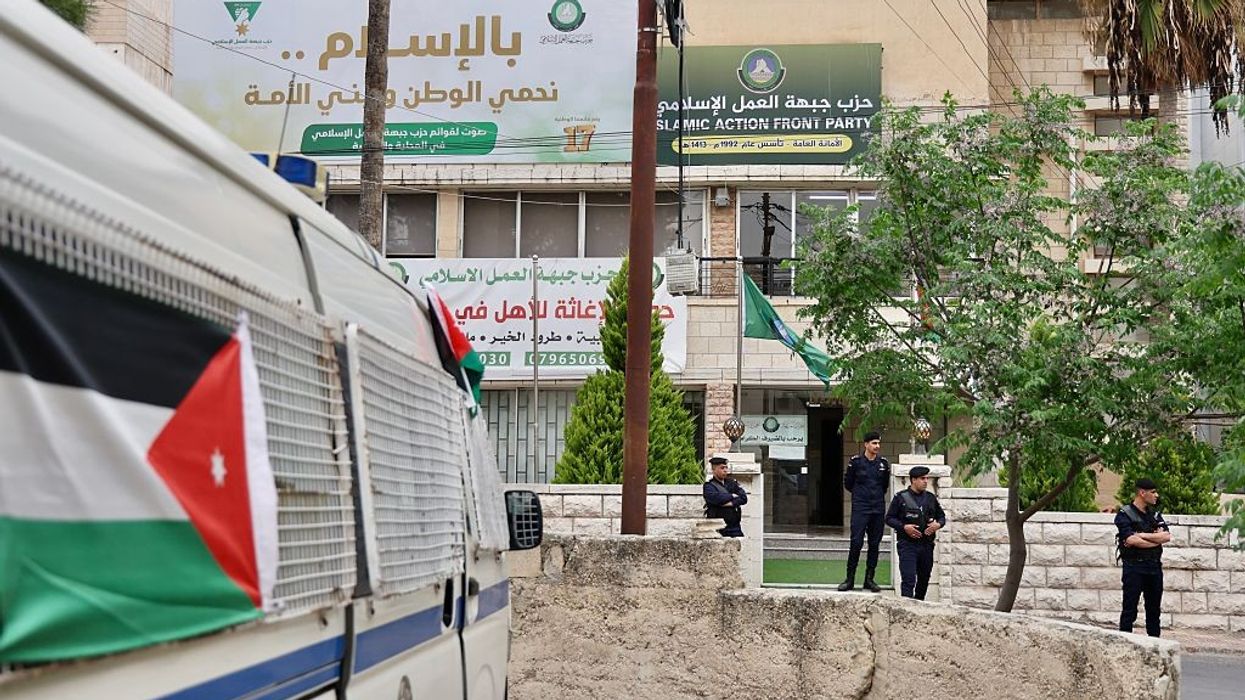
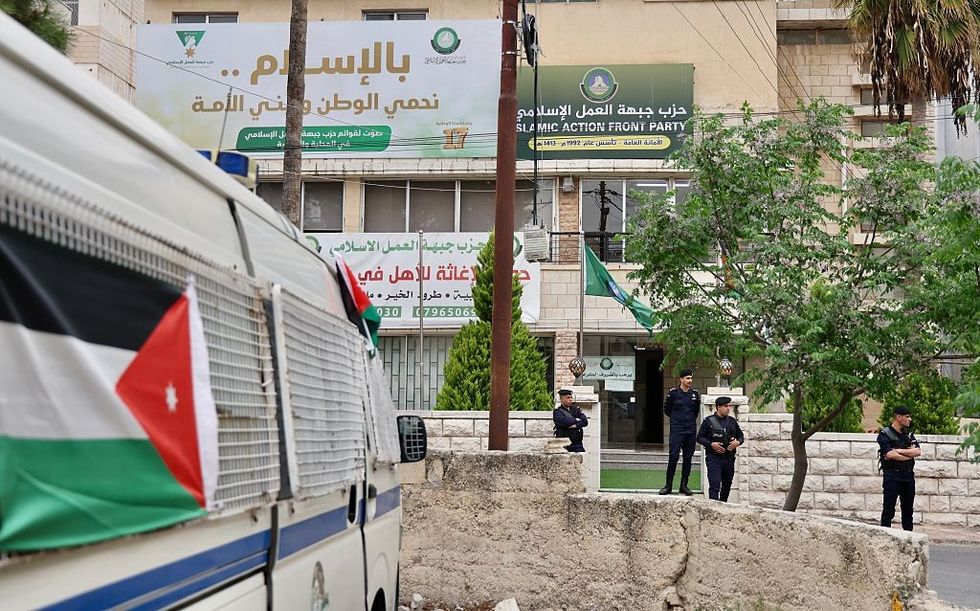
Across the region, local chapters adapted in different ways. Jordan’s Islamic Action Front (IAF)became the kingdom’s most organized opposition, running hospitals and schools and holding parliamentary seats. Lebanon’s looser network operates in Palestinian camps alongside Hezbollah. Both insist they are peaceful and gradualist.
“It is important to understand that the relationship between the Muslim Brotherhood and violence is a tactical one,” Schindler said. “It can change at any point if the network feels that violence would be useful for its position and influence.”
Past American attempts todesignate the entire Brotherhood collapsed amid pushback from Qatar, Turkey, and some European allies. This time, the White House has chosen a surgical strike. According to Schindler, the White House’s endeavor to focus on individual chapters is an optimal approach because it targets “chapters in countries that have themselves banned and/or designated the Muslim Brotherhood (Egypt, Jordan) and on Lebanon, where the distinction between Muslim Brotherhood and Hamas is hard to make.”
Need a daily dose of reality on national and global security issues? Subscriber to The Cipher Brief’s Nightcap newsletter, delivering expert insights on today’s events – right to your inbox. Sign up for free today.
The October 7 Reckoning
The trigger, ultimately, was October 7 and the events that followed. In Lebanon, the most explicit public demonstration came when a Brotherhood-affiliated militia calling itself the al-Fajr Forces fired rockets into northern Israel daysafter Hamas’s massacre.
“Hamas is the Muslim Brotherhood organization in Gaza and the West Bank. It calls itself such. However, it operates independently,” Nonresident Senior Fellow at the Atlantic Council and Former DHS Deputy Assistant Secretary for Counterterrorism Policy, Thomas Warrick, tells The Cipher Brief. “Its revenues were derived from control of Gaza’s governance: taxes, donations from outside governments, and criminal activities from which it profited. Other MB chapters are small in budgets and manpower compared to Hamas.”
In Jordan, the IAF organized some of the largest pro-Hamas demonstrations in the Arab world.
“The clearest demonstrated ‘link’ between Hamas and the specified Muslim Brotherhood chapters is that a Brotherhood-affiliated group in Lebanon, al-Fajr Forces, launched rockets into Israel following the October 7 2023 Hamas terrorist attack,” Rose Kelanic, director of the Middle East Program at Defense Priorities, tells The Cipher Brief, stressing that “the Muslim Brotherhood is not a terrorist threat to the United States.”
In Egypt, underground networks — despite Sisi’s repression — funneled money and propaganda into Gaza. Yet Schindler specifically highlights Lebanon’s darker role in Hamas’s external operations.
“According to German court documents, the Hamas cell that was arrested in Germany and the Netherlands in December 2023, which had planned and prepared for terror attacks in Germany, was led by Hamas handlers in Lebanon,” he noted. “Given the close connection between Hamas and the wider Muslim Brotherhood network, it is therefore likely that such contacts also exist in Lebanon.”
The real power of the designation, however, lies in America’s arsenal of financial warfare. Once listed, any bank worldwide that touches Brotherhood money in dollars risks losing access to the United States market.
“Disrupting the ability of large-scale extremist and terrorist networks, such as the Muslim Brotherhood, to have unhindered access to the global financial system is, of course, a very effective way to hinder their overall operations,” Schindler explained. “Hence, any country where this access is more restricted is, of course, a problem for such networks as it will increase their operational costs.”
Are you Subscribed to The Cipher Brief’s Digital Channel on YouTube? There is no better place to get clear perspectives from deeply experienced national security experts.
Allies on the Brink
Jordan is already on edge. Dependent on $1.5 billion inannual U.S. aid and facing street fury over Gaza, King Abdullah IIbanned the Brotherhood in April 2025 — yet the IAF still functions. While Schindler sees Washington’s possible move as reinforcement that will “aid in the efforts of the Jordanian government in countering Muslim Brotherhood structures in the country,” Kelanic warns of unintended consequences.
“The only scenario I worry about is if the U.S. insists on applying the FTO designation to the IAF, because that amounts to major meddling in Jordanian politics,” she noted. “The last thing the U.S. needs is another failed state in the Middle East.”
Turkey, experts point out, is perhaps the bigger headache. Schinder asserts that Turkey “is indeed an important network hub for Hamas,” in particular when it comes to the group’s financial systems.
“Turkey is in a unique position to pressure Hamas to give up its weapons and power in Gaza and leave the Strip,” he continued. “Unfortunately, so far, the Turkish government does not seem to have done so.”
According to Warrick, “what Turkey will do in response to the U.S. designation is not yet clear.”
“Supporting Muslim Brotherhood affiliates in the region is a core policy of the Turkish government, but President Erdoğan is mindful that his relationship with President Trump is strong and is valuable,” he explained. “The Turkish government is aware of the Trump administration’s hostile attitude towards the Muslim Brotherhood but is not likely to change its approach except in countries that the U.S. government has formally designated Brotherhood branches as Foreign Terrorist Organizations.”
A senior U.S. intelligence official, speaking to The Cipher Brief on background, described the administration’s delicate balancing act.
“The President comes out with a statement where he’s clearly trying not to offend the Qataris too much, but at the same time satisfying the UAE and the Saudis and the Egyptians,” the insider noted. “He’s riding the fence on this but skewing more to the anti-side.”
Washington is particularly wary of antagonizing Doha because Qatar remains a critical mediator with Islamist movements and an indispensable interlocutor in hostage, de-escalation, and regional crisis negotiations. The Qatar-based Brotherhood chapter formally disbanded in 1999, and Doha has repeatedly denied formal support for the Muslim Brotherhood, despite continued investigationsindicating the group’s ongoing financial backing andpraise from the likes of Hamas.
That same insider predicted domestic ripple effects: “If we suddenly see a ton of states passing laws against the Brotherhood and CAIR, then we start to have some real domestic impacts.”
CAIR has long faced allegations of historical ties to the Muslim Brotherhood because some of its early founders wereinvolved with U.S.-based organizations linked to Brotherhood-affiliated networks, and because it was named as an “unindicted co-conspirator” in the 2007 Holy Land Foundation case. Critics cite these associations as evidence of ideological or organizational overlap. However, no criminal charges were ever brought against CAIR, and no direct operational link to the Brotherhood has been proven. CAIRdenies any affiliation, and most of the evidence remains circumstantial, dated, and heavily disputed.
Analysts also point out that Saudi Arabia and the UAE, both of which already list the Brotherhood as terrorists, are quietly celebrating. But not everyone agrees that an FTO designation is a step in the right direction.
“Doing a blanket listing of ‘the Muslim Brotherhood’ is a huge risk for the U.S.,” Caravajal said. “It allows people to be arrested simply for going to the wrong mosque.”
For a movement that has survived bans, coups, and massacres for almost a century, this is only the latest test.
“The problem with designating the Muslim Brotherhood is that it never was a unitary organization or even a franchise organization like Al-Qaeda or Da’esh,” Warrick added. “This is why the solution the Trump administration came up with is the correct one. By working with partners that have already outlawed or sanctioned the Muslim Brotherhood chapters in their countries, the U.S. government can work cooperatively with those countries. This approach also gives some clarity to people in those countries, which groups they need to avoid in order not to be sanctioned by OFAC.”
The Cipher Brief is committed to publishing a range of perspectives on national security issues submitted by deeply experienced national security professionals. Opinions expressed are those of the author and do not represent the views or opinions of The Cipher Brief.
Have a perspective to share based on your experience in the national security field? Send it to Editor@thecipherbrief.com for publication consideration.
Read more expert-driven national security insights, perspective and analysis in The Cipher Brief because National Security is Everyone’s Business
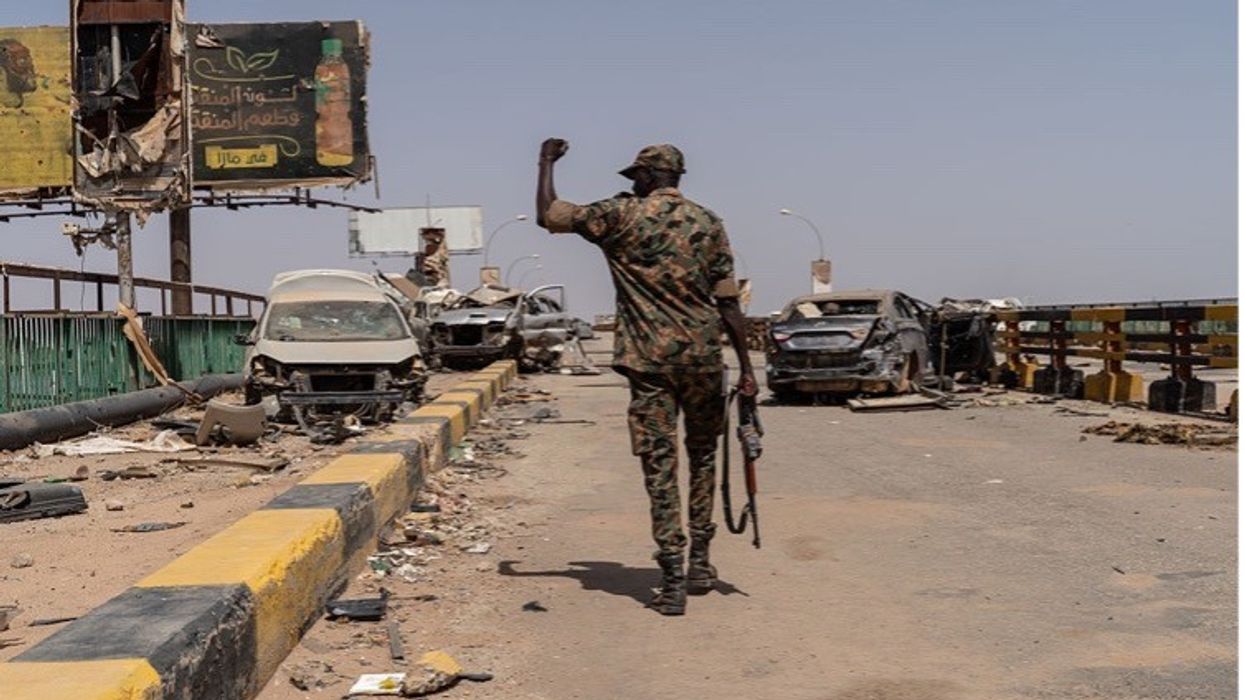
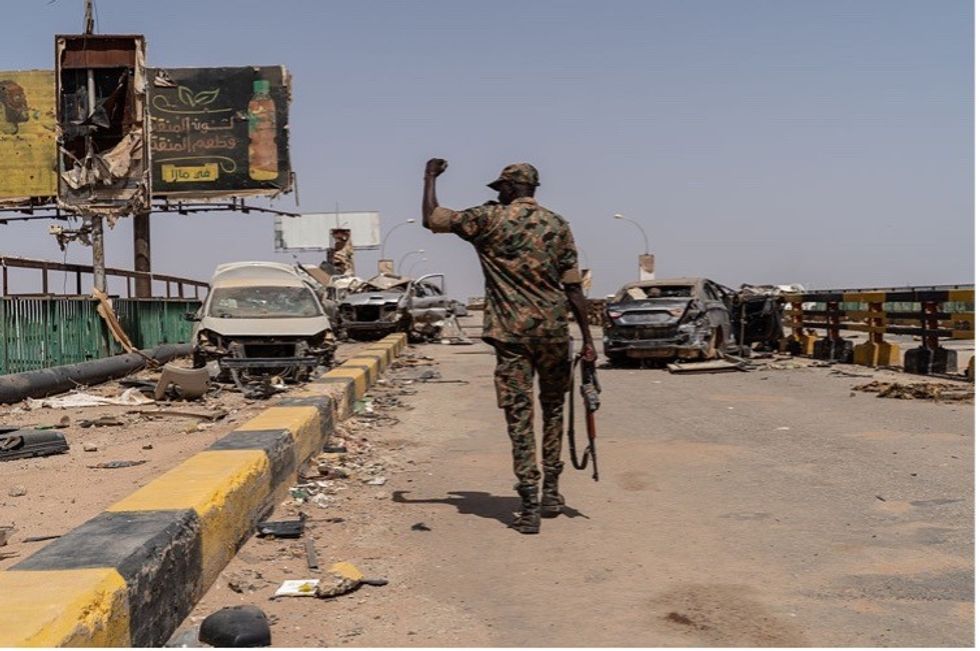
DEEP DIVE — Entire cities in the Darfur region of Sudan have been burned and razed, millions have fled their homes, and unspeakable terror and violence plague those left behind. When fighting erupted on April 15, 2023, between the Sudanese Armed Forces (SAF) under Abdel Fattah al‑Burhan and the Rapid Support Forces (RSF) led by Mohamed Hamdan Dagalo, better known as Hemedti, few predicted the conflict would become one of Africa’s worst humanitarian disasters.
There is, however, more to this war than just an internal battleground. The war in Darfur is no longer simply a domestic power struggle. It has become a multilayered proxy battlefield involving Egypt, Turkey, the United Arab Emirates (UAE), Saudi Arabia, Russia, Iran and more — each supporting rival Sudanese actors to secure strategic footholds.
“The current phase has Darfur as a killing field. The Sudanese protagonists have sorted out somewhat the areas each controls. Still, on the political front, both are committed to eliminating the other in a fight to the finish,” United States Ambassador to Sudan during the George W. Bush administration, Cameron Hume, tells The Cipher Brief. “There may be agreement on a time-limited humanitarian ceasefire, but no one is aiming at a durable political settlement between the two main parties.”
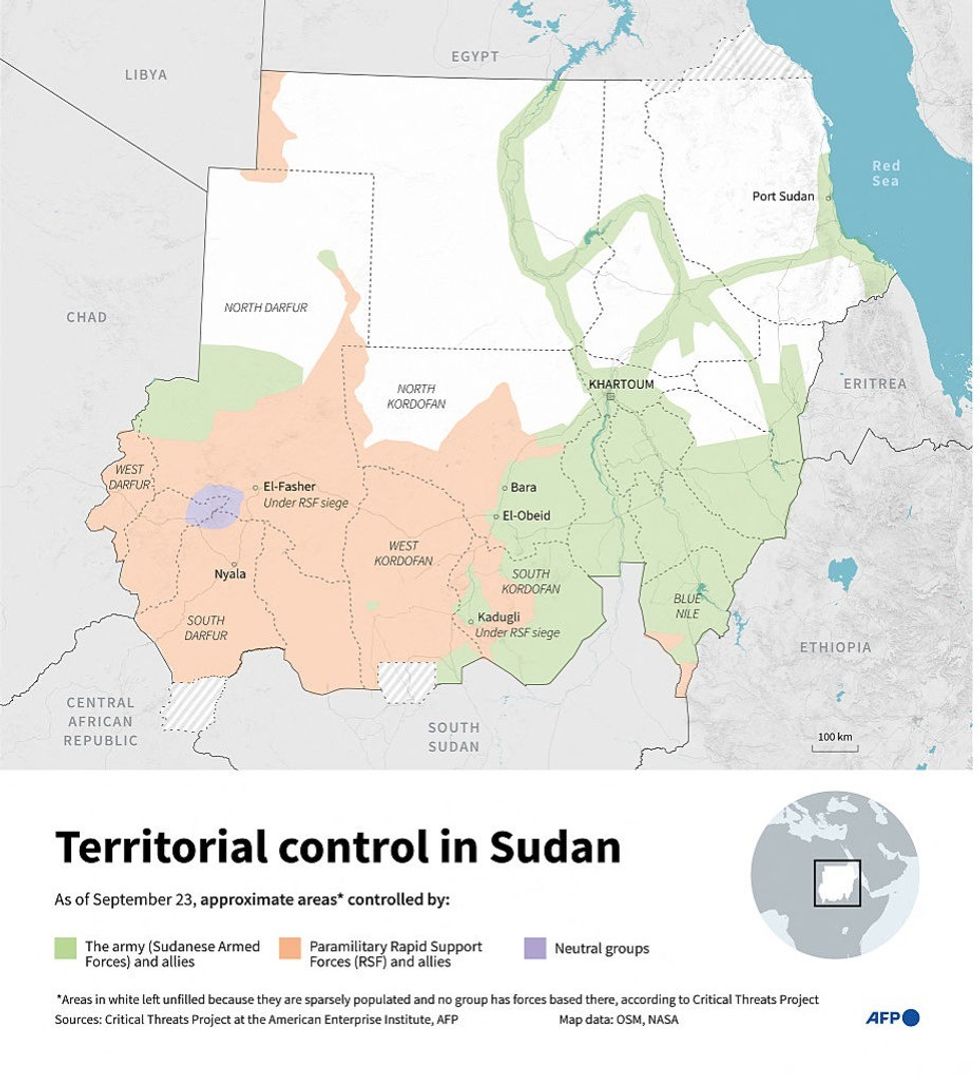
Infographic with a map showing areas controlled by the army, the Rapid Support Forces and neutral groups in Sudan as of September 23, 2025, according to the Critical Threats Project at the American Enterprise Institute and the AFP. (Infographic with a map showing areas controlled by the army, the Rapid Support Forces and neutral groups in Sudan as of September 23, 2025, according to the Critical Threats Project at the American Enterprise Institute and the AFP (Graphic by AFP) (Graphic by Olivia Bugault, Valentina Breschi, Nalini Lepetit-Chella/AFP via Getty Images)
United Arab Emirates
Despite official denials, the UAE remains the RSF’s cornerstone patron in Darfur, suspected of funneling advanced weaponry — including Chinese CH-95 and “Long Wang 2” strategic drones for 24-hour surveillance and strikes, Norinco-guided bombs, howitzers, and thermobaric munitions —via a covert air bridge of more than 240 UAE-chartered flights from November 2024, often landing at Chad’s Amdjarass airfield or South Darfur’s Nyala base.
These supplies, additionally routed through Libyan intermediaries like Khalifa Haftar’s networks and Ugandan/Somali airfields, have empowered RSF assaults, such as the latest siege and takeover of El Fasher. Economically, UAE-based firms like Hemedti’s Al-Junaid control Darfur’s Jebel Amer and Songo gold mines, exporting $1.6B in 2024, reportedly laundered via seven sanctioned Dubai entities to fund RSF salaries, Colombian mercenaries and further arms.
“The United Arab Emirates is the key sponsor of the RSF in strategic terms. Its interest is to convert influence in western Sudan into leverage over corridors, gold monetization and logistics, and to prevent an outcome in which Islamists consolidate in Khartoum,” Dr. Andreas Krieg, Associate Professor at King’s College London, tells The Cipher Brief.
Sudan’s gold — its primary export — has also become a lifeline for the UAE, feeding Dubai’s markets with more than ten tons a year from RSF-controlled areas. The trade aligns with Abu Dhabi’s long-term ambitions and its stance against the Muslim Brotherhood, as well as its past reliance on RSF fighters in Yemen. Despite Emirati denials and Sudan’s failed genocide case against the UAE at the ICJ, evidence ties the UAE directly to embargo breaches, from passports recovered in Omdurman to Emirati-made vehicles found at RSF sites.
As the UAE expands its influence through RSF control of Darfur’s 700-kilometer Red Sea corridor, reviving stalled DP World and AD Ports projects to rival Saudi NEOM, it effectively uses the militia as a proxy to secure resources and block SAF dominance. Approximately 70 percent of Sudan’s gold production from RSF-controlled areas is smuggled through Dubai, while overall illicit exports account for around 40 percent of the country’s total gold output.
Need a daily dose of reality on national and global security issues? Subscriber to The Cipher Brief’s Nightcap newsletter, delivering expert insights on today’s events – right to your inbox. Sign up for free today.
Turkey
Ankara, seeing the Darfurian conflict as both a threat to its regional ambitions and a challenge to Islamist allies, has backed al-Burhan’s forces with drones worth $120 million, delivered through Egypt. Their weapons supply assisted SAF in retaking Khartoum earlier this year but comes with deeper incentives: ideological ties with Burhan’s Islamist faction and strategic objectives for Red Sea access.
“Turkey’s quiet intelligence-sharing and counterterrorism pacts give it outsized sway over local regimes,” John Thomas, managing director of strategic policy firm Nestpoint Associates, tells TheCipher Brief.
The result, experts say, is a dangerous and growing proxy war between the UAE and Turkey — one now fought with advanced drones and air defenses across Sudan’s skies. The stalemate has fractured the country, spilled instability into Chad and Libya, and left tens of thousands dead, a toll experts warn could further destabilize the Horn of Africa.
Beyond the pace and scale of Turkish arms transfers, the presence of Turkish private military contractors (PMCs) in Africa merits closer scrutiny.
“In addition to the pace and spread of Turkey’s arms flow, I would say the presence of Turkish PMCs in Africa is something policymakers really ought to focus on more closely,” Will Doran, Turkey researcher at the Foundation for Defense of Democracies, tells The Cipher Brief. “A lot of these PMCs, like Erdogan himself, are warm towards the Muslim Brotherhood and have some questionable ties to Islamist militias on the ground in the Sahel. This isn’t to say Turkey is backing the region’s big names in terrorism. For one, Ankara’s deployed against al-Shabaab in Somalia, but the PMC trend is worrisome nonetheless.”
Egypt
Egypt views Sudan as a vital flank for its national interests. The Nile River flows from Sudan into Egypt, and Cairo has long been vigilant about any instability upstream. Egypt supports General Abdel Fattah al-Burhan and his Sudanese Armed Forces (SAF) because Cairo views them as the most dependable group to safeguard Egypt’s key national interests — namely, the Nile River corridor, which is Egypt’s sustenance for water and trade, and the southern border, which it shares with Sudan.
According to Dr. Krieg, “Egypt is the principal state backer of the army.”
“Its strategic priorities are the security of the Nile heartland, avoidance of an Islamist resurgence, and denial of hostile basing or rival influence along the Red Sea,” he continued.
Egypt, already hosting more than a million refugees, also fears that if Khartoum collapses into chaos, the resulting instability — such as refugee flows, arms trafficking, or militant activity — could spill over the border into its territory. Diplomatically, Cairo has kept direct intervention limited and insists on a Sudan-led solution, yet it retains close military and political ties to Burhan.
Saudi Arabia
Riyadh shares a parallel concern: as the Gulf kingdom pursues its Vision 2030 and Red Sea coastal investments, it has an interest in a stable Sudan firmly aligned with its regional agenda. Riyadh has backed the SAF via financial and diplomatic support, while also positioning itself as a mediator.
“Saudi Arabia is perhaps the outside player with potential influence that gets the least attention,” said Amb. Hume.
Dr. Krieg also observed that “Saudi Arabia has positioned itself as a convenor and would prefer a unified state that secures the Red Sea.”
“Chad and the Haftar camp in eastern Libya function as corridors and logistics enablers, and their choices directly affect the intensity of fighting in Darfur,” he explained. “Those intermediaries in Libya and Chad are all part of the UAE’s Axis of Secessionists; a network of non-state actors that are all tied to Abu Dhabi directly or indirectly.”
Are you Subscribed to The Cipher Brief’s Digital Channel on YouTube? There is no better place to get clear perspectives from deeply experienced national security experts.
Iran
Since late 2023, Iran has resumed ties with SAF leader Abdel Fattah al-Burhan after a seven-year break, sending Mohajer-6 and Ababil drones, artillery, and intel via seven Qeshm Fars Air flights to Port Sudan from December 2023 through July 2024. This aid helped SAF retake Khartoum in March 2025 and strike RSF in Darfur. In addition, Iran uses Sudan’s Yarmouk arms factory to counter the UAE-backed RSF. Tehran’s overarching goal? Access to Port Sudan to support the Houthis in Yemen and spread Shiite influence — risking wider regional proxy conflict.
“Iran’s military support has helped shift momentum toward the SAF. As one of many foreign actors exacerbating Sudan’s internal tensions, Iran contributes to the country’s unfolding humanitarian disaster,” Jonathan Ruhe, Director of Foreign Policy at the JINSA Gemunder Center for Defense & Strategy, tells The Cipher Brief. “And as one of many foreign actors trying to claim concessions from the government and vying to exploit Sudan’s natural resources, Iran helps worsen the country’s already high levels of impoverishment.
Research Fellow at the Foundation for the Defense of Democracies, Husain Abdul-Hussain, also underscored that while Iranian involvement in Sudan is still in its infancy, “it will certainly grow as the war grinds on.”
“The more reliant Islamist militias become on Iran, the stronger they become and the more indebted to Tehran,” he explained. “Eventually, relations between Iran and Sudanese Islamist militias will be similar to its relations with Islamist militias in Lebanon (Hezbollah), Iraq (Hashd Shaabi), Gaza (Hamas) and Yemen (Houthis). Note that Sudan Islamist militias are Sunni (like Hamas in Gaza), and unlike Shia Iran and its Lebanese and Iraqi Shia militias. The Houthis are their own breed of Islam (Yazidis) but are allied with Shia Iran.”
Russia
Moscow, meanwhile, has played both sides in Sudan’s civil war for profit and power. Before 2024, the Wagner Group, now under Russia’s Defense Ministry, backed the RSF with arms like surface-to-air missiles, in return for gold from RSF-held mines like Jebel Amer — smuggling up to 32.7 tons worth $1.9 billion via Dubai from 2022 to 2023 to skirt Ukraine war sanctions and fund operations. This fueled RSF violence, including the 2023 to 2025 massacres in el-Geneina and el-Fasher.
Around midway through last year, in the aftermath of Prigozhin’s demise, Moscow flipped to bolstering the SAF in its quest for a Port Sudan naval base. Russia subsequently vetoed a UN ceasefire resolution last November to keep up its influence in Khartoum, while reports emerged of Russian mercenaries operating in West Darfur, worsening the fear and displacement.
“Russia linked commercial and security networks remain present around gold flows and in facilitation roles close to the RSF camp,” said Dr. Krieg.
Why So Many Foreign Players?
At the heart of Sudan’s crisis lie three intertwined forces: geography, resources, and regional rivalry. Poised along the Nile, the Red Sea, and the Horn of Africa, Sudan is pivotal to everything from Cairo’s water security to the maritime goals of Gulf States to the influence ambitions of Moscow and Ankara. Moreover, its ports and resource-rich land have morphed domestic infighting into a lucrative war economy.
“Material backing has lengthened the war and structured its geography,” Mr. Krieg said. “The result is not a decisive victory for either side but a hardening of zones, with the RSF advantaged in a peripheral theatre where it can police corridors and extract revenue, and the army entrenched where the state’s core institutions, population and donor attention reside.”
Why It’s So Hard to End the War
With so many players in the field and a deep distrust among warring parties, ending the war in Sudan has become extraordinarily difficult. The United States, for its part, leads the “Quad” alongside the UAE, Egypt, and Saudi Arabia, pushing for a three-month humanitarian truce. The RSF agreed to a deal on November 6, and Washington is now pressing the Sudanese army to do the same in hopes of easing the fighting and starting talks on the war’s deeper causes.
If the war in Sudan continues, the U.S. faces a growing humanitarian catastrophe: estimates suggest more than 150,000 deaths and over 14 million people displaced, with nearly 25 million facing acute hunger. Regionally, unchecked control of the RSF in Darfur could destabilize the Red Sea corridor, a vital route for global trade and U.S. allies. Domestically, failure to resolve the conflict would erode U.S. credibility on human rights and genocide prevention, heighten refugee pressures in North Africa and Europe, and contradict the moral precedent set during the 2003 Darfur genocide.
“Washington will be paying more attention,” one White House-connected source tells The Cipher Brief. “It isn’t ignored. It is a conflict Trump wants to see ended.”
Dr. Krieg asserted that Sudan is entering a consolidation phase in which the Rapid Support Forces have turned Darfur into a defensible rear area and administrative base. The fall of El Fasher removed the last significant government foothold in the region. It gave the RSF control of the interior lines across West, South, Central, and much of North Darfur, as well as access to Libya and Chad for resupply and commerce.
He thus asserts that Sudan’s future is likely to go one of two ways.
“The Sudanese Armed Forces still hold the Nile corridor, the capital area and much of the east, which creates a west versus centre geography. That configuration points to two near-term paths. Either the front stabilises into a frozen conflict that resembles an informal partition, or the RSF seeks to push east through North Kordofan and test the approaches to the center,” Dr. Krieg added. “Humanitarian conditions are acute, with siege tactics, displacement and food insecurity now baked into the conflict economy. The political tempo has slowed rather than accelerated, since battlefield gains in Darfur give the RSF reasons to bank advantages before contemplating concessions.”
Read more expert-driven national security insights, perspective and analysis in The Cipher Brief because National Security is Everyone’s Business.

 Login
Login China has shipped a batch of Type 59 130mm towed artillery systems to a foreign customer, with images confirming the weapons loaded aboard a cargo vessel and prepared for export, according to open-source visuals recorded during offloading operations. Footage circulating on social media shows multiple Type 59 artillery pieces secured on wheeled carriages and covered […]
  Pakistan and Saudi Arabia have begun formal discussions to convert a $2 billion Saudi loan into a transaction for JF-17 fighter jets, Reuters reported. The talks center on a broader package valued at $4 billion, including an additional $2 billion allocated for related equipment. Reuters, citing sources familiar with the negotiations, reported that “the total […]