Intel reported its earnings for the fourth quarter of 2025 yesterday, and the news both for the quarter and for the year was mixed: year-over-year revenue was down nearly imperceptibly, from $53.1 billion to $52.9 billion, while revenue for the quarter was down about four percent, from $14.3 billion last year to $13.7 billion this year. (That number was, nevertheless, on the high end of Intel's guidance for the quarter, which ranged from $12.8 to $13.8 billion.)
Diving deeper into the numbers makes it clear exactly where money is being made and lost: Intel's data center and AI products were up 9 percent for the quarter and 5 percent for the year, while its client computing group (which sells Core processors, Arc GPUs, and other consumer products) was down 7 percent for the quarter and 3 percent for the year.
That knowledge makes it slightly easier to understand the bind that company executives talked about on Intel's earnings call (as transcribed by Investing.com). In short, Intel is having trouble making (and buying) enough chips to meet demand, and it makes more sense to allocate the chips it can make to the divisions that are actually making money—which means that we could see shortages of or higher prices for consumer processors, just as Intel is gearing up to launch the promising Core Ultra Series 3 processors (codenamed Panther Lake).
Intel has initiated the end-of-life process for its 12th Gen Alder Lake CPUs and 600-series chipsets, setting final order and shipment dates as the platform begins phasing out.
Intel Arc Pro B70 is shaping up as a straightforward answer to a common workstation headache, running out of VRAM at the worst time. A new leak points to a launch soon, with the card described as the first shipping product built on Intel’s larger Battlemage BMG-G31 chip. Arc Pro B70 is tipped to ship […]
Introduction Enzoic provides real-time alerts when user credentials are exposed in data breaches, and integrating these alerts into your security operations center (SOC) can greatly enhance your threat response. Microsoft Sentinel is a cloud-native SIEM (Security Information and Event Management) platform in Azure that aggregates and analyzes security data across an organization. (Note: You will […]
Continuing his reverse-engineering of the Intel 8087, [Ken Shirriff] covers the conditional tests that are implemented in the microcode of this floating point processing unit (FPU). This microcode contains the details on how to perform the many types of specialized instructions, like cos and arctan, all of which decode into many microcode ops. These micro ops are executed by the microcode engine, which [Ken] will cover in more detail in an upcoming article, but which is effectively its own CPU.
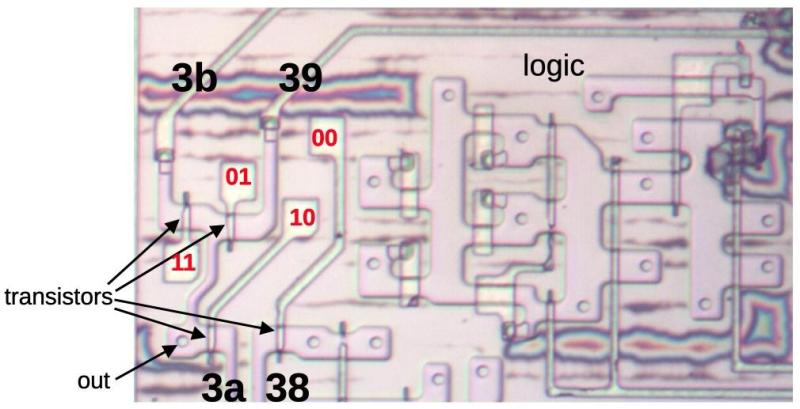
Conditional instructions are implemented in hardware, integrating the states of various functional blocks across the die, ranging from the instruction decoder to a register. Here, the evaluation is performed as close as possible to the source of said parameter to save on wiring.
Implementing this circuitry are multiplexers, with an example shown in the top die shot image. Depending on the local conditions, any of four pass transistors is energized, passing through that input. Not shown in the die shot image are the inverters or buffers that are required with the use of pass transistors to amplify the signal, since pass transistors do not provide that feature.
Despite how firmly obsolete the 8087 is today, it still provides an amazing learning opportunity for anyone interested in ASIC design, which is why it’s so great that [Ken] and his fellow reverse-engineering enthusiasts keep plugging away at recovering all this knowledge.
Intel will formally launch its first Core Ultra Series 3 laptop processors later this month, the company announced at its CES keynote today. Codenamed Panther Lake and targeted, at least for now, at high-end ultraportable PCs, the Core Ultra 3 chips will also be the first to use Intel's 18A manufacturing process, the company's effort to catch up with the chip manufacturing technology of Taiwan Semiconductor (TSMC).
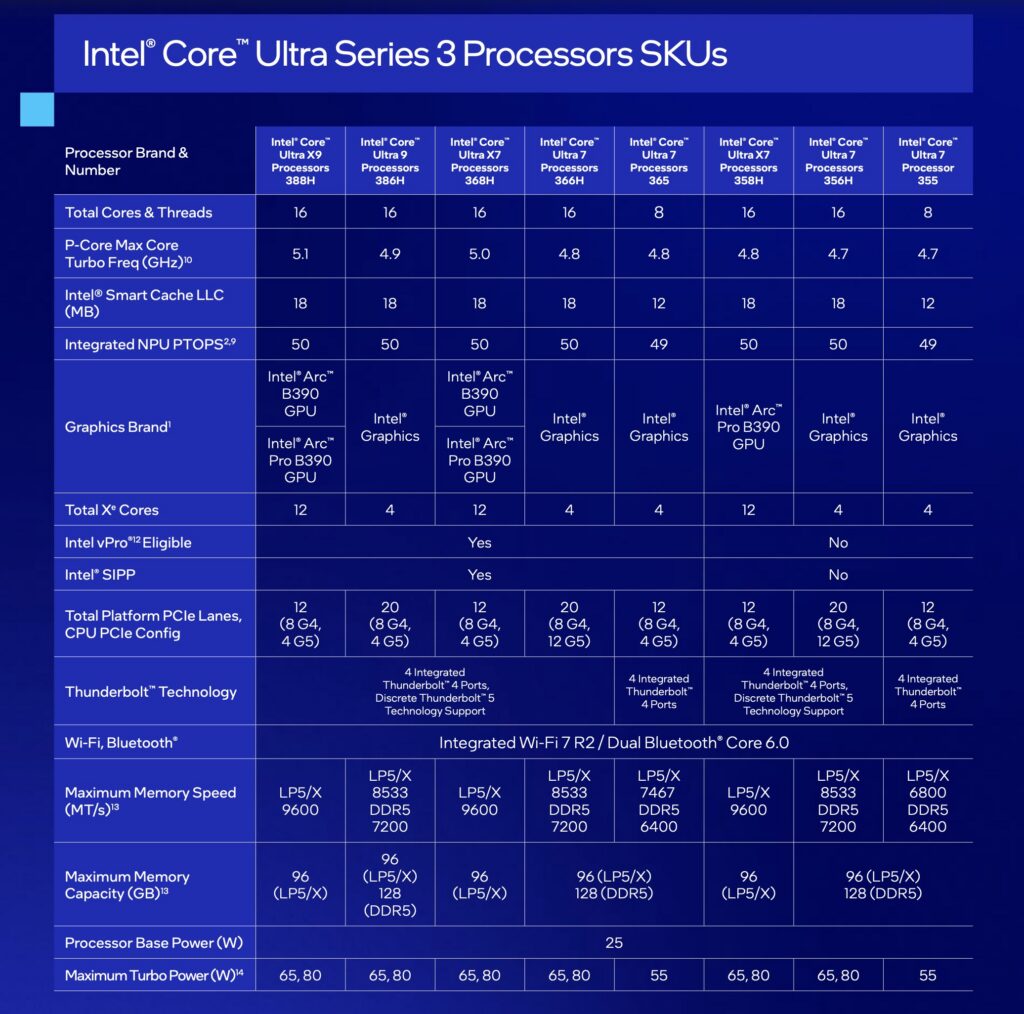
The launch will start with 14 chips across five product families, which Intel says will be used in "over 200" PC designs. The first of these will be available on January 27, with others following "throughout the first half of this year."
The Core Ultra X9 and Core Ultra X7 processors include all of Intel's latest CPU and GPU architectures, plus a fully enabled 12-core Intel Arc B390 integrated GPU and support for slightly faster LPDDR5x-9600.
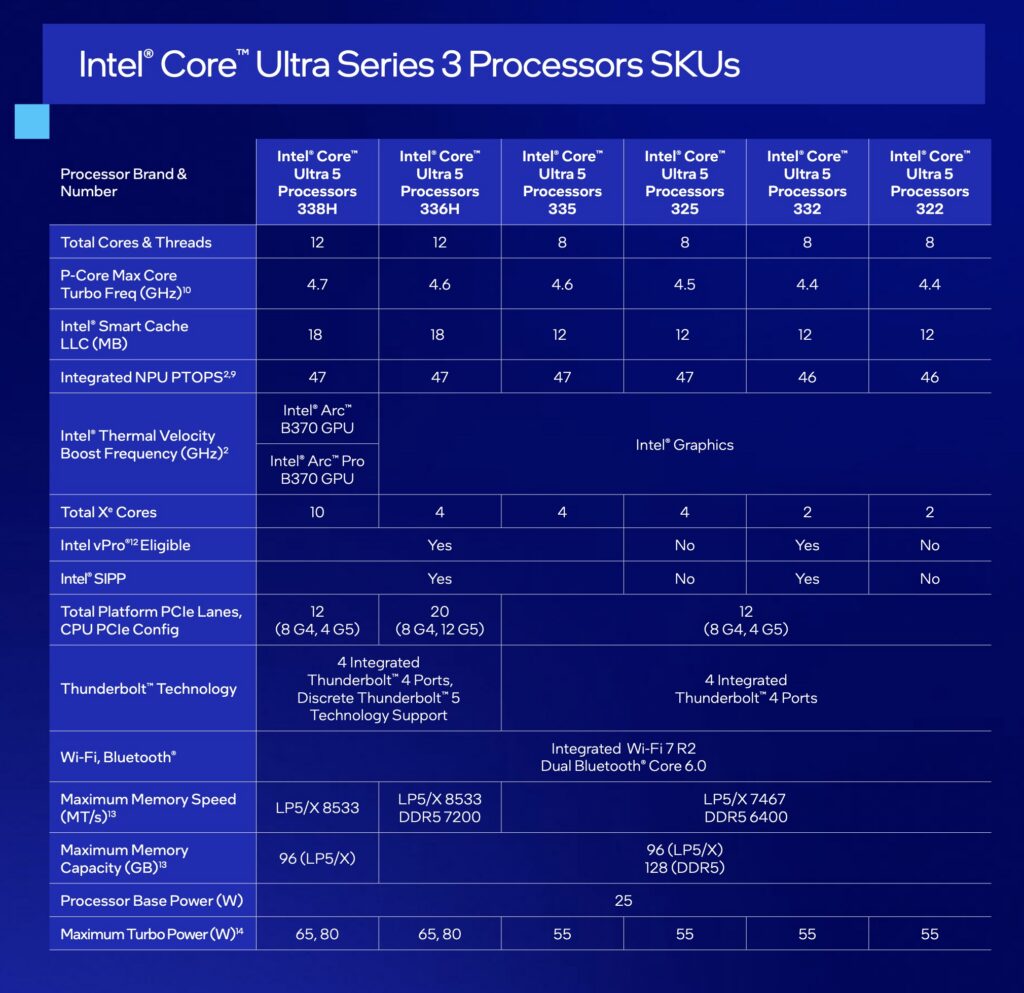
The Core Ultra 9 and 7 processors will use all of the same technologies, but with just four GPU cores and support for either LPDDR5x-8533 or DDR5-7200 DIMMs. But they will offer 20 PCI Express lanes, up from 12 for the X9 and X7, meaning they'll pair better with dedicated GPUs.
The Core Ultra 5 chips are mostly lower-end models with fewer CPU cores, and either 4- or 2-core GPUs. But Intel being Intel, there is one oddball that muddies the waters: the Core Ultra 5 338H, which has 12 CPU cores and a 10-core Intel Arc B370 GPU.
A Panther Lake refresher
The higher-end Core Ultra Series 3 CPUs.
Credit:
Intel
The Core Ultra 5 family encompasses a wide range of possible performance levels.
Credit:
Intel
We wrote about the basic building blocks of Panther Lake when Intel released details late last year. In many ways the chip is a retreat from the Lunar Lake design, sold as Core Ultra 200V, which used chiplets manufactured mostly outside the company and on-package RAM rather than memory in a DIMM slot or soldered to the mainboard. At the time, Intel said these moves were made in the interest of saving power and extending battery life, as were decisions like removing Hyperthreading support from the P-cores.
Intel, AMD, Nvidia, and other chip companies usually have some kind of news to announce at CES to kick off the year, but some of those announcements are more interesting than others. Sometimes you see new chips with significant speed boosts and other new technologies, and sometimes you get rebranded versions of old silicon meant to fill out a lineup or make an existing architecture seem newer and more exciting than it is.
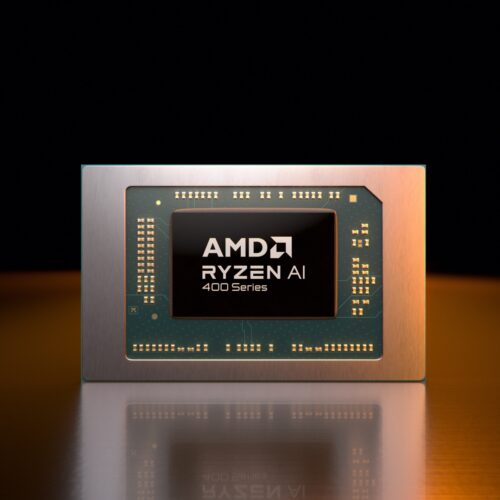
AMD's Ryzen CPU announcements this year fall firmly into the latter camp—these are all gently tweaked variants of chips that launched in 2024 and 2025.
"New," for certain values of "new"
These Ryzen AI 400-series chips are slightly faster than, but otherwise functionally identical to, the Ryzen AI 300 series.
Credit:
AMD
Slightly higher CPU clock speeds, NPU speeds, and supported RAM speeds will separate Ryzen AI 400 from Ryzen AI 300.
Credit:
AMD
Core specs for the new-ish chips.
Credit:
AMD
The corresponding Ryzen Pro chips for business PCs.
Credit:
AMD
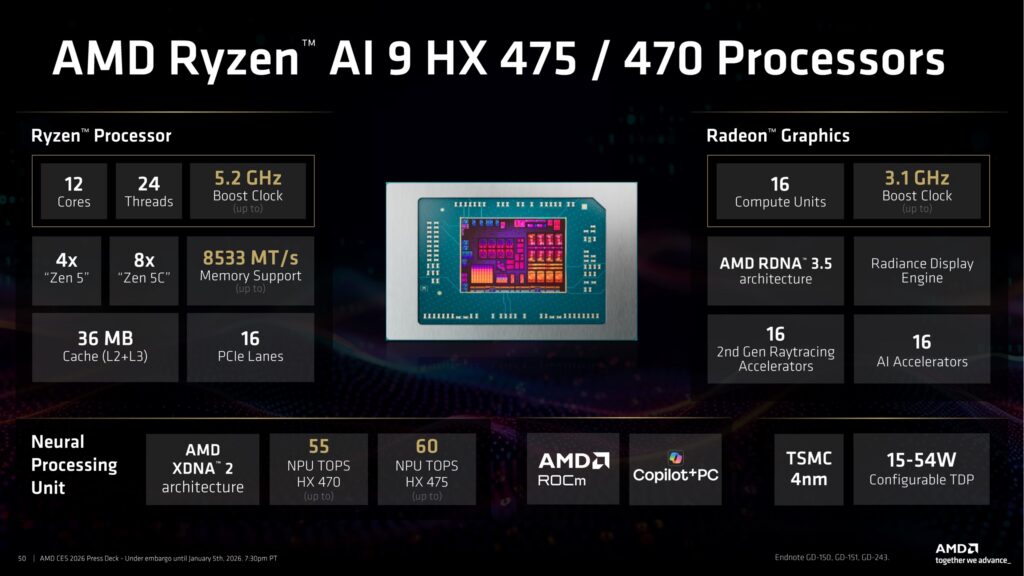
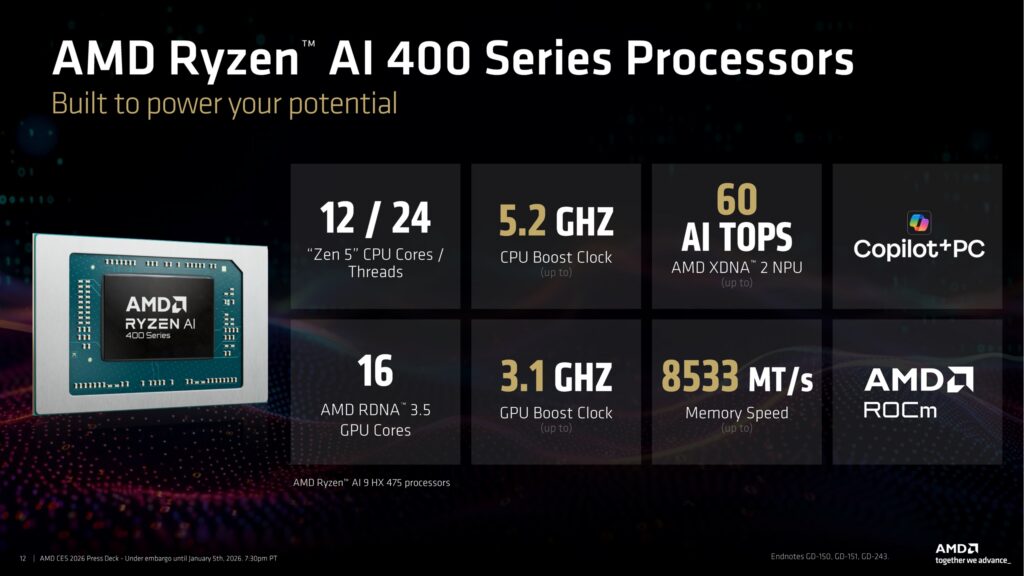
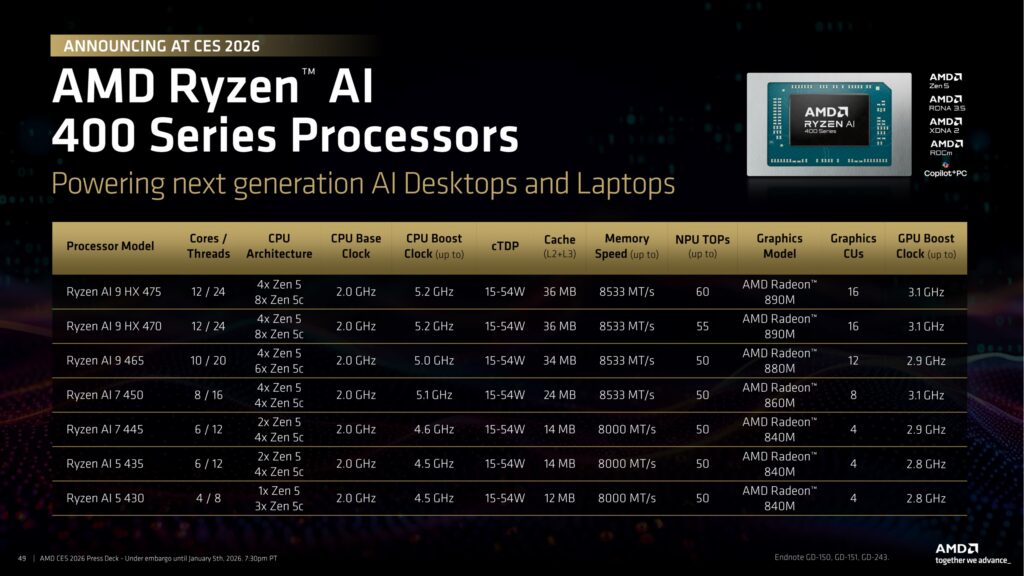
Let's start with the Ryzen AI 400 series. Officially the follow-up to the Ryzen AI 300 chips announced in June 2024, these processors offer some modest clock speed improvements and faster memory support. The new Ryzen AI 9 HX 470 has a peak boost clock speed of 5.2 GHz and support for LPDDR5x-8533, for example, up from 5.1 GHz and LPDDR5x-8000 for the Ryzen AI 9 HX 370, and its built-in neural processing unit (NPU) is capable of 60 trillion operations per second (TOPS) rather than 50 TOPS.
If you’re an executive at Intel or AMD and in charge of sales forecasts, you likely projected some big numbers for the end of 2022. Both companies had unveiled their new platforms, promising next-gen performance and features. Since many people could not upgrade their PCs during the pandemic, all the ingredients of a booming holiday sales period were present. Added to the mixture were all-new, high-powered GPUs as well. Overall, it seemed like the perfect time to build or buy a new PC. Oddly, that did not come to pass. Instead, Q4 ended up being the worst period for CPU sales in 30 years, according to Mercury Research.
The market analysis company’s president, Dean McCarron, discussed the somber news with our colleagues at PCMag this week. CPU sales declined year-over-year by 34% and quarter-over-quarter by 19%. Those are the biggest declines for both metrics Mercury has ever tabulated in its 30 years of existence.
The reasons for the decline include excess inventory and low demand for CPUs. Intangible factors may also be at play, such as global economic uncertainty. The numbers mirror those from IDC, which also posted a gloomy Q4 report recently for PC shipments. IDC’s numbers from 90 countries showed a 28.1% decline year-over-year. That drop-off was twice as high as in Q3, making Q4 a particularly bloody quarter for the PC industry.
(Image: Mercury Research)
In response to the turbulence, Intel and AMD are now under-shipping CPUs. Both companies’ CEOs admitted to this in their recent earnings calls. AMD’s CEO said it would do less of it in Q1, though. Intel CEO Pat Gelsinger said his company’s “Q4 under shipping [was] meaningfully higher than full year.” Despite this strategy, CPU shipments for both laptops and desktops suffered dramatic declines in what is normally a robust quarter. Intel also suffered from its decision to announce price increases in Q3. That caused some of its partners to buy stock before the price went up in Q4.
Despite the dour report, it’s not all bad for the PC market. In 2022 overall, CPU shipments and revenue were down 21 and 19%, respectively, from previous years. However, that was the pandemic era, a magical time of record profits for all semiconductor companies. Despite the decline, the numbers in 2022 were still better than the pre-pandemic years. Although the red ink is projected to continue to flow for another quarter or two, a turnaround is expected later this year.
One unexpected result from this volatility is it’s allowed AMD to claw market share away from Intel. According to IDC’s report via HotHardware, AMD now has over 30% of the x86 market. While Intel still has more than twice that market share, it lost 5.6% over the past year.
Intel CEO Pat Gelsinger holds an 18A SRAM wafer. (Credit: Intel)
Intel CEO Pat Gelsinger holds an 18A SRAM wafer. (Credit: Intel)
Intel has reported its earnings for all of 2022 as well as Q4, and it’s so bad that analysts are likely diving for their thesauruses to properly characterize it. “Historic collapse” is how one summarized the losses. One just said there are simply “no words.” Intel reported its worst earnings in more than 20 years. Though the company’s earnings were still within its guidance, they came in at the very low end and mark a historic downturn for the company. The news caused Intel’s stock to fall almost 10% in value. Its earning reports are available in various forms on its investment website.
For 2022, Intel earned $63.1 billion in total, a 20% decline from its 2021 earnings. Its Q4 revenue was $14 billion, a precipitous 32% drop from the same quarter last year. One analyst notes this is the largest year-over-year decline in the company’s history. It posted a net loss of $664 million for the quarter, which almost matches its worst quarterly loss in history: In 2017, it reported a loss of $687 million in the fourth quarter.
Though Intel ended 2022 with $8 billion in profit, last year it made $19.1 billion. That’s a remarkable 60% reduction, which is why the word “collapse” is being thrown around. Its gross margin for Q4 of 39.2% is the lowest in decades as well. Intel used to get 60% margins not that long ago.
As far as where the hits came from, it’s in both data center and client computing. It earned $6.6 billion on the client side, which is down 36% from last year’s Q4. Total revenue for client computing in 2022 dropped 23% compared with 2021. Its Data Center and AI (DCAI) group’s revenue fell 33% YoY, and 15% for the year as a whole. The only bright spots were gains in Mobileye, Intel Foundry Services, and its graphics division. All three divisions posted increases, with its foundry services posting a surprising 30% improvement for the quarter.
Despite the grim report, Intel says it’s still on target to achieve its long-term goals. It notes it’s still pursuing its “five nodes in four years” strategy laid out by CEO Gelsinger upon his arrival in 2021. This will theoretically allow it to achieve industry leadership in both transistor performance and efficiency leadership by 2025. To that end, Gelsinger says it’s looking to begin its ramp for Meteor Lake in the second half of 2023. If that occurs, we’ll be surprised as it’s been rumored to be delayed. Instead, we may see a Raptor Lake refresh.
“We are at or ahead of our goal of five nodes in four years,” said Gelsinger in the earnings report. “Intel 7 is now in high-volume manufacturing for both client and server. On Intel 4, we are ready today for manufacturing and we look forward to the MTL (Meteor Lake) ramp in the second half of the year,” he said.
Unfortunately for Intel, it doesn’t anticipate a quick rebound from its financial nadir. Its CEO predicted continuing “macro weakness” through the first half of 2023. However, he noted there’s a possibility of an uptick later this year. Given the uncertain economic conditions though, Intel is only providing guidance for Q1 of 2023 and nothing beyond that. That guidance is even more brutal than this report: It predicts YoY revenue will be down 40%, with gross margins hitting 39%.
Intel’s earnings report follows news this week that it has canceled a planned $700 million R&D facility in Oregon. It was also announced this week that it was laying off 544 employees in California as it begins to tighten its belt. It’s stated it plans on reducing expenses by $3 billion in 2023, with that number increasing to $10 billion by 2025.
Japanese multinational conglomerate Fujifilm has been forced to shut down parts of its global network after falling victim to a suspected ransomware attack. The company, which is best known for its digital imaging products but also produces high-tech medical kit, including devices for rapid processing of COVID-19 tests, confirmed that its Tokyo headquarters was hit […]

 Login
Login