It has been an exhausting quarter for system administrators and security teams. The last three months have been dominated by a storm of high-priority security issues. We have seen critical vulnerabilities surfacing in everything from container orchestration platforms to widely used identity management systems. Just as many teams were preparing for the holiday freeze, yet another critical alert dropped on December 23 regarding the Net-SNMP protocol suite.
As the vast scientific possibilities of cannabis rapidly become more researched, so too does the studying and research behind the fascinating components that are terpenes. These botanical compounds are the building blocks that give cannabis buds their characteristics—everything from the aromas of the bud to the physical appearance to the various feelings and sensations that cannabis strains can provide.
Myrcene gives indica strains their relaxing and “couchlock” feelings, while terpinolene and limonene, for instance, give sativa strains the boost in energy and creativity that they’re commonly known for. Pinene can exude a very forest-like aroma while caryophyllene exudes a pepper-like smell. Truly, the study of terpenes is a marvelous new field of botanical sciences. And a few very innovative companies are not only researching but also creating these unique compounds.
“Terpenes are the aromatic soul of cannabis,” says True Terpenes CEO Daniel Cook. “They’re what give each strain its signature scent and flavor—from citrusy bursts to deep, earthy notes.”
Since 2016, True Terpenes has been at the forefront of terpene science and production. Prior to creating the company, Founder Chris Campagna ran a medical cannabis clinic in Oregon and personally witnessed how drastically inconsistent the terpene profiles in cannabis products could be. Additionally, Campagna observed how many terpenes are destroyed during common extraction methods.
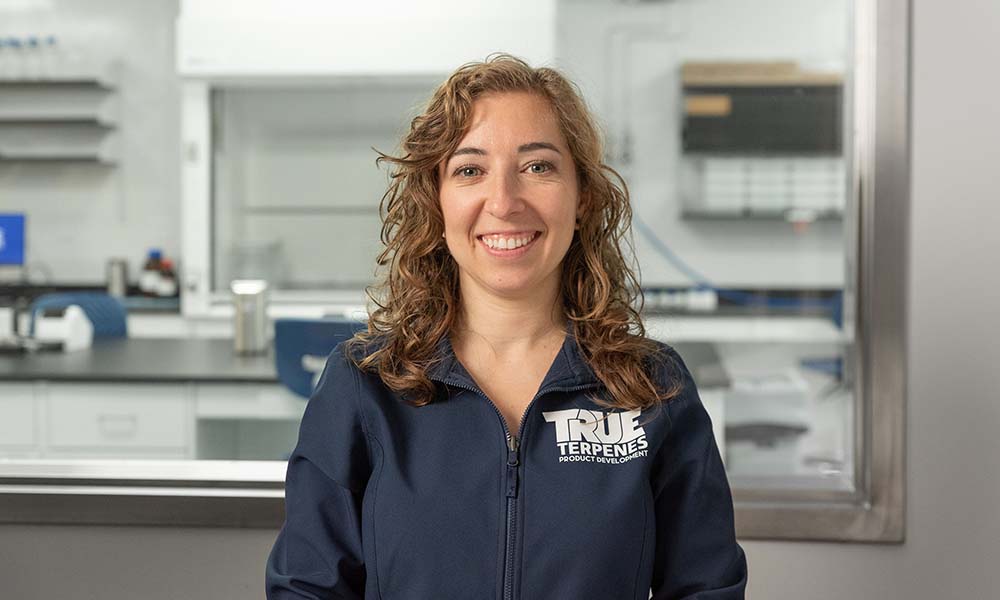
Shawna Vreeke, PhD, DABT, True Terpenes’ Director of Toxicology.
The removal of those crucial terpenes could be very problematic, especially as most states have some form of a medical cannabis program and people from all types of societal demographics have become medical cannabis patients. For instance, if a patient relied on a myrcene-heavy indica to alleviate sleeping issues or anxiety, the destruction of that myrcene could lessen the potency of their medicine. If a patient were using a pinene-dominant strain for muscle pain, the deletion of that terpene could possibly worsen that patient’s pain.
From reading the vast research on the entourage effect of cannabinoids by neurologist Dr. Ethan Russo, Campagna realized the true essential nature of terpenes and how vitally useful they could be for cannabis cultivators and consumers alike.
“That insight led to the creation of True Terpenes, a company dedicated to supplying high-quality, consistent terpene blends to product innovators,” Cook says. “By rebuilding terpene profiles, brands could craft reliable, effective products that honored the complete cannabis experience—not just its THC content.”
There’s a multitude of reasons why terpene solutions such as True Terpenes’ blends have greatly increased in popularity. First, there’s the rapid expansion of the US cannabis industry itself to thank. Despite only being recreationally legal in 24 states, the country’s cannabis industry surpassed $30 billion in sales in 2024, according to the 2025 Vangst Jobs Report. Cultivators and extractors from across the legal markets are very likely coming to the same realization that Campagna did in Oregon and are eager to find ways to strengthen their terpene profiles against damaging manufacturing practices. As the later states legalize and create statewide cannabis industries of their own, diverse terpene blends will almost certainly become of greater necessity.
Next, the awareness of terpenes and their many possibilities became greater common knowledge among cannabis consumers as the retail cannabis industry expanded. Whereas only THC content mostly mattered in the unlicensed market days, an increasing number of consumers now know the difference in feelings and effects between indica versus sativa and between ocimene, terpinolene and linalool.
“The evolution of our terpene solutions mirrors the evolution of the cannabis consumer, from simple curiosity to sophisticated preference,” Cook says. “Early on, the industry leaned into basic flavors and strain mimicry. Today, people expect authenticity, consistency and depth.”
The growing adoption of terpene blend solutions can also be attributed to their inherent flexibility, as they can seamlessly integrate into virtually every cannabis product, from gummies and beverages to vape cartridges and various topicals. This allows brands to fine-tune flavor, aroma and effect with consistency. Because terpene blends can be used across so many product formats, they’re accessible to virtually every type of cannabis consumer. Whether it’s a pack of mini-prerolls enjoyed by someone in their early twenties or a topical chosen by a senior exploring cannabis for the first time, both experiences can be enhanced by the very same terpene profile.
“People want more than just THC or CBD percentages; they’re seeking products that deliver mood, taste and effect with nuance and intention,” Cook says. “Flavor and aroma make that possible.”
As prestigious institutions such as The University of Arizona and privately funded companies continue to advance the overall research and knowledge on terpenes, Cook predicts a bright future for their scientific appeal and usage: “We’re entering the experience economy of cannabis and terpenes are the key to unlocking differentiated, targeted and repeatable experiences. They give products character. They invite the consumer into a ritual. And, most importantly, they’re helping both new users and connoisseurs explore cannabis with more excitement, clarity and control.”
This story was originally published in issue 52 of the print edition of Cannabis Now.
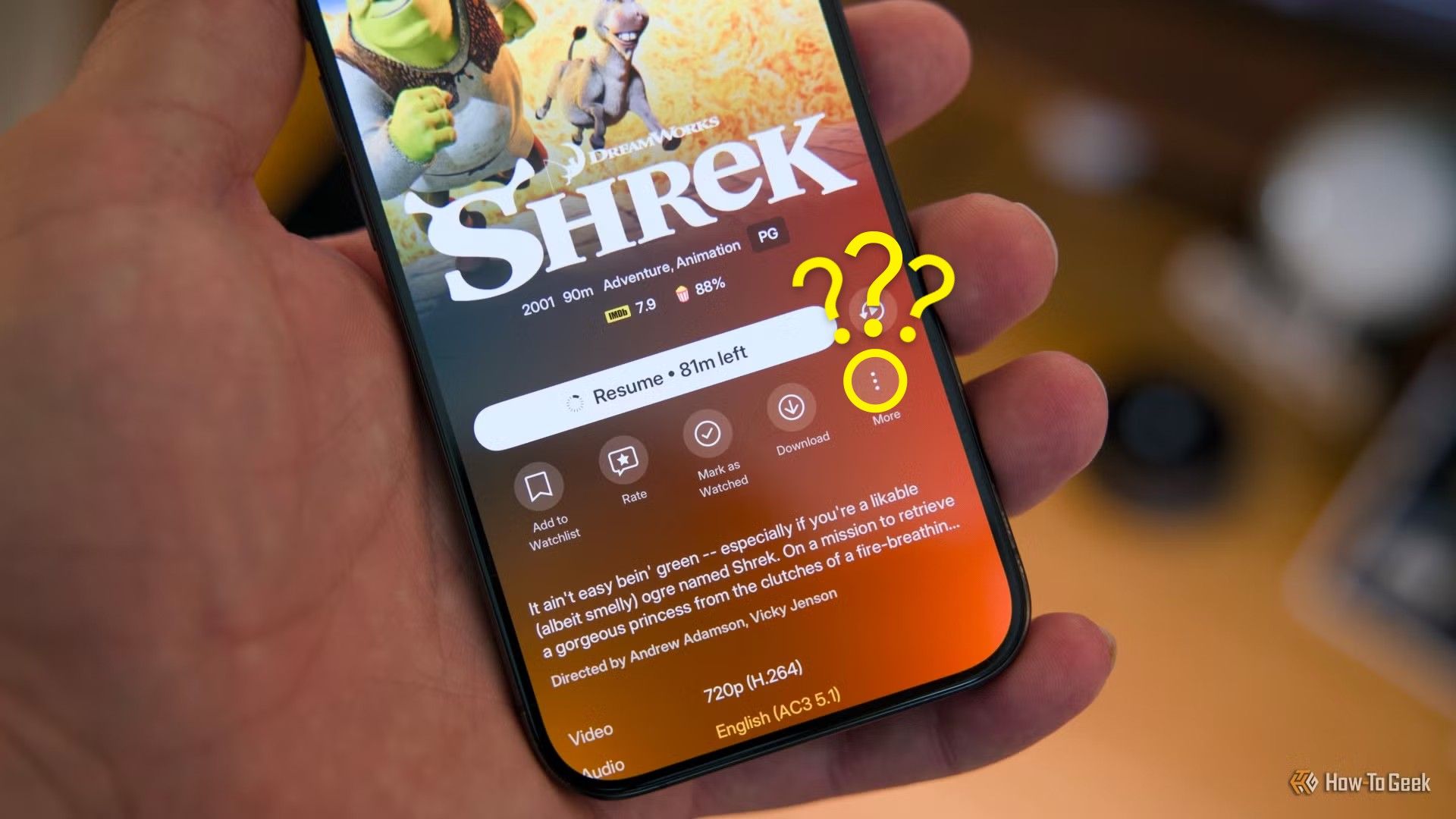
I use Plex almost every day, and I’ve noticed several massive “improvements” over the last year. While I’m happy with most of the changes, one of my favorite features—and very underrated—was on the wrong end of them. Allow me to explain.
Balancing the need to know with the need to get shovels in the ground is causing friction in communities across the US
feature Applied Digital CEO Wes Cummins said when his company decides on a location for a datacenter, he asks town officials to sign non-disclosure agreements to stop politicians from leaking insider information.…
People have been using Android phones for nearly two decades, and some bad habits have been passed down over the years. Even some of the oldest myths persist today. The good news is that it’s really very easy to avoid these mistakes once you know about them.
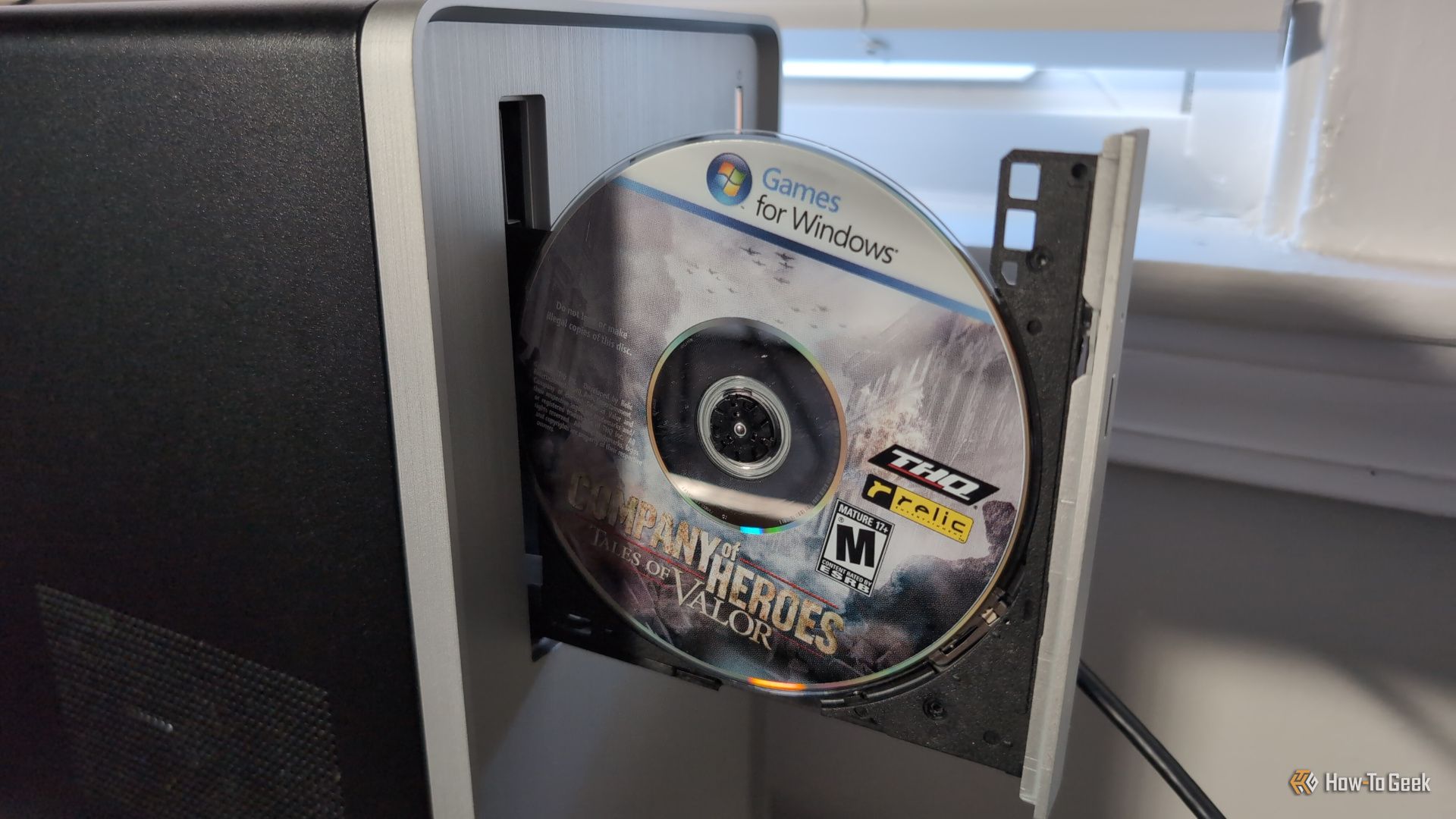
Running old CD-ROM games on modern Windows isn't too hard if you know how to manage Windows' compatibility software. But what if you have a Linux desktop and don't want to leave your old Windows games behind?
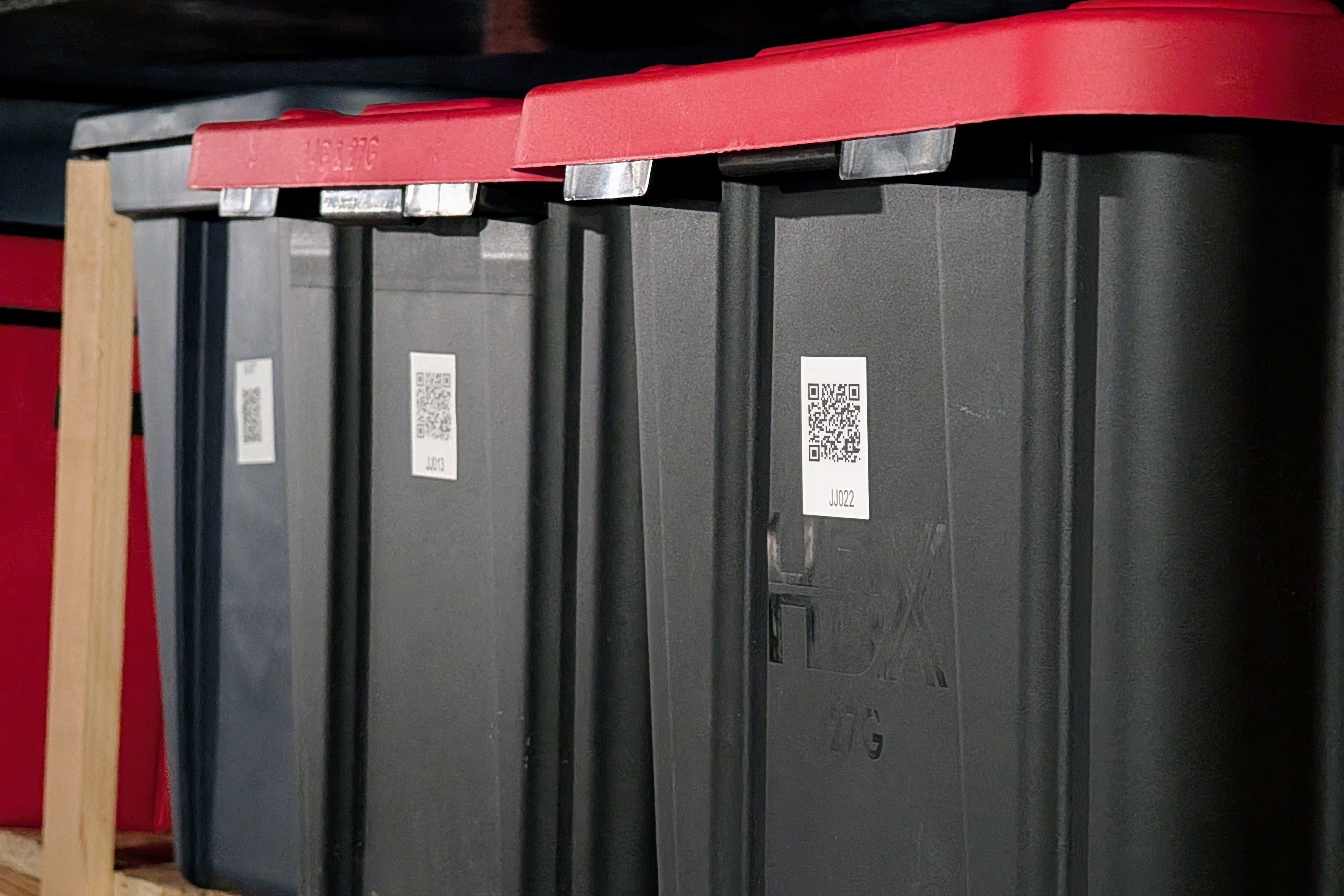
We all dream of having a perfectly organized home with a place for everything and everything in its place. Achieving that dream is harder than it seems, but I've found a techie solution that's extremely cheap and easy to set up.
The United States is preparing Misawa Air Base in northern Japan to support the future deployment of F-35A stealth fighter aircraft, as part of a broader effort to modernize U.S. air power in the western Pacific. According to the report by Newsweek journalist Ryan Chan, the Pentagon plans to deploy 48 F-35A Lightning II jets […]
The United States Navy’s Independence-variant littoral combat ship USS Cincinnati (LCS 20) arrived at Cambodia’s Ream Naval Base for a temporary port visit on January 24, 2026, marking the first visit by a U.S. warship since the base was expanded with Chinese support. According to the U.S. Navy, USS Cincinnati docked at the base in […]
Attributed to Picasso was the notion that when art critics get together they talk about content, style, trend, and meaning; but that when painters get together they talk about where to get the best turpentine. We can extend that sentiment into the digital age by saying that when philosophers get together they talk about ideas, theory, and meaning; but when hackers get together they talk about where to get the best tweezers.
In this video [nanofix] runs us through his collection of tweezers talking about what he likes and doesn’t like for each. If you’re just getting into microsoldering this video will have some tips about where you should start, and if you’ve been soldering tiny stuff for a while you might find some ideas for a helpful new bit of kit, or two.
If you’re interested in tweezers and novel applications you might want to check out “smart” tweezers, which can read capacitance and resistance values on the fly. Or read about a suction based SMD tool, which can securely hold SMD components with less risk of them flying across the bench and disappearing forever into the carpet on the floor.
Nexus Mods has confirmed that its popular mod manager, Vortex, is officially coming to SteamOS in 2026. This brings streamlined mod support directly to the Steam Deck and Steam Machine hardware. This is massive news for the modding community and will be big for anyone who owns a Deck.
High fidelity is almost never the default setting in the digital streaming world today. Most platforms, including YouTube Music, prioritize keeping your playback smooth and saving your data over giving you pure audio quality. This trade-off is silently ruining your listening experience.
Imagine yourself lost in the wilderness, miles from civilization, with no cell signal or Wi-Fi. Your phone is pretty much a useless brick. But what if you could still send a text? While it's not always possible to text without any connection, your Google Pixel has a few tricks up its sleeve for when you're truly off the grid.
I don’t have to tell you that phones are really good now, and you can probably point to the areas where that’s obvious. Cameras, displays, processors, build materials, and so much more. However, phones have improved in sneaky ways, too.
A private-sector tech leader tapped by the Trump administration to improve the federal government’s online presence is setting an ambitious goal — overhauling about 27,000 dot-gov websites.
Joe Gebbia, chief design officer of the United States and co-founder of Airbnb, said in a podcast interview Tuesday that the White House set out this goal when President Donald Trump signed an executive order last summer creating the National Design Studio.
“We’re fixing all of them,” Gebbia said Tuesday on the American Optimist show. Many of the federal government’s websites, he added, “look like they’re from the mid-90s.”
Gebbia began working with the Department of Government Efficiency in the early days of the Trump administration. At the Office of Personnel Management, he oversaw a long-anticipated modernization of the federal employee retirement system.
The National Design Studio so far has launched several new websites that serve as landing pages for some of the Trump administration’s policies on immigration, law enforcement and prescription drug prices.
As for next steps, Gebbia said his office will deliver “major updates,” including a refresh of existing federal websites, by July 4.
“It’s working, because we are really pulling in veterans of Silicon Valley from a talent perspective, I think it’s working because this president really deeply cares about how things look, because he knows that esthetics matter,” he said.
The White House estimates that only 6% of federal websites are rated “good” for use on mobile devices. About 45% of federal websites are not mobile-friendly.
As part of the President’s Management Agenda, the Trump administration is looking to leverage technology to “deliver faster, more secure services” and “reduce the number of confusing government websites. “
The administration has already taken steps to eliminate websites that it deems unnecessary. Federal News Network first reported that the 24 largest federal agencies are preparing to eliminate more than 330 websites — about 5% of an inventory of 7,200 websites reviewed.
The National Design Studio is still recruiting new hires. Gebbia estimated that his office will eventually have a team of about 15 engineers and 15 designers.
“We’re still ramping up the team,” he said, adding that the National Design Studio has been able to “recruit some of the best and brightest minds of our era.”
“This is a once-in-a-lifetime moment where we have a shot on goal to actually upgrade the U.S. government the way we present ourselves to the nation and to the world,” Gebbia said.
The idea for the National Design Studio began when Interior Secretary Doug Burgum asked Gebbia to improve Recreation.gov, a website for booking campsites, scheduling tours and obtaining hunting and fishing permits on federal lands. The site serves as an outdoor recreation system for 14 federal agencies.
“There’s a lot to be desired for when you have this incredible feature of the American experience, our national parks. They were being undersold in a way that they were showcased,” Gebbia said.
After working on Recreation.gov, Gebbia said he was getting similar requests from other Cabinet secretaries.
“I started to see there’s demand here for better design. There’s demand here for modernizing the digital surfaces of the government,” he said.
At that point, Gebbia said he made his pitch for the National Design Studio to Trump during a meeting at the Oval Office.
“What would it look like to have a national initiative to actually go in and up level and upgrade, not just one agency, not just one website, all the websites, all the agencies, all of the digital touch points between us, government and the American people?” he recalled.
According to the America by Design website, the White House is drawing inspiration from the Nixon administration’s beautification project in the 1970s. That project led to the creation of NASA’s iconic logo, branding for national parks and signage for the national highway system.
“My vision is that, at some point, somebody’s working at a startup and they go look at a dot-gov website to see how they did it. And we can actually create references for good design in the government, rather than be the butt of a joke,” Gebbia said.
So far, the National Design Studio has launched SafeDC.gov, a website meant to facilitate the Trump administration’s surge of federal law enforcement agents to Washington, D.C. It’s also launched TrumpCard.gov, a program meant to fast-track the green-card process for noncitizens seeking permanent residency in the United States — and who are able to pay a $15,000 processing fee and a $1 million or $5 million “gift” to the Commerce Department.
Its most recent website, https://trumprx.gov/, is still in the works. The website supports an administration goal of connecting consumers with lower-priced prescription drugs.
Gebbia said private-sector tech experts are interested in working with National Design Studio and overcoming institutional barriers to change.
“Of course, you bump into things and all the processes and people saying, ‘Well, it’s always been done this way. Why would we change it?’ I think, though, there’s an incredible amount of momentum behind this — the excitement around America by Design, the excitement around the National Design Studio, and the excitement on the demand side of secretaries and people and agencies — ‘Yes, please fix this for us. We’re so happy you’re here to make us make this look good,'” he said.
Kindle eReaders are obviously great for reading books, but that’s not all they can do. One of the coolest lesser-known features is the ability to send web articles to your Kindle. Instapaper is a great way to do this, but starting next month, the app’s "Send to Kindle" feature will no longer be free.

 Login
Login




 The United States is preparing Misawa Air Base in northern Japan to support the future deployment of F-35A stealth fighter aircraft, as part of a broader effort to modernize U.S. air power in the western Pacific. According to the report by Newsweek journalist Ryan Chan, the Pentagon plans to deploy 48 F-35A Lightning II jets […]
  The United States Navy’s Independence-variant littoral combat ship USS Cincinnati (LCS 20) arrived at Cambodia’s Ream Naval Base for a temporary port visit on January 24, 2026, marking the first visit by a U.S. warship since the base was expanded with Chinese support. According to the U.S. Navy, USS Cincinnati docked at the base in […]
 ![[nanofix] and his assortment of tweezers](https://hackaday.com/wp-content/uploads/2026/01/nanofix-tweezers-banner.jpg?w=800)