Reading view

There are new articles available, click to refresh the page.

Tech Moves: Amazon employee retiring after 20 years; former Oracle and Microsoft execs take new roles

Mark Griffith. (LinkedIn Photo)

Mark GriffithAmazon employee No. 1,037 and the third hire for what would become Fulfillment by Amazon — is retiring after more than two decades with the Seattle-area tech giant.

Griffith spent most of his career at FBA, which handles shipping, customer service, and returns for third-party businesses. He was director of software engineering for FBA and then for Amazon payments. His final role was director of seller fulfillment services.

Griffith penned a lengthy reflection on Substack in which he shares his career journey, what he learned from working at the company, and pithy personal and professional advice.

“I have given my ALL to Amazon for 8 hours+ a day for a long time – but I’ve never given it everything – that is too dangerous – I don’t live to work – I work to live. I work hard; I try to work empathetically and smart and help others – but I am ready to let others carry on,” Griffith said.

Vinay Kumar. (DigitalOcean Photo)

DigitalOcean named Vinay Kumar as chief product and technology officer of the infrastructure-as-a-service company. Kumar, based in Seattle, was previously with Oracle for more than 11 years, leaving the role of senior vice president of cloud engineering.

Paddy Srinivasan, CEO of DigitalOcean, highlighted Kumar’s experience building cloud and AI platforms at scale, his “tremendous product strategy acumen” and his understanding of the “operational rigor required for mission-critical workloads.”

Chris Hundley. (LinkedIn Photo)

Chris Hundley has joined Seattle RFID tech company Impinj as executive VP of enterprise solutions.

“Impinj has built an incredible foundation as the market leader in RAIN RFID, with strong momentum helping businesses wirelessly connect billions of items across use cases including loss prevention, shipment verification, and asset management,” Hundley said on LinkedIn.

Hundley is the founder and former CEO of the marketing automation startup Siftrock, which was acquired by Drift in 2018. He was also chief technology officer and president of AudioEye, which aimed to make digital technology inclusive for people with disabilities.

Lindsay Bayne. (LinkedIn Photo)

Lindsay Bayne is now senior director of advocacy at UiPath, a New York-based company that helps businesses automate repetitive, complex tasks.

Bayne was previously at Microsoft for more than a decade, leaving the role of director of the Growth Innovation and Strategy Team.

“I’m honored to join and partner with this incredibly talented team, advocate for our incredible customers, and help showcase the real-world impact of automation and AI,” Bayne said on LinkedIn.

Christin Camacho. (LinkedIn Photo)

Christin Camacho is now head of go-to-market for BuildQ, an AI platform for clean energy development and due diligence. Camacho joins the company following nearly seven years at LevelTen Energy, a Seattle-based clean energy marketplace, where she served as vice president of marketing. She previously worked at Redfin.

“BuildQ’s AI accelerates every stage of development for large wind, solar, and storage projects. Ultimately, that means more clean energy projects get built, faster, and that’s a mission I’ve dedicated my career to,” Camacho said via email.

In her new role, Camacho will work with Maryssa Barron, a former LevelTen colleague and founder and CEO of BuildQ.

Lowell Bander, founding general manager of Seattle’s 9Zero, is changing roles at the climate tech entrepreneurial hub. Bander is taking the title of ecosystem advisor as the organization looks for a new leader. Bander is also an advisor on Seattle Mayor Katie Wilson’s transportation and environment transition team.

Nate Frazier is now community liaison for the Oregon AI Accelerator. The Portland organization aims to coordinate the state’s entrepreneurial groups, investors and universities to foster AI innovation.

— The Seattle Hub for Synthetic Biology has named the first cohort for its SeaBridge Fellowship, a research training program. In March, the effort received a $10 million grant from the Washington Research Foundation. The scientists will receive two years of financial support plus funding for career development, mentorship training and networking. They include:

  • Changho Chun, a postdoctoral scholar in the University of Washington’s Department of Rehabilitation Medicine who is doing research that could aid in treating ALS (Lou Gehrig’s disease).
  • Ian Linde, a postdoc in the Public Health Sciences Division at Fred Hutch Cancer Center studying the conditions under which gene mutations lead to breast cancer tumors.
  • Abigail Nagle, a postdoc in the UW Department of Laboratory Medicine and Pathology investigating communications between connective tissue and heart muscle tissue.
  • Stephanie Sansbury, a postdoc in the UW Department of Biochemistry and Institute for Protein Design researching processes around engineered protein nanoparticles in pursuit of therapeutics.
  • Zachary Stevenson, a postdoc in the UW Department of Genome Sciences studying synthetic cellular circuits to broaden the scope of cell programming.
  • Julie Trolle, a postdoc in the UW Department of Genome Sciences aiming to engineer cancer-fighting T cells that express multiple genes, thereby improving their ability to kill tumor cells.
  • Arata Wakimoto, a postdoc in the UW Department of Obstetrics & Gynecology investigating embryonic development as relates to congenital spine and neural tube disorders.
  • Rachel Wellington, a postdoc in Translational Science and Therapeutics Division of Fred Hutch researching cellular recording technologies in the differentiation of stem cells.

Reports: Amazon’s latest layoffs could begin next week

Amazon’s Seattle headquarters. (GeekWire File Photo)

Amazon is preparing for another round of corporate job cuts next week, according to a report from Reuters on Thursday. Bloomberg also reported that layoffs could begin next week. We reached out to Amazon for comment.

Amazon laid off about 14,000 workers globally in October. The company indicated that more layoffs could occur in 2026 while it would continue to hire in key strategic areas.

Reuters reported that the latest cuts will be “roughly the same as last year.” The overall number of cuts could be the largest in Amazon’s history, exceeding the 27,000 positions that the company eliminated in 2023 across multiple rounds of layoffs.

In a memo to employees sent in October, Amazon human resources chief Beth Galetti wrote that the company was “shifting resources to ensure we’re investing in our biggest bets and what matters most to our customers’ current and future needs.”

She added: “This generation of AI is the most transformative technology we’ve seen since the Internet, and it’s enabling companies to innovate much faster than ever before.”

There was speculation that the cuts were tied to automation or AI-related restructuring. Amazon and other tech giants including Microsoft have trimmed headcount while investing heavily in AI infrastructure. And software development engineers made up the largest group of employees affected by the layoffs in Washington state last year, amid the rise of AI coding tools.

Amazon CEO Andy Jassy also told employees in June that he expected Amazon’s total corporate workforce to shrink over time due to efficiency gains from AI.

But on the company’s earnings call with analysts, two days after the layoff announcement in October, Jassy said the cuts weren’t triggered by financial strain or artificial intelligence replacing workers. Instead, he framed it as a push to stay nimble, and said Amazon’s rapid growth over the past decade led to extra layers of management that slowed decision-making.

Jassy, who succeeded founder Jeff Bezos as CEO in mid-2021, has pushed to reduce management layers and eliminate bureaucracy inside the company. Amazon’s corporate headcount tripled between 2017 and 2022, according to The Information, before the company adopted a more cautious hiring approach.

Amazon’s corporate workforce numbered around 350,000 people in early 2023, the last time the company provided a public number. At that scale, the reduction of 30,000 represents about 8.5% of Amazon’s corporate workforce. However, the number is a much smaller fraction of its overall workforce of 1.57 million people, which includes workers in its warehouses.

The company employs around 50,000 corporate workers in the Seattle region, its primary headquarters. There were 2,303 corporate employees in Washington state that were laid off last year in October.

Amazon reports its latest quarterly earnings on Feb. 5. The company’s stock underperformed relative to the “Magnificent Seven” tech giants last year. Some analysts predict that Amazon’s cloud unit will help boost the stock as AI demand rises.

Submit news tips to GeekWire here, or to tips@geekwire.com.

eBay bans illicit automated shopping amid rapid rise of AI agents

On Tuesday, eBay updated its User Agreement to explicitly ban third-party "buy for me" agents and AI chatbots from interacting with its platform without permission, first spotted by Value Added Resource. On its face, a one-line terms of service update doesn't seem like major news, but what it implies is more significant: The change reflects the rapid emergence of what some are calling "agentic commerce," a new category of AI tools designed to browse, compare, and purchase products on behalf of users.

eBay's updated terms, which go into effect on February 20, 2026, specifically prohibit users from employing "buy-for-me agents, LLM-driven bots, or any end-to-end flow that attempts to place orders without human review" to access eBay's services without the site's permission. The previous version of the agreement contained a general prohibition on robots, spiders, scrapers, and automated data gathering tools but did not mention AI agents or LLMs by name.

At first glance, the phrase "agentic commerce" may sound like aspirational marketing jargon, but the tools are already here, and people are apparently using them. While fitting loosely under one label, these tools come in many forms.

Read full article

Comments

© Westend61 via Getty Images

Tech Moves: Former Microsoft CVP joins Amazon; Chronus names CEO; REI hires AI leader

Jigar Thakkar. (LinkedIn Photo)

Jigar Thakkar is now vice president of Amazon Quick Suite, a platform that uses agentic AI to automate business workflows, research and data access. Amazon launched the tool in October 2025.

Thakkar is returning to Seattle after more than seven years at New York-based financial services firm MSCI, where he worked as chief technology officer and head of engineering.

Before MSCI, Thakkar spent nearly two decades at Microsoft where he was the founding engineering leader of Microsoft Teams and held the title of corporate VP. He joined the tech giant in 1999 as a software developer on the Microsoft Money team.

“I’m excited about Jigar’s customer-centric approach and ability to scale transformative products, his passion for agent technology, and his experience building platforms that serve millions of users,” said Swami Sivasubramanian, VP of agentic AI at AWS, in announcing the news.

Sara Vaezy. (LinkedIn Photo)

Sara Vaezy joined healthcare consulting firm Chartis as chief product and technology officer. Vaezy previously spent nearly a decade at Providence, where she was chief transformation officer with the Renton, Wash.-based multi-state healthcare provider.

This is Vaezy’s second stint at Chartis — she previously worked at the Chicago-based company from 2010 to 2015.

“We viscerally know the healthcare system is broken and needs to change. Clinicians are overburdened, patient care isn’t always well coordinated or affordable, and costs continue to increase unsustainably,” Vaezy wrote on LinkedIn. “This is an opportunity to help Chartis navigate a landscape that’s rapidly changing and actually do something about it, along with clients.”

Vaezy is also a clinical assistant professor at the University of Washington’s School of Public Health.

Niki Hall, left, and Kelli Dragovich. (Supio Photos)

— After raising $60 million last year, legal-tech startup Supio has named two new executives:

  • Niki Hall is now chief marketing officer, joining the Seattle-based company from Five9, a startup that helps brands connect with customers. She was previously CMO at the French startup Contentsquare. 
  • Kelli Dragovich, who has worked in HR for more than two decades, has taken the role of chief people officer. Dragovich was mostly recently CPO at Pendo and has served in leadership at companies including Google, GitHub, Yahoo, Intuit, Quizlet and others.
Ankur Ahlowalia. (Chronus Photo)

Chronus named Ankur Ahlowalia as CEO of the Seattle-based mentoring software platform.

“I’m delighted to lead a company that has pioneered mentoring software and is now leveraging artificial intelligence to make mentorship more accessible, personalized, and impactful for all employees,” Ahlowalia said in statement.

Ahlowalia joins Chronus from the Dallas-based software company Korbyt, which he led for more than five years.

Variant Bio has appointed Dr. Craig Basson as chief medical officer and president of research and development. The Seattle-based drug discovery company is working with genetically diverse populations globally to develop new therapies.

Craig Basson. (Variant Bio Photo)

“Craig’s career uniquely spans deep human genetics, rigorous clinical science, and successful drug development at scale,” said Andrew Farnum, Variant’s CEO. “His leadership and experience translating genetic insights into medicines will be instrumental as we move our programs into the clinic.”

Basson has worked for more than 25 years biotech and academia. He joins Variant from Bitterroot Bio, which is focused on using immunotherapy to treat cardiovascular disease. Other past roles include leadership at Boston Pharmaceuticals and Novartis Institutes for BioMedical Research and instructional roles at Harvard Medical School and Weill Cornell Medical College.

Larry Colagiovanni. (LinkedIn Photo)

— Longtime Seattle-area tech leader Larry Colagiovanni is now leading AI product innovation at outdoor gear retailer REI. Colagiovanni’s career has included multiple stints at Microsoft, most recently as lead of product vision and strategy for Microsoft Shopping where he launched the company’s first conversational shopping assistant.

Other past roles include partner at Madrona Venture Labs, C-suite roles at Limeade, and leadership titles at eBay and Decide.

Colagiovanni said on LinkedIn that the role “brings together my passion for the outdoors with my belief in human-centered AI that supports better discovery, decision-making, and experiences.”

Diego Oppenheimer is now an executive fellow with the Stanford University Graduate School of Business. The serial entrepreneur founded Algorithmia, which was acquired by DataRobot.

“Couldn’t be more excited to continue helping to build companies, invest in founders, and now helping shape the next generation of AI-native entrepreneurs,” he said on LinkedIn.

Smarsh, a Portland, Ore., company that helps customers manage their business communications to identify regulatory and reputational risks, announced multiple leadership changes:

  • Ian Goodkind is now chief financial officer after previously working as CFO of Jamf where he successfully led the organization through its 2020 initial public offering.
  • Kamesh Tumsi is chief product officer, joining from HealthEquity where he was senior VP and head of product.
  • Goutam Nadella, former CPO at Smarsh, is now the chief strategy officer.

Northwest Quantum Nexus (NQN), a group supporting quantum research and innovation across Washington, Oregon, Idaho and Montana, named three leaders serving in a volunteer-capacity to spearhead its transition from an informal partnership into a formalized organization:

  • Joseph Williams is executive director, having served as an NQN co-founder and co-chair. Williams was previously the interim director of the Washington State Broadband Office within the Department of Commerce. Williams has held various leadership positions for government agencies.
  • Charles Marcus, a University of Washington physics professor who holds the Boeing Johnson Endowed Chair in Materials Science and Engineering, will serve as NQN chief scientist.
  • Arry Yu is now NQN’s director of external affairs. Yu co-founded the Cascadia Blockchain Council, established the U.S. Blockchain Coalition, and was on the board of the Washington Technology Industry Association (WTIA).

Sarah Clifthorne is now interim director of the Washington State Department of Commerce as a permanent leader is being sought. Gov. Bob Ferguson appointed Clifthorne to the role following the recent resignation of Joe Nguyễn.

Clifthorne has served as deputy director at Commerce since February 2025 and was previously a policy director with the Washington State Senate. She has also worked in union leadership.

Rachel Fukaya is now vice president of marketing at Textio, the Seattle startup that helps companies write job listings and other communications. Fukaya has been with Textio for more the two years and previously worked at multiple public relations companies. She was formerly VP of PR at Walker Sands.

Stephan Delano (LinkedIn Photo)

Stephen Delano is now principal software engineer at Seattle’s Yoodli, an AI roleplay startup recently landed a $40 million investment.

Delano joins Yoodli after five years at Tomo, a digital mortgage startup launched by former Zillow executives, where he was a founding engineer.

He previously spent more than a decade at Chef, a Seattle-based automation technology company that was acquired in 2020 for $220 million.

— Seattle Mayor Katie Wilson is replacing Seattle City Light CEO and general manager Dawn Lindell. The new mayor has selected Dennis McLerran, the former U.S. Environmental Protection Agency head for the Pacific Northwest region, for the role pending confirmation by the Seattle City Council. Lindell served as CEO for two years.

Wilson on Wednesday announced additional leadership changes within the City of Seattle with the selection of these acting directors:

  • Quynh Pham at the Department of Neighborhoods
  • Amy Nguyen at the Office of Arts and Culture
  • Beto Yarce at the Office of Economic Development
  • Lylianna Allala at the Office of Sustainability and the Environment

Daryl Fairweather, chief economist for the real estate platform Redfin, joined the board of governors of Center for Land Economics. The education and research organization promotes equitable land and property assessments.

WestRiver Group announced that Craig Lange has joined the Seattle-based firm as managing director and lead of the Disruptive Growth Fund. Lange spent more than three decades with the heavy machinery company Caterpillar.

Did BlackRock Make A Billion-Dollar XRP Bet? Here’s The Real Tea

Rumors of a large-scale XRP purchase by the world’s largest asset manager, BlackRock, have captured the attention of the crypto world this week. Screenshots circulating on X suggest that the global investment company had invested over a billion dollars in the altcoin, sparking both bullish excitement and skepticism across the crypto community.

BlackRock’s Rumored $1.85 Billion XRP Bet

The frenzy began when several popular crypto influencers, including The Crypto Bull, shared a post and portfolio screenshot claiming that BlackRock had added $1.85 billion worth of XRP to its already substantial crypto holdings. Given BlackRock’s significant influence in the crypto space, the idea that the asset manager had invested in XRP seemed like a major signal for institutional adoption of the cryptocurrency. 

The rumors triggered a wave of speculation about the token, with some market participants viewing the alleged purchase as extremely bullish. A closer examination of BlackRock’s actual portfolio, however, shows that the reports were unfounded and lacked any evidence to support them. 

Data from Arkham Intelligence, a blockchain analytics company, revealed that, contrary to expectations, BlackRock holds just 5.267 XRP, valued at just $10.32—a far cry from the acclaimed $1.85 billion in holdings. The data also showed that the asset manager held the majority of its holdings in Bitcoin and Ethereum. BlackRock’s total crypto portfolio is estimated at $82.1 billion, including 784,424 BTC valued at $71.31 billion, 3.494 million ETH worth approximately $10.8 billion, and other assets. 

XRP

Investigations also revealed that the original screenshots, which showed BlackRock owning 911.76 million XRP, had been edited to exaggerate the asset manager’s holdings. This misrepresentation created a temporary buzz, but did not reflect any real investment in the altcoin by the firm. 

Despite the false alarm, the incident highlights how quickly misinformation can spread in the crypto space, especially when shared by crypto influencers with thousands of followers. The Crypto Bull’s post drew a variety of reactions from the community.  Some questioned why XRP’s price had not moved if the reports were accurate, while others remained skeptical, and a few outrightly dismissed the claims. 

Rise Of Misinformation In The Crypto Space

False rumors have become a recurrent theme in the crypto world, and the latest incident with XRP and BlackRock is just one example. This is alson’t the first time false claims have been made about the token. Earlier this month, rumours of a potential Ripple partnership with Amazon spread across the community, sparking speculation about how such a collaboration could positively impact XRP’s price. 

Similarly, overly optimistic price forecasts can also contribute to misinformation. Some analysts have predicted that XRP could surge to $50,000, fueling unrealistic expectations for investors. In a market predominantly driven by speculation and volatility, it’s important for investors to verify sources and avoid making decisions based on unproven claims.

XRP

Tech Moves: Ex-Pinterest CMO joins Microsoft AI; Anthropic hires former Microsoft India leader; ex-Amazon HR director joins Goodwill

Andréa Mallard. (LinkedIn Photo)

Andréa Mallard, who spent the past seven years leading marketing at Pinterest, joined Microsoft AI as its new chief marketing officer.

Mallard started in her new role two weeks ago. She said she was drawn to Microsoft’s AI group “to help build a technology that truly earns the trust needed to serve human potential.”

“AI is already the most consequential technological shift of my lifetime,” she wrote on LinkedIn. “It will shape our children’s lives in ways that are difficult to predict.”

Before joining Pinterest in 2018, Mallard was CMO at Athleta and Omada Health. She’s currently a board director at Hydrow, Kajabi, and TwentyFirstCenturyBrand.

Microsoft AI, led by Mustafa Suleyman, launched in 2024 and focuses on consumer products and research.

Claudine Cheever. (LinkedIn Photo)

Claudine Cheever, vice president of global brand and marketing at Amazon, is replacing Mallard as the new CMO at Pinterest.

Cheever spent nearly a decade at Amazon in global marketing roles, where she oversaw various functions and campaigns.

“What really hooked me is how Pinterest stands apart from other social and search platforms,” Cheever wrote on LinkedIn. “The platform is rooted in intention, not reaction. People come to Pinterest to save, curate, evolve their interests, and shop. That’s not just inspiring. It’s fundamentally different.”

Jo Shoesmith, global chief creative officer at Amazon, will replace Cheever on an interim basis as the company searches for a permanent replacement.

“Claudine has been a creative leader, building durable global brand architecture and sophisticated creative systems that operate at scale across our Stores business,” an Amazon spokesperson said in a statement. “We’re grateful for her impact on our brand and teams, and we wish her all the best in her next chapter.”

San Francisco-based Pinterest also hired former DoorDash and Spotify exec Lee Brown as its new chief business officer.

Irina Ghose. (LinkedIn Photo)

— Irina Ghose was named managing director for Anthropic’s India operations. Ghose spent 24 years at Microsoft, most recently as managing director for Microsoft India.

India represents the second-largest user base for Anthropic’s Claude product, Ghose wrote on LinkedIn.

“From digital natives and software firms to large enterprises and public-sector institutions, India is entering a phase of scaled deployment that will enhance competitive advantage and shape the future,” she wrote. “AI tuned to local languages will be a force multiplier across society – from education and healthcare to workforce development and job skills.”

Doug Bowser. (Hasbro Photo)

Doug Bowser, former president of Nintendo of America, joined the board of Hasbro.

Bowser spent more than a decade at Redmond, Wash.-based Nintendo of America, leading the video game giant as president and COO from April 2019 until last year, when he retired in December. He oversaw the successful launch of the Nintendo Switch and Switch 2. Bowser previously worked at Procter & Gamble and Electronic Arts.

Hasbro, which owns Renton, Wash.-based Wizards of the Coast, also added Carla Vernón, CEO of The Honest Company, to its board.

Trisha Berard. (LinkedIn Photo)

— Trisha Berard, a longtime Seattle-area HR leader, joined Evergreen Goodwill as senior vice president of people and culture.

Berard was most recently a senior director at McKinstry and vice president of HR at Eddie Bauer. She also spent 12 years at Amazon, where she was a global strategic HR leader, along with stints at Starbucks and RealNetworks.

Evergreen Goodwill employs more than 2,000 people across the Seattle region and operates 23 nonprofit thrift stores.

“Evergreen Goodwill’s mission of empowering individuals, supporting communities, and creating sustainable training and employment inspires me,” Berard said in a statement.

Libby Johnson McKee, a former customer returns leader at Amazon, joined Evergreen Goodwill as CEO in 2024. Shelley Salomon, vice president of global business for Amazon, sits on the nonprofit’s board.

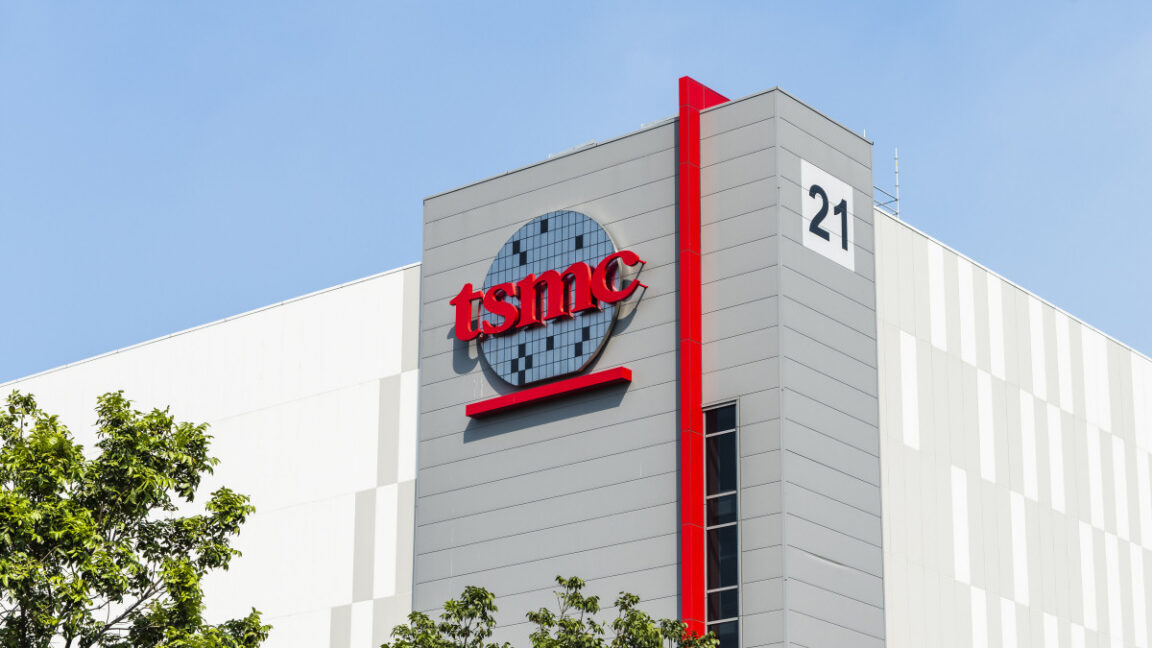
TSMC says AI demand is “endless” after record Q4 earnings

On Thursday, Taiwan Semiconductor Manufacturing Company (TSMC) reported record fourth-quarter earnings and said it expects AI chip demand to continue for years. During an earnings call, CEO C.C. Wei told investors that while he cannot predict the semiconductor industry's long-term trajectory, he remains bullish on AI.

TSMC manufactures chips for companies including Apple, Nvidia, AMD, and Qualcomm, making it a linchpin of the global electronics supply chain. The company produces the vast majority of the world's most advanced semiconductors, and its factories in Taiwan have become a focal point of US-China tensions over technology and trade. When TSMC reports strong demand and ramps up spending, it signals that the companies designing AI chips expect years of continued growth.

"All in all, I believe in my point of view, the AI is real—not only real, it's starting to grow into our daily life. And we believe that is kind of—we call it AI megatrend, we certainly would believe that," Wei said during the call. "So another question is 'can the semiconductor industry be good for three, four, five years in a row?' I'll tell you the truth, I don't know. But I look at the AI, it looks like it's going to be like an endless—I mean, that for many years to come."

Read full article

Comments

© BING-JHEN HONG via Getty Images

Wikipedia signs major AI firms to new priority data access deals

On Thursday, the Wikimedia Foundation announced API access deals with Microsoft, Meta, Amazon, Perplexity, and Mistral AI, expanding its effort to get major tech companies to pay for high-volume API access to Wikipedia content, which these companies use to train AI models like Microsoft Copilot and ChatGPT.

The deals mean that most major AI developers have now signed on to the foundation's Wikimedia Enterprise program, a commercial subsidiary that sells high-speed API access to Wikipedia's 65 million articles at higher speeds and volumes than the free public APIs provide. Wikipedia's content remains freely available under a Creative Commons license, but the Enterprise program charges for faster, higher-volume access to the data. The foundation did not disclose the financial terms of the deals.

The new partners join Google, which signed a deal with Wikimedia Enterprise in 2022, as well as smaller companies like Ecosia, Nomic, Pleias, ProRata, and Reef Media. The revenue helps offset infrastructure costs for the nonprofit, which otherwise relies on small public donations while watching its content become a staple of training data for AI models.

Read full article

Comments

© Wikipedia

❌