Reading view

There are new articles available, click to refresh the page.

Monero, Zcash, And Dash Prohibited In India Amid Money-Laundering Crackdown

India’s Financial Intelligence Unit (FIU‑IND) has launched a fresh anti‑money‑laundering crackdown aimed at privacy‑focused cryptocurrencies. The move targets Monero (XMR), Zcash (ZEC), and Dash (DASH), which together represent the largest and most widely used privacy coins globally.

India Tightens Crypto Oversight

Details of the action were shared on Friday by market analyst MartyParty on social media platform X (previously Twitter), who notes that FIU‑IND has issued a directive to crypto exchanges registered in India, instructing them to immediately suspend deposits, withdrawals, and trading activity for Monero, Zcash, and Dash. 

At the heart of the regulator’s concerns is the technology underpinning these assets. Privacy coins rely on advanced cryptographic techniques designed to obscure transaction details, wallet balances, and user identities. 

Monero uses ring signatures to hide the sender and receiver, Zcash allows shielded transactions that conceal transaction data, and Dash offers optional privacy features. 

While these tools are valued by users seeking confidentiality, regulators argue they make it difficult for exchanges to meet know‑your‑customer (KYC) and transaction‑monitoring obligations. The regulator views these features as posing elevated risks related to money laundering, terrorist financing, and sanctions evasion. 

The latest directive applies to all cryptocurrency exchanges registed in the country, which currently includes crypto platforms operating in compliance with Indian regulations. They have been instructed to stop supporting the assets, including delisting, blocking all deposits and withdrawals, and disabling any associated trading pairs.

Monero, Zcash, And Dash Show Mixed Market Reaction

The latest action builds on a broader regulatory push by Indian authorities. In October 2025, FIU‑IND ordered internet service providers to block access to 25 offshore crypto exchanges that failed to register. 

By contrast, only a handful of exchanges currently remain fully registered and compliant in the country. Binance, Mudrex, Coinbase, CoinSwitch (CoinSwitch Kuber), and ZebPay continue to operate legally in India.

Despite the regulatory pressure, market prices for the targeted privacy coins showed short‑term resilience. Over the past 24 hours, all three assets posted gains after recovering from sharp losses earlier in the week. 

Monero was trading at $524 at the time of writing, up 3.5% on the day. Zcash also rebounded modestly, rising 2.2% to trade at $372. Dash recorded the strongest daily performance, jumping 11.6% during the same period.

However, the broader trend remains negative. According to CoinGecko data, Monero, Zcash, and Dash are still down sharply on a weekly basis, with losses of approximately 21%, 8%, and 20% respectively over the past seven days. 

Monero

Featured image from DALL-E, chart from TradingView.com

Weekly Crypto Regulation Roundup: Market Structure Stalls as Power Shifts From Congress to Regulators

This week’s regulatory developments show a familiar reality in Washington: there is broad agreement that crypto needs rules, but little consensus on how those rules should be written or who should take the lead.

That tension was on full display as Senate Judiciary leaders Chuck Grassley and Dick Durbin raised concerns over a provision in Senate Banking Chair Tim Scott’s crypto market structure bill.

❌ Senate Judiciary leaders oppose blockchain developer protections in crypto bill, warning exemptions modeled on Lummis-Wyden BRCA could block money laundering prosecutions.#Senate #CryptoBill #Developershttps://t.co/onqKSmbDQ2

— Cryptonews.com (@cryptonews) January 19, 2026

The language would exempt certain blockchain software developers from financial licensing requirements, a move lawmakers warned could weaken law enforcement’s ability to pursue money laundering and other illicit financial activity.

In a private letter first reported by Politico, Grassley and Durbin argued that the provision falls squarely under the Judiciary Committee’s jurisdiction and noted that their panel was not consulted before the markup was scheduled and later postponed.

The section closely mirrors the Blockchain Regulatory Certainty Act, a bipartisan proposal led by Senators Cynthia Lummis and Ron Wyden, but its inclusion has now become another flashpoint in an already fragile legislative process.

Market Structure Bill Slips Further Down the Agenda

Momentum behind the broader market structure bill continues to slow. According to reports, the Senate Banking Committee has again delayed work on the legislation, pushing consideration to late February or March. Instead, lawmakers are shifting focus to housing legislation following President Donald Trump’s renewed push on affordability.

🏦 Crypto market structure bill – Clarity Act – has been further delayed by the US Senate Banking Committee until late February or March.#CryptoMarketStructureBill #ClarityAct #CryptoRegulationhttps://t.co/sfk07tyygY

— Cryptonews.com (@cryptonews) January 22, 2026

The delay reinforces a growing concern within the crypto industry: despite years of debate, market structure reform remains vulnerable to political reprioritization. What was once positioned as urgent now risks being sidelined by competing legislative priorities.

Partisan Cracks Begin to Show

While the Banking Committee hesitates, the Senate Agriculture Committee is moving ahead, even without Democratic support. Chair John Boozman has scheduled a markup for January 27, acknowledging that “differences remain on fundamental policy issues” but signaling a willingness to proceed regardless.

🇺🇸 Senate Agriculture Committee advances crypto bill for January 27 markup without Democratic support as Banking delays CLARITY Act over stablecoin disputes.#ClarityAct #Stablecoinhttps://t.co/Wjz1vpYh5d

— Cryptonews.com (@cryptonews) January 22, 2026

If passed, the move would mark a shift away from bipartisan consensus toward a more partisan approach, raising questions about the long-term durability of any resulting framework in a divided Congress.

Regulators Step In as Lawmakers Stall

As Congress struggles, regulators are increasingly filling the gap. Newly appointed CFTC Chair Michael Selig this week declared the start of a “golden age” for U.S. financial markets, launching a “Future-Proof” initiative intended to update decades-old rules to reflect crypto, blockchain, and artificial intelligence.

🚀 @CFTC Chair @MichaelSelig launches "Future-Proof" initiative to modernize derivatives rules, calling it America’s “GOLDEN AGE” for markets. #CFTC #MichaelSelig https://t.co/LMwHJ6NJLi

— Cryptonews.com (@cryptonews) January 20, 2026

At the White House, Digital Asset Advisor Patrick Witt added pressure from another angle, urging swift passage of a market structure bill. Pushing back against claims that “no bill is better than a bad bill,” Witt warned that failure to act now could invite far more punitive legislation under a future Democratic Congress, particularly in the aftermath of a market crisis.

Enforcement Pulls Back—Coordination Moves Forward

Meanwhile, enforcement trends continue to shift. A Cornerstone Research report found that SEC crypto enforcement actions fell 60% in 2025 following Paul Atkins’ appointment as chair, indicating a move away from regulation by enforcement and toward a more targeted focus on fraud.

🏛The SEC opened just 13 crypto enforcement cases in 2025, down 60% from 2024, with most new actions under Chair Paul Atkins focused on fraud.#SEC #CryptoEnforcement https://t.co/YI5S1uVisH

— Cryptonews.com (@cryptonews) January 23, 2026

That recalibration was reinforced this week as Atkins and Selig announced a joint event aimed at regulatory harmonization between the SEC and CFTC, a symbolic but meaningful step toward reducing the jurisdictional confusion that has long plagued U.S. crypto markets.

The Bigger Picture

Taken together, this week’s developments point to a clear pattern: legislative paralysis is pushing more responsibility onto regulators. Whether that results in clarity or further fragmentation will depend on whether coordination can replace congressional gridlock—and whether lawmakers can still reclaim leadership before agencies set the rules by default.

The post Weekly Crypto Regulation Roundup: Market Structure Stalls as Power Shifts From Congress to Regulators appeared first on Cryptonews.

Senate Ag Committee Unveils Crypto Market Structure Bill Draft, Markup Set For Jan. 27

Following the unsuccessful markup of the long-awaited crypto market Structure bill (CLARITY Act) by the Senate Banking Committee, the Senate Agriculture Committee unveiled a new draft of the bill, with a scheduled markup session for Tuesday, January 27.

Stablecoin Yield Regulations Excluded

The Agriculture Committee’s version of the bill primarily addresses regulations under the Commodity Futures Trading Commission (CFTC), which would gain expanded authority to regulate cryptocurrencies like Bitcoin (BTC) and Ethereum (ETH). 

In contrast, the Senate Banking Committee’s section of the legislation focuses on the Securities and Exchange Commission (SEC) and its oversight. Notably, the Agriculture draft allocates $150 million to support the CFTC in the implementation of the proposed law.

Market expert James Murphy reviewed the key provisions of the new draft and expressed optimism about its implications. He highlighted that the bill creates a pathway for decentralized finance (DeFi) to avoid CFTC regulation, providing important protections for developers and specific service providers from liability. 

The Senate Agriculture Committee’s draft also excludes any regulations concerning stablecoin yields. This decision is significant, particularly as it addresses a critical provision that resulted in Coinbase (COIN) withdrawing its support for the Banking Committee’s version of the bill last week. 

The Banking Committee’s version of the CLARITY Act aims to limit the yield that stablecoin platforms can offer. While banks support this approach due to concerns about deposits potentially flowing out, crypto firms oppose it, arguing that such restrictions hinder competition. 

In contrast, the Agriculture Committee bill seeks to exempt stablecoins from CFTC regulations and relies on existing frameworks like the already passed stablecoin bill, or GENIUS Act, which mandates that stablecoins be fully backed.

Banking Committee Delays Crypto Bill’s Consideration

Senate Agriculture Chair John Boozman expressed appreciation for the collaborative efforts among lawmakers, particularly mentioning Senator Cory Booker and his staff for their contributions to consumer protections and CFTC authority. 

Despite the remaining differences in fundamental policy issues with its Democratic counterpart, the Committee’s chair emphasized the importance of moving the bill forward:

While it’s unfortunate that we couldn’t reach an agreement, I am grateful for the collaboration that has made this legislation better. It’s time we move this bill, and I look forward to the markup next week. 

But amid the broader cryptocurrency industry’s optimism surrounding the Agriculture Committee’s version of the market structure bill, the timeline for advancing the overall legislation remains uncertain. 

Bloomberg reported that the Senate Banking Committee is expected to delay consideration of its own portion of the bill, which could push discussions into late February or even March.

Crypto

Featured image from OpenArt, chart from TradingView.com 

Kansas Senator Proposes Bill For State’s Strategic Bitcoin Reserve And ETF Investment

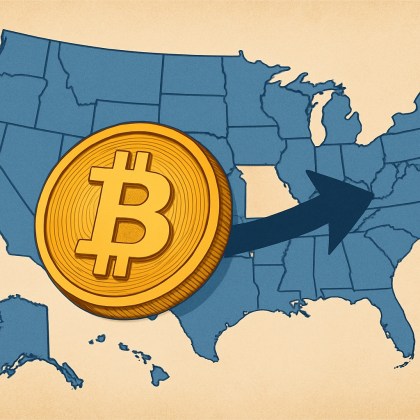
On Thursday, Senator Craig Bowser introduced a new piece of legislation aimed at creating a Strategic Bitcoin and cryptocurrency reserve for Kansas state. 

The proposal, filed as Bill 352, would permit the Kansas Public Employees Retirement System (KPERS) to allocate up to 10% of its total funds into Bitcoin exchange-traded funds (ETFs).

Kansas Bitcoin Bill 

Under the bill’s framework, KPERS would not be obligated to sell its Bitcoin ETF holdings if their value grows beyond the 10% allocation threshold, unless the board determines that doing so would better serve the interests of beneficiaries. 

If enacted, the legislation would also require the KPERS board to conduct an annual review of the investment program, with the results formally submitted to the governor for oversight and evaluation.

Kansas’ move follows a growing trend among US states exploring BTC as a strategic asset as the regulatory environment surrounding crypto has significantly shifted under President Donald Trump’s administration. 

US States Move Toward Crypto Reserves

Texas set an early benchmark last November when it became the first state to formally incorporate cryptocurrency into its treasury strategy by purchasing $10 million worth of Bitcoin. 

In North Dakota, lawmakers are considering BTC investments as a potential hedge against inflation. Oklahoma has also entered the conversation, with Senator Dusty Deevers introducing the Bitcoin Freedom Act.

Meanwhile, Tennessee introduced a new bill last week—HB1695—designed to establish its own Strategic Bitcoin Reserve. West Virginia has put forward Senate Bill 143, which proposes allocating 10% of certain state funds toward a cryptocurrency reserve. 

Missouri has made notable progress as well, advancing House Bill 2080 to create a Strategic Bitcoin Reserve Fund. That measure has already passed its second reading and is now moving forward for further consideration in the state House.

Bitcoin

Featured image from DALL-E, chart from TradingView.com 

Hong Kong To Grant Stablecoin Licenses In Q1, Financial Secretary Reveals At Davos

At the World Economic Forum in Davos, Switzerland, Hong Kong’s Financial Secretary, Paul Chan Mo-po, announced the region’s plan to issue licenses for stablecoin providers in the first quarter of this year as the city seeks to strengthen its position as a leading hub for financial technology.

Hong Kong’s Regulatory Framework

Chan highlighted Hong Kong’s regulatory framework for digital assets, describing it as “responsible and sustainable.” He emphasized the importance of a balanced approach to support the growth of both finance and technology, noting that these two sectors are “mutually reinforcing.” 

Chan articulated the benefits of digital assets, pointing out that they can enhance transparency, improve risk management, and facilitate more efficient capital movement. “We view digital assets as a financial innovation that we should embrace proactively,” he stated.

The Finance chief elaborated on the necessity of ensuring that digital assets serve the real economy while simultaneously implementing strong guardrails to mitigate risks related to financial stability, market integrity, and investor protection. 

He reiterated the principle of “same activity, same risk, same regulation,” which is designed to promote a healthy, responsible, and sustainable environment for digital asset development. The government and regulators, he asserted, will act as “market enablers,” setting a precedent for innovation.

First Stablecoin Licenses Soon

Over the past couple of yeaers, Hong Kong has prioritized strengthening its position as a fintech hub, particularly in light of the US’s efforts to fulfill President Donald Trump’s vision of establishing the country as the global centre for crypto

Chan pointed out that since 2023, the city has issued three batches of tokenized green bonds totaling $2.1 billion. Additionally, Hong Kong has already established a licensing framework for virtual asset trading platforms. 

Notably, last November, the Hong Kong Monetary Authority (HKMA) launched a controlled pilot program to facilitate real-value transactions using tokenized deposits and digital assets.

During his remarks, Chan specifically mentioned the upcoming licensing regime for stablecoins, indicating that the first batch of licenses is expected to be issued soon. 

According to reports from the HKMA, the authority received formal stablecoin license applications from 36 institutions by September 30, nearly half of the 77 expressions of interest recorded in August. 

Applicants for these licenses include a diverse range of entities, such as banks, technology firms, securities and asset management companies, e-commerce platforms, payment service providers, and Web3 startups.

A spokesperson for the HKMA stated that the authority will review all submission materials meticulously and conduct approvals in line with the new Stablecoin Ordinance and relevant regulatory requirements. 

While the HKMA aims to announce the first batch of licensed stablecoin issuers between the first and second quarter, it has advised that the licensing process will be stringent, with only a limited number of licenses granted during this initial phase.

Stablecoin

Featured image from OpenArt, chart from TradingView.com 

Vietnam Begins 5-Year Crypto Licensing Pilot To Regulate Exchanges

Vietnam has launched a pilot program to license cryptocurrency exchanges, aiming to bring the rapidly growing market into a formal legal framework after years of regulatory uncertainty.

Vietnam’s Crypto Licensing Pilot Begins

On Tuesday, Vietnam began its pilot licensing regime to officially regulate crypto trading platforms in the country for the first time, in an effort to gradually move the sector from the shadows into a properly supervised framework under the local financial authorities.

According to local reports, the Ministry of Finance issued Decision No. 96/QD-BTC on January 20, introducing procedures necessary for the implementation of Government Resolution No. 05/2025/NQ-CP.

The three new administrative procedures cover the issuance, modification, and revocation of licenses for entities operating crypto asset trading platforms. The Ministry announced that it began accepting applications from businesses seeking to offer crypto asset trading services.

For context, the country’s cryptocurrency market lacked a clear legal framework, existing in an unsupervised, “gray area.” Last year, the National Assembly passed the “Law on Digital Technology Industry,” which took effect on January 1, 2026, to create a foundation for authorities to develop suitable management policies.

In September, Vietnam’s Deputy Prime Minister Ho Duc Phoc signed Government Resolution No. 05/2025/NQ-CP, allowing a five-year pilot program for the issuance and trading of crypto assets.

As reported by Bitcoinist, under Resolution No. 05, organizations seeking to provide services for crypto trading markets must be registered with the financial authorities and fully comply with a strict set of rules, including a minimum contributed charter capital of VND10 trillion, worth around $380.66 million.

Notably, at least 65% of the charter capital must be held by institutional investors, with more than 35% contributed by at least two institutions such as commercial banks, securities companies, fund management companies, insurance companies, or technology enterprises.

The general director must have at least two years of experience in finance, while the CTO must have at least five years of experience in information technology. Moreover, firms must hire at least 10 technology staff with cybersecurity certificates and at least 10 staff with securities practice certificates working in other departments.

Financial Institutions Dive Into Digital Assets

Following the issuance of Resolution No. 05, major financial players, including securities companies and banking institutions, have announced their intention to participate in the pilot and enter the sector, noted the report.

In June, two SSI’s subsidiaries, SSI Digital Technology JSC and SSI Asset Management Company Limited, signed Memorandums of Understanding with Tether, U2U Network, and Amazon Web Services to develop a digital financial ecosystem in Vietnam based on blockchain and cloud computing platforms.

In addition, VIX Securities contributed capital to establish the VIX Crypto Asset Exchange and partnered with tech giant FPT Corp. to prepare its technology infrastructure.

Meanwhile, the banking sector saw MBBank enter a technical cooperation agreement with Dunamu, the operator of the Korean exchange Upbit, to establish a crypto exchange in Vietnam while jointly developing the legal framework and investor protection mechanisms.

Techcombank also established the Techcom Crypto Asset Exchange with a charter capital of several hundred billion VND. Similarly, VPBank stated it is fully prepared to begin operations as soon as it receives regulatory approval.

Crypto, bitcoin, BTC, BTCUSDT

What Binance’s Co-CEO Said At Davos: Exploring US Comeback Plans And Ripple’s Vision

A recent report from CNBC reveals that Binance’s co-CEO, Richard Teng, is contemplating a return to the US market after exiting in 2023 as part of a regulatory agreement that also resulted in the departure of the exchange’s former CEO, Changpeng Zhao (CZ). 

Ripple CEO Predicts Positive Impact From Binance’s Return

During an interview at the World Economic Forum in Davos on Tuesday, Teng emphasized that Binance is taking a “wait-and-see” stance regarding its reentry into the US, a market he considers “very important.”

In tandem with Teng’s comments, Brad Garlinghouse, Ripple’s CEO, shared his optimistic outlook for the world’s leading exchange comeback in a separate interview with CNBC. 

Garlinghouse remarked that the US market is significant and suggested that Binance had previously been a major player within it. “I think they’ll come back because they’re a capitalistic, innovative company that wants to solve larger market challenges and continue to grow,” he stated.

Not only that, but Garlinghouse also believes that Binance’s entry into the country’s cryptocurrency market could increase competition and ultimately attract more users. He noted: 

I think it will actually have the positive impact of bringing more people into the market, in part because it’ll reduce pricing. Today their pricing is lower on a global basis than what we see here in the U.S.

Teng, Garlinghouse Call For Support Of Key Crypto Bills

The discussion of Binance’s future in the US comes amidst a turbulent regulatory environment for cryptocurrencies. The recent cancellation of the crucial markup for the crypto market structure bill, known as the CLARITY Act, reflects ongoing challenges. 

Teng, a former regulator himself, weighed in on the state of US crypto regulations, asserting that “any regulation will be better than no regulation.” He explained that having regulatory clarity allows companies to navigate the framework effectively. 

“Once you have clarity, you can then start working around those rules,” Teng added, acknowledging that initial regulations may not be perfect but can be refined over time.

This backdrop of regulatory uncertainty is further complicated by recent developments in the industry. The CEO of Coinbase, Brian Armstrong, stepped back from supporting the crypto market structure bill just 24 hours before its markup, leading to its eventual suspension. 

Garlinghouse, who continues to support the bill in its latest form, was surprised by Armstrong’s “vehemence” against the CLARITY Act. He noted that “the rest of the industry, including exchanges that compete with Coinbase, were still supporting it.”

Looking ahead, Garlinghouse is hopeful that industry leaders will find a way to overcome the current impasse. “If we want the industry to continue to grow, we need things like the Genius Act and the Clarity Act,” he affirmed.

Binance

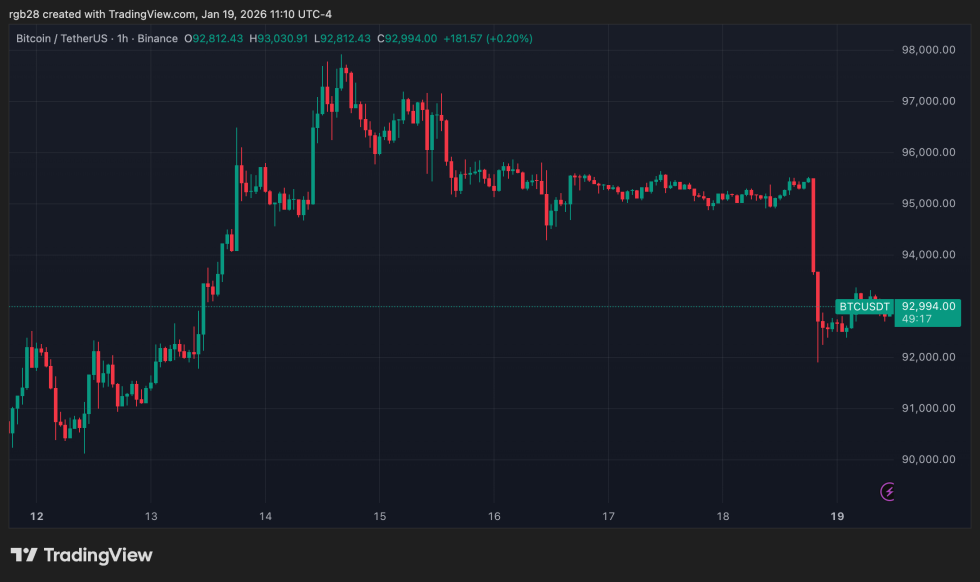
At the time of writing, Binance’s native token, Binance Coin (BNB), had dropped to $893.65, marking a 3.7% decline over the previous 24 hours. Ripple’s associated XRP token retraced towards $1.90, suffering even greater losses of 5.5% in the same time frame. 

Featured image from OpenArt, chart from TradingView.com 

International Crypto Crime Ring Exposed: South Korea Uncovers $100 Million Laundering Scheme

South Korean officials have unveiled a major international cryptocurrency crime ring involved in laundering approximately 150 billion won, equivalent to around $101.7 million, through an unauthorized foreign exchange scheme. 

The Korea Customs Service (KCS) announced on Monday that three Chinese nationals have been referred to prosecution for purported violations of the Foreign Exchange Transactions Act.

Large-Scale Cryptocurrency Laundering Scheme

Local media reports have pointed out that between September 2021 and June of last year, the suspects allegedly laundered their funds by allegedly manipulating both domestic and international cryptocurrency accounts in conjunction with Korean bank accounts. 

According to the KCS, the criminal activities were disguised as legitimate expenses, including cosmetic surgery fees for foreigners and educational costs for students studying abroad.

The accused ring utilized a complex operation to evade scrutiny from financial authorities. They reportedly bought crypto in multiple countries, transferred the assets to digital wallets in South Korea, converted them into Korean won, and funneled the money through various local bank accounts to further conceal their operations.

This action comes as South Korea is actively debating a new regulatory framework for its crypto market. Despite the growing popularity of digital assets as a common investment among local households, authorities have recently intensified their oversight on cryptocurrency transactions. 

South Korea Takes New Regulatory Steps

In a move towards greater regulation, the government revealed plans to broaden its anti-money laundering (AML) framework and emphasized the implementation of the Travel Rule—a compliance measure that requires sharing information on crypto transfers, effective even for transactions below 1 million won (approximately $680).

In addition to addressing money laundering concerns, the South Korean government outlined its 2026 Economic Growth Strategy, which includes plans to introduce Bitcoin (BTC) Exchange-Traded Funds (ETFs) this year. 

This announcement marks a significant policy shift, as cryptocurrency-based exchange-traded funds (ETFs) have been banned in South Korea since 2017. 

Despite reaffirming its position in 2024, post the US Securities and Exchange Commission’s (SEC) approval of similar products, the South Korean government has now pointed to the success of crypto funds in the US and Hong Kong as influencing factors for this change.

FSC Fast-Tracks Stablecoin Legislation

The country’s Financial Services Commission (FSC) is also set to expedite the next phase of its digital asset legislation this quarter, aiming to establish a clear regulatory framework for stablecoins

While the Second Phase of the Virtual Asset User Protection Act has faced delays until early 2026 due to disagreements between the FSC and the Bank of Korea (BOK), major policy decisions have been made. 

As reported by Bitcoinist, these will include investor protection measures like no-fault liability for cryptocurrency operators and safeguards that separate bankruptcy risks for stablecoin issuers.

South Korea is also ready to lift its longstanding ban on institutional cryptocurrency trading, with anticipations of this initiative commencing later this year. Reports suggest that the FSC may impose limitations on corporate cryptocurrency investments, restricting them to 5% of a company’s equity capital.

Crypto

Featured image from DALL-E, chart from TradingView.com

Hong Kong Professionals Association Urges Regulators To Ease Crypto Reporting Rules

A Hong Kong industry group has urged the city’s regulators to ease aspects of the Organisation for Economic Co-operation and Development’s (OECD) crypto reporting rules ahead of its implementation.

Association Pushes To Soften CARF Requirements

On Monday, the Hong Kong Securities & Futures Professionals Association (HKSFPA) released a response to the implementation of the OECD’s Crypto Asset Reporting Framework (CARF) and the related amendments made to Hong Kong’s Common Reporting Standard (CRS).

In their official response, the association shared its concerns about certain elements of the CARF and CRS amendments, warning that they could create operational and liability risks for market participants.

Notably, the HKSFPA affirmed that it mostly supports the proposals, but urged regulators to ease the record-keeping requirements for dissolved entities. “We generally agree with the six-year retention period to align with existing inland revenue and CRS standards,” they explained, “but we have concerns regarding the obligations placed on individuals post-dissolution.”

The industry group argued that holding directors or principal officers personally liable for record-keeping after dissolution poses significant practical challenges, noting that former officers of dissolved companies may lack the resources, infrastructure, and legal standing to maintain sensitive personal data of former clients.

As a result, they suggested the government “allow for the appointment of a designated third-party custodian (such as a liquidator or a licensed corporate service provider) to fulfill this obligation, rather than placing indefinite personal liability and logistical burden on former individual officers.”

Moreover, the association also cautioned that the proposed uncapped per-account penalties for minor technical errors. They asserted that this could lead to “disproportionately astronomical fines for systemic software errors affecting thousands of accounts where there was no intent to defraud.”

To solve this, they proposed a “reasonable cap” on total penalties for unintentional administrative errors or first-time offenses to ensure that the per-account calculation “is reserved for cases of willful negligence or intentional evasion.”

Additionally, the group suggested a “lite” registration or a simplified annual declaration process for Reporting Crypto-Asset Service Providers (RCASPs) that anticipate filing Nil Returns, to reduce administrative costs while still satisfying the Inland Revenue Department’s oversight requirements.

Hong Kong’s Crypto Hub Efforts

Notably, Hong Kong is among the 76 markets committed to implementing the upcoming crypto reporting framework, which is the OECD’s new global standard for exchanging tax information on crypto assets.

The CARF is designed to prevent tax evasion by bringing crypto users across borders under global tax transparency rules, similar to the OECD’s existing CRS for traditional finance. Hong Kong will be among the 27 jurisdictions that will begin their first cross-border exchanges of crypto reporting data in 2028.

Over the past few years, Hong Kong financial authorities have been actively working to develop a comprehensive framework that supports the expansion of the digital assets industry, part of its strategy to become a leading crypto hub in the world.

As reported by Bitcoinist, the city is exploring rules to allow insurance companies to invest in cryptocurrencies and the infrastructure sector. The Hong Kong Insurance Authority recently proposed a framework that could channel insurance capital into cryptocurrencies and stablecoins.

Moreover, the Hong Kong Monetary Authority (HKMA) is expected to grant the first batch of stablecoin issuer licenses in the first few months of the year. The HKMA enacted the Stablecoins Ordinance in August, which directs any individual or entity seeking to issue a stablecoin in Hong Kong, or any Hong Kong Dollar-pegged token, to obtain a license from the regulator.

Multiple companies have applied for the license, with over 30 applications filed in 2025, including logistics technology firm Reitar Logtech and the overseas arm of Chinese mainland financial technology giant Ant Group.

crypto, bitcoin, btc, btcusdt

NYSE Unveils Blockchain Platform For 24/7 Stock Trading – What You Need To Know

On Monday, the New York Stock Exchange (NYSE) unveiled its latest plan to develop a tokenized securities platform, utilizing blockchain technology to facilitate 24/7 stock trading, now seeking regulatory approval.

New Digital Trading Venue At NYSE

According to Monday’s announcement, the proposed digital platform will offer a tokenized trading experience that includes around-the-clock operations, instant settlements, dollar-sized orders, and stablecoin (dollar-pegged cryptocurrencies) funding options. 

By integrating the NYSE’s “advanced Pillar matching engine” with blockchain-based post-trade systems, the firm disclosed that the new platform will support multiple chains for settlement and custody, streamlining the trading process significantly.

Once regulatory approvals are secured, this platform will reportedly create a new venue at the NYSE for trading tokenized shares. These shares will not only be fungible with traditional securities but will also comprise tokens that are issued natively as digital assets. 

Interestingly, tokenized shareholders will retain their rights, including eligibility for dividends and participation in company governance, much like traditional shareholders. The trading venue aims to align with established market structure principles and will provide non-discriminatory access to all qualified broker-dealers.

The launch of this tokenized securities platform is part of the Intercontinental Exchange’s (ICE) broader digital strategy, which includes preparing its clearing infrastructure for continuous trading and potentially integrating tokenized collateral. 

Competition Heats Up

ICE is collaborating with major financial institutions like BNY Mellon and Citigroup to facilitate tokenized deposits across its clearinghouses. This effort will help clearing members manage funds and fulfill margin requirements outside of regular banking hours.

Lynn Martin, President of NYSE Group, emphasized the significance and innovation surrounding this development, stating: 

For more than two centuries, the NYSE has transformed the way markets operate. We are leading the industry toward fully on-chain solutions grounded in unmatched protections and high regulatory standards.

The company’s President further stated that the New York Stock Exchange aims to combine trust with “state-of-the-art technology,” effectively reinventing market infrastructure to meet the evolving demands of a digital future.

Michael Blaugrund, Vice President of Strategic Initiatives at the Intercontinental Exchange, echoed Martin’s sentiment, noting: 

Since its founding, ICE has propelled markets from analog to digital. Supporting tokenized securities is a pivotal step in our strategy to operate on-chain market infrastructure for trading, settlement, custody, and capital formation in the new era of global finance.

In parallel to these developments, the NYSE’s main competitor, Nasdaq, along with the CME Group, has intensified efforts to provide institutional investors with a regulated mechanism to measure cryptocurrency markets. 

They recently reintroduced the Nasdaq Crypto Index, renamed as the Nasdaq-CME Crypto Index (NCI), designed to support products such as exchange-traded funds (ETFs) and structured funds. This move aims to establish clearer rules and governance for index-based cryptocurrency exposure.

NYSE

Featured image from DALL-E, chart from TradingView.com 

Crypto Regulation: Nigerian SEC Raises Capital Requirement For Exchanges To N2 Billion

Nigeria, Africa’s most populous nation, is paying vast attention to its rapidly developing cryptocurrency industry marked by a string of new regulations. In the latest development, the Nigerian Securities and Exchange Commission (SEC) has shared a revised minimum capital for all regulated market entities, including operators in the digital asset market.

Nigerian Regulator Hikes Minimum Capital For Crypto Exchanges By $1.05M

On January 16, 2026, the Nigerian SEC released a circular communicating changes in the minimum capital (MC) requirements for major financial entities, namely: core and non-core capital market operators, market infrastructure institutions, capital market consultants, financial technology (FinTech) operators, virtual asset service providers (VASPs), and commodity market intermediaries. 

The securities regulator has explained that the revised MC framework is to boost operational resilience, align capital adequacy, promote market stability, and support innovation in nascent market segments such as the cryptocurrency industry. 

In relation to VASPs, the minimum capital for digital asset exchanges (DAX) and digital asset custodians has been increased from N500 million ($352,000) to N2 billion ($1.4 million).  Meanwhile, all digital assets offering platforms (DAOP) responsible for issuance and primary sale of digital assets to the public are expected to meet a capital threshold of N1 billion ($704,111). 

Notably, the Nigerian SEC’s new circular expands its recognition of multiple VASPs that had been operating in a regulatory void. These include the ancillary virtual assets service providers (AVASPs) who provide auxiliary services such as blockchain analytics tools, etc who are now mandated to operate with a minimum capital of N300 million ($211,200).

Under the new regime, the base capital requirements for both digital assets intermediary (DAI) and digital assets platform operators (DAPO) have also been placed at N500 million ($352,000). In new additions, real-world assets tokenization and offering platforms (RATOP) now have a set minimum capital requirement of N1billion ($704,111). 

According to the SEC, all concerned entities are advised to comply with the new regime on or before June 30, 2027, as failure to do so will result in penalties, including suspension or withdrawal of registration, as determined by the Commission.

Nigeria Government Increases Focus On Crypto Industry

Aside from the SEC’s recent circular, other developments indicate that the Nigerian government is increasing its participation in the cryptocurrency market. 

Notably, the new Nigeria Tax Administration Act (2025) now requires all digital asset activity to be linked to Tax Identification Numbers (TIN) and National Identification Numbers (NIN), effectively capturing the nascent industry as a new tax base.

These recent measures follow a recent partnership by the SEC and the Nigerian Police Force (NPF) focused on cracking down on Ponzi scheme operators and other similar scams.

Nigeria

South Korea Advances Tokenized Securities Framework Amid Crypto Regulation Push

As South Korea intensifies its push for crypto regulation, lawmakers have advanced a bill to establish a legal framework for issuing and trading security token offerings (STOs) using distributed ledger technology (DLT).

Lawmakers Amend Framework For Tokenized Securities

On Thursday, South Korea’s National Assembly passed key amendments to the Capital Markets Act and the Electronic Securities Act, creating a legal framework for the issuance and distribution of tokenized securities.

According to an official government release, the revised rules define tokenized securities as a broad category that extends to both debt and equity products, and recognize them as legitimate financial instruments.

The amendments to the Electronic Securities Act will allow qualified issuers to launch tokenized securities using distributed ledger technology. Meanwhile, the Capital Markets Act changes will enable the products to be traded as investment contract securities on brokerages and other licensed intermediaries.

Notably, the existing Capital Markets Act prohibited the distribution through securities firms, deeming investment contract securities “unsuitable for distribution due to their non-standard characteristics.”

The changes are “expected to enhance accessibility to investments and improve the provision of investment information for these securities,” the official government release stated.

After legislative approval, the bill will be submitted to the State Council, followed by official presidential promulgation. Therefore, the legislation is expected to be enacted one year after being signed into law, tentatively in January 2027.

Moreover, the Financial Services Commission (FSC) is set to lead the implementation, forming a joint “Token Securities Council” with relevant agencies to ensure seamless preparatory work, including the development of supporting infrastructure and enhanced safeguards.

The consultation body will comprise the FSC, the Financial Supervisory Service, the Korea Securities Depository, the Financial Investment Association, industry participants, and experts.

South Korea’s Crypto Regulatory Push Continues

This major step follows South Korea’s efforts to develop and establish clear, comprehensive rules to regulate the local crypto industry. Last week, the government shared its 2026 Economic Growth Strategy, which included a plan to open its market to Bitcoin (BTC) Exchange-Traded Funds (ETFs) this year.

Crypto-based ETFs have been banned in South Korea since 2017. In 2024, the country’s regulator reaffirmed its stance after the US Securities and Exchange Commission (SEC) approved the investment products. However, it has now cited the success of the US and Hong Kong’s crypto funds as a key factor for their shift.

The FSC will also accelerate the next phase of its digital asset legislation this quarter to establish a clear regulatory framework for stablecoins. As reported by Bitcoinist, South Korea’s Second Phase of the Virtual Asset User Protection Act was delayed until the start of 2026 due to an ongoing disagreement between the FSC and the Bank of Korea (BOK).

The financial authorities have been clashing for months over rules related to the issuance and distribution of stablecoins, disagreeing on the extent of banks’ role in the issuance of won-pegged tokens.

Nonetheless, the main policies of the crypto framework have been decided, set to include investor protection measures, such as no-fault liability for crypto asset operators and isolation of bankruptcy risks for stablecoin issuers.

Moreover, the country is lifting its long-standing ban on institutional crypto trading, which is anticipated to begin later this year. According to local reports, the FSC is considering a rule to limit corporate cryptocurrency investments at 5% of a company’s equity capital.

Under the latest proposal, eligible firms would be able to allocate up to 5% of equity capital per year to digital assets, limited to the top 20 cryptocurrencies by market capitalization. The final draft version could be released as early as January or February.

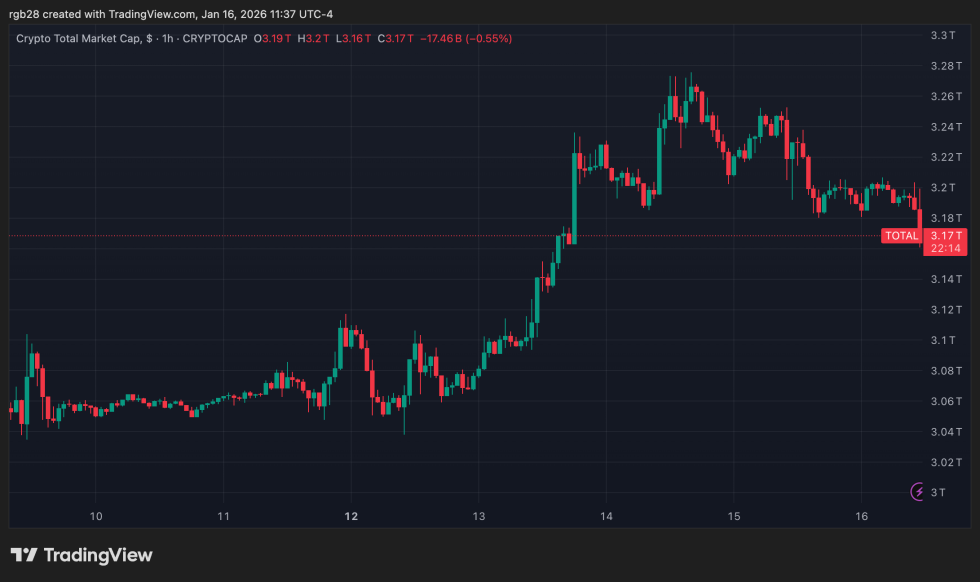
crypto, TOTAL

CRYPTO Act Proposal: Unlicensed Operations In New York Could Lead To 15 Years In Prison

On Thursday, a new legislation was proposed in New York that aims to impose additional regulations on digital asset firms. The proposed law, known as the “CRYPTO” Act—short for “Cryptocurrency Regulation Yields Protections, Trust, and Oversight”—would make it illegal for digital asset firms to operate without the necessary licenses. 

The announcement came from Manhattan District Attorney (DA) Alvin L. Bragg, Jr., and New York State Senator Zellnor Myrie, who emphasized the urgency of regulating the cryptocurrency marketplace in the State.

NY’s Proposed Crypto Bill

According to the duo’s press statement, organizations that exchange, trade, or transport cryptocurrencies in New York are required to register for a virtual currency license. Failure to do so has resulted in merely civil sanctions. 

In contrast, the proposed CRYPTO Act would introduce criminal penalties for operating without a license, bringing New York’s regulatory framework closer to that of the federal system, where unauthorized conduct can result in up to five years in prison.

The new Act aims to ensure that digital asset businesses adhere to the same levels of diligence and transparency as traditional money transmitters.

Under the new legislation, unlicensed operations would fall under the category of Unlicensed Virtual Currency Business Activity, leading to a series of graduated penalties based on the value of the transactions involved. 

Offenders could face charges ranging from a Class A misdemeanor to a Class C felony for activities involving $1 million or more within a year, potentially resulting in sentences of 5 to 15 years in state prison.

A “Shadow Financial System” 

District Attorney Bragg expressed concern about the growth of cryptocurrency, describing it as a “shadow financial system” that facilitates money laundering and other criminal activities. “Crypto is the go-to means for bad actors to move and hide the proceeds of crime,” he stated. 

Bragg further urged that the time has come for unlicensed cryptocurrency businesses to face criminal repercussions for not adhering to due diligence requirements.

Senator Myrie echoed Bragg’s sentiments, noting, “As the use of crypto has grown, so has illicit activity.” He emphasized that New York, as a major financial hub, must take seriously its regulatory responsibilities. 

Myrie’s bill aims to align the state with the 18 other jurisdictions that have made unlicensed virtual currency transactions criminal offenses, to enhance consumer protection against potential fraud and scams.

This legislative push coincides with a letter from House Democrats to Securities and Exchange Commission (SEC) Chair Paul Atkins, in which several lawmakers urged the reinstatement of enforcement actions against digital asset firms. 

The letter sent on Thursday and signed by Representatives Maxine Waters, Sean Casten, and Brad Sherman, expressed deep concerns regarding the SEC’s recent retreat from prosecuting violations related to “digital asset securities.”

Crypto

Featured image from DALL-E, chart from TradingView.com 

Coinbase CEO Claims Big Banks Are Aiming To ‘Kill Competition’ With Latest Crypto Market Bill Draft

Cryptocurrency exchange Coinbase (COIN) recently retracted its support for the latest iteration of the crypto market structure bill, known as the CLARITY Act, just 24 hours before a crucial markup was scheduled. 

This signals significant concerns about the bill’s alignment with the interests of cryptocurrency firms compared to traditional banking institutions, not only for the exchange but also for broader market participants.

Coinbase CEO’s Concerns Over Fair Competition

On Friday, Coinbase CEO Brian Armstrong elaborated on the rationale behind the exchange’s withdrawal in an appearance on FOX Business, expressing his frustration with the notion that banks could use regulatory means to stifle competition in their favor. 

“It just felt deeply unfair to me that one industry [banks] would come in and get to do regulatory capture to ban their competition,” Armstrong stated. He also underscored the importance of a level playing field, asserting that competition should thrive without undue interference from powerful financial entities.

Coinbase CEO emphasized that his concerns resonate with “much of the industry,” highlighting his obligation to advocate for customers who he believes are being shortchanged by the provisions of the proposed market legislation. 

“I declined to opine on the exact—whether the hearing, the markup should happen or not… But I did feel like I had to speak up on behalf of our customers and all Americans here,” he articulated.

Debate Heats Over CLARITY Act

Central to the ongoing debate surrounding the CLARITY Act is a critical disagreement between banks and crypto firms regarding the fate of stablecoin holders and whether they should be entitled to receive reward payments. 

Armstrong has previously raised alarms that the bill might prohibit tokenized equities, impose restrictions on decentralized finance (DeFi), and expand governmental access to financial data, thereby compromising individual privacy. 

Furthermore, he warned that the legislation could shift regulatory authority away from the Commodity Futures Trading Commission (CFTC) and towards the Securities and Exchange Commission (SEC), sidelining competition within the crypto space.

Armstrong Critiques Banking Lobbying Tactics

Armstrong noted the irony in the current situation, pointing out that while banks are indeed leveraging the advantages of cryptocurrency, their lobbying efforts seem aimed at restricting competing firms. 

“Many of these banks are actually very smart,” he acknowledged, referencing the commercial side of banking that is increasingly engaging with crypto. “They’re actually doing deals with Coinbase. We’re powering a lot of crypto and stablecoin infrastructure for them on the commercial side.”

Despite his criticisms of the banking sector’s lobbying tactics, Armstrong expressed optimism that legislators could ultimately resolve the outstanding issues within the crypto market structure bill:

And then their lobbying arm comes to D.C. and thinks of it as very zero-sum and is trying to kill the competition. So, I suspect, like many things, if we get the principles in the room, we can actually get this figured out and make a good deal.

Coinbase

Featured image from DALL-E, chart from TradingView.com 

House Democrats Push SEC Chair To Resume Crypto Enforcement Actions

In a critical week for the cryptocurrency industry, following the delayed markup of the Crypto Market Structure bill (CLARITY Act), House Democrats are calling on the Securities and Exchange Commission (SEC) chair, Paul Atkins, to reinstate enforcement actions against crypto firms. 

The letter, dated January 15, was signed by Representatives Maxine Waters, Sean Casten, and Brad Sherman, who expressed concerns regarding the SEC’s recent retreat to investigate and prosecute alleged violations related to “digital asset securities.”

House Democrats’ Allegations

The representatives highlighted that since January 2025, the SEC has dismissed or closed more than a dozen cases involving crypto-related activities, including litigations against major players like Binance, Coinbase, and Kraken. Just this week, the SEC also closed its case against the Zcash Foundation.

In their letter, the lawmakers alleged that given the industry’s “troubling history of harming investors,” the SEC’s decision to pull back raises serious questions about its priorities and effectiveness. They warned that this shift puts both investors and the broader US economy at considerable risk.

Moreover, the representatives highlighted unprecedented lobbying and monetary contributions to political figures, including President Trump and his associates, from the digital asset sector. They pointed out that this could have influenced the SEC’s decision to abandon a majority of its crypto enforcement actions. 

Alleged Conflicts Of Interest Between Trump And Crypto 

These concerns follows months of allegations from the Democratic Party suggesting conflicts of interest between the Trump administration and the crypto industry, particularly highlighted by last year’s pardon for former Binance CEO Changpeng Zhao (CZ) and connections to the Trump-affiliated World Liberty Financial (WLFI).

According to the lawmakers, the SEC’s choice to walk away from these enforcement cases has raised suspicions of a possible pay-to-play dynamic. They argued that allowing violators of securities laws to escape without repercussions contradicts the SEC’s primary responsibility. 

Furthermore, the Representatives claim that recent statements by Chair Atkins, who said that ‘most crypto tokens are not securities’, have caused confusion.

The Democrats further pointed out that this lack of enforcement against digital assets leaves investors “vulnerable” and allegedly fails to protect them from potential violations in the market.

Crypto

Featured image from DALL-E, chart from TradingView.com

Ripple Clinches Major License Win In Luxembourg After UK Achievement

Ripple announced Wednesday that it has received a preliminary Electronic Money Institution (EMI) license from Luxembourg’s Commission de Surveillance du Secteur Financier (CSSF). This follows on the heels of a similar license and Crypto asset Registration given by the UK’s Financial Conduct Authority (FCA) last Friday.

EU Regulatory Progress

In its press release, Ripple emphasized that these new licenses contribute to its extensive portfolio, now exceeding 75 regulatory approvals worldwide, positioning Ripple as one of the most licensed cryptocurrency companies globally. 

Monica Long, President of Ripple, remarked on the significance of the European Union’s evolving stance regarding digital assets: 

The EU was among the first major jurisdictions to introduce comprehensive digital assets regulation, which provides the certainty that financial institutions need to transition from pilot programs to large-scale commercial operations. 

By expanding its licensing capabilities and refining its payment solutions, the crypto giant aims to facilitate the movement of value and unlock what it describes as “trillions of dollars in dormant capital,” pushing legacy financial systems into a digital era.

Cassie Craddock, Managing Director for the UK and Europe at Ripple, echoed this sentiment, praising Luxembourg’s progressive regulatory environment toward digital assets stating: 

Thanks to the CSSF’s sophisticated supervisory approach, Luxembourg is establishing itself as a hub for financial innovation by delivering the harmonized framework and legal certainty that our industry requires.

She highlighted that this preliminary approval is a crucial milestone, enabling Ripple to offer essential blockchain infrastructure to clients throughout the European Union. 

The preliminary approval, which arrives in the form of a ‘Green Light Letter’ from the CSSF, represents a vital step towards Ripple securing its full EMI authorization, contingent upon meeting specific conditions.

Ripple Highlights UK As Key Market

In its recent announcement regarding the UK, Ripple underscored the importance of the country in its broader global strategy, noting that London houses its largest office outside the United States since 2016. 

Notably, the company has demonstrated its commitment to the UK market through ongoing investments, which include a growing workforce and support for the local blockchain and developer ecosystem

Additionally, Ripple has contributed significantly to UK-based blockchain developers and startups, as well as committing over £5 million to UK universities through its flagship University Blockchain Research Initiative (UBRI) program.

In a statement addressing these developments, Stuart Alderoty, Chief Legal Officer at Ripple, expressed pride in the progress made with the EMI license and Cryptoasset Registration from the FCA: 

This is yet another major step forward, and it signals positive momentum for the UK’s digital assets industry, underscoring Ripple’s licensing achievements globally. 

Ripple

At the time of writing, XRP was trading at $2.1485, up slightly more than 3% in the past 24 hours as the broader crypto market has recovered since the start of the year. 

Featured image from DALL-E, chart from TradingView.com 

Crypto Market Bill Draft Criticized For Allowing Continued Developer Prosecution

The recently released draft of the CLARITY Act, a significant piece of legislation aimed at regulating the crypto market, has ignited a wave of criticism from supporters within the community. 

Initially, the bill was meant to include protections for developers. However, expert commentary suggests that it opens the door to continued prosecution of developers and enhances surveillance measures for users of non-custodial software. 

Crypto Market Structure Bill Draft Lacks Essential Protections 

Market expert Ryan Adams highlighted another key issue in the crypto bill, stating that if banks succeed in eliminating stablecoin yield provisions within the CLARITY Act, it would indicate that the Senate is prioritizing bank interests over those of the general public.

Adams’s concerns were echoed by various users, who opined that the strategy appears orchestrated to allow banks to benefit by controlling how yields are managed and distributed. 

An independent report by The Rage reinforces these worries, detailing how the proposed draft includes so-called developer protections that may fall short.  Notably absent are safeguards against the rigorous implications of the Bank Secrecy Act (BSA) for self-custodial wallets. 

Additionally, the draft hints at possible applications to decentralized finance (DeFi) that could empower agencies to implement Travel Rule-like regulations, along with anti-money laundering (AML) measures targeting web-based interfaces and blockchain analysis firms.

Per the report, the Senate has already received 137 amendments to the draft ahead of its markup, scheduled for January 15. A revised version of the Blockchain Regulatory Certainty Act (BRCA) is also included, which has been seen as vital for protecting developers. 

BRCA Loopholes

While the BRCA offers exemptions under AML and counter-terrorist financing regulations, it continues to leave developers vulnerable to accountability for the actions of users utilizing their software. 

The BRCA states that “non-controlling” developers—defined as those without unilateral control over digital asset transactions—will not be categorized as money transmitters under the relevant laws. However, this only alleviates certain charges and doesn’t prevent criminal liability for those whose software is misused.

Pro-crypto Senator Cynthia Lummis remarked on this aspect of the BRCA, indicating that it retains all necessary AML protections, which implies that despite any positives, accountability remains a looming threat for developers.

Simultaneously, the “Keep Your Coins Act” within the draft includes provisions claiming that federal agencies cannot prohibit self-custody of digital assets. However, further stipulations assert that this right does not prevent the application of laws concerning illicit finance, leaving loopholes for government intervention.

The Securities and Exchange Commission’s (SEC) past attempts to impose a broker rule that would classify decentralized finance services as intermediaries requiring reporting obligations have been echoed in the current draft. 

This time, the Senate Banking Committee appears to be leaning towards a similar regulatory approach, aiming to provide guidance on BSA and AML compliance for “non-decentralized finance protocols,” thereby raising concerns about the implications for crypto developers who maintain and update protocols.

Privacy Concerns Mount

Under the new sections, the Senate Banking Committee introduces a concept termed “Distributed Ledger Application Layers,” which the report claims invites scrutiny and creates compliance obligations for software applications that allow users to interact with decentralized finance protocols. 

The provisions also compel the Treasury to develop additional oversight mechanisms to mitigate exposure to illicit financing risks identified through distributed ledger analysis tools, effectively ensuring that crypto transactions remain under close scrutiny.

As it currently stands, the lack of robust protections for developers and users involved in privacy-enhancing technologies in this current draft suggests that the Senate’s proposal for market structure will do little to safeguard non-custodial developers. 

Instead, it further entrenches their vulnerability to government oversight and user surveillance. Ultimately, these developments present a significant challenge for privacy software users and developers.

Crypto

Featured image from DALL-E, chart from TradingView.com 

DeFi Education Fund Urges Senators To Reject Proposed Amendments In Crypto Bill Markup

As the Senate Banking Committee prepares to mark up the newly proposed draft of the crypto market structure bill, the DeFi Education Fund has released a list of amendments it strongly urges senators to oppose. 

In a recent post on social media platform X (formerly Twitter), the organization expressed concerns that the descriptions of the draft indicate potential harm to decentralized finance (DeFi) and could negatively impact software developers.

Red Flags Emerge From Crypto Market Structure Bill Draft 

In its message, the DeFi Education Fund emphasized the importance of safeguarding the integrity of the emerging DeFi landscape and called on senators to consider the far-reaching consequences of these proposed changes. 

Among the amendments highlighted were Amendment #42, proposed by Senators Reed and Kim, which seeks to authorize the Treasury to sanction smart contracts and centralized platforms involved in illicit activities. 

This amendment raised significant red flags for advocates who worry about its implications for innovation and operational flexibility within the decentralized finance ecosystem.

Another amendment of concern, Amendment #45 by Senator Reed, aims to create a specific definition for digital assets under the Bank Secrecy Act. 

Similarly, Amendment #47, also from Senator Reed, intends to remove a provision related to federal criminal offense concerning unlicensed money transmission. 

These changes, according to the DeFi Education Fund, loom dangerously over the operational landscape for developers and financial institutions that interact with digital assets.

Stifling DeFi Growth

Additionally, Senators Cortez Masto’s proposed amendments, specifically #72 and #73, aim to narrow the definition of non-controlling developers and expand the authority of the Financial Crimes Enforcement Network (FinCEN) alongside the Treasury for blockchain-enabled platforms. 

Amendments #74 and #75 further seek to strengthen existing laws related to money transmission and prohibit transactions involving unlawful DeFi protocols, which the Fund suggests could stifle the industry’s growth.

Amendment #104, proposed by crypto-skeptic Senator Elizabeth Warren, also drew attention by striking a key distribution carve-out for crypto offerings. 

This follows similar calls by Summer Mersinger, CEO of the Blockchain Association, who recently claimed that the “Big Bank Lobby” is pushing Congress to change key provisions of the already enacted GENIUS Act concerning stablecoin rewards, further highlighting the current state of the future of crypto in Congress. 

Crypto

Featured image from DALL-E, chart from TradingView.com 

Clash Over Stablecoin Legislation: Big Banks Vs. The Crypto Industry

As the Senate Banking Committee unveiled the updated draft of the crypto market structure bill, known as the CLARITY Act, another critical battle is unfolding surrounding the GENIUS Act, which focuses on stablecoin regulations. The banking lobby is pressing for significant changes, particularly regarding stablecoin rewards.

Are Big Banks Disrupting Stablecoin Competition?

Summer Mersinger, CEO of the Blockchain Association and a prominent advocate for the crypto industry in Congress negotiations, took to social media platform X (formerly Twitter) to highlight the current state of discussions following the bipartisan passage of the GENIUS Act. 

She claimed that the “Big Bank lobby” is pushing Congress to revisit settled legislation concerning stablecoin rewards, not due to emerging risks but rather to suppress competition that benefits consumers. 

Mersinger stated, “When Big Banks face competition, they don’t improve services. They lobby to handicap alternatives. And the consumer suffers.”

The firm’s CEO pointed out that the average American savings account currently yields only 0.39%, while checking accounts offer an even lower rate of 0.07%. In contrast, the Federal Funds rate hovers between 3.50% and 3.75%. 

She argued that this discrepancy is not merely a product of market forces but stems from a substantial barrier that the major banks have constructed, preventing customers from accessing better returns. 

Mersinger emphasized that the dominance of the six largest US banks, which control assets equivalent to 60% of the country’s Gross Domestic Product (GDP), only reinforces this trend. 

She further stressed that when new technologies arise that can provide consumers with superior returns, the banks’ immediate response is to invoke claims of “systemic risk” while lobbying against these advancements.

Ultimately, Mersinger and her colleagues are advocating for policies that prioritize consumer options. “We urge Congress to listen,” she implored, signaling the importance of the ongoing debate between the two sectors.

Expert Advocates For Fair Returns 

Market expert Omid Malekan also weighed in, criticizing the notion that stablecoin holders should not earn yields, arguing that the interest revenue generated from taxpayer-backed Treasury bills should be directed to average Americans rather than lining the pockets of bank executives and shareholders. 

Malekan called for a broader discussion on capping credit card interest rates and swipe fees, along with the implementation of a windfall profit tax on the net interest margins of banks. He asserted, “An industry this anti-competition and consumer choice should suffer the consequences.”

Support for Malekan’s view was reinforced by recent earnings reports from major banks. This morning, JPMorgan Chase announced $25 billion in net interest income, illustrating the profits generated by not providing higher returns to savers. Malekan dismissed claims that stablecoins paying interest would harm lending as unfounded.

Stablecoin

Featured image from DALL-E, chart from TradingView.com

Coinbase Mulls Exiting Support For Crypto Market Structure Bill Ahead Of January 15 Deadline

As the January 15 markup of the crypto market structure bill—known as the CLARITY Act—draws closer, reports indicate that Coinbase (COIN) is reconsidering its support for the legislation. 

A Monday report from Bloomberg suggests this shift in position is contingent on whether the anticipated bill includes provisions beyond enhanced disclosure requirements tied to stablecoin rewards.

High Stakes For Coinbase

The CLARITY Act is expected to be marked up in at least one Senate committee this Thursday, and Coinbase’s potential withdrawal could have significant implications for the bill. 

A source familiar with Coinbase’s stance told Bloomberg that the exchange would re-evaluate its support if the legislation veers too far from its interests, particularly regarding stablecoin incentives.

Some insiders suggest the bill might restrict the ability to provide rewards to regulated financial institutions, a move that aligns with the banking sector’s concerns about losing deposits to crypto platforms.

Coinbase currently holds applications for a national trust charter that could permit it to offer those kinds of rewards under regulatory rules. However, many crypto-native firms are pushing back against potential restrictions, arguing that such measures could disrupt competition in the market.

The stakes for Coinbase are high, as rewards programs play a crucial role in its business model. The exchange allows users to earn 3.5% rewards on Circle’s USDC holdings. 

Should the market-structure bill include bans on these incentives, fewer users might choose to hold stablecoins on the platform. This could jeopardize an anticipated revenue stream projected at $1.3 billion in 2025, according to Bloomberg.

Banking Vs. Crypto

The GENIUS Act, passed into law in July of last year, prohibits stablecoin issuers from offering interest on token holdings, and does not prevent third-party partners like Coinbase from providing rewards tied to customer balances. 

The banking industry, however, argues that allowing exchanges to pay such rewards could negatively impact bank deposits and, consequently, community lending. 

As reported by Bitcoinist over the past month, the American Bankers Association (ABA) has voiced concerns that this situation could displace “billions” from local lending, allegedly harming small businesses and households.

In contrast, Faryar Shirzad, Coinbase’s chief policy officer, has argued that maintaining rewards tied to stablecoins is crucial for preserving the dollar’s dominance, especially in light of China’s announcement to start offering interest on its digital yuan.

Banking Lobby Fights Back

A potential compromise being discussed would permit only licensed banking entities or financial institutions to provide rewards on stablecoin balances. 

Recently, five crypto firms, including Ripple, Circle, and Paxos, received conditional approvals from the US Office of the Comptroller of the Currency (OCC) to become national trust banks, a move met with opposition from the banking lobby. 

If restrictions are indeed imposed, the report suggests that this could lead to creative workarounds as crypto firms seek alternative ways to reward customers. 

Coinbase

Featured image from DALL-E, chart from TradingView.com

❌