Hackread.com exclusive: Scammers are using verified PayPal invoices to launch callback phishing attacks. Learn how the "Alexzander" invoice bypasses Google filters.
Microsoft’s Copilot Checkout lets users browse and buy products without leaving the chat. (Microsoft Image, click for larger version)
[Editor’s Note: Agents of Transformation is an independent GeekWire series and March 24, 2026 event, underwritten by Accenture, exploring the people, companies, and ideas behind AI agents.]
Microsoft is making its own bid to turn AI conversations into agentic commerce, announcing a new feature called Copilot Checkout that lets users complete purchases directly within its AI chatbot, without being redirected to an external website.
The company is betting that its existing enterprise technology footprint and established relationships with large retailers will give it an edge over OpenAI, Google, and Amazon in winning over merchants wary of giving up control to retail rivals or AI intermediaries.
Kathleen Mitford, Microsoft corporate vice president of global industry marketing. (Microsoft Photo)
“We’ve designed it in such a way that retailers own those relationships with the customers,” said Kathleen Mitford, corporate vice president of global industry marketing at Microsoft. “It is their data, it is their relationship, and that’s something that’s really important to us.”
It’s part of a broader AI rollout by Microsoft at NRF 2026, the retail industry’s annual conference in New York. Microsoft is also launching Brand Agents, pitched as a complete solution for Shopify merchants to add AI assistants to their websites, along with new AI tools to assist store employees and help retailers enhance their online product listings and metadata.
Copilot Checkout works by surfacing products from partner retailers within Copilot search results. Purchases can be completed without leaving the conversation. Microsoft says the retailer remains the merchant of record, handling fulfillment and customer service.
But will people buy in chat?
The bigger question for the tech industry is whether chat-based commerce is actually the next big thing. Forrester analyst Sucharita Kodali, for example, previously told GeekWire that “e-commerce isn’t a problem that needs to be fixed.” She added that it’s unclear what value chat-based commerce is bringing to retailers, “other than disintermediating Google.”
Microsoft’s Mitford offered a different take in an interview this week, saying that consumer behavior is shifting faster than it may seem. She drew a parallel to how quickly businesses moved from experimenting with AI to putting it into operation over the past year.
“I see the same thing happening with consumers … it just takes a little bit of time,” Mitford said, predicting that the speed of consumer adoption will eventually match the rapid uptake seen in the business world.
Copilot Checkout is rolling out now in the U.S. on Copilot.com, with PayPal, Shopify, and Stripe handling payment processing. Etsy sellers will be among the first available on the platform. Shopify merchants are set to be automatically enrolled following an opt-out window.
That last detail is notable given the backlash Amazon has faced over its “Buy for Me” feature, where brands complained about being included without consent and seeing inaccurate listings.
Microsoft’s approach is more tightly connected to its partners — the company said Shopify will management the opt-out process for its merchants — but automatic enrollment seems to raise the potential for some of the same concerns. (We’ve contacted Shopify for more information.)
The competitive landscape
More broadly, Microsoft is playing catch-up on the consumer side.
OpenAI launched Instant Checkout in ChatGPT last September, partnering with Shopify and Stripe to let users buy from more than a million merchants. Google followed in November with its own “Buy for Me” feature which lets its Gemini assistant purchase products on a user’s behalf.
Despite its inroads with businesses, Copilot has a fraction of ChatGPT’s market share with consumers. Recent data from Similarweb’s Global AI Tracker showed ChatGPT with about 68% of AI chatbot web traffic, with Google Gemini at 18% and Copilot in the single digits.
But Microsoft has its advantages: Unlike Amazon and Google, which compete directly with retailers through their own marketplaces, it isn’t a retailer. And retail has long been a major vertical for its enterprise cloud and software business, with large chains running on Azure and Microsoft 365.
Mitford said Microsoft is leaning on its existing trust and long-standing relationships with retailers, along with a commitment to responsible AI, to help differentiate itself from rivals.
Microsoft is making the broader case for AI to retailers based on return on investment. A Microsoft-commissioned study from IDC, released in November, found that retail and consumer packaged goods companies are seeing a 2.7x return on every dollar spent on generative AI.
Mitford, a former fashion designer who has been in the technology industry for most of her career, said she sees the retail sector among the leaders in AI uptake across the business world.
The technology, she said, is being “adopted at a pace that I’ve never seen.”
Many projects on these pages do clever things with video. Whether it’s digital or analogue, it’s certain our community can push a humble microcontroller to the limit of its capability. But sometimes the terminology is a little casually applied, and in particular with video there’s an obvious example. We say “PAL”, or “NTSC” to refer to any composite video signal, and perhaps it’s time to delve beyond that into the colour systems those letters convey.
Know Your Sub-carriers From Your Sync Pulses
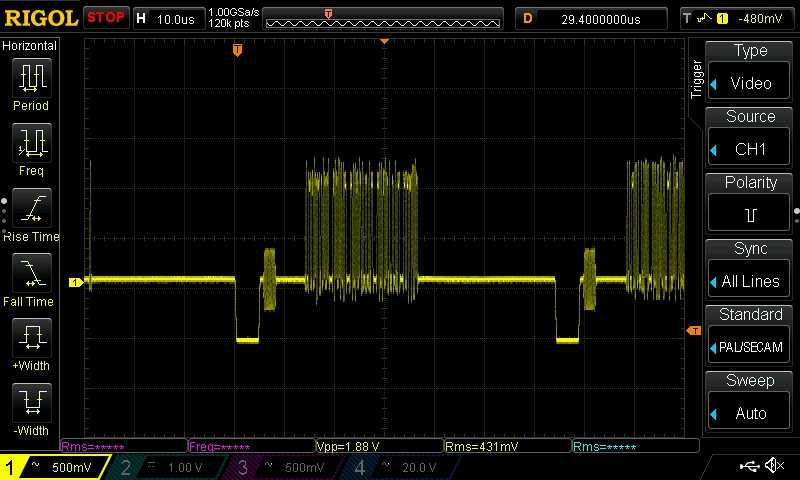
A close-up on a single line of composite video from a Raspberry Pi.
A video system of the type we’re used to is dot-sequential. It splits an image into pixels and transmits them sequentially, pixel by pixel and line by line. This is the same for an analogue video system as it is for many digital bitmap formats. In the case of a fully analogue TV system there is no individual pixel counting, instead the camera scans across each line in a continuous movement to generate an analogue waveform representing the intensity of light. If you add in a synchronisation pulse at the end of each line and another at the end of each frame you have a video signal.
But crucially it’s not a composite video signal, because it contains only luminance information. It’s a black-and-white image. The first broadcast TV systems as for example the British 405 line and American 525 line systems worked in exactly this way, with the addition of a separate carrier for their accompanying sound.
The story of the NTSC colour TV standard’s gestation in the late 1940s is well known, and the scale of their achievement remains impressive today. NTSC, and PAL after it, are both compatible standards, which means they transmit the colour information alongside that black-and-white video, such that it doesn’t interfere with the experience of a viewer watching on a black-and-white receiver. They do this by adding a sub-carrier modulated with the colour information, at a frequency high enough to minimise its visibility on-screen. for NTSC this is 3.578MHz, while for PAL it’s 4.433MHz. These frequencies are chosen to fall between harmonics of the line frequency. It’s this combined signal which can justifiably be called composite video, and in the past we’ve descended into some of the complexities of its waveform.
It’s Your SDR’s I and Q, But Sixty Years Earlier
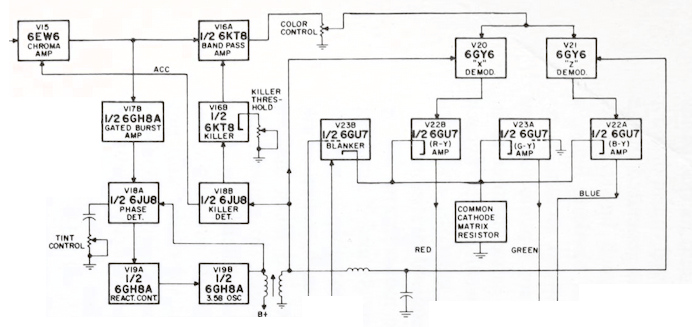
Block diagram of an NTSC colour decoder as found in a typical 1960s American TV set. Color TV Servicing, Buchsbaum, Walter H, 1968.
An analogue colour TV camera produces three video signals, one for each of the red, green, and blue components of the picture. Should you combine all three you arrive at that black-and-white video waveform, referred to as the luminance, or as Y. The colour information is then reduced to two further signals by computing the difference between the red and the luminance, or R-Y, and the blue and the luminance, or B-Y. These are then phase modulated as I-Q vectors onto the colour sub-carrier in the same way as happens in a software-defined radio.
At the receiver end, the decoder isolates the sub-carrier, I-Q demodulates it, and then rebuilds the R, G, and B, with a summing matrix. To successfully I-Q demodulate the sub-carrier it’s necessary to have a phase synchronised crystal oscillator, this synchronisation is achieved by sending out a short burst of the colour sub-carrier on its own at the start of the line. The decoder has a phase-locked-loop in order to perform the synchronisation.
So, Why The PAL Delay Line?
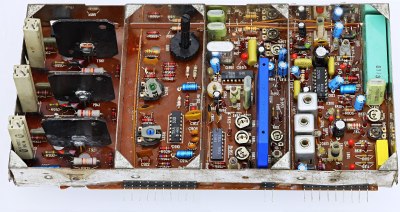
A PAL decoder module from a 1970s ITT TV. The blue component in the middle is the delay line. Mister rf, CC BY-SA 4.0.
There in a few paragraphs, is the essence of NTSC colour television. How is PAL different? In essence, PAL is NTSC, with some improvements to correct phase errors in the resulting picture. PAL stands for Phase Alternate Line, and means that the phase of those I and Q modulated signals swaps every line. The decoder is similar to an NTSC one and indeed an NTSC decoder set to that 4.433MHz sub-carrier could do a job of decoding it, but a fully-kitted out PAL decoder includes a one-line delay line to cancel out phase differences between adjacent lines. Nowadays the whole thing is done in the digital domain in an integrated circuit that probably also decodes other standards such as the French SECAM, but back in the day a PAL decoder was a foot-square analogue board covered in juicy parts highly prized by the teenage me. Since it was under a Telefunken patent there were manufacturers, in particular those from Japan, who would try to make decoders that didn’t infringe on that IP. Their usual approach was to create two NTSC decoders, one for each phase-swapped line.
So if you use “NTSC” to mean “525-line” and “PAL” to mean “625-line”, then everyone will understand what you mean. But make sure you’re including that colour sub-carrier, or you might be misleading someone.
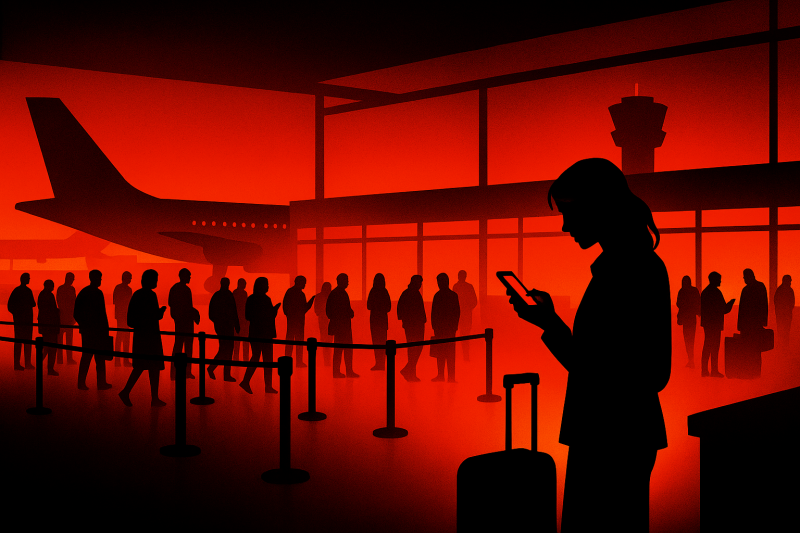
Varun Uppal, founder and CEO of Shinobi Security Over the weekend, airports across Europe were thrown into chaos after a cyber-attack on one of their technology suppliers rippled through airline...
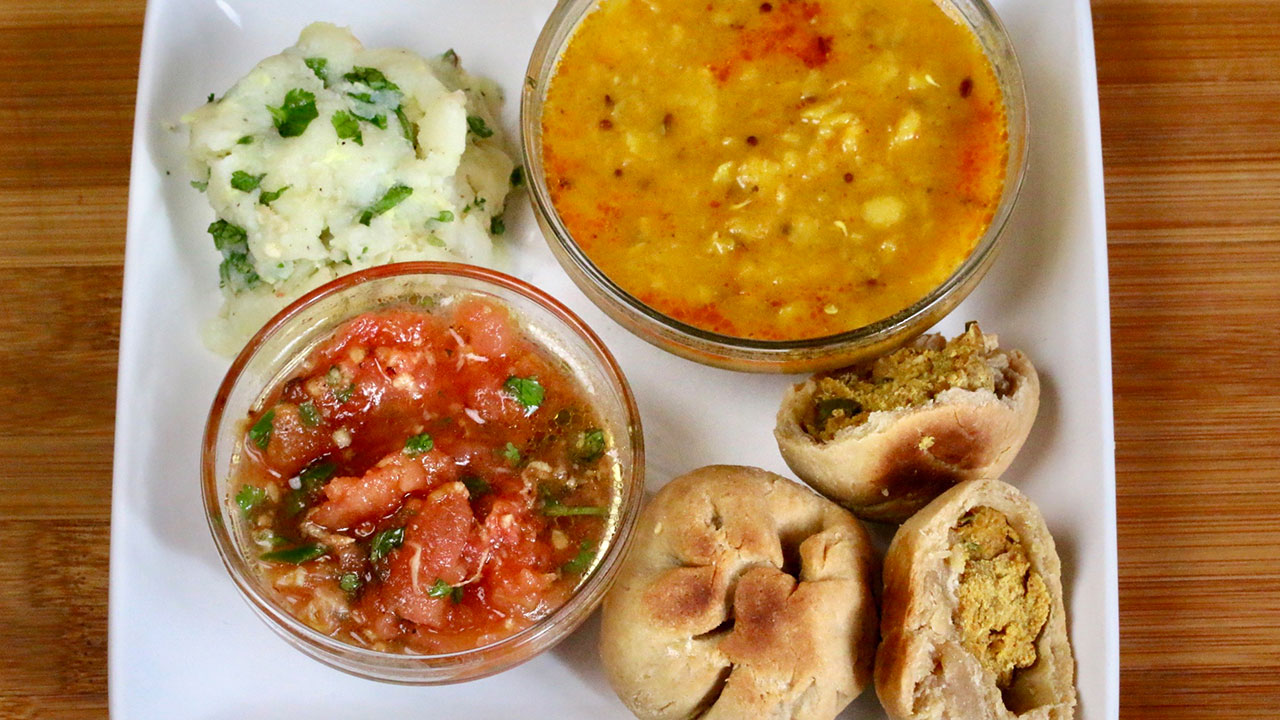
Litti Chokha is a delicacy from the state of Bihar made with stuffed whole wheat dough balls with roasted chana dal and spices inside. These stuffed balls are known as Litties are usually roasted over charcoal but can also be baked. Litties are served with Chokha. Chokha is a dip prepared with mashing potato, tomato or eggplant with spices, but at my home it was always served with Dal Tadka.This recipe will make 8 litties.
Course Main Course
Cuisine Indian
Prep Time 10minutes
Cook Time 30minutes
Total Time 40minutes
Servings 4people
Ingredients
Dough
1cupwhole wheat flourchapatti atta
2Tbspgheeclarified butter
1/2tspsalt
cupAbout 1/3 lukewarm water
Filling
3/4cupsattuflour of roasted chana dal, available in Indian grocery stores
1/2tspsaltadjust to taste
1/8tspasafetidahing
1/8tspturmerichaldi
1/2tspred chili powder
1tspmango powderamchoor
1tspgrated ginger
1Tbspgreen chilifinely chopped, adjust to taste
1tspgheeclarified butter
1/4cupwaterapproximately
Potato, and Tomato Chokha
1cupmedium size potatoboiled peeled and roughly mashed
2medium size tomatoroasted peeled and mashed, I have roasted them over the skillet
1tspsalt
Spices we will use half and half to make both Potato and Tomato Chokha
1/4tspblack pepper
1tsplemon juicejust for Potato Chokha
2tspgrated ginger
2Tbspfinely chopped green chilies
2Tbspfinely chopped cilantro
2Tbspolive oil or mustard oilI prefer olive oil
2Tbspghee or clarified butter for serving the Litties.
Instructions
For Tomato Chokha
To prepare the Tomato Chokha add the spices to mashed tomatoes about 1/2 tsp salt, pinch of black pepper, 1/2 tsp ginger, 1 Tbsp green chili. 1 Tbsp cilantro and 1 Tbsp of oil mix it together. Tomato Chokha is ready set aside.
For Potato Chokha
Add all the remaining spices with mashed potatoes, salt, pinch of black pepper, lemon juice, ginger, cilantro and oil, mix it well. Potato Chokha is ready, set aside.
To Make Dough
Mix the flour, salt and ghee. Add water slowly to make dough. Dough should be firm but do not knead the dough. Cover the dough and let it sit for at least fifteen minutes.
Filling
Mix all the ingredients together except water, sattu, salt, asafetida, turmeric, red chili powder, mango powder, ginger, green chili, and ghee, now add little water to make firm dough, dough will be little crumbly.
Making Litti
Pre-heat the oven at 400 degree Fahrenheit. I am using a toaster oven or you can also use oven.
Divide the dough into 8 equal parts and roll them into balls. They will not be very smooth dough ball. Also, divide the filling in 8 parts filling should be little smaller then dough balls.
Roll the dough balls into 3-inch circle. Place one part of the filling in the center of each rolled dough, and pull the edges of the dough to wrap the filling. Proceed to make all 8 balls. Grease your palms and roll the filled balls gently between your palms.
Arrange the litties over greased baking sheet about one inch apart and place in toaster oven, for 10-12 minutes, turn them over and bake again for 10-12 minutes. Litties should be golden brown all around.
Serving
need about 2 Tbsp ghee or clarified butter for serving the Litties.
Notes
I like to eat these Litties with Dal Tadka and Potato or Tomato Chokha.
CMS (Content Management System) is very popular, easy to install and mostly setup once and forget by “admins”.
In general, there are quite serious vulnerabilities in popular CMS, as is the case with any software. Bugs are patched fairly quickly. Responsible companies

 Login
Login