❌

Reading view

There are new articles available, click to refresh the page.

Japanese nuclear plant operator fabricated seismic risk data

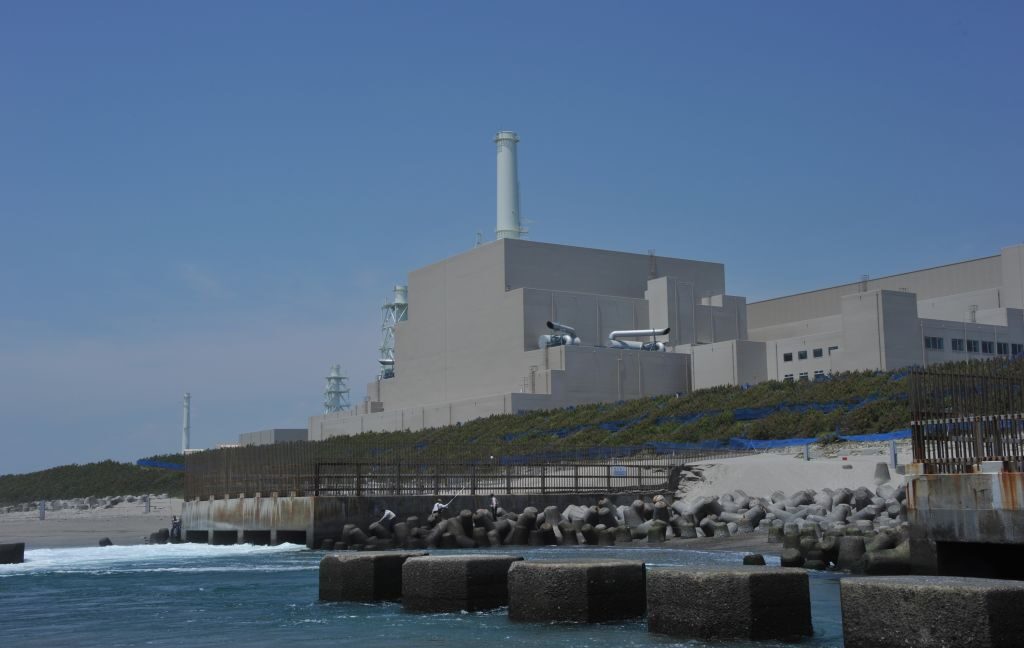
On Wednesday, Japan's Nuclear Regulation Authority announced that it is halting the relicensing process for two reactors at the Hamaoka plant after revelations that the plant's chosen operator fabricated seismic hazard data. Japan has been slowly reactivating its extensive nuclear power plant collection after it was shut down following the Fukushima Daiichi disaster. The latest scandal is especially shocking, given that the Hamaoka plant is located on the coast near an active subduction faultβ€”just as Fukushima Daiichi is.

A whistleblower reportedly alerted the Nuclear Regulation Authority in February of last year, but the issue became public this week when the regulators halted an evaluation process that could have led to a reactor restart at Hamaoka. This prompted the company that operates the plants, the Chubu Electric Power Co., to issue a press release describing in detail how the company manipulated the seismic safety data.

Based on an English translation, it appears that seismic risks were evaluated at least in part by scaling up the ground motion using data from smaller earthquakes. This is an inexact process, so the standard approach is to create a group of 20 different upscaled earthquake motions and find the one that best represents the average among the 20.
Read full article

Comments

Β© Kasahara KATSUMI

New battery idea gets lots of power out of unusual sulfur chemistry

Anyone paying attention to battery research sees sulfur come up frequently. That's mostly because sulfur is a great storage material for lithium, and it could lead to lithium batteries with impressive power densities. But sulfur can participate in a wide range of chemical reactions, which has made it difficult to prevent lithium-sulfur batteries from decaying rapidly as the sulfur forms all sorts of unwanted materials. As a result, despite decades of research, very few lithium-sulfur batteries have made it to market.

But a team of Chinese researchers has managed to turn sulfur's complex chemistry into a strength, making it the primary electron donor in a sodium-sulfur battery that also relies on chlorine for its chemistry. The result, at least in the lab, is an impressive energy per weight with extremely inexpensive materials.

Sulfur chemistry

Sulfur sits immediately below oxygen on the periodic table, so you might think its chemistry would look similar. But that's not the case. Like oxygen, it can participate in covalent bonding in biological chemistry, including in two essential amino acids. Also, like oxygen, it can accept electrons from metals, as seen in some atomically thin materials that have been studied. But it's also willing to give electrons up, forming chemical compounds with things like chlorine and oxygen.

Read full article

Comments

Β© Bloomberg

Appeals court agrees that Congress blocked cuts to research costs

One of the first signs of what would become an ongoing attack on scientific research came when the Trump administration ordered the National Institutes of Health (NIH) to radically reduce research funding for universities. These funds, termed indirect costs, are awarded when researchers at an institution receive a grant. They cover costs that aren't directly associated with the research project, such as utilities, facilities for research animals, and building maintenance.

Previously, these costs had been the subject of negotiations and audits, with indirect cost rates for universities in more expensive locations exceeding half the value of the portion of the grant that goes to the researcher. The Trump administration wanted to cut this to a flat rate of 15 percent for everyone, which would be crippling for many universities.

A number of states, later joined by organizations representing a broad array of universities and medical schools, immediately sued to block the policy change. A district court temporarily blocked the new policy from being implemented and later issued a permanent injunction. The government appealed that decision, but on Monday, an appeals court rejected the effort because the first Trump administration had attempted the same move beforeβ€”and Congress passed a rule to block it. Indirect research funding will remain intact unless the Supreme Court intervenes.

Read full article

Comments

Β© picture alliance

Researchers spot Saturn-sized planet in the β€œEinstein desert”

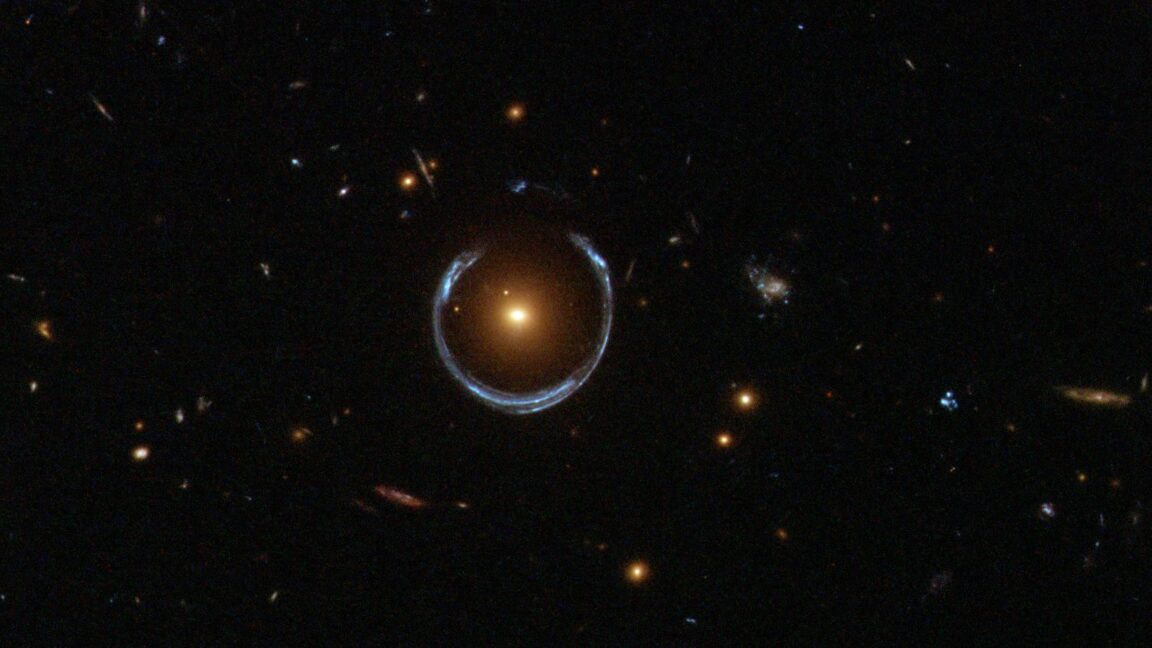
Most of the exoplanets we've discovered have been in relatively tight orbits around their host stars, allowing us to track them as they repeatedly loop around them. But we've also discovered a handful of planets through a phenomenon that's called microlensing. This occurs when a planet passes between the line of sight between Earth and another star, creating a gravitational lens that distorts the star, causing it to briefly brighten.

The key thing about microlensing compared to other methods of finding planets is that the lensing planet can be nearly anywhere on the line between the star and Earth. So, in many cases, these events are driven by what are called rogue planets: those that aren't part of any exosolar system at all, but they drift through interstellar space. Now, researchers have used microlensing and the fortuitous orientation of the Gaia space telescope to spot a Saturn-sized planet that's the first found in what's called the "Einstein desert," which may be telling us something about the origin of rogue planets.

Going rogue

Most of the planets we've identified are in orbit around stars and formed from the disks of gas and dust that surrounded the star early in its history. We've imaged many of these disks and even seen some with evidence of planets forming within them. So how do you get a planet that's not bound to any stars? There are two possible routes.

Read full article

Comments

Β© NASA, ESA

❌