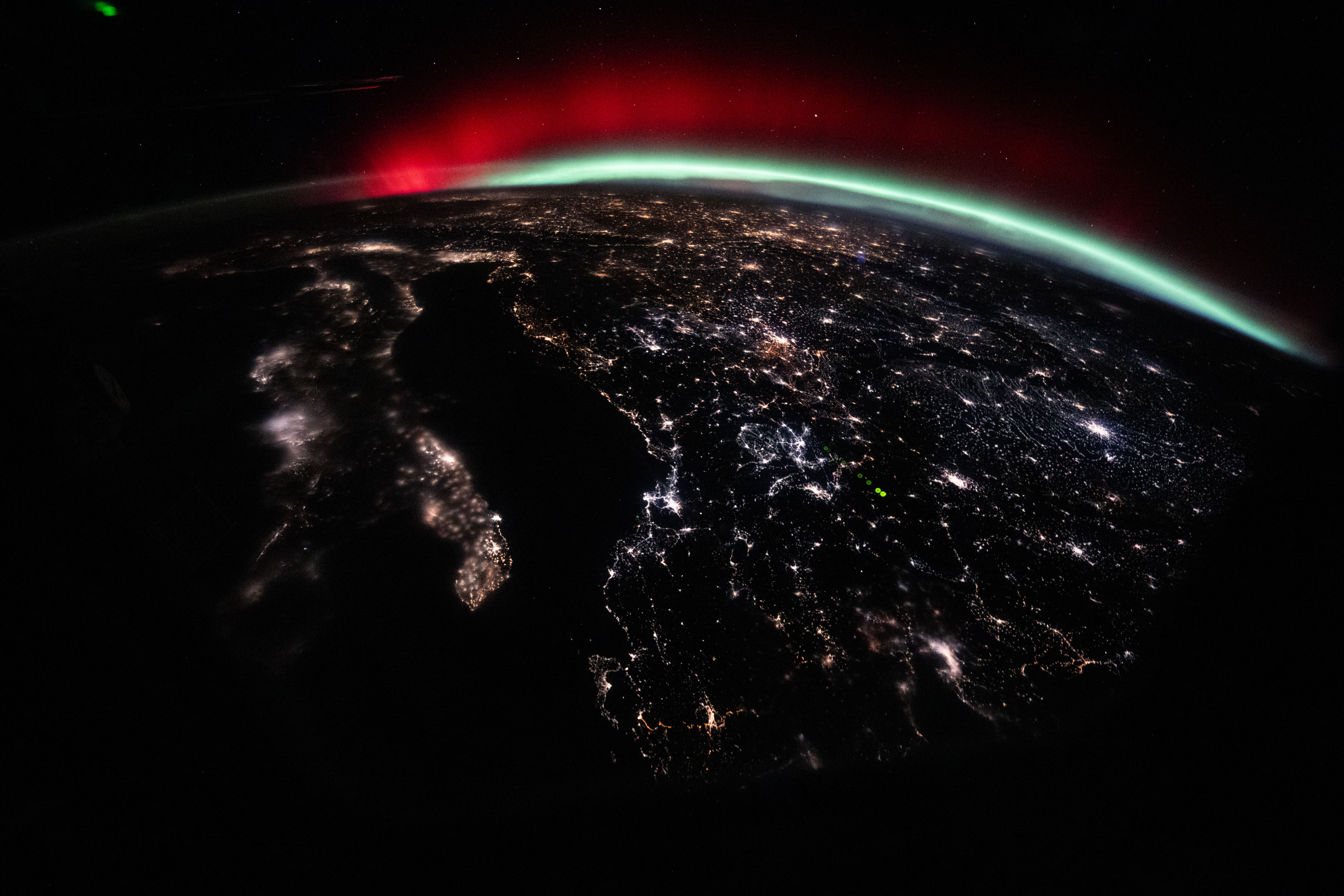
A green and red aurora streams across Earth’s horizon above the city lights of Europe in this Jan. 19, 2026, photograph, which looks north across Italy toward Germany. The International Space Station was orbiting 262 miles above the Mediterranean Sea at approximately 10:02 p.m. local time when the image was captured.
Also known as the northern lights (aurora borealis) or southern lights (aurora australis), auroras are colorful, dynamic, and often visually delicate displays of an intricate dance of particles and magnetism between the Sun and Earth called space weather. When energetic particles from space collide with atoms and molecules in the atmosphere, they can cause the colorful glow that we call auroras.
The Space Shuttle Challenger Memorial is seen during a wreath laying ceremony that was part of NASA’s Day of Remembrance, Thursday, Jan. 22, 2026, at Arlington National Cemetery in Arlington, Va. Wreaths were laid in memory of those men and women who lost their lives in the quest for space exploration.
Each January, NASA pauses to honor members of the NASA family who lost their lives while furthering the cause of exploration and discovery, including the crews of Apollo 1 and space shuttles Challenger and Columbia. We celebrate their lives, their bravery, and contributions to human spaceflight.
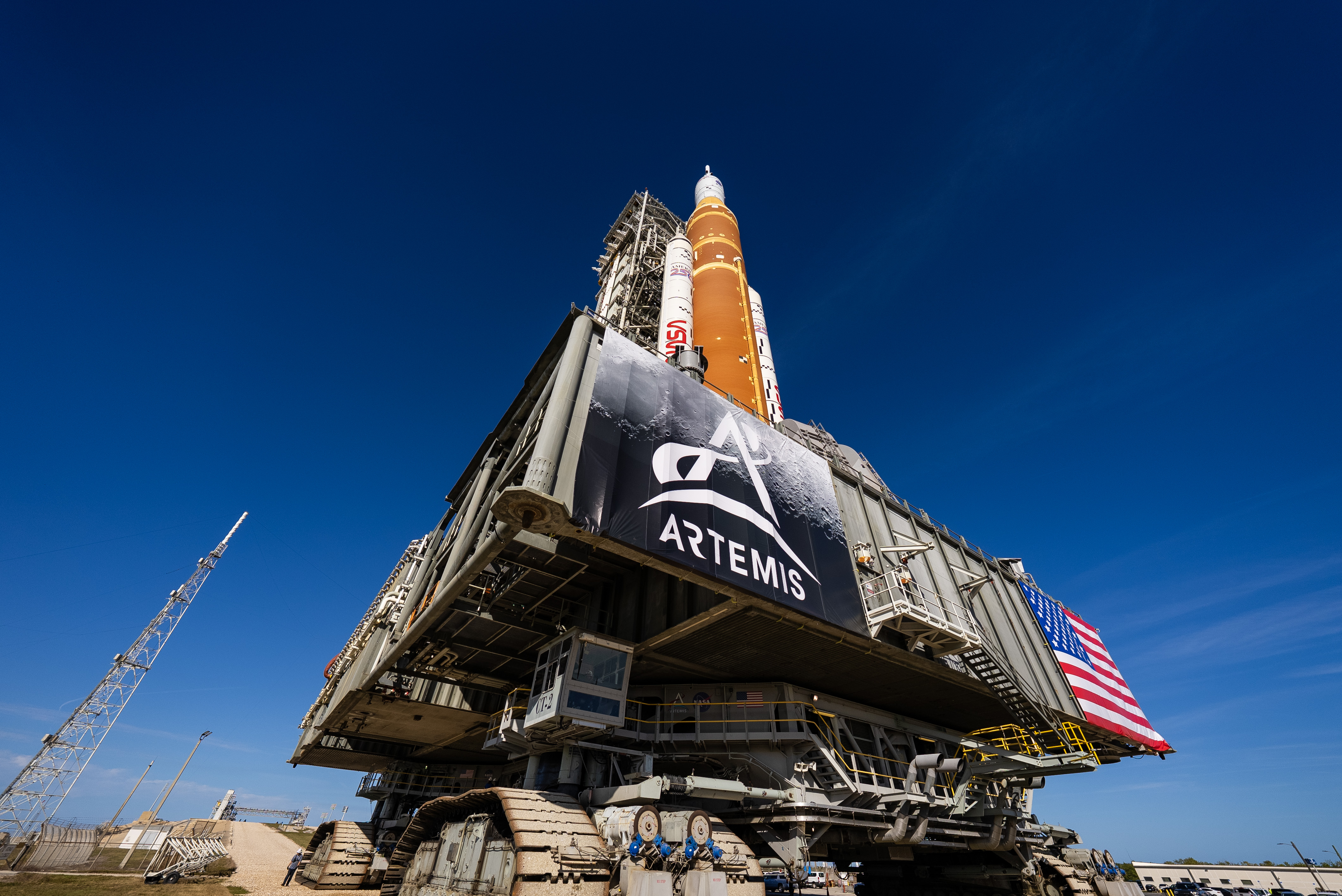
This Jan. 17, 2026, image shows NASA’s SLS (Space Launch System) and Orion spacecraft rolling out of the Vehicle Assembly Building at NASA’s Kennedy Space Center in Florida. NASA’s massive Crawler-Transporter, upgraded for the Artemis program, carries the powerful SLS rocket and Orion spacecraft to Launch Pad 39B in preparation for the Artemis II mission.
Moving at a maximum speed of just 0.82 mph, the crawler carried the towering Moon rocket and spacecraft slowly but surely toward the pad, reaching its destination at 6:42 p.m. EST after a nearly 12-hour journey. The Artemis II test flight will send NASA astronauts Reid Wiseman, Victor Glover, and Christina Koch, and CSA (Canadian Space Agency) astronaut Jeremy Hansen on an approximately 10-day journey around the Moon and back. It is another step toward new U.S.-crewed missions to the Moon’s surface, leading to a sustained presence on the Moon that will help the agency prepare to send the first astronauts – Americans – to Mars.
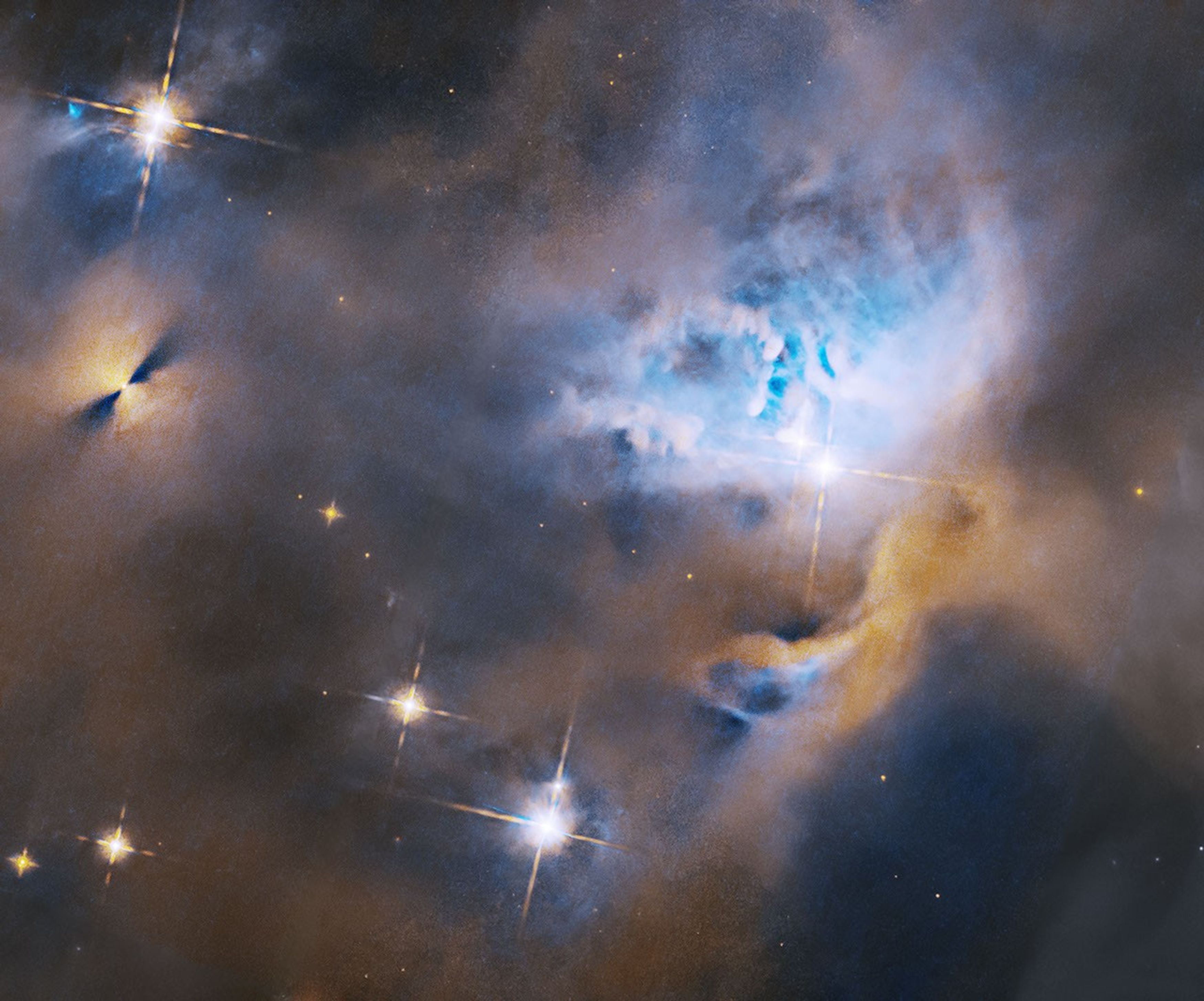
A bright reflection nebula shares the stage with a protostar and planet-forming disk in this Hubble image.
NASA, ESA, K. Stapelfeldt (Jet Propulsion Laboratory) and D. Watson (University of Rochester); Processing: Gladys Kober (NASA/Catholic University of America)
A disparate collection of young stellar objects bejewels a cosmic panorama in the star-forming region NGC 1333 in this new image from NASA’s Hubble Space Telescope. To the left, an actively forming star called a protostar casts its glow on the surrounding gas and dust, creating a reflection nebula. Two dark stripes on opposite sides of the bright point (upper left) are its protoplanetary disk, a region where planets could form, and the disk’s shadow, cast across the large envelope of material around the star. Material accumulates onto the protostar through this rotating disk of gas and dust, a product of the collapsing cloud of gas and dust that gave birth to the star. Where the shadow stops and the disk begins is presently unknown.
To the center right, an outflow cavity reveals a fan-shaped reflection nebula. The two stars at its base, HBC 340 (lower) and HBC 341 (upper), unleash stellar winds, or material flowing from the surface of the star, that clear out the cavity from the surrounding molecular cloud over time. A reflection nebula like this one is illuminated by light from nearby stars that is scattered by the surrounding gas and dust.
This reflection nebula fluctuates in brightness over time, which researchers attribute to variations in brightness of HBC 340 and HBC 341. HBC 340 is the primary source of the fluctuation as the brighter and more variable star.
HBC 340 and HBC 341 are Orion variable stars, a class of forming stars that change in brightness irregularly and unpredictably, possibly due to stellar flares and ejections of matter from their surfaces. Orion variable stars, so named because they are associated with diffuse nebulae like the Orion Nebula, eventually evolve into non-variable stars.
In this image, the four beaming stars near the bottom of the image and one in the top right corner are also Orion variable stars. The rest of the cloudscape is studded with other young stellar objects.
NGC 1333 lies about 950 light-years away in the Perseus molecular cloud, and was imaged by Hubble to learn more about young stellar objects, such as properties of circumstellar disks and outflows in the gas and dust created by these stars.
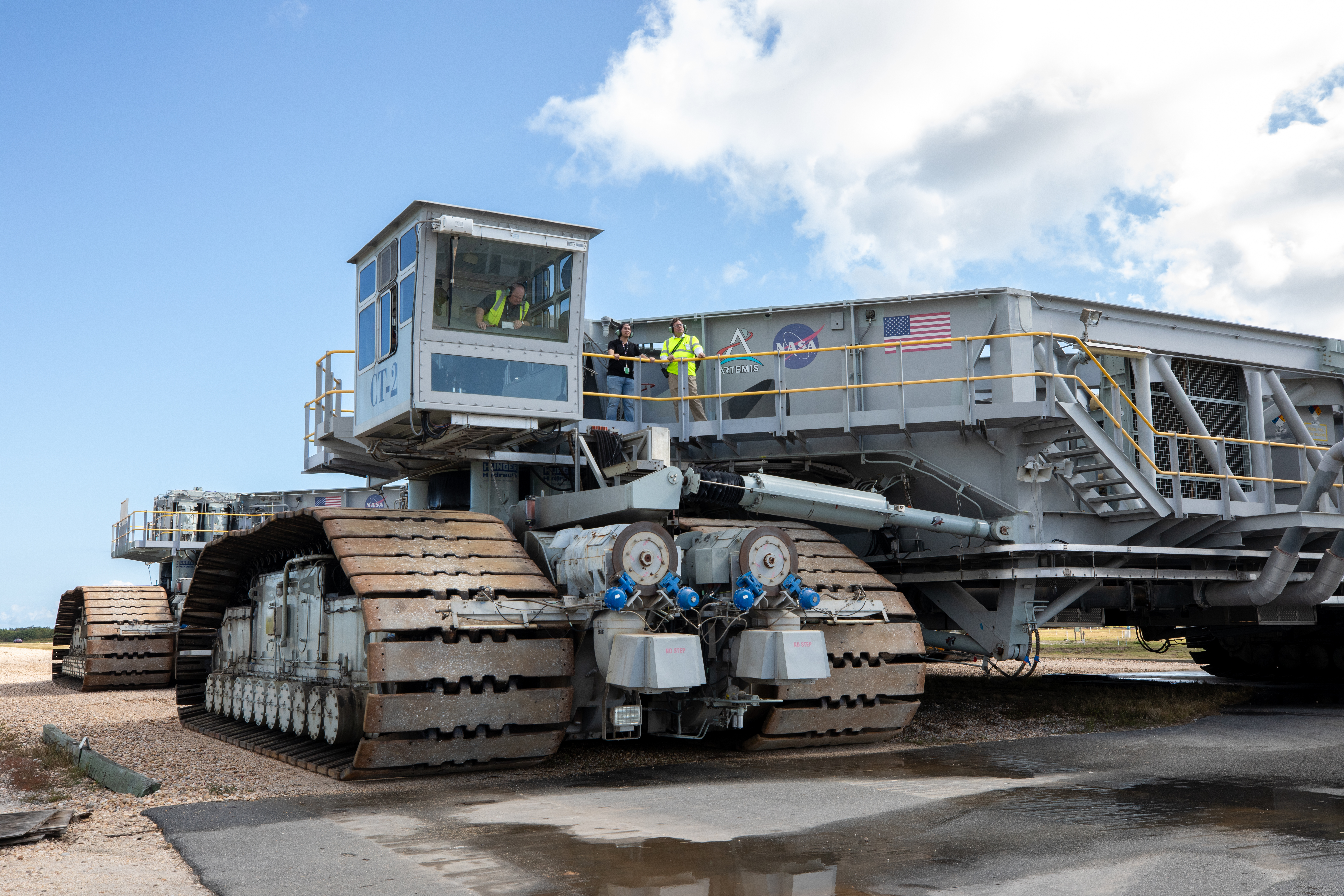
NASA’s Crawler-transporter 2 moves toward the Vehicle Assembly Building at NASA’s Kennedy Space Center in Florida on Friday, Jan. 9, 2026. The crawler will transport NASA’s SLS (Space Launch System) rocket with the Orion spacecraft to Launch Complex 39B ahead of the Artemis II launch which will journey Commander Reid Wiseman, Pilot Victor Glover, and Mission Specialist Christina Koch from NASA, and Mission Specialist Jeremy Hansen from the CSA (Canadian Space Agency), around the Moon and back to Earth no later than April 2026.
The crawler-transporters have carried the load of taking rockets and spacecraft to the launch pad for more than 50 years at NASA’s Kennedy Space Center in Florida. Each the size of a baseball infield and powered by locomotive and large electrical power generator engines, the crawler-transporters stand ready to keep up the work for the next generation of launch vehicles to lift astronauts into space; Crawler-transporter 2 in particular is integral to the Artemis missions.
Jets of ionized gas streak across a cosmic landscape from a newly forming star.
NASA, ESA, and B. Reipurth (Planetary Science Institute); Processing: Gladys Kober (NASA/Catholic University of America)
This new NASA Hubble Space Telescope image captures a jet of gas from a forming star shooting across the dark expanse. The bright pink and green patches running diagonally through the image are HH 80/81, a pair of Herbig-Haro (HH) objects previously observed by Hubble in 1995. The patch to the upper left is part of HH 81, and the bottom streak is part of HH 80.
Herbig-Haro objects are bright, glowing regions that occur when jets of ionized gas ejected by a newly forming star collide with slower, previously ejected outflows of gas from that star. HH 80/81’s outflow stretches over 32 light-years, making it the largest protostellar outflow known.
Protostars are fed by infalling gas from the surrounding environment, some of which can be seen in residual “accretion disks” orbiting the forming star. Ionized material within these disks can interact with the protostars’ strong magnetic fields, which channel some of the particles toward the pole and outward in the form of jets.
As the jets eject material at high speeds, they can produce strong shock waves when the particles collide with previously ejected gas. These shocks heat the clouds of gas and excite the atoms, causing them to glow in what we see as HH objects.
HH 80/81 are the brightest HH objects known to exist. The source powering these luminous objects is the protostar IRAS 18162-2048. It’s roughly 20 times the mass of the Sun, and it’s the most massive protostar in the entire L291 molecular cloud. From Hubble data, astronomers measured the speed of parts of HH 80/81 to be over 1,000 km/s, the fastest recorded outflow in both radio and visual wavelengths from a young stellar object. Unusually, this is the only HH jet found that is driven by a young, very massive star, rather than a type of young, low-mass star.
The sensitivity and resolution of Hubble’s Wide Field Camera 3 was critical to astronomers, allowing them to study fine details, movements, and structural changes of these objects. The HH 80/81 pair lies 5,500 light-years away within the Sagittarius constellation.
The New York–Newark–Jersey City Metropolitan Statistical Area, which spans 23 counties across New York, New Jersey, and Connecticut and has a population of about 19.9 million, is pictured at approximately 3:29 a.m. local time Dec. 20, 2025, from the International Space Station as it orbited 262 miles above the Atlantic coast.
Crew members aboard the orbital lab have produced hundreds of thousands of images of the land, oceans, and atmosphere of Earth, and even of the Moon through Crew Earth Observations. Their photographs of Earth record how the planet changes over time due to human activity and natural events. This allows scientists to monitor disasters and direct response on the ground and study a number of phenomena, from the movement of glaciers to urban wildlife.
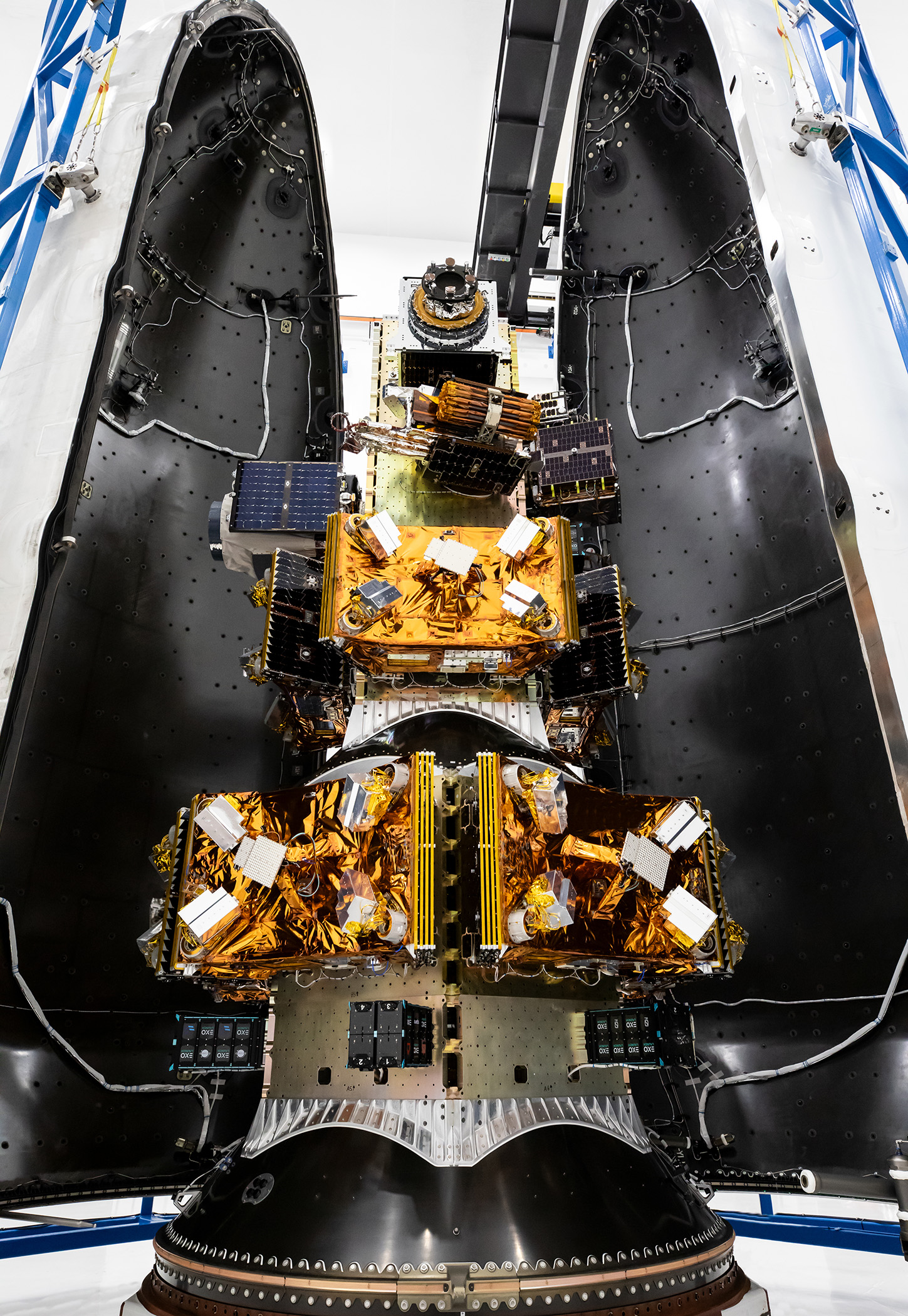
In this photo from early January 2026, teams prepare to encapsulate NASA’s Pandora small satellite, NASA-sponsored Star-Planet Activity Research CubeSat (SPARCS), and the Black Hole Coded Aperture Telescope (BlackCAT) CubeSat, inside a SpaceX Falcon 9 payload fairing.
A SpaceX Falcon 9 rocket carrying NASA’s Pandora small satellite lifted off at 5:44 a.m. PST Sunday, Jan. 11, from Space Launch Complex 4 East at Vandenberg Space Force Base located on California’s central coast.
During its initial year, Pandora will provide an in-depth study of at least 20 known planets orbiting distant stars to determine the composition of their atmospheres — especially the presence of hazes, clouds, and water.
This artist’s concept depicts a smaller white dwarf star pulling material from a larger star, right, into an accretion disk. Scientists used NASA’s IXPE (Imaging X-ray Polarization Explorer) to study a white dwarf star and its X-ray polarization.
MIT/Jose-Luis Olivares
A smaller white dwarf star (left) pulls material from a larger star into a swirling accretion disk in this artist’s concept released Nov. 19, 2025, to illustrate the first use of NASA’s IXPE (Imaging X-ray Polarization Explorer) to study a white dwarf star.
IXPE spent nearly one week focused on EX Hydrae, a white dwarf star system located in the constellation Hydra, approximately 200 light-years from Earth. Using IXPE’s unique X-ray polarization capability, astronomers examined the star, unlocking the geometry of energetic binary systems.
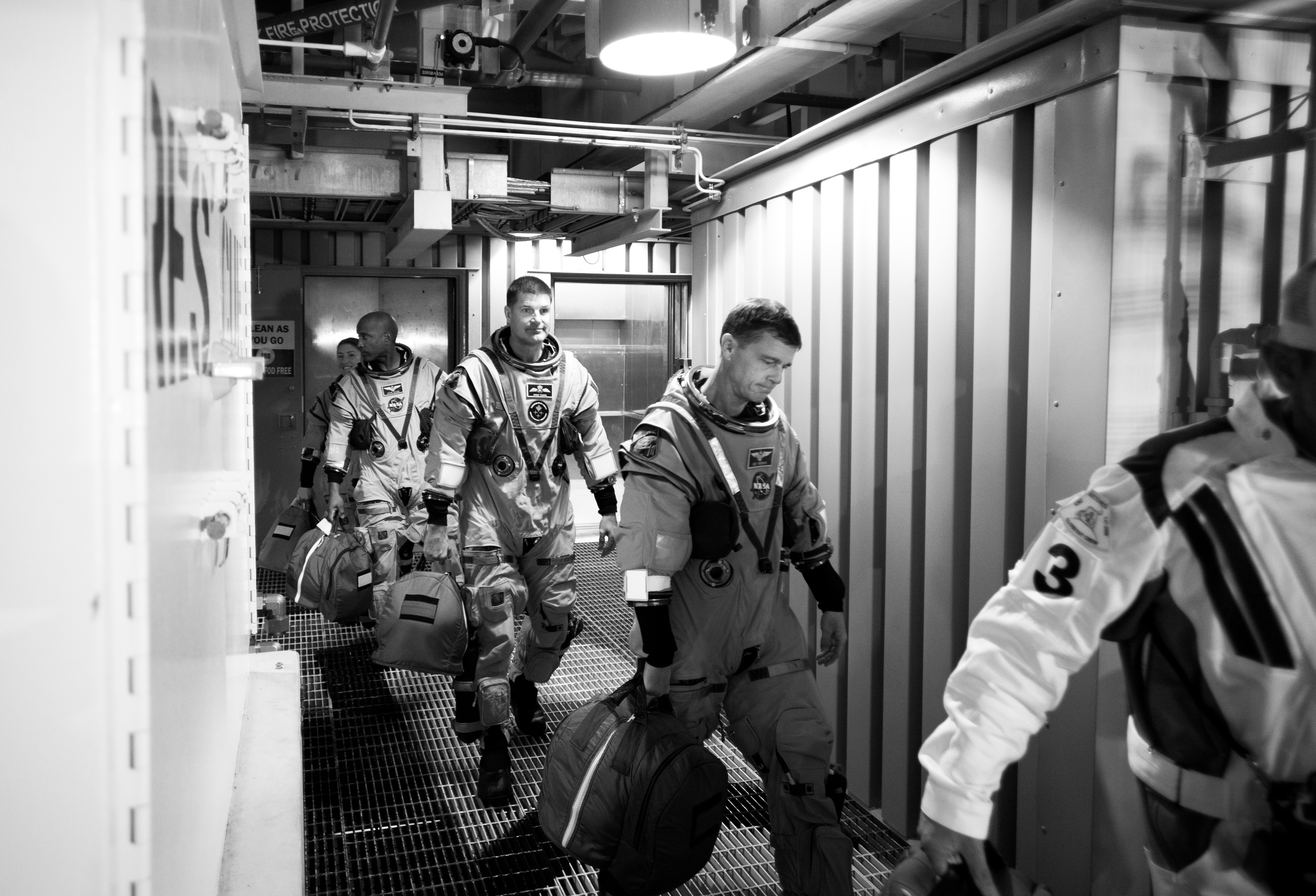
Artemis II crewmembers (left to right) NASA astronauts Christina Koch, mission specialist; and Victor Glover, pilot; CSA (Canadian Space Agency) astronaut Jeremy Hansen, mission specialist; and NASA astronaut Reid Wiseman, commander are led by Bill Owens of the Closeout Crew from the elevator at the 275-foot level of the mobile launcher to the crew access arm as they prepare to board their Orion spacecraft atop NASA’s Space Launch System rocket during the Artemis II countdown demonstration test, Saturday, Dec. 20, 2025, inside the Vehicle Assembly Building at NASA’s Kennedy Space Center in Florida. For this operation, the Artemis II crew and launch teams are simulating the launch day timeline including suit-up, walkout, and spacecraft ingress and egress.
Through the Artemis campaign, NASA will send astronauts to explore the Moon for scientific discovery, economic benefits, and to build the foundation for the first crewed missions to Mars, for the benefit of all.
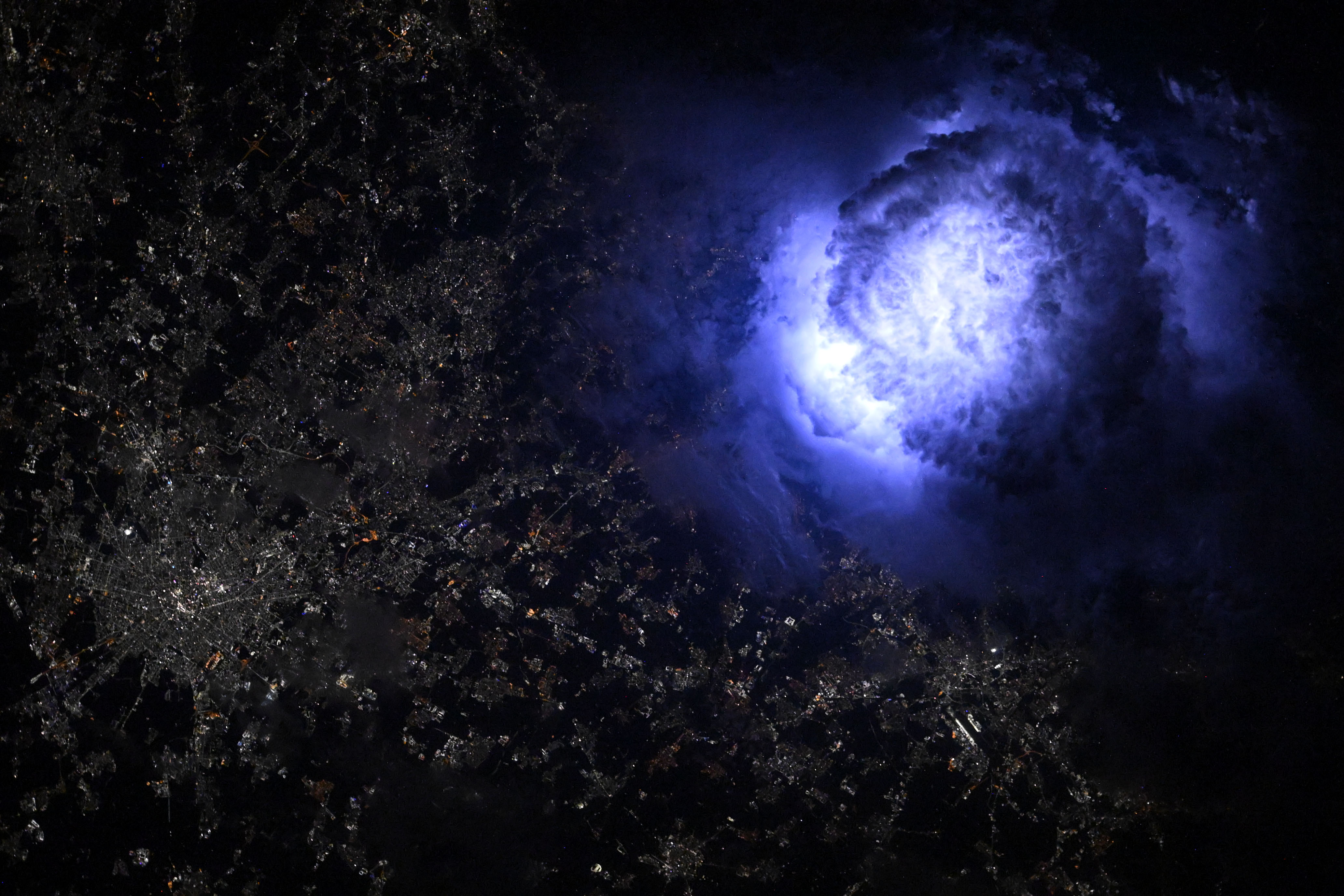
This image was chosen by NASA’s Headquarters photo team as one of the best of 2025.
NASA astronaut Nichole Ayers captured this image of lightning while orbiting aboard the International Space Station more than 250 miles above Milan, Italy on July 1, 2025. Storm observations from space station help scientists study Earth’s upper atmosphere, which can improve weather models and protect communication systems and aircraft. Space station crew take photographs of Earth that record how the planet changes over time due to human activity and natural events. This record allows scientists to monitor disasters and direct response on the ground and study phenomena.
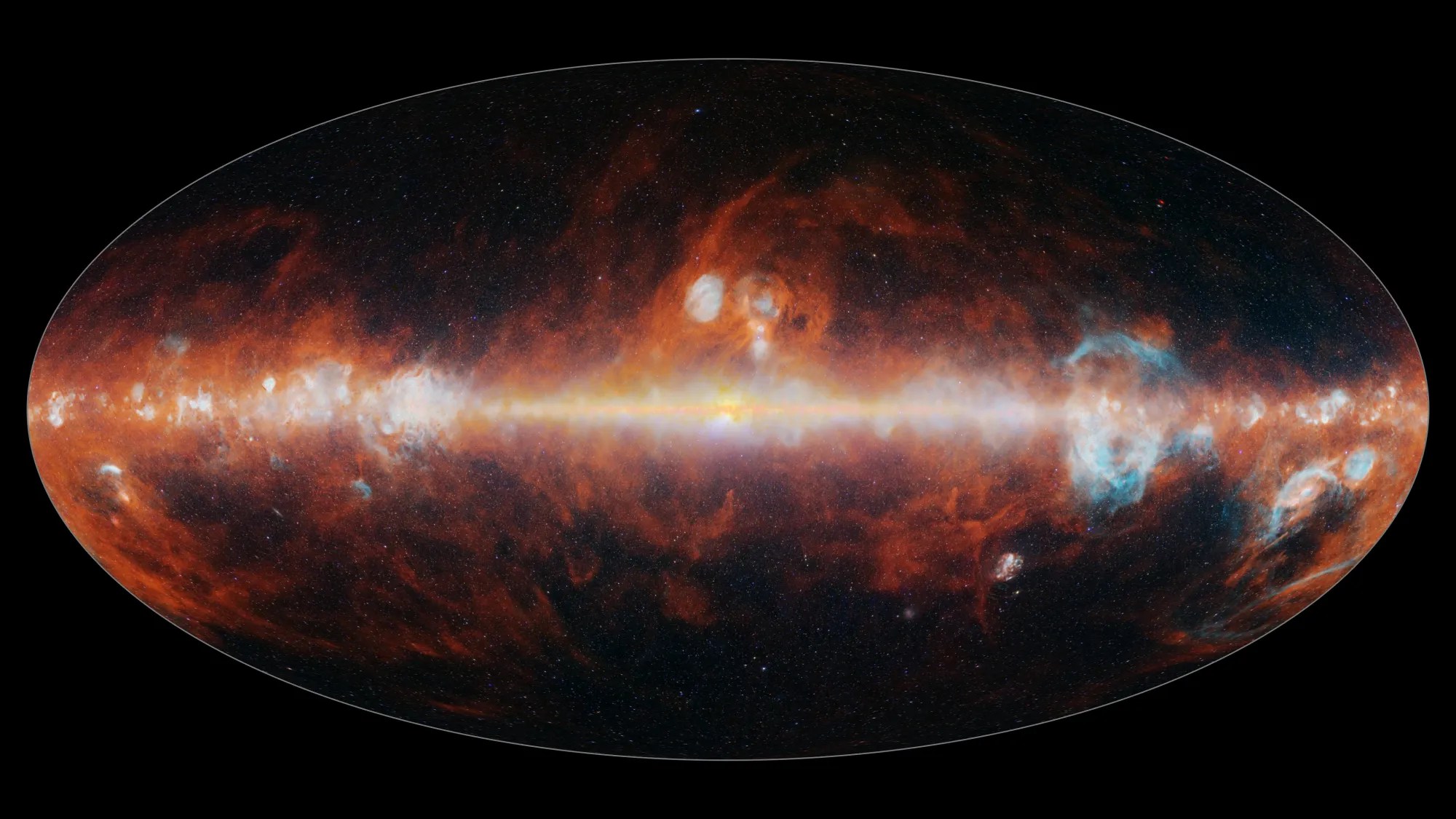
NASA’s SPHEREx Observatory has mapped the entire sky in 102 infrared colors, as seen here in this image released on Dec. 18, 2025. This image features a selection of colors emitted primarily by stars (blue, green, and white), hot hydrogen gas (blue), and cosmic dust (red).
NASA/JPL-Caltech
NASA’s SPHEREx Observatory has mapped the entire sky in 102 infrared colors, as seen here in this image released on Dec. 18, 2025. This image features a selection of colors emitted primarily by stars (blue, green, and white), hot hydrogen gas (blue), and cosmic dust (red).
While not visible to the human eye, these 102 infrared wavelengths of light are prevalent in the cosmos, and observing the entire sky this way enables scientists to answer big questions, including how a dramatic event that occurred in the first billionth of a trillionth of a trillionth of a second after the big bang influenced the 3D distribution of hundreds of millions of galaxies in our universe. In addition, scientists will use the data to study how galaxies have changed over the universe’s nearly 14-billion-year history and learn about the distribution of key ingredients for life in our own galaxy.
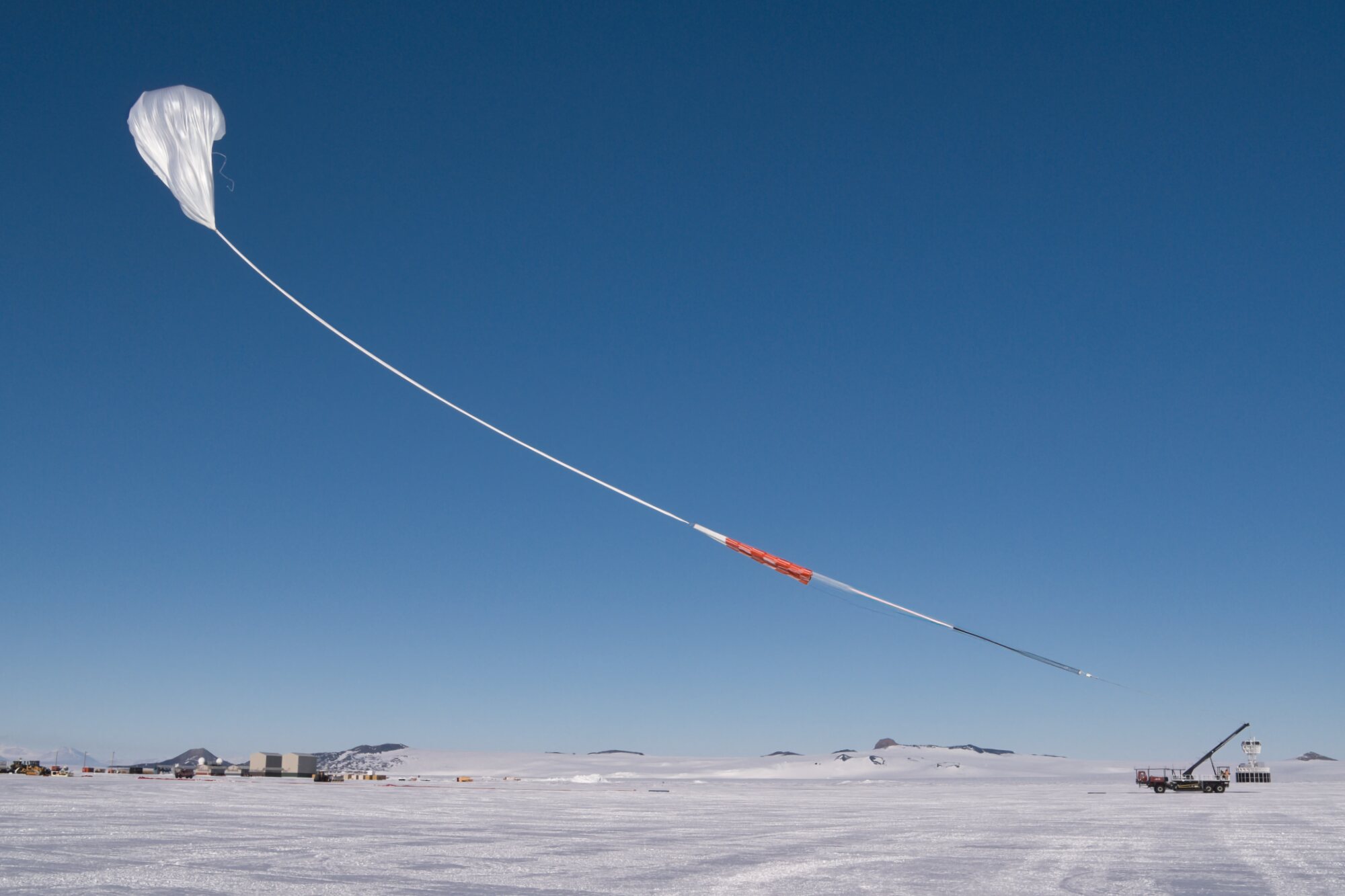
A scientific balloon starts its ascent into the air as it prepares to launch carrying NASA’s Payload for Ultrahigh Energy Observations (PUEO) mission. The mission lifted off from Antarctica at 5:56 a.m. NZST, Saturday, Dec. 20 (11:56 a.m., Friday, Dec. 19 in U.S. Eastern Time).
The PUEO mission is designed to detect radio signals created when highly energetic particles called neutrinos from space hit the ice. The PUEO payload will collect data that give us insight into events like the creation of black holes and neutron star mergers. Alongside the PUEO mission are two other balloons carrying calibration equipment sending test signals to help scientists make sure the payload equipment is working correctly when it tries to detect real signals from space.
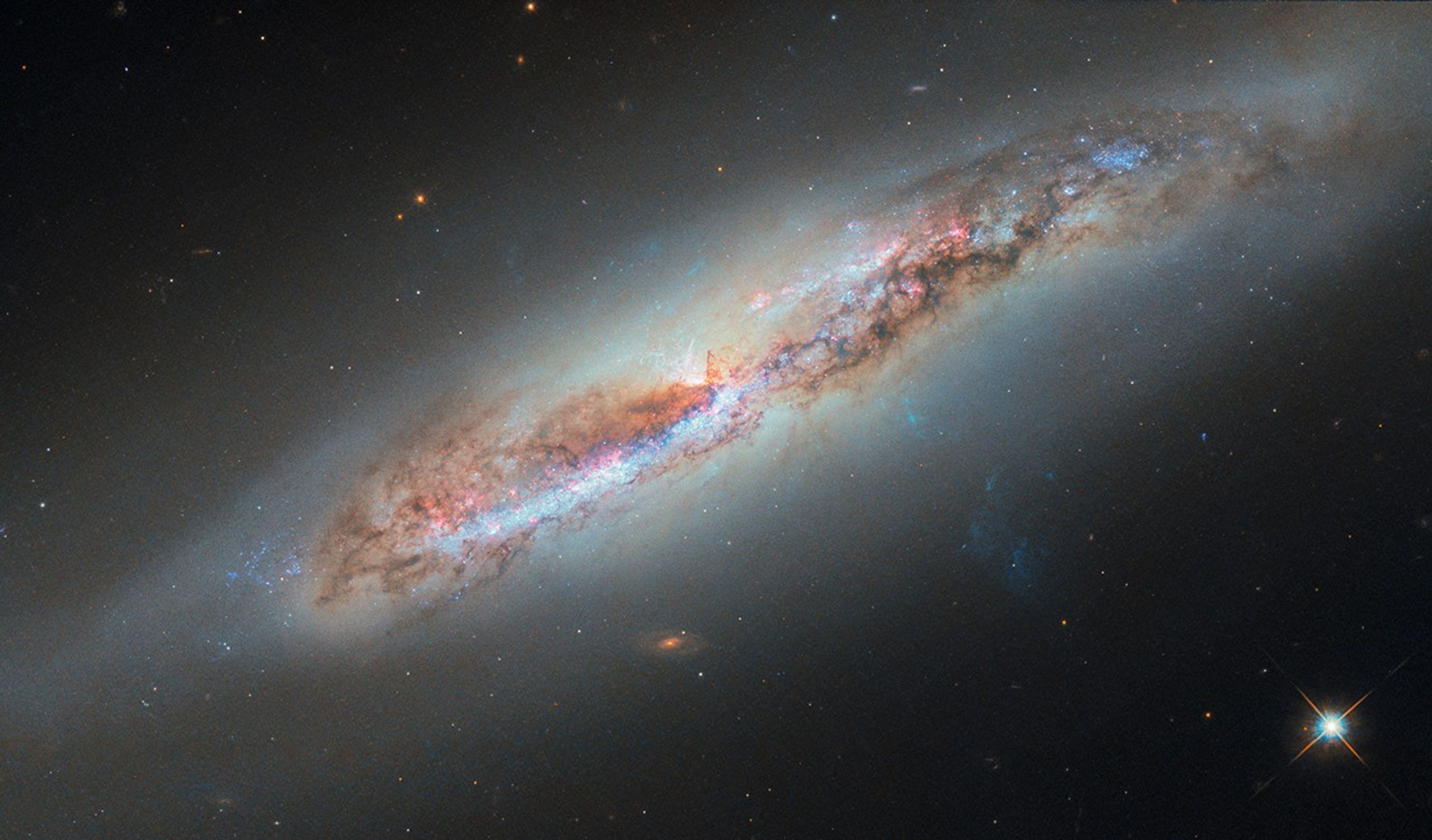
This NASA/ESA Hubble Space Telescope image features the galaxy NGC 4388, a member of the Virgo galaxy cluster.
ESA/Hubble & NASA, S. Veilleux, J. Wang, J. Greene
A sideways spiral galaxy shines in this NASA/ESA Hubble Space Telescope image. Located about 60 million light-years away in the constellation Virgo (the Maiden), NGC 4388 is a resident of the Virgo galaxy cluster. This enormous cluster of galaxies contains more than a thousand members and is the nearest large galaxy cluster to the Milky Way.
NGC 4388 appears to tilt at an extreme angle relative to our point of view, giving us a nearly edge-on prospect of the galaxy. This perspective reveals a curious feature that wasn’t visible in a previous Hubble image of this galaxy released in 2016: a plume of gas from the galaxy’s nucleus, here seen billowing out from the galaxy’s disk toward the lower-right corner of the image. But where did this outflow come from, and why does it glow?
The answer likely lies in the vast stretches of space that separate the galaxies of the Virgo cluster. Though the space between galaxies appears empty, this space is occupied by hot wisps of gas called the intracluster medium. As NGC 4388 moves within the Virgo cluster, it plunges through the intracluster medium. Pressure from hot intracluster gas whisks away gas from within NGC 4388’s disk, causing it to trail behind as NGC 4388 moves.
The source of the ionizing energy that causes this gas cloud to glow is more uncertain. Researchers suspect that some of the energy comes from the center of the galaxy, where a supermassive black hole spins gas around it into a superheated disk. The blazing radiation from this disk might ionize the gas closest to the galaxy, while shock waves might be responsible for ionizing filaments of gas farther out.
This image incorporates new data, including several additional wavelengths of light, that bring the ionized gas cloud into view. The image holds data from several observing programs that aim to illuminate galaxies with active black holes at their centers.
Image credit: ESA/Hubble & NASA, S. Veilleux, J. Wang, J. Greene
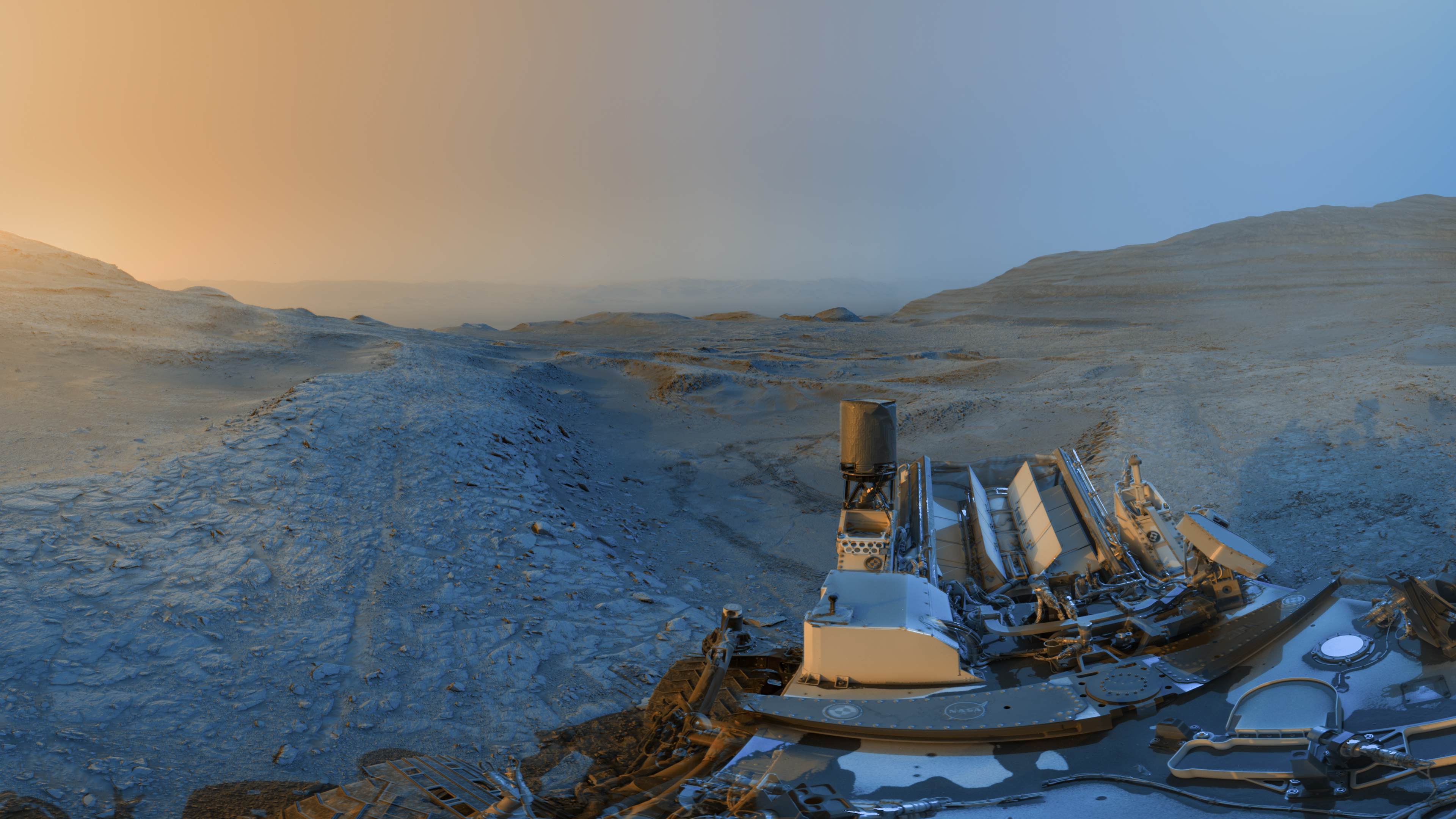
Team members working with NASA’s Curiosity Mars rover created this “postcard” by commanding the rover to take images at two times of day on Nov. 18, 2025, spanning periods that occurred on both the 4,722nd and 4,723rd Martian days, or sols, of the mission.
The panoramas were captured at 4:15 p.m. on Sol 4,722 and 8:20 a.m. on Sol 4,723 (both at local Mars time), then merged together. Color was later added for an artistic interpretation of the scene with blue representing the morning panorama and yellow representing the afternoon one. The resulting “postcard” is similar to ones the rover took in June 2023 and November 2021. Adding color to these kinds of merged images helps different details stand out in the landscape.
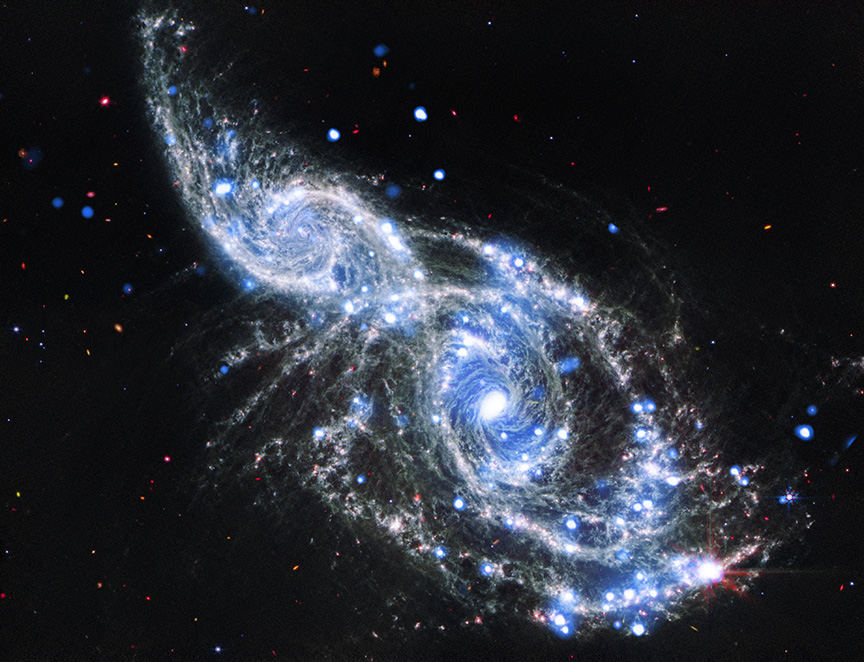
Mid-infrared data from NASA’s James Webb Space Telescope (in white, gray, and red) and X-ray data from NASA’s Chandra X-ray Observatory (in blue) come together in this photo of colliding spiral galaxies released on Dec. 1, 2025. The pair grazed one another millions of years ago; billions of years in the future, they will merge into a single galaxy.
In this Oct. 20, 2025, photo, tiny ball bearings surround a larger central bearing during the Fluid Particles experiment, conducted inside the Microgravity Science Glovebox (MSG) aboard the International Space Station’s Destiny laboratory module. A bulk container installed in the MSG, filled with viscous fluid and embedded particles, is subjected to oscillating frequencies to observe how the particles cluster and form larger structures in microgravity. Insights from this research may advance fire suppression, lunar dust mitigation, and plant growth in space. On Earth, the findings could inform our understanding of pollen dispersion, algae blooms, plastic pollution, and sea salt transport during storms.
In addition to uncovering potential benefits on Earth, research done aboard the space station helps inform long-duration missions like Artemis and future human expeditions to Mars.
Santa Claus (NASA engineer Guy Naylor) poses with NASA’s Artemis II Orion spacecraft and SLS (Space Launch System) rocket in the Vehicle Assembly Building at NASA’s Kennedy Space Center in Florida on Dec. 11, 2025. The Orion spacecraft was stacked atop the SLS in October 2025.
Set to launch in early 2026, the Artemis II test flight will be NASA’s first mission with crew under Artemis. Astronauts on their first flight aboard Orion will confirm all the spacecraft’s systems operate as designed with crew aboard in the actual environment of deep space. Through the Artemis campaign, NASA will send astronauts to explore the Moon for scientific discovery, economic benefits, and to build the foundation for the first crewed missions to Mars – for the benefit of all.
From left to right, CSA (Canadian Space Agency) astronaut Jeremy Hansen and NASA astronauts Christina Koch, Victor Glover, and Reid Wiseman stand outside before boarding their Orion spacecraft inside the Vehicle Assembly Building at NASA’s Kennedy Space Center in Florida as part of the Artemis II countdown demonstration test, Saturday, Dec. 20, 2025. Because the SLS (Space Launch System) rocket upon which they will launch is not yet at the launch pad, the crew boarded Orion inside NASA Kennedy’s Vehicle Assembly Building, where engineers are conducting final preparations on the spacecraft, rocket, and ground systems. During the rehearsal, teams went through all the steps that will be taken on launch day, winding the clock down to just a few seconds before liftoff.
Through the Artemis campaign, NASA will send astronauts to explore the Moon for scientific discovery, economic benefits, and to build the foundation for the first crewed missions to Mars, for the benefit of all.
These two galaxies are named NGC 4490 and NGC 4485, and they’re located about 24 million light-years away in the constellation Canes Venatici (The Hunting Dogs). They are the closest known interacting dwarf-dwarf galaxy system where astronomers have observed the interactions between them, as well as been able to resolve the stars within.
ESA/Webb, NASA & CSA, A. Adamo (Stockholm University), G. Bortolini, and the FEAST JWST team
NASA’s James Webb Space Telescope captured two nearby dwarf galaxies interacting with each other in this image released on Dec. 2, 2025. Dwarf galaxies can give us insights into galaxies in the early universe, which were thought to have less mass than galaxies like the Milky Way, and also contain a lot of gas, relatively few stars, and typically have small amounts of elements heavier than helium. Observing dwarf galaxies merge can tell us how galaxies billions of years ago might have grown and evolved.

 Login
Login