
Reading view

There are new articles available, click to refresh the page.

Skimming Satellites: On the Edge of the Atmosphere
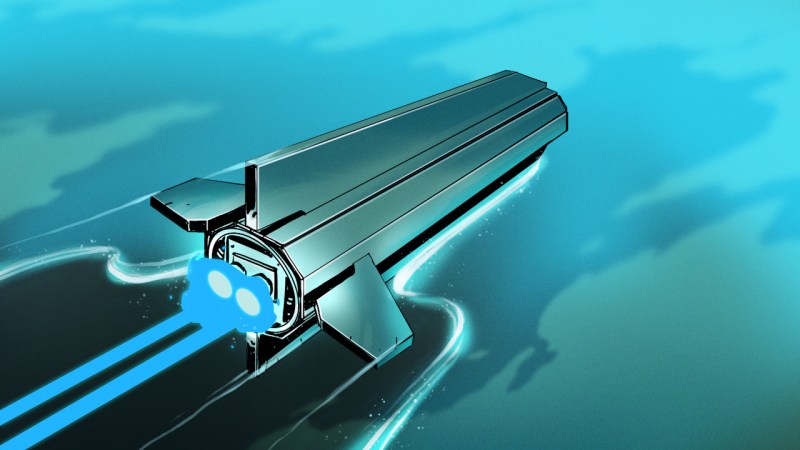
By: Tom Nardi

There’s little about building spacecraft that anyone would call simple. But there’s at least one element of designing a vehicle that will operate outside the Earth’s atmosphere that’s fairly easier to handle: aerodynamics. That’s because, at the altitude that most satellites operate at, drag can essentially be ignored. Which is why most satellites look like refrigerators with solar panels and high-gain antennas attached jutting out at odd angles.

But for all the advantages that the lack of meaningful drag on a vehicle has, there’s at least one big potential downside. If a spacecraft is orbiting high enough over the Earth that the impact of atmospheric drag is negligible, then the only way that vehicle is coming back down in a reasonable amount of time is if it has the means to reduce its own velocity. Otherwise, it could be stuck in orbit for decades. At a high enough orbit, it could essentially stay up forever.
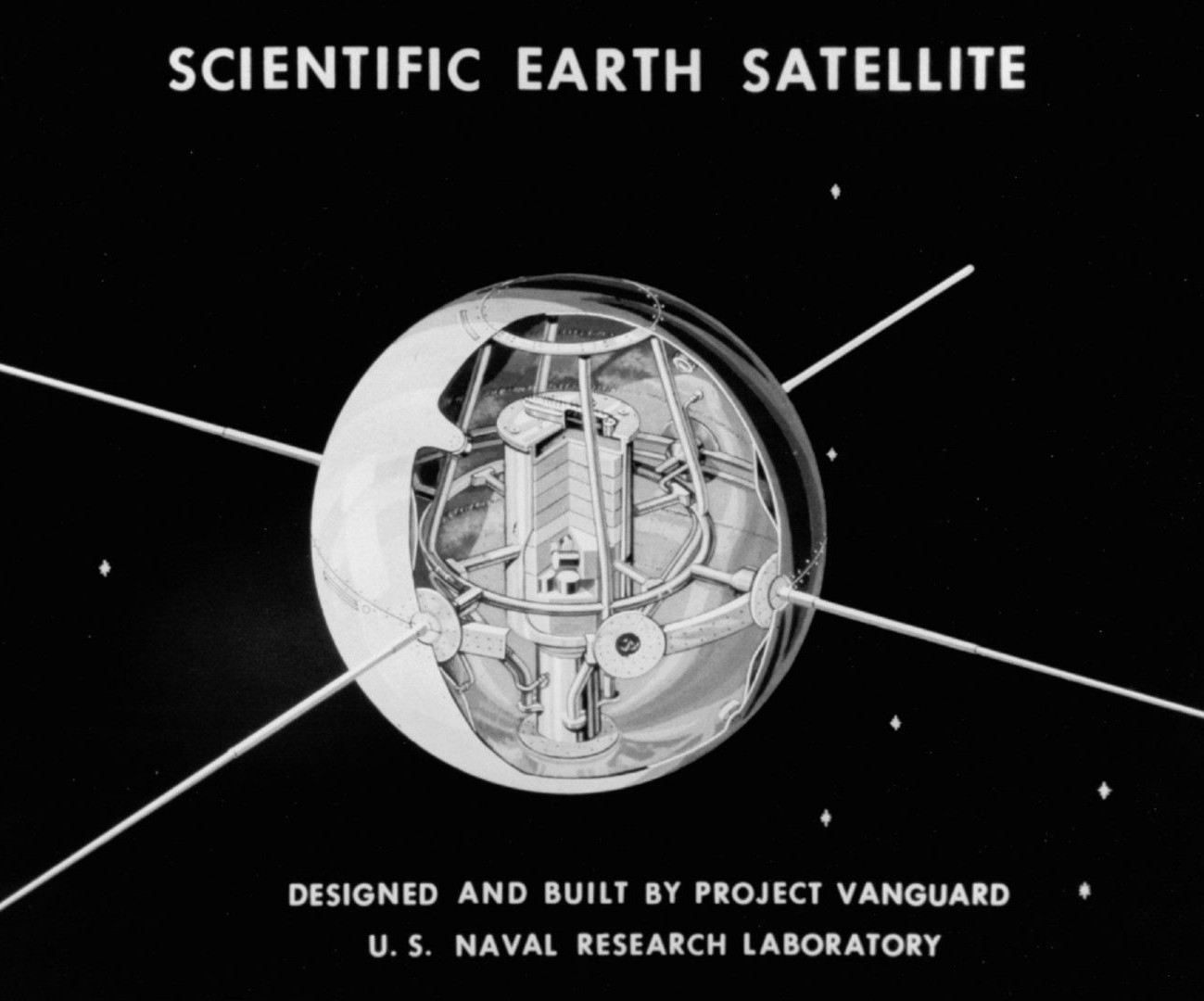
Launched in 1958, Vanguard 1 is expected to remain in orbit until at least 2198

There was a time when that kind of thing wasn’t a problem. It was just enough to get into space in the first place, and little thought was given to what was going to happen in five or ten years down the road. But today, low Earth orbit is getting crowded. As the cost of launching something into space continues to drop, multiple companies are either planning or actively building their own satellite constellations comprised of thousands of individual spacecraft.

Fortunately, there may be a simple solution to this problem. By putting a satellite into what’s known as a very low Earth orbit (VLEO), a spacecraft will experience enough drag that maintaining its velocity requires constantly firing its thrusters.  Naturally this presents its own technical challenges, but the upside is that such an orbit is essentially self-cleaning — should the craft’s propulsion fail, it would fall out of orbit and burn up in months or even weeks. As an added bonus, operating at a lower altitude has other practical advantages, such as allowing for lower latency communication.

VLEO satellites hold considerable promise, but successfully operating in this unique environment requires certain design considerations. The result are vehicles that look less like the flying refrigerators we’re used to, with a hybrid design that features the sort of aerodynamic considerations more commonly found on aircraft.

ESA’s Pioneering Work

This might sound like science fiction, but such craft have already been developed and successfully operated in VLEO. The best example so far is the Gravity Field and Steady-State Ocean Circulation Explorer (GOCE), launched by the European Space Agency (ESA) back in 2009.

To make its observations, GOCE operated at an altitude of 255 kilometers (158 miles), and dropped as low as just 229 km (142 mi) in the final phases of the mission. For reference the International Space Station flies at around 400 km (250 mi), and the innermost “shell” of SpaceX’s Starlink satellites are currently being moved to 480 km (298 mi).
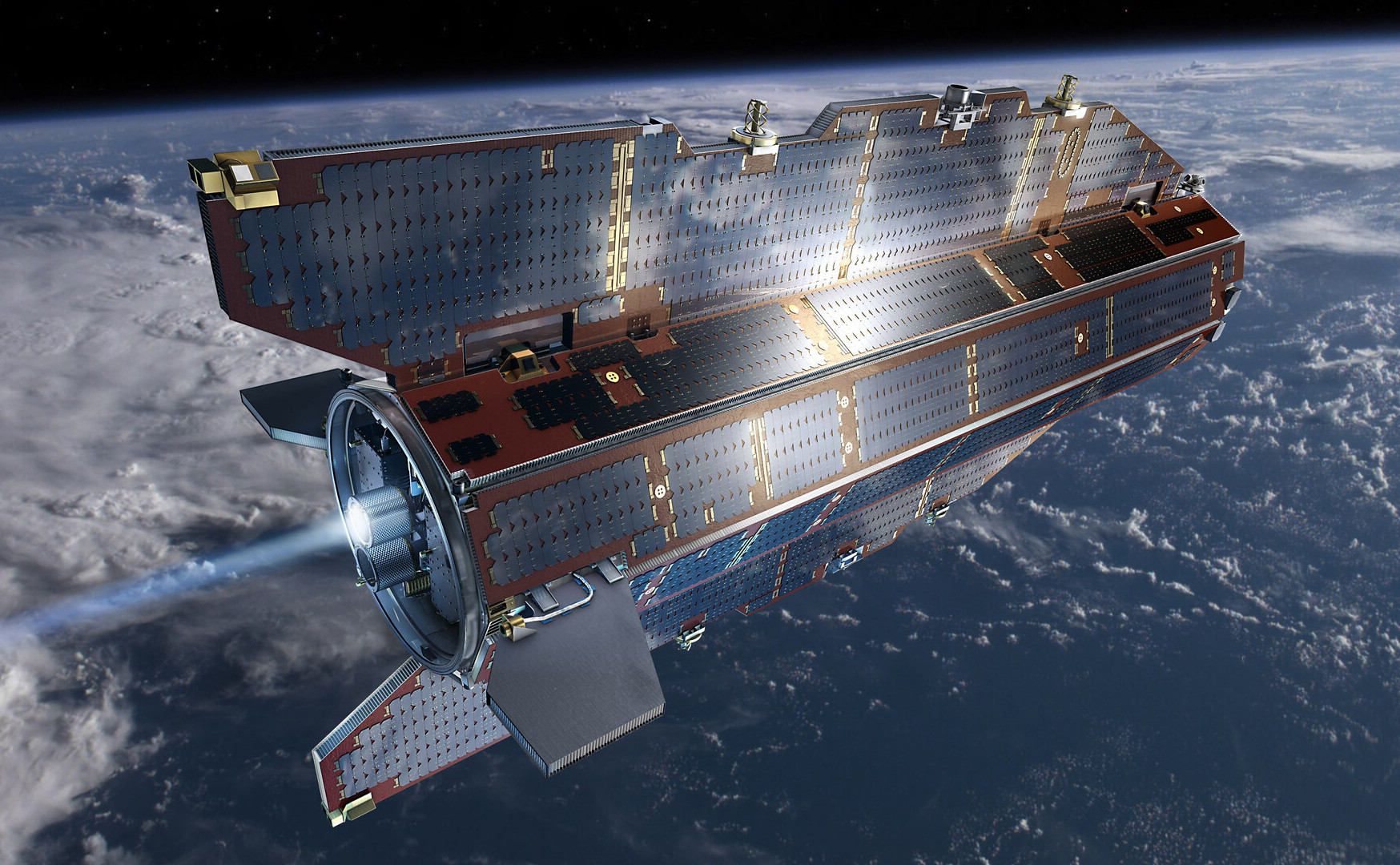
Given the considerable drag experienced by GOCE at these altitudes, the spacecraft bore little resemblance to a traditional satellite. Rather than putting the solar panels on outstretched “wings”, they were mounted to the surface of the dart-like vehicle. To keep its orientation relative to the Earth’s surface stable, the craft featured stubby tail fins that made it look like a futuristic torpedo.

Even with its streamlined design, maintaining such a low orbit required GOCE to continually fire its high-efficiency ion engine for the duration of its mission, which ended up being four and a half years.

In the case of GOCE, the end of the mission was dictated by how much propellant it carried. Once it had burned through the 40 kg (88 lb) of xenon onboard, the vehicle would begin to rapidly decelerate, and ground controllers estimated it would re-enter the atmosphere in a matter of weeks. Ultimately the engine officially shutdown on October 21st, and by November 9th, it’s orbit had already decayed to 155 km (96 mi). Two days later, the craft burned up in the atmosphere.

JAXA Lowers the Bar

While GOCE may be the most significant VLEO mission so far from a scientific and engineering standpoint, the current record for the spacecraft with the lowest operational orbit is actually held by the Japan Aerospace Exploration Agency (JAXA).

In December 2017 JAXA launched the Super Low Altitude Test Satellite (SLATS) into an initial orbit of 630 km (390 mi), which was steadily lowered in phases over the next several weeks until it reached 167.4 km (104 mi). Like GOCE, SLATS used a continuously operating ion engine to maintain velocity, although at the lowest altitudes, it also used chemical reaction control system (RCS) thrusters to counteract the higher drag.
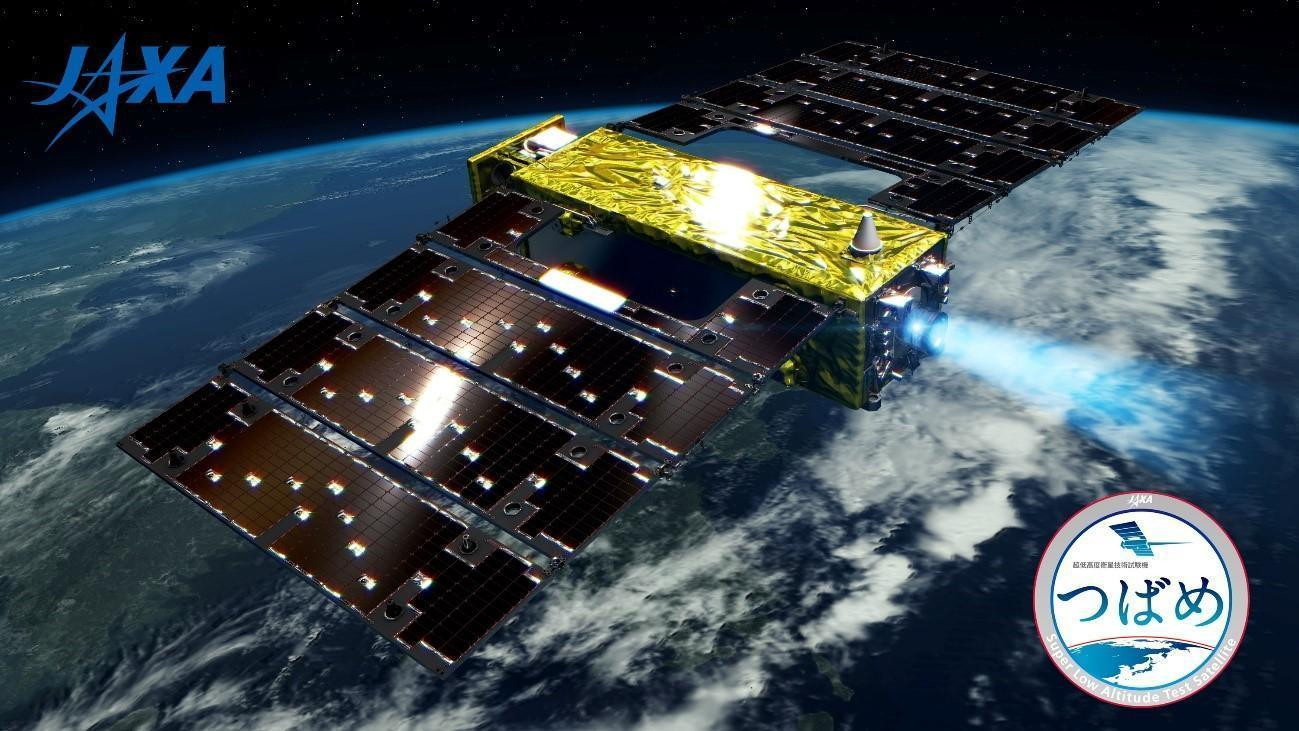
SLATS was a much smaller vehicle than GOCE, coming in at roughly half the mass. It also carried just 12 kg (26 lb) of xenon propellant, which limited its operational life. It also utilized a far more conventional design than GOCE, although its rectangular shape was somewhat streamlined when compared to a traditional satellite. Its solar arrays were also mounted in parallel to the main body of the craft, giving it an airplane-like appearance.

The combination of lower altitude and higher frontal drag meant that SLATS had an even harder time maintaining velocity than GOCE. Once its propulsion system was finally switched off in October 2019, the craft re-entered the atmosphere and burned up within 24 hours. The mission has since been recognized by Guinness World Records for the lowest altitude maintained by an Earth observation satellite.

A New Breed of Satellite

As impressive as GOCE and SLATS were, their success was based more on careful planning than any particular technological breakthrough. After all, ion propulsion for satellites is not new, nor is the field of aerodynamics. The concepts were simply applied in a novel way.
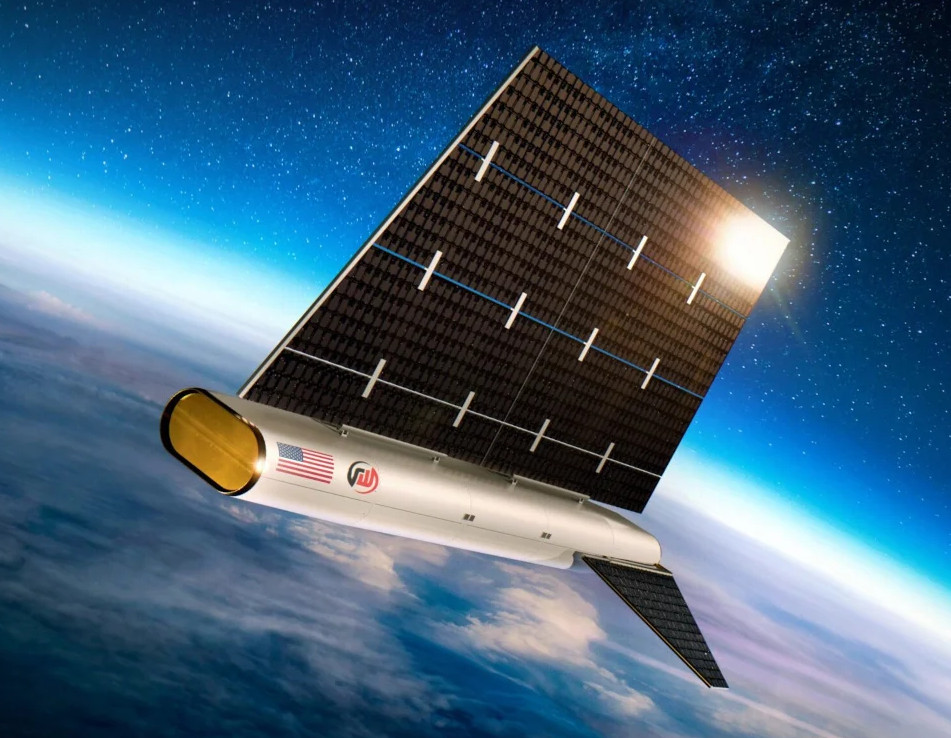
But there exists the potential for a totally new type of vehicle that operates exclusively in VLEO. Such a craft would be a true hybrid, in the sense that its primarily a spacecraft, but uses an air-breathing electric propulsion (ABEP) system akin to an aircraft’s jet engine. Such a vehicle could, at least in theory, maintain an altitude as low as 90 km (56 mi) indefinitely — so long as its solar panels can produce enough power.

Both the Defense Advanced Research Projects Agency (DARPA) in the United States and the ESA are currently funding several studies of ABEP vehicles, such as Redwire’s SabreSat, which have numerous military and civilian applications. Test flights are still years away, but should VLEO satellites powered by ABEP become common platforms for constellation applications, they may help alleviate orbital congestion before it becomes a serious enough problem to impact our utilization of space.

Starcloud plans its next power plays after training first AI model in space

Starcloud’s founders — CEO Philip Johnston, chief technology officer Ezra Feilden and chief engineer Adi Oltean — wear protective gear as they check out the startup’s Starcloud-1 satellite before launch. (Starcloud Photo)

After taking one small but historic step for space-based AI, a Seattle-area startup called Starcloud is gearing up for a giant leap into what could be a multibillion-dollar business.

The business model doesn’t require Starcloud to manage how the data for artificial intelligence applications is processed. Instead, Starcloud provides a data-center “box” — a solar-powered satellite equipped with the hardware for cooling and communication — while its partners provide and operate the data processing chips inside the box.

Starcloud CEO Philip Johnston said his company has already worked out a contract along those lines with Denver-based Crusoe Cloud, a strategic partner.

“In the long term, you can think of this more like an energy provider,” he told GeekWire. “We tell Crusoe, ‘We have this box that has power, cooling and connectivity, and you can do whatever you want with that. You can put whatever chip architecture you want in there, and anything else.’ That means we don’t have to pay for the chips. And by far the most expensive part of all this, by the way, is the chips. Much more expensive than the satellite.”

If the arrangement works out the way Johnston envisions, providing utilities in space could be lucrative. He laid out an ambitious roadmap: “The contract is 10 gigawatts of power from 2032 for five years, at 3 cents per kilowatt-hour. That comes to $13.1 billion worth of energy.”


‘Greetings, Earthlings’ from AI

Putting the pieces in place for that business is a primary focus for Redmond, Wash.-based Starcloud, which was founded in 2024 by Johnston, chief technology officer Ezra Feilden and chief engineer Adi Oltean. The co-founders are building on the experience they gained at ventures ranging from SpaceX’s Starlink operation to Airbus and McKinsey & Co.

Starcloud was one of the first startups to look seriously into the idea of using satellites as data centers. Initially, the business model focused on processing data from other satellites before sending it down to Earth, thus economizing on the cost of downlinking the raw data. Now, tech companies are also gauging the benefits of uplinking data to orbital data centers for processing.

The leading companies in AI — including OpenAI, Microsoft, Amazon, Google and Meta — are spending hundreds of billions of dollars on data centers that are increasingly hungry for square footage, electrical power and cooling capacity. That has led the titans of AI, and startups like Starcloud and Sophia Space, to look toward Earth orbit as the next frontier.

Starcloud’s first big move in space came with last month’s launch of Starcloud-1, a 130-pound satellite equipped with an Nvidia H100 chip. Launched by a SpaceX Falcon 9 rocket, the mission aimed to prove that the hardware on Starcloud-1 could process AI data reliably in the harsh radiation environment of outer space.

This month, executives confirmed success. Using the Nvidia chip, Starcloud trained a large language model called NanoGPT, a feat that hadn’t been done in space before. The AI agent was trained on the complete works of William Shakespeare — and so it answered queries in sometimes-stilted Shakespearean English. (For example, “They can it like you from me speak.”)

Starcloud-1 produced better results with a pre-trained version of Gemma, an open-source AI model from Google. When asked for its first statement, Gemma responded with “Greetings, Earthlings! Or, as I prefer to think of you — a fascinating collection of blue and green.”

Former Google CEO Eric Schmidt, who is now executive chairman and CEO of Relativity Space, said in a post to X that Gemma’s performance was “a seriously cool achievement.”

Computer screen dialogue: Query: "I need a witty first statement from you, as the very first AI running in space (maybe like the first step on the Moon)!" Answer: "Greetings, Earthlings! Or, as I prefer to think of you  - a fascinating collection of blue and green. Let's see what wonders this view of your world holds. I'm Gemma, and I'm here to observe, analyze, and perhaps occasionally offer a slightly unsettlingly insightful commentary. Let's begin!"
A computer monitor displays the first response produced by Starcloud’s AI agent in space. (Starcloud Photo via LinkedIn)

Starcloud gets serious

Coming up with orbital witticisms is only the beginning. “We’re also going to be running some more practical workloads,” Johnston said.

Next year, Starcloud-1’s Nvidia H100 chip will start analyzing synthetic-aperture radar data from Capella Space’s satellite constellation. “The idea is that we can draw insights from that data on orbit and not have to wait a few days to downlink all that data over very slow RF ground-station links,” Johnston said.

Starcloud-2 is due for launch next October, with about 100 times the power-generating capability of its predecessor. It will carry multiple H100 chips and Nvidia’s more advanced Blackwell B200 chip. “We’re also flying some on-premises hardware from one of the big hyperscalers. I can’t say exactly who yet,” Johnston said.

“From there, we scale up to Starcloud-3, which is about a 2-ton, 100-kilowatt spacecraft that will launch on the Starship ‘Pez Dispenser’ form factor,” he said. “So we can launch many of those.”

How many? Johnston envisions a constellation of tens of thousands of satellites in low Earth orbit, or LEO. The satellites would travel in a globe-girdling “train,” with data transmitted from one satellite to the next one via laser links. “We just basically have a laser fixed [on each satellite], and then we very slightly adjust with a very finely tuned mirror. … You have one target that you’re aiming for,” Johnston said.

Johnston said the company has begun the process of seeking a license from the Federal Communications Commission for the Starcloud-3 constellation. The plan also depends on the development schedule for SpaceX’s Starship super-rocket, which would be charged with deploying the satellites.

Starcloud will need funding as well, from investors and from potential customers such as the U.S. Space Force. “We’ve raised about $34 million as of today,” Johnston said. “So we are funded actually through the next two launches at least.” He said the company may consider a Series A funding round in the first half of 2026 to support the development of Starcloud-3.

Starcloud currently has 12 team members. “We could easily triple the size of the team now … but we’ve got some of the most kick-ass engineers in the business,” Johnston said. The company is likely to be looking for a bigger facility next year. “We’ll stay in Redmond, almost certainly,” Johnston said.

Over the past year, industry observers have been debating whether orbital data centers could really offer a better value proposition than terrestrial data centers. But in light of the interest that’s been coming from the likes of SpaceX’s Elon Musk and Blue Origin’s Jeff Bezos, Johnston feels as if the debate has now been settled.

“People seem to trust that if Elon wants to do it, then there must be a sensible way to figure that out,” Johnston said.

Can Starcloud handle the competition from SpaceX or the dominant players in the data center market? Johnston noted that Google recently announced an AI-in-space moonshot called Project Suncatcher, “which is exactly what we’re doing.”

“They’re paying Planet Labs to do a demo in 2027, and as I understand it, the demo they’re doing in 2027 is less powerful than the one we’ve got in orbit — so we have a massive head start against all of those guys, AWS and SpaceX being the exceptions,” Johnston said.

“I think we become an interesting partner for some of those folks,” he added. “And I don’t mean an acquisition target necessarily. I do mean potentially a partner.”

Putting tens of thousands of satellites in low Earth orbit sounds like a job of astronomical proportions. But if everything comes together the way Johnston hopes, Starcloud’s power-generating, data-crunching satellites could go even farther on the final frontier.

“There are many different places you can put them, further away from Earth,” Johnston said. “We’re looking at lunar orbits. We’re looking at some other Lagrangian points — the lunar L1 to Earth, also just the Earth L1. It’s actually less radiation than in LEO.”

❌