Reading view

There are new articles available, click to refresh the page.

Binance Leads Push To Offer Tokenized US Stocks Outside Traditional Markets

Major cryptocurrency exchanges are reportedly positioning to bring tokenized stock trading onto the blockchain, signaling a renewed push to merge traditional financial markets with digital assets. 

According to a report published Friday by The Information, platforms such as Binance are exploring ways to offer crypto tokens that track publicly listed US companies, effectively creating new channels for equity exposure through tokenized instruments.

Binance And OKX Explore Tokenized Stocks

The report says Binance is considering reintroducing stock tokens to its platform, several years after pulling similar products in 2021 amid regulatory uncertainty. 

The plan, cited by a person familiar with the matter, reflects a broader shift within the industry as exchanges revisit tokenized equities under evolving market and compliance frameworks. 

OKX is also said to be evaluating the possibility of offering tokenized stocks, according to Haider Rafique, the company’s global managing partner and chief marketing officer.

Binance has framed the move as part of its long-term strategy to connect traditional finance with the crypto ecosystem. In a statement to CoinDesk, a Binance spokesperson said the exchange is focused on expanding user choice while maintaining strict regulatory standards. 

The company noted that it began supporting tokenized real-world assets (RWAs) last year and recently launched what it described as the first regulated traditional finance perpetual contracts settled in stablecoins. 

Exploring tokenized equities, the spokesperson said, is a natural progression as Binance continues to build infrastructure, collaborate with established financial institutions, and develop new products for users and the wider industry.

Binance and OKX are not alone in this effort. Several major crypto firms, including Robinhood (HOOD), Gemini (GEMI), and Kraken, have already rolled out tokenized stock offerings in Europe. Meanwhile, Robinhood and blockchain startup Dinari are seeking regulatory approval to introduce similar products in the United States.

Tokenized Shares Gain Increased Interest

Robinhood took a significant step in June of last year when it launched trading in tokens linked to publicly listed companies and announced plans to expand into tokenized shares of private firms. 

As part of the rollout, the company distributed tokens pegged to OpenAI. According to Robinhood’s terms and conditions, those tokens function as derivative contracts backed by the firm’s ownership of fund units in a special-purpose vehicle that holds OpenAI convertible notes. 

Coinbase (COIN), on the other hand, is reportedly in discussions with the US Securities and Exchange Commission (SEC) about launching tokenized securities that would grant investors the same legal rights and benefits as conventional shares

Several issuers involved in the space say they are closely adhering to established rules around securities law, anti-money laundering requirements, bankruptcy protections, and investor safeguards.

Industry leaders argue that, when structured properly, tokenization can strengthen rather than weaken investor protections. Ian De Bode, chief strategy officer at Ondo Finance, said that a careful approach to tokenized securities can enhance safeguards while unlocking efficiencies that traditional markets struggle to achieve.

Binance

Featured image from OpenArt, chart from TradingView.com 

Binance Forms New Company In Greece, Moves Forward With MiCA Licensing

Cryptocurrency exchange Binance has taken a significant step toward strengthening its regulatory standing in Europe by establishing a formal presence in Greece and applying for a Markets in Crypto-Assets (MiCA) license ahead of the July 1 deadline.

Binance’s Greek Subsidiary

Corporate filings show that Binance has set up a new wholly owned subsidiary in Greece under the name “Binary Greece.” The entity has been incorporated as a single-shareholder public limited company with an initial share capital of €25,000. 

Binary Greece has been structured as a holding company. According to its articles of association, its primary activities include acquiring and managing equity stakes in companies both within Greece and internationally. 

It is also authorized to provide advisory services related to capital structuring, investment strategy, and liquidity management. 

Leadership of the new entity has been assigned to Gillian Majella Lynch, a senior executive with experience in banking, fintech, and digital assets. Lynch joined Binance in mid-2025 as Head of Europe and the United Kingdom. 

Greece’s Regulatory Stability Key In License Bid

A Binance spokesperson confirmed to Fortune that the besides formally applying for a MiCA license in Athens, the cryptocurrency exchange is currently engaged in discussions with Greece’s Hellenic Capital Market Commission (HCMC). 

The spokesperson emphasized that Binance sees the MiCA framework as a positive development, offering regulatory clarity and a consistent set of rules that support innovation while ensuring compliance across the European Union.

Commenting on the choice of Greece, the exchange’s spokesperson noted that the country plays an important role in the European economy, highlighting that Greece’s economy is growing faster than the EU average and operates within a regulatory environment that Binance considers essential. 

Binance

Featured image from DALL-E, chart from TradingView.com 

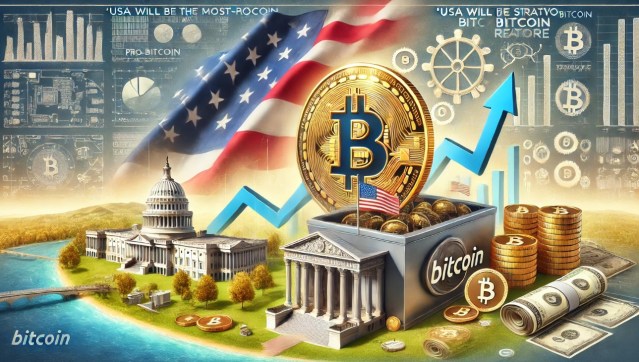
Kansas Senator Proposes Bill For State’s Strategic Bitcoin Reserve And ETF Investment

On Thursday, Senator Craig Bowser introduced a new piece of legislation aimed at creating a Strategic Bitcoin and cryptocurrency reserve for Kansas state. 

The proposal, filed as Bill 352, would permit the Kansas Public Employees Retirement System (KPERS) to allocate up to 10% of its total funds into Bitcoin exchange-traded funds (ETFs).

Kansas Bitcoin Bill 

Under the bill’s framework, KPERS would not be obligated to sell its Bitcoin ETF holdings if their value grows beyond the 10% allocation threshold, unless the board determines that doing so would better serve the interests of beneficiaries. 

If enacted, the legislation would also require the KPERS board to conduct an annual review of the investment program, with the results formally submitted to the governor for oversight and evaluation.

Kansas’ move follows a growing trend among US states exploring BTC as a strategic asset as the regulatory environment surrounding crypto has significantly shifted under President Donald Trump’s administration. 

US States Move Toward Crypto Reserves

Texas set an early benchmark last November when it became the first state to formally incorporate cryptocurrency into its treasury strategy by purchasing $10 million worth of Bitcoin. 

In North Dakota, lawmakers are considering BTC investments as a potential hedge against inflation. Oklahoma has also entered the conversation, with Senator Dusty Deevers introducing the Bitcoin Freedom Act.

Meanwhile, Tennessee introduced a new bill last week—HB1695—designed to establish its own Strategic Bitcoin Reserve. West Virginia has put forward Senate Bill 143, which proposes allocating 10% of certain state funds toward a cryptocurrency reserve. 

Missouri has made notable progress as well, advancing House Bill 2080 to create a Strategic Bitcoin Reserve Fund. That measure has already passed its second reading and is now moving forward for further consideration in the state House.

Bitcoin

Featured image from DALL-E, chart from TradingView.com 

Crypto Boom Ahead? Pantera Capital Pinpoints Major Catalysts For 2026 Success

On Wednesday, Pantera Capital, one of the largest venture capital firms in the crypto industry, released its latest blockchain letter. In this edition, the firm reflects on the challenges faced in 2025 while projecting optimism for the remaining months of 2026.

Pantera Capital Identifies Growth Catalysts

Pantera begins by acknowledging that last year was not fundamentally driven when it came to returns within the crypto markets. It cites macroeconomic factors, market positioning, and structural influences as the main drivers that shaped performance, particularly for assets beyond Bitcoin (BTC). 

The firm highlights several positive developments, including the passage of the GENIUS Act and the rise of digital asset treasuries (DATs). These factors contributed to a more stabilized market sentiment, especially with the onset of Federal Reserve (Fed) rate cuts.

However, the firm also describes a challenging fourth quarter in 2025, where a significant selloff on October 10 led to the largest liquidation cascade in crypto history. 

Despite this and many other setbacks during last year’s performance, Pantera expresses optimism about the future, identifying several catalysts poised to drive growth in the coming months.

First and foremost, institutional adoption of blockchain technology continues to expand. Many enterprises are now integrating blockchain into their core offerings, with examples like Robinhood’s tokenized equities and JPMorgan’s initiatives.

Moreover, the firm distinguished that there has been a notable drop in barriers to entry for major financial players into the crypto market, including sovereign reserves and large asset management firms.

Crypto Sectors Set To Rise In 2026

Pantera Capital also explored specific sector predictions for 2026. They anticipate that Real-World Assets (RWAs) will take off. They expect that treasuries and private credit could double, with tokenized stocks and equities experiencing rapid growth as well.

The firm further forecasts that prediction markets will attract acquisition interest as they consolidate around institutional infrastructure. The demand for sports-focused platforms is also expected to grow, expanding their presence in the market.

In terms of banking innovation, ten major banks are reportedly exploring the issuance of a consortium stablecoin pegged to G7 currencies, which could provide a compliant and risk-managed way for people and institutions to utilize digital currencies.

The macro perspective remains positive as well, with a significant percentage of Bitcoin now held by public companies, exchange-traded funds (ETFs), and nations, indicating a shift towards compliance and institutional investment in the crypto market.

Finally, Pantera asserts that 2026 is poised to be a landmark year for Initial Public Offerings (IPOs) in the digital asset space. Following a significant uptick in 2025, expectations for further growth in crypto-friendly listings are high, as companies look to tokenize assets and expand their portfolios.

Crypto

Featured image from DALL-E, char from TradingView.com 

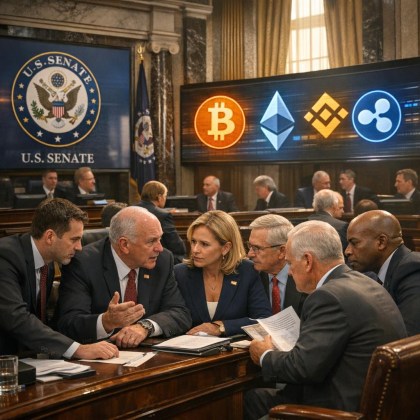
Senate Ag Committee To Release Latest Crypto Market Structure Bill Draft Today

The Senate Banking Committee delayed the anticipated markup of its crypto market structure bill draft, prompting the Agriculture Committee to take action. The Agriculture Committee is set to release its own version of the bill’s draft today, just ahead of a crucial vote scheduled for next week.

Coinbase Faces Pressure To Negotiate Yield Deal

Eleanor Terret, a reporter with Crypto In America who has been closely monitoring congressional developments regarding cryptocurrency, reported that staffers from the Banking Committee hope a successful bipartisan agreement spearheaded by their counterparts in the Ag Committee could facilitate a smoother markup process.

The responsibility now largely falls on Coinbase—whose sudden withdrawal of support for the bill contributed to the halt in the markup process—to negotiate a deal with banking leaders on yield. At the same time, Binance and Ripple’s leadership have expressed support for the bill’s latest version during their appearance in Davos. 

Coinbase CEO Brian Armstrong expressed his apprehensions regarding the implications of the bill last week. He raised concerns that the legislation could prohibit tokenized equities, impose restrictions on decentralized finance (DeFi), and expand government access to financial data, potentially sacrificing individual privacy. 

The executive also cautioned that the bill could shift regulatory power from the Commodity Futures Trading Commission (CFTC) to the Securities and Exchange Commission (SEC), which may eliminate stablecoin rewards and hinder competition within the crypto sector.

President Trump Optimistic About Crypto Market Bill

Adding to the tension, Patrick Witt, Executive Director of the White House Crypto Council, took to social media late Tuesday to criticize Coinbase, warning that the delay in the market structure bill could invite stricter regulations under an administration less favorable to digital assets. 

Witt’s remarks seemed to corroborate reports from Crypto In America indicating that the White House is frustrated with Coinbase’s withdrawal, which has contributed to the legislative stall.

In a related note, President Donald Trump acknowledged the ongoing efforts surrounding the market structure legislation during his speech in Davos on Wednesday. 

He expressed hope that Congress would finalize the bill soon, stating, “Congress is working very hard on crypto market structure legislation, which I hope to sign very soon, unlocking new pathways for Americans to reach financial freedom.”

Crypto

Featured image from OpenArt, chart from TradingView.com 

Trump Media Set to Issue Non-Transferable Crypto Tokens, Cutoff Date February 2

Trump Media & Technology Group Corp. (DJT) has officially announced the date for its highly anticipated distribution of a new digital token to its shareholders, as part of its partnership with cryptocurrency exchange Crypto.com. The record date for this digital token initiative will be February 2, 2026.

Trump Media’s New Crypto Initiative

According to the announcement, eligible shareholders will include ultimate beneficial owners and registered holders of at least one whole share of DJT stock as of the record date. In order to ensure a smooth distribution process, Trump Media will gather information from broker participants about eligible holders. 

After the record date, Trump Media plans to collaborate with Crypto.com to mint the digital tokens, which will be displayed on the blockchain and held in custody until distribution.

In addition to the digital tokens, Trump Media has indicated that various rewards will be made available to record-date shareholders throughout the year. These rewards may include benefits or discounts associated with Trump Media’s offerings, such as Truth Social, Truth+, and Truth Predict.

CRO Token Plummets

The partnership between Crypto.com and Trump Media dates back to August last year, when the Trump-linked company announced a $6.4 billion investment in the crypto exchange’s native token, CRO, as part of a strategic reserve.

Devin Nunes, Trump Media’s CEO and Chairman, expressed his enthusiasm about the latest move and the partnership with Crypto.com, stating: 

We look forward to leveraging Crypto.com’s blockchain technology consistent with Securities and Exchange Commission guidance to benefit our shareholders and promote transparency, including by obtaining a clear picture of bona fide beneficial ownership as of the record date.

Crypto

Despite the latest announcement, Crypto.com’s native token failed to capitalize on the news, dropping to $0.089 on Tuesday amid the broader crypto market’s retracement. It has recorded an 11% drop in the past week alone. 

Featured image from OpenArt, chart from TradingView.com 
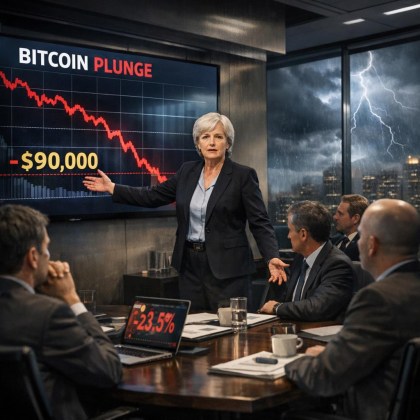
US Treasury Secretary Discusses Strategic Bitcoin Reserve Plans As Price Crashes Below $90,000

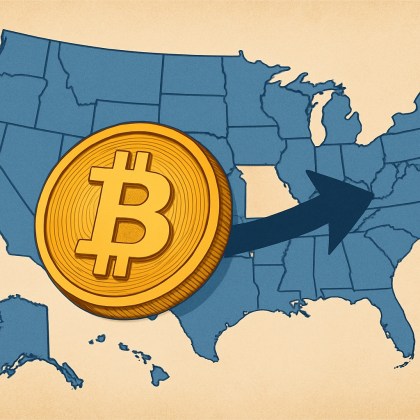
On Tuesday, US Treasury Secretary Scott Bessent confirmed plans for the country’s Strategic Bitcoin Reserve (SBR), coinciding with a sharp decline in BTC and the overall cryptocurrency market. 

All Seized Bitcoin To Be Held In Strategic Reserve

In a discussion about the government’s approach to BTC and the recent seizures of the cryptocurrency, Bessent reassured the public that the administration would cease all sales of seized Bitcoin. 

Instead of auctioning off these assets, the government plans to add the seized Bitcoin to the Strategic Bitcoin Reserve, which was set up in March last year by President Donald Trump’s administration. 

This decision, however, did little to mitigate BTC’s plummet on Tuesday, as the lack of any plans to purchase additional coins from the market contributed to continued downward pressure on prices. 

Bessent elaborated that the initiative is part of a broader strategy aimed at fostering digital asset innovation within the United States while maintaining federal oversight of confiscated cryptocurrencies. 

“This administration’s policy is to add seized Bitcoin to our digital asset reserve,” Bessent stated, marking a decisive shift in the government’s handling of Bitcoin assets.

Political Climate Leads To $215 Billion Crypto Market Dip

Bitcoin has experienced a decline of nearly $5,800—coinciding with political tensions after President Trump hinted at a 10% tariff on the European Union (EU) in an attempt to compel Denmark to sell Greenland. 

This geopolitical maneuver has not only affected Bitcoin but has also resulted in a staggering loss of approximately $215 billion in total market capitalization across the crypto sector.

Market analyst Ted Pillows warned that BTC must maintain its position above the $89,000 mark. He expressed that failing to hold this level would signal the end of the short-term upward trend, further complicating an already tumultuous condition for the cryptocurrency.

Bitcoin

When writing, BTC still holds above the key level outlined by Pillows at $89,497, but has declined by 3.7% in the last 24 hours. 

Featured image from OpenArt, chart from TradingView.com

Is A New XRP Price Record Imminent? Analyst Forecast Colossal Short Squeeze Ahead

A significant short squeeze may be on the horizon for XRP investors, potentially serving as the main catalyst for a rally that could push prices beyond the all-time high of $3.90. 

Market analyst Bird made these predictions in a recent post on social media platform X (formerly Twitter), highlighting key observations from his analysis.

Key Liquidity Zones For XRP

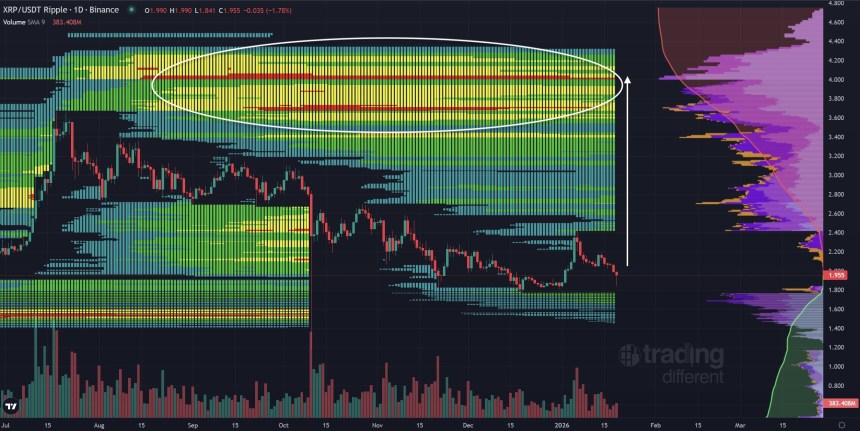
Bird shared a chart that illustrates where leveraged positions—both long and short—are concentrated in the market. He explained that the colored bands on the chart indicate levels of liquidity, where the potential for forced buying or selling could occur due to stop-loss orders and liquidations. 

The analysis of the altcoin’s daily chart heatmap categorizes liquidity into two distinct zones: red, signifying deep liquidity, and lighter colors indicating less liquidity.

XRP

From his observations, Bird noted that price movements away from low liquidity areas tend to occur rapidly. He explained this process: when prices approach zones with significant stop-loss clusters, they often trigger large sell-offs, wiping out long positions. 

Price Targets $4.20

Following these movements, the price typically rotates back toward shorts, leading to additional liquidation events. Bird pointed out that on Sunday, a number of long XRP positions were liquidated. 

Now, he sees a dense liquidity pocket forming around the $4.20 mark, primarily from short XRP positions. This situation incentivizes market makers to drive prices toward this liquidity to close out those trades, rather than moving away from it. 

As a result, Bird expressed confidence that the current XRP price rally is far from over. He believes that a new all-time high is imminent, as the potential for a substantial short squeeze looms. 

XRP

At the time of writing, the fifth-largest cryptocurrency on the market was trading at $2, having briefly dropped to $1.84 earlier on Monday. 

Featured image from DALL-E, chart from TradingView.com 

Forfeited Bitcoin Linked To Samourai Case Not Sold, Confirms White House Crypto Advisor

Recent allegations regarding the Bitcoin (BTC) sale by the US Marshal Service (USMS) — operating under the Department of Justice (DOJ) — have been addressed by White House crypto advisor Patrick Witt, who confirmed that the digital assets forfeited by Samourai Wallet and its founders have not been liquidated.

DOJ Confirms Samourai Bitcoin Will Not Be Sold

In a post on social media platform X (formerly Twitter), Witt clarified that the DOJ has verified that the digital assets taken from the Samourai Wallet will not be sold, in accordance with Executive Order 14233. He emphasized that these assets will remain on the government’s balance sheet as part of the Strategic Bitcoin Reserve.

Earlier in the month, speculations suggested that the USMS, following directives from the DOJ, had sold approximately 57.55 Bitcoin forfeited in the Samourai Wallet case through Coinbase Prime on November 3, 2025. 

The lack of confirmation until now had led experts to assert that such actions would violate EO 14233, signed by President Donald Trump. This order mandates that Bitcoin obtained through criminal or civil forfeiture be retained and added to the US Strategic Bitcoin Reserve, rather than being sold off.

The Bitcoin in question is valued at almost $6.4 million and was seized from the creators of Samourai Wallet. According to US authorities, the cryptocurrency mixer facilitated over $237 million worth of illicit transactions. 

Samourai Wallet’s Co-Founders Face Justice

The DOJ had announced in November the sentencing of Keonne Rodriguez and William Lonergan Hill, the co-founders of Samourai Wallet. 

Rodriguez, the company’s CEO, and Hill, its Chief Technology Officer, were implicated in a conspiracy involving the operation of a money transmitting business that “knowingly” transmitted proceeds from criminal activities. 

The criminal proceeds laundered through their platform originated from various illegal activities, including drug trafficking, darknet marketplace operations, cyber intrusions, fraud, murder-for-hire schemes, and even a child pornography website. Rodriguez received a five-year prison sentence, while Hill was sentenced to four years.

Bitcoin

At the time of writing, Bitcoin is trading at $95,300, marking an almost 6% increase over the past seven days. However, it is still unable to regain the key $100,000 level, which has eluded the cryptocurrency since November last year. 

Featured image from DALL-E, chart from TradingView.com 
Tennessee Plans Strategic Bitcoin Reserve Allocating Up To 10% Of State Funds

Despite facing a significant setback with the delay of the crucial vote on the crypto market structure bill, cryptocurrency adoption continues to gain momentum across the United States. Tennessee is now looking to follow Texas’s lead by introducing a new bill, HB1695, aimed at establishing its own Strategic Bitcoin Reserve.

Tennessee’s Bitcoin Reserve Proposal 

According to reports on social media platform X (formerly Twitter), the proposed legislation would authorize the state Treasurer to invest up to 10% of state funds in Bitcoin. This initiative includes mandates for secure custody protocols and restricts holdings exclusively to Bitcoin, designed as a strategy to hedge against inflation.

Texas has set a precedent in this area, making headlines last November as the first state in the US to integrate cryptocurrencies into its treasury strategy by purchasing $10 million worth of Bitcoin. 

This move, signed into law by Governor Greg Abbott on June 20, 2025, was sponsored by State Senator Charles Schwertner and garnered bipartisan support, with a Senate vote of 25-5 in March and a House vote of 101-42 in May.

Now, the proposed Bitcoin reserve bill in Tennessee will need to undergo similar legislative scrutiny to potentially join Texas in making significant strides toward state-level Bitcoin investments. 

Crypto Reserves In The Works

Tennessee and Texas are not alone in their pursuit of cryptocurrency reserves. West Virginia has also introduced its own proposal under bill SB143, which would allocate 10% of state funds for its cryptocurrency reserve. 

This bill empowers the Treasury to invest in Bitcoin and gold as an inflation hedge, essentially making BTC the sole digital reserve asset while additionally allowing for staking.

Missouri, on the other hand, has seen greater progress recently advancing its own proposal to create a Strategic Bitcoin Reserve Fund. The bill, known as HB 2080, has successfully passed its second reading and now moves towards further consideration in the House. 

Bitcoin

Featured image from DALL-E, chart from TradingView.com 

XRP Will Skyrocket Beyond $18: Analyst Suggests 800% Growth Potential In 2026

Market expert Bird has recently issued a bold forecast for XRP, the fifth-largest cryptocurrency, suggesting that it could experience a major upside of 800% within this year. If this prediction holds true, XRP could reach a new all-time high of $18.40 per coin.

Forecast Indicates XRP Might Rival Ethereum

Bird’s forecast hinges on the XRP/BTC ratio, which he predicts will reach 1:5,000 by the end of 2026. This means that 5,000 XRP would be equivalent to 1 Bitcoin (BTC). Currently, the XRP/BTC ratio trades at approximately 0.00002235. 

For Bird’s envisioned target to materialize, the ratio must increase to 0.0002 BTC per token, representing a substantial gain of around 794% from current levels.

With a total supply of 100 billion coins, this price projection implies an overall valuation of approximately $1.84 trillion for XRP. Such a figure would place the cryptocurrency in close competition with Ethereum—and striking distance of Bitcoin’s market cap.

Additional Price Scenarios For The Altcoin

Market expert Sam Daodu also outlined alternative scenarios for XRP’s future performance. In a base case, where the altcoin garners continued institutional support but doesn’t close the gap with Bitcoin’s market capitalization, the price could range between $3 and $4. 

This outcome would depend on exchange traded funds (ETFs) attracting a “few billion in assets” while Bitcoin’s dominance falls to the 40–50% range during a broader altcoin rotation.

Conversely, there exists a bear case where macroeconomic challenges or obstacles within the crypto ecosystem could hinder XRP’s price growth. Factors such as geopolitical instability could redirect capital back to Bitcoin and gold, while banks might opt for private ledgers and established stablecoins instead of adopting XRP. 

Monthly escrow releases from Ripple of 1 billion coins, accompanied by a potential diminishing exchange-traded fund demand, might cap any potential upside action for the cryptocurrency, leaving it to trade around its current trading prices of $2.

XRP

Featured image from DALL-E, chart from TradingView.com 

House Democrats Push SEC Chair To Resume Crypto Enforcement Actions

In a critical week for the cryptocurrency industry, following the delayed markup of the Crypto Market Structure bill (CLARITY Act), House Democrats are calling on the Securities and Exchange Commission (SEC) chair, Paul Atkins, to reinstate enforcement actions against crypto firms. 

The letter, dated January 15, was signed by Representatives Maxine Waters, Sean Casten, and Brad Sherman, who expressed concerns regarding the SEC’s recent retreat to investigate and prosecute alleged violations related to “digital asset securities.”

House Democrats’ Allegations

The representatives highlighted that since January 2025, the SEC has dismissed or closed more than a dozen cases involving crypto-related activities, including litigations against major players like Binance, Coinbase, and Kraken. Just this week, the SEC also closed its case against the Zcash Foundation.

In their letter, the lawmakers alleged that given the industry’s “troubling history of harming investors,” the SEC’s decision to pull back raises serious questions about its priorities and effectiveness. They warned that this shift puts both investors and the broader US economy at considerable risk.

Moreover, the representatives highlighted unprecedented lobbying and monetary contributions to political figures, including President Trump and his associates, from the digital asset sector. They pointed out that this could have influenced the SEC’s decision to abandon a majority of its crypto enforcement actions. 

Alleged Conflicts Of Interest Between Trump And Crypto 

These concerns follows months of allegations from the Democratic Party suggesting conflicts of interest between the Trump administration and the crypto industry, particularly highlighted by last year’s pardon for former Binance CEO Changpeng Zhao (CZ) and connections to the Trump-affiliated World Liberty Financial (WLFI).

According to the lawmakers, the SEC’s choice to walk away from these enforcement cases has raised suspicions of a possible pay-to-play dynamic. They argued that allowing violators of securities laws to escape without repercussions contradicts the SEC’s primary responsibility. 

Furthermore, the Representatives claim that recent statements by Chair Atkins, who said that ‘most crypto tokens are not securities’, have caused confusion.

The Democrats further pointed out that this lack of enforcement against digital assets leaves investors “vulnerable” and allegedly fails to protect them from potential violations in the market.

Crypto

Featured image from DALL-E, chart from TradingView.com

DeFi Education Fund Urges Senators To Reject Proposed Amendments In Crypto Bill Markup

As the Senate Banking Committee prepares to mark up the newly proposed draft of the crypto market structure bill, the DeFi Education Fund has released a list of amendments it strongly urges senators to oppose. 

In a recent post on social media platform X (formerly Twitter), the organization expressed concerns that the descriptions of the draft indicate potential harm to decentralized finance (DeFi) and could negatively impact software developers.

Red Flags Emerge From Crypto Market Structure Bill Draft 

In its message, the DeFi Education Fund emphasized the importance of safeguarding the integrity of the emerging DeFi landscape and called on senators to consider the far-reaching consequences of these proposed changes. 

Among the amendments highlighted were Amendment #42, proposed by Senators Reed and Kim, which seeks to authorize the Treasury to sanction smart contracts and centralized platforms involved in illicit activities. 

This amendment raised significant red flags for advocates who worry about its implications for innovation and operational flexibility within the decentralized finance ecosystem.

Another amendment of concern, Amendment #45 by Senator Reed, aims to create a specific definition for digital assets under the Bank Secrecy Act. 

Similarly, Amendment #47, also from Senator Reed, intends to remove a provision related to federal criminal offense concerning unlicensed money transmission. 

These changes, according to the DeFi Education Fund, loom dangerously over the operational landscape for developers and financial institutions that interact with digital assets.

Stifling DeFi Growth

Additionally, Senators Cortez Masto’s proposed amendments, specifically #72 and #73, aim to narrow the definition of non-controlling developers and expand the authority of the Financial Crimes Enforcement Network (FinCEN) alongside the Treasury for blockchain-enabled platforms. 

Amendments #74 and #75 further seek to strengthen existing laws related to money transmission and prohibit transactions involving unlawful DeFi protocols, which the Fund suggests could stifle the industry’s growth.

Amendment #104, proposed by crypto-skeptic Senator Elizabeth Warren, also drew attention by striking a key distribution carve-out for crypto offerings. 

This follows similar calls by Summer Mersinger, CEO of the Blockchain Association, who recently claimed that the “Big Bank Lobby” is pushing Congress to change key provisions of the already enacted GENIUS Act concerning stablecoin rewards, further highlighting the current state of the future of crypto in Congress. 

Crypto

Featured image from DALL-E, chart from TradingView.com 

Zcash Foundation Investigation Closed: SEC Decision Sparks 12% Jump In ZEC Price

On Wednesday, the Zcash Foundation announced a significant development regarding its ongoing operations: the US Securities and Exchange Commission (SEC) has concluded its investigation into the public charity. 

This news has sparked a notable recovery in the price of the Zcash native token (ZEC), signalling renewed investor confidence, with trading volume surging by 39% over the past 24 hours.

Zcash Foundation Cleared By SEC

The Zcash foundation received a subpoena from the regulatory agency back in August 31, 2023, as part of a broader inquiry titled “In the Matter of Certain Crypto Asset Offerings (SF-04569).” 

After a thorough review, the Zcash Foundation was informed that the SEC does not plan to recommend any enforcement actions or changes pertaining to the organization. 

This comes amid significant regulatory changes towards digital assets under the Trump administration, including the appointment of the pro-crypto Paul Atkins as chair of the SEC. Similar enforcement actions against firms such as Uniswap (UNI), Coinbase (COIN) and Robinhood (HOOD) were dropped last year.  

ZEC Price Surges Near $440

In their statement, the foundation expressed satisfaction with the outcome, emphasizing their commitment to transparency and adherence to regulatory standards. They reiterated their focus on advancing financial infrastructure that preserves user privacy for the greater good.

Following this announcement, ZEC experienced a robust increase of 12%, pushing its price to approximately $437.75 at the time of writing. This surge comes after the cryptocurrency had recently dipped to a near one-month low of $363 last Saturday, illustrating a significant turnaround. 

However, even with this recent boost, the Zcash token still has a long way to climb. The cryptocurrency remains 86% below its all-time high of over $3,191, according to CoinGecko data.

Zcash

Featured image from DALL-E, chart from TradingView.com 

XRP Potential: Four Q1 2026 Triggers That Might Propel Price Beyond $8

As the cryptocurrency market enters the new year, optimism around XRP is growing, particularly following Standard Chartered’s positive outlook for the altcoin. As NewsBTC reported two weeks ago, the bank projects a significant surge for the token, forecasting a potential new all-time high of $8.

Recently, market analyst Sam Daodu has identified four key catalysts that could drive XRP toward this major milestone, potentially in the first quarter of the year.

What Could Drive Prices Higher?

The first catalyst stems from the imminent passage of the CLARITY Act, the crypto market structure bill expected to be marked up on January 15. Daodu asserted that the clarity provided by this new bill could significantly enhance institutional participation in the XRP market. 

In addition, Ripple, the firm behind the altcoin, recently received conditional approval from the Office of the Comptroller of the Currency (OCC) to launch Ripple National Trust Bank, which will be a federally supervised trust institution. 

Moreover, seven spot XRP exchange-traded funds (ETFs) are now trading in the US, boasting a combined assets under management (AUM) exceeding $2 billion and locking up 777 million XRP tokens. 

Another significant factor in XRP’s potential rise is the growth of the RLUSD stablecoin, which has achieved a market capitalization of $1.33 billion and ranks third among US-regulated stablecoins poised for compliance under the GENIUS Act. 

As banks begin deploying RLUSD across various payment corridors, activity on the XRP Ledger is expected to surge. Network fees paid in XRP create a direct link between the growth of stablecoins and a gradual reduction in XRP supply, turning utility into ongoing demand.

Finally, the GENIUS Act, signed into law by President Trump in July 2025, established clear regulations for US stablecoins. This clarity extends to Europe, Asia, and emerging markets, allowing for smoother cross-border expansion. 

Bullish XRP Scenario

Analyzing these factors, Daodu suggests a “bull case” scenario in which XRP could reach between $8 and $10. This depends heavily on sustained institutional demand and consistent inflows into exchange-traded funds. 

He noted in the report that if ETF inflows maintain the $300 to $500 million monthly rate observed in late 2025, it could lead to an additional 750 million to 1.25 billion XRP being locked by mid-year. 

Under these conditions, Daodu concluded that XRP has the potential to not only surpass the $8 threshold but to extend its gains into the $10 range as supply constraints exert greater influence on pricing.

XRP

At the time of writing, the fifth-largest cryptocurrency on the market was trading at $2.13, marking a 3.7% increase on Tuesday. 

Featured image from DALL-E, chart from TradingView.com 

New Hope For Crypto: Senators Introduce Blockchain Regulatory Certainty Act

In a major new development for the crypto industry, Senators Ron Wyden and Cynthia Lummis announced on Monday evening the introduction of a bipartisan, standalone version of the Blockchain Regulatory Certainty Act (BRCA). 

This legislation aims to provide much-needed clarity for software developers and infrastructure providers in the blockchain space, particularly concerning their classification under federal law.

New Crypto Bill To Protect Blockchain Developers 

According to the detailed press release regarding the matter, the BRCA specifies that developers and providers who do not have control over user funds will not be classified as money transmitters. Senator Lummis highlighted the ongoing challenges faced by blockchain developers, stating: 

Blockchain developers who have simply written code and maintain open-source infrastructure have lived under threat of being classified as money transmitters for far too long. This designation makes no sense when they never touch, control, or have access to user funds, and unnecessarily limits innovation. 

Lummis emphasized that the bill provides developers with the clarity needed to advance digital finance without the fear of legal repercussions for activities that do not pose a money laundering risk. Lummis added, “It’s time to stop treating software developers like banks simply because they write code.”

Senator Wyden echoed these concerns, arguing that imposing the same regulatory requirements on developers as those applied to exchanges or brokers is fundamentally flawed. 

Main Highlights Of The BRCA

The Blockchain Regulatory Certainty Act aims to set clear federal standards defining when blockchain developers and service providers can be exempt from money transmitter regulations. 

Under current legislation toward crypto, the Senators assert blockchain developers face regulatory ambiguities that have not only stifled innovation but also driven many projects offshore, as they navigate conflicting regulations across different states.

The bill specifically establishes that a “non-controlling developer or provider” refers to any entity that develops or maintains distributed ledger technology but does not possess the unilateral authority to initiate or execute transactions involving users’ digital assets without third-party consent.

In addition, the crypto bill clarifies protected activities, including the development or publication of software for distributed ledgers, maintenance services for blockchain networks, offering customer self-custody solutions, and providing necessary infrastructure to support distributed ledger services. 

Importantly, while the bill allows states to enforce their laws consistent with federal regulations, it also prevents them from imposing money transmitter requirements on developers engaged solely in the specified protected activities.

Crypto

Featured image from DALL-E, chart from TradingView.com 

❌