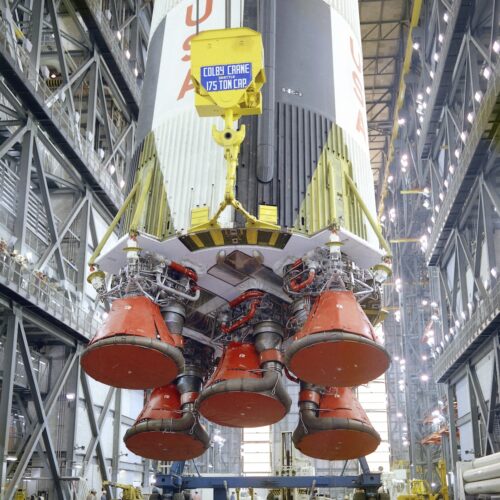
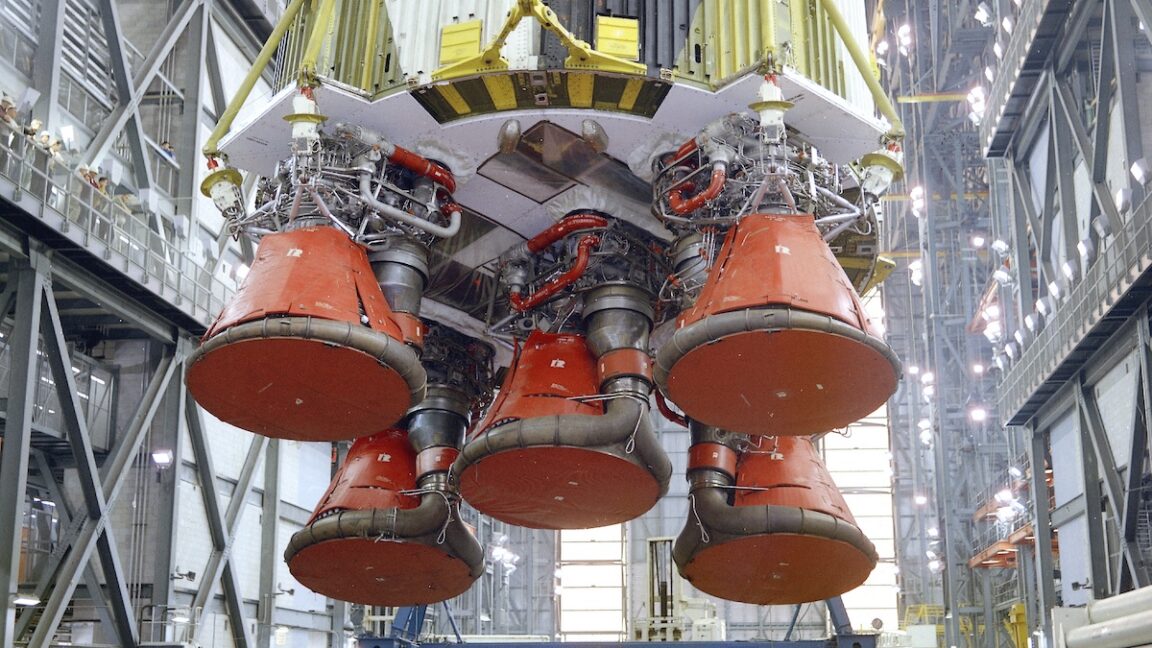
If you are a student of space history or tracked the space industry before billionaires and venture capital changed it forever, you probably know the name Rocketdyne.
A half-century ago, Rocketdyne manufactured almost all of the large liquid-fueled rocket engines in the United States. The Saturn V rocket that boosted astronauts toward the Moon relied on powerful engines developed by Rocketdyne, as did the Space Shuttle, the Atlas, Thor, and Delta rockets, and the US military's earliest ballistic missiles.
Rocketdyne's dominance began to erode after the end of the Cold War. The company started in 1955 as a division of North American Aviation, then became part of Rockwell International until Boeing acquired Rockwell's aerospace division in 1996. Rocketdyne continually designed and tested large new rocket engines from the 1950s through the 1980s. Since then, Rocketdyne has developed and qualified just one large engine design from scratch—the RS-68—and it retired from service in 2024.
The expansion is expected to create more than 100 jobs in the next two years, and more than 700 jobs by 2030.
“Strategic Reserve Funds are targeted investments that create good paying jobs and spur innovation across Washington,” Ferguson said in a news release. “This project not only achieves those goals, it also reaffirms our state’s role as a leader in the space industry. I am proud to support pioneering projects like this in Washington.”
“We’ve spent the last year proving what’s possible. Now we’re scaling to deliver it,” Portal co-founder and CEO Jeff Thornburg said. “This support from Washington isn’t just about growth. It’s about building a strategic capability for the nation and doing it right here in Bothell.”
Revenue for the Strategic Reserve Fund comes from unclaimed lottery prize money. The funds are intended to attract and retain jobs and economic investment in Washington, limited to highly strategic projects that deliver significant job creation and capital investment. These projects are considered in partnership with local associate development organizations, such as Economic Alliance Snohomish County. The governor determines awards based on recommendations from the Department of Commerce.
“Portal Space Systems represents the kind of bold, future-facing innovation we’re proud to see growing in Washington,” said Commerce Director Joe Nguyen. “With the governor’s new investment, Portal is better equipped to scale up its cutting-edge operations. This strengthens Washington’s position as a hub for world-class talent and national space infrastructure.”
Grants from the Strategic Reserve Fund must be accompanied by private investment. Since its founding in 2021, Portal has raised more than $22 million in venture capital financing and grants, and received a commitment of $45 million in public-private funding through the U.S. Space Force’s STRATFI program.

 Login
Login