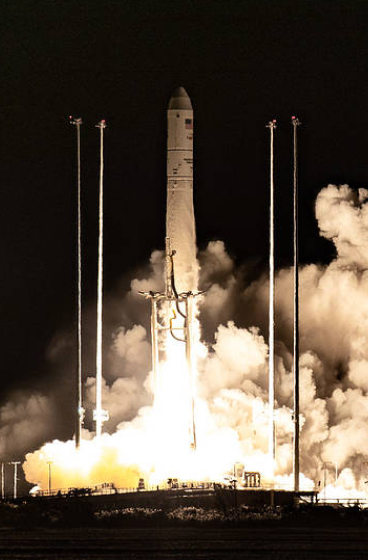
The United States Army has awarded a Small Business Innovation Research (SBIR) contract to enterprise browser developer HERE to build an artificial intelligence–based data interoperability layer for Army command-and-control systems, the company said on January 21, 2026. According to a press release from HERE, the project will use the company’s Enterprise Browser platform as a […]
EXPERT OPINION — Rule by proxy just isn’t as simple as the Trump Administration wants to make it sound. While the long-term goals of the Administration in Venezuela are unclear, the tools they appear to want to use are not.
First, the Administration seems to want to dictate policy to the Delcy Rodriguez government through threats of force, which President Trump recently highlighted by suggesting that he had called off a second strike on Venezuela because the regime was cooperating.
Second, the Trump Administration has stated that it will control the oil sales “indefinitely” to, in the words of the Secretary of Energy, “drive the changes that simply must happen in Venezuela.”
Leaving aside the legality and morality of using threats of armed force to seize another country’s natural resources and dictate an unspecified set of “changes”, this sort of rule from a distance is unlikely to work out as intended.
First, attempting to work through the Venezuelan regime will drive a number of choices that the Administration does not appear to have thought through. Propping up an authoritarian regime that is deeply corrupt, violent, and wildly unpopular will over time increasingly alienate the majority of the Venezuelan people and undermine international legitimacy.
Regime leaders, and the upper echelons of their subordinates, are themselves unlikely to quietly depart power or Venezuela itself without substantial guarantees of immunity and probably wealth somewhere else. Absent that, they will have every incentive to throw sand in the works of any sort of process of political transition. Yet facilitating their escape from punishment for their crimes with some amount of their ill-gotten gains is unlikely to be acceptable to the majority of the Venezuelan people.
Elements of the regime have already taken steps to crack down on opposition in the streets. The Trump Administration is going to decide how much of this sort of repression is acceptable. Too much tolerance of repression will harm the already-thin legitimacy of this policy, particularly among the Venezuelan people, the rest of the hemisphere, and those allies the Administration hasn’t managed to alienate. Too little tolerance will encourage street protests and potentially anti-regime violence and threaten regime stability.
The Cipher Brief brings expert-level context to national and global security stories. It’s never been more important to understand what’s happening in the world. Upgrade your access to exclusive content by becoming a subscriber.
Opposition leader Maria Corina Machado has announced that she plans to return to Venezuela in the near future, which could highlight the choices the Administration faces. Some parts of the Rodriguez government will want to crack down on her supporters and make their lives as difficult as possible. The Trump Administration is going to have to think hard about how to react to that.
The tools of violence from a distance, or even abductions by Delta Force from over the horizon, are not well calibrated to deal with these dilemmas.
The Venezuelan regime appears to be heavily factionalized and punishing Delcy Rodriguez, which President Trump has threatened, could benefit other factions, for example, the Minister of the Interior or the Minister of Defense, both allegedly her rivals for power.
Unless the Administration can count on perfect intelligence about what faction is responsible for each disfavored action and precisely and directly respond, we are likely to see different factions, and even elements of the opposition, undertake “false flag” activity intended to cause the U.S. to strike their rivals.
Actions to punish or compel the regime also run the risk of collateral damage, in particular civilian casualties which will undermine support for U.S. policy both in Venezuela and abroad and potentially bolster support for the regime. And intelligence on the ground is not going to be perfect and airstrikes or raids will almost certainly cause collateral damage despite the incredible capabilities of the U.S. intelligence community and the U.S. military.
Need a daily dose of reality on national and global security issues? Subscriber to The Cipher Brief’s Nightcap newsletter, delivering expert insights on today’s events – right to your inbox. Sign up for free today.
Secondly, assuming that the Administration doesn’t intend to use the proceeds of sales of Venezuelan oil to build the White House ballroom, it’s unclear what mechanisms they plan to use to ensure that those proceeds benefit the Venezuelan people.
The Venezuelan regime is deeply corrupt. Utilizing the Venezuelan government to distribute proceeds from oil sales is just a way of ensuring that regime elites continue to siphon off cash or use that money to reward their followers, punish their opponents, or coopt potential rivals by buying them off.
Assuming that the U.S. could, in fact, somehow track the vast majority of the funds from oil sales and ensure that they are not misused, this would again undermine the unity and inner workings of a regime built on buying off factions and elites. That would likely encourage those factions to find other ways of extracting funds—for example, increased facilitation of drug shipments or shakedowns of local firms supporting the reconstruction of the oil sector.
Yet the U.S. is not at all likely to have a granular view of what happens to that money. The U.S. intelligence community, while capable of a great many things, cannot track where most of these funds go or who is raking off how much.
In Iraq and Afghanistan, where the U.S. had tens of thousands of soldiers, spies, advisors, and bureaucrats and was directly funding large parts of those governments, staggering levels of corruption existed and at times, helped fund warlords and faction leaders who undermined stability. We even managed to fund our adversaries at times.
In Venezuela, by contrast, we might have an embassy.
Unless the problem of how to monitor where the money goes can be solved, the U.S. will be supporting and funding a corrupt regime that feathers its own nest and undermines the transition to democracy.
Ruling from a distance, or even trying to force a political transition from a distance, drives a number of choices that the Administration clearly hasn’t thought through. And the tools the Administration is choosing to use; force from over the horizon and the control over the flow of some funds, aren’t matched well enough or sufficiently nuanced to accomplish the ends they claim to want to achieve.
Given that, it’s unlikely this will end well.
The Cipher Brief is committed to publishing a range of perspectives on national security issues submitted by deeply experienced national security professionals.
Opinions expressed are those of the author and do not represent the views or opinions of The Cipher Brief.
Have a perspective to share based on your experience in the national security field? Send it to Editor@thecipherbrief.com for publication consideration.
Read more expert-driven national security insights, perspective and analysis in The Cipher Brief, because national security is everyone’s business.
The Operational Land Imager (OLI) on Landsat 8 captured this image of a fire burning in the Magadan Oblast district of Siberia on April 8, 2019.
NASA Earth Observatory image by Joshua Stevens, using Landsat data from the U.S. Geological Survey.
The number of wildland fires burning in the Arctic is on the rise, according to NASA researchers. Moreover, these blazes are burning larger, hotter, and longer than they did in previous decades.
These trends are closely tied to the region’s rapidly changing climate. The Arctic is warming nearly four times faster than the global average, a shift that directly impacts rain and snow in the region and decreases soil moisture, both of which make the landscape more flammable. Lightning, the primary ignition source of Arctic fires, is also occurring farther north. These findings are detailed in a report published in 2025 by the Arctic Monitoring and Assessment Programme (AMAP), a working group of the Arctic Council.
“Fire has always been a part of boreal and Arctic landscapes, but now it’s starting to act in more extreme ways that mimic what we’ve seen in the temperate and the tropical areas,” said Jessica McCarty, Deputy Earth Science Division Chief at NASA’s Ames Research Center and an Arctic fire specialist. McCarty, the report’s lead author, worked as part of an international team for AMAP.
But it’s not just the number of fires that concerns scientists; it’s how hot they burn.
“It’s the intensity that worries us the most because it has the most profound impact on how ecosystems are changing,” said Tatiana Loboda, chair of the Department of Geographical Sciences at the University of Maryland.
2002-2012
2012-2024
NASA Earth Observatory
NASA Earth Observatory
NASA Earth Observatory
NASA Earth Observatory
2002-2012
2012-2024
These maps show the number of fires detected by NASA’s MODIS instrument on the Terra and Aqua satellites from 2002 to 2012 (yellow) and 2012 to 2025 (orange), highlighting an increase in fire activity and a poleward shift over time.NASA Earth Observatory maps by Michala Garrison using data from NASA’s Fire Information for Resource Management System (FIRMS).
Arctic ecosystems: How are there fires in the Arctic?
The word ‘Arctic’ often conjures images of glaciers, snow, and a frozen ocean. So how can such a place catch fire?
Officially, the Arctic refers to the region north of 66.5 degrees north, though many Arctic researchers study 60 degrees north and above. While much of the area is covered in snow and ice, the Arctic also boasts a diverse range of ecosystems that change as they extend toward the pole.
It begins with boreal forests, which are primarily made up of coniferous trees like spruce, fir, and pine. As these forests thin to the north, they give way to shrublands, then to grassland tundra, and eventually to rock, ice, and polar bears.
Illustration by Esther Suh, NASA’s Ames Research Center.
Much of the vegetation is covered in snow during the winter, which thaws in the spring. Exposed, the vegetation dries out in the sunlight. When given an ignition source like a lightning strike, it can quickly become fuel for a fire.
What is changing?
According to the 2025 AMAP report, an increasingly flammable landscape combined with more lightning strikes is leading to larger, more frequent, and more intense fires than the landscape is adapted for.
“There is variability year to year, but across the decades we are averaging about double the burned area in the North American Arctic compared to the mid-20th century,” said Brendan Rogers, senior scientist at the Woodwell Climate Research Center.
Low-intensity fires, which the Arctic is accustomed to, leave most of the forest standing, which allows the understory and upper soil layers to recover quickly.
In contrast, intense fires kill off trees and can trigger a process known as secondary succession, in which new species replace those that died. These fires also burn deep into the carbon-rich soil, change the area’s hydrology, and accelerate snowmelt. In addition, the smoke and habitat damage from massive, hot fires pose significant health risks to human communities and local wildlife.
The Operational Land Imager (OLI) on Landsat 8 captured this image of a large wildfire in western Greenland on August 3, 2017. Satellites first detected evidence of the fire on July 31, 2017.
NASA Earth Observatory image by Jesse Allen using Landsat data from the U.S. Geological Survey.
The mid-2010s ushered in a novel fire regime. For instance, Greenland saw significant wildfires in 2015, 2017, and in 2019. Researchers also began observing fires consistently springing up in the Arctic as early as late March, much earlier in the year than historical records show, and burning well after the first snow. “It’s concerning how frequently these fires burn the same place,” Loboda said. “A lot of areas now burn two, three, or even five times during a very short period. It’s an immense impact: It’s happening across the tundra and the boreal regions, and these areas can’t recover.”
In summer 2016, Tatiana Loboda (right) rafted through the North American Arctic to collect samples across tundra sites. The work, part of NASA’s Arctic-Boreal Vulnerability Experiment (ABoVE), investigates how repeat fires impact the ecosystem over short and long timescales.
Photo by Dong Chen (left), University of Maryland.
Peat, permafrost, and zombie fires
What makes Arctic ecosystems, and by extension Arctic fire, unique compared to much of the world is what is happening below ground: specifically in the peat and permafrost.
Peat is old—thousands and thousands of years old.
When glaciers retreated at the end of the last ice age, they left behind deposits of old trees, grasses, and other organic matter that have partially decomposed to form carbon-rich soil. Over time, layers of deposits built up into peat, which is now a primary ingredient in soil across the Arctic.
When intense fires burn into deep peat deposits, they can create a phenomenon called a holdover fire, more commonly known as a zombie fire, in which remnants of fire stay alive throughout the winter. These fires appear extinguished on the surface but continue to smolder underground through the winter, bursting back to life when spring brings drier conditions.
Thawing permafrost reshapes the surface across ecosystems. Top: Thawing permafrost in a boreal forest causes the surface to cave in, tilting and toppling trees into a “drunken forest.” Bottom: Thawing permafrost in the tundra creates scalloped pond edges, as pockets of ice melt and water moves through the soil to pool on the surface.
Photos by Clayton Elder, NASA’s Ames Research Center.
Permafrost—ground that remains frozen year-round—can be even older. Some permafrost predates the human species, Homo sapiens, remaining continuously frozen for more than 400,000 years. This age is what makes these frozen layers so significant: They’ve been storing ancient organic matter, and the carbon within it, for millennia.
When organisms die and decompose, that process naturally releases carbon dioxide and methane. In the Arctic, permafrost keeps these organisms literally frozen, which effectively freezes them in time.
NASA scientist and permafrost expert Clayton Elder describes seeing this effect in the Permafrost Tunnel in Fairbanks, Alaska. “You can walk into the tunnel and see grass embedded in the wall,” Elder said. “It’s still green, but when you carbon date it, it’s 40,000 years old.”
But as the Arctic warms, thaws, and burns, the carbon stored in peat and permafrost releases into the atmosphere. That matters, because what’s locked below the surface is enormous. Together, Arctic peat and permafrost store twice as much carbon as the entirety of Earth’s atmosphere.
According to McCarty, this thawing will lead to global change.
“This is old ice— ice that is part of our hydrologic system and formed a homeostasis of climate that we as a species grew up in,” McCarty said. “There will be changes that we can’t predict: humanity has not experienced the climate the planet is heading towards. It will be interesting to model; there are so many different ways it could go.”
What’s next?
To address the challenges of the Arctic, scientists are finding new applications of existing data and developing new technologies.
“NASA satellites form the real backbone of what we understand,” said Rogers. “These satellites have given us a 25-year record of wildfire data, which is invaluable. They are critical for our understanding of how these fire regimes are changing and for thinking through anything in the solution space.”
New satellites and artificial intelligence developments are advancing understanding of ignition sources, fuel availability and flammability, and fire behavior. All of these data are important for monitoring fires and modeling future fire behavior, as well as evaluating the vulnerability of boreal and Arctic ecosystems to increasing levels of fire.
“One of our conclusions is that the observations need to be more targeted,” McCarty said. “We know some of what is happening, but we need to better understand why, and how to monitor these isolated areas. This means we’ll need satellites and field campaigns that are thinking about this more complex fire landscape. What happens in the Arctic will impact the rest of the planet.”
Story by Milan Loiacono, NASA’s Ames Research Center.
CIPHER BRIEF EXPERT Q&A — President Donald Trump said the U.S. is "in charge" in Venezuela after U.S. forces detained President Nicolas Maduro on charges related to drug trafficking. President Trump is also demanding "total access" to Venezuela's oil infrastructure. Venezuela's de-facto leader Delcy Rodriguez said Caracas is seeking "balanced and respectful international relations" with Washington.
Intelligence professionals are reacting to this major development as it will have far-reaching consequences far beyond Venezuela, for the Western Hemisphere and elsewhere amid heightened tensions with adversaries such as Russia and China. Cipher Brief Executive Editor Brad Christian spoke with former CIA Senior Executive Paul Kolbe about what Maduro's capture signals for the national security landscape in 2026. The conversation has been lightly edited for length.
Paul Kolbe is former director of The Intelligence Project at Harvard University’s Belfer Center for Science and International Affairs. Kolbe also led BP’s Global Intelligence and Analysis team supporting threat warning, risk mitigation, and crisis response. Kolbe served 25 years as an operations officer in the CIA, where he was a member of the Senior Intelligence Service, serving in Russia, the Balkans, Indonesia, East Germany, Zimbabwe, and Austria.
Christian: How are thinking about what just happened in Venezuela? What's top of mind for you?
Kolbe: Venezuela has been a problem both for the United States and for the Venezuelan people for over 20 years. For the Chavez years and then the Maduro years, they've driven a country that was once one of the wealthiest in the world, and certainly wealthiest in South America, with unbelievable natural resources, particularly oil, and driven it into the ground through corruption, poor leadership, poor decisions, and oppression of the people. There's a reason eight million Venezuelans have fled the country. So, it's been a series of corrupt, horrible rulers. Not sorry to see Maduro go.
Venezuela has also been a foothold for Cuba. Very important for Cuba in terms of the oil that they get there, but also as a place to plant the flag and spread Cuban revolution throughout South America. It's been a base and source of money and money laundering for Hezbollah and Iran. Russia has had a long-standing relationship with Chavez and with Maduro, supporting them with weapons, with intelligence, with the Wagner Group. So, Venezuela has been both a thorn in the side of the U.S., and has been involved in so many different things that are against our interests — not sorry to see Maduro go.
Need a daily dose of reality on national and global security issues? Subscriber to The Cipher Brief’s Nightcap newsletter, delivering expert insights on today’s events – right to your inbox. Sign up for free today.
Christian: Last year, President Trump had authorized covert activity in Venezuela. There had been talk even recently, just days ago, of the CIA being involved in a strike against a target in Venezuela. We don't often see a military operation of this complexity that goes this smoothly. What does that tell you about the intelligence that was at play here and the level of cooperation with the military?
Kolbe: Clearly it was highly professional and extraordinarily well-executed operation, both by the intelligence community and by the U.S. special operations forces that went in. Very pleased that there were no casualties, that we didn't suffer any losses. But the split that I would make is to ask if this is a very well-executed tactical operation that is without a larger strategy? And if there's a larger strategy, what is it? In particular, what's the follow-on? There's been a number of times where we've gone in and broken things and not done such a great job of fixing them or just leaving. You can look at Libya, at Iraq, and other places where that's not happened. Some folks will point to Panama and Grenada and try to use those as analogies for Venezuela, and they're very different cases. Venezuela's not Panama — much bigger, much different set of dynamics there — and it's certainly not Grenada.
So the follow-on of who's going to rule, what the transition is, how do you maintain stability? The narco-traffickers are still there, the narco-syndicates, the military is still there, the street gangs are still there. The paramilitaries, which have been supported by the military and have acted as the chief arm of oppression and brutality against the people, they're still there. There's a lot of generals that have an awful lot to lose. So, unless there's been a negotiated handover of power, I don't quite understand, yet, how we're going to run the country without boots on the ground or without a clear negotiated handover.
Christian: Russia's been described as a special type of enabler for Venezuela over the years. Russian officials have called the U.S. operation in Venezuela "unlawful'' and a violation of norms. There have been other Russia developments related to Venezuela recently. The ship, Bella 1, that the United States has been pursuing for the last couple of weeks was reported to have painted a Russian flag on it's hull on Dec 31, and Russia reportedly has asked the United States to stop pursuing it. What's your reaction to how Russia has publicly responded to these incidents?
Kolbe: I'll start with the irony of Russia's protestations against what they see as the invasion of sovereignty of another country and how awful that is put out there with no sense of irony. Russia is condemning something that is not analogous to what they've done in Ukraine, but also completely ignoring what they've done in Ukraine and the ongoing war that they continue to pursue against the Ukrainian people, against their infrastructure, against everything that stands there.
So, while Venezuela is going to capture a lot of attention over the next few days, I suspect that's also, perhaps, part of the purpose of it. It distracts from what I think is a far more strategic, far more important issue, i.e., What's going to happen in Ukraine in 2026? Will the U.S. abandon Ukraine? Will we stab them in the back, or will we be able to provide support that lets them fight Russia, preserve their sovereignty?
The story with the ship is a pretty interesting one. It feels like watching a sea-born version of OJ Simpson's escape in his Ford Bronco as this Coast Guard cutter trails this gigantic oil freighter, which is running away at the speed of 11 knots and is now in the North Atlantic and is claiming to have Russian protection. Russia has reportedly put out a diplomatic note dissuading the U.S. from taking any action on that. So it will be interesting to see what actually happens if the ship managed to make good on the escape or if we turn around and say, "Oh, nevermind."
Are you Subscribed toThe Cipher Brief’s Digital Channel on YouTube? There is no better place to get clear perspectives from deeply experienced national security experts.
Christian: At the most recent Threat Conference back in October, there was a lot of talk of global conflict. And some people use the phrase, "World War III." Are we in it? Has it begun? There's been a lot of talk about gray zone, the level of gray zone activity, and the risk of major conflicts breaking out such as Taiwan or the situation in Europe growing beyond the borders of Ukraine. How are you thinking about the world as we start 2026 amid what is truly a dynamic national security backdrop?
Kolbe: I'm thinking about it as we're in a state of conflict without recognizing it. Just a couple of days ago over New Year’s, you saw China mount a blockade exercise, clearly practicing for a coming blockade of Taiwan. The signaling coming out of there is ever sharper and, it’s always been clear, but suggests a narrowing timeline for action on Taiwan. I don't believe anything's imminent, but clearly they're building the capability and then the intent, the decision, once they have the capability, can happen at any time.
Just a couple of days ago, we saw another communications cable cut between Estonia and Finland by a Russian ship that had left a Russian port that continues what is essentially low grade warfare on the European continent by Russia: sabotage, assassinations, misinformation, disinformation, and just a series of things which are clearly preparation of the battlefield, designed both to deter Europe and get Europe to self-deter, but also for the U.S., but also to put into place the capabilities that would be useful or used in conflict.
I think what is clear to me is that we, the US — as stated in the National Security Strategy that came out in December — are basically carving out Latin America as a U.S. area of influence and seeming to leave Europe and Central Asia to Russia and East Asia to China. And for me, that's very disturbing that America First looks to be coming to include South America First.
Read more expert-driven national security insights, perspective and analysis in The Cipher Brief because National Security is Everyone’s Business.
OPINION -- Venezuela presents a long-standing challenge tied to narcotics trafficking and transnational criminal networks. For years, the country has functioned as a major transit hub for illicit drug flows, money laundering, and organized crime, with direct consequences for U.S. domestic security and for stability across the Western Hemisphere. These realities alone justify sustained U.S. attention.
But criminal activity does not explain Venezuela’s full strategic significance. What distinguishes Venezuela today is not only the scale of illicit activity, but the conditions surrounding it: political isolation, economic dependence, weakened institutions, and contested legitimacy.
These conditions are familiar. These are precisely the environments external adversarial powers exploit in the gray zone to embed influence and preserve leverage without crossing the threshold of open conflict.
In such settings, influence is not imposed abruptly. It is embedded gradually, normalized through routine engagement, and retained for use when pressure mounts. That method, rather than any single triggering event - is what places Venezuela squarely within the scope of longer-term U.S. strategic concern.
Assessing Venezuela this way does not require assumptions about covert orchestration or crisis direction by outside states. It requires recognizing a recurring competitive approach that has played out repeatedly in fragile and isolated systems: establish access early, avoid responsibility for governance, and preserve optionality as conditions deteriorate.
The Cipher Brief applies expert-level context to national and global security stories. Grant yourself full-access to Cipher Brief expert insights, analysis and private briefings in the new year by becoming a Subscriber+Member.
A Pattern Observed Across Multiple Theaters
Recent Cipher Brief analysis has highlighted that strategic competition increasingly unfolds below the threshold of armed conflict. In states facing internal stress or external isolation, influence is rarely asserted through overt coercion. Instead, it is accumulated through sustained presence, access to institutions, and normalization of engagement — creating leverage that can be exercised selectively during moments of crisis.
This pattern is not theoretical. It is consistent across actors and regions, even where tactics differ.
China: Economic and Technical Presence as Strategic Infrastructure
China’s approach relies on economic and technical engagement as strategic infrastructure. Commercial projects, administrative systems, and digital platforms provide access long before crises emerge. Over time, this presence enables intelligence collection, political influence, and situational awareness without requiring overt security commitments or visible military footprints.
The value of this approach lies in patience. By embedding early and remaining engaged through periods of instability, China preserves optionality when political alignments shift or governance weakens. Influence accumulated quietly can later be activated to protect strategic equities, shape outcomes, or constrain competitors’ freedom of maneuver.
This model avoids ownership. It does not require Beijing to stabilize fragile states or assume responsibility for their internal failures. Access is sufficient. Optionality is the objective.
Russia: Security Engagement and Access Without Ownership
Russia applies a more security-centric variant of the same logic. Moscow’s engagement with sanctioned governments or non-recognized actors has repeatedly prioritized intelligence access, operational insight, and regional buffers rather than political alignment or long-term stabilization.
By maintaining relationships across formal and informal power structures, Russia ensures continued relevance during periods of transition or escalation. This posture allows Moscow to influence events without absorbing the costs associated with governance, reconstruction, or economic support.
Here again, the emphasis is not control but access. Engagement is calibrated to preserve leverage while avoiding entanglement — a model designed to expand or contract as circumstances dictate.
Iran: Network Persistence and Crisis Adaptability
Iran’s approach centers on the durability of networks rather than institutions. Elite cultivation, security penetration, and proxy relationships are established early and maintained quietly. When political systems weaken or collapse, these networks remain intact.
The advantage is resilience. Preexisting relationships allow rapid recalibration during crises without the need to rebuild influence under pressure. This approach is particularly effective in environments where authority is fragmented and legitimacy contested.
Across cases, Iran’s method demonstrates how influence survives regime change when it is rooted in people, systems, and incentives rather than formal state structures.
Key Analytic Distinction
Across these approaches, a central distinction applies: Presence and enablement do not equal operational control. But sustained presence creates optionality — the ability to act, influence, or constrain outcomes when conditions shift. That optionality, accumulated quietly over time, is what allows external powers to convert instability into strategic advantage without triggering direct confrontation.
Venezuela as a Permissive Strategic Environment
Venezuela now exhibits many of the conditions that have enabled this form of competition elsewhere. Politically, it remains isolated and internally polarized, with contested legitimacy and eroded institutions. Economically, it is dependent on external partners and vulnerable to leverage through finance, energy, and technology. Strategically, it occupies a sensitive position - proximate to the United States, central to regional migration flows, and endowed with significant energy resources.
Open-source reporting has documented sustained external engagement consistent with these vulnerabilities. Chinese firms maintain long-term financial and energy exposure, while Chinese technology has been linked to state administrative and digital systems. Russia has pursued military cooperation and security ties with the Maduro government over several years. Iran has expanded defense-related cooperation, including activities now cited in U.S. sanctions actions.
None of this establishes direct operational control over events in Venezuela. That distinction matters. Modern competition does not depend on command-and-control relationships. It depends on positioning — ensuring access, protecting equities, and shaping the environment so that options exist when pressure mounts.
From this perspective, Venezuela is not an abrupt escalation point. It is the maturation of a permissive environment.
U.S. National Interests at Stake
Viewed through this lens, the U.S. interests implicated extend beyond narcotics enforcement.
Security and Intelligence Access: Adversarial access or technical presence in the Western Hemisphere creates intelligence and counterintelligence risks. Proximity amplifies the strategic consequences, particularly during crises when early warning and situational awareness are decisive.
Regional Stability: Venezuela’s instability already fuels migration flows, strains neighboring states, and sustains criminal economies. External actors that selectively stabilize the regime — without addressing governance or legitimacy - risk prolonging instability while insulating it from internal pressure.
Energy and Economic Leverage: Venezuela’s energy sector remains strategically significant. External involvement that secures preferential access or shields operations from pressure can distort markets and complicate sanctions, reducing U.S. leverage over time.
Alliances and Credibility: Regional partners watch not only U.S. actions, but their durability. Episodic pressure without strategic continuity reinforces perceptions that U.S. engagement is temporary, a perception that competitors routinely exploit.
The Risk of Tactical Action Without Strategic Effect
Military or law-enforcement action can disrupt illicit networks and impose immediate costs. But disruption alone rarely dismantles the access structures external powers cultivate over years.
When political or economic stress intensifies, those structures often remain intact, allowing competitors to protect their equities and adapt quickly. Pressure that is not paired with a longer-term access-denial strategy risks plateauing or incentivizing deeper external involvement.
In Venezuela, criminal disruption addresses symptoms. It does not, by itself, degrade the political, economic, and intelligence ecosystems that enable adversarial positioning. Without sustained follow-through, tactical success can coexist with strategic stagnation.
Narrative, Legitimacy, and the Competitive Space
Competition below the threshold of war is also a contest over legitimacy. External powers rarely challenge U.S. actions on operational grounds alone. Instead, they exploit ambiguity, sovereignty narratives, and perceptions of disproportion.
These narratives gain traction when objectives appear narrow, temporary, or disconnected from a broader political strategy. Countering them does not require rhetorical escalation. It requires clarity, about purpose, duration, and the outcomes the United States seeks to prevent or enable.
Strategic Implications Going Forward
Venezuela should be assessed as part of a broader competitive environment in which external actors exploit fragility, isolation, and economic dependence to secure enduring access.
Experience from other regions points to several implications:
Denying durable access matters more than disrupting individual activities.
Time favors persistent presence over episodic pressure.
Clarity of purpose constrains adversarial narratives.
Regional confidence and allied coordination reduce competitive space.
In this environment, success is measured not only by disruption, but by whether competitors are prevented from converting instability into lasting advantage.
Venezuela reinforces a familiar reality: in an era of competition below the threshold of war, strategic outcomes are shaped less by single actions than by whether access, influence, and legitimacy are denied over time.
Are you Subscribed to The Cipher Brief’s Digital Channel on YouTube? There is no better place to get clear perspectives from deeply experienced national security experts.
Read more expert-driven national security insights, perspective and analysis in The Cipher Brief because National Security is Everyone’s Business.
SPECIAL REPORT — In a turbulent year, one of the biggest national security stories came in the form of a document.
The administration’s National Security Strategy (NSS), released earlier this month, upends longstanding U.S. policy toward allies and adversaries alike. It ranks drug trafficking and illegal immigration as top threats to U.S. security, places a heavy emphasis on the Western Hemisphere, criticizes Europe and downplays security challenges from China and Russia.
Eight years ago, Trump's first NSS said that “China and Russia challenge American power, influence, and interests, attempting to erode American security and prosperity.” The new NSS doesn’t name Russia as a threat to the U.S. – stating instead that “strategic stability with Russia” is a goal of American policy. Europe is presented as a bigger challenge; the U.S. should “help Europe correct its current trajectory,” which the NSS says has been damaged by immigration and a risk of “civilizational erasure.”
As for China, the document focuses on economic competition – trade, infrastructure, and technology. References to Taiwan and the South China Sea come later, and they include warnings that other Asian nations must carry a greater burden; “the American military cannot, and should not have to, do this alone.”
“The north star of great-power competition with China and Russia—around which the first Trump administration built bipartisan consensus—is gone,” Rebecca Lissner, Senior Fellow for U.S. foreign policy at the Council on Foreign Relations, wrote of the new NSS. The objective now, she said, is a “mutually advantageous economic relationship with Beijing.”
Not surprisingly, European leaders were furious about the pivot to a more Russia-friendly posture, and what the European Council President called “political interference” in the affairs of Europe.
Glenn Corn, a former CIA Senior Executive, called the document’s treatment of Europe a “shock.”
“Europeans are not the enemy,” Corn toldThe Cipher Brief. “And I doubt the Russians will stand side by side with us on the battlefield and support us the way that our European partners have done.”
The new NSS won praise from at least one global capital. Kremlin spokesman Dmitry Peskov said its emphasis on restoring strategic stability with Moscow “correspond in many ways” to Russia’s own vision.
Infographic with a map of the Americas showing the areas where the United States has carried out attacks against alleged drug trafficking boats in the Caribbean Sea and the Pacific Ocean since September 2, 2025, as well as the number of people killed in these attacks, as of December 16 (Graphic by AFP via Getty Images)
Missiles on the Water
While the focus on narcotrafficking was clear from the early days of Trump’s second term, the heavy U.S. military deployments and air strikes in the Caribbean took experts by surprise. The aerial campaign began with a September missile attack on a small boat that killed 11 people; a second strike that day took the lives of two survivors who were clinging to the upturned vessel. The follow-on strike sparked criticism in Congress – including from Republicans – and charges that it might have violated maritime laws.
As of mid-December, at least 25 strikes had followed, including some in the Pacific, resulting in the deaths of more than 90 people alleged to have been smuggling drugs on the water. The Trump administration justified the attacks as necessary to stem a flow of fentanyl – which Trump labeled “a weapon of mass destruction” that has killed tens of thousands of Americans. Legal experts questioned whether passengers in these boats — even if they were found to have been carrying narcotics — could be considered enemy combatants. Others noted that fentanyl and its precursors are sourced primarily from China and Mexico — not Venezuela.
A separate question loomed, as the year wound down: were the strikes a prelude to military action against Venezuela, and its president, Nicolas Maduro?
Beyond the U.S. military buildup, there were several signs in December that a move against Venezuela may be in the offing: reports that the U.S. was exploring “day-after” scenarios in the event of Maduro’s ouster; the seizure of a Venezuelan tanker that was said to be transporting sanctioned oil to Iran; and President Trump’s December 16 announcement of a naval blockade of sanctioned oil tankers from Venezuela.
“Maduro has become the epicenter for a range of activities the U.S. is determined to roll back,” Ambassador Patrick Duddy, Former U.S. Ambassador to Venezuela, toldThe Cipher Brief. “Seizure of the oil tanker signals that the U.S. has decided to take more active measures to achieve its goals.
Infographic with a map showing the location of strikes carried by Israel against Iran since June 13, 2025, according to data reported by the ISW (Graphic by AFP) (Graphic by VALENTINA BRESCHI,SYLVIE HUSSON,OLIVIA BUGAULT/AFP via Getty Images)
The U.S. and Israel Attack Iran
It would have been unthinkable only two years ago: a U.S.-Israeli war against Iran that provoked almost no meaningful response.
The attacks came in June – Israeli strikes on Iran’s nuclear sites and military infrastructure that were followed by American airstrikes on three nuclear installations. Iran fired missiles at a U.S. base in Qatar but its overall retaliation was minimal, a consequence of earlier Israeli campaigns that weakened Iranian air defenses and its various militias in the Middle East. The 12-day war damaged elements of Iran’s nuclear program and laid bare a tectonic shift in the region: Iran and its “axis of resistance” had been badly weakened.
For decades, war-gaming scenarios had warned that any attack against Iran would carry risks of a conflagration, given the likelihood of a coordinated response from Iran, Hezbollah, Hamas and the Houthi militia in Yemen. Now the paradigm has shifted.
“The U.S. joined Israel in military operations and people thought that had been a red line in the past,” Norman Roule, a former National Intelligence Manager for Iran at ODNI, toldThe Cipher Brief. “For the nuclear negotiations and other talks going forward, Iran now has to deal with a new world where there is this precedent.”
As the year ended, Iran remained a shell of what it had been, and reports suggested its leaders were conflicted about the way forward. Would the country recognize its weaknesses and move towards a rapprochement with the West — a move that might bring sanctions relief and usher in a new security dynamic in the region? Or would hardliners carry the day, resorting to one of the last levers Iran has – its nuclear program?
“If you're in Iran, you have to make a strategic decision,” Roule said. “‘If we restart the program, will the United States and Israel attack?’ They've got to ask, ‘If we do this, will we survive?’”
U.S. President Donald Trump and Ukrainian President Volodymyr Zelensky meet in the Oval Office at the White House on February 28, 2025 in Washington, DC. (Photo by Andrew Harnik/Getty Images)
Zelensky’s Oval Office Blowup – and the Rollercoaster that Followed
For Ukraine’s President Volodymyr Zelensky, 2025 brought wild swings of fortune, on the battlefield and in the global halls of power.
An Oval Office meeting on February 28 marked the low point – the encounter during which President Trump and Vice President JD Vance berated Zelensky for what they saw as insufficient gratitude towards the U.S. and – in Trump’s words – a failure to understand that Ukraine “has no cards” in the war against Russia.
The meeting “was a horrible disappointment and almost a shock to the system,” former NATO Supreme Allied Commander General Philip Breedlove told us that day. “There was only one winner…and that is Vladimir Putin.”
But fortune’s wheel took turns in Zelensky’s favor. Trump’s subsequent meetings with Zelensky – at the Vatican in April and the June NATO summit – warmed the relationship; the NATO summit itself saw Trump pivot back toward the alliance and its support for Ukraine; and then – in a startling outburst – Trump in July turned his ire towards Russian President Vladimir Putin. “We get a lot of bull**** thrown at us by Putin,” Trump said.
Alas for Zelensky, at year’s end the pendulum looked to have swung back once more. Trump’s envoys were again pushing Russia-friendly peace proposals, which included the surrender of territory beyond what Russia has already occupied. In an interview with Politico, Trump said of Zelensky, “He’s gonna have to get on the ball and start accepting things…cause he’s losing.” It sounded like a gentler version of the treatment Zelensky had gotten on that February day in the Oval Office.
Photo by Wojtek Laski/Getty Images
A Tu-95 bomber aircraft takes off for a night patrol flies out of Engels-2 airbase on August 7, 2008 in Engels, Russia. (Photo by Wojtek Laski/Getty Images)
Operation “Spiderweb” – and What Came After
It was Ukraine’s greatest military success in 2025 – and it happened far from Ukrainian territory. An operation dubbed “Spiderweb” smuggled 117 drone weapons into Russia and unleashed them against several airfields on June 1, damaging or destroying dozens of Russian warplanes. The mission was months in the planning, the drones were smuggled on prefabricated cabins disguised as hunting lodges, and unsuspecting Russians were paid to drive the trucks that moved the cabins.
“Spiderweb” showcased Ukraine's special operations capabilities and was followed by more long-range sabotage.As The Cipher Brief reported, subsequent attacks targeted Russian refineries and other sites tied to the oil sector.
“It’s very impressive,” Balazs Jarabik, a former European Union diplomat and analyst for RPolitik, told The Cipher Brief. The energy-sector attacks, he said, were “making the Russian war effort more expensive, and creating shortages so the Russian people feel the pain of the war.”
By year’s end, Ukraine had carried out an estimated 160 strikes on Russia’s oil sector – the campaign reached as far as the Siberian city of Tyumen, some 1200 miles east of Moscow, and included strikes against vessels alleged to be working in Russia’s so-called "shadow fleet” of tankers carrying sanctioned oil.
“Ukraine’s theory of victory now includes destroying Russia’s energy sector,” Lt. Gen. Ben Hodges, a former commander of U.S. Army Forces in Europe, told The Cipher Brief. “They’ve developed capabilities that can reach great distances with precision, exposing Russia’s vulnerability – its inability to protect critical infrastructure across its vast landscape.”
Need a daily dose of reality on national and global security issues? Subscriber to The Cipher Brief’s Nightcap newsletter, delivering expert insights on today’s events – right to your inbox. Sign up for free today.
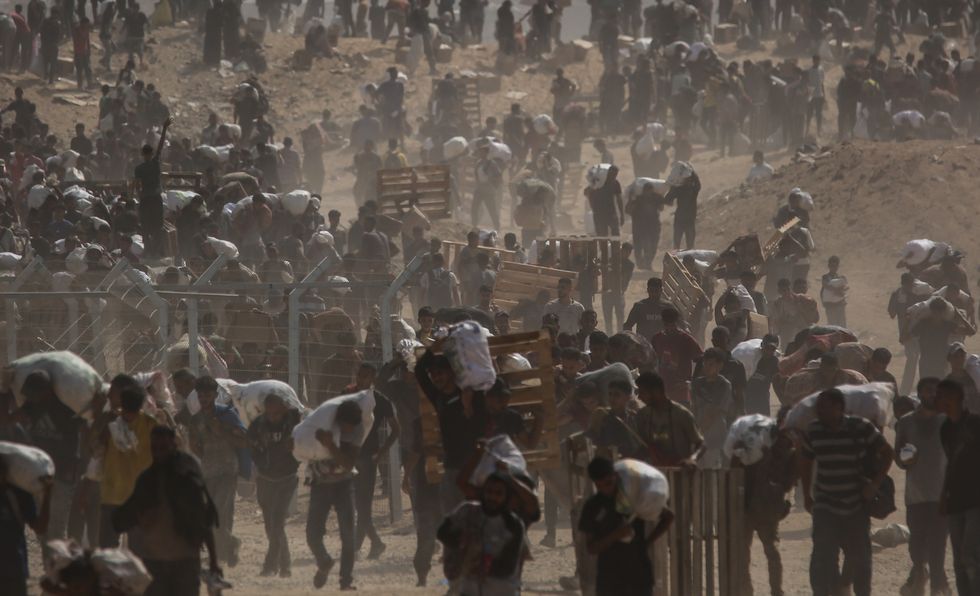
Palestinians flock to the Netzarim Corridor to receive limited food supplies as hunger deepens across Gaza amid ongoing Israeli attacks and blockade, on August 4, 2025. (Photo by Hassan Jedi/Anadolu via Getty Images)
A Peace Deal for Gaza
It was President Trump’s signature diplomatic achievement: a truce in Gaza reached just days before the two-year anniversary of Hamas’ October 7, 2023 massacre.
The deal’s first phase took hold, albeit in violent fits and starts – the return of hostages, the freeing of Palestinian prisoners in Israeli jails, and a fresh flow of international aid for Gaza. But that may have been the easy part. As the year drew to a close, there were sporadic breaks in the ceasefire, and the fate of the deal’s next phases remained unclear.
The Trump administration’s plan for Gaza included the deployment of an international stabilization force and creation of an international “Board of Peace” (led by Trump himself) to oversee the implementation of the next phases – the transition of governance to Palestinians not affiliated with Hamas, and the beginning of a multi-billion-dollar reconstruction. The deal also included language offering a conditional pathway to Palestinian autonomy over its territories.
But as of mid-December, the announcement of the Board had been delayed, and the New York Timesreported that while the U.S. was pressing other nations to contribute troops to a 8,000-member force for Gaza, it had yet to win any commitments. Countries were said to be worried their troops might be ensnared in fresh fighting; and the UN Security Council resolution to deploy the force gave no precise terms of engagement. Nor was there agreement on the makeup of a transitional government.
As these hurdles appeared, reports suggested Hamas was rebuilding its presence in the territory.
“Who’s really calling the shots there?” Ralph Goff, a former CIA Senior Executive, asked at The Cipher Brief’s annual Threat Conference, speaking of the uncertainty inside Gaza. “I remain pretty pessimistic on the idea of any kind of internal governing force being able to compete with Hamas at this point.”
By year’s end, two things were clear: the Gaza ceasefire itself was a welcome achievement after two years of carnage; and uncertainty hung over the truce’s critical next phases. This was one major story that will continue to unfold — with hope but also apprehension — well into 2026.
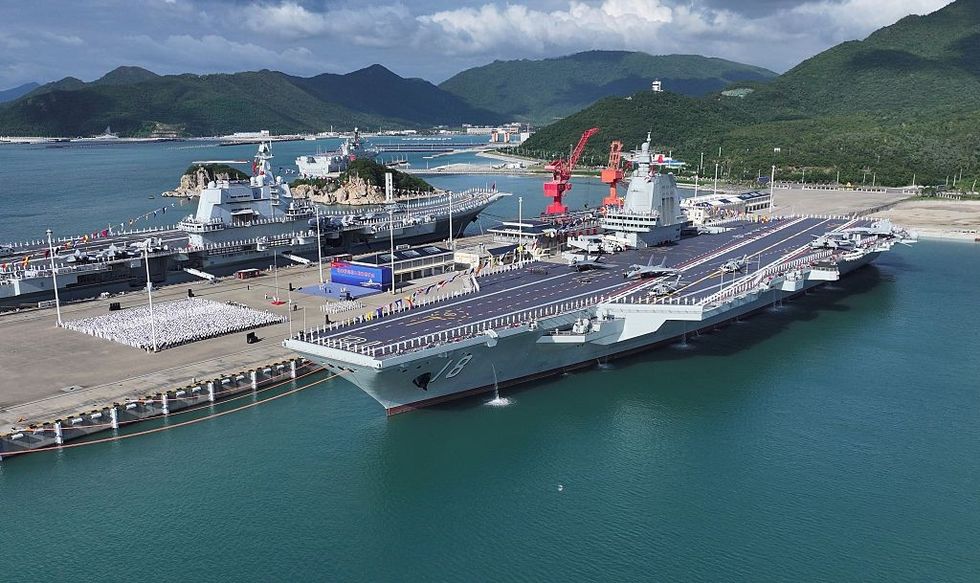
The commissioning and flag-presenting ceremony of the Fujian, China's first aircraft carrier equipped with electromagnetic catapults, is held at a naval port in Sanya City, south China's Hainan Province, on Nov. 5, 2025. (Photo by Li Gang/Xinhua via Getty Images)
China's Military Boom
China held a “Victory Day” parade in September – its way of marking 80 years since the end of World War II – and it was above all a show of military prowess. 12,000 troops marched alongside an arsenal of newly-minted battle tanks and rocket launchers, drone weapons and hypersonic missiles, and more. It was a fitting symbol for a year in which China turbocharged its military buildup.
As The Cipher Brief reported, China took a “leap forward” in drone weaponry in 2025: a huge new “stealth endurance drone,” mosquito-sized “micro drones,” and the deployment of a new “drone mothership.” The latter, known as the Jiu Tian, was billed as the world’s largest drone carrier – an 11-ton aircraft that is itself an uncrewed aerial vehicle. According to the South China Morning Post, the Jiu Tian can hold 100 smaller UAVs and carry them more than 4,000 miles.
“They have the production, they have large inventory and now they also have the AI,” Dr. Michael Raska, a professor at the Military Transformation Programme at the S. Rajaratnam School of International Studies, toldThe Cipher Brief. “With all these combined, they have been experiencing a leap forward in the quality and quantity of all their drones.”
China also made leaps in maritime power. In November, the People’s Liberation Army Navy (PLAN) commissioned the 80,000-ton Fujian, the country’s third aircraft carrier and largest to date. A week later came news that the Sichuan, one of the world’s largest amphibious assault ships, would be ready for deployment next year.
Retired Rear Admiral Mike Studeman, a former Commander of the Office of Naval Intelligence,toldThe Cipher Brief that China had achieved its longstanding goal of building “a world-class Navy,” which had surpassed the size of the U.S. fleet.
“It's not just not in the numbers, it's in the quality,” RADM Studeman said. “These ships are modern by any standard.”
“It's impressive,” another former Rear Admiral, Mark Montgomery, toldThe Cipher Brief. “They're building a hundred merchant ships for every one we build, and two warships for every one we build.”
The Trump Administration issued an executive order in April to jumpstart the U.S. shipbuilding industry and restore “American maritime dominance,” but experts said the U.S. faces an uphill road. As The Cipher Brief reported, China is on track to have a 425-ship fleet by 2030, while the U.S. Navy currently has fewer than 300 deployable battle-force vessels – a total which may drop as aging ships are retired faster than new ones are put to water.
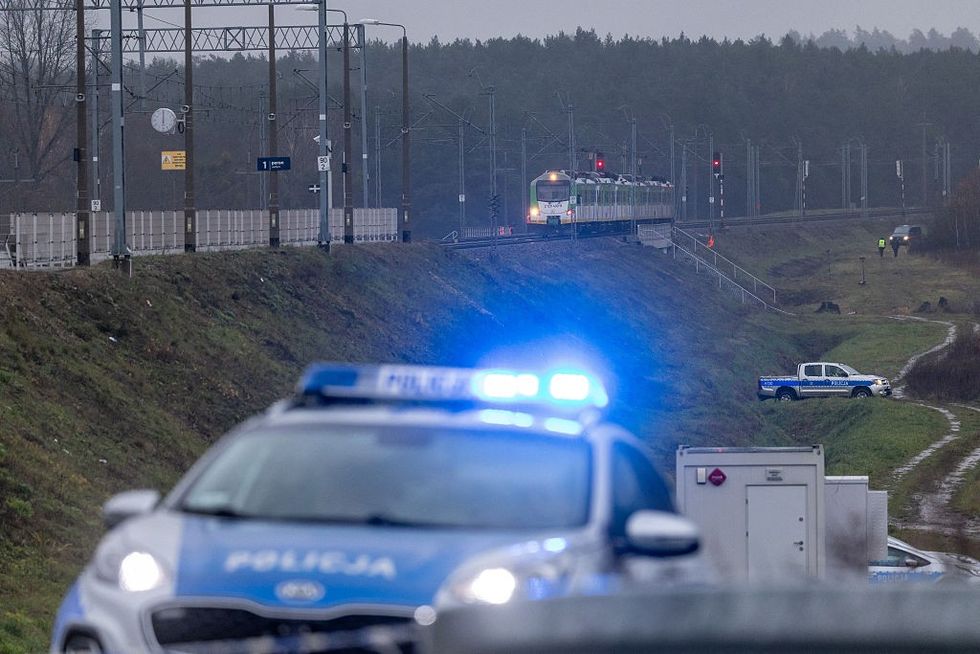
Police cars are seen on November 17, 2025 close to the railways that were damaged in an explosion on the rail line in Mika, next to Garwolin, central Poland, after the line presumably was targeted in a sabotage act. (Photo by Wojtek Radwanski/AFP via Getty Images)
Europe Wakes Up to the “Gray-Zone” War
2025 was the year when Europe formally recognized – and began to respond to – a growing threat from the east: the so-called “gray-zone” war attributed to Moscow.
These attacks mushroomed in 2025 – from cyberattacks to railway bombings, the cutting of undersea cables to drone incursions into Poland and the Baltic states, and more. Experts said they were designed to be difficult to trace, and non-kinetic, so as not to draw a military response; as The Cipher Briefreported, the Kremlin was likely “aiming to create disruption without triggering escalation.”
But there were also signs that European leaders were waking up to the gravity of the threat.
NATO’s Secretary General Mark Rutte warned repeatedly of the dangers, and the alliance moved to improve detection and deterrence measures.
Nations took steps of their own. Finland acquired hundreds of drone jammers and outfitted border forces with high-end drone detectors; leaders from Poland, the Czech Republic and the Baltic states said they might shoot down Russian aircraft if Moscow continued its provocations; in a September speech to the United Nations, Polish Foreign Minister Radoslaw Sikorski went so far as to warn Moscow that “if another missile or aircraft enters our space without permission, deliberately or by mistake, and gets shot down and the wreckage falls on NATO territory, please don’t come here to whine about it.”
Even nations far from the Russian frontier were waking up to the dangers; Ireland unveiled a €1.7 billion, five-year defense plan that included systems to counter drones and protect undersea cables from Russian sabotage. And in her first public speech, MI6 chief Blaise Metreweli described the gray-zone threat bluntly: “The new frontline is everywhere,” she said.
Writing in The Cipher Brief, former Senior CIA Executive Dave Pitts stressed the need “to change the risk calculation.”
“We need to think of deterrence and response as a team sport - an Article 5 mindset,” Pitts wrote. “Gray-zone attacks that go unanswered reward our adversaries and reinforce the idea that there are more gains than risk…and encourage more attacks.”
Sign up for the Cyber Initiatives Group Sunday newsletter, delivering expert-level insights on the cyber and tech stories of the day – directly to your inbox. Sign up for the CIG newsletter today.
Heavy trucks haul earth and rock at the construction site of Wubian Xiangshang Reservoir on the top of Pandao Mountain in Zhangye, China, on March 3, 2025. (Photo by Costfoto/NurPhoto via Getty Images)
America’s Rare Earth Crisis
Not long ago, rare earth minerals rarely made global headlines. 2025 was the year when that changed. And for the U.S. government, it was also the year in which rare earths took center stage.
Two basic facts underscored the urgency: rare earths are essential building blocks for everything from smart phones to home appliances to cars to all manner of military equipment and weapon systems; and China now produces an estimated 60 percent of the world’s rare earths and processes nearly 90 percent of them. The U.S. Geological Survey said that in 2024, the U.S. imported more than 95 percent of the total rare earths that it consumed.
Those realities spurred multiple U.S. efforts to change the dynamic: deals with Australia and Japan; negotiations with other resource-rich countries, including Congo, Indonesia, Kazakhstan and Malaysia; and threats to annex mineral-rich Greenland. Even the negotiations with Russia and Ukraine reportedly included plans for U.S. firms to invest in rare-earth extraction in Russia.
China’s imposition of rare-earth export restrictions only heightened the concerns – and while those were lifted as part of a deal with Washington, the message was clear: China’s rare-earths dominance now poses a huge problem for the U.S., and gives China a powerful lever in any future negotiations with Washington.
Susan Miller, a Former Assistant Director of the CIA’s China Mission Center, called the rare earth access “vital” to U.S. technology and national security.
“We democracies must do more to assure we have continuous access to these metals, and we also need to start producing more,” Miller told The Cipher Brief. “All democracies must focus on this issue; we must act now.”
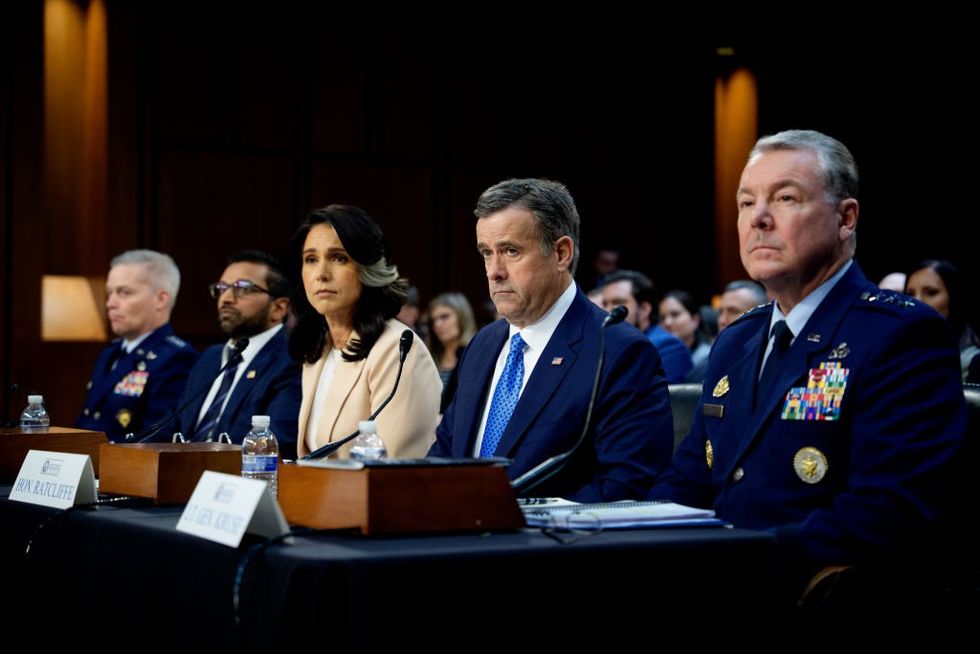
Then-National Security Agency Director General Timothy Haugh, FBI Director Kash Patel, Director of National Intelligence Tulsi Gabbard, Central Intelligence Agency Director John Ratcliffe, and then-Defense Intelligence Agency Director Jeffrey Kruse appear during a Senate Committee on Intelligence Hearing on March 25, 2025 in Washington, DC. (Photo by Andrew Harnik/Getty Images)
The Overhaul of the Intelligence Community
Before his return to the White House, Donald Trump promised to remake the U.S. intelligence community (IC). “We will clean out all of the corrupt actors in our national security and intelligence apparatus,” Trump said soon after the 2024 election.“The departments and agencies that have been weaponized will be completely overhauled.”
In 2025, it was a promise he kept.
There were widespread cuts in staffing at the CIA, FBI, and the Cybersecurity and Infrastructure Security Agency (CISA), and the biggest reductions appeared to come at the Office of the Director of National Intelligence (ODNI), which coordinates the 18 agencies of the IC. Roughly 40% of ODNI staff were cut, including the elimination or consolidation of the Foreign Malign Influence Center and some cyber threat units into other agencies.
Other high-level dismissals drew particular attention: National Intelligence Council acting head Mike Collins was fired after presenting an assessment on Venezuela that contradicted the White House line; and NSA Director Gen. Timothy Haugh lost his job after Trump “influencer” Laura Loomer questioned his loyalty to the administration.
Depending who you asked, the changes were a much-needed streamlining of a bloated intelligence apparatus; a reorganization to focus less on Russia and China and more on border security and drug trafficking; or a Trump-driven retaliation against institutions and individuals he had blamed for investigations or views with which he disagreed.
The high-level firings troubled several experts. Jon Darby, a longtime NSA veteran who served as director of operations, told The Cipher Brief he was “very disheartened” by Gen. Haugh’s ouster. “We need an explanation of the underlying rationale,” he said.
Beth Sanner, a Cipher Brief expert who served as Deputy Director for National Intelligence at ODNI, warned of a broader politicization of the IC.
“The intelligence community is not like asking people to hit the easy button and the ‘I agree with you’ button,” she said. “That's not our role. Our role is to say what we think and why we think it…The intelligence community isn't always right. But when done correctly and behind closed doors, I cannot understand why anybody would say that presenting an intelligence assessment that disagreed with policy needed to stop, or was an example of deep state. It's not. And it's really important.”
All that said, the nature of the IC makes it difficult, even at the end of a tumultuous year for the various agencies, to know precisely what the impact of the “overhaul” has been – or will be in the future.
Fingers on laptop. (Photo by Silas Stein/picture alliance via Getty Images)
A Cybersecurity “Watershed”
It seemed like a headline from a science fiction journal. An artificial intelligence system had conducted a large-scale espionage operation.
But it wasn’t science fiction – or fake news. The AI giant Anthropic confirmed the first real-world case of the use of an AI system to do exactly that.
“Today marks a watershed in cybersecurity,” Jennifer Ewbank, a former Deputy Director of the Central Intelligence Agency for Digital Innovation, told The Cipher Brief. “AI has now crossed from tool to operator,” Ewbank said, “blurring the line between human intent and machine execution...a threshold has been crossed.”
Anthropic said that Chinese state-sponsored hackers had exploited its Claude AI system to carry out cyberattacks on corporations and foreign governments in September, and that the hackers had succeeded with only minimal human oversight. Anthropic’s threat intelligence chief said the campaign had targeted about 30 entities, and represented a new level of AI-enabled hacking. The hackers posed as security auditors and successfully breached several systems, accessing privileged accounts and private data before being blocked.
The good news? The number of breaches and scale of the damage appeared small, and no U.S. government agencies were compromised. But the incident gave ammunition to doomsayers who have warned of AI nightmares – and showed that AI is already a valuable tool for hackers and state-backed cyber operations.
Experts called it the latest code-red warning for securing AI systems and deploying effective cyber defenses. As Ewbank put it, “This is no longer a hypothetical threat being researched in a lab.”
Read more expert-driven national security insights, perspective and analysis in The Cipher Brief.
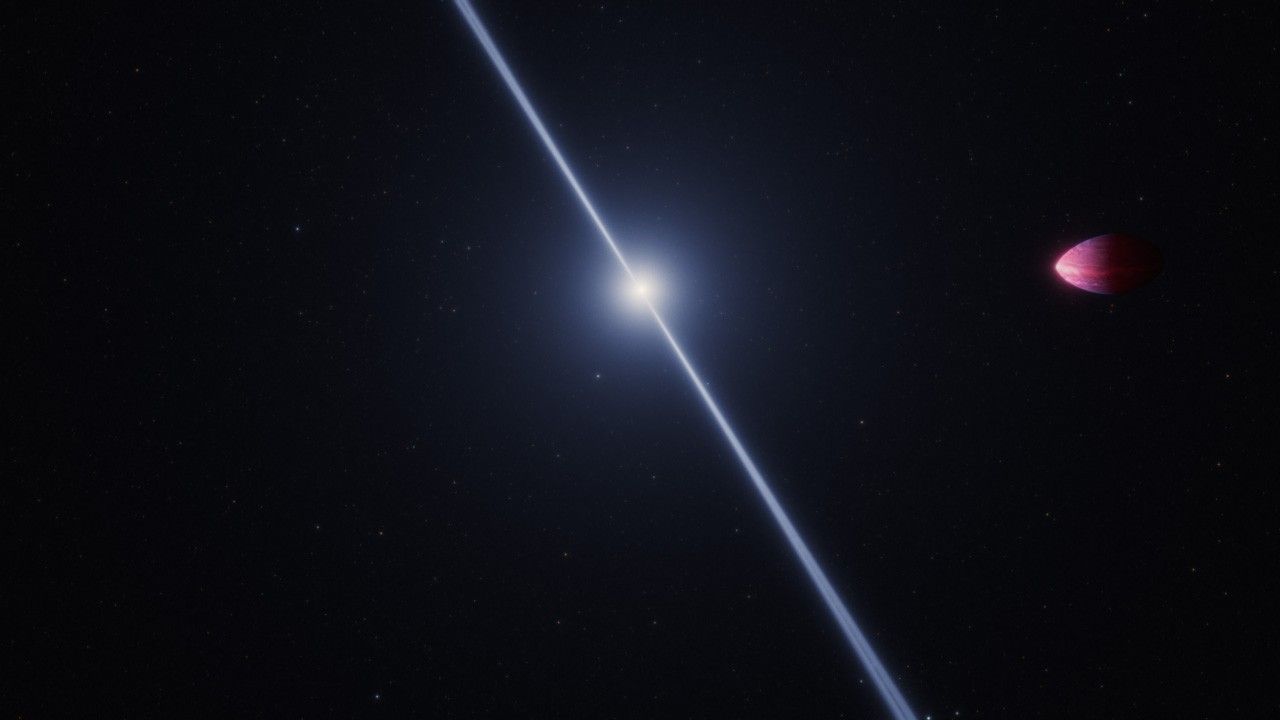
This artist’s concept shows what the exoplanet called PSR J2322-2650b (left) may look like as it orbits a rapidly spinning neutron star called a pulsar (right).
Credits: Illustration: NASA, ESA, CSA, Ralf Crawford (STScI)
Scientists using NASA’s James Webb Space Telescope have observed a rare type of exoplanet, or planet outside our solar system, whose atmospheric composition challenges our understanding of how it formed.
Officially named PSR J2322-2650b, this Jupiter-mass object appears to have an exotic helium-and-carbon-dominated atmosphere unlike any ever seen before. Soot clouds likely float through the air, and deep within the planet, these carbon clouds can condense and form diamonds. How the planet came to be is a mystery. The paper appears Tuesday in The Astrophysical Journal Letters.
“This was an absolute surprise,” said study co-author Peter Gao of the Carnegie Earth and Planets Laboratory in Washington. “I remember after we got the data down, our collective reaction was ‘What the heck is this?’ It’s extremely different from what we expected.”
Image A: Exoplanet PSR J2322-2650b and Pulsar (Artist’s Concept)
This artist’s concept shows what the exoplanet called PSR J2322-2650b (left) may look like as it orbits a rapidly spinning neutron star called a pulsar (right). Gravitational forces from the much heavier pulsar are pulling the Jupiter-mass world into a bizarre lemon shape.
Illustration: NASA, ESA, CSA, Ralf Crawford (STScI)
This planet-mass object was known to orbit a pulsar, a rapidly spinning neutron star. A pulsar emits beams of electromagnetic radiation at regular intervals typically ranging from milliseconds to seconds. These pulsing beams can only be seen when they are pointing directly toward Earth, much like beams from a lighthouse.
This millisecond pulsar is expected to be emitting mostly gamma rays and other high energy particles, which are invisible to Webb’s infrared vision. Without a bright star in the way, scientists can study the planet in intricate detail across its whole orbit.
“This system is unique because we are able to view the planet illuminated by its host star, but not see the host star at all,” said Maya Beleznay, a third-year PhD candidate at Stanford University in California who worked on modeling the shape of the planet and the geometry of its orbit. “So we get a really pristine spectrum. And we can study this system in more detail than normal exoplanets.”
“The planet orbits a star that’s completely bizarre — the mass of the Sun, but the size of a city,” said the University of Chicago’s Michael Zhang, the principal investigator on this study. “This is a new type of planet atmosphere that nobody has ever seen before. Instead of finding the normal molecules we expect to see on an exoplanet — like water, methane, and carbon dioxide — we saw molecular carbon, specifically C3 and C2.”
Molecular carbon is very unusual because at these temperatures, if there are any other types of atoms in the atmosphere, carbon will bind to them. (Temperatures on the planet range from 1,200 degrees Fahrenheit at the coldest points of the night side to 3,700 degrees Fahrenheit at the hottest points of the day side.) Molecular carbon is only dominant if there’s almost no oxygen or nitrogen. Out of the approximately 150 planets that astronomers have studied inside and outside the solar system, no others have any detectable molecular carbon.
PSR J2322-2650b is extraordinarily close to its star, just 1 million miles away. In contrast, Earth’s distance from the Sun is about 100 million miles. Because of its extremely tight orbit, the exoplanet’s entire year — the time it takes to go around its star — is just 7.8 hours. Gravitational forces from the much heavier pulsar are pulling the Jupiter-mass planet into a bizarre lemon shape.
Image B: Exoplanet PSR J2322-2650b (Artist’s Concept)
This artist’s concept shows what the exoplanet PSR J2322-2650b may look like. Gravitational forces from the much heavier pulsar it orbits are pulling the Jupiter-mass world into this bizarre lemon shape.
Illustration: NASA, ESA, CSA, Ralf Crawford (STScI)
Together, the star and exoplanet may be considered a “black widow” system, though not a typical example. Black widow systems are a rare type of double system where a rapidly spinning pulsar is paired with a small, low-mass stellar companion. In the past, material from the companion streamed onto the pulsar, causing the pulsar to spin faster over time, which powers a strong wind. That wind and radiation then bombard and evaporate the smaller and less massive companion. Like the spider for which it is named, the pulsar slowly consumes its unfortunate partner.
But in this case, the companion is officially considered an exoplanet, not a star. The International Astronomical Union defines an exoplanet as a celestial body below 13 Jupiter masses that orbits a star, brown dwarf, or stellar remnant, such as a pulsar.
Of the 6,000 known exoplanets, this is the only one reminiscent of a gas giant (with mass, radius, and temperature similar to a hot Jupiter) orbiting a pulsar. Only a handful of pulsars are known to have planets.
“Did this thing form like a normal planet? No, because the composition is entirely different,” said Zhang. “Did it form by stripping the outside of a star, like ‘normal’ black widow systems are formed? Probably not, because nuclear physics does not make pure carbon. It’s very hard to imagine how you get this extremely carbon-enriched composition. It seems to rule out every known formation mechanism.”
Study co-author Roger Romani, of Stanford University and the Kavli Institute for Particle Astrophysics and Cosmology Institute, proposes one evocative phenomenon that could occur in the unique atmosphere. “As the companion cools down, the mixture of carbon and oxygen in the interior starts to crystallize,” said Romani. “Pure carbon crystals float to the top and get mixed into the helium, and that’s what we see. But then something has to happen to keep the oxygen and nitrogen away. And that’s where the mystery come in.
“But it’s nice to not know everything,” said Romani. “I’m looking forward to learning more about the weirdness of this atmosphere. It’s great to have a puzzle to go after.”
Video A: Exoplanet PSR J2322-2650b and Pulsar (Artist’s Concept)
This animation shows an exotic exoplanet orbiting a distant pulsar, or rapidly rotating neutron star with radio pulses. The planet, which orbits about 1 million miles away from the pulsar, is stretched into a lemon shape by the pulsar’s strong gravitational tides.
Animation: NASA, ESA, CSA, Ralf Crawford (STScI)
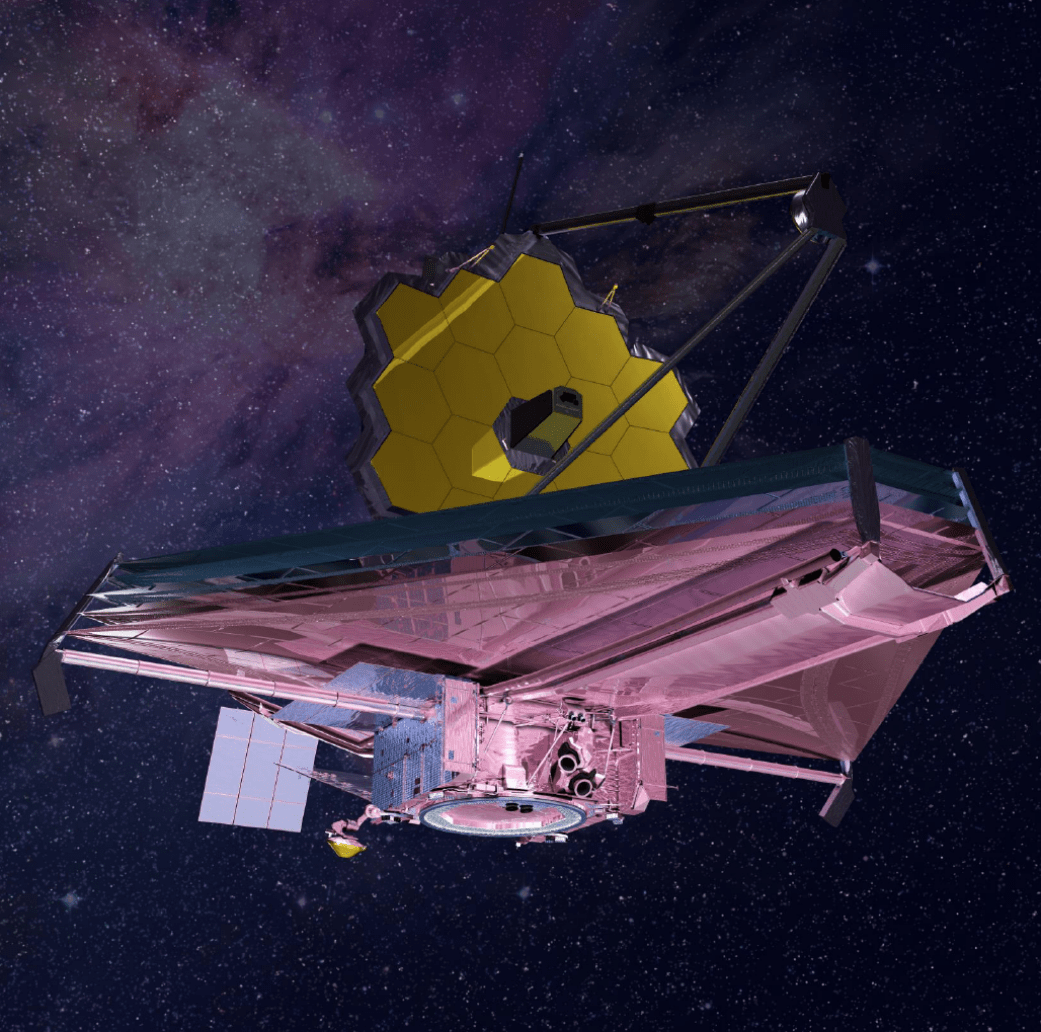
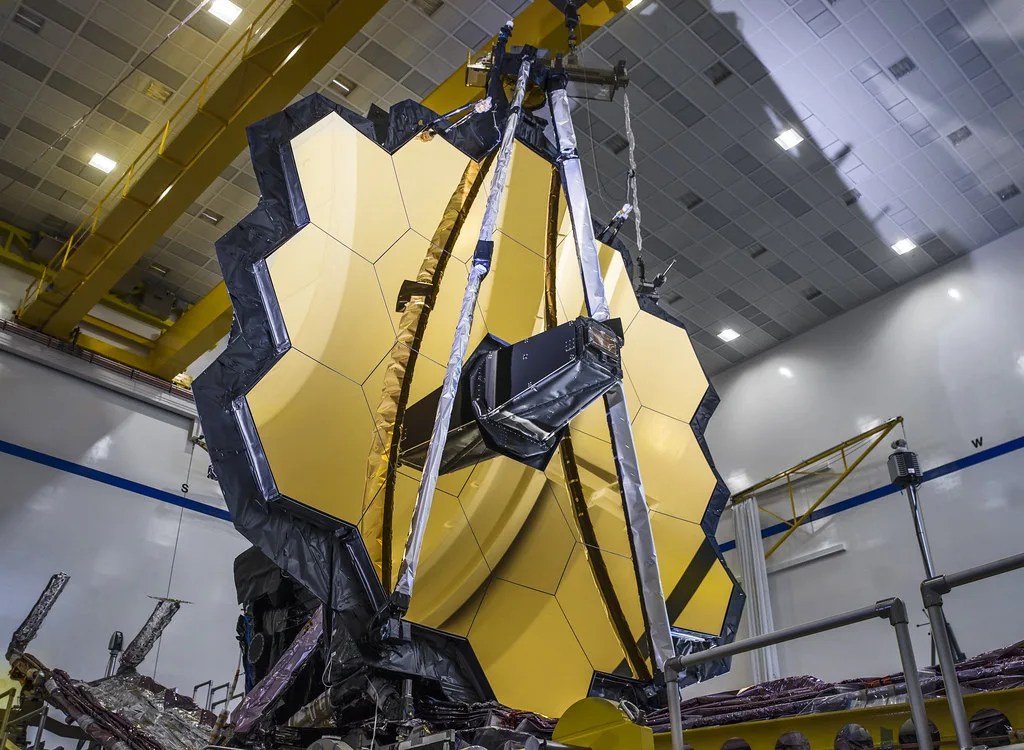
With its infrared vision and exquisite sensitivity, this is a discovery only the Webb telescope could make. Its perch a million miles from Earth and its huge sunshield keep the instruments very cold, which is necessary for these observations. It is not possible to conduct this study from the ground.
The James Webb Space Telescope is the world’s premier space science observatory. Webb is solving mysteries in our solar system, looking beyond to distant worlds around other stars, and probing the mysterious structures and origins of our universe and our place in it. Webb is an international program led by NASA with its partners, ESA (European Space Agency) and CSA (Canadian Space Agency).
The following sections contain links to download this article’s images and videos in all available resolutions followed by related information links, media contacts, and if available, research paper and spanish translation links.
Related Images & Videos
Exoplanet PSR J2322-2650b and Pulsar (Artist’s Concept)
This artist’s concept shows what the exoplanet called PSR J2322-2650b (left) may look like as it orbits a rapidly spinning neutron star called a pulsar (right). Gravitational forces from the much heavier pulsar are pulling the Jupiter-mass world into a bizarre lemon shape.
Exoplanet PSR J2322-2650b (Artist’s Concept)
This artist’s concept shows what the exoplanet PSR J2322-2650b may look like. Gravitational forces from the much heavier pulsar it orbits are pulling the Jupiter-mass world into this bizarre lemon shape.
Exoplanet PSR J2322-2650b Orbiting a Pulsar
This animation shows an exotic exoplanet orbiting a distant pulsar, or rapidly rotating neutron star with radio pulses. The planet, which orbits about 1 million miles away from the pulsar, is stretched into a lemon shape by the pulsar’s strong gravitational tides. NASA&rsqu…
NASA’s IMAP Mission Captures ‘First Light,’ Looks Back at Earth
All 10 instruments aboard NASA’s newly launched IMAP (Interstellar Mapping and Acceleration Probe) mission have successfully recorded their first measurements in space. With these “first light” observations, the spacecraft is now collecting preliminary science data as it journeys to its observational post at Lagrange point 1 (L1), about 1 million miles from Earth toward the Sun.
“We are extremely pleased with the initial in-flight performance of the IMAP mission. All instruments have successfully powered on and our commissioning remains on track. We have already collected useful data including exercising our near-real-time space weather data stream,” said Brad Williams, IMAP program executive at NASA Headquarters in Washington. “This successful milestone is quickly setting the stage for the start of our primary science operations.”
As a modern-day celestial cartographer, IMAP will chart the boundaries of the heliosphere — a huge bubble created by the Sun’s wind that encapsulates our entire solar system — and study how the heliosphere interacts with the local galactic neighborhood beyond.
To map the heliosphere’s boundaries, IMAP is equipped with three instruments that measure energetic neutral atoms: IMAP-Lo, IMAP-Hi, and IMAP-Ultra. These uncharged particles, called ENAs for short, are cosmic messengers formed at the heliosphere’s edge that allow scientists to study the boundary region and its variability from afar.
These partial maps of the heliosphere’s boundaries were compiled from first-light data from the IMAP-Hi, IMAP-Lo, and IMAP-Ultra instruments. These initial looks offer a first glimpse at the detail NASA’s IMAP (Interstellar Mapping and Acceleration Probe) will be able to capture. The warmer colors show regions with more energetic neutral atoms (ENAs).
NASA
“It’s just astounding that within the first couple weeks of observations, we see such clear and consistent ENA data across the factor of 10,000 in energy covered collectively by the three imagers,” said David McComas, Princeton University professor and principal investigator for the IMAP mission. “This, plus excellent first light data from all seven of the other instruments, makes for a 10 out of 10, A-plus start to the mission.”
As IMAP travelled away from Earth, the IMAP-Ultra instrument looked back at the planet and picked up ENAs created by Earth’s magnetic environment. These terrestrially made ENAs, which overwhelm ENAs coming from the heliosphere in sheer numbers, is a reason why IMAP will be stationed at L1. There the spacecraft will have an unobstructed view of ENAs coming from the heliosphere’s boundaries.
Earth’s magnetic environment can be seen glowing bright in this image taken by the IMAP-Ultra instrument, which includes ENA data as well as noise. Earth sits at the center of the red donut-shaped structure. This image was taken as IMAP left Earth for its post at Lagrange point 1.
NASA
The mission will also study the solar wind, a continuous flow of charged particles coming from the Sun. Solar wind observations from five of IMAP’s instruments will be used by the IMAP Active Link for Real-Time (I-ALiRT) system to provide roughly a half hour’s warning to voyaging astronauts and spacecraft near Earth about harmful space weather and radiation coming their way. The IMAP instruments are already making near-real-time solar wind measurements that can be used to support space weather forecasts. The I-ALiRT network is being exercised and will be ready for space weather forecasters when IMAP starts its regular science mission at L1.
With all of IMAP’s instruments up and running, the mission has nearly completed its commissioning stage and will arrive at L1 in early January. The mission is now working to complete the final commissioning steps and instrument calibration with the goal of being ready to take operational science data starting Saturday, Feb. 1, 2026.
Here’s a look at IMAP’s instruments and what they’ve seen in their first-light observations.
IMAP-Lo, IMAP-Hi, and IMAP-Ultra
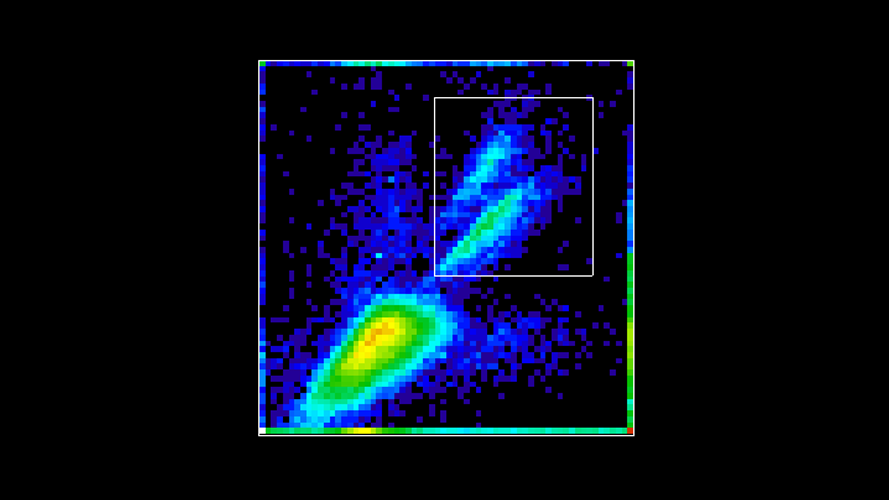
The three ENA (energetic neutral atom) instruments, IMAP-Lo, IMAP-Hi, and IMAP-Ultra, will help construct maps of the boundaries of the heliosphere, which will advance our understanding of how the solar wind interacts with our local galaxy. The green streak in this image from IMAP-Hi shows the instrument’s ability to separate ENAs from other particles such as cosmic rays (green and yellow blob).
NASA
MAG
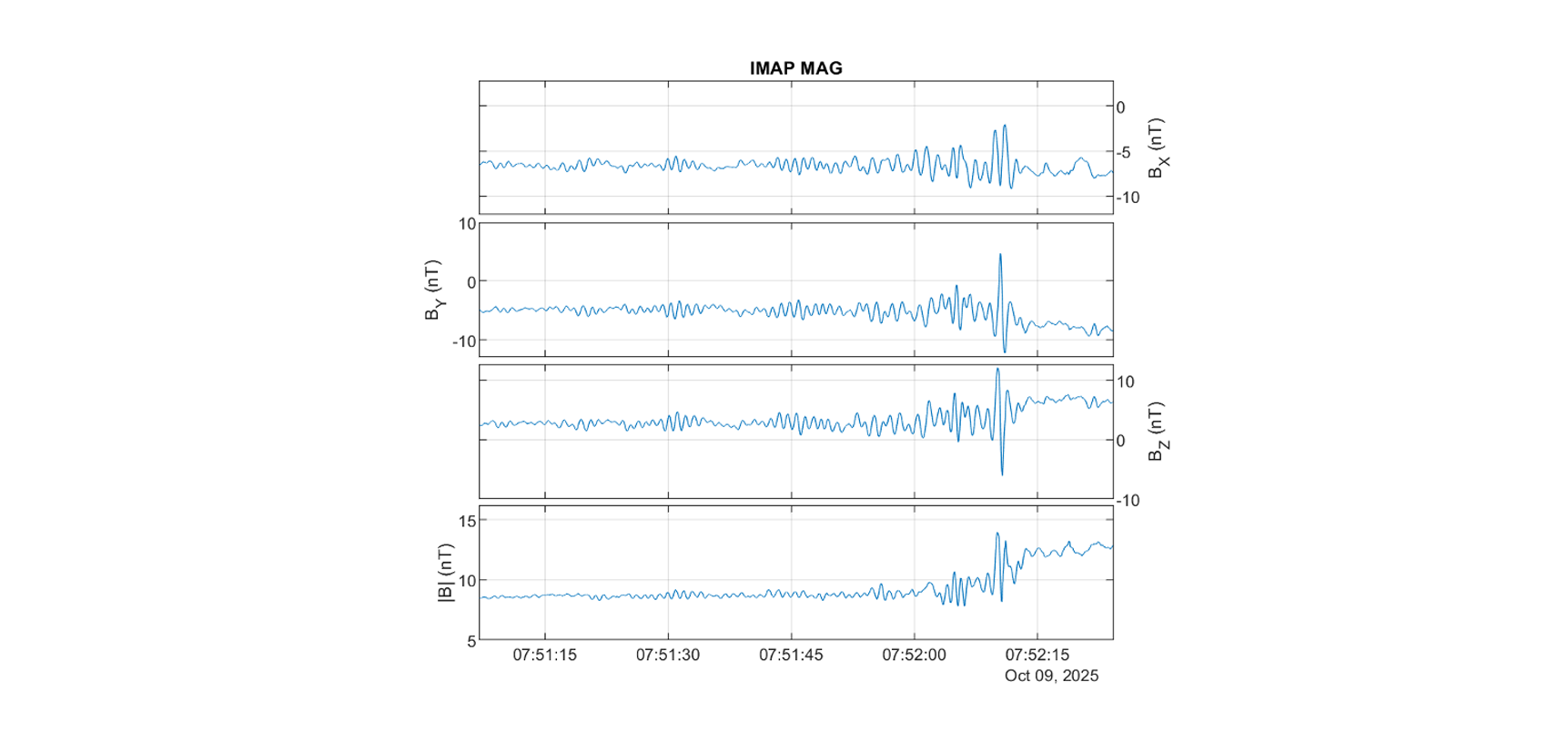
The magnetometer instrument measures magnetic fields from the Sun that stretch across the solar system. Its first-light data clearly shows dynamic changes in the solar wind’s magnetic field due to a shockwave created by the solar wind (squiggles at right).
NASA
SWAPI
The Solar Wind and Pickup Ions (SWAPI) instrument measures ions from the solar wind and charged particles from beyond the solar system. Initial data from SWAPI showed a change in the composition of the solar wind over one day. This image shows particles from a coronal mass ejection on Nov. 11 and 12, 2025.
NASA
CoDICE
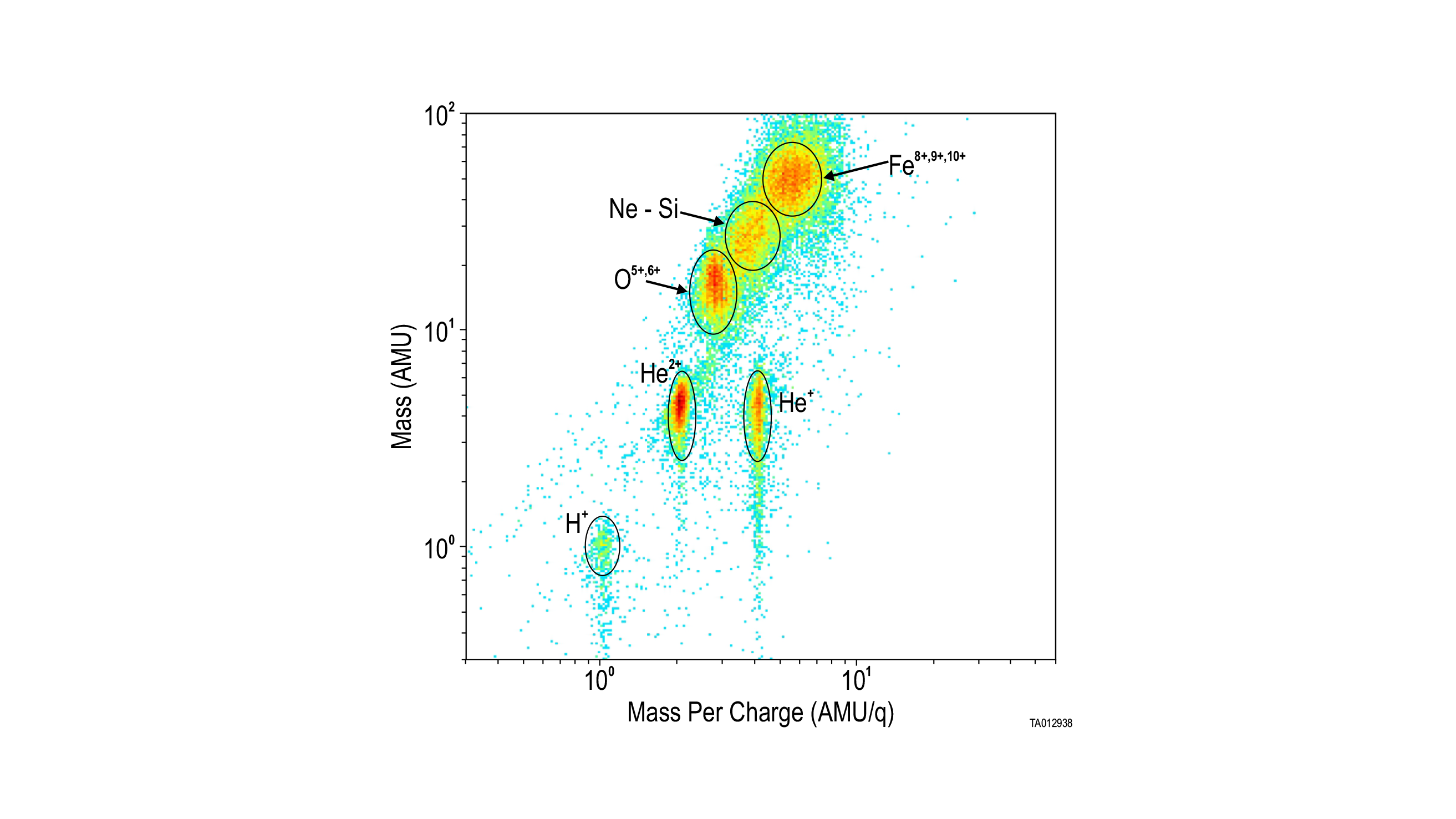
The Compact Dual Ion Composition Experiment (CoDICE) instrument measures ions from the solar wind and charged particles from beyond the solar system. It detected different types of oxygen, hydrogen, and helium atoms in its first-light data.
NASA
HIT
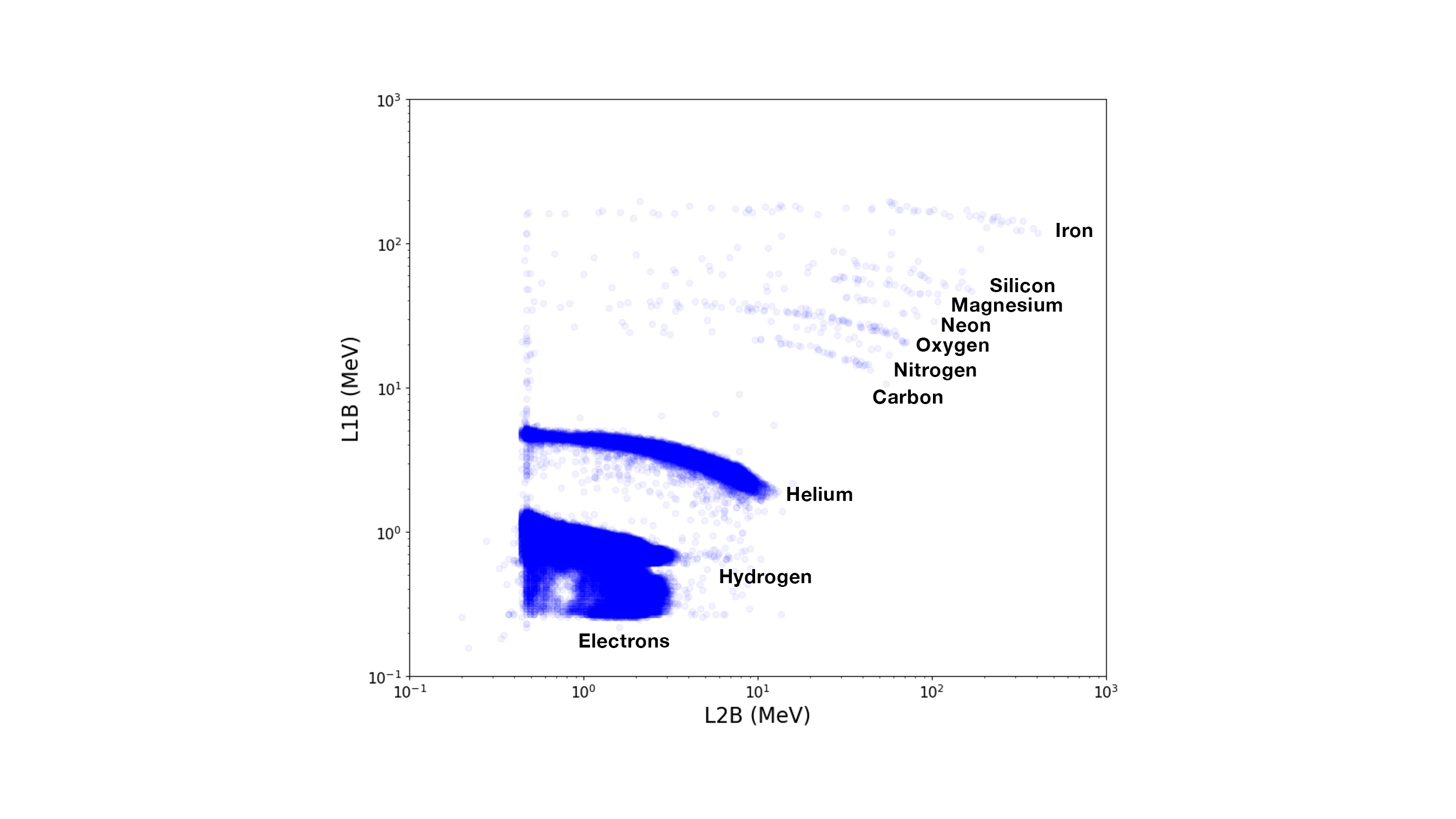
The High-energy Ion Telescope (HIT) measures energetic ions and electrons from the Sun. Early ion data shows the common elements up through iron.
NASA
GLOWS
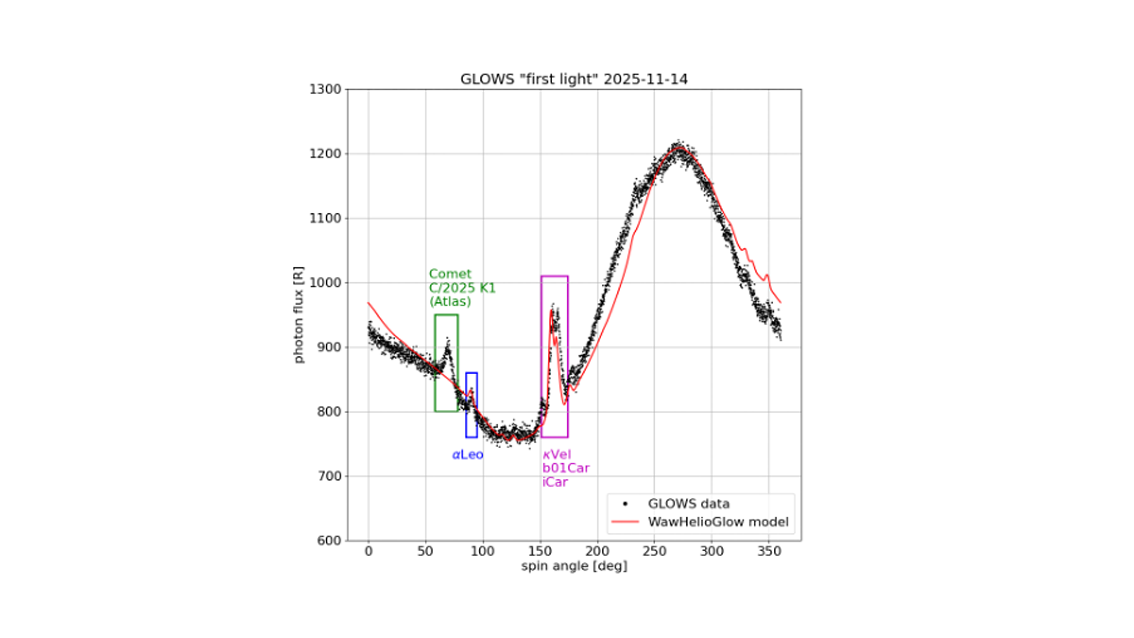
Unlike other IMAP instruments that study particles, the GLObal Solar Wind Structure (GLOWS) instrument images ultraviolet light called the helioglow that is created in part by the solar wind. The first data taken with GLOWS showed helioglow and bright stars, matching scientists’ expectations for the instrument. Unexpectedly, the signature of comet C/2025 K1 (ATLAS), shown by the first small bump from the left in the image, was also seen before it disappeared from GLOWS’ view.
NASA
SWE
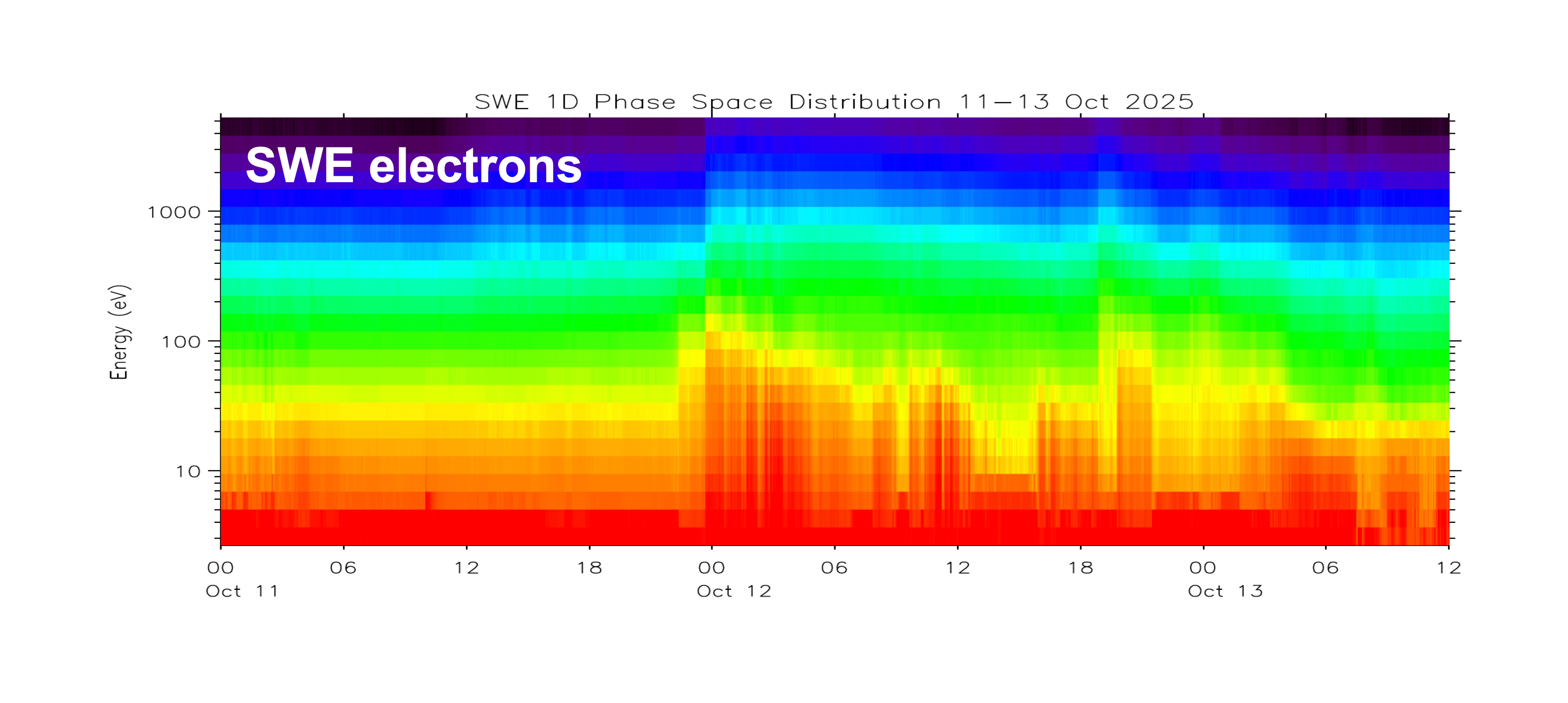
As its name suggests, the Solar Wind Electron (SWE) instrument measures electrons from the solar wind. In its first data collection, SWE successfully captured electrons at a range of energy levels. On Nov. 12, a solar storm passed through the solar system and SWE captured the resulting spike in the number of electrons at each energy level.
NASA
IDEX
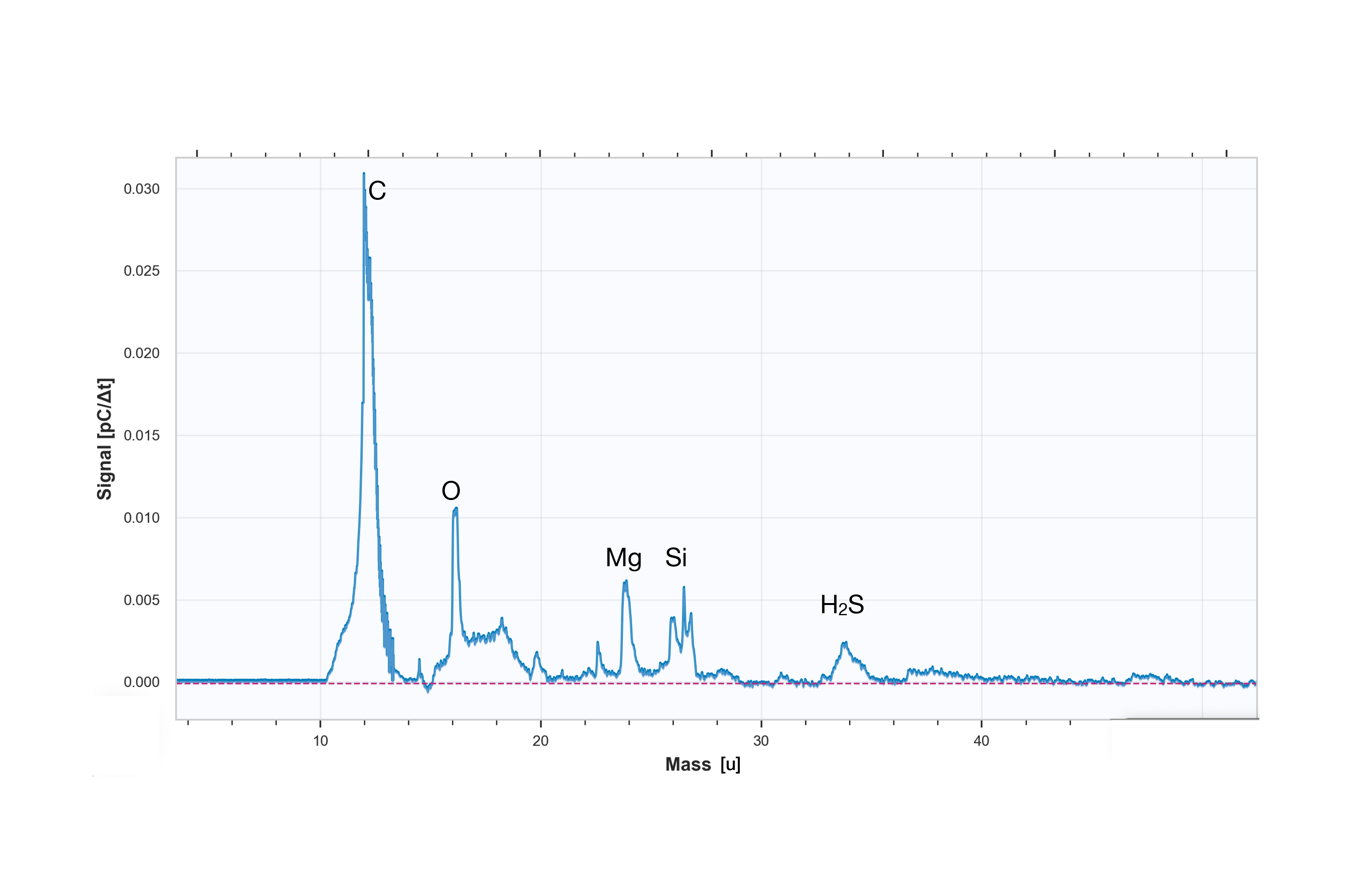
The Interstellar Dust Experiment (IDEX) measures cosmic dust — conglomerations of particles originating outside of the solar system that are smaller than a grain of sand. Prior to IMAP, few of these dust particles had been measured. With two new detections already completed, IDEX has demonstrated its ability to become an unrivaled dust detector. This observation of one of the dust particles shows tentative identifications of the particle’s chemical composition, which includes carbon, oxygen, magnesium, silicon, and hydrogen sulfide.
NASA
By Mara Johnson-Groh NASA’s Goddard Space Flight Center, Greenbelt, Md.
OPINION — “The question before the body is, can the Congress stop a military conflict declared by the Commander-in- Chief because we don’t agree with the decision, and without our [Congress] approval it must end? The answer, unequivocally, to me is no. Under the Constitution, the authority to be Commander-in-Chief resides exclusively with the President. The power to declare war is exclusive to the Congress. Now, what could the Congress do constitutionally if they disagree with a military action that is not a declaration of war? We could cut off funding.”
That was Sen. Lindsey Graham (R-S.C.) speaking on the Senate floor on the afternoon of November 6, when debate was to begin on S.J. Res. 90, legislation that was “to direct the President to terminate the use of U.S. Armed Forces for hostilities within or against Venezuela, unless explicitly authorized by a declaration of war or specific authorization for use of military force.”
Graham’s remark that Congress could cut off funds to halt a President ordered foreign military action took me back 56 years to December 1969, when I was working for Sen. J.W. Fulbright (D-Ark.), then chairman of the Senate Foreign Relations Committee. I had in late 1969 been to Laos where the Nixon administration was carrying out a secret bombing campaign in an attempt to limit weapons going from North Vietnam to pro-Communists in South Vietnam.
To halt the at-the-time classified Laos bombing program, Fulbright introduced an amendment to the fiscal 1970 Defense Appropriations Bill that prohibited the use of U.S. funds to send American ground combat troops into Laos or Thailand. To get his amendment debated and passed, Fulbright had to arrange for a closed-session of the Senate.
That closed session was held on December 16, 1969, with all 100 Senators present, a handful of staff – including me – but no one in the public galleries and no reporters in the press gallery. After a 90-minute debate, the amendment passed. The House accepted the amendment in conference and it was signed into law by President Nixon on December 29, 1969.
Fulbright’s purpose was to assert Congress’ Constitutional role when it came to a prospective military operation amid his concern that the Nixon administration was expanding the Vietnam War into neighboring countries without consulting Congress.
I describe that long-past activity to explain my continuing apprehension over today’s possible Trump administration military action against Venezuela. The Trump administration has already introduced deadly military operations against alleged narco-traffickers working from a secret list of drug cartels using a classified Justice Department Office of Legal Counsel opinion which claims the drugs are to kill Americans and finance arms to terrorists who will destabilize the U.S. and other Western Hemisphere countries.
Last Thursday and Friday, President Trump met in the Oval Office to discuss a host of options for Venezuela with Vice President JD Vance, Defense Secretary Pete Hegseth, Joint Chiefs Chairman Gen. Dan Caine, Secretary of State Marco Rubio and Deputy Chief of Staff Stephen Miller.
Friday night, in remarks to reporters aboard Air Force One as he traveled for the weekend to his Mar-a-Lago estate, the President said he had “sort of made up my mind” about how he will proceed with the possibility of military action in Venezuela. On Sunday, flying home, Trump told reporters the U.S. “may be having some discussions with [Venezuelan President Nicolas] Maduro,” adding that “they [the Venezuelans] would like to talk.”
Although he swings back and forth, it appears clear from President Trump’s point of view, he need not consult with Congress should he decide on any military action that targets the Venezuelan mainland. As Sen. Graham pointed out, “We have only declared war five times in 250 years, and we have had hundreds of military operations -- some authorized and some not.”
Need a daily dose of reality on national and global security issues? Subscriber to The Cipher Brief’s Nightcap newsletter, delivering expert insights on today’s events – right to your inbox. Sign up for free today.
Opening the Senate debate on November 6, Sen. Tim Kaine (D-Va.), a key sponsor of the congressional resolution, pointed out, “On October 31, public reporting shows that many Trump administration officials have told the press that a secret list of targets in Venezuela has been drawn up. All of this, together with the increased pace of strikes in the Caribbean and Pacific [21 attacks on alleged narco-trafficking boats, 83 individuals killed], suggests that we are on the verge of something that should not happen without a debate and vote in Congress before the American people.”
On November 6, after a relatively short debate, the Senate resolution to block the use of U.S. armed forces against Venezuela was defeated by a 49-to-51 vote.
But during that debate some important points were made, and they need some public exposure.
For example, Sen. Tammy Duckworth (D-Ill.), a military veteran herself, said, “Listen, if the Trump administration actually believes there is an ongoing credible threat of armed conflict, then they must bring their case to Congress and give the American people a say through their elected representatives. They must respect our service members enough to prove why war is worth turning more moms and dads into Gold Star parents. And they must testify about what the end state of these military operations would actually look like.”
Sen. Adam Schiff (D-Calif.) said, “Maduro is a murderous dictator. He is an illegitimate leader in having overturned the last election by the use of military force. He is a bad actor. But I do not believe the American people want to go to war to topple this regime in the hopes that something better might follow… Let them [the Trump administration] seek an authorization to use force to get rid of Maduro. But let us not abdicate our responsibility. Let us vote to say no to war without our approval. We don’t have to wait, nor should we wait for that war to begin before we vote.”
Sen. Rand Paul (R-Ky.) pointed out, “Of course, we have the capability of overthrowing the Maduro regime, just like we had the power to overthrow Saddam Hussein and Muammar Qadhafi. But what comes next? Is anyone thinking about the potential blowback that such a campaign could entail? Overthrowing the Maduro regime risks creating more regional instability, not less. The breakdown of state authority may create a power vacuum that the very drug cartels the administration is ostensibly trying to destroy could exploit.”
The Cipher Brief brings expert-level context to national and global security stories. It’s never been more important to understand what’s happening in the world. Upgrade your access to exclusive content by becoming a subscriber.
“You cannot bomb your way out of a drug crisis,” said Sen. Jack Reed (D-R.I.), ranking member on the Senate Armed Services Committee. “The demand that motivates drug trafficking is not found in the Caribbean. It is located in communitiesacross America where people are suffering from addiction, where economic opportunity has dried up, where the social fabric has frayed. Military strikes do nothing to address those root causes. Boats have been blown out of the water in videos released by the administration. But has the flow of fentanyl into America decreased? Has a single trafficking network been dismantled? The administration hasn’t provided any evidence that these strikes are achieving anything beyond the destruction they document on camera. This is not a strategy. This is violence without a strategic objective.”
Sen. Reed also pointed out how the Trump administration is expanding its war powers. “The White House is apparently now arguing that these strikes [on alleged narco-boats] don’t constitute ‘hostilities’ under the War Powers Act because American service members aren’t directly in harm’s way while operating standoff weapons and drones. This is ridiculous…They are very much in harm’s way, and to say that this operation is so safe that it doesn’t qualify as ‘hostilities’ is embarrassing…This new interpretation creates a dangerous precedent. If standoff weapons exempt military operations from congressional oversight, we have effectively granted the Executive Branch unlimited authority to wage war anywhere in the world so long as American forces can strike from a distance.”
Taking a different approach, Sen. Chris Van Hollen (D-Md.) pointed out an irony in Trump’s anti-drug argument. Van Hollen said, “I will tell you what you don’t do. You don’t submit a budget to the U.S. Congress that cuts the funding for the Drug Enforcement Agency and cuts funding for the task forces we developed to go after major organized crime syndicates involved in the drug business.” He added, “I happen to be the ranking member of the Appropriations Committee that oversees the Justice Department. And all my colleagues have to do is take a look at the request from the President of the United States when it comes to resources for fighting drugs coming to the United States. They cut them.”
Raising an additional problem, Sen. Andy Kim (D-N.J.) said, “Letting Donald Trump ignore the law abroad makes him think he has a free pass to do it right here at home. Donald Trump thinks if he can do this in the Caribbean, he can do it on the streets of Chicago. He could use the military for his own political retribution and consolidation of power in and outside our borders. After all, he [Trump] said in his own words: ‘We’re under invasion from within, no different than a foreign enemy but more difficult in many ways because they don’t wear uniforms.’ That is what the President said. We cannot be complacent as he sends troops into our cities as a tool of intimidation against his political enemies.”
While we await President Trump’s decision on what comes next, let me close with another ironic situation, created last Wednesday by Secretary of Homeland Security Kristi Noem.
Giving the keynote address at the Potomac Officers Club’s 2025 Homeland Security Summit, Noem celebrated recent successes in the counter-drug mission. She said that since January, the Coast Guard has stopped 91 metric tons of drugs, confiscated 1,067 weapons and seized more than $3.2 million in cash from terrorist cartels, thanks primarily due to Operation Pacific Viper, which Noem said is strategically designed to seize historic amounts of drugs from smugglers in the eastern Pacific. “Viper has saved millions of lives of individuals and Americans by stopping those drugs before they ever got to the U.S.,” Noem said.
Operation Pacific Viper, according to a Coast Guard press release, also resulted in the arrest of 86 alleged narco-traffickers as of October 15. A needed reminder: Viper was an interdiction program where narco-traffickers were intercepted, arrested and drugs seized – not boats blown up and people killed.
The Cipher Brief is committed to publishing a range of perspectives on national security issues submitted by deeply experienced national security professionals.
Opinions expressed are those of the author and do not represent the views or opinions of The Cipher Brief.
Have a perspective to share based on your experience in the national security field? Send it to Editor@thecipherbrief.com for publication consideration.
Read more expert-driven national security insights, perspective and analysis in The Cipher Brief
OPINION / EXPERT PERSPECTIVE — The armada the U.S. has assembled in the Caribbean is more formidable than anything the region has seen in decades. What is going on? The administration says it is targeting drug trafficking through the Caribbean. Is that it? Is that really all we are doing? Trump administration officials insist that it is but also acknowledge that strikes on land targets may be necessary to achieve the administration’s goals. Skeptics suggest that regime change in Venezuela is part of the administration’s plan. Is it?
Early in 2025, shortly after taking office, the Trump administration designated several drug cartels as terrorist organizations. This signaled the administration’s intention to escalate U.S. efforts to fight trafficking beyond the usual efforts of the Coast Guard, Drug Enforcement Administration and Border Patrol. It also presaged the use of the military.
Combating narco-trafficking remains the administration’s declared purpose. Implicitly, the decision to escalate U.S. efforts is based on several key points. First, drug abuse in the United States remains at epidemic levels despite decades of efforts to control it. Second, previous efforts to suppress drug smuggling into the U.S. have not been successful. Third, because the cartels smuggling drugs into the U.S. are not merely drug traffickers but large terrorist organizations, they need to be confronted as forcefully as terrorist groups elsewhere. This, effectively, means employing military force.
The administration contends that Venezuela is the country from which much of the illicit boat and air traffic carrying cocaine emanates and that Venezuela’s long-time strong man is really the head of a cartel and “a fugitive from American justice.” On August 7, the administration announced a 50-million-dollar bounty on Venezuela’s long-time strong man, Nicolas Maduro. It is this view of the Venezuelan regime and its leader, in combination with the size and capabilities of the deployed U.S. military in the Caribbean, that suggests the administration’s goals are more ambitious than just striking alleged traffickers on the high seas.
The question then is, how would the Trump administration define regime change? New leadership or something more extensive? If regime change is a goal, how does the administration hope to achieve that result? Would a combination of intimidation, enhanced economic sanctions and diplomatic pressure from the world’s democratic community convince Maduro to abandon power? Can the Venezuelan military, which in 2002 temporarily removed Maduro’s mentor, Hugo Chavez, be persuaded to act once again? Or is the U.S. administration contemplating military strikes inside of Venezuela? If so, how extensively? Would a targeted attack of regime leadership result in regime change or would the U.S. need to hit various elements of the military plus drug labs? The scope of any U.S. kinetic actions would likely affect the way Venezuelans – who overwhelmingly rejected Maduro in last year’s presidential election, react. It would also affect how the region and the rest of the world regard the U.S. campaign.
If the U.S. were able to oust Maduro what would follow? There is a legitimate government in waiting. Former diplomat Edmundo Gonzalez won last year’s presidential election by a huge margin despite regime efforts to sabotage the democratic opposition. Would anything short of the installation of the democratic opposition be considered an acceptable outcome to Venezuelans or the United States? Would a government of national unity which included some of the Venezuelan dictator’s base and elements of the military be acceptable to the democratic opposition? To the U.S? The Venezuelan military has been deeply compromised by the Maduro regime’s criminal activity and is believed to be complicit at the highest levels in drug trafficking. The Cartel de los Soles is thought to include many high-ranking military personnel. Would the U.S.be prepared to put troops on the ground to prevent criminal elements of the Venezuelan military from regrouping even if current regime leadership were forced out?
Finally, what effect will current U.S. operations in the Caribbean have on U.S. relations with the rest of Western Hemisphere especially if U.S. military strikes Venezuela directly? What effect have U.S. operations already had? The answers to these questions are not all obvious.
The Cipher Brief brings expert-level context to national and global security stories. It’s never been more important to understand what’s happening in the world. Upgrade your access to exclusive content by becoming a subscriber.
The Trump team has never mentioned regime change as a campaign goal. The size and nature of the deployed U.S. forces, however, make speculation on the U.S. administration’s real intentions inevitable. The number of ships, aircraft, sailors and marines appeared to be substantially greater than required to combat narcotrafficking through the Caribbean and eastern pacific even before the ordered deployment of the U.S.’s most advanced aircraft carrier, the USS Gerald R Ford. The messaging from Washington, moreover, focuses squarely on the Venezuelan regime.
What we have been hearing from Washington about operations in the Caribbean is a logical extension of steps taken by the Trump administration prior to the start of current operations. While President Obama first called Venezuela a threat to national security in 2015, it was only earlier this year that the U.S. designated the cartels as terrorist organizations. The designation of the cartels as terrorists was a necessary step to operationalize the shift from a law enforcement effort to a military one.
The new militarized U.S. strategy in the Caribbean has had an effect. Drug trafficking by sea is apparently way down. That said, this new strategy has not diminished trafficking by land nor reduced the flow of deadly fentanyl into the country. It has, on the other hand, generated concern in some countries about the return of American gunboat diplomacy. Domestically, the president’s new approach resonates well in some quarters but has incensed many Democrats in the U.S. Congress and even worried some Republicans. British concern about the legality of the U.S. strikes on the high seas is now so acute that the United Kingdom has ended intelligence sharing on Venezuela. The Trump administration has, however, given no indication that either international concern or congressional criticism will precipitate a change in policy.
President Trump’s change of the U.S strategy for fighting the cartels and maybe for achieving regime change in Venezuela has important implications for U.S. relations with its allies everywhere but especially within the region. The Trump administration has clearly made the Western Hemisphere a national security priority but there are many other vitally important arenas in which U.S. interests are affected by developments in this hemisphere – both positively and negatively.
Accordingly, the administration’s agenda in Latin America must include more than just winning the drug fight and controlling our Southern border. More than 40% of all U.S. manufacturing goods are sold into the Western Hemisphere and the U.S. has a positive trade balance with many countries in the region, including Brazil, Chile, Peru, Panama and others. Millions of American jobs depend on trade with the region. Energy production in the region is also significant; Canada is our largest foreign supplier but there are other key players including Mexico, Brazil, Colombia, Ecuador, Trinity and Tobago and, more recently, Guyana. Guyana’s oil production, in fact, is exploding. The country’s GDP grew by over 25% in 2023 and by more than 30% in 2024. On the other hand, China’s influence continues to surge and China is now the largest trading partner for South America in the aggregate. The U.S. clearly needs to do what it can to strengthen the value proposition for the countries of Central and South American to see the U.S. as their commercial partner of choice.
Are you Subscribed to The Cipher Brief’s Digital Channel on YouTube? There is no better place to get clear perspectives from deeply experienced national security experts.
It is, at this point, not clear what the Trump administration’s end game is in the Caribbean. What is clear is that the U.S. cannot ignore other issues around the region or other views on how challenges should be met. Neither should we naively assume that success in suppressing the trafficking of cocaine out of South America is assured even temporarily, however many go-fast boats the U.S. military sinks. Transit by land, which the Trump administration has indicated it may take on next, is still robust. Demand for illegal drugs is still strong in the U.S. and Europe. The U.S. has recently made progress in engaging Mexico, especially on combating the Mexican cartels, but how effective joint efforts will be remains to be seen. Relations with Colombia, the source of most of the world’s cocaine, on the other hand, have deteriorated dramatically. Colombian President Gustavo Petro has characterized U.S. attacks on the drug boats as atrocities, called President Trump a criminal and encouraged American military personnel to defy his orders. The U.S., for its part, has decertified Colombia for failing to cooperate fully with U.S. counternarcotics efforts and cancelled Petro’s visa.
The U.S. still has partners in Latin America, especially trade partners, but there is also, always, concern over U.S. unilateralism. Moreover, President Trump’s announcement that he has authorized the Central Intelligence Agency to become active in Venezuela inevitably recalls for some an earlier and darker time in U.S. relations with Latin America. That said, criticism of U.S. operations in the region has been surprisingly muted – and some countries have been explicitly supportive.
Still, many in the region have been left wondering where multilateral cooperation, diplomacy, democracy support and human rights, pillars of U.S.-Latin American policy since at least the 1980s, fit in America’s new more muscular policy toward the region. At the same time, most of the region agrees that the cartels are a grievous problem, and recognize that Venezuela is a dictatorship and that it has become an epicenter for a great deal of the most pernicious activity in the region. I expect they are dubious about the likelihood of the U.S. eradicating all drug trafficking from South America because so much of the trafficking is by land. They are also unconvinced that combatting drug trafficking per se is the U.S.’s only goal. They do not wish to see a war in either South or Central America but they are also profoundly tired of living with the consequences of the growing and corrosive power of the cartels.
The Trump administration’s campaign to date has had some success and may have put Russia, China and Iran – Venezuela’s extra-regional allies -- on notice that the U.S. has decided to counter malign activity and actors in the region forcefully. But this is a high stakes game for the U.S. A U.S. escalation to ground operations could catalyze world-wide criticism of the U.S. Success with targeted strikes is not assured. At present, we are left to wrestle with the question of whether the campaign to date is a preamble to even more ambitious operations. And, can what has been accomplished to date be sustained at a time when coca cultivation in source countries like Peru and Colombia is increasing and the head of a cartel – which is how the administration has characterized Maduro – remains in control of the government of Venezuela?
Read more expert-driven national security insights, perspective and analysis in The Cipher Brief because National Security is Everyone’s Business.

 Login
Login The United States Army has awarded a Small Business Innovation Research (SBIR) contract to enterprise browser developer HERE to build an artificial intelligence–based data interoperability layer for Army command-and-control systems, the company said on January 21, 2026. According to a press release from HERE, the project will use the company’s Enterprise Browser platform as a […]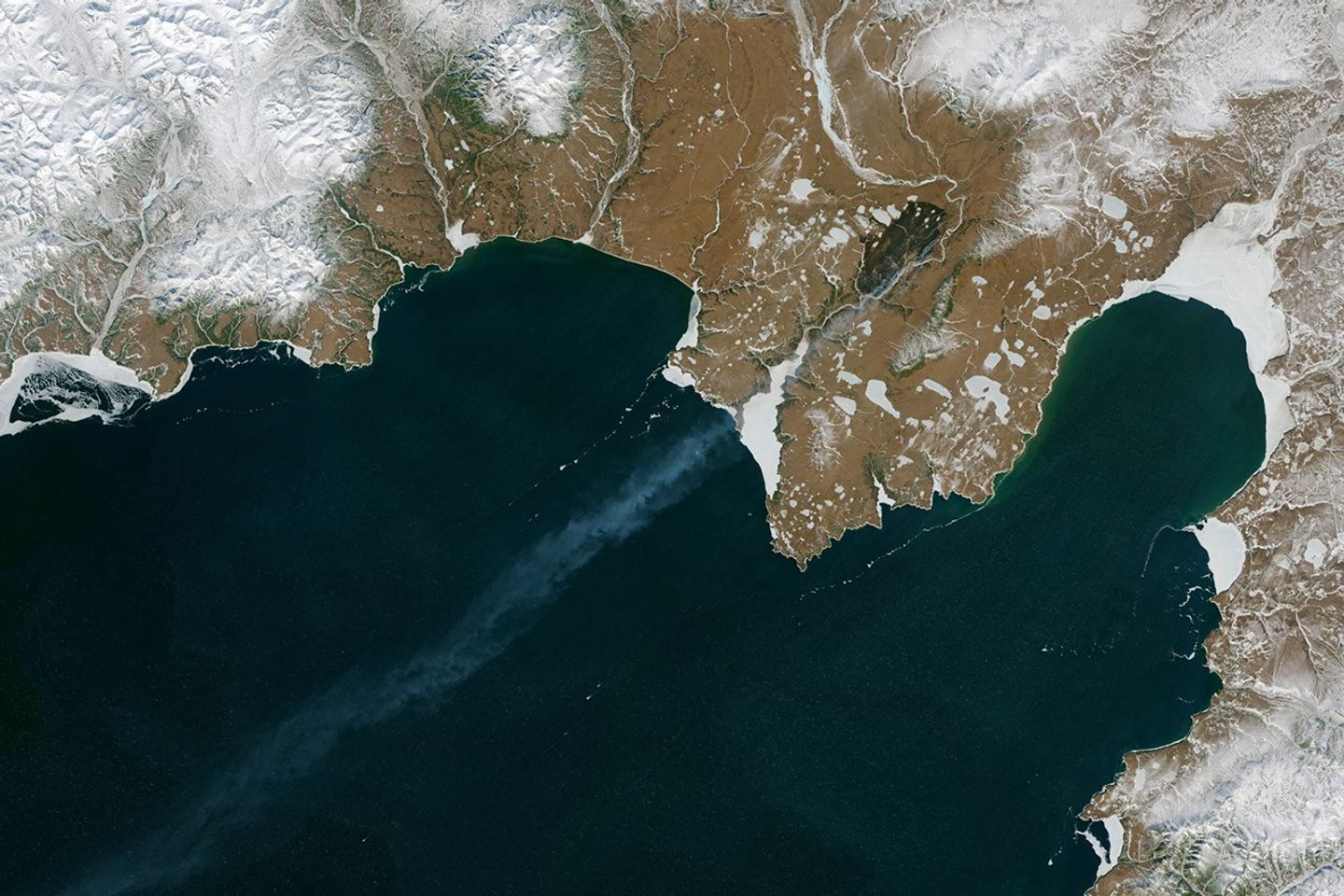
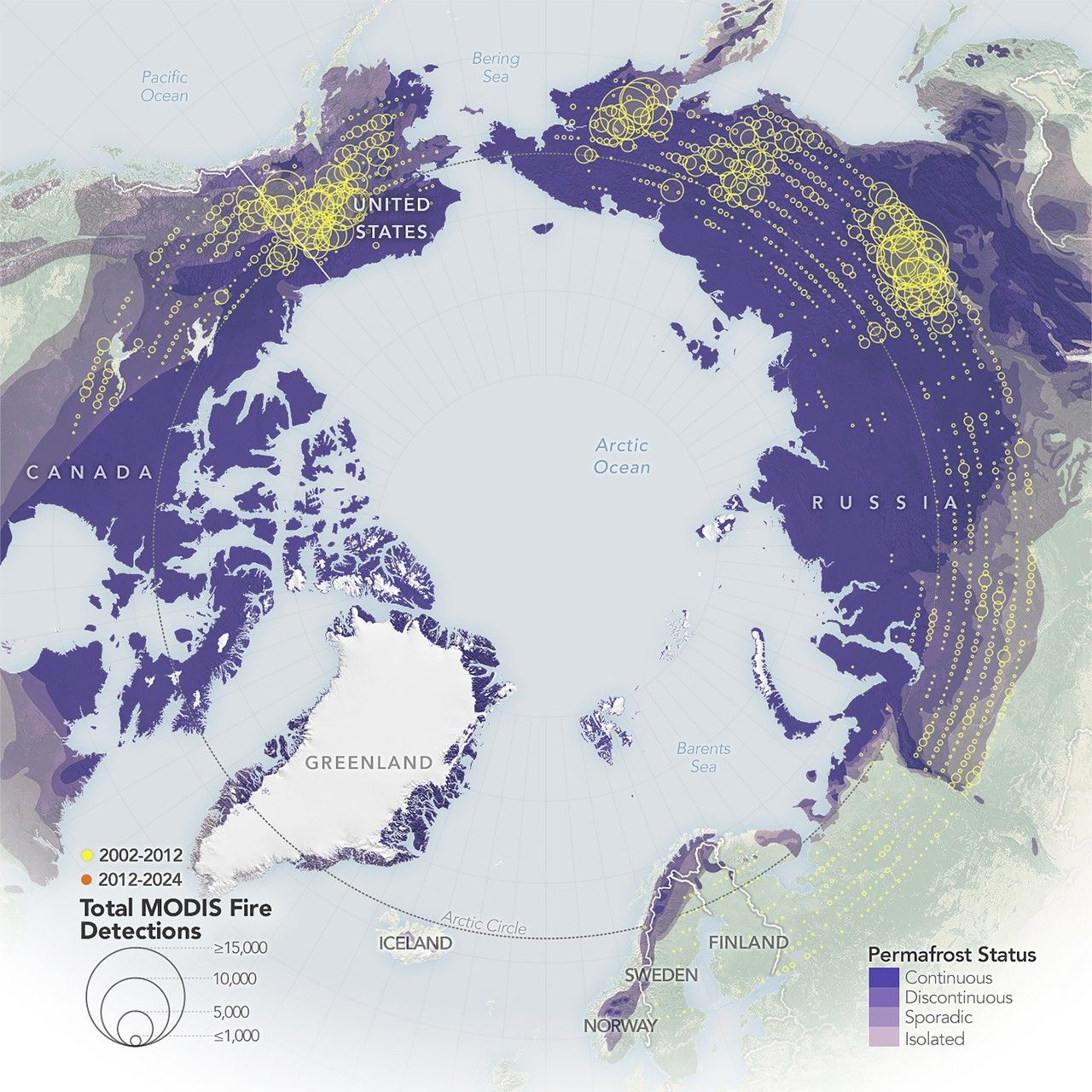
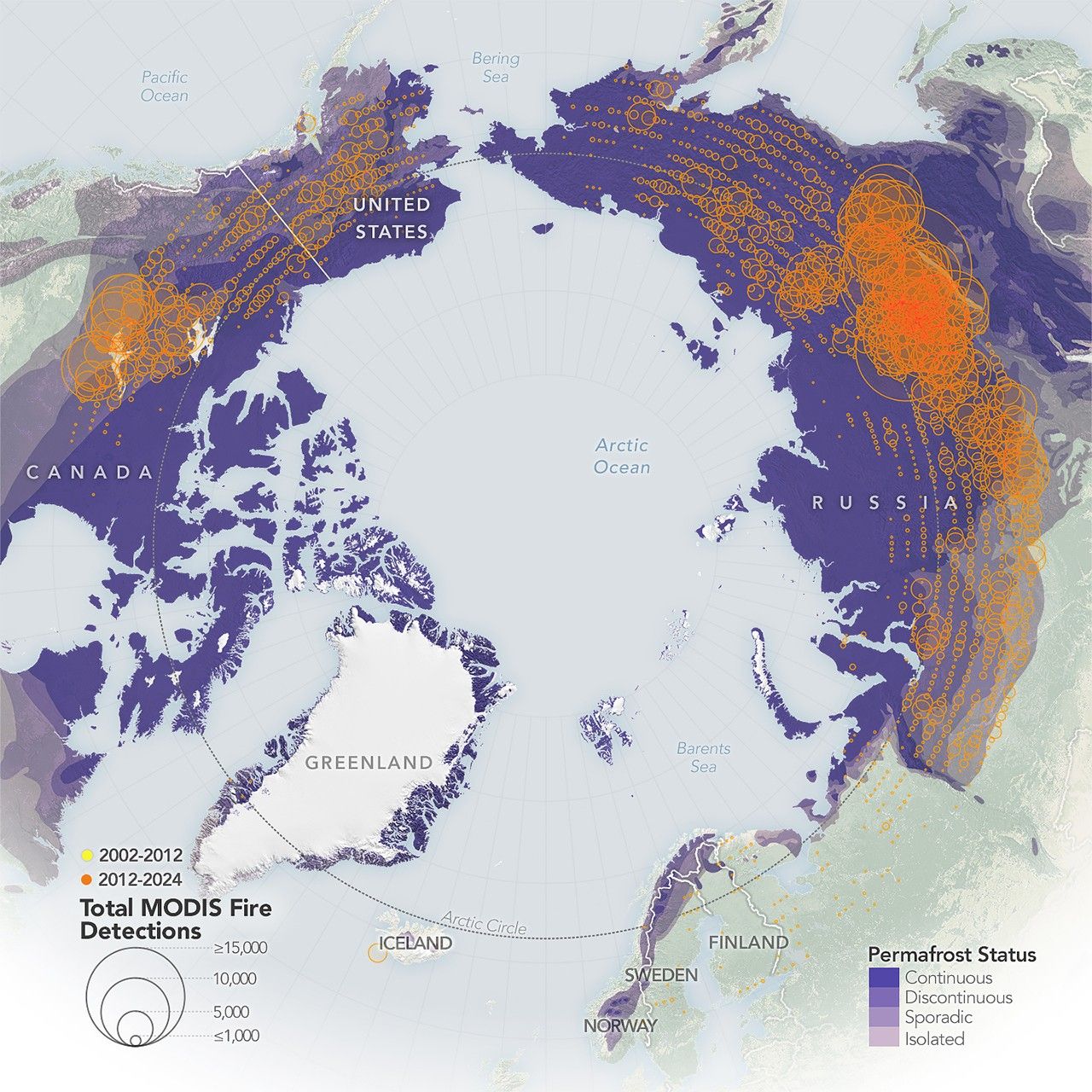
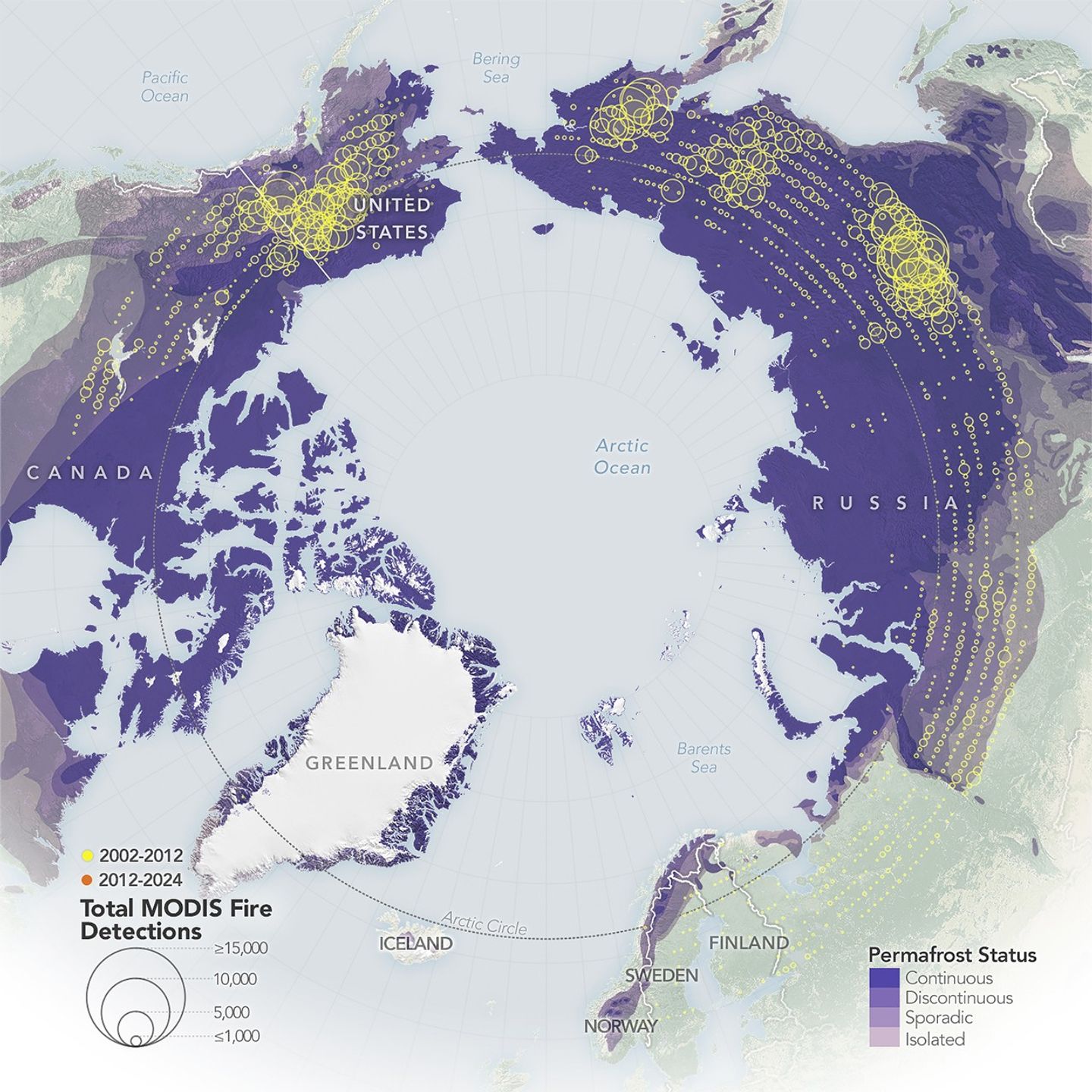
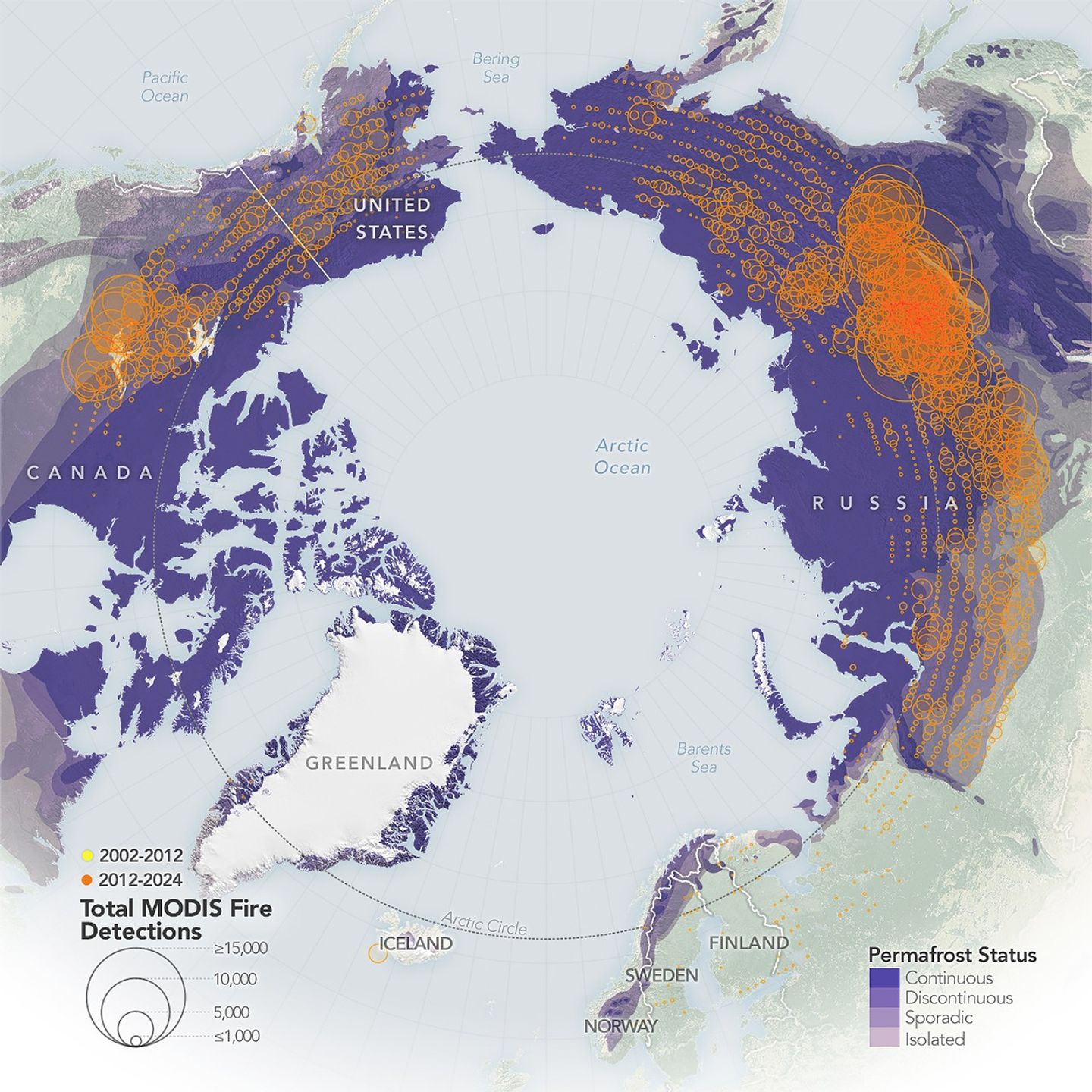
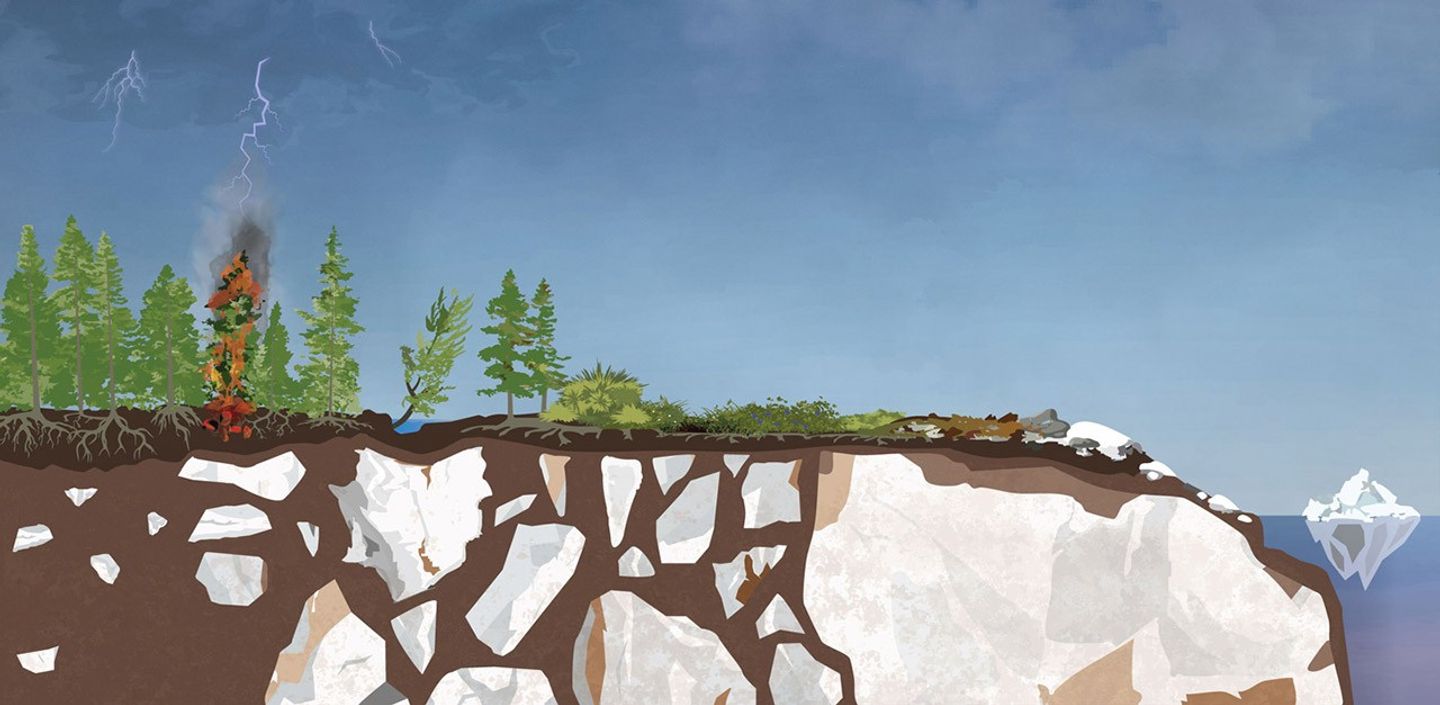
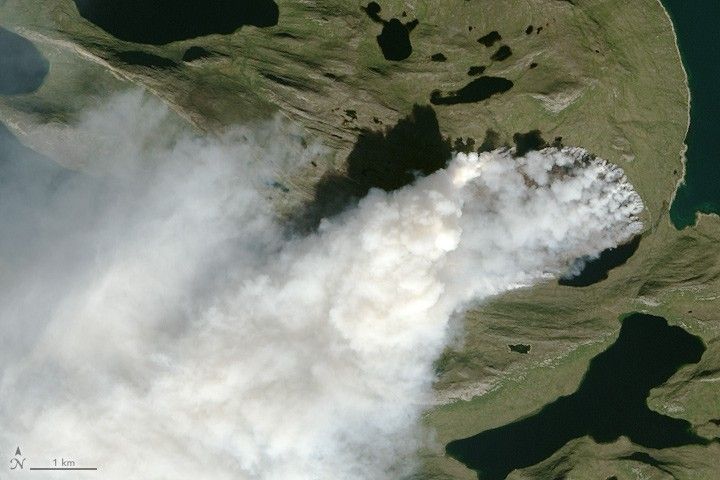

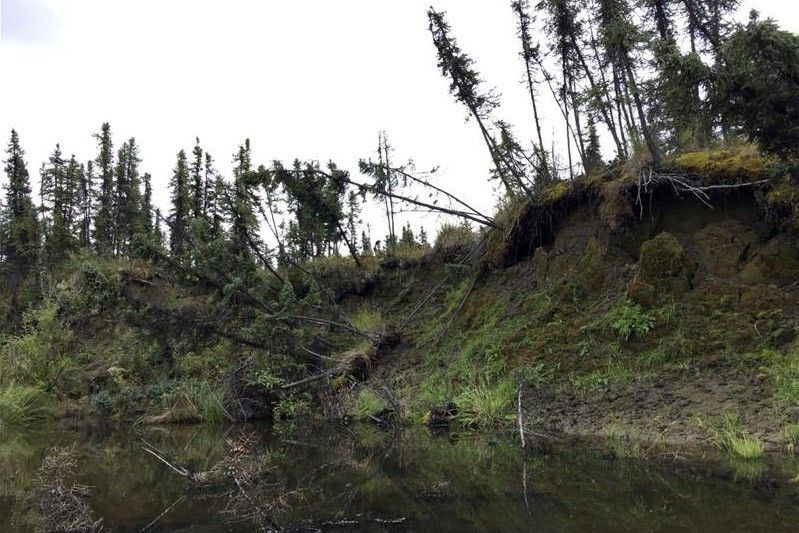

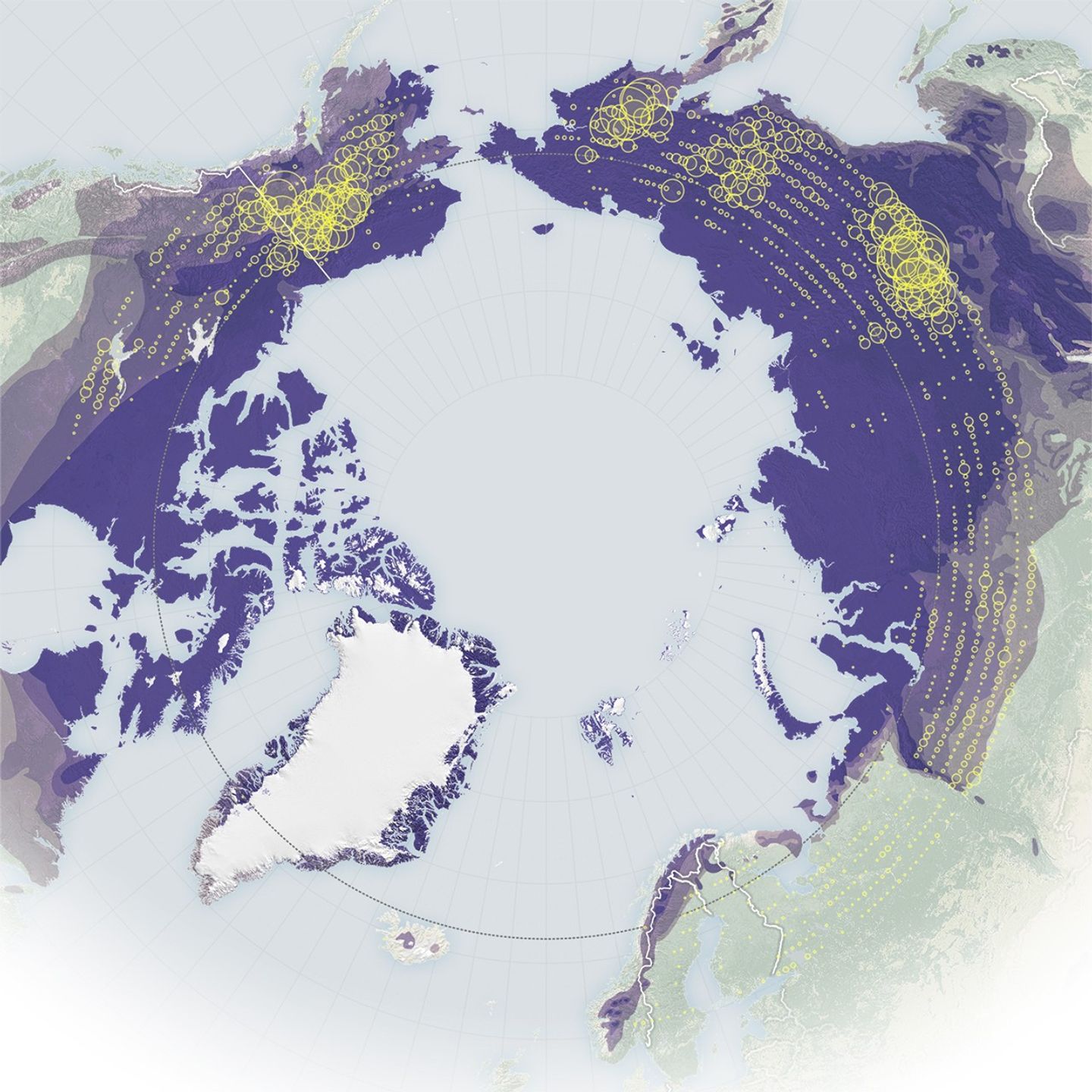
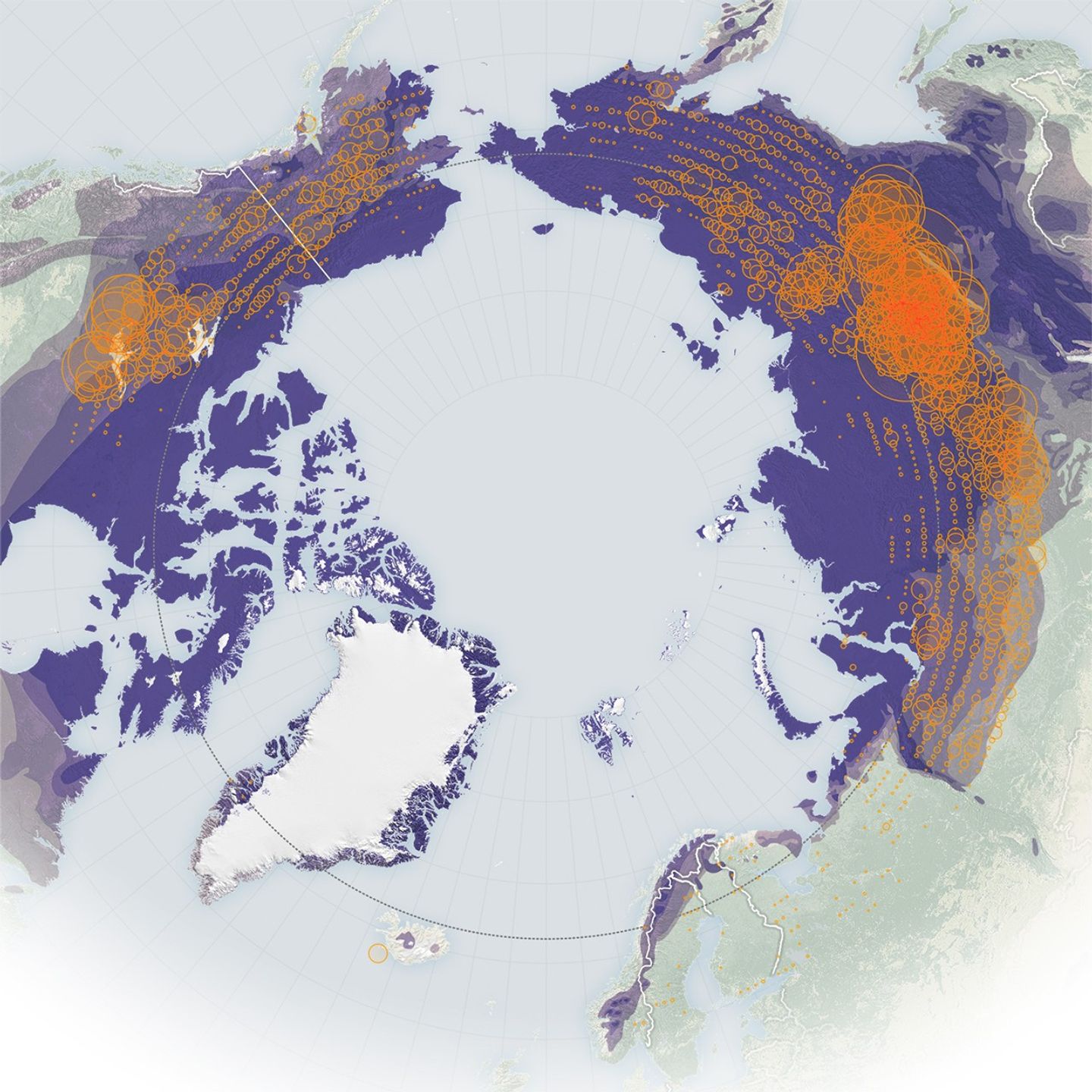
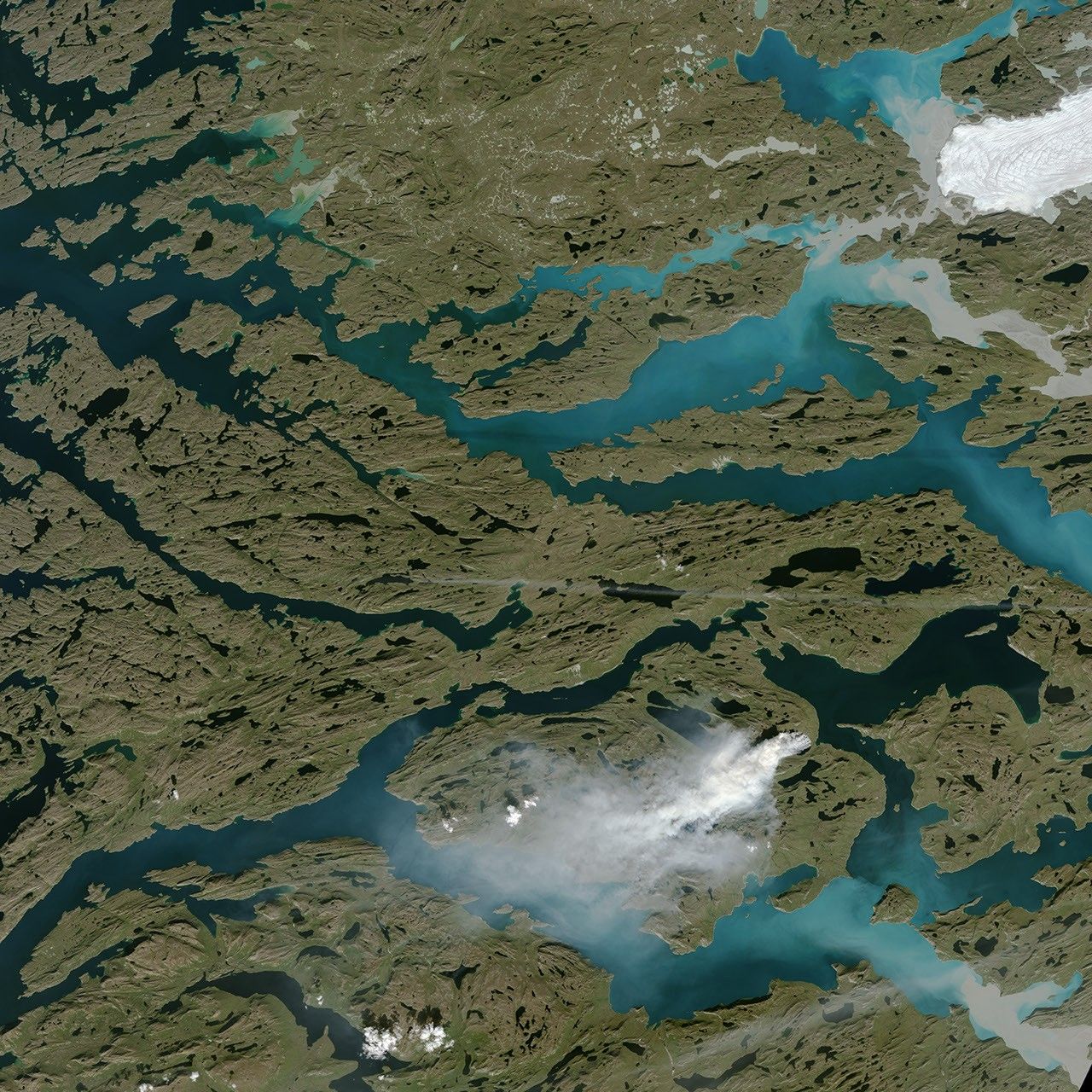





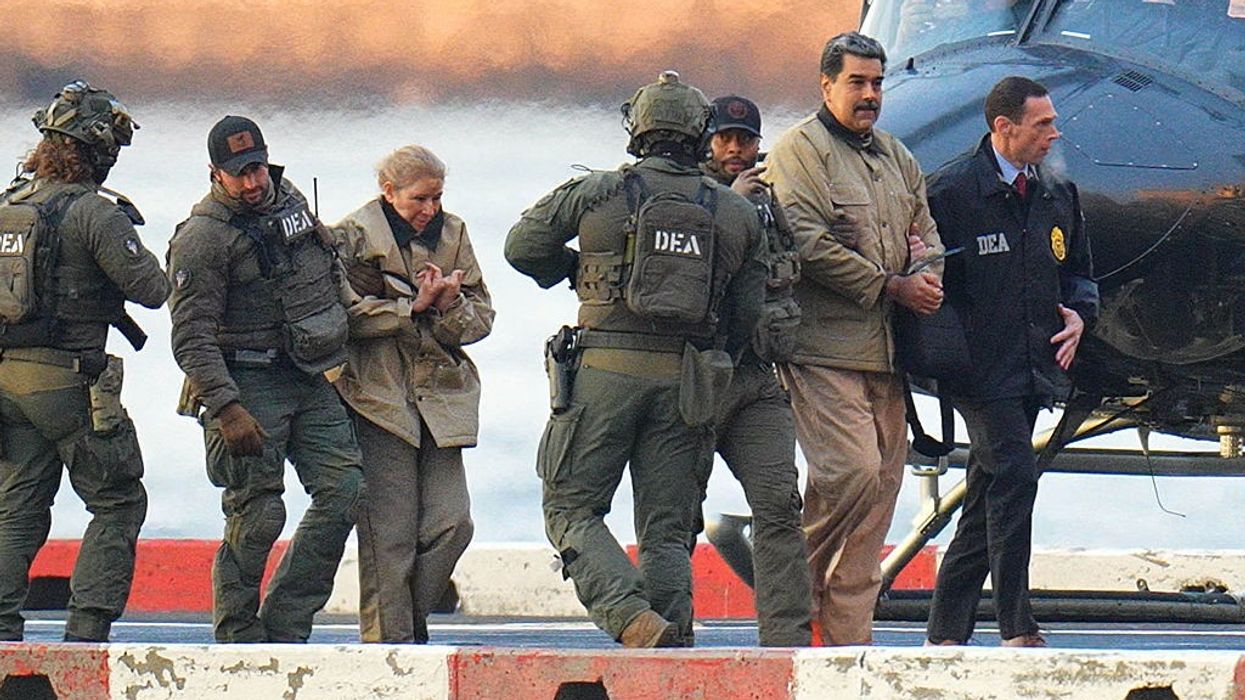

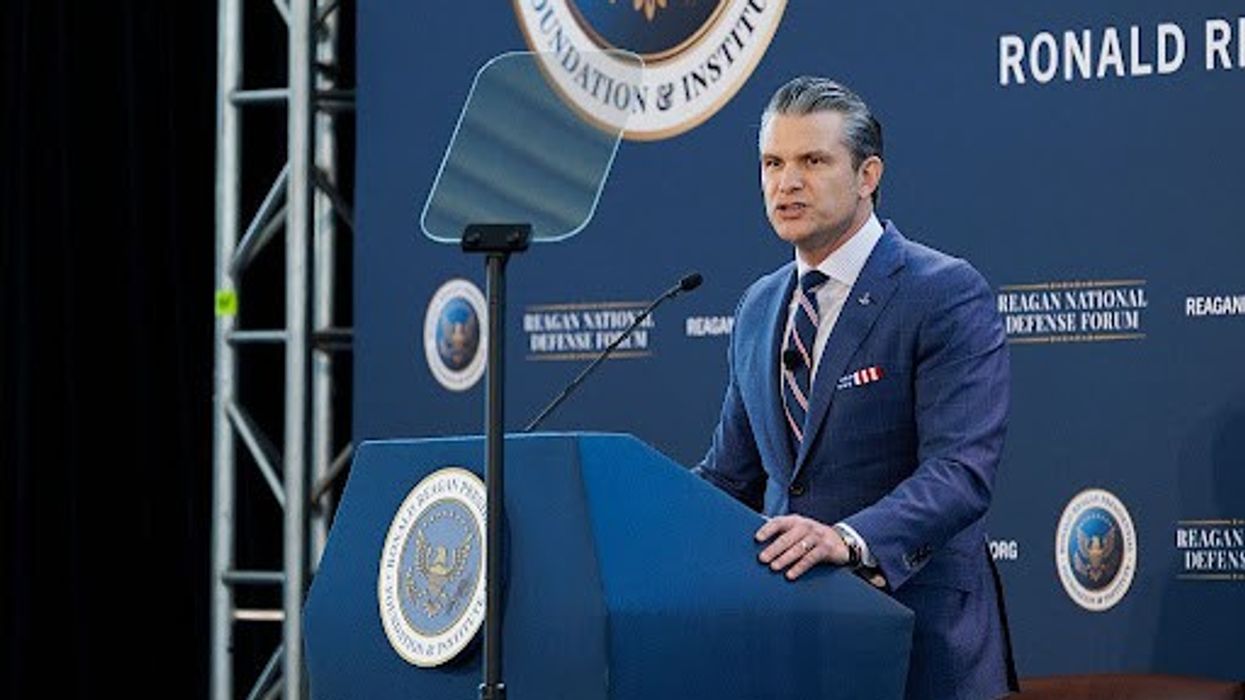
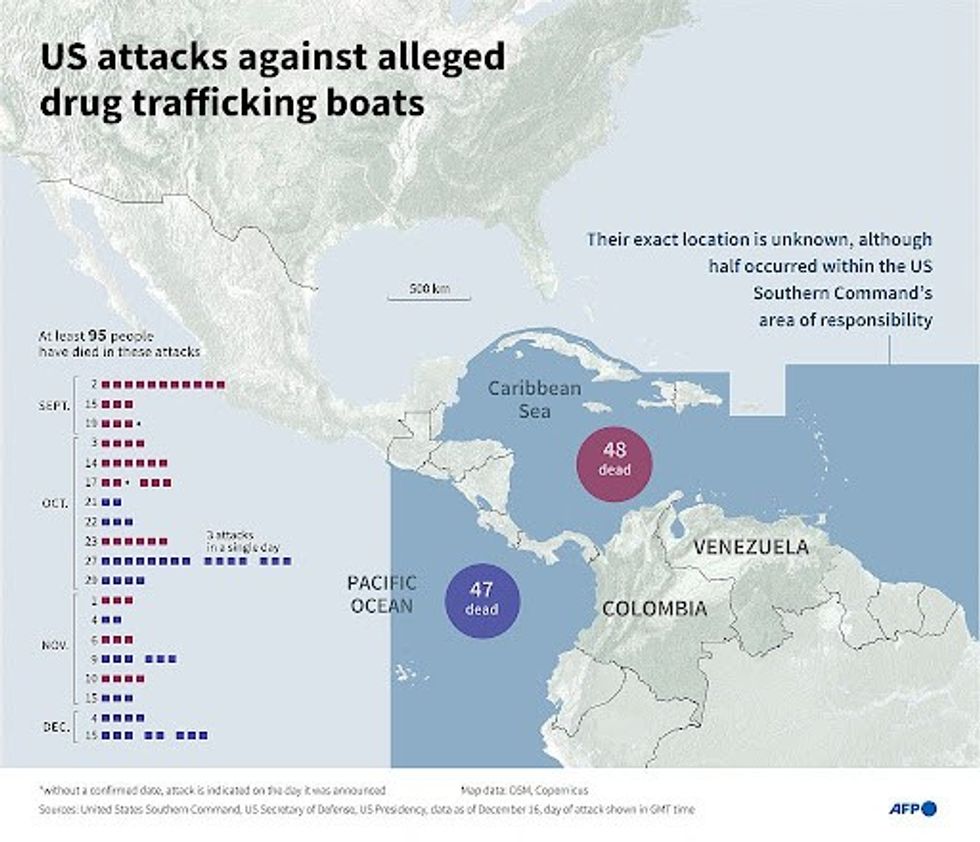
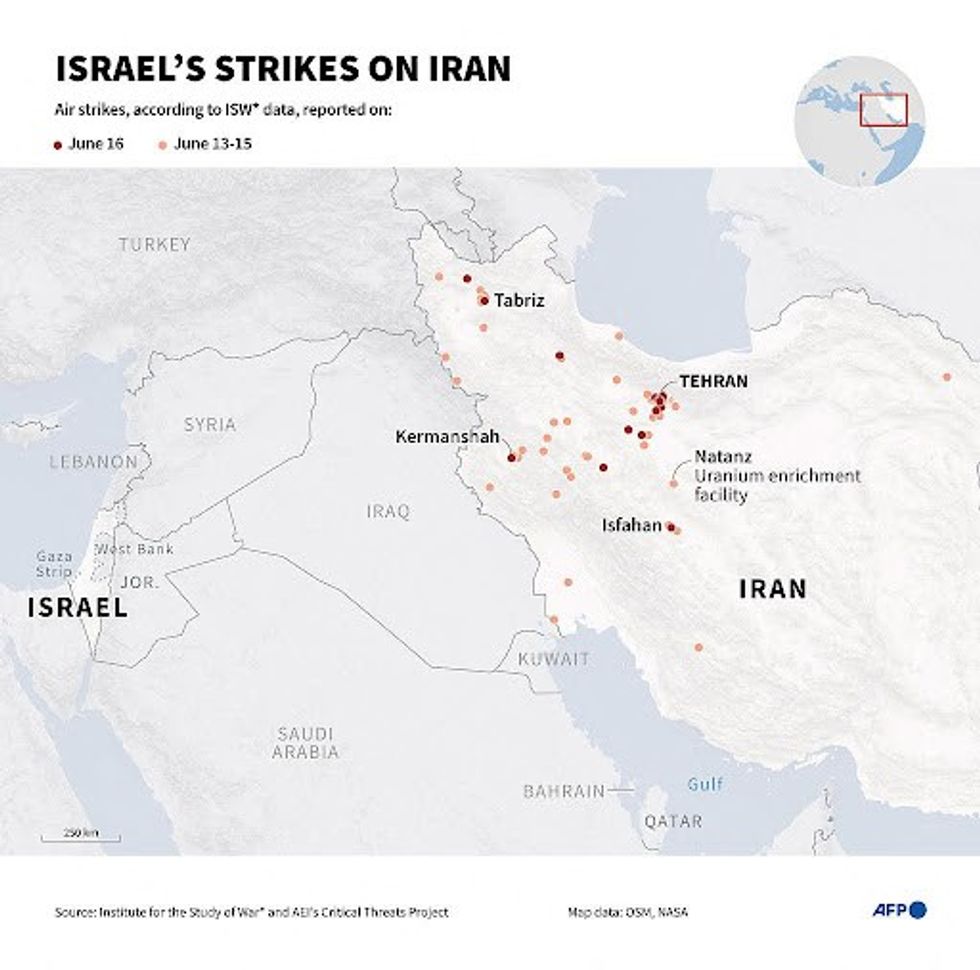
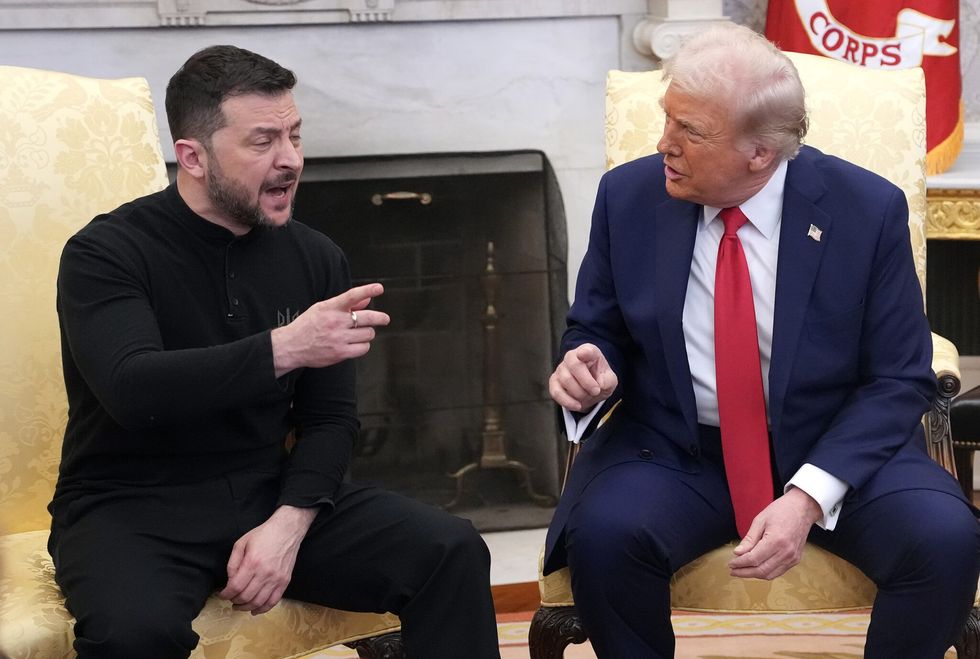
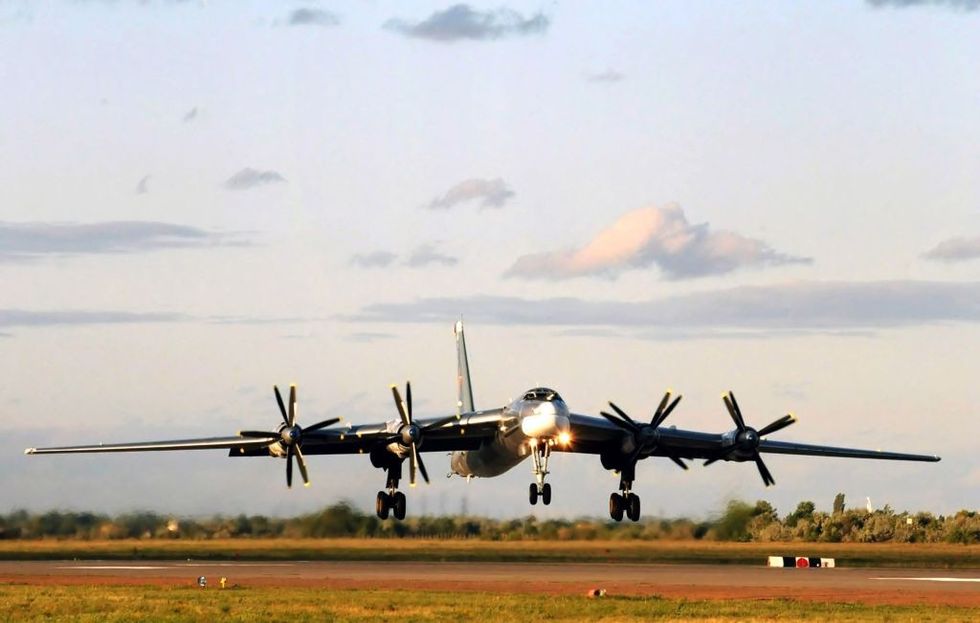 Photo by Wojtek Laski/Getty Images