❌

Reading view

There are new articles available, click to refresh the page.

Meet Veronika, the tool-using cow

Far Side fans might recall a classic 1982 cartoon called "Cow Tools," featuring a cow standing next to a jumble of strange objectsβ€”the joke being that cows don't use tools. That's why a pet Swiss brown cow in Austria named Veronika has caused a bit of a sensation: she likes to pick up random sticks and use them to scratch herself. According to a new paper published in the journal Current Biology, this is a form of multipurpose tool use and suggests that the cognitive capabilities of cows have been underestimated by scientists.

As previously reported, tool use was once thought to be one of the defining features of humans, but examples of it were eventually observed in primates and other mammals. Dolphins can toss objects as a form of play, which some scientists consider to be a type of tool use, particularly when it involves another member of the same species. Potential purposes include a means of communication, social bonding, or aggressiveness. (Octopuses have also been observed engaging in similar throwing behavior.)

But the biggest surprise came when birds were observed using tools in the wild. After all, birds are the only surviving dinosaurs, and mammals and dinosaurs hadn’t shared a common ancestor for hundreds of millions of years. In the wild, observed tool use has been limited to the corvids (crows and jays), which show a variety of other complex behaviorsβ€”they’ll remember your face and recognize the passing of their dead.

Read full article

Comments

Β© Antonio J. Osuna MascarΓ³/CC BY-SA

These dogs eavesdrop on their owners to learn new words

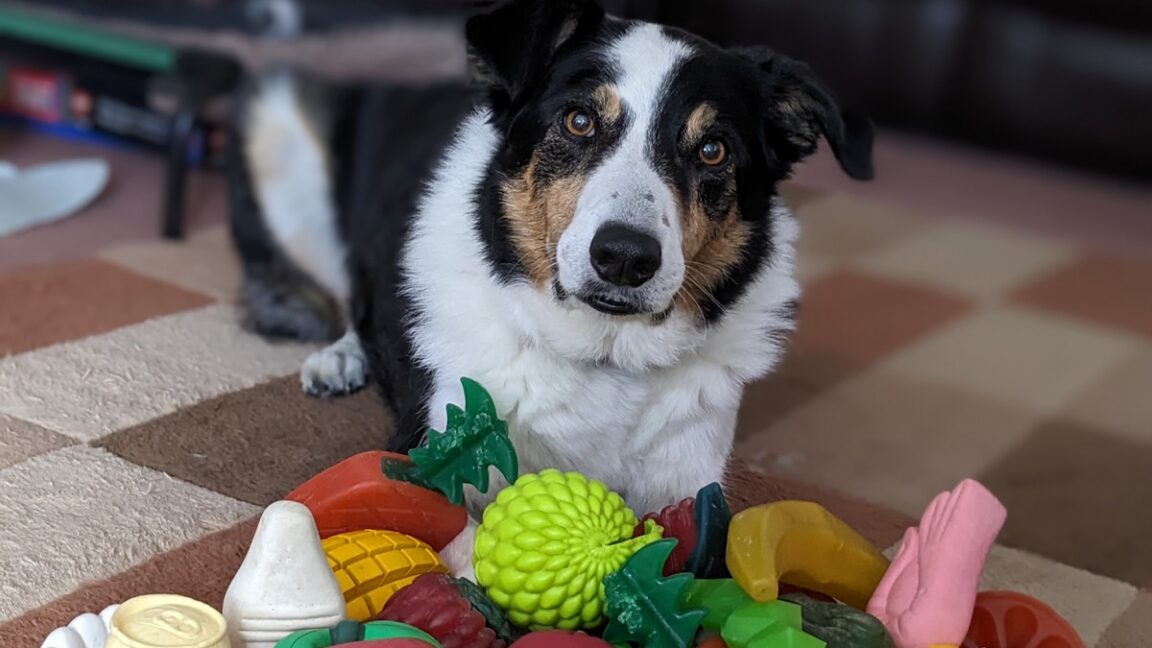
When it comes to cognitive ability, not all dogs are created equal. Most dogs can learn simple action cues like β€œsit” or β€œdown." But so-called β€œgifted word learner” (GWL) dogs exhibit a remarkable ability to learn the names of objectsβ€”for example, learning the names of specific toys so well that they can retrieve them from a large pile of toys on command. And according to a new study published in the journal Science, they can even learn labels for new toys just by overhearing their owners talking about those toys. Per the authors, this suggests that GWL dogs have sociocognitive skills that are functionally comparable to those of 18-month-old human toddlers.

Co-author Claudia Fugazza of EΓΆtvΓΆs LorΓ‘nd University in Budapest, Hungary, has been studying canine behavior and cognition for several years as part of the Genius Dog Challenge. For instance, the group’s 2022 studyΒ discovered that dogs store key sensory features about their toysβ€”notably what they look like and how they smellβ€”and recall those features when searching for the named toy. Prior studies had suggested that dogs typically rely on vision, or a combination of sight and smell, to locate target objects. GWL dogs can also identify objects based on verbal labels.

In that 2022 study, all the dogsβ€”regardless of whether they were GWL dogs or typical dogsβ€”successfully picked out the target toys in both light and dark conditions, though it took them longer to locate the toys in the dark. Most relied on visual cues, even though dogs possess an excellent sense of smell. However, the dogs sniffed more frequently and longer when searching for the toy in the dark.

Read full article

Comments

Β© Helen Morgan

❌