The crypto market dipped while the Fear and Greed Index remained in the fear zone amid renewed trade war fears and as traders waited for key corporate earnings and the Federal Reserve decision. Crypto market dips amid trade war fears…
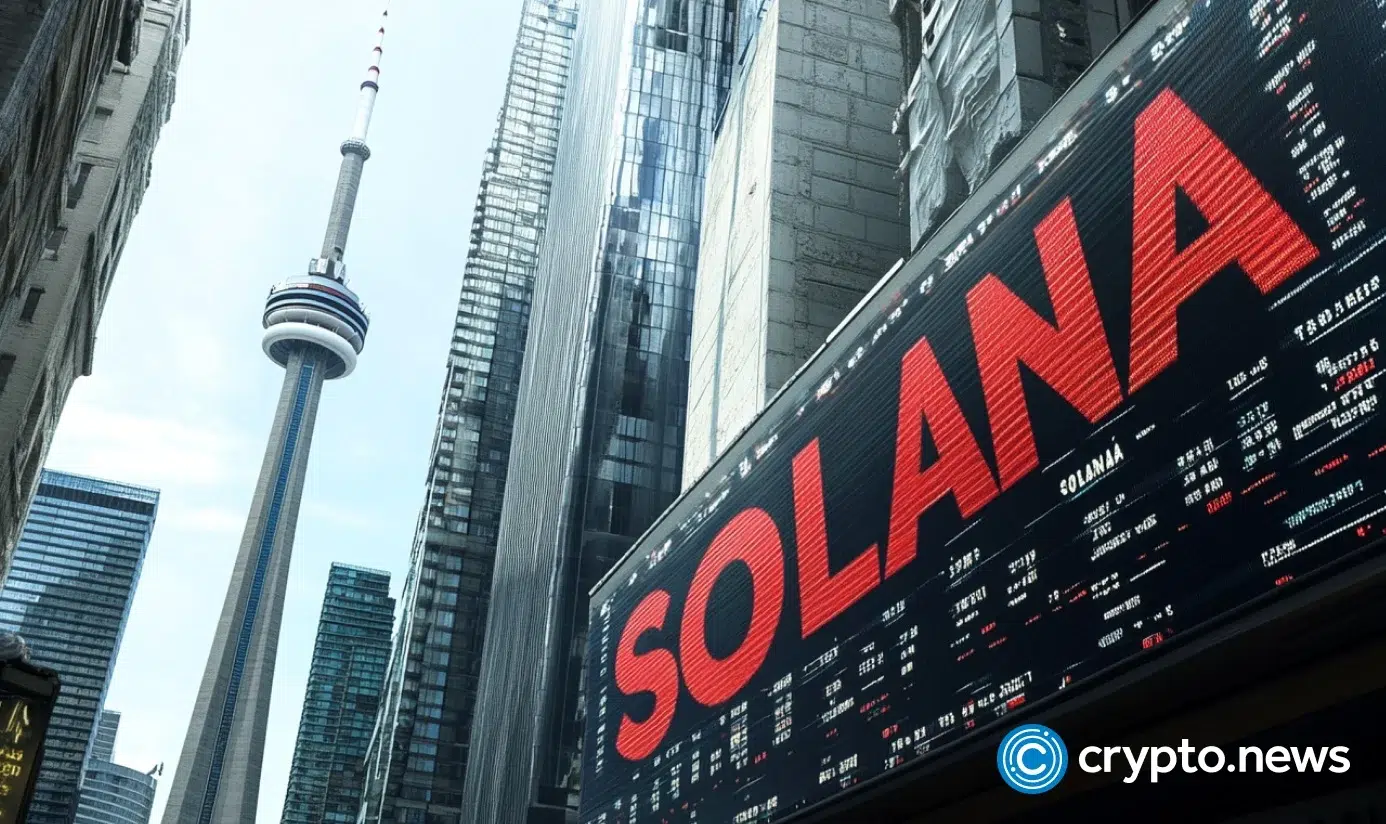
Solana price lost the recent momentum and slipped to the lowest level since January 2nd despite having some of the best on-chain metrics. Solana (SOL) token dropped to a low of $127, down by 15% from its highest level in…
XRP price remained in a consolidation phase this week as volume in the spot market waned and exchange-traded funds suffered the biggest outflow ever. Ripple (XRP) token was trading at $1.9172, where it has remained at in the past few…
The Dow Jones Index remained in a tight range near its all-time high of $49,705 as traders waited for the first Federal Reserve interest rate decision of the year and the Magnificent 7 earnings.
Binance Coin price remained in a narrow range on Friday despite major progress on the listing of the first BNB ETF by Grayscale. Binance Coin (BNB) token was trading at $8877, a range it has remained at in the past…
Solana price recent bounce from the value area low is fading fast as bullish volume declines. If support fails, a deeper pullback toward $117 range-low support may follow.
Hedera (HBAR) has intensified its downward trajectory.
The token slipped towards the $0.10 mark amid persistent selling pressure and broader cryptocurrency market weakness.
This decline comes despite the partnership with the McLaren F1 Team.
Hedera’s price fell alongside other cryptocurrencies on Friday, reaching intraday lows near $0.10.
After seeing a sharp decline on January 19, HBAR rebounded slightly to around $0.115.
However, sell-off pressure across the risk assets market has pushed bulls into the woods to leave the brief upside as a mask of a likely deeper rot.
It’s an outlook mirrored across the altcoin ecosystem as Bitcoin struggles below $90,000.
Due to profit-taking amid macroeconomic and geopolitical headwinds, BTC has touched lows of $87,700 and currently hovers around $89,230.
HBAR dips despite McLaren partnership
Struggling altcoins, including HBAR, risk dragging lower. Hedera seems to have failed to capture upside momentum despite the news of a major partnership with McLaren.
The Hedera team announced a multi-year partnership with McLaren Racing on Thursday, revealing that the crypto company is now an Official Partner of the McLaren F1 Team.
Several crypto companies, including Coinbase, Crypto.com and Bybit have previously inked major sports sponsorship deals. Hedera is eyeing expansion via this latest move.
“Working with one of the world’s most recognized sports brands is a big step for the Hedera ecosystem. It gives us a chance to show what Web3 can look like when it’s built on a network people can trust, and when it’s tied to experiences fans actually want,” said Charles Adkins, CEO of HBAR, Inc.
HBAR technical outlook
HBAR’s chart reveals a pronounced bearish structure, with the price well below key moving averages.
The altcoin has been in a prolonged downtrend since it touched highs of $0.35 in January last year.
Technical indicators point to further downside risk, as HBAR breached the $0.12 support earlier this month and now hovers near $0.10, with oscillators like RSI trending lower. Hedera’s token is below all major averages.
If buyers fail to reclaim $0.11, losses could accelerate toward October’s lows around $0.0976.
Hedera’s market capitalization stands at approximately $4.65 billion, reflecting a 65% drop from July 2025 peaks, exacerbated by declining total value locked at $61.5 million and a 16% stablecoin supply reduction over the past week.
HBAR futures traders have ramped up short positions, anticipating continued pressure amid absent ETF inflows.
Analysts note that while a bounce could bring the $0.16 mark into view, current metrics favor consolidation or deeper correction unless Bitcoin stabilizes.
Currently, BTC is facing pressure as investors pile into gold.
Tether Gold (XAUt) outperforms crypto as investors rotate into gold-backed safety.
Whale accumulation and new liquidity channels reinforce bullish momentum.
Key levels to watch are the support at $4,800 and the resistance at $5,000.
Tether Gold (XAUt) is drawing intense market attention as its price surges alongside a historic rally in physical gold.
The token, which is backed 1:1 by allocated gold stored in Swiss vaults, has benefited directly from growing global demand for safe-haven assets.
As geopolitical tensions, especially in the Middle East, rise and uncertainty weighs on risk assets, investors are increasingly turning to gold and gold-linked digital instruments.
This shift has pushed XAUt firmly into the spotlight as one of the strongest-performing real-world asset tokens in the crypto market.
Tether Gold (XAUt) outperforms a weakening crypto market
XAUt is up 2.3% over the past 24 hours, clearly outperforming a broader crypto market that has remained flat to slightly negative.
This daily move extends an already strong trend, with gains of roughly 7.3% over the last seven days and nearly 10% over the past month.
At the time of writing, Tether Gold (XAUt) is trading near $4,950, just shy of its recent all-time high around $4,960.
The token’s market capitalisation stands at approximately $2.57 billion, supported by a circulating supply of just over 520,000 tokens.
Trading activity has also surged, with more than $220 million in 24-hour volume highlighting growing liquidity and participation.
These figures confirm that XAUt’s rally is not thin or speculative, but backed by meaningful capital flows.
Gold’s safe-haven rally fuels XAUt demand
The primary driver behind XAUt’s surge is the powerful rally in physical gold prices.
Over the past year, gold has climbed nearly 70%, with prices now pushing toward the psychologically critical $5,000 per ounce level.
This move has been fueled by escalating geopolitical tensions, renewed tariff concerns, and growing fears of macroeconomic instability.
Because Tether Gold (XAUt) is directly pegged to the price of physical gold, any sustained upside in gold creates immediate upward pressure on the token.
The redemption and arbitrage mechanisms behind XAUt help keep its price closely aligned with spot gold markets.
As analysts and industry leaders increasingly project gold prices approaching or testing $5,000, sentiment around gold-backed digital assets has strengthened.
This macro-driven demand gives XAUt a structural advantage over many crypto assets that rely primarily on speculative momentum.
Whale accumulation signals defensive positioning
On-chain data suggests that large investors are actively accumulating XAUt as part of a defensive strategy.
Recent reports indicate that several linked wallets purchased more than 3,100 XAUt, worth roughly $13.7 million, at an average price near $4,422.
Another whale reportedly spent over $2 million to acquire more than 430 XAUt just days ago.
These purchases point to a broader rotation from volatile crypto assets into tokenised real-world assets.
Such accumulation adds concentrated buy-side pressure and often precedes sustained price strength.
It also reinforces the narrative that XAUt is increasingly being used as an on-chain hedge rather than a short-term trade.
Liquidity and technical momentum strengthen the trend
XAUt’s recent integration on the Mantle network via Bybit has further improved accessibility and reduced transaction costs.
Dash price is bouncing from key Fibonacci support near $60, and if momentum holds, bulls may be positioning for a renewed rally toward the $97 yearly high.
Bitcoin price is consolidating below former range highs, and a developing bear flag pattern suggests downside risk remains elevated with $80,000 emerging as the key support level.
Bears could target lows of $0.10 if memecoins continue selling off.
The macroeconomic and geopolitical headwinds give bears an upper hand.
Dogecoin continues to exhibit signs of vulnerability amid broader market pressures.
The token’s price hovered lower and hit lows near the critical support level of $0.12.
The intraday decline of 2% aligns with broader losses across the altcoin market.
But with memecoins showing greater weakness, analysts are warning that an extended dip risks deeper pain for DOGE.
Struggles for Pepe, Shiba Inu and other top memecoins are testing investor resilience.
Dogecoin price today
Dogecoin’s price has dipped from above $0.14 to $0.12 in recent sessions.
The drop to a daily low of $0.12 comes amid a 10% slide and 39% crash over the past week and three months, respectively.
Dogecoin now risks slipping under a key psychological barrier.
The heightened selling volume doesn’t help the bulls’ cause.
Dogecoin price outlook amid broader market downturn
Analysts have recently said broader market sentiment reflects fading retail participation.
Heightened concern over macroeconomic conditions and rising geopolitical tensions has pushed Bitcoin sharply lower, with prices falling below $90,000 earlier this week.
The resulting risk-off mood and liquidation pressure have also weighed on memecoins, contributing to a roughly 10% drop in Dogecoin over the past seven days.
Technical indicators continue to point to a weak near-term outlook.
On the four-hour chart, the Alligator indicator remains neutral to bearish, with the green line positioned below the red and blue lines, signalling limited bullish momentum.
Key resistance is seen at $0.1279, while immediate support near $0.1242 is at risk of breaking.
A sustained move lower could open the door to further tests toward $0.10 or below if selling pressure persists.
Dogecoin’s 50-day moving average stands at $0.1356, well above current price levels, which analysts say underscores the short-term downtrend that has been in place since late 2025.
At the moment, DOGE is navigating a descending channel pattern formed since October.
If price fails to hold $0.12, it could further strengthen the bearish structure, with historical patterns like lower highs reinforcing seller dominance.
The asset’s struggle against resistance at $0.14, where prior rallies have faltered, also outlines this negative trend.
Both the RSI and MACD indicators point to short-term selling.
Despite this, a falling wedge structure signals a breakout with potential targets above $0.20. The main bullish goal is to reclaim $0.50.
Potential support for Dogecoin could come from the launch of the 21Shares Dogecoin ETF, an exchange-traded fund endorsed by the Dogecoin Foundation.
Analysts say broader adoption, as investors seek new exposure through a physically backed DOGE product, could provide a tailwind for bullish sentiment.
LayerZero (ZRO) has absorbed a major token unlock as demand outweighs new supply.
Speculation and leverage have led to a clean breakout above $2.20 resistance.
Holding $2.20 support could open upside toward the $2.60–$2.70 zone.
LayerZero is currently commanding attention across the crypto market as its native token ZRO pushes higher despite heavy supply-side headwinds.
The ZRO price has surged decisively above the critical $2.20 resistance level, defying expectations tied to recent token unlocks.
At the time of writing, ZRO is trading near $2.21, posting gains of over 12% in 24 hours, 35% over the past week, and more than 74% on the monthly timeframe.
This move has positioned LayerZero as one of the strongest outperformers in an otherwise flat broader crypto market.
LayerZero demand overwhelms token unlock pressure
One of the most notable aspects of the current ZRO price rally is how the market has handled new supply.
This suggests accumulation rather than distribution by large holders.
In market terms, predictable supply increases lose their bearish influence when buyers are willing to absorb them.
The ability of LayerZero to withstand repeated unlocks reinforces confidence in its long-term value proposition.
This dynamic has turned what is normally a negative catalyst into a bullish signal for the ZRO price.
Speculation and momentum fuel LayerZero price strength
Beyond supply dynamics, speculative interest has played a major role in pushing ZRO higher.
Traders are positioning ahead of a teased LayerZero ecosystem event scheduled for February 10, 2026.
The clearly defined date has created a countdown effect, encouraging pre-emptive buying.
In slow market conditions, assets with identifiable upcoming catalysts often attract disproportionate capital.
As demand increased, ZRO broke above the $2.20 resistance that had capped previous rallies.
This breakout triggered short liquidations worth roughly $236,000, adding forced buying pressure.
LayerZero’s futures open interest surged by more than 30% in a single day, signalling fresh leverage entering the market.
Momentum indicators reflect this intensity, with the RSI reaching extreme overbought levels.
While this confirms strength, it also introduces short-term volatility risk.
LayerZero price forecast
The LayerZero price forecast now hinges on whether ZRO can maintain its breakout structure.
The $2.20 level is the most important area for traders to watch in the near term.
Holding above this zone would confirm former resistance as new support.
If that support holds, the next upside targets sit near $2.60 and $2.70, where prior liquidity zones emerge.
A strong continuation driven by event-related news could even open a path toward the $3.00–$3.40 range.
On the downside, failure to hold $2.20 could trigger a short-term correction.
In that scenario, traders should monitor support between $1.80 and $2.00.
The sustainability of the current bullish momentum, however, will depend on follow-through buying and concrete announcements around the upcoming LayerZero event.
Binance launched a USD1 rewards campaign, distributing $40m in WLFI tokens through weekly airdrops.
WLFI payouts are based on users’ net USD1 balances, with higher rewards for USD1 used as collateral.
USD1’s market cap has surpassed $3 billion, while WLFI activity has increased across DeFi and payroll uses.
Binance has rolled out a new rewards campaign for users holding USD1, offering weekly WLFI token airdrops with a total of $40 million in WLFI earmarked for distribution.
The exchange said eligible accounts that maintain a USD1 balance between Jan. 23 and Feb. 20 will receive rewards throughout the programme.
The initiative ties WLFI payouts directly to net USD1 balances on Binance, using a snapshot-based system to calculate qualifying amounts.
Binance is positioning the campaign as an incentive for users who hold or deploy USD1 across supported products, while both USD1 and WLFI continue to see growing activity across the wider crypto ecosystem.
How Binance will distribute WLFI rewards
Binance said WLFI rewards will be paid once a week, starting Feb. 2.
Each weekly distribution will cover activity from the previous seven days.
The campaign is structured to release roughly $10 million worth of WLFI tokens per week, spread across four consecutive weeks, which brings the total allocation to $40 million in WLFI.
The exchange said the rewards are designed to reflect users’ qualifying USD1 balances over time, rather than a single moment in the campaign window.
Which USD1 balances count for eligibility
Eligibility is based on users’ net USD1 balances held on Binance, with multiple account types included in the calculation.
Binance confirmed that USD1 stored in Spot, Funding, Margin, and USDⓈ-M Futures accounts will all count toward the campaign’s rewards calculation.
However, borrowed funds are excluded. Binance said reward calculations are based on net USD1 balances, meaning any USD1 that has been borrowed does not qualify for WLFI rewards.
The exchange also said that USD1 used as collateral in margin or futures accounts earns a higher reward rate.
This introduces an added incentive for users who allocate USD1 into collateral-based trading products, rather than keeping it entirely idle in standard wallets.
Snapshot and rate system used for payouts
Binance said it will take hourly snapshots of user balances throughout the campaign period. However, the rewards calculation does not rely on an hourly average.
Instead, Binance will use the lowest USD1 balance recorded each day to determine a user’s qualifying amount for that day.
For each weekly payout, Binance will then calculate rewards using a seven-day average balance.
This ties distributions to consistency because a single daily dip in holdings could reduce the qualifying amount for that day and then affect the overall weekly average.
Binance also said payouts will use an effective annualised rate, which will be set at the time of each distribution.
As a result, the rate applied could vary between weekly drops depending on the conditions Binance sets when rewards are released.
USD1 growth and WLFI activity in early 2026
USD1, launched in April 2025, is described as a multichain stablecoin that is fully backed one-to-one by US dollars and money market funds.
Since its launch, it has recorded sharp growth. According to data from DeFiLlama, USD1’s market capitalisation now exceeds $3 billion.
The stablecoin is available across several blockchains, including Monad, Ethereum, Solana, and Aptos.
WLFI, the main token of the World Liberty Financial ecosystem, has also seen increased activity in early 2026.
It has recently been added to payroll services, decentralised finance lending platforms, and on-chain liquidity venues.
The token has drawn new interest and partnerships in recent weeks, though its connection to US President Donald Trump has also faced criticism, with some pointing to concerns around a potential conflict of interest.
Binance said users must complete identity verification and live in eligible jurisdictions to take part in the programme.
The exchange added that broker accounts are excluded and noted that reward timing may vary due to operational conditions.
Institutional demand for Bitcoin remained flat as the legacy crypto briefly lost another key support level ahead of the Bank of Japan interest rate decision. According to data from SoSoValue, the 12 spot Bitcoin ETFs in the U.S. recorded $32…

 Login
Login