Reading view

There are new articles available, click to refresh the page.

The Kremlin Files: Russia’s Way to the Gray Zone
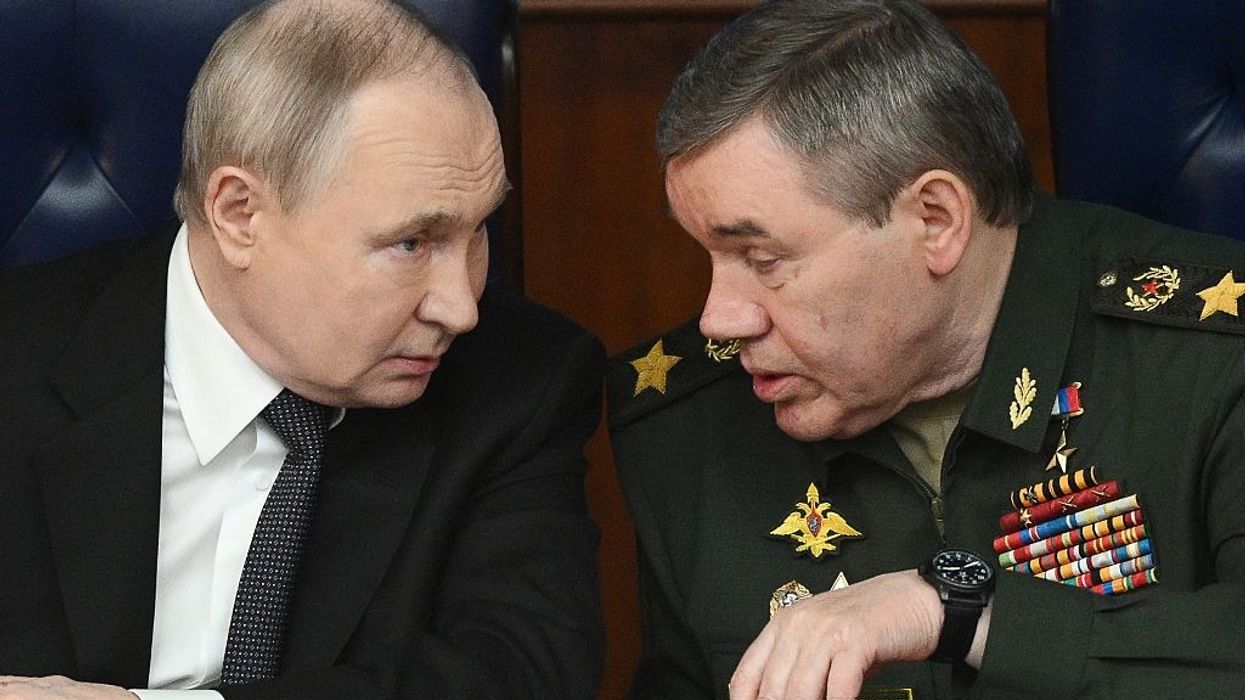


THE KREMLIN FILES / COLUMN — Russian hybrid warfare, often referred to in the West as “gray zone” conflict, has transitioned from theoretical concept to prominent headlines, particularly following the invasion of Ukraine and the Kremlin’s campaigns of sabotage, disinformation, and targeted intelligence actions across Europe and the U.S. What defines Russian-style gray warfare, or hybrid war? What are its doctrinal roots, and how well do these foundations align with assumptions in Western security discussions? To explore these questions, this article analyzes the writings of Russian military thinkers and the views of Russian military and intelligence agencies—covering their terminology, doctrines, and their evolving grasp of non-kinetic conflict.

This is the first in a two-part series by Sean Wiswesser on Russian gray zone, or hybrid warfare

Gray zone operations in the West are generally seen as actions that influence the course of a conflict or harm an adversary without crossing into direct kinetic attacks. For Russia, at the core of the gray zone is the concept of “non-contact war” (bezkontaktnaya voina), which is part of a larger doctrinal framework under which gray warfare, also called “new generation warfare” by the Russians, falls. This is not a new concept in Russian military thinking, but it has developed over decades. By examining its evolution over the past thirty years through Russian sources and military thinkers, we can better understand how Moscow uses these concepts today—and how they influence the conflicts we may face now and in the future, enabling the U.S. and our allies to respond more effectively.

There are two main components of Russian gray warfare. Russians rarely use the term hybrid war, which exists in Russian only as a borrowed term from English. The first concept is non-contact warfare - the concept of preparing and softening the battlefield, then minimizing ground engagements for their troops whenever possible. The second concept is Russian intelligence active measures, also known as measures of support. This is also an old idea in Russian intelligence circles, but one that has been expanded and intensified in recent decades, incorporating new elements such as cyber operations and cognitive warfare.

We will briefly discuss each of these concepts below, along with Russia’s gray-zone developments up to its deployments into Ukraine in 2014. In the second part of this series, we will analyze Russia’s doctrine as it was applied in the years immediately leading up to and through the full-scale invasion of Ukraine, while also considering another key factor for Russia—their ability to evolve and adapt.

Non-Contact Warfare: Origins and Russian Military Necessities

Non-contact warfare developed from what the Russian General Staff and other military thinkers called sixth-generation warfare. The concept grew from the “reconnaissance strike complex” theory and the so-called “revolution in military affairs” at the end of the Cold War. As the Soviet Union disintegrated and the U.S. demonstrated overwhelming air power with NATO and other allies during the Persian Gulf war, former Soviet and Russian generals were not fools. They understood they could not keep pace with the new advancements in air warfare and the technological edge of NATO weapons systems.

Russian General Staff thinkers recognized that the Russian Air Force could not match TTPs (techniques, tactics, and procedures), the number of pilot training hours, or the advanced systems that the U.S. and NATO could field, especially given their significantly reduced military budget following the Soviet Union's collapse. This operational shortfall was further emphasized by the targeted bombing campaigns and overwhelming force deployed by U.S./NATO forces in the Balkan campaigns of the mid-1990s.

Need a daily dose of reality on national and global security issues? Subscribe to The Cipher Brief’s Nightcap newsletter, delivering expert insights on today’s events – right to your inbox. Sign up for free today.

In short, Russian military planners recognized they could not keep pace. NATO airpower and the reach of the alliance into all sorts of regions and conflict zones posed a significant challenge for the Russian military and its intelligence services. One of the lessons they understood was that massed tank formations alone would not win wars in the 21st century. Throughout the 1990s and into the early 2000s, several important writings were produced by prominent Russian general staff figures, such as Generals Slipchenko and Gareev, as well as the future Chief of Staff of the Russian military and currently the commander of the Russian forces in the Ukraine war, Valeriy Gerasimov.

Slipchenko is credited in Russia with coining the phrase “sixth generation warfare” more than twenty years ago. According to Slipchenko, this new form of warfare signified a shift from nuclear-based conflict (which he called “fifth generation”) toward information-enabled, precision-strike, so-called non-contact wars (he authored a book with that same title). These wars would be fought at a distance, relying on airpower, command, control, intelligence, surveillance, reconnaissance (C4ISR), and long-range precision strikes, rather than large ground forces. He and Gareev published a book in Russia in 2004 titled On Future Wars, which became influential in many Russian military circles. In this work, Slipchenko and Gareev emphasized the importance of studying non-contact warfare and firmly stated that Russia must adapt to it, or else “Russia would not survive.”

During that same period, Russia’s Air Force struggled significantly in the 1990s and 2000s to adopt precision-guided munitions (PGMs). Russia never fully integrated them or appropriately trained them on their use, which was evident in its prolonged conflicts with Chechen separatists. Most ground-attack operations during that period, from the mid to late 1990s, relied on “dumb bombs” and massed artillery on the battlefield. This resulted in the Russian air force’s poor performance in the 2008 Georgian conflict, when an outmanned Georgian military embarrassingly shot down several Russian fighter-bombers.

In the summer of 2008, responding to Georgia launching an incursion to retake South Ossetia, Russia responded with overwhelming force, sending an entire army to occupy swaths of Abkhazia, Ossetia, and also northern Georgia from Poti to Gori and the edges of Tbilisi. But while their force ratios led to quick success on the ground, the Russian air force did not perform as well in the air. In addition to air losses to ground-based air defense and friendly fire, Russian precision strikes did not go off as planned. Russia’s performance could be summed up as ineffective from the air. They were not able to project over-the-horizon warfare in the ways that Russian military planners had envisioned for non-contact war.

The first widespread and successful use of Russian PGMs would come still later, mostly during Russia’s involvement in Syria, where Russian squadrons were rotated for training and gained exposure to actual combat. Before that, many pilots had not experienced any combat outside of Chechnya.

Russia’s Air Force underwent a series of reforms due to these failures. It was reorganized and renamed the Russian Aerospace Forces (the VKS) in 2015 as a result of many of these reforms, or what were claimed to be reforms. When the full-scale invasion happened in 2022, Russia’s VKS, like much of its military, was still trying to evolve from its targeted reforms and these earlier developmental challenges. They attempted a limited shock-and-awe offensive but failed miserably in areas such as battle damage assessment and other key aspects of a true air campaign (the second article in this series will touch on these issues in more detail).

However, military reforms and adaptations in the Russian Air Force were not meant to stand alone. Russian kinetic actions were intended to be supported by other elements in non-contact warfare, aimed at softening the battlefield and undermining an adversary’s ability to fight. Prominent among these were active measures focused on information operations.

Active Measures, Measures of Support, and Non-state Actors

Returning to Russian arms doctrine, Slipchenko and other figures on the General Staff argued that, in the post–Cold War world, especially after observing the 1991 Gulf War and the dominance of US airpower, massing military forces was no longer effective. The world saw how Saddam’s large army, with thousands of tanks and armored vehicles, was destroyed from the air. Slipchenko claimed that future wars will focus on disrupting enemy systems, including military, economic, social, and other so-called “information means.”

This was not a new concept for Russia and its intelligence agencies—the FSB, GRU, and SVR (collectively the Russian intelligence services or RIS). The RIS would play a key role by using a well-known Russian technique—active measures, or as the RIS calls them today, measures of support. These tactics aim to weaken the enemy's ability to fight through malign influence, political interference, and disinformation. The Russians use state agencies and means, like their intelligence services, but also so-called non-state actors, like organized crime, private mercenaries, hacker groups, and many others, to carry out these and other hybrid actions as proxies.

The doctrinal approach of gray war, or new generation warfare, was gaining attention in Russia just as Putin's reign started. His rule coincided with the growing influence of the RIS within the government. It was natural for the RIS to take on roles the military was not equipped to perform, and Putin was quick to authorize them. One of the first tests for their active measures and gray war was Russia’s brief war with Georgia in 2008. As noted above, and while their military’s performance was mixed, their intelligence services were very active in the information arena. Russia flooded international media with its version of events. Their still-growing “RTV” news network promoted stories of atrocities they claimed were committed by the Georgian military. Europe and the U.S. were caught off guard and unprepared by the conflict; there was little to no meaningful response to Russia’s military actions, and no high costs or reprisals. It was a lesson Russia would remember.

After Georgia in 2008, while reforms were introduced in the air force in particular, the doctrinal debates continued. Building on Slipchenko’s ideas, writers from the General Staff, such as General Chekinov and General Bogdanov, further developed the doctrine they called “new-generation warfare.” Their work emphasized scripted roles in conflict for the information-psychological struggle, subversion, and cyber operations, while traditional large-scale combat operations became, by comparison, less prominent.

In 2013, the current Russian Chief of Staff, Valeriy Gerasimov, gave a speech in which he also advocated for a constant “second front” of information operations against Russia’s enemies to weaken their ability to wage war. This speech and a later article became known in some circles in the West as the “Gerasimov doctrine,” although it was never officially called that in Russia.

Are you Subscribed to The Cipher Brief’s Digital Channel on YouTube? There is no better place to get clear perspectives from deeply experienced national security experts.

Gerasimov’s speech and article focused on shifting Russia's attention to countering the so-called “color revolutions” that occurred in the first decade of this century in Ukraine, Georgia, and Kyrgyzstan. They were, and still are, viewed as a direct threat to Russia’s national security and to Putin’s dictatorship. Russia cannot tolerate functioning democracies and freedom on its borders.

By combining Gerasimov’s contributions with those of Slipchenko, Gareev, and others, the Russian military developed a concept of non-contact warfare that planned for long-range strikes executed after weakening the enemy through non-kinetic means. They de-emphasized large ground formations because, according to the theory, they should not be necessary. Russian measures of support are designed to weaken an adversary through disinformation, misinformation, malign influence on politics, and other methods. This would become the battle plan the Russians would attempt to implement in Ukraine in 2014 (and again, with adjustments, in 2022).

As cyber has taken a greater role in society and the mass media, the Russian grey zone approach has also increasingly included RIS cyber operations and online media manipulation to support “reflexive control,” an old Russian intelligence concept from the 1960s. The term reflects the notion of influencing an adversary to act in a desired way without the enemy’s awareness. Gerasimov and the military, along with leaders of the RIS, knew from Russia’s poor performance in Georgia that they were not ready for war with NATO or any strong peer-level adversary. They needed help to weaken any adversary with a capable armed force before actual war.

Syria and Ukraine would be the new testing grounds for this concept in practice, with a heavy reliance on the intelligence services to help prepare the battlefield before and through the military’s engagement. Their perceived successes in both theaters would, over time, convince the Russian intelligence services, its military, and most importantly, President Putin that Russia was ready for a much larger task— an attack on and seizure of the entire territory of Ukraine.

All statements of fact, opinion, or analysis expressed are those of the author and do not reflect the official positions or views of the US Government. Nothing in the contents should be construed as asserting or implying US Government authentication of information or endorsement of the author’s views.

The Cipher Brief is committed to publishing a range of perspectives on national security issues submitted by deeply experienced national security professionals. Opinions expressed are those of the author and do not represent the views or opinions of The Cipher Brief.

Have a perspective to share based on your experience in the national security field? Send it to Editor@thecipherbrief.com for publication consideration.

Read more expert-driven national security insights, perspective and analysis in The Cipher Brief because National Security is Everyone’s Business.
China confirms J-10CE achieves first combat victory

China’s State Administration of Science, Technology and Industry for National Defense confirmed on Jan. 12 that the export-oriented J-10CE fighter jet achieved its first combat victory last May, stating that the aircraft downed several adversary aircraft in an aerial engagement without suffering losses. The agency described the operation as the J-10CE’s first confirmed combat result. […]

Drone Hacking: Build Your Own Hacking Drone, Part 1

Welcome back, aspiring cyberwarriors!

I want you to imagine a scene for a moment. You are sitting at your keyboard on one of the upper floors of a secure building in the middle of a restricted area. There is a tall fence topped with electrified barbed wire. Cameras cover every angle. Security guards patrol with confidence. You feel untouchable. Then you hear it. It’s a faint buzzing sound outside the window. You glance over for just a moment, wondering what it is. That tiny distraction is enough. In those few seconds, a small device silently installs a backdoor on your workstation. Somewhere 20 kilometers away, a hacker now has a path into the corporate network. 

That may sound like something out of a movie, but it is not science fiction. In this series, we are going to walk through the process of building a drone that can perform wireless attacks such as EAP attacks, MouseJack, Kismet reconnaissance, and similar operations. A drone is an incredibly powerful tool in the hands of a malicious actor because it can carry roughly a third of its own weight as payload. But “hacking through the air” is not easy. A proper hacker drone must be autonomous, controllable over a secure channel at long distances, and resilient to jamming or suppression systems. Today we will talk through how such drones are designed and how they can be built from readily available components.

Most wireless attacks require the attacker to be physically near the target. The problem is that you can’t reach every building, every fenced facility, and every rooftop. A drone changes the entire equation. It can fly under windows, slip through partially open spaces, or even be transported inside a parcel. As a boxed payload moves through residential or office buildings, it can quietly perform wireless attacks without anyone ever suspecting what is inside. And yes, drones are used this way in the real world, including military and intelligence operations. On June 1, 2025, over 100 FPV drones that were smuggled into Russia, were concealed in modified wooden cabins on trucks, and remotely launched from positions near multiple Russian airbases. These drones conducted precision strikes on parked aircraft at bases including Belaya, Dyagilevo, Ivanovo Severny, Olenya, and Ukrainka, reportedly damaging or destroying more than 40 strategic bombers and other high-value assets.

SBU operation against the russian strategic bombers using drones
Operation Spiderweb by Security Service of Ukraine

The FPV drones were equipped with mobile modems using Russian SIM cards to connect to local 3G/4G cellular networks inside Russia. This setup enabled remote operators in Ukraine to receive real-time high-resolution video feeds and telemetry, as well as maintain manual control over the drones via software like ArduPilot Mission Planner. The cellular connection allowed precise piloting from thousands of kilometers away, bypassing traditional radio frequency limitations and Russian electronic warfare jamming in some cases. In Part 2 we will show you how this type of connection can be established.

Drones are everywhere. They are affordable. They are also flexible. But what can they really do for a hacker? The key strength of a drone is that it can carry almost anything lightweight. This instantly increases the operational range of wireless attacks, allowing equipment to quickly and silently reach places a human cannot. A drone can scale fences, reach high-rise windows, hover near targets, and potentially enter buildings. All while remaining difficult to trace. That is an enormous advantage.

Let’s start learning how the platform works.

Implementation

Most drones are radio-controlled, but the exact communication method varies. One channel is used to receive operator commands (RX) and another to transmit video and telemetry back to the operator (TX). Different drones use different communication combinations, such as dedicated radio systems like FRSKY, ELRS, or TBS for control, and either analog or digital channels for video. Some consumer drones use Wi-Fi for telemetry or even control both ways.

For a hacker, the drone is first and foremost a transport platform. It must be reliable and durable. When you are performing attacks near buildings, lamp posts, tight corridors, or window frames, high speed becomes far less important than protecting the propellers. This is why Cinewhoop-style drones with protective frames are such a strong choice. If the drone brushes a wall, the frame absorbs the impact and keeps it flying. You can find the 3D models of it here

Cinewhoop drone model

The drone also needs enough lifting power to carry your hacking gear. Ideally at least one-third of its own weight. That allows you to attach devices such as Wi-Fi attack platforms, SDR tools, or compact computers without stressing the motors. Because distance matters, Wi-Fi-controlled drones are usually not ideal. Wi-Fi range is typically around 50–100 meters before responsiveness begins to degrade. Professional long-range drones that use dedicated control radios like FRSKY, ELRS, or TBS are a better fit. Under good conditions, these systems can maintain control several kilometers away. Since attackers typically operate near structures, precise control is critical. FPV drones are especially useful here. They allow the pilot to “see” through the drone’s camera in real time, which is essential when maneuvering near buildings or through tight openings. Open-source flight controller platforms such as Betaflight are really attractive. They are flexible, modifiable, and easy to service. If the frame is damaged in a crash, most of the core components can be reused.

In truth, the specific drone model is less important than the pilot’s skill. Good piloting matters. Before we look at attacks, we need to understand how control can be improved and how it can be extended beyond visual range.

Control via 4G

Flying a drone among urban buildings introduces challenges like concrete and steel obstruct radio signals, limiting line-of-sight range. Even if your drone has a long-range radio system, once it disappears behind a building, control becomes unreliable. But what if you could control the drone over mobile networks instead? Modern 4G cellular networks now offer reliable data coverage even inside many urban structures. If we can use cellular data as a control channel, the drone’s reachable range becomes limited only by its battery life, not by line-of-sight. Today’s 4G networks can provide sufficient bandwidth for both control signals and video feeds. Although the latency and responsiveness are not as good as dedicated radio links, they are quite usable for piloting a drone in many scenarios. Considering that drones can reach speeds up to 200 km/h and have flight times measured in tens of minutes, an attacker theoretically could operate a drone more than 20 km away from the controller using 4G connectivity.

4G > Wi-Fi Gateway > Drone

The simplest way to use 4G connectivity is to bridge it to the drone’s Wi-Fi interface. Most consumer drones broadcast a Wi-Fi access point that a mobile phone connects to for control. Commands are sent over UDP packets, and video is streamed back as an RTSP feed. In this setup, the drone already acts like a networked device. If you attach a small computing device with a 4G modem, you could connect to it over a VPN from anywhere, and relay commands to the drone. But this approach has major drawbacks. The control protocol is often closed and proprietary, making it difficult to reverse-engineer and properly relay. Additionally, these protocols send frequent packets to maintain responsiveness, which would saturate your 4G channel and compete with video transmission.

4G > Video Gateway > Drone

A much cleaner alternative is to use a video gateway approach. Instead of trying to tunnel the drone’s native protocol over the cellular link, you attach a small smartphone to the drone and connect it to the drone’s Wi-Fi. The phone itself becomes a bridge. It controls the drone locally and receives video. From the remote operator’s perspective, you are simply remoting into the phone, much like remote controlling any computer. The phone’s screen shows the drone’s video feed, and the operator interacts with the virtual sticks via remote desktop software. The phone app already handles control packet encoding, so there’s no need to reverse-engineer proprietary protocols.

makeshift drone model blueprint

This clever hack solves multiple problems at once. The phone maintains a strong local Wi-Fi link to the drone, which is hard to jam at such short range. The operator sees a video feed that survives 4G network variations better than high-bandwidth native streams. And because the app handles stick input, the operator doesn’t need to worry about throttle, roll, pitch, or yaw encoding.

connecting to the phone via anydesk
Connecting to the phone via AnyDesk

You can connect to the phone over 4G from any device using remote-access software like AnyDesk. With simple GUI automation tools, you can bind keyboard keys to virtual controller actions on the phone screen.

control bash script

Here is the Bash script that will help with it. You can find the link to it here

This Bash script allows you to control virtual joysticks once you connect via AnyDesk to the phone. You will use the keyboard to simulate mouse actions. When launched, the script identifies the emulator window (using xwininfo, which requires you to click on the window once), calculates the centers of the left and right virtual sticks based on fixed offsets from the window’s corner, and then enters a loop waiting for single key presses.

For each key (A/B for throttle, W/S/A/D for pitch and roll, Q/E for yaw), the script uses xdotool to move the cursor to the virtual stick, simulate a short swipe in the desired direction, and release. This effectively mimics a touchscreen joystick movement. The script runs on Linux with X11 (Xorg), requires xdotool and x11-utils, and gives a simple keyboard-based alternative for drone control when a physical gamepad isn’t available. Although Kali Linux is not suitable here, many other distros such as Debian Stable, antiX, Devuan, Linux Mint, openSUSE, Zorin OS, or Peppermint OS work well. So while Kali is often the go-to for security work, there’s still a list of usable operating systems.

Telemetry data is also available to the remote operator.

showing how telemetry information is displayed on the screen
Telemetry example

In the system we describe, another script monitors screen regions where telemetry values are displayed, uses OCR (optical character recognition) to extract numbers, and can then process them.

telemetry bash script

Here is another bash script that will help us with this. It will repeatedly screenshot a selected drone ground control window, crop out the battery and altitude display areas, use OCR to extract the numeric values, print them to the terminal, and speak a “low battery” warning if the percentage drops below 10%..

Find it on our GitHub here

With control and telemetry automated, full 4G-based drone operation becomes extremely flexible. This method is easy to implement and immediately gives you both control and status feedback. However, it does introduce an extra link, which is the Wi-Fi phone. The phone’s Wi-Fi signal may interfere with the drone’s normal operation, and the drone must carry some extra weight (about 50 grams) for this setup. In Part 2, we will go further. We will move from 4G > Wi-Fi > Drone to 4G > UART > Drone, using a custom VPN and SIM. That means the phone disappears completely, and commands are sent directly to the flight controller and motor control hardware. This will give us more flexibility.

That brings us to the end of Part 1.

Summary

Drones are rapidly transforming from hobby toys into serious tools across warfare, policing, intelligence, and hacking. A drone can slip past fences, scale buildings, hover near windows, and quietly deliver wireless attack platforms into places humans cannot reach. It opens doors to an enormous spectrum of radio-based attacks, from Wi-Fi exploitation to Bluetooth hijacking and beyond. For attackers, it means unprecedented reach. 

See you in Part 2 where we begin preparing the drone for real-world offensive operations

The post Drone Hacking: Build Your Own Hacking Drone, Part 1 first appeared on Hackers Arise.

Russians Offered Ready-made Crypto Exchange Accounts Amid Restrictions

Russians Offered Ready-made Crypto Exchange Accounts Amid Restrictions

Russian crypto traders have been looking to obtain unrestricted accounts for global exchanges as their access to such platforms is limited. Over the past year, the offering of such accounts on the dark web has increased significantly, cybersecurity experts told the Russian press.

Supply of Crypto Exchange Accounts for Russian Users Doubles in a Year of Sanctions

More and more ready-to-use accounts for cryptocurrency exchanges are being sold to Russian residents. While this is not a new phenomenon — such accounts are often employed by fraudsters and money launderers — the current growth in supply has been attributed to the restrictions imposed by the trading platforms on customers from Russia, as a result of compliance with sanctions over the war in Ukraine.

Russian residents have been buying these accounts despite the dangers, including the risk that whoever created them could maintain access after the sale, the Kommersant reported. But they are inexpensive and offers on darknet markets have doubled since early 2022, Nikolay Chursin from the Positive Technologies information security threat analysis group told the business daily.

According to Peter Mareichev, an analyst at Kaspersky Digital Footprint Intelligence, the number of new ads for ready-made and verified wallets on various exchanges reached 400 in December. Proposals to prepare fake documents for passing know-your-customer procedures also rose, the newspaper revealed in an earlier article last month.

Simple login data, username and password, is typically priced at around $50, Chursin added. And for a fully set up account, including the documents with which it was registered, a buyer would have to pay an average of $300. Dmitry Bogachev from digital threat analysis firm Jet Infosystems explained that the price depends on factors such as the country and date of registration as well as the activity history. Older accounts are more expensive.

Sergey Mendeleev, CEO of defi banking platform Indefibank, pointed out that there are two categories of buyers — Russians that have no other choice as they need an account for everyday work and those who use these accounts for criminal purposes. Igor Sergienko, director of development at cybersecurity services provider RTK-Solar, is convinced that demand is largely due to crypto exchanges blocking Russian accounts or withdrawals to Russian bank cards in recent months.

Major crypto service providers, including leading digital asset exchanges, have complied with financial restrictions introduced by the West in response to Russia’s invasion of Ukraine. Last year, the world’s largest crypto trading platform, Binance, indicated that, while restricting sanctioned individuals and entities, it was not banning all Russians.

However, since the end of 2022, a number of Russian users of Binance have complained about having their accounts blocked without explanation, as reported by Forklog. Many experienced problems for weeks, including suspended withdrawals amid prolonged checks, affected customers said. The company told the crypto news outlet that the blocking of users from Eastern Europe and the Commonwealth of Independent States was related to the case with the seized crypto exchange Bitzlato.

Do you think the restrictions will push more Russians towards buying ready-made accounts for cryptocurrency exchanges? Share your thoughts on the subject in the comments section below.

Ukrainian Steals Bitcoin From Russian Darknet Market, Donates to Charity

Ukrainian Steals Bitcoin From Russian Darknet Market, Donates to Charity

A Ukrainian living in the U.S. has reportedly hacked a major drug market on the Russian dark web, diverting some of its crypto proceeds. The man says he donated the digital cash stolen from the illicit website to an organization delivering humanitarian aid across his war-torn homeland.

Wisconsin Resident With Ukrainian Roots Hacks Russian Dark Web Market Solaris

Ukrainian-born cyber intelligence expert Alex Holden, who left Kyiv as a teenager in the 1980s and now lives in Mequon, Wisconsin, claims he has hacked into Solaris, one of Russia’s largest online drug markets, Forbes informs in a report.

Supported by his team at Hold Security, he was able to get hold of some of the bitcoin sent to dealers and the darknet site’s owners. The cryptocurrency, worth over $25,000, was later transferred to Enjoying Life, a charitable foundation based in the Ukrainian capital.

Without revealing exactly how he did it, Holden explained he took control of much of the internet infrastructure behind Solaris, including some administrator accounts, obtained the website’s source code and a database of its users and drop off locations for drug deliveries.

For a while, the Ukrainian and his colleagues also gained access to the “master wallet” of the marketplace. It was used by buyers and dealers to deposit and withdraw funds and operated as the platform’s crypto exchange, the article details.

Given the rapid turnover, the wallet rarely had more than 3 BTC at a time. Holden managed to appropriate 1.6 BTC and send it to Enjoying Life. Hold Security donated another $8,000 to the charity, which provides assistance to people affected by the war in Ukraine.

Solaris Linked to ‘Patriotic’ Russian Hacking Collective Killnet

The darknet market Solaris is suspected of having connections to the hacking crew Killnet, which after Moscow launched its invasion in late February became one of Russia’s “patriotic” hacker groups vowing to target Ukrainians and their supporters.

Killnet has also conducted a number of attacks in the U.S., including on airport and state government websites as well as the National Geospatial-Intelligence Agency. It reportedly hit the Eurovision song contest, the Estonian government and Italy’s National Health Institute.

The group was also blamed for attacking Rutor, the main rival of Solaris, which became Russia’s leading underground drugs market after Hydra was shut down this past spring. According to U.S. cybersecurity firm Zerofox, Solaris was paying Killnet for DDoS services.

Besides the battlefield, Russia and Ukraine have also clashed in the online space, with the government in Kyiv recruiting experts for its own cyberforce. The special unit was tasked to identify and prevent Russian attacks but also hack back.

Hits such as those on Russia’s largest bank, Sber, and the Moscow Stock Exchange have been attributed to the Ukrainian IT army. Social media accounts associated with the hacktivist collective Anonymous took responsibility for many other attacks.

What do you think about Alex Holden’s attack on the Russian darknet market Solaris? Let us know in the comments section below.

❌