Reading view

There are new articles available, click to refresh the page.

Australia gets first MC-55A Peregrine electronic warfare aircraft

The United States has delivered the first MC-55A Peregrine aircraft to the Royal Australian Air Force, L3Harris Technologies confirmed on January 24, 2026. The aircraft was handed over by the U.S. Air Force following completion of integration and mission system testing, according to the company. The delivery is part of Australia’s Peregrine program, which is […]

Rocket Report: Chinese rockets fail twice in 12 hours; Rocket Lab reports setback

Welcome to Edition 8.26 of the Rocket Report! The past week has been one of advancements and setbacks in the rocket business. NASA rolled the massive rocket for the Artemis II mission to its launch pad in Florida, while Chinese launchers suffered back-to-back failures within a span of approximately 12 hours. Rocket Lab's march toward a debut of its new Neutron launch vehicle in the coming months may have stalled after a failure during a key qualification test. We cover all this and more in this week's Rocket Report.

As always, we welcome reader submissions. If you don't want to miss an issue, please subscribe using the box below (the form will not appear on AMP-enabled versions of the site). Each report will include information on small-, medium-, and heavy-lift rockets, as well as a quick look ahead at the next three launches on the calendar.

Australia invests in sovereign launch. Six months after its first orbital rocket cleared the launch tower for just 14 seconds before crashing back to Earth, Gilmour Space Technologies has secured 217 million Australian dollars ($148 million) in funding that CEO Adam Gilmour says finally gives Australia a fighting chance in the global space race, the Sydney Morning Herald reports. The funding round, led by the federal government's National Reconstruction Fund Corporation and superannuation giant Hostplus with $75 million each, makes the Queensland company Australia’s newest unicorna fast-growth start-up valued at more than $1 billionand one of the country’s most heavily backed private technology ventures.

Read full article

Comments

© Rocket Lab

This 67,800-year-old hand stencil is the world's oldest human-made art

The world’s oldest surviving rock art is a faded outline of a hand on an Indonesian cave wall, left 67,800 years ago.

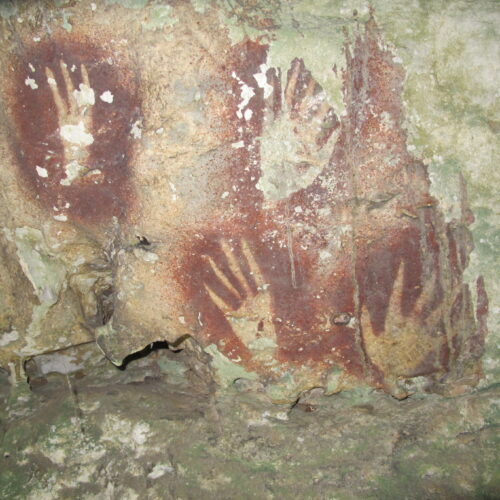
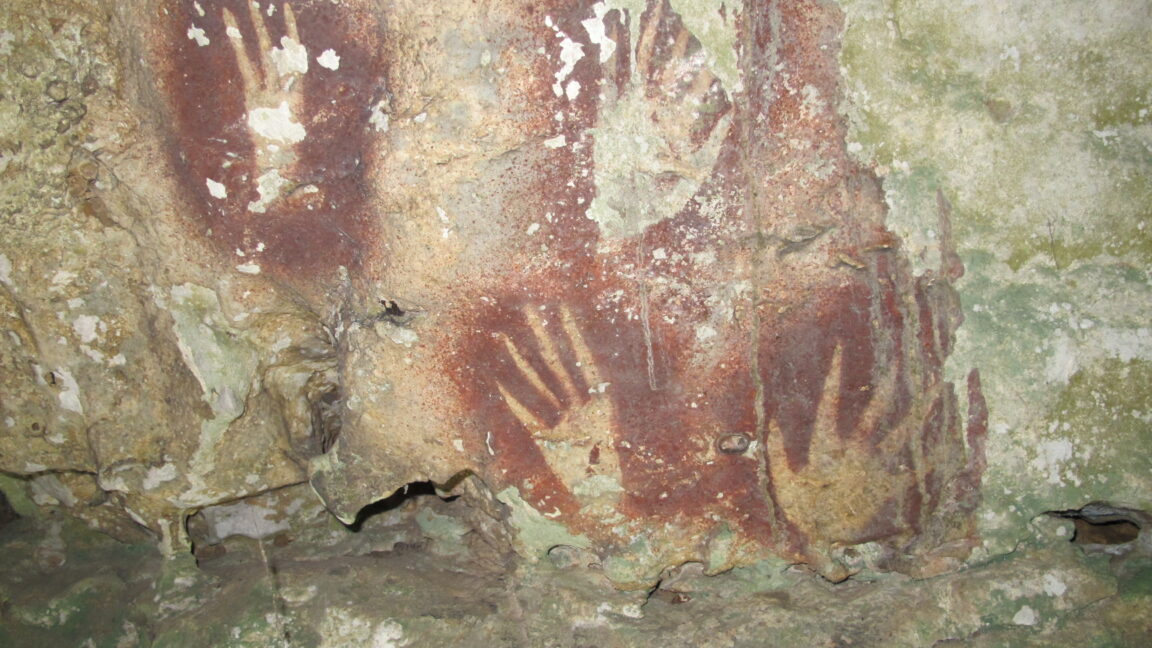
On a tiny island just off the coast of Sulawesi (a much larger island in Indonesia), a cave wall bears the stenciled outline of a person’s hand—and it’s at least 67,800 years old, according to a recent study. The hand stencil is now the world’s oldest work of art (at least until archaeologists find something even older), as well as the oldest evidence of our species on any of the islands that stretch between continental Asia and Australia.

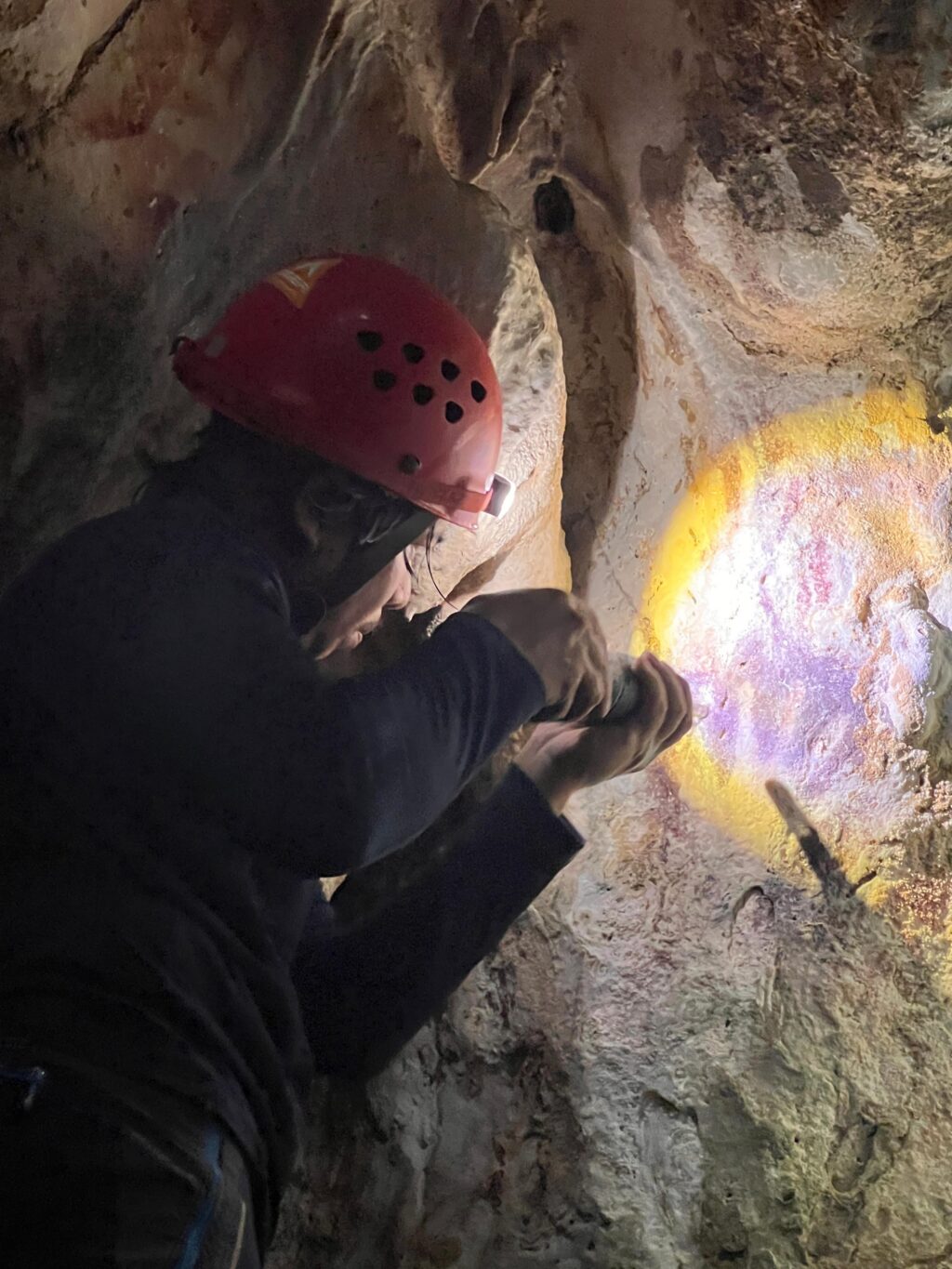
Photo of an archaeologists examining a hand stencil painted on a cave wall, using a flashlight Adhi Oktaviana examines a slightly more recent hand stencil on the wall of Liang Metanduno. Credit: Oktaviana et al. 2026

Hands reaching out from the past

Archaeologist Adhi Agus Oktaviana, of Indonesia’s National Research and Innovation Agency, and his colleagues have spent the last six years surveying 44 rock art sites, mostly caves, on Sulawesi’s southeastern peninsula and the handful of tiny “satellite islands” off its coast. They found 14 previously undocumented sites and used rock formations to date 11 individual pieces of rock art in eight caves—including the oldest human artwork discovered so far.

Read full article

Comments

© OKtaviana et al. 2026

Nearly 5 Million Accounts Removed Under Australia's New Social Media Ban

By: BeauHD
An anonymous reader quotes a report from the New York Times: Nearly five million social media accounts belonging to Australian teenagers have been deactivated or removed, a month after a landmark law barring those younger than 16 from using the services took effect, the government said on Thursday. The announcement was the first reported metric reflecting the rollout of the law, which is being closely watched by several other countries weighing whether the regulation can be a blueprint for protecting children from the harms of social media, or a cautionary tale highlighting the challenges of such attempts. The law required 10 social media platforms, including Instagram, Facebook, Snapchat and Reddit, to prevent users under 16 from accessing their services. Under the law, which came into force in December, failure by the companies to take "reasonable steps" to remove underage users could lead to fines of up to 49.5 million Australian dollars, about $33 million. [...] The number of removed accounts offered only a limited picture of the ban's impact. Many teenagers have said in the weeks since the law took effect that they were able to get around the ban by lying about their age, or that they could easily bypass verification systems. The regulator tasked with enforcing and tracking the law, the eSafety Commissioner, did not release a detailed breakdown beyond announcing that the companies had "removed access" to about 4.7 million accounts belonging to children under 16. Meta, the parent company of Instagram and Facebook, said this week that it had removed almost 550,000 accounts of users younger than 16 before the ban came into effect. "Change doesn't happen overnight," said Prime Minister Anthony Albanese. "But these early signs show it's important we've acted to make this change."

Read more of this story at Slashdot.

The ARCTURUS Computer Developed at Sydney University in the 1960s

ARCTURUS control panel

[State of Electronics] have released their latest video about ARCTURUS, the 14th video in their series The Computer History of Australia.

ARCTURUS was a research computer system developed on a shoestring budget at Sydney University in the 1960s, and was in service until 1975. Particularly the system was developed by [David Wong] as a part of his PhD thesis: The design and construction of the digital computers snocom, nimbus and arcturus (PDF). [David] worked in collaboration with [Kevin R. Rosolen] who is interviewed in the video.

The machine is described as a fixed-point, binary, parallel, single address, general-purpose digital computer using packaged diode-transistor circuits. Ferrite-core memory was used instead of drum memory because drum memory was too slow and performance was a high priority feature. For the same reason parallel features were implemented where serial might have been done more simply, if it hadn’t been so slow. In addition to the ferrite-core there were paper-tape peripherals and control panels.

The machine supported 32 distinct instructions and had a 13-bit address space allowing it to directly address 8,192 words, each word comprising 20-bits. Those word bits were one sign bit and nineteen magnitude bits for fixed-point two’s complement binary numbers.

We covered The Computer History of Australia by [State of Electronics] back when they released their 5th video in the series, Australia’s Silliac Computer, if you’re interested in more history of computing in Australia.

Australian firm develops futuristic self-propelled Vendetta system

Ungoverned, an Australia-founded mobility technology company, has developed a new self-propelled tracked platform designed to move across soft ground, mine-risk areas, and degraded terrain with less pressure than a human footstep. The company disclosed the development in a technical briefing and interview with Defence Blog, outlining the system’s performance characteristics and new field data measured […]

U.S. Air Force runs multinational virtual flag exercise at Kirtland

The United States Air Force confirmed the completion of Exercise Virtual Flag: Coalition 26-1, a large-scale multinational distributed battle management exercise hosted by the 705th Combat Training Squadron at Kirtland Air Force Base, New Mexico, integrating U.S. and allied forces in a simulated high-end Indo-Pacific conflict. According to the U.S. Air Force, the exercise brought […]

Anti-Semitism is a National Security Issue: It’s Time to Treat it Like One

EXPERT OPINION / PERSPECTIVE -- Less than three months ago, two people were killed in a terrorist attack on Jewish people in a synagogue in Manchester, UK, on the most solemn day of the Jewish religious calendar.

Three days ago, a large crowd of Jewish people in Sydney, Australia, celebrated Hanukkah on Bondi Beach. Two Islamic terrorists, father and son, fired at them from a nearby bridge. Sixteen innocent Jewish people were murdered, including a Holocaust survivor and a ten-year-old child.

The point of a terrorist attack is that even a relatively contained engagement spreads widespread fear. This is particularly the case with the Jewish community. The background for Jews is centuries of persecution culminating in the indescribable horror of the Holocaust. Even since then Jews for many years have lived in fear.

I was friendly with an Israeli diplomat in Turkey thirty years ago. He could not travel in his own car, hopping around Istanbul instead by taxi (dangerous enough), and no one knew where he lived.

Synagogues and Jewish schools in the UK have the sort of security I was used to in Kabul. There is even a charity trust, CST, dedicated purely to the security of Jewish people here. When a terrorist incident happens, most Jews ask themselves “Are we safe here?”

So, terrorism is working well against Jewish people and western governments need to show that they are serious about opposing terrorism. You can’t have a democracy when terrorism against one community is tolerated. Not least, because assuredly if we give up on the security of Jewish people others will be next. That is why anti-semitism must be seen as a national security imperative.

When the UK united against Islamic terrorism in the aftermath of the murder of 52 Londoners in 2005, we realised that it was not enough simply to pursue possible terrorists and to be prepared for possible attacks. We realised that we needed to understand and combat the hatred that drove these attacks and to stop it infecting vulnerable people who might be tempted by the Al-Qaeda message.

What national security news are you missing today? Get full access to your own national security daily brief by upgrading to Subscriber+Member status.

Much of the focus on the Jewish community since the Sydney attack – and it has been gratifying to see the media at last seriously focused on anti-semitism – has been about the need to “protect” Jews. That was the message of British prime minister Keir Starmer. That is fine but the solution for Jewish people, as the terrorists know, is not about even more security systems around their synagogues and schools, about armoured cars transporting schoolkids around north London or about how safe it is to be publicly identifiable as Jewish. “Safety concerns” have been used to ban an Israeli football team from playing in Birmingham, and non-political Jewish entertainers from appearing in Edinburgh. Jews are likely to conclude that this is no life, and there must be safer places to live: and you have lost your battle against terrorism.

The only solution to defeat this terror is declaring war on anti-semitism. Lots of people will tell me how difficult this would be. How do you distinguish “legitimate” criticism of Israel from criticism that uses conscious or unconscious anti-semitism? Couldn’t a state-backed campaign against anti-semitism have the opposite effect to the desired one, leading to even more isolation and hatred of the Jewish community?

These are serious risks: no one is saying this is easy. But the status quo is no longer acceptable.

One more mass casualty attack – let's say in some European or American city on Passover, 2026 – and the Jewish community is going to be packing its bags. And you have lost your battle against terrorism. Anti-semitism is a national security priority.

The Cipher Brief is committed to publishing a range of perspectives on national security issues submitted by deeply experienced national security professionals.

Opinions expressed are those of the author and do not represent the views or opinions of The Cipher Brief.

Have a perspective to share based on your experience in the national security field? Send it to Editor@thecipherbrief.com for publication consideration.

Read more expert-driven national security insights, perspective and analysis in The Cipher Brief

How PCI DSS Compliance Protects Australian Businesses from Data Breaches?

Did you know that there are approximately 12.52 million credit card users in Australia, along with 43.77 million actively issued debit cards? These figures reflect Australia’s heavy reliance on digital payments and card-based transactions for everyday purchases and online commerce. However, with this widespread adoption comes an equally significant risk which is the growing threat of data breaches and payment fraud.

(Source – credit card debt statistics 2025 and Australian debit card statistics )

As digital transactions continue to grow, so do the challenges of protecting sensitive customer data. This is where PCI DSS (Payment Card Industry Data Security Standard) compliance becomes essential for Australian businesses.

In today’s article, we are going to learn how PCI DSS compliance protects businesses from data breaches. So, if you are wondering why you should invest in PCI DSS compliance in Australia and how it can safeguard your organization, keep reading to find out.

A brief introduction to PCI DSS

PCI DSS is a global data security framework that protects businesses handling cardholder data (CHD) from data breaches, fraud, and identity theft. It was first introduced in December 2004, by the founding members of American Express, Discover, JCB, MasterCard, and Visa International.

PCI DSS applies to any and every organization, regardless of size, that accepts, processes, stores, or transmits payment card data. Its framework consists of 12 core PCI DSS requirements grouped into six control objectives, which include:

  1. Building and maintaining a secure network: Implementing firewalls and secure configurations.
  2. Protecting cardholder data: Encrypting sensitive data during transmission.
  3. Maintaining a vulnerability management program: Regularly updating anti-virus software and conducting vulnerability scans.
  4. Implementing strong access control measures: Limiting access to cardholder data based on job responsibilities.
  5. Regular monitoring and testing of networks: Performing routine security assessments.
  6. Maintaining an information security policy: Establishing a documented security strategy.

The latest version PCI DSS v.4.0, was released on March 31, 2022, introducing enhanced security measures to address evolving cyber threats. These updates include increased flexibility for businesses and stronger authentication requirements, ensuring better protection in today’s dynamic digital landscape.

You may also check our latest YouTube video on PCI DSS 4.0 requirements which explains the changes from version 3.2.1 to 4.0.

The growing threat of data breaches in Australia

As Australia’s digital landscape continues to expand, the frequency and severity of data breaches are becoming increasingly concerning. In fact, the landscape of data security in Australia is becoming alarmingly dangerous, with a significant rise in data breaches posing a growing threat to businesses and individuals alike.

In the first quarter of 2024 alone, there were around 1.8 million accounts were leaked witnessing a 388% increase in compromised user accounts. This marks the severity of the data breaches exploited due to the soaring technology, and compliance negligence.

The financial implications of these breaches are profound. According to IBM’s annual Cost of a Data Breach Report 2024, the average cost of a data breach in Australia is estimated at AUD $4.26 million, which is said to have increased by 27% since 2020. These breaches not only affect an organization’s financial stability but also damage its reputation and erode customer trust. As cybercriminals continue to evolve their tactics, businesses must prioritize strong cybersecurity measures to mitigate these risks.

This is where the PCI DSS comes into play. While PCI DSS is not mandated by the Australian government, it is considered an important industry standard enforced by payment card brands.  Achieving PCI DSS compliance ensures strong protection of sensitive payment data, reducing the risk of breaches and associated penalties. Moreover, compliance demonstrates your commitment to cybersecurity, boosting customer confidence in your business.

How PCI DSS protects your business from data breaches

PCI DSS provides a comprehensive framework that helps businesses defend against data breaches and payment fraud by implementing security measures specifically designed for handling payment card data. Here’s how PCI DSS compliance safeguards Australian businesses:

1. Encryption of payment card data

One of the key requirements of PCI DSS is the encryption of cardholder data both in transit and at rest. This ensures that even if cybercriminals manage to intercept the data, they will not be able to decrypt it and misuse it. By implementing robust encryption, businesses can significantly reduce the likelihood of their payment card data being exposed during a breach.

2. Secure network architecture

PCI DSS mandates businesses to establish and maintain a secure network with firewalls and other security configurations to protect against unauthorized access. By isolating payment card systems from the rest of the corporate network, businesses can minimize vulnerabilities and reduce the risk of data breaches.

3. Regular vulnerability scanning and penetration testing

PCI DSS requires ongoing vulnerability scans and penetration testing to identify and remediate potential security flaws before they can be exploited. This proactive approach ensures that systems are continuously evaluated for weaknesses and can quickly adapt to emerging cyber threats.

4. Access control and authentication

PCI DSS enforces stringent access control measures, ensuring that only authorized personnel can access sensitive payment card data. Through multi-factor authentication (MFA) and role-based access controls, businesses can limit exposure to potential breaches by restricting access based on job responsibilities.

5. Monitoring and logging

Constant monitoring and logging of payment systems are essential for detecting suspicious activities and mitigating data breaches. PCI DSS requires businesses to log all access and activities involving payment card data, which can be used to identify anomalies and investigate potential breaches swiftly.

6. Security awareness and staff training

Employees are often the weakest link in cybersecurity. PCI DSS emphasizes the importance of regular security training to ensure staff members understand the latest threats and best practices for safeguarding payment data. This harbours a culture of security within the organization and helps prevent human errors that could lead to breaches.

To Conclude

The rising threat of data breaches in Australia underscores the critical importance of robust cybersecurity practices. For businesses handling payment card data, PCI DSS compliance is a vital step toward safeguarding sensitive information, building customer trust, and mitigating financial and reputational risks. By adopting this globally recognized framework, organizations can strengthen their security posture and stay resilient against evolving cyber threats.


The post How PCI DSS Compliance Protects Australian Businesses from Data Breaches? appeared first on Information Security Consulting Company - VISTA InfoSec.

One of the World’s Most Wanted Pedophiles Has Been Arrested

One of the world’s most wanted pedophiles, who abused dozens of children between the ages of two and 16, has been captured and jailed for close to 50 years after Australian authorities tracked him down to a COVID-19 quarantine facility in Malaysia.

For at least 14 years, Alladin Lanim was found to have sexually abused dozens of children in a sleepy, seaside town called Lundu in Sarawak, Malaysia. 

The 40-year-old man posted his heinous activities on the dark web and boasted on message boards about recording his acts, according to a detailed report published by the Sydney Morning Herald. Using an anonymous online profile, he was also said to have been sharing child abuse material online since 2007, and had been linked to more than 1,000 images and videos depicting sexual abuse of minors.

“He was so prolific with so many victims, that’s why he became a high priority,” Daniel Burnicle, a detective sergeant from the Australian Federal Police (AFP), told the Australian newspaper from Kuala Lumpur. 

“He was so prolific with so many victims.”

Analysis conducted by Australian victim identification specialists initially identified a total of 34 victims who had been abused by Alladin, but authorities warned that the actual number may be higher. 

Officials on the case, trawling through records and hundreds of images, made a breakthrough last year and came across a possible image of Alladin. He was finally apprehended and jailed last month following a painstaking two-year international investigation by Australian and Malaysian authorities. “It’s just a slow, methodical burn,” Burnicle said.

“They’re going through images trying to work out where that location may be so they can follow up. It’s all very difficult with the dark web to track people.”

Alladin was apprehended at a COVID-19 isolation facility on July 5 while serving out a mandatory quarantine after returning to Sarawak, and charged with 18 counts of molesting five boys on a plantation and inducing them to watch pornographic videos by offering to let them play a mobile game on his phone. Malaysian police also say that they are pursuing one more case of child abuse involving Alladin.

He pleaded guilty in court in the state capital Kuching, and was jailed for 48 years and six months and sentenced to 15 strokes of the cane. 

In a statement provided to VICE World News on Monday, AFP commander Warwick Macfarlane said the cross-border investigation that led to Alladin’s arrest was an indication that the pandemic had not obstructed transnational policing efforts, and that authorities around the world were still working tirelessly to combat the exploitation and abuse of children.

Alladin’s arrest is the latest in a string of recent child exploitation busts by Australian authorities, following the AFP’s involvement in cracking open a global pedophile ring last year. A spokesperson told VICE World News last September that the amount of child abuse material being shared on the dark web appeared to be increasing, and that some sites hosting online child sex abuse material had crashed due to the overwhelming amount of internet traffic.

In Malaysia, reports of Alladin’s arrest shook the country – prompting outrage online about how a serial pedophile was able to operate in the country, undetected, for so long. Others referenced the case of another convicted pedophile, British man Richard Huckle – who had sexually abused scores of children in various communities in Kuala Lumpur, where he lived – and decried the laid-back reaction of authorities.

“Local authorities need to step up their game,” one Malaysian tweeted. Another wrote: “We have high profile pedophiles arrested by foreign police at least twice now. If this were left to us, these pedos would be scot free and happily ravaging new victims.”

Responding to news of Alladin’s capture by Australian police, Malaysian women’s minister Fatimah Abdullah said her ministry would better protect children against pedophiles and would continue educating not just children but also their parents.

Follow Heather Chen and Gavin Butler on Twitter.

Police Raid Homes Following Shutdown of World’s Largest Darknet Marketplace

Earlier this month, German authorities arrested a 34-year-old Australian man who was accused of being the primary administrator behind DarkMarket: the largest illegal marketplace on the darknet.

The site, which boasted almost half a million users, more than 2400 sellers and some $170 million USD worth of transactions, allowed anyone with a Tor browser and some cryptocurrency to buy and sell drugs, forged money, stolen credit cards, anonymous SIM cards and malware. It was shut down shortly after the Australian man’s arrest.

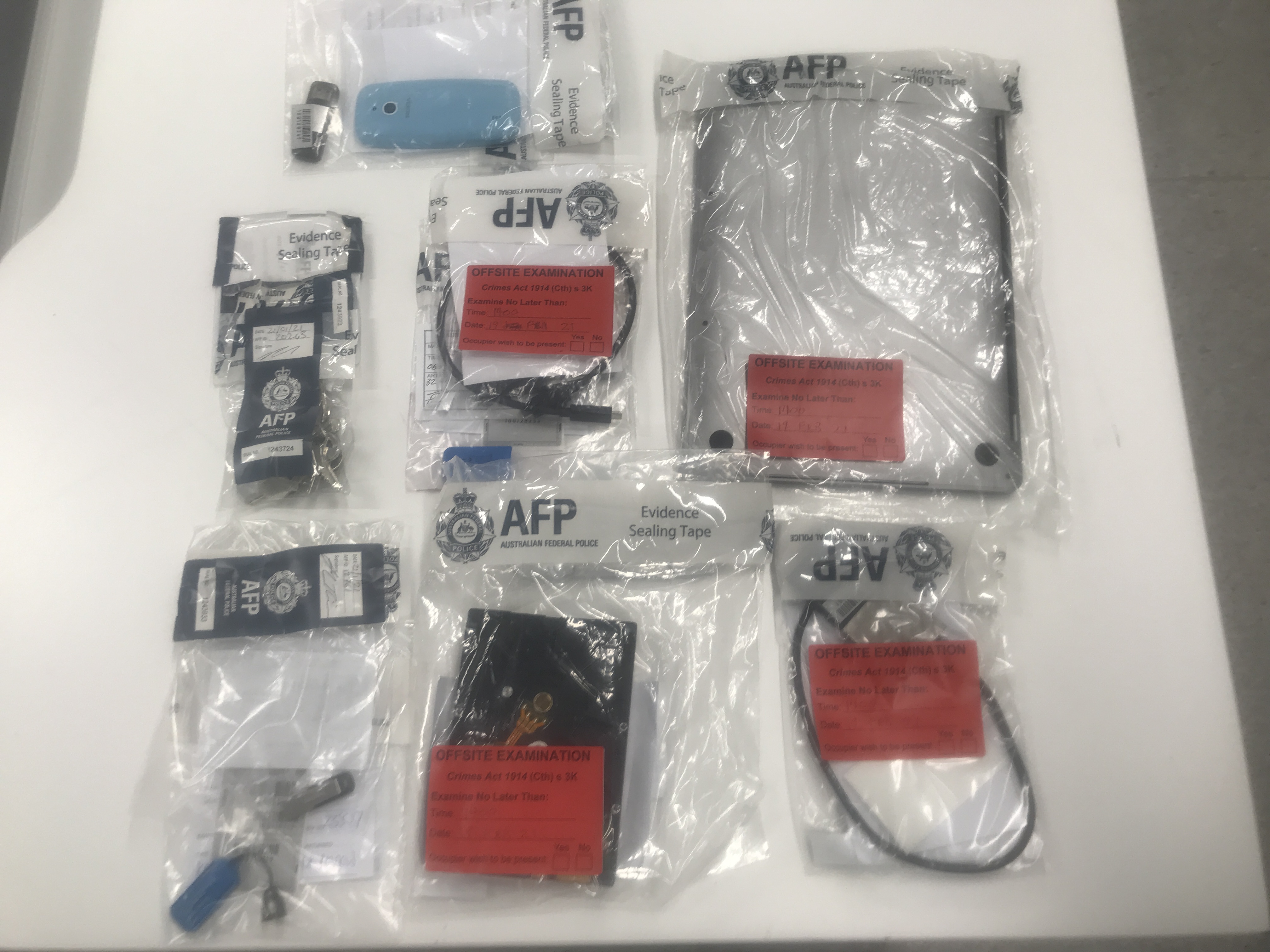
The crackdown didn’t stop there, though. Last week, the Australian Federal Police (AFP) executed a series of search warrants across Brisbane and the Gold Coast, in Queensland, in connection to the shutdown of DarkMarket. Across Wednesday and Thursday, authorities seized a laptop, four mobile phones, six USB thumb drives and five hard drives, as well as SIM cards and bank cards.

Moved_Seized_items_Storage.JPG

Cybercrime Operations and Digital Forensic Teams are reviewing the seized items, and police say they aren’t ruling out further arrests as a result of their findings.

They believe Australian criminals most likely operated on DarkMarket and purchased illicit products via the site.

“Some of these items could have been used or acquired by Australians in Australia,” said Jayne Crossling, Acting Commander of Investigations with AFP Southern Command, in a statement. “If police knew there was criminal activity occurring in geographic location, action would be taken. 

“There is no difference with the dark web, although the anonymising features of the dark web makes it harder for law enforcement to identify perpetrators, who commit abhorrent crimes.”

Despite these apparent difficulties, January has been an eventful month in relation to the seizure and prosecution of international cybercriminals.

Three days after DarkMarket was taken offline, another, mid-seized illegal marketplace named Yellow Brick Market (YBM) disappeared from the dark web without warning—along with all of its users' cryptocurrency. Rumours suggest that a worker at DarkMarket also worked at YBM.

A day later, the owner of a Bulgaria-based cryptocurrency exchange, allegedly designed for the purpose of money laundering and used by fraudsters and online criminals, was sentenced to 121 months in prison.

Last Monday, a father and son in the Netherlands were each sentenced to three-and-a-half years behind bars for selling drugs on the dark web. And on Friday, a New Zealand man who tried to buy a three-year-old girl on the dark web, with the intention of using her as a sex slave, was jailed for five years.

Follow Gavin on Twitter

❌