 Login
LoginEPA rules that xAI’s natural gas generators were illegally used
Elon Musk's AI company had installed and operated 35 natural gas turbines without permits, something the EPA now says was illegal.

Interview transcript:
Terry Gerton Your office recently took a closer look at how EPA oversees state and local air monitoring schedules. I’m wondering, was there a specific concern or a trend that raised the alarm with you?
Paul Bergstrand We came across a study from 2021 that had some analysis showing that there was a difference in pollution levels when air monitors were off compared to when they were on, and this interests us in several ways. So just to be clear, it is completely normal for monitors to be off. It happens because monitors have a schedule where they’re designed to be off or where there is some kind of technical difficulty that they’re correcting. But what interested us is the fact that there was a difference between when they were on and off in terms of pollution levels. They should be the same. And so we wanted to take a closer look for ourselves to see how the EPA is overseeing this issue and if they were doing anything to fix it.
Terry Gerton You looked at thousands of monitoring sites. What did you discover about the trends once you dug into the data?
Paul Bergstrand We use satellite and model data as alternatives to data from regulatory air monitors to compare air quality when monitoring sites are off and when they’re on. And we found that for a fine particulate matter, which was the focus of our evaluation, it amounted to an average increase of 4% for monitors that operate on daily schedule and 9% for sites that operate in one every three days. And then separately, we found that 35.7% of intermittent modelers had worse air quality on average when they were offline.
Terry Gerton What difference does that make for public health?
Paul Bergstrand Well, importantly, the EPA sets standards for air quality, and if the standards aren’t met, then the area is in non-attainment. And that means that there can be harmful cardiovascular effects, reduce visibility, contribute to water acidification. And so poor data quality means that some areas that should be in non-attainment might not be designated correctly.
Terry Gerton There’s an interesting catch-22 here around transparency. The EPA publishes the monitoring schedule online, which we would think would be good, and people can know about that, but it creates some perverse incentives for the regulated agencies. Talk us through how that works.
Paul Bergstrand Yes, it has been their regular practice to publish those schedules. But I want to note that our analysis did not indicate any malicious behavior. But it is a concern that someone could take advantage of that scheduling to choose to conduct maintenance and shut down a monitor when they know there will be increased ambient air pollution. So it was a concern of ours and the EPA saw the concern and they took action actually during our work and decided not to publish the 2025 schedule. And they’ve agreed to continue not to publish the schedule.
Terry Gerton Is that the best solution here? Are there other factors that you might consider or recommend?
Paul Bergstrand Well, in addition to that, we’ve asked them to do some more data analysis during their quality control checks of state and local data. And this would mean using some of the techniques we had in our report that they could replicate and improve upon to come up with their own analysis to look for data that might be poor or missing.
Terry Gerton You also flag that local agencies may have incentives to under-report pollution. So again, we have some mixed messages kind of happening here. What drives those incentives?
Paul Bergstrand Again, we did not identify any malicious behavior, but as you say, there are incentives. If the EPA does designate a state as a non-attainment, there are expensive controls they have to put in place. So there is that incentive to try and hide the pollution, so to speak, so they can eliminate the data point basically from the data the EPA is collecting. But it also could be completely normal that the data points are missing, and that’s why we’re suggesting that the EPA do its own analysis.
Terry Gerton I’m speaking with Paul Bergstrand. He is Assistant Inspector General, Office of Special Review and Evaluation for the Environmental Protection Agency’s Office of the Inspector General. Does EPA have the capacity and the tools to strengthen the oversight in that way that you were just recommending?
Paul Bergstrand We think they do. They can use similar or improved statistical methods using these alternative satellite data and modeling to help the quality control checks. That’s the way.
Terry Gerton Are they using those tools now?
Paul Bergstrand I can’t speak to what they’re doing now, whether they are or not, but we know they’ve done it in the past. They’ve done in 2022, where they looked at missing air pollution data from 2002 to 2018.
Terry Gerton So you mentioned that EPA was taking action to address some of your concerns even as the evaluation was going on. Are there further recommendations that you’ve made that you hope the EPA takes action on?
Paul Bergstrand Yes, I mean, they’ve agreed to both of our recommendations. And that second recommendation is that they incorporate some of these analyses into really spot-checking. And what’s important is that they can improve upon what we did to identify pollution that’s under-reported.
Terry Gerton Are there things that communities should be doing themselves to maybe fill in gaps where the EPA isn’t monitoring or just get better data out to their citizens?
Paul Bergstrand I don’t, we didn’t look at that aspect in our report, but it’s a very interesting one. And I know there are maybe some grant programs or programs to get local air monitors, but in my experience, and I’m not speaking from the body of this report here, but in my experience, those are not used to do to collect regulatory data. So I’m quite sure on how to connect those dots from maybe your citizen-scientist using an air monitor to the data being used by the EPA.
Terry Gerton We’ve done a quick overview of your report and its findings and recommendations, but one of the things I want to point out to folks is that this information is really accessible. You’ve done an interesting job of making it available through what’s called a story map. Tell us about how EPA is using that kind of a tool to get this kind of information out.
Paul Bergstrand Yes, we wanted to be innovative in the way we’re portraying this complex status so it’s more accessible. And a story map is a web-friendly format where you can scroll at your leisure to look at dynamic information, graphics, maps. Just another way to present the information to the audience that we think has a lot of possibilities.
Terry Gerton So I don’t have to print off 100-page paper and put it under my pillow so I can absorb it while I sleep. This is very cool. Are you using it in other reports?
Paul Bergstrand We hope to be. This was our first one and it was sort of a pilot project. We are definitely going to be looking forward to more opportunities to use it.
The post Does your air quality data tell the whole story? Why some communities are at risk first appeared on Federal News Network.

© The Associated Press
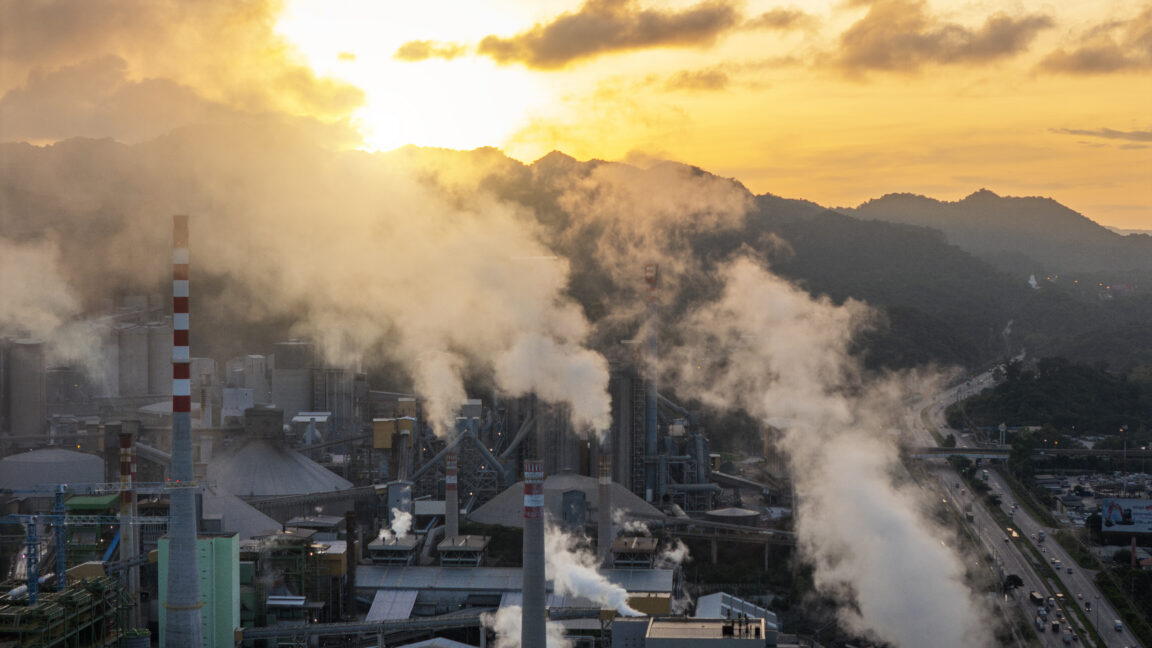
If you were to do a cost-benefit analysis of your lunch, it would be pretty difficult to do the calculation without the sandwich. But it appears that the US Environmental Protection Agency (EPA) is moving in this same direction—removing the benefit—when it comes to air pollution regulations.
According to a New York Times report based on internal emails and documents—and demonstrated by a recently produced analysis on the EPA website—the EPA is changing its cost-benefit analysis process for common air pollutants. Instead of comparing the economic cost of a certain pollution limit to an estimate of the economic value of the resulting improvements in human health, the EPA will just qualitatively describe health benefits while carefully quantifying economic costs.
Cost-benefit analysis has been a key component of EPA regulations. Any decision to raise or lower air quality standards or pollution limits includes evaluations of the cost that change, like the addition of new pollution control equipment at power plants, would incur, for example.

© Witthaya Prasongsin
Congressional appropriators are rejecting some of the most severe agency budget cuts proposed by the Trump administration, and are looking to put additional guardrails on unilateral agency reorganizations that could further shrink the federal workforce.
A “minibus” of three spending bills for fiscal 2026, released by the House and Senate appropriations committees on Monday, prohibits covered agencies from using congressional funds to carry out most agency reorganization activities until they provide advanced notice to appropriators. Those activities include unilaterally reprogramming funds to create or eliminate programs, projects or activities, relocate any office or employees, or cut more than 5% of the employees or funding that support a program, project or activity.
It also prohibits agencies from carrying out these reorganizations using “general savings,” including savings from a reduction in personnel, “which would result in a change in existing programs, projects, or activities as approved by Congress.”
This language applies to a wide swath of agencies — including the departments of Justice, Interior, Commerce and Energy, as well as the Environmental Protection Agency, the National Science Foundation and NASA.
The spending package also includes language ensuring that the National Weather Service, the Bureau of Land Management, the Fish and Wildlife Service, the Forest Service and the EPA maintain staffing levels that allow them to carry out their statutory obligations.
Democrats on the appropriations committees said the spending deal reasserts Congress’s power of the purse, and seeks to rein in the Trump administration’s repurposing of agency budgets and unilateral agency reorganizations.
The Government Accountability Office found last year that several agencies unlawfully withheld congressional appropriations last year through a process called impoundment. GAO is still reviewing dozens of cases of potential impoundment.
Republican appropriators said the spending deal reflects “current fiscal constraints,” and trims the budgets of the Interior Department, EPA and the Forest Service to reflect recent staffing cuts.
The Trump administration sought to lay off about 4,000 federal employees during the recent government shutdown. Office of Management and Budget Director Russ Vought said last October that layoffs at these agencies were justified because lawmakers allowed funds for these programs to expire, indicating they were no longer congressional priorities.
A stopgap spending bill, set to expire on Jan. 30, has put a hold on layoffs at some agencies. The Interior Department was poised to eliminate more than 2,000 positions.
Steep cuts at other agencies, however, have already gone into effect. A recent inspector general report found that the Energy Department lost about 20% of its employees in fiscal 2025 through a combination of voluntary separation incentives, retirements and “other human resource actions.”
The National Park Service and the EPA have also lost about 25% of their workforce under the Trump administration.
The minibus spending package generally seeks modest spending reductions for covered agencies, but departs from the Trump administration’s calls for major budget cuts. It would cut the EPA’s budget by about 4% in fiscal 2026 — a far cry from the 55% budget cut the Trump administration proposed.
Lawmakers are also proposing a nearly 4% budget cut for the National Science Foundation, rejecting the Trump administration’s request to cut NSF’s budget by about 57% in FY 2026.
The minibus offers a $24.43 billion budget for NASA, a nearly 2% decrease from current spending levels. But the package rejects most of the Trump administration’s proposals to cut NASA’s science budget by nearly half and terminate 55 operating and planned missions.
Lawmakers are seeking a $160 million budget increase for the Energy Department’s Office of Science — about a 2% boost from current spending levels, rejecting the Trump administration’s calls to cut more than $1 billion from its current budget. DOE’s Office of Science supports research being conducted by 22,000 researchers at 17 national labs and over 300 universities.
Lawmakers are proposing a $3.27 billion budget for the National Park Service, about a 2% overall budget decrease. The spending plan includes flat funding for National Park Service operations. The Trump administration proposed cutting the NPS operating budget by nearly $1 billion.
The National Parks Conservation Association said in a statement that the bill includes key provisions “seeking to retain and rehire urgently needed Park Service staff, which would help restore the agency’s capacity to protect our parks, as well as require congressional notification of any plans for future mass firings.”
NPCA President and CEO Theresa Pierno said that the association had been “sounding the alarm on the need for park funding and staffing for months, and Congress listened.”
Senate Appropriations Committee Vice Chairwoman Patty Murray (D-Wash.) said in a statement that Democrats, as part of these negotiations, “defeated heartless cuts,” and are reasserting congressional control of how agencies spend appropriated funds.
Murray said language in the minibus bill prevents President Donald Trump and cabinet secretaries from “unilaterally” deciding how to spend taxpayer dollars. A yearlong continuing resolution for fiscal 2025, she added, lacked these detailed funding directives for hundreds of programs, and “turned over decision-making power to the executive branch to fill in the gaps itself.”
“Importantly, passing these bills will help ensure that Congress, not President Trump and Russ Vought, decides how taxpayer dollars are spent — by once again providing hundreds of detailed spending directives and reasserting congressional control over these incredibly important spending decisions,” Murray said.
Sen. Chris Van Hollen (D-Md.), ranking member of the committee’s subcommittee on commerce, justice, science and related agencies, said the spending package rejects the Trump administration’s deep cuts to scientific agencies, including NASA Goddard, the National Oceanic and Atmospheric Administration and the National Institute of Standards and Technology. All three agencies are based in Maryland.
“Our bill makes clear that Congress, on a bipartisan basis, will not accept this administration’s reckless, harmful cuts,” Van Hollen said in a statement.
Van Hollen said the bill “is not perfect,” but requires the Trump administration to provide more details on plans to relocate the FBI’s headquarters to the Reagan Building in downtown Washington, D.C., before it can tap into funds Congress had set aside for the project.
Before it taps into those funds, the FBI must give congressional appropriators an architectural and engineering plan for the new headquarters building.
“This is an important step to reassert Congress’s oversight role in the relocation of the FBI headquarters and to ensure the new headquarters meets the mission and security needs of the FBI,” Van Hollen said.
Committee Chairwoman Susan Collins (R-Maine) called the minibus a “fiscally responsible package that restrains spending while providing essential federal investments” in water infrastructure, energy and national security, and scientific research.
“The package supports our law enforcement and provides funding for national weather forecasting and oceans and fisheries science to save lives and livelihoods,” she said. “It provides investments in our public lands and upholds our commitments to tribal communities.”
House Appropriations Committee Chairman Tom Cole (R-Okla.) said the bipartisan spending package “reflects steady progress toward completing FY26 funding responsibly.”
House Appropriations Committee Ranking Member Rosa DeLauro (D-Conn.) said the spending package “reasserts Congress’s power of the purse.”
“Rather than another short-sighted stop-gap measure that affords the Trump Administration broader discretion, this full-year funding package restrains the White House through precise, legally binding spending requirements,” DeLauro said.
Congress has already passed FY 2026 spending bills that cover the Department of Agriculture and the Department of Veterans Affairs, military construction and the legislative branch.
The post In ‘minibus’ spending package, lawmakers reject deep budget cuts, limit agency reorganizations first appeared on Federal News Network.

© AP Photo/Julia Demaree Nikhinson
