It's no secret that students worldwide use AI chatbots to do their homework and avoid learning things. On the flip side, students can also use AI as a tool to beef up their knowledge and plan for the future with flashcards or study guides. Google hopes its latest Gemini feature will help with the latter. The company has announced that Gemini can now create free SAT practice tests and coach students to help them get higher scores.
As a standardized test, the content of the SAT follows a predictable pattern. So there's no need to use a lengthy, personalized prompt to get Gemini going. Just say something like, "I want to take a practice SAT test," and the chatbot will generate one complete with clickable buttons, graphs, and score analysis.
Of course, generative AI can go off the rails and provide incorrect information, which is a problem when you're trying to learn things. However, Google says it has worked with education firms like The Princeton Review to ensure the AI-generated tests resemble what students will see in the real deal.
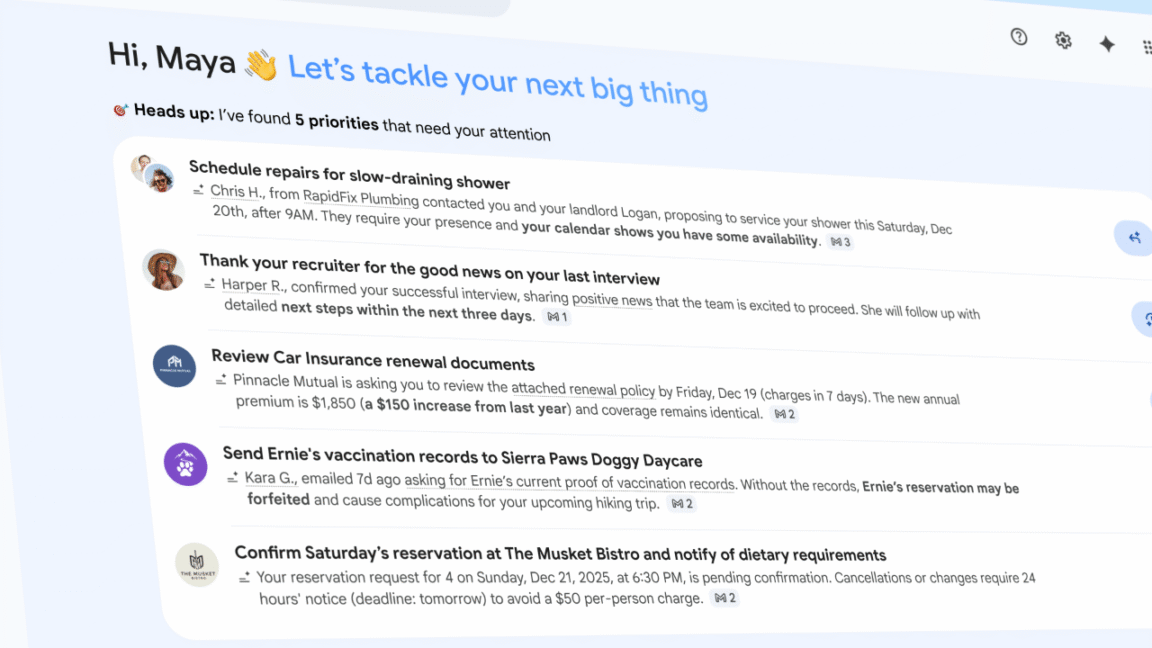
Google believes AI is the future of search, and it's not shy about saying it. After adding account-level personalization to Gemini earlier this month, it's now updating AI Mode with so-called "Personal Intelligence." According to Google, this makes the bot's answers more useful because they are tailored to your personal context.
Starting today, the feature is rolling out to all users who subscribe to Google AI Pro or AI Ultra. However, it will be a Labs feature that needs to be explicitly enabled (subscribers will be prompted to do this). Google tends to expand access to new AI features to free accounts later on, so free users will most likely get access to Personal Intelligence in the future. Whenever this option does land on your account, it's entirely optional and can be disabled at any time.
If you decide to integrate your data with AI Mode, the search bot will be able to scan your Gmail and Google Photos. That's less extensive than the Gemini app version, which supports Gmail, Photos, Search, and YouTube history. Gmail will probably be the biggest contributor to AI Mode—a great many life events involve confirmation emails. Traditional search results when you are logged in are adjusted based on your usage history, but this goes a step further.
YouTubers have been increasingly frustrated with Google's management of the platform, with disinformation welcomed back and an aggressive push for more AI (except where Google doesn't like it). So it's no surprise that creators have been up in arms over the suspicious removal of YouTube's advanced SRV3 caption format. You don't have to worry too much just yet—Google says this is only temporary, and it's working on a fix for the underlying bug.
Google added support for this custom subtitle format around 2018, giving creators more customization options than with traditional captions. SRV3 (also known as YTT or YouTube Timed Text) allows for custom colors, transparency, animations, fonts, and precise positioning in videos. Uploaders using this format can color-code and position captions to help separate multiple speakers, create sing-along animations, or style them to match the video.
Over the last several days, creators who have become accustomed to this level of control have been dismayed to see that YouTube is no longer accepting videos with this Google-created format. Many worried Google had ditched the format entirely, which could be problematic for all those previously uploaded videos.
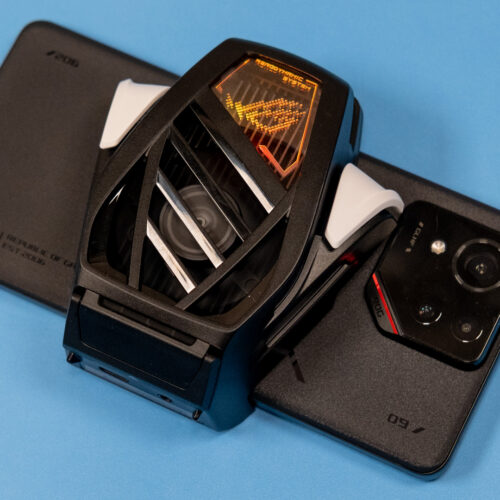
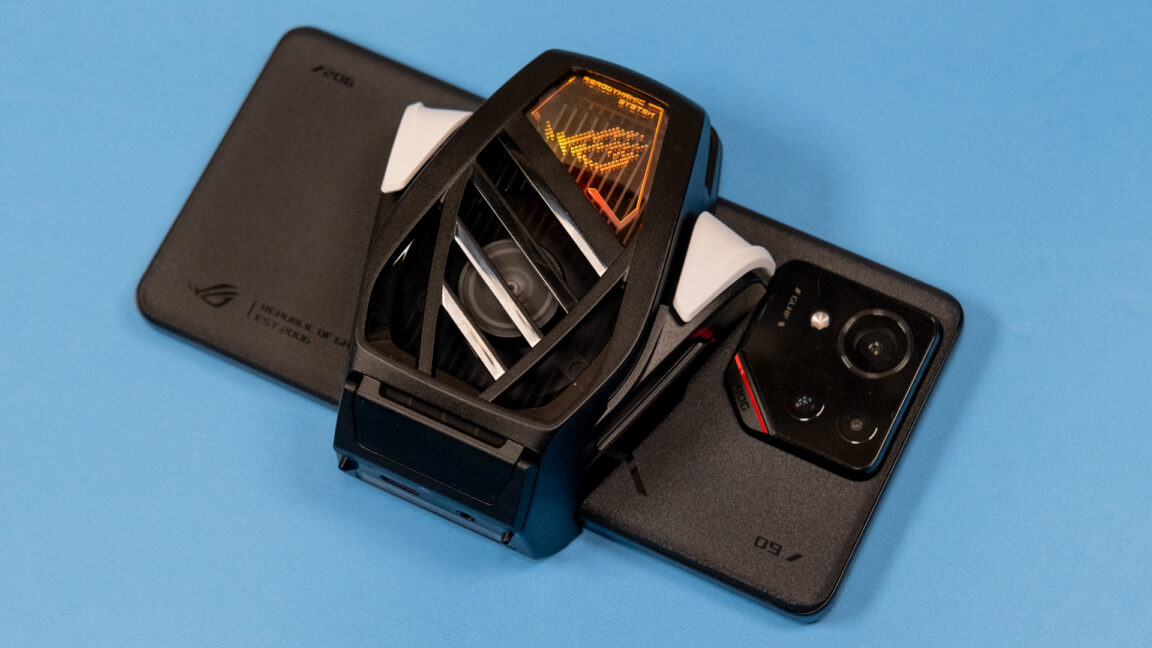
An unconfirmed report early this month suggested Asus was pulling back on its smartphone plans, but the company declined to comment at the time. Asus chairman Jonney Shih has now confirmed during an event in Taiwan the wind-down of its smartphone business. Instead, Asus will focus on AI products like robots and smart glasses.
Shih addressed the company's future plans during a 2026 kick-off event in Taiwan, as reported by Inside. "Asus will no longer add new mobile phone models in the future," said Shih (machine translated).
So don't expect a new Zenfone or ROG Phone from Asus in 2026. That said, very few phone buyers were keeping tabs on the latest Asus phones anyway, which is probably why Asus is throwing in the towel. Shih isn't saying Asus won't ever release a new phone, but the company will take an "indefinite wait-and-see" approach. Again, this is a translation and could be interpreted in multiple ways.
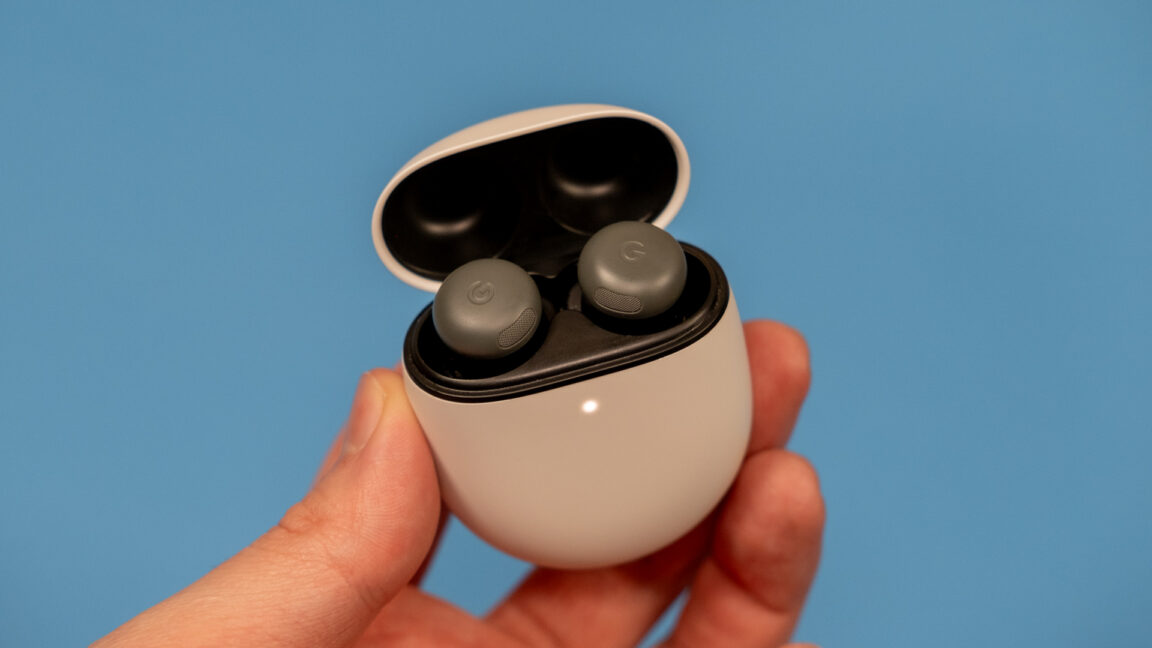
Pairing Bluetooth devices can be a pain, but Google Fast Pair makes it almost seamless. Unfortunately, it may also leave your headphones vulnerable to remote hacking. A team of security researchers from Belgium’s KU Leuven University has revealed a vulnerability dubbed WhisperPair that allows an attacker to hijack Fast Pair-enabled devices to spy on the owner.
Fast Pair is widely used, and your device may be vulnerable even if you've never used a Google product. The bug affects more than a dozen devices from 10 manufacturers, including Sony, Nothing, JBL, OnePlus, and Google itself. Google has acknowledged the flaw and notified its partners of the danger, but it's up to these individual companies to create patches for their accessories. A full list of vulnerable devices is available on the project's website.
The researchers say that it takes only a moment to gain control of a vulnerable Fast Pair device (a median of just 10 seconds) at ranges up to 14 meters. That's near the limit of the Bluetooth protocol and far enough that the target wouldn't notice anyone skulking around while they hack headphones.
Google has toyed with personalized answers in Gemini, but that was just a hint of what was to come. Today, the company is announcing extensive "personal intelligence" in Gemini that allows the chatbot to connect to Gmail, Photos, Search, and YouTube to craft more useful answers to your questions. If you don't want Gemini to get to know you, there's some good news. Personal intelligence is beginning as a feature for paid users, and it's entirely optional.
By every measure, Google's models are at or near the top of the AI heap. In general, the more information you feed into a generative AI, the better the outputs are. And when that data is personal to you, the resulting inference is theoretically more useful. Google just so happens to have a lot of personal data on all its users, so it's relatively simple to feed that data into Gemini.
As Personal Intelligence rolls out over the coming weeks, AI Pro and AI Ultra subscribers will see the option to connect those data sources. Each can be connected individually, so you might choose to allow Gmail access but block Photos, for example. When Gemini is allowed access to other Google products, it incorporates that data into its responses.
Google's Veo video AI made stunning leaps in fidelity in 2025, and Google isn't stopping in 2026. The company has announced an update for Veo 3.1 that adds new capabilities when you provide the model with reference material, known as Ingredients to Video. The results should be more consistent, and output supports vertical video and higher-resolution upscaling.
With Ingredients to Video, you can provide the AI with up to three images to incorporate into the generated video. You can use that to provide the robot with characters to animate, backgrounds, and material textures. When you do that, the newly upgraded model will allegedly make fewer random alterations, hemming closer to the reference images. You can also generate multiple clips and even prompt for changes to the setting or style while keeping other elements consistent.
Veo 3.1 Updates - Bring more creativity and expressiveness into your videos.
Google is also expanding its support for mobile-first video in Veo. When using Ingredients to Video, you can now specify outputs in a 9:16 (vertical) ratio. That makes it ideal for posting on social apps like Instagram or TikTok, as well as uploading as a YouTube Short. So get ready for even more phone-centric slop. Google added support for vertical videos via a text prompt last year.
Elon Musk's xAI recently weakened content guard rails for image generation in the Grok AI bot. This led to a new spate of non-consensual sexual imagery on X, much of it aimed at silencing women on the platform. This, along with the creation of sexualized images of children in the more compliant Grok, has led regulators to begin investigating xAI. In the meantime, Google has rules in place for exactly this eventuality—it's just not enforcing them.
It really could not be more clear from Google's publicly available policies that Grok should have been banned yesterday. And yet, it remains in the Play Store. Not only that—it enjoys a T for Teen rating, one notch below the M-rated X app. Apple also still offers the Grok app on its platform, but its rules actually leave more wiggle room.
App content restrictions at Apple and Google have evolved in very different ways. From the start, Apple has been prone to removing apps on a whim, so developers have come to expect that Apple's guidelines may not mention every possible eventuality. As Google has shifted from a laissez-faire attitude to more hard-nosed control of the Play Store, it has progressively piled on clarifications in the content policy. As a result, Google's rules are spelled out in no uncertain terms, and Grok runs afoul of them.
Search engine optimization, or SEO, is a big business. While some SEO practices are useful, much of the day-to-day SEO wisdom you see online amounts to superstition. An increasingly popular approach geared toward LLMs called "content chunking" may fall into that category. In the latest installment of Google's Search Off the Record podcast, John Mueller and Danny Sullivan say that breaking content down into bite-sized chunks for LLMs like Gemini is a bad idea.
You've probably seen websites engaging in content chunking and scratched your head, and for good reason—this content isn't made for you. The idea is that if you split information into smaller paragraphs and sections, it is more likely to be ingested and cited by generative AI bots like Gemini. So you end up with short paragraphs, sometimes with just one or two sentences, and lots of subheds formatted like questions one might ask a chatbot.
According to Sullivan, this is a misconception, and Google doesn't use such signals to improve ranking. "One of the things I keep seeing over and over in some of the advice and guidance and people are trying to figure out what do we do with the LLMs or whatever, is that turn your content into bite-sized chunks, because LLMs like things that are really bite size, right?" said Sullivan. "So... we don't want you to do that."
Gmail made us all rethink how email could work when it debuted more than 20 years ago. Google thinks we're in the process of another email transformation courtesy of AI. The company has unveiled a new round of AI features that will make Gemini an even more integral part of Gmail. The new Gemini experiences are coming to paying subscribers starting today, and a collection of previously premium-only AI features are rolling out widely.
AI Overviews first appeared in Gmail last year to summarize email chains, and now it's expanding to Gmail search. This is closer to the AI Overview experience to which you are accustomed in Google's web search. You can enter a natural language search, and the robot churns through your messages to generate a response.
Gmail AI Overview
In the example above, the user looks up a past plumbing quote. Traditionally, Gmail would show emails that are likely matches for your search. With AI Overview, you instead get a nicely formatted AI answer that includes all the relevant information and cites the email. That sounds all well and good, assuming it works. AI Overviews in search is notoriously inaccurate when summarizing search results, but grounding it in your email could make it less likely to screw up. Maybe.
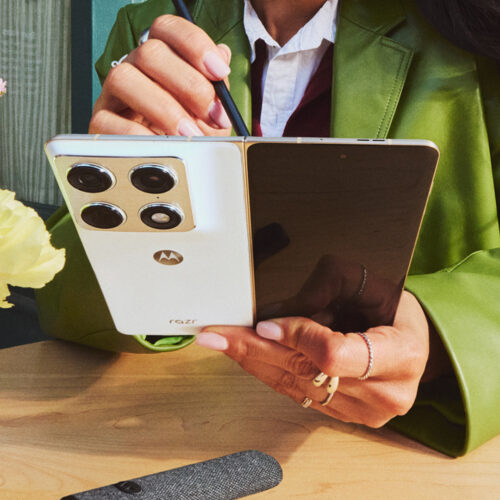
Motorola is no stranger to foldables, having revived the Razr as a flip-style foldable phone in 2020. Now that it has a few iterations of modern flip phones under its belt, Moto is embarking on a new challenge: big foldables. The new (and thoroughly leaked) Motorola Razr Fold is a book-style foldable like Samsung's Galaxy Z Fold and Google's Pixel Fold lines, offering a smartphone-sized external display with a big foldable panel inside.
Motorola is taking the opportunity to reveal the phone at CES, but it's far from ready for launch. Currently, Motorola is aiming to release the Razr Fold this coming summer for an unknown amount of money—Motorola won't confirm pricing or really much of anything about the Razr Fold at this time.
What we do know is the device will be about as big as other large foldable phones, featuring a 6.6-inch external display and an 8.1-inch internal one. Moto says the main foldable OLED panel will have a 2K resolution, which means roughly 2,000 pixels tall. Again, this is similar to existing foldables.
Soon, even loafing around on the couch won't help you steer clear of AI. TV makers are busily integrating AI models into the experience, and Google is no different. At CES, the company announced a big expansion of Gemini features on the Google TV platform, starting with TCL smart TVs.
Google began integrating Gemini with the TV Streamer box this past fall, but the new expansion brings some of the company's most popular AI features to TVs: Nano Banana (image) and Veo (video), which offered a huge leap in visual fidelity at launch and have only improved with subsequent updates. Both models will be part of the TV experience, allowing users to modify or create new content.
Google Photos AI remixing in Google TV.
Credit:
Google
The Google TV platform connects to Google Photos, allowing Gemini to access those images with your approval. Gemini can generate a slideshow of your choosing on the spot, but it can also feed those images into Veo or Nano Banana. Using Gemini voice controls, you can remix a photo or turn a still image into a video. You can also enter a solo prompt to generate a totally new image or video with Google's AI on your TV.
Until now, the aerospace outfit Blue Origin was little more than a plaything for Amazon billionaire Jeff Bezos. The company’s New Shepard rocket has launched a few space tourists, but its upcoming New Glenn vehicle will have a shot at something more important. NASA has awarded Blue Origin a contract to launch a Mars mission next year, marking the firm’s first interplanetary launch.
NASA has chosen Blue Origin to handle launch services for the Escape and Plasma Acceleration and Dynamics Explorers (ESCAPADE) mission, which is part of the agency’s Venture-Class Acquisition of Dedicated and Rideshare (VADR) program. Blue Origin is one of 13 companies to get contracts under the program, designed to tolerate higher risk to allow for more innovation and lower overall costs.
Blue Origin has been developing New Glenn since 2012, announcing the vehicle in 2016, but it has yet to fly. When complete, New Glenn will be 322 feet (92 meters) tall with a diameter of 23 feet (9 meters). That’s larger in both dimensions than the Falcon 9 (70 x 3.7 meters). Like New Shepard, this rocket is designed to have a reusable first stage to reduce launch costs. It’s powered by seven BE-4 engines, a more powerful version of the oxygen and methane-fueled BE-3 used on New Shepard.
A render of what New Glenn may look like when finished.
The timeline is going to be tight — Blue Origin initially expected the first New Glenn launch to happen in 2020, but it has pushed it back several times. Currently, the rocket is slated to fly no earlier than Q4 of this year. NASA plans to launch the ESCAPADE about a year later, at the end of 2024. It’ll be up to Blue Origin to make sure its rocket is ready to go — projects in the VADR program call for less NASA oversight in order to save money.
Assuming Blue Origin comes through on its first interplanetary NASA contract, the ESCAPADE spacecraft will separate from the launch vehicle and spend 11 months coasting toward the red planet. Once there, the spacecraft will split into two identical orbiters, working together to analyze the planet’s magnetosphere. The mission will improve our understanding of how the solar wind interacts with Mars’ weak magnetic field. That’s important information to have if we ever intend to send humans to Mars, for either a quick jaunt or long-term colonization. Although, either one is probably a long way off.
Phone batteries may have peaked. We’ve been hovering around the 5,000mAh mark in Android phones for years, and there’s no magical technology on the horizon to increase that. High charging speeds are almost as good, and that’s increasing by leaps and bounds with devices like the new OnePlus 11. The latest device from Chinese smartphone maker Realme leaves everyone else in the dust. The new Realme GT Neo 5 supports incredible 240W fast charging, making it the fastest-charging phone in the world.
The GT Neo 5 has a 4,600mAh battery, which the company claims can go from zero to 100 in just nine and a half minutes. If you don’t even have that long, a moment on the charger will ensure your phone has all the juice it needs before you head out the door. GSMArena reports it can charge to 80% in just 80 seconds and 50% in four minutes. You could plug in your totally dead phone while you put on your shoes and have enough charge to last the better part of a day.
Realme is a subsidiary of BBK Electronics, the Chinese megacorportation that also owns Oppo, Vivo, and OnePlus. Oppo showed off a 240W charger in 2022, and we assume this device uses the same technology. Realme says the 240W charger takes advantage of the latest USB power specification, which was updated in 2021 to add support for charging at 240W. It has yet to appear in any Oppo or OnePlus phone, but that might be on the way.
The Realme GT Neo 5 has only been announced for China, and it’s unlikely it will make it to many international markets. Realme doesn’t operate in the US at all, and even if it did release the GT Neo 5, it wouldn’t charge as fast. China uses 220v electricity, but many other markets, like the US, have 110v. That makes it harder to reach extremely high charging wattages. For example, the OnePlus 11 charges at 80W stateside but 100W in China.
Aside from the charging, there’s not much that sets the GT Neo 5 apart from other high-end Chinese Android phones. It has last year’s Snapdragon 8 Plus Gen 1, a 6.74-inch 1240p OLED with 144Hz refresh, and an underwhelming triple-camera array with a 50MP main, 8MP ultrawide, and 2MP macro. It also has some LED lighting on the back that can act as a notification alert.
For those in China, the Realme GT Neo 5 starts at 2,599 yuan ($380-ish), but that version only supports 150W charging. To get the world’s fastest charging, you’ll have to spend 3,199 yuan (about $470) on the 240W version. The more expensive SKU doubles the RAM from 8 to 16GB, but the cheaper one actually has a slightly larger 5,000mAh battery.
The Perseverance Mars rover has been making headlines lately as it sets up a sample depot on the red planet and makes its way toward an ancient river delta. But its predecessor is still on Mars, too, and Curiosity is making its own discoveries even after more than a decade. As it ascends Mount Sharp, Curiosity has stumbled upon a fascinating rock formation — ripples left in ancient sediment by the planet’s long-lost water.
Curiosity arrived on Mars in 2012 and has been so successful that NASA opted to use its design as the base for Perseverance. It landed in Gale Crater and began making its way to Mount Sharp, the central peak of the crater. The rover was outfitted with instruments to assess the climate and geology of Mars to assess whether the conditions in the crater may have been compatible with life. Understanding the role of water in the planet’s distant past is a major element of the mission.
Last year, Curiosity reached the sulfate-bearing unit of Mount Sharp. This salt-rich region is believed to contain deposits left as the planet began drying up. However, the team didn’t expect to find evidence of waves. The rover has sent back images of a rippling texture in the rock, which was once sediment at the bottom of a body of water. “This is the best evidence of water and waves that we’ve seen in the entire mission,” said Ashwin Vasavada, Curiosity’s project scientist at NASA’s Jet Propulsion Laboratory.
Curiosity discovered the wave ripples about half a mile above the base of Mount Sharp in what has been termed the “Marker Band.” This layer of dark, hard rock stands out from the rest of the rusty landscape. The rock here is so hard that Curiosity has been unable to drill a sample of it. The team is still looking for an area with softer rock to get a sample for analysis. Unlike Perseverance, Curiosity is not outfitted with the hardware to save samples for a future return to Earth — it can only do science in its onboard laboratory. Curiosity will spend a little more time hunting for the right rocks in the Marker Band, but there are more discoveries awaiting higher on Mount Sharp.
The Curiosity team is looking ahead to a valley known as Gediz Vallis, which the rover could see from a distance at several points last year. NASA believes Gediz Vallis was carved by water, and there is evidence of wet landslides. This could be one of the youngest geological features on Mount Sharp. There is currently no planned end date for the Curiosity mission — it’ll keep rolling until its deformed, perforated wheels give out.
If you’re using a recent version of Windows, Microsoft’s Edge browser will “helpfully” make itself your default PDF viewer. You might want to change that default depending on how you feel about the latest news. Microsoft and Adobe have announced that Acrobat will soon be integrated with Edge for enhanced PDF support. Microsoft seems aware of Adobe’s legacy of buggy software living inside browsers, so it’s going out of its way to talk about all the work it’s doing to make sure the new Acrobat feature is secure.
According to Microsoft, replacing its custom PDF stack with Acrobat will mean better colors, sharper graphics, improved performance, and (allegedly) more robust security. Acrobat in Edge will also enable new features like read-aloud narration and more reliable text selection in documents. All these basic capabilities will continue to be free, so you should not notice any loss of functionality as Acrobat support rolls out.
This is not a purely altruistic move by Adobe. Acrobat’s basic features are free, but it also sells premium subscriptions, and it’ll be trying to convert some of Microsoft’s 1.4 billion users to paying customers. A subscription adds features like text and image editing, file conversion, and combining files. The wording of Microsoft’s blog post is a bit vague, but it sounds like there will be an upsell built into Edge’s Acrobat interface. If you upgrade, a browser extension can be used to unlock those features. Those with a pre-existing subscription (starting at $13 per month) will also be able to use the extension to get premium features.
Until a few years ago, Adobe’s Flash platform was integrated with many browsers, but it was a security nightmare. PDF malware exists, but it’s not very common right now. Still, giving Adobe the chance to bungle browser security again is an interesting choice from Microsoft. In a separate blog post, Microsoft explains that it has implemented numerous technical countermeasures like PartitionAlloc (a secure heap implementation) and fuzzing (automated vulnerability testing). Acrobat in Edge will also be included in Microsoft’s bug bounty program, which the company hopes will encourage developers to report issues instead of turning them into exploits.
Edge is a core part of Windows 10 and 11 — you can’t even uninstall it. Microsoft is aware that Windows administrators in managed environments might not want the browser’s PDF handler to change overnight, so the rollout will happen in stages. Managed devices will have to opt-in for now, but the old Edge PDF engine will be discontinued in March 2024. For regular users, you can expect Acrobat to begin appearing in builds of Edge next month.
OnePlus has been making Android phones for almost a decade, but it has yet to dip its toe in the tablet market. That’s about to change, though. The company, a subsidiary of Chinese mega-firm Oppo, has posted a teaser on its website showing a very green tablet with a prominent rear-facing camera.
OnePlus has an event scheduled for Feb. 7 where we expect to hear all about the new OnePlus 11 and OnePlus Buds Pro 2, but the “OnePlus Pad” might make an appearance as well, reports TechRadar. The tablet has an aluminum frame with narrow bezels around the display, and if you look closely at the teaser, there’s a small front-facing camera at the top above the screen. Aside from that, we don’t know anything specific about the hardware — not even the size.
The “smooth without equal” tagline in the promo image suggests it will have a high-refresh display, but that could also just be a clunky translation referring to something like the internal specifications. OnePlus is known for always jumping on the latest Qualcomm chips. We expect the OnePlus 11 (see below) will be one of the first phones to ship with the Qualcomm Snapdragon 8 Gen 2 chip. A tablet with the same hardware could be very interesting, as we’re not expecting Samsung to refresh its high-end tablet lineup until later in 2023.
For years, we’ve seen Android OEMs getting out of the tablet market one by one as Google continued to ignore large form factors. Currently, only Samsung and Amazon have significant tablet offerings, with Samsung offering extremely expensive but powerful tablets while Amazon focuses on the low-end. The tablet market desperately needs something in between, and the OnePlus Pad might be it.
This is the right time for an OEM like OnePlus to take a risk on tablets, too. Google has finally started paying attention to large-format Android again. With Android 12L last year, Google added important multitasking and UI features for tablets and foldables, and Android 13 enhanced that support. That means OnePlus can build a tablet without creating its own tablet-optimized interface from scratch. Android still has a way to go before it catches up with iPadOS, but things are much better than they were just a year ago.
You may think that when and if the robot apocalypse happens, we’ll be able to lock the robots up to keep humanity safe. Well, think again. A team of researchers from the Soft Machines Lab at Carnegie Mellon University have created a rudimentary robot that can become a liquid on demand, a capability the lead author compared to the T-1000 from Terminator 2: Judgment Day.
Most of the robots you’ve seen are of the “hard” variety. They’re made of solid metal, with unyielding graspers and ranges of motion dictated by the type and orientation of linear actuators. Soft robotics is an emerging field of study that seeks to build robots that are more flexible, allowing them to handle objects and navigate complex environments without the same risk of damage — to the robot as well as anyone or anything that might be nearby.
The liquid metal robot created at Carnegie Mellon, with assistance from Sun Yat-sen University and Zhejiang University, is based on gallium with embedded magnetic nanoparticles. Since Gallium has an unusually low melting point of just 85 degrees Fahrenheit (29 degrees Celsius), it’s possible to shift it between liquid and metal without any special equipment. The team calls this “magnetoactive phase transitional matter” or MPTM.
We’ve seen several soft robotics projects that use magnets for external control. But the MPTM work at Carnegie Mellon adds morphological adaptability to the equation. The magnetic nanoparticles allow the researchers to move the robots around and even generate enough heat to melt them on the spot. “When you have a metal that’s in the presence of an alternating magnetic field, we just know from fundamental principles of electromagnetism that causes basically electrical current to spontaneously flow through that metal,” lead author Carmel Majidi tells Vice.
The video above demonstrates how the tiny gallium figure is able to liquefy and squirm through the bars of its cage, just like that famous scene from Terminator 2 when the T-1000 walks through the bars. There’s one important caveat, though. While it looks like the robot returns to its original shape on its own, it had to be remolded by hand for that shot. There is currently no mechanism to control the shape of the robot with that much precision as it returns to its solid state. Maybe one day, though. The researchers see numerous potential applications for a meltable magnetic robot, including biomedicine, where it could deliver drugs or remove foreign objects from the body.
The Perseverance rover has spent almost two Earth years on Mars, which is just a single Martian year. With a full seasonal cycle in the books, researchers from the University of the Basque Country in Madrid have released the first detailed weather report from Perseverance. The study, published in Nature Geoscience, explores how temperature, wind speed, and atmospheric pressure vary over time in Jezero Crater.
Perseverance is equipped with seven major scientific instruments, including the MEDA (Mars Environmental Dynamics Analyzer). This tool is under the supervision of researcher José Antonio Rodríguez-Manfredi, who works at the university’s Centre for Astrobiology (CAB). MEDA includes sensors that can monitor temperature, pressure, wind speed, humidity, and dust concentrations.
Jezero Crater is near the planet’s equator, but it never gets very warm there. Perseverance reports the average temperature is -67 degrees Fahrenheit (-55 degrees Celsius), but the temperature swings wildly throughout the day, with temperatures between 50 and 60 degrees Celsius warmer during the day than at night. As temperatures drop off at night, so does the wind. The CAB researchers report that heating of the thin Martian atmosphere generates turbulent air movements due to convection. When the sun sets, the air settles. Perseverance recorded strong winds moving to the southeast during the day, reaching speeds of 82 feet (25 meters) per second. In the afternoon, winds dropped to just 13 feet (4 meters) per second, and the wind often died completely from 4 to 6 a.m. local time.
Here, you can see the MEDA sensors extending from the rover’s mast below the iconic ChemCam.
Pressure sensors in MEDA show a marked change throughout the year. The daily thermal cycle causes its own fluctuations, of course, but the melting and refreezing of the planet’s carbon dioxide ice caps produce a denser atmosphere during the Martian summer and a thinner one in the winter.
NASA chose Jezero Crater as the landing zone because there’s a huge ancient river delta inside it that could contain evidence of ancient life. As it turns out, Jezero Crater also has an extraordinary number of whirlwinds (or dust devils, if you prefer) compared with other regions on Mars. Perseverance regularly detected very large whirlwinds measuring more than 328 feet (100 meters) in diameter.
While it’s nice to have a weather report from another world, it’s more than a novelty. A better understanding of the Martian atmosphere will help NASA plan future automated missions, as well as hypothetical future crewed Mars landings. Perseverance can pave the way while it searches for its next prized rock sample.

 Login
Login








 Google Photos AI remixing in Google TV.
Credit:
Google
Google Photos AI remixing in Google TV.
Credit:
Google