Reading view

There are new articles available, click to refresh the page.

‘We are going to buy all of it’: Michael Saylor talks Bitcoin Strategy at Bitcoin MENA Conference

Bitcoin Magazine
‘We are going to buy all of it’: Michael Saylor talks Bitcoin Strategy at Bitcoin MENA Conference

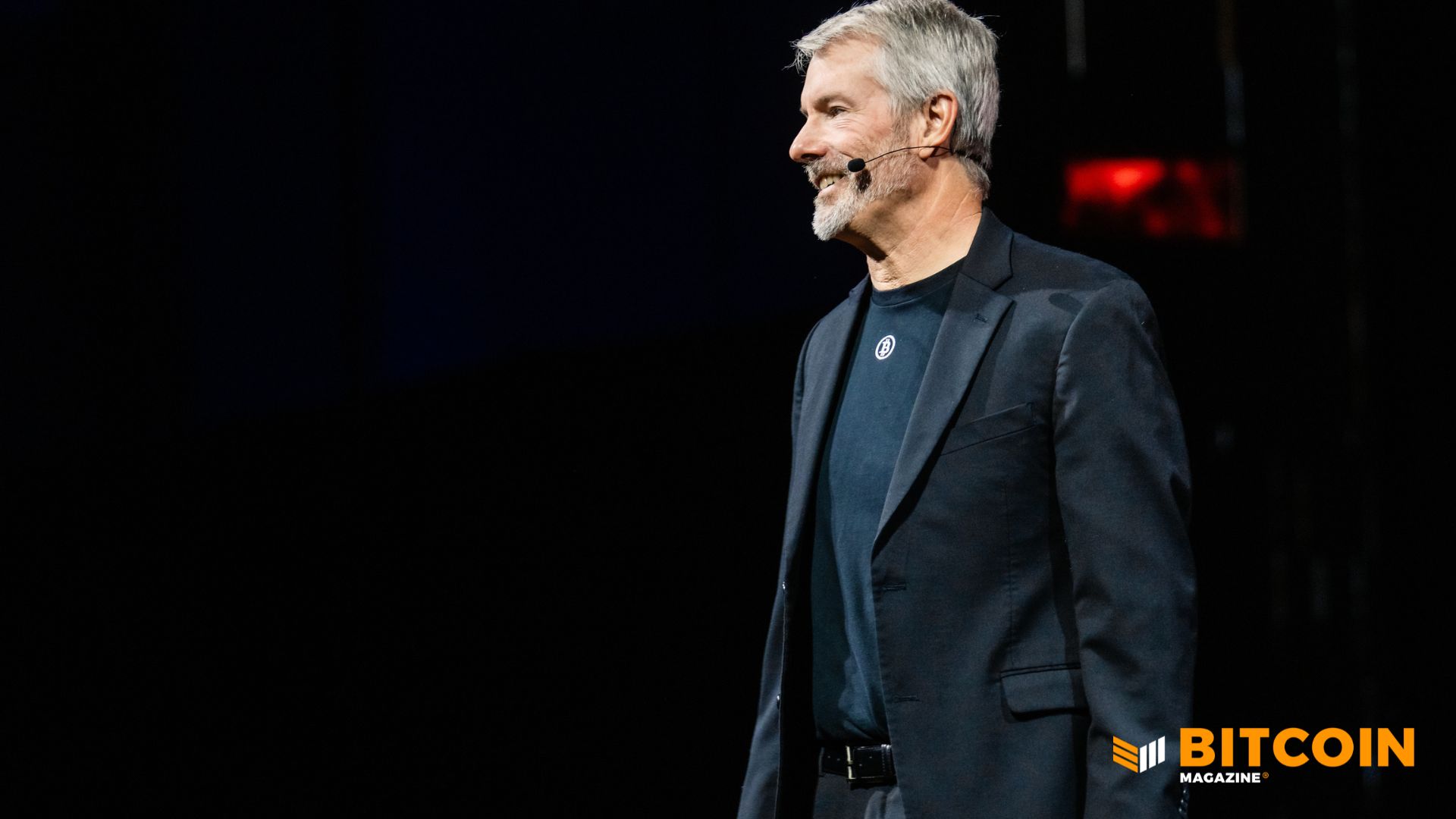
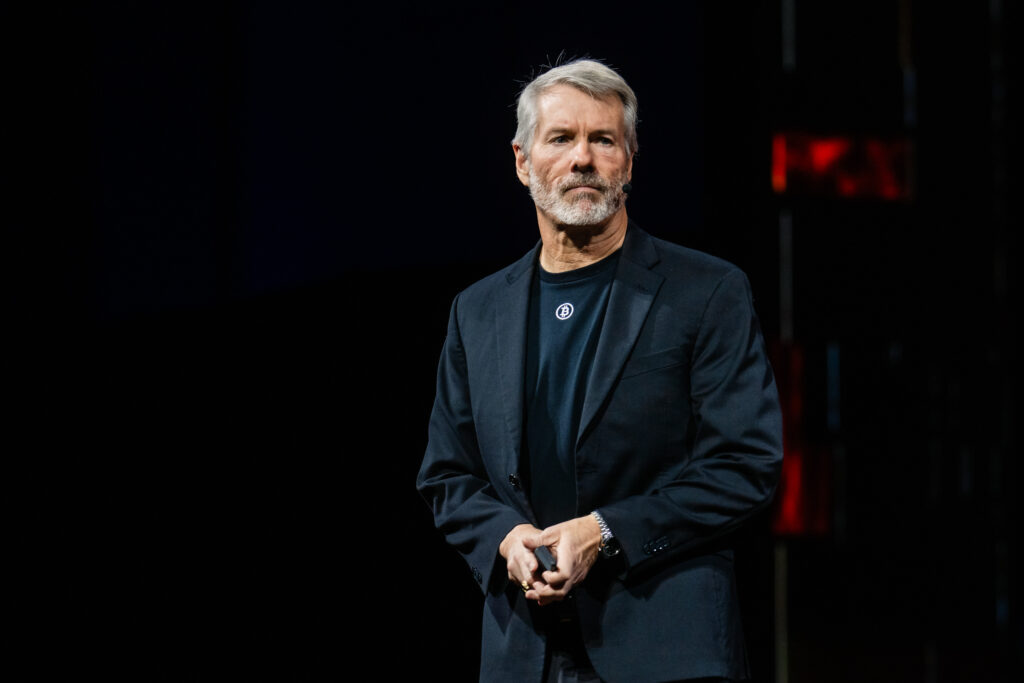
Michael Saylor, executive chairman of Strategy, delivered a sweeping keynote at the Bitcoin MENA conference earlier today, framing Bitcoin not just as an investable asset, but as the foundation of a new era in digital capital and credit.

Speaking to an audience of sovereign wealth funds, banks, conference attendees, and investors, Saylor outlined how his company is leveraging Bitcoin to create the world’s first digital Treasury and build a global system of Bitcoin-backed credit.

“Bitcoin is digital capital,” Saylor said, opening his talk.

He contrasted Bitcoin with traditional forms of capital such as gold, real estate, and equities, emphasizing its potential as a foundational store of value in the digital economy. 

“We are going to buy all of it,” he declared, highlighting Strategy’s ongoing acquisition program, which now totals 660,624 Bitcoin, including 10,600 acquired last week.

The purchases, he explained, range from $500 million to $1 billion weekly, underscoring the company’s aggressive accumulation strategy.

Banks are meeting with Saylor to discuss Bitcoin 

Saylor stressed the importance of recent institutional and regulatory shifts. He said that over the past year, major U.S. banks including Bank of America, Wells Fargo, JP Morgan, and Citi have moved from cautious observers to active participants, offering custody solutions and credit facilities tied to Bitcoin. 

“All of the large banks in the United States have gone from not banking Bitcoin 12 months ago to issuing credit against Bitcoin or Bitcoin derivatives,” he noted. 

JUST IN: Michael Saylor says he got approached by all the major banks recently to launch #Bitcoin products and services.

Banks are here 🙌 pic.twitter.com/AcHQRCaP7y

— Bitcoin Magazine (@BitcoinMagazine) December 9, 2025

He also highlighted bipartisan U.S. government support for Bitcoin, citing figures from the Treasury, SEC, and CFTC.

Bitcoin as a yield-generating credit

Central to Saylor’s thesis is the conversion of Bitcoin’s volatile digital capital into predictable, yield-generating credit. 

Strategy has launched a series of Bitcoin-backed credit instruments designed to provide steady cash flows while preserving exposure to the asset’s long-term appreciation. 

“If you have a short time horizon, you buy the credit,” he said. “If you trust Bitcoin and have a long horizon, you buy the equity.”

Saylor described how these instruments work. Using over-collateralization, Strategy transforms Bitcoin holdings into digital credit with lower volatility and reliable yields. 

The firm has introduced products like STRK, a preferred stock paying an 8% dividend backed by Bitcoin, and STRF, a perpetual bond yielding 10% that funds long-term investment in digital assets. 

“We convert 120 months or 240 months of duration into one month,” Saylor explained, emphasizing the ability to deliver near-immediate cash flows from long-term capital.

He also outlined Strategy’s approach to amplifying equity performance. By issuing credit instruments and reinvesting proceeds in Bitcoin, the company effectively enhances its Bitcoin holdings per share over time.

“Every seven years, we double our Bitcoin per share,” he said. 

The result, Saylor claims, is a corporate structure that aligns long-term Bitcoin growth with investor returns while creating unprecedented liquidity in credit markets.

Saylor framed these innovations in historical context. Just as gold served as the foundation for centuries of credit instruments—from mortgages to sovereign debt—Bitcoin, he argued, will form the backbone of a digital credit system. 

“If we have digital gold, it’s very logical that the world’s going to run on digital gold-backed credit,” he said, noting the potential for Bitcoin to underpin global financial systems.

Throughout his keynote, Saylor emphasized both scale and vision. He described a tour of the Middle East, meeting investors across Dubai, Bahrain, Kuwait, and Abu Dhabi, presenting a unified vision of digital capital and credit. 

“The opportunity for Treasury companies is to accumulate pools of capital and issue credit that meets regulatory requirements, integrates into the banking system, and absorbs currency risk,” he said.

At the time of writing, Bitcoin is ripping past $94,000. 
Saylor

This post ‘We are going to buy all of it’: Michael Saylor talks Bitcoin Strategy at Bitcoin MENA Conference first appeared on Bitcoin Magazine and is written by Micah Zimmerman.
Binance Founder CZ Says the 4-Year Bitcoin Cycle Is Over — Predicts a Potential Bitcoin Supercycle

Bitcoin Magazine

Binance Founder CZ Says the 4-Year Bitcoin Cycle Is Over — Predicts a Potential Bitcoin Supercycle

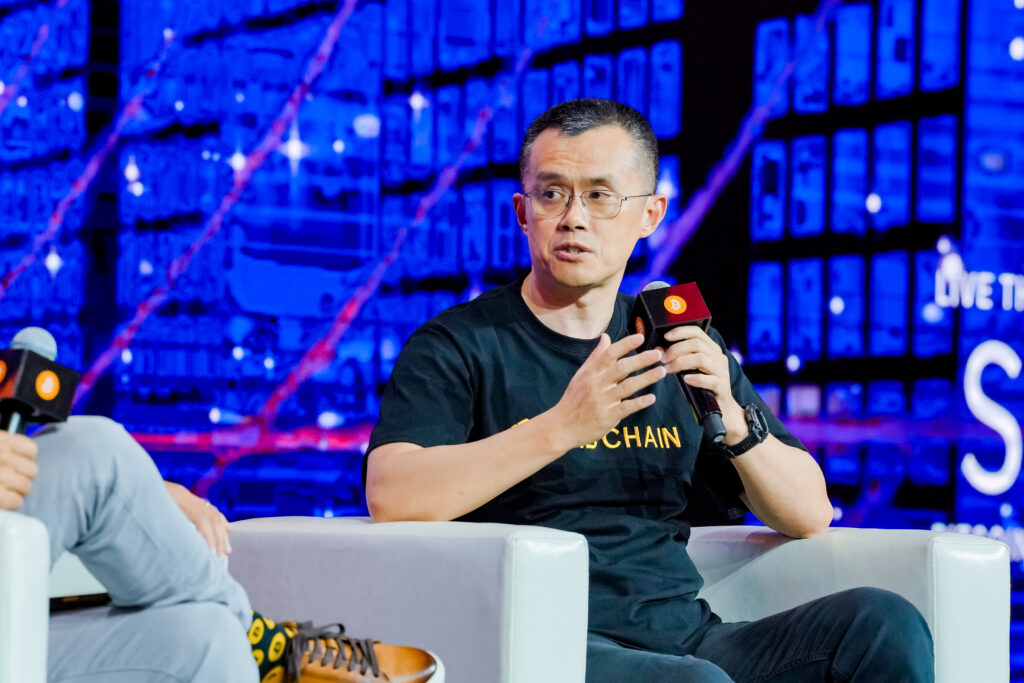
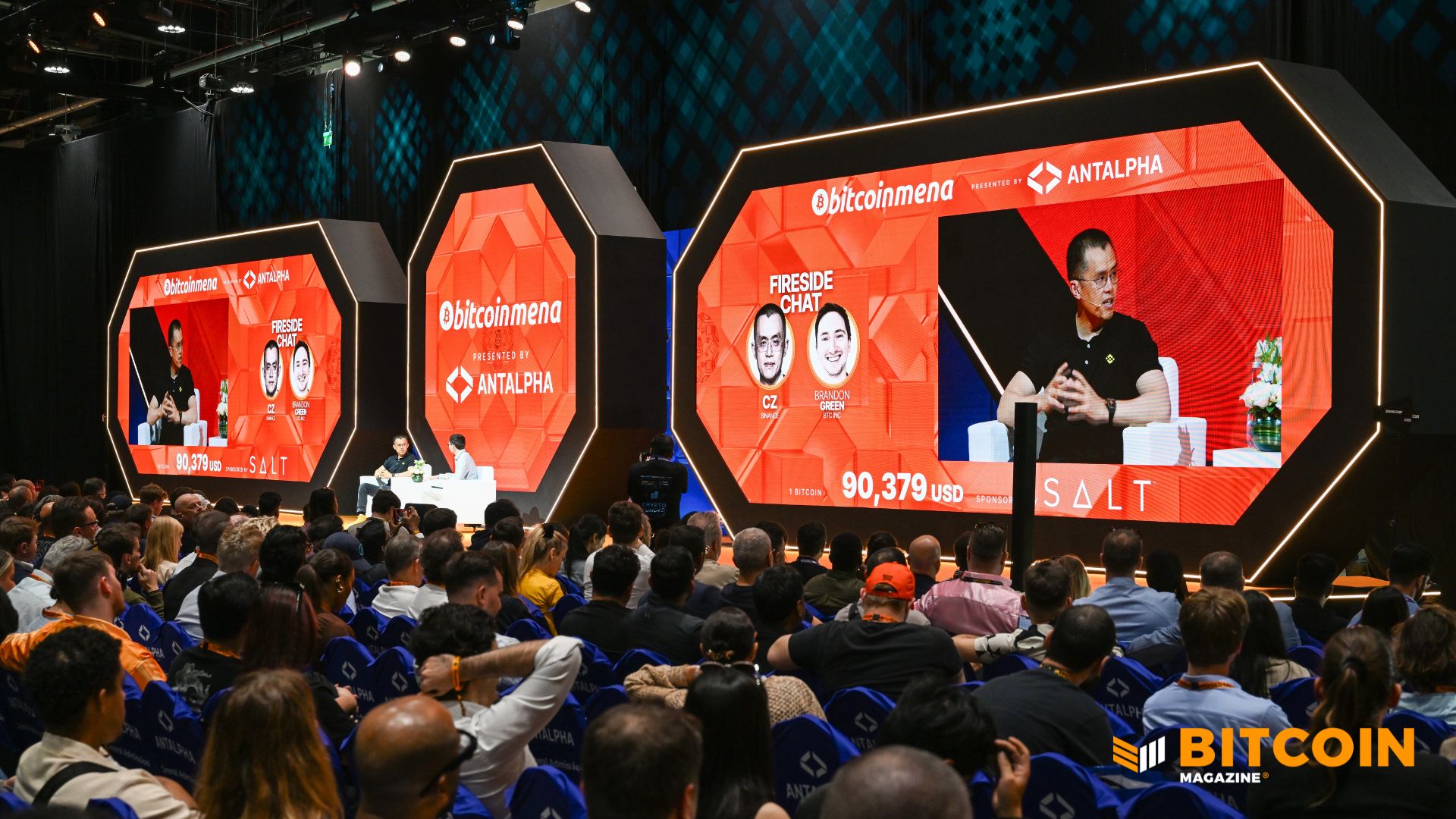
At the Bitcoin MENA conference, Binance founder Changpeng Zhao (CZ) offered an pretty expansive view of Bitcoin’s evolving role in global finance.  

While he touched on personal experiences, from his legal challenges in the United States to his pardon from President Donald Trump, his remarks consistently returned to the trajectory and potential of Bitcoin.

Speaking alongside BTC Inc CEO Brandon Green, CZ described the current adoption cycle as distinct from previous waves. While earlier cycles were dominated by retail investors, this cycle reflects significant institutional engagement

Bitcoin’s institutional adoption 

From Bitcoin ETFs to corporate strategic reserves, Wall Street and large financial institutions are participating in the crypto ecosystem. 

“We have seen more institutions come in than probably previous cycles,” CZ said. This bridging between grassroots movements and institutional finance, he argued, positions Bitcoin for broader integration into the global financial system.

The conversation highlighted the inherent unpredictability of Bitcoin’s adoption path. CZ sees potential for growth through integration with traditional payment infrastructure. 

Tools like crypto cards, where users pay in cryptocurrency but merchants receive fiat, allow demand to grow on the user side and lay the groundwork for more widespread adoption. 

Stablecoins, he noted, will also play a key role in facilitating transactions without undermining Bitcoin’s investment appeal.

CZ’s take on Bitcoin’s 4-year cycle 

CZ also offered perspective on how macroeconomic conditions and policy shifts can influence Bitcoin’s trajectory. 

While the four-year cycle has long guided expectations for bull and bear markets, he suggested that external forces, including government monetary policies, may now have equal or greater influence. 

CZ even said that bitcoin and crypto may be entering a “super cycle”

JUST IN: Binance founder CZ says the 4-year #Bitcoin cycle might be dead, and we may see a supercycle 🚀 pic.twitter.com/rl4Ie6JoQQ

— Bitcoin Magazine (@BitcoinMagazine) December 9, 2025

He pointed to potential U.S. rate cuts and quantitative easing as factors that could drive liquidity into crypto markets, suggesting the next cycle could diverge from historical patterns.

Institutionalization of Bitcoin, however, does not replace the grassroots origins of the network. CZ emphasized that retail holders remain the majority and that the international nature of Bitcoin is integral to its identity.

He described the institutional participation as complementary, not transformative, to the global movement that has propelled Bitcoin from a niche technology to a widely recognized asset class.

CZ’s personal journey

Throughout the discussion, CZ reflected on his personal journey, from ‘growing up on a farm in China’ to serving jail time, all while being intertwined closely with Bitcoin’s evolution. 

He shared his experiences facing U.S. regulatory scrutiny, including potential imprisonment, and his eventual pardon by President Trump. The pardon drew criticism from Democrats like Sen. Elizabeth Warren, who called it corruption, while the Trump administration framed it as correcting an “overreach” by the Biden administration against crypto.

Even as he stepped back from day-to-day operations at Binance, CZ has remained engaged in advancing the industry. He has focused on advising governments on how to regulate crypto. 

Beyond regulation, CZ has turned attention to education and innovation. He founded Giggle Academy, a free, gamified, digital education platform that now reaches approximately 90,000 children, emphasizing accessibility and positive societal impact. 

CZ’s reflections on legacy and impact returned repeatedly to Bitcoin. While he admires other industry figures, like Michael Saylor, for their single-minded focus on Bitcoin, CZ sees his own role as complementary: attempting to foster innovation across multiple chains while championing Bitcoin’s primacy. 

“Bitcoin itself is great. It is the global reserve currency in crypto, probably soon in the world,” he said. 

🇦🇪 MICHAEL SAYLOR JUST HAD A MEETING WITH CZ AT BITCOIN MENA

₿ULLISH 🚀 pic.twitter.com/si6FuJAIJD

— Bitcoin MENA Conference (@bitcoinmenaconf) December 9, 2025

In closing, CZ reiterated that his goal remains clear: driving adoption and awareness of crypto worldwide. Whether through institutional engagement, policy advising, or fostering innovation, he positions himself as a conduit between the grassroots and the broader financial ecosystem.

At the time of writing, Bitcoin is skyrocketing towards $93,000.

CZ

This post Binance Founder CZ Says the 4-Year Bitcoin Cycle Is Over — Predicts a Potential Bitcoin Supercycle first appeared on Bitcoin Magazine and is written by Micah Zimmerman.

Bitcoin Is a Relief, Not a Theory: Pakistan’s Case for Crypto Adoption

Bitcoin Magazine

Bitcoin Is a Relief, Not a Theory: Pakistan’s Case for Crypto Adoption

At the Bitcoin MENA conference, Bilal Bin Saqib, chairman of the Pakistan Virtual Assets Regulatory Authority, delivered a message that framed bitcoin not as a speculative asset, but as a practical solution to structural economic problems facing millions of people in Pakistan.

One of Bin Saqib’s most striking takeaways was how grounded his argument in lived reality. In Pakistan, bitcoin is less about ideology and more about necessity. 

Bitcoin as a financial relief

As Bin Saqib put it, for many Pakistanis “bitcoin is not theory, it’s a relief,” a response to problems traditional financial systems have failed to solve for decades.

He pointed first to savings. Pakistan’s currency has lost more than half its value over the past five years, eroding purchasing power for ordinary citizens. In that environment, Bin Saqib argued, people are not looking for explanations of monetary theory. They are looking for protection.

Bitcoin, he said, provides a way to store value outside inflation driven by political decisions, money printing and currency mismanagement. “You don’t need a lecture,” he noted. “You need a hedge.”

Access was the second pillar of his case. Despite Pakistan being home to roughly 240 million people, more than 100 million remain unbanked. 

JUST IN: 🇵🇰 Minister of State Bilal Bin Saqib says, “#Bitcoin gives people a way to store value outside politics, printing and inflation.”
Pakistan is coming 🚀 pic.twitter.com/5YJSyKfibT

— Bitcoin Magazine (@BitcoinMagazine) December 9, 2025

For this population, traditional finance has simply never arrived. Bitcoin, according to Bin Saqib, offers a financial identity without the need for permission, paperwork or intermediaries that may never open the door. 

That permissionless access, he argued, is especially powerful for young people encountering true financial ownership for the first time.

The third pillar was cross-border earnings. Pakistan has one of the largest freelance workforces in the world, yet freelancers often struggle to receive international payments quickly, cheaply and transparently. 

Bitcoin and blockchain-based payment rails enable Pakistani workers to get paid globally without friction, delays or excessive fees. For many, this has meant a direct connection to the global economy for the first time.

Bin Saqib tied these grassroots use cases to a broader national strategy. Pakistan, he said, is not trying to “chase the future” but to build a new one. With roughly 70% of the population under the age of 30, the country cannot rely on outdated economic models. 

Digital assets, and bitcoin in particular, are being viewed as infrastructure rather than speculation—new financial rails for the Global South.

He outlined his mandate since being appointed seven months ago: to transform one of the world’s largest unregulated crypto markets into a compliant, investment-friendly ecosystem. 

Pakistan has already moved to establish a virtual asset regulatory framework, issue provisional licenses for exchanges, and develop regulatory sandboxes for mining, tokenization and fintech.

The goal, Bin Saqib said, is to bring activity onshore rather than push it underground, protecting users without suffocating builders.

Bin Saqib’s discussion of energy 

Energy played a central role in the discussion. Pakistan paradoxically suffers from both power shortages and massive excess capacity, paying for electricity that goes unused. 

Bin Saqib described bitcoin mining and artificial intelligence as tools to convert that “wasted economic oxygen” into productive output. 

Every unused megawatt, he argued, could be turned into bitcoin mining or AI compute, effectively transforming stranded energy into digital exports.

In that framework, bitcoin mining becomes less about consumption and more about industrial renewal. 

Rather than exporting only commodities or labor, Pakistan could export compute—what Bin Saqib called one of the most valuable resources of the 21st century. He framed this not as a narrow energy policy, but as part of a broader industrial rebirth.

Looking ahead, Bin Saqib predicted that the next wave of bitcoin adoption will not be led by Wall Street, but by emerging markets where economic pain is real and the upside is massive. 

This post Bitcoin Is a Relief, Not a Theory: Pakistan’s Case for Crypto Adoption first appeared on Bitcoin Magazine and is written by Micah Zimmerman.

MicroBT Launches WhatsMiner M70 in Abu Dhabi, Pushing for Sustainable Bitcoin Mining 

Bitcoin Magazine

MicroBT Launches WhatsMiner M70 in Abu Dhabi, Pushing for Sustainable Bitcoin Mining 

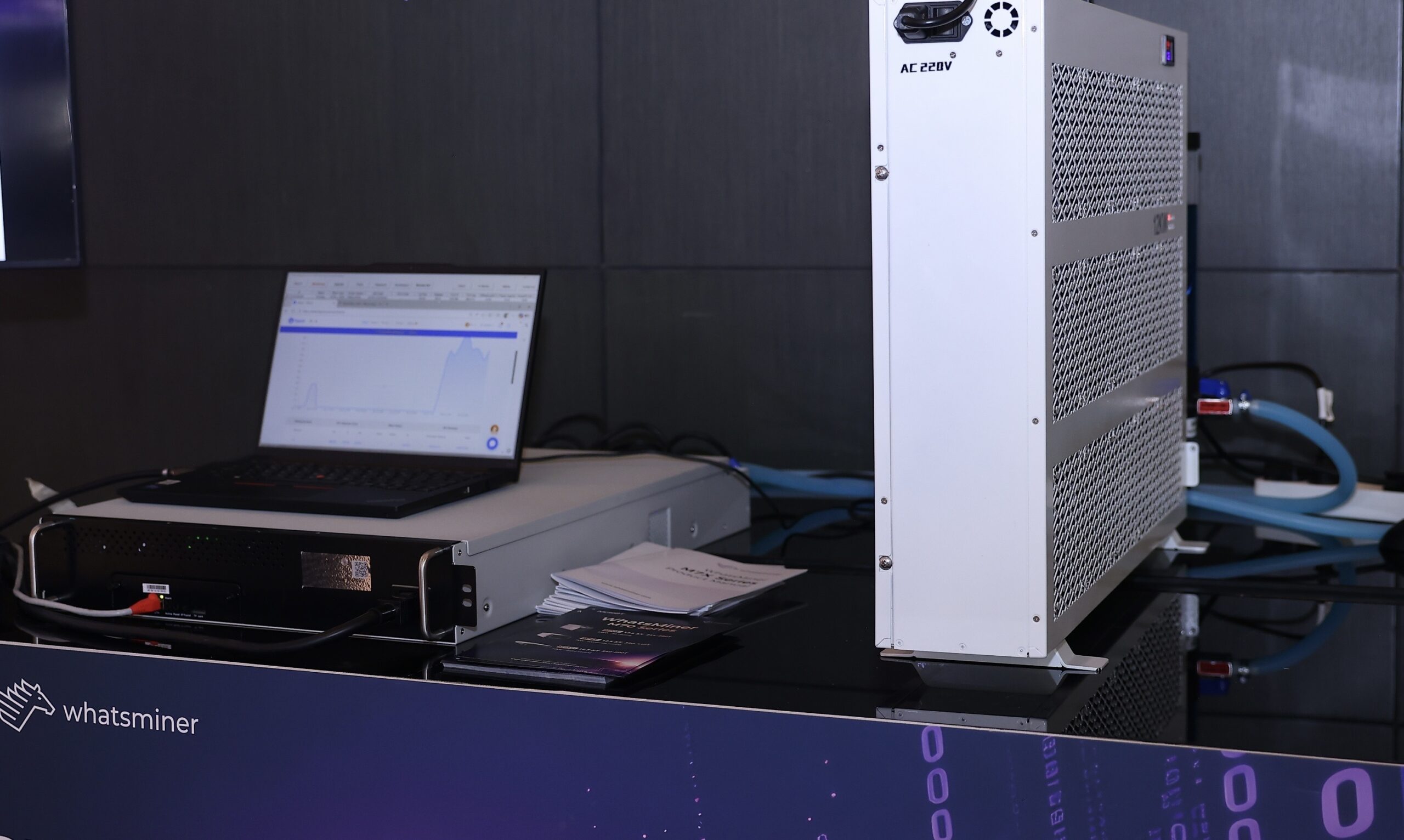
MicroBT, a leading developer of Bitcoin mining hardware, launched its latest WhatsMiner M70 series in at Bitcoin MENA in Abu Dhabi on Monday, according to a note shared with Bitcoin Magazine. 

The event, themed “Green-Driven, Ecosystem Redefined,” brought together mining executives, strategic partners, and key clients, marking a significant step in the company’s efforts to shape a more sustainable mining industry.

Dr. Yang Zuoxing, Founder and CEO of MicroBT, opened the event with a keynote that highlighted the connection between technological leadership and long-term industry growth.

He framed the conversation around energy innovation, presenting strategies that aim to integrate renewable sources into mining operations. 

Central to his remarks was an off-grid solar solution capable of 200kW output. This system, using an 800V DC supply and a “load-following-source” design, improves efficiency compared to traditional AC setups and enables uninterrupted operation. 

Dr. Yang also noted the potential of hybrid energy approaches, combining gas-powered generation with careful miner selection to extend hardware lifespan and operational reliability.

Bitcoin mining efficiency

The unveiling of the WhatsMiner M70 series drew the most attention. The new line features models with power efficiencies of 14.5J/T, 13.5J/T, and 12.5J/T. These figures reflect a push to balance performance with energy use.

Following the technical presentation, MicroBT’s Sales and Marketing Director, Wright Wang, addressed the company’s ecosystem strategy. He outlined a vision that extends beyond hardware, focusing on shared-value partnerships and joint mining. 

Wang highlighted the network of certified solution partners who provide expertise in cooling, energy management, and operations. 

By linking these partners to clients, MicroBT positions itself not just as a supplier but as a facilitator of a connected, collaborative mining ecosystem.

The launch included presentations from a range of partners, including HeatCore, HashHouse, FogHashing, Giga, HashSmith, Pauway Energy, Lumen Capital, BitMars, and Luxor. 

bitcoin
Images from Bitcoin MENA

Their contributions spanned topics from advanced cooling techniques to financial models for hashrate management. The breadth of participation underscored the interdependence of the modern mining industry and highlighted the role of collaboration in driving innovation.

Tether’s VP of Energy and Mining, Giv Zanganeh, also addressed the audience on the topic of redefining the Bitcoin mining ecosystem. His presence reflected growing confidence in MicroBT’s approach and signaled an emerging alignment between hardware innovation, energy management, and financial infrastructure.

MicroBT’s WhatsMiner M70 launch illustrates a shift in the industry. As miners face increasing pressure to manage energy use and operational risks, the company is betting on a model that combines technical innovation with strategic partnerships. 

The launch in Abu Dhabi positions MicroBT as a company seeking to influence both the technology and the practices of Bitcoin mining, framing sustainability and ecosystem growth as inseparable goals.

This post MicroBT Launches WhatsMiner M70 in Abu Dhabi, Pushing for Sustainable Bitcoin Mining  first appeared on Bitcoin Magazine and is written by Micah Zimmerman.

❌