Fresh information from a reliable Chinese tipster suggests the OnePlus 15T may play it safe with the cameras, reusing familiar hardware while focusing on performance gains and battery capacity in a compact flagship form factor.
While a U.S. price hike isn't guaranteed, buyers could lose popular early-bird perks like free storage upgrades, making the next Galaxy launch less appealing than it seems.
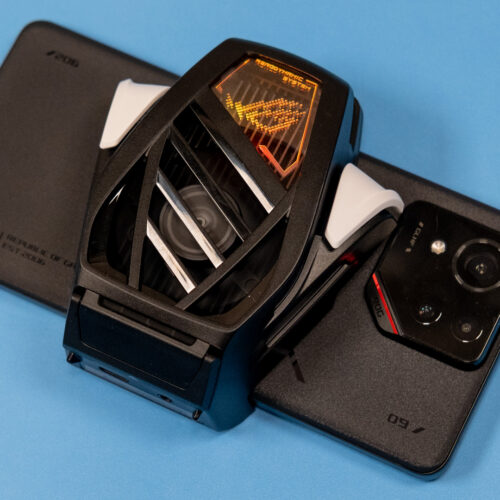
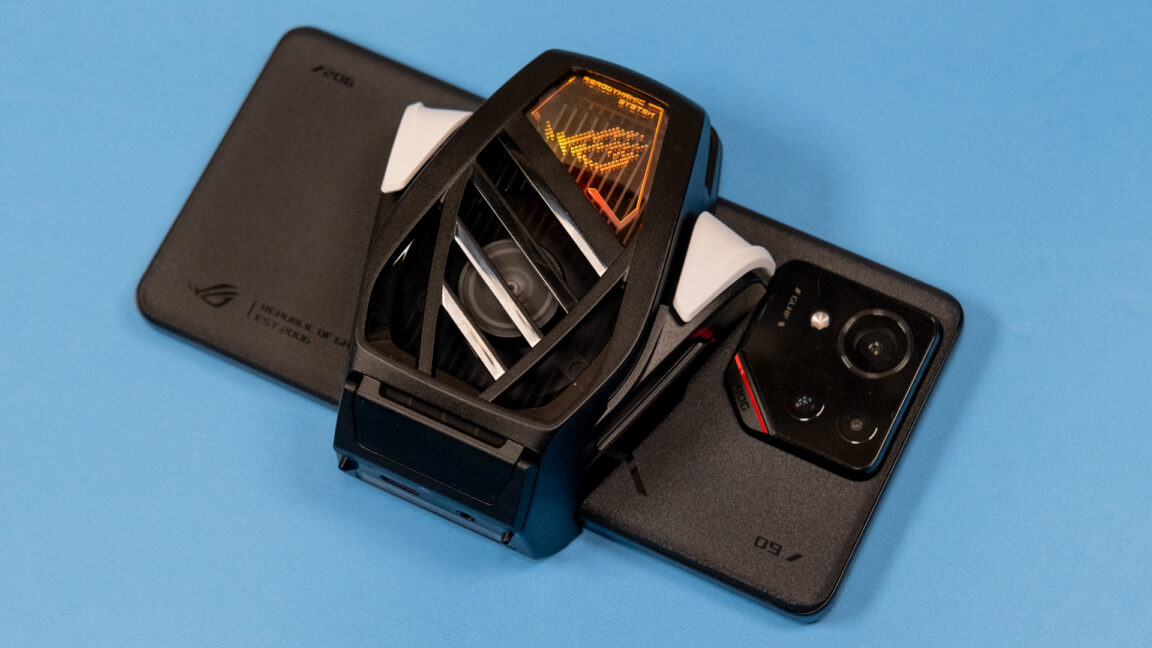
An unconfirmed report early this month suggested Asus was pulling back on its smartphone plans, but the company declined to comment at the time. Asus chairman Jonney Shih has now confirmed during an event in Taiwan the wind-down of its smartphone business. Instead, Asus will focus on AI products like robots and smart glasses.
Shih addressed the company's future plans during a 2026 kick-off event in Taiwan, as reported by Inside. "Asus will no longer add new mobile phone models in the future," said Shih (machine translated).
So don't expect a new Zenfone or ROG Phone from Asus in 2026. That said, very few phone buyers were keeping tabs on the latest Asus phones anyway, which is probably why Asus is throwing in the towel. Shih isn't saying Asus won't ever release a new phone, but the company will take an "indefinite wait-and-see" approach. Again, this is a translation and could be interpreted in multiple ways.
Gone are the days in which you needed to spend a fortune to get a good smartphone. In 2026, features once exclusive to high-end smartphones – big batteries, multi-camera arrays, high refresh rate OLED displays and more – have made their way down to more affordable models. Yes, you’ll still need to buy a flagship smartphone to get the best camera or fastest processor, but you don't have to make nearly as many compromises as you once did if you have a strict budget to adhere to when you go shopping for your next smartphone. If you have less than $600 to spend, let us help you figure out what features to prioritize when trying to find the best midrange smartphone.
While the term frequently appears in articles and videos, there isn’t an agreed-upon definition for “midrange” beyond a phone that isn’t a flagship or an entry-level option. Most of our recommendations cost between $400 and $600 — any less and you should expect significant compromises. If you have more to spend, you might as well consider flagships like the Apple iPhone 17 and the Samsung Galaxy S25 if you want the best smartphone experience. Devices like Pixel phones often sit in this price range too, offering some of the best value for Android buyers.
What to consider before buying a midrange smartphone
Buying a new device can be intimidating, but a few questions can help guide you through the process. First: what platform do you want to use? If the answer is iOS, that narrows your options down to exactly one phone. (Thankfully, it’s great.) And if you’re an Android fan, there’s no shortage of compelling options. Both platforms have their strengths, so you shouldn’t rule either out.
Of course, also consider how much you’re comfortable spending. Even increasing your budget by $100 more can get you a dramatically better product. Moreover, manufacturers tend to support their more expensive devices for longer with software updates and security updates, so it’s worth buying something toward the top limit of what you can afford.
Having an idea of your priorities will help inform your budget. Do you want a long battery life or fast charging? Do you value speedy performance above all else? Or would you like the best possible cameras with high megapixel counts? While they continue to improve every year, even the best midrange smartphones still demand some compromises, and knowing what’s important to you will make choosing one easier.
What won’t you get from a midrange smartphone?
Every year, the line between midrange and flagship phones blurs as more upmarket features and functions trickle down to more affordable models. When Engadget first published this guide in 2020, it was tricky to find a $500 phone with waterproofing and 5G. In 2026, the biggest thing you might miss out on is wireless charging – and even then, that’s becoming less true.
One thing your new phone probably won’t come with is a power adapter; many companies have stopped including chargers with all of their smartphones. Performance has improved in recent years, but can still be hit or miss as most midrange phones use slower processors that can struggle with multitasking. Thankfully, their camera systems have improved dramatically, and you can typically expect at least a dual-lens system on most midrange smartphones below $600 with decent camera quality, selfie performance and software support to keep things running smoothly for years to come..
Midrange smartphone FAQs
How long do midrange phones get software updates?
Support varies by brand, but most midrange phones receive around three to five years of software and security updates. Apple tends to support iPhones longer while companies like Google and Samsung now promise several years of Android and security patches for their midrange models. Budget-focused brands might offer less so it’s worth checking the update policy before you buy.
Are midrange phones good for gaming?
Yes, many midrange phones handle gaming well, especially popular titles like Fortnite, Genshin Impact and Call of Duty Mobile. They usually include capable processors, though you won’t always get the smoothest performance in the most demanding mobile games or at max settings. If you play casually or stick to less graphically intensive titles a midrange phone will feel more than adequate.
Georgie Peru contributed to this report.
This article originally appeared on Engadget at https://www.engadget.com/mobile/smartphones/best-midrange-smartphone-183006463.html?src=rss
A chip that produces microscopic “earthquakes” could change smartphone design, allowing manufacturers to shrink internal components while boosting signal handling and data speeds using surface acoustic wave technology.
Nothing CEO Carl Pei says the era of cheaper smartphones is ending, with memory shortages and AI demand pushing costs so high that brands have little choice but to raise prices or rethink what phones offer.
Motorola is no stranger to foldables, having revived the Razr as a flip-style foldable phone in 2020. Now that it has a few iterations of modern flip phones under its belt, Moto is embarking on a new challenge: big foldables. The new (and thoroughly leaked) Motorola Razr Fold is a book-style foldable like Samsung's Galaxy Z Fold and Google's Pixel Fold lines, offering a smartphone-sized external display with a big foldable panel inside.
Motorola is taking the opportunity to reveal the phone at CES, but it's far from ready for launch. Currently, Motorola is aiming to release the Razr Fold this coming summer for an unknown amount of money—Motorola won't confirm pricing or really much of anything about the Razr Fold at this time.
What we do know is the device will be about as big as other large foldable phones, featuring a 6.6-inch external display and an 8.1-inch internal one. Moto says the main foldable OLED panel will have a 2K resolution, which means roughly 2,000 pixels tall. Again, this is similar to existing foldables.
New research tied to the University of Washington School of Medicine adds to mounting concerns among educators about smartphone use in schools.
U.S. adolescents between the ages of 13–18 spend more than one hour per day on phones during school hours, with “addictive” social media apps accounting for the largest share of use, according to new research published in JAMA.
The findings add to the ongoing argument made by teachers, parents and policymakers that has led schools and districts around the country, including some in Seattle, to ban phones during school hours.
Adolescents spent an average of 1.16 hours per day on smartphones during school hours.
Social media apps Instagram, TikTok and Snapchat accounted for most use, followed by YouTube and games.
Older adolescents (16–18) and teens from lower-income households reported higher smartphone use than their peers.
“These apps are designed to be addictive,” said Dr. Dimitri Christakis, the paper’s senior author. “They deprive students of the opportunity to be fully engaged in class and to hone their social skills with classmates and teachers.”
Christakis is a professor of pediatrics at the University of Washington School of Medicine and practices at Seattle Children’s Hospital.
Based on a national sample of students, the results build on findings published last year in JAMA Pediatrics. That study had fewer participants but also included iPhone users.
At least 32 states and the District of Columbia require school districts to ban or restrict students’ use of cell phones in schools. The effect of those policies “remains to be seen,” Christakis said.
“To date they’ve been very poorly enforced, if at all. I think the U.S. has to recognize the generational implications of depriving children of opportunities to learn in school,” he added.
A majority of school districts in Washington state planned to have policies in place at the start of the school year last fall to limit students’ use of cellphones and other devices such as smart watches.
Seattle Public Schools has not issued a district-wide policy, though at least three public middle schools in the district have banned phones at school, and at least one high school prohibits their use during classes.
The UW’s Youth Advisory Board, a group of approximately 20 teens from Seattle-area schools, recently published its first memo tackling the contentious issue of phones in school. The memo weighs the pros and cons of phone bans and offers recommendations on how schools should draft and communicate their policies.
Phone batteries may have peaked. We’ve been hovering around the 5,000mAh mark in Android phones for years, and there’s no magical technology on the horizon to increase that. High charging speeds are almost as good, and that’s increasing by leaps and bounds with devices like the new OnePlus 11. The latest device from Chinese smartphone maker Realme leaves everyone else in the dust. The new Realme GT Neo 5 supports incredible 240W fast charging, making it the fastest-charging phone in the world.
The GT Neo 5 has a 4,600mAh battery, which the company claims can go from zero to 100 in just nine and a half minutes. If you don’t even have that long, a moment on the charger will ensure your phone has all the juice it needs before you head out the door. GSMArena reports it can charge to 80% in just 80 seconds and 50% in four minutes. You could plug in your totally dead phone while you put on your shoes and have enough charge to last the better part of a day.
Realme is a subsidiary of BBK Electronics, the Chinese megacorportation that also owns Oppo, Vivo, and OnePlus. Oppo showed off a 240W charger in 2022, and we assume this device uses the same technology. Realme says the 240W charger takes advantage of the latest USB power specification, which was updated in 2021 to add support for charging at 240W. It has yet to appear in any Oppo or OnePlus phone, but that might be on the way.
The Realme GT Neo 5 has only been announced for China, and it’s unlikely it will make it to many international markets. Realme doesn’t operate in the US at all, and even if it did release the GT Neo 5, it wouldn’t charge as fast. China uses 220v electricity, but many other markets, like the US, have 110v. That makes it harder to reach extremely high charging wattages. For example, the OnePlus 11 charges at 80W stateside but 100W in China.
Aside from the charging, there’s not much that sets the GT Neo 5 apart from other high-end Chinese Android phones. It has last year’s Snapdragon 8 Plus Gen 1, a 6.74-inch 1240p OLED with 144Hz refresh, and an underwhelming triple-camera array with a 50MP main, 8MP ultrawide, and 2MP macro. It also has some LED lighting on the back that can act as a notification alert.
For those in China, the Realme GT Neo 5 starts at 2,599 yuan ($380-ish), but that version only supports 150W charging. To get the world’s fastest charging, you’ll have to spend 3,199 yuan (about $470) on the 240W version. The more expensive SKU doubles the RAM from 8 to 16GB, but the cheaper one actually has a slightly larger 5,000mAh battery.
Newly released documents shown exclusively to TechCrunch show that U.S. immigration authorities used a controversial cell phone snooping technology known as a “stingray” hundreds of times in the past three years. Also, if you haven’t updated your Android phone in a while, now would be a good time to check. That’s because a brand-new security vulnerability was found — and patched. The bug, if exploited, could let a malicious app trick a user into thinking they’re using a legitimate app that can be used to steal passwords.

 Login
Login