Reading view

There are new articles available, click to refresh the page.

The Supreme Court’s dangerous double standard on independent agencies

The Supreme Court appears poised to deliver a contradictory message to the American people: Some independent agencies deserve protection from presidential whim, while others do not. The logic is troubling, the implications profound and the damage to our civil service system could be irreparable.

In December, during oral arguments in Trump v. Slaughter, the court’s conservative majority signaled it would likely overturn or severely weaken Humphrey’s Executor v. United States, the 90-year-old precedent protecting independent agencies like the Federal Trade Commission from at-will presidential removal. Chief Justice John Roberts dismissed Humphrey’s Executor as “just a dried husk,” suggesting the FTC’s powers justify unlimited presidential control. Yet just weeks later, during arguments in Trump v. Cook, those same justices expressed grave concerns about protecting the “independence” of the Federal Reserve, calling it “a uniquely structured, quasi-private entity” deserving special constitutional consideration.

The message is clear: Wall Street’s interests warrant protection, but the rights of federal workers do not.

The MSPB: Guardian of civil service protections

This double standard becomes even more glaring when we consider Harris v. Bessent, where the D.C. Circuit Court of Appeals ruled in December 2025 that President Donald Trump could lawfully remove Merit Systems Protection Board Chairwoman Cathy Harris without cause. The MSPB is not some obscure bureaucratic backwater — it is the cornerstone of our merit-based civil service system, the institution that stands between federal workers and a return to the spoils system that once plagued American government with cronyism, inefficiency and partisan pay-to-play services.

The MSPB hears appeals from federal employees facing adverse actions including terminations, demotions and suspensions. It adjudicates claims of whistleblower retaliation, prohibited personnel practices and discrimination. In my and Harris’ tenure alone, the MSPB resolved thousands of cases protecting federal workers from arbitrary and unlawful treatment. In fact, we eliminated the nearly 4,000 backlogged appeals from the prior Trump administration due to a five-year lack of quorum. These are not abstract policy debates — these are cases about whether career professionals can be fired for refusing to break the law, for reporting waste and fraud or simply for holding the “wrong” political views.

The MSPB’s quasi-judicial function is precisely what Humphrey’s Executor was designed to protect. This is what Congress intended to follow in 1978 when it created the MSPB in order to strengthen the civil service workforce from the government weaponization under the Nixon administration. The 1935 Supreme Court recognized that certain agencies must be insulated from political pressure to function properly — agencies that adjudicate disputes, that apply law to fact, that require expertise and impartiality rather than ideological alignment with whoever currently occupies the White House. Why would today’s Supreme Court throw out that noble and constitutionally oriented mandate?

A specious distinction

The Supreme Court’s apparent willingness to treat the Federal Reserve as “special” while abandoning agencies like the MSPB rests on a distinction without a meaningful constitutional difference. Yes, the Federal Reserve sets monetary policy with profound economic consequences. But the MSPB’s work is no less vital to the functioning of our democracy.

Consider what happens when the MSPB loses its independence. Federal employees adjudicating veterans’ benefits claims, processing Social Security applications, inspecting food safety or enforcing environmental protections suddenly serve at the pleasure of the president. Career experts can be replaced by political loyalists. Decisions that should be based on law and evidence become subject to political calculation. The entire civil service — the apparatus that delivers services to millions of Americans — becomes a partisan weapon to be wielded by whichever party controls the White House.

This is not hypothetical. We have seen this movie before. The spoils system of the 19th century produced rampant corruption, incompetence and the wholesale replacement of experienced government workers after each election. The Pendleton Act of 1883 and subsequent civil service reforms were not partisan projects — they were recognition that effective governance requires a professional, merit-based workforce insulated from political pressure.

The real stakes

The Supreme Court’s willingness to carve out special protection for the Federal Reserve while abandoning the MSPB reveals a troubling hierarchy of values. Financial markets deserve stability and independence, but should the American public tolerate receiving partisan-based government services and protections?

Protecting the civil service is not some narrow special interest. It affects every American who depends on government services. It determines whether the Occupational Safety and Health Administration (OSHA) inspectors can enforce workplace safety rules without fear of being fired for citing politically connected companies. Whether Environmental Protection Agency scientists can publish findings inconvenient to the administration. Whether veterans’ benefits claims are decided on merit rather than political favor. Whether independent and oversight federal organizations can investigate law enforcement shootings in Minnesota without political interference.

Justice Brett Kavanaugh, during the Cook arguments, warned that allowing presidents to easily fire Federal Reserve governors based on “trivial or inconsequential or old allegations difficult to disprove” would “weaken if not shatter” the Fed’s independence. He’s right. But that logic applies with equal force to the MSPB. If presidents can fire MSPB members at will, they can install loyalists who will rubber-stamp politically motivated personnel actions, creating a chilling effect throughout the civil service.

What’s next

The Supreme Court has an opportunity to apply its principles consistently. If the Federal Reserve deserves independence to insulate monetary policy from short-term political pressure, then the MSPB deserves independence to insulate personnel decisions from political retaliation. If “for cause” removal protections serve an important constitutional function for financial regulators, they serve an equally important function for the guardians of civil service protections.

The court should reject the false distinction between agencies that protect Wall Street and agencies that protect workers. Both serve vital public functions. Both require independence to function properly. Both should be subject to the same constitutional analysis.

More fundamentally, the court must recognize that its removal cases are not merely abstract exercises in constitutional theory. They determine whether we will have a professional civil service or return to a patronage system. Whether government will be staffed by experts or political operatives. Whether the rule of law or the whim of the president will govern federal employment decisions.

A strong civil service is just as important to American democracy as an independent Federal Reserve. Both protect against the concentration of power. Both ensure that critical governmental functions are performed with expertise and integrity rather than political calculation. The Supreme Court’s jurisprudence should reflect that basic truth, not create an arbitrary hierarchy that privileges financial interests over the rights of workers and the integrity of government.

The court will issue its decisions over the next several months and when it does, it should remember that protecting democratic institutions is not a selective enterprise. The rule of law requires principles, not preferences. Because in the end, a government run on political loyalty instead of merit is far more dangerous than a fluctuating interest rate.

Raymond Limon retired after more than 30 years of federal service in 2025. He served in leadership roles at the Office of Personnel Management and the State Department and was the vice chairman of the Merit Systems Protections Board. He is now founder of Merit Services Advocates.

The post The Supreme Court’s dangerous double standard on independent agencies first appeared on Federal News Network.

© AP Photo/Julia Demaree Nikhinson

The Supreme Court is seen during oral arguments over state laws barring transgender girls and women from playing on school athletic teams, Tuesday, Jan. 13, 2026, in Washington. (AP Photo/Julia Demaree Nikhinson)

Trump’s return-to-office memo doesn’t override telework protections in union contract, arbitrator tells HHS

A third-party arbitrator is ordering the Department of Health and Human Services to walk back its return-to-office mandate for thousands of employees represented by one of its unions.

Arbitrator Michael J. Falvo ruled on Monday that HHS must “rescind the return-to-office directive,” and must immediately reinstate remote work and telework agreements for members of the National Treasury Employees Union.

HHS rescinded those workplace flexibility agreements early last year, after President Donald Trump ordered federal employees to return to the office full-time.

Falvo found that HHS committed an unfair labor practice by unilaterally terminating telework and remote agreements, without regard to its five-year collective bargaining agreement with NTEU. The labor contract, which covers 2023 through 2028, states the agency can only terminate telework and remote work agreements “for cause.” That includes emergency situations and cases when an employee falls short of a “fully satisfactory” performance rating.

The ruling will impact thousands of HHS employees represented by NTEU. Its members include employees at the Food and Drug Administration, the Substance Abuse and Mental Health Services Administration, the Administration for Children and Families, the Administration on Community Living, the Health Resources and Services Administration, the National Center for Health Statistics and the HHS Office of the Secretary.

Falvo is also ordering HHS to post a signed notice, “admitting that the agency violated the statute by repudiating the collective bargaining agreement.” The arbitrator wrote that his ruling does not limit NTEU from “seeking additional remedies to the extent permitted by law.”

HHS officials argued that Trump’s return-to-office presidential memorandum supersedes the collective bargaining agreement. But the 1978 Federal Services Labor-Management Relations Statute makes it an unfair labor practice for an agency “to enforce any rule or regulation … which is in conflict with any applicable collective bargaining agreement if the agreement was in effect before the rule or regulation was prescribed.”

According to Falvo, the Federal Labor Relations Authority set a precedent in previous labor disputes that a presidential memorandum “is not a governmentwide rule or regulation that the employer is obligated by law to implement immediately upon issuance.”

“These cases compel the conclusion that the agency breached the agreement and violated the statute,” he wrote.

The arbitrator decided Trump’s return-to-office memo does not override telework and remote work protections outlined in NTEU’s collective bargaining agreement. HHS did not respond to a request for comment. NTEU declined to comment.

NTEU Chapter 282, which covers FDA headquarters employees, told members in an email that HHS is likely to appeal the arbitrator’s decision and has 30 days to do so. The union’s message states, “NTEU will push the agency to accept the ruling and restore your rights without delay.”

“This is a significant win that reaffirms that telework and remote work rights negotiated in a term contract cannot be unilaterally taken away,” NTEU Chapter 282 told members.

More than a year into the second Trump administration, several recent exceptions to its return-to-office policy have emerged.

The Labor Department’s Office of Workers’ Compensation Programs recently told employees that some of its employees will be eligible for remote work, because the agency is “extremely challenged” covering rent expenses for a fully in-office workforce.

Meanwhile, a second arbitrator ruled that the Centers for Medicare and Medicaid Services “violated statutory obligations” to bargain with the American Federation of Government Employees over implementation of the administration’s return-to-office directive.

The arbitrator in this dispute determined CMS wasn’t required to negotiate with the union over the administration’s return-to-office mandate, but did have an obligation to ensure implementation complied with its collective bargaining agreement with AFGE.

The arbitrator ordered CMS to meet and negotiate with AFGE over the “effects of the implementation of the directive on work/life balance of employees.”

Trump touted his return-to-office mandate at a White House press briefing on Tuesday, where he looked back on the accomplishments of his first year in office.. Trump told reporters that when he took office last year, “we had so many of our federal workers who wouldn’t come into work.”

“We don’t want them sitting in their home, on their bed, working. We want them in an office that we’re paying for in Washington, D.C., or wherever it may be. And we’ve largely taken care of that mess,” Trump said. “I guarantee you they’re out on the ballfields. I guarantee you they’re out playing golf. And you can’t run a country or a company that way.”

Trump’s presidential memorandum directed agencies to terminate remote work and telework agreements, but also stated that the return-to-office mandate must be “implemented consistent with applicable law.”

“Reasonable persons could have different notions whether a presidential memorandum (or an executive order) is such a ‘rule or regulation’ under ‘applicable law.’ On January 20, 2025, what ‘applicable law’ required was not a matter of first impression,” Falvo wrote.

NTEU filed a grievance against HHS last February, after the agency issued a directive requiring all bargaining unit employees to report to the office on a full-time basis.

Union officials argued that HHS refused to negotiate with NTEU before the return-to-office memo took effect, and would agree to “post-implementation bargaining.”

HHS officials denied the grievance and told the union that an agency head “retains the statutory right to determine overall telework levels and to exclude positions from telework eligibility.”

Christina Ballance, the executive director of the agency’s National Labor and Employee Relations Office, told the arbitrator that HHS “was obligated to comply with the presidential memorandum.”

“Ultimately, the president is our chief, and if he directs that employees return to offices in person, the agency is required to do so,” Ballance said in her testimony.

HHS officials rejected NTEU’s claims that it terminated all telework and remote work agreements. They said the agency still allows situational and ad-hoc telework, as well as workplace flexibilities for military spouses and reasonable accommodations for employees with disabilities.

But Federal News Network first reported last month that a new HHS policy restricts employees with disabilities from using telework as an interim accommodation, while the agency processes their reasonable accommodation request.

HHS is also centralizing the processing of reasonable accommodation requests on behalf of its component agencies. As a result, it is inheriting a backlog of requests that HHS officials expect will take about six to eight months to review.

The post Trump’s return-to-office memo doesn’t override telework protections in union contract, arbitrator tells HHS first appeared on Federal News Network.

© AP Photo/Mark Schiefelbein

President Donald Trump speaks during a press briefing at the White House in Washington, Tuesday, Jan. 20, 2026. (AP Photo/Mark Schiefelbein)

Why agencies still use polygraphs and what a recent failure means for trust and reform

Interview transcript: 

Terry Gerton There’s been a lot of controversy around polygraphs in government over the past few months. So let’s start with some of the basics. Why do agencies like CISA and DoD continue to rely on polygraphs for certain positions?

Dan Meyer So that’s a great starting point. The first thing we have to recognize is that polygraph technology is so questionable that it’s generally not admissible in courts. So as evidence, it’s pretty thin, and that’s been a generational trend. It used to be accepted far more back in the 1930s and 40s than it is now. So we use polygraphs in the United States for counterintelligence. That’s what it’s for, reliability of the workforce. We want to be able to test and employ statements, various questions against some empirical basis of truth. The challenge with the polygraph is that it measures not truth, but physiology. It measures the way the body reacts. And science, over the years, has started to show that women and men, for instance, don’t react the same. They don’t have the same physiology. That’s why we have to do different types of medical research now, because women were traditionally ignored, because we always thought that men were the baseline, and everybody would be the same as men. Well, that turned out not to be true. The same situation exists with polygraphs, and there can be differences across the board which polygraphers can never accept, and they can’t accept because that starts to undermine their position within the professional community. So that’s the challenge, is that it measures physiology and not actual truth or veracity of the individual. At some point we’ll be out of this problem because we’ll have a tool that’s better than the polygraph and I do think that artificial intelligence will create it, but we in the United States use the polygraph to catch spies, other countries don’t. And that’s our only tool we really have. We’re not good at actually doing assessment of human potential from other types of analysis. So we’re stuck with it. It’s the only tool that we’ve got and it’s the one we use. And if you’re in the intelligence community or if you are in law enforcement, the chances are you’re going to be under a polygraph at some point in your career, if not your entire career.

Terry Gerton There was a recent controversy around the acting CISA director’s failure of a polygraph test. Can you fill us in a little bit on what went on there?

Dan Meyer I’m not privvy to the exact details of his particular case, but the alarming part of that is it was CISA. CISA is the heart of our cyber defense, and for much of the Biden administration, it was under very, very close scrutiny from a variety of congressional oversight authorities. Senator Grassley, at one point, was doing an inquiry. So there was concerns that CISA was being used politically. So on top of that concerns, the Trump administration came in with a commitment to reform it. And then you have this problem. And the problem seems to have developed around two questions. One is, did the individual fail a polygraph? You really don’t fail a polygraph, either there’s a detection or a non-detection. It’s really not like a test you can fail. But clearly did not pass, to use the vernacular, according to the reports. And then there’s the open question about whether that individual should have been under a polygraph, and there’s this allegation out there in the press that somehow he was set up. And so those are the two concerns there. The second one is kind of unique in that polygraphs are given based on the position and what’s called the criticality of the position. So it’s really about the classification of one’s job that determines whether you get a polygraph. So there really should be no question as to whether a person should have a polygraph or not have a polygraph, so if there was an open question, that should have been elevated to the appropriate authority to decide that. My understanding is that’s the DNI, is the DNI is in charge of reliability issues, security clearance issues across the board for the president in her capacity as the DNI, but not as the spymaster in the United States. It’s a collateral duty. That should have been resolved and it should not be at the point now where employees are being accused and somebody who’s now being seen as a victim of a wrongful polygraph process, that’s ugly. We should have never gotten to that point. That should have been raised and clarified before the polygraph went forward. The second use goes back to my original comment about physiology. People can fail polygraphs for a variety of reasons. There’s the famous guilt-grabber complex, which is that an individual is very at attention in their thoughts, very self-reflective, very self-aware. People who are that way about events in their lives may start to have feelings of guilt. Feelings of guilt can trigger physiology. And sometimes your feeling of guilt that you didn’t feed the cat on time this morning can bleed over into a question that when you were asked whether you committed an act of terrorism against the United States. Well, let’s put it this way. If you’re a sociopath, the chances are you’re going to pass a polygraph because the way you’re constructed in your behavioral mental health diagnosis is ideally suited to not triggering the physiology cues that exist for the polygraph. But if you’re a deeply religious person or spiritual person, it’s in the community, this is known as the Jewish and Catholic issue. People who are Jewish and Catholic all had a Jewish or a Catholic mother. You were taught to always think you were doing something wrong. I’m laughing because I was raised by a Catholic mother, and so I was always looking at my behavior and always questioning my behavior. That can be a disaster on a polygraph.

Terry Gerton I’m speaking with Dan Meyer, he’s an equity partner at Tully Rinckey. With all of the challenges with the polygraph that you’ve just articulated for us, if an employee or a contractor is facing one for their position, what are the best practices to prepare and protect themselves?

Dan Meyer Okay, so on the big picture, let’s talk about from the administration perspective. We ought not to have separate rules for separate people about polygraphs, we’ve got to stick with the structure. If the position requires it, it has to be performed. There should not be special exceptions. I know you always want to have special exceptions, but that’s a bad idea. For the individual, the first thing you do is do not watch videos and do not study the polygraph because you are going to be asked questions that ask you if you did that, and then you’re going to be in the awkward situation of trying to explain whether you adopted countermeasures to make it look like you’re telling the truth when you’re not telling the truth. Do not try to game the polygraph because if the polygraph has trouble figuring out truth or falsity, it does not have trouble figuring it out whether you’re gaming it, and that’s a huge reason why people fail polygraphs. It’s good to retain a law firm to get advice on your security profile to help you understand where your liabilities are and how to accurately report them. The whole key to the security paradigm is you’ve got to be comfortable with the way you resolve the issues in your life so that when you talk to security officials and you talk about those issues, you’re open and candid and there’s a complete and transparent flow of information between those people about that situation. Then you won’t fail the polygraph, then you’re going to do fine on your security review. The challenge we have in American culture at this point in time is everybody thinks you have to withhold information to game the process. Game the process in our commercial lives as consumers, game the process in our private lives as family members. This is an evil that has drifted into American culture, and it really is harmful on the polygraph. So you’ve got to think through about whether you’re open and honest about your life, and you’ve got to incorporate that principle into your job application.

The post Why agencies still use polygraphs and what a recent failure means for trust and reform first appeared on Federal News Network.

© Getty Images/iStockphoto/allanswart

lie_detector

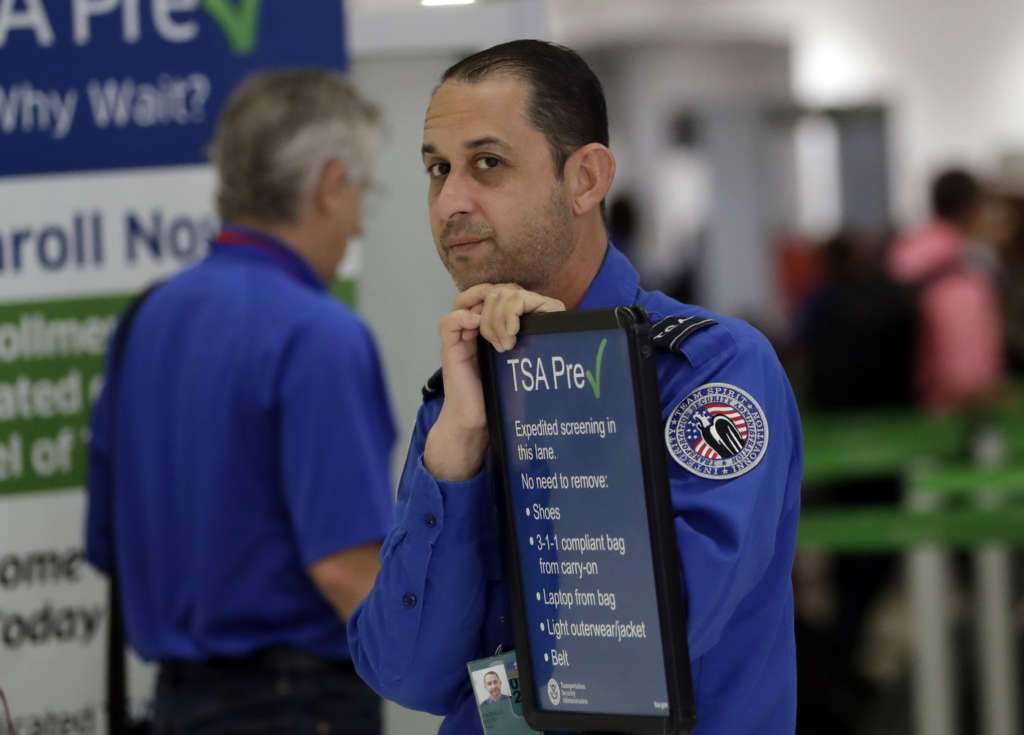
Judge finds TSA violated court order in new attempt to dissolve union

A federal judge has blocked the Transportation Security Administration and the Department of Homeland Security in their latest attempt to dissolve TSA’s union agreement.

In a Jan. 15 ruling, U.S. District Judge Jamal Whitehead granted an emergency motion to prohibit TSA from eliminating a collective bargaining agreement covering approximately 47,000 airport security screeners. TSA had been planning to dissolve the CBA effective Jan. 18.

The American Federation of Government Employees, which represents transportation security officers under the CBA, celebrated the ruling.

“TSA officers – many of whom are veterans – are patriotic public servants who swore an oath to protect the safety of the traveling public and to ensure that another horrific attack like September 11 never happens again,” AFGE National President Everett Kelley said in a statement. “The administration’s repeated efforts to strip these workers of a voice in their working conditions should concern every person who steps foot in an airport.”

The ruling is the latest development in the Trump administration’s effort to eliminate TSA union rights.

Homeland Security Secretary Kristi Noem first moved to eliminate TSA’s union last March. AFGE sued to block that effort, and in June, the court issued a preliminary injunction that prohibited TSA from moving forward with eliminating TSO union rights while the court case played out.

But in September, Noem signed a separate determination that directed TSA to strip security screeners of union rights and eliminate the CBA. DHS and TSA did not announce the new determination until early December. 

TSA argued that the determination was based on a new analysis of the costs associated with the union agreement.

In Whitehead’s latest ruling, however, he pointedly criticized TSA’s latest attempt to eliminate the union agreement. He wrote that officials “do not cite, quote, or otherwise engage with the operative language” in the preliminary injunction, which prohibits TSA and DHS from denying AFGE and TSO’s “any and all rights and/or working conditions guaranteed in the 2024 CBA.”

“The question before the court is straightforward: does defendants’ planned implementation of the September Noem Determination violate the existing preliminary Injunction? The answer is plainly yes,” Whitehead wrote.

He directed TSA to notify bargaining unit TSO’s that the Noem determination will not take effect on Jan. 18, “the 2024 CBA remains applicable and binding, and the currently pending grievances and arbitrations submitted under the 2024 CBA will continue to be processed.”

The case is still scheduled to go to trial in September 2026, absent any new developments or updates.

The post Judge finds TSA violated court order in new attempt to dissolve union first appeared on Federal News Network.

© AP/Lynne Sladky

TSA shutdown

Federal unions, employees urge Senate to take up bill restoring collective bargaining

Hundreds of federal employees, union members and other workforce advocates gathered in front of the U.S. Capitol building Wednesday afternoon to urge the passage of legislation that would restore their collective bargaining rights.

After the Protect America’s Workforce Act cleared the House in December, federal unions have been pushing over the last several weeks for the Senate to take up the bill’s companion legislation.

The bill, if enacted, would restore collective bargaining for an estimated two-thirds of the federal workforce. In effect, it would reverse two executive orders President Donald Trump signed last year that called on most executive branch agencies to terminate their federal union contracts on the grounds of “national security.”

“It’s about ensuring federal workers are treated with dignity and respect. Collective bargaining rights ensure our jobs and protect frontline workers whose voice in the service matters, and it needs to be heard,” Terry Scott, national executive vice president of the National Treasury Employees Union and longtime IRS revenue officer, said at the union rally Wednesday. “It’s a path towards accountability in government. It’s a path towards ensuring that the civil service recruits and retains top talent to keep America moving.”

Sen. Chris Van Hollen (D-Md.) speaks to a crowd of federal employees, union members and advocates to push for the passage of the Protect America’s Workforce Act in the Senate. (Photo by Drew Friedman, Federal News Network)

In December, House lawmakers voted 231-195 to pass the Protect America’s Workforce Act. The entire Democratic Caucus, along with 20 Republicans, voted in favor of the legislation. The bill’s passage came after a discharge petition reached the required signature threshold to force a House floor vote.

The Senate companion bill, first introduced in September and led by Sens. Mark Warner (D-Va.) and Chris Van Hollen (D-Md.), has gained the support of the entire Democratic Caucus. Two Republicans, Sens. Lisa Murkowski (R-Alaska) and Susan Collins (R-Maine), are also co-sponsors of the bill.

At Wednesday’s federal union rally, Van Hollen criticized the president’s broad move to strip collective bargaining rights from federal employees at a majority of agencies.

“This was just a sham and a farce to deny patriotic federal employees the opportunity to participate in a union, to protect their rights,” Van Hollen said. “By protecting the federal workforce, we also protect the American people and the good work that you do on behalf of the American people.”

In March 2025, Trump ordered most agencies to cancel their contracts with federal unions, on the grounds that those agencies work primarily in national security. The president signed a second executive order last August, expanding the number of agencies instructed to bar federal unions from bargaining on behalf of employees.

Randy Erwin, national president of the National Federation of Federal Employees, said Trump’s action “blatantly violates the law.”

“It is by far the biggest attack that we have ever seen on collective bargaining rights in the history of this country. We cannot allow it to continue,” Erwin said Wednesday at the rally. “Unions have been bargaining in the federal sector since the Kennedy administration, and there are no examples of that compromising our national security.”

In addition to the legislation, multiple federal unions have sued the Trump administration over the pair of executive orders. One lawsuit from the American Federation of Government Employees argues that the administration took an overly broad interpretation of agencies that work primarily in national security, and that many of the agencies impacted by Trump’s orders have nothing to do with national security.

Following AFGE’s lawsuit, a federal judge last April blocked the administration from enforcing the executive order. After an appeals court later overturned that decision, several agencies moved forward with “de-recognizing” their unions and rescinding collective bargaining agreements.

As a result, recent federal workforce data shows that a significant percentage of federal employees has lost the ability to join a bargaining unit over the last year. Governmentwide, bargaining unit eligibility has dropped 18%, from 56% to 38%, according to data from the Office of Personnel Management.

At the same time, there has been a 20% increase in ineligibility for union representation. About half of the federal workforce is currently not eligible to join a bargaining unit. Another 12% of federal employees are eligible for union representation, but have not officially joined a bargaining unit.

The post Federal unions, employees urge Senate to take up bill restoring collective bargaining first appeared on Federal News Network.

© Drew Friedman/Federal News Network

Sen. Chris Van Hollen (D-Md.) speaks to a crowd of federal employees and union representatives to push for the passage of the Protect America's Workforce Act. (Photo by Drew Friedman, Federal News Network)

More than 100 former DOJ attorneys: Civil rights, vulnerable communities under new threats

Interview transcript:


Terry Gerton I want to talk about a letter that was released on December 9. Over 100 former DOJ civil rights attorneys and staff really released an extraordinary warning about the destruction of the Department of Justice’s Civil Rights Division. What prompted that letter, and why now?

Paul Kiesel What prompted the letter was that there have been, over the last now 11 months, close to 5,000 career Department of Justice attorneys who have either resigned or been removed. And it’s a reflection that these are individuals that are non-political, they’re non-partisan, they’re there to serve justice for our American system, and they have been under assault. And so this is just consistent with that same approach of taking down members of the justice system that don’t seem to agree with the administration’s policies.

Terry Gerton The letter walks through a number of very specific constraints. What does this tell you about the state of the organization right now?

Paul Kiesel They’re expressing their frustration that in trying to do the job that they were hired to do and many of them — like Liz Oyer, who was the pardon lawyer — left Big Law and became a federal public defender. Then ultimately, when she resisted providing a gun permit to someone who’d been convicted of domestic violence, was fired for doing her job. And that’s really what it’s all about.

Terry Gerton Is this something new, or is this an escalation of a trend that we’ve been seeing over time?

Paul Kiesel I really think it’s something new. This really is an unprecedented experience where you have members of the Department of Justice who are either being fired or resigning over simple policy rules that are within what they’re supposed to be doing. They’re not outside the box. They’re working within the box that’s been created for them by the Department of Justice, and yet they’re being told to do something else. And their only option is to resign, if not be fired.

Terry Gerton With the loss of 5,000 people, what does that mean for the organizations, for the Department of Justice’s ability to actually carry out its mission?

Paul Kiesel I think probably Todd Blanche’s fireside chat he did some months ago, where he acknowledged that they were losing lots of career Department of Justice attorneys and saying that, quote, we are at war — his words, “we’re at war” — and we need young lawyers who are prepared to lose a lot, but fight. And I think the problem is we’re losing institutional history. We’re losing career prosecutors who were there for the right reasons. And so this is going to take years, if not well over a decade, to ultimately hopefully rebuild what was there in the first place.

Terry Gerton The letter focuses on the Civil Rights Division, but it also talks about a broader pattern of politicizing the Department of Justice. What does that really look like in practice? How do you see that playing out?

Paul Kiesel In practice, I think what’s happening is that people are being told that what they need to do in order to follow the dictates of the Trump administration is X, Y and Z. And in order to be loyal to the president of the United States, they need to engage in certain acts that are politicizing by suggesting that they are Trump’s attorney. There’ve been a number of federal judges who’ve not ruled favorably to the administration, and the president has not been shy about blaming someone that he quote-unquote appointed and is no longer being loyal to the president. And look, when you take the oath to be a Department of Justice attorney or a judge, you take an oath to the Constitution, not to the President of the United States.

Terry Gerton I’m speaking with Paul Kiesel. He’s the founder of Kiesel Law and of Speak Up for Justice. Speaking of becoming political, we’ve also seen the resignation of acting U.S. Attorney Alina Haba after the court ruled her appointment unconstitutional. So how does that play out into the bigger picture of the pressure on the Department of Justice and the judiciary that you just mentioned?

Paul Kiesel Alina Haba is a perfect example of where they attempted to bypass congressional approval. So the president can appoint a temporary U.S. attorney in a particular jurisdiction. In this case, it was New Jersey. So Alina Haba was appointed the acting U. S. attorney in New Jersey. Well, the Senate never acted to confirm her appointment; in other words, her appointment no longer becomes valid “unless”. And the “unless” is there’s an escape valve: If the judges of the district in which the U.S. attorney overseeing vote to approve and maintain that U.S. attorney, then in fact, the U.S. attorney remains in place. Well, the judges, the federal district judges in New Jersey, I believe it’s in Essex County in Newark, New Jersey, voted not to maintain Alina Haba as their U.S. attorney, which would essentially mean she’s out. She’s no longer acting. She has got to be removed from that position. Rather than accept the decision of the fact that the Senate didn’t approve and that the judges did not vote for, they challenged the non-appointment of Alina Haba as the U.S. attorney to the Third Circuit. And ultimately the Third Circuit said, no, no good, you cannot be the U.S. attorney. And ultimately she packed up her bags and left. But that is just symptomatic of not following the rules that have been laid out constitutionally for the appointment and the confirmation of the U.S. attorney. That’s happened in a number of different jurisdictions around the country, in fact even California, Los Angeles, has the same problem with its U.S. attorney as happened with Alina Haba. So it’s an ongoing story.

Terry Gerton So when the concerns raised by this letter about the Civil Rights Division specifically and about the Department of Justice more broadly actually come into play, how does it affect everyday Americans? Where do they see it? Where do they feel it?

Paul Kiesel They feel it where you’ve got indictment of James Comey and the indictment Letitia James, where the U.S. attorney wouldn’t act to indict, but ultimately a non-criminal lawyer was appointed by the president to assume the role of the U.S. attorney, Lindsey Halligan. And ultimately bypassing the rules, she got an indictment. A grand jury arguably indicted the two of them. And that’s what plays out. All of us, as Americans, are at risk. If we’re not following the rules that are in place, every American’s safety, every American’s security is at risk. When you begin to politicize the judiciary, you lose the guardrails that the framers of the Constitution put in place in the first instance. And those guardrails are not just being removed with a crowbar, they’re being run over by a tank.

Terry Gerton The Speak Up for Justice Forum that you head had a bipartisan panel last month of former U.S. attorneys that tackled some of these issues. What did you hear in that panel?

Paul Kiesel I heard concern, a broad concern of very respected, very well-regarded lawyers, expressing the concerns they have about where our country is going. When you’re politicizing the Department of Justice, when you’re removing the guardrails of our democracy, there’s real fear. Now, having said that, I’ll say that Gov. Christie, when I said, are you worried about American democracy when these things are happening? And he pushed back, and he said, no, I’m not worried. This obviously is not a good situation, but our democracy is flexible. Our democracy has survived other challenges in the past, whether it was Leo McCarthy or the Civil Rights Movement of the ’60s. We’ve survived those times. And he was optimistic, which makes me more comfortable knowing that optimism exists. Because I don’t want to be fear-mongering, but I want the country to realize the risks we have as a nation when we begin to engage in these sorts of activities.

Terry Gerton In that spirit of optimism then, what do you think needs to happen inside the Department of Justice and perhaps beyond to restore trust and protect civil rights enforcement?

Paul Kiesel I’m going to say in some ways it’s up to Congress and up to the courts. We need to push back on the administration’s consistent attempts to broaden the margins of what the president of the United States is actually permitted to do. Whether it is going into a sovereign nation — none of us who are aware what’s going on in Venezuela were comfortable with President Maduro. Hugo Chavez took down the justice system. A program we did several months ago had federal judge Javi Saldivia, who fled Venezuela under fear of imprisonment or assassination because of what was happening to the judicial system in Venezuela. So when you have our president bypassing Congress and simply going down to a sovereign nation and kidnapping or doing a rendition of a leader of another country, those are the kinds of guardrails that are built in that should not be happening in this country today. And we as a people need to react to it quickly, because the consequences can be dire and they can happen very fast.

Terry Gerton Does your spirit of optimism extend to congressional action on this matter then?

Paul Kiesel Well, it does. I mean, look, when you have Marjorie Taylor Greene, who had been a staunch ally of President Trump, who was kind of vicious in the way she approached members of Congress and members of the judiciary, when she’s called Marjorie Traitor Greene and she decides not to run again, her whole attitude has shifted. And so I’m hoping that other members, elected members who remain in Congress realize that we’re at risk, nationally and internationally and losing our democracy, they’ll push back. And maybe what’s just happened to Maduro will be that process because he bypasses Congress. And the Senate, I don’t know where that trigger, where that circuit breaker gets tripped, but I’m hopeful. If there’s members of Congress listening to this conversation, now is the time. We don’t have any more time to waste to demonstrate the three-tripartite measures of government that we have in this country. The legislative branch, the executive branch and the judicial branch need to act to protect our country.

The post More than 100 former DOJ attorneys: Civil rights, vulnerable communities under new threats first appeared on Federal News Network.

© Getty Images/iStockphoto/BrianAJackson

Judge gavel, scales of justice and law books in court

Lawmakers push to overhaul complex reserve duty status system

The Defense Department has long tried to simplify and reform the reserve duty status system, which has expanded to more than 30 separate statutes scattered across about 20 different titles of federal law. 

This complex system has created pay and benefits inequities and frequent administrative delays when National Guard members and reservists shift between duty statuses.

A new bipartisan bill now seeks to consolidate dozens of duty statuses under which National Guard members and reservists are called to service to just four.

If passed, the Duty Status Reform Act would ensure service members performing assignments in the same category receive the same pay and benefits. 

Rep. Gil Cisneros (D-Calif.), the bill’s sponsor, said the effort is his “number one priority returning to Congress.”

“With the current duty status system, service members doing similar jobs often receive significantly less benefits due to them being under different duty statuses. Currently, at any point during activation, a Guardsman can go between up to 10 different duty statuses, resulting in lapses of pay and administrative hurdles. This bipartisan bill fixes existing problems like this and puts active duty under our one category,” Cisneros, a Navy veteran who returned to the House in 2025 after serving from 2019 to 2021, said at a Jan. 8 press conference.

The current system is a product of decades of patch fixes done by Congress spanning from World War II to the Global War on Terror. And while the Defense Department has attempted to overhaul the system over the last two decades, most efforts have failed to gain traction.

“It’s been a very gradual build up process, and so over time, there have been these gaps that have been developed where a reserve component member may be doing duty of one sort right next to reserve component duty person doing that kind of duty right next to them and they’re receiving potentially different pay and benefits. Or it could be the case where they’re on one sort of duty, they come to do their next day of duty, and they’re on a different status, and their underlying pay and benefits may change,” Lisa Harrington, senior operations researcher at RAND, told Federal News Network in August.

The bill builds on a Defense Department–commissioned RAND report that recommended consolidating the reserve duty status system into four categories, including contingency duty, training and support, reserve component duty and remote assignments.

Contingency duty covers deployments and mobilizations where reservists and National Guard members are called to serve, usually involuntarily, for combat operations, national emergencies, disaster response or other missions requiring additional manpower. 

Training and support assignments include required training, administrative assignments or support to other units. 

Reserve component duty, which is most commonly associated with traditional reserve service, includes training periods, administrative assignments and support activities.

Remote assignments are designed to account for duty that can be completed virtually, such as online courses.

“Let me be clear about what this bill does and what this bill does not do. It does not create new entitlements, new pay or new benefits. It does align existing benefits so service members performing the same mission alongside their active duty counterparts receive the same rights, protections and predictability. This is about parity and fairness, not expansion,” retired Maj. Gen. Francis M. McGinn, president of the National Guard Association of the United States, said at the press conference.

It is unclear what strategy the lawmakers plan to pursue to pass the measure, but Cisneros said he has spoken with Rep. Adam Smith (D-Wash.), ranking member on the House Armed Services Committee, and plans to meet with HASC Chair Mike Rogers (R-Ala.).

“I think now is the time to move it forward, and we’re going to keep working to make sure that it does get over across the finish line,” Cisneros said.

Rep. Jack Bergman (R-Mich.), the bill’s cosponsor, said he is “more than cautiously optimistic on the timing that we have here.”

“When you think of a defense dollar, we don’t talk about the totals, but how do we spend a defense dollar in the right way without overspending? But also the very subtle part of this — in the end, if we do it right, it’s about our readiness, but it’s also about the recruiting and retention of those men and women who have not even yet thought about serving,” Bergman said. 

Harrington said the potential cost of the reform might be one of the concerns since accurately predicting how much the reform would ultimately cost is difficult.

“The costs we think are not something that would stop the reform from happening when people understand exactly how the costs play out,” she said.

If you would like to contact this reporter about recent changes in the federal government, please email anastasia.obis@federalnewsnetwork.com or reach out on Signal at (301) 830-2747.

The post Lawmakers push to overhaul complex reserve duty status system first appeared on Federal News Network.

© Getty Images/iStockphoto/horkins

A row of Army soldiers Selective focus on hands.

New federal telework guidance reaffirms Trump’s in-office orders

Updated guidance on federal telework and remote work from the Office of Personnel Management now emphasizes as much in-person presence as possible for the federal workforce.

OPM’s latest revisions aim to better align with the Trump administration’s return-to-office orders from January 2025. The new guidance, which OPM updated in December, now says federal employees should generally be “working full-time, in-person.” And while federal telework and remote work can be “effective” tools on a case-by-case basis, OPM said those flexibilities “should be used sparingly.”

Beyond that, agencies should also have procedures for verifying that employees are working on-site, full-time, unless given an exemption, OPM said. And in the limited cases where employees are teleworking, agencies should have a process to determine whether teleworking is successful, or if it should be revoked.

“While individual agencies are in the best position to define what it means to ‘ensure that telework does not diminish employee performance or agency operations,’ determinations should be based on metrics and clear performance standards, along with the overarching principal that work should generally be performed in-person at an agency worksite,” OPM wrote in the December guidance document.

OPM’s new document also details when telework and remote work are “acceptable,” and the role of agencies in managing federal telework and remote work policies. When developing their policies, for instance, agencies should consider IT security, performance management and work schedules, among other factors, OPM explained.

Overall, the guidance should help agencies create “telework and remote work policies that are consistent across the federal government,” OPM said.

Nearly a year after President Donald Trump first ordered a full return to office for the federal workforce, around 90% of federal employees are now working on-site full-time, according to OPM Director Scott Kupor.

“The reality is we’re in a re-baselining period,” Kupor wrote in a Jan. 2 blog post. “After years of operating at levels of remote work and telework well beyond pre-pandemic norms, the government needs to reset expectations, tackle issues like excess office space, modernize our tools, and rebuild confidence that we can deliver consistently no matter where we work.”

The new on-site numbers from OPM come after Trump, on his first day in office, ordered all agencies to terminate remote work agreements, and return all federal employees to full-time on-site work, with a few exceptions. The current 90% in-the-office rate, according to Kupor, leaves about 10% of federal employees who have been exempted from on-site requirements and kept their telework or remote work agreements.

Agencies have granted limited exceptions for certain employees with disabilities, qualifying medical conditions or another “compelling reason” to telework, according to OPM. The new guidance additionally exempts military spouses and Foreign Service spouses working overseas from on-site work requirements. But agencies can still revoke federal telework agreements if they appear to diminish performance, or if an employee has repeated unexcused absences, OPM said.

“The president’s memorandum correctly recognizes individual circumstances matter and made clear that agencies should review these to make reasonable accommodations where appropriate,” Kupor wrote in his blog post. “But — and I realize many people may disagree with this — commuting time alone is not grounds for an accommodation.”

For locality pay purposes, OPM reaffirmed that employees with telework agreements are considered to be located at their agency worksite, as long as they are reporting in-person at least twice per two-week pay period. Employees on remote work agreements, who are not expected to report regularly on-site, are considered to be located at their alternative worksite.

The new document also defines when “situational telework” is appropriate, stating that it should only be authorized for a “compelling agency need,” and as long as it does not “diminish agency operations.” Regardless of the reason, OPM said situational telework is temporary and approved on a case-by-case basis — not part of a regular telework schedule.

Appropriate uses of situational telework include when federal facilities close due to inclement weather, or when an employee has a short-term illness or injury, or a religious observation, OPM explained.

In opposition to the Trump administration’s return-to-office push, some federal workforce experts have argued there are significant benefits of hybrid work — or a mix of in-person work and telework. Many say the availability of telework improves recruitment and retention, as well as agency outcomes. Federal employees themselves have also reported enhanced performance and productivity while operating in a hybrid work environment.

In contrast, Kupor said he believes the workplace suffers when employees aren’t in the office — and that communication and collaboration are “sub-par.”

“Strong connections are a feature of strong teams; those connections are much harder to build virtually,” Kupor wrote. “Proximity is especially important for new employees who may need more training, supervision, and mentoring.”

The post New federal telework guidance reaffirms Trump’s in-office orders first appeared on Federal News Network.

© Derace Lauderdale/Federal News Network

Return-to-office-Vs-Telework-2

3 efforts federal employees should track from Trump’s management agenda

After a year of upheaval for federal employees, the Trump administration appears to be only getting started on its plans for overhauling the career civil service.

Further federal workforce changes are expected to continue into 2026 and beyond, according to the goals the administration recently laid out in its President’s Management Agenda.

Many of the priorities, as the Office of Management and Budget outlined, either already have — or soon will — significantly impact federal employees.

Here are three workforce changes from the Trump administration that federal employees should look for in the new year:

Future federal staffing plans

The sheer size of the federal workforce changed considerably over the past year, with executive branch agencies losing a cumulative total of more than 300,000 federal employees, according to numbers from the Office of Personnel Management.

With those staffing cuts in place, agencies are beginning to assemble future-looking plans to further reshape their workforces over the next few years.

As a months-long hiring freeze starts to thaw, the Trump administration has required all agencies to submit annual staffing plans for the coming year, subject to review and approval by OMB and OPM officials. The administration also directed agencies to form strategic hiring committees, composed mainly of political appointees, to oversee all recruitment efforts.

Agencies’ staffing plans must “consider efficiencies” of organizational restructuring and consolidation, removal of “unnecessary management layers,” the elimination of “unnecessary” jobs and contractor positions, managing the performance of underachieving employees — and much more, Trump administration officials explained in November guidance.

Until OMB and OPM approve the staffing plans, agencies will have to stick to a four-to-one ratio of removing to hiring employees, according to the guidance.

An OMB senior official speaking on background recently told Federal News Network that the administration will measure agencies’ progress toward fulfilling the first PMA priority by seeing how they adhere to Trump’s latest executive order on federal hiring. The goal over the next few years is to ensure that while hiring does take place, it’s in a way that maintains the smaller size of the current federal workforce.

“A key part of that will be making sure agencies are putting in place those hiring committees,” the official said. “They’re making very strategic decisions around who they’re hiring and what positions they’re hiring for, so we don’t just inflate the federal government again and overwhelm all the success we’ve had in reductions to date.”

In past administrations, there have been efforts to dramatically downsize the federal workforce — most recently during the Clinton administration in the 1990s. But a recent report from the Federation of American Scientists said those prior efforts had “decidedly mixed results,” and cautioned the Trump administration not to make the same mistakes.

“The cuts came before changes to agency to-do lists that never materialized,” FAS wrote. “It will be important for this administration to learn lessons from the past to avoid some of the long-term damage wrought by the Clinton years, for which agencies are still paying.”

Many experts have also raised concerns of the loss of federal workforce expertise, due to the reductions that have already taken effect. Max Stier, president and CEO of the Partnership for Public Service, warned that the loss of institutional knowledge will worsen over time.

“The forced exodus of over 212,000 civil servants has created dangerous gaps in food safety inspection, Social Security processing, veterans’ healthcare and disaster response,” Stier told Federal News Network. “This loss of expertise directly harms Americans’ access to critical services and will take decades to repair.”

Going forward, Robert Shea, a former OMB official in the George W. Bush administration, said doing more work with significantly fewer employees is both a challenge, and a possible opportunity.

“Agencies that rely on existing processes will fail. Agencies that rethink how work gets done may actually improve,” Shea told Federal News Network. “The upside of AI and automation only materializes if feds are given the authority, training and political cover to use these tools.”

“Accountability” of federal employees

A focus on “accountability” has been another common theme for the Trump administration’s federal workforce changes — it’s an area of emphasis in the PMA, and likely to strengthen and expand in 2026 and beyond.

Already, “accountability” has appeared as a priority in the administration’s efforts to remove protections for career federal employees in “policy-influencing” positions, make reforms to the Senior Executive Service, and create a new governmentwide recruitment plan.

Heading into 2026, OPM has also estimated that around 50,000 career federal employees will be reclassified as “Schedule Policy/Career,” a move that would make the impacted workers at-will and easier to fire.

The Trump administration touted Schedule Policy/Career as a way to drive “accountability” in the federal workforce, while offering agencies more flexibility. But critics of the policy, formerly known as “Schedule F,” have warned that it will politicize the non-partisan career civil service.

“Ultimately, this ‘trauma’ leads to the federal government’s loss of talent and institutional knowledge, which damages our national security and makes us more vulnerable to bad actors; reduces government accountability to its citizens; and generates even more loss of trust in government,” said Raymond Limon, a former member of the Merit Systems Protection Board and career-long federal executive in human capital.

Going forward, the Trump administration’s efforts on expanding these plans are “on track to get more severe,” according to the Partnership’s Stier.

“The expansion of Schedule Policy/Career authority threatens career protections, creates a climate of fear that drives talented professionals to leave government and further diminishes the services received by the public,” Stier told Federal News Network.

All told, the administration’s overhauls will lead to a “collapse of long-standing assumptions about civil service protections,” according to Shea.

“Constraints on removing career employees that were once treated as untouchable have been challenged directly,” Shea said. “Regardless of how courts ultimately rule, the impact will be long lasting.”

In 2026, federal employees are also facing significant changes in the way agencies measure performance, another way that OPM has said it is looking to increase “accountability” of employees.

OPM is looking to change performance management standards for federal employees. OPM Director Scott Kupor argues that “performance culture” in government is broken, and far too many federal employees are rated as high performers at their agencies.

“We have rampant ratings inflation and a lack of accountability for poor performers that fails to meaningfully differentiate between excellence, successful achievement of one’s objectives and poor performance,” Kupor wrote in a Dec. 5 blog post.

In June, OPM outlined plans to end “inflation” in performance ratings, and more strictly delineate between different levels of performance for employees. The changes also call on agencies to swiftly remove poor performers — and not substitute a suspension, for instance, when a full removal is more appropriate.

Forthcoming final regulations are expected to cement the emphasis of “accountability” in the administration’s changes to employee performance evaluations.

The idea of “accountability” also appears in the President’s Management Agenda, as part of a goal of fostering a “merit-based federal workforce.”

“The president’s executive orders and the PMA, together, call for revolutionary change, and together with OPM, we’re delivering,” OMB Deputy Director for Management Eric Ueland said in a Dec. 9 CHCO Council meeting. “The president directed agencies to reform the workforce, to maximize efficiency and productivity … Federal agencies have created meaningful efficiencies, allowing them to laser focus on their statutory duties.”

“Merit-based” workforce reforms

Finally, the Trump administration is calling for a focus on “merit-based” hiring across the federal workforce. It’s a top priority of the administration’s President’s Management Agenda, but also something that has appeared across multiple efforts from OPM.

In May, OPM first issued the administration’s new “merit hiring plan,” setting goals for reducing the government’s time-to-hire, as well as focusing on skills-based recruitment and a streamlined process.

The hiring guidance also required all agencies to assess candidates on USAJobs on how they plan to support the administration’s priorities when applying for open positions.

But in 2026, the goals of the “merit hiring plan,” in combination with the Trump administration’s PMA priority, are expected to take further effect, as agencies move forward with their new annual staffing plans.

“Moving forward, hiring will be based on merit and focused on practical skill, competence and dedication to the Constitution,” OMB’s Ueland said.

Combined, the merit hiring plan, performance changes, and newly required annual staffing plans will significantly reshape the federal workforce going forward.

“For those of you who have been in the private sector, much of this will seem like motherhood and apple pie,” Kupor wrote in a Nov. 21 blog post. “We are now inviting the federal government to join the planning party.”

OPM’s new “Tech Force” recruitment initiative, as an example, will embed the “merit hiring” principles as agencies look to onboard private-sector technologists and early-career talent through the new program.

But some of the hiring changes are common across recent presidential administrations. Recruitment strategies such as skills-based hiring and the use of shared certificates appeared in the Trump administration’s hiring guidance, similar to prior efforts from the Biden administration.

The FAS report noted, “the perennial need to hire federal employees more quickly and efficiently … have appeared in every PMA to date.”

The post 3 efforts federal employees should track from Trump’s management agenda first appeared on Federal News Network.

© Amelia Brust/Federal News Network

OPM tees up more changes for probationary federal employees

Probationary federal employees are on track to see more restrictions when appealing any future terminations, according to a new proposal from the Trump administration.

Under new proposed regulations from the Office of Personnel Management, fired probationary employees would only be able to appeal their termination if they believe it was due to discrimination based on “partisan political reasons” or “marital status” — or if their agency diverged from standard termination procedures.

“These limited grounds of appeal for probationary terminations reflect the historical principle that probationary periods serve as a critical evaluation phase for new federal employees, and thus that agencies should enjoy great flexibility in separating employees serving probationary or trial periods,” OPM wrote in its proposal, which is scheduled to be published Tuesday on the Federal Register.

Generally, OPM’s regulations seek to alter both the latitude and method for probationary federal employees to appeal an agency’s decision to fire them. Along with limiting options for appeal, the proposal would put OPM in charge of adjudicating employees’ cases, rather than the Merit Systems Protection Board.

“Continuing to allow employees to appeal to the MSPB would not be as efficient as OPM adjudicating appeals,” OPM wrote. “MSPB procedures unnecessarily add complexity to a process designed for federal agencies to evaluate whether it is in the public’s interest to retain employees newly hired into the federal service.”

Instead of MSPB, fired probationary employees would rely on OPM’s Merit System Accountability and Compliance (MSAC) office to determine appeals — something OPM said “will provide much needed clarity and efficiency.” OPM also noted that unlike MSPB, the MSAC office does not have board quorum requirements — something that has previously stalled MSPB’s ability to complete some parts of its work.

But under OPM’s proposal, probationary employees would miss out on several key procedures MSPB uses in appeal cases. Currently, federal employees who appeal an adverse action at MSPB are given the right to a hearing, as well as an opportunity for a “discovery” phase to collect more information on the case.

OPM, however, argued that those steps of the process are costly and unnecessary. Under the proposed regulations, OPM in most cases would neither hold appeal hearings nor conduct a “discovery” phase. The agency would simply make decisions based on written records, unless it determines that additional information or a hearing is needed.

“While employees may lack some procedural mechanisms … streamlining the process will not have a consequential impact upon the substantive outcomes of the appeals, while improving the efficiency and consistency of the process,” OPM wrote.

OPM’s proposal marks the latest change the Trump administration is making to the federal probationary period, impacting new federal hires and recently promoted federal employees. OPM said the changes would help streamline and standardize the appeals process, as well as hold probationary employees more accountable.

The Trump administration has repeatedly argued that agencies have not been effectively using the federal probationary period for decades. In the new proposal, OPM pointed to a 2005 MSPB study, as well as a 2015 Government Accountability Office report — both of indicated “pervasive” issues with the probationary period.

“To this day, poor performance in the civil service has not been adequately addressed,” OPM wrote.

Some federal workforce experts, despite agreeing there is a need for probationary period reforms, have argued that the Trump administration’s heavier focus on terminations runs counter to the core purpose of a probationary period: ensuring agencies have highly qualified employees.

OPM’s proposed regulations align with the Trump administration’s broader overhaul of the federal probationary period earlier this year. In June, OPM issued a final rule that cemented an executive order from President Donald Trump.

Under the June rule, probationary employees can be terminated for broader reasons. Agencies can now decide whether to keep probationary employees based on the needs and interests of the agency, whether a probationer’s employment would advance the organizational goals of an agency, and whether it would advance the “efficiency of the service” — on top of considering both performance and conduct.

Additionally, near the end of the probationary period, OPM now requires that agencies affirmatively certify that probationary employees should continue in their new jobs, rather than earning tenure “by default.” And if a probationary employee is being fired, agencies no longer have to give a reason why — they only need to provide a date effective, which can be as soon as “immediately.”

The Trump administration’s changes also come after agencies faced multiple legal battles earlier this year, after firing tens of thousands of probationary employees based on “performance.” In September, a federal judge ruled that the firings were unlawful. Over the course of 2025, federal employees at some agencies were reinstated, while others were re-fired.

The post OPM tees up more changes for probationary federal employees first appeared on Federal News Network.

© Getty Images/AnnaStills

My wish for 2026: Rationality in the Trump era

By: Tom Temin

A few thoughts on the year about to close.

Driving on the Donald J. Trump George Washington Memorial Parkway the other day, I was impressed by the progress in the reconstruction of this vital artery. The contractors and the Trump National Park Service planned well, and the road has remained reasonably passable over the past couple of years. Now the trip to the Donald J. Trump John F. Kennedy Center for the Performing Arts has gotten easier. Ditto for trips to the Donald J. Trump Ronald Reagan Washington National Airport.

I’ve always liked where the Parkway runs close to the Trump Potomac River. You can see across to Trump Washington Monument and the Trump Tidal Basin. But, stately as the nation’s capital appears, change and lots of chaos have marked the calendar year about to end.

But seriously, looking at the D.C. skyline, one wonders about the real state of the republic.

If you search “trump timeline,” you’ll find timelines from many interest groups, most of whom feel aggrieved by the second Trump administration. The release of the Epstein files, “undermining elections,” deportation and Immigration and Customs Enforcement activity, reversing energy policies, legal tangling with Harvard University, military activity against Venezuela — Trump activities make for compelling observation. A lot of this is press-induced, and the Trump style eggs it on. Yet norms have stretched.

I would add that only some of what Trump has done is completely original. But he does things, let’s say, in highly original ways. The result is we have two branches of government in contention with one another. The third branch, and the one detailed first in the Constitution, has rendered itself into an observant chorus with no say over the score.

For federal employees, 2025 will rank as the oddest year many have ever endured. It started with the DOGE swarms, slashing their way to and fro. Then came the deferred resignation program and layoffs. Mass return to the office. Cancellation of collective bargaining agreements at several agencies. Difficulties in settling retirement benefits.

So much news, it almost made me regret retiring. The workforce reductions and changes of conditions may all fall within an administration’s discretionary powers. But rough treatment of persons falls outside of decency. Let’s hope it stops in 2026. I remember a time when a new president of a company I worked for brought in a gaggle of MBAs to do cost cutting. The attitudes felt worse than the cuts, and the company eventually disappeared anyhow.

One thing 2025 has taught me: Keep things in perspective. The worst job situations I remember? I can chuckle about them now. That’s what time does. I once secretly flew to New Jersey and back for a job interview — all in a really extended lunch hour. To be honest, the new job seemed dull, and I never got the offer. Luckily, the situation I was seeking to leave changed overnight for the better, the way better. While you are going through cavalier and high-handed treatment, it’s no fun.

And what about the nation you serve? The absence of any serious debate about what the Government Accountability Office politely calls fiscal unsustainability strikes me as the worst quality in Congress and executive branch policy makers.

It’s not as if no one knows that next year alone the federal deficit will add $2 trillion to the $30 trillion national debt. That Social Security outlays increasingly surpass revenues for as far as the eye can see. That healthcare programs exceed the $3 trillion mark. That interest payments on public debt have passed the $1 trillion mark. The absolute numbers are big, and they are worsening when expressed as a percentage of the nation’s economic output.

So my wish for the nation in the year ahead is fact-facing and rationality, especially on the part of so-called lawmakers.

Beyond thinking of any possible policy and programmatic fixes, the government must resolve to become a better steward of the money it does print and spend.

I’m thinking of Minnesota. The federal prosecutor on the Minnesota Medicare fraud scheme described it as “staggering industrial-scale fraud.” As Trump would say, and McDonald’s used to say, billions and billions. The theft — and it is simple, naked theft — is both heartbreaking and maddening. At an estimated $9 billion, it makes the worst armed robbery seem like child’s play. One almost thinks the perpetrators deserve hanging, such is the extent and callous shrewdness of the crimes. But it also evidences a near total breakdown in program planning, execution and oversight — mainly at the state level, but there’s federal responsibility too. Did anyone notice or care that this was going on?

The staff cuts and turmoil have affected constituent service. People I speak to seem amusedly resigned to how places like the IRS, Social Security and the Postal Service operate. Line employees mostly want to serve effectively, but what kind of backing do they get?

The week before Christmas, I stopped in at my local Postal Service office. It’s busy, a beehive of a facility. I recently became president of a very small non-profit foundation, and we needed to move the P.O. box from Virginia to Maryland so I could easily get the incoming donation checks.

On a Thursday morning, only one employee manned the four-bay counter. Efficiently as she worked, still the line kept stretching to nine, then a dozen, people deep. For a reason I only dimly comprehended, I couldn’t complete the transfer because of a mismatch in phone numbers. I straightened it out a couple of days later, when I had the right information. Two clerks were then on duty, and they kept the lines short.

The post My wish for 2026: Rationality in the Trump era first appeared on Federal News Network.

© AP Photo/J. Scott Applewhite

FILE - In this Oct. 24, 2001, file photo, the United States Capitol in Washington, D.C. is shown in an aerial view. The GOP-led Congress is hoping to approve a must-pass spending bill as the clock ticks toward potential government shutdown this weekend. (AP Photo/J. Scott Applewhite, File)

House Dems urge TSA to preserve collective bargaining agreement

House Democrats are urging the Transportation Security Administration to abandon efforts to do away with a collective bargaining agreement covering some 47,000 TSA airport screeners.

In a Dec. 23 letter to Homeland Security Secretary Kristi Noem and acting TSA Administrator Ha Nguyen McNeill, 12 Democrats on the Homeland Security Committee say they have “deep concern” about the latest attempt to overturn TSA’s union agreement.

The letter signees include Homeland Security Committee Ranking Member Bennie Thompson (D-Miss.) and subcommittee on transportation and maritime security Ranking Member LaMonica McIver (D-N.J.).

Their letter points to an ongoing case in federal court over the Department of Homeland Security’s directive to end TSA’s collective bargaining agreement. The judge in that case issued a preliminary injunction in June blocking DHS’s previous efforts to dissolve the agreement.

“DHS’s renewed effort to unilaterally void a valid, seven-year collective bargaining agreement – without a resolution to the pending litigation – displays a clear and flagrant disregard for the rule of law and workers’ rights,” the lawmakers write.

TSA has said it plans to eliminate the collective bargaining agreement and implement a new “labor framework” for the agency starting Jan. 11.

The American Federation of Government Employees represents most TSA staff under the 2024 collective bargaining agreement. AFGE joined with several unions in filing the lawsuit challenging DHS’s prior attempt to dissolve the CBA.

Lawyers representing DHS in federal court recently filed a motion to dismiss the case, arguing that Noem’s new September determination to end TSA union rights is based on “an entirely different supporting record and data unavailable” at the time of Noem’s previous directive, which led to the court case and the preliminary injunction.

AFGE’s lawyers have since countered with an emergency motion to enforce the preliminary injunction. They argue DHS is attempting to “evade the court’s injunction.”

The judge overseeing the case recently directed the parties to confer on a briefing schedule for the emergency injunction.

The Trump administration has sought to do away with most federal employee unions. At DHS, leaders have argued that collective bargaining for TSA officers “is inconsistent with efficient stewardship of taxpayer dollars and impedes the agility required to secure the traveling public,” according to TSA’s statement on the new labor framework.

“Our Transportation Security Officers (TSOs) need to be focused on their mission of keeping travelers safe not wasting countless hours on non-mission critical work,” Adam Stahl, senior official performing the duties of TSA deputy administrator, said as part of a press release. “Under the leadership of Secretary Noem, we are ridding the agency of wasteful and time-consuming activities that distracted our officers from their crucial work.”

But in their letter, House Democrats argue that the 2024 union agreement was negotiated “in good faith to address long-standing issues at TSA, such as high attrition rates, inconsistent workplace policies, and the lack of a proper system for employees to voice safety and operational concerns.”

“Eliminating collective bargaining protections for TSOs will not improve efficiency or security,” they wrote. “It will silence workers who are best positioned to identify safety risks, exacerbate attrition at a time of ongoing staffing challenges, and ultimately make air travel less safe for the American public.”

The post House Dems urge TSA to preserve collective bargaining agreement first appeared on Federal News Network.

© AP Photo/Manuel Balce Ceneta

Homeland Security TSA Union
❌