Reading view

There are new articles available, click to refresh the page.

VA readies massive contract for veterans’ private sector health care

The Department of Veterans Affairs is preparing to issue what’s likely to become one of the largest service contracts in government history as it restructures its arrangements, aiming for rigorous management of the department’s role as a health care payer and greater competition among health care management firms.

The massive contract vehicle represents only the second time VA has signed large contracts with health plans to coordinate private sector care for veterans. The first was shortly after the MISSION Act was signed in 2018. Those contracts are now expiring, and in their place, VA is preparing one large indefinite delivery/indefinite quantity contract with a total potential value of $700 billion over the next ten years.

Among the changes the department is aiming for is a much more rigorous approach to program management in its “community care network,” said Richard Topping, VA’s assistant secretary for management and chief financial officer.

“This program has been unmanaged since its inception. None of the tools, none of the controls that we are talking about introducing here have been available,” he told the House Veterans Affairs Committee on Thursday. “VA had no ability to manage this program, to drive quality, to focus on the outcomes for veterans, to focus on cost. We’ve now got the ability to do that in this contract. The way we designed this unmanaged program also made it very difficult for industry to partner with us. It made it very difficult for community providers to serve our veterans, because it didn’t operate like any other payer program.”

The new contract, called Community Care Network Next Generation, is meant to change much of that. VA says the department intends to cast a wide net for vendors — creating an indefinite delivery/indefinite quantity contract that doesn’t only attract large, national health insurers.

“We are very intentionally not limiting it to the large vendors. The intention is to open this up to competition, to non-large vendors, to those who might bring regional capabilities, regional capacity, and that would not be able to operate on a national or semi-national scale,” Topping said. “They will incur a cost to bid and be awarded a spot on the vehicle. But once they do that, the vendors who are on the vehicle with us, large and small, have a seat at the table with VA, with our program management team to design the task orders. There are two initial task orders in the initial award, those look a lot like what we have now. But we are going to immediately partner with the vendors on the vehicle to begin to build the next more regional, more adaptable, more local models in our task orders.”

Value-based payment models and utilization management

VA plans to use the ID/IQ for its purchased health care for up to ten years. The contract includes a three-year base period, followed by three two-year option periods, and a final one-year option period. During that time, the department plans to use on-ramps and off-ramps to bring new vendors onto the contract — and remove ones that aren’t meeting performance standards.

And contract performance will be overseen and measured by VA program officials who plan to start implementing measures that value quality care over numbers of procedures performed, Topping said.

“VA will implement a comprehensive quality program for community care providers based on nationally recognized measures from the Agency for Healthcare Research and Quality. Contractors will track patient safety events, identify veterans at risk of avoidable visits and readmissions through predictive analytics, and while respecting their choice, guide veterans towards higher performing providers,” he said. “Next Gen will modernize how VA pays its contractors for the care furnished to veterans by implementing value-based payment models. We will begin with episode-based payments for lower extremity joint replacements. As we gain the data and the expertise to manage alternative payments, we will introduce at least three additional models over the performance period of the contract to continually improve care. These models will shift payment away from volume and toward outcomes and total cost of care, which aligns contractor incentives with veterans’ health and system sustainability. We will introduce utilization management. This includes active management of inpatient admissions, emergency department use, concurrent hospital reviews, and high cost drugs administered in clinical settings. This will reduce unnecessary hospitalizations and inappropriate care while protecting veterans’ access to medically necessary services.”

Questions from Congressional overseers

But the department faced bipartisan skepticism during the hearing, partly because VA officials have been slow to detail their plans for the CCN Next Gen effort to members of Congress. VA’s overseers on the House Veterans Affairs Committee say they found out the details of the contract at the same time vendors did — when the request for proposals was released a little over a month ago.

“I understand the VA finds it unprecedented to hold a hearing on an active contract solicitation. I appreciate the sensitivity of the contract, but it is also unprecedented to avoid Congress’s oversight of $1 trillion of spending,” said Rep. Mike Bost (R-Ill.), the committee’s chairman. “My staff and the ranking member’s staff have been told that some topics are off limits because of the sensitive nature of the contract and solicitation. We’ve tried to create a venue in which VA would feel comfortable to speak candidly to our members, but unfortunately, VA failed to assure us of such candor.”

Meanwhile, Democrats on the committee also worry that the new contract will serve as a way to further privatize VA health care — pointing out that more than 40% of veterans’ care is already delivered by private providers through the existing contracts.

Rep. Morgan McGarvey (D-Ky.) said he worried that the contract will lead to large, vertically-integrated conglomerates driving veterans into facilities they control, and away from smaller community-based providers.

“I don’t trust big insurance companies to take care of anybody. The sole thing that motivates them is profit. It’s not people, and it’s certainly not our veterans,” he said. “We have the right to be skeptical when we are talking about private insurance companies taking care of people, because right now they don’t.”

But Topping said the department believes it can avoid problems like the ones McGarvey is worried about through strong oversight and program management.

“The vendors, our health plan partners on this, don’t make the clinical referral from the direct care system to community care. VA does that,” he said. “They don’t make the referral to the provider or determine eligibility [for community care], VA determines that. VA drives where and how our veterans receive care, and we want to know what we’re buying. We want to steer our veterans to the highest quality, lowest cost providers. That goal is not unique to VA — it’s new to us, but we’re bringing this into this program.”

Vendors hoping for a spot on the contract have until March 16 to submit their proposals.

The post VA readies massive contract for veterans’ private sector health care first appeared on Federal News Network.
© Federal News Network

va-mat

VA officially lifts hiring freeze, but staffing caps still in place for shrinking workforce

The Department of Veterans Affairs is officially lifting a hiring freeze on its health care workforce, after shedding tens of thousands of positions last year.

But the VA, which saw the first-ever workforce net decrease, is unlikely to hire its way to a higher headcount than what it currently has.

A report from Democrats on the Senate VA Committee released Thursday finds VA facilities are still operating “within strict staffing caps.”

“Facility leadership in the field are still reporting denials and severe delays in hiring approvals for all positions from clinical staff to custodians to claims processors,” lawmakers wrote.

The report claims the VA lost more than 40,000 employees last year, and that 88% of them worked in health care. About 10,000 of those employees worked in frontline positions that the department has struggled to fill.

VA workforce data shows the department saw a net decrease of 3,000 registered nurses last year, a net decrease of 1,000 physicians and a net decrease of 1,550 appointment schedulers.

In a typical year, the VA’s workforce sees a net gain of about 10,000 employees. But under the Trump administration, the VA sought to eliminate 30,000 positions through attrition by the end of fiscal 2025. The department previously envisioned cutting 83,000 jobs in part through layoffs.

VA Press Secretary Pete Kasperowicz disputed several of the report’s findings. He said the VA achieved its headcount reduction goal of 30,000 employees, but didn’t lose 40,000 employees, as Senate Democrats claim. The VA also disputes the report’s claims that veterans, in some cases, are seeing longer wait times for VA mental health care appointments. 

Committee Ranking Member Richard Blumenthal (D-Conn.) told reporters in a call that the report shows a “diminished” VA that is unable to keep up with the needs of veterans.

“The loss of talent is so deeply regrettable, and the results are basically longer wait times,” Blumenthal said.

Kasperowicz said in a statement that, “while Blumenthal stages political theater, VA is making major improvements for veterans under President Trump.”

The VA fired about 2,400 probationary employees last year, but largely reduced its workforce through voluntary separation incentives.

VA workforce data shows the department made about 21,000 hires last year, offsetting the total impact of these workforce cuts.  The latest data from the Office of Personnel Management shows the VA saw a net reduction of more than 27,000 positions in 2025.

But Blumenthal said these new hires have done little to improve the VA’s capacity.

“They are not the same skilled people as have been either fired or lost because of the toxic environment that’s been created in many areas of the VA,” he said.


VA workforce data shows the department made about 21,000 hires last year, offsetting the total impact of these workforce cuts.  The latest data from the Office of Personnel Management shows the VA saw a net reduction of more than 27,000 positions in 2025 (Source: OPM)In a memo last week, VA Under Secretary for Health John Bartrum told department leaders that “all hiring freeze restrictions” still in place at the Veterans Health Administration have been lifted.

Bartrum wrote in the memo that each Veterans Integrated Service Network (VISN) “has been allocated a baseline number of positions calculated on their budgeted FTE plus anticipated needs for growth,” and that requests to exceed that headcount must be approved by the VA Strategic Hiring Committee.

“Leaders and managers must manage operational needs within their cumulative full-time equivalent (FTE) budget and position thresholds,” Bartrum wrote.

The report claims veterans are seeing longer wait times for mental health care appointments. In early January, new-patient wait times for individual mental health care appointments in 14 states exceeded 40 days — twice the wait time threshold that allows veterans to seek treatment outside the VA’s health care network. Those states include California, Colorado, Connecticut, Iowa, Idaho, Kansas, Maryland, Maine, North Carolina, North Dakota, Nebraska, New Hampshire, New Mexico, and Virginia. According to the report, the national mean for new patients to sign up for individual mental health care appointments is 35 days.

However, Kasperowicz said VA data shows wait times for mental health care were under six days for established patients, and 19 days for new patients. 

The VA eased requirements for veterans to seek care from non-VA “community care” last year, and has increased spending on community care. The department is embarking on a $1 trillion next-generation community care contract, one of the largest government contracts in U.S. history.

House VA Committee Chairman Mike Bost (R-Ill.) said in a hearing Thursday that the contract, “if done properly,” would give the VA “unprecedented flexibility” to award contract and task orders that would lead to better health care outcomes for veterans.

In their report, Senate VA Committee Democrats found the VA last year cancelled about 2,000 contracts and let another 14,000 expire without plans to renew or replace those services.

VA Secretary Doug Collins has repeatedly defended his plans for a smaller workforce. He told lawmakers last May that increased staffing hasn’t always led to better outcomes for veterans.

Last year, the department decreased its backlog of benefits claims by nearly 60% despite a net decrease of about 2,000 VA claims processors.

Kayla Williams, a former VA assistant secretary and a senior advisor for the Vet Voice Foundation, said the department reduced the initial claims backlog, but has grown the volume of claims requiring higher-level review.

“These actions were never about efficiency or cost savings,” Williams said.

The VA anticipated a spike in the backlog after Congress passed the PACT Act, making more veterans eligible for VA health care and benefits, because they were exposed to toxic substances during their military service.

Lindsay Church, the executive director of Minority Veterans of America, said 1.2 million veterans have lost their VA providers under the Trump administration.

“Clinics can’t keep care teams staffed. Appointments are being canceled or delayed, and veterans who rely on consistent, trauma-informed care are being forced into instability and pressured into community care. Mental health access, which has always been a crisis for our community for decades, has deteriorated rapidly,” Church said.

Mary Jean Burke, the first executive vice president of the American Federation of Government Employees National VA Council, said that by the end of 2026, most VA facilities are on track to lose about 2-5% of their psychologists — and that locations, including Seattle and Buffalo, are on track to see “double-digit” attrition.

Burke said VA health care employees have left because the VA has slashed jobs, stripped away remote work and telework, and brought staff back into “overcrowded” spaces.

“These punishing policies haven’t just lowered morale, they end up compromising the quality of care we provide,” Burke said.

Collins is scheduled to testify before the Senate VA Committee next Wednesday, in a hearing about the department’s ongoing reorganization efforts.

The post VA officially lifts hiring freeze, but staffing caps still in place for shrinking workforce first appeared on Federal News Network.

© AP Photo/Charles Dharapak

The seal is seen at the Department of Veterans Affairs building in Washington, June 21, 2013. (AP Photo/Charles Dharapak, File)

Expert Edition: Reimagining service: How HISPs lead the digital charge sponsored by Carahsoft

By: wfedstaff

How are high impact service providers driving digital excellence across government?

Federal agencies designated as HISPs are leading the charge to deliver seamless, secure and human-centered services. Our new Federal News Network Expert Edition brings together insights from leaders who are shaping the future of customer experience in government.

Get tips and insights from:

  • Donald Bauer, former chief technology officer, Global Talent Management, State Department
  • Stan Kowalski, director of organizational excellence and strategic delivery, International Trade Administration
  • James McCament, chief digital transformation officer, Customs and Border Protection
  • Barbara Morton, deputy chief veterans experience officer, Department of Veterans Affairs
  • Jonathan Alboum, federal chief technology officer, ServiceNow
  • Steven Boberski, public sector chief technology officer, Genesys
  • Amanda Chavez, vice president of strategy, Qualtrics
  • Jake Dempsey, CEO and co-founder, Project Broadcast
  • Sean Hetherington, director of federal civilian, Adobe
  • Matt Mandrgoc, head of U.S. public sector, Zoom
  • Angy Peterson, vice president of experience services, Granicus

Explore how these leaders are leveraging AI, data and design thinking to simplify service delivery, scale personalization and build trust with the public.

Read the full e-book now!

The post Expert Edition: Reimagining service: How HISPs lead the digital charge sponsored by Carahsoft first appeared on Federal News Network.

© Federal News Network

Carahsoft HISP guide 1_22

Recent VA audit finds major gaps in homeless screening, prevention

Interview transcript:


Terry Gerton Your office has recently published the results of your audit on the homeless screening clinical reminder process in the Veterans Health Administration. Let’s start by having you explain what that process is and how it’s supposed to work, and what difference it makes for veterans who are perhaps experiencing housing instability.

Steve Bracci First, I do want to acknowledge that VA has prioritized ending veteran homelessness. There are several programs to help veterans who are homeless or at risk of becoming homeless. The homeless screening clinical reminder process really is an outreach effort. During health care visits, the screening tool, which is a series of questions, is used as a proactive way for VA to identify and help veterans who are either homeless or concerned about their housing stability. And this is really important because veterans may be unaware of the programs and assistance VA has to offer, or they might be reluctant to ask for help. So the screening tool prompts clinical staff to ask veterans if they have any housing concerns that they want help with. This then allows the clinician to make a referral to a social worker who can then connect with the veteran to discuss options and provide them with the assistance they need. This is, again, really important because it can have a major impact on veterans’ housing stability and their overall health and wellbeing.

Terry Gerton And VHA has established a target timeframe for that follow-up, right? Will you walk us through that?

Steve Bracci When a veteran says they want help, they are supposed to acknowledge that and act on it within seven days, but the goal is to actually resolve and have a conversation with the veteran within 30 days. But of course they recognize that it’s important to do it as quickly as possible.

Terry Gerton And so I guess the big finding, as you did your audit, was that in cases where the medical centers used both VistA and the Oracle Health System, almost 61% of veterans didn’t receive appropriate follow-up. What exactly is going wrong there?

Steve Bracci First, I want to clarify the 61%. That only refers to the veterans we were able to review at the VistA sites. The issues we saw at the Oracle sites were more focused on the lack of reliable data, which prevented our team and actually prevents VA from being able to view veterans’ cases and make sure that they’re being followed up on. So the 61% does refer to the VistA site. I just wanted to make that clear. But to answer your question about what went wrong, there were two key breakdowns that we saw in the process. First, the staff that screened the veterans, the clinicians, did not always refer veterans to social workers. Facilities have different ways of doing this and the processes varied across the sites we reviewed. For example, some facilities do a formal referral through the electronic health record using the consult process, while others use more informal methods, like sending an instant message to social workers. That’s an example. But we did find instances where these referrals just weren’t made. And as a result, no one reached out to the veterans to provide them with the assistance they needed. So that was the first part. The second part is the staff who received the referrals didn’t always follow their local procedures for conducting outreach with respect to how they tried to reach the veterans or how many attempts they made to reach the veterans. The intent of a follow-up is for social workers to have an actual interaction with the veteran and to have a conversation, identify their needs, and then they can provide the appropriate intervention. But we found instances where there was no interaction at all and it was just a letter was sent, or an email. So there was no way to ensure that the veterans’ needs were actually being met.

Terry Gerton Homeless veterans can be amongst some of the toughest folks to actually contact. They may not have a reliable mailing address. They may have a predictable phone number. What are the contact mechanisms that the referral team is supposed to use to reach them?

Steve Bracci Whatever method possible. They try to reach them using a telephone number. They try email. They try text messages. I think that’s not something we really touched on too much in our report, but it does show the importance of trying multiple times to reach a veteran before closing out that referral.

Terry Gerton I’m speaking with Steve Bracci. He is a deputy assistant inspector general for the Office of Audits and Evaluations at the Department of Veterans Affairs. So you mentioned the 61% with VistA cases, but you also said with the Oracle Health System, they have unreliable data. I’m interested — it seems like two different IT systems, but I’m presuming they have sort of the same SOPs across the network, regardless of what IT system they’re using. What makes the difference in terms of reliable follow-up reports, or root causes?

Steve Bracci I think it’s just a matter of how reliable that follow-up report is. We found with the VistA sites that the report was accurate as far as identifying the actual veterans who screened positive and wanted help. It was the actual follow-up part of that that was missing, whether or not the veteran had actually been reached and whether or not the follow-up had been completed. So that was the piece that was missing with the VistA sites. With the Oracle sites, we just found that it wasn’t accurate at all. The actual report was somewhat unusable with identifying whether or not veterans had actually screened positive and then any sort of follow-up had been done. So, that was a distinction there.

Terry Gerton So you’ve got really two fundamentally different, systemic problems. Talk us through your recommendations. How do you want VA to tackle this issue?

Steve Bracci That’s a challenge for VA is when you have two systems — anytime you have IT systems and there need to be updates, that is a challenge. I think it’s just a matter of doing what they need to do to make sure that the systems are accurately capturing the data and reporting the veterans who need help so that that follow-up can be taken.

Terry Gerton How did VA respond to these recommendations, and who’s responsible for fixing the problem?

Steve Bracci I do want to acknowledge that VA concurred with our recommendations and they developed a responsive action plan for each one. So that’s important. Carrying out the action plans will require significant effort because not only are we dealing with two different systems, but we’re dealing with many VA medical facilities and each facility can do things a little bit differently. So identifying what works and taking steps to standardize that process across the system will take some effort. So that’s an important piece. Like I said, the recommendation about ensuring reliable reports could require additional coordination because we are dealing with VistA sites and Oracle sites, and it will require significant communication and collaboration across program offices and VA stakeholders to get the reports where they need to be. So ultimately responsible, you know, I mean the VA secretary is ultimately responsible for everything within VA. But you have many different program offices that are relevant in this case, and you have many different VA leaders also.

Terry Gerton Does VA have, say, a task force lead for this project?

Steve Bracci Not that I’m aware of.

Terry Gerton Let’s assume that they figure out how they’re going to orchestrate all of those different pieces that need to respond to this. What do you want veterans to know about how this might change their interaction or their service when they’re screened for homelessness or housing insecurity?

Steve Bracci I want veterans to know that they can expect to see improvements to the process. That’s why the OIG is so important: Our oversight focuses on topics and programs and services that are important to veterans. Our team does a really good job. When we conduct an audit, our team does really good job communicating with the different program offices and with VA leadership throughout the project. So when our report is issued, it doesn’t come as a surprise. So that communication, I think, is really important and it gives VA the opportunity to start making improvements and corrective actions immediately. And we’ve found that that is the case, that they take those meetings and they take our findings and our recommendations seriously. So I want veterans to know that. And, you know, I think VA as part of their response to our report, they have planned corrective actions that should be implemented by August of 2026. So if they follow through and they take action and they complete those plans, then veterans will see improvements to this process.

The post Recent VA audit finds major gaps in homeless screening, prevention first appeared on Federal News Network.

© The Associated Press

Theodore Neubauer, a 78-year-old Vietnam War veteran, who is homeless, looks at his smartphone while passing time in his tent Friday, Dec. 1, 2017, in Los Angeles. "Well, there's a million-dollar view," said Neubauer on what it's like to be homeless in Los Angeles. Neubauer has a tent pitched in the heart of downtown Los Angeles and is surrounded by high-rise buildings. A homeless crisis of unprecedented proportions is rocking the West Coast, and its victims are being left behind by the very things that mark the region's success: soaring housing costs, rock-bottom vacancy rates and a roaring economy that waits for no one. (AP Photo/Jae C. Hong)

Could psychedelics help stop veteran suicide? Lawmakers hope so

Interview transcript:

Rep. Lou Correa My priority is taking care of those who fought and sacrificed so much for this country’s freedom. It’s veterans. Every day, 20 to 40 veterans take their own lives here in the United States. One is too many, let alone up to 40 a day. Trying to find solutions, trying to find cures, therapies for veterans. And in my opinion, everything I’ve seen, this is a cure, not only a treatment, but a cure: Psychedelics cure veterans, and that’s not coming from Lou, but rather my discussions with veterans. But not only is it just having this medicine there, it’s really a process. It’s making sure that we have experts who know what they’re doing when they treat veterans. Ibogaine, one of the psychedelics that’s widely used right now, is a very powerful medication, very powerful drug from Africa. If you don’t have people that know what they’re doing, we could have people injured or killed, lose their lives when they’re being through treatment. So what we want to do, what I want to with this legislation, is prepare, plow the field, so that when we can administer these medicines for our veterans, it’s done by people who are experts and who know what their doing.

Terry Gerton Congressman Bergman, you’ve seen the effects of PTSD up close in your own service in the Marine Corps. What is it about this legislation that would address the veteran mental health crisis in a way that current VA programs don’t?

Rep. Jack Bergman Well, you know, when it comes to our job as legislators, to compliment what Lou said, we’re here as elected representatives, to make sure we do the right things for all the American people, but especially focused here on veterans. And it’s our role as Congress to provide the guidelines and the guardrails, and in some cases, the money to enable the good research that in some small ways is being done, but we need more of it. And we need to bolster the quality of the research, but also bolster the confidence by risk-averse bureaucracies here. And bureaucracies aren’t bad, but risk aversion is one of the challenges that we have. If we’re going to send money for a program or a project, or in this case, research into alternative therapies for veterans, we need the researchers to go after it and feel that we’ve got their back so they can turn out the results that’ll lead to therapies that’ll help the veterans lead a more proactive, full life.

Rep. Lou Correa And Jack, not only do we want that research, we also want a deadline. We want to make sure people move on this stuff. Think about the situation in the United States. Sixty, 70 years of a war on drugs. It’s very hard for people to start thinking that things like psychedelics can actually be a treatment, a medicine for PTSD, a medicine for mental health, a medicine for alcoholism and a medicine to treat drug addiction. It’s very hard, it’s contradictory, and what we’ve got to do is change, like Jack said, that bureaucratic thinking. And it’s not easy, but we’ve got to do it.

Terry Gerton So, Congressman Correa, can you walk us through the core provisions of this bill? What would these centers of excellence look like and how would they operate within the VA system?

Rep. Lou Correa We want to keep it as flexible as possible, but the goal here is to make sure that these centers of excellence train people, have trained individuals who actually know how to implement these new treatments, these new medications, these new medicines. I’ve gone to Mexico a number of times. I’ve seen this treatment implemented. It’s not done in a back room somewhere. It’s done in a hospital setting. You have emergency room technicians there. You have the emergency room nurses prepared in the event something doesn’t go as planned. I’ve also talked to veterans who have gone through this treatment and come out very well. And a couple have said, almost cost me my life. So you’ve got to make sure that you know what you’re doing. And again, I use the term plow of the field, because when the VA says you can do this, well, who’s going to actually implement it? And that’s the goal. Make sure it’s ready to go.

Terry Gerton Congressman Bergman, you addressed the risk aversion kind of inherent in our bureaucracy. This bill would establish five centers. Is that enough to overcome the risk aversion and really make a national impact?

Rep. Jack Bergman Well, I believe it’s a start because we already have a model in place. The Centers of Excellence for Traumatic Brain Injury, the four centers that were established back in the ’90s: Palo Alto, Richmond, Minneapolis and Tampa were the original four. So there’s such a thing as starting too small and starting too big. I believe that this number is right. If you could, in an ideal world, the mindset within the research centers is that it’s a leapfrog of who can do better, in a very positive way so we all learn from the successes of the others. Not just research for research, as Lou said. We want outcomes and move forward, not just continue more research. Let’s get rolling.

Rep. Lou Correa You know, I met a gentleman he was active duty, in Mexico getting treatment. Didn’t want me to know his name, anything else he said. “I just want to get cured.” And I asked him, what was the process you went through in choosing this specific clinic? He said, I just did the best I could online research. Said, I didn’t have much to go with, but I’m desperate to get cured of my addictions and stay in the military. As Jack said, we want to start — is a number too big, too small, we just have to move forward and begin to give these desperate veterans a solution, something that works in a setting that is actually medically qualified and not just guessing about where to go and how to do it.

Terry Gerton I’m speaking with Rep. Lou Correa, Democrat of California, and Rep. Jack Bergman, Republican of Michigan. Congressman Bergman let me come back to you. This is a bipartisan effort. What is driving the bipartisanship and how do you plan to expand the folks who sign on to this as you introduce the bill?

Rep. Jack Bergman What drives the bipartisanship, I think it’s the same in any subject you go to. It’s people like Lou and I who came here to serve our constituents, but also serve our country. And in our case, focusing now on serving our veterans. Because when you think about what we’re proposing here, if these new ways of providing therapy and helping veterans overcome those issues that they have — if it’ll work for veterans, it’ll pretty much work for the vast majority of the American population. And as someone in the military who served for more than a few years, we used to joke about, hey, as veterans, we’ve been lab rats on some somebody’s experimental table. I’m OK with that. I’m OK with that because I came to serve our country and so did Lou. So we see this as only positive, for us being an example of people working together.

Rep. Lou Correa And let me add to Jack’s comments, which are these young men and women who sign up as volunteers to defend our country, they don’t go in asking whether Democrat or Republican to serve our nation. They all serve equally and they all sacrifice and give equally. And so to me, the job of helping veterans is not Democrat or Republican, but it’s a national job, responsibility that we have to comply with.

Terry Gerton Congressman Correa, in one of your earlier comments, you mentioned the war on drugs and concern about psychedelic drugs. Have your comrades in Congress expressed any concern about that approach?

Rep. Lou Correa Not openly, but you know, when you approach people and tell them about what we’re doing … they’ll smile at you and say, yes send me more information, and that’s essentially a nice “don’t call me, I’ll call you” situation. But again, it’s very hard, and again it’s not Republicans — but it’s Republicans and Democrats that are very hesitant to move in this direction. It’s kind of shocking to me. You always think about Democrats open to this. Uh-uh, this is across the board. Both Ds and Rs with a lot of hesitation. But I ask people to focus on the veterans; 20 to 40 suicides a day is way too many. One is too many. And this is the goal, making sure we cure these veterans of what haunts them. The things, those invisible wounds they bring back from the battlefield. We can do better as a country. The solutions are there.

Terry Gerton Congressman Bergman, beyond the perhaps concern about the particular medications, are there other major hurdles that you’re anticipating the bill will need to deal with in order to translate this into real capabilities?

Rep. Jack Bergman If you don’t think there’s going to be another hurdle in life, you’re already missing something. Because there’s, you know, Murphy’s Law and a law of unintended consequences and all those things that happen naturally. And we just assume there’s going to be natural hesitance on the part, as Lou just talked about, some of our colleagues who just, they just don’t want to have to put this on their plate. For whatever reason, they’re not comfortable with it. And I get that, that’s okay. That’s why we’re partnered together to build the confidence in as many of our colleagues as possible. We’re not Cheech and Chong here. We may think we’re funny, but as my wife says, you’re not funny. Okay. Don’t try to be funny. So, but, but the point is we are two rational gentlemen who have been around a long time, seen a lot, done a lot. And we believe that the role Congress can play here is one of positivity, if you will, for veterans first, and then the rest of the population second, to live a better, fulfilling life.

Rep. Lou Correa And the second part is the big one. Think about it. This works for veterans, it cures them of these mental challenges they have. Can you imagine what it’ll do for the rest of our society? And in my opinion, when you look at homelessness, drug addiction, alcoholism — all of that starts from mental health challenges. We may have stumbled on a tremendous cure for all the above. And to me, this means we’ve got to dig deep and make sure we can do this right.

Terry Gerton Congressman Correa, you’ve got an event on Wednesday night, a Capitol Hill briefing and public discussion on this topic. It’s at the Capitol Visitor Center from 6 to 8 p.m. What do you hope to accomplish in that session?

Rep. Lou Correa I’ll take your word that I have that event. I haven’t looked beyond tomorrow. I will continue to hope with Jack, with others, that we keep pushing forward with this medication, this cure for our veterans. Again, suicides every day. I talk to veterans on a daily basis who tell me, my friend just took his own life waiting for a cure that never came. And these are sad stories. And I’m desperate to get this medication, this cure, implemented with our veterans. I know right now, not only are veterans going to Mexico, to Costa Rica, to other foreign countries to get treatment, they have to pay cash —$5,000 or $7,000 or $8,000 per cure, per session. But there are also clandestine, below-the-radar operations that are springing up in the United States. Are they good or bad? I don’t know. Veterans deserve better from us. What do I expect to accomplish on Wednesday, today and every day? Get a system in place, get a medical procedure in place to take care of our veterans.

Terry Gerton Congressman Bergman, what message do you want to make sure that your Marines and other veterans who might be listening to this and considering joining that event on Wednesday, what do you want them to know?

Rep. Jack Bergman Number one, they’re not in this alone. You’ve got people here, Lou and I and others, that are engaged, are committed, and whoever is sitting in that room on Wednesday, I would hope that they leave that room feeling more informed that there’s a certain level of honesty and integrity involved in what we’re trying to accomplish. And if nothing else, if we could light their curiosity fire to explore this more through their staff and through others, because they see the confidence that we have in making this happen and figuring out a way towards better outcomes.

Rep. Lou Correa And let me add to Jack’s comments. We’re here, we have their back. We’ve got our veterans, we’ve got their back, we want their best interest. I don’t own any stock, any of these drug companies. I’m not in the business. I’m not here to make money off this. I’m here to help our veterans. A lot of those folks are my best friends. I grew up with them. I saw, I know many of them that didn’t come back from Vietnam. I know the pain a lot of the veterans go through. I just want to make sure that as Americans, we do the right thing for our veterans.

The post Could psychedelics help stop veteran suicide? Lawmakers hope so first appeared on Federal News Network.

© Air Force/Senior Airman Karla Parra

U.S. Airmen from the 332nd Air Expeditionary Wing honor the daily estimated number of veterans who take their own lives, symbolized by 22 pairs of boots in recognition of Suicide Prevention Month Sept. 8, 2021, from an undisclosed location somewhere in Southwest Asia. Suicide Prevention Awareness Month stresses the importance of mental health and encourages individuals to seek help if they need it. (U.S. Air Force photo by Senior Airman Karla Parra)

Bipartisan bill seeks to create joint DoD–VA credentialing system

A bipartisan group of lawmakers wants the Defense Department and the Department of Veterans Affairs to use a single credentialing and privileging system for medical providers, which would allow clinicians to move between DoD and VA facilities without having to go through months-long approval processes.

Currently, the DoD and the VA rely on separate credentialing and privileging systems to approve their clinicians. But those approvals don’t transfer between the two agencies, forcing providers who switch facilities to restart the approval process from the beginning. The process can take several months, during which clinicians are unable to see patients, which delays access to care and leaves facilities understaffed.

The legislation, introduced by Sens. Jacky Rosen (D-Nev.) and Marsha Blackburn (R-Tenn.), would require DoD and VA to provide Congress with a report on the medical provider credentialing and privileging systems they currently use. The report would assess what data each system stores, how portable provider’s credentialing and privileging information is, how interoperable the systems are and where gaps or limitations exist in their interoperability. It would also require recommendations for scaling those systems with the goal of establishing a single, uniform credentialing and privileging system across both departments.

Under the bill, the Pentagon and the VA would have to jointly select a single credentialing and privileging system by January 2027 and notify Congress that the system is operational by 2028.

“Health care providers shouldn’t be hindered by bureaucratic red tape when caring for the men and women who have bravely served our nation. Our bipartisan legislation would end unnecessary duplication so that medical providers can move between the DoD and VA more quickly, ensuring service members and veterans get the high-quality care they need without delay,” Blackburn said in a statement. 

The credentialing process ensures that providers treating service members and veterans meet required qualifications. Meanwhile, privileging determines the medical services a provider can deliver based on their qualifications and experience.

Reps. Greg Murphy (R-N.C.) and Susie Lee (D-Nev.) introduced a companion bill in the House titled the “Department of Defense and Department of Veterans Affairs Medical Credentialing Integration Act of 2025.”

“This legislation is a strategic opportunity for the advancement of healthcare priorities throughout the federal sector healthcare system that strengthens workforce recruitment and retention, refines effective government health agency practices and provides for service members and veterans, all while safeguarding and better utilizing Americans’ hard-earned tax dollars,” Murphy said in a statement. 

It is unclear what strategy the lawmakers plan to pursue — while it’s a bipartisan effort, standalone bills often face political hurdles, and lawmakers frequently try to attach such proposals to larger legislative packages like the annual National Defense Authorization Act to increase their chances. 

The DoD only recently streamlined its privileging process, which now allows medical providers to move between military treatment facilities with minimal administrative delays. 

As of October, providers no longer have to reapply for their clinical privileges when moving within the enterprise, including across stateside and overseas military hospitals and clinics.

“Health care providers should be able to focus on their patients. With portable privileges, they can do so more quickly,” Stephen Ferrara, acting assistant secretary of defense for health affairs, said in a statement. “Enterprise-wide privileging is just one of many efforts to make the Military Health System more agile. Previously, our health care providers renewed their privileges every two years. With this expanded policy, we have extended the renewal window to three years to reduce their administrative load.” 

The Military Health System said the process of obtaining clinical privileges remains the same under the new policy.

The post Bipartisan bill seeks to create joint DoD–VA credentialing system first appeared on Federal News Network.

© Federal News Network

HEALTHCARE_06

From paychecks to policy shifts, 2025 tested military families. How will they fare in 2026?

Interview transcript:


Mike Meese When you think about it, [2025] had as many changes for the federal workforce and for military service members as we have had almost in the last 60 years that was not during wartime. You know, if you think about it we had massive changes after 9/11, an external crisis. We had massive changes after the 2008-2009 Great Recession; another economic crisis and obviously massive changes after COVID. But here we had the election of President Trump, and in a lot of ways that he came in was adjusting for the expansions of government that took place during the last three crises, where he peeled back a lot of that. People may agree with it, people may disagree with it, but it certainly had a huge impact on people in the military, people that were veterans that were serving in the civilian workforce and many other aspects of government.

Terry Gerton Give us a couple of examples of things you saw there at Armed Forces Mutual.

Mike Meese A lot of our members, a lot of our folks were former military, they end up now working for the federal government and were given the option of the early retirement. Consequently, many of them had to go through very rapidly and assess, what is my financial situation? How much longer can I work? If I take this fork in the road, so to speak, is my family going to be secure? Again, without knowing the unknown of what happens if you leave federal service, are there going to be jobs that are going to be out there within the economy? At the same time, you had other pretty radical changes. It wasn’t an economy that you knew that you were jumping out into. There was the liberation day, so to speak, on the first of April when the tariffs were put in place, and there was substantial economic uncertainty. So it was, there’s one government train that you were on that you might want to step off of, and if you recall back earlier in this year, many economists felt that we were going to go into a recession. Fortunately, we managed to avoid that. The market continues to do well. The economy actually seems to continue to be doing well in spite of some of the mastications of a lot of economists.

Terry Gerton Were there any changes you saw in the past year that you’d want to make sure continue?

Mike Meese Well, I think being able to be respectful of government workers and giving them the options wherever you did. The people in the Department of Veterans Affairs talked very rapidly about that they were going to try to take down 80,000 workers. Most of those have tended to be by voluntary separations or not hiring new people, and it’s had an impact on the workforce. But as much as possible, respecting the wishes of government workers and being able to do that has been a positive thing. Also, it will be very interesting because, as sort of a studier of this from a public policy perspective, the president has really stretched the bounds of executive power, and now courts and increasingly the Congress are peeling that back. One example was when the president adjusted the collective bargaining rights of many federal workers, Congress has recently started to peel that back. And so the question is, are many of these changes that were done unilaterally by the executive going to stand the test of time as a powerful president doing things? Whether you agree or disagree with them, unless they become institutionalized, we will tend to revert back to where we were before.

Terry Gerton That’s helpful insight. Certainly one of the things that marked the calendar year 2025, the beginning of fiscal year 2026, was the government shutdown, the longest lapse in appropriations ever. I think so many folks don’t understand the tenuousness of many service members and veterans’ financial status. And whether they missed a SNAP payment or they missed up a paycheck, many were really significantly impacted. Talk us through that and what you saw at Armed Forces Mutual.

Mike Meese Yeah, it’s unfortunate, but somewhere in between a quarter and a third of service members are just one or two paychecks away that if they had a $400 extraordinary expense, that would really set them back. And so consequently, although fortunately, the shutdown was resolved and no military paychecks did not take place, there was a heck of a lot of uncertainty in that. For Armed Forces Mutual, for example, we have a lot of people that pay us their insurance payments by allotment. Normally we get those allotments four days before payday, or we get the information from the Defense Finance and Accounting Service four days before payday. We actually did not get them until about 12 hours before payday. So it literally was the federal government putting things together right before the 31st of October to be able to get things done. And that anxiety for us, and I’m sure every other military-supporting organization, all the banks and everybody else, were working right at the last minute. Service members were postponing vacations. The biggest issues that we saw was people that were literally in the middle of a permanent change of station and the funds either would not come through for that, or maybe they were supposed to go into government quarters, but it was not an essential person that was going to inspect those government quarters. So they’re living on the economy having to pay for a hotel bill while they were moving into those quarters. And so although it did not affect everybody across the board, there were selected pockets where people ended up with some very extraordinary expenses that they might not have been prepared for.

Terry Gerton Mike, there was some proposed legislation that would perhaps mitigate this in the future. What’s your sense of its possibility?

Mike Meese The good news was, and I think we talked about this when we talked in October, everything in the law says that people that were going to be furloughed were in fact going to get back pay. And when this passed, part of the law was for individuals to get back pay. That ought to be permanently part of that law so that you remove the uncertainty and the potential threats that people are not going to get paid on that. In fact, what we really ought to do is find a way for Congress and the executive to work together to get all 13 bills passed by the end of the fiscal year. And that way, you don’t run into this challenge. In fact, this shutdown is probably a good example because I don’t think, whether you’re on one side or the other, anybody hugely politically benefited from this one way or the other. People will write op-eds about it, but nobody outside of Washington cares about that. They just know that government didn’t function for almost a month and a half.

Terry Gerton I’m speaking with Mike Meese. He’s the president of Armed Forces Mutual. Mike, what lessons do you want to make sure that service members, families and veterans take from 2025?

Mike Meese Well, the first is, just following up on the shutdown, some people, especially federal civilian workers, they got lump sum pays in November, at the end of November, where they deferred going out to dinner, deferred vacation or deferred other spending in October. When you get that lump sum pay, that’s actually a good opportunity because you can’t go back out to dinner like you were going to in October. Save that money, set it aside in an emergency fund. Prepare for future potential shutdowns and put the money toward your long-term goals. So that, I think, would be a very important thing. The second thing is, be prepared yourself, always. And that’s keeping your skills up, keeping your resume handy, keeping that LinkedIn profile there. I don’t know what will happen in the future in terms of other federal government shutdowns or opportunities for a deferred retirement system, but it’s always something that people should bear in mind that, especially since we have seen that government jobs that they thought were going to be permanent may not be permanent, you’ve got to be able to have other options.

Terry Gerton Well, speaking of that smart financial planning, any advice for folks who are navigating financial stress through the holidays or perhaps just after?

Mike Meese Well, that is always a challenge. What I tell people, we sometimes have gotten a little bit of a habit; back during COVID when you couldn’t travel, you tended to get more extravagant gifts for the family that you were not visiting. Now that you’re visiting and traveling to them, recognize that just being there is part of that gift, so you don’t need to be quite as lavish on the expenditures. The other thing that I talk with military families, there was one Christmas where I had five members of our family, it turned out that visiting two sets of relatives, we actually flew on Christmas day. And if you fly on Christmas, it’s actually a very cheap fare. It’s kind of strange being in the airport on Christmas but all the flight attendants and pilots are wearing hats and singing Christmas carols. They have to work that day and it turned out to save us a lot of money for a family of five. So there are ways that you can get deals even during the holidays.

Terry Gerton And as you turn your attention to 2026, what legislation or policy changes will you be watching for as the new year begins?

Mike Meese Well, it’ll be very interesting what happens with federal government workers as well as the military. Currently in the National Defense Authorization Act, the military pay increase is going to be 3.8%. And so that is actually ahead of inflation. For me as a military retiree, my pay increase as military retiree and Social Security age is only 2.8%, so the military is doing a little bit better. Federal workers, on the other hand, are going to get a 1% increase, except if they are in federal law enforcement positions, like the FBI, Customs and Border Protection, Secret Service and any other federal border law enforcement. The proposal is for them to get a 3.8% increase, the same as the military. So when you do get that pay increase, whether it’s 1% as a civilian worker, well you’ll be a little bit behind inflation, or 3. 8% in the military or law enforcement, be sure to use that judiciously and maybe put some of that away into savings because you don’t know what will end up happening in 2026.

The post From paychecks to policy shifts, 2025 tested military families. How will they fare in 2026? first appeared on Federal News Network.

© The Associated Press

Elana Peck, back, who's husband is active duty Marine, stands on line to receive food during a Feeding San Diego food distribution for military families affected by the federal shutdown Friday, Nov. 7, 2025, in Oceanside, Calif. (AP Photo/Gregory Bull)

The veteran advantage: How military service shapes cybersecurity leadership

In an era where cyber threats evolve faster than most organizations can respond, effective cybersecurity leadership demands more than technical expertise. It requires discipline, grace under pressure, and the ability to make mission-critical decisions with limited information, which are precisely the qualities forged through military service. 

Veterans often enter federal cyber roles already trained to operate in high-pressure environments where the stakes are real and failure isn’t an option. Their service fundamentally shapes how they lead, build resilient teams, and anticipate threats before they emerge. 

As a veteran of the U.S. Air Force who now works as a cybersecurity executive, I’ve seen firsthand how the military prepares its service members for the workforce. Here are some of my observations of how service shapes cybersecurity leadership. 

Navigating cultural complexity

Military service immediately immerses its personnel in diverse environments, requiring them to understand how colleagues from different backgrounds operate and think. As service members advance, this cultural fluency deepens. Leaders must motivate people with varying needs, perspectives and communication styles. 

International deployments further build this perspective. For instance, understanding that Middle Eastern business partners may prioritize relationship-building before negotiations, or that other cultures approach hierarchy differently than Americans, becomes second nature. In an increasingly globalized federal workforce and threat landscape, this cross-cultural competency is invaluable.  

Executing the mission without exception

When federal agencies hire veterans, they gain professionals who see tasks through to completion. If an assignment falls outside normal responsibilities, veterans rise to the occasion without questioning whether it’s “their job.” This mission-first mindset, where every action contributes to a larger objective, stands in stark contrast to siloed thinking that can plague organizations. And this flexibility proves essential during cyber incidents when traditional roles blur and every team member must contribute wherever needed most. 

Decisions under pressure

Military training deliberately forces officers to make decisions without comprehensive information. The lesson: A leader who makes an imperfect decision is better than one who makes no decision at all. Veterans learn to work with the available information, commit to action, and move forward. 

The concept of “fog of war,” or confusion caused by chaos when engaged in military operations or exercises, teaches service members that everyone is doing their best with the information they have. This builds both decisiveness and humility, recognizing that perfection is aspirational, not achievable. 

For federal cybersecurity leaders managing events where every minute counts, this ability to analyze quickly, decide confidently, and remain non-emotional under pressure is indispensable. 

Thinking like the adversary

Operational security training teaches service members to identify mission-critical assets, anticipate adversary tactics, and spot subtle anomalies. These skills translate directly to cybersecurity threat modeling and risk assessment. 

Veterans naturally prioritize what matters most, evaluate threats methodically, and continuously reassess risk. Those who conducted offensive cyber operations in military roles have encountered nation-state activity at levels rarely accessible in the civilian world. They understand adversary tactics, techniques and procedures with a depth that strengthens any security team. 

Working across massive government enterprises, whether Air Force-wide or across the entire Defense Department, provides veterans with crucial experience managing cybersecurity at scales few civilian organizations can match.  

Communicating mission and intent

In the military, commanders often state their intent upfront, ensuring everyone understands not just what to do, but why. This clarity drives success. 

Federal agencies must adopt similar practices. When team members understand the larger mission, vision and goals, they make better decisions at every level. Leaders should regularly communicate organizational priorities and check that employees grasp the underlying purpose of their work. Transparency about intent helps prevent disengagement and ensures alignment across complex organizations.  

For instance, at my company (which employs many former service members), business leaders align every 90 days to identify top priorities, then cascade this information throughout the organization. Team leads verify that employees understand both the “what” and the “why.” This well-defined approach keeps everyone moving in the same direction.  

Leading through influence, not authority

The transition from military to civilian leadership requires adaptation. Military rank structure provides clear authority; civilian workplaces demand influence built through relationships. 

Veterans must develop power beyond their rank or title and not let this solely determine their workplace interactions. This means building genuine rapport with team members, establishing mutual respect, and creating working relationships strong enough that people want to deliver excellent work. When employees trust and respect their leader, motivation becomes intrinsic rather than imposed.  

This transition can be challenging for veterans accustomed to rule-driven environments with explicit policies for every situation. Success requires learning to lead through persuasion, collaboration and relationship-building. 

Translating military experience for civilian impact

Veterans transitioning into federal cybersecurity roles should focus on demonstrating technical depth over credentials. While certifications matter and are required by many federal jobs, hiring managers also desire that prospective talent can exhibit problem-solving ability and learnings from their actual experience. 

Veterans must learn to translate classified military work into language civilian employers will understand, avoiding military jargon while communicating substantive experience. This skill — articulating complex technical work without revealing protected information — is valuable in government roles requiring discretion. 

Additionally, veterans should ease the formality that military boards require and may have to adjust how they act. Serving in the military can mean following strict rules and displaying a fixed demeanor that isn’t always present in the workplace. Being personable and building personal connections accelerates how veterans assimilate into civilian teams. 

Offering lessons for all federal leaders

Veterans bring valuable perspective to federal cybersecurity leadership, but their lessons apply broadly. Any employee can second-guess decisions without visibility into the full decision-making process. While explaining reasoning requires effort, sharing the intent behind decisions keeps teams motivated and prevents disengagement. 

The military principle of operating in the “fog of war,” where decisions are made with imperfect information, applies equally to civilian leadership. Federal executives should embrace this reality: transparent communication about constraints and trade-offs builds understanding, even when decisions are unpopular. 

Building resilient cyber teams

The intersection of military experience and federal cybersecurity creates powerful synergies. Veterans bring operational discipline, threat awareness and mission focus, qualities that strengthen any security program. Their training in high-stakes decision-making, cultural navigation and adversarial thinking addresses critical gaps in federal cyber defense.  

As threats grow more sophisticated and federal networks more complex, the leadership qualities established through military service become increasingly vital. Organizations that effectively employ veteran talent and adopt their mission-first mindset position themselves to meet emerging cybersecurity challenges with confidence and resilience. 

Russel Van Tuyl is vice president of services at SpecterOps. 

The post The veteran advantage: How military service shapes cybersecurity leadership first appeared on Federal News Network.

© Amelia Brust/Federal News Network

Army civilian, worker, computer, soldiers

A look at how federal agencies rang in the new year

With the sky filled with fireworks, the Washington Monument is illuminated as a candle as part of the 250th anniversary celebration for the United States, Thursday, Jan. 1, 2026, in Washington. (AP Photo/Rahmat Gul)

Walter Reed National Military Medical Center celebrated it’s first baby of the year.

Staff of Walter Reed’s Mother Infant Care Center celebrates the birth of the first baby of 2026 born at Walter Reed, Brook Crone, with her proud parents retired U.S. Marines Andrea and Caleb Crone on New Year’s Day. Brook made her debut at 9:19 p.m. (DVIDS courtesy photo)

The National Guard speak to New Year’s revelers in the French Quarter on Bourbon Street, in New Orleans, Thursday, Jan. 1, 2026. One year ago, in the early morning hours of Jan. 1, 2025, a terrorist attack nearby left 14 dead. (AP Photo/Matthew Hinton).

From the Department of Defense/War:

@1stCavalryDiv Horse Cavalry Detachment took part in the 137th Annual Tournament of Roses Parade. Jan. 2, 2026.

From the Department of Defense/War: TRADITION ON DISPLAY

@1stCavalryDiv Horse Cavalry Detachment took part in the 137th Annual Tournament of Roses Parade. Jan. 2, 2026.

Space Command offered a look into their 2025 highlights: “As we welcome the New Year, we reflect on 2025’s achievements. #USSPACECOM Commander Gen. Stephen Whiting declared 2025 the “Year of Command and Control,” & thanks to the USSPACECOM team’s dedication, we have advanced C2 capabilities at strategic, operational & tactical levels,” according to their social media, including on X.

The Washington Monument is illuminated with images as part of the 250th anniversary celebration for the United States, Wednesday, Dec. 31, 2025, in Washington. (AP Photo/Rahmat Gul)

But wait, there’s more! Don’t miss a few festive New Year wishes…from (more than) a few good men and women:

U.S. Central Command commemorated 2025 by highlighting a year of successful warfighting, partnerships and innovation. (Courtesy CENTCOM)


The Navy marked a year of presence, partnership and power with a video of their year in action: “From the Red Sea to the southern border, from the Baltics to the Indo-Pacific, we were there. We celebrated epic deployments, honored our 250-year heritage, and invested in the future of our Golden Fleet.” (Courtesy U.S. Navy)


Defense Secretary Pete Hegseth declared it a year of achievements across the military. (Courtesy Department of Defense)

The post A look at how federal agencies rang in the new year first appeared on Federal News Network.

© AP/Rahmat Gul

The Pentagon’s short more than 20,000 cyber pros. Veterans could help fill the gap.

Interview transcript:

Terry Gerton Recent DOD news revealed that the military says it’s short 20,000 cyber professionals, and we’ve heard a number probably bigger than that by an order of magnitude for the commercial sector. What are the biggest obstacles that you think are hindering building this cyber workforce?

Ryan Dunford I think some of the biggest obstacles to building that workforce come from the idea that the cyber industry is extremely complicated or that it requires some sort of superior intellect for somebody to get into, that it’s not accessible. I think another part is that the education feels out of reach for some, like they don’t have the ability to get the certifications or the schooling required in order to break into the industry.

Terry Gerton So you’re making the point that the veteran population would be a great target for building the cyber workforce if we could recruit more veterans into these kinds of positions. Tell me more about the connections that you draw between military experience and cyber work.

Ryan Dunford Well, from my own experience, when I was recruited into the Marine Corps, I took the ASVAB. They gave me a choice of jobs and to be honest, at 19 years old, I just picked the one that sounded the coolest and I had no IT background or anything like that. But what it allowed me to do was get myself the IT training, the experience, the on-the-job training, everything that would then serve me later on in my career when I got out into the private sector.

Terry Gerton And for veterans who may be leaving the military without military IT experience, how did they even begin to think about connecting to a cyber opportunity?

Ryan Dunford For somebody who’s been in the military, but not in military IT, the transition is not as hard as you would think. There is schooling out there, there is education out there for you, and the skills that you learned as an active-duty military member can serve you across the cyber industry in so many different ways. The inherent leadership training that we get as active-duty military members, the attention to detail that is stressed so much, operational excellence, all the great things that make you good at being a soldier, sailor, Marine will make you good at your job in the private sector as well. The only thing you need to bridge the gap is to just reach out and get the training.

Terry Gerton We talk a lot, in terms of veteran employment and transition, about those soft skills, those leadership skills, that flexibility and initiative. But cyber really does have some technical skill requirements. Where should folks be thinking about looking for the right kind of training? Are they just credentials? Are they degree programs? Is it all of the above? If someone’s interested in this, where should they start?

Ryan Dunford Without formal experience, there’s a few different places you can start. There are industry certifications from some of the big names like CompTIA, Microsoft, Cisco, Amazon, AWS. Those certifications are going to serve you extremely well. They are highly visible to employers on a resume and can help establish that you have put in the work and have the technical knowledge required to make it in the industry.

Terry Gerton I’m speaking with Ryan Dunford. He’s a former Marine and lead infrastructure engineer at Bit-Wizards. Let’s change the focus a little bit. We’ve been talking about veterans so far. But for folks who are still on active duty and maybe separating soon, what programs should they be looking at it? Are you engaged with the SkillBridge program or other sorts of GI Bill-funded certifications that folks might engage with to help prepare them for cyber opportunities?

Ryan Dunford First and foremost, listen to the transition assistance folks. That was a big part of transitioning out of the military. It’s easy, at the end there, to kind of blow it off and just get super impatient to get out. But the transition assistance program for the military is excellent and helps a lot. I would say to those people: Start looking around for colleges. There are a couple colleges out there that offer IT industry certifications to go along with your degree, and that just makes you even stronger in the workforce. There are programs out there that will allow you to leverage your GI Bill in order to break into the cyber field, whether it be in IT administration or cybersecurity or anything like that. All of those opportunities you have in front of you, take your time, find the one that you want, and pursue it with the same determination you do any other mission.

Terry Gerton You started by saying people are sometimes intimidated by the complexity or the technology in a cyber job. Why don’t you take just a minute and tell us what you think it means to work in cyber? What would people be doing day to day when they come into the office?

Ryan Dunford It’s a very diverse field. There’s a lot of choices out there as far as what you want your career to be and the path that you could take. I personally, as a lead infrastructure engineer, work a client-facing job where every day I’m taking calls from different clients with different types of IT problems. The biggest benefit to that is that I get a diverse challenge every day. But I have to maintain those customer service skills. I have maintain a sense of duty to the client. A lot of those things that I learned in the military. And then among the small team that I work with, having the adaptability and the leadership skills that I’ve learned in the military has also benefited me. If you want to specialize, you absolutely can. There are places you can go where you could, if you wanted to be a cybersecurity professional and just work in that security sector, you absolutely could do that. If you want to just work in the background and work in programming or software development or something like that — that’s all available to you. Just because you feel like the part of it that you’ve seen might be a little bit intimidating or that you don’t quite understand it, I’d still encourage every veteran to look into IT as a possible career because there could be something out there for you. There’s a little something for everybody; some of it more on the customer service and soft-skill side, some of the more on the highly technical side. But it’s all there for you.

Terry Gerton So should someone just go to Indeed, for example, and search “cyber jobs” and start reading about what they require? Is that a good way to get a feel for it?

Ryan Dunford A lot of the skills, like I mentioned before, are already there. A lot active duty military members have a lot of skills necessary to make it in the IT world. But that’s definitely something that can help. Go out to the job boards, start looking at the job postings that are out there. One of the challenges that veterans run into when they transfer into the private sector is the language barrier. The military has its own language, the acronyms and the different terminology that gets used for different things doesn’t always translate directly into the private sector. So it can be extremely valuable to read those job postings. Find out what terminology is being used in the private sector — what one thing means and how to associate that with the corresponding military term. Those sort of things will serve you really well when you’re out there looking for those jobs.

The post The Pentagon’s short more than 20,000 cyber pros. Veterans could help fill the gap. first appeared on Federal News Network.

© Federal News Network
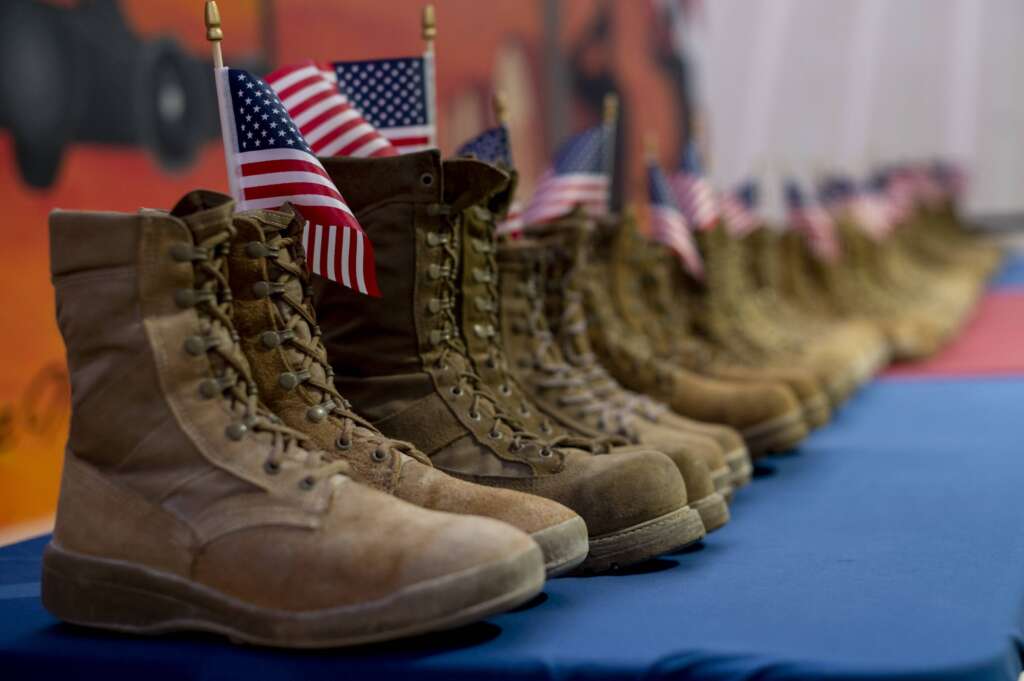
The Marine For Life Network hosts a Veteran Networking Panel workshop for U.S. Marines, veterans, and veteran friendly organizations at the Cyber Bytes Foundation in Stafford, Virginia, on June 6, 2024. The purpose of the workshop is to discuss resources and how to better assist service members transitioning out of active duty service to set Marines and their families up for success across the United States. (U.S. Marine Corps photo by Sgt. Miranda C. DeKorte)

VA in 2026 looks to get EHR rollout back on track, embark on health care reorganization

The Department of Veterans Affairs is embarking on major changes next year. It’s looking to get the rocky rollout of a new Electronic Health Record back on track. VA medical facilities already using the system have been beset with problems for years.

Meanwhile, the VA is planning to roll out the biggest reorganization of its health care operations in decades. Here’s a look ahead at VA’s plans for 2026.

VA EHR next steps

VA is planning for its new EHR from Oracle-Cerner to go live at 13 sites in 2026 — starting with four sites in Michigan in April 2026.

Dr. Neil Evans, acting program executive director of VA’s Electronic Health Record Modernization Integration Office, told the technology modernization subcommittee of the House VA Committee that, based on lessons learned from previous go-lives, multiple sites will go live “simultaneously in each deployment wave.”

“This approach allows us to scale up the number of deployments, enhance efficiencies and improve the sharing of best practices within and between markets,” Evans said in a Dec. 15 hearing.

Carol Harris, the director of IT and cybersecurity issues at the Government Accountability Office, told lawmakers it would be “very risky” for VA to plan for simultaneous EHR go-lives.

“It’s going to take a tremendous amount of resources that I’m not quite sure is sustainable for multiple sites at once,” Harris said.

Status of EHR rollout so far

VA’s new EHR is currently running at six sites. Full deployment would bring the EHR to 170 sites. According to Evans, the department currently expects to complete the deployment as soon as 2031.

The VA has been in a “reset” period since April 2023, and paused new go lives until the department addresses persistent outages and usability issues reported by VA medical staff at sites already using the new EHR.

A GAO report in March found that only 13% of VA staff using the new Oracle-Cerner EHR believed that the modernized system made VA as efficient as possible, and 58% of users believed the new system increased patient safety risks.

Rep. Tom Barrett (R-Mich.), chairman of the technology modernization subcommittee, said the project’s lifecycle cost has grown to about $37 billion.

“This timeline is locked in, and the countdown is on. But the question remains: When the switch is flipped in April, will the system deliver, and will it do what we need it to do? Are we going to run into snags like we have in the past? For millions of veterans relying on VA hospitals and staff supporting them, this is not something that is theoretical. It’s real. It’s happening and we have to do it right,” Barrett said.

Subcommittee ranking member Nikki Budzinski (D-Ill.) said what she has heard from VA and Oracle this year “has not convinced me that VA is ready for launch at 13 facilities in 2026.”

“I have raised many questions with VA and Oracle. But the answers do not give me confidence. In fact, I worry that we are spending billions of dollars while simultaneously setting this program, particularly the six sites that are already live, up for failure,” Budzinski said.

Reaction from the Senate

Senate Democrats are also wary about VA’s EHR rollout plans. In a letter to VA Secretary Doug Collins, Sens. Patty Murray (D-Wash.), Richard Blumenthal (D-Conn.) and Elissa Slotkin (D-Mich.) said they have “serious concerns” that EHR problems flagged by GAO and the VA inspector general’s office have not been fully addressed

“While we should always strive to innovate and improve the quality of care for veterans, in practice, the rollout of EHRM has been so problematic that it created life-threatening problems and ongoing upheaval for veterans’ ability to get the health care they need,” they wrote.

New VHA leader & VA reorganization plans

Last week, the Senate confirmed John Bartrum, a former senior advisor to Collins, will serve as VA’s under secretary for health.

Bartrum, a combat veteran with more than 40 years of active-duty and reserve military service, previously oversaw policy and funding at the National Institutes of Health and the Centers for Disease Control and Prevention.

The VA earlier this week announced its intent to reorganize the Veterans Health Administration.

Collins said in a statement that VHA’s current leadership structure “is riddled with redundancies that slow decision making, sow confusion and create competing priorities.”

VA says the changes aren’t expected to result in a significant change in overall staffing levels. But the Washington Post first reported that the VA no longer plans to fill tens of thousands of vacant health care positions.

The VA says it’s briefed lawmakers on the reorganization, and that implementation will take place over the next 18-24 months.

Rather than pursue a reduction in force of more than 80,000 employees, as it had considered earlier this year, the VA shed more than 30,000 positions through attrition in fiscal 2025.

“The department’s history shows that adding more employees to the system doesn’t automatically equal better results,” Collins told lawmakers in May.

The post VA in 2026 looks to get EHR rollout back on track, embark on health care reorganization first appeared on Federal News Network.

© AP Photo/Charles Dharapak

FILE - This June 21, 2013, file photo, shows the seal affixed to the front of the Department of Veterans Affairs building in Washington. In a federal lawsuit filed this week, U.S. Navy veteran from South Carolina says he ended up with “full-blown AIDS,” because government health care workers never informed him of his positive test result in 1995. He says the test was done as part of standard lab tests at a U.S. Department of Veterans Affairs medical center in Columbia, South Carolina. A V.A. spokeswoman says the agency typically does not comment on pending litigation. (AP Photo/Charles Dharapak, File)

Veterans Affairs will no longer perform some emergency services

  • Veterans Affairs will no longer perform abortions in emergency cases, in light of a new legal opinion from the Justice Department. The VA started providing abortions to veterans in certain life-threatening circumstances in fall 2022. This comes after the Supreme Court ruling on the Dobbs v. Jackson case. The department began the process of rolling back the policy this summer. That process is still making its way through the official rule-making process.
  • Another agency CIO is heading out the door. Jeff Seaton, the NASA chief information officer, is retiring after 32 years of federal service. Seaton is taking advantage of the ability to delay his retirement under the deferred resignation program. His last day is Dec. 27. Seaton has been NASA CIO for almost five years and previously worked in senior technology roles at headquarters and at NASA Langley Research Center. The space agency is hiring a replacement for Seaton. Its job announcement said the new CIO will be a career senior executive service member. Applications for the position are due by Jan. 9.
  • One nonprofit is continuing to press for investigations into potential Hatch Act violations during the government shutdown. In a new letter to the Office of Special Counsel, the legal organization Democracy Forward called on OSC to open Hatch Act investigations, pointing to multiple incidents of partisan messaging during October and November. The group specifically highlights how agencies posted messages to their websites that blamed the shutdown on Democrats. And in a separate letter to the Government Accountability Office, Democracy Forward also raised potential violations of the Antideficiency Act during the 43-day shutdown.
    (Hatch Act letters - Democracy Forward)
  • The Missile Defense Agency has tapped more companies to support the Golden Dome initiative. The agency has made over a thousand awards under its Scalable Homeland Innovative Enterprise Layered Defense, or SHIELD, contract worth up to $151 billion. The new awards expand a pool of pre-approved vendors eligible to compete for future task orders, bringing the total number of qualifying offerors to more than 2,000 companies. The agency said it has now transitioned to the ordering phase and drafting solicitations.
  • Defense Secretary Pete Hegseth has directed all department heads to recognize "outstanding” Defense Department civilian employees with cash bonuses. A new memo authorizes Pentagon leaders to award the top 15% of civilian employees bonuses worth 15% to 25% of their basic pay, capped at $25,000. Hegseth directed department heads to issue the bonuses by Jan. 30. The memo to recognize top talent comes amid Hegseth’s broader push to shrink and reshape the Pentagon’s civilian workforce.
  • A top official at the Centers for Disease Control and Prevention is no longer reviewing requests for telework as a reasonable accommodation for employees with disabilities. Supervisors have instructed staff to email their medical documentation directly to Lynda Chapman, the agency’s chief operating officer, to “bypass” the traditional reasonable accommodation system, and receive up to 30 days of telework as an interim accommodation. But CDC employees tell Federal News Network that Chapman no longer has access to their reasonable accommodation requests. Former CDC officials say many of the human resources staff trained to handle reasonable accommodation requests were targeted by layoffs earlier this year.
  • House Democrats are pressing the Office of Personnel Management for answers on how the agency is addressing abnormally high volumes of federal retirement applications. In a letter sent this week, the lawmakers raised concerns about the delays retiring federal employees are currently experiencing. That’s after the Trump administration’s deferred resignation program spurred a major influx of retirement applications. The lawmakers are giving OPM Director Scott Kupor until the end of January to respond with more details on OPM’s plans.
  • House Democrats are urging the Transportation Security Administration to preserve union rights for TSA airport screeners. Homeland Security Committee Ranking Member Bennie Thompson (D-Miss.) and 11 of his colleagues say TSA’s push to end union rights will not improve efficiency or security at airport screening lines. In a new letter, lawmakers urge Homeland Security Secretary Kristi Noem to keep TSA’s 2024 collective bargaining agreement in place. TSA plans to void the collective bargaining agreement effective Jan. 11. The American Federation of Government Employees is urging a federal judge to take action, pointing to a preliminary injunction that blocked TSA’s previous attempt to eliminate the union agreement.
  • The owner of a federal contractor is facing up to 90 years in prison after being indicted by a Baltimore grand jury in a scheme to defraud the government that included rigging bids for IT contracts and receiving kickbacks in exchange for influence over IT procurements. Victor Marquez is facing wire fraud charges. The Justice Department said Marquez and his co-conspirators used his access to sensitive procurement information to rig bids for procurements for large government IT contracts. Marquez allegedly received more than $3.8 million in compensation in the form of kickbacks for steering procurements to his co-conspirators, who referred to the payments to Marquez as the “Vic tax.”

The post Veterans Affairs will no longer perform some emergency services first appeared on Federal News Network.

© The Associated Press

FILE - This Dec. 9, 2020, file photo provided by the California Office of Emergency Services (OES) shows hospital beds set up in the practice facility at Sleep Train Arena in Sacramento, Calif., that is ready to receive patients as needed. Medical staffing is stretched increasingly thin as California hospitals scramble to find beds for patients amid an explosion of coronavirus cases that threatens to overwhelm the state's emergency care system. (California OES via AP, File)
❌