
 Login
LoginNew tech could shield warfighters from one of the deadliest threats on the battlefield: gamma radiation
Interview transcript
Terry Gerton You’ve got a new project coming out, and we’ll talk about it in detail, to protect war fighters from gamma radiation. I have to say, when I think of gamma radiation, I think of the Incredible Hulk. So tell us a little bit more before we get started about what gamma radiation is, where it comes from, and why we need protection from it.
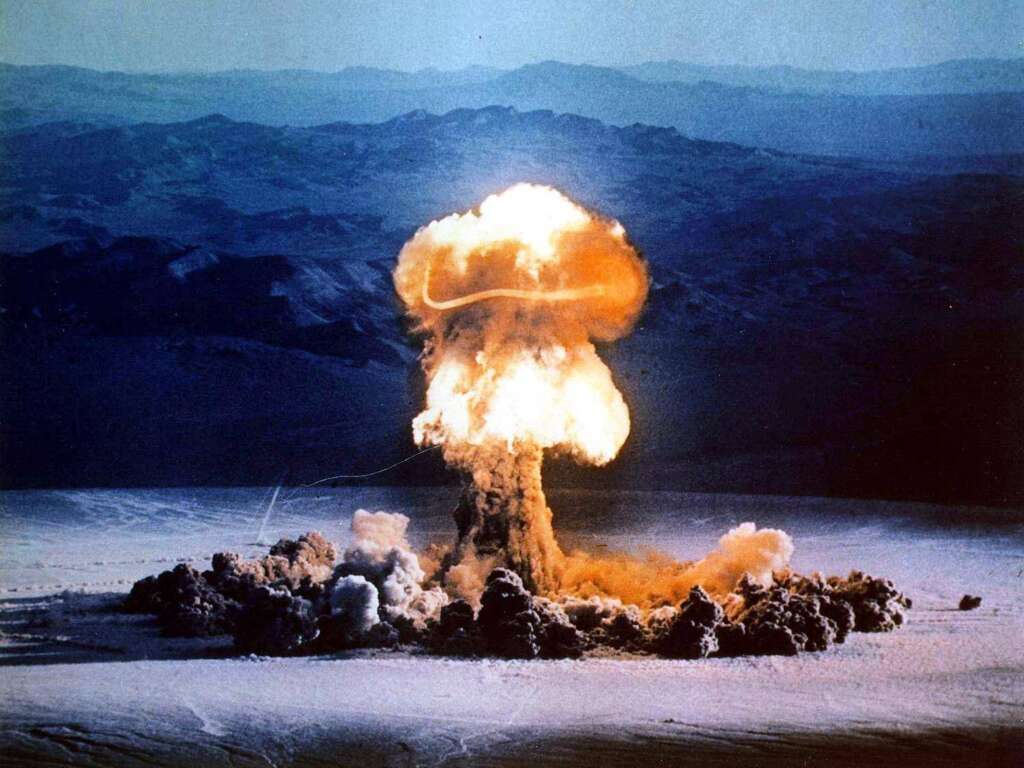
Terry Thiem Sure. Gamma radiation is a result of radioactive decay of elements. It can be either natural or produced through a nuclear explosion. Gamma radiation is a form of radiation that is very penetrating and therefore when our warfighters have the potentiality of being exposed to it on the battlefield, they need to be able to be protected from it. So If I look at Gamma radiation and why are we doing this research and what the threat is, this program will address two of the five strategic goals of the assistant secretary of war for nuclear deterrence and chemical and biological defense who is funding this research. And that is, one, to enable the joint force freedom of maneuver in a chemical, biological, and radiological environment, as well as develop capabilities to counter these threats and respond to and manage the consequences of a weapons of mass destruction event where gamma radiation may be present.
Terry Gerton So we’re worried about deploying soldiers into a nuclear contaminated battlefield.
Terry Thiem That is correct. Or we could also be exposing them to a dirty bomb, where a radiological material is dispersed by a high explosive and spread radioactive contamination as well.
Terry Gerton And so what is your team hoping to achieve with this project? We’ll get into the specifics of it in a minute, but what’s the big goal?
Terry Thiem The big goal is to be able to provide a level of protection to our war fighters from gamma radiation. Currently, the war fighters have what’s known as a JSLIST, a Joint Service Lightweight Integrated Suit Technology that provides them absolutely outstanding protection against chemical, biological, and alpha and beta radiation. But unfortunately, because of the penetrating effects of gamma radiation. That suit is not adequate to protect them in a nuclear environment. So what we’re looking at doing here is looking at what is the state of the science in this particular field? Where is the next generation of this suit going to be coming out? Where can we include some of these new materials that are being developed throughout the world, really, to incorporate into this suit to provide additional protection for our warfighters.
Terry Gerton Talk us through some of those scientific developments that you’re expecting might have impact in this study.
Terry Thiem Traditionally, for gamma radiation, the ways to protect a person from gamma radiation are time, distance, and shielding. Unfortunately for the commanders on the battlefield, a lot of times they don’t have the luxury of having time or distance because of the operational environment that they’re in. So they are very dependent on the shielding. Traditional shielding for gamma radiation is lead shielding. Lead has great ability to shield, but unfortunately lead also has some toxicity issues. So a lot of the work that’s currently being done in this field is looking at alternatives to lead for gamma protection. That includes materials such as bismuth, barium, and tungsten, which are also very, very good at doing it. They are just a little bit more expensive than lead is.
Terry Gerton I’m speaking with Dr. Terry Thiem. He’s the director of medical countermeasures at the National Strategic Research Institute at the University of Nebraska. As I just said there in the title, you’ve also got medical countermeasures in your focus area. How are you thinking about the combination of both shielding protection, but also medical treatment if someone isn’t affected?
Terry Thiem That’s a great point, Terry. What we wanna do is we wanna create some trade space for the commander in the field. So task one of this project is the development of or evaluation of new materials for personal protective equipment. Task two focuses on what we can do in combination with that personal protective equipment and prophylactic and therapeutic medical countermeasures that are in development. This is where NSRI and the University of Nebraska’s expertise in drug development is extremely valuable. Instead of a war fighter having to wear 60 pounds of radiation shielding, we could maybe reduce that to a significantly lower amount and provide them with a prophylactic medical countermeasure. This potentially provides a fourth option to the commander to reduce the effects of radiation exposure. Time, distance, shielding, and then also medical count measures to enhance the safety of our warfighters.
Terry Gerton When you say a prophylactic medical countermeasure, talk us through what that might be, some kind of pill that they would take in advance of deployment.
Terry Thiem That is correct. It would be a pill or a subcutaneous injection that would be given to the warfighter prior to them, the possibility of them being exposed to a radiological event.
Terry Gerton And you just talked about the weight of the suit. I’ve worn a JSLIST and I can testify that it is heavy. You do not want to have to move far in it. Are there other advances in material science that can help make that?
Terry Thiem Absolutely. I think everybody out there has been to the dentist office and has gotten bite wing x-rays and it’s had a lead apron put on top of them. That is for x-ray. X-rays are a step down in energy level from gamma radiation. So the need for gamma radiation protection actually would be thicker and heavier than that. So there are a lot of really good materials that are out there. Polymers, some new polymers that have come out that offer some lightweight ability to do shielding, as well as the bismuth, tungsten, and barium are also all less dense or less heavier than lead components would be. So all those would offer some ability to reduce the weight of the shielding that is required to reduce the radiation effects of gamma radiation.
Terry Gerton What sort of criteria will you use to determine whether or not these materials and or the medical countermeasures are ready to be developed?
Terry Thiem I think that, again, looking at manufacturability of materials is going to be critical. The ability to put these materials, incorporate them into the fibers is something that the University of Nebraska is already working on at the University of Nebraska Omaha, incorporating levels of these high atomic weight materials such as bismuth and tungsten into materials already and then spinning those into fabrics that can be used for making a protective equipment that our warfighters can actually wear.
Terry Gerton Right, so that manufacturability is its own separate challenge, right? What are the obstacles or the opportunities if you’re optimistic of getting from materials to actual suits?
Terry Thiem I think we’re very, very close already. Looking at some of the work that’s already been done at the University of Nebraska Omaha, we have already produced sections of materials that will be usable, and we’ve already started testing those against gamma radiation sources to see how protective they are. One of the things about radiation that’s different than chemical or biological threats, chemical and biological threats, I think we are at 100% protection. I’ve been through the live agent training at Fort Leonard Wood, we’re in the JSLIST where we’ve been exposed to nerve agent and the suit protects you absolutely 100%. Unfortunately with gamma radiation, I don’t think we’ll ever get there. It would require too heavy of a suit and too thick of suit. It would operationally degrade the ability of our warfighters to do their mission. So that’s where we’re looking at that combination of personal protective equipment and medical countermeasures to, one, reduce the amount with the personal protective equipment, but then provide another layer of protection to the warfighter with that medical countermeasure as well.
Terry Gerton So once your study is complete, what are the next steps? Will that influence the Department of Defense’s production strategy or acquisition strategy?
Terry Thiem It should. We will provide our assessment of the current state of the science and then a list of materials that we feel are the most, the highest technology readiness level that is available to them to start manufacturing materials from. So again, I think that there’s an incredible amount of research that’s going on out there. I’ve reviewed over 250 articles so far. On different materials, different concepts for doing shielding for both X-ray and gamma radiation. So I think that the ability to do it is out there. It is just the manufacturability and a couple other things that need to be worked out before we can get to a final product that will be able to be purchased commercially by our Department of War.
The post New tech could shield warfighters from one of the deadliest threats on the battlefield: gamma radiation first appeared on Federal News Network.
© U.S. Energy Department via AP
