❌

Reading view

There are new articles available, click to refresh the page.

From Boom To Goodbye: NFT Marketplace Nifty Gateway To End Operations

Nifty Gateway, the marketplace that once helped bring NFT drops to a wider audience, will stop running its marketplace on February 23, 2026. The company put the site into a withdrawal-only mode the same day it made the announcement, and users were told they must move any remaining funds and NFTs off the platform before that date.

Withdrawal Window Opens

According to the company, withdrawal tools are available now. Reports note users can pull USD or ETH balances through a linked Gemini Exchange account or send funds to their bank via Stripe.

Emails with step-by-step instructions will be sent to account holders, and a shutdown notice already appears on the Nifty Gateway homepage. The aim, as described by the owner, is to let people retrieve what they own before the platform goes dark.

Today, we are announcing that the Nifty Gateway platform will be closing on February 23, 2026. Starting today, Nifty Gateway is in withdrawal-only mode.

Nifty Gateway was launched in 2020 with the vision of revolutionizing digital art. Since launching, Nifty supported dozens of…

β€” Nifty Gateway Studio (@niftygateway) January 24, 2026

A Decision To Reassign Resources

Based on reports from Gemini, the closure is meant to let the parent firm concentrate on building one bigger app for customers. The move highlights how interest and trading activity in many NFT markets have cooled from the highs seen in earlier years.

Some collectors and artists are left scrambling to rehome items they once sold or stored on Nifty Gateway.

End Of An Early Player

Nifty Gateway helped make buying NFTs easier for people who preferred credit cards and familiar checkout flows. It launched as a high-profile marketplace and hosted major drops from well-known creators.

The platform supported hundreds of millions in sales at its peak and played a clear part in bringing NFT art into mainstream headlines. Its exit marks the end of an important chapter for that wave of marketplaces.

What Owners Must Do Now

Owners should check their inboxes for the official instructions, confirm where their tokens are stored, and move assets before the deadline. If NFTs are stored in custodial wallets on the site, they will need to be transferred out.

USD and ETH balances should be withdrawn or moved into a connected Gemini account if that option suits the owner. Waiting past the closure date will reduce options.

A Quiet Turning Point

For many collectors, this will feel like another sign that the early boom years have passed. For creators, the change raises questions about where drops and secondary sales will happen next.

Gemini says it will keep supporting NFTs through its other products, including the Gemini Wallet, but the specific ways that creators and buyers reconnect with those audiences will depend on new tools and services that arrive in the next months.

Featured image from Unsplash, chart from TradingView

SEC To Dismiss 3-Year Lawsuit Against Gemini – Details

In a major development, the US Securities and Exchange Commission has filed a joint stipulation with defendant Gemini Trust Company, LLC to terminate its long-running civil enforcement action with prejudice, effectively ending the three-year legal battle over the Gemini Earn crypto lending program.

SEC Vs Gemini

In January 2023, the SEC instituted one of the most controversial crypto-related lawsuits against Gemini Trust Company and its partner, Genesis Global Capital LLC, accusing both parties of illegally offering and selling unregistered securities through the Gemini Earn lending program, a financial product that operated between 2021 and 2022, which allowed customers to lend crypto for interest at 7.4% per annum.Β 

Following the FTX crash in 2022, Genesis, which had a significant financial exposure to the now-defunct crypto exchange, halted withdrawals on the Gemini Earn Program, effectively locking up $940 million in investor assets. Since then, a series of events has unfolded, including Genesis entering bankruptcy proceedings, and through that process, all Earn investors ultimately recovered 100 percent of their crypto assets in kind. In addition, Gemini has settled related matters with state and federal regulators, paying over $50 million in civil fines.Β 

In the joint stipulation filed this week, the SEC noted that its decision to seek dismissal β€œin the exercise of its discretion” took into account the full investor recovery and those regulatory settlements. The dismissal is with prejudice, preventing the SEC from re-filing the same claims, and represents the formal end of one of the most high-profile enforcement actions in the US crypto industry.

US Crypto Regulatory Turnaround

The dismissal of the Gemini case comes amid a broader recalibration of the US crypto regulatory approach under the Donald Trump administration. Several high-profile SEC actions against major platforms, involving Coinbase, Kraken, and Binance, have been dropped or paused, reflecting a shift from a forceful regulatory approach seen under the former chairman, Gary Gensler.Β 

At the same time, Congress and the White House continue to pursue pro-crypto legislative and policy initiatives. In July 2025, US President Donald Trump signed the GENIUS Act into law, a landmark bill establishing a comprehensive federal framework for stablecoins, aimed at boosting consumer protection and supporting broader adoption of digital assets.

Alongside the GENIUS Act, the highly anticipated Clarity Act, passed by the US House, aims to delineate regulatory responsibilities between agencies like the SEC and the Commodity Futures Trading Commission (CFTC) based on how digital assets function.Β The US Senate Agriculture Committee is set to observe a markup session of the bill on January 27, indicating steady progress despite recent concerning events, including public outrage by Coinbase founder Brian Armstrong and the Banking Committee’s continued postponement of its own hearing session.

SEC

SEC Drops Enforcement Case Against Winklevoss-Founded Crypto Exchange Gemini

By: Amin Ayan

The US Securities and Exchange Commission has agreed to dismiss its enforcement case against Gemini, the cryptocurrency exchange founded by billionaire twins Tyler and Cameron Winklevoss, after investors in its defunct lending program recovered their crypto assets in full.

Key Takeaways:

  • The SEC dropped its case after Gemini Earn investors were fully repaid in crypto.
  • Repayments came through the Genesis bankruptcy process in mid-2024.
  • The decision hinged on a 100% in-kind return of customer assets.

In a joint filing submitted Friday to federal court in Manhattan, the SEC and Gemini Space Station cited the complete repayment of assets to users of the Gemini Earn program through the Genesis Global Capital bankruptcy process.

The repayments were completed between May and June 2024, according to the court document.

SEC Drops Gemini Case After Earn Investors Made Whole

The regulator said the decision followed the β€œ100 percent in-kind return” of crypto assets to affected investors, meaning customers received the same digital assets they had originally deposited rather than cash equivalents.

Based on that outcome, the SEC concluded that dismissing its claims against Gemini was appropriate.

The case stems from charges brought in January 2023, when the SEC accused Gemini Trust Company and Genesis Global Capital of offering unregistered securities through the Gemini Earn program.

Under the arrangement, Gemini users loaned their crypto to Genesis in exchange for yield, with Gemini acting as the platform intermediary.

The SEC has dismissed its lawsuit against the Winklevoss twins–backed Gemini over its earn product pic.twitter.com/aq35vpGxG7

β€” 0xMarioNawfal (@RoundtableSpace) January 23, 2026

At its peak, the Gemini Earn program held approximately $940 million in customer assets.

That balance was frozen in November 2022 when Genesis halted withdrawals amid broader market turmoil following the collapse of several major crypto firms.

Genesis later filed for bankruptcy, triggering months of negotiations among creditors, regulators, and counterparties.

Unlike many firms that failed during the 2022 crypto downturn, Genesis ultimately returned customer assets rather than liquidating holdings and distributing cash proceeds.

That outcome played a central role in the SEC’s decision to unwind its case against Gemini.

SEC Drops Gemini Case as Crypto Policy Softens and Exchange Grows

The dismissal comes amid a broader shift in the SEC’s approach to digital asset regulation under US President Donald Trump.

The administration has signaled a more accommodating stance toward the crypto sector, with Trump publicly pledging to support mainstream adoption of digital assets and ease regulatory pressure on the industry.

In its filing, the SEC stressed that the dismissal does not reflect its position on other crypto-related enforcement actions, underscoring that the decision was specific to the facts of the Gemini case.

The exchange has continued to expand its institutional footprint following the resolution of the Earn dispute.

Gemini made a high-profile debut on Nasdaq last year, reflecting renewed investor interest in regulated crypto platforms as the market rebounds. According to LSEG data, the company is currently valued at approximately $1.14 billion.

The post SEC Drops Enforcement Case Against Winklevoss-Founded Crypto Exchange Gemini appeared first on Cryptonews.

Report: Apple plans to launch AI-powered wearable pin device as soon as 2027

Apple is working on a wearable device that will allow the user to take advantage of AI models, according to sources familiar with the product who spoke with tech publication The Information.

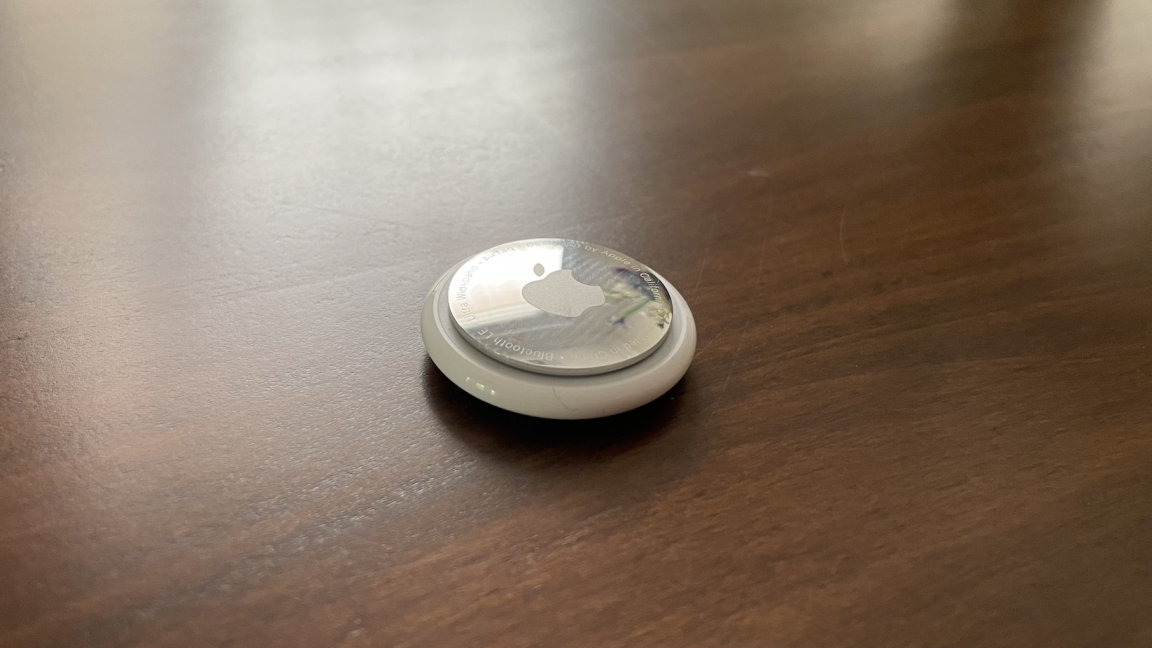
The product is said to be "the same size as an AirTag, only slightly thicker," and will be worn as a pin, inviting comparisons to the failed Humane AI pin that launched to bad reviews and lackluster sales in 2024. The Humane product was criticized for sluggish performance and low battery life, but those shortcomings could potentially be addressed by Apple's solution, should Apple offload the processing to a synced external device like an iPhone.

The Information's sources don't specify whether that's the plan, or if it will be a standalone device.

Read full article

Comments

Β© Samuel Axon

Google adds your Gmail and Photos to AI Mode to enable "Personal Intelligence"

Google believes AI is the future of search, and it's not shy about saying it. After adding account-level personalization to Gemini earlier this month, it's now updating AI Mode with so-called "Personal Intelligence." According to Google, this makes the bot's answers more useful because they are tailored to your personal context.

Starting today, the feature is rolling out to all users who subscribe to Google AI Pro or AI Ultra. However, it will be a Labs feature that needs to be explicitly enabled (subscribers will be prompted to do this). Google tends to expand access to new AI features to free accounts later on, so free users will most likely get access to Personal Intelligence in the future. Whenever this option does land on your account, it's entirely optional and can be disabled at any time.

If you decide to integrate your data with AI Mode, the search bot will be able to scan your Gmail and Google Photos. That's less extensive than the Gemini app version, which supports Gmail, Photos, Search, and YouTube history. Gmail will probably be the biggest contributor to AI Modeβ€”a great many life events involve confirmation emails. Traditional search results when you are logged in are adjusted based on your usage history, but this goes a step further.

Read full article

Comments

Β© Google

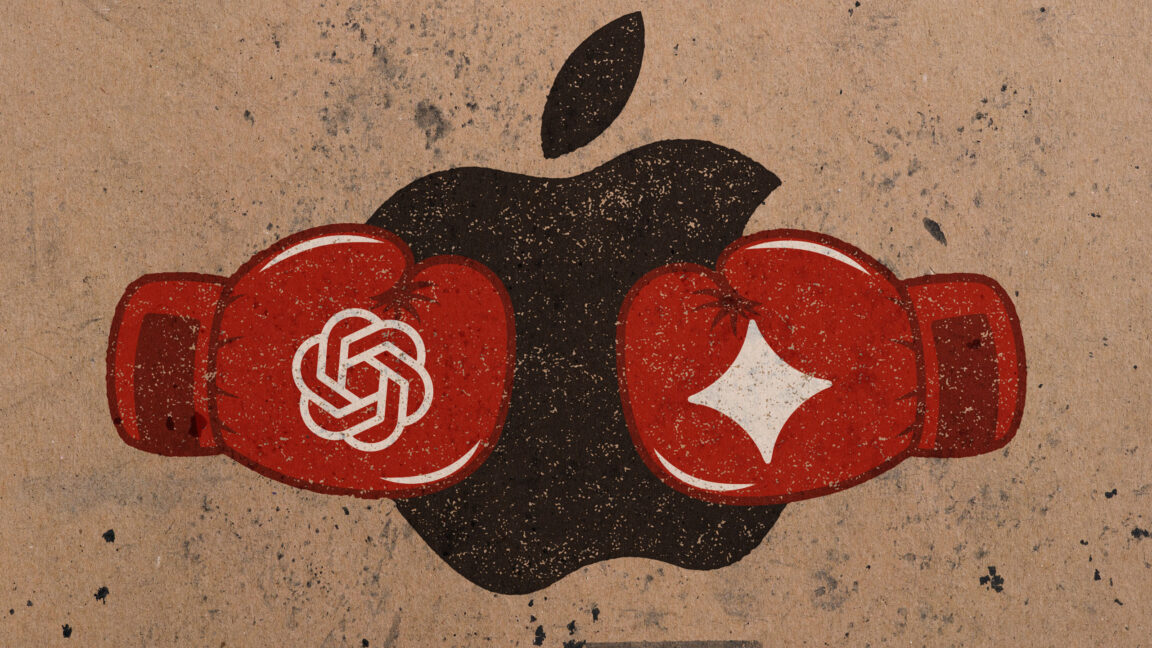
Has Gemini surpassed ChatGPT? We put the AI models to the test.

The last time we did comparative tests of AI models from OpenAI and Google at Ars was in late 2023, when Google's offering was still called Bard. In the roughly two years since, a lot has happened in the world of artificial intelligence. And now that Apple has made the consequential decision to partner with Google Gemini to power the next generation of its Siri voice assistant, we thought it was high time to do some new tests to see where the models from these AI giants stand today.

For this test, we're comparing the default models that both OpenAI and Google present to users who don't pay for a regular subscriptionβ€”ChatGPT 5.2 for OpenAI and Gemini 3.2 Fast for Google. While other models might be more powerful, we felt this test best recreates the AI experience as it would work for the vast majority of Siri users, who don't pay to subscribe to either company's services.

As in the past, we'll feed the same prompts to both models and evaluate the results using a combination of objective evaluation and subjective feel. Rather than re-using the relatively simple prompts we ran back in 2023, though, we'll be running these models on an updated set of more complex prompts that we first used when pitting GPT-5 against GPT-4o last summer.

Read full article

Comments

Β© Aurich Lawson | Getty Images

❌