Following the shutdown of an alternative app store, Apple has accused the European Commission (EC) of using “political delay tactics” as an excuse to probe and fine the company, Bloomberg reported. Apple issued the statement preemptively as commission is reportedly preparing to blame Apple for the shutdown of third-party app store Setapp due to what the developer called “still-evolving and complex business terms.”
As part of an EU ruling, Apple was forced to allow third-party marketplaces for apps once the Digital Markets Act (DMA) took effect in 2024. Apple agreed to allow such stores, but implemented fees of €0.50 per installation if the number of downloads exceeded one million, among other rules.
In April 2025, the EC found Apple to be in “non-compliance” with the DMA over rules on “steering” users to alternative payments and levied a $500 million fine. In June last year, Apple said it would change its pricing for third-party App Stores to a five percent revenue share called the Core Technology Commission (CTC).
However, Apple said that the EC has so far refused to allow those changes. In the meantime, a developer called MacPaw shut down its fledgling Setapp store, saying Apple’s terms “don’t fit Setapp’s current business model” due to the complexity. As a result, the EC will reportedly rule that Apple hasn’t addressed the key issues it raised regarding business terms, including their complexity.
“The European Commission has refused to let us implement the very changes that they requested,” Apple said in a statement to Bloomberg. “In October, we submitted a formal compliance plan and they have yet to respond. The EC is using political delay tactics to mislead the public, move the goal posts, and unfairly target an American company with burdensome investigations and onerous fines.”
In reply, an EC spokesperson told Engadget that it’s in “constant” contact with Apple with the aim of finding a DMA-compliant solution. “The Commission’s main objective is that gatekeepers operate in full compliance with the DMA. The Commission is available to discuss and work with gatekeepers to achieve full compliance. In this context, the Commission has been in a constant dialogue with Apple to solve all pending issues, while also listening to developers from all over the world. We remain committed to this exchange to find a DMA compliant solution.”
This article originally appeared on Engadget at https://www.engadget.com/big-tech/apple-accuses-europe-of-delay-tactics-following-alternative-app-store-collapse-124701591.html?src=rss
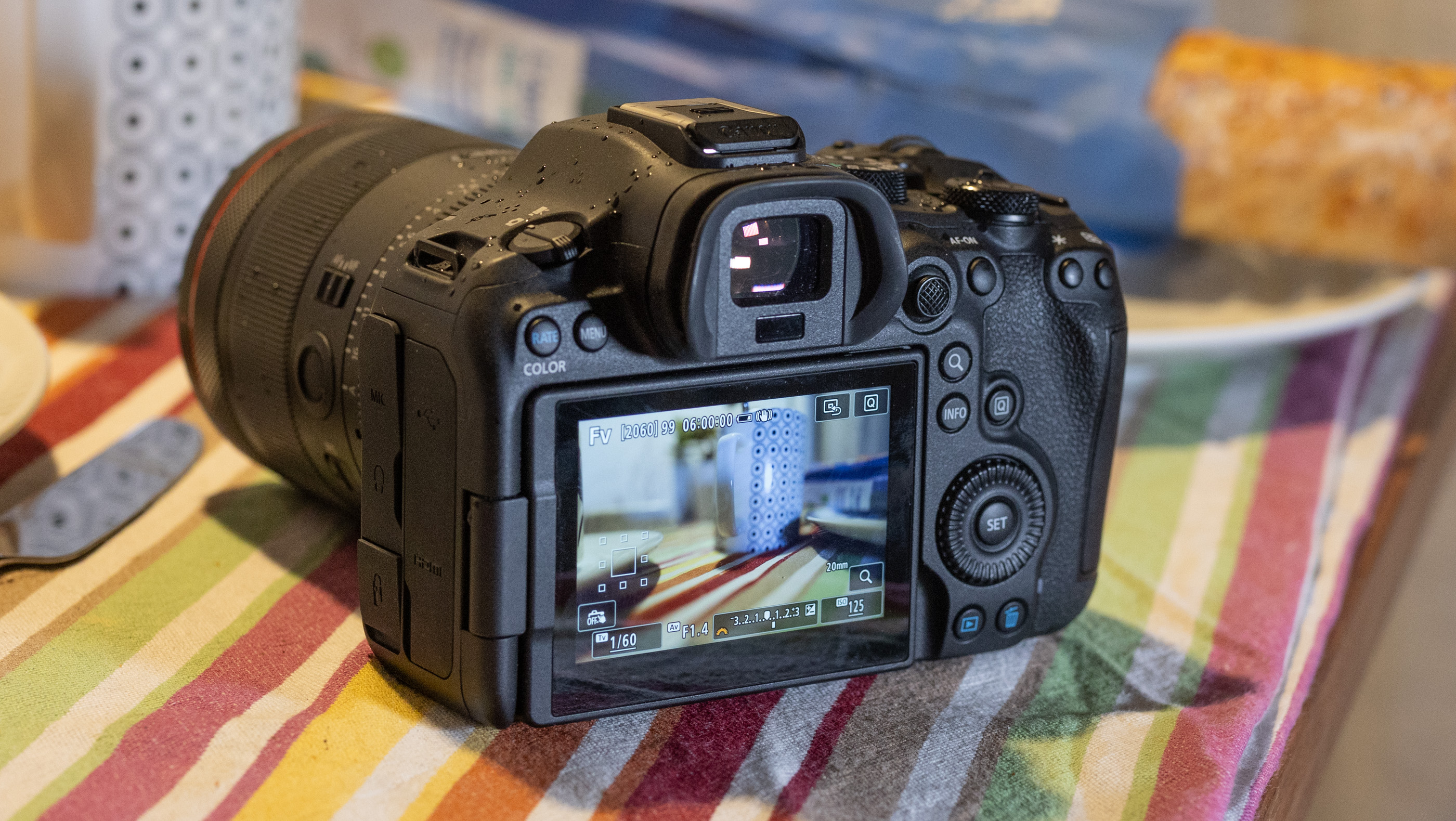
With video features like RAW now the norm on midrange mirrorless cameras, Canon decided not to mess around with its latest model, the 33-megapixel EOS R6 III. It’s a veritable cinematic beast, allowing up to 7K RAW video capture internally with fast and reliable autofocus and rock solid stabilization.
At the same time, it's a solid photo camera with high burst speeds and warm, accurate image quality. The R6 III has stiff competition with Sony’s 33MP A7 V, though, as the latter delivers higher dynamic range. The price could also be an issue for buyers, as the R6 III costs $300 more than its predecessor. Whether it’s worth that extra money depends on what you’re planning to do with it.
Handling and design
Canon EOS R6 III
Steve Dent for Engadget
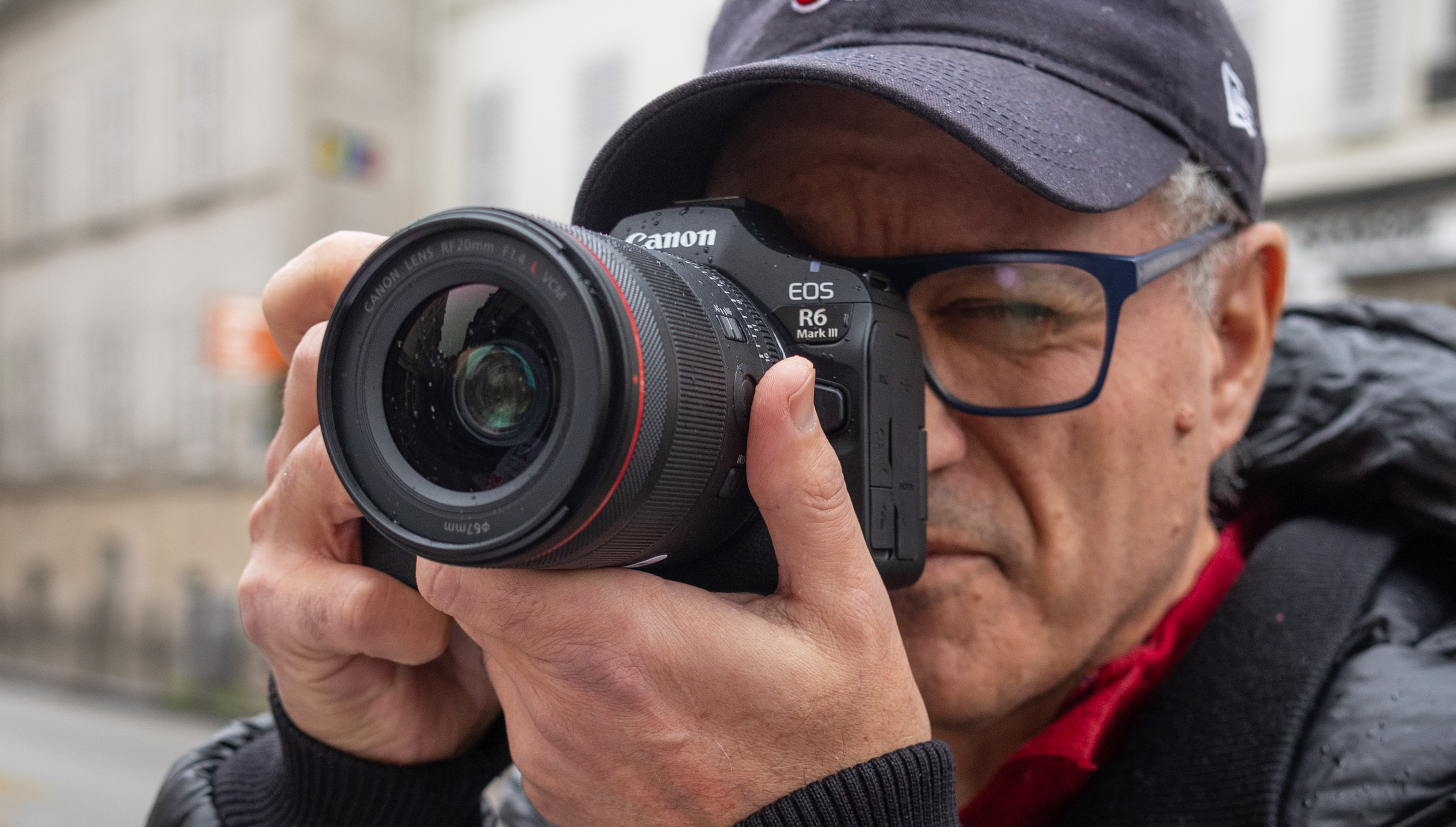
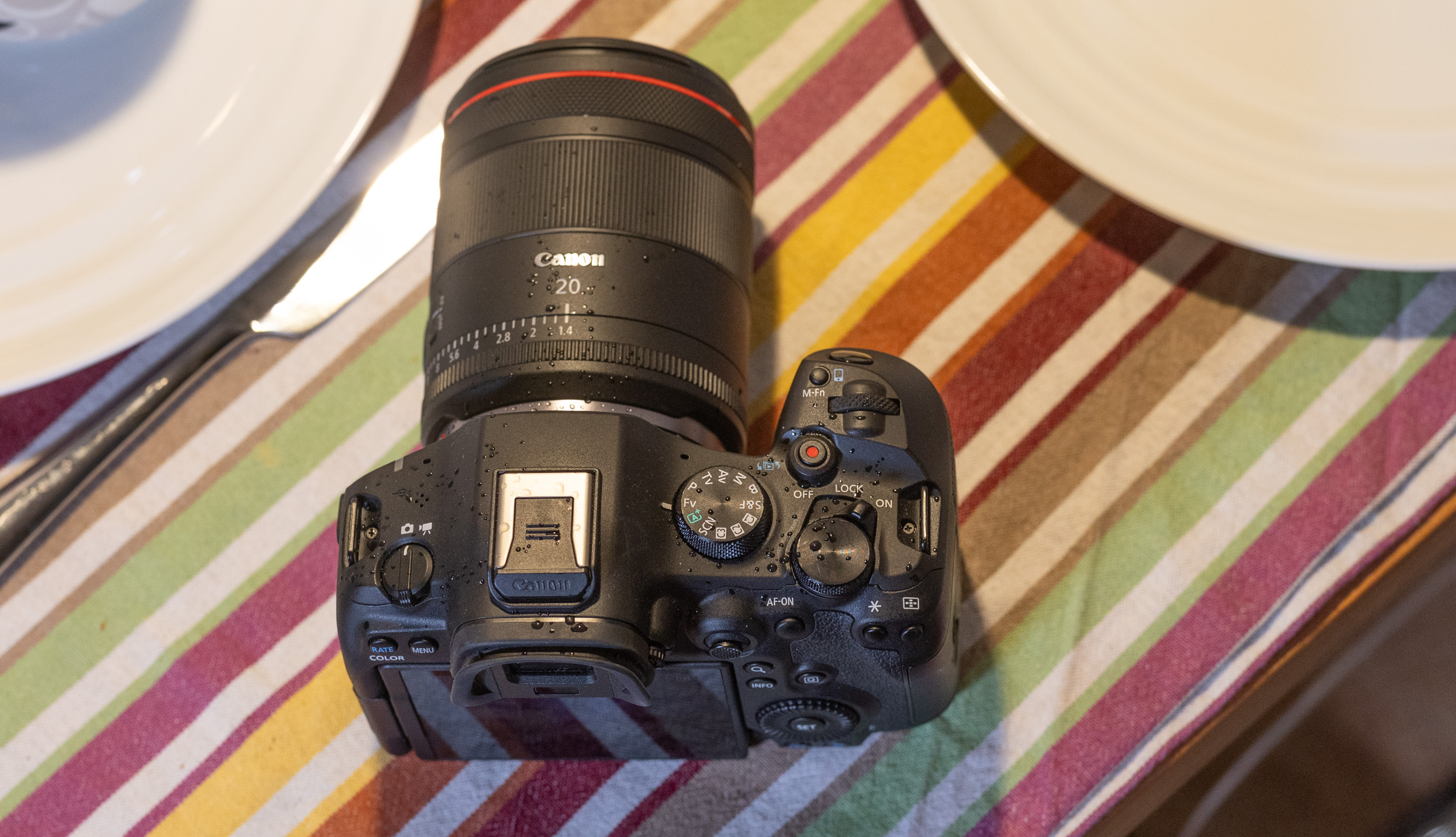
The EOS R6 III is quintessentially Canon in terms of design. It strongly resembles the R6 II and EOS R5 II, with the same button and dial layout at the rear. In terms of functionality, this is a good thing as everything falls perfectly to hand, letting you control it by feel once you’re used to it. However, the R6 III’s design is a bit bland, so if you’re looking for a stylish camera a la Fujifilm, this is not the one.
Holding the R6 III is also a pleasure thanks to the grippy, soft rubber exterior, though at 1.5 pounds it’s a bit heavier than the A7 V. It’s comfortable to hold and use all day, unlike Sony’s A7 V which felt uncomfortable after prolonged usage because of the harder material and sharp crease around the fingertip area.
The R6 III’s 3.69-million dot, 120 fps electronic viewfinder (EVF) worked fine for me to check color and focus, but falls short of the one on the much cheaper Nikon Z6 III. The flip-out 3-inch 1.65-million-dot rear touch display is on par for this category and does the job well. For storage, the R6 III supports CFexpress Type B cards for capturing RAW video, along with SD UHS II for MP4 video and photos.
Other key features include headphone and microphone ports, a full-sized HDMI input (instead of microHDMI as before, thankfully) and a USB-C port for charging and transfers. Battery life is decent for this category with a maximum 510 shots per charge or 620 shots if you engage the power saving mode or about 90 minutes of continuous 4K capture. However, you can roughly double those figures with Canon's optional $150 BG-R20 battery grip.
Performance
Canon's EOS R6 III offers fast burst speeds and skin-tone friendly colors
Steve Dent for Engadget
The R6 III offers a boost in shooting speeds over its predecessor thanks to an all-new 33MP sensor. It has a faster readout speed than the R6 II as well, allowing for faster bursts and lower rolling shutter skew. In comparison, Sony’s A7 V also has a 33MP sensor but it’s partially stacked, so it delivers less distortion when shooting fast-moving subjects.
With that new sensor and a 34 percent faster Digic X processor, the R6 III can shoot bursts at up to 40 fps in electronic and 12 fps in mechanical shutter modes (with continuous AF and AE enabled). That’s second only to the Panasonic S1 II (70 fps) in this price range. You can fill the buffer in about 3.7 seconds at that speed (150 RAW frames), which is a decent amount for a midrange camera.
You usually want to avoid the electronic shutter with fast-moving action due to rolling shutter distortion, but the R6 III’s faster sensor can handle objects that are moving reasonably quickly. I also caught a few photos of babies, bikes and dogs I might have otherwise missed by using the new pre-capture mode that records up to 15 photos before fully declencing the shutter.
The new sensor and processor also make the R6 III’s autofocus system faster and more accurate than before. When shooting bursts for fast moving action like dogs running or biking, less than five percent of my shots were out of focus. And the EOS R6 III can now track animals, birds and vehicles, on top of the faces, eyes and bodies of people.
This camera also has a couple of new autofocus tricks, including one called Register People Priority. That lets you save up to 10 individuals on camera that it can identify and automatically switch to. I found it handy in a large gathering, helping me focus on my niece enjoying her second Christmas. However, the R6 III lacks a few autofocus features found on the R5 II like “action priority” for sports, eye control AF and AI upscaling.
In-body stabilization is also excellent, keeping the sensor rock-steady for handheld shooting with 8.5 stops of shake reduction. With that enabled, I was able to nicely blur action on the streets while keeping the background sharply in focus at shutter speeds down to a full second.
Image quality
With a 33MP sensor instead of a 24MP sensor, the R6 III offers quite a bit more sharpness and a touch more dynamic range than its predecessor. When shooting RAW, I was able to coax a lot of detail out of high contrast shots on sunny days with dark shadows. However, Sony’s A7 V soundly beats the R6 III in terms of dynamic range, thanks to its innovative new sensor.
The R6 III’s high ISO performance isn’t too bad for a higher-resolution camera either, with noise staying under control up to ISO 12,800. As is typical with Canon models, skin tones are warmer and more flattering than on Sony and Nikon cameras, due to the slightly more yellow-biased pink tones. Those pleasing colors were consistent, even at high ISOs, when I shot kids and adults at a couple of indoor gatherings. If you don’t want the hassle of RAW, JPEG rendering is excellent straight out of the camera, with well balanced sharpening and noise reduction.
Note that switching to electronic shutter mode drops the sensor to a 12-bit readout, which helps burst speeds but hurts image quality. This is a pretty big downside compared to the A7 V, which maintains 14-bit quality even when shooting at the camera’s maximum rate at 30 fps. So while on paper the R6 III wins the speed race, the 10 extra fps won’t be worth the drop in quality for many photographers.
Video
Canon’s EOS R6 III
Steve Dent for Engadget
Canon has improved video on the R6 III in every way, putting it nearly on par with the more expensive R5 II. Though it can’t shoot 8K, it can handle 7K RAW video at up to 60 fps (on CFexpress only) and 4K at 120p, with less rolling shutter than the R6 II. It also supports 3:2 “open gate” video that uses the full sensor area so you can output high-res vertical video and other formats.
The R6 III supports 4K 10-bit MP4 shooting at high data rates too if you’d rather save storage space or shoot on SD cards. You also get CLog 2 on top of CLog 3 capability for improved dynamic range. Oddly though, Canon made it a bit of a pain to switch to log modes compared to past models, forcing you to slog through a bunch of menus to do so.
Video autofocus is excellent across all resolutions, with rapid subject acquisition and reliable tracking. Face and eye detection work very well, and I only occasionally noticed slight autofocus lag with fast-moving subjects, particularly when they were moving toward the camera.
As for stabilization, I could smoothly shoot handheld with no crop, provided I didn’t move the camera too aggressively. Digital stabilization allowed even more movement and the enhanced setting let me shoot smoothly while walking (7K doesn’t work in the digital stabilization modes, though). Panasonic’s S5 II is still the best in this regard with slightly smoother stabilization, but the R6 III isn’t far behind.
Video on the EOS R6 III is extremely sharp in RAW and the HQ modes, particularly with supersampled 4K HQ. Other 4K modes are subsampled, but nearly as sharp. Rolling shutter is better managed than before, but you’ll still want to avoid things like whip pans, sudden jolts or rapid subjects like propellers or golf swings.
In a variety of shooting scenarios in bright and dark conditions, Canon’s excellent color science delivered warm skin tones and accurate colors. Shooting RAW video allowed me to widely adjust shots in post, while the CLog 2 mode drastically improved dynamic range while I was shooting in contrasty conditions. For instance, I shot the famous Paris department store windows and was able to extract detail from the very bright and dark parts of the video.
Overheating has been an issue in the past on Canon’s R6 models, but the R6 III never shut down for me, even during a few tests of over 15 minutes. Overall, it reliably delivered outstanding video quality and I actually preferred it to the R5 II due to the smaller RAW file sizes.
Wrap-up
Canon EOS R6 III mirrorless camera
Steve Dent for Engadget
Canon’s EOS R6 III is now the best midrange camera for creators thanks to the RAW video, rapid and accurate autofocus and excellent handling. At the same time, it’s a solid camera for photography with high burst speeds, extra resolution and, again, reliable AF. If it’s mainly photography you’re interested in, though, Sony’s $2,900 A7 V is a better choice. It matches the R6 III’s resolution, price and autofocus but offers superior dynamic range and lower rolling shutter distortion.
Other video-centric options may be more attractive for other reasons — including budget. Nikon’s 24MP Z6 III offers similar capabilities, has a partially stacked sensor and retails for $2,400, but can often be found on sale for less. Panasonic’s S1 II is also a good pick due to its RAW video and creator-centric features, though it costs more at $3,200.
Which one to buy, then, depends on your budget, usage (video or photography) and whether you already have lenses in one system or another. With that said, if it’s a Canon camera you’re after and you lean toward content creation, the EOS R6 III is your best choice.
This article originally appeared on Engadget at https://www.engadget.com/cameras/canon-eos-r6-iii-review-a-video-powerhouse-thats-also-great-for-photography-153000494.html?src=rss
Scarlett Johannsson, R.E.M., Vince Gilligan and over 700 other artists are demanding that tech companies stop “stealing” their work in order to train AI models. A new campaign called “Stealing isn’t Innovation” demands that AI companies take “the responsible, ethical route” through licensing and partnerships, according to the website.
“America’s creative community is the envy of the world and creates jobs, economic growth and exports,” a statement on the website reads. “But rather than respect and protect this valuable asset, some of the biggest tech companies, many backed by private equity and other funders, are using American creators’ work to build AI platforms without authorization for copyright law.”
The group adds that the “illegal intellectual property grab” has resulted in an information ecosystem dominated by “misinformation, deepfakes and a vapid artificial avalanche of low-quality materials [‘AI slop’]… threatening America’s AI superiority and international competitiveness.”
OpenAI once argued that it’s “impossible” to train AI without copyrighted materials, since “copyright today covers virtually every sort of human expression.” However, actors, musicians and authors take issue with that idea, particularly when they see their likenesses or work repurposed as slop or worse by large language models (LLMs).
Johansson, for one, previously threatened OpenAI with legal action in 2024 over a ChatGPT voice assistant that effectively cloned her voice. More recently, Elon Musk’s Grok has been accused of creating millions of sexualized images of real people in just days, according to a report today from The New York Times.
“Big Tech is trying to change the law so they can keep stealing American artistry to build their AI businesses — without authorization and without paying the people who did the work. That is wrong; it’s un-American, and it’s theft on a grand scale,” the group proclaimed.
This article originally appeared on Engadget at https://www.engadget.com/ai/a-list-creatives-sign-up-to-fight-ai-say-it-enables-theft-at-a-grand-scale-140000475.html?src=rss
Microsoft has announced some solid additions to Game Pass this month, ranging from AAA titles to indies, including some of our favorites from 2024 and 2025. Topping the list is Death Stranding Director’s Cut, an extended version of Hideo Kojima’s 2019 sci-fi action game (now available). Other key inclusions are Warhammer 40,000: Space Marine 2 (January 29) and puzzle game The Talos Principle 2 (January 27).
We’re also seeing some award winners including Indika (February 2), a surreal tale about the devil living inside a nun’s head, one of Engadget’s 2024 games of the year. Last year’s Ninja Gaiden Ragebound (available today), a hack-and-slash platformer with top-notch pixel, was on our list for one of 2025’s best games. Finally, Roadcraft allows you to operate a fleet of 40 authentic construction vehicles to clear debris, repair bridges and restore infrastructure.
Coming Soon to Xbox Game Pass
Xbox
Along with the games, there are a few DLC releases arriving soon as well. The Sims 4 players (Ultimate, Premium, or PC tiers) will gain The Sims 25th Birthday Bundle on Jan. 22. You also get Grounded 2, Dead by Daylight (extra Stranger Things content coming January 27) and and Sea of Thieves, with season 18 act 2 coming on January 22.
Here’s a list of key games and tiers arriving on Game Pass over the next month:
Death Stranding Director’s Cut (Ultimate, Premium, PC ) on January 21
RoadCraft (Ultimate, Premium, PC) on January 21
Ninja Gaiden Ragebound (Ultimate, Premium, PC) on January 21
The Talos Principle 2 (Ultimate, Premium, PC) on January 27
Anno: Mutationem (Ultimate, Premium, PC) on January 28
Drop Duchy (Ultimate, Premium, PC) on January 28
MySims: Cozy Bundle (Ultimate, Premium, PC) on January 29
Warhammer 40,000: Space Marine 2 (Ultimate, Premium, PC ) on January 29
Indika (Ultimate, Premium, PC) on February 2
Final Fantasy 2 (Ultimate, Premium, PC) on February 3
At the same time, here are the titles leaving January 31:
Shady Part of Me (Cloud, PC, and Console)Cataclismo (PC)
Starbound (Cloud, PC, and Console)
Lonely Mountains Snow Riders (Cloud, PC, and Console)
Paw Patrol World (Cloud, PC, and Console)
Citizen Sleeper 2 Starward Vector (Cloud, PC, and Console)
Orcs Must Die! Deathtrap (Cloud, PC, and Console)
This article originally appeared on Engadget at https://www.engadget.com/gaming/xbox-game-pass-adds-death-stranding-dc-ninja-gaiden-talos-principle-2-and-more-134126315.html?src=rss
After testing the feature for the last six months or so, Netflix said it will bring vertical videos to its mobile app sometime later in 2026, TechCrunch reported. So far, the feature has been used to show clips promoting Netflix films and TV shows, letting you swipe to move to the next one à la TikTok or YouTube Shorts.
Going forward, though, it could also serve as a promotion tool for new types of programs. “You can imagine us bringing more clips based on new content types, like video podcasts,” co-CEO Greg Peters said in an earnings call.
That was another subject of discussion, as Netflix is taking on YouTube with new video podcasts. The company debuted the first of those originals last week, including shows from sports commentator Michael Irvin and comedian Peter Davidson. It’s also offering hosting content like the Bill Simmons Podcast and other shows from The Ringer.
Despite increasing competition from YouTube and other social media networks, Netflix is doing all right. In 2025, the company saw $45.2 billion revenue including $1.5 billion in ad dollars from its lower tier subscriptions. The streamer counted 325 million paid subscribers around the world at the end of last year.
This article originally appeared on Engadget at https://www.engadget.com/entertainment/streaming/netflix-mobile-app-redesign-will-offer-deeper-integration-of-vertical-video-120000820.html?src=rss
Sony is ceding control of its Bravia TV brand to China's TCL as part of a new "strategic partnership," the companies announced in a joint press release. The Japanese electronics giant plans to sell a majority 51 percent stake in its home entertainment arm to TCL, while retaining a 49 percent share. The joint venture is set to start operations in April 2027, pending regulatory and other approvals.
The new combined business will sell TVs carrying Sony and Bravia branding while using TCL's display technology. The partnership will also leverage Sony's picture and audio expertise, supply chain management and other areas of expertise. For its part, TCL will contribute its vertical supply chain strength, global market presence and end-to-end cost efficiency.
"By combining both companies' expertise, we aim to create new customer value in the home entertainment field," Sony CEO Kimio Maki said in a statement. "We expect to elevate our brand value, achieve greater scale and optimize the supply chain in order to deliver superior products and services to our customers," added TCL Electronics chairperson DU Juan.
The news will come as a shock to some, particularly in Japan, as Sony has been strongly associated with high-quality TVs since the Trinitron days. However, it's currently fighting in a low-margin TV business full of formidable competitors including Samsung, LG, Hisense and TCL. The company has already sold off or closed other electronics operations, including PCs and tablets, and is barely hanging in with its smartphone business.
Sony effectively stopped making its own LCD and OLED panels some time ago, while TCL has increased its own production — having recently purchased LCD Panel patents from Samsung and taken over its plant in China. Other Japanese companies like Toshiba and Hitachi have already exited the TV business, while some including Panasonic have a highly reduced presence.
The Bravia brand survived mainly thanks to customers willing to pay extra for high-end picture and sound quality, along with Sony's association to filmmaking and high-end camera gear. As I detailed in a recent explainer, Sony was a pioneer in many key flat panel breakthroughs, having developed LED backlighting, quantum dot technology and the first OLED TVs.
This article originally appeared on Engadget at https://www.engadget.com/home/home-theater/sony-is-handing-control-of-its-bravia-tv-business-to-chinas-tcl-120957252.html?src=rss
Instant cameras have become a popular category for one simple reason: they’re fun. You can whip one out at a party or event and take a snap, then a couple of minutes later you have a real, physical, instant photo that everyone can touch, feel and enjoy instead of staring at a screen. It’s also a lot cooler than a smartphone shot thanks to the retro, nostalgic vibes of analog photography.
Given the large number of camera brands on the market, choosing one can be tricky. That’s why we’ve put together this buying guide that will help you choose the best instant camera for you based on factors like price, instant film size, photo quality and more.
Best instant cameras for 2026
What to consider before buying an instant camera
The main factor for most people is the size of the film. When most people think of retro instant cameras, they think of a square image size. That’s why Instagram, which used to have a Polaroid-like app icon, only supported square images for years. If that’s what you want, then Fuji’s Square or either of Polaroid’s formats are best.
However, if you want as large an image as possible, Fujifilm’s Instax wide is the way to go. For those who prefer a smaller size to pin on their fridge or slip in an envelope (or the cheaper film), Fujifilim’s Instax Mini or Polaroid’s Go format are best.
With that in mind, here are the choices. Fujifilm’s Instax alone offers three formats: Mini, Square and Wide, with film sizes of 3.4 x 2.1 inches, 3.4 x 2.8 inches and 3.4 x 4.3 inches. The corresponding image sizes are 2.44 x 1.81 inches, 2.44 x 2.44 inches and 2.44 x 3.9 inches.
Leica’s Sofort 2 and Lomography models also uses Fujifilm’s Mini format, while Polaroid’s smaller Go format is 2.64 x 2.13 inches (1.81 x 1.83-inch image) and its i-Type size is 3.46 x 4.21 inches, with a square image size of 3.11 x 3.11 inches.
As for prices, Fujifilm’s Instax films are generally around $1 - $1.20 per shot for square or wide color film and $.60 - $.75 for mini color film. Those prices go up a bit if you choose custom models with colorful or patterned borders, and down if you buy in bulk. Polaroid’s i-Type film is a bit more at about $2.00 per shot or $1.00 - $1.35 per shot for Go color film.
Image quality isn’t really the point with instant cameras of course, as they’re always going to be fuzzy compared to digital photos. However, some models (notably Fujifilm and Polaroid models) are a bit better than others.
And in terms of pricing for the cameras themselves, models with larger film are generally more expensive. It also increases if you add hybrid features like USB-C connectivity, smartphone sharing, the ability to print out photos and more, along with niceties like a selfie mirror. The best, most feature-laden cameras can cost upwards of $200 and basic versions can be well under $100.
This article originally appeared on Engadget at https://www.engadget.com/cameras/best-instant-camera-120034778.html?src=rss
San Francisco-founded Smart glasses maker Viture has been sued in a US court by rival XREAL over claims it infringed on its patents, XREAL announced in a press release. The complaint, lodged in a federal Texas court, accuses Viture of illegally incorporating XREAL's patented tech into its products including the Luma Pro, Luma Ultra and Beast models.
"The lawsuit is not merely about enforcing a single patent," the company wrote. "It is about stopping a pattern of intellectual property infringement that undermines the integrity of innovation and endangers continued technological development in this industry."
XREAL has already won a preliminary injunction against Viture in Germany. That resulted in a sales freeze in that country, which could spread to nine other European nations including France, Italy and Spain. That injunction affects Viture's Pro, Luma and Luma Pro smart glasses.
Both companies make augmented reality (AR) glasses with built-in displays that connect to smartphone or laptops, letting you play games, watch movies or do productivity tasks. Their products offer similar display resolutions and fields of view, both of which are key specifications for those products.
In response, Viture issued its own statement: "Our product does not infringe upon the cited patent in any way," the company told Tom's Guide. "We encourage everyone to look closely at the patent itself and form their own judgment, it becomes clear very quickly how weak and questionable it is. XREAL has simultaneously circulated false claims suggesting that Viture is 'banned across nine European countries.' This is entirely untrue." The company added that it's taking legal action itself because of XREAL's comments.
Viture is a relatively new player in the AR/VR world, but XREAL's lawsuit could be a prelude to similar actions, judging by the wording in its press release. XREAL holds over 800 patent and patent applications around the world around AR, VR and other tech, and claims that Viture has fewer than 70 and none in the US and Europe. At CES 2026, XREAL unveiled several new products, including the ROG X R1 AR glasses built in conjunction with ASUS.
This article originally appeared on Engadget at https://www.engadget.com/wearables/xreal-files-lawsuit-against-rival-smart-glass-maker-viture-133018692.html?src=rss
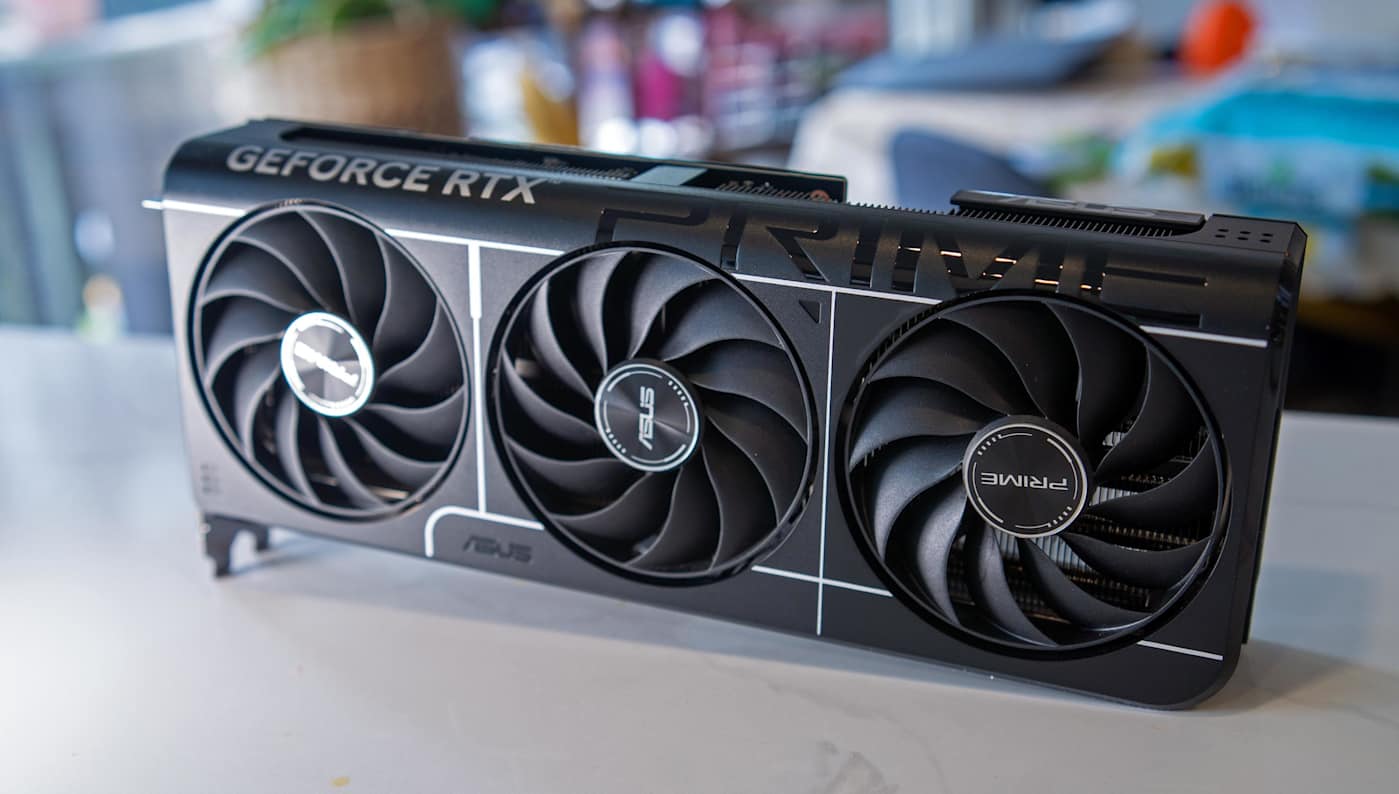
After telling the YouTube channel Hardware Unboxed that it was putting its RTX 5060 Ti 16GB and 5070 Ti into "end-of-life status," ASUS has backtracked on those comments and now says the GPUs will remain on sale.
"Certain media may have received incomplete information from an ASUS PR representative regarding these products," the company said in a dedicated press release." The GeForce RTX 5070 Ti and GeForce RTX 5060 Ti 16 GB have not been discontinued or designated as end-of-life (EOL). ASUS has no plans to stop selling these models."
ASUS further clarified that supply fluctuations, primarily due to memory supply constraints, have temporarily affected production output and stocks. "As a result, availability may appear limited in certain markets, but this should not be interpreted as a production halt or product retirement. ASUS will continue to support the GeForce RTX 5070 Ti and RTX 5060 Ti 16 GB and is working closely with partners to stabilize supply as conditions improve."
Yesterday, Hardware Unboxed said that ASUS "explicitly told us this model is currently facing a supply shortage and, as such, they have placed the model into end-of-life status." In a new pinned comment, the channel noted that the new information "completely walks back their original statement to us."
Hardware Unboxed learned of the shortage by speaking to resellers in Australia, who said that the 5070 Ti is “no longer available to purchase from partners and distributors,” adding they expect that to be the case throughout at least the first quarter of the year. Based on that, along with ASUS's statement, they released the video in question yesterday.
Although ASUS now says that it will still make both of those GPUs, being able to buy one could be next to impossible, based on what retailers told Hardware Unboxed. The AI boom has sent the cost of memory soaring, leading to price hikes for GPUs and other PC components. That in turn has led to anger among gamers, and the problem may get much worse before it gets better.
This article originally appeared on Engadget at https://www.engadget.com/computing/accessories/asus-changes-mind-will-continue-selling-the-rtx-5070-ti-after-all-130934271.html?src=rss
After a widely hyped and successful Kickstarter campaign, Valerion’s 4K VisionMaster Max laser projector has finally arrived. It’s the company’s new flagship model in the VisionMaster series, offering better image quality and more convenience than its other models. However, it’s quite expensive and has some stiff competition from Anker’s Nebula X1 and XGIMI’s Horizon 20 Max.
I was eager to see how it compared to those models and if it delivers on Valerion’s promise of “pure cinema.” It does offer better image quality, but the difference isn’t quite enough to justify the big jump in price for most users.
Features and design
The VisionMaster Max has a classy squarish design with a glossy black finish up front and chrome fins on the side that house two 12W speakers. It’s smaller and fit my decor better than Nebula’s tall, plasticky X1, though to be fair the latter is also designed for outdoor use. The VisionMaster Max has a similar form factor to XGIMI’s Horizon 20 Max, but that model pivots on its stand, while the Valerion uses a kickstand-like support.
For setup, the VisionMaster Max is quite flexible. It comes with a 0.9-1.5x optical zoom, so it can be installed between 7.8 and 13 feet away for a 120-inch screen size, which covers a wide range of scenarios. It also features a +/- 105 percent vertical shift option that helps you get an optically perfect screen fit without moving the projector or employing digital “keystone” adjustments that affect picture quality.
If that still doesn’t work, you can swap out the included lens with a long-throw 0.9-2.0:1 option once it becomes available. The company has even promised an anamorphic lens for users with CinemaScope screens. Both of those items will be available for purchase separately with the prices yet to be disclosed.
Steve Dent for Engadget
For my space, I placed the VisionMaster Max on a table about 12 feet from my 120-inch screen and centered it horizontally as there’s no horizontal shift option (it can also be ceiling mounted, of course). Then, I went into the auto-alignment setting, made sure that the projected image was larger than my screen and hit “start alignment” to get a perfect fit to my screen. Though it lacks a motorized lens gimbal like the Nebula X1, the lens shift option provides the same flexibility, so setup was just as easy.
For inputs, the VisionMaster Max comes with three HDMI 2.1 ports, including one with eARC for a sound bar, along with S/PDIF optical and 3.5mm audio outputs. Impressively, it includes a gigabit ethernet connection so you can either hardwire it to the internet or connect via Wi-Fi.
The VisionMaster Max lacks liquid cooling like the Nebula X1, but Valerion claims a similar fan noise level of 28db. When I compared them side by side, it was only a touch louder than the X1 and not at all bothersome.
Google TV is built in for streaming and projector control via the high-quality, partially backlit remote. It provides a large library of apps via Google Play along with a familiar interface. You get certified versions of Netflix, YouTube, Prime Video, Disney+, Max and others, plus Chromecast and AirPlay support, and Google Assistant for voice control. With 4GB of RAM and 128GB of ROM, the software felt a bit more responsive than Google TV on the Nebula X1.
Image quality
Steve Dent for Engadget
The VisionMaster Max has a number of features designed to optimize image quality. It’s one of the few consumer projectors with a dynamic iris and a feature called Enhanced Black Level (EBL) for improved contrast. It uses an RGB triple-laser light source (rated for 25,000 hours) paired with a 0.47-inch DLP chip that projects 1080p natively or 4K video via pixel shifting. This same chip is used on almost every consumer-level 4K projector, but XGIMI’s upcoming Titan Noir Max projector will pack a much larger 0.78-inch DMD chip that should deliver a sharper picture.
The VisionMaster Max also supports every HDR format, including Dolby Vision and Samsung’s HDR10+, along with Valerion’s own tone-mapping HDR setting. You can choose from seven picture modes for SDR, eight for HDR, three for Dolby Vision and four for HDR10+. The projector handled most HDR content well, though it occasionally lost detail in extra-bright shots. However, that can largely be fixed using the extensive manual color controls.
With all those features, the VisionMaster Max can output 4K 60 fps video at up to 3,500 ANSI lumens with a 50,000:1 contrast ratio, easily besting its main rivals. On top of that, it promises an impressive 110 percent of the Rec.2020 HDR color spectrum, with a delta E (color accuracy) value of less than 0.8 straight out of the box (any delta E less than 2 is undetectable by the human eye). Another key feature is reduction of the rainbow effect that can occur with DLP projectors.
After some fine-tuning that’s typically required with new projectors, I was highly impressed with the image quality. Brightness was high enough in “standard” mode to watch content like sports or TV shows without lowering the blinds, and can be increased if you don’t mind compromising color accuracy.
When used in ideal conditions like a darkened room, the VisionMaster Max’s image quality is the best of any projector I’ve tested to date. In Filmmaker mode (with the EBL setting enabled), contrast levels are outstanding, with true blacks showing in dark-lit scenes instead of the washed-out greys seen on most projectors. However, I kept the EBL mode at the minimum setting as I noticed it caused some color shifting at the other levels. Dynamic iris projectors can cause excessive “pumping” or sudden changes in light levels, but after adjusting the iris to a medium setting, I saw no signs of that.
The famously dark Game of Thrones Night King battle scene was easy to see on the VisionMaster Max.
Steve Dent for Engadget
Color accuracy is outstanding straight out of the box both in HDR and non-HDR modes, particularly, again in Filmmaker mode. Visually, I couldn’t detect any anomalies when looking at color bars or other charts, though my Calibrite Color Checker told me that the gamut of hues was slightly less than what Valerion claims (under 100 percent of BT.2020).
Still, the Max’s high color accuracy allowed me to see TV series and movies exactly as the filmmakers intended for a range of HDR and non-HDR movies including White Lotus season 3, Once Upon a Time in Hollywood, Andor and Dune 2. The projector’s excellent dynamic range and contrast revealed shadow details in Game of Thrones’ Night King battle, which has famously dark scenes that are difficult to see on some TVs.
I have a slight amount of sensitivity to the “rainbow” effect, but the RBE Reduction feature effectively eliminated that visual artifact for me. However, it also introduced a slight amount of noise, so I disabled it. The feature might be a godsend for some users who are particularly susceptible, but it still needs a bit more refinement.
Audio and gaming
Of all the luxury projectors I’ve tested to date, the VisionMaster Max is the best for gaming — even compared to some dedicated models. It delivers latency as low as 4ms and a refresh rate up to 240Hz at 1080p, and 15ms for 4K at 60Hz. I tested a couple of PC titles including Cyberpunk 2077 and Hollow Knight: Silksong and found them to be as responsive as I’ve seen on any TV, but with far more immersion thanks to the huge, bright and color-accurate image.
Steve Dent for Engadget
You can output audio via the S/PDIF optical output, 3.5mm headphone jack, HDMI 2.1 ports and even USB 3.0 Type A ports. The built-in 12W stereo speakers work well and are fairly loud, so you can use them in a pinch. However, since it supports both DTS:X and Dolby Atmos, you’ll ideally want to connect it to a nice home theater audio system with support for at least 5.1 surround sound.
In comparison, the Nebula X1 doesn’t have Dolby Atmos support, but it does give you the option to purchase and easily connect stereo Bluetooth speakers at a relatively cheap price. For around the same cost as the Valerion Max, Anker is also offering the Nebula X1 Pro that comes with a giant outdoor sound system and does support Dolby Atmos.
Wrap-up
The Valerion VisionMaster Max is a highly capable indoor projector that offers the best image quality I’ve seen thanks to the dynamic iris and Enhanced Black Level features. However, it’s also a lot more expensive than rival models at $5,000. It’s pretty hard to justify that extra money, unless you’re really fussy about picture accuracy and gaming performance, or need other features like the 1Gbps ethernet port.
Most buyers would be better off spending a lot less on Valerion’s own $2,699 VisionMaster Pro2, Anker’s $2,999 Nebula X1 or the $2,999 XGIMI Horizon 20 Max. Again, the difference in picture quality is too slight to justify the huge price jump to the VisionMaster Max. You might also want to wait to see how much XGIMI’s incoming Titan Noir Max 4K costs, as it also offers a dynamic iris but has a much bigger DLP chip.
This article originally appeared on Engadget at https://www.engadget.com/home/home-theater/valerion-visionmaster-max-projector-review-near-perfect-image-quality-comes-at-a-price-140045939.html?src=rss
After reaching a proposed settlement last year, the FTC has banned General Motors from sharing specific consumer data with third parties, TechCrunch reported. The finalized order wraps up one of the more egregious cases of a corporation collecting its customers' data and then using it against them.
Two years ago, the New York Times report released a report detailing how GM's OnStar "Smart Driver" program collected and sold detailed geolocation and driving behavior data to third parties, including data brokers. Those brokers in turn sold the data to insurance providers, which jacked up the rates for some drivers based on the data. "It felt like a betrayal," said a Chevy Bolt owner that saw his insurance rise by 21 percent based on the data. "They’re taking information that I didn’t realize was going to be shared and screwing with our insurance."
According to the terms of the settlement, GM is barred from sharing specific user data with consumer reporting agencies for a five year period. The automaker is also required to request user permission before collecting, using or sharing vehicle data with any third party. It must do that when a consumer purchases a car at a dealership, with the customer asked in person whether they agree or not with the data collection, GM said.
Some of the settlement is moot as GM stopped its Smart Driver program for all brands in April 2024. The company unenrolled all customers and stopped its third-party relationship with LexisNexis and Verisk, the brokers that sold driver data to insurance companies.
GM faced other actions over the data collection, including lawsuits from Texas, Nebraska and other states. "Our investigation revealed that General Motors has engaged in egregious business practices that violated Texans’ privacy and broke the law. We will hold them accountable," said Texas AG Ken Paxton at the time.
In a statement to TechCrunch, GM said: "The Federal Trade Commission has formally approved the agreement reached last year with General Motors to address concerns. As vehicle connectivity becomes increasingly integral to the driving experience, GM remains committed to protecting customer privacy, maintaining trust, and ensuring customers have a clear understanding of our practices."
This article originally appeared on Engadget at https://www.engadget.com/transportation/ftc-finalizes-gm-punishment-over-driver-data-sharing-scandal-130012313.html?src=rss
Bandcamp has addressed the AI slop problem vexing musicians and their fans of late. The company is banning any music or audio on its platform that is "wholly or in substantial part" made by generative AI, according to its blog. It also clarified that the use of AI tools to impersonate other artists or styles is “strictly prohibited” by policies already in place.
Any music suspected to be AI generated may be removed by the Bandcamp team and the company is giving users reporting tools to flag such content. "We believe that the human connection found through music is a vital part of our society and culture, and that music is much more than a product to be consumed," the company wrote.
The announcement makes Bandcamp one of the first music platforms to offer a clear policy on the use of AI tech. AI-generated music (aka “slop”) has increasingly been invading music-streaming platforms, with Deezer for one recently saying that 50,000 AI-generated songs are uploaded to the app daily, or around 34 percent of its music.
Platforms have been relatively slow to act against this trend. Spotify has taken some baby steps on the matter, having recently promised to develop an industry standard for AI disclosure in music credits and debut an impersonation policy. For its part, Deezer said it remains the only streaming platform to sign a global statement on AI artist training signed by numerous actors and songwriters.
Bandcamp has a solid track record for artist support, having recently unveiled Bandcamp Fridays, a day that it gives 100 percent of streaming revenue to artists. That led to over $120 million going directly to musicians, and the company plans to continue that policy in 2026.
This article originally appeared on Engadget at https://www.engadget.com/entertainment/streaming/bandcamp-prohibits-music-made-wholly-or-in-substantial-part-by-ai-130050593.html?src=rss
Tesla will stop selling its $8,000 Full Self-Driving (FSD) option and make it strictly a monthly subscription service after February 14, CEO Elon Musk announced on his X platform. Musk didn't reveal the price or why he's making the switch, though FSD is already available by subscription for $99 per month or $999 per year.
The shift could be advantageous for buyers, particularly if they decide to dump their new Tesla or trade it in. It will also allow prospective owners to hedge their bets, as Tesla has overpromised on the feature since it was first announced.
Tesla will stop selling FSD after Feb 14.
FSD will only be available as a monthly subscription thereafter.
Full Self-Driving has never done what the name suggests as humans must constantly supervise the system and frequently take control. Because of that, it's more of a "driver assist" system and doesn't even qualify as Level 3 self-driving (conditional automation), let alone as a truly autonomous Level 4 or Level 5 category. Musk has been touting self-driving capabilities on Tesla vehicles since 2015, promising at the time "complete autonomy" by 2018.
Branding for the system as "Autopilot" and "Full Self-Driving" has been called out as false advertising by consumer watchdogs and government for years, but so far, regulators have yet to take action. A California judge recently ruled that Tesla used "deceptive language to market Autopilot and recommended suspending Tesla's sales in the state for 30 days. However, the company has 90 days to comply and could still avoid punishment.
This article originally appeared on Engadget at https://www.engadget.com/transportation/evs/teslas-full-self-driving-is-switching-to-a-subscription-only-service-120053137.html?src=rss
Anker is going up against Tesla in the home battery backup segment with Solix E10 that promises "whole-home backup" at an affordable price. The system delivers enough power to handle heavy-duty air conditioners and other high-power appliances in the event of a blackout. It also claims that the E10 supports DIY-friendly installation thanks to the stackable, plug-and-play design.
Each Anker Solix E10 unit can deliver up to 37.2kW of surge power and stacking two boosts that to 66kW. It also comes with a "turbo output" mode that can output 10kW per unit for 90 minutes maximum. That level of power, along with the minimal 20ms auto-switch time (from grid to battery), means you may not even notice if the power grid goes down.
Anker
For large installations, you can stack up to three E10 units to boost power to 90kWh, enough to provide whole home backup for up to 15 days (average US consumption is 30kWh per day so that might be stretching it). If that's not enough, you can add Anker's tri-fuel Solix Smart Generator 5500 that runs on gasoline, propane or natural gas and charges the E10 batteries via DC for maximum efficiency. The E10 can also handle up to 9kW of input from solar panels, or 27kW with three units.
Anker's Solix E10 can be purchased with several optional components. The Power Dock allows auto switching from grid power in the even of an outage in 20 milliseconds, while the Smart Inlet Box provides a manual switchover option. The latter lets you charge the E10 batteries from the grid with existing solar systems to save money.
In the event of a wild storm, units are weatherproof thanks to the all-metal enclosures and can be operated in temperatures ranging from -4 to 131 degrees Fahrenheit.
As for pricing, the Solix E10 costs $4,299 by itself, $4,599 with the Smart Inlet Box, $5,799 with the Solix Power Dock and $7,399 with the Solix Power Dock and Smart Generator. Adding an extra E10 unit would boost the latter price to around $10,000. However, Anker claims lower installation costs for the Solix E10 than Tesla and other manufacturers due to its modular nature and says it's so intuitive that some buyers could do a DIY installation. The Solix E10 is now available for pre-order.
This article originally appeared on Engadget at https://www.engadget.com/home/ankers-solix-e10-battery-backup-can-power-your-entire-house-in-a-blackout-143040115.html?src=rss
Tesla's 2026 Model Y is now available on the company's site and it comes with a new (and old) option: a seven-seat version via a third row. The extra seating costs $2,500 and is only available if you order the Premium All-Wheel-Drive Long Range model. Tesla first teased the option last year via an email to prospective buyers with the promise of "seating for up to seven and enough room for everyone's gear," Electrek reported at the time.
The new seats appear to be designed mainly for children as they don't offer much legroom, according to images on Tesla's configurator. Tesla notes that the seven-seat interior "features fold-flat second-row and third-row seats," though it's not clear if those seats fold down electrically like the second row.
Tesla
Tesla is facing increased competition, especially in the crossover/SUV category, and saw another sales decline last quarter. The company previously sold a seven-seat version of the Model Y in the US for a short time before it was refreshed early last year. Since then, though, it has only been available with five seats. Tesla launched a six-seat "Model YL" version in China in August 2025 with a six-inch wheelbase extension that the US model lacks. Elon Musk said that model would come to the US market in late 2026 or maybe "never."
Otherwise, changes to the Model Y lineup are minor and confined to the Premium version. Those include a 20-inch dark-grey "Helix" "wheel option, a new black headliner, a bigger, higher-resolution 16-inch display and darker rear badging.
This article originally appeared on Engadget at https://www.engadget.com/transportation/evs/tesla-launches-a-seven-seat-version-of-the-2026-model-y-130039385.html?src=rss
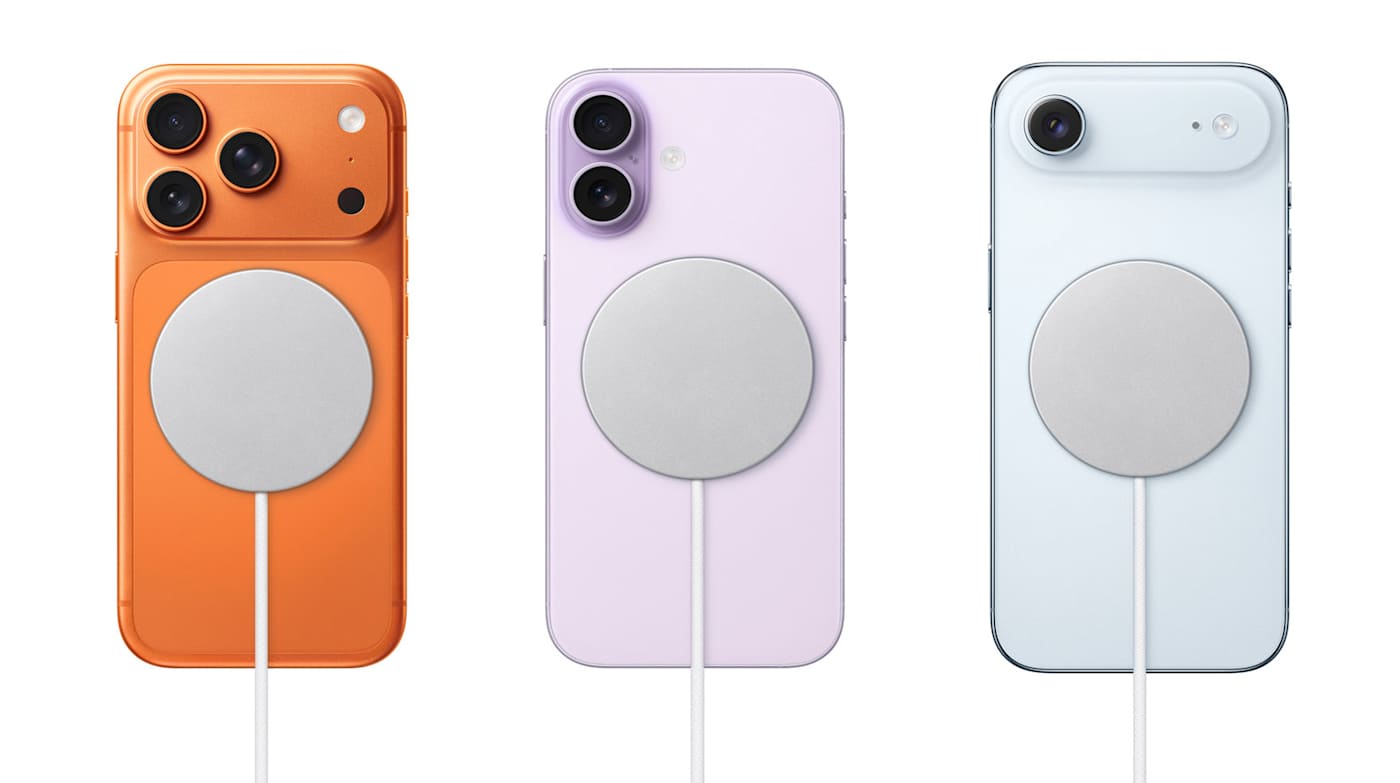
If you want a wireless charger for your iPhone and prefer to stick with Apple, Amazon has a sale that may pique your interest. The retailer is selling the one meter Apple Magsafe charger for $30, saving you $10 off the regular price, while also selling the two meter model for $40 ($10 off).
If you have an iPhone 16, iPhone 17 or iPhone Air, this cable can charge your device at 25W as long as it's connected to a 30W power adapter on the other end. While you'll need a more recent iPhone to get the fastest MagSafe charging speeds, the charger can wirelessly top up the battery of any iPhone from the last eight years (iPhone 8 and later). With older iPhones, the charging speed tops out at 15W. The cable works with AirPods wireless charging cases too — it's certified for Qi2.2 and Qi charging.
The MagSafe charger is one of our favorite iPhone accessories, and would pair quite nicely with your new iPhone if you're picking up one of the latest models. If you're on the fence about that, be sure to check out our reviews of the iPhone 17, iPhone Pro/Pro Max and iPhone Air.
This article originally appeared on Engadget at https://www.engadget.com/deals/apples-latest-25w-magsafe-charger-is-on-sale-for-30-141707297.html?src=rss

 Login
Login