Reading view

There are new articles available, click to refresh the page.

Pickle Diodes, Asymmetric Jacobs Ladders, and Other AC Surprises

While we’re 100 years past Edison’s fear, uncertainty, and doubt campaign, the fact of the matter is that DC is a bit easier to wrap one’s head around. It’s just so honest in its directness. AC, though? It can be a little shifty, and that results in some unexpected behaviors, as seen in this video from [The Action Lab].

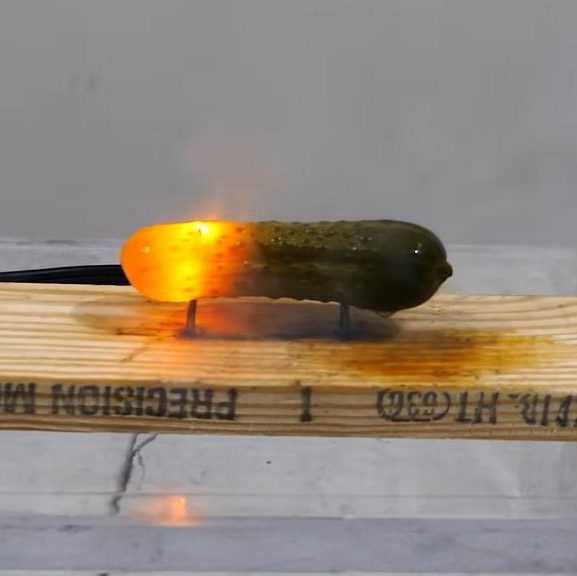
He starts off with a very relatable observation: have you ever noticed that when you plug in a pickle, only half of it lights up? What’s up with that? Well, it’s related to the asymmetry he sees on his Jacobs ladder that has one side grow hotter than the other. In fact, it goes back to something welders who use DC know about well: the Debye sheath.

The arc of a welder, or a Jacobs ladder, or a pickle lamp is a plasma: ions and free electrons. Whichever electrode has negative is going to repel the plasma’s electrons, resulting in a sheath of positive charge around it. This positively-charged ions in the Debye sheath are going to accelerate into the anode, and voila! Heating. That’s why it matters which way the current goes when you’re welding.

With DC, that makes sense. In AC, well — one side starts as negatively charged, and that’s all it takes. It heats preferentially by creating a temporary Debye sheath. The hotter electrode is going to preferentially give off electrons compared to its colder twin — which amplifies the effect every time it swings back to negative. It seems like there’s no way to get a pure AC waveform across a plasma; there’s a positive feedback loop at whatever electrode starts negative that wants to introduce a DC bias. That’s most dramatically demonstrated with a pickle: it lights up on the preferentially heated side, showing the DC bias. Technically, that makes the infamous electric pickle a diode. We suspect the same thing would happen in a hot dog, which gives us the idea for the tastiest bridge rectifier. Nobody tell OSHA.

[The Action Lab] explains in more detail in his video, and demonstrates with ring-shaped electrode how geometry can introduce its own bias. For those of us who spend most of our time slinging solder in low-voltage DC applications, this sort of thing is fascinating.  It might be old hat to others here; if the science of a plain Jacobs ladder no longer excites you, maybe you’d find it more electrifying built into a blade.

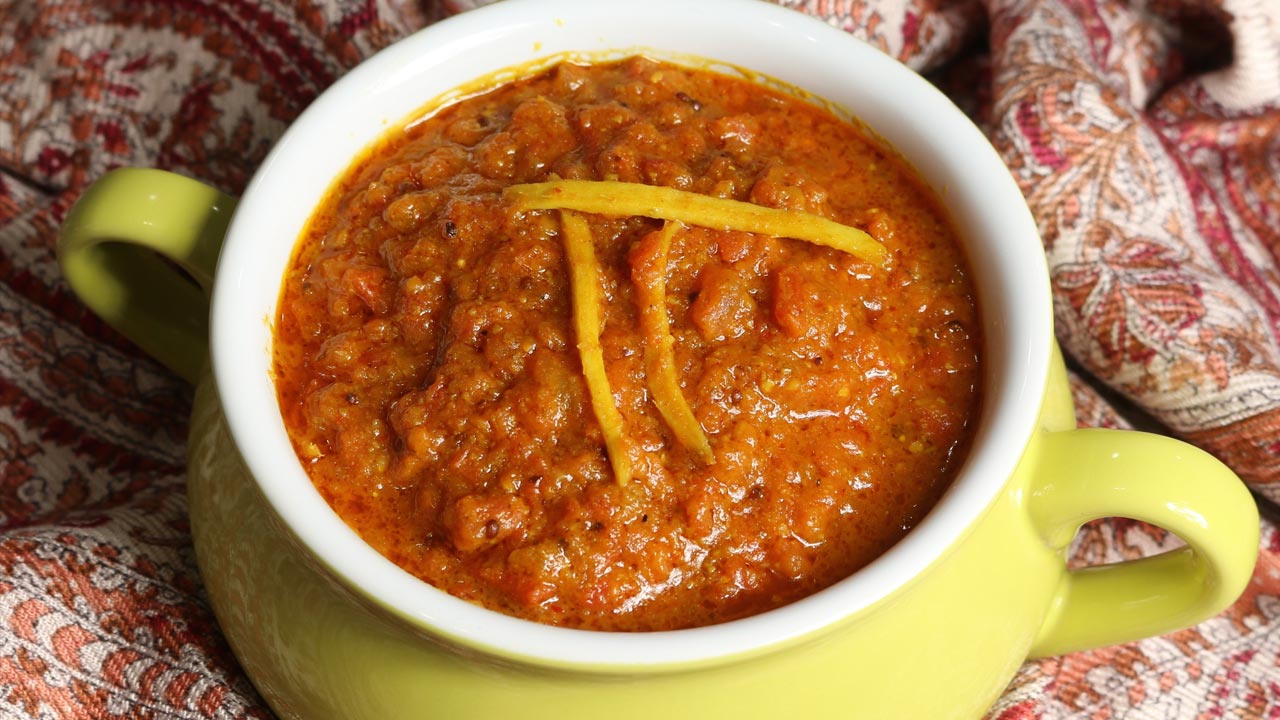
Garlic & Naga Red Chilli Pickle

A spicy, robust pickle made with garlic and potent red chilli from Nagaland, this pickle will add the good kind of heat to your palate

As an introvert, I tend to avoid stepping into spaces that are traditionally marked as belonging to the ‘family’ – for example the kitchen, the dining area, the family room, etc. But all of that respect for space went flying out of the window in the face of the Khonoma’s bone-numbing cold that had my teeth clattering out unheard of tunes. A and I shuffled into the kitchen looking for something warm to ensure we stayed alive until dinner… and the taste of this garlic chilli pickle made me sit up, quite literally!

Offered rather tentatively by the homestay owner – she was probably afraid to let us face the wrath of the local red chilli that Nagaland is famous for – the sharp, spicy and robust taste opened up the sinuses and had my blood rushing to all those cold-number places.

I am a garlic girl through and through so of course I loved it a lot but oh my my…

Understanding the recipe was a bit of a struggle as the homestay owner grappled with words and terms to explain the process, until we resorted to hand actions. Made with pantry essentials and ingredients that are available in most Indian (and non-Indian) kitchens, the Garlic & Naga Red Chilli Pickle makes for a deliciously fiery achaar to your dal chawal, the drizzle to your sad sabji, the exquisite touch to your sourdough cheese grilled sandwich and more.

I’ve used the local garlic I bought in Khonoma village along with the red chilli powder I picked up from a farmers’ market outside Kigwema village. The mustard seeds, mustard oil and tomato are from the provision store and vegetable vendor a few steps from my home.

And obviously, you won’t have the Naga garlic and chilli so feel free to use whatever you have… I’m sure it’ll taste brilliant!

Things to remember
  • Roughly chop the garlic cloves but don’t mince; we want the garlic pieces to roll on your tongue when you eat the pickle
  • Be patient with the ‘let it sit’ portion of the recipe; the more you let the pickle sit, the more it’ll develop flavours and potency
  • Be sure to store in a clean, dry glass jar.

If you like to keep your refrigerator stocked with condiments that uplift the mundane, check out the recipes for the Apple Chutney, the Mixed Fruit Chaatni as also the Tomato & Dates Chutney.

A spicy, robust pickle made with garlic and potent red chilli from Nagaland, that'll add the good kind of heat to your palate
Print

Garlic & Naga Red Chilli Pickle

Course Side Dish
Cuisine Indian
Prep Time 2 days

Ingredients

  • ½ cup Cup Nagaland Garlic
  • 6 tbsp Vinegar
  • 1 inch Ginger
  • 1 Tomato (small)
  • ½ teaspoon Mustard seeds
  • 2 teaspoon Mustard oil
  • ½ teaspoon Nagaland Red Chilli Powder
  • Salt 

Instructions

Day 1

  • Peel, wash and roughly chop the garlic cloves.
  • Soak the chopped garlic in vinegar, ensuring all of the garlic is submerged in the vinegar, cover and let it rest overnight.

Day 2

  • Blanch and peel the tomato. Chop it in a mush.
  • Grate the ginger into the vinegar-soaked garlic.
  • In a pan, heat mustard oil.
  • Add the mustard seeds and let them splutter.
  • Pour in the garlic ginger vinegar solution to the oil and cover immediately to stop the splutter and trap the fragrance (as my mother says).
  • Once the situation inside the pan is a little calm, uncover, add the tomato mush and give it a good stir.
  • Add the Nagaland Red Chilli Powder and a pinch of salt.
  • Give it a good stir and simmer for 10 minutes.
  • Let it cool completely before storing it in a glass jar.

Korean Pickled Radish (Danmuji)

By: Aarthi

Danmuji also known as Radish Pickle or Chicken-mu is a popular Korean Side dish made with Radish, vinegar, sugar and salt. The pickle itself is crunchy, slightly sweet sour which pairs well with Korean Fried Chicken, kimbap or jajangmyeon. Korean Radish Pickle (Danmuji) I still remember eating danmuji, also known as chicken-mu, with my Korean...

Read More

The post Korean Pickled Radish (Danmuji) appeared first on Yummy Tummy.

Garlic & Naga Red Chilli Pickle

By: Rapti B

A spicy, robust pickle made with garlic and potent red chilli from Nagaland, this pickle will add the good kind of heat to your palate

As an introvert, I tend to avoid stepping into spaces that are traditionally marked as belonging to the ‘family’ – for example the kitchen, the dining area, the family room, etc. But all of that respect for space went flying out of the window in the face of the Khonoma’s bone-numbing cold that had my teeth clattering out unheard of tunes. A and I shuffled into the kitchen looking for something warm to ensure we stayed alive until dinner… and the taste of this garlic chilli pickle made me sit up, quite literally!

Offered rather tentatively by the homestay owner – she was probably afraid to let us face the wrath of the local red chilli that Nagaland is famous for – the sharp, spicy and robust taste opened up the sinuses and had my blood rushing to all those cold-number places.

I am a garlic girl through and through so of course I loved it a lot but oh my my…

Understanding the recipe was a bit of a struggle as the homestay owner grappled with words and terms to explain the process, until we resorted to hand actions. Made with pantry essentials and ingredients that are available in most Indian (and non-Indian) kitchens, the Garlic & Naga Red Chilli Pickle makes for a deliciously fiery achaar to your dal chawal, the drizzle to your sad sabji, the exquisite touch to your sourdough cheese grilled sandwich and more.

I’ve used the local garlic I bought in Khonoma village along with the red chilli powder I picked up from a farmers’ market outside Kigwema village. The mustard seeds, mustard oil and tomato are from the provision store and vegetable vendor a few steps from my home.

And obviously, you won’t have the Naga garlic and chilli so feel free to use whatever you have… I’m sure it’ll taste brilliant!

Things to remember
  • Roughly chop the garlic cloves but don’t mince; we want the garlic pieces to roll on your tongue when you eat the pickle
  • Be patient with the ‘let it sit’ portion of the recipe; the more you let the pickle sit, the more it’ll develop flavours and potency
  • Be sure to store in a clean, dry glass jar.

Do let me know if you try this recipe! Leave a comment and don’t forget to tag me on Instagram at from.the.corner.table and hashtag it #fromthecornertable. I’d love to see it ❤

If you like to keep your refrigerator stocked with condiments that uplift the mundane, check out the recipes for the Apple Chutney, the Mixed Fruit Chaatni as also the Tomato & Dates Chutney.

A spicy, robust pickle made with garlic and potent red chilli from Nagaland, that'll add the good kind of heat to your palate

For regular updates on recipes, recommendations on things to read and watch and ramblings that make sense, subscribe to the newsletter – you’ll find the form in the sidebar if viewing on a screen and at the bottom if viewing on the phone. Since spamming or flooding your inbox is a huge no for me, these newsletters go out only when I’ve put up a new post or sometimes, once in a month only.

Garlic & Naga Red Chilli Pickle

A spicy, robust pickle made with garlic and potent red chilli from Nagaland

  • 1/2 cup Nagaland Garlic
  • 6 tablespoon Vinegar
  • 1 inch Ginger
  • 1 Tomato (small)
  • 1/2 teaspoon Mustard seeds
  • 2 tablespoon Mustard oil
  • 1/2 teaspoon Nagaland Red Chilli Powder
  • Salt a pinch

Day 1

  1. Peel, wash and roughly chop the garlic cloves.
  2. Soak the chopped garlic in vinegar, ensuring all of the garlic is submerged in the vinegar, cover and let it rest overnight.

Day 2

  1. Blanch and peel the tomato. Chop it in a mush.
  2. Grate the ginger into the vinegar-soaked garlic.
  3. In a pan, heat mustard oil.
  4. Add the mustard seeds and let them splutter.
  5. Pour in the garlic ginger vinegar solution to the oil and cover immediately to stop the splutter and trap the fragrance (as my mother says).
  6. Once the situation inside the pan is a little calm, uncover, add the tomato mush and give it a good stir.
  7. Add the Nagaland Red Chilli Powder and a pinch of salt.
  8. Give it a good stir and simmer for 10 minutes.
  9. Let it cool completely before storing it in a glass jar.

Garlic & Naga Red Chilli Pickle

By: Rapti B

A spicy, robust pickle made with garlic and potent red chilli from Nagaland, this pickle will add the good kind of heat to your palate

As an introvert, I tend to avoid stepping into spaces that are traditionally marked as belonging to the ‘family’ – for example the kitchen, the dining area, the family room, etc. But all of that respect for space went flying out of the window in the face of the Khonoma’s bone-numbing cold that had my teeth clattering out unheard of tunes. A and I shuffled into the kitchen looking for something warm to ensure we stayed alive until dinner… and the taste of this garlic chilli pickle made me sit up, quite literally!

Offered rather tentatively by the homestay owner – she was probably afraid to let us face the wrath of the local red chilli that Nagaland is famous for – the sharp, spicy and robust taste opened up the sinuses and had my blood rushing to all those cold-number places.

I am a garlic girl through and through so of course I loved it a lot but oh my my…

Understanding the recipe was a bit of a struggle as the homestay owner grappled with words and terms to explain the process, until we resorted to hand actions. Made with pantry essentials and ingredients that are available in most Indian (and non-Indian) kitchens, the Garlic & Naga Red Chilli Pickle makes for a deliciously fiery achaar to your dal chawal, the drizzle to your sad sabji, the exquisite touch to your sourdough cheese grilled sandwich and more.

I’ve used the local garlic I bought in Khonoma village along with the red chilli powder I picked up from a farmers’ market outside Kigwema village. The mustard seeds, mustard oil and tomato are from the provision store and vegetable vendor a few steps from my home.

And obviously, you won’t have the Naga garlic and chilli so feel free to use whatever you have… I’m sure it’ll taste brilliant!

Things to remember
  • Roughly chop the garlic cloves but don’t mince; we want the garlic pieces to roll on your tongue when you eat the pickle
  • Be patient with the ‘let it sit’ portion of the recipe; the more you let the pickle sit, the more it’ll develop flavours and potency
  • Be sure to store in a clean, dry glass jar.

Do let me know if you try this recipe! Leave a comment and don’t forget to tag me on Instagram at from.the.corner.table and hashtag it #fromthecornertable. I’d love to see it ❤

If you like to keep your refrigerator stocked with condiments that uplift the mundane, check out the recipes for the Apple Chutney, the Mixed Fruit Chaatni as also the Tomato & Dates Chutney.

A spicy, robust pickle made with garlic and potent red chilli from Nagaland, that'll add the good kind of heat to your palate

For regular updates on recipes, recommendations on things to read and watch and ramblings that make sense, subscribe to the newsletter – you’ll find the form in the sidebar if viewing on a screen and at the bottom if viewing on the phone. Since spamming or flooding your inbox is a huge no for me, these newsletters go out only when I’ve put up a new post or sometimes, once in a month only.

Garlic & Naga Red Chilli Pickle

A spicy, robust pickle made with garlic and potent red chilli from Nagaland

  • 1/2 cup Nagaland Garlic
  • 6 tablespoon Vinegar
  • 1 inch Ginger
  • 1 Tomato (small)
  • 1/2 teaspoon Mustard seeds
  • 2 tablespoon Mustard oil
  • 1/2 teaspoon Nagaland Red Chilli Powder
  • Salt a pinch

Day 1

  1. Peel, wash and roughly chop the garlic cloves.
  2. Soak the chopped garlic in vinegar, ensuring all of the garlic is submerged in the vinegar, cover and let it rest overnight.

Day 2

  1. Blanch and peel the tomato. Chop it in a mush.
  2. Grate the ginger into the vinegar-soaked garlic.
  3. In a pan, heat mustard oil.
  4. Add the mustard seeds and let them splutter.
  5. Pour in the garlic ginger vinegar solution to the oil and cover immediately to stop the splutter and trap the fragrance (as my mother says).
  6. Once the situation inside the pan is a little calm, uncover, add the tomato mush and give it a good stir.
  7. Add the Nagaland Red Chilli Powder and a pinch of salt.
  8. Give it a good stir and simmer for 10 minutes.
  9. Let it cool completely before storing it in a glass jar.

Omavalli thokku | Indian borage pickle

omavalli thokku.

Thankfully that Indian borage plant, that was generously shared by my husband’s cousin is happily growing. We have made so much chutney and rasam with these leaves.I have some more leaves to make new recipes. Since it is winter, the leaf growth will be slow. So I am salvaging some of the excess leaves to make a thokku and keep for a few days so the plant can be left alone to be its best. So here is omavalli thokku.

What is a thokku?

Thokku is a borderline between pickle and chutney. It is spicy, roasted in oil and has a lot ground vegetables with spices and seasoning. It is a long standing version when compared to a chutney. The common varieties are tomato thokku, gongura leaves thokku or mango thokku. It is different from a thogayal as there are hardly any lentils used in this recipe. Thokku is used in the place of a pickle in the South Indian meal. They taste great with thair saadam or as a dip for idlies and dosas.

Ingredients to make the omavalli thokku

Omavalli leaves: fresh fleshy leaves of Indian borage plant is  a key ingredient in this recipe. They have a slight peppery flavour laced with an oregano smell. The leaves wont give much volume to the thokku but is key to the taste and flavour. We don’t have much swaps here without altering the flavour. However, you can make mint or coriander thokku the same way.

Shallots and garlic : since it is a thokku recipe is like to store and use both for rice based meals and for idly dosa breakfasts, I add shallots and garlic for flavour. These also provide a good fragrance along with the omavalli leaves.

Tomato:here is volume and sourness that is needed for the thokku. Fresh tomatoes are the best. However, they are not the best at the moment in season so plain canned one will make the cut. You can choose just plain ones or the ones that are peeled and chopped. It is important to make sure they don’t have any salt or seasoning added to them.

Tamarind: to pack in a thokku punch you need a small lime sized ball of dried tamarind. You can swap this with about a teaspoon of prepared tamarind pulp.

Spices and seasonings: salty and spicy with a hint of sour is the aim of the best thokku. So let’s start with salt. You can use seasalt, table salt or the rocksalt crystals. My parents believe in rock salt. I have used generic salt from the supermarket.

For the colour and heat dry red chillies are used. I have chosen the bydgai variety to lower the heat index and just add flavour and colour. You can choose the variety you have at home for Indian cooking. Red chilli powder is fine to be used too. Paprika will not be useful, cayanne is ok. 

Fenugreek seeds add a distinct aroma to the thokku. It is a usual ingredient in south Indian pickles.

Oil:sesame oil into a generous amount is needed to make this. The oil not only allows to cook and roast the thokku, but also acts as a preservative forming a layer on top. This cuts off aerobes and prevents the thokku from going moldy. Oil is added first at tempering and a second portion almost at finishing stages.

For tempering: mustard seeds, curry leaves and dry red chillies are needed for tempering the oil. I prefer to grind the curry leaves along with the omavalli leaves as i don’t get a lot here.
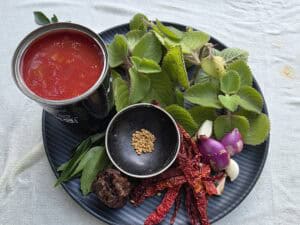
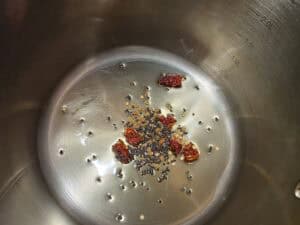
ingredients for the thokku

Lets make Indian borage pickle.

Though the ingredient list was a bit long, the making steps are simple. Slow cooking is the best hence the time taken is a bit for the best results.

Prep the ingredients: wash, drain and check the Indian borage leaves. Peel as set aside shallots and garlic to go with the blend. I have used canned tomatoes, however you can use fresh ones to make the blend.

Grind the mix:into the blender add the shallots,garlic, curry leaves, omavalli leaves, tamarind, chillies and fenugreek seeds. Add the tomatoes and blend to a smooth paste.

Tempering: add the half the quantity of sesame oil into the deep pot and set on medium heat. Add mustard seeds,dry red chillies and fenugreek seeds to it and let the mustard splutter.

Slow cooking: once the mustard seeds crackle, add the blend paste. Mix well so the the oil mixes in well. Add salt, asafoetida,  pepper powder and slow cool this on a low heat. Mix intermittently and as it thickens add the rest of the oil. Cook it the oil starts showing up on the surface. Keep mixing and cooking till it is like a paste. At this stage the thokku is ready.

Storing: Remove from heat and cool it down. Transfer to dry bottles and once completely cooled, press down a bit so the oil layer is on the top covering the paste.  Seal and store in a dark corner of the pantry.

What pairs well with omavalli thokku?

The reason I store thokku is because you can spice up a lot of lunch box ideas within minutes. So here are my best combos.

  • I like the lunchbox with thokku rice and cauliflower mezhukkuperatti. As a fusion I make thokku pasta with loads of vegetables. I use a spoon of thokku in stirfries and kadamba poriyal.
  • As a classic sit down meal, steamed rice with kootu, some vattal or vadam and this thokku is a soulful end to a massive week.
  • Dont limit the thokku to just home meals. Try a wrap with baked veggies and the thokku spread on the wrap. Ooo, yum!!
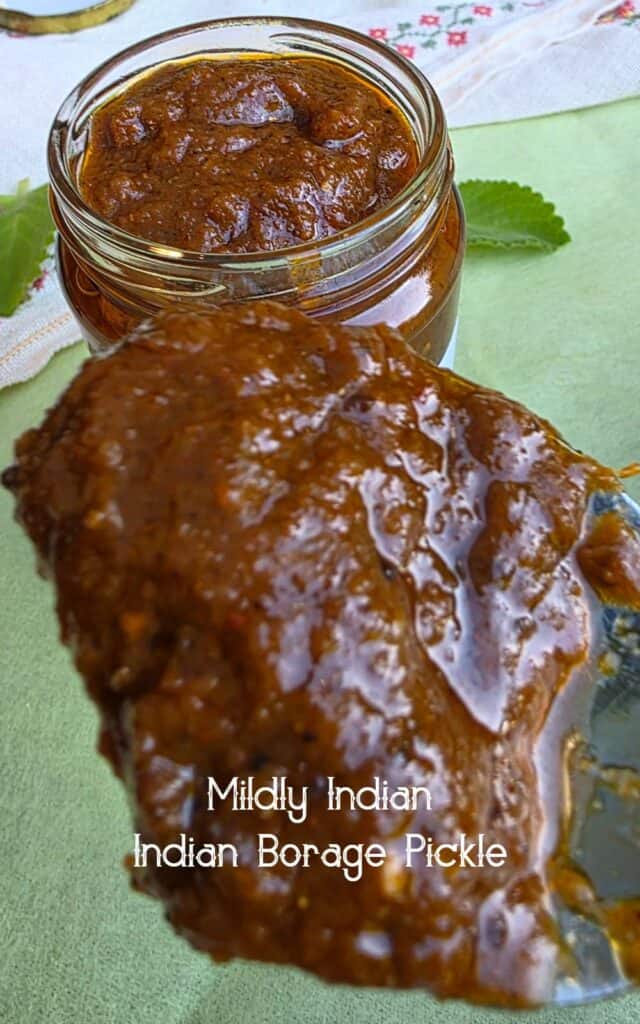
ajwain pattha achar

How to store Indian borage pickle?

The thokku stays well for upto three months. Ensure you transfer them warm into clean, dry glass bottles.
If you have made a huge batch remove a small portion into a smaller bottle to use often.this helps to reduce contamination of the bigger stock.
Use a dry spoon to remove a serving of pickle and don’t leave the pickle open for long.

Print

Omavalli thokku

Course Pickles
Cuisine Fusion, South indian
Keyword chutneys and podi, Indian vegetarian dinner, Pickle recipes
Prep Time 15 minutes
Cook Time 40 minutes

Equipment

  • deep pot
  • blender

Ingredients

  • 200 grams indian borage leaves
  • 400 grams tomatoes canned
  • 6-8 small shallots
  • 3-4 pods garlic ( optional)
  • 10 curry leaves
  • 1/2 tsp fenugreek seeds
  • 6-8 dry red chillies
  • 1 lime sized tamarind
  • salt to taste
  • crushed black pepper

for tempering

  • 3 tbsp sesame oil
  • 1 tsp mustard seeds
  • 2 long dry red chillies

finishing touches

  • 1/4 cup Sesame oil

Instructions

  • Peel the shallots and garlic, wash and set aside.
  • Wash and pat dry the Indian borage leaves.
  • Into the blender add the shallots, borage leaves, can of tomatoes, fenugreek, curry leaves, chillies and tamarind.
  • Blend them to form a smooth paste.
  • Into the deep pot, add the sesame oil and heat on medium warmth.
  • As the oil heats up add the mustard seeds and pieces of red chillies and let them sizzle and fry up.
  • Once the mustard splutters, add the blended mix and mix well.
  • Add salt and crushed black pepper and mix well.
  • Turn down the heat to low and let the mix cook.
  • Stir occasionally and let the mix bubble up and cook down slowly.
  • As the mix cooks down, add the rest of the oil.
  • Mix again and as the oil surfaces, the pickle is ready.

Other pickle ideas

Here are a few ideas that you can make and keep for a long while. Click on each of these highlights to take you to the respective recipe.

Stay connected

If you have not grown an Indian borage plant,I highly recommend one. They don’t rely on your green thumb,hardy and live well. In addition to making them as food the leaves can be seeped as tea.
When you have a lot of leaves, try this recipe and let us know what you think.
Pin this for later.
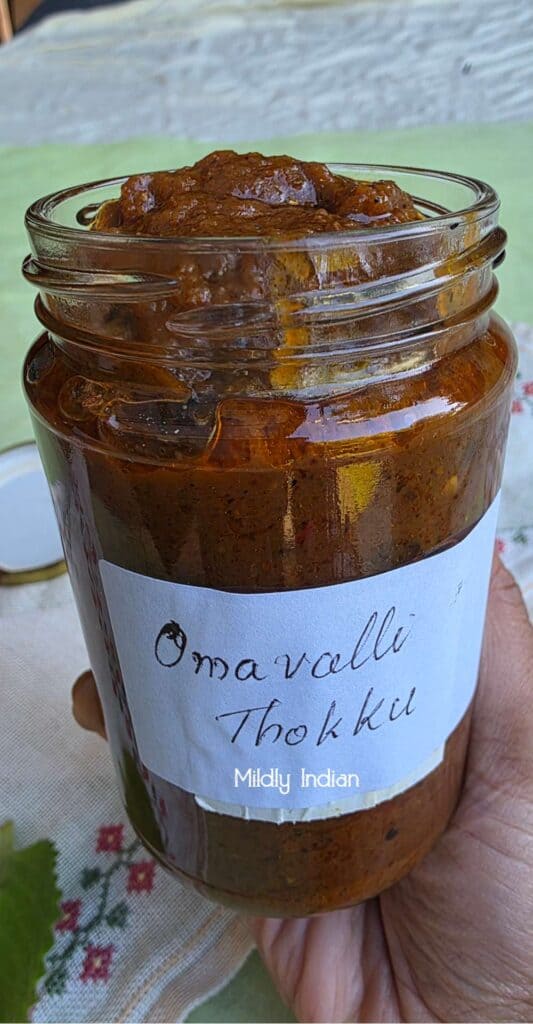
indian borage pickleStay subscribed and see you in the next post.

Garlic & Naga Red Chilli Pickle

By: Rapti B
A spicy, robust pickle made with garlic and potent red chilli from Nagaland, this pickle will add the good kind of heat to your palate As an introvert, I tend to avoid stepping into spaces that are traditionally marked as belonging to the ‘family’ – for example the kitchen, the dining area, the family room, etc. But all of that…

Tomato Chutney (Pickle)

Tomato Chutney (Tomato Pickle) Recipe by Manjula
Print

Tomato Chutney (Pickle)

Tomato Chutney is tangy and spicy. I was inspired to make this particular tomato chutney from the south Indian cuisine. Chutneys and pickles are a common component of Indian meals. This unique blend of spices gives an amazing unforgettable flavor to chutney. It goes well with breads and rice or can be used as a spread for sandwiches. Tomato chutney is very easy to make and can be refrigerated for up to a month.
Course Side Dish
Cuisine Indian
Prep Time 10 minutes
Cook Time 30 minutes
Total Time 40 minutes
Servings 10 people

Ingredients

  • 4 cups tomatoes cubed in small pieces
  • 3 tbsp tamarind paste
  • 1/4 cup oil
  • 1 tsp mustard seeds rai
  • 1 tsp asafetide hing
  • 1/4 tsp turmeric haldi
  • 2 tbsp sesame seeds til
  • 2 tbsp coriander seed
  • 1 tsp fenugreek seeds
  • 10 whole dry red chilies
  • 1/4 cup sliced ginger optional
  • 1 tsp salt
  • 2 tsp sugar

Instructions

  • In a small frying pan dry roast red chilies, over low medium heat, stirring continuously to cook evenly till they are darker in color, this should take about 2 minutes. Remove from the frying pan.
  • In the same pan, dry roast sesame seeds, coriander seeds, and fenugreek seeds over low medium heat individually stirring continuously to cook evenly for about less than a minutes. Don’t over roast.
  • In a same pan add 2 teaspoons of oil when oil is moderately hot add ginger and stir-fry on low medium heat for about 3 minutes until ginger start catching the light brown color from the sides. Set aside.
  • After spices cool of grind them into the powder. Set aside.
  • In a blender crush the tomatoes do not make a paste. Set aside.
  • In a pan heat remaining oil over medium high heat, oil should be moderately hot add mustard seeds, after they crack add asafetida. Now add tomatoes, and tamarind paste. Stir and cook for about 10 minutes semi covered (after tomato comes to boil start splattering) or until oil start separating.
  • Add the roasted spice powder, ginger, turmeric, salt and sugar, reduce the heat to low medium and cook for about another 8 minutes or until chutney is thick and oil is separated.

Notes

I like to serve tomato chutney with rava dosa, vada or spread on sandwich.

Originally posted 2015-04-08 22:32:07.

The post Tomato Chutney (Pickle) appeared first on Manjula's Kitchen.

❌