โŒ

Reading view

There are new articles available, click to refresh the page.

How to Protect Yourself from Cyber Threats

How to Protect Yourself from Cyber Threats
How to Protect Yourself from Cyber Threats in India | TheControlCheck

How to Protect Yourself from Cyber Threats

A complete, practical cyber security guide for Indian users โ€” with real examples of UPI scams, WhatsApp OTP fraud, phishing, and fake customer care traps.

Introduction

Cyber threats are no longer limited to hackers targeting large companies. In India, cyber crimes mostly target ordinary users through UPI calls, WhatsApp messages, fake customer care numbers, SMS links, and QR code scams.

Most cyber attacks succeed not because of advanced technology, but because of panic, urgency, and lack of awareness.

Understanding Cyber Threats

  • Phishing emails, SMS, and WhatsApp messages
  • UPI refund and QR code scams
  • Malware and spyware infections
  • Identity theft and SIM swap fraud
  • Account takeover attacks

Strong Password Practices

  • Never reuse passwords across platforms
  • Use 12โ€“16 character long passwords
  • Avoid personal information
  • Use password managers
Reality: One leaked password can unlock your email, banking, and social media together.

Two-Factor Authentication (2FA)

2FA ensures that even if your password is compromised, attackers cannot access your account.

  • Enable 2FA on email and UPI apps
  • Use authenticator apps instead of SMS where possible

Phishing & WhatsApp OTP Fraud

Indian Context: Banks, UPI apps, and government departments never ask for OTPs or PINs on calls or WhatsApp.
  • Fake KYC update messages
  • Lottery, job offer, and courier scams
  • Fake income tax or electricity bill alerts

UPI, QR Code & Fake Customer Care Scams

Common Scam: Fraudsters ask users to scan a QR code to receive money. Scanning a QR code always sends money.
  • Never share UPI PIN
  • Never scan QR codes sent by strangers
  • Contact customer care only via official apps

Public Wi-Fi Risks

  • Avoid banking on public Wi-Fi
  • Prefer mobile hotspot
  • Use VPN if required

Software Updates & Fake Apps

  • Install updates regularly
  • Avoid Mod APKs and cracked software
  • Check app permissions carefully

Data Backup โ€“ Last Line of Defense

  • Maintain cloud and offline backups
  • Automate backup schedules
  • Test restoration periodically

Conclusion: You Are the First Firewall

Cybersecurity is not about fear, but about habits. Awareness can prevent most cyber crimes before they occur.

Stay alert. Stay informed. Stay secure.

Frequently Asked Questions (FAQs)

  1. What is the most common cyber scam in India? โ€“ Phishing and UPI fraud.
  2. Can banks ask for OTP on calls? โ€“ Never.
  3. Is scanning QR code safe? โ€“ Only when you are paying someone.
  4. Are WhatsApp messages safe? โ€“ Only from verified contacts.
  5. What should I do after UPI fraud? โ€“ Report immediately via bank and cybercrime.gov.in.
  6. Is antivirus required on mobile? โ€“ Optional but helpful.
  7. Are public Wi-Fi networks safe? โ€“ Mostly unsafe.
  8. Do password managers store passwords securely? โ€“ Yes.
  9. Can software updates prevent hacking? โ€“ Yes.
  10. Is cyber security only for IT users? โ€“ No, it is for everyone.

Cyber Security Quick Quiz

  1. Scanning QR code always receives money? (False)
  2. Banks ask OTP via WhatsApp? (False)
  3. Same password everywhere is safe? (False)
  4. Public Wi-Fi is secure for banking? (False)
  5. 2FA improves security? (True)
  6. Mod APKs can contain malware? (True)
  7. Updates fix vulnerabilities? (True)
  8. OTP should be shared with customer care? (False)
  9. Backups protect from ransomware? (True)
  10. You are the first firewall? (True)
ยฉ TheControlCheck | Cyber Awareness & GRC Insights

Step-by-Step AI Governance Framework for SMEs Amid Google Gemini Adoption Trends

Step-by-Step AI Governance Framework for SMEs Amid Google Gemini Adoption Trends

Step-by-Step AI Governance Framework for SMEs Amid Google Gemini Adoption Trends

Artificial Intelligence adoption is rapidly expanding beyond large enterprises. In 2025โ€“2026, small and medium-sized enterprises (SMEs) are increasingly using AI-powered tools for automation, analytics, and decision support. Assistants similar to Google Gemini have lowered entry barriers, but they have also increased governance risks.

๐Ÿ‘‰ Take a moment to list where AI is already being used in your business.

What is an AI Governance Framework for SMEs?

An AI governance framework for SMEs is a structured set of policies, roles, controls, and oversight mechanisms designed to ensure AI systems are used responsibly, securely, and ethically, while managing risks related to data privacy, bias, compliance, and accountability.

๐Ÿ‘‰ Ask yourself: who would be accountable if an AI-generated decision goes wrong?

Why AI Governance Matters for SMEs

AI governance is not only a regulatory concern. SMEs face disproportionate AI risks due to limited resources, informal controls, and reliance on third-party AI tools. Customers expect transparency; regulators are watching.

๐Ÿ‘‰ Identify one AI-related risk that could impact customer trust this quarter.

Step-by-Step AI Governance Framework for SMEs

Step 1: Define AI Use Cases and Objectives

Documenting all AI tools and workflows is the foundation of effective AI governance for SMEs. This includes not only officially approved AI systems but also pilot projects, free tools, browser-based AI assistants, and experimental usage by teams. Many organizations underestimate how widely AI is already embedded in daily operations, especially through informal adoption. Shadow AI often emerges when employees independently use generative AI tools for drafting emails, analyzing data, writing code, or creating reports without management visibility. While these tools can improve productivity, undocumented AI usage introduces serious risks such as unintended data exposure, inconsistent decision-making, regulatory non-compliance, and loss of accountability. SMEs should create a simple AI inventory that captures where AI is used, for what purpose, what type of data is involved, and who is responsible for the output. The goal at this stage is not to block innovation, but to establish visibility. Once AI usage is clearly documented, organizations can apply proportional controls, assess risks realistically, and align AI activities with business objectives instead of reacting to issues after damage occurs.

๐Ÿ‘‰ Write down three AI use cases and map each to a business objective.

Step 2: Assign AI Ownership

Assigning an AI Owner for each critical use case is a key governance requirement and aligns directly with ISO/IEC 42001 Clause 5 (Leadership), which emphasizes clear accountability within an Artificial Intelligence Management System (AIMS). The AI Owner is a named individual within the organization who is responsible for how the AI system is used, the reliability of its outputs, and the risks it introduces to the business. In many SMEs, responsibility for AI is often assumed to sit with IT teams or external vendors. However, ISO/IEC 42001 expects accountability to remain internal. Vendors may provide technology, but they do not own business decisions or regulatory consequences. By assigning an AI Owner, organizations ensure that AI usage aligns with business objectives, legal requirements, and ethical expectations. The AI Owner acts as the first point of escalation for AI-related issues, understands the data being processed, and ensures that appropriate controls are applied throughout the AI lifecycle. This role supports leadership oversight, prevents accountability gaps, and enables responsible AI adoption without slowing innovationโ€”exactly as intended under Clause 5.3 of the AIMS framework.

๐Ÿ‘‰ Nominate an AI Owner for your most impactful AI use case this week.

Step 3: Conduct AI Risk Assessment

Assessing AI risks across data privacy, bias, explainability, security, and regulatory exposure is a core requirement of responsible AI governance and aligns directly with ISO/IEC 42001 Clause 6 (Planning), which emphasizes risk-based thinking within the Artificial Intelligence Management System (AIMS). SMEs should evaluate how AI systems process sensitive data, whether outputs may introduce bias, how explainable decisions are, and what security or compliance risks may arise from AI usage. Rather than adopting complex enterprise-level models, SMEs can apply a simple Low / Medium / High risk scale to each AI use case. This approach supports proportional governance by helping organizations focus attention and controls where the potential impact is greatest. For example, an AI tool handling customer personal data or influencing business decisions would typically be rated higher risk than an internal productivity assistant. This structured risk assessment enables organizations to plan appropriate controls, prioritize mitigation actions, and align AI usage with legal and ethical expectations. By documenting risks and their treatment, SMEs demonstrate compliance with Clause 6.1 of ISO/IEC 42001, ensuring that AI-related risks are identified, evaluated, and addressed before they escalate into operational or regulatory incidents.

๐Ÿ‘‰ Rate one AI use case as Low, Medium, or High risk and note why.

Step 4: Establish AI Policies

Creating concise and enforceable AI policies is essential to translate AI governance intent into day-to-day practice and aligns directly with ISO/IEC 42001 Clause 8 (Operation), which focuses on implementing and controlling AI processes within the Artificial Intelligence Management System (AIMS). These policies should clearly define acceptable AI use, explicitly prohibit the upload of sensitive or confidential data, and mandate human-in-the-loop controls for high-impact or critical AI-driven actions. For SMEs, AI policies should be short, easy to understand, and embedded into existing workflows rather than complex legal documents. An acceptable use policy clarifies when and how AI tools may be used for business purposes, while prohibited data rules prevent employees from unintentionally exposing personal data, intellectual property, or regulated information to external AI systems. Human-in-the-loop requirements ensure that AI outputs supporting decisions related to customers, finances, or compliance are reviewed and approved by a responsible individual before action is taken. By implementing these operational controls, organizations ensure that AI systems are used consistently, safely, and in alignment with business and regulatory expectations. This approach directly supports ISO/IEC 42001 Clause 8.1, which requires organizations to establish, implement, and maintain controlled AI operationsโ€”enabling innovation while reducing the likelihood of AI-related incidents and misuse.

๐Ÿ‘‰ Share one policy you will introduce to limit sensitive data uploads to AI tools.

Step 5: Monitor AI Performance

Performing periodic output reviews, accuracy checks, and basic drift detection is a critical part of maintaining trust and control over AI systems and aligns directly with ISO/IEC 42001 Clause 9 (Performance Evaluation). SMEs should regularly review AI outputs to confirm that results remain accurate, relevant, and consistent with the original business intent, especially as data, context, or usage patterns change over time. AI modelsโ€”particularly generative and predictive systemsโ€”can gradually degrade in quality or behave differently due to changing inputs, updated models from vendors, or evolving user behavior. Simple drift detection does not require advanced tooling; it can involve comparing recent outputs with earlier results, checking for unusual patterns, or validating samples against known correct outcomes. These reviews help identify bias, hallucinations, or performance drops before they impact customers or decision-making. Logging AI usage further strengthens governance by providing visibility into when, how, and by whom AI tools are being used. Usage logs support accountability, incident investigation, and continuous improvement by creating evidence of control effectiveness. Together, monitoring activities and usage logging support ISO/IEC 42001 Clause 9.1, enabling organizations to evaluate AI performance, verify control effectiveness, and make informed decisions about corrective actions or improvements..

๐Ÿ‘‰ Sample five recent AI outputs and check for accuracy or bias.

Step 6: Incident Response

Defining a clear process for reporting, investigating, and responding to AI-related incidents is critical to maintaining control and trust, and aligns directly with ISO/IEC 42001 Clause 10 (Improvement) of the Artificial Intelligence Management System (AIMS). AI incidents may include incorrect or biased outputs, data leakage, unintended automation actions, regulatory complaints, or misuse of AI tools by employees. SMEs should establish a simple and accessible reporting mechanism so that AI-related issues are escalated quickly without fear of blame. Once reported, incidents should be investigated to understand root causes, such as data quality issues, model limitations, human oversight failures, or policy violations. Corrective actions may include retraining users, adjusting controls, restricting access, updating policies, or modifying how AI outputs are reviewed. Clear criteria must also be defined for pausing or suspending AI services when the risk or impact exceeds acceptable thresholds. This ensures that potentially harmful AI behavior does not continue while remediation is underway. By documenting incidents, actions taken, and lessons learned, organizations support continual improvement and demonstrate compliance with ISO/IEC 42001 Clause 10.1, which requires organizations to address nonconformities and take corrective actions to prevent recurrence.

๐Ÿ‘‰ Draft a one-line reporting channel for AI incidents (e.g., ai-issues@yourcompany).

Step 7: Continuous Improvement

Reviewing AI governance at least annually, updating policies, and providing regular refresher training is essential to ensure that the Artificial Intelligence Management System (AIMS) remains effective as AI usage, regulations, and business contexts evolve. This practice aligns directly with ISO/IEC 42001 Clause 10 (Improvement), which requires organizations to continually enhance the suitability, adequacy, and effectiveness of their AI governance framework. Annual governance reviews help SMEs evaluate whether existing policies, controls, and risk assessments still reflect how AI is actually being used. Changes such as new AI tools, expanded use cases, regulatory updates, or lessons learned from incidents should trigger updates to policies and procedures. Without periodic review, AI governance quickly becomes outdated and ineffective. Refresher training ensures that employees understand updated rules, recognize emerging risks, and apply AI responsibly in their daily work. Training does not need to be complex; short awareness sessions, examples of acceptable and prohibited AI use, and reminders about accountability are often sufficient. By systematically reviewing governance and reinforcing expectations through training, organizations demonstrate alignment with ISO/IEC 42001 Clause 10.2, embedding continuous improvement into AI operations and reducing the likelihood of repeat failures.

๐Ÿ‘‰ Want to go deeper into ISO 42001 and practical AI risk management? Explore our detailed guide on ISO 42001: AI Governance, Risk Management & Responsible AI Framework to understand how SMEs can implement AIMS effectively.

ISO/IEC 42001 Mapping for SMEs

Governance AreaISO/IEC 42001 ClauseSME Example
Context & ScopeClause 4Document AI use cases
LeadershipClause 5Assign AI Owner
Planning (Risk)Clause 6AI risk register
OperationsClause 8AI usage controls
MonitoringClause 9Output reviews
ImprovementClause 10Annual review
๐Ÿ‘‰ Identify which ISO 42001 clause you partially meet today and note one gap.

Common AI Governance Mistakes to Avoid

Avoid treating AI as just another IT tool, allowing unrestricted access, ignoring data classification, or copying enterprise models verbatim. Start small and practical.

๐Ÿ‘‰ Pick one mistake you will fix this month (e.g., restrict sensitive data prompts).

Frequently Asked Questions

What is AI governance in simple terms?

+
AI governance means setting clear rules, accountability, and controls for how AI systems are used to reduce risks like bias, data misuse, and non-compliance.

Do SMEs really need AI governance?

+
Yes. SMEs face legal, ethical, and reputational risks from AI usage just like larger organisationsโ€”governance helps manage those risks pragmatically.

Is ISO/IEC 42001 mandatory?

+
No. ISO/IEC 42001 is not mandatory, but it offers a structured international reference to build responsible AI management systems.

Does AI governance slow innovation?

+
Not if done right. Lightweight governance protects innovation by preventing costly mistakes and building customer trust.

How often should AI governance be reviewed?

+
At least annually, and whenever there are major AI changes or incidents.

What is shadow AI?

+
Shadow AI refers to AI tools and projects used in the organisation without formal approval, documentation, or governance controls.

Who owns AI risk?

+
An assigned AI Owner within the business should own AI riskโ€”vendors support but do not assume full responsibility for business outcomes.

Is AI governance only technical?

+
No. It covers people, processes, policies, and technology together.

Can SMEs adopt ISO 42001 partially?

+
Yes. SMEs can implement key principles and controls from ISO 42001 without full certification to achieve practical governance benefits.

Why is AI governance critical in 2026?

+
Because AI adoption is accelerating while regulatory scrutiny and expectations for transparency and fairness are increasing globally.

AI Governance Readiness Quiz

Test your understanding. Select one option per question and press Submit Quiz.

1. What is the main goal of AI governance?

2. Who should be accountable for AI outcomes in an SME?

3. What is "shadow AI"?

4. Which ISO/IEC 42001 clause focuses on risk planning?

5. What is the biggest data-related risk when using generative AI tools?

6. How often should SMEs review their AI governance controls?

7. Which metric best supports AI governance monitoring?

8. Why is assigning an AI owner important?

9. What should an SME do first after detecting an AI-related incident?

10. Why is AI governance becoming critical for SMEs in 2026?

Data Loss Prevention Framework and Lifecycle โ€“ Complete Guide

Data Loss Prevention Framework and Lifecycle โ€“ Complete Guide (2025)

Data Loss Prevention Framework and Lifecycle: A Complete Guide

In the high-stakes digital environment of 2025, Data Loss Prevention (DLP) has evolved from a backend security utility into a front-line strategic capability. As organizations confront the dual pressures of AI-driven cyber threats and increasingly complex regulatory obligations, a mature DLP framework delivers the visibility required to manage human risk and safeguard proprietary algorithms. When integrated into a Zero Trust architecture, DLP ensures that sensitive data remains protectedโ€”even as it traverses decentralized, cloud-native, and highly automated workflows.

The Strategic Value of Modern DLP

Modern DLP programs extend far beyond traditional data blocking mechanisms. They now play a critical role in strengthening organizational resilience, enabling regulatory agility, and reinforcing digital trust:

  • Visibility into Shadow AI: Advanced DLP solutions detect and restrict unauthorized use of consumer-grade large language models (LLMs), preventing employees from unintentionally exposing proprietary data to public AI training environments.
  • Mitigation of Deepfake-Driven Phishing: By continuously monitoring outbound data flows, DLP acts as a protective layer against AI-powered social engineering attacks that exploit human trust to exfiltrate sensitive information.
  • Operational Resilience Against Ransomware: Beyond data protection, DLP enhances business continuity by identifying ransomware-as-a-service (RaaS) activity at the data exfiltration stageโ€”often before encryption or system disruption occurs.
  • Regulatory Speed-to-Market: With the EU AI Act and evolving GDPR requirements now in force, automated data discovery and classification within DLP enable organizations to scale into new markets without costly, manual compliance rework.
  • Enhanced Insider Risk Management: Behavioral analytics embedded within DLP platforms distinguish legitimate business activity from anomalous or malicious data movement, significantly reducing time to detect insider-driven incidents.
  • Cloud Ecosystem Security: As cloud misconfigurations remain a leading cause of breaches, DLP provides a unified policy enforcement layer that protects sensitive data across hybrid and multi-cloud environments.
  • Quantum-Era Preparedness: Forward-looking DLP strategies are beginning to incorporate quantum-resistant cryptographic controls to mitigate โ€œharvest now, decrypt laterโ€ threats targeting long-lived sensitive data.
  • Trust as a Competitive Differentiator: In an environment marked by frequent data breaches, a demonstrable and well-governed DLP posture strengthens customer confidence and becomes a decisive factor in B2B partnerships.
  • Supply Chain Data Protection: DLP extends governance controls beyond organizational boundaries, reducing exposure from third-party vendors and mitigating risks associated with supply chain-based data attacks.
  • Autonomous Security Through Agentic AI: Next-generation DLP platforms leverage agentic AI to autonomously quarantine sensitive data, revoke access, and enforce policies in real timeโ€”shifting defense from human response speed to machine-speed enforcement.

What Is Data Loss Prevention (DLP)?

In the high-stakes digital environment of 2025, Data Loss Prevention (DLP) has evolved from a simple gatekeeping tool into a sophisticated ecosystem of policies, tools, and controls designed to safeguard the lifeblood of modern enterprise: information. By enforcing strict protocols to prevent unauthorized access, leakage, or misuse, a mature DLP strategy ensures that sensitive dataโ€”whether it is "at rest" in local databases, "in motion" across global networks, or "in use" during collaborative sessionsโ€”remains both secure and compliant with intensifying global mandates. The modern necessity for DLP is driven by a surge in AI-powered cyber threats and Deepfake phishing, which have made traditional perimeter defenses nearly obsolete. As organizations migrate to decentralized work, they are increasingly adopting a Zero Trust architecture, where DLP acts as the final verification layer to ensure that even "authenticated" users cannot move sensitive assets without specific authorization. This is particularly critical as Agentic AIโ€”autonomous systems capable of making their own decisionsโ€”begins to navigate corporate data, requiring DLP to monitor machine-to-machine interactions just as closely as human ones. Furthermore, the rise of Cloud security challenges and Supply chain attacks has pushed DLP to integrate more deeply with Continuous Threat Exposure Management (CTEM), allowing security teams to see risk in real-time. Organizations are also preparing for the future of "harvest now, decrypt later" by investing in Quantum-resistant cryptography, ensuring that even if data is leaked, it remains unreadable to future adversaries. Ultimately, with Ransomware-as-a-Service (RaaS) and Insider threats reaching all-time highs, DLP serves as the essential "Human Risk Management" tool, providing the visibility needed to detect Shadow AI usage and maintain trust in an increasingly volatile digital world.

Understanding the Data Lifecycle

  • Creation: Data is generated or modified
  • Storage: Data stored in databases or cloud
  • Use: Data accessed or processed
  • Sharing: Data transmitted externally
  • Archival: Long-term retention
  • Destruction: Secure disposal

DLP Framework Components

A mature Data Loss Prevention (DLP) framework is far more than just a software installation; it is a holistic lifecycle that begins with data discovery, where automated tools scan the entire ecosystemโ€”from on-premise servers to cloud environmentsโ€”to identify where sensitive information resides. Once located, data classification applies persistent metadata tags to these files based on their sensitivity, such as PII, PHI, or intellectual property, ensuring the system understands the value of what it is protecting. Following this, policy enforcement acts as the frontline defense, utilizing granular rules to block, encrypt, or alert when data movements violate security protocols. To ensure long-term efficacy, continuous monitoring provides real-time visibility into data egress points and user behavior, allowing the organization to detect anomalies before they result in a breach. When a violation does occur, a streamlined incident response workflow ensures that security teams can quickly contain the threat and investigate the root cause. Finally, the cycle is completed through rigorous audit reporting, which generates the necessary documentation to demonstrate regulatory compliance to stakeholders and governing bodies. This integrated approach transforms DLP from a reactive tool into a proactive pillar of an organization's overall cybersecurity posture and data governance strategy.

ISO 27001:2022 Alignment (Advisory CTA)

DLP Knowledge Quiz (10 Questions)

1. What is the primary goal of DLP?

2. Data being transferred via email is known as?

3. Which ISO 27001 clause focuses on risk treatment?

4. Which DLP technique tracks unique data patterns?

5. Endpoint DLP mainly protects against?

6. Which Annex A domain covers information protection?

7. False positives occur due to?

8. Cloud DLP primarily protects?

9. Secure deletion belongs to which lifecycle phase?

10. Continuous monitoring maps to which ISO clause?

Frequently Asked Questions

What is DLP in cybersecurity?
DLP prevents unauthorized data leakage across systems.
Is DLP mandatory for ISO 27001?
Not explicitly, but Annex A controls strongly support DLP.
Does DLP work in cloud?
Yes, via API-based cloud DLP integrations.
What data does DLP protect?
PII, IP, financial, and regulated data.
Can DLP stop insider threats?
Yes, especially endpoint-based DLP.
Is AI used in DLP?
Yes, for classification and anomaly detection.
What is data in use?
Data actively accessed or processed.
How does DLP reduce compliance risk?
By enforcing policies and generating audit evidence.
Can DLP impact performance?
If misconfigured, yes โ€” tuning is essential.
Is DLP a one-time setup?
No, it requires continuous improvement.

The AI Vanguard: How Generation Z Is Redefining GRC & Cybersecurity in 2025

Generation Z
The AI Vanguard: How Generation Z Is Redefining GRC & Cybersecurity in 2025

The AI Vanguard: How Generation Z Is Redefining GRC & Cybersecurity in 2025

In 2025, businesses operate in a digital-first, AI-enabled reality. Governance, Risk, and Compliance (GRC) and cybersecurity now sit at the core of organizational resilience, trust, and strategy.

Generation Z, immersed in connected ecosystems, doesnโ€™t just use AIโ€”they think with it, shaping predictive risk management, ethical governance, and next-gen cybersecurity strategies.

1. The Digital-Native Edge: Intuition Meets Technology

Gen Z views AI as a collaborative co-pilot.

Algorithmic Intuition

  • Detecting AI hallucinations in compliance reports
  • Spotting gaps in risk dashboards
  • Validating audit outputs

Bridging IT and Business

  • Translating technical vulnerabilities into clear business impact
  • Connecting SOC, compliance, and executive teams
  • Turning complex metrics into digestible narratives

Trending Integration: Real-time searches like PNR status, earthquake, and tremors felt are leveraged in predictive risk models.

2. From Reactive GRC to Predictive Governance

Automating the Mundane

  • Evidence collection and audit prep handled by AI
  • Control mapping and policy tracking automated
  • Human expertise focused on judgment and strategy

Predictive Risk Modeling

  • AI ingests regulatory updates, threat intelligence, supply chain data
  • Identifies risk hotspots before escalation
  • Monitors environmental, geopolitical, operational signals

Trending Integration: Searches like Assam, Volcano Discovery, and Indian Railways GNWL provide actionable insights.

3. Cybersecurity Reinvented: Speed, Context, Agility

AI-Augmented Threat Hunting

  • Detects subtle โ€œliving-off-the-landโ€ attacks
  • Analyzes millions of logs in seconds
  • Behavioral analytics combined with zero-trust security

Prompt Engineering for Security

  • Scenario simulation & red-team testing
  • Secure code generation using AI
  • Accelerated ethical hacking & vulnerability assessment

Trending Integration: Cultural searches like Christmas events and December Dazzling offer help monitor potential threats.

4. Ethics as the Core: Human-in-the-Loop Governance

Fighting Algorithmic Bias

  • Auditing AI for fairness in hiring, credit, surveillance
  • Ensuring transparency & accountability

Sustainability & ESG

  • AI tracks carbon footprints & supplier compliance
  • Embedding ESG criteria in continuous risk monitoring

Trending Integration: Regional content like lokmat provides cultural context for AI governance.

Key Shifts at a Glance

AreaTraditional ApproachGen Z + AI Approach
ComplianceAnnual auditsContinuous, AI-driven monitoring
RiskReactive analysisPredictive intelligence
SecurityFirewall-based perimeterZero-trust, AI-anomaly detection
EthicsPolicy-drivenValue-driven, transparent governance

The Future: Human-Led, AI-Enabled Governance

Gen Z refines the human-in-the-loop model: AI handles scale and speed, humans provide ethics, context, and judgment, building resilient digital ecosystems.

Download Full Report Book Consultation Start Training

Interactive Quiz: Test Your AI & GRC Knowledge

1. Gen Z uses AI mainly to:

2. Predictive risk modeling involves:

3. Zero-trust security means:

4. Human-in-the-loop governance is:

5. AI helps Gen Z in GRC by:

6. Trending searches like "earthquake" help in:

7. Algorithmic bias auditing ensures:

8. ESG tracking via AI involves:

9. Prompt engineering in security helps:

10. The main advantage of Gen Z in cybersecurity is:

FAQs: Gen Z, AI & GRC

1. What is Human-in-the-Loop governance?
Itโ€™s a model where AI provides insights, but humans make ethical and contextual decisions.
2. How does Gen Z improve predictive risk?
They leverage AI to analyze real-time signals and anticipate risks before they happen.
3. What is AI-augmented threat hunting?
Using AI to scan logs and detect subtle attacks that may bypass traditional security tools.
4. How does ESG tie into AI governance?
AI monitors sustainability, supplier compliance, and ethical practices in real-time.
5. What are the main risks of AI in GRC?
Algorithmic bias, inaccurate predictive models, and over-reliance without human oversight.
6. How do trending searches help GRC professionals?
They provide real-world signals to predict potential risks and business disruptions.
7. What is the role of prompt engineering in cybersecurity?
It allows analysts to simulate attack scenarios, generate secure code, and test defenses efficiently.
8. How does Gen Z bridge IT and business?
By translating complex vulnerabilities into clear business-impact narratives using AI tools.
9. Why is continuous AI-driven monitoring better than annual audits?
It allows proactive risk detection and real-time compliance assurance rather than post-factum checks.
10. What is the key ethical contribution of Gen Z in AI governance?
Ensuring AI-driven decisions are fair, transparent, and aligned with social responsibility and ESG goals.

ISO 42001:2025 โ€“ AI Governance, Risk Management & Responsible AI Framework

ISO 42001:2025 โ€“ AI Governance, Risk Management & Responsible AI Framework

ISO 42001:2025 โ€“ AI Governance & Responsible AI Management System

ISO 42001:2025 is the worldโ€™s first international standard dedicated to Artificial Intelligence Management Systems (AIMS). It provides organizations with a structured framework to design, implement, monitor, and continually improve AI governance practices. As AI adoption accelerates across industries, ISO 42001 ensures that AI systems remain secure, ethical, transparent, and aligned with business objectives.

Organizations using AI tools such as ChatGPT, machine learning models, predictive analytics, and automation platforms can leverage ISO 42001 to establish trust, manage risks, and meet emerging regulatory requirements. Much like ISO/IEC 27001 governs information security, ISO 42001 governs AI lifecycle risks.

Why ISO 42001 Matters in 2025

In the digital era, AI adoption is rapidly expanding across sectors including finance, healthcare, e-commerce, telecom, and sports analytics. Indian Premier League (IPL) franchises use AI for player performance analytics, fintech startups rely on AI-driven fraud detection, and global technology giants like Amazon and Google deploy advanced AI models at scale.

However, ungoverned AI introduces serious risks such as algorithmic bias, data privacy breaches, lack of explainability, and regulatory non-compliance. ISO 42001 enables organizations to systematically identify, assess, and mitigate these AI-specific risks while improving operational efficiency and stakeholder confidence.

SEO Keywords naturally covered: ISO 42001:2025, AI governance framework, responsible AI, AI risk management, AI compliance standard, ethical AI management.

Top Management Responsibility & AI Governance

ISO 42001 requires strong top-management involvement to ensure AI initiatives align with organizational strategy and ethical principles. Leadership accountability is a core requirement of the standard, ensuring AI systems are not developed or deployed in isolation from business goals.

Senior leadership must define AI policies, assign clear roles and responsibilities, and establish AI governance committees. These committees oversee risk assessments, ethical reviews, and compliance monitoring throughout the AI lifecycle.

Organizations using AI for marketing, analytics, customer profiling, or automation must integrate ethical review boards and maintain audit trails for accountability. This ensures AI tools such as ChatGPT, recommendation engines, or decision-support algorithms operate responsibly and transparently.

This governance approach naturally complements information security best practices outlined in ISO/IEC 27001 practical implementation , strengthening overall enterprise risk management.

Key Components of ISO 42001 Framework

  • AI risk assessment and treatment
  • Data governance and quality controls
  • Bias detection and mitigation
  • Human oversight and explainability
  • Incident response and AI lifecycle monitoring

ISO 42001 Quiz โ€“ Test Your Knowledge

1. ISO 42001 primarily focuses on?

AI Management Systems
Information Security
IT Service Management

2. Who is accountable for AI governance?

Top Management
Developers only

3. ISO 42001 emphasizes?

Ethical & Responsible AI
Only performance

4. AI risk assessment covers?

Bias, privacy & compliance
Only accuracy

5. Audit trails are needed for?

Accountability
Marketing

6. Human oversight means?

Human-in-the-loop controls
No monitoring

7. ISO 42001 aligns with?

Risk-based approach
Ad-hoc decisions

8. AI lifecycle includes?

Design to decommission
Only development

9. Bias mitigation ensures?

Fair outcomes
Faster AI

10. ISO 42001 builds?

Trust & transparency
Hidden AI

ISO 42001 โ€“ Frequently Asked Questions

What is ISO 42001?
ISO 42001 is an international standard for AI Management Systems focusing on ethical and responsible AI.
Is ISO 42001 mandatory?
No, but it helps meet regulatory and compliance expectations.
Who should implement ISO 42001?
Any organization developing or using AI systems.
Does ISO 42001 replace ISO 27001?
No, it complements ISO 27001 for AI-specific risks.
Is ISO 42001 certifiable?
Yes, organizations can seek certification.
Does it cover AI ethics?
Yes, ethical AI is a core requirement.
Does it apply to ChatGPT usage?
Yes, if used for business decision-making.
Is documentation required?
Yes, policies, risk registers, and audit trails.
Who owns AI risks?
Top management and governance committees.
What is the main benefit?
Trust, compliance, and controlled AI adoption.
Exam Tip: Remember โ€“ ISO 42001 = AI Governance + Risk + Ethics + Lifecycle Management.

ISO/IEC 27001 Certification: A Practical Risk-Driven Guide (2025)

ISO/IEC 27001 Certification: A Practical Risk-Driven Guide (2025)

ISO/IEC 27001 Certification: A Practical, Risk-Driven Guide for 2025

ISO/IEC 27001 is the worldโ€™s most widely recognized information security standard, designed to help organizations protect sensitive information using a structured and auditable Information Security Management System (ISMS). In 2025, cyber threats, regulatory pressure, and third-party dependencies have made informal security practices obsolete. ISO 27001 addresses this gap by embedding information security into governance, leadership accountability, and risk-based decision-making.

๐Ÿ‘‰ Start by identifying whether your current security practices are reactive or risk-driven.

Why ISO 27001 Matters in Todayโ€™s Threat Landscape

Modern organizations operate across cloud platforms, remote workforces, SaaS ecosystems, and global supply chains. This complexity increases exposure to data breaches, ransomware, compliance violations, and reputational damage. ISO 27001 matters because it does not rely on individual tools or ad-hoc controls. Instead, it establishes a system that ensures security decisions are consistent, justified, and aligned with business objectives.

๐Ÿ‘‰ Ask yourself: can your organization explain why each security control exists?

Understanding the ISMS Concept

An Information Security Management System is not a document set or a one-time project. It is a living management framework that governs how information security risks are identified, treated, monitored, and improved. ISO 27001 ensures that information security becomes part of organizational culture rather than a technical afterthought.

A well-designed ISMS clearly defines scope, ownership, policies, risk methodology, and performance metrics. This enables repeatable and defensible security decisions during audits and real-world incidents.

๐Ÿ‘‰ Define ISMS scope carefully before selecting controls or tools.

ISO 27001 Clauses 4โ€“10 Explained Simply

Clauses 4 to 10 form the management backbone of ISO 27001. They ensure that information security is led from the top, supported with resources, and continuously evaluated.

Clause 4 focuses on understanding organizational context and stakeholder expectations. Clause 5 requires leadership commitment. Clause 6 introduces risk assessment and measurable objectives. Clause 7 ensures competence and awareness. Clause 8 governs operational control. Clause 9 evaluates performance through audits and reviews. Clause 10 drives continual improvement.

๐Ÿ‘‰ Map your existing processes against ISO 27001 clauses before implementation.

Risk Assessment: The Heart of ISO 27001

Risk assessment is the foundation of ISO 27001. Controls are selected based on risk justification, not because a checklist demands them. A strong risk assessment identifies information assets, threats, vulnerabilities, likelihood, and business impact.

Auditors expect risk decisions to be documented, repeatable, and aligned with organizational priorities. Poor risk assessments lead to weak control selection and audit nonconformities.

๐Ÿ‘‰ Review whether your risk methodology can withstand audit scrutiny.

Annex A Controls and the Statement of Applicability

Annex A provides a reference set of information security controls supporting risk treatment. These controls cover areas such as access control, cryptography, supplier security, incident management, and secure development. Importantly, Annex A is not mandatory by default.

Organizations must justify which controls are applicable through the Statement of Applicability (SoA). This document becomes a key audit artifact demonstrating risk-based decision-making.

๐Ÿ‘‰ Validate your SoA against real operational risks, not assumptions.

Continual Improvement and the PDCA Cycle

ISO 27001 follows the Plan-Do-Check-Act (PDCA) model. Organizations plan by assessing risks, do by implementing controls, check by auditing performance, and act by correcting weaknesses. This ensures the ISMS evolves with changing threats and business needs.

๐Ÿ‘‰ Ensure audit findings actually result in measurable improvements.

Certification vs Real Security Maturity

Many organizations pursue ISO 27001 certification as an end goal. In reality, certification is only a milestone. True value lies in improved decision-making, reduced incident impact, and increased stakeholder confidence.

๐Ÿ‘‰ Shift focus from โ€œpassing auditsโ€ to โ€œmanaging risk effectivelyโ€.

Who Should Implement ISO 27001?

ISO 27001 is applicable to organizations of all sizes across industries including IT, finance, healthcare, SaaS, and government contracting. Scope flexibility allows organizations to certify only critical business units if needed.

๐Ÿ‘‰ Evaluate whether partial-scope certification suits your business model.

ISO 27001 and Integrated Compliance

ISO 27001 integrates well with other frameworks such as ISO 27701, ISO 22301, ISO 42001, SOC 2, and NIST. This reduces duplication and improves governance efficiency.

๐Ÿ‘‰ Plan integration early to avoid parallel compliance efforts.

Knowledge Check: ISO 27001 Quiz

Q1. What is the primary objective of ISO 27001?
Q2. Which clause focuses on leadership commitment?
Q3. What drives control selection in ISO 27001?
Q4. What document justifies selected Annex A controls?
Q5. What does PDCA stand for?
Q6. ISO 27001 is applicable to which organizations?
Q7. Which clause covers internal audits?
Q8. Annex A controls are:
Q9. What is the real value of ISO 27001?
Q10. ISO 27001 supports which approach?

Frequently Asked Questions (FAQ)

Is ISO 27001 mandatory?

No, but it is often required contractually.

How long does certification take?

Typically 3โ€“6 months depending on scope.

Does ISO 27001 guarantee no breaches?

No, it reduces risk and improves response.

Is Annex A mandatory?

Only applicable controls are required.

Can small companies implement ISO 27001?

Yes, scope flexibility supports SMEs.

How often are audits conducted?

Annually after certification.

What is the role of top management?

Leadership ownership and accountability.

Can ISO 27001 integrate with privacy laws?

Yes, especially with ISO 27701.

Is ISO 27001 tool-dependent?

No, it is governance-driven.

What is the biggest mistake organizations make?

Treating it as a checkbox exercise.

ยฉ TheControlCheck โ€” Practical Security & GRC Insights

Privacy Framework โ€” A Modern, Data-Centric Approach for 2025

Privacy Framework โ€” A Modern, Data-Centric Approach for 2025
PF

Privacy Framework โ€” A Modern, Data-Centric Approach for 2025

Data-centric privacy readiness, ISMS alignment, regulatory coverage, consent, DPIA/PIA, incident response โ€” with real-world governance lessons.

Introduction

In 2025, privacy is no longer just a compliance obligationโ€”it has become a strategic differentiator, a board-level priority, and a resilience factor that impacts trust, brand value, and long-term sustainability. With expanding digital ecosystems, multi-jurisdictional regulations, AI-powered decision systems, and unprecedented levels of data movement across borders, enterprises today face a privacy landscape that is more complex and fast-shifting than ever before.

Action:

Start a privacy inventory project this quarter โ€” list your top 3 data sources and assign owners for each.

A Privacy Framework offers structured guidance, governance, methodologies, and operational mechanisms to ensure that personal information is collected, used, stored, processed, and shared in ways that are lawful, ethical, secure, and aligned with customer expectations. In recent years, global eventsโ€”including the major flight disruption at IndiGo in December 2025โ€”have demonstrated how operational failures, weak governance, unclear communication, and gaps in risk planning can severely impact trust. Even though the IndiGo incident was not a data breach, it highlighted how misalignment between regulation, internal capability, and operational readiness can trigger nationwide chaos. A strong privacy and governance framework would mitigate similar chaos in environments where personal data is involved.

Action:

Map one major operational process to privacy impact โ€” e.g., customer refunds, cancellations โ€” and identify data points used.

Why Organizations Need a Privacy Framework in 2025

Digital transformation, cloud technologies, AI-driven analytics, mobile adoption, and outsourcing have created a massive influx of structured and unstructured personal data. Business expansion across countries brings multi-jurisdictional privacy obligations. Meanwhile, customers are increasingly conscious about how their data is used, monitored, shared, monetized, or profiled. Market perception is now directly tied to privacy posture.

Action:

Run a rapid stakeholder survey (customers, partners) to capture top 3 privacy concerns within 30 days.

A Privacy Framework helps organizations operationalize data protection principles, embed privacy in business processes, implement technical and organizational safeguards, and ensure accountability through structured roles, auditability, and governance. It ensures that privacy is not a one-time project but a living, evolving capability.

Action:

Document a privacy governance RACI: who is Responsible, Accountable, Consulted, and Informed for your top 5 data flows.

Key Service Areas

Below table converts the main service activities into a quick-reference tabular layout.

Action:

Choose one service area to pilot with a small cross-functional team for 60 days.

Service Area Key Activities Regulations Coverage Product Partners
Privacy Readiness
  • Privacy-by-Design
  • Privacy Maturity Assessment
  • Procedure Blueprinting
  • PIA / DPIA
  • Breach Response & Management
GDPR, CCPA, LGPD, PDPA, PIPEDA, APP OneTrust BigID
PI Modelling & Mapping
  • Data Inventory
  • Data Flow Mapping
  • Data Modelling & Relationship
GDPR, Sectoral Laws BigID
Data Subject Rights
  • DSAR Portal
  • Identity Validation
  • Individual Request Fulfilment
  • Records & Reporting
GDPR, CCPA, PDPA, PIPEDA OneTrust
Consent & Cookie
  • Consent Categorisation
  • Consent Tracking & Revocation
  • Cookie Assessment & Scanning
GDPR, CCPA, ePrivacy (where applicable) CookieScan
Platform Solutions
  • Platform Architecture & Blueprinting
  • Implementation & Integration
  • Monitoring Dashboards
  • AI Regulatory Analysis
Depends on deployment region OneTrust Custom

Data-Centric View & Risk Landscape

Modern privacy management begins by understanding the data journeyโ€”collection, transformation, usage, storage, and archiving. This requires knowing data sources, processing activities, recipients, retention, and deletion flows.

Action:

Create a simple data-flow diagram for a single customer-facing process and keep it under 3 layers.

Typical data sources include CRM, customer services, retail systems, partner ecosystems, employee systems, and outsourcing providers. Each source adds complexity, and each requires controls mapped to legal and business obligations.

Action:

List top 5 external data partners and capture the legal basis or contract clause for data sharing with each.

Threats

Key ThreatsImpact
External & Internal AttacksData breach, reputational loss
Identity theftLegal, financial liabilities
RansomwareOperational paralysis

Drivers

DriverKey Factor
Regulatory ComplexityMulti-jurisdictional obligations
Market DemandPrivacy as competitive advantage
TechnologyAI, Cloud, IoT

SVG Infographic โ€” Data-Centric Privacy

Data Sources Controls & Safeguards Governance Process โ€ข Policy โ€ข People Consumers Partners
Action:

Export this infographic as a PNG for stakeholder review and include it in your privacy charter deck.

Governance, Compliance & Case Study

A Privacy Framework must ensure governance, roles, monitoring, and auditability. It should include documented policies, periodic reviews, vendor oversight, and operational playbooks. Regulatory compliance alone is insufficient without implementation and continuous improvement.

Action:

Create a policy review calendar for the next 12 months and assign owners.

Real-world disruptions, like the IndiGo outage in December 2025, teach that failure modes are broader than cyberattacks. Operational or regulatory changes, poor communication, and lack of contingency planning can rapidly erode trust. The privacy parallel: a poorly handled data incidentโ€”slow notifications, confusing remediation, or no clear ownershipโ€”can cause similar reputational damage and regulatory exposure.

Action:

Draft a short incident communication template: what to say, whom to notify, and timelines for initial acknowledgement.

Issues & Challenges

Enterprises face practical hurdles that slow down privacy adoption. The table below summarises the most common challenges and suggested mitigation approaches.

Action:

Pick one challenge from the table and identify a low-cost pilot to address it within 45 days.

IssueWhy it mattersMitigation
Low awarenessEmployees and customers unaware of rights/risksTargeted training; short micro-modules
Growth vs PrivacyRevenue goals may override privacy controlsPrivacy risk scoring in product roadmap
Forced consentLegal & reputational riskDesign clear, granular consent flows
Data complexityHigh volumes, multiple formatsAutomated discovery & classification
Budget constraintsLimits tool adoption & peoplePhased tooling; focus on high-risk areas

The Way Forward

Adopt a data-centric and risk-based privacy strategy that combines strong governance, automated privacy operations, AI-enhanced compliance management, integrated incident response, transparent customer communication, comprehensive vendor oversight, scalable platform adoption, and continuous education.

Action:

Build a 90-day roadmap with milestones for governance, inventory, DSAR readiness, and one pilot automation.

The Privacy Framework must evolve with technology, regulation, and threats. It should be continuously measured, reviewed, and improved, and must be considered a strategic asset that enables business trust and sustainable growth.

Action:

Set up a monthly privacy KPI dashboard โ€” include metrics like DSAR turnaround, PIA completion rate, and third-party control score.

Frequently Asked Questions (20)

Quick answers and guidance for executive and operational teams. The grid uses a 10x2 layout for clarity.

Action:

Select 5 FAQs relevant to your org and prepare short internal answers for stakeholder review.

1. What is a Privacy Framework?

A structured set of policies, processes, and controls to protect personal information across its lifecycle.

2. How does Privacy differ from Security?

Privacy focuses on lawful & ethical use of personal data; security provides the technical and operational safeguards.

3. What is PIA / DPIA?

Privacy Impact Assessment (PIA) or Data Protection Impact Assessment (DPIA) identifies privacy risks for projects/processes.

4. Which laws should global companies watch?

GDPR, CCPA, LGPD, PDPA, PIPEDA, APP and sectoral laws like HIPAA or GLBA.

5. What is Privacy-by-Design?

Embedding privacy into systems and processes from inception rather than as an afterthought.

6. How to handle DSARs efficiently?

Use portals, automation, identity validation, and standardized fulfilment workflows.

7. When is consent required?

Consent is required when processing lacks another valid legal basis or where explicit opt-in is mandated by law.

8. How often to review privacy policies?

At least annually, and whenever there is a significant product, legal, or operational change.

9. What role does AI play in privacy?

AI amplifies data processing risks and requires additional governance, explainability, and model monitoring.

10. How to prioritise privacy risks?

Use impact-likelihood scoring and focus on high-impact, high-likelihood scenarios first.

11. Is compliance enough?

No โ€” compliance is a baseline. Operational readiness and culture are required for real protection.

12. How to manage third-party risk?

Contractual clauses, regular audits, data flow mapping, and continuous monitoring are essential.

13. What metrics track privacy health?

DSAR turnaround, PIA completion rate, incidents resolved, third-party control score, and training completion.

14. How to respond to a breach?

Follow your incident response plan: contain, assess, notify regulators & data subjects as required, remediate, and learn.

15. What is Data Minimization?

Collect only what is necessary and retain it no longer than required for the purpose.

16. How to handle cross-border transfers?

Use approved transfer mechanisms, SCCs, or ensure adequacy decisions where applicable.

17. Which tools help scale privacy?

OneTrust, BigID, Consent Management Platforms, DLP, and specialized DSAR tools.

18. How to integrate privacy in product dev?

Use privacy checklists, threat modelling, and mandatory PIAs for high-risk features.

19. How to train employees on privacy?

Micro-learning, role-based training, simulated DSAR exercises, and phishing/incident drills.

20. What is the ROI of privacy?

Reduced incident cost, improved customer trust, brand differentiation, and regulatory fines avoidance.

Built for: Privacy Framework review โ€ข Last updated: Dec 2025 โ€ข Designed by Hermit Crab

Keeping Security & GRC at the Forefront: Practical Guide

Keeping Security & GRC at the Forefront: Practical Guide

Keeping Security & GRC at the Forefront: Practical Guide

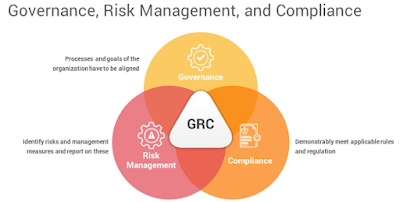
In todayโ€™s dynamic threat landscape โ€” where cloud adoption, remote work, AI-driven attacks and stringent regulations are the norm โ€” organisations must embed Security and GRC (Governance-Risk-Compliance) into every layer of business operations. This guide offers a comprehensive yet practical roadmap to help you design, deploy and sustain a resilient security posture combining rigorous governance, risk-based controls, and audit readiness.

Governance Risk Management Compliance Security Controls Monitoring & IR Culture & Awareness Integrated GRC + Security Framework

1. Governance as the Foundation

Governance defines the strategic framework for security and compliance โ€” ensuring that every initiative aligns with business objectives, regulatory commitments, and corporate policy. It sets the tone from leadership downward, determining how risk is accepted, mitigated, or transferred, what standards apply, and who owns what. Without robust governance, even the best security tools and audit processes remain fragmented and ineffective.

A well-structured governance model codifies responsibilities for risk owners, compliance owners, control owners, and audit managers. This clarity ensures accountability, standardizes decision-making, and enables measurable control performance across the organization.

2. Risk Management โ€” Proactive & Dynamic

Risk management helps organisations anticipate and prioritize threats rather than react to incidents after they happen. Modern risk management frameworks consider evolving factors โ€” cloud adoption, supply-chain dependencies, third-party vendors, and the rapid rise of AI-powered threats โ€” to evaluate what could go wrong, how likely it is, and how severe the impact would be.

Risk Management Life Cycle

StageDescription
Risk IdentificationSpot possible threats: cyber attacks, data leaks, vendor failures, regulatory fines.
Risk AnalysisAssess likelihood + impact (qualitative or quantitative).
Risk EvaluationCompare risks against organisational tolerance or risk appetite.
Risk TreatmentMitigate, transfer, accept, or avoid the risk via controls or process changes.
Continuous MonitoringTrack Key Risk Indicators (KRIs), re-evaluate after major changes (cloud, AI, vendor changes).

Embedding risk management into everyday operations โ€” from project planning to technology adoption โ€” helps organisations stay resilient. As new threats emerge (like AI-driven ransomware or supply-chain risks), a living risk register becomes the strategic asset.

3. Compliance That Builds Trust & Enables Growth

Compliance used to be viewed as a checkbox for audits, but in modern businesses itโ€™s a competitive differentiator. Achieving and maintaining standards such as ISO 27001, GDPR/DPDP, PCI-DSS or SOC 2 enhances customer trust and unlocks new markets โ€” especially when dealing with global clients.

A compliance program acts as a documented guarantee: employees follow defined processes, controls are regularly tested, and evidence is available for internal and external audits. This ensures organisations stay audit-ready, avoid penalties, and maintain credibility with partners and regulators.

Core Benefits of a Strong Compliance Program

BenefitWhy It Matters
Customer & Partner TrustClients share sensitive data only if compliance standards are demonstrable.
Operational DisciplineStandardized controls reduce human error and enforce consistent practices.
Regulatory ReadinessHelps adapt quickly to changing laws and cross-border regulations.
Market AdvantageCertifications strengthen proposals during tenders and vendor evaluations.

4. Security Controls โ€” The Active Defense Layer

Security controls are the real-world mechanisms that protect data, infrastructure, and users โ€” from on-prem servers to cloud workloads and remote endpoints. They form the active defense layer that complements risk assessments and compliance policies.

Categories of Security Controls

TypeDescriptionExamples
PreventiveStop threats before they happen.Firewalls, MFA, patch management, least privilege access
DetectiveDetect suspicious or malicious events in real-time.SIEM, IDS/IPS, log monitoring, anomaly detection
Corrective / RecoverRespond and recover from incidents or control failures.Backups, disaster recovery, incident response plans

In 2025 and beyond, many organizations are integrating **AI-driven security tools**, behavioral analytics, and automated detection โ€” combining human oversight with machine speed to defend against advanced threats. :contentReference[oaicite:0]{index=0}

5. Continuous Monitoring & Incident Response โ€” Always On

Threats evolve rapidly. Cloud misconfigurations, AI-powered malware, supply-chain compromises โ€“ these donโ€™t wait for quarterly audits. Continuous monitoring ensures that you have real-time visibility into system health, deviations, or suspicious activities, enabling quick response and mitigation.

A well-defined Incident Response Plan (IRP) ensures clear roles, escalation paths, communication protocols and recovery procedures. Post-incident reviews feed back into risk management, compliance updates, and controls refinement โ€” creating a feedback loop that improves cyber resilience over time.

6. People, Culture & Awareness โ€” The Human Firewall

Even the most advanced tools and controls fail if users are unaware, untrained, or complacent. A strong security culture transforms security from a top-down mandate into a shared team responsibility.

Awareness programs, phishing simulations, regular training, and embedding security in everyday workflows makes compliance and risk-based controls part of the organizational DNA. This reduces human error, insider risks, and strengthens overall resilience.


Conclusion

Building a comprehensive GRC and security program isnโ€™t just about ticking boxes โ€” itโ€™s about embedding resilience into your organizationโ€™s DNA. By combining strong governance, dynamic risk management, compliance, security controls, continuous monitoring, and a security-first culture, you build robust cyber resilience. In a world where cloud, remote operations, AI-driven threats, and evolving regulations define the landscape, this integrated approach becomes the backbone of sustainable business growth.

Start today: map your critical assets, classify risk levels, assign control owners, and define basic security & compliance processes. Even small steps taken consistently are better than large efforts done occasionally.

Frequently Asked Questions โ€“ Security & GRC
1. What does โ€œKeeping Security & GRC at the forefrontโ€ actually mean? It means designing every business process with security and governance controls embedded from Day 1 to reduce risks, improve compliance, and strengthen decision-making.
2. Why is GRC important for modern organizations? GRC ensures consistent governance, reduces compliance violations, aligns risk with business goals, and protects the brand reputation.
3. What is the role of continuous monitoring in GRC? It provides real-time visibility into threats, control failures, policy deviations, and compliance gaps for faster decisions.
4. How does automation help in GRC? Automation reduces manual audits, eliminates data entry errors, accelerates risk assessments, and improves control reporting accuracy.
5. What frameworks support strong GRC programs? ISO/IEC 27001, ISO/IEC 42001, NIST CSF, SOC 2, COBIT, and GDPR form the backbone of most corporate governance structures.
6. How does GRC support cyber-resilience? GRC integrates risk management, incident response, disaster recovery and ensures organizations remain operational during cyber events.
7. What is the difference between Governance and Compliance? Governance defines โ€˜how decisions are madeโ€™; compliance ensures those decisions follow internal policies and external laws.
8. Why is risk assessment so important? Risk assessment identifies vulnerabilities, attack surfaces, and business impacts, enabling prioritization of controls and budget.
9. How does AI enhance GRC? AI improves anomaly detection, accelerates audits, automates documentation, and predicts risks using behavioural analytics.
10. What is the significance of internal audits? Internal audits validate control effectiveness, ensure policy adherence, and prepare organizations for external certification audits.
11. Why should security posture be continuously updated? Threats evolve daily, so updating controls, patching systems, and reviewing risks ensures organizations stay protected.
12. What final steps ensure long-term GRC maturity? Regular audits, policy refresh cycles, leadership reporting, business continuity planning, and culture training maintain maturity.

Data Privacy Services Powered by Privacy Ops: Achieving Global Compliance

Data Privacy Services Powered by Privacy Ops: Achieving Global Compliance

Data Privacy Services Powered by Privacy Ops

Achieving Global Compliance Through Automation and AI

Title & Introduction

The modern digital ecosystem demands more than mere compliance; it requires operationalized data privacy. The shift from ad-hoc responses to a systematic **Privacy Operations (Privacy Ops)** framework is essential for organizations dealing with vast amounts of personal information (PI). Privacy Ops integrates people, processes, and technology to manage privacy risks continuously and automatically, transforming the burden of compliance into a strategic asset. With the proliferation of regulations like GDPR, CCPA, and LGPD, manual systems are obsolete, making AI-driven, platform-enabled services the only sustainable path forward.

This article explores a comprehensive Privacy Ops solution, detailing its features, service offerings, and its ability to seamlessly manage global regulatory coverage through automation and integrated data management.

Core Service Features: The Power of Automation

A successful Privacy Ops framework is defined by its ability to reduce human error and scale quickly. The core features leverage technology to automate complex, high-volume tasks, significantly lowering **low people dependency**.

AI-Powered Regulatory Analysis

An **AI powered bot for regulatory obligations analysis** instantly scans changes in global laws. By partnering with **UCF (Unified Compliance Framework) for authority sources**, the platform ensures that compliance requirements are current and accurate, eliminating the manual effort required to track evolving privacy standards.

Unified Data Integration

Handling diverse data environments is crucial. The platform supports **50+ data stores integrated through API**, ensuring a holistic view of all personal information assets. This unified approach facilitates accurate Data Inventory and **Data flow mapping** for comprehensive PI Modelling.

Monitoring & Reporting

The system provides **Automated track and monitor status**, displayed via **Interactive and dynamic dashboards**. These dashboards offer real-time insights into compliance metrics, risk levels, and the status of **Data Subject Rights Management (DSRM)** requests, allowing for proactive intervention.

Beyond these, the offering includes **Customised templates**, website **scan**, full **consent management & reporting**, making the entire compliance lifecycle platform enabled and highly streamlined.

Holistic Service Offerings and Global Coverage

The service architecture addresses the entire privacy spectrum, from proactive readiness to reactive breach management, covering major global laws.

1. Privacy Readiness & Impact Assessment

This is the proactive phase. Services include establishing a culture of **Privacy by Design**, performing **Privacy Maturity Assessment & Procedure blueprinting**. Crucially, it manages **Data Protection Impact Assessment (DPIA)** and **Privacy Impact Assessment (PIA)** processes, which are mandatory under regulations like GDPR. Finally, a robust **Breach Response & Management** protocol is established for rapid and compliant incident handling.

2. Data Subject Rights Management (DSRM)

Managing the rights of data subjects (like access, erasure, and portability) is a major operational challenge under regulations like CCPA and GDPR. The solution provides a dedicated **Data Subject Access rights portal for intake**, implements **Data subject identity validation**, ensures **Individual Request Fulfillment**, and maintains necessary **Records & Reporting** for audit purposes.

3. Consent & Cookie Compliance

Modern compliance requires granular control over user consent. This service handles **Consent categorization and status**, along with **Consent tracking and fulfilment**. It includes **Cookies Assessment & Implementation** and continuous **Consent & Website Scanning** to ensure ongoing legal adherence to cookie policies globally.

4. Global Regulatory Coverage

The complexity of compliance is minimized by covering a wide range of mandates, including:

  • EU-General Data Protection Regulation (**GDPR**)
  • California Consumer Privacy Act (**CCPA**), US
  • Lei Geral de Proteรงรฃo de Dados (**LGPD**), Brazil
  • Australian Privacy Principles (**APP**)
  • Personal Information Protection and Electronic Documents Act (**PIPEDA**), Canada
  • Personal Data Protection Act (**PDPA**), Singapore

This wide coverage, supported by product partners like **OneTrust** and **BigID**, ensures a single, harmonized approach to multiple regulatory challenges.

Visual Diagram: Privacy Ops Flow

The successful implementation of Privacy Ops follows a continuous loop, driven by data ingestion and AI analysis, leading to automated controls and feedback.

Data Ingestion AI Regulatory Analysis & PI Mapping Automated DSRM & Consent Dashboards & Continuous Monitoring

Exam-Oriented Tips

For certification exams in privacy and data protection, focus on the operational aspects and key regulatory instruments:

Mastering Acronyms and Scope

  • **DPIA vs. PIA:** Understand the specific triggers for a Data Protection Impact Assessment (GDPR) and the broader Privacy Impact Assessment (general best practice).
  • **DSRM (Data Subject Rights Management):** Focus on the 7-step processโ€”from intake via portal to final fulfillment and record-keeping.
  • **Key Global Laws:** Memorize the scope and core rights provided by **GDPR, CCPA, and LGPD**, as they are frequently compared in scenario-based questions.
  • **Privacy by Design:** Know the 7 foundational principles, especially the proactive and preventative nature of the approach.

Practice questions involving data flow mapping and determining compliance requirements when data crosses international boundaries (e.g., EU data processed in Singapore).

FAQ (Markdown)

**Q1: What is the primary role of the AI-powered bot?**

A1: The AI bot analyzes regulatory updates and obligations from sources like UCF to ensure real-time compliance tracking.

**Q2: How does the platform handle global regulations?**

A2: It provides harmonized controls covering major laws including GDPR, CCPA, LGPD, PIPEDA, and PDPA, allowing for central management.

**Q3: What are the key steps in Data Subject Rights Management?**

A3: Intake via a dedicated portal, identity validation, fulfillment of the request (e.g., erasure), and maintaining audit records and reporting.

**Q4: What is the purpose of Data Flow Mapping?**

A4: To identify where personal data is collected, stored, processed, and shared (data inventory and relationship) across the 50+ integrated data stores.

**Q5: What is 'Privacy by Design'?**

A5: A proactive approach ensuring privacy and security are built into the system architecture and business processes from the start, not added later.
    

FAQ: Visual Summary

Q1: Primary role of the AI-powered bot? A1: Analyzes regulatory updates from UCF for real-time tracking. Q2: How does the platform handle global regulations? A2: Harmonized controls covering GDPR, CCPA, LGPD, PIPEDA, and PDPA. Q3: Key steps in Data Subject Rights Management? A3: Intake via portal, identity validation, request fulfillment, and audit records. Q4: Purpose of Data Flow Mapping? A4: To identify where PI is collected, stored, processed, and shared (Data Inventory). Q5: What is 'Privacy by Design'? A5: Proactive approach: privacy and security are built into the architecture from the start.

ยฉ 2025 TheControlCheck. All rights reserved.

Audit Management: From Opening Meeting to Closure

Audit Management: From Opening Meeting to Closure

Audit Management: From Opening Meeting to Closure

Introduction to Auditing

Auditing is a systematic and independent examination of processes, systems, or organizations to ensure compliance with established standards. A structured audit helps organizations identify gaps, mitigate risks, and promote continual improvement.

Auditing Principles & Benefits

Ethical Conduct, Fair Presentation, Due Professional Care Verified conformity, increases awareness & understanding Independence & Evidence-Based Approach Reduces risks & identifies improvement opportunities Continuous Improvement Performed regularly ensures system effectiveness

Process Approach in Auditing

Auditors can apply the process approach by ensuring the auditee:

  • Defines objectives, inputs, outputs, activities, and resources for processes
  • Analyses, monitors, measures, and improves processes
  • Understands sequence and interaction of its processes
Individual Process Input/Output, PDCA, Resources Relationship with Other Processes Flow, Interaction, Evidence, Contracts

Managing an Audit Program

Effective audit programs include planning, scheduling, and resource allocation. A well-managed program ensures audits are systematic, consistent, and align with organizational objectives.

Audit Activities

  • Opening Meeting
  • Document Review
  • On-Site Audit / Observation
  • Interviews & Evidence Collection
  • Closing Meeting

Auditor Competence & Responsibilities

Auditors must possess:

  • Knowledge of standards & regulations
  • Analytical and communication skills
  • Objectivity and ethical conduct
  • Ability to report findings accurately

Key Take Aways

Audit management is often perceived merely as a regulatory necessity, but in reality, it is a cornerstone of organizational health and strategic growth. While compliance with standardsโ€”whether ISO 27001, ISO 9001, or internal policiesโ€”is the baseline, the true value of a robust audit management system lies in its ability to transform raw data into actionable business intelligence. A systematic approach to auditing does not just verify if rules are being followed; it evaluates whether those rules are actually helping the organization achieve its objectives.

The Strategic Value of Audit Management

Audit management is often perceived merely as a regulatory necessity, but in reality, it is a cornerstone of organizational health and strategic growth. While compliance with standardsโ€”whether ISO 27001, ISO 9001, or internal policiesโ€”is the baseline, the true value of a robust audit management system lies in its ability to transform raw data into actionable business intelligence.

The Lifecycle: From Opening to Closure

The journey from the opening meeting to the closing meeting is where the integrity of the audit is established. This structured lifecycle ensures that there are no surprises and that the audit concludes with a clear roadmap for the future.

Risk Mitigation and Proactive Defense

In todayโ€™s volatile digital landscape, waiting for a breach or a failure to occur is not an option. Audit management serves as an organizationโ€™s "early warning system." By systematically reviewing controls and processes, auditors identify vulnerabilities and latent risks that might otherwise go unnoticed until they cause significant damage.

Key Insight: Effective audit management shifts an organizationโ€™s posture from reactive to proactive. Instead of scrambling to fix issues after a regulatory fine, the audit process highlights weak control environments early.

Driving Continuous Improvement

Perhaps the most critical aspect of audit management is its contribution to Continuous Improvement (CI). An audit that ends with a report filing is a wasted opportunity. By identifying non-conformities and opportunities for improvement (OFIs), audits force organizations to analyze the root causes of their problems, moving away from temporary "band-aid" fixes toward sustainable solutions.

Audit Activities Checklist

  • Opening Meeting: Confirm scope, criteria, and plan.
  • Document Review: Verify documented information against standards.
  • On-Site Audit: Observe processes and interview staff.
  • Evidence Collection: Gather objective evidence (records, logs).
  • Closing Meeting: Present findings and agree on timeline.

FAQ: Visual Summary

Q1: What is Audit Management? A1: Systematic examination from opening meeting to closure ensuring compliance. Q2: What is Process Approach in Auditing? A2: Ensures objectives, inputs, outputs, and interactions are clearly defined. Q3: What are auditor responsibilities? A3: Knowledge, ethics, analytical skills, and accurate reporting of findings. Q4: What activities are included? A4: Opening meeting, document review, observation, interviews, closing meeting.

ยฉ 2025 TheControlCheck. All rights reserved.

Overview of ISO/IEC 27001:2013 vs 2022

Overview of ISO/IEC 27001:2013 vs 2022

Overview of ISO/IEC 27001:2013 vs 2022

Introduction

ISO/IEC 27001 is the global standard for Information Security Management Systems (ISMS). The 2022 revision introduces updates aligning with evolving cybersecurity threats, risk management practices, and digital transformation requirements. Understanding the differences between the 2013 and 2022 versions is critical for professionals preparing for audits or certification exams.

Overview of ISO/IEC 27001:2013 vs 2022

The 2013 version focused on 14 control domains and 114 controls under Annex A. The 2022 version streamlined these into 4 categories with 93 updated controls, emphasizing a risk-based approach, organizational context, and alignment with modern technology practices.

  • 2013: 14 control domains, 114 controls
  • 2022: 4 control categories, 93 controls
  • New focus on cloud security, privacy, and remote work risk management
  • Integration with other management systems (ISO 22301, ISO 9001)

Core Clauses and Annex Controls

Both versions follow a high-level structure (Annex SL), but the 2022 update introduces:

  1. Context of the organization
  2. Leadership & commitment
  3. Planning and risk assessment
  4. Support & awareness
  5. Operation and performance evaluation
  6. Improvement

Annex controls are now grouped under 4 categories:

  • Organizational
  • People
  • Physical
  • Technological

ISMS Process: Step-by-Step

Implementing an ISMS involves several systematic steps:

  1. Define the scope of ISMS
  2. Establish an information security policy
  3. Perform risk assessment & treatment planning
  4. Implement controls
  5. Monitor, measure, and evaluate effectiveness
  6. Conduct internal audits and management review
  7. Continual improvement based on findings

Awareness & Training

Awareness programs and training sessions are essential to:

  • Ensure all employees understand security policies
  • Align roles & responsibilities
  • Promote a security-first culture
  • Prepare for internal & external audits

Exam-Oriented Tips

Key points for ISO/IEC 27001 exams:

  • Focus on differences between 2013 vs 2022
  • Memorize the 4 main control categories and 93 controls (2022)
  • Understand ISMS PDCA cycle steps
  • Prepare for scenario-based questions on risk treatment and audit findings
  • Be familiar with Annex SL high-level structure

Visual Diagram: ISMS Process Overview

ISMS Scope & Policy Risk Assessment & Treatment Implement Controls Monitor & Improve

FAQ: Visual Overview

Q1: Differences between ISO/IEC 27001:2013 & 2022? A1: 2022 reduces controls to 93 & groups into 4 categories. Q2: How many clauses in both versions? A2: Both follow Annex SL with 10 clauses (context, leadership, planning, etc.) Q3: What is the PDCA cycle? A3: Plan โ†’ Do โ†’ Check โ†’ Act; ensures continuous improvement. Q4: How to prepare for ISO/IEC 27001 exam? A4: Focus on clauses, controls, ISMS process & scenario-based questions. Q5: Are 2013 controls still valid? A5: Mapped to 2022; transition based on risk assessment & updated controls.

ยฉ 2025 TheControlCheck. All rights reserved.

What Is GRC, and How AI Governance Is Transforming It in 2026


What Is GRC and How AI Governance Is Transforming It in 2026

The world of Governance, Risk, and Compliance (GRC) is evolving faster than ever. With enterprises adopting AI-powered tools across all departments, organisations are realising that effective AI governance is no longer optional. It is now a core pillar of modern GRC.

This article explains what GRC means today, how AI governance fits inside GRC, the global frameworks shaping AI adoption, the maturity models, the Responsible AI skills companies expect, and why mastering AI governance creates a competitive advantage for professionals entering or growing in GRC.


1. What Is GRC? (Simple Definition)

GRC stands for Governance, Risk, and Compliance. It is a structured approach that ensures an organization:

  • Governance: Makes decisions responsibly and ethically
  • Risk Management: Identifies, assesses, and reduces risks
  • Compliance: Meets laws, standards, and regulatory requirements

In 2026, GRC is no longer just about audits or documentation. It is a strategic capability that helps companies scale, respond to cyber threats, maintain trust, and prevent legal problems.

Traditional GRC Pillars

  • Policies & Governance Models
  • Risk Management Frameworks
  • Compliance Requirements
  • Internal Controls & Testing
  • Audit Management
  • Reporting & Continuous Monitoring

2. Why AI Governance Is Becoming the Heart of GRC

AI systems now influence major business decisions across finance, HR, cybersecurity, fraud detection, privacy, and more. Because AI models can make mistakes, show bias, or act unpredictably, companies need clear processes to govern them.

AI Governance means:

  • Ensuring AI is used ethically and responsibly
  • Managing AI-specific risks (bias, drift, transparency)
  • Protecting privacy and sensitive data
  • Building explainable and trustworthy AI models
  • Implementing continuous monitoring and audits

In simple words: AI Governance adds a new risk category โ†’ โ€œAI Riskโ€.


3. Global AI Governance Standards and Frameworks

AI governance is becoming increasingly standardized. These are the most influential frameworks globally:

1. ISO/IEC 42001:2023 โ€“ AI Management System (AIMS)

The worldโ€™s first certifiable AI governance standard. It focuses on:

  • AI risk management
  • AI lifecycle controls
  • Transparency and accountability
  • Model and data governance
  • Ethical requirements

2. NIST AI Risk Management Framework

Includes four core functions:

  • Govern
  • Map
  • Measure
  • Manage

3. EU AI Act

The strongest AI regulation, classifying AI into:

  • Unacceptable risk
  • High risk
  • Limited risk
  • Minimal risk

4. OECD AI Principles

Focus on fairness, human-centered design, transparency, and accountability.

5. Indiaโ€™s Emerging AI Governance Approach

India is steadily moving toward Responsible AI policies aligned with global frameworks.


4. AI Governance Adoption Approach

Organizations follow a structured approach when integrating AI governance:

  1. Establish governance structure: AI committees, ethics boards
  2. Identify AI use cases: especially high-risk systems
  3. Perform AI risk assessments: data, model, fairness, privacy
  4. Implement Responsible AI controls: explainability, bias checks
  5. Continuous monitoring: real-time model behavior tracking
  6. Compliance alignment: ISO 42001, NIST, EU AI Act, DPDP

5. Responsible AI Training โ€“ A Mandatory Skill

Companies now require employees to complete:

  • Responsible AI training
  • Bias detection & prevention courses
  • AI risk assessment workshops
  • Privacy & data protection training

This makes AI safer, fair, and accountableโ€”and increases the value of GRC professionals.


6. AI Governance Maturity Assessment

Organizations measure their AI readiness through the following levels:

  • Level 1 โ€“ Initial: No structure; ad-hoc AI use
  • Level 2 โ€“ Repeatable: Basic AI policies
  • Level 3 โ€“ Defined: Governance framework established
  • Level 4 โ€“ Managed: Formal monitoring and AI audits
  • Level 5 โ€“ Optimized: Fully integrated AI governance

Most organizations in 2026 fall between Level 2 and 3.


7. Why AI Governance Matters for Your GRC Career

AI governance is the fastest-growing discipline within GRC. Hereโ€™s why:

  • New AI regulations require expert interpreters
  • AI introduces new risk categories
  • AI audits are becoming mandatory
  • There is a huge skill gap in the industry
  • AI governance intersects with all GRC functions

Learning AI governance immediately boosts long-term career value.


8. Key Takeaways

  • AI governance is transforming modern GRC
  • ISO 42001 and NIST are leading global frameworks
  • Responsible AI is now a requirement
  • AI maturity models help organizations evolve
  • Professionals with AI governance knowledge are in high demand

FAQs

## FAQsย 

### **Q1. What is the main purpose of AI governance?**
To ensure AI systems are safe, ethical, transparent, and compliant across their lifecycle.

### **Q2. Is AI governance part of GRC?**
Yes. It introduces a new category called โ€œAI Riskโ€ under governance, risk management, compliance, and audit.

### **Q3. Which global AI standard is considered the most important?**
ISO/IEC 42001:2023 is the most robust, globally recognized AI governance standard.

### **Q4. Does AI governance require coding skills?**
No. Not necessary. Most GRC professionals focus on documentation, risks, controls, assessments, and audits.

### **Q5. Why is AI governance important for GRC careers?**
Because regulatory pressure is increasing and organizations need professionals who understand AI risks, compliance, and ethical standards.

### **Q6. Which industries require AI governance experts?**
Banking, telecom, healthcare, e-commerce, manufacturing, consulting, and government sectors.

NeatLabs - Fused Analysis Report Sample

ย 

OSINT Fusion Analysis Report

Word Cloud


Entity Relationship Network

Sentiment Analysis


Geospatial Analysis


Topic Modeling


Fused Text Report

OSINT Fusion Analysis Report

Input Sources:
Source 1: https://insiderpaper.com/us-european-chinese-firms-seek-to-draw-vietnam-arms-deals-from-russia/

Fused OSINT Analysis (including all sources and image analysis if provided):
# Fused Intelligence Report: Analysis of Vietnam's Arms Procurement Shift

## Executive Summary
Vietnam's recent arms fair in Hanoi marks a significant shift in its defense procurement strategy, moving from a long-standing reliance on Russian arms to exploring partnerships with US, European, and Chinese defense firms. This pivot reflects broader geopolitical trends and a reassessment of defense dependencies influenced by global conflicts, particularly the Ukraine crisis. The implications of this arms diversification are profound, potentially altering regional security dynamics while raising concerns about military cooperation, arms proliferation, and cybersecurity risks. 

## Integrated Analysis of Identified Entities
### Key Entities:
- **Vietnamese Government**: Actively seeking diversified arms suppliers, indicating a strategic shift in national security policy.
- **US Firms (Boeing, Lockheed Martin)**: Their involvement underscores a push for greater US influence in Southeast Asia and a commitment to security partnerships.
- **European Firms (Airbus)**: Participation highlights EU interests in expanding defense ties with Vietnam, reflecting a collective Western approach to countering Russian influence.
- **Chinese Firms (Norinco)**: Their engagement suggests China's desire to maintain and strengthen its foothold in Vietnam amidst rising tensions in the South China Sea.
- **Stockholm International Peace Research Institute (SIPRI)**: Provides critical data on arms imports and trends, reinforcing the analysis of Vietnam's evolving military partnerships.

## Synthesis of Relationships and Connections
The arms fair serves as a confluence of interests among multiple nations, with Vietnam leveraging its position to attract diverse partners while reducing dependency on Russia. The historical context of Vietnam's arms procurement, which has been over 80% reliant on Russian sources until 2023, highlights a significant shift in strategy. The event not only showcases new military technologies but also signifies a potential realignment of alliances in the region. 

Geographically, Hanoi's selection as the venue is strategic, signaling Vietnam's central role in Southeast Asian security matters. The presence of firms from the US, Europe, and China underscores a competitive landscape where Vietnam can negotiate terms favorable to its security needs.

## Assessment of Potential Security Implications
1. **Increased Military Cooperation**: Enhanced ties with Western nations may lead to joint exercises and intelligence sharing, potentially altering the power balance in Southeast Asia.
2. **Arms Proliferation Risks**: The introduction of advanced military technologies from diverse sources increases the likelihood of technology leakage or misuse.
3. **Cybersecurity Vulnerabilities**: As Vietnam engages with various military technologies, the risk of cyber threats from adversarial nations could escalate, necessitating enhanced cybersecurity measures.

## Holistic View of General OSINT Context
The arms fair is indicative of a broader trend where nations reassess their defense strategies in light of geopolitical shifts and sanctions. Vietnam's pivot from Russian systems reflects an effort to modernize its military while navigating complex regional dynamics. This diversification can lead to increased resilience against potential aggressors but also brings challenges related to managing new technology integrations.

## Recommendations for Further Investigation
- **Social Media Monitoring**: Track discussions and sentiments regarding the arms fair to gauge public and governmental reactions.
- **Corporate Reports Review**: Analyze financial disclosures from participating firms to uncover strategic intentions and potential contracts.
- **Geolocation Analysis**: Utilize satellite imagery to assess military assets showcased at the fair.

## Overall Credibility Assessment
The information is credible due to sourcing from reputable news agencies and the presence of established defense firms. The involvement of government officials and the acknowledgment from research institutions like SIPRI further enhance reliability.

## Suggested OSINT Techniques for Additional Data Collection
- **Social Media Analysis**: Leverage tools like Brandwatch or Hootsuite to monitor sentiment and trends related to the arms fair.
- **Geospatial Analysis**: Apply GIS tools to visualize military capabilities and potential deployments resulting from new procurement deals.
- **Database Cross-Referencing**: Utilize arms trade databases to track historical import patterns and emerging trends in Vietnam's military acquisitions.

## Integrated Risk Assessment
The shift in arms procurement presents both opportunities and risks. While Vietnam may enhance its military capabilities and partnerships, it simultaneously risks escalating regional tensions, particularly with China and Russia. 

## Timeline of Key Events
1. **1995-2023**: Vietnamโ€™s arms imports predominantly sourced from Russia.
2. **2022-Present**: Decline in Russian arms imports due to sanctions following the Ukraine conflict.
3. **December 19, 2024**: Arms fair in Hanoi marks a pivotal moment in Vietnam's defense strategy.

## Geographical Locations and Their Significance
- **Hanoi, Vietnam**: Central to Vietnam's defense strategy and the arms fair, highlighting its geopolitical importance.
- **Russia**: Historically the main arms supplier; current sanctions affect this long-standing relationship.
- **Countries of Participating Firms (US, China, Europe)**: Their involvement indicates shifting military alliances and increasing competition for influence in Vietnam.

## Technical Indicators Synthesis
No specific technical indicators were identified in the source, as the focus remains on diplomatic engagements rather than cyber or IT-specific details.

## Social Media Activity Patterns
Monitoring platforms for discussions surrounding the arms fair can reveal public sentiment and potential governmental narratives about diversification efforts. Analysis of engagement metrics will inform the impact of the fair on public perception.

## Financial Implications and Patterns
Further investigation into defense contracts and financial transactions involving participating firms will clarify potential impacts on Vietnam's military budget and foreign investments.

## Legal and Regulatory Landscape
Vietnam may need to develop new regulatory frameworks governing foreign military sales and compliance with international arms trade treaties, particularly regarding Russian sanctions.

## Historical Trends and Future Projections
Historically reliant on Russian arms, Vietnam's shift to a diverse procurement strategy is likely to enhance its military autonomy and capability. Future projections suggest increased collaboration with Western nations, potentially reshaping Southeast Asian security dynamics.

## Identification of Potential Intelligence Gaps
Further insights into the nature of the arms deals being negotiated at the fair and the specific technologies being considered would enhance understanding of Vietnam's military modernization efforts.

## Assessment of Potential Disinformation or Influence Campaigns
Monitoring for narratives from state-sponsored media, particularly from Russia and China, is essential to assess the impact of disinformation campaigns intended to undermine Vietnam's pivot away from Russian arms.

## Recommendations for Actionable Intelligence
- Conduct targeted analyses of emerging defense collaborations and their implications for regional security.
- Monitor geopolitical developments closely, particularly reactions from China and Russia regarding Vietnamโ€™s arms procurement strategy.
- Evaluate the potential for new influence campaigns from adversarial states aimed at shaping the discourse surrounding Vietnam's defense decisions.

By synthesizing insights from all sources, this report provides a nuanced understanding of Vietnam's arms diversification strategy within the context of contemporary geopolitical challenges.

NeatLabs - OSINT Demo - Far East Activity

ย 

NeatLabs Image Analysis Report

Analyzed Image

Details

From an OSINT (Open Source Intelligence) perspective, here are the key elements identified in the screenshot from Flightradar24:

1. **Aircraft Information:**
   - **ROGUE83:**
     - **Type:** Boeing RC-135S Cobra Ball
     - **Operator:** United States - US Air Force
     - **Origin:** DNA (Not Available)
     - **Destination:** Okinawa (Not Available)
     - **Registration:** 62-4128
     - **Altitude:** 18,300 ft
   - **N/A (Top Right):**
     - **Type:** Boeing P-8A Poseidon
     - **Operator:** United States - Navy
     - **Origin:** DNA (Not Available)
     - **Destination:** Okinawa (Not Available)
     - **Altitude:** 28,000 ft
   - **N/A (Bottom Left):**
     - **Type:** N/A
     - **Operator:** N/A
     - **Origin:** N/A
     - **Destination:** N/A
     - **Altitude:** 54,900 ft

2. **Geographical Context:**
   - The map shows the East Asian region, including parts of China, North Korea, South Korea, and Japan.
   - The aircraft ROGUE83 is located in the East China Sea, near the coast of China.
   - The other two aircraft are also in the same general region, with one near North Korea and the other over the Yellow Sea.

3. **Flight Paths and Altitudes:**
   - The flight paths of the aircraft are visible, with ROGUE83 flying at a lower altitude compared to the other two aircraft.
   - The high altitude of the unidentified aircraft (54,900 ft) suggests it might be a reconnaissance or surveillance aircraft.

4. **Time and Date:**
   - The timestamp on the screenshot is 18:05 UTC, which can be used to correlate with other events or data points.

5. **Flightradar24 Interface:**
   - The interface shows various controls and options such as Settings, Weather, Filters, Widgets, and Playback, indicating the user has access to detailed flight tracking and analysis tools.

6. **Potential Military Activity:**
   - The presence of US Air Force and Navy aircraft in this region could indicate military surveillance or reconnaissance missions, especially given the proximity to North Korea and China.

7. **Data Limitations:**
   - Some data fields are marked as "N/A" or "NOT AVAILABLE," which could be due to the aircraft's transponder settings or restrictions on sharing certain information.

8. **User Interface Elements:**
   - The "GOLD" subscription status indicates the user has access to premium features on Flightradar24.
   - The map includes labels for major cities and regions, aiding in geographical orientation.

From an OSINT perspective, this information can be used to infer potential military activities, track aircraft movements, and understand the operational patterns of military aircraft in sensitive geopolitical areas.

NeatLabs - Image Analysis - Flight Radar

ย 

Analysis Report

Analyzed Image
This screenshot from Flightradar24 provides several key elements from an OSINT (Open Source Intelligence) perspective:

1. **Aircraft Information:**
- **Aircraft Type:** Northrop Grumman MQ-4C Triton (a high-altitude, long-endurance unmanned aerial vehicle used for surveillance).
- **Registration:** 166002
- **Country of Registration:** United States (Navy)
- **Serial Number:** N/A
- **Year of Manufacture:** 2023
- **Barometric Altitude:** 48,000 ft
- **Vertical Speed:** +64 fpm
- **Ground Speed:** 176 kts
- **True Airspeed:** 240 kts
- **Indicated Airspeed:** 0.428 Mach
- **Wind:** 103 kts
- **Temperature:** -66.0ยฐC

2. **Flight Path:**
- The flight path is shown with a red dashed line, indicating the trajectory of the aircraft.
- The path covers areas over the Persian Gulf, near the coastlines of Iran, United Arab Emirates, and Oman.

3. **Geographical Context:**
- The map shows the Middle East region, specifically the Persian Gulf area.
- Key locations marked include Dubai, Abu Dhabi, and Muscat.
- The flight path seems to be avoiding Iranian airspace, which could be significant for geopolitical analysis.

4. **Time and Date:**
- The screenshot was taken at 14:44 UTC.

5. **Flightradar24 Interface:**
- The interface shows various options like 3D view, route, follow, share, settings, weather, filters, widgets, and playback.
- The "Gold" subscription option is visible, indicating premium features.

6. **Potential Implications:**
- **Surveillance Operations:** The MQ-4C Triton is used for surveillance, indicating potential monitoring activities in the region.
- **Geopolitical Tensions:** The flight path near sensitive areas like the Strait of Hormuz could imply monitoring of maritime traffic or military activities.
- **International Relations:** The presence of a US Navy UAV in this region might be related to ongoing geopolitical tensions or alliances.
- **Security Concerns:** Such surveillance could be interpreted as a sign of increased military presence or intelligence gathering, which might affect regional security dynamics.

From an OSINT perspective, this information can be used to infer military activities, regional tensions, and strategic interests. Analysts might cross-reference this data with other sources to understand the broader context of military movements and international relations in the area.

Governance of Risk and Compliance: Overview


ย 

Governance of Risk and Compliance


Governance of Risk and Compliance: Overview


In today's complex business landscape, organisations face a myriad of risks that can impact their operations, reputation, and bottom line. Effective governance of risk and compliance is crucial to mitigate these risks and ensure that organizations operate ethically and within the bounds of the law. This article provides a comprehensive overview of the governance of risk and compliance in a thousand words, highlighting its importance, key principles, and best practices.


1. Understanding Risk and Compliance:


Risk refers to the possibility of an event occurring that could have an adverse effect on the achievement of an organization's objectives. These risks can be categorized into various types, including financial, operational, strategic, and reputational. Compliance, on the other hand, involves adhering to laws, regulations, industry standards, and internal policies and procedures.


2. The Importance of Governance:


Governance in the context of risk and compliance refers to the processes, structures, and leadership in place to oversee and manage these aspects of business operations. Effective governance is crucial for several reasons:


a. Legal and Ethical Obligations: Organizations have a legal and ethical responsibility to operate within the boundaries of the law and to conduct business ethically. Failure to do so can result in legal penalties, fines, and damage to reputation.


b. Protecting Stakeholder Interests: Governance ensures that an organization's actions align with the interests of its stakeholders, including shareholders, employees, customers, and the broader community.


c. Risk Mitigation: Governance processes help identify, assess, and mitigate risks, reducing the likelihood and impact of adverse events.


d. Enhancing Decision-Making: Effective governance provides a framework for informed decision-making, considering risks and compliance requirements in strategic planning.


3. Key Principles of Governance of Risk and Compliance:


To establish robust governance of risk and compliance, organizations should adhere to the following key principles:


a. Leadership and Culture: Top leadership must set the tone for risk awareness and compliance. A culture of integrity and accountability should be fostered throughout the organization.


b. Risk Assessment: Regularly assess and prioritize risks to the organization. This involves identifying potential threats, evaluating their impact, and determining the likelihood of occurrence.


c. Policies and Procedures: Develop and implement clear policies and procedures that address compliance requirements and risk management strategies.


d. Training and Awareness: Ensure that employees are educated about compliance requirements and risk management practices. Ongoing training programs are essential.


e. Monitoring and Reporting: Establish mechanisms to monitor compliance with policies and procedures. Implement reporting systems that allow for the timely identification and resolution of compliance issues.


f. Continuous Improvement: Regularly review and update governance processes to adapt to changing risks and compliance requirements. Continuous improvement is key to staying ahead of emerging threats.


4. Best Practices in Governance of Risk and Compliance:


To effectively implement the principles of governance, organizations can adopt best practices:


a. Board Oversight: The board of directors should provide oversight and guidance on risk and compliance matters. Establish risk and compliance committees to focus on these specific areas.


b. Risk Appetite: Define the organization's risk appetite โ€“ the level of risk it is willing to accept to achieve its objectives. This helps guide decision-making.


c. Risk Management Framework: Develop a comprehensive risk management framework that includes risk identification, assessment, mitigation, monitoring, and reporting.


d. Compliance Programs: Implement robust compliance programs that incorporate regulatory requirements, industry standards, and internal policies. Regularly audit and assess compliance.


e. Technology and Data Analytics: Leverage technology and data analytics tools to enhance risk assessment and compliance monitoring. These tools can provide real-time insights into potential issues.


f. Whistleblower Mechanism: Establish a confidential whistleblower mechanism that allows employees and stakeholders to report potential compliance violations without fear of retaliation.


g. External Partnerships: Collaborate with industry associations, regulatory bodies, and external experts to stay updated on evolving risks and compliance standards.


h. Crisis Management: Develop a crisis management plan to respond effectively to unexpected events, such as data breaches or regulatory investigations.


5. Case Studies:


Examining real-world examples of governance of risk and compliance can provide valuable insights. For instance, the Enron scandal in the early 2000s highlights the devastating consequences of poor governance, including financial fraud and bankruptcy. In contrast, companies like Johnson & Johnson are often praised for their proactive approach to product recalls, demonstrating a commitment to compliance and consumer safety.


6. Conclusion:


In conclusion, the governance of risk and compliance is an essential aspect of modern business operations. It ensures that organizations adhere to legal and ethical standards, manage risks effectively, and protect stakeholder interests. By following key principles and best practices, organizations can build a robust governance framework that enhances their resilience and sustainability in an ever-changing business environment. Ultimately, governance of risk and compliance is not just a regulatory requirement; it's a fundamental element of responsible and successful business management.


Governance of Risk and Compliance


How Internet affected Education

ย How Internet affected Education| Internet and Education

How Internet affected Education


The internet has had a profound impact on education, with the advent of the internet of education (IoE) further expanding this impact. IoE refers to the integration of various technologies, such as the internet, artificial intelligence, and machine learning, to improve education outcomes. Here are some of the impacts of IoE on education:


1. Access to educational resources: IoE has made it easier for students to access educational resources from anywhere and at any time. With online courses, e-books, and virtual learning environments, students can learn at their own pace and convenience.


2. Personalized learning: IoE technologies can be used to personalize learning experiences for individual students. Adaptive learning algorithms can tailor the curriculum to meet the needs of each student, resulting in better learning outcomes.


3. Collaboration: IoE technologies can facilitate collaboration between students, teachers, and peers across the globe. Students can engage in collaborative projects, share knowledge and ideas, and learn from each other.


4. Cost-effective: IoE can make education more affordable, especially for students who live in remote or underserved areas. Online courses and digital resources can be accessed at a fraction of the cost of traditional education.


5. Data-driven insights: IoE technologies can generate valuable data insights that can be used to improve teaching and learning outcomes. By analyzing student data, teachers can identify areas where students are struggling and provide personalized support.


ย 

The internet has revolutionized education, and online education is one of its most significant applications. Online education refers to learning experiences that are delivered over the internet, using various digital technologies. Here are some of the ways in which the internet is used for online education:

ย 

1. Online courses: The internet is used to deliver courses online, allowing students to learn at their own pace and from anywhere in the world. Online courses can include text-based lessons, videos, interactive quizzes, and assessments.

ย 

2. Virtual classrooms: The internet is used to create virtual classrooms where students can interact with teachers and peers in real-time. Virtual classrooms can include live lectures, discussions, and group projects.

ย 

3. E-books and digital resources: The internet is used to provide students with access to e-books, digital resources, and other educational materials. This makes it easier for students to access learning materials, regardless of their location.

ย 

4. Online collaboration: The internet is used to facilitate collaboration between students and teachers. Online collaboration tools such as discussion forums, messaging apps, and video conferencing make it easy for students to work together and learn from each other.

ย 

5. Gamification: The internet is used to gamify the learning experience, making it more engaging and interactive. Gamification uses game mechanics such as points, badges, and leader boards to motivate students and encourage them to learn.

ย 


How Internet affected Education


While the internet has had a significant impact on education, it also has some drawbacks. Here are some of the drawbacks of using the internet in education:

ย 

1. Lack of social interaction: One of the primary drawbacks of online education is the lack of social interaction. Students who learn online may miss out on the social aspect of traditional education, including face-to-face interactions with teachers and peers.

ย 

2. Limited engagement: Online learning can be less engaging than traditional learning. Students may be more likely to get distracted or lose focus while learning online, resulting in lower levels of engagement and retention.

ย 

3. Dependence on technology: Online education is dependent on technology, and technical difficulties can disrupt the learning process. Poor internet connectivity or software issues can cause frustration for both students and teachers.

ย 

4. Quality concerns: The internet has made it easier for anyone to create and distribute educational materials, but not all of this material is of high quality. There is a risk that students may be exposed to inaccurate or unreliable information, which could impact their learning outcomes.

ย 

5. Cheating and plagiarism: The internet has also made it easier for students to cheat and plagiarize. With online resources readily available, students may be tempted to cut corners or take shortcuts in their work.

ย 

Conclusion-

1. The internet has revolutionized education by providing access to online courses, virtual classrooms, digital resources, online collaboration, and gamification. These tools have made education more accessible, engaging, and effective, opening up new opportunities for learners all over the world.

2. The internet of education has revolutionized education by making it more accessible, affordable, and personalized. It has opened up new opportunities for students to learn, collaborate, and grow, while also enabling educators to provide a more effective and efficient learning experience.

ย 3. While the internet has many benefits for education, it also has some drawbacks. These drawbacks include a lack of social interaction, limited engagement, dependence on technology, quality concerns, and increased opportunities for cheating and plagiarism. It is important to be aware of these drawbacks and work to mitigate them to ensure that online education remains effective and beneficial for students.


OffensivePipeline - Allows You To Download And Build C# Tools, Applying Certain Modifications In Order To Improve Their Evasion For Red Team Exercises

By: Unknown


OfensivePipeline allows you to download and build C# tools, applying certain modifications in order to improve their evasion for Red Team exercises.
A common use of OffensivePipeline is to download a tool from a Git repository, randomise certain values in the project, build it, obfuscate the resulting binary and generate a shellcode.


Features

  • Currently only supports C# (.Net Framework) projects
  • Allows to clone public and private (you will need credentials :D) git repositories
  • Allows to work with local folders
  • Randomizes project GUIDs
  • Randomizes application information contained in AssemblyInfo
  • Builds C# projects
  • Obfuscates generated binaries
  • Generates shellcodes from binaries
  • There are 79 tools parameterised in YML templates (not all of them may work :D)
  • New tools can be added using YML templates
  • It should be easy to add new plugins...

What's new in version 2.0

  • Almost complete code rewrite (new bugs?)
  • Cloning from private repositories possible (authentication via GitHub authToken)
  • Possibility to copy a local folder instead of cloning from a remote repository
  • New module to generate shellcodes with Donut
  • New module to randomize GUIDs of applications
  • New module to randomize the AssemblyInfo of each application
  • 60 new tools added

Examples

  • List all tools:
OffensivePipeline.exe list
  • Build all tools:
OffensivePipeline.exe all
  • Build a tool
OffensivePipeline.exe t toolName
  • Clean cloned and build tools
OffensivePipeline.exe 

Output example

PS C:\OffensivePipeline> .\OffensivePipeline.exe t rubeus

ooo
.osooooM M
___ __ __ _ ____ _ _ _ +y. M M
/ _ \ / _|/ _| ___ _ __ ___(_)_ _____| _ \(_)_ __ ___| (_)_ __ ___ :h .yoooMoM
| | | | |_| |_ / _ \ '_ \/ __| \ \ / / _ \ |_) | | '_ \ / _ \ | | '_ \ / _ \ oo oo
| |_| | _| _| __/ | | \__ \ |\ V / __/ __/| | |_) | __/ | | | | | __/ oo oo
\___/|_| |_| \___|_| |_|___/_| \_/ \___|_| |_| .__/ \___|_|_|_| |_|\___| oo oo
|_| MoMoooy. h:
M M .y+
M Mooooso.
ooo

@aetsu
v2.0.0


[+] Loading tool: Rubeus
Clonnig repository: Rubeus into C:\OffensivePipeline\Git\Rubeus
Repository Rubeus cloned into C:\OffensivePipeline\Git\Rubeus

[+] Load RandomGuid module
Searching GUIDs...
> C:\OffensivePipeline\Git\Rubeus\Rubeus.sln
> C:\OffensivePipeline\Git\Rubeus\Rubeus\Rubeus.csproj
> C:\OffensivePipeline\Git\Rubeus\Rubeus\Properties\AssemblyInfo.cs
Replacing GUIDs...
File C:\OffensivePipeline\Git\Rubeus\Rubeus.sln:
> Replacing GUID 658C8B7F-3664-4A95-9572-A3E5871DFC06 with 3bd82351-ac9a-4403-b1e7-9660e698d286
> Replacing GUID FAE04EC0-301F-11D3-BF4B-00C04F79EFBC with 619876c2-5a8b-4c48-93c3-f87ca520ac5e
> Replacing GUID 658c8b7f-3664-4a95-9572-a3e5871dfc06 with 11e0084e-937f-46d7-83b5-38a496bf278a
[+] No errors!
File C:\OffensivePipeline\Git\Rubeus\Rubeus\Rubeus.csproj:
> Replacing GUID 658C8B7F-3664-4A95-9572-A3E5871DFC06 with 3bd82351-ac9a-4403-b1e7-9660e698d286
> Replacing GUID FAE04EC0-301F-11D3-BF4B-00C04F79EFBC with 619876c2-5a8b-4c48-93c3-f87ca520ac5e
> Replacing GUID 658c8b7f-3664-4a95-9572-a3e5871dfc06 with 11e0084e-937f-46d7-83b5-38a496bf278a
[+] No errors!
File C:\OffensivePipeline\Git\Rubeus\Rubeus\Properties\AssemblyInfo.cs:
> Replacing GUID 658C8B7F-3664-4A95-9572-A3E5871DFC06 with 3bd82351-ac9a-4403-b1e7-9660e698d286
> Replacing GUID FAE04EC0-301F-11D3-BF4B-00C04F79EFBC with 619876c2-5a8b-4c48-93c3-f87ca520ac5e
> Replacing GUID 658c8b7f-3664-4a95-9572-a3e5871dfc06 with 11e0084e-937f-46d7-83b5-38a496bf278a
[+] No errors!


[+] Load RandomAssemblyInfo module
Replacing strings in C:\OffensivePipeline\Git\Rubeus\Rubeus\Properties\AssemblyInfo.cs
[assembly: AssemblyTitle("Rubeus")] -> [assembly: AssemblyTitle("g4ef3fvphre")]
[assembly: AssemblyDescription("")] -> [assembly: AssemblyDescription("")]
[assembly: AssemblyConfiguration("")] -> [assembly: AssemblyConfiguration("")]
[assembly: AssemblyCompany("")] -> [assembly: AssemblyCompany("")]
[assembly: AssemblyProduc t("Rubeus")] -> [assembly: AssemblyProduct("g4ef3fvphre")]
[assembly: AssemblyCopyright("Copyright ยฉ 2018")] -> [assembly: AssemblyCopyright("Copyright ยฉ 2018")]
[assembly: AssemblyTrademark("")] -> [assembly: AssemblyTrademark("")]
[assembly: AssemblyCulture("")] -> [assembly: AssemblyCulture("")]


[+] Load BuildCsharp module
[+] Checking requirements...
[*] Downloading nuget.exe from https://dist.nuget.org/win-x86-commandline/latest/nuget.exe
[+] Download OK - nuget.exe
[+] Path found - C:\Program Files (x86)\Microsoft Visual Studio\2022\BuildTools\Common7\Tools\VsDevCmd.bat
Solving dependences with nuget...
Building solution...
[+] No errors!
[+] Output folder: C:\OffensivePipeline\Output\Rubeus_vh00nc50xud


[+] Load ConfuserEx module
[+] Checking requirements...
[+] Downloading ConfuserEx from https://github.com/mkaring/ConfuserEx/releases/download/v1.6.0/ConfuserEx-CLI.zip
[+] Download OK - ConfuserEx
Confusing...
[+] No errors!


[+] Load Donut module
Generating shellcode...

Payload options:
Domain: RMM6XFC3
Runtime:v4.0.30319

Raw Payload: C:\OffensivePipeline\Output\Rubeus_vh00nc50xud\ConfuserEx\Donut\Rubeus.bin
B64 Payload: C:\OffensivePipeline\Output\Rubeus_vh00nc50xud\ConfuserEx\Donut\Rubeus.bin.b64

[+] No errors!


[+] Generating Sha256 hashes
Output file: C:\OffensivePipeline\Output\Rubeus_vh00nc50xud


-----------------------------------------------------------------
SUMMARY

- Rubeus
- RandomGuid: OK
- RandomAssemblyInfo: OK
- BuildCsharp: OK
- ConfuserEx: OK
- Donut: OK

-----------------------------------------------------------------

Plugins

  • RandomGuid: randomise the GUID in .sln, .csproj and AssemblyInfo.cs files
  • RandomAssemblyInfo: randomise the values defined in AssemblyInfo.cs
  • BuildCsharp: build c# project
  • ConfuserEx: obfuscate c# tools
  • Donut: use Donut to generate shellcodes. The shellcode generated is without parameters, in future releases this may be changed.

Add a tool from a remote git

The scripts for downloading the tools are in the Tools folder in yml format. New tools can be added by creating new yml files with the following format:

  • Rubeus.yml file:
tool:
- name: Rubeus
description: Rubeus is a C# toolset for raw Kerberos interaction and abuses
gitLink: https://github.com/GhostPack/Rubeus
solutionPath: Rubeus\Rubeus.sln
language: c#
plugins: RandomGuid, RandomAssemblyInfo, BuildCsharp, ConfuserEx, Donut
authUser:
authToken:

Where:

  • Name: name of the tool
  • Description: tool description
  • GitLink: link from git to clone
  • SolutionPath: solution (sln file) path
  • Language: language used (currently only c# is supported)
  • Plugins: plugins to use on this tool build process
  • AuthUser: user name from github (not used for public repositories)
  • AuthToken: auth token from github (not used for public repositories)

Add a tool from a private git

tool:
- name: SharpHound3-Custom
description: C# Rewrite of the BloodHound Ingestor
gitLink: https://github.com/aaaaaaa/SharpHound3-Custom
solutionPath: SharpHound3-Custom\SharpHound3.sln
language: c#
plugins: RandomGuid, RandomAssemblyInfo, BuildCsharp, ConfuserEx, Donut
authUser: aaaaaaa
authToken: abcdefghijklmnopqrsthtnf

Where:

  • Name: name of the tool
  • Description: tool description
  • GitLink: link from git to clone
  • SolutionPath: solution (sln file) path
  • Language: language used (currently only c# is supported)
  • Plugins: plugins to user on this tool build process
  • AuthUser: user name from GitHub
  • AuthToken: auth token from GitHub (documented at GitHub: creating a personal access token)

Add a tool from local git folder

tool:
- name: SeatbeltLocal
description: Seatbelt is a C# project that performs a number of security oriented host-survey "safety checks" relevant from both offensive and defensive security perspectives.
gitLink: C:\Users\alpha\Desktop\SeatbeltLocal
solutionPath: SeatbeltLocal\Seatbelt.sln
language: c#
plugins: RandomGuid, RandomAssemblyInfo, BuildCsharp, ConfuserEx, Donut
authUser:
authToken:

Where:

  • Name: name of the tool
  • Description: tool description
  • GitLink: path where the tool is located
  • SolutionPath: solution (sln file) path
  • Language: language used (currently only c# is supported)
  • Plugins: plugins to user on this tool build process
  • AuthUser: user name from github (not used for local repositories)
  • AuthToken: auth token from github (not used for local repositories)

Requirements for the release version (Visual Studio 2019/2022 is not required)

In the OffensivePipeline.dll.config file it's possible to change the version of the build tools used.

  • Build Tools 2019:
<add key="BuildCSharpTools" value="C:\Program Files (x86)\Microsoft Visual Studio\2019\BuildTools\Common7\Tools\VsDevCmd.bat"/>
  • Build Tools 2022:
<add key="BuildCSharpTools" value="C:\Program Files (x86)\Microsoft Visual Studio\2022\BuildTools\Common7\Tools\VsDevCmd.bat"/>

Requirements for build

Credits

Supported tools


OffensivePipeline - Allows You To Download And Build C# Tools, Applying Certain Modifications In Order To Improve Their Evasion For Red Team Exercises

By: Unknown


OfensivePipeline allows you to download and build C# tools, applying certain modifications in order to improve their evasion for Red Team exercises.
A common use of OffensivePipeline is to download a tool from a Git repository, randomise certain values in the project, build it, obfuscate the resulting binary and generate a shellcode.


Features

  • Currently only supports C# (.Net Framework) projects
  • Allows to clone public and private (you will need credentials :D) git repositories
  • Allows to work with local folders
  • Randomizes project GUIDs
  • Randomizes application information contained in AssemblyInfo
  • Builds C# projects
  • Obfuscates generated binaries
  • Generates shellcodes from binaries
  • There are 79 tools parameterised in YML templates (not all of them may work :D)
  • New tools can be added using YML templates
  • It should be easy to add new plugins...

What's new in version 2.0

  • Almost complete code rewrite (new bugs?)
  • Cloning from private repositories possible (authentication via GitHub authToken)
  • Possibility to copy a local folder instead of cloning from a remote repository
  • New module to generate shellcodes with Donut
  • New module to randomize GUIDs of applications
  • New module to randomize the AssemblyInfo of each application
  • 60 new tools added

Examples

  • List all tools:
OffensivePipeline.exe list
  • Build all tools:
OffensivePipeline.exe all
  • Build a tool
OffensivePipeline.exe t toolName
  • Clean cloned and build tools
OffensivePipeline.exe 

Output example

PS C:\OffensivePipeline> .\OffensivePipeline.exe t rubeus

ooo
.osooooM M
___ __ __ _ ____ _ _ _ +y. M M
/ _ \ / _|/ _| ___ _ __ ___(_)_ _____| _ \(_)_ __ ___| (_)_ __ ___ :h .yoooMoM
| | | | |_| |_ / _ \ '_ \/ __| \ \ / / _ \ |_) | | '_ \ / _ \ | | '_ \ / _ \ oo oo
| |_| | _| _| __/ | | \__ \ |\ V / __/ __/| | |_) | __/ | | | | | __/ oo oo
\___/|_| |_| \___|_| |_|___/_| \_/ \___|_| |_| .__/ \___|_|_|_| |_|\___| oo oo
|_| MoMoooy. h:
M M .y+
M Mooooso.
ooo

@aetsu
v2.0.0


[+] Loading tool: Rubeus
Clonnig repository: Rubeus into C:\OffensivePipeline\Git\Rubeus
Repository Rubeus cloned into C:\OffensivePipeline\Git\Rubeus

[+] Load RandomGuid module
Searching GUIDs...
> C:\OffensivePipeline\Git\Rubeus\Rubeus.sln
> C:\OffensivePipeline\Git\Rubeus\Rubeus\Rubeus.csproj
> C:\OffensivePipeline\Git\Rubeus\Rubeus\Properties\AssemblyInfo.cs
Replacing GUIDs...
File C:\OffensivePipeline\Git\Rubeus\Rubeus.sln:
> Replacing GUID 658C8B7F-3664-4A95-9572-A3E5871DFC06 with 3bd82351-ac9a-4403-b1e7-9660e698d286
> Replacing GUID FAE04EC0-301F-11D3-BF4B-00C04F79EFBC with 619876c2-5a8b-4c48-93c3-f87ca520ac5e
> Replacing GUID 658c8b7f-3664-4a95-9572-a3e5871dfc06 with 11e0084e-937f-46d7-83b5-38a496bf278a
[+] No errors!
File C:\OffensivePipeline\Git\Rubeus\Rubeus\Rubeus.csproj:
> Replacing GUID 658C8B7F-3664-4A95-9572-A3E5871DFC06 with 3bd82351-ac9a-4403-b1e7-9660e698d286
> Replacing GUID FAE04EC0-301F-11D3-BF4B-00C04F79EFBC with 619876c2-5a8b-4c48-93c3-f87ca520ac5e
> Replacing GUID 658c8b7f-3664-4a95-9572-a3e5871dfc06 with 11e0084e-937f-46d7-83b5-38a496bf278a
[+] No errors!
File C:\OffensivePipeline\Git\Rubeus\Rubeus\Properties\AssemblyInfo.cs:
> Replacing GUID 658C8B7F-3664-4A95-9572-A3E5871DFC06 with 3bd82351-ac9a-4403-b1e7-9660e698d286
> Replacing GUID FAE04EC0-301F-11D3-BF4B-00C04F79EFBC with 619876c2-5a8b-4c48-93c3-f87ca520ac5e
> Replacing GUID 658c8b7f-3664-4a95-9572-a3e5871dfc06 with 11e0084e-937f-46d7-83b5-38a496bf278a
[+] No errors!


[+] Load RandomAssemblyInfo module
Replacing strings in C:\OffensivePipeline\Git\Rubeus\Rubeus\Properties\AssemblyInfo.cs
[assembly: AssemblyTitle("Rubeus")] -> [assembly: AssemblyTitle("g4ef3fvphre")]
[assembly: AssemblyDescription("")] -> [assembly: AssemblyDescription("")]
[assembly: AssemblyConfiguration("")] -> [assembly: AssemblyConfiguration("")]
[assembly: AssemblyCompany("")] -> [assembly: AssemblyCompany("")]
[assembly: AssemblyProduc t("Rubeus")] -> [assembly: AssemblyProduct("g4ef3fvphre")]
[assembly: AssemblyCopyright("Copyright ยฉ 2018")] -> [assembly: AssemblyCopyright("Copyright ยฉ 2018")]
[assembly: AssemblyTrademark("")] -> [assembly: AssemblyTrademark("")]
[assembly: AssemblyCulture("")] -> [assembly: AssemblyCulture("")]


[+] Load BuildCsharp module
[+] Checking requirements...
[*] Downloading nuget.exe from https://dist.nuget.org/win-x86-commandline/latest/nuget.exe
[+] Download OK - nuget.exe
[+] Path found - C:\Program Files (x86)\Microsoft Visual Studio\2022\BuildTools\Common7\Tools\VsDevCmd.bat
Solving dependences with nuget...
Building solution...
[+] No errors!
[+] Output folder: C:\OffensivePipeline\Output\Rubeus_vh00nc50xud


[+] Load ConfuserEx module
[+] Checking requirements...
[+] Downloading ConfuserEx from https://github.com/mkaring/ConfuserEx/releases/download/v1.6.0/ConfuserEx-CLI.zip
[+] Download OK - ConfuserEx
Confusing...
[+] No errors!


[+] Load Donut module
Generating shellcode...

Payload options:
Domain: RMM6XFC3
Runtime:v4.0.30319

Raw Payload: C:\OffensivePipeline\Output\Rubeus_vh00nc50xud\ConfuserEx\Donut\Rubeus.bin
B64 Payload: C:\OffensivePipeline\Output\Rubeus_vh00nc50xud\ConfuserEx\Donut\Rubeus.bin.b64

[+] No errors!


[+] Generating Sha256 hashes
Output file: C:\OffensivePipeline\Output\Rubeus_vh00nc50xud


-----------------------------------------------------------------
SUMMARY

- Rubeus
- RandomGuid: OK
- RandomAssemblyInfo: OK
- BuildCsharp: OK
- ConfuserEx: OK
- Donut: OK

-----------------------------------------------------------------

Plugins

  • RandomGuid: randomise the GUID in .sln, .csproj and AssemblyInfo.cs files
  • RandomAssemblyInfo: randomise the values defined in AssemblyInfo.cs
  • BuildCsharp: build c# project
  • ConfuserEx: obfuscate c# tools
  • Donut: use Donut to generate shellcodes. The shellcode generated is without parameters, in future releases this may be changed.

Add a tool from a remote git

The scripts for downloading the tools are in the Tools folder in yml format. New tools can be added by creating new yml files with the following format:

  • Rubeus.yml file:
tool:
- name: Rubeus
description: Rubeus is a C# toolset for raw Kerberos interaction and abuses
gitLink: https://github.com/GhostPack/Rubeus
solutionPath: Rubeus\Rubeus.sln
language: c#
plugins: RandomGuid, RandomAssemblyInfo, BuildCsharp, ConfuserEx, Donut
authUser:
authToken:

Where:

  • Name: name of the tool
  • Description: tool description
  • GitLink: link from git to clone
  • SolutionPath: solution (sln file) path
  • Language: language used (currently only c# is supported)
  • Plugins: plugins to use on this tool build process
  • AuthUser: user name from github (not used for public repositories)
  • AuthToken: auth token from github (not used for public repositories)

Add a tool from a private git

tool:
- name: SharpHound3-Custom
description: C# Rewrite of the BloodHound Ingestor
gitLink: https://github.com/aaaaaaa/SharpHound3-Custom
solutionPath: SharpHound3-Custom\SharpHound3.sln
language: c#
plugins: RandomGuid, RandomAssemblyInfo, BuildCsharp, ConfuserEx, Donut
authUser: aaaaaaa
authToken: abcdefghijklmnopqrsthtnf

Where:

  • Name: name of the tool
  • Description: tool description
  • GitLink: link from git to clone
  • SolutionPath: solution (sln file) path
  • Language: language used (currently only c# is supported)
  • Plugins: plugins to user on this tool build process
  • AuthUser: user name from GitHub
  • AuthToken: auth token from GitHub (documented at GitHub: creating a personal access token)

Add a tool from local git folder

tool:
- name: SeatbeltLocal
description: Seatbelt is a C# project that performs a number of security oriented host-survey "safety checks" relevant from both offensive and defensive security perspectives.
gitLink: C:\Users\alpha\Desktop\SeatbeltLocal
solutionPath: SeatbeltLocal\Seatbelt.sln
language: c#
plugins: RandomGuid, RandomAssemblyInfo, BuildCsharp, ConfuserEx, Donut
authUser:
authToken:

Where:

  • Name: name of the tool
  • Description: tool description
  • GitLink: path where the tool is located
  • SolutionPath: solution (sln file) path
  • Language: language used (currently only c# is supported)
  • Plugins: plugins to user on this tool build process
  • AuthUser: user name from github (not used for local repositories)
  • AuthToken: auth token from github (not used for local repositories)

Requirements for the release version (Visual Studio 2019/2022 is not required)

In the OffensivePipeline.dll.config file it's possible to change the version of the build tools used.

  • Build Tools 2019:
<add key="BuildCSharpTools" value="C:\Program Files (x86)\Microsoft Visual Studio\2019\BuildTools\Common7\Tools\VsDevCmd.bat"/>
  • Build Tools 2022:
<add key="BuildCSharpTools" value="C:\Program Files (x86)\Microsoft Visual Studio\2022\BuildTools\Common7\Tools\VsDevCmd.bat"/>

Requirements for build

Credits

Supported tools


Misp-Extractor - Tool That Connects To A MISP Instance And Retrieves Attributes Of Specific Types (Such As IP Addresses, URLs, And Hashes)

By: Unknown


This code connects to a given MISP (Malware Information Sharing Platform) server and parses a given number of events, writing the IP addresses, URLs, and MD5 hashes found in the events to three separate files.


Usage

To use this script, you will need to provide the URL of your MISP instance and a valid API key. You can then call the MISPConnector.run() method to retrieve the attributes and save them to files.

To use the code, run the following command:

python3 misp_connector.py --misp-url <MISP_URL> --misp-key <MISP_API_KEY> --limit <EVENT_LIMIT>

Supported attribute types

The MISPConnector class currently supports the following attribute types:

  • ip-src
  • ip-dst
  • md5
  • url
  • domain

If an attribute of one of these types is found in an event, it will be added to the appropriate set (for example, IP addresses will be added to the network_set) and written to the corresponding file (network.txt, hash.txt, or url.txt).

Configuration

The code can be configured by passing arguments to the command-line script. The available arguments are:

  • misp-url: The URL of the MISP server. This argument is required.
  • misp-key: The API key for the MISP server. This argument is required.
  • limit: The maximum number of events to parse. The default is 2000.

Limitations

This script has the following limitations:

  • It only retrieves attributes of specific types (as listed above).
  • It only writes the retrieved attributes to files, without any further processing or analysis.
  • It only retrieves a maximum of 2000 events, as specified by the limit parameter in the misp.search() method.

License

This code is provided under the MIT License. See the LICENSE file for more details.


โŒ