The United States is preparing Misawa Air Base in northern Japan to support the future deployment of F-35A stealth fighter aircraft, as part of a broader effort to modernize U.S. air power in the western Pacific. According to the report by Newsweek journalist Ryan Chan, the Pentagon plans to deploy 48 F-35A Lightning II jets […]
Based on data from the weekly price chart, Bitcoin is witnessing a significant loss of over 6% following recent widespread market liquidations. Notably, the premier cryptocurrency has taken on a consolidatory stance in the past day, as if to lend credence to growing hopes of some price recovery. However, a recent on-chain analysis points out that Bitcoin’s outward show of resilience might merely be theatrical and that the flagship cryptocurrency could be facing a dark future ahead.
Bitcoin Enters 30-Day Cumulative Realized Loss Phase Since October 2023
In a recent Quicktake post on CryptoQuant, crypto education and research group XWIN Research Japan dissects the present on-chain situation of Bitcoin, with the center of attraction being the Bitcoin Net Realized Profit/Loss metric, which shows the leading cryptocurrency has recorded a net realized loss on a 30-day basis for the first time since October 2023.
However, the losses seen in 2023 were short-lived and rapidly retraced, unlike the current decline, which is broader and more persistent, suggesting a possible structural shift in market dynamics. At this moment, it appears that investors are less-interested in “buying the dip,” nor are they looking to “HODL” through the Bitcoin price action, and are more willing to accept losses.
For this reason, the market can be more plausibly described as being in a state of caution. It is, however, worth mentioning that the present phase does not necessarily precede a market crash. If anything, it reflects that Bitcoin may be entering a more volatile phase, independent of speculative frenzies.
Realized Profits Signal Late-Stage Of Bull Cycle
XWIN Research further reinforces the hypotheses by referencing the trend in realized profits. According to the market experts, Realized Profits peaked in March 2024 at approximately 1.2 million BTC, and reduced slightly to 1.1 million in December 2024.
As of July, 2025, realized profits had sharply dropped to 517,000 BTC, reflecting an increasing exit of profit-taking activity within the market. But this pales in comparison to the lower 331,000 BTC recorded in October. The analytics group explained that this contraction occurred despite a rise in prices, thus suggesting an absence of deep upside momentum.
The group further highlights that this is a telltale sign of a late-stage bull market, one which was seen in 2021-2022. In this period, realized profits slowly dropped before the Bitcoin price flipped bearish. More shockingly, the annual timeframe tells a similar story, with annual net realized profits contracting from 4.4 million BTC to 2.5 million BTC, just within October 2025 and early 2026. This is also similar to the phase that preceded the bear market of 2022.
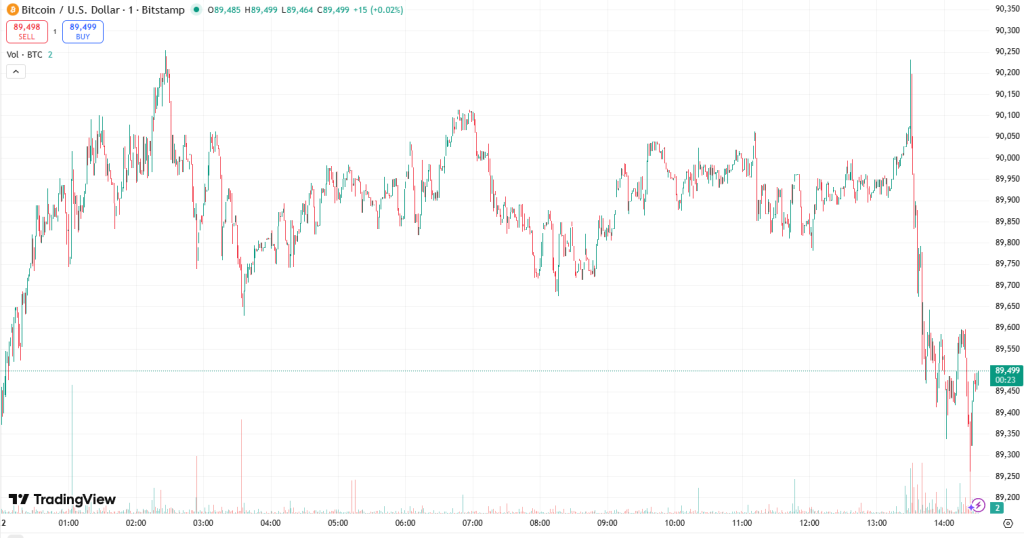
In essence, Bitcoin is in a transitioning phase, from a mature bull phase to a volatile environment. As of this writing, the Bitcoin price stands at $89,462.
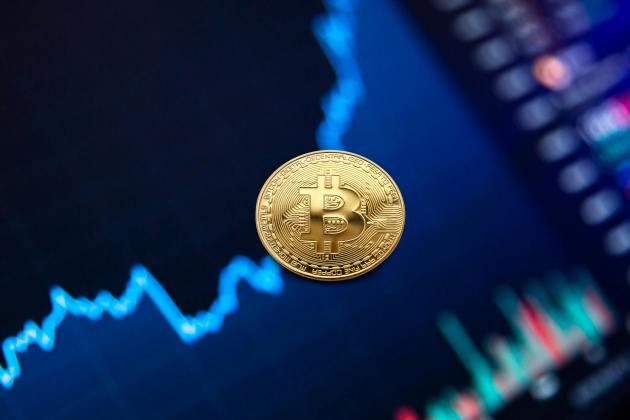
Featured image from Pexels, chart from Tradingview
Japan confirmed that a Russian IL-20 intelligence-gathering aircraft conducted a surveillance flight near the country’s western approaches on January 23, according to Defense Minister Shinjiro Koizumi. In a statement released on Friday, Koizumi said the Russian aircraft flew from the continental direction into the Sea of Japan, proceeded southwest, then changed course off the coast […]
Bitcoin price traded cautiously on Friday after the Bank of Japan kept its benchmark interest rate at 0.75%. Investors are balancing short-term relief against ongoing liquidity concerns linked to Japan’s policy decision. The BOJ voted 8–1 on Jan. 23 to…
Bitcoin (BTC) has recorded a dip below the $90,000 level. But how much of the drop was the result of various macroeconomic, geopolitical, and regulatory factors? Analysts have shared their valuable insights on the matter.
TLDR:
Euphoria over America’s commitment to crypto quickly faded;
Clarity Act is far more important to the future of digital assets than tariff news;
Clarity Act delay is likely just one in a series;
Bitcoin has remained “relatively resilient” over the past month;
Institutions are shifting from holding BTC to enabling it to function as productive capital;
Verbal intervention alone is unlikely to fully suppress volatility;
The sharp dislocation in sovereign bond markets once again highlights the fragility of traditional safe-haven assets.
Over the past 24 hours, Bitcoin has remained mostly unchanged by the time of writing (Thursday afternoon, UTC). It has gone up by just 0.2%, currently trading at $89,582.
Earlier in the day, it saw a notable drop to the $87,300 level, before climbing to the briefly held $90,295.
Source: TradingView
Observing its performance over the past week, we see it’s now down nearly 8%, trading between $87,653 and $96,875.
Clarity Bill is Far More Important for Market Than Tariff Noise
Nic Puckrin, digital asset analyst and co-founder of Coin Bureau, commented on the CLARITY Act being postponed in the US. The bill was supposed to be passed last year but is still being delayed.
Puckrin says that, despite President Donald Trump’s statement that the bill would be signed “soon”, there’s a reason he didn’t mention it until the very end of his speech in Davos.
“While he may say crypto is a priority, […] it’s clearly not the first item on the agenda,” Puckrin writes.
Bitcoin grinding sideways while gold surges isn’t a sign of fading conviction.
It’s the shift from a high-beta venture asset to a crystallised institutional balance sheet play.
In macro stress, gold absorbs the immediate scale and urgency because it remains the world’s primary…
However, BTC fell below $90,000 yesterday. The most significant lesson learned from the market’s reaction is that “tariff noise” is not that relevant. Instead, the bill is “far more important to the future of digital assets.”
Puckrin writes:
“The momentary euphoria over America’s commitment to crypto quickly faded, and even the cancellation of tariffs on NATO countries couldn’t lift it higher.”
Taking a long time to agree on a perfect piece of legislation is not a good idea, he argues. Instead, passing the bill quickly would bring more benefits. However, this is likely just the first of many delays to “this potentially game-changing digital asset legislation.” And yet, “the longer CLARITY is delayed, the longer uncertainty prevails.”
“The big concern is that this could take years rather than months, leaving the crypto industry in the same limbo it has been fighting so hard to emerge from,” the analyst warns.
Dom Harz, Co-Founder of BOB, commented that many are keeping an eye on BTC’s day-to-day price movements. However, Bitcoin has remained “relatively resilient” nonetheless. It’s up 2% this month (at the writing time) despite broader market volatility.
As Davos is wrapping up, he says, “conversations among institutional leaders and investors highlight the growing emphasis on resilience, efficiency, and the search for credible and reliable stores of value.”
Notably, “institutions are shifting from simply holding BTC to searching for opportunities that enable it to function as productive capital, while remaining anchored to Bitcoin’s base layer security,” Harz says.
Therefore, he argues, the focus now needs to be on developing Bitcoin DeFi infrastructure to support secure participation and scale mainstream adoption.
Bitunix analysts noted a recent (what appears to be) bond market liquidity shock. It is a stress test of policy credibility within the global financial system, they write.
“In the short term, markets trade on sentiment; in the medium term, on the boundaries of central bank action; and in the long term, on whether institutional demand for non-sovereign assets is genuinely awakened,” the analysts explain.
So, what happened exactly?
On 21 January, Japan’s long-dated government bond market saw a sudden wave of selling. 30-year and 40-year as Japanese Government Bond (JGB) yields jumped more than 25 basis points in a single session, Bitunix writes.
“The magnitude of the move was described as a ‘six-standard-deviation’ event and quickly spilled over into U.S. Treasuries, pushing the U.S. 10-year yield to its highest level since last August,” they explained.
Bitunix Analyst $BTC is still moving in a range around $90K, with price reacting mainly to liquidity levels.@coinglass_com data shows a short-liquidation cluster near $91K, which could be swept if momentum builds. On the downside, $89K–$87K holds dense long-liquidation… pic.twitter.com/lefuwLuZMz
Japanese Finance Minister and the U.S. Treasury Secretary both called for market calm at Davos. The goal is “to contain the spread of a ‘weaponization of bond markets’ narrative.”
However, the analysts warn that “verbal intervention alone is unlikely to fully suppress volatility.” Structural pressures remain intact. These include Japan’s rapidly rising domestic rates, election-related uncertainty, and market expectations of unconventional Bank of Japan bond-buying measures weighing on sentiment.
Therefore, “for the crypto market, the sharp dislocation in sovereign bond markets once again highlights the fragility of traditional safe-haven assets.”
The analysts predict that:
In the short term, simultaneous pressure on bonds and risk assets may dampen risk appetite in crypto markets.
Over the medium term, if the politicisation of bond markets and monetary intervention become persistent features, this dynamic could reinforce the allocation case for BTC as a non-sovereign asset.
Over the longer term, sustained erosion in global interest rates and currency stability could result in a repricing of crypto assets’ strategic weight within portfolio allocation.
Japanese defense experts have publicly assessed that South Korea’s navy now holds qualitative advantages over Japan’s Maritime Self-Defense Force, signaling a shift in the balance of naval power in Northeast Asia, according to recent analyses circulating in Japanese security circles in January 2026. The assessment reflects a growing view inside Japan that traditional measures of […]
New submitter BeaverCleaver shares a report: Japan has restarted operations at the world's largest nuclear power plant for the first time since the 2011 Fukushima disaster forced the country to shut all of its reactors. The decision to restart reactor number 6 at Kashiwazaki-Kariwa north-west of Tokyo was taken despite local residents' safety concerns. It was delayed by a day because of an alarm malfunction and is due to begin operating commercially next month.
Japan, which had always heavily relied on energy imports, was an early adopter of nuclear power. But in 2011 all 54 of its reactors had to be shut after a massive earthquake and tsunami triggered a meltdown at Fukushima, causing one of the worst nuclear disasters in history. This is the latest installment in Japan's nuclear power reboot, which still has a long way to go. The seventh reactor at Kashiwazaki-Kariwa is not expected to be brought back on until 2030, and the other five could be decommissioned. That leaves the plant with far less capacity than it once had when all seven reactors were operational: 8.2 gigawatts.
Rising Japanese bond yields and a fading yen carry trade tighten global liquidity, keeping Bitcoin range-bound while global M2 grows below past bull‑market thresholds. Cryptocurrency markets are experiencing reduced momentum as rising Japanese government bond yields alter global capital flows…
Japan’s Ministry of Defense reported a sharp increase in Air Self-Defense Force emergency fighter scrambles in December 2025, with aircraft launched 79 times to intercept foreign military aircraft approaching Japanese airspace, according to data released by the Joint Staff Office on January 16, 2026. The total represented an increase of 46 scrambles compared with November […]
Japan’s Maritime Self-Defense Force (JMSDF) confirmed on January 20, 2026, that it has taken delivery of a newly developed small unmanned underwater vehicle (UUV) designed for underwater defense missions. The announcement was made by the Ministry of Defense’s JMSDF public affairs office, which stated that the domestically developed UUV has now been formally inducted into […]
Japan’s Board of Audit revealed in January 2026 that military equipment worth approximately 1.1 trillion yen ($6.9 billion) purchased from the United States under the Foreign Military Sales (FMS) program has not been delivered to the Japan Self-Defense Forces despite more than five years passing since contracts were signed. The finding is detailed in an […]
The Japanese Ministry of Defense confirmed that a Russian Navy Vishnya-class intelligence collection ship entered the contiguous zones around Yonaguni Island and Miyako Island between January 13 and January 15 before sailing into the Pacific Ocean. According to the Joint Staff Office, the vessel—hull number 535—was detected moving northeast through the Yonaguni Island contiguous zone […]
The Embassy of Japan in Ukraine announced that the final shipment of Japan Self-Defense Force vehicles designated for Ukraine arrived in Poland on January 12, completing Tokyo’s latest transfer of support equipment to the Ukrainian government. The delivery included 14 vehicles—1/2-ton trucks and High Mobility Vehicles—as part of an additional package approved in October 2024. […]
Everest ransomware claims to have breached Nissan Motor Corporation, alleging the theft of 900GB of internal data, including documents and screenshots.
Japan’s Ground Self-Defense Force (GSDF) deployed robotic quadruped drones during a January 2026 airborne assault exercise conducted by the 1st Airborne Brigade, marking the first time the unit integrated unmanned ground vehicles into its annual new-year descent training. According to the training footage broadcast in Japan, the exercise featured an assault element inserting from two […]
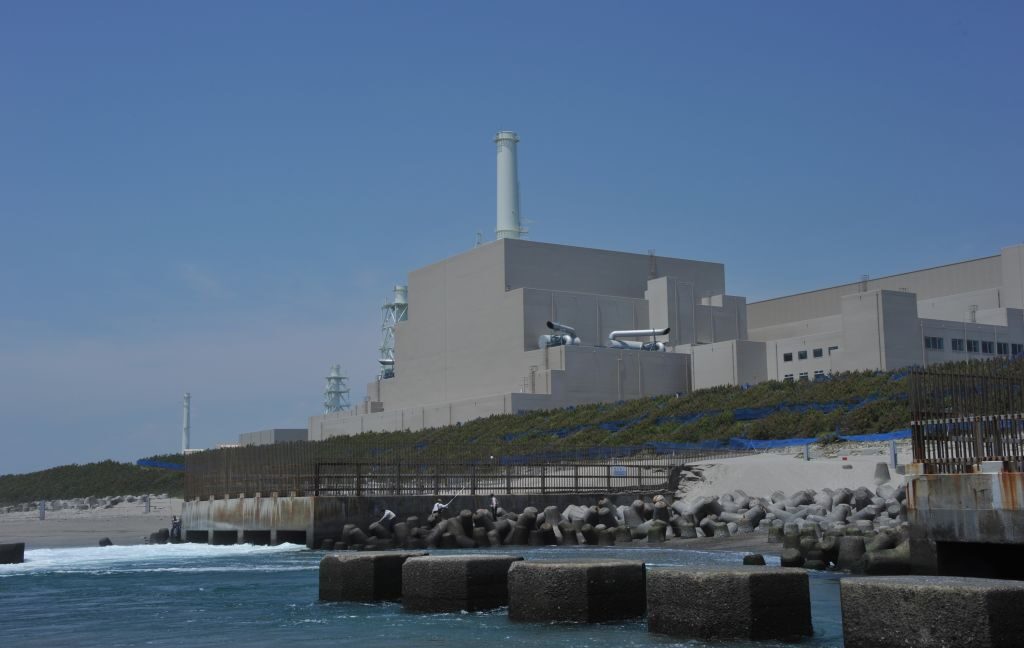
On Wednesday, Japan's Nuclear Regulation Authority announced that it is halting the relicensing process for two reactors at the Hamaoka plant after revelations that the plant's chosen operator fabricated seismic hazard data. Japan has been slowly reactivating its extensive nuclear power plant collection after it was shut down following the Fukushima Daiichi disaster. The latest scandal is especially shocking, given that the Hamaoka plant is located on the coast near an active subduction fault—just as Fukushima Daiichi is.
A whistleblower reportedly alerted the Nuclear Regulation Authority in February of last year, but the issue became public this week when the regulators halted an evaluation process that could have led to a reactor restart at Hamaoka. This prompted the company that operates the plants, the Chubu Electric Power Co., to issue a press release describing in detail how the company manipulated the seismic safety data.
Based on an English translation, it appears that seismic risks were evaluated at least in part by scaling up the ground motion using data from smaller earthquakes. This is an inexact process, so the standard approach is to create a group of 20 different upscaled earthquake motions and find the one that best represents the average among the 20.
Crypto ETFs are being studied as a regulated gateway for public access to digital assets.
Japan will cut crypto taxes to 20% and reclassify major tokens as financial products.
Institutional shifts in Japan could have wider implications for global markets.
Japan is laying the groundwork for crypto exchange-traded funds as part of a broader effort to bring digital assets into its regulated financial system.
The shift was outlined by Finance Minister Satsuki Katayama during her New Year address at the Tokyo Stock Exchange, where she confirmed government backing for integrating blockchain-based assets into the country’s stock and commodity exchanges.
The comments place Japan alongside jurisdictions that are rethinking how digital assets fit within traditional markets, with 2026 framed as a pivotal year for implementation.
Katayama described 2026 as the first year of a new digital phase for Japan’s economy, pointing to developments overseas to underline the direction of travel.
She highlighted how crypto ETFs in the US have expanded access to digital assets by embedding them within familiar investment structures, rather than treating them as a separate asset class operating outside regulated exchanges.
ETFs enter policy debate
The minister’s remarks signalled a clear intention to use existing exchange infrastructure as the foundation for digital asset adoption.
By anchoring crypto trading to securities and commodity exchanges, policymakers appear focused on standardisation and oversight, rather than rapid deregulation.
Katayama also linked crypto ETFs in the US to their growing use as an inflation hedge for households, suggesting that Japan is assessing how similar products could function within domestic portfolios.
As Minister of State for Financial Services, she pledged full support for exchanges developing fintech-focused trading systems.
This backing indicates that crypto-linked products are no longer being treated as experimental but as instruments that could sit alongside equities, commodities, and derivatives.
Tax and legal reset for 2026
The ETF discussion coincides with sweeping regulatory changes already locked in for 2026.
Japan will cut its crypto tax rate from a maximum of 55% to a flat 20%, aligning digital assets with stocks and other conventional investments.
The government has also reclassified 105 cryptocurrencies, including Bitcoin and Ethereum, as financial products under the Financial Instruments and Exchange Act.
These changes allow investors to carry forward crypto trading losses for up to three years, mirroring rules that apply to equities.
The clearer framework has prompted long-standing preparations by domestic firms.
Implications beyond domestic markets
Japan’s evolving stance is being watched closely outside the country.
As the largest foreign holder of US Treasury bonds, with holdings of about $1.2 trillion, Japan plays a significant role in global capital flows.
Any reallocation by Japanese institutions toward digital assets could influence market sentiment well beyond Asia.
At home, the Financial Services Agency has already approved the country’s first yen-pegged stablecoin, JPYC, and has discussed allowing banks to hold and trade crypto directly.
Katayama has characterised 2026 as a turning point for addressing Japan’s economic challenges through fiscal policy and targeted investment in growth sectors, with digital assets now firmly part of that strategy.
With lower taxes, clearer legal definitions, and ETF-style products edging closer, Japan is repositioning crypto from the fringes of finance toward the centre of its regulated markets.
Japan’s Ministry of Defense confirmed that Chinese military aircraft, including H-6 bombers, J-16 fighters, and a Y-9 intelligence-gathering aircraft, flew between Okinawa Island and Miyako Island into the Pacific Ocean on December 29, prompting an emergency response by the Japan Air Self-Defense Force. According to a statement released by the Japan Ministry of Defense through […]
If you think vegetarian food is boring, this viral Mapo Tofu Udon will change your mind instantly. This dish proves that plant-based meals can be bold, spicy, comforting, and full of flavour. With soft tofu sauce, chewy udon noodles, and chilli-based mushroom topping, this vegetarian bowl is just as satisfying as any meat-based dish. Mapo...
Tokyo FM is investigating claims of a massive data breach involving 3 million records. Learn what information was allegedly taken and how you can stay safe.

 Login
Login The United States is preparing Misawa Air Base in northern Japan to support the future deployment of F-35A stealth fighter aircraft, as part of a broader effort to modernize U.S. air power in the western Pacific. According to the report by Newsweek journalist Ryan Chan, the Pentagon plans to deploy 48 F-35A Lightning II jets […]
 Japan confirmed that a Russian IL-20 intelligence-gathering aircraft conducted a surveillance flight near the country’s western approaches on January 23, according to Defense Minister Shinjiro Koizumi. In a statement released on Friday, Koizumi said the Russian aircraft flew from the continental direction into the Sea of Japan, proceeded southwest, then changed course off the coast […]


 Japanese defense experts have publicly assessed that South Korea’s navy now holds qualitative advantages over Japan’s Maritime Self-Defense Force, signaling a shift in the balance of naval power in Northeast Asia, according to recent analyses circulating in Japanese security circles in January 2026. The assessment reflects a growing view inside Japan that traditional measures of […]


 Japan’s Ministry of Defense reported a sharp increase in Air Self-Defense Force emergency fighter scrambles in December 2025, with aircraft launched 79 times to intercept foreign military aircraft approaching Japanese airspace, according to data released by the Joint Staff Office on January 16, 2026. The total represented an increase of 46 scrambles compared with November […]
  Japan’s Maritime Self-Defense Force (JMSDF) confirmed on January 20, 2026, that it has taken delivery of a newly developed small unmanned underwater vehicle (UUV) designed for underwater defense missions. The announcement was made by the Ministry of Defense’s JMSDF public affairs office, which stated that the domestically developed UUV has now been formally inducted into […]
  Japan’s Board of Audit revealed in January 2026 that military equipment worth approximately 1.1 trillion yen ($6.9 billion) purchased from the United States under the Foreign Military Sales (FMS) program has not been delivered to the Japan Self-Defense Forces despite more than five years passing since contracts were signed. The finding is detailed in an […]
  The Japanese Ministry of Defense confirmed that a Russian Navy Vishnya-class intelligence collection ship entered the contiguous zones around Yonaguni Island and Miyako Island between January 13 and January 15 before sailing into the Pacific Ocean. According to the Joint Staff Office, the vessel—hull number 535—was detected moving northeast through the Yonaguni Island contiguous zone […]
  The Embassy of Japan in Ukraine announced that the final shipment of Japan Self-Defense Force vehicles designated for Ukraine arrived in Poland on January 12, completing Tokyo’s latest transfer of support equipment to the Ukrainian government. The delivery included 14 vehicles—1/2-ton trucks and High Mobility Vehicles—as part of an additional package approved in October 2024. […]
  Japan’s Ground Self-Defense Force (GSDF) deployed robotic quadruped drones during a January 2026 airborne assault exercise conducted by the 1st Airborne Brigade, marking the first time the unit integrated unmanned ground vehicles into its annual new-year descent training. According to the training footage broadcast in Japan, the exercise featured an assault element inserting from two […]

 Japan’s Ministry of Defense confirmed that Chinese military aircraft, including H-6 bombers, J-16 fighters, and a Y-9 intelligence-gathering aircraft, flew between Okinawa Island and Miyako Island into the Pacific Ocean on December 29, prompting an emergency response by the Japan Air Self-Defense Force. According to a statement released by the Japan Ministry of Defense through […]