Reading view

There are new articles available, click to refresh the page.

Netherlands to tax unrealised Bitcoin gains under new Box 3 rules

  • Wet werkelijk rendement Box 3 is set to begin on January 1, 2028, according to the Dutch parliament.
  • A 36% flat tax will apply to positive net returns above a €1,800 threshold per person.
  • Losses can be carried forward to offset future gains.

The Netherlands is preparing to change how it taxes investors, and the shift could have a direct impact on people holding Bitcoin and other crypto assets.

Starting in 2028, the country plans to tax unrealised gains, meaning investors could owe tax even if they have not sold their holdings.

According to a post shared by Crypto Rover, the Netherlands is moving towards taxing unrealised Bitcoin gains, bringing fresh attention to how governments may treat crypto under mainstream investment rules.

The policy is expected to cover a broad set of assets, including Bitcoin, other cryptocurrencies, stocks, bonds, and similar investments.

For many investors, the key issue is that tax would be triggered by changes in value over time, not by selling and locking in profits.

That makes the reform especially relevant for crypto holders, who often deal with sharp price swings and long holding periods.

Netherlands plans overhaul of Box 3 wealth tax

According to the Dutch parliament, the Netherlands will introduce a new tax system called Wet werkelijk rendement Box 3 starting January 1, 2028.

The idea is to tax investors based on the actual returns they make each year, rather than on estimated returns set by the government.

Under the planned approach, authorities would compare the value of a person’s assets at the start and end of the year. Any income earned during that period would also be included in the calculation.

This means investors could be taxed on both realised profits and unrealised gains that only exist on paper.

The tax will apply to Bitcoin, other cryptocurrencies, and traditional investment products.

The reform is designed to treat different asset classes equally and apply one consistent method across a modern portfolio.

Why the Netherlands is changing its tax model

The proposed change follows a court ruling that found the old Box 3 system unfair.

Under the previous framework, investors were taxed based on assumed returns, even if their holdings did not perform in line with those assumptions.

Lawmakers argue the new structure is more accurate because it is based on the real change in value of assets, rather than an estimate that may not reflect actual outcomes.

Supporters of the change believe it improves fairness, especially for investors whose returns have historically been overstated by the assumed-return method.

The planned system also reflects how investment behaviour has evolved over the years.

Many households now hold a mix of traditional assets and crypto, and the government appears to be moving towards rules that apply consistently across both categories.

How unrealised gains would be taxed each year?

Under the new rules, the government would calculate a person’s yearly investment result by comparing asset values at the beginning and end of the year, plus any income earned during that period.

A 36% flat tax would apply to positive net returns above a €1,800 annual threshold per person.

In simple terms, the tax would be linked to annual performance rather than transactions.

That means an investor could owe tax if their portfolio rises in value, even if they did not sell anything and did not receive cash from their holdings.

If an investor records a loss, that loss can be carried forward and used to offset future gains.

This gives investors some protection during negative years, although the timing mismatch between paper gains and cash flow remains a concern for some.

What the reform could mean for Bitcoin and crypto holders

For crypto investors, the biggest challenge is volatility. Bitcoin and other digital assets can rise sharply in a short time, and then fall just as quickly.

A year-end value increase could create a tax bill, even if the investor has not sold any crypto and has no cash available from those gains.

Critics warn this could create liquidity pressure, especially for long-term holders who do not want to sell their Bitcoin just to fund tax payments.

Some also fear it could push investors and crypto businesses to relocate if the system becomes too costly or difficult to manage.

With the Box 3 reform planned for 2028, the Netherlands is positioning itself for a major shift in investor taxation, and crypto holders may soon face annual tax calculations tied to market movements rather than selling decisions.

The post Netherlands to tax unrealised Bitcoin gains under new Box 3 rules appeared first on CoinJournal.

EuroTrophy signs $383M Leopard 2A8 active protection contract

EuroTrophy GmbH has signed a €330 million ($383 million) contract with KNDS Deutschland to supply Trophy Active Protection Systems for Leopard 2A8 main battle tanks ordered by Lithuania, the Netherlands, the Czech Republic, and Croatia, the company announced on January 19, 2026. The agreement covers the delivery of Trophy APS units for the four national […]
Europe’s Cannabis Market Is (Finally) Growing Up

In a chandelier-lit ballroom at Berlin’s Hotel Adlon Kempinski, a quiet revolution is unfolding. Dozens of investors lean in as founders from Zurich, Barcelona, Lisbon and Warsaw pitch a room full of international cannabis investors and the CEOs of the EU’s next cannabis giants. This is a Talman House event, and it’s where European cannabis capital finds its match.

After years of uneven reform, Europe’s cannabis market is finally entering its investment era. As North America wrestles with oversupply and political fatigue, European operators are drawing global attention to their pharmaceutical precision, export potential and growing regulatory stability.

From Albania to Spain and everywhere in between, governments are expanding medical cannabis access and homegrow rights in various forms. In Germany, the new conservative CDU government is cautious on cannabis, but indications suggest they’ll still advance adult-use legalization. Personal possession of up to 25 grams is allowed in public in Germany. Meanwhile, medical supply chains are growing across Western and Eastern Europe through controlled licensing and pilot programs.

Europe remains a frontier defined by both opportunity and red tape. Many deals favor convertible debt or structured instruments over pure equity. Despite the cautiousness, institutional interest is rising. Germany’s Demecan, for example, recently hit a €100 million valuation backed partly by US investors. Last September, Canada’s High Tide purchased a 51 percent interest in cannabis pharma operator Remexian AG with an option to pick up the other 49 percent. Europe’s cannabis infrastructure is maturing and investors are watching closely.

With most national markets still small in scale, the long-term play centers on trading internationally. Companies are positioning themselves to supply EU GMP-certified cannabis and cannabinoid-based pharmaceuticals across the region. While the legal framework is evolving, transparent governance and robust due diligence are non-negotiable for investors. Recent scandals like the collapse of the JuicyFields Ponzi scheme have left many wary.      

Among the new generation of European investment platforms, The Talman Group stands out as a credible, selective, membership-based network connecting cannabis and cannabis-adjacent companies with global investors. Its model blends exclusive events in prestigious venues with curated deal sourcing and introductions to sophisticated investors who want compliant and investable opportunities.

In April 2025, Talman hosted more than 140 participants at the Adlon Kempinski in Berlin, where a handful of highly curated companies pitched to investors in a Shark Tank-style setting. As the investment arm of Europe’s largest B2B conference and expo, International Cannabis Business Conference (ICBC), Talman lends a layer of legitimacy to an industry still working to shake its early growing pains in the adolescence of Europe’s cannabis industry.

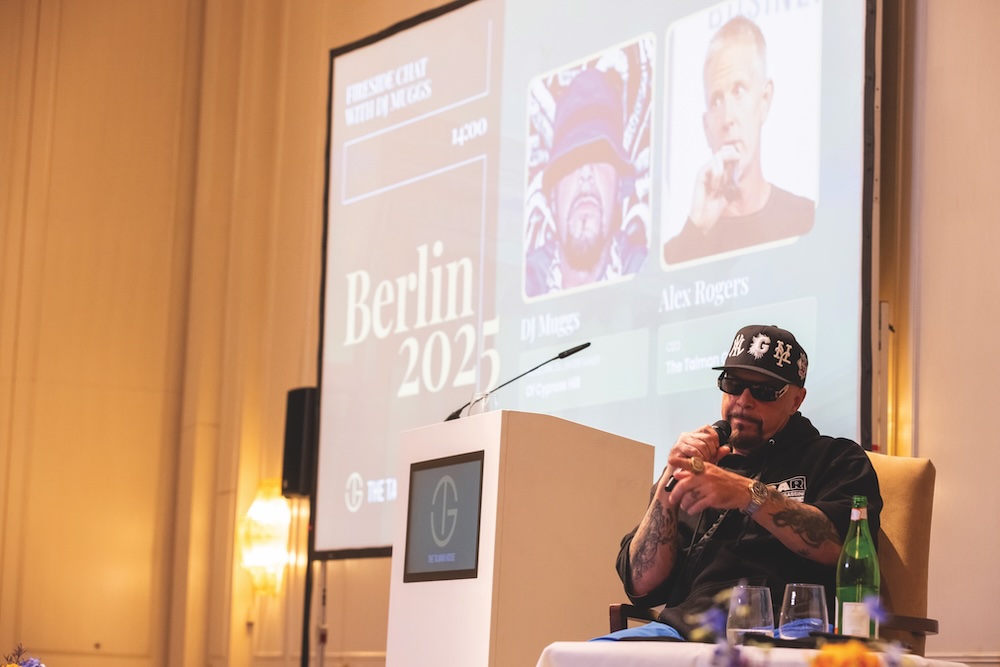
DJ Muggs at Talman House cannabis event in Berlin
return on investment: Last April’s Talman House event presented cannabis rockstar DJ Muggs, whose investment portfolio is as impressive as his 35-year music career.

Talman serves as a figurative mentor guiding Europe’s cannabis industry toward maturity. Its role extends beyond matchmaking. The platform provides a buffer of due diligence by screening decks, tracking market intelligence and connecting founders to legal, financial and strategic advisors. Creating the conditions for credible, sustainable industry growth, Talman’s curated network brings much-needed capital into reach for operators bridging a capital desert.

And the opportunity is real in these undercapitalized European markets. Early entrants can enjoy “first mover” status, and if they utilize the head start efficiently, can parlay that into market leadership and delight their investors. Additionally, success in one jurisdiction often opens doors across the EU’s emerging regulatory patchwork. The evolution of policies in Germany, the Netherlands and the United Kingdom could provide compliant, scaled operators with significant upside.

All that said, uncertainty due to evolving regulations continues. Pilot programs have faced repeated delays in the Netherlands and Switzerland. Shallow public markets limit exits, and scandals and bankruptcies remind investors that gaps in oversight can be costly.

Big conglomerates such as British American Tobacco and Tilray entering the space raise the bar for smaller firms as well. Investors have witnessed how market exuberance can outpace fundamentals, but greed is a powerful blinder. Valuation discipline will be essential.           

Europe’s cannabis story is unfolding in distinct phases. There are policy harmonization efforts across EU member states, with standardized licensing and quality controls being considered. Simultaneously, cross-border consolidation through multi-country acquisitions and partnerships is already underway. Expect consolidation to pick up speed in 2026 as more North American companies consider Europe’s potential. As the cycle matures, institutional investors will participate by having pension and health funds make cautious allocations. That typically triggers financial innovation (e.g. REITs and special-purpose investment vehicles). Lastly, as compliance standards mature, de-risking through transparency becomes the norm.

Europe’s cannabis investment story isn’t about chasing another green rush. It’s about building the infrastructure that makes the rush possible. Platforms like the Talman Group are helping investors see Europe not as 27 fragmented markets, but as one evolving opportunity. For those willing to navigate complexity, the reward may be as lasting as the reform itself.

This story was originally published in issue 52 of the print edition of Cannabis Now.

The post Europe’s Cannabis Market Is (Finally) Growing Up appeared first on Cannabis Now.

Inside Amsterdam’s 2025 Coffeeshop Awards

The 2025 Amsterdam Coffeeshop Awards brought together cannabis lovers from across the industry—including coffeeshops, staff, brand representatives and regular patrons—for a weekend of tastings, meetups and shop visits across the city. Organized by AudioKush, the three-day event, held November 14-16, has grown steadily since its launch in 2021 and now serves as an annual record of where Amsterdam’s coffeeshop community stands and how it continues to grow.

To gain a better understanding of the cultural significance of the Amsterdam Coffeeshop Awards, it is helpful to examine how Amsterdam’s coffeeshops originated. In the 1970s, the city started allowing small-scale cannabis sales under controlled conditions. This wasn’t legalization, but it wasn’t an underground loophole either. Rather, it was a practical harm-reduction strategy that eventually shaped Amsterdam’s identity as one of the world’s most recognized cannabis destinations.

For many international visitors, especially those from countries with strict laws, coffeeshops were the first place they saw cannabis handled as a normal part of daily life. Customers could sit down, read a menu, and ask staff about different strains—something that didn’t exist anywhere else at the time. As the years passed, coffee shops became an integral part of the city’s cultural landscape, influenced by music, art, hospitality, food and nightlife. They also became an early example for policymakers looking to understand what a regulated cannabis environment could look like.

The Amsterdam Coffee Shop Awards draw on that history. Rather than simply naming winners, they aim to recognize the people and businesses that continue to shape a culture built over decades.

How The Judging Process Works

The awards are split into two sections with distinct judging methods. The Consumer Choice categories are decided by public voting, giving a clear picture of what regular coffee shop customers and visitors value most across the city. For the Industry Awards, over the course of a week, a panel of 25 industry professionals independently samples and scores the city’s best flower, hash, pre-rolls, edibles, coffeeshops and concentrates. Each product is independently evaluated in a blind taste test, with no branding or identifying information provided to the judges, ensuring that assessments focus solely on quality. Together, these two approaches reflect both the community’s preferences and the standards recognized by industry professionals.

The awards gala was held on Docks 1, a smoker-friendly boat cruise and Amsterdam’s largest floating venue, which capped off a three-day stretch of meet-ups, coffeeshop visits, tastings and late-night parties. According to Russell D, marketing director for Amsterdam Coffee Shop Awards, a total of 200 industry professionals were aboard the awards cruise. By the time the winners were announced, most people in the room had already shared a joint, a conversation, or at least a handshake somewhere else in the city.

Now, let’s take a look at this year’s full list of winners.

2025 Consumer Choice Awards

Barney's Farm

These categories were decided entirely by public vote; the customers, locals and visitors who give Amsterdam’s coffeeshops their character.

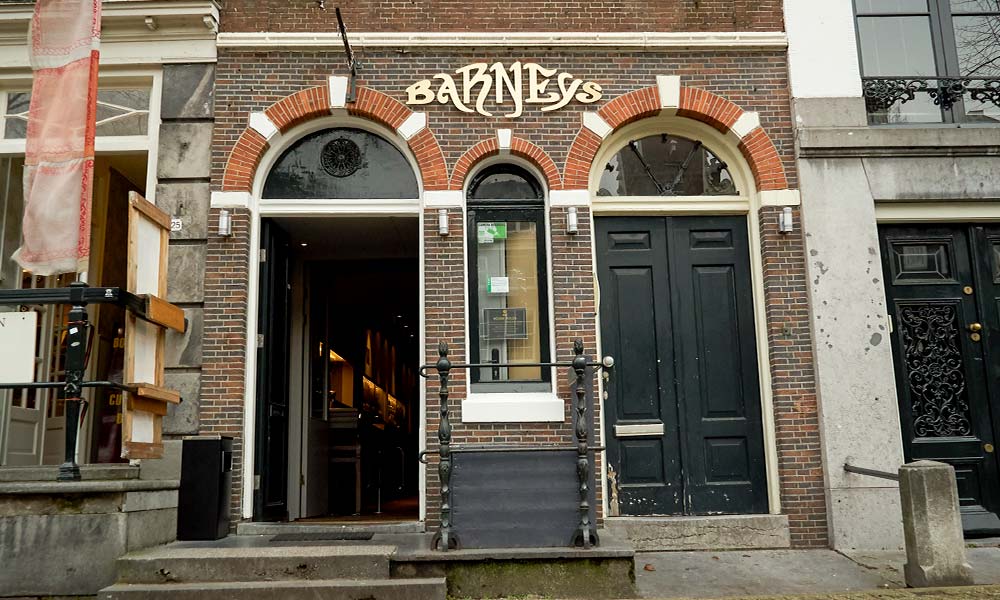
  • Coffeeshop of the Year: Barney’s Coffeeshop: Barney’s secured the title for a second consecutive year, becoming the first coffeeshop to achieve this accolade in the Awards’ history. Regulars often point to the same combination: a staff that treats hospitality as a skill, a menu that evolves without chasing fads, and genetics that continue to attract international attention.
  • Budtender of the Year: Lily @ Barney’s Coffeeshop: Lily explains products simply and offers trusted advice, earning strong support from regulars.
  • Most Knowledgeable Staff: Balou: Balou’s staff is known for clear, informative explanations, with Riccardo praised for his easy communication.
  • Content Creator of the Year: Corax Dewai: Corax’s candid coverage captures daily coffeeshop life, resonating with local and online audiences.
  • Best Coffeeshop Menu: Barney’s Coffeeshop: Barney’s menu remains one of the most curated in the city. The selection changes often enough to stay relevant without abandoning long-loved classics. The approach keeps the list focused instead of overwhelming.
  • Best Coffeeshop Art Exhibit: “The Grand History of Cannabis,” Mossy Giant @ De Kade: The exhibit paired illustration with cultural references to create a visual timeline of cannabis history. It drew consistent attention for being engaging without feeling like a museum piece.
  • Best Indoor Coffeeshop Lounge: Prix d’Ami: Prix d’Ami offers diverse lounge spaces, maintaining a cohesive, welcoming atmosphere despite its size.
  • Best Outdoor Coffeeshop Lounge: Katsu: Katsu’s terrace in De Pijp remains a steady favorite. It draws both locals and visitors, offering a secluded, relaxed spot away from the busier tourist zones.
  • Best Coffeeshop Outside Amsterdam: Hunter’s Zandvoort: Hunter’s Zandvoort brings the brand’s style to a very different environment: the coast. Its 40th anniversary added weight to the win.
  • Best Smoker-Friendly Lounge: Barney’s Uptown: Barney’s Uptown feels comfortable and lived-in, with praised seating, drinks, and unobtrusive DJ sets.
  • Best CBD Brand: Mystery Bees: Mystery Bees’ small-batch, simple approach and consistent, clean flavors earned high voter recognition.
  • Best 420 Event or Experience: Buddha Lounge Boat: The Buddha Lounge Boat offers a slow, scenic session on the city’s waterways. It continues to attract people seeking a relaxed, floating alternative to land-based coffeeshop visits.
  • Favourite Coffeeshop Pet: Mr. Pumba: Mr. Pumba is a coffeeshop fixture, well-known and frequently featured in city lore and photos.

2025 Industry Awards: Blind-Tasting Results

Mimosa Strain
Pictured Strain: Mimosa

These awards focus strictly on what’s in the jar, not the noise behind it.

Sativa

  • 1st: Jus D’Orange (The Old Church): A bright, citrus-forward profile that hits like a glass of freshly squeezed juice.
  • 2nd: Mimosa (7th Heaven): Clementine x Purple Punch genetics deliver a fruit-driven and approachable profile.
  • 3rd: B45 (Cream Pheno) (THC Turbine): Smooth and easygoing, the B45 cream phenotype is the perfect modern sativa.

Haze

  • 1st: G13 Haze (Coffeeshop Blue Sea): A classic haze profile built on earth, pine, and citrus, with long-lasting clarity. This cross of G13 and Hawaiian Sativa, G13 Haze, is an Amsterdam classic.
  • 2nd: Super Silver Haze (Coffeeshop Central): Delivered with its usual lemon-spice expression, this legendary cultivar is a cross of Skunk, Northern Lights, and Haze.
  • 3rd: Amnesia (Coffeeshop 7th Heaven): Sharp and uplifting, true to its long-standing reputation of being a benchmark for haze connoisseurs.

Indica

  • 1st: Uncle Snoop (Coffeeshop Barney’s): Dense, frosted buds with vanilla-berry notes and a steady, relaxing effect that’s true to its namesake.
  • 2nd: Black Cherry Gelato (Coffeeshop Hunter’s): Sweet, rounded, and well-suited to late-day use.
  • 3rd: Dark Matter (Coffeeshop The Old Church): This earthly strain delivers a calming finish that melts away tension and guides you into restful sleep.

Hybrid

  • 1st: Baker’s Man (Coffeeshop Relax): Warm, pastry-like aromatics and a sociable, mellow effect.
  • 2nd: Super Boof (Coffeeshop Hunter’s): Tropical citrus punch flavors and a euphoric twist.
  • 3rd: Zillions (Coffeeshop Barney’s): Sweet, expressive, and notably potent, this balanced hybrid crosses Original Z and Lemon Cherry Gelato and features a notably high THC and terpene content.

Traditional Hash

  • 1st: Zero Zero (Coffeeshop Relax): Soft, aromatic, and reminiscent of classic Moroccan craftsmanship.
  • 2nd: Champagne (Coffeeshop 7th Heaven): A sweet, smooth flavor with a bright finish for those who prefer a more polished take on traditional hash.
  • 3rd: Glumosa (Coffeeshop Central): Rich resin flavor and a bold presence make this a full-flavored hash for true aficionados.

Static Hash

  • 1st: Forbidden Fruit × Fruit Joy (Coffeeshop The Old Church): Layered, fruit-led flavor with balanced effects, this is a complex and utterly unique cultivar.
  • 2nd: Painkiller (Coffeeshop Relax): Perfect for those seeking a smooth, calming, full-body high.
  • 3rd: K1 (Coffeeshop Reefer): Reliable potency and intense effects.

Ice Water Hash

  • 1st: Grape Gas WPFF (Coffeeshop Terps Army): Solventless, bold, and smooth with terpenes that burst from the jar, a testament to modern extraction craft.
  • 2nd: Hawaï WPFF (Coffeeshop Hashtag): Creamy, layered and bursting with mango, pineapple, and passion fruit notes.
  • 3rd: RS11 Piatella (Coffeeshop Terps Army): Soft texture and floral aromatics.

Live Rosin

  • 1st: Grape Gas (Coffeeshop Terps Army): The pinnacle of purity and potency.
  • 2nd: Oishii (Green Gold): Creamy, rich, and sweetly layered notes.
  • 3rd: Banana Punch (Coffeeshop 7th Heaven): Sweet, floral and a must for flavor hunters.

Premium Pre-roll

  • 1st: Heavenly Beltz Donut (Coffeeshop 7th Heaven): Perfectly constructed with top-shelf flower and rosin.
  • 2nd: Gelato 33 Hash Hole (Coffeeshop Balou): Creamy, gassy and a powerful dessert for grown-ups.
  • 3rd: #thegasbomb Donut (Coffeeshop Hashtag): Gassy and bold, with a clean, punchy finish.

Edibles

  • 1st: Pistachio Cheesecake (Let’s Get Baked × Coffeeshop The Old Church): Nutty, creamy, and decadently dosed, this edible is both a culinary and cannabis masterpiece.
  • 2nd: Mango Mouse (Made To Be Baked × Coffeeshop Sativa): Light, tropical, and easy to enjoy.
  • 3rd: Tartlet Sampler (Petit 420): Offers multiple flavor experiences in one serving.

CBD

  • 1st: Lemon Cherry CBD (Coffeeshop Relax): Citrus-forward with a mild, steady effect.

The post Inside Amsterdam’s 2025 Coffeeshop Awards appeared first on Cannabis Now.

Flowers for drying

The natural everlasting flowers are those with papery petals, often called immortelles, that can be dried and kept for indoor arrangements during the winter. The most common are helichrysums and other members of the daisy family including helipterum, ammobium, anaphalis and xeranthemum, all yellow, bronze, gold, pink and white and a packet of seeds can produce a lovely selection. The […]

The post Flowers for drying appeared first on Backyard Gardener.

Darknet bunker plot thickens: ties to right-wing dissidents and WikiLeaks

By: Skyler

The German Public Prosecution Service confirmed that a bunker functioning as an illegal cyber center had ties to a right-wing dissident movement and possibly to WikiLeaks. These revelations came to light when the main suspect – Herman Johan Verwoert-Derksen (60), also known as ‘Johan X.’ – reacted to his criminal case for the first time.

According to German media, the employees of the cyber center saw the hosting of servers for dissident groups as a lucrative endeavor. One group is specifically mentioned: Generation Identity. That right-wing movement has chapters in several European countries, such as France, Germany, Austria, and the United Kingdom.

Through encrypted messages, an employee of the bunker communicated with a member of Generation Identity. For just thirty euros a month, the cyber bunker would host a cloud server for the group. A very competitive price because other tenants paid hundreds of euros a month for the same service. That may indicate that the employees of the bunker had some degree of sympathy for the ideology of Generation Identity.

@NATO is not involve in this affair, but let's just say it's ironic… #Darknet #cybercrime servers hosted in former NATO #bunker in #Germanyhttps://t.co/sTjdpKxqAA #infosec #cyebrsecurity #darkweb @infosecsw pic.twitter.com/pMldc7zBf2

— Steve Waterhouse (@Water_Steve) September 29, 2019

The cyber bunker offered a host of IT services, without requiring contracts or personal details. Furthermore, the bunker hosted many websites on the dark web involved in the distribution of drugs, weapons, and even child pornography. The center was also connected to dark web markets such as Wall Street Market, Cannabis Road, and Flugsvamp 2.0. Moreover, massive cyber attacks were conducted from the bunker, sometimes targeting a million routers at the same time.

In 2013, Johan X. – the head of the organization – bought the former NATO bunker located in Traben-Trarbach, a town in Western Germany. In secret, he converted the former bunker into an underground data center. In addition to the main suspect, the police arrested twelve other men, all German and Dutch nationals. They claim to provide a high degree of privacy and thus do not know illegal content was hosted on their servers.

In 2002, Johan X. was involved in a similar case, running a data center in the South West of the Netherlands. His customers were mostly legal pornographers. The police also discovered an ecstasy laboratory in the same building, although he was never convicted in that case.

📷 architectureofdoom: Former Cold War bunker turned into a dark web cyberbunker, Traben-Trarbach, Germany https://t.co/1h5fKSiGO6

— Tim Munn (H) (@amish_man) May 8, 2020

Johan X. claims to be a victim of political persecution. He believes the German authorities only showed interest because his data center hosted the servers of WikiLeaks. The public prosecutor denies those allegations, stating that investigators did not found any server belonging to WikiLeaks. Furthermore, WikiLeaks is not even mentioned in the indictment.

Regardless of the outcome, (former) employees of Johan X. are already making plans for a new data center. Several countries showed interest, including Bahrain, Moldova, Zimbabwe, and Vietnam.

The post Darknet bunker plot thickens: ties to right-wing dissidents and WikiLeaks appeared first on Rana News.

❌