Fresh information from a reliable Chinese tipster suggests the OnePlus 15T may play it safe with the cameras, reusing familiar hardware while focusing on performance gains and battery capacity in a compact flagship form factor.
The United States has delivered the first MC-55A Peregrine aircraft to the Royal Australian Air Force, L3Harris Technologies confirmed on January 24, 2026. The aircraft was handed over by the U.S. Air Force following completion of integration and mission system testing, according to the company. The delivery is part of Australia’s Peregrine program, which is […]
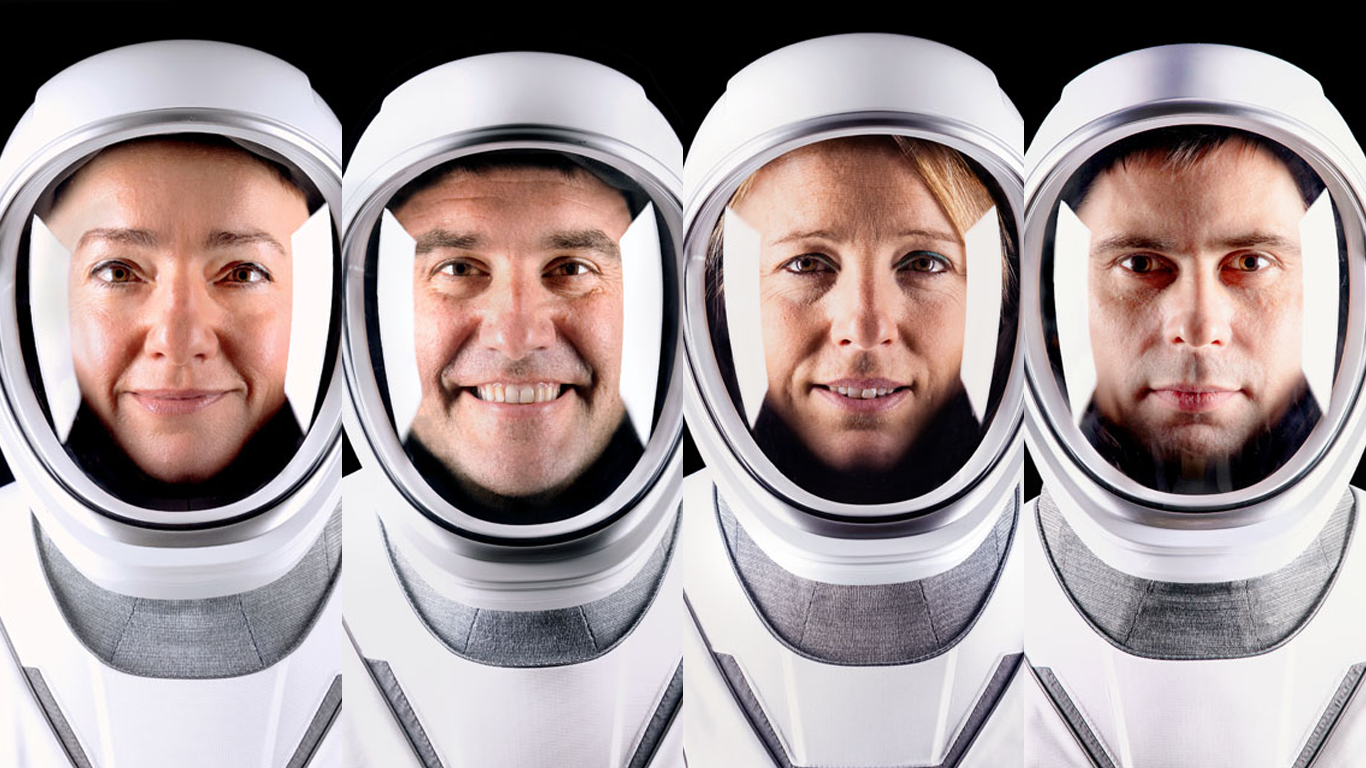
NASA’s SpaceX Crew-12 crew, from left to right, is NASA astronauts Jessica Meir and Jack Hathaway, ESA (European Space Agency) astronaut Sophie Adenot, and Roscosmos cosmonaut Andrey Fedyaev.
Credit: SpaceX
NASA and its partners will discuss the upcoming crew rotation to the International Space Station during a pair of news conferences on Friday, Jan. 30, from the agency’s Johnson Space Center in Houston.
At 11 a.m. EST, mission leadership will discuss final launch and mission preparations in a news conference that will stream on the agency’s YouTube channel.
Next, the crew of NASA’s SpaceX Crew-12 mission will participate in a virtual news conference from NASA Johnson crew quarters at 1 p.m., also on the agency’s YouTube channel. Individual streams for each of the events will be available on that page. This is the final media opportunity with Crew-12 before they travel to NASA’s Kennedy Space Center in Florida for launch.
Crew-12 will carry NASA astronauts Jessica Meir and Jack Hathaway, ESA (European Space Agency) astronaut Sophie Adenot, and Roscosmos cosmonaut Andrey Fedyaev to the orbiting laboratory. The crew will launch aboard a SpaceX Dragon spacecraft on the company’s Falcon 9 rocket from Space Launch Complex 40 at Cape Canaveral Space Force Station in Florida. The agency is working with SpaceX and its international partners to review options to advance the launch of Crew-12 from its original target date of Sunday, Feb. 15.
United States-based media interested in attending in person must contact the NASA Johnson newsroom no later than 5 p.m. CST on Thursday, Jan. 29, at 281-483-5111 or jsccommu@mail.nasa.gov.
Media wishing to join the news conferences by phone must contact the Johnson newsroom by 9:45 a.m. on the day of the event. A copy of NASA’s media accreditation policy is available online.
Briefing participants are as follows (all times Eastern and subject to change based on real-time operations):
11 a.m.: Mission Overview News Conference
Ken Bowersox, associate administrator, NASA’s Space Operations Mission Directorate
Steve Stich, manager, Commercial Crew Program, NASA Kennedy
Dana Weigel, manager, International Space Station Program, NASA Johnson
Andreas Mogensen, Human Exploration Group Leader, ESA
This will be the second flight to the space station for Meir, who was selected as a NASA astronaut in 2013. The Caribou, Maine, native earned a bachelor’s degree in biology from Brown University, a master’s degree in space studies from the International Space University, and a doctorate in marine biology from Scripps Institution of Oceanography in San Diego. On her first spaceflight, Meir spent 205 days as a flight engineer during Expedition 61/62, and she completed the first three all-woman spacewalks with fellow NASA astronaut Christina Koch, totaling 21 hours and 44 minutes outside of the station. Since then, she has served in various roles, including assistant to the chief astronaut for commercial crew (SpaceX), deputy for the Flight Integration Division, and assistant to the chief astronaut for the human landing system.
A commander in the United States Navy, Hathaway was selected as part of the 2021 astronaut candidate class. This will be Hathaway’s first spaceflight. The South Windsor, Connecticut, native holds a bachelor’s degree in physics and history from the U.S. Naval Academy and master’s degrees in flight dynamics from Cranfield University and national security and strategic studies from the U.S. Naval War College, respectively. Hathaway also is a graduate of the Empire Test Pilot’s School, Fixed Wing Class 70 in 2011. At the time of his selection, Hathaway was deployed aboard the USS Truman, serving as Strike Fighter Squadron 81’s prospective executive officer. He has accumulated more than 2,500 flight hours in 30 different aircraft, including more than 500 carrier arrested landings and 39 combat missions.
The Crew-12 mission will be Adenot’s first spaceflight. Before her selection as an ESA astronaut in 2022, Adenot earned a degree in engineering from ISAE-SUPAERO in Toulouse, France, specializing in spacecraft and aircraft flight dynamics. She also earned a master’s degree in human factors engineering at Massachusetts Institute of Technology in Cambridge. After earning her master’s degree, she became a helicopter cockpit design engineer at Airbus Helicopters and later served as a search and rescue pilot at Cazaux Air Base from 2008 to 2012. She then joined the High Authority Transport Squadron in Villacoublay, France, and served as a formation flight leader and mission captain from 2012 to 2017. Between 2019 and 2022, Adenot worked as a helicopter experimental test pilot in Cazaux Flight Test Center with DGA (Direction Générale de l’Armement – the French Defence Procurement Agency). She has logged more than 3,000 hours flying 22 different helicopters.
This will be Fedyaev’s second long-duration stay aboard the orbiting laboratory. He graduated from the Krasnodar Military Aviation Institute in 2004, specializing in aircraft operations and air traffic organization, and earned qualifications as a pilot engineer. Prior to his selection as a cosmonaut, he served as deputy commander of an Ilyushin-38 aircraft unit in the Kamchatka Region, logging more than 600 flight hours and achieving the rank of second-class military pilot. Fedyaev was selected for the Gagarin Research and Test Cosmonaut Training Center Cosmonaut Corps in 2012 and has served as a test cosmonaut since 2014. In 2023, he flew to the space station as a mission specialist during NASA’s SpaceX Crew-6 mission, spending 186 days in orbit, as an Expedition 69 flight engineer. For his achievements, Fedyaev was awarded the title Hero of the Russian Federation and received the Yuri Gagarin Medal.
Life as a startup carmaker is hard—just ask Lucid Motors.
When we met the brand and its prototype Lucid Air sedan in 2017, the company planned to put the first cars in customers' hands within a couple of years. But you know what they say about plans. A lack of funding paused everything until late 2018, when Saudi Arabia's sovereign wealth fund bought itself a stake. A billion dollars meant Lucid could build a factory—at the cost of alienating some former fans because of the source.
Then the pandemic happened, further pushing back timelines as supply shortages took hold. But the Air did go on sale, and it has more recently been joined by the Gravity SUV. There's even a much more affordable midsize SUV in the works called the Earth. Sales more than doubled in 2025, and after spending a week with a model year 2026 Lucid Air Touring, I can understand why.
Fable’s extended preview outlines a bigger, more reactive Albion, with open-world freedom, reputation-driven consequences, and flexible “style-weaving” combat, all heading to PS5, Xbox Series X and S, and PC in autumn 2026.
Wet werkelijk rendement Box 3 is set to begin on January 1, 2028, according to the Dutch parliament.
A 36% flat tax will apply to positive net returns above a €1,800 threshold per person.
Losses can be carried forward to offset future gains.
The Netherlands is preparing to change how it taxes investors, and the shift could have a direct impact on people holding Bitcoin and other crypto assets.
Starting in 2028, the country plans to tax unrealised gains, meaning investors could owe tax even if they have not sold their holdings.
According to a post shared by Crypto Rover, the Netherlands is moving towards taxing unrealised Bitcoin gains, bringing fresh attention to how governments may treat crypto under mainstream investment rules.
The policy is expected to cover a broad set of assets, including Bitcoin, other cryptocurrencies, stocks, bonds, and similar investments.
For many investors, the key issue is that tax would be triggered by changes in value over time, not by selling and locking in profits.
That makes the reform especially relevant for crypto holders, who often deal with sharp price swings and long holding periods.
Netherlands plans overhaul of Box 3 wealth tax
According to the Dutch parliament, the Netherlands will introduce a new tax system called Wet werkelijk rendement Box 3 starting January 1, 2028.
The idea is to tax investors based on the actual returns they make each year, rather than on estimated returns set by the government.
Under the planned approach, authorities would compare the value of a person’s assets at the start and end of the year. Any income earned during that period would also be included in the calculation.
This means investors could be taxed on both realised profits and unrealised gains that only exist on paper.
The tax will apply to Bitcoin, other cryptocurrencies, and traditional investment products.
The reform is designed to treat different asset classes equally and apply one consistent method across a modern portfolio.
Why the Netherlands is changing its tax model
The proposed change follows a court ruling that found the old Box 3 system unfair.
Under the previous framework, investors were taxed based on assumed returns, even if their holdings did not perform in line with those assumptions.
Lawmakers argue the new structure is more accurate because it is based on the real change in value of assets, rather than an estimate that may not reflect actual outcomes.
Supporters of the change believe it improves fairness, especially for investors whose returns have historically been overstated by the assumed-return method.
The planned system also reflects how investment behaviour has evolved over the years.
Many households now hold a mix of traditional assets and crypto, and the government appears to be moving towards rules that apply consistently across both categories.
How unrealised gains would be taxed each year?
Under the new rules, the government would calculate a person’s yearly investment result by comparing asset values at the beginning and end of the year, plus any income earned during that period.
A 36% flat tax would apply to positive net returns above a €1,800 annual threshold per person.
In simple terms, the tax would be linked to annual performance rather than transactions.
That means an investor could owe tax if their portfolio rises in value, even if they did not sell anything and did not receive cash from their holdings.
If an investor records a loss, that loss can be carried forward and used to offset future gains.
This gives investors some protection during negative years, although the timing mismatch between paper gains and cash flow remains a concern for some.
What the reform could mean for Bitcoin and crypto holders
For crypto investors, the biggest challenge is volatility. Bitcoin and other digital assets can rise sharply in a short time, and then fall just as quickly.
A year-end value increase could create a tax bill, even if the investor has not sold any crypto and has no cash available from those gains.
Critics warn this could create liquidity pressure, especially for long-term holders who do not want to sell their Bitcoin just to fund tax payments.
Some also fear it could push investors and crypto businesses to relocate if the system becomes too costly or difficult to manage.
With the Box 3 reform planned for 2028, the Netherlands is positioning itself for a major shift in investor taxation, and crypto holders may soon face annual tax calculations tied to market movements rather than selling decisions.
South Korea has launched a 1.9 trillion-won ($1.29 billion) program to develop a new class of aircraft designed to jam and disrupt enemy air defense networks, the Defense Acquisition Program Administration (DAPA) announced. DAPA said the project, known as Block-I, will focus on developing large, dedicated electronic warfare aircraft capable of degrading an adversary’s integrated […]
The Cardano Foundation said it has hit the first milestone in its updated governance roadmap, expanding delegation to a new set of community representatives as the ecosystem leans further into on-chain decision-making. The move matters because it shifts meaningful voting weight toward delegated representatives (DReps) whose mandates emphasize adoption and day-to-day network operations rather than purely technical development.
Cardano Foundation Expands DRep Delegation
In a post on X and an accompanying blog update, the Foundation said it has delegated an additional 220 million ADA to 11 selected DReps, roughly 20 million ADA each, focused on the pillars of Adoption and Operations. The Foundation framed the step as a continuation of earlier delegations to “Developer & Builder DReps,” and said the new allocation brings total delegation to community DReps to 360 million ADA.
Alongside the additional community delegation, the Foundation said it is revising how it handles its remaining stake in governance. “Rather than leaving a portion of our funds on auto-abstain as initially planned, we will self-delegate the remaining balance (approximately 171 million ADA),” the Foundation wrote. “While this exceeds our initial estimate, it ensures no ADA remains passive and still results in a net reduction of our overall voting power by approximately 43 million ADA, with the clear majority of our holdings now empowering community DReps.”
The Foundation emphasized that the delegations are intended to distribute voting power without imposing direction. “This delegation is not a blind bet, rather it’s a show of trust in a proven history of sound decision-making,” it said. “As always, it’s also a show of good faith: These new delegations come without any expectation regarding voting outcomes. We will not direct these DReps on how to vote, nor will we provide a voting manual.”
That posture, explicitly accepting dissent from its own views, was positioned as a feature rather than a risk. The Foundation said it expects “differing opinions” between the newly selected DReps and the Foundation itself, describing that divergence as evidence of “a healthy, decentralized governance system.”
The Foundation’s rationale for targeting adoption and operations reads as a governance design choice: broaden the expertise mix beyond protocol engineering. “To build a resilient governance system, we need more than just technical expertise—We need business acumen and operational stability,” it wrote, arguing that Adoption DReps can represent real-world utility, onboarding, and enterprise needs, while Operations DReps reflect the practical constraints faced by stake pool operators, toolmakers, and infrastructure providers.
In the published list, the Adoption cohort includes figures tied to community growth and product-building across the ecosystem, from regional community leadership to DeFi and stablecoin infrastructure, while the Operations cohort highlights long-running infrastructure roles such as block explorer analytics, stake pool operations, and SPO tooling.
The Foundation said all eleven delegations were completed in a single on-chain transaction, linking to the Cardano Explorer entry, and noted the delegations are effective immediately. It also encouraged the broader community to “follow and interact with these DReps,” including engaging with their voting rationales and participating in governance actions.
Official crew portrait for NASA’s SpaceX Crew-10 mission with NASA astronauts Anne McClain and Nichole Ayers, JAXA (Japan Aerospace Exploration Agency) astronaut Takuya Onishi, and Roscosmos cosmonaut Kirill Peskov. Ayers and Onishi will discuss their recent mission to the International Space Station during a visit to Marshall Space Flight Center on Jan. 23.
Credit: NASA
NASA will host two astronauts at 10 a.m. CST Friday, Jan. 23, for a media opportunity at the agency’s Marshall Space Flight Center in Huntsville, Alabama.
NASA astronaut Nichole Ayers and JAXA (Japan Aerospace Exploration Agency) astronaut Takuya Onishi, who served as part of NASA’s SpaceX Crew-10 mission, will discuss their recent mission to the International Space Station.
Media interested in attending the event must confirm their attendance with Lance D. Davis, lance.d.davis@nasa.gov, and Molly Porter, molly.a.porter@nasa.gov, by 12 p.m., Thursday, Jan. 22 to receive further instructions.
The Crew-10 mission launched March 14 and was NASA’s 11th human spaceflight with SpaceX to the space station for the agency’s Commercial Crew Program. Aboard the station, the crew completed dozens of experiments and technology demonstrations before safely returning to Earth on Aug. 9, 2025.
NASA’s Commercial Crew Program provides reliable access to space, maximizing the use of the station for research and development and supporting future missions beyond low Earth orbit by partnering with private companies to transport astronauts to and from the space station.
The International Space Station remains the springboard to NASA’s next leap in space exploration, including future missions to the Moon and, eventually, Mars. The agency’s Huntsville Operations Support Center, or HOSC, at Marshall provides engineering and mission operations support for the space station, Commercial Crew Program, and other missions.
Within the HOSC, the commercial crew support team provides engineering and safety and mission assurance expertise for launch vehicles, spacecraft propulsion, and integrated vehicle performance. The HOSC’s Payload Operations Integration Center, which operates, plans, and coordinates science experiments aboard the space station 365 days a year, 24 hours a day, supported the Crew-10 mission, managing communications between the International Space Station crew and researchers worldwide.
Learn more about Crew-10 and agency’s Commercial Crew Program at:
The second version of Nikon’s Z5 brings improved autofocus, faster burst rates, and impressive video specs, making it one of the best “entry-level” full-frame cameras on the market.
The OPNsense team has started the new year with the release of version 25.7.11, bringing a notable networking enhancement: a native host discovery service that deepens visibility into connected devices and tightens policy control across the firewall. Native host discovery improves network visibility. The headline feature in 25.7.11 is the new host discovery service, built on the hostwatch component. It automatically […]
On this week’s episode of The Big Interview podcast, Wikipedia founder Jimmy Wales talks about maintaining neutrality in an online ecosystem increasingly hostile to facts.

 Login
Login


 The United States has delivered the first MC-55A Peregrine aircraft to the Royal Australian Air Force, L3Harris Technologies confirmed on January 24, 2026. The aircraft was handed over by the U.S. Air Force following completion of integration and mission system testing, according to the company. The delivery is part of Australia’s Peregrine program, which is […]




 South Korea has launched a 1.9 trillion-won ($1.29 billion) program to develop a new class of aircraft designed to jam and disrupt enemy air defense networks, the Defense Acquisition Program Administration (DAPA) announced. DAPA said the project, known as Block-I, will focus on developing large, dedicated electronic warfare aircraft capable of degrading an adversary’s integrated […]



%20(1).webp?ssl=1)