 Login
LoginBlue Origin’s satellite internet network TeraWave will move data at 6 Tbps
The network will be designed for enterprise, data center, and government customers and could offer an alternative to SpaceX's Starlink service.

 Russia has equipped a BM-35 one-way attack drone with a Starlink-type satellite terminal, Ukrainian specialists said after the aircraft was shot down and examined this week. According to Serhii Beskrestnov, known by the call sign “Flash,” the recovered drone showed clear evidence of remote control through the Starlink system. “For the first time, the fact […]
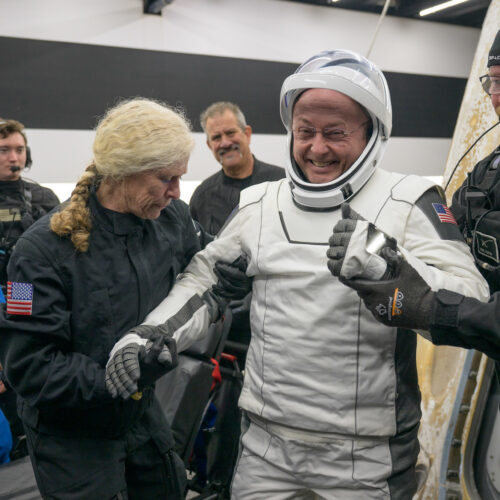
 Two Americans, a Japanese astronaut, and a Russian cosmonaut returned to Earth early Thursday after 167 days in orbit, cutting short their stay on the International Space Station by more than a month after one of the crew members encountered an unspecified medical issue last week.
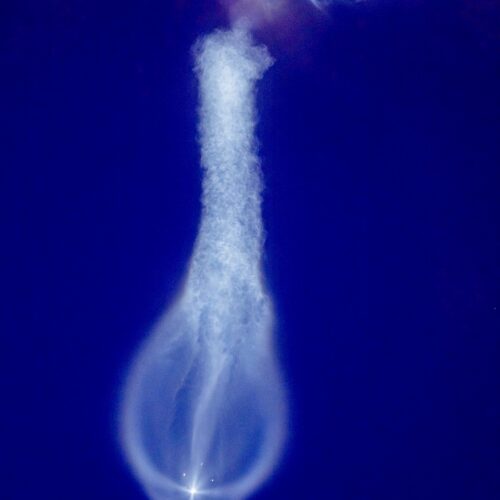
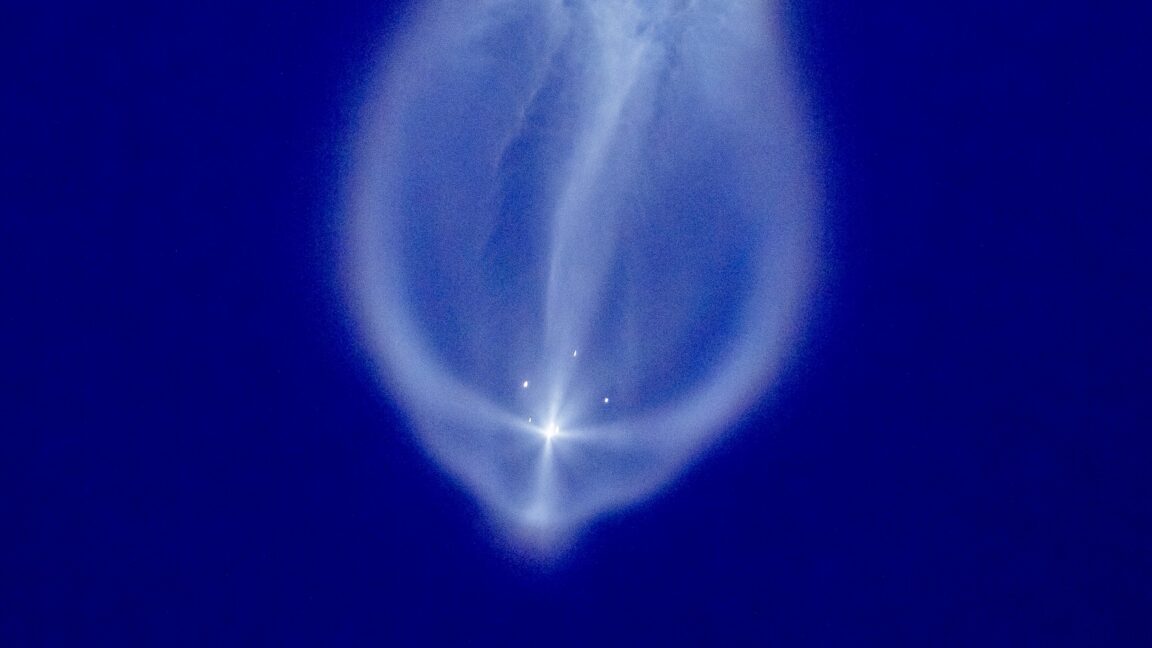
The early homecoming culminated in an on-target splashdown in the Pacific Ocean off the coast of San Diego at 12:41 am PST (08:41 UTC) inside a SpaceX Crew Dragon spacecraft. The splashdown occurred minutes after the Dragon capsule streaked through the atmosphere along the California coastline, with sightings of Dragon's fiery trail reported from San Francisco to Los Angeles.
Four parachutes opened to slow the capsule for the final descent. Zena Cardman, NASA's commander of the Crew-11 mission, radioed SpaceX mission control moments after splashdown: "It feels good to be home, with deep gratitude to the teams who got us there and back."

© NASA/Bill Ingalls
SpaceX is making steady progress toward building out the pad at NASA’s Cape Canaveral site in Florida for the first Starship launch from the Space Coast. On Tuesday, SpaceX installed the Ship Quick Disconnect (QD) arm on the launch tower at Launch Complex 39A (LC-39A). Space launch enthusiast site NASASpaceflight shared footage of engineers putting […]
The post Piece by piece, SpaceX preps first Starship flight from Space Coast appeared first on Digital Trends.

Among other things, the James Webb Space Telescope is designed to get us closer to finding habitable worlds around faraway stars. From its perch a million miles from Earth, Webb's huge gold-coated mirror collects more light than any other telescope put into space.
The Webb telescope, launched in 2021 at a cost of more than $10 billion, has the sensitivity to peer into distant planetary systems and detect the telltale chemical fingerprints of molecules critical to or indicative of potential life, like water vapor, carbon dioxide, and methane. Webb can do this while also observing the oldest observable galaxies in the Universe and studying planets, moons, and smaller objects within our own Solar System.
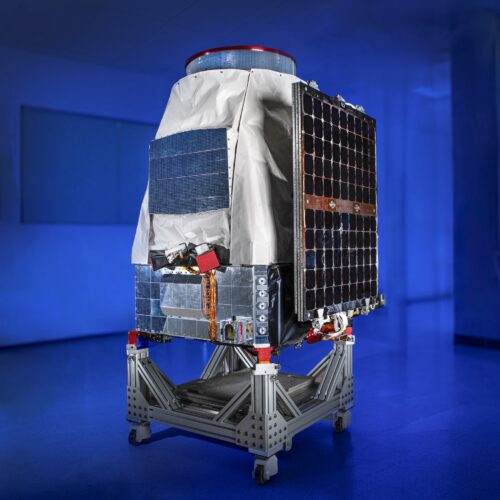
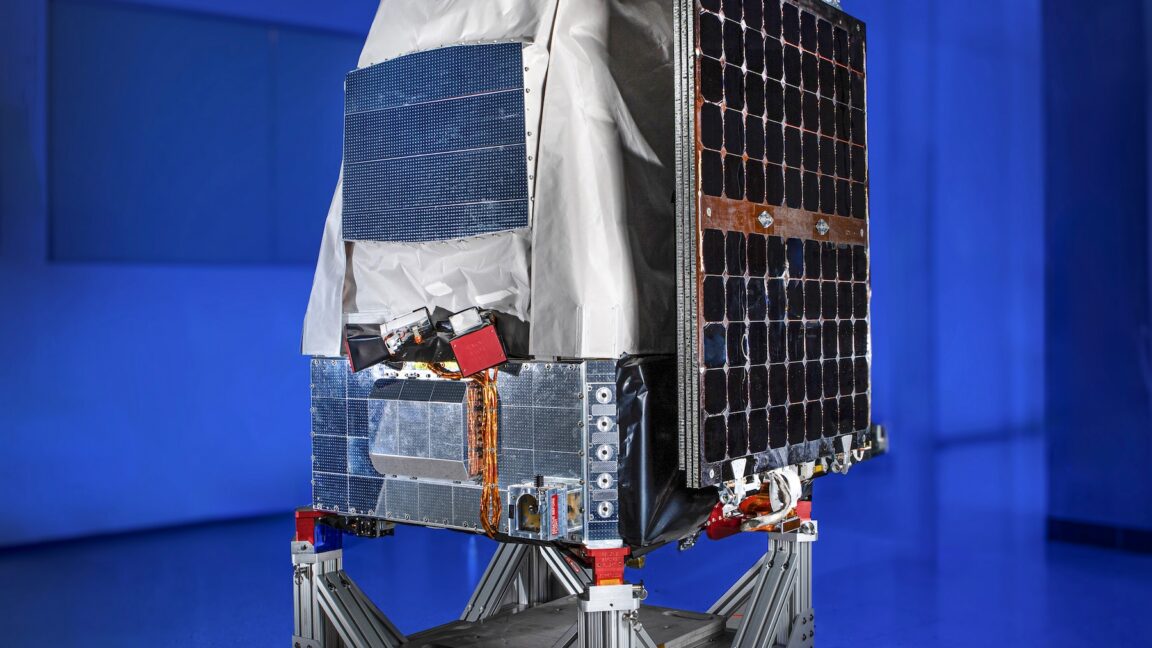
Naturally, astronomers want to get the most out of their big-budget observatory. That's where NASA's Pandora mission comes in.
© Blue Canyon Technologies
SpaceX today received US permission to launch another 7,500 second-generation Starlink satellites, bringing its total authorization to 15,000 Gen2 satellites including those previously approved.
"Under this grant, SpaceX is authorized to construct, deploy, and operate an additional 7,500 Gen2 Starlink satellites, bringing the total to 15,000 satellites worldwide," the Federal Communications Commission announced today. "This expansion will enable SpaceX to deliver high-speed, low-latency Internet service globally, including enhanced mobile and supplemental coverage from space."
The FCC gave SpaceX permission for the first set of 7,500 satellites in December 2022. The agency deferred action on the rest of the second-generation constellation at the time and limited the first batch to certain altitudes, saying it needed to "address concerns about orbital debris and space safety" before approving the full bunch.


© Aurich Lawson | Getty Images
Welcome to Edition 8.24 of the Rocket Report! We're back from a restorative holiday, and there's a great deal Eric and I look forward to covering in 2026. You can get a taste of what we're expecting this year in this feature. Other storylines are also worth watching this year that didn't make the Top 20. Will SpaceX's Starship begin launching Starlink satellites? Will United Launch Alliance finally get its Vulcan rocket flying at a higher cadence? Will Blue Origin's New Glenn rocket be certified by the US Space Force? I'm looking forward to learning the answers to these questions, and more. As for what has already happened in 2026, it has been a slow start on the world's launch pads, with only a pair of SpaceX missions completed in the first week of the year. Only? Two launches in one week by any company would have been remarkable just a few years ago.
As always, we welcome reader submissions. If you don't want to miss an issue, please subscribe using the box below (the form will not appear on AMP-enabled versions of the site). Each report will include information on small-, medium-, and heavy-lift rockets, as well as a quick look ahead at the next three launches on the calendar.

New launch records set in 2025. The number of orbital launch attempts worldwide last year surpassed the record 2024 flight rate by 25 percent, with SpaceX and China accounting for the bulk of the launch activity, Aviation Week & Space Technology reports. Including near-orbital flight tests of SpaceX’s Starship-Super Heavy launch system, the number of orbital launch attempts worldwide reached 329 last year, an annual analysis of global launch and satellite activity by Jonathan’s Space Report shows. Of those 329 attempts, 321 reached orbit or marginal orbits. In addition to five Starship-Super Heavy launches, SpaceX launched 165 Falcon 9 rockets in 2025, surpassing its 2024 record of 134 Falcon 9 and two Falcon Heavy flights. No Falcon Heavy rockets flew in 2025. US providers, including Rocket Lab Electron orbital flights from its New Zealand spaceport, added another 30 orbital launches to the 2025 tally, solidifying the US as the world leader in space launch.
© Liu Guoxing/VCG via Getty Images
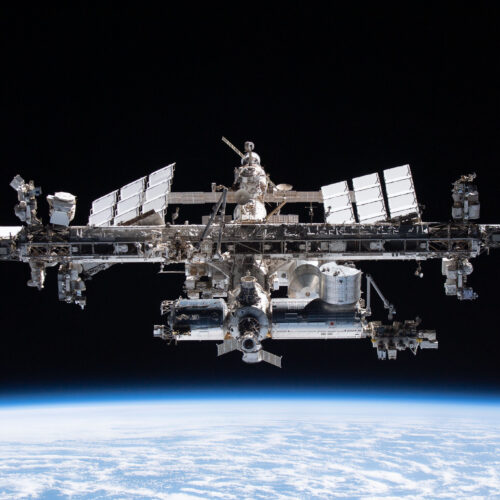
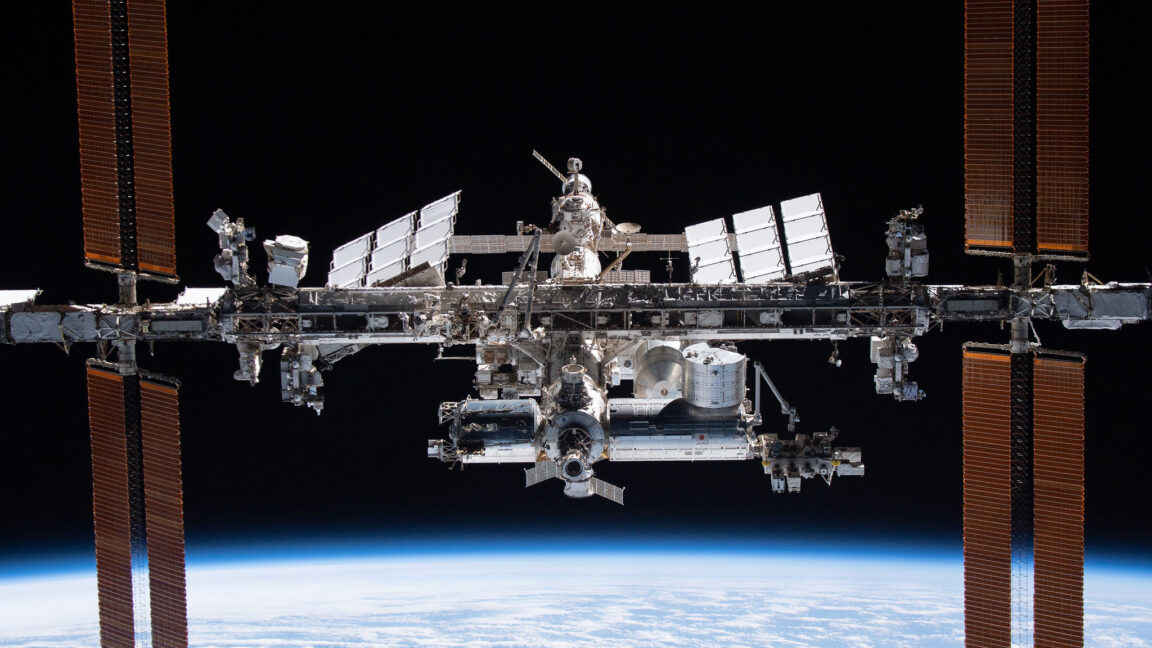
NASA officials said Thursday they have decided to bring home four of the seven crew members on the International Space Station after one of them experienced a "medical situation" earlier this week.
The space agency has said little about the incident, and officials have not identified which crew member suffered the medical issue. James "JD" Polk, NASA's chief health and medical officer, told reporters Thursday the crew member is "absolutely stable" but that the agency is "erring on the side of caution" with the decision to return the astronaut to Earth.
The ailing astronaut is part of the Crew-11 mission, which launched to the station August 1 and was slated to come back to Earth around February 20. Instead, the Crew-11 astronauts will depart the International Space Station (ISS) in the coming days and head for reentry and a parachute-assisted splashdown in the Pacific Ocean off the coast of California.
© NASA
Last year delivered doses of drama and excitement in the space business, with a record number of launches, breathtaking vistas of other worlds, and a multitude of breakthroughs and setbacks. 2026 is shaping up to be another thrilling year in the cosmos.
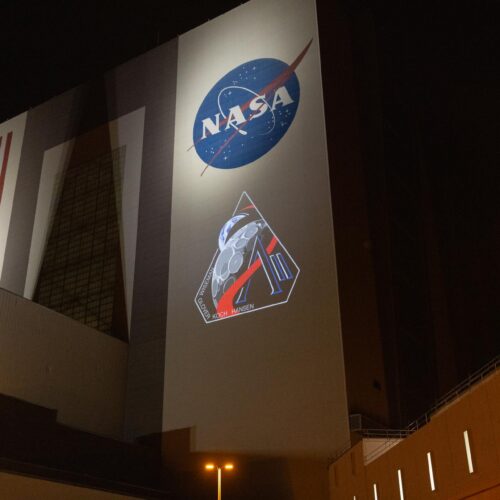
For the first time in more than 54 years, astronauts are training to travel to the vicinity of the Moon, perhaps within the next couple of months. NASA, SpaceX, Blue Origin, and other companies are poised to take major steps toward actually landing humans on the Moon, perhaps within a few years.
New rockets are slated to debut in 2026, and scientists hope to open new windows on the Universe. Here, we list the most anticipated space missions scheduled for this year, ranked according to our own anticipation for them. We also assess the chances of these missions actually happening in the next 12 months. Unless specified, we don't assess the chances of a successful outcome.
© NASA/Kim Shiflett
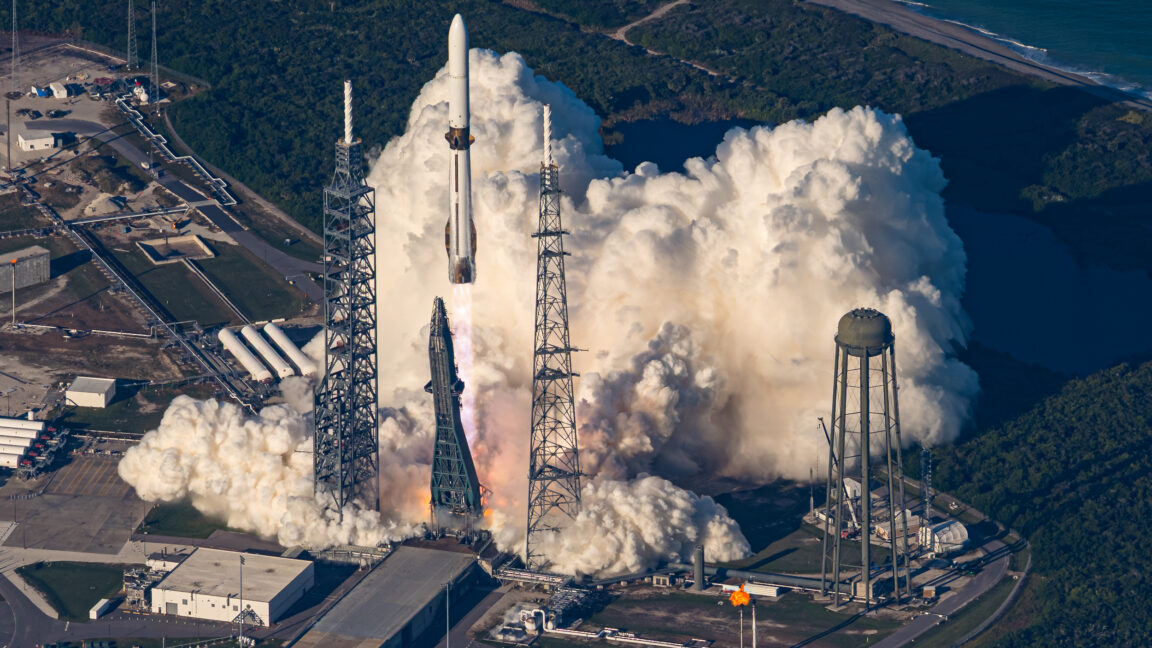
Which US rocket companies achieved the most during 2025?
Once again, Ars Technica is here to provide some answers in the form of our annual power ranking of US launch companies. We began doing this in 2022 and have since put out a top-10 list every year (see 2023 and 2024). Our intent, as always, is to spark debate, discussion, and appreciation for the challenge of operating a successful rocket company. It's a demanding business, both technically and financially. We respect the grit and hustle because we know just how hard this stuff is.
Please also note that this is a subjective list, although hard metrics such as total launches, tonnage to orbit, success rate, and more were all important factors in the decision. And finally, our focus remains on what each company accomplished in 2025, not on what they might do in the future.
© Blue Origin
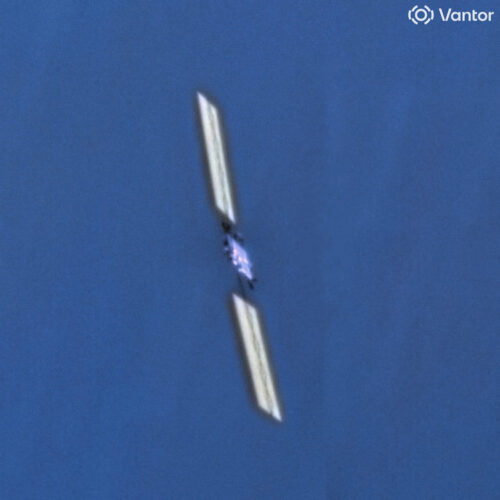
The year 2025 ended with more than 14,000 active satellites from all nations zooming around the Earth. One-third of them will soon move to lower altitudes.
The maneuvers will be undertaken by SpaceX, the owner of the largest satellite fleet in orbit. About 4,400 of the company's Starlink Internet satellites will move from an altitude of 341 miles (550 kilometers) to 298 miles (480 kilometers) over the course of 2026, according to Michael Nicolls, SpaceX's vice president of Starlink engineering.
"Starlink is beginning a significant reconfiguration of its satellite constellation focused on increasing space safety," Nicolls wrote Thursday in a post on X.
© Vantor

New federal restrictions on foreign-made drones, announced this week, promise to boost Washington state as a hub for domestic drone manufacturing — adding thousands or even tens of thousands of jobs in the process.
That’s the prediction from Blake Resnick, CEO of Seattle-based Brinc Drones, who says the region’s concentration of aerospace talent makes it uniquely positioned to benefit from the shift. He cites the presence of companies including Boeing, Blue Origin, Amazon (with its Prime Air unit) and SpaceX, along with an existing base of aerospace suppliers and technicians.
“I don’t even think you have to look outside of Washington to find all the talent that’s needed to build an incredible, globally competitive drone company,” Resnick said in an interview.
The FCC this week added foreign-made drones to its list of equipment deemed national security threats. That blocks new foreign-made drone models from obtaining FCC equipment authorization — effectively preventing the import, marketing, and sale of new models.
The move primarily impacts Chinese giant DJI, which controls roughly 70% of the global drone market.
It has drawn sharp criticism from drone hobbyists, who worry it will drive up prices and limit access to affordable, high-quality options. The Academy of Model Aeronautics warned that the move will “have huge implications for both the hobbyist and commercial airspace industries moving forward.”
There is a carve-out: existing models that have received prior FCC approval can still be sold, which means that the impact will unfold over an extended period of time. But as current inventory depletes and DJI’s product line ages, U.S. manufacturers will need to scale up.
Resnick said he foresees a need for hundreds of thousands and potentially even millions of square feet of new manufacturing space across the U.S. drone industry.
Washington’s aerospace industry employs more than 77,000 workers directly and generates more than $71 billion in total economic activity, according to a July 2024 analysis by the Seattle Metropolitan Chamber of Commerce. That gives the region a major edge in drone production.
Resnick knows this first-hand. He relocated Brinc from Las Vegas to Seattle in 2021, drawn by the region’s engineering talent pool. The company, which employs about 140 people, develops drones and related technology for police, fire, and emergency response agencies. It closed a $75 million funding round and announced a strategic alliance with Motorola Solutions earlier this year.

Brinc has spent $660,000 on lobbying over the past three years, including advocacy for controls on Chinese-made drones, Forbes reported in a story on Resnick earlier this month. The company’s prominence in the trade war has made it a target: In 2024, China formally sanctioned Brinc and Resnick, freezing any assets in the country and barring Resnick from entry.
Speaking with GeekWire this week, Resnick said DJI’s dominance stems from billions in Chinese government subsidies, making fair competition nearly impossible.
“Frankly, I think this just evens the playing field,” he said.
Brinc, which has manufacturing operations at its Seattle headquarters, has already shifted to a non-Chinese supply chain, sourcing components from Taiwan, Germany, the U.K., and Japan. Resnick said the new restrictions will require a further shift toward domestic suppliers: “Moving forward, we are going to have to do a lot more business with American companies.”
Resnick said this shift ensures the U.S. industrial base remains resilient even if international partners face constraints during a conflict. While the transition presents a hurdle, Resnick described it as an “organizational cost that we’re very happy to pay” in exchange for a market free of state-sponsored Chinese competition.
He acknowledged that there could be a price premium in the drone market overall as American suppliers scale up, a process he estimates will take two to three years.
When asked if he sees these events as an opening for Brinc to expand into other sectors, beyond public safety, Resnick didn’t entirely rule out the possibility. “The free world,” he said, “needs more drone manufacturing capacity in a whole bunch of different verticals.”
Bitcoin Magazine

SpaceX Moves $95M in Bitcoin Ahead of Potential Mega IPO
SpaceX moved another 1,021 bitcoin on Wednesday, worth about $94.5 million.
The transfer was split between two unlabeled addresses via Coinbase Prime custody. One address received 614 BTC, the other 407 BTC.
This marks the ninth such transfer by SpaceX this year. Recent movements total around 8,910 BTC, valued near $924 million. Analysts say the company is consolidating its holdings and upgrading from legacy bitcoin addresses.
SpaceX’s bitcoin holdings were tagged on-chain by Arkham Intelligence. The company currently controls about 3,991 BTC, worth roughly $367 million at current prices. Holdings have fluctuated over the past several years.
The total once peaked above $1.6 billion during the 2021 bull market. In mid-2022, SpaceX reportedly reduced its stake by about 70% after shocks from the Terra-Luna collapse, FTX bankruptcy, and market-wide turbulence.
SpaceX has made no public statement about the transactions. Tesla, another Elon Musk-run company, currently holds 11,509 BTC, worth about $1.24 billion.
The bitcoin reshuffle comes as SpaceX advances plans for a massive initial public offering. Bloomberg reported the company aims to raise more than $30 billion in its IPO. The target valuation is near $1.5 trillion, potentially surpassing Saudi Aramco’s record $29 billion fundraise in 2019.
SpaceX’s IPO could take place as early as mid-to-late 2026. Sources say the timing could slip into 2027 depending on market conditions. If successful, it would be the largest listing in history by valuation.
The offering would give investors exposure not only to rockets, satellites, and Starlink internet services but also to SpaceX’s crypto holdings. Musk’s companies were among the earliest institutional bitcoin adopters.
SpaceX has also used dogecoin to fund its DOGE-1 lunar mission, highlighting Musk’s influence in crypto markets.
Prediction market data show growing confidence in SpaceX’s valuation. Polymarket traders assign a 67% probability that the IPO will exceed a $1 trillion market cap.
The IPO could provide capital for Starlink expansion, space-based data centers, and other ventures intersecting with AI and crypto infrastructure, according to Bloomberg.
Analysts note the on-chain reshuffle aligns with the company’s broader treasury strategy. Moving funds to modern addresses can reduce transaction costs, improve security, and consolidate management of multiple wallets.
Most of SpaceX’s remaining bitcoin is expected to be migrated as the consolidation completes.
This post SpaceX Moves $95M in Bitcoin Ahead of Potential Mega IPO first appeared on Bitcoin Magazine and is written by Micah Zimmerman.

Good morning, readers, and happy Friday. Welcome to This Week in Space, our Friday morning roundup of the week’s most important space news. Today we’ve got a bunch of good news, including a newfound exoplanet and a dozen new moons orbiting Jupiter. We’ve also got a report of an absolutely wild idea — a literal moonshot — for fighting climate change with moon dust.
Thursday afternoon, SpaceX ran a successful static fire test of its gigantic Starship rocket. With 33 separate Raptor engines, Starship has the most engines of any rocket ever. Together, their thrust is twice that of a Saturn V or the Space Launch System. Is anyone else amazed the struts can hold that thing on the gantry?
Only 31 of the 33 engines fired. However, that’s actually good news because it means Starship can handle multiple engine failures.
Views from drone of Booster 7's static fire test pic.twitter.com/KN4sk1nohf
— SpaceX (@SpaceX) February 9, 2023
SpaceX hopes to attempt a test flight for Starship in March. “That first flight test is going to be really exciting. It’s going to happen in the next month or so,” said Gwynne Shotwell, SpaceX’s president and chief operating officer.
“We will go for a test flight and we will learn from the test flight and we will do more test flights,” Shotwell added. “The real goal is to not blow up the launch pad. That is success.”
We’ve talked about how the folks aboard the International Space Station have to become polymaths to keep up with the demands of life in orbit. This winter, among many other pursuits, NASA astronauts on the ISS have been tending tomatoes and working on avant-garde methods of space propulsion. But the most recent projects in low-earth orbit make space tomatoes sound outdated. Over the past few days, crew on the ISS have been working on plasma crystals, servicing jetpacks, and… doing space plumbing.
NASA astronaut Frank Rubio and JAXA astronaut Koichi Wakata spent Thursday doing maintenance on the station’s water recovery system and orbital plumbing for the station’s bathroom, respectively. Meanwhile, station commander Sergey Prokopyev worked inside the Columbus lab “configuring video hardware that records how clouds of highly charged particles, or plasma crystals, behave in microgravity.”
The Tarantula Nebula is the brightest star-forming region in our cosmic neighborhood. It’s not even in our galaxy — it’s in the Large Magellanic Cloud, one of the Milky Way’s satellite galaxies. But it’s so bright that it dazzles even at that distance. Astronomers recently used the Hubble space telescope to capture this image of the Tarantula Nebula in all its splendor:

What you see here is actually a joint effort between two different astronomy projects. One team sought to analyze the properties of dust grains floating between stars — a proposal dubbed Scylla by the Hubble team. Those dust grains create the dark, wispy clouds spread across the frame. The other, called Ulysses, studies interstellar dust and starlight interactions.
NASA’s Perseverance rover went to Mars with a plan: Scour the planet’s surface for evidence that can teach us about Mars’ history and tell us whether the Red Planet might once have supported life. During its two years on Mars, the rover has found silicate clay and other minerals, signs that liquid water once flowed across Mars’ surface. But none of its discoveries have had evidence of water as visually obvious as a photograph that the agency’s Curiosity rover recently captured. The rover caught a photo of sandstone rock with ripples carved out of its surface, showing that the rock was once at the bottom of a lake.

The ripples support our observations of Mars’ weather and climate. Gentle, constant winds create standing ripple patterns like these. This fits with the constant prevailing winds and planetwide dust storms we’ve seen on Mars. It’s also exciting evidence that Mars indeed had liquid water once upon a time.
Russia successfully launched a Progress capsule aboard a Soyuz rocket this week, bound for the International Space Station. The rocket launched from Russia’s Baikonur aerodrome early Thursday morning, local time. This capsule, ISS Progress 83 (83P), carries about three tons of supplies, including food, water, and air. It will dock with the Russian Zvezda module on Saturday morning, replacing the Progress capsule that left Monday afternoon.
What happens to Progress 82 once it departs? Progress capsules are expendable. This means that the crew on the ISS loads the capsules with trash from the station while it’s docked. Then, hours or days after the capsule undocks, it burns up in the atmosphere.
NASA’s CAPSTONE satellite is finally responding to hails after nearly two weeks incommunicado. A software glitch left the probe unresponsive on Jan. 26 until it rebooted itself Monday.
“The spacecraft remained overall healthy and on-course throughout the issue,” NASA said in a blog post. “On Feb. 6, an automatic command-loss timer rebooted CAPSTONE, clearing the issue and restoring two-way communications between CAPSTONE and the ground.”

The satellite has made twelve successful circuits in its near-rectilinear halo orbit (NRHO) — twice what its original mission expected. That’s great news for NASA. CAPSTONE is trying out the fancy new NRHO orbit because it’s more fuel efficient than other lunar orbits we’ve used. In twelve orbits, CAPSTONE has only had to fire its engine twice. This smashing success means the agency may use the new orbital pattern for lunar support satellites under the aegis of its Artemis project.
Did you know Ball makes Mason jars — and parts for space telescopes? Ball made parts for Hubble and the mirrors for the JWST. In a similar fashion, Rolls-Royce appears to be branching out. Way out. The luxury automaker’s subsidiary, Rolls-Royce Holdings, has announced plans to build a nuclear engine for deep space exploration.

(Image: Rolls-Royce Holdings)
According to Rolls-Royce, the micro-reactor will use uranium as fuel for nuclear fission. The company hopes to use the micro-reactor as an energy source for trips to the Moon, Mars, and beyond.
NASA’s Guaranteed Time Observation program gives a certain amount of telescope time to those who worked on the JWST. One GTO project: Making observations of NASA’s DART kinetic asteroid redirect test. However, the project brought an unlooked-for surprise. Wednesday, JWST deputy project scientist Stefanie Milam explained how the telescope broke its own speed limit watching the asteroid impact.
Webb launched with the ability to track objects moving through the sky as fast as Mars. But scientists who study fast-moving small bodies like asteroids, comets, and interstellar objects “really wanted to study objects that moved faster than Mars,” said Milam. So, the team set out to show that not only could Webb exceed this “notional speed limit,” it could go much faster. Their efforts paid off when it came time to observe the DART asteroid impact.

NASA’s DART kinetic asteroid redirect test, as seen by the JWST. Image: NASA/JPL
The video Webb captured of the Dimorphos impact showed that the telescope can move its field of regard at more than triple its original maximum speed. Most of the time, though, Milam says the telescope will confine itself to double its original turning speed. Darn.
On Thursday, Canada’s favorite astronaut, Chris Hadfield, met with King Charles III at Buckingham Palace. The two sat down to discuss “efforts to encourage sustainability in space,” according to the Royal Family’s official Twitter.
“What a pleasure and privilege to be asked to advise and assist, and make the King laugh,” Hadfield wrote afterward.
What a pleasure and privilege to be asked to advise and assist. And make the King laugh :) https://t.co/3dGxNLCkUJ pic.twitter.com/DH9dgkq9t9
— Chris Hadfield (@Cmdr_Hadfield) February 9, 2023
While we don’t yet have specifics, Charles is a longtime environmentalist. Could it be that the King is interested in cleaning up space junk?
Astrophysicists are pondering the pros and cons of a literal moonshot to blunt the effects of climate change. In a recent study, a group of researchers proposed launching moon dust into orbit around Earth to create a dusty shield that would reduce Earth’s exposure to the Sun. Evidently, lunar dust grains are just the right size and composition to block some of the solar energy that would hit the Earth.
For six days out of the year, the researchers say, the dust cloud would shield Earth from a few percent of the Sun’s radiation. To carry out this plan, the researchers’ numbers require dredging up some 22 billion pounds of lunar dust. They could fire the dust into orbit from the Moon or a platform in orbit — potato, poterrible idea. Surely there is some lower-hanging fruit?
In October 2019, astronomers at the Carnegie Institution for Science found 20 new moons orbiting Saturn. This made Saturn the “moon king” of the Solar System, with a total of 83. However, the same team has announced they’ve found a dozen new moons orbiting Jupiter.

Jupiter – Unsplash
Stealing the crown back from Saturn, Jupiter now has 92 known moons. Nine of the twelve new moons are retrograde, meaning they orbit “backward” against Jupiter’s orbit. All the new moons are quite small, and they had been lost in Jupiter’s glare until now.
An international team of astronomers has reported a newfound exoplanet in our cosmic backyard. The new planet, Wolf 1069 b, is between 1 and 1.4 Earth masses and just 8% bigger. Calling it Earth-like might be a stretch: Wolf 1069 b zips around its low-mass red dwarf star in just 15 Earth days. However, it’s just 31 light-years away.
Unlike our nearest neighbor, Proxima Centauri, Wolf 1069 doesn’t show the characteristic bursts of violent flares we frequently see in red dwarf stars. This could mean it has managed to retain an atmosphere. If so, the planet’s surface temperature could be about 55 degrees Fahrenheit. If not, it’s more likely an iceball, too cold to sustain liquid water.
Comet C/2022 E3 (ZTF) is a once-in-an-epoch visitor from the outer solar system. We haven’t seen it since the time of the Neanderthals, but it’s come back for one last visit. The outbound comet passed close to Earth last week. Now, it’s buzzing Mars.

It’s green! Comet C/2022 E3 (ZTF) and its twin tails. Image: NASA
The green comet will be near Mars in the constellation of Taurus for the next several days. After sunset, look high in the sky for the best shot at catching it through binoculars or a telescope. After Feb. 14, the comet will start heading toward Orion and Eridanus.
If you don’t have a good shot at viewing the comet where you are, you can still catch it online. This weekend, the Virtual Telescope Project is webcasting a free livestream of the comet’s approach to the Red Planet. The livestream will begin this Saturday, Feb. 11, at 2 p.m. EST (1900 GMT). You can watch it on the project’s website and YouTube channel.
Feature image: This week’s waning gibbous moon, taken from the International Space Station. Courtesy of NASA HQ Flickr.
During a California court appearance Monday, when questioned about a 420 tweet, Elon Musk suddenly forgot the significance of the number in pot culture. The tech billionaire responded after being cornered by a prosecutor representing Tesla employees for a class action lawsuit alleging he tweeted and misled shareholders about the price of Tesla shares.
The fiasco began several years ago. In 2018, Musk rounded up Tesla shares from $419 to $420, announcing his plan to go private in a tweet. “Am considering taking Tesla private at $420,” Musk tweeted on Aug. 7, 2018. “Funding secured.”—sending officials from The Securities and Exchange Commission (SEC) into a tailspin.
Am considering taking Tesla private at $420. Funding secured.
— Elon Musk (@elonmusk) August 7, 2018
Musk said he tweeted the share price based on what he said was a “firm commitment” from Saudi Arabia’s Public Investment Fund (PIF) to take Tesla private. But about 10 days later, Musk admitted that the Tesla buyout he had envisioned wasn’t going to materialize.
After an investigation, the SEC fined Musk $40 million, forcing the billionaire to step down as chair of Tesla’s board. The SEC said that Musk misled investors. In the SEC’s complaint, Musk was accused of rounding up the share price to $420 from $419 “because he had recently learned about the number’s significance in marijuana culture.”
Musk caused instantaneous uproar about a month later, sparking a blunt with Joe Rogan on his show “The Joe Rogan Experience” on Sept. 3, 2018, shocking Tesla investors and officials across the board. His troubles didn’t end there. High Times asked if it was “the most expensive blunt of all time” due to the fallout, with NASA- and SpaceX-associated officials reviewing his security clearance.
The Verge reports that Nicholas Porritt is an attorney for a class of Tesla investors suing Musk for millions of dollars that they say resulted from his failure to take Tesla private.
The courtroom got tense: “You rounded up to 420 because you thought that would be a joke that your girlfriend will enjoy, isn’t that correct?” Porritt asked. “No,” Musk said, adding, “there is some, I think, karma around 420. I should question whether that is good or bad karma at this point.”
Musk said that 420 wasn’t a weed joke, but a roughly 20% premium on the $419 stock price at the time. “420 was not chosen because of a joke,” Musk testified. “It was chosen because there was a 20 percent premium over the stock price.” Musk also claimed that it was a “coincidence.”
The jury will decide if Musk should have to pay out up to billions of dollars in damages to Tesla shareholders for the money they lost due to his tweets.
Judge Edward Chen ruled that the jury should be aware that Musk’s 2018 tweets are false. Jurors will now need to decide whether Musk deceived Tesla shareholders because of his tweets.
Musk said that he was not relying on a commitment for the Saudi PIF when he tweeted “funding secured,” adding that his shares in SpaceX would also help fund the deal to take Tesla private. “Just as I sold stock in Tesla to buy Twitter… I didn’t want to sell Tesla stock, but I did sell Tesla stock,” Musk said. “My SpaceX shares alone would have meant that funding was secured.”
Musk has also been sued by a group of former Twitter employees after a mass firing. Musk recently became the CEO of Twitter after buying the platform for $44 billion in October 2022. Saudi Prince Alwaleed bin Talal bin Abdulaziz is Twitter’s second-largest shareholder after Musk.
The post Elon Musk Denies 420 Tweet Was About Weed appeared first on High Times.
