Reading view

There are new articles available, click to refresh the page.

Lawmakers press acting CISA director on workforce reductions

The Cybersecurity and Infrastructure Security Agency’s acting director testified that CISA is “getting back on mission,” but he provided few specifics after the agency lost nearly a third of its staff over the past year.

Acting Director Madhu Gottumukkala testified in front of the House Homeland Security Committee on Wednesday. Asked by Chairman Andrew Garbarino (R-N.Y.) about reports of plans for a reorganization at CISA, Gottumukkala said there are no plans to reorganize the cyber agency.

“We do have a lot of changes in the last year, but we have not planned any organizational changes,” Gottumukkala said. “But we are continuing to look at how we rescope our existing work that we have so that we can get back on our mission of protecting the critical infrastructure. And if there is any organizational changes, I will assure that we will communicate with you.”

CISA has gone from roughly 3,400 staff at the start of last year to 2,400 employees at the end of December. Most of those who left departed under the Trump administration’s workforce reduction programs, with many leaving government service earlier than planned due to uncertainty at CISA under the Trump administration.

Gottumukkala is leading CISA as the Senate has yet to approve Sean Plankey to serve as director. During Wednesday’s hearing, Gottumukkala declined to provide details on recent reports that he failed a polygraph exam needed to access a sensitive cyber program and that he had worked to oust CISA’s chief information officer.

Gottumukkala also said multiple times that CISA was “getting back on mission.” But he said little about what the agency was doing differently with markedly less staff.

“The way we are supporting back on mission is to make sure that we are protecting our critical infrastructure from physical and cyber threats, and our divisions are properly equipped, and we are making sure that we are aligning our existing resources,” he said.

Asked by Ranking Member Bennie Thompson (D-Miss.) about potential vacancies at CISA after the mass wave of departures, Gottumukkala said, “we have the required staff that is supporting the mission we do.”

Thompson said that was contrary to a November memo CISA shared with the committee. Lawmakers are advancing a homeland security spending bill that would provide CISA with funding to fill some “critical” positions. It would also stipulate that CISA “not reduce staffing in such a way that it lacks sufficient staff to effectively carry out its statutory missions.”

Gottumukkala was also asked by Rep. Tony Gonzales (R-Texas) how many cyber intrusions CISA expects from foreign adversaries as part of the 2026 midterm elections.

“We look at it as incident by incident, and we look at what the risks are. I don’t have a specific number in mind,” Gottumukkala said.

“Well, we should have that number,” Gonzales shot back. “It should first start by how many intrusions that we had last midterm and the midterm before that. I don’t want to wait. I don’t want us waiting until after the fact to be able to go, ‘Yeah, we got it wrong, and it turns out our adversaries influenced our election to that point.’”

CISA’s budget request for fiscal 2026 would eliminate its election security program. But the appropriations agreement released this week would continue funding CISA’s election security work.

Rep. James Walkinshaw (D-Va.) pressed Gottumukkala on whether CISA had analyzed if it could meet its mission with current staffing levels.

“The work that we do is mission focused, which means capability is measured by outcomes, not headcount,” Gottumukkala said.

Walkinshaw also asked about threats to state and local governments after CISA pulled funding for the Multi-State Information Sharing and Analysis Center in September. But Gottumukkala didn’t address the question head on, frustrating the Virginia lawmaker.

“You’ve managed to answer none of my questions. You haven’t answered a single question. But thank you for coming,” Walkinshaw said.

The post Lawmakers press acting CISA director on workforce reductions first appeared on Federal News Network.

© Federal News Network
CISA

Senate Democrats call for greater oversight of DHS and ICE

  • Senate Homeland Security and Governmental Affairs Committee Chairman Rand Paul (R-Ky.) is facing calls to ramp up oversight of the Department of Homeland Security. Democrats on the committee are calling on him to investigate the Trump administration’s immigration enforcement operations. They said Paul should issue subpoenas if necessary and have senior officials like Homeland Security Secretary Kristi Noem testify in front of the panel. Their letter comes in the wake of the fatal shooting of Renee Good in Minnesota.
  • DOGE representatives at the Social Security Administration discussed sharing agency data with an advocacy group looking to “overturn election results” in some states. The Justice Department said one of the DOGE staffers even signed a “voter data agreement” with the unnamed group. DOJ referred the two DOGE employees for potential violations of the Hatch Act which bars federal employees from using their positions for political purposes.
  • A Republican in Congress is looking to remove federal employees from their jobs if they have been convicted of a violent crime. The so-called “No Violent Criminals in the Federal Workforce Act” seeks to bar individuals with a violent criminal record from working for the federal government. The requirements of the bill would also apply to federal contractors. Rep. Nancy Mace (R-S.C.) introduced the legislation this week, calling it "common sense."
  • As he marked one year in office yesterday, President Trump called his administration’s cuts to the federal workforce “tremendous.” But some good government groups are painting a much darker picture. Agencies saw a loss of about 320,000 federal employees governmentwide over the course of 2025. The White House touted the staffing cuts as a step toward efficiency. But organizations like the Partnership for Public Service tell a much different story of the administration’s impacts on the federal workforce. “It tells a disturbing story about who we’ve lost in our government and what is actually happening to the workforce,” said Max Stier, president and CEO of the Partnership.
  • Congressional appropriators approved all 13 line-item consolidations requested by the Army in its fiscal 2026 budget, but flatly rejected the service’s “agile funding” request to raise notification threshold for reprogramming or transfers from $15 million to $50 million for procurement programs and to $25 million for research and development efforts. Lawmakers said that increasing reprogramming thresholds alone won’t improve program execution and cautioned that unilaterally moving funding without proper oversight could create uncertainty for programs and the industrial base. Appropriators also said they “discourage the Defense secretary and the service secretaries from submitting future requests of this nature.”
  • The latest minibus spending measure includes some big cybersecurity updates. The minibus appropriations agreement released this week would extend the Cybersecurity Information Sharing Act of 2015 until the end of September. It would do the same for the State and Local Cybersecurity Grant Program. Both authorities were set to expire at the end of this month. Cyber experts have particularly stressed the need to reauthorize the liability protections in the information sharing law. If the appropriations agreement passes, lawmakers will have more time to hash out their differences over a longer term extension of CISA 2015.
  • Congressional appropriators are backing the Pentagon’s push to speed up weapons buying, but warn that speed “must be factored alongside cost, performance and scalability.” Congressional negotiators said they support the Defense Department’s acquisition reform agenda but remain skeptical about the Pentagon’s push for greater budget flexibility. While Defense Secretary Pete Hegseth has directed the department to work with Congress to improve budget flexibility, lawmakers said the reforms are “internal in nature” and that the department needs to “demonstrate progress on those internal procedures” first. Lawmakers also raised concerns about joint requirements process reform and deep cuts to the department’s acquisition workforce that could jeopardize its ability to carry out Hegseth’s acquisition reforms.
  • Lawmakers are seeking a higher pay raise for air traffic controllers. Congressional appropriations propose giving the Federal Aviation Administration funds to implement a 3.8% pay raise for air traffic controllers, as well as supervisors and managers who oversee air traffic. That’s the same pay raise the Trump administration already approved for federal law enforcement. The spending deal would also give FAA enough funding to hire 2,500 air traffic controllers. Current controllers are working six days a week, including mandatory overtime.

The post Senate Democrats call for greater oversight of DHS and ICE first appeared on Federal News Network.

© AP Photo/Pablo Martinez Monsivais

FILE - The Department of Homeland Security logo is seen during a news conference in Washington, Feb. 25, 2015. DHS says a looming Supreme Court decision on abortion, an increase of migrants at the U.S.-Mexico border and the midterm elections are potential triggers for extremist violence over the next six months. DHS said June 7, 2022, in the National Terrorism Advisory System bulletin the U.S. was in a "heightened threat environment" already and these factors may worsen the situation. (AP Photo/Pablo Martinez Monsivais, File)

DHS spending bill bolsters staffing at CISA, FEMA, Secret Service

Lawmakers are moving to extend key cybersecurity information authorities and grant programs, while also providing funds for the Cybersecurity and Infrastructure Security Agency to fill “critical” positions.

The “minibus” appropriations agreement released by House and Senate negotiators on Tuesday includes fiscal 2026 funding for the Department of Homeland Security. DHS funding could be a sticking point in moving the bill forward, as some Democrats want more restrictions around the Trump administration’s immigration enforcement operations.

The bill also extends the Cybersecurity Information Sharing Act of 2015 (CISA 2015) and the State and Local Cybersecurity Grant Program through the end of fiscal 2026. Both laws are set to expire at the end of this month.

The extension would give lawmakers more time to work out differences between competing versions of CISA 2015 reauthorizations in the House and Senate.

Ross Nodurft, executive director of the Alliance for Digital Innovation, also applauded the extension of the Technology Modernization Fund included in the minibus.

“Reauthorizing the Technology Modernization Fund and the State and Local Cyber Grant Program for the rest of the fiscal year allows the government to invest money in new technology modernization and cyber security projects at the federal and state level while we work on more permanent, longer term reauthorizations and funding,” Nodurft said. “I am encouraged to see Congress put forward these stop gap measures and will continue to work with members to reauthorize these critical programs beyond 2026.”

CISA funding

The bill would include a cut for the agency CISA, with fiscal 2026 funding level set at $2.6 billion, about $300 million less than its current annual budget.

But CISA has already seen steep workforce cuts and program reductions under the Trump administration. The Trump administration proposed cutting CISA’s budget by roughly $500 million.

The appropriations agreement would specifically provide $20 million for CISA to hire additional staff to “critical positions,” according to the joint explanatory statement on the DHS appropriations measure.

That funding would be evenly split across five CISA programs: Threat Hunting; Vulnerability Management; Continuous Diagnostics and Mitigation; Security Programs; and Security Advisors.

The bill would also require CISA to “not reduce staffing in such a way that it lacks sufficient staff to effectively carry out its statutory missions.” Both Democrats and Republicans have expressed concerns about CISA losing roughly one-third of its staff over the past year.

Secret Service burnout

Appropriators are also taking aim at burnout within the Secret Service’s ranks. The funding measure provides $3.3 billion for the Secret Service as it embarks on a major recruiting initiative over the next two years.

That total would allow the Secret Service to “maintain ‘zero-fail’ mission by funding aggressive recruitment and retention to eliminate officer burnout, while modernizing high-tech training facilities and armored fleets to stay ahead of evolving threats
to our nation’s leaders,” according to a DHS spending bill summary provided by Senate appropriators.

The bill includes an increase of $46 million for Secret Service hiring in fiscal 2026. It also provides the agency with advance funding to prepare for the 2028 Olympic and Paralympic Games in Los Angeles.

But appropriators also want updates on the Secret Service’s recruitment and retention efforts. The explanatory statement directs the agency to provide briefings on its employee resiliency program and hiring projections, respectively.

“The briefing shall also include ongoing efforts to decrease the time to hire and increase yield rates from applicants to hires, as well as the impact that these hiring efforts will have on overtime costs,” lawmakers wrote.

FEMA staffing

The spending agreement also includes a “rejection” of staffing cuts made at the Federal Emergency Management Agency in fiscal 2025, according to the joint explanatory statement. The bill would provide $32 billion for FEMA, including $26.4 billion for the Disaster Relief Fund.

FEMA lost more than 2,000 employees to workforce reduction programs last year. And the agency has undertaken further staff reductions by not renewing Cadre of On-Call Response/Recovery Employees (CORE) in recent weeks. FEMA headquarters officials have also contemplated cuts totaling up to 50% of its workforce as part of a planning exercise shared with agency leaders in December.

Now, appropriators want FEMA to provide monthly briefings on the agency’s staffing levels and workload requirements.

“Such briefings shall also include projected staffing levels for the remainder of the fiscal year in light of the agreement’s rejection of the position reductions implemented in fiscal year 2025,” the joint explanatory statement reads.

The bill also requires FEMA to maintain staff “necessary to fulfill the missions” required of the agency by six separate laws and various other authorities. That staffing requirement, lawmakers emphasize, also applies to FEMA reservists and CORE staff.

The Trump administration has moved to shift more emergency management responsibilities to state and local governments. FEMA staffing reductions and policy changes over the last year have sparked concerns that the administration is implementing that plan despite there being no changes in the agency’s lawful responsibilities.

The post DHS spending bill bolsters staffing at CISA, FEMA, Secret Service first appeared on Federal News Network.

© FEMA/Patrick Moore

FEMA team members in Martin County, Florida, canvas with local residents to help register them for assistance and help disaster survivors after Hurricane Milton. (Photo source: FEMA/Patrick Moore)

Fight for the Future, EFF, Others Push Back Against Growing ICE Surveillance

facial recognition, surveillance, camera, security, data

The privacy rights group Fight for the Future was one of 44 organizations that sent a letter to lawmakers urging them to pull back on funding for ICE, noting the growing threats to U.S. citizens and others as the agency spends millions of dollars on its growing surveillance capabilities.

The post Fight for the Future, EFF, Others Push Back Against Growing ICE Surveillance appeared first on Security Boulevard.

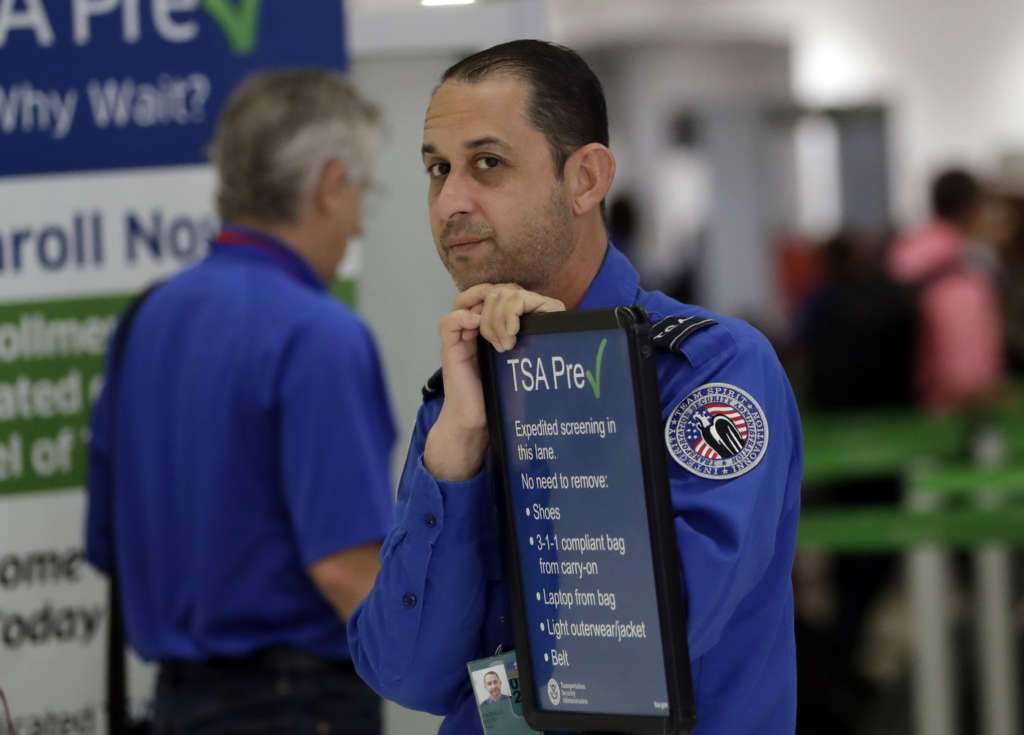
Judge finds TSA violated court order in new attempt to dissolve union

A federal judge has blocked the Transportation Security Administration and the Department of Homeland Security in their latest attempt to dissolve TSA’s union agreement.

In a Jan. 15 ruling, U.S. District Judge Jamal Whitehead granted an emergency motion to prohibit TSA from eliminating a collective bargaining agreement covering approximately 47,000 airport security screeners. TSA had been planning to dissolve the CBA effective Jan. 18.

The American Federation of Government Employees, which represents transportation security officers under the CBA, celebrated the ruling.

“TSA officers – many of whom are veterans – are patriotic public servants who swore an oath to protect the safety of the traveling public and to ensure that another horrific attack like September 11 never happens again,” AFGE National President Everett Kelley said in a statement. “The administration’s repeated efforts to strip these workers of a voice in their working conditions should concern every person who steps foot in an airport.”

The ruling is the latest development in the Trump administration’s effort to eliminate TSA union rights.

Homeland Security Secretary Kristi Noem first moved to eliminate TSA’s union last March. AFGE sued to block that effort, and in June, the court issued a preliminary injunction that prohibited TSA from moving forward with eliminating TSO union rights while the court case played out.

But in September, Noem signed a separate determination that directed TSA to strip security screeners of union rights and eliminate the CBA. DHS and TSA did not announce the new determination until early December. 

TSA argued that the determination was based on a new analysis of the costs associated with the union agreement.

In Whitehead’s latest ruling, however, he pointedly criticized TSA’s latest attempt to eliminate the union agreement. He wrote that officials “do not cite, quote, or otherwise engage with the operative language” in the preliminary injunction, which prohibits TSA and DHS from denying AFGE and TSO’s “any and all rights and/or working conditions guaranteed in the 2024 CBA.”

“The question before the court is straightforward: does defendants’ planned implementation of the September Noem Determination violate the existing preliminary Injunction? The answer is plainly yes,” Whitehead wrote.

He directed TSA to notify bargaining unit TSO’s that the Noem determination will not take effect on Jan. 18, “the 2024 CBA remains applicable and binding, and the currently pending grievances and arbitrations submitted under the 2024 CBA will continue to be processed.”

The case is still scheduled to go to trial in September 2026, absent any new developments or updates.

The post Judge finds TSA violated court order in new attempt to dissolve union first appeared on Federal News Network.

© AP/Lynne Sladky

TSA shutdown

The Coast Guard officially has a new leader

  • The Coast Guard has a new leader. Admiral Kevin Lunday officially assumed command of the service on Thursday during a ceremony at Coast Guard headquarters. The Senate confirmed Lunday last month after his nomination was temporarily delayed due to a controversy over the service’s policy regarding hate symbols. He had been serving as acting commandant since January, following the dismissal of Admiral Linda Fagan by President Donald Trump. Lunday previously led Coast Guard Cyber Command. He also held a senior leadership role at U.S. Cyber Command.
  • Early-career employment in the federal workforce is trending downward. Currently, about 8% of federal employees are under age 30. That’s a 1% decrease since this time last year, likely due to the Trump administration’s workforce reductions. The federal workforce has struggled for years with its ability to recruit and retain younger employees. The average age of a federal worker is 47, and about 13% of the federal workforce is currently eligible for retirement.
    (Federal workforce age data - Office of Personnel Management)
  • Lawmakers are halfway done with a comprehensive spending deal for the rest of the fiscal year. The Senate passed a “minibus” of spending bills covering the departments of Justice, Interior, Commerce and Energy, as well as the Environmental Protection Agency, the National Science Foundation and NASA. The House passed the same three-bill package last week. Congress still has other spending bills it needs to pass. The continuing resolution keeping many agencies funded at last year’s spending levels is set to run out on Jan. 30.
    (Senate Cloakroom update - Social media platform X)
  • A watchdog at the Department of Veterans Affairs said generative AI tools used to help treat patients pose a potential safety risk. VA’s inspector general office said the department’s IT shop, National AI Institute and National Center for Patient Safety, lack a formal mechanism to identify, track or resolve risks associated with generative AI. The VA has approved AI chat tools to support medical decision-making when VA clinicians treat patients and to copy information into the department’s electronic health record system. The IG’s office said its review of these tools remains ongoing.
  • Thrift Savings Plan participants will soon have the option of making Roth in-plan conversions in their TSP accounts. The Federal Retirement Thrift Investment Board has finalized regulations that will allow participants to convert money from their traditional or pre-tax TSP balances into their Roth or after-tax TSP balances. The in-plan conversion option will be available to all participants starting Jan. 28.
    (Final rule on Roth in-plan conversions - Federal Retirement Thrift Investment Board)
  • The Army is updating its software policy once again. Two years after issuing its call to move to an agile approach to software development, the Army is ready to move into the second phase of this modernization effort. In the coming weeks, the service will update its policy to emphasize the use of "colorless" money for software development. Army CIO Leo Garciga said program offices and commands have met the initial goals of creating iterative development platforms outlined in the March 2024 policy. He said the new policy will now focus on improving how the Army estimates the cost of software projects and will fine tune the use of low-code/no-code platforms.
  • The cloud security program known as FedRAMP is seeking feedback from agency and industry experts on six different framework documents. These include everything from expanding the marketplace to using external frameworks to creating machine-readable packages. Pete Waterman, the FedRAMP director, wrote in a blog post that the RFCs are the culmination of nearly a year of planning, testing and community input, marking a significant milestone in realigning FedRAMP with the FedRAMP Authorization Act and OMB implementation memo. Comments are due anytime from mid-February to early March. The PMO also will host a series of community sessions to discuss each of the documents.
  • The Army is chipping away at its legacy system. The service once operated more than 800 independent business systems, many of which didn’t communicate with the broader enterprise and were built with limited technology at the time. Army officials said the number of those systems has now been reduced to fewer than 300. The service however, continues to operate 58 separate human resources management systems and 42 independent training and readiness systems. Under Secretary of the Army Mike Obadal said while they are “not even close to where they need to be,” change is coming. The undersecretary said the advantage in modern conflict “does not come from having more platforms but from infusing our hardware with right technologies.”

The post The Coast Guard officially has a new leader first appeared on Federal News Network.

© AP Photo/Jessica Hill

Homeland Security Secretary Kristi Noem announces Admiral Kevin E. Lunday, center, as Commandant, United States Coast Guard at the commencement for the United States Coast Guard Academy, Wednesday, May 21, 2025 in New London, Conn. Lunday has been Acting Commandant since January of 2025. (AP Photo/Jessica Hill)

House Democrats call for DHS Secretary to be replaced

  • The Federal Emergency Management Agency is at the center of new calls to replace Homeland Security Secretary Kristi Noem. In a letter to President Donald Trump on Wednesday, 14 House Democrats said Trump should fire Noem over what they say are damaging cuts to FEMA’s workforce. They also said Noem’s policy of signing off on all spending over $100,000 is slowing down FEMA’s disaster response efforts. The letter comes a day after more than 50 House Dems filed articles of impeachment against Noem, citing her handling of the Trump administration’s immigration crackdown.
    (Democrats' letter on Noem - Rep. Frank Pallone (D-N.J.))
  • The Congressional Budget Office estimates that President Donald Trump’s plan to rebrand the Department of Defense as the Department of War would cost taxpayers between $10 million and $125 million. The total cost of rebranding the Defense Department could vary depending on how broadly and quickly the name change is implemented across the department. Immediately replacing signs and stationary would be more expensive than gradually implementing those changes “as existing stocks are exhausted.” The Defense Department did not provide information to the CBO on the scope of its implementation plan.
  • The Defense Department is overhauling its big data analytics platform known as Advana. Defense Secretary Pete Hegseth said the evolution of Advana over the last several years has led to a “complex technical and programmatic architecture.” Hegseth directed the chief digital and artificial intelligence officer to restructure Advana into three distinct programs. This restructuring will help accelerate progress toward a clean DoD financial audit in 2028.
  • GSA's new administrator set the tone for how he views the agency's role across government. Ed Forst has officially been on the job as GSA's administrator for about 15 days. But he's been learning about the agency for several months. During that time, Forst, speaking at the Coalition for Common Sense in Government Procurement's winter conference yesterday, said he understands the role GSA should be playing across government. "Let's advance mission and let's have the engine room, what's behind the curtain, consolidate and get even better. That's where I see GSA in the federal government. We are the engine room." Forst said.
  • A bipartisan group of lawmakers are looking to give federal correctional officers a major salary boost. A new bill introduced in both the House and Senate aims to increase pay rates for Bureau of Prisons staff by 35% across the board. Authors of the bill say it would help address longtime staffing shortages at the agency. The American Federation of Government Employees, which represents thousands of BOP workers, has expressed support for the bill.
    (Federal Correctional Officer Paycheck Protection Act - Sens. Jeanne Shaheen (D-N.H.) and David McCormick (R-Pa.))
  • The Department of Health and Human Services is rescinding all layoffs for employees at a workplace safety agency. HHS last spring sent layoff notices to about 1,000 employees at the Centers for Disease Control and Prevention’s National Institute for Occupational Safety and Health. NIOSH focuses on workplace safety and health standards. Those layoffs targeted about 90% of NIOSH’s staff. HHS walked back some layoffs last year, but said it’s now reinstating every NIOSH employee who received layoff notices. Hundreds of these terminated employees have been on paid administrative for the past nine months.
  • Five years in the making, the Office of Federal Procurement Policy will finally kick off a new effort this winter to review procurement laws and how they apply to commercial buying. Matthew Blum, OFPP's deputy administrator, said the requirement is from the 2019 defense authorization bill and will provide OFPP with a big opportunity to conduct a comprehensive review. Congress told OFPP and the FAR Council to determine if commercial buying has been hampered by the improper application of federal procurement laws. Blum said this review will provide OFPP with a big opportunity to conduct a comprehensive review in the spirit of streamlining and restoring common sense to procurement.
  • Hundreds of federal employees are calling for the restoration of their collective bargaining rights. At a union rally on Wednesday, hundreds gathered outside the Capitol building to urge a Senate vote on the Protect America’s Workforce Act. After the legislation cleared the House in December, federal unions have been pushing senators to take up the companion bill. If enacted, the act would restore collective bargaining for an estimated two-thirds of federal agencies, effectively reversing President Trump’s orders for most agencies to terminate their federal union contracts.
  • The Postal Service’s regulator is setting limits on how often the agency can set higher prices for its mail products. The Postal Regulatory Commission said that starting in March, USPS can only raise mail prices once per year. This limit will remain in place through September 2030. USPS has generally been raising mail prices each January and July. The regulator eased restrictions on USPS prices in December 2020, when the agency was reeling from the COVID-19 pandemic and was months away from running out of cash.
    (Order adopting rules limiting frequency of rate increase - U.S. Postal Regulatory Commission)
  • The White House said the new U.S. Tech Force is generating a lot of interest. More than 35,000 Americans have expressed interest in serving in the Tech Force. That’s according to Office of Science and Technology Policy Director Michael Kratsios. “That's insane. That is incredible. That is something we should all be celebrating, this entire committee. The fact that we have so many great Americans that want to step in, move their families and their lives to D.C. to solve these problems for Americans," he said. Testifying before the House Committee on Science, Space and Technology Wednesday, Kratsios said the tech force has unique buy-in from private sector companies. He brushed off criticism that the Trump administration spent the past year cutting many tech-focused staff, including at the former U.S. Digital Service.
    (Hearing with Michael Kratsios - House Committee on Science, Space and Technology)
  • Federal agents have searched the home of a Washington Post reporter as the latest step in their investigation into a contractor accused of mishandling classified information. The FBI took the unusual step of serving a search warrant on a journalist as part of its investigation into a federal contractor who’s accused of taking classified information home. The newspaper said federal officials have given assurances that neither the Post nor the reporter, Hannah Natanson, are targets of the investigation. Attorney General Pam Bondi said the search was conducted at the request of the Pentagon, which reportedly told the Justice Department that the contractor had leaked classified information to Natanson.

The post House Democrats call for DHS Secretary to be replaced first appeared on Federal News Network.

© AP Photo/Kevin Wolf

Homeland Security Secretary Kristi Noem testifies during a House Committee on Homeland Security hearing, Wednesday, May 14, 2025, in Washington. (AP Photo/Kevin Wolf)

Watchdog urges DHS to address ‘fragmented’ law enforcement hiring

The Department of Homeland Security’s inconsistent hiring practices present major challenges at a time when DHS is surging recruitment across its law enforcement components, according to the department’s watchdog.

The DHS inspector general, in an annual report on top management and performance challenges, flagged “fragmented law enforcement hiring” as one of the department’s top three issues.

The IG warns that those longstanding issues have been amplified by a recent influx of funding from the One Big Beautiful Bill Act passed last year. Immigration and Customs Enforcement, Customs and Border Protection, and the Secret Service have all embarked on major hiring initiatives over the past year, backed by billions of dollars in funding.

“There is overlapping, competitive, law enforcement hiring among ICE, CBP, and USSS,” the report warns. “These competing interests can undermine the hiring process when conducted without departmentwide planning. Law enforcement hiring will endure additional stresses in the coming years due to the OBBBA, which funds an increase in departmental law enforcement personnel.”

DHS recruiting is “further complicated by inconsistent vetting requirements and application processes” across law enforcement agencies, according to the report.

“These inconsistencies make it difficult to implement a more centralized, efficient hiring process, resulting in duplication of effort, higher costs, and slower onboarding across the department,” the IG states.

The report comes as the Trump administration touts ICE’s hiring of 12,000 new employees in less than a year. However, the vetting and training of ICE officers has come under increasing scrutiny amid the rapid hiring blitz.

Cyber and AI hiring

The IG report also highlights challenges with DHS’s hiring of cybersecurity, IT and artificial intelligence specialists. For instance, DHS’s Office of Intelligence and Analysis and the Coast Guard, respectively, face administrative challenges in recruiting personnel with AI-related skillsets, according to the IG.

Those types of challenges could delay key DHS AI projects, the report states.

“These challenges are magnified by inconsistent hiring practices across components, pay disparities with the private sector, and complex clearance requirements,” it continues.

Meanwhile, DHS’s Cyber Talent Management System has not met its original goal to help recruit thousands of cyber experts. Hiring using CTMS has reached just several hundred staff since the system was launched in 2021.

“Although there has been some success using CTMS, the department continuously improves it in partnership with hiring managers to make it a more effective tool,” the IG report states.

Furthermore, the Cybersecurity and Infrastructure Security Agency last year terminated many probationary staffers who were part of CTMS, further shaking confidence in the novel talent system.

Still, the IG report recommends DHS deepen centralized hiring efforts like CTMS to address its tech talent gaps.

“These centralized hiring efforts are a step in the right direction,” the report states. “However, it is unclear that these hiring efforts are sufficient to meet the hiring surges required by the OBBBA or keep pace with evolving Department needs as AI and machine learning are integrated into all operations. Since previous hiring surges did not achieve intended outcomes, DHS should pivot to more successful recruitment methods.”

The post Watchdog urges DHS to address ‘fragmented’ law enforcement hiring first appeared on Federal News Network.

© The Associated Press

FILE - Customs and Border Patrol agents question occupants of a vehicle they pulled over, during an immigration crackdown in Kenner, La., Dec. 5, 2025. (AP Photo/Gerald Herbert, File)

Lawsuit: DHS wants “unlimited subpoena authority” to unmask ICE critics

The US Department of Homeland Security (DHS) is fighting to unmask the owner of Facebook and Instagram accounts of a community watch group monitoring Immigration and Customs Enforcement (ICE) activity in Pennsylvania.

Defending the right to post about ICE sightings anonymously is a Meta account holder for MontCo Community Watch, John Doe.

Doe has alleged that when the DHS sent a "summons" to Meta asking for subscriber information, it infringed on core First Amendment-protected activity, i.e., the right to publish content critical of government agencies and officials without fear of government retaliation. He also accused DHS of ignoring federal rules and seeking to vastly expand its authority to subpoena information to unmask ICE's biggest critics online.

Read full article

Comments

© Star Tribune via Getty Images / Contributor | Star Tribune

CISA director void leaves cyber agency embroiled in uncertainty

The Cybersecurity and Infrastructure Security Agency is on the verge of going a full year without a permanent leader, as cyber experts say the void is preventing CISA from moving forward on key issues and leaving an already reeling workforce in the lurch.

The Senate earlier this month returned Sean Plankey’s nomination to the White House after lawmakers failed to vote on it during last year’s session. President Donald Trump formally nominated Plankey in March of last year.

Plankey is a widely respected official whose nomination had broad backing from industry and bipartisan support on Capitol Hill.

But his nomination was placed under multiple holds, some of them unrelated to CISA or cybersecurity. Most recently, Sen. Rick Scott (R-Fla.) had reportedly placed a hold on Plankey after the Department of Homeland Security terminated a Coast Guard cutter contract with a shipyard in Florida. Plankey has been serving as a senior advisor in the Coast Guard while he awaits confirmation.

On Tuesday, Trump re-nominated Plankey to lead the cyber agency. CISA is currently being led in an acting capacity by Deputy Director Madhu Gottumukkala, who was chief information officer for the state of South Dakota when Homeland Security Secretary Kristi Noem was governor there.

Mark Montgomery, the executive director of the Cyberspace Solarium Commission 2.0, said the uncertainty comes at a time when CISA “desperately needs strong leadership.”

“I think they can’t focus,” Montgomery said. “They can’t come up with a strategic plan that’s going to drive a four-year administration. They’ve already lost a year. Every day, every week, every month, that you don’t have your Senate confirmed person, you take risk. This is the civilian cyber defense agency. It needs strong, focused leadership.”

Senate-confirmed leaders are typically more capable of advocating for their agencies, both within the administration and on Capitol Hill in front of lawmakers. Plankey’s nomination fell by the wayside as cyber threats to U.S. critical infrastructure continued to rise last year, noted Bob Ackerman, a venture capitalist who founded AllegisCyber Capital.

“CISA owns the essential national security mission of protecting the homeland from such society-crippling cyber-attacks,” Ackerman said. “Yet, while we wouldn’t charge the U.S. Marines with executing their missions without a leader, CISA’s mission to block and deter our adversaries has been left leaderless at this urgent moment of need.

Over the past year, Montgomery said CISA has not advanced public-private collaboration “in any meaningful way.”

For instance, he said the cyber agency has yet to take significant actions to address Volt Typhoon. U.S. officials have accused the China-linked group of hacking into critical infrastructure networks, like power and water systems. In January 2024, then-FBI Director Chris Wray said the goal of the hacks was to “destroy or degrade” those systems during a future conflict.

“We’re 24 months since [Director] Wray laid out the Volt Typhoon challenge, and we still don’t have an integrated policy to address it,” Montgomery said. “That should come from CISA. It should have come from the Joint Cyber Defense Collaborative, the Joint Cyber Planning Office, and we haven’t gotten it. And the reason is it takes interagency leadership, which you’re not going to get from an acting director.”

Cyber experts also pointed to stalled efforts like the reinstatement of the Critical Infrastructure Partnership Advisory Council (CIPAC) as an example of where Plankey could make a difference.

The Department of Homeland Security disbanded CIPAC last spring as part of a broader purge of federal advisory councils. CIPAC had provided authorities for government officials and industry to collaborate on cybersecurity issues through various sector coordinating councils.

Industry officials had been encouraged by Noem’s speech at the RSA Conference in late April 2025, during which she said CIPAC would be reinstated and “will bring more people to the table and be much more action oriented.”

But since then, DHS has not acted to revive CIPAC or any related authorities. Since the council was disbanded, there has been “less engagement and less communication,” Ari Schwartz, coordinator of the Cybersecurity Coalition, told Federal News Network.

“I do think we do need to see some action on that,” Schwartz said. “I don’t think that that can really wait around at this point.”

CISA’s workforce, meanwhile, has experienced deep cuts under the Trump administration, driven by deferred resignation and early retirements. Many who left were experienced staff that led CISA programs.

Office of Personnel Management data shows CISA’s headcount has gone from a high of 3395 employees in 2024 to 2376 staff at the start of this year.

One CISA employee, who requested anonymity to speak candidly, said the last year at the agency was “extremely difficult.”

“From the onslaught of policy changes targeting us – like return-to-office, standard hours, contract delays and cuts – to the huge amounts of departures and the lack of new leadership in place, we as an agency made little to no progress and in some instances went backwards in my opinion,” the employee said. “For 2026, I was expecting to finally get some concrete leadership direction and priorities, but with the CISA director still not in place and another possible shutdown looming, I’m expecting another year of chaos and little progress.”

Both Montgomery and Schwartz said one positive at CISA over the last year has been Nick Andersen, who joined the agency in August as a political appointee leading CISA’s cybersecurity division. Andersen has spoken at multiple public events, briefed the media on agency cyber directives, and met with industry groups.

But Montgomery noted that doesn’t outweigh not having a Senate-confirmed director.

“You lead CISA from the top and to go fight battles within DHS for the restoration of manpower, to lead interagency work to develop and execute an integrated defense plan against Volt Typhoon’s operational preparation of the battlefield,” he said.

The post CISA director void leaves cyber agency embroiled in uncertainty first appeared on Federal News Network.

© Getty Images/Techa Tungateja

Concerns mount over FEMA staff reductions

The Federal Emergency Management Agency’s workforce continues to face uncertainty amid abrupt cuts to disaster response staff and planning emails that show FEMA has been contemplating deeper reductions.

Late last month, FEMA sent non-renewal notices to 50 Cadre of On-Call Response/Recovery Employees (CORE) whose terms ended between Jan. 1 and Jan. 4. CORE employees are hired for two-to-four year terms, but they are often renewed to continue ongoing disaster work. CORE staff make up the majority of FEMA’s workforce, constituting 39% as of 2022. 

FEMA did not respond to a request for comment. In other stories on the CORE cuts, a FEMA spokesman has characterized them as “a routine staff adjustment of 50 staff out of 8,000.”

But a current FEMA supervisor and former FEMA supervisor, who were granted anonymity to candidly discuss the situation, both disputed the characterization of the terminations as “routine.”

They said FEMA CORE staff are almost always renewed due to demand for staff to respond to an increasing rate of disasters and other agency tasks in recent years.

CORE staff are often among the first FEMA employees to be deployed in a disaster, according to Rafael LeMaitre, a former FEMA director of public affairs who now serves on the advisory council for the advocacy group Sabotaging Our Safety.

“While they serve two-year contract terms, those are routinely renewed, because the number of disasters that the nation has been dealing with has not gone down,” LeMaitre said. “If anything, it’s increased, both in the number of disasters and the severity of disasters, given changes to the climate, and frankly, additional pressures that FEMA has been put under to respond to non-traditional types of emergencies.”

But the FEMA supervisors also described how, contrary to the recent non-renewals, decisions about extending CORE appointments are typically done on a case-by-case basis. The process typically includes an analysis of the employee’s workload and the need for them to continue working on a given disaster.

“We never fire people just because their renewal dates happened to fall in a given time frame,” the current FEMA supervisor said.

The renewal process typically starts 90 days before the employee’s “not-to-exceed” date, which refers to when their term ends.

But in early December, emails show FEMA divisions and regions received a tasking from the agency’s chief human capital office to submit justification packages for every CORE staff with an NTE date falling in January.

Those packages were submitted, but FEMA CORE staff with renewals falling Jan. 1-4 still received termination letters in late December.

It’s unclear what will happen to other FEMA CORE staff whose terms expire in January. With approximately 9,000 total FEMA CORE staff, hundreds could be up for renewal in any given month.

Earlier this week, FEMA leaders received new direction to submit justification packages for CORE staff whose terms expire in February, according to the current supervisor.

“This is not a targeted workforce reduction – this is using a sledgehammer when you should be using a scalpel,” the current FEMA supervisor said.

CNN first reported on FEMA’s CORE cuts.

Workforce reductions exercise

The cuts and uncertainty around CORE staff renewals come as FEMA has been analyzing much deeper cuts to its workforce, agency emails show.

In a Dec. 23 email viewed by Federal News Network, FEMA’s chief human capital office sought leadership input on a “Workforce Capacity Planning Exercise.” The email references how the exercise is “consistent” with a recent executive order and corresponding White House guidance on federal hiring.

The email included a “draft workforce plan” with a table laying out FEMA’s workforce totals as of Sept. 30 and fiscal 2026 “target” reductions.

The reductions listed in that table include a 50% overall reduction to FEMA’s total workforce of 23,000, including a 15% reduction the permanent full-time workforce and a 41% reduction to the disaster full-time workforce, which includes CORE staff.

The email states that the exercise is “pre-decisional in nature” and that “no staffing actions or personnel decisions are being directed or implemented as part of this request.”

But current and former FEMA staff say it would be highly unusual to conduct such an exercise without planning for some form of workforce reductions.

The Washington Post first reported on the workforce planning email.

FEMA cuts criticized

The latest FEMA cuts come after a year of turmoil at the agency that saw more than 2,000 employees depart through voluntary programs and some terminations. Those departures included two dozen senior leaders, according to the Government Accountability Office.

The Trump-appointed FEMA Review Council’s report has been delayed, leaving to question the administration’s long-term plan for FEMA.

However, both President Donald Trump and Homeland Security Secretary Kristi Noem have expressed a desire to eliminate or downsize FEMA, and instead shift more disaster recovery responsibilities to state and local governments.

Democrats in Congress were quick to criticize the latest FEMA CORE cuts and reports of deeper potential reductions.

“Even considering cuts of this scale is more evidence of the Trump administration’s reckless and dangerous behavior and sends a clear message that the administration is willing to gamble with Americans’ lives and violate federal law that Congress passed to ensure readiness for disasters,” House Homeland Security Committee Ranking Member Bennie Thompson (D-Miss.) said in a statement.

House Transportation and Infrastructure Committee Ranking Member Rick Larsen (D-Wash.) is among the lead sponsors of a bipartisan bill to overhaul FEMA. The legislation would notably remove FEMA out from under the Department of Homeland Security and have it report directly to the president.

“After multiple Transportation and Infrastructure Committee hearings, we keep concluding FEMA needs more staff to meet the response needs of more frequent and severe disasters — like the recent flooding in my district,” Larsen said in a statement. “Cutting CORE staff will leave remaining FEMA workers scrambling and disaster survivors waiting longer for assistance. This is the exact opposite of what we should be doing. The administration must reverse this decision.”

The post Concerns mount over FEMA staff reductions first appeared on Federal News Network.

© Al Drago/The New York Times via AP

FILE - A sign for the Federal Emergency Management Agency is pictured at FEMA headquarters, April 20, 2020, in Washington. (Al Drago/The New York Times via AP, Pool)

Secret Service touts hiring goals amid major law enforcement recruiting push

The Secret Service is aiming to boost its ranks by thousands of officers over the next two years, part of a still swelling recruiting push across federal law enforcement agencies.

The Secret Service is aiming to hire 4,000 new employees by 2028, an agency spokesman confirmed. That would bring the Secret Service’s ranks to 6,800 law enforcement personnel and 10,000 total employees.

The Secret Service currently employs about 8,300 staff, according to agency budget figures. That includes 3,200 special agents and 1,300 uniformed division officers, per the Secret Service website.

“Last year, the agency launched a dynamic recruitment strategy aimed at both reducing inefficiencies in the hiring process and increasing the visibility of agency jobs to audiences with the requisite knowledge, skills and abilities to perform the mission,” the  Secret Service spokesman said. “We are focusing on targeting our recruitment efforts to individuals with a demonstrated track record of excellence, teamwork and trustworthiness — this includes former military, law enforcement, and top university graduates.”

The agency is also aiming to retain retirement-eligible agents, the spokesman added. Group retention incentives are being offered to special agents, uniformed division officers, cybersecurity professionals and specialty teams.

The Secret Service has long struggled with morale and attrition issues. A 2021 National Academy of Public Administration study found the agency’s mission demands have grown, while staffing levels have not kept up, requiring agents and officers to work longer hours.

But the Secret Service has been unsuccessful in previous attempts to grow its ranks to 10,000 employees.

The agency is now focused on streamlining the hiring process, including through new Accelerated Candidate events. The Secret Service says the events reduce the time to job offer by up to 120 days. The current average from application to entry-on-duty is 326 days for special agents and 256 days for the uniformed division.

The Washington Post first reported on the details of the Secret Service’s hiring goals.

The Secret Service’s recruiting drive comes amid a governmentwide law enforcement hiring push. The Trump administration is giving higher pay raises to federal law enforcement officers compared to most other government employees. 

In a post on X Tuesday, FBI Director Kash Patel said 2025 was a “huge year” for recruiting.

Patel didn’t cite how many employees the FBI hired. But he said the agency received 45,000 special agent applications and 30,000 professional staff applications in fiscal 2025.

He also said the FBI expanded the Reserve Service Program for retired FBI special agents to work as criminal investigators in field offices.

“These RSP-Special Agents will fill critical field office needs with experienced investigators – the first group will begin their assignments in January 2026,” Patel wrote.

Meanwhile, the Department of Homeland Security this week announced that Immigration and Customs Enforcement has already hired more than 12,000 officers and agents over the last 11 months. The recruiting drive, backed by billions in funding from the One Big Beautiful Bill Act, has spiked ICE ranks from 10,000 to 22,000 law enforcement personnel, DHS said.

Though the Trump administration’s original goal was to hire roughly 10,000 new ICE agents, DHS said this week that ICE is continuing to accept job applications.

Customs and Border Protection is also on a recruiting drive, aiming to hire 5,000 customs officers and 3,000 border patrol agents through 2029. Both CBP and ICE are offering massive recruitment and retention incentive packages.

The widespread recruiting push across federal law enforcement agencies is expected to put a strain on classes at the Federal Law Enforcement Training Centers. FLETC itself announced in September it was hiring 100 new instructors to support the “onboarding of thousands of new law enforcement officers nationwide.”

The post Secret Service touts hiring goals amid major law enforcement recruiting push first appeared on Federal News Network.

© Kay Nietfeld/picture-alliance/dpa/AP Images

09 July 2024, USA, Washington: Police officers from the Secret Service stand in front of the White House in the early morning before the start of the NATO summit. The NATO summit begins in the capital with celebrations to mark the 75th anniversary of the defense alliance. Photo by: Kay Nietfeld/picture-alliance/dpa/AP Images

DHS agrees to push back plans to dissolve TSA union

  • The Department of Homeland Security has agreed to push back by a week plans to dissolve a union agreement for airport screeners as part of an ongoing court case. The Transportation Security Administration had planned to eliminate the collective bargaining agreement for TSA staff on January 11. But the American Federation of Government Employees, which represents TSA staff, is seeking an emergency order to block that action. TSA says it will delay the effective date to January 18 to allow for arguments over the motion. The judge in the case had already issued a preliminary injunction blocking an earlier attempt by TSA to eliminate the union agreement.
    (AFGE AFL-CIO v. Noem - Court Listener)
  • The Federal Emergency Management Agency this week awarded $250 million to 11 states and the National Capital region under a counter-unmanned aircraft system grant program. The states are all hosting FIFA World Cup matches next summer. The grants are intended to help them defend against unauthorized drone activity. The C-UAS Grant Program was established with $500 million from the One Big Beautiful Bill Act. FEMA says the remaining $250 million will be distributed across all U.S. states and territories next year.
  • The Trump administration’s use of paid administrative leave is coming under scrutiny. Public Employees for Environmental Responsibility is urging the Government Accountability Office to investigate the situation. PEER officials say the leave used within the deferred resignation program was wasteful and unlawful. Despite a limit of 10 admin leave days per year, thousands of feds who took the DRP spent months on paid leave. PEER estimates that the DRP cost about $10 billion in taxpayer money.
    (Comments on Trump administration use of administrative leave - Public Employees for Environmental Responsibility)
  • The Office of Personnel Management is addressing concerns from Congress over retirement processing delays. In a letter to House Democrats, OPM Director Scott Kupor touted a new digital system that he says is streamlining retirement processing. Kupor also argued that outdated systems, rather than staffing levels, are to blame for the challenges HR employees are facing. The director’s letter comes in response to recent concerns from Democrats over major retirement processing delays, caused by a flood of paperwork from the deferred resignation program.
  • Members of the National Guard are patrolling in New Orleans on this New Years’ Eve, a year after a truck attack on Bourbon Street killed 14 people. President Trump authorized 350 troops to deploy to the city in order to help with security. The guard members are expected to stay beyond New Years’ though, through the end of the Mardi Gras season. The city has yet to implement permanent security changes in the aftermath of the Jan. 1 attack.
  • Another court ruling now prevents the Trump administration from dismantling the Consumer Financial Protection Bureau. Judge Amy Berman Jackson ruled against the White House, which had argued the CFPB can’t be funded by earnings from the Federal Reserve because of a deficit on the Fed’s own balance sheet. Jackson said that legal theory was an attempt to circumvent an earlier injunction that kept the administration from firing the agency’s workforce. A union lawsuit over whether the administration can legally shut down the agency is set to go to trial in February.

The post DHS agrees to push back plans to dissolve TSA union first appeared on Federal News Network.

© AP Photo/Michael Dwyer

FILE - In this Dec. 23, 2018 file photo, Transportation Security Administration officers check boarding passes and identification at Logan International Airport in Boston. A House panel is divided over the Trump administration’s move to send TSA employees from airports to the US-Mexico border. Republican lawmaker says the move shows the severity of the crisis on the border, where waves of migrants are arriving. But a Democratic committee chairman says the administration is manufacturing a crisis. (AP Photo/Michael Dwyer, File)

For DHS workforce, 2025 marked a year of major change

At the Department of Homeland Security, where you stand at the end of 2025 depends on where you sit.

With the Trump administration emphasizing border security and mass deportations as top priorities, DHS components that work in those areas saw both major funding increases and workforce boosts.

Meanwhile, other DHS components were swept up in the administration’s workforce reduction efforts. Some of those components were also in the crosshairs of new political leadership for program and funding cuts.

The “One Big Beautiful Bill Act” tax and reconciliation measure passed in July only deepened those differences.

The legislation provided billions in additional funding for select DHS components like Customs and Border Protection and Immigration and Customs Enforcement. Meanwhile, other offices such as the Cybersecurity and Infrastructure Security Agency have been hit by workforce reductions and funding cuts, ending support for programs and services like CISA’s Multi-State Information Sharing and Analysis Center.

Workforce fluctuates

DHS is one of the only departments to gain a net increase in employees over the last two years, according to an analysis of agency shutdown contingency plans compiled by the Partnership for Public Service.

While most agencies saw staffing reductions driven by the Department of Government Efficiency, DHS’s workforce grew by 6%, to 271,927 employees listed in its 2025 contingency plan.

The Trump administration’s high-profile focus on immigration enforcement operations brings with it more funding and personnel for agencies like ICE and CBP. According to shutdown contingency plans, ICE’s workforce increased by more than 500 employees between June 2024 and September 2025. CBP’s workforce grew by more than 1,500 employees over the same period.

The Coast Guard’s workforce has swelled by nearly 2,000 as part of a recruiting campaign started by the Biden administration and further boosted under the Trump administration through the “Force Design 2028” initiative.

Many positions at DHS, including law enforcement positions, were exempt from workforce reduction efforts like deferred resignations and earlier retirements.

But some components, including CISA and the Federal Emergency Management Agency, underwent stark staff reductions driven by program cuts and voluntary departures.

CISA’s workforce has dropped by nearly one-third, from 3,400 employees in June 2024 to 2,500 staff as of May 31, 2025, according to the contingency plans. More CISA employees may have departed since the latest tally.

FEMA, meanwhile, has seen the number of active employees decrease from roughly 25,800 at the start of the year to 23,350 as of June 1, according to the Government Accountability Office. That includes 24 FEMA senior executives, “widely respected agency leaders who departed voluntarily given the uncertainty around the agency’s future,” GAO noted.

The future of FEMA has been an open question as the Trump administration has targeted the agency for steep cuts. A FEMA Review Council set up by Trump was set to issue recommendations this month, but the White House indefinitely postponed the council’s final meeting.

The Trump administration has also proposed some cuts to the Transportation Security Administration. Homeland Security Secretary Kristi Noem is further moving to eliminate TSA employees’ collective bargaining rights.

‘Big bill’ brings big changes

Further changes are underway at DHS, largely thanks to the $165 billion included for the department in the “One Big Beautiful Bill.” That funding lasts through 2029 and is largely unspent.

It includes $4.1 billion for CBP to hire 5,000 customs officers and 3,000 border patrol agents over the next four years, and $8 billion for ICE to hire 10,000 new officers. DHS says ICE has already reached that goal as 2025 comes to a close.

The bill also includes billions in funding for new immigration detention facilities, border security infrastructure, training facilities, vehicles, Coast Guard ships and more.

Industry will be watching closely as DHS’s spend plans for the reconciliation bill come together.

Senior leaders

With Year 1 of the second Trump administration nearly complete, many presidentially appointed, Senate-confirmed positions at DHS remain vacant or filled by acting personnel. Trump has yet to nominate a FEMA administrator, a TSA administrator or a DHS under secretary for management, among other positions.

Meanwhile, Deputy Homeland Security Secretary Troy Edgar will soon depart DHS after being nominated to serve as U.S. ambassador to El Salvador. The administration has not yet named a replacement.

CISA has been without a permanent director since January. Sean Plankey was nominated to serve as CISA director in March, but his nomination has been held up in the Senate over multiple issues unrelated to concerns about his appointment.

The post For DHS workforce, 2025 marked a year of major change first appeared on Federal News Network.

© The Associated Press

FILE - Police officers block a street as demonstrators march at a protest opposing "Operation Midway Blitz" and the presence of ICE, Sept. 9, 2025, in Chicago. (AP Photo/Erin Hooley, File)

How agencies can ensure trust and transparency in digital identity

From the airport to the DMV, government employees are required to provide efficient and accurate services while also verifying identities at several touchpoints with the public. Despite this need, many agencies still rely on physical identification materials, such as driver’s licenses, passports and Social Security cards. As the demand for faster, modernized services grows, this outdated approach limits agencies’ ability to keep pace with mission demands.

However, since the implementation of smartphones and a federal push toward customer experience, agencies are adopting digital identity and biometrics solutions through initiatives like the General Service Administration’s Login.gov, and the Department of Homeland Security and Transportation Security Administration’s REAL ID.

A digital ID is a collection of data that represents an individual or entity in the digital world, often including information like usernames, passwords and personal details. Used for authentication and access control in various online services and systems, a digital ID serves as identity in the palm of a user’s hand. Through initiatives like Login.gov, users have just one account to log in to several federal websites, requiring them to remember fewer passwords, streamlining data integrity, and improving mission efficiency.

Biometrics and digital identity technology utilize unique biological traits, such as fingerprints, facial features and iris patterns, to verify who a person claims to be. By linking a physical identifier to digital credentials, there’s an additional level of assurance and security that traditional identity tools can’t compete with.

However, for biometric technology adoption to be successful, federal agencies must align standards for compliance and interoperability while also focusing on building and maintaining public trust.

Compliance and transparency 

As digital identity solutions are adopted, standards that govern the use and transparency of biometric data are not optional add-ons — they’re necessary at a foundational level.

Biometric security standards like the National Institute of Standards and Technology’s SP 800-63-4 Digital Identity Guidelines, ISO/IEC 19795 Series, GSA’s FICAM approach and the FIDO Alliance define how data should be collected, stored and secured to improve and maintain accuracy and privacy.

Integrating security and privacy into all identity tools and solutions is equally as vital as standards compliance. Building security and privacy into systems from the beginning helps improve public trust and prevents costly redesigns or necessary additions after vulnerabilities appear. By creating a network of solutions that prioritize security- and privacy-by-design principles, agencies ensure that protections are integrated into every stage of the biometric lifecycle.

Despite these opportunities for increased security, efficiency and progress, much of the public has doubts about data collection, bias and privacy, creating barriers to implementation and adoption. For this reason, transparency is critical to building and maintaining public trust.

Federal agencies must clearly communicate the parameters of biometric technology use, including how biometric data is collected, stored and accessed. Establishing offices like DHS’ Office of Biometric Identity Management provides a centralized point for disseminating pertinent information, like new policies and procedures, or addressing questions about biometric data use and where the public might encounter the technology.

Another opportunity to increase transparency is mandating third-party audits and compliance reporting that align with approved, existing frameworks, like NIST’s Digital Identity Guidelines, to measure compliance.

The digital security landscape is constantly evolving, so federal agencies must prioritize transparency through continuous testing to gain public trust through demonstrated compliance, accuracy and responsible use.

Digital identity is transforming the way governments deliver public services. But technology can’t drive progress alone. Trust is critical for success.

Complying with recognized security standards and improving data transparency lay the groundwork for a thriving digital identity ecosystem in federal government, but its continued success relies on cross-agency and industry collaboration and third-party validation. When combined, these actions will transform operations, creating a unified and secure digital ID future.

Jesús Aragón is the CEO and cofounder of Identy.io.

The post How agencies can ensure trust and transparency in digital identity first appeared on Federal News Network.

© Getty Images/iStockphoto/ArtemisDiana

Multi-Factor Authentication Concept - MFA - Screen with Authentication Factors Surrounded by Digital Access and Identity Elements - Cybersecurity Solutions - 3D Illustration

DHS looks to cut number of paper FOIA requests

  • The Department of Homeland Security is looking to cut down on the number of paper Freedom of Information Act requests it receives. Under a final rule set to go into effect next month, DHS will require most people to submit FOIA and Privacy Act requests electronically. DHS will allow for alternative submission methods in limited circumstances where an electronic request isn’t feasible, such as for incarcerated people. The department said the new rule will allow FOIA officers to spend less time on data entry and more time searching for and reviewing records.
    (DHS FOIA rule - Federal Register)
  • As the winter season gets underway, the Office of Personnel Management is tweaking its policy for what happens to federal telework in inclement weather. OPM said federal employees are generally allowed to telework in cases where they can’t make it to the office on a snow day. But those unscheduled telework days do not mean that there are any changes to President Donald Trump’s broader directive that rescinded telework and remote work agreements.
    (Governmentwide dismissal and closure procedures - Office of Personnel Management)
  • Cyber hackers are increasingly taking advantage of forged or stolen digital identity tokens to break into sensitive cloud-based networks. That’s why the Cybersecurity and Infrastructure Security Agency has teamed up with the National Institute of Standards and Technology on new guidance to defend those tokens. The draft guidelines published last week are meant to help agencies and cloud service providers protect identity tokens from forgery, theft and misuse. President Trump had directed CISA and NIST to develop the guidelines in a cybersecurity executive order earlier this year.
    (Protecting tokens and assertions from forgery, theft and misuse - Cybersecurity and Infrastructure Security Agency)
  • Customs and Border Protection is increasing its hiring and retention incentive package. CBP is advertising that new Border Patrol agents and customs officers can earn up to $60,000 in incentives on top of a normal salary. The packages include training bonuses, remote location pay and annual retention incentives. The additional pay incentives come amid a major recruiting push at CBP. The agency is trying to hire 5,000 customs officers and 3,000 border patrol agents over the next four years.
  • Senior political appointees, including the vice president, will continue to see a pay freeze on their salaries. The Office of Personnel Management has announced that the freeze will continue, as it has for more than 10 years, for certain categories of politically appointed feds. The freeze covers employees on the Executive Schedule, such as ambassadors-at-large, non-career members of the Senior Executive Service and other highly paid political appointees.
  • The National Institute of Standards and Technology is investing $20 million dollars in two new artificial intelligence centers. NIST will work with the nonprofit MITRE Corporation to launch the AI Economic Security Center for U.S. Manufacturing Productivity and the AI Economic Security Center to Secure U.S. Critical Infrastructure from Cyberthreats. NIST said the two centers will drive the development and adoption of AI agents. In the months ahead, NIST will also announce awards to establish an AI for Resilient Manufacturing Institute.
    (NIST launches centers for AI in manufacturing and critical infrastructure - National Institute of Standards and Technology)
  • Agencies have an opportunity to request special salary rates for positions that might need them in 2026. The Office of Personnel Management has put out its annual call, asking agencies if there are certain roles where it's been especially hard to recruit or retain workers. OPM said agencies should also consider removing any special salary rates for jobs that no longer need them. Most recently, OPM established a special salary rate for law enforcement officers, who are expected to receive a larger pay raise for 2026.
    (Annual review of special salary rates - Office of Personnel Management)
  • The Trump administration is working out plans to implement a larger raise for federal law enforcement officers. The Office of Personnel Management said it will meet with the departments of Homeland Security, Justice and the Interior to decide which positions will receive a bigger pay bump in January. OPM plans to establish a special salary rate to implement a 3.8% raise for federal law enforcement, at the direction of President Trump. Most other civilian employees will see a 1% raise for 2026. The updated pay tables for law enforcement officers will be available by the end of the calendar year.
  • Agencies will have to move any non-national security system using the seven gigahertz bandwidth to a new part of the spectrum in the next year. A new memo from President Trump calls on agencies to free up the bandwidth for the development of 6G for commercial use. The White House and the Commerce Department will lead a study to determine where to relocate existing systems to other frequencies. The State Department also will lead an effort to develop and negotiate international standards for 6G systems.
  • Agencies can now place orders against two vendor pools under the Polaris small business governmentwide acquisition contract. The General Services Administration said it issued notices to proceed for the HUBZone and service-disabled veteran owned small business pools under the IT services contract. Through Polaris, agencies can buy an assortment of IT services, including cloud and edge computing, AI and automation and distributed ledger. GSA said it will make additional awards under Polaris in 2026 under the small business and women-owned small business pools.
    (GSA opens two vendor pools under Polaris GWAC - General Services Administration)
  • The Military Family Advisory Network is conducting its biennial survey to better understand the needs of military and veteran families worldwide. The survey is the largest independent research effort focused on the military family population. The stories shared by those taking the survey lead to real change. The research has helped shape major policy and quality-of-life reforms, including the Military Housing Privatization Initiative’s Tenant Bill of Rights and a congressional quality-of-life panel for service members and their families. MFAN is monitoring response rates and will decide when to close the survey based on participation. The organization will be reporting on their findings in May.
  • The Pentagon inspector general found “unsanitary conditions in bathroom facilities” at soldiers’ barracks at Fort Bliss, Texas, and the Doña Ana Range Complex housing facilities in New Mexico, including “leaking raw sewage, non-functional toilets, and general disrepair of facilities.” Soldiers also informed the IG of electrical capability concerns and constantly nonfunctioning air conditioning. The watchdog visited housing facilities of soldiers who had been deployed to assist with the border mission earlier this year. The medical team found that air conditioners in the housing facilities caused soldiers respiratory symptoms and that standing water from air conditioner condensation and rain caused "a large increase in both the insect and mosquito population."

The post DHS looks to cut number of paper FOIA requests first appeared on Federal News Network.

© Getty Images/iStockphoto/designer491

FOIA Freedom of Information Act on the desk.

CBP increases hiring incentives, amid record DHS recruiting year

Customs and Border Protection is increasing its total recruitment and retention incentives, as the Department of Homeland Security touts a record year for job applications.

CBP says new Border Patrol agents can now get up to $60,000 in incentives, including $10,000 after completing academy training and $10,000 for those assigned to a remote locations. Newly appointed Border Patrol agents can then qualify for up to $40,000 in retention incentives over the next four years.

Current Border Patrol agents are eligible to receive up to $50,000 in retention incentives.

Meanwhile, new officers assigned to “hard-to-fill and most difficult-to-fill locations” under CBP’s Office of Field Operations are eligible for up to $60,000 in retention incentives over a three year contract. CBP is also offering up to $60,000 in retention incentives for “experienced supervisors and officers eligible to retire in certain locations.”

New CBP Air and Marine Operations agents are also eligible for $10,000 signing bonuses, while new and current AMO agents can get up to 25% of their salary in retention incentives.

The increased incentives are funded under the One Big Beautiful Bill Act. The bill provided $4.1 billion for CBP to hire 5,000 customs officers and 3,000 border patrol agents over the next four years.

CBP for several years has offered both recruitment and retention incentives, as it prepares for an expected officer retirement surge starting in fiscal 2027.

The Department of Homeland Security, in an annual review, said CBP’s monthly hiring averages increased by 42.5% compared to the same time period last year. Meanwhile, hiring of Border Patrol agents increased by 84% over the same time last year, according to DHS.

ICE hiring surges, but under scrutiny

DHS also said Immigration and Customs Enforcement is on track to hire 10,000 new officers by the end of 2025. ICE has also offered $10,000 recruitment incentives and changed its minimum officer age to 18 years old to facilitate the recruitment campaign.

DHS said it has received a record number of job applications in 2025 at agencies including ICE, U.S. Citizenship and Immigration Services and the Secret Service.

The One Big Beautiful Bill Act, which passed in July, included $8 billion for the ICE hiring spree.

“Some” of the new ICE officers are already on the job, according to DHS.

But House Homeland Security Committee Democrats are now asking the Government Accountability Office to review ICE’s hiring practices.

In a Dec. 18 letter led by Ranking Member Bennie Thompson (D-Miss.) to GAO, the lawmakers point to media reports that ICE has put some new recruits into training without doing background checks and other standard vetting.

“This rapid expansion – the most significant staffing increase in the agency’s history – raises important questions about how ICE has changed its hiring standards and training protocols to meet its staffing aims,” the letter to GAO states.

The post CBP increases hiring incentives, amid record DHS recruiting year first appeared on Federal News Network.

© The Associated Press

FILE - Greg Bovino, the chief patrol agent for the U.S. Border Patrol El Centro sector, center, stands with federal immigration agents near an Immigration and Customs Enforcement facility in Broadview, Ill., Oct. 3, 2025. (AP Photo/Erin Hooley, File)

House Dems urge TSA to preserve collective bargaining agreement

House Democrats are urging the Transportation Security Administration to abandon efforts to do away with a collective bargaining agreement covering some 47,000 TSA airport screeners.

In a Dec. 23 letter to Homeland Security Secretary Kristi Noem and acting TSA Administrator Ha Nguyen McNeill, 12 Democrats on the Homeland Security Committee say they have “deep concern” about the latest attempt to overturn TSA’s union agreement.

The letter signees include Homeland Security Committee Ranking Member Bennie Thompson (D-Miss.) and subcommittee on transportation and maritime security Ranking Member LaMonica McIver (D-N.J.).

Their letter points to an ongoing case in federal court over the Department of Homeland Security’s directive to end TSA’s collective bargaining agreement. The judge in that case issued a preliminary injunction in June blocking DHS’s previous efforts to dissolve the agreement.

“DHS’s renewed effort to unilaterally void a valid, seven-year collective bargaining agreement – without a resolution to the pending litigation – displays a clear and flagrant disregard for the rule of law and workers’ rights,” the lawmakers write.

TSA has said it plans to eliminate the collective bargaining agreement and implement a new “labor framework” for the agency starting Jan. 11.

The American Federation of Government Employees represents most TSA staff under the 2024 collective bargaining agreement. AFGE joined with several unions in filing the lawsuit challenging DHS’s prior attempt to dissolve the CBA.

Lawyers representing DHS in federal court recently filed a motion to dismiss the case, arguing that Noem’s new September determination to end TSA union rights is based on “an entirely different supporting record and data unavailable” at the time of Noem’s previous directive, which led to the court case and the preliminary injunction.

AFGE’s lawyers have since countered with an emergency motion to enforce the preliminary injunction. They argue DHS is attempting to “evade the court’s injunction.”

The judge overseeing the case recently directed the parties to confer on a briefing schedule for the emergency injunction.

The Trump administration has sought to do away with most federal employee unions. At DHS, leaders have argued that collective bargaining for TSA officers “is inconsistent with efficient stewardship of taxpayer dollars and impedes the agility required to secure the traveling public,” according to TSA’s statement on the new labor framework.

“Our Transportation Security Officers (TSOs) need to be focused on their mission of keeping travelers safe not wasting countless hours on non-mission critical work,” Adam Stahl, senior official performing the duties of TSA deputy administrator, said as part of a press release. “Under the leadership of Secretary Noem, we are ridding the agency of wasteful and time-consuming activities that distracted our officers from their crucial work.”

But in their letter, House Democrats argue that the 2024 union agreement was negotiated “in good faith to address long-standing issues at TSA, such as high attrition rates, inconsistent workplace policies, and the lack of a proper system for employees to voice safety and operational concerns.”

“Eliminating collective bargaining protections for TSOs will not improve efficiency or security,” they wrote. “It will silence workers who are best positioned to identify safety risks, exacerbate attrition at a time of ongoing staffing challenges, and ultimately make air travel less safe for the American public.”

The post House Dems urge TSA to preserve collective bargaining agreement first appeared on Federal News Network.

© AP Photo/Manuel Balce Ceneta

Homeland Security TSA Union

Senate lawmakers look to stem staff cuts at CISA, FEMA

Republicans on the Senate Appropriations Committee have put forward a 2026 homeland security spending bill that would staunch some workforce cuts at the Department of Homeland Security.

The committee released a draft version of the fiscal 2026 homeland security appropriations measure on Friday. Lawmakers will return to Capitol Hill after the holidays with a deadline to pass annual spending bills for most federal agencies by Jan. 30, when the current continuing resolution expires.

Lead appropriators in the House and Senate reached an agreement on funding allocations for the remainder of fiscal 2026 over the weekend. While they did not release specific numbers, House Appropriations Committee Chairman Tom Cole (R-Okla.) said the allocations would fall below projected spending levels under the CR.

“This pathway forward aligns with President Trump’s clear direction to rein in runaway, beltway-driven spending,” Cole said in a statement. “We will now begin expeditiously drafting the remaining nine full-year bills to ensure we are ready to complete our work in January.”

What’s the topline Senate DHS funding package?

Senate appropriators’ draft homeland security spending bill includes $92.3 billion for DHS in fiscal 2026, including nearly $66 billion in discretionary spending and $26.3 billion for the Disaster Relief Fund.

Those totals roughly align with what House Appropriations included in their homeland security spending package over the summer. It also comes after DHS received $165 billion in additional funding through fiscal 2029 under the One Big Beautiful Bill Act passed in July.

However, Senate Appropriations Committee Vice Chairwoman Patty Murray (D-Wash.) slammed the Senate committee’s draft proposal, calling it a “partisan bill” and saying Republicans didn’t work with Democrats to finalize a negotiated bill.

“We need more accountability from President Trump’s out-of-control Department of Homeland Security, and as we proceed to conference negotiations on this bill and the remainder of our bills, I am going to keep working to produce the strongest possible legislation,” Murray said. “American families should be able to count on their own government to support them through serious natural disasters and to enforce our immigration laws humanely and in accordance with the law.”

FEMA staffing concerns

The report on the draft homeland security spending bill, however, shows committee Republicans have some concerns about workforce cuts at the Federal Emergency Management Agency.

Roughly 2,500 FEMA staff have left the agency since the spring. The Trump administration has also expressed a desire to move more of FEMA’s responsibilities to state and local governments.

“The committee is concerned that staffing levels are insufficient to effectively and efficiently execute FEMA’s statutory missions,” the report on the draft bill states.

The bill would provide an additional $40 million for FEMA to hire staff to critical positions in its regional operations, and response and recovery divisions, respectively.

The report on the draft bill also stipulates that FEMA “shall maintain a workforce consistent with the personnel and full-time equivalents funded by the pay and non-pay amounts provided in this act.”

“FEMA shall not reduce staffing in such a way that it lacks sufficient staff to issue guidance, provide payments, and provide technical assistance and operational support to grantees in a timely manner; review and approve plans for obligating and expending Federal funds; review expenditures and reports for waste, fraud, and abuse; and perform all other necessary duties to allow recipients to proceed without unnecessary interruption,” the report continues.

CISA cut softened

Like their House counterparts, Senate appropriators are also looking to shore up funding at the Cybersecurity and Infrastructure Security Agency, rejecting steeper CISA cuts proposed by the Trump administration.

The draft Senate bill includes roughly $2.8 billion for CISA in fiscal 2026, just below 2025 funding levels for the cyber agency.

The bill would also reject proposed cuts at CISA’s National Risk Management Center. It would provide $126 million for the NRMC to maintain fiscal 2024 service and staffing levels.

Lawmakers direct CISA to provide a briefing “on the NRMC’s strategic engagement with election stakeholders, including engagement progress to date, future engagement plans and priorities, and information regarding any identified election security risks and shortfalls that should be mitigated in the near-, mid-, and long-terms.”

CISA has lost one-third of its workforce, roughly 1,000 staff, since the spring through a combination of voluntary departures, early retirements and terminations.

The Trump administration’s budget request would reduce CISA’s annual budget by nearly $500 million. It also proposed staff cuts at some CISA divisions, including the NRMC.

Like with FEMA, Senate appropriators also include language in their bill that CISA “shall maintain a workforce consistent with the personnel and full-time equivalents funded by the pay and non-pay amounts provided in this act.”

“CISA shall not reduce staffing in such a way that it lacks sufficient staff to effectively carry out its statutory missions,” the bill states, pointing to the agency’s efforts to secure federal civilian executive branch agencies, work with state and local governments, other sector risk management agencies, international partners and other stakeholders.

It further stipulates that CISA should maintain “no fewer” than 10 regional field offices across the country and directs CISA to employ at least one cybersecurity advisor per state.

The post Senate lawmakers look to stem staff cuts at CISA, FEMA first appeared on Federal News Network.

© The Associated Press

FILE - The seal of U.S. Department of Homeland Security is seen before the news conference with Acting director of U.S. Immigration and Customs Enforcement (ICE) Todd Lyons at ICE Headquarters, in Washington, on May 21, 2025. (AP Photo/Jose Luis Magana, File)
❌