Reading view

There are new articles available, click to refresh the page.

US Spot Bitcoin ETFs See Worst Week in One Year After $1.33B Outflows

By: Amin Ayan

US spot Bitcoin exchange-traded funds recorded their weakest performance in nearly a year, shedding $1.33 billion in net outflows during a shortened four-day trading week, according to data from SoSoValue.

Key Takeaways:

  • US spot Bitcoin ETFs logged their weakest week in nearly a year, with $1.33 billion in outflows.
  • Selling peaked midweek, led by heavy redemptions from BlackRock’s IBIT.
  • Ether ETFs also turned negative, shedding $611 million over the same period.

The pullback marks the worst weekly showing since February 2025 and reflects a sharp reversal in investor sentiment after strong inflows the previous week.

The outflows follow a period of optimism, when spot Bitcoin ETFs pulled in $1.42 billion in net inflows.

Midweek Bitcoin ETF Outflows Surge as $709M Exits in Single Day

Selling pressure peaked midweek. Wednesday alone saw $709 million exit Bitcoin ETFs, making it the heaviest outflow day of the week.

Tuesday followed closely behind with $483 million in redemptions. Outflows eased toward the end of the week, with $32 million leaving on Thursday and $104 million on Friday.

The magnitude of the withdrawals echoes the turbulence seen in late February 2025, when Bitcoin ETFs lost $2.61 billion in a single week during a sharp market downturn.

That episode, often referred to by analysts as the “February Freeze,” coincided with Bitcoin’s drop from above $109,000 to below $80,000 and included a record $1.14 billion single-day outflow on Feb. 25.

BlackRock’s iShares Bitcoin Trust (IBIT), the largest spot Bitcoin ETF by assets under management, posted outflows on all four trading days last week.

Data from SoSoValue shows the fund experienced its heaviest redemptions on Tuesday and Wednesday, accounting for a significant share of the overall decline.

1/ US Spot Crypto ETF Weekly Flows (Jan 12-16, ET)

• BTC ETFs: +$1.42B
• ETH ETFs: +$479M
• SOL ETFs: +$46.88M
• XRP ETFs: +$56.83M

Source: SoSoValue#CryptoETF #SoSoValue pic.twitter.com/Wi35m9jMLu

— SoSoValue (@SoSoValueCrypto) January 19, 2026

IBIT currently holds about $69.75 billion in net assets, representing roughly 3.9% of Bitcoin’s total circulating supply.

Despite the recent pullback, the broader picture for spot Bitcoin ETFs remains positive.

Since their launch in January 2024, cumulative net inflows stand at $56.5 billion, with total net assets across all US spot Bitcoin ETFs reaching approximately $115.9 billion.

Ethereum ETFs were not spared from the broader risk-off move. Spot Ether ETFs posted $611 million in net outflows for the week, reversing the prior week’s $479 million inflow streak.

Wednesday was again the worst day, with $298 million redeemed, followed by $230 million on Tuesday.

Total net assets for Ether ETFs now sit around $17.7 billion, with cumulative inflows of $12.3 billion since their July 2024 debut.

Solana ETFs Defy Broader Sell-Off as Bitcoin, XRP Funds See Outflows

Not all crypto-linked funds followed the same pattern. Spot Solana ETFs continued to attract capital, recording $9.6 million in net inflows over the week, extending a multi-week positive trend.

Bitwise’s BSOL remained the category leader by assets. Spot XRP ETFs, meanwhile, saw mixed flows, ending the week with $40.6 million in net outflows after a sharp $53 million exit on Tuesday.

The ETF drawdowns come amid signs of shifting market dynamics on-chain. According to a CryptoQuant report, Bitcoin holders have begun realizing net losses for the first time since October 2023.

The firm noted the market has moved from a profit-taking phase into a loss-realization phase, with roughly 69,000 BTC in realized losses since Dec. 23, a pattern reminiscent of past transitions from bull to bear markets.

The post US Spot Bitcoin ETFs See Worst Week in One Year After $1.33B Outflows appeared first on Cryptonews.


Bitcoin ETFs Bleed $1.62B in Four Days — Are Hedge Funds Dumping BTC?

Bitcoin spot exchange-traded funds have experienced steep outflows over four trading days, losing a combined total of $1.62 billion.

The exit has raised a question on whether hedge funds are withdrawing their Bitcoin exposure as the market conditions change.

The withdrawals occur as Bitcoin fails to regain momentum around critical price points, while a once-popular institutional arbitrage strategy steadily loses its appeal.

BlackRock’s IBIT Leads Bitcoin ETF Outflows as BTC Slips Below $90K

As of January 22, 2026, US-listed spot Bitcoin ETFs recorded net daily outflows of $32.11 million, extending a streak of redemptions that peaked at $708.71 million on January 21, following $483.38 million on January 20, Sosovalue data shows.

In the last one week, net outflows amounted to 1.22 billion.

Trading activity stayed strong on January 22, with Bitcoin spot ETFs recording $3.30 billion in volume, even as assets under management dipped to $115.99 billion, about 6.49% of Bitcoin’s market cap.

BlackRock’s iShares Bitcoin Trust led daily outflows, with $22.35 million redeemed, equivalent to roughly 249.5 BTC.

Despite the withdrawal, IBIT remains the dominant product, holding $69.84 billion in assets and nearly 4% of the Bitcoin supply represented in ETFs.

Bitcoin ETFs data Source: Sosovalue

Fidelity’s FBTC followed with $9.76 million in outflows, while Grayscale’s GBTC reported flat daily flows but remains deeply negative overall, with $25.58 billion in cumulative net outflows as investors continue rotating away from its higher 1.5% fee.

Other issuers, including Bitwise, Ark and 21Shares, VanEck, Invesco, Valkyrie, Franklin, and WisdomTree, recorded largely unchanged flows, showing a pause rather than broad panic selling.

The ETF pullback has unfolded alongside weakness in Bitcoin’s price.

BTC was trading around $89,982 on January 22, down 1.3% on the day and nearly 5% over the past week, after briefly dipping to $88,600.

Source: Cryptonews

Trading volume has also cooled, falling nearly 28% to $37.77 billion, a sign that market participation is thinning as prices consolidate below $90,000.

Compressed Yields Trigger Hedge Fund Exit From Bitcoin ETFs

Market observers point to hedge fund positioning as a key driver behind the ETF outflows.

Amberdata shows that yields on the Bitcoin basis trade, a strategy that buys spot Bitcoin via ETFs while selling futures to capture price spreads, have dropped below 5%, down from around 17% a year ago.

As returns compress and approach the yield available on short-dated US Treasuries, fast-moving capital has less incentive to stay deployed.

Analyst noted that while hedge funds likely represent only 10% to 20% of ETF holders, their activity can overwhelm flows in the short term when the trade stops working.

Bloomberg data shows that the unwind is visible in derivatives markets as well.

Bitcoin futures open interest on Chicago Mercantile Exchange (CME) has fallen below Binance’s for the first time since 2023, showing reduced participation in cash-and-carry trades by US institutions after ETFs launched there.

One-month annualized basis yields now hover near 4.7%, barely clearing funding and execution costs, as spreads tighten and arbitrage opportunities fade.

CryptoQuant indicators show apparent demand turning negative, whale and dolphin wallets shifting from accumulation to distribution.

Also, the Coinbase premium remained deeply negative, suggesting weaker appetite from US institutions.

At the same time, leverage in Bitcoin futures has climbed to its highest level since November, increasing the market’s sensitivity to sharp moves in either direction.

Flows in other crypto ETFs underline that the sell-off is not uniform.

Ethereum spot ETFs also recorded heavy outflows this week, including $41.98 million on January 22, while XRP and Solana-linked products saw modest inflows, pointing to selective institutional repositioning rather than a wholesale exit from digital assets.

The post Bitcoin ETFs Bleed $1.62B in Four Days — Are Hedge Funds Dumping BTC? appeared first on Cryptonews.

Crypto ETFs Are Coming To Thailand: SEC To Launch New Rules This Year

Thailand’s Securities and Exchange Commission (SEC) is preparing to launch new rules related to crypto, including exchange-traded funds (ETFs).

Thailand To Regulate Crypto ETFs And Futures This Year

As reported by Bangkok Post, the Thailand SEC is preparing regulatory changes related to crypto to support the growth of investment in the sector. Jomkwan Kongsakul, deputy secretary-general of the SEC, said the regulator is planning to issue guidelines supporting the launch of digital asset ETFs, while also working to enable crypto futures trading on the Thailand Futures Exchange (TFEX).

ETFs are investment vehicles that allow investors to gain exposure to an underlying asset without having to directly own it. In the context of digital assets, ETFs enable traders to invest into coins like Bitcoin without interacting with any on-chain element like wallets or exchanges.

In the United States, spot ETFs gained approval by the nation’s SEC in January 2024 for Bitcoin and July 2024 for Ethereum. Since then, these funds have attracted notable attention, capturing demand from traditional investors who were reluctant to deal with blockchain infrastructure.

Kongsakul noted:

A key advantage of crypto ETFs is ease of access; they eliminate concerns over hacking and wallet security, which has been a major barrier for many investors.

Within Asia, Hong Kong approved spot ETFs for both Bitcoin and Ethereum in April 2024, while South Korea is planning to roll out similar investment vehicles this year.

According to Kongsakul, Thailand’s SEC board has already approved crypto ETFs in principle, with detailed investment and operational rules currently being finalized. Although an exact timeline is unknown, the SEC is expected to introduce the regulations “early this year.”

Alongside ETFs, the SEC is also moving to formally recognize crypto within Thailand’s derivatives framework, allowing digital asset futures products to trade on the TFEX. Kongsakul said crypto futures would provide traders with hedging tools and more sophisticated risk management options.

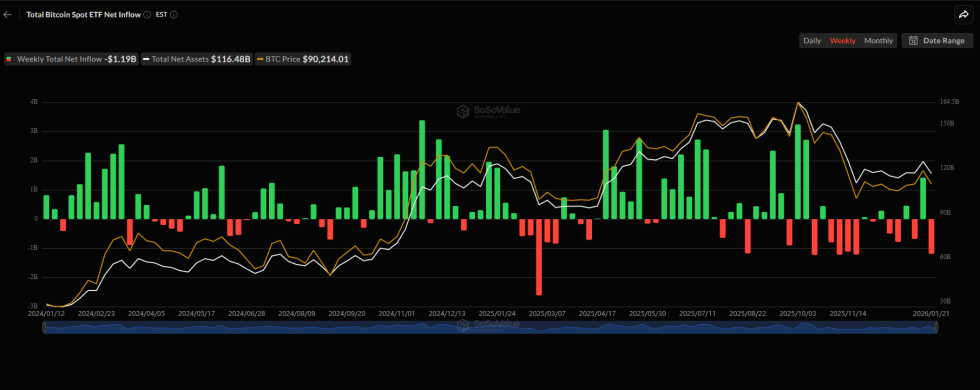
In related news, the US spot Bitcoin ETFs have faced weak demand recently, with the netflow for the current week sitting at a notable negative value, according to data from SoSoValue.

Bitcoin Spot ETF Netflows

As displayed in the above graph, the US Bitcoin spot ETFs have witnessed net outflows of $1.19 billion this week so far. These negative netflows have come as the asset’s price has gone through a bearish shift, retracing the recovery it had made earlier this year.

Last week, the funds actually saw net inflows of $1.42 billion, breaking the trend of weak inflows or outright outflows that had persisted since mid-October. But this week’s netflow suggests the bullish market mood couldn’t last.

BTC Price

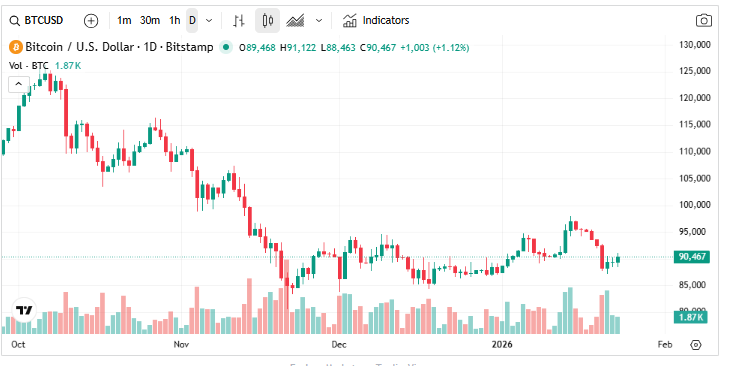
At the time of writing, Bitcoin is trading around $89,100, down more than 8% over the last week.

Bitcoin Price Chart

Thailand Targets Early 2026 for Crypto ETF Regulations

Thailand’s Securities and Exchange Commission is finalizing regulations to introduce crypto exchange-traded funds early this year, alongside rules for crypto futures trading and expanded tokenized investment products, as the regulator moves to align the country’s capital market framework with accelerating global trends in digital asset adoption.

According to the Bangkok Post, Deputy Secretary-General Jomkwan Kongsakul confirmed that the SEC plans to issue formal guidelines supporting the establishment of crypto ETFs early this year, while working to enable crypto futures trading on the Thailand Futures Exchange.

The regulatory push builds on the SEC board’s approval of crypto ETFs in principle, with detailed investment and operational rules now undergoing final development requiring close cooperation between asset management companies and licensed digital asset exchanges.

THAILAND MOVES TO SUPPORT CRYPTO INVESTMENTS

Thailand’s 'SEC' says new rules are coming for crypto ETFs, crypto futures, and tokenized investments, formally recognizing digital assets as an official asset class under the law. pic.twitter.com/o5qMMBbZG4

— Coin Bureau (@coinbureau) January 22, 2026

Crypto ETFs Designed to Lower Barriers and Security Risks

Kongsakul emphasized that crypto ETFs offer significant advantages for Thai investors who already have access to similar products in overseas markets.

A key advantage of crypto ETFs is ease of access; they eliminate concerns over hacking and wallet security, which has been a major barrier for many investors,” she stated.

The products allow exposure to digital assets without opening digital wallets or managing private keys, substantially reducing operational and cybersecurity risks that have deterred mainstream participation.

The SEC is considering introducing market makers for crypto ETFs to ensure adequate liquidity, potentially including digital asset exchanges, financial institutions, corporations, and entities holding cryptocurrencies on their balance sheets.

Once finalized, jointly developed products between asset managers and licensed exchanges could be listed and traded on the Stock Exchange of Thailand.

The regulator is also pursuing formal recognition of digital assets as an underlying asset class under the Derivatives Act, paving the way for crypto futures trading on TFEX under the Futures Trading Act.

Crypto futures would be traded on TFEX under the Futures Trading Act,” Kongsakul explained, adding the move would provide investors with hedging tools and sophisticated risk management options.

Regulators Position Digital Assets as Portfolio Diversification Tool

The SEC emphasized that crypto should be treated as “another asset class” rather than a speculative instrument, recommending that investors with a higher risk tolerance allocate 4-5% of their portfolios to digital assets while maintaining diversification.

Thailand approved its first spot Bitcoin ETF in 2024 through One Asset Management, structured as a “fund of funds” that provides institutional clients with regulated access through global investment vehicles, following similar moves in the United States and Hong Kong.

The upcoming expansion into altcoin ETFs represents the next policy development stage, with Bloomberg reporting in October 2025 that the SEC was drafting rules in coordination with other agencies to widen crypto ETF offerings beyond Bitcoin to include a basket of digital tokens.

Thailand plans to expand its crypto ETF market beyond Bitcoin to include multiple tokens, with new rules expected early next year.#Thailand #CryptoETFs https://t.co/ob28LM5N0g

— Cryptonews.com (@cryptonews) October 2, 2025

Beyond new investment products, the SEC intends to strengthen oversight of online financial personalities by establishing clearer boundaries between general market commentary and services that require professional licensing.

Providing factual information may not require a licence, but any recommendation related to securities or investment returns will require proper authorisation as either an investment advisor or introducing broker,” Kongsakul stated.

Thailand Joins Global Push Toward Regulated Crypto Products

The regulator is collaborating with the Bank of Thailand to establish a sandbox to promote tokenization and distributed ledger technology, believing that tokenization could significantly lower barriers for retail investors and help digital assets become a meaningful driver of Thailand’s economic growth.

The SEC also wants to expand the use of digital tokens for investment beyond existing investment tokens to include bond tokens and tokenized fund units, with Thailand’s first green token expected to launch, supporting sustainable finance and ESG-linked investment.

🇹🇭 Thailand chooses KuCoin as lead partner for historic $153M tokenized government securities with $3 minimum investment.#Thailand #Cryptohttps://t.co/do6x6GRhEE

— Cryptonews.com (@cryptonews) August 27, 2025

Thailand’s preparations for a crypto ETF align with broader momentum across Asia and Western markets, as South Korea announced plans to introduce spot Bitcoin ETFs in 2026 as part of its Economic Growth Strategy, despite ongoing legislative disputes over stablecoin governance.

Vietnam has also introduced a crypto pilot licensing regime this week, requiring a minimum capital of $380 million, attracting interest from around 10 securities firms and banks.

Outside Asia, Vanguard has also reversed years of resistance by opening its $11 trillion brokerage platform to third-party crypto ETFs and mutual funds in December 2025, with its head of brokerage, Andrew Kadjeski, stating that “cryptocurrency ETFs and mutual funds have been tested through periods of market volatility, performing as designed while maintaining liquidity.

The post Thailand Targets Early 2026 for Crypto ETF Regulations appeared first on Cryptonews.

South Korea Advances Tokenized Securities Framework Amid Crypto Regulation Push

As South Korea intensifies its push for crypto regulation, lawmakers have advanced a bill to establish a legal framework for issuing and trading security token offerings (STOs) using distributed ledger technology (DLT).

Lawmakers Amend Framework For Tokenized Securities

On Thursday, South Korea’s National Assembly passed key amendments to the Capital Markets Act and the Electronic Securities Act, creating a legal framework for the issuance and distribution of tokenized securities.

According to an official government release, the revised rules define tokenized securities as a broad category that extends to both debt and equity products, and recognize them as legitimate financial instruments.

The amendments to the Electronic Securities Act will allow qualified issuers to launch tokenized securities using distributed ledger technology. Meanwhile, the Capital Markets Act changes will enable the products to be traded as investment contract securities on brokerages and other licensed intermediaries.

Notably, the existing Capital Markets Act prohibited the distribution through securities firms, deeming investment contract securities “unsuitable for distribution due to their non-standard characteristics.”

The changes are “expected to enhance accessibility to investments and improve the provision of investment information for these securities,” the official government release stated.

After legislative approval, the bill will be submitted to the State Council, followed by official presidential promulgation. Therefore, the legislation is expected to be enacted one year after being signed into law, tentatively in January 2027.

Moreover, the Financial Services Commission (FSC) is set to lead the implementation, forming a joint “Token Securities Council” with relevant agencies to ensure seamless preparatory work, including the development of supporting infrastructure and enhanced safeguards.

The consultation body will comprise the FSC, the Financial Supervisory Service, the Korea Securities Depository, the Financial Investment Association, industry participants, and experts.

South Korea’s Crypto Regulatory Push Continues

This major step follows South Korea’s efforts to develop and establish clear, comprehensive rules to regulate the local crypto industry. Last week, the government shared its 2026 Economic Growth Strategy, which included a plan to open its market to Bitcoin (BTC) Exchange-Traded Funds (ETFs) this year.

Crypto-based ETFs have been banned in South Korea since 2017. In 2024, the country’s regulator reaffirmed its stance after the US Securities and Exchange Commission (SEC) approved the investment products. However, it has now cited the success of the US and Hong Kong’s crypto funds as a key factor for their shift.

The FSC will also accelerate the next phase of its digital asset legislation this quarter to establish a clear regulatory framework for stablecoins. As reported by Bitcoinist, South Korea’s Second Phase of the Virtual Asset User Protection Act was delayed until the start of 2026 due to an ongoing disagreement between the FSC and the Bank of Korea (BOK).

The financial authorities have been clashing for months over rules related to the issuance and distribution of stablecoins, disagreeing on the extent of banks’ role in the issuance of won-pegged tokens.

Nonetheless, the main policies of the crypto framework have been decided, set to include investor protection measures, such as no-fault liability for crypto asset operators and isolation of bankruptcy risks for stablecoin issuers.

Moreover, the country is lifting its long-standing ban on institutional crypto trading, which is anticipated to begin later this year. According to local reports, the FSC is considering a rule to limit corporate cryptocurrency investments at 5% of a company’s equity capital.

Under the latest proposal, eligible firms would be able to allocate up to 5% of equity capital per year to digital assets, limited to the top 20 cryptocurrencies by market capitalization. The final draft version could be released as early as January or February.

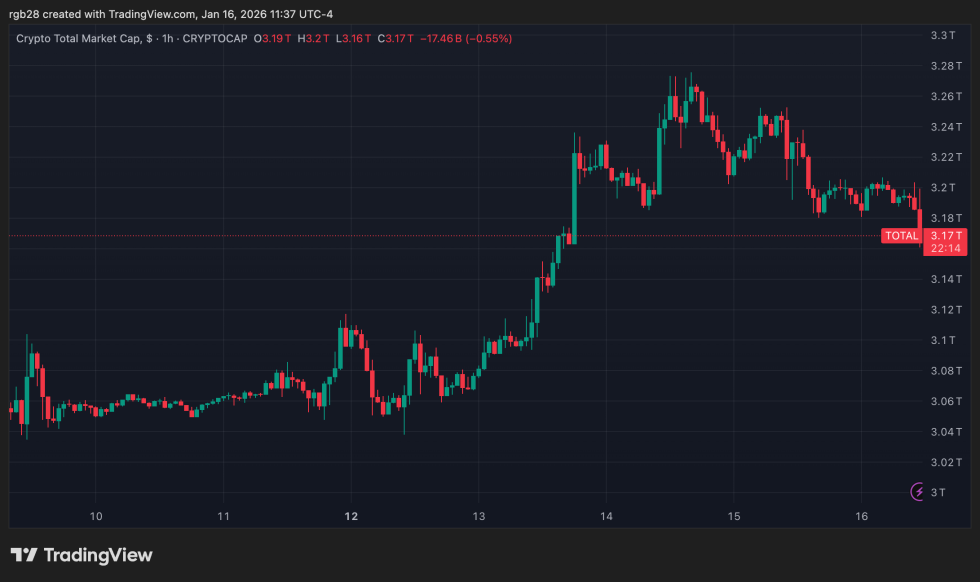
crypto, TOTAL

Bitcoin And Crypto ETFs Set To Attract $130 Billion-Plus Inflows This Year, JPMorgan Predicts

According to analysts at JPMorgan, crypto-focused exchange-traded funds (ETFs), particularly for Bitcoin (BTC), are expected to see inflows in 2026 that will far exceed those from 2025. 

Led by Nikolaos Panigirtzoglou, the analysis highlights a significant trend where capital flowing into the crypto market through ETFs reached a record high of $130 billion last year, driven by a growing interest in digital asset treasuries (DATs).

DAT Companies Lead Crypto Inflows In 2025

Panigirtzoglou explained that the inflows observed in 2025 were largely attributed to Bitcoin and Ethereum (ETH) ETFs, which the analyst suggests were primarily fueled by retail investors, as well as Bitcoin acquisitions by DAT companies. 

In contrast, participation from institutional investors and hedge funds, as indicated by the buying activity in Bitcoin and Ethereum Chicago Mercantile Exchange (CME) futures, appeared to have declined compared to 2024. 

The analysts noted that over half of the total digital asset inflows in 2025, approximately $68 billion, came from DAT companies. Another $23 billion was attributed to formal strategies, marking a slight increase from $22 billion in Bitcoin buying from the previous year. 

Notably, other DATs acquired about $45 billion in digital assets, a significant rise from just $8 billion in 2024. However, most of these purchases occurred earlier in the year, and by October, the momentum in crypto buying from DATs had markedly decreased.

Crypto venture capital funding also contributed to the overall capital flows, though this area remained substantially lower than the peaks experienced in 2021 and 2022. 

While total crypto venture capital funding saw a modest increase in 2025 compared to 2024, the number of deals declined sharply, and investment activity became increasingly concentrated in later-stage funding rounds. 

JPMorgan further suggested that this muted growth in venture funding was, in part, due to the increasing allocation of capital toward DATs. Funds that might have otherwise been directed to early-stage startups were increasingly diverted toward treasury strategies that provide immediate liquidity.

Regulatory Changes Anticipated To Boost Institutional Interest 

Looking forward, the analysts expect a rebound in institutional crypto flows in 2026, which could be spurred by the anticipated passage of additional regulatory measures, such as the Crypto Market Structure Bill (CLARITY Act) in the US. 

This anticipated legislation is expected to further entrench institutional adoption of digital assets, along with renewed institutional engagement in areas like venture capital funding, mergers and acquisitions, and initial public offerings (IPOs). 

However, the expected markup of this bill has been delayed late on Wednesday, as crypto industry leaders, including the cryptocurrency exchange Coinbase (COIN), have withdrawn their support for the legislation. 

This is attributed to issues related to key provisions, which the firm’s CEO, Brian Armstrong, has described as making this version “materially worse than the current status quo”.

Crypto

At the time of writing, the market’s leading cryptocurrency, Bitcoin, was trading at $96,050, having recorded gains of 10% over the previous fourteen days, as broader inflows have already returned to the market since the beginning of the year. 

Featured image from DALL-E, chart from TradingView.com 

Bitcoin ETF flows turn negative after explosive start to 2026

  • Bitcoin ETF outflows return after blockbuster start to 2026

  • Fidelity-led selling offsets early-year Bitcoin ETF surge

  • Ethereum, XRP and Solana ETFs still attract fresh inflows

US spot Bitcoin exchange-traded funds slipped back into negative territory on Tuesday, snapping a brief run of strong inflows that had marked the opening days of 2026.

According to data from SoSoValue, Bitcoin ETFs recorded $243 million in net outflows on Tuesday, marking the first day of negative aggregate flows this year.

The reversal followed a powerful start to the year, during which the products attracted more than $1.16 billion in net inflows across the first two trading sessions.

Fidelity and Grayscale drive outflows

The pullback was led by Fidelity’s Wise Origin Bitcoin Fund (FBTC), which saw $312.24 million exit the fund on Tuesday.

Grayscale’s flagship Bitcoin Trust (GBTC) also recorded notable withdrawals, with $83.07 million in net outflows. Grayscale’s Bitcoin Mini Trust saw a further $32.73 million leave the product.

Funds managed by Ark & 21Shares and VanEck also posted net outflows during the session, contributing to the overall negative total for the day.

The selling pressure was partially offset by continued demand for BlackRock’s iShares Bitcoin Trust (IBIT), which took in $228.66 million on Tuesday.

Date IBIT FBTC BITB ARKB BTCO EZBC BRRR HODL BTCW GBTC BTC Total
06 Jan 2026 228.7 -312.2 0.0 -29.5 0.0 0.0 0.0 -14.4 0.0 -83.1 -32.7 -243.2
05 Jan 2026 372.5 191.2 38.5 36.0 15.0 13.6 7.2 5.3 0.0 0.0 17.9 697.2
02 Jan 2026 287.4 88.1 41.5 6.7 4.5 13.0 0.0 8.3 0.0 15.4 6.4 471.3
31 Dec 2025 -99.0 -66.6 -13.8 -76.5 0.0 -5.1 0.0 -6.8 0.0 -69.1 -11.2 -348.1
30 Dec 2025 143.7 78.6 13.9 109.6 0.0 0.0 0.0 5.0 0.0 0.0 4.3 355.1

IBIT was the only US spot bitcoin ETF to record net inflows during the session.

Despite the single-day reversal, IBIT remains the standout performer early in the year.

Across the first three trading days of 2026, the fund has attracted a cumulative $888 million in net inflows, underscoring its dominant position in the market.

Ethereum and altcoin ETFs buck the trend

While Bitcoin ETFs saw redemptions, other crypto-linked products continued to attract capital.

US spot Ethereum ETFs recorded $114.7 million in net inflows on Tuesday, even as some products from Grayscale and Fidelity experienced outflows.

Altcoin-focused ETFs also remained in positive territory.

XRP ETFs added $19 million in net inflows, while Solana ETFs saw $9 million flow into the products, highlighting continued investor interest beyond Bitcoin despite broader market volatility.

Explosive start still shapes 2026 narrative

Tuesday’s outflows came after what had been an exceptionally strong opening to the year for Bitcoin ETFs.

In the first two trading days of 2026 alone, US spot Bitcoin ETFs pulled in more than $1.2 billion in net inflows, placing the sector on pace for a potentially record-setting year if momentum resumes.

“The spot Bitcoin ETFs are coming into 2026 like a lion,” said Bloomberg senior ETF analyst Eric Balchunas on Tuesday.

Balchunas noted that inflows exceeded $1.2 billion in just two days, with nearly all funds participating.

The WisdomTree Bitcoin Fund was the lone exception, he said.

He added that maintaining this pace would imply annual inflows of roughly $150 billion, or about 600% more than total inflows recorded in 2025.

“Told ya’ll if they can take in $22 billion when it’s raining, imagine when the sun is shining,” Balchunas said.

US spot bitcoin ETFs attracted $21.4 billion in net inflows in 2025, down from $35.2 billion in 2024.

BlackRock’s IBIT accounted for the majority of last year’s inflows.

Momentum accelerated sharply on Monday, when bitcoin ETFs logged $697 million in net inflows — the largest single-day intake in three months — as Bitcoin prices reclaimed and held above the $90,000 level following a volatile end to 2025.

Adding to the sector’s momentum, Morgan Stanley disclosed in a filing with the U.S. Securities and Exchange Commission on Tuesday that it plans to launch Bitcoin and Solana ETFs.

According to the filing, the proposed Morgan Stanley Bitcoin Trust will be a passive vehicle designed to track bitcoin’s spot price and will not employ leverage or derivatives.

The post Bitcoin ETF flows turn negative after explosive start to 2026 appeared first on CoinJournal.

Crypto ETFs may soon hit Japan amid tax cuts and regulatory reset

  • Crypto ETFs are being studied as a regulated gateway for public access to digital assets.
  • Japan will cut crypto taxes to 20% and reclassify major tokens as financial products.
  • Institutional shifts in Japan could have wider implications for global markets.

Japan is laying the groundwork for crypto exchange-traded funds as part of a broader effort to bring digital assets into its regulated financial system.

The shift was outlined by Finance Minister Satsuki Katayama during her New Year address at the Tokyo Stock Exchange, where she confirmed government backing for integrating blockchain-based assets into the country’s stock and commodity exchanges.

The comments place Japan alongside jurisdictions that are rethinking how digital assets fit within traditional markets, with 2026 framed as a pivotal year for implementation.

Katayama described 2026 as the first year of a new digital phase for Japan’s economy, pointing to developments overseas to underline the direction of travel.

She highlighted how crypto ETFs in the US have expanded access to digital assets by embedding them within familiar investment structures, rather than treating them as a separate asset class operating outside regulated exchanges.

ETFs enter policy debate

The minister’s remarks signalled a clear intention to use existing exchange infrastructure as the foundation for digital asset adoption.

By anchoring crypto trading to securities and commodity exchanges, policymakers appear focused on standardisation and oversight, rather than rapid deregulation.

Katayama also linked crypto ETFs in the US to their growing use as an inflation hedge for households, suggesting that Japan is assessing how similar products could function within domestic portfolios.

As Minister of State for Financial Services, she pledged full support for exchanges developing fintech-focused trading systems.

This backing indicates that crypto-linked products are no longer being treated as experimental but as instruments that could sit alongside equities, commodities, and derivatives.

Tax and legal reset for 2026

The ETF discussion coincides with sweeping regulatory changes already locked in for 2026.

Japan will cut its crypto tax rate from a maximum of 55% to a flat 20%, aligning digital assets with stocks and other conventional investments.

The government has also reclassified 105 cryptocurrencies, including Bitcoin and Ethereum, as financial products under the Financial Instruments and Exchange Act.

These changes allow investors to carry forward crypto trading losses for up to three years, mirroring rules that apply to equities.

The clearer framework has prompted long-standing preparations by domestic firms.

Implications beyond domestic markets

Japan’s evolving stance is being watched closely outside the country.

As the largest foreign holder of US Treasury bonds, with holdings of about $1.2 trillion, Japan plays a significant role in global capital flows.

Any reallocation by Japanese institutions toward digital assets could influence market sentiment well beyond Asia.

At home, the Financial Services Agency has already approved the country’s first yen-pegged stablecoin, JPYC, and has discussed allowing banks to hold and trade crypto directly.

Katayama has characterised 2026 as a turning point for addressing Japan’s economic challenges through fiscal policy and targeted investment in growth sectors, with digital assets now firmly part of that strategy.

With lower taxes, clearer legal definitions, and ETF-style products edging closer, Japan is repositioning crypto from the fringes of finance toward the centre of its regulated markets.

The post Crypto ETFs may soon hit Japan amid tax cuts and regulatory reset appeared first on CoinJournal.

❌