❌

Reading view

There are new articles available, click to refresh the page.

Beer Keg Plumbing for a Liquid Rocket

By: Ian Bos

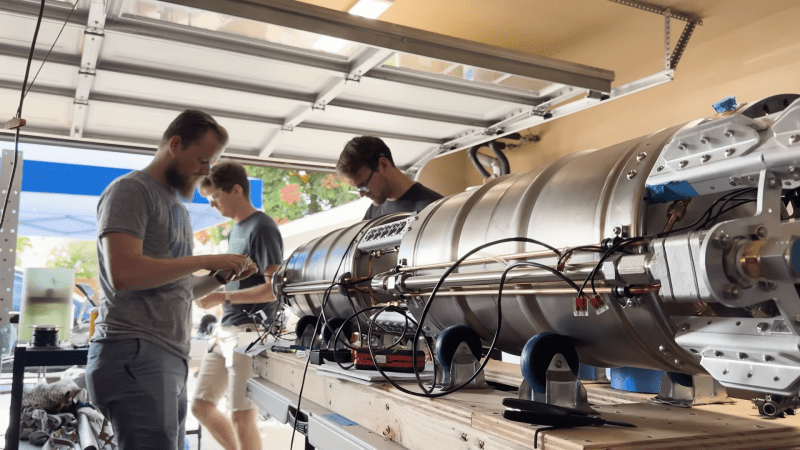
When you think of a high performance liquid rocket, what do you think of? Beer kegs? No? Well, when [Ryan] from the YouTube channel β€œProject KegRocket” saw a beer keg, the first thing he and his friends saw was a pressurized rocket body.

You wouldn’t be crazy if the first thing you thought of was something designed by a massive company or university. Liquid rockets are far from simple to develop, with Keg Rocket being no exception. Liquid oxygen and alcohol is the oxidizer/fuel mixture of choice. Liquid oxygen in particular is a problem with its cryogenic temperatures and tendency to do what rocket fuel does best, burn. This problem causes a large amount of work to simply connect the pipes. Traditional O-rings have no chance at surviving, along with most other non-metallic solutions.

Even with all these problems, the group creating the piece of art is more than capable, having experience creating similar rockets in the past. As of currently, the pumping has been pressure and leak checked. We will be watching this project closely for updates and an eventual launch.

For more rocketry science, be sure to check out aerospike engines for the most efficient engines around. If you want efficiency in your pizzas and beer kegs, check out this keg pizza oven instead!

Key moment approaches for NASA’s crewed moon mission

After moving the massive SLS rocket and Orion spacecraft to the launchpad last weekend, NASA is now eyeing the next stage of its preparations for Artemis II, the first crewed lunar mission in more than five decades. Now firmly in place at Launch Pad 39B at the Kennedy Space Center in Florida, the rocket will […]

The post Key moment approaches for NASA’s crewed moon mission appeared first on Digital Trends.

NASA’s mega moon rocket has arrived at the launchpad. What’s next?

NASA’s Space Launch System (SLS) rocket and Orion spacecraft reached the Launch Pad 39B at the Kennedy Space Center in Florida on Saturday following a 4-mile, 12-hour crawl from the Vehicle Assembly Building. The rocket is being prepped for the Artemis II mission, which will carry three Americans and one Canadian on a voyage around […]

The post NASA’s mega moon rocket has arrived at the launchpad. What’s next? appeared first on Digital Trends.

Testing Laughing Gas for Rocket Propellant

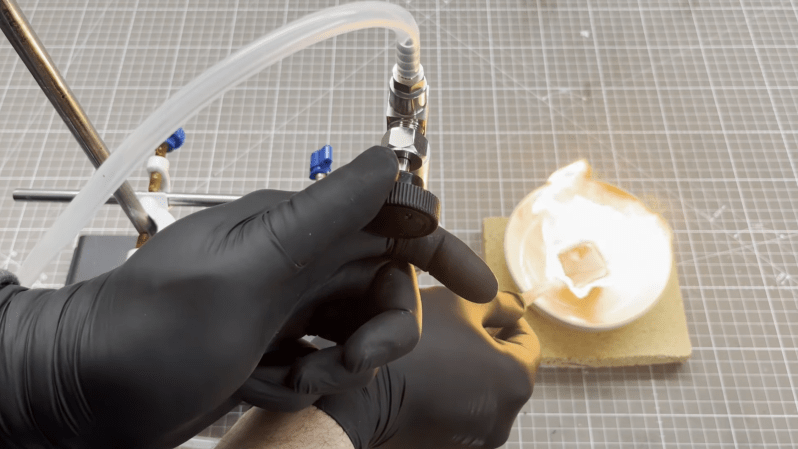
A man's gloved hand is need adjusting the valve on a cylinder, from which a clear plastic tube extends. The man's other hand is seen holding the the other end of the tube in front of a dish of burning wax, which is flaring brightly.

Nitrous oxide’s high-speed abilities don’t end with racing cars, as it’s a powerful enough oxidizer to be a practical component of rocket propellant. Since [Markus Bindhammer] is building a hybrid rocket engine, in his most recent video he built and tested a convenient nitrous oxide dispenser.

The most commercially available form of nitrous oxide is as a propellant for whipped cream, for which it is sold as β€œcream chargers,” basically small cartridges of nitrous oxide which fit into cream dispensers. Each cartridge holds about eight grams of gas, or four liters at standard temperature and pressure. To use these, [Markus] bought a cream dispenser and disassembled it for the cartridge fittings, made an aluminium adapter from those fittings to a quarter-inch pipe, and installed a valve. As a quick test, he fitted a canister in, attached it to a hose, lit some paraffin firelighter, and directed a stream of nitrous oxide at it, upon which it burned much more brightly and aggressively.

It’s not its most well-known attribute in popular culture, but nitrous oxide’s oxidizing potential is behind most of its use by hackers, whether in racing or in rocketry. [Markus] is no stranger to working with nitrogen oxides, including the much more aggressively oxidizing nitrogen dioxide.

❌