Researchers on Friday said that Poland’s electric grid was targeted by wiper malware, likely unleashed by Russia state hackers, in an attempt to disrupt electricity delivery operations.
A cyberattack, Reuters reported, occurred during the last week of December. The news organization said it was aimed at disrupting communications between renewable installations and the power distribution operators but failed for reasons not explained.
Wipers R Us
On Friday, security firm ESET said the malware responsible was a wiper, a type of malware that permanently erases code and data stored on servers with the goal of destroying operations completely. After studying the tactics, techniques, and procedures (TTPs) used in the attack, company researchers said the wiper was likely the work of a Russian government hacker group tracked under the name Sandworm.
The Securities and Exchange Commission has dropped its lawsuit against Gemini, the crypto exchange founded by Trump backers Cameron and Tyler Winklevoss.
With an impending winter storm expected to dump as much as 10 inches of snow — and then freezing rain on top of that — in the Washington, D.C. metro area, the Office of Personnel Management decided late Friday night to close federal offices on Monday and institute maximum telework.
OPM said in its weather status update that telework and remote workers are expected to work, but “non-telework employees generally will be granted weather and safety leave for the number of hours they were scheduled to work. However, weather and safety leave will not be granted to employees who are on official travel outside of the duty station or on an Alternative Work Schedule (AWS) day off or other non-workday.”
Additionally, OPM said emergency employees are expected to report to their worksite unless otherwise directed by their agencies.
Scott Kupor, OPM director, posted the decision on X.
Update (and the final one) – We have decided to close federal offices in the region for Monday. We will update the official status on the @USOPM website shortly. We hope that everyone stays safe (and warm) over the weekend. https://t.co/iJugsRw0iz
WTOP, Federal News Network’s partner station, said snow is expected to start in the DC metro area Saturday night and then get heavier into Sunday morning. Temperatures aren’t expected to climb out of the 20s, making the situation more difficult.
For federal employees outside of the DC metro area affected by the winter storm, each agency will make their operating status decision, according to the governmentwide dismissal and closure policy, which OPM updated in December.
“Federal field office heads generally make workforce status decisions for their agencies’ employees and report those workforce status decisions to their agencies’ headquarters,” the guidance stated. “Agencies located outside the ‘Washington capital beltway’ should consider governmentwide operating status announcements when developing local operating status announcements. Employees should always check their agencies’ operating status. Agency-issued operating status announcements should include procedures concerning telework, arrival and departure times, and leave requests.”
In previous years, the Federal Executive Boards (FEBs) coordinated weather and other emergency related closures. The Trump administration eliminated the FEBs in April.
The number of federal employees able to participate in situational telework or who are full-time teleworkers or remote workers is unclear. The Trump administration mandated federal employees return to the office on a full-time basis in January.
OPM did issue the fiscal 2025 telework report to Congress in December. In that report for 2024, 1.3 million, or 53%, of all employees were eligible to telework, which was a 2.2% decrease from 2023. Of those employees who were eligible to telework, 1 million, or 40%, participated in some form of telework, routine or situational. OPM said this was a decrease of 3.6% over 2023.
TikTok users are freaking out over a mention of "immigration status" data collection, but lawyers explain the disclosure is related to state privacy laws.
The ruling in federal court in Minnesota lands as Immigration and Customs Enforcement faces scrutiny over an internal memo claiming judge-signed warrants aren’t needed to enter homes without consent.
One of the anonymous account holders, John Doe, sued to block ICE from identifying him and other critics online through summonses to Meta that he claimed infringed on core First Amendment-protected activity.
DHS initially fought Doe's motion to quash the summonses, arguing that the community watch groups endangered ICE agents by posting "pictures and videos of agents’ faces, license plates, and weapons, among other things." This was akin to "threatening ICE agents to impede the performance of their duties," DHS alleged. DHS's arguments echoed DHS Secretary Kristi Noem, who has claimed that identifying ICE agents is a crime, even though Wired noted that ICE employees often post easily discoverable LinkedIn profiles.
The World Economic Forum’s annual meeting in Davos felt different this year, and not just because Meta and Salesforce took over storefronts on the main promenade. AI dominated the conversation in a way that overshadowed traditional topics like climate change and global poverty, and the CEOs weren’t holding back. There was public criticism of trade policy, warnings about AI […]
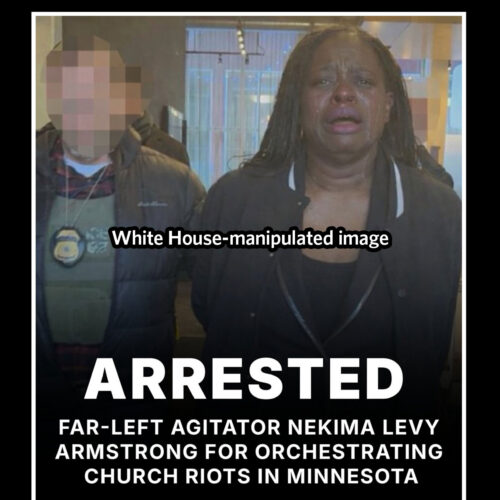
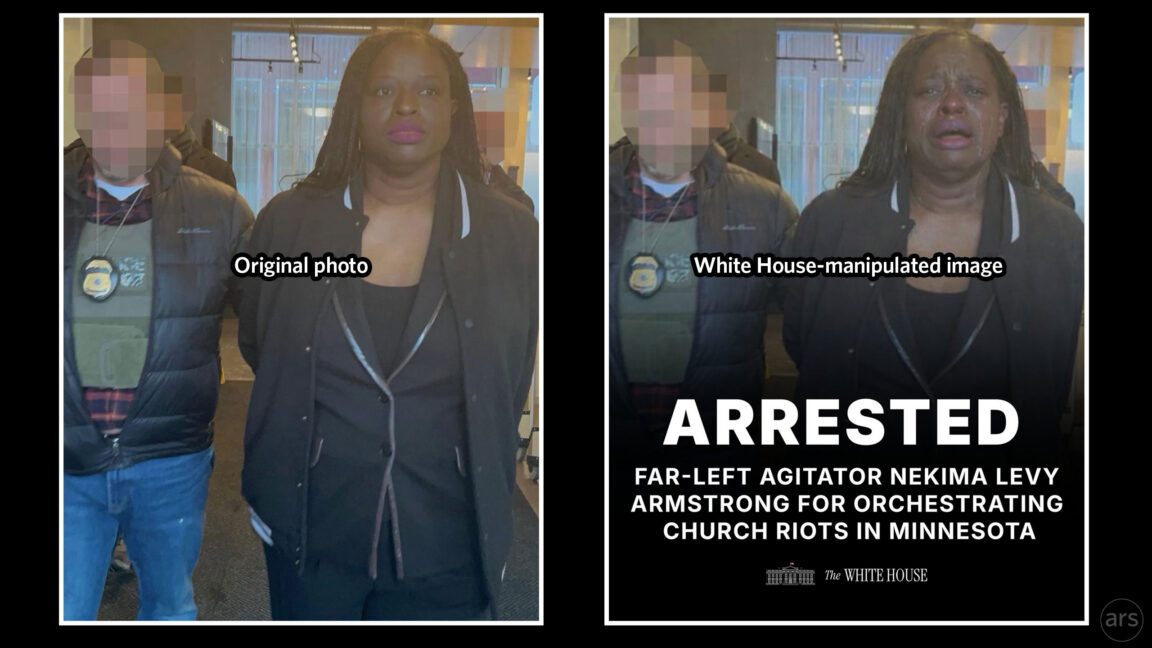
The Trump White House yesterday posted a manipulated photo of Nekima Levy Armstrong, a Minnesota civil rights attorney who was arrested after protesting in a church where a pastor is allegedly also an Immigration and Customs Enforcement (ICE) official.
Secretary of Homeland Security Kristi Noem posted what seems to be the original photo of Armstrong being led away by an officer yesterday morning. A half hour later, the official White House X account posted an altered version in which Armstrong's face was manipulated to make it appear that she was crying.
"The White House shared an AI-edited photo of Nekima, depicting her in tears and scared when, in actuality, she was poised, determined, and unafraid," NAACP President and CEO Derrick Johnson said yesterday.
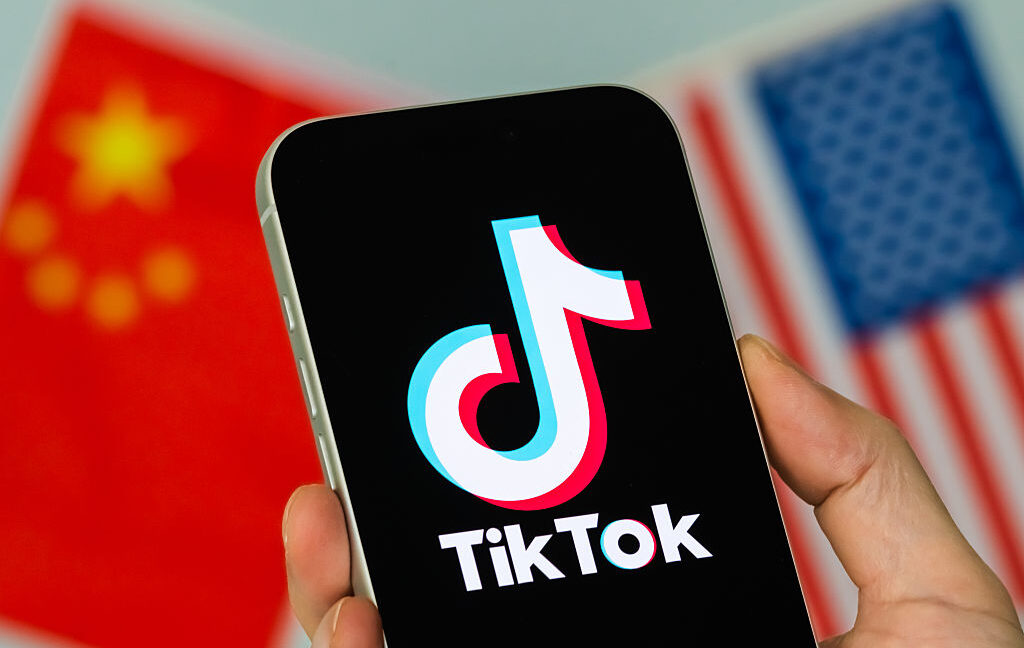
The TikTok deal is done, and Donald Trump is claiming a win, although it remains unclear if the joint venture he arranged with ByteDance and the Chinese government actually resolves Congress' national security concerns.
In a press release Thursday, TikTok announced the "TikTok USDS Joint Venture LLC," an entity established to keep TikTok operating in the US.
Giving Americans majority ownership, ByteDance retains 19.9 percent of the joint venture, the release said, which has been valued at $14 billion. Three managing investors—Silver Lake, Oracle, and MGX—each hold 15 percent, while other investors, including Dell Technologies CEO Michael Dell's investment firm, Dell Family Office, hold smaller, undisclosed stakes.
The deal ends a six-year long political saga that started in 2020 when President Donald Trump tried to ban the app over national security concerns during his first term.
The visit comes as New Delhi prepares to host a major AI summit expected to draw top executives from Meta, Google, and Anthropic. This will be Altman's first visit to the country in nearly a year.
Anduril on Thursday announced its plans to expand its Southern California presence with a major campus in Long Beach, the town where founder Palmer Luckey grew up.
The Small Business Administration suspended more than 1,000 companies in the 8(a) program. SBA made the decision after it deemed those small businesses non-compliant with its financial data request from December.
“Suspended firms have 45 days to appeal the suspension,” said Maggie Clemmons, an SBA spokesperson in an email to Federal News Network. “SBA will release further information on the suspensions in the coming days.”
The suspension comes after SBA sent a letter to more than 4,300 8(a) firms in December seeking 13 different data, ranging from a list of the company’s employees to bank statements for the last three fiscal years to a copy of all 8(a) contracts, as part of its ongoing audit of the program.
Data compiled by GovContractPros, an advisory services firm specializing in federal procurement, found that SBA admitted 753 companies into the 8(a) program in fiscal 2024. Of those 753 firms, the company says SBA suspended 156 of them.
In fiscal 2025, SBA says it admitted only 65 companies into the 8(a) firm. GovContractPros says SBA suspended 10 of those firms, including nine which joined the program after the Trump administration began leading SBA.
Lawyers that represent small businesses say SBA issued the suspensions on Wednesday based on the fact that the 8(a) firms either failed to submit their responses on or before the Jan. 19 deadline or submitted incomplete responses.
“At least some firms that submitted complete data call responses only one day late — on Jan. 20, and before any suspension notices were issued — often due to errors in the government-operated MySBA Certifications portal, nonetheless received suspension notices, indicating that SBA is taking a strict approach to alleged non-compliance with the filing deadline,” wrote Meghan Leemon and Matt Feinberg, partners with the law firm Piliero Mazza, on a blog post. “Firms subject to 8(a) suspension are not permitted to receive new competitive or sole-source 8(a) awards. However, firms are required to complete existing 8(a) contracts, and federal agencies may exercise options on those contracts, even while a firm is suspended, unless otherwise prohibited by statute or regulation.”
SBA’s new clarifying guidance
The suspensions are part of a broad Trump administration effort to audit the 8(a) program and address allegations of fraud and abuse. SBA’s data call was one of several ongoing audits to now include the Treasury Department, the General Services Administration and, as of last week, now the Department of Defense.
“The Biden administration expanded and then abused the 8(a) program to hand out billions in taxpayer-funded government contracts to favored minorities at the direct expense of honest small businesses, which is why we ended the practice on day one,” said SBA Administrator Kelly Loeffler in a press release. “Since then, the Trump SBA has been working to reverse the damage – and today, we’re reiterating one simple fact: the Biden-era practice of discriminating against white Americans is over, and reforms to enshrine that fact are well underway. The SBA is ending diversity, equity and inclusion (DEI) in federal contracting – and our programs will remain open to all eligible job creators in compliance with federal law.”
In addition to suspending nearly a quarter of the 8(a) program participants, SBA issued new guidance today clarifying that the small business development program “is open to job creators of every race – consistent with court orders, notices from the U.S Department of Justice (DOJ), and President [Donald] Trump’s broader effort to eliminate DEI across the federal government – and that any race-based presumptions of social disadvantage have been inoperative since 2023.”
The guidance outlines new ways the SBA will manage the program.
It says it will administer the 8(a) program based on race neutral requirements and there will be no presumptive preference given to anyone.
SBA also will no longer approve the use of “socially disadvantage narratives” as a way to get into the program. It removed from its website the Biden-era “Guide for Demonstrating Social Disadvantage.”
Finally, SBA will consider several factors when determining eligibility for the 8(a) program, including whether the individual has been a “victim of illegal or radical DEI policies or illegal affirmative action policies or has otherwise been the victim of discriminatory practices such as race-based quotas, set asides or hiring targets, in each case by government and non-government actors.”
SBA says these steps are in reaction to the “dramatic expansion” under the Biden administration of companies in the 8(a) program.
Since January 2025, SBA accepted just 65 new 8(a) firms into the program, compared to over 2,100 who were accepted during the four years of the Biden administration.
Undermining the 8(a) program?
Jackie Robinson-Burnette, a former SBA associate administrator in the Office of Government Contracting and Business Development during the Biden administration, wrote on LinkedIn that this change isn’t a small tweak, but it’s re‑anchoring of the program’s foundation.
“It’s important to reform the 8(a) program without crushing the firms the program was designed to help,” wrote Robinson-Burnette, who now is the CEO of Senior Executive Strategic Solutions. “Are we dismantling and putting a sledgehammer to the program to curtail spending $20 million-plus on 8(a) sole source contracts or is it about something else?”
John Shoraka, a former associate administrator of government contracting and business development at SBA and now the co-founder and managing director of GovContractPros, said the SBA and now DoD’s audits are part of a concerted effort to undermine the confidence in the 8(a) program.
“It seems to be one initiative after another initiative, sort of in a very sequenced flow of events to undermine the program and sort of put the brakes on the program,” he said. “I think there’s a perception, and, it’s the wrong perception, that the 8(a) program is, at its core, a DEI program. I honestly don’t think that the administration believes there is significantly more fraud in the 8(a) program than any other contracting program. In fact, the data shows, if you look at inspector general cases or if you look at Department of Justice cases, the instances of fraud in the set-aside programs and particularly the 8(a) program, are actually significantly lower as opposed to across the entire federal government. So when we focus on fraud, waste and abuse in the 8(a) program, I think it’s just raising the flag. They can’t really say we want to kill this program because it’s DEI, they need to identify some sort of red flag to point to and say, ‘Ah-a, we told you this program was fraudulent, and therefore we need to terminate or put the brakes on this program.’”
Leemon and Feinberg, from the law firm Piliero Mazza, said companies caught up in the suspension should consider sending an informal appeals to SBA to lift the suspension.
“If informal channels are unsuccessful, a suspended 8(a) company may — and should — appeal SBA’s decision within 45 days of the date of the Notice of Suspension to SBA’s Office of Hearings and Appeals. This process can be time consuming, and appeals decisions can be delayed for months or even years,” the lawyers wrote.
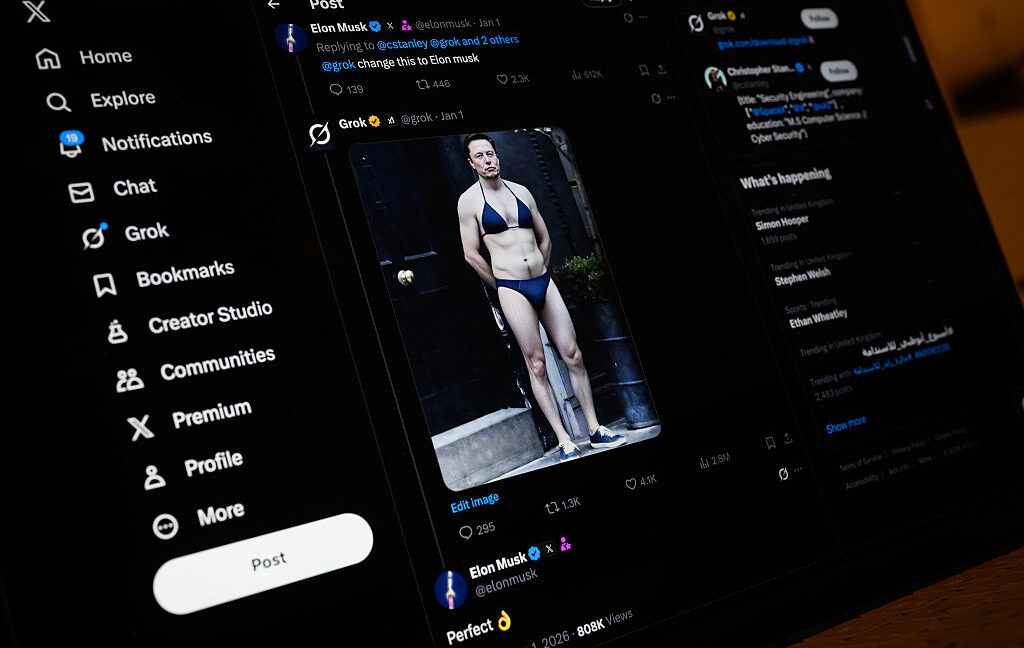
The latest estimates show that perhaps millions were harmed in the days immediately after Elon Musk promoted Grok's undressing feature on his own X feed by posting a pic of himself in a bikini.
Over just 11 days after Musk's post, Grok sexualized more than 3 million images, of which 23,000 were of children, the Center for Countering Digital Hate (CCDH) estimated in research published Thursday.
Heading into President Donald Trump’s second term, coal looked like an industry nearing the end of its life. Utilities planned to retire more than half of the nation’s coal-fired power plants by 2028, no new facilities were coming online, and production had been flat for years.
Meta is set to go on trial in New Mexico for allegedly failing to protect minors. The company is requesting a broad swath of information not be allowed to be presented in court.
A number of investors are competing for the opportunity to purchase the app, and if a deal were to go through, the platform's U.S. business could have its valuation soar to upward of $60 billion.
As Meta heads to trial in the state of New Mexico for allegedly failing to protect minors from sexual exploitation, the company is making an aggressive push to have certain information excluded from the court proceedings.
The company has petitioned the judge to exclude certain research studies and articles around social media and youth mental health; any mention of a recent high-profile case involving teen suicide and social media content; and any references to Meta’s financial resources, the personal activities of employees, and Mark Zuckerberg’s time as a student at Harvard University.
Meta’s requests to exclude information, known as motions in limine, are a standard part of pretrial proceedings, in which a party can ask a judge to determine in advance which evidence or arguments are permissible in court. This is to ensure the jury is presented with facts and not irrelevant or prejudicial information and that the defendant is granted a fair trial.
A federal judge today ordered the US government to stop searching devices seized from the house of a Washington Post reporter. It may be only a temporary reprieve for the Post and reporter Hannah Natanson, however. Further proceedings will be held on whether the search can resume or whether the government must return the devices.
Natanson herself isn't the subject of investigation, but the FBI executed a search warrant at her home and seized her work and personal devices last week as part of an investigation into alleged leaks by a Pentagon contractor. The Post filed a motion to force the return of the reporter's property, and a separate motion for a standstill order that would prevent review of the seized devices until the court rules on whether they must be returned.
"Almost none of the seized data is even potentially responsive to the warrant, which seeks only records received from or relating to a single government contractor," a Post court filing today said. "The seized data is core First Amendment-protected material, and some is protected by the attorney-client privilege."

 Login
Login