Lebanon-based manufacturer Frem has revealed new images showing development progress of its next-generation tactical vehicle, Venom, as the company continues work on a prototype designed for special operations missions, CEO David Frem confirmed. The images, shared by Frem, show the vehicle under construction in its Special Operation Vehicle (SOV) configuration, a lightweight variant focused on […]
DEEP DIVE — On November 24, 2025, President Trumplaunched a process to designate Muslim Brotherhood chapters in Lebanon, Egypt, and Jordan as Foreign Terrorist Organizations (FTOs) and Specially Designated Global Terrorists (SDGTs).
Citing fresh intelligence that these specific affiliates provided material support to Hamas after the October 7 attacks on Israel, the White House gave Secretary of State Marco Rubio and Treasury Secretary Scott Bessent a tight 30-day deadline to produce a formal report. The goal, administration sources say, is to sever the financial arteries — from charitable fronts to hawala networks — that have kept the Brotherhood’s regional machinery alive.
The decision comes at a moment when the Brotherhood’s once carefully cultivated image as the respectable face of political Islam lies in tatters. Days before Trump’s executive order, Texas Governor Greg Abbott made his statethe first to label both the Muslim Brotherhood and the Council on American-Islamic Relations (CAIR) as terrorist entities, vowing to target what he called “radical extremists.” Florida Governor Ron DeSantis followed the move by Texas with his own similar executive order. With federal momentum now behind him, the designations threatens to cascade across the region—and potentially beyond.
“Hamas was founded as the Egyptian arm of the Muslim Brotherhood and has made this very clear in its Charter of 1987,” Hans-Jakob Schindler, Senior Director of the Counter Extremism Project, tells The Cipher Brief. “The political statement of Hamas of 2017 did not mention this link specifically, but it also did not state that Hamas would be independent. Hence, Hamas remains part of the Muslim Brotherhood network.”
Roots of a Transnational Shadow
To grasp the stakes, the story must begin in Ismailia, Egypt, in 1928, when schoolteacher Hassan al-Banna founded the Ikhwan al-Muslimin as a movement of Islamic revival and social reform. What started with Quranic lessons and charity work exploded into a mass organization of hundreds of thousands by the 1940s, complete with a secret paramilitary wing, the Special Apparatus, that carried out bombings and assassinations against British forces and Jewish targets. Egypt banned the group in 1948; al-Banna was assassinated shortly afterward, almost certainly by state security.
Heavy-handed crackdowns, periods of accommodation, and notable ideological shifts have defined the Brotherhood’s trajectory since then.
Officially, the Brotherhood renounced violence in the 1970s, and it built an unrivaled network of mosques, clinics, schools, and labor unions. The 2011 Arab Spring briefly catapulted it to power: Mohamed Morsi became Egypt’s first elected president in 2012. Fourteen months later, mass protests and a military coup ended the experiment. Egypt declared the Brotherhood a terrorist organization in 2013, killed more than 1,000 supporters in a single day at Rabaa Square, and imprisoned tens of thousands more. Exiled, splintered, and radicalized,remnants went underground or looked to Gaza.
Fernando Caravajal, executive director at The American Center for South Yemen Studies and an expert in Sudanese affairs, tells The Cipher Brief that the Brotherhood’s ideological flexibility allows it to reemerge in power vacuums, but cautions that the potential United States terrorist designation likely stems from outside interests.
“Notice the timing: these statements came a week after the meeting with Saudi,” he said. “It wasn’t announced during the meeting, so we can’t say Saudis are openly pushing it, but they clearly have a hand behind it because of the timing, because of the content. It mentions Jordan and Lebanon — those are Saudi priorities.”
Riyadh’s priorities center on containing Islamist movements and curbing Iranian influence in the Levant, making Jordan and Lebanon key arenas for Riyadh’s regional security strategy.
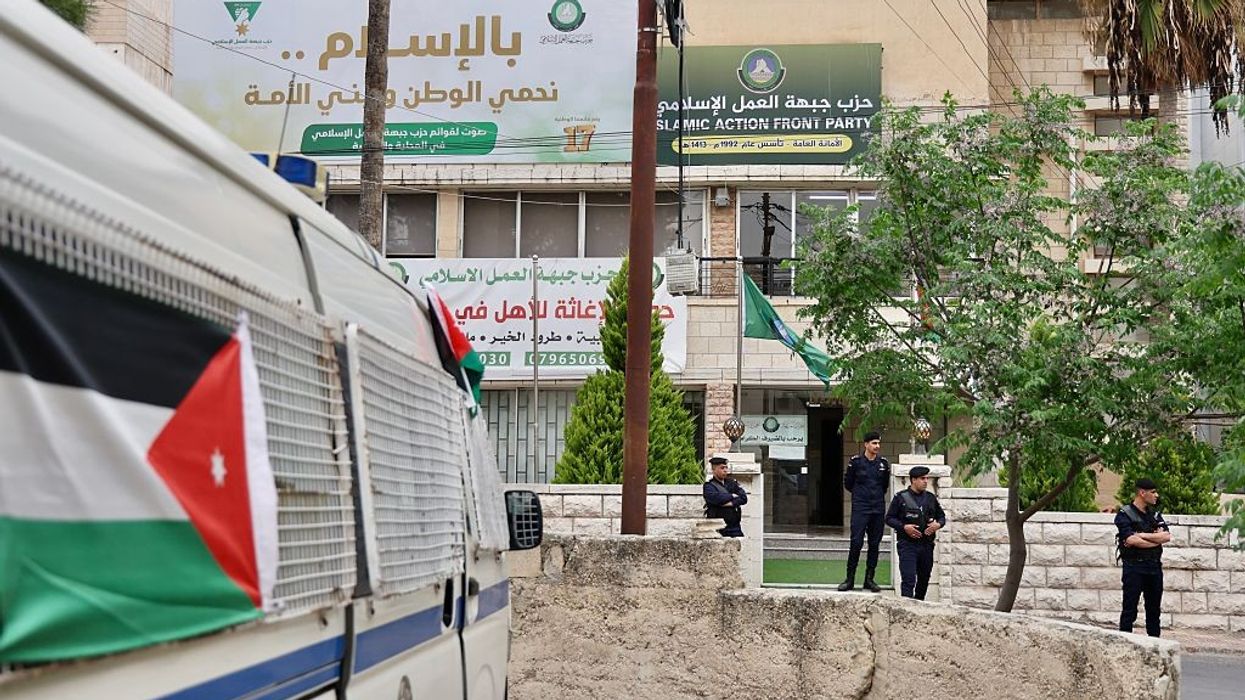
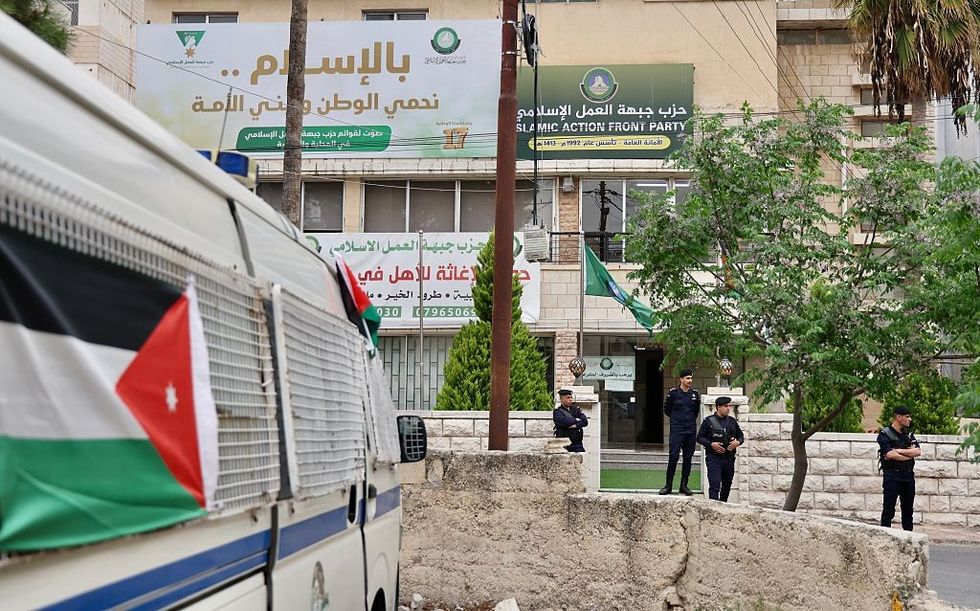
Across the region, local chapters adapted in different ways. Jordan’s Islamic Action Front (IAF)became the kingdom’s most organized opposition, running hospitals and schools and holding parliamentary seats. Lebanon’s looser network operates in Palestinian camps alongside Hezbollah. Both insist they are peaceful and gradualist.
“It is important to understand that the relationship between the Muslim Brotherhood and violence is a tactical one,” Schindler said. “It can change at any point if the network feels that violence would be useful for its position and influence.”
Past American attempts todesignate the entire Brotherhood collapsed amid pushback from Qatar, Turkey, and some European allies. This time, the White House has chosen a surgical strike. According to Schindler, the White House’s endeavor to focus on individual chapters is an optimal approach because it targets “chapters in countries that have themselves banned and/or designated the Muslim Brotherhood (Egypt, Jordan) and on Lebanon, where the distinction between Muslim Brotherhood and Hamas is hard to make.”
Need a daily dose of reality on national and global security issues? Subscriber to The Cipher Brief’s Nightcap newsletter, delivering expert insights on today’s events – right to your inbox. Sign up for free today.
The October 7 Reckoning
The trigger, ultimately, was October 7 and the events that followed. In Lebanon, the most explicit public demonstration came when a Brotherhood-affiliated militia calling itself the al-Fajr Forces fired rockets into northern Israel daysafter Hamas’s massacre.
“Hamas is the Muslim Brotherhood organization in Gaza and the West Bank. It calls itself such. However, it operates independently,” Nonresident Senior Fellow at the Atlantic Council and Former DHS Deputy Assistant Secretary for Counterterrorism Policy, Thomas Warrick, tells The Cipher Brief. “Its revenues were derived from control of Gaza’s governance: taxes, donations from outside governments, and criminal activities from which it profited. Other MB chapters are small in budgets and manpower compared to Hamas.”
In Jordan, the IAF organized some of the largest pro-Hamas demonstrations in the Arab world.
“The clearest demonstrated ‘link’ between Hamas and the specified Muslim Brotherhood chapters is that a Brotherhood-affiliated group in Lebanon, al-Fajr Forces, launched rockets into Israel following the October 7 2023 Hamas terrorist attack,” Rose Kelanic, director of the Middle East Program at Defense Priorities, tells The Cipher Brief, stressing that “the Muslim Brotherhood is not a terrorist threat to the United States.”
In Egypt, underground networks — despite Sisi’s repression — funneled money and propaganda into Gaza. Yet Schindler specifically highlights Lebanon’s darker role in Hamas’s external operations.
“According to German court documents, the Hamas cell that was arrested in Germany and the Netherlands in December 2023, which had planned and prepared for terror attacks in Germany, was led by Hamas handlers in Lebanon,” he noted. “Given the close connection between Hamas and the wider Muslim Brotherhood network, it is therefore likely that such contacts also exist in Lebanon.”
The real power of the designation, however, lies in America’s arsenal of financial warfare. Once listed, any bank worldwide that touches Brotherhood money in dollars risks losing access to the United States market.
“Disrupting the ability of large-scale extremist and terrorist networks, such as the Muslim Brotherhood, to have unhindered access to the global financial system is, of course, a very effective way to hinder their overall operations,” Schindler explained. “Hence, any country where this access is more restricted is, of course, a problem for such networks as it will increase their operational costs.”
Are you Subscribed to The Cipher Brief’s Digital Channel on YouTube? There is no better place to get clear perspectives from deeply experienced national security experts.
Allies on the Brink
Jordan is already on edge. Dependent on $1.5 billion inannual U.S. aid and facing street fury over Gaza, King Abdullah IIbanned the Brotherhood in April 2025 — yet the IAF still functions. While Schindler sees Washington’s possible move as reinforcement that will “aid in the efforts of the Jordanian government in countering Muslim Brotherhood structures in the country,” Kelanic warns of unintended consequences.
“The only scenario I worry about is if the U.S. insists on applying the FTO designation to the IAF, because that amounts to major meddling in Jordanian politics,” she noted. “The last thing the U.S. needs is another failed state in the Middle East.”
Turkey, experts point out, is perhaps the bigger headache. Schinder asserts that Turkey “is indeed an important network hub for Hamas,” in particular when it comes to the group’s financial systems.
“Turkey is in a unique position to pressure Hamas to give up its weapons and power in Gaza and leave the Strip,” he continued. “Unfortunately, so far, the Turkish government does not seem to have done so.”
According to Warrick, “what Turkey will do in response to the U.S. designation is not yet clear.”
“Supporting Muslim Brotherhood affiliates in the region is a core policy of the Turkish government, but President Erdoğan is mindful that his relationship with President Trump is strong and is valuable,” he explained. “The Turkish government is aware of the Trump administration’s hostile attitude towards the Muslim Brotherhood but is not likely to change its approach except in countries that the U.S. government has formally designated Brotherhood branches as Foreign Terrorist Organizations.”
A senior U.S. intelligence official, speaking to The Cipher Brief on background, described the administration’s delicate balancing act.
“The President comes out with a statement where he’s clearly trying not to offend the Qataris too much, but at the same time satisfying the UAE and the Saudis and the Egyptians,” the insider noted. “He’s riding the fence on this but skewing more to the anti-side.”
Washington is particularly wary of antagonizing Doha because Qatar remains a critical mediator with Islamist movements and an indispensable interlocutor in hostage, de-escalation, and regional crisis negotiations. The Qatar-based Brotherhood chapter formally disbanded in 1999, and Doha has repeatedly denied formal support for the Muslim Brotherhood, despite continued investigationsindicating the group’s ongoing financial backing andpraise from the likes of Hamas.
That same insider predicted domestic ripple effects: “If we suddenly see a ton of states passing laws against the Brotherhood and CAIR, then we start to have some real domestic impacts.”
CAIR has long faced allegations of historical ties to the Muslim Brotherhood because some of its early founders wereinvolved with U.S.-based organizations linked to Brotherhood-affiliated networks, and because it was named as an “unindicted co-conspirator” in the 2007 Holy Land Foundation case. Critics cite these associations as evidence of ideological or organizational overlap. However, no criminal charges were ever brought against CAIR, and no direct operational link to the Brotherhood has been proven. CAIRdenies any affiliation, and most of the evidence remains circumstantial, dated, and heavily disputed.
Analysts also point out that Saudi Arabia and the UAE, both of which already list the Brotherhood as terrorists, are quietly celebrating. But not everyone agrees that an FTO designation is a step in the right direction.
“Doing a blanket listing of ‘the Muslim Brotherhood’ is a huge risk for the U.S.,” Caravajal said. “It allows people to be arrested simply for going to the wrong mosque.”
For a movement that has survived bans, coups, and massacres for almost a century, this is only the latest test.
“The problem with designating the Muslim Brotherhood is that it never was a unitary organization or even a franchise organization like Al-Qaeda or Da’esh,” Warrick added. “This is why the solution the Trump administration came up with is the correct one. By working with partners that have already outlawed or sanctioned the Muslim Brotherhood chapters in their countries, the U.S. government can work cooperatively with those countries. This approach also gives some clarity to people in those countries, which groups they need to avoid in order not to be sanctioned by OFAC.”
The Cipher Brief is committed to publishing a range of perspectives on national security issues submitted by deeply experienced national security professionals. Opinions expressed are those of the author and do not represent the views or opinions of The Cipher Brief.
Have a perspective to share based on your experience in the national security field? Send it to Editor@thecipherbrief.com for publication consideration.
Read more expert-driven national security insights, perspective and analysis in The Cipher Brief because National Security is Everyone’s Business
DEEP DIVE — Tucked deep into the cragged hills of southern Lebanon, Hezbollah, the once powerful Iranian-backed militia brought to its knees by a war with Israel, has spent the past year meticulously gouging its way back to relevancy.
For Western and Israeli security forces, the designated terrorist group’s covert but influential resurgence establishes a precarious problem: a persistent, low-level threat that could instantly trigger a wider conflict, critically testing the resilience of any ceasefires and the existing, fragile statehood.
Financial Lifelines and Sanctions
The November 5announcement from the U.S. Treasury’s Office of Foreign Assets Control (OFAC) targeted key elements of Hezbollah’s financial network. Two operatives — Ossama Jaber, a Hezbollah financier who personally collected tens of millions via Lebanese exchange houses from September 2024 to February 2025, and Ja’far Muhammad Qasir, a sanctioned terrorist collaborating with Syrian oil magnate Yasar Husayn Ibrahim — were blacklisted for laundering Iranian cash into Hezbollah’s war chest.
These funds, exploiting Lebanon’s cash-heavy, regulation-light economy,bankrolled everything from paramilitary salaries to the reconstruction of terror infrastructure battered by Israeli strikes. Under Secretary of the Treasury for Terrorism and Financial Intelligence, John Hurley, didn’t mince words: For Lebanon to emerge “free, prosperous, and secure,” Hezbollah must be “fully disarmed and cut off from Iran’s funding and control.”
Matthew Levitt, a senior fellow and director of the counterterrorism and intelligence program at The Washington Institute for Near East Policy, and a former counterterrorism intelligence analyst for the FBI, points out that despite sanctions, Iran’s financial backing is pivotal to Hezbollah’s survival and operational reach.
“We assume Iran still provides about the same amount of money, but Hezbollah is having a harder time getting it through on a timely basis. They can’t just ship it from Iran or Iraq anymore without inspections, so they rely more on diaspora networks in South America and Africa,” he tells The Cipher Brief. “All of this is against the backdrop of severe setbacks. Hezbollah intends to continue positioning itself to not only fight militarily but also assert an oversized, dominant position within Lebanon by virtue of force.”
A Battered Front, But Not Broken
The Israel-Hezbollah war, which ignited in 2023 alongside the war in Gaza,decimated the organization’s leadership, weapons arsenal, and fighting ranks, with more than 3,000 of its fighters killed. The decapitation strikes were surgical: On September 27 last year, an Israeli airstrike flattened Hezbollah’s Beirut headquarters, killing Secretary-General Hassan Nasrallah, the group’s iron-fisted architect of asymmetric warfare. In the ensuing ground incursion, Israeli forces dismantled border launch sites and command bunkers, leaving Hezbollah’s Radwan Force, theelite unit tasked with infiltrating Galilee, reeling.
Yet, as analysts caution, Hezbollah is battered but not broken. A number of its battle-hardened fighters, who cut their teeth supporting the Assad regime in Syria, are now integrating into civilian life, ready to rearm at any time. Furthermore, the group’s Shia base, which comprisesroughly31 percent of the Lebanese population, remains loyal to Hezbollah, upheld by its wide-reaching welfare networksamid a country grappling with a crumbling economy.
These moves indicate that Hezbollah’s military recovery is already well underway.
“Hezbollah is giving much more attention than before the war to its Badr Unit, positioned north of the Litani River, and strengthening it with Radwan forces,” Sarít Zehavi, senior researcher at the Alma Research and Educational Center, tells The Cipher Brief. “They are also shifting from smuggling to local manufacturing of drones and missiles. Even though some brigades are not yet redeployed to the border, they continue training and rebuilding capabilities.”
The Badr Unit, a keyelement of Hezbollah’s northern forces, has become the group’s tactical spearhead along the Litani River and near the Israeli border. Tasked with reconnaissance, border infiltration, and rapid response, the unit has been reinforced with Radwan-trained fighters and advanced drone capabilities. Badr is central to Hezbollah’s evolvingdoctrine of “strategic latency,” maintaining a persistent threat without provoking full-scale war, and acts as a bridge between conventional militia operations and the group’s clandestine drone and cyber activities.
Moreover, Lebanon’s political deadlockincreases the risk that Hezbollah will maintain its military dominance.
The Beirut government, assembled hastily earlier this year under President Joseph Aoun, is characterized as the least Hezbollah-affiliated in years, with a focus on reclaiming national independence from the dominant insurgents. There is, however, significant skepticism about how such a push is enforced. Hezbollah continues to rebuff key appointments, and its diminished but growing stockpile,estimated at 20,000 remaining rockets, hangs over Beirut’s ambitions.
This hybrid threat presents a national security nightmare for Washington: a non-state actor wielding state power, rendering diplomacy incredibly difficult.
Need a daily dose of reality on national and global security issues? Subscriber to The Cipher Brief’s Nightcap newsletter, delivering expert insights on today’s events – right to your inbox. Sign up for free today.
Iran’s Evolving Logistical Pipelines
Tehran’s shadow looms largest. The IRGC-Quds Force, Hezbollah’s ideological leader since 1982, has poured over $1 billion into the group this year alone, per Treasury disclosures — despite layered U.S. sanctions biting into Iran’s oil exports. However, a source familiar with the U.S. Office of Foreign Assets Control told The Cipher Brief on background that tracking Iran’s funds has become increasingly challenging in recent months.
“The Treasury and State Departments need more resources to track violations, and the government shutdown left many investigators sidelined,” the source observed. “Congress can help by requiring reports on Iranian weapons shipments and funding enforcement teams.”
The Iranian cash flows throughhawala networks and Beirut’s labyrinthineexchange houses, where operatives like Jaber convert petrodollars into untraceable Lebanese pounds. It’s a masterclass in sanctions evasion: Iran’s regime, squeezed by domestic protests and a rial in freefall, prioritizes its “Axis of Resistance” over breadlines at home.
“Assad’s downfall severely crimped Hezbollah’s pipeline from Tehran, but even so, Hezbollah and Iran remain adept at exploiting fragile states. Beirut and Damascus show some interest in interdiction. Still, both are weak governments, and they have other priorities,” Jonathan Ruhe, Director of Foreign Policy at the JINSA Gemunder Center for Defense & Strategy, tells The Cipher Brief. “Iran also exploits power vacuums in Sudan and Libya to resupply Hezbollah from the sea, using surreptitious maritime tactics like Iran’s sanctions-busting ‘shadow fleets.’”
Post-war Syria has forced Tehran to improvise. The once-feared land bridge — stretching from Iran through Iraq and Syria to Lebanon — has been battered by Israeli airstrikes and rebel attacks, yet parts of it still survive. To bolster its Middle East proxy, the Iranian regime hasupped its use of maritime routes. Iranian cargo ships dock at Syria’s Tartus port under civilian manifests, offloading drone kits and rocket fuel disguised as fertilizer. Trucks then traverse the unguarded border into Lebanon’sQalamoun Mountains, often chaperoned by IRGC advisors.
Domestically, however, Hezbollah is reducing reliance on imports. Clandestinefactories in Beirut’s Dahiyeh suburbs and Bekaa orchards churn outrefurbished Kornet anti-tank missiles and Ababil drones from scavenged parts. There is a reportednetwork of 50-plus workshops, some powered by smuggled Chinese microchips, slashing reliance on vulnerable sea lanes. Despite its own economic ailments, Tehran continues to give precedence to Hezbollah’s position as a frontline deterrent over short-term financial stability.
Rebuilding the Arsenal: From Ashes to Drones
Israeli assessments estimate Hezbollah hasreclaimed just 20 percent of its pre-war precision arsenal, but what emerges is nimbler and deadlier in specific domains.Drones top the list: low-cost Shahed-136 clones, assembled from Iranian blueprints and Syrian-sourced engines, can loiter over Galilee for hours, scouting IDF positions or delivering 50 kg (110pounds) warheads. Short-range Fajr-5 rockets, concealable in olive groves, are proliferating under civilian camouflage — mosques, schools, even UNIFIL outposts.
Smuggling remains vital. Iran’s military equipment, including advanced components for precision-guided missiles (PGMs), is first transported into Syria using an array of methods designed to evade international scrutiny. Non-descript convoys then travel from Syria’s Homs City to the border city of Al-Qusayr near Lebanon. The Syrian-Lebanese border in the Homs/Al-Qusayr area is porous, mountainous, and complex to police.Over the course of this year, Israel has conductedmore than 40 strikes intercepting shipments near the southern coast of the city of Tyre. Yet the cat-and-mouse game favors smugglers. Private companies, fronts for IRGC logistics, reportedly run nighttime operations mixing weapons with sacks of flour labeled as aid.
“Even before October 7, Hezbollah tried to make precision munitions with Iranian help,” Ruhe noted. “Tehran is now redoubling these efforts. For all Israel’s successes over the last two years, it struggled to wage a multifront war of attrition, and it struggled to defeat Hezbollah’s drones. Hezbollah and Iran want to exploit this exact weakness by being able to oversaturate Israeli defenses with mass drone swarms, similar to what Iran helps Russia do against Ukraine.”
Indeed, Hezbollah’s rebuilding of its ranks is quieter but no less strategic. After losing an estimated 5,000 to 7,000 fighters, the group now runs “resistance summer camps” in the Litani Valley,teaching teenagers bomb-making and cyber tactics under the guise of community service. Morale has waned, but ideology endures: recruits draw strength from chants of Nasrallah’s martyrdom.
Are you Subscribed to The Cipher Brief’s Digital Channel on YouTube? There is no better place to get clear perspectives from deeply experienced national security experts.
The Long Game: Shadows on the Northern Border
For Israel, the situation is a high-stakes strategic battle. Prime Minister Netanyahu’s cabinet has stepped up its drone strikes into Lebanon in recent weeks, and preemptive raids to enforce ceasefire arms restrictions are not off the table. Nonetheless, Hezbollah leaders in Novemberrejected talks, and in anofficial letter to the Lebanese government, insisted that “any attempt at political negotiations with Israel does not serve Lebanon’s national interest.” The statement both rallies supporters and signals Tehran’s firm stance. Iran’s approach is one of “strategic latency” — maintaining a constant, restrained threat to deter Israel without triggering all-out war.
The United States also has global interests at risk. Hezbollah’s networks extend into Latin America and Africa, where they help launder money through drug and diamond trades. Those funds could support operations that reach U.S. soil. Washington’s current strategy —including a $230 million-plus aid package to Lebanon tied to reforms — aims to cut off Hezbollah’s financial base.
This fragile financial and operational landscape underscores that, despite international efforts, Hezbollah’s on-the-ground capabilities remain resilient and difficult to fully contain. A spokesperson for the U.S. Department of State tells The Cipher Brief that while “the Government of Lebanon made a courageous and historic decision to restore state authority by ordering the disarming of Hezbollah and establishing the Lebanese Armed Forces and Internal Security Forces as the legitimate forces for Lebanon, the credibility of Lebanon’s government rests on its ability to transform words into action.”
“The region and world are watching carefully,” the spokesperson continued. “Disarming Hezbollah and other non-state actors, as well as ending Iran’s proxy activities, is crucial to ensuring peace in Lebanon and across the region. The United States of America commends the Government of Lebanon’s efforts to ensure Lebanon is sovereign, peaceful, prosperous, and safe for all Lebanese people.”
Zehavi also pointed to the gap between hopes for disarmament and reality.
“The Lebanese Army is not entering villages and into the private properties where Hezbollah is actually hiding its weapons down,” she explained. “If this continues this way, and it looks like this is where it is going, what we will see is a very unstable situation.”
Lebanon, however, may face the most direct consequences. Hezbollah functions as both a militia and a provider of social services. Several of its clinics are also used asbunkers, and Tehran-financed roads routinely lead to new depots and launch locations. As Zehavi highlights, Hezbollah isrebuilding on two fronts: strengthening its military infrastructure while expanding civilian programs to maintain local support.
The organization, experts say, is not right now preparing for a major offensive but focuses on smaller, ongoing operations — perhaps cyberattacks on Haifa’s ports, sniper fire along the border, and drone swarms testing Israel’s defenses. Iran’s proxy strategy remains intact despite sanctions and setbacks.
Yet, according to Ruhe, if the United States, Europe, and Arab partners enforce UN sanctions on Iran’s rearming of Hezbollah and back Beirut, a better-than-status-quo scenario is possible.
“(But) if Hezbollah and Iran believe Beirut is alone, and that Israel will be isolated for acting militarily, then it’s a matter of when — not if — Hezbollah recovers,” he continued. “And the more successfully it helps Hezbollah rebuild, the more likely Iran will test Israeli and U.S. resolve with its own rearmament.”
For Western policymakers, the objectives are clear: disrupt Hezbollah’s finances, bolster Lebanon’s government, and limit the group’s military power. Otherwise, the risk grows of a wider northern conflict that could draw in larger powers.
Read more expert-driven national security insights, perspective and analysis in The Cipher Brief because National Security is Everyone’s Business.

 Login
Login Lebanon-based manufacturer Frem has revealed new images showing development progress of its next-generation tactical vehicle, Venom, as the company continues work on a prototype designed for special operations missions, CEO David Frem confirmed. The images, shared by Frem, show the vehicle under construction in its Special Operation Vehicle (SOV) configuration, a lightweight variant focused on […]