Netflix pioneered the idea of streaming services making their own original content, exclusive to each platform. In general, this has worked well, and shows like Stranger Things have become major tentpole hits.
A great documentary is good to watch any time of the week, but if you like to settle in on the weekend, too, I've got a trio of good ones on Netflix for you that I think you'll like.
If you live in the United States, this weekend is the perfect opportunity to crush that Netflix series you've always wanted to watch. Nearly 30 states will get hit with snow, sleet, and freezing rain. As much as I love to get outside, the better move right now is to stay indoors and fire up some television.
The year may have just begun, but Netflix is already gearing up for 2026 with new releases. Be it fresh stories or closure to cliffhangers and shocking reveals on your last binge-watched show, there's something for every day of the year.
True crime might be Netflix's most consistent genre in terms of hit rate. True-crime documentaries, including The Perfect Neighbor and Amy Bradley Is Missing, dominated the Netflix algorithm last year. The sentiment also includes scripted true crime, and Suitcase Killer: The Melanie McGuire Story is the latest hit for the streamer.
Netflix agreed to pay all cash for Warner Bros. Discovery, amending its $72 billion deal in an attempt to fight off Paramount's hostile takeover bid.
Netflix originally agreed to buy the company with a mix of cash and stock. To sweeten the offer for shareholders, Netflix and Warner Bros. today announced that Netflix will pay all cash instead. If successful, Netflix's purchase will include HBO Max, WB Studios, and other assets.
The price is unchanged at $27.75 per share, and Warner Bros. is targeting an April 2026 shareholder vote. The original plan was for Netflix to buy each Warner Bros. share with $23.25 in cash and $4.50 in Netflix stock.
Netflix said that the feature will work globally, and the platform will tally votes in real time. Viewers will have a limited time to vote, and once that time has lapsed, additional votes won't count. That means if you're watching the show later, you can't participate in the voting.
In January 2026, Charlie Brooker confirmed that Black Mirror is returning for an eighth season on Netflix. The first seven seasons offer a near-future fiction thriller that leaves you looking over your shoulder. However, looking back, it's more of an eerie user manual for today's tech reality.
However, the streaming giant is still offering the same $27.75 the companies had agreed on for WBD's movie studio and streaming assets, and the deal continues to value the company at $82.7 billion.
After a weekend of binge-watching a series or two, I like to slow things down for the week with a good movie or two. Netflix offers the deepest well out there, but who wants to spend 30 minutes hunting for something to watch?
Paramount Skydance escalated its hostile takeover bid of Warner Bros. Discovery (WBD) today by filing a lawsuit in Delaware Chancery Court against WBD, declaring its intention to fight Netflix’s acquisition.
In December, WBD agreed to sell its streaming and movie businesses to Netflix for $82.7 billion. The deal would see WBD’s Global Networks division, composed of WBD's legacy cable networks, spun out into a separate company called Discovery Global. But in December, Paramount submitted a hostile takeover bid and amended its bid for WBD. Subsequently, the company has aggressively tried to convince WBD’s shareholders that its $108.4 billion offer for all of WBD is superior to the Netflix deal.
Today, Paramount CEO David Ellison wrote a letter to WBD shareholders informing them of Paramount’s lawsuit. The lawsuit requests the court to force WBD to disclose “how it valued the Global Networks stub equity, how it valued the overall Netflix transaction, how the purchase price reduction for debt works in the Netflix transaction, or even what the basis is for its ‘risk adjustment’” of Paramount’s $30 per share all-cash offer. Netflix’s offer equates to $27.72 per share, including $23.25 in cash and shares of Netflix common stock. Paramount hopes the information will encourage more WBD shareholders to tender their shares under Paramount's offer by the January 21 deadline.
The Warner Bros. Discovery board has unanimously voted to rebuff Paramount's $108.4 billion offer and urged shareholders to reject the hostile takeover bid. The board is continuing to support Netflix's pending $82.7 billion purchase of its streaming and movie studios businesses along with a separate spinoff of the Warner Bros. cable TV division.
Warner Bros. called the Paramount bid "illusory" in a presentation for shareholders today, saying the offer requires an "extraordinary amount of debt financing" and other terms that make it less likely to be completed than a Netflix merger. It would be the largest leveraged buyout ever, "with $87B of total pro forma gross debt," and is "effectively a one-sided option for PSKY [Paramount Skydance] as the offer can be terminated or amended by PSKY at any time," Warner Bros. said.
The Warner Bros. presentation touted Netflix's financial strength while saying that Paramount "is a $14B market cap company with a 'junk' credit rating, negative free cash flows, significant fixed financial obligations, and a high degree of dependency on its linear business." The Paramount "offer is illusory as it cannot be completed before it is currently scheduled to expire," Warner Bros. said.
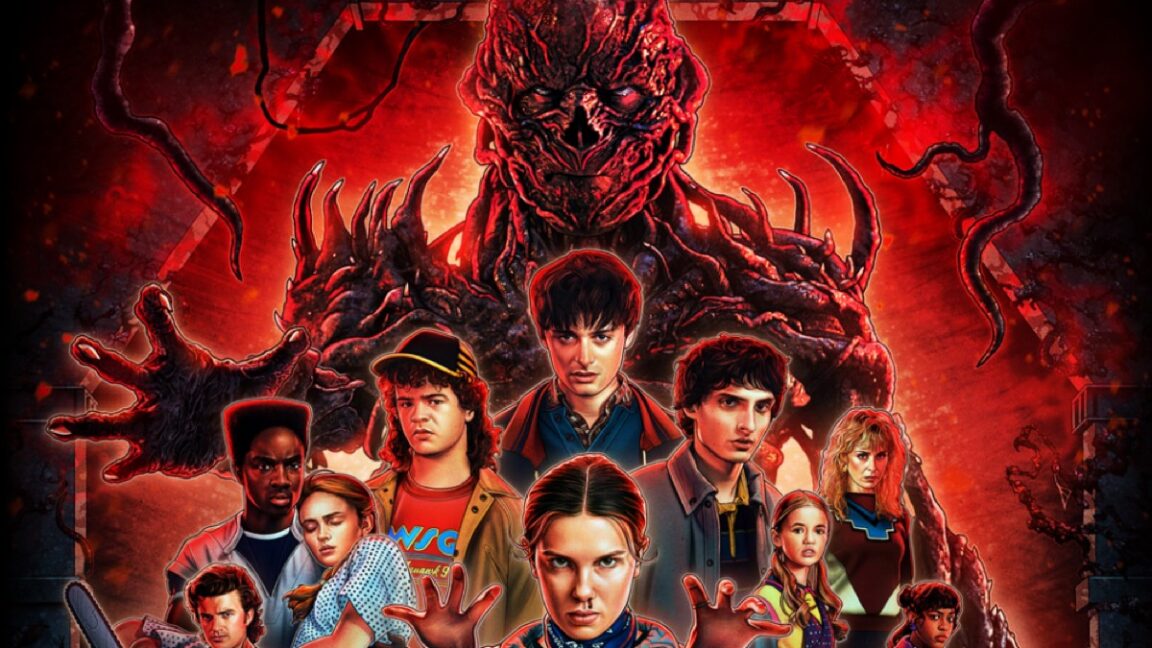
Stranger Things has finally come to an end and left us with some big complicated feels about how it all went down. Both of us (Jennifer and Beth) are bona fide fans who have seen prior seasons multiple times, and we had remarkably similar reactions to the fifth season, especially the series finale. So we decided to co-write a review, discussing everything we liked about it as well as kvetching about the things we definitely didn't like—a shared "airing of grievances."
(WARNING: Many, many spoilers below in the interest of a thorough analysis.)
Season 4 ended with Vecna (Jamie Campbell Bower) opening the fourth gate that allowed the Upside Down to leak into Hawkins. We got an 18-month time jump for S5, Vol. 1, but in a way, we came full circle, since those events coincided with the third anniversary of Will’s (Noah Schnapp) original disappearance in S1.
We’re far from streaming’s original promise: instant access to beloved and undiscovered titles without the burden of ads, bundled services, or price gouging that have long been associated with cable.
Still, every year we get more dependent on streaming for entertainment. Despite streaming services’ flaws, many of us are bound to keep subscribing to at least one service next year. Here’s what we can expect in 2026 and beyond.
Subscription prices keep rising, but perhaps not as expected
There’s virtually no hope of streaming subscription prices plateauing in 2026. Streaming companies continue to face challenges as content production and licensing costs rise, and it's often easier to get current customers to pay slightly more than to acquire new subscribers. Meanwhile, many streaming companies are still struggling with profitability and revenue after spending years focusing on winning subscribers with content.

 Login
Login