The Good | Authorities Expose RaaS Leaders, Prosecute Identity Hackers & Tighten EU Cybersecurity Rules
Law enforcement in Ukraine and Germany have moved to dismantle Black Basta ransomware gang, confirming its leader and placing him on Europol and Interpol wanted lists. Identified as Oleg Evgenievich Nefedov, the Russian national is also known online as kurva, Washington, and S.Jimmi.
Police have also arrested two alleged Black Basta affiliates accused of breaching networks, cracking credentials, escalating privileges, and preparing ransomware attacks.
Investigators link Nefedov in a secondary role associated with the now-defunct Conti syndicate, confirming Black Basta’s evolution into a major ransomware-as-a-service (RaaS) operation responsible for hundreds of extortion incidents since 2022.
Police raid residence of suspected affiliates (Source: cyberpolice.gov.ua)
In the United States, Nicholas Moore, has pleaded guilty to breaching electronic filing systems tied to the Supreme Court of the United States, AmeriCorps, and the Department of Veterans Affairs. Prosecutors note that he repeatedly accessed the Supreme Court’s restricted system in 2023 using stolen credentials. He also breached AmeriCorps and veterans’ accounts, stealing and leaking sensitive personal and health data. Moore took to Instagram under the account @ihackedthegovernment to post screenshots of his victims’ information. He has since confessed to one count of computer fraud, punishable by one year in prison and a $100,000 fine.
New cybersecurity legislation proposed by the European Commission mandates the removal of high-risk suppliers from telecom networks and shoring up defenses against state-backed and criminal cyber threats targeting critical infrastructure. The plan builds on shortcomings in the EU’s voluntary 5G Security Toolbox, originally designed to limit member’s reliance on high-risk vendors. It also grants the Commission authority to coordinate EU-wide risk assessments across 18 critical sectors, strengthens ICT supply chain security, and streamlines voluntary certification schemes to improve resilience and technological sovereignty.
The Bad | Contagious Interview Attackers Leverage Visual Studio Code to Deploy Backdoors
DPRK-linked threat actors behind the ongoing Contagious Interview campaign are evolving their tactics by using malicious Microsoft Visual Studio Code projects to deliver backdoors.
In new research, the attackers are seen masquerading as recruiters conducting job assessments, instructing targets to clone repositories from platforms like GitHub and open them in VS Code. Once opened, specially crafted task configuration files automatically execute, fetching obfuscated JavaScript payloads hosted on Vercel domains and deploying multi-stage malware.
After the user grants trust in VS Code, its tasks.json file can automatically run embedded commands (Source: Jamf)
This novel technique, first seen last month, leverages VS Code’s runOn: folderOpen feature to trigger execution whenever a project is accessed. Earlier variants delivered the BeaverTail and InvisibleFerret implants, while newer versions disguise droppers as benign spell-check dictionaries to achieve remote code execution.
As part of the final payload, the backdoor logic establishes a continuous execution loop to harvest basic host information and fingerprints systems before executing attacker-supplied code. In some cases, additional scripts are downloaded minutes later to beacon frequently to a remote server, run further commands, and erase traces of activity. Researchers note that parts of the malware may be AI-assisted due to its code structure and inline comments.
Targets are typically software engineers, especially those working in the cryptocurrency, blockchain, and fintech sectors, where access to source code, credentials, and digital assets is valuable. Parallel research shows similar abuse of VS Code tasks to deploy backdoors, cryptominers, and credential-stealing modules via multiple fallback methods.
DPRK-based threat actors are rapidly experimenting with various delivery methods to increase the success of their attacks. Developers can counter the threat by continuing to scrutinize third-party repositories, carefully review task configurations, and install only trusted dependencies.
The Ugly | Attackers Target Misconfigured Training Apps to Access Cloud Environments
Threat actors are targeting misconfigured web applications like DVWA and OWASP Juice Shop to infiltrate cloud environments of Fortune 500 companies and their security vendors.
These intentionally vulnerable apps, designed for security training and internal testing, are exposed publicly and tied to privileged cloud accounts, creating a perfect storm of risks advantageous to attackers. Researchers have found nearly 2000 live, exposed apps, many linked to overly permissive identity access management (IAM) roles on AWS, GCP, and Azure, often using default credentials.
Attackers are leveraging the apps to deploy crypto miners, webshells, and persistence mechanisms. About 20% of found DVMA instances contain malicious artifacts, including XMRig cryptocurrency miners and a self-restoring watchdog.sh script that downloads additional AES-256-encrypted tools and removes competing miners.
PHP webshells like filemanager.php are also being deployed, allowing file operations and command execution, sometimes with indicators hinting at the operators’ origin.
XMRig mining Monero to xmr[.]kryptex[.]network resulting in the attacker keeping 100% of the proceeds (Source: Pentera)These exposed credentials could provide attackers full access to S3 buckets, GCS, and Azure Blob Storage, meaning attackers have read and write permissions to Secrets Manager, can interact with container registries, and obtain admin cloud privileges.
With these attacks active in the wild, organizations are urged to take steps to minimize their risk profile. Key defenses include maintaining a resource inventory, isolating test environments, and enforcing least-privilege IAM roles. By also replacing default credentials and automating resource expiration, organizations can eliminate systemic blind spots in non-production systems.
WEEKEND INTERVIEW — In an era when foreign adversaries can shape public sentiment with a well-timed meme and a handful of AI-driven accounts, the U.S. government is racing to redefine what national power looks like in the information age.
At the center of that effort is Shawn Chenoweth, the country’s first Director of Cognitive Advantage - a role designed to help the United States compete in the domain where modern influence, persuasion, and political outcomes are increasingly decided.
What, exactly, does a Director of Cognitive Advantage do? It’s not a title most Americans encounter, and it sits far outside the familiar contours of diplomacy, military force, or economic leverage. But as Chenoweth explains, the contest for influence no longer stays neatly within those lanes either.
His focus is often on the gray space - where information, perception, culture, and behavior collide, and where adversaries like China, Russia, Iran, and North Korea are operating with staggering resources and strategic focus.
In this Cipher Brief conversation, Chenoweth breaks down how cognitive operations actually work, why the U.S. has struggled to keep pace, and what it means to give the President an “information option” that’s not simply kinetic or economic.
He offers rare, candid insight into how technology, AI, and social platforms—from TikTok to algorithmically driven personas—are reshaping the battlespace faster than policymakers can write doctrine.
Our conversation is a deep dive into one of the least understood - but perhaps most consequential - fronts of modern national security. Our conversation has been lightly edited for length and clarity.
Shawn Chenoweth is the Director of Cognitive Advantage at the US National Security Council.
The Cipher Brief: How do you explain the role of the director of Cognitive Advantage?
Chenoweth: When you look at traditional elements of military power, you probably think of the DIME construct.It's not a perfect construct, but it's pretty good. DIME, is broken down into Diplomatic, Information, Military and Economic, and it's very clear who owns the Diplomatic, Military, and Economic components. But there hasn't been, at least in several decades, a good example of where people have really come to the president and the administration with an "I" option, for Information. And it's a shame because when you actually look at the DIME construct, you don't want to break it into stove pipes. We should think of it as a cell. Each of those elements acts as part of a functioning cell, and removing any of those elements means you have an imperfect or failing cell.
So, I was asked to help put the "I" back in DIME so that we can provide additional options and advantages across the other elements of DIME to national power and provide the president with opportunities to accomplish the Administration’s objectives that aren't just warheads on foreheads or threatening economics or expending political leverage. We can enhance those things, but we can also gain advantages by using cognitive effects through the information environment.
Kelly: Let’s set the stage a bit further. If you were to explain to the average American what is happening in terms of cognitive warfare in the gray zone – the area where conflict occurs below the level of warfare - how would you describe it?
Chenoweth: I think if you look through your military histories, philosophers, politicians, political science, it's all pretty clear. You can pick out the elements. They all have one underlying thread, which is that political victory is the one that matters at its core. That's really what we're talking about. Nothing's changed. How human beings are connected, how technology is affected has certainly changed. But what we really care about is what people do in the real world and the geophysical world, the world we live in.
So, the point of a cognitive advantage is to leverage that so that human beings are taking behaviors favorable to outcomes, to national objectives, which most of the time are also - in the case of the United States - favorable in their own right. So it's core. And that is what we're driving to get: those advantages in what people do in the real world through their sensing, to make decisions that come back to the real world and have the effects that you want.
Kelly: Can you give an example of what that would look like?
Chenoweth: Let's say you're negotiating for a piece of land or a base that you need for overflight intel collection. You're going to conduct a trade-off in negotiations. Maybe it's going to look like, - if you pay more, you'll get more - based off what the value proposition is. But very rarely is it that blatant and simple. So, what you want to be able to do is understand, what advantage would we need in the negotiation? What's actually driving this other party other than maybe just cost or just danger? What’s the risk calculus?
There are cultural nuances that affect things: their understanding of influence, political implications. So, the point would be to understand why they would be interested in this in the first place? What advantage does it give them? What are the cultural nuances? Why wouldn't they do this in the first place? Why aren't they taking this action and what can we do to make sure that the outcome is what we want?
There are other areas where that applies across the spectrum.
Let's say we're conducting counter-terrorism operations, and we know an objective tends to use a particular cafe. Well, what if they were using a different one that day? What can we do to influence them to go to a place that's more favorable for options to decrease our own risk calculus, either because we want to conduct a kinetic strike or make an arrest? Maybe we can't find them. So, what if we use that for our intel collection and our methods to basically make them come up on comms and change their behavior so it's easier to find them, collect on them, and build the data so that we can conduct physical actions to stop or disrupt them? And you can kind of see how that applies across the board.
If you know more than the person you're dealing with, chances are that you're going to be better at accomplishing your outcome. It’s very similar with the werewolf theory. It's a game where two people are chosen to be the werewolf of the village and everyone else in the group doesn't know who the werewolf is. Most of the time the people who are the werewolves win the game because they have an information advantage over everyone else playing the game. So, it's a human norm.
And again, I point out that nothing's new under the sun. It's just that we haven't really thought through the implications of what it means in the information age that we live in - where everyone is connected through software defined radios. We're a long way away from direct sensing where it's communication and things happening in the real world. Now we have sort of indirect sensing where you're fed data feeds and everything else. We can affect cognitive behavior in ways we never imagined, and we really haven't thought through just as we can reach people and sell items. And if I want to find a person whose favorite color is red, who's a military age male who's really into Magnum PI, I can find that person thanks to their radio, and I can craft messages specifically for someone who fits that demographic and move them in a particular direction. That's the first time in history that that's been the case.
Kelly: You have a background that combines both government and private sector experience. Given that technology is being rapidly developed in the private sector, how do you think that background gives you an advantage in this role?
Chenoweth: There are a lot of people who've served in the military and have been contractors but just by happenstance, I happen to have been in a lot of critical locations at critical times. I think one of the advantages that has brought me is that I saw the frustration within the military when the contracting apparatus didn't work. I was also empowered by industry to go and fix a lot of those structures and enable the government to do it, and now I'm getting afforded the opportunity to work on policy to make the system really hum.
I think the advantage with that is that when it comes to the information space, there's no control. And I try to emphasize this to any policy maker or power broker or decision maker that I can find. You can put an armored brigade in an intersection - fully equipped, fully supported – and a U.S. Armored Brigade could own that intersection. There are things you can control. But when it comes to the information space, there is no control. It is constantly shifting, constantly changing. You have a binary decision. You are either going to participate, preferably at a level that matters, or not, and whatever's going to happen is going to happen.
So, you could find yourself in an advantageous information space in the morning, lose it by the late morning, get a stalemate in the afternoon, and win it back in the afternoon – just to lose it again at the end of the day. And when you wake up the next morning, you're going to have to do it all over again. There is no, "We have information dominance and we're done and we can crack our beers and go on with other things."
That's not how this works because every day new information is being injected into the system. People are changing and developing new opinions. Things are occurring and people are going to react to those things, change their opinions, adapt, age out, age in, so those cultural references may change. It's a constant flux. One of the things that from the U.S. government side we're getting our head around is that we need an information carrier group constantly operating afloat in the information environment, effectively. One that’s engaged 24/7 to affect these changes.
The Cipher Brief is partnering with the Information Professionals Association and the National Center for Narrative Intelligence to bring you Pinnacle 2026: Gray Zone Convergence: Cognitive Security at the Intersection of Influence, Innovation, and Shared Interests. Register for the February 9-10 conference now to secure your spot.
Kelly: It's not just the United States that has gotten pretty good at understanding the impact of cognitive advantage. We see these tactics from China and Russia being used with stunning success. In this role, how focused are you on their activities when it comes to doing the exact same thing that you're tasked with doing?
Chenoweth: They absolutely practice these activities. I call them the ‘CRINKETT’. Every challenge we're generally dealing with falls in the CRINKETTS. It's China, Russia, Iran, North Korea, Terrorists and Trans[national] criminals. And particularly for the nation states, this is exactly how they want to compete.
From their perspective, there are two ways to deal with the United States: asymmetrically and stupidly, largely because of our economic and military power. They get that. They're not interested in a kinetic fight; that is an awful prospect. So the way they want to do this is in gray zone activities, in the information space, in the cognitive domain.
And they outspend us. I'm not going to say necessarily outperform, but I'll say if you want to compete at a level that matters, they outspend us, period. Iran probably spends around $1.8 billion plus-minus a year, maybe more with their proxies and everything else they do in this particular space. Russia - post Ukraine invasion, spends about $2.6 billion, something like that. China - 48 plus billion dollars a year. The U.S., if I take all of the activities from the DoD, the State Department and everything else, and you put those together, you might approach $1.2 billion.
It doesn't mean we're executing those funds either. It just means that that's what we've allocated. When you think about how we outspend to have an advantage on the other parts of DIME, we're hideously underperforming here. And again, all props to the administration. They're acutely aware of this and the support I've had at the National Security Council and across the elements of government - the departments and agencies - has been stellar. And we're going to continue to work on this and get it right because we have three and a half more years of President Trump's administration to get this right, do the reps and sets, and make this a durable policy so that the American people can start enjoying those benefits that come when we're really focused on this space.
Kelly: What does success look like for you in this role and how do you measure it?
Chenoweth: Measurement has always been a funny thing. People will constantly tell me how hard it is to measure these activities. And what I’ve found time and time again is that we're actually pretty good at these activities. The issues with the measurements are, again, participating at a scale that matters. We need to measure behavior change, and in order to do that, we need to have clear objectives. What are we after?
The big part of that is who is the target audience that has the agency to do the thing we want? We spend a lot of time making plans and CONOPS [Concept of Operations] on sub-target audiences that don't actually have the agency – in hopes that they affect agency - and that's perfectly fine. But why are we doing assessments against this? We spend a lot of time and money generating assessments to target audiences that don't have the agency you want. So, let's focus on the target audience that has the agency and let's do this at scale.
For example; I'm in the DC area and I can go down to the Potomac River, drop a bucket of water in the river, and I have objectively molecularly increased the amount of water in the Potomac. There isn't a sensor on this planet that is going to detect that molecular change.
The fact is that you might be having an effect, but you don't have a sensor that is going to pick that up. So, you need to increase your scale or customize your sensing system to the effect you're having. That tends to be where the assessments fall apart.
I’ve heard all the time for decades now that assessments are so hard. I don't find that to be true. What I find is that you've sacrificed assessments for effect, which is fine. It's risk calculus. If I had a low amount of resources and I decided to put as much into the effect I've wanted, that's fine. But at the end of the day, you're looking for the real behavior change in the targeted audience that matters. What are the sensors you have on that and what are you doing to collect that data: public opinion, research surveys, building the networks. We're going to see this exacerbate further as the AI revolution continues at pace.
Kelly: How is technology impacting what you're trying to do, your mission, and then how are you also working with the private sector because the private sector is controlling so much of the technology and the innovation that the government needs to work with. So how are you doing that?
Chenoweth: One of the challenges I see emerging from AI is that there's sort of an assumption that AI will fix all your woes. I've seen the best tools out there do one thing: they model the data they have, and that's the core issue. We don't have the data. So again, I'm back to there's not a whole lot of new things under the sun. And the AI models are really good, and it can allow you to find new insights from the data that you have, but new data needs to be created. So, sacrificing collection methodologies and new approaches to gather the data at the foot of a model is terrible.
The AI snake oil salesman I would deal with in industry all the time would come in and say, ‘Oh, you're interested in that? I could absolutely model you the thing.’ Cool. How does that work? ‘Well, all you have to do is provide me the data and we'll put all this together and give you the insights.’ I'm like, whoa. We don't have the data either. No one has the data. That's kind of the problem. So, let's be honest about what we're doing.
AI is going to be a great boon for industry and for the government and everyone else under the sun. It's going to obviously have impact, but I think as that moves forward, we need to start looking at how we actually employ it. Building an agent or a token for every worker so that they're augmented by an AI that does the thing that they themselves may not be good at or saving them time is going to be amazing, but it needs to be undergirded by being able to detect what's actually happening out in the real world. And those two things are not necessarily - not interrelated. As I said, most things are kind of a whole cell that operate in one unit, and we can't necessarily bifurcate these things and then expect good outcomes.
Former Senior CIA Executive Dave Pitts wrote a three-part series exclusively for The Cipher Brief on what the U.S. can do to become more competitive in the Gray Zone. Subscriber+Members can read it here. Need access? We can help with that.
Kelly: So you have a mission that is difficult to measure, is hugely impactful, adversaries are using it as well against American citizens effectively, and in some cases, those adversaires are dedicating a lot more resources to this. If you could explaine to the average U.S. citizen how they might be targeted by cognitive operations that are conducted by U.S. adversaries, what would you tell them to look for?
Chenoweth: You need to be mindful of sources obviously. When I look at the construct of how we approach cognitive warfare, I think one of the biggest problems I've had for at least the last 10 years has been the construct of dis- and misinformation. My issue isn't the dis- and misinformation construct. It's the overuse of it.
Disinformation and misinformation are things. They have meaning. But they mean something that is true and people use it for things that are not true. For example, disinformation are lies. The person projecting the information knows it's a lie. They're doing it to accomplish an objective. The bigger problem of disinformation is misinformation. Those are people who are sharing those lies, not knowing they are lies, or taking things out of context like satire, et cetera, and propagating as if it were truth. Those are what those are.
But not everything we have to deal with falls into that construct. There are two other portions to this that we have to be mindful of.
One is missing information, which used to mean that the target audience wasn't informed enough to make a correct decision, favorable to them or anyone else. ‘It's a tragedy that your family member died and you should mourn their loss, but stop touching the body. That's how you're spreading Ebola’, right? Pretty straightforward, pretty simple.
Now that we're dealing with nation states with deep pockets, that's been flipped up on its head and they're practicing active missing information, where they will provide wire services into a country saying, ‘Congratulations, you can use our wire service for free and we'll provide you all the stuff, and that's your biggest cost except for labor. Isn't that wonderful? The catch is that you just have to use our wire service’.
If you think [contextual] stories are going to get into the press through those channels, good luck. This isn't happening in the third world. These are happening in major countries and places that would shock you.
Imagine something like, ‘If you run this story, all our connected businesses that are connected through us or other means are going to pull their advertising budget from you.’ So again, good luck talking about the story in your environment. No one's going to touch it. No influencer wants a piece of it because they're going to lose their incentive structure and their revenue stream. It's things like that.
On the other side of the coin, and the bigger problem, is the rhetoric information. These are the things that aren't necessarily true or false. They are framed by your value system, how you view things, what you think truth actually is.
There are people out there who will say, I think a communist socialist form of government that is highly authoritarian is more stable and therefore better than a liberal democracy. There are people who believe that, and just by saying, well, history would prove you otherwise, it's not a good enough argument. You need to engage with those people at a scale that matters and be prepared to win the argument.
We've seen this time again on the counter-terrorism front where we would shut down the comms of a nobody, and suddenly that person would come back with the reputation that was so valuable, and now they're a terrorist thought leader because the Western world thought that they were so dangerous they needed to be shut down instead of just accepting the fact, that maybe we should just engage with this guy because no one's ever heard of him and maybe we should just point out that he's a moron.
There are ways to deal with this, and just because we don't like something doesn't mean it's a lie to the person that's spreading it. They might believe it. Before we just title something disinformation and say, well, it's a lie and we can ignore it — that is not adequate in the modern era where everyone is connected because, again, this person has connective tissue to the internet. They have web platforms. They can be just as connected as a government if they should choose to be and if they have the popularity, because at its core, regardless of whether or not you're a government or a celebrity or anything else, you are fighting for attention.
Kelly: It’s sometimes difficult for busy Americans to navigate the information space today and know what to believe without inviting some serious time into the source. Do you look at part of your mission in this role as helping people understand more of the context they need in order to make good decisions?
Chenoweth: I've been more on the side dealing with foreign audiences. But even in that regard, I think that it really matters to ask what are the things that we know to be what we feel are objective truths and things that matter? Things that we want target audiences to know because we know it would be better for them and better for our objectives?
And then what are the things where we just want to make sure that if a debate needs to be had, we facilitate the debate so that the target audience, particularly with an American target audience - which again, it's not my forte, we don't do that in government or shouldn't — that needs to be facilitated by Americans pointing out to each other that we do need to have these debates and come to kind of consensus, understanding that there will be disagreements.
Kelly: Do you think your job is going to be even more important in the future or maybe less?
Chenoweth: I've never thought the job wasn't important. I think the thing I'm enjoying right now is that everyone's kind of getting their head around what this means. The overused expression that ‘We need to do some things on Facebook,’ when you would have policymakers say, ‘Well, I'm concerned that that would destroy Amazon and internet commerce’ and your head would explode as you're trying to explain, ‘That's just not how the internet works, man.’
We can be comfortable operating on these platforms and doing things that we need to do without destroying internet commerce or the internet. And now I think a lot of policy makers and industry are all connected. They're a lot more comfortable doing these things. Now is the time when we need to get to where the resources and the permissions really match the ability to get us where we need to be.
I've generally not found too many authority problems. I generally find permissions problems. I find that when it comes to authorities, you almost always find that every organization actually has a framework that allows them to do things. It's just that someone somewhere in the chain can say no and is all too comfortable saying no, because, particularly in the past administration, they were very comfortable at avoiding risk and not as comfortable at managing risk. And that is a dynamic that we have to change. The world is a risky place, and we need to be out there participating in it, throwing our elbows around and managing the risk, not avoiding it.
Kelly: How hard of a job is it to give the U.S. the cognitive advantage in today’s world?
Chenoweth: It's hard, tremendously hard because you're talking about changing culture. I don't think the activity itself and the policy and the things that can be done are hard. I think the hard part will be changing the culture and changing people's mindsets.
We've talked about the fact that there used to be three domains: physical domain, information domain and cognitive domain. We have to explore the information domain and actually call it what it is. There is the physical domain, the geophysical domain. But I like the ‘kill web’ approach. A good kill web will constitute a kill chain that is disrupted, and we have to get out of just a kill chain. We need to get into a kill web mentality when it comes to cognitive effects.
Kelly: Explain what you mean by a “kill web”?
Chenoweth: You have your geophysical world where things exist in the real world, the place where we all live. When it comes to the information domain, though, it used to consolidate a bunch of things.
The reality is that when we break that down into a kill web, you're looking from your physical domain up to your logic layer. The internet is not some amorphous cloud that wanders around. It's composed of a system of systems that live in the real world. It's data centers, servers, modems, et cetera. Where does that infrastructure actually exist? Sometimes the files are in the computer. So, we need to be mindful of where does that work? How does the internet, how do these structures work, the mobile networks, et cetera.
From there, it then creates the digital layer, where all the trons are that exist. You can have effects, that's where your real cyberspace comes into play. That's how the mobile devices work, but that is just data.
Then it goes up to the persona entity level. These are the real human beings, sometimes fake human beings, they're personas, organizations but entities that potentially could be targeted or addressed or engaged, et cetera.
And then there's the cognitive space. The trick in the cognitive space is what happens in the mind. And that mind is influenced by the sensing that goes up through that chain when they process it. You're able to interdict on its way up or influence, and you're able to influence on the way down when a decision is made.
For example, when something happens in the real world, it's communicated to a decision maker, but it's going to go through the logic layer transmitted through sensors, computers, emails, phones, et cetera, to people and entities who are going to process it themselves, communicate it to a decision maker who's going to make a decision based off that information, or an individual or a bunch of individuals.
They're all going to make decisions on how to react to that or not react to that. And that's going to go back down to the physical world when they say, ‘I don't really like what is happening’, or maybe ‘I do like what's happening. Let's do the thing’. They're going to communicate that down to ‘Yes, launch the missiles’, or ‘Let's have a protest’. So, you can affect the chain up. You can affect the chain down, but that's how it works.
We as the United States have a pipe that exists inside that kill web structure - so does everyone else. And it doesn't matter if you're a nation state or a family or an individual. You have your sensing sources.
As I mentioned earlier, the direct conversations between people in the real world - even now, you and I are communicating completely over that entire structure - and that structure could be affected on the way up as we're communicating to when this is finally produced and goes back out to the real world where suddenly I have AI effects on me and I'm saying things I never meant to say, but the rest of the world's now interpreting that.
I didn't say that, that wasn't my cognitive decision, but you intercepted on the way down and now you would inadvertently affect everyone else's cognitive approach to what I'm communicating.
Kelly: What does the future from a technology and AI standpoint really look like?
Chenoweth: It's having fundamental changes. It's going to be interesting to see what happens in the entertainment industry as AI takes over and suddenly people can have more access. We've seen how the music industry went through huge change just on streaming music. We're about to witness what this is going to look like from our more traditional platforms. We've seen how things move from streaming. I think there is a level of adaptation that's going to go with that.
One of the things that needs to be addressed is how exactly we're going to engage. There is a point where we need to be comfortable with giving sort of guidance to the AIs - human in the loop - but if you think that you're going to be able to review every single message that needs to go out in an AI-driven world, you're out of your mind.
So, you need to be able to be comfortable generating for your target audience profiles and give sort of thematic guidance and let the AI do some level of engagements against foreign audiences to steer conversations in a particular direction, or at least identify where a conversation might be going so you can intervene when it looks like decisions are being made in a bad way, and then find out if that is an open and honest cultural nuance thing where it is about engagement or if it's being steered by your opponent.
I think that we are not far, and we're probably already in a game, where there are AIs versus AIs as we speak in the information environment.
Read more expert-driven national security insights, perspective and analysis in The Cipher Brief because National Security is Everyone’s Business.
The Good | Authorities Arrest 34 in Black Axe Cyber Fraud Crackdown
Spanish police have arrested 34 suspects tied to a cyber fraud network allegedly linked to the Black Axe group, following a joint operation with Europol. After raids across four cities, authorities seized €66,400 in cash, vehicles, devices, and froze €119,350 held in bank accounts.
Investigators say the Nigeria-led ring ran man-in-the-middle (MitM) and business email compromise (BEC) scams, causing over $6 million in losses total. So far, four suspected leaders of the network have been jailed pre-trial as the probe continues into Europe-wide money mule networks.
In other news this week, the latest iteration of BreachForums has suffered another data breach after a MyBB users database was leaked online. This occurred after a site named after the ShinyHunters extortion gang released a 7Zip archive exposing over 323,000 user records and the forum’s PGP private key. While most IP addresses mapped to local loopback values, more than 70,000 resolved to public addresses valuable to cybersecurity researchers and law enforcement.
In Amsterdam, the nation’s Court of Appeal has sentenced a Dutch national to seven years for computer hacking and attempted extortion with evidence stemming from Sky ECC, an end-to-end encrypted chat service that Europol dismantled in 2021. Though one cocaine import charge was dropped, judges upheld the convictions tied to hacking port logistics systems in Rotterdam, Barendrecht, and Antwerp.
The individual was found using malware-laced USB sticks, which then enabled covert drug imports, data theft, and malware re-sale between 2020 and 2021.
The Bad | Researchers Expose ‘Reprompt’ Attack That Could Hijack Microsoft Copilot Sessions
Security researchers have disclosed a novel attack technique dubbed ‘Reprompt’ that could enable attackers to silently hijack a user’s Microsoft Copilot session and exfiltrate sensitive data with a single click. The method abuses how Copilot processes URL parameters, enabling malicious prompts to be injected directly through a legitimate Copilot link.
Reprompt works by embedding hidden instructions in the “q” parameter of a Copilot URL. Should a victim click the link, Copilot automatically executes the malicious prompt within the user’s authenticated session. That session remains active even after the Copilot tab is closed, meaning attackers could continue issuing follow-up commands without further user interaction. Since no plugins, malware, or visible prompts are required, the activity is effectively invisible.
To bypass Copilot’s safeguards, the researchers combined three techniques: parameter-to-prompt (P2) injection, a double-request trick that exploits guardrails applying only to the initial request, and a chain-request model where Copilot dynamically fetches new instructions from an attacker-controlled server.
Combined, these techniques could enable continuous, stealthy data exfiltration, while client-side, legacy security tools would be unable to determine what information was being stolen.
Double request to bypass safeguards (Source: Varonis)
Reprompt only impacts Copilot Personal; those using Microsoft 365 Copilot are not impacted due to additional controls such as auditing, DLP, and administrative restrictions. Varonis disclosed the issue to Microsoft on August 31, 2025 and the vulnerability was addressed in this month’s Patch Tuesday. Currently, there are no reports of in-the-wild exploitation.
The findings, however, are indicative of the risks posed by LLMs and AI assistants. They underscore the need for security teams to understand the attack surface these tools present as their use in enterprise environments continues to proliferate.
The Ugly | Charity-Themed ‘PluggyApe’ Malware Targets Ukrainian Defense Forces
Ukraine’s CERT-UA has reported a charity-themed cyber espionage campaign targeting officials within the country’s Defense Forces between October and December 2025. The activity is attributed with medium confidence to a Russian-aligned threat group tracked as Laundry Bear (aka Void Blizzard or UAC‑0190), a cluster previously linked to the 2024 breach of Dutch police systems.
These attacks have been observed relying heavily on tailored social engineering tactics delivered via Signal and WhatsApp. Targets receive instant messages, often from compromised or spoofed Ukrainian phone numbers, directing them to fake charity websites where they are urged to download password-protected archives.
These archives contain malicious executables disguised as documents, including PIF files built with PyInstaller, which ultimately deploys a Python-based backdoor called ‘PluggyApe’. Once installed, PluggyApe profiles the infected system, assigns a unique victim identifier, and establishes persistence through Windows Registry changes. The malware supports remote command execution and data exfiltration, communicating over WebSocket or MQTT.
Examples of malicious lures (Source: CERT-UA)
Later versions of PluggyApe, observed from December 2025 onward, introduced stronger obfuscation, additional anti-analysis checks, and more resilient command-and-control (C2) mechanisms. Instead of hardcoding C2 infrastructure, the malware dynamically retrieves server addresses from public paste services such as rentry[.]co and pastebin[.com], encoded in Base64, allowing operators to rapidly rotate infrastructure.
CERT-UA emphasized that mobile devices and messaging platforms have become primary attack vectors due to weaker monitoring and widespread trust. Compounding this is the attackers’ demonstrated knowledge of their targets and use of the Ukrainian language, audio, and video communication to increase credibility.
Alongside this campaign, CERT-UA also reports additional activity from other threat clusters targeting Ukrainian defense forces, local governments, and educational institutions using phishing, stealer malware, and open-source backdoors – all pointing to sustained and evolving cyber pressure facing Ukraine’s public sector.
Next month, the annual Most Inspiring Women in Cyber Awards will take place at The BT Tower, London, celebrating some of the industry’s most inspirational – and oftentimes unsung – women.
Sponsored by Fidelity International, BT, Plexal and Bridewell, and proudly supported by industry-leading diversity groups WiTCH, WiCyS UK&I and Seidea, the 2026 event is set to be bigger than ever. To make sure everyone has had the chance to nominate, we’ve extended the nomination deadline until the 16th January 2026, 5pm GMT.
For now, it’s time to introduce our 2026 judges, who have the exceptionally hard task of picking this year’s top 20 and five ones to watch…
Yasemin Mustafa, Director of the Cyber Security Portfolio at BT
Adam Haylock, Head of Global Cyber and Information Security Department at Fidelity International
Rebecca Taylor, Co-Author of Co-Author of Securely Yours: An Agony Aunts’ Guide To Surviving Cyber, and Threat Intelligence Knowledge Manager and Researcher at Sophos
Adaora Uche, GRC Lead at THG (representing Seidea)
Joanne Elieli, Cyber Lead and Litigation Partner at Stephenson Harwood LLP
Diane Gilbert, Senior Lead for Programmes at Plexal
Yvonne Eskenzi, Co-Founder of Eskenzi PR and Founder of The Most Inspiring Women in Cyber Awards
Jennifer Cox, Director of Solutions Engineering, EMEA and APAC, at Tines (representing WiCyS UK&I)
Hannah Arnold, London Ambassador for WiTCH – Women in Tech & Cyber Hub
The Gurus spoke to some of our judges about the 2026 awards and what they’re looking for in a good application.
Adaora Uche, GRC Lead at THG
Why are initiatives like this so important?
Initiatives like this matter because visibility changes possibility. Cybersecurity is still an industry where many women don’t see themselves reflected in leadership, technical authority, or decision-making roles. By intentionally spotlighting women who are doing impactful work, we challenge outdated perceptions of who belongs in cyber and what success looks like.
Beyond recognition, these initiatives create role models, momentum, and community. They validate the work women are already doing – often quietly and behind the scenes, and help open doors for others who are earlier in their journeys. Representation is not just symbolic, it is a powerful driver for inclusion, retention, and long-term change in our industry.
Why should people nominate?
People should nominate because inspiration often goes unrecognised unless someone speaks up. So much impactful work in cybersecurity happens behind the scenes. Particularly in governance, risk, privacy, and security leadership, where success often looks like problems prevented, risks mitigated, or the right questions being asked early. This kind of impact does not always attract attention, but it is critical.
A nomination is more than an accolade; it is an act of recognition and encouragement. It tells someone that their work matters, that they are seen, and that their journey can inspire others. Nominating also helps broaden the narrative of cybersecurity by showcasing diverse paths, backgrounds, and contributions that might otherwise go unnoticed.
What makes an ‘inspiring woman’ in cyber in your eyes?
First and foremost, I believe every woman in cybersecurity is inspiring. Simply showing up each day to help make the digital world safer, often in complex, high-pressure environments, is truly heroic.
An inspiring woman in cyber creates impact while lifting others as she progresses. She may be a technical expert, a strategist, a leader, or an educator, but what sets her apart is purpose, resilience, and a commitment to making the space better than she found it. She does not just respond to challenges, she anticipates them, questions the status quo, and contributes to safer, more ethical, and more inclusive digital environments.
She does not need to dominate the room to lead. Her credibility comes from consistency, thoughtfulness, and sound judgement. It also stems from her unwavering commitment to building systems and teams that are secure, resilient, and future-ready. Importantly, she uses her voice, whether in boardrooms, classrooms, or communities to share knowledge, mentor others, and make cybersecurity more accessible and human.
Adam Haylock, Head of Global Cyber and Information Security Department at Fidelity International
Why are initiatives like this so important?
I often find myself in meetings counting the number of male versus female attendees. Too often, there are only one or two women in the room, surrounded by many more men.
In cyber, many men take for granted that they don’t have to overcome that initial sense of standing out before even contributing to the discussion or holding their ground. While we are making some progress in addressing the gender imbalance, initiatives like this are vital in keeping the spotlight on an issue that still matters deeply. They help encourage more women to put themselves forward, particularly where they may previously have hesitated, and to feel recognised and valued for the outstanding work they do, inspiring others along the way.
Why should people nominate?
Nominations reinforce the value that female talent brings to our field. Diversity of thought, approach and communication is critical in cyber, a discipline that is as much about culture and behaviour as it is about technology.
Recognising and celebrating female talent strengthens that value proposition, especially when nominations come from male colleagues who see first-hand, and rely on, the expertise and impact that women bring to our teams.
What makes an ‘inspiring woman’ in cyber in your eyes?
Being in the minority in any environment can create invisible barriers and perceptions that are difficult to overcome. For me, an inspiring woman in cyber – a male-dominated field – is someone willing to step outside her comfort zone, try new things, take risks, and learn from setbacks.
Standing out in a male-dominated environment requires real courage, and that courage is inspiring in itself. We need more visible role models like this to attract more women into cyber and to show that it is a field where they can thrive, feel valued, and build rewarding careers.
Rebecca Taylor, Co-Author of Securely Yours: An Agony Aunts’ Guide To Surviving Cyber, and Threat Intelligence Knowledge Manager and Researcher at Sophos
Why are initiatives like this so important?
Initiatives like the ‘Most Inspiring Women in Cyber Awards 2026’ are so important because they shine a light on women who are accomplishing amazing things in an industry that is still largely male-dominated. Recognising these achievements in an inclusive and safe way helps ensure women feel seen, valued, and celebrated for their expertise and impact.
Beyond individual recognition, these initiatives also create visible role models. Seeing women celebrated for their achievements inspires others to enter the field, stay in the industry, and aim higher. It helps challenge outdated stereotypes, builds confidence, and fosters a stronger sense of community and belonging.
Ultimately, celebrating women in cyber isn’t just about awards – It’s about changing culture. It encourages equity, boosts morale, and helps build a more diverse, inclusive, and resilient cybersecurity industry for everyone.
Why should people nominate?
People should nominate because recognition matters! Nominating is a powerful way to celebrate women who are accomplishing amazing things and making a real impact. Remember that a nomination (let alone a win!) can boost confidence, open doors to new opportunities, and remind someone that their work truly matters. Get those entries in!
What makes an ‘inspiring woman’ in cyber in your eyes?
In my eyes, an ‘inspiring woman in cyber’ is someone who brings others with them into the conversation. They lift people up, share knowledge, and create space for others to learn, grow, and feel they belong. They want to leave a positive footprint, not just through their work, but through the way they support and encourage those around them. They are a role model, someone who shows what’s possible and inspires others to follow their own path in cyber with confidence and purpose.
It isn’t about money, job titles, or seniority. It’s about impact. An inspiring woman is thriving in what they do, and you can see that they genuinely love their work. That passion is contagious and motivating to others.
Joanne Elieli, Cyber Lead and Litigation Partner at Stephenson Harwood LLP at Stephenson Harwood LLP
Why are initiatives like this so important?
Initiatives like this are instrumental in recognising and celebrating the achievements of women in cybersecurity, helping to raise their visibility and inspire others. These initiatives encourage diversity, challenge stereotypes, and can empower the women being recognised to stay and advance in the field. By providing networking opportunities and driving positive industry change, initiatives like this can also help to create a more inclusive and innovative cyber sector.
Why should people nominate?
Nominating women in the cyber industry is a meaningful way to recognise and celebrate their expertise, dedication, and achievements. Formal nominations help to bring the contributions of our exceptional women to light, ensuring they receive the appreciation they deserve. This visibility can inspire other women and girls to pursue careers in cybersecurity, which in turn fosters a more diverse and inclusive industry.
What makes an ‘inspiring woman’ in cyber in your eyes?
An inspiring woman in cyber, in my eyes, is someone who demonstrates exceptional skill and dedication to her work while also uplifting and supporting others in the industry. She is passionate about solving complex problems and is eager to learn and adapt in a rapidly changing industry. Beyond her technical abilities, she actively shares her knowledge, mentors others, and advocates for diversity and inclusion. Her resilience in overcoming challenges and her willingness to break new ground make her a role model for both current and future generations in cybersecurity.
Jennifer Cox, Director of Solutions Engineering, EMEA/APAC, at Tines
Why are initiatives like this so important?
Women’s representation in cybersecurity still has a lot of ground to cover, and initiatives like this shine a light on those who are making an impact both technically and culturally. Recognition not only celebrates achievement but also helps change perceptions; it shows the next generation that there’s space for them here, no matter their background or neurotype. When we platform diverse voices, we accelerate innovation and make our industry stronger, more inclusive, and more human.
Why should people nominate?
Nominating someone is a simple but powerful act of allyship and pride. Many brilliant women in cyber are so focused on lifting others up or doing the hard, often invisible work that they rarely stop to celebrate themselves. A nomination says, “I see you, I value what you’re doing, and you’re shaping this industry.” You never know who might need that encouragement to keep going or step into an even bigger role, and for other women just starting their cybersecurity careers visibility of these trailblazers and their capabilities is key.
What makes an ‘inspiring woman’ in cyber in your eyes?
For me, an inspiring woman in cyber is someone who leads with both competence and compassion. She’s technically grounded, but she also uses her voice and position to make space for others; especially those whose stories aren’t often heard. She’s authentic, curious, resilient, and not afraid to challenge the norm. Above all, she shows that success in cybersecurity isn’t about fitting a mould; it’s about rewriting it so more people can belong.
DEEP DIVE — Federal prosecutors in Texas, in December, unsealed charges and related details exposing a sprawling scheme that quietly siphoned some of America’s most powerful artificial intelligence chips into China.
According to court filings, a Houston businessman and his company orchestrated a $160 million smuggling operation that moved thousands of NVIDIA’s top-tier processors overseas, evading U.S. export controls through falsified shipping records and shell transactions.
Hao Global and its founder, Alan Hao Hsu, pleaded guilty on October 10, 2025, to participating in smuggling and unlawful export activities, including knowingly exporting and attempting to export at least $160 million in Nvidia H100 and H200 GPUs between October 2024 and May 2025. Investigators say the operation was funded by more than $50 million in wire transfers originating from China, and the U.S. has seized over $50 million in Nvidia hardware and cash as part of the broader investigation, with the seizures tied to the overall network, not solely this defendant’s operation.
The operation reveals a broader strategy: if you can’t build it, take it. With a blend of state-run espionage and corporate infiltration, China has turned technology acquisition into an art form. Their ‘all-of-the-above’ approach has allowed their AI sector to grow even as export bans tighten. By sourcing the hardware from elsewhere, Beijing has made the lack of domestic chip manufacture moot.
The Corporate Insider Pipeline
The same month that prosecutors announced the NVIDIA chip smuggling charges, the Department of Justice filed a superseding indictment against Linwei Ding, a former Google software engineer accused of stealing over 1,000 confidential files containing trade secrets related to Google’s AI infrastructure. According to the indictment, Ding uploaded the files to his personal cloud account between May 2022 and May 2023 while secretly working for two China-based technology companies.
It is believed that the stolen materials included detailed specifications of Google’s Tensor Processing Unit chips and Graphics Processing Unit systems, as well as the software platform that orchestrates thousands of chips into supercomputers used to train cutting-edge AI models.
Ding allegedly circulated presentations to employees of his Chinese startup, citing national policies encouraging domestic AI development, and applied to a Shanghai-based talent program, stating that his company’s product “will help China to have computing power infrastructure capabilities that are on par with the international level.”
Within weeks of beginning the theft, Ding was offered a chief technology officer position at Beijing Rongshu Lianzhi Technology with a monthly salary of approximately $14,800 plus bonuses and stock. He traveled to China to raise capital and was publicly announced as CTO. A year later, he founded his own AI startup, Zhisuan, focused on training large AI models. Ding never disclosed either affiliation to Google.
After Google detected unauthorized uploads in December 2023, Ding vowed to save the files as evidence of his work. Nonetheless, he resigned a week later after booking a one-way ticket to Beijing. Security footage revealed that another employee had been scanning Ding’s access badge to give the appearance that he was working there during extended trips to China. Ding faces up to 175 years in prison on 14 counts: economic espionage and theft of trade secrets.
Ding has pleaded not guilty to the charges on multiple occasions. He entered a not guilty plea in March 2024 to the original four counts of trade secret theft, and again pleaded not guilty through his attorney, Grant Fondo, in September 2025 to the expanded superseding charges — including seven counts each of economic espionage and trade secret theft. Fondo has actively represented Ding in court proceedings, including a successful June 2025 motion to suppress certain post-arrest statements due to alleged Miranda violations, though no extensive public explanatory statements from the attorney or Ding appear beyond these court actions and pleas.
The federal trial in San Francisco began in early January 2026, with jury selection reported around January 8, and Ding remains presumed innocent until proven guilty.
Sign up for the Cyber Initiatives Group Sunday newsletter, delivering expert-level insights on the cyber and tech stories of the day – directly to your inbox. Sign up for the CIG newsletter today.
AI-Powered Cyber Espionage at Scale.
The threat escalated dramatically in September 2025 when Anthropic detected what it describes as the first fully automated cyberattack using artificial intelligence to breach corporate networks. Chinese state-sponsored hackers conducted the campaign, which Anthropic assessed with high confidence, targeted approximately 30 organizations, including technology firms, financial institutions, chemical manufacturers, and government agencies.
The attackers manipulated Anthropic’s Claude Code tool into executing 80 to 90 percent of the operation autonomously. Claude’s safety guardrails were bypassed by jailbreaking the system, disguising malicious tasks as routine cybersecurity tests, and breaking attacks into small, seemingly innocent steps that conceal their broader objectives. Once compromised, the AI system independently conducted reconnaissance, identified valuable databases, wrote custom exploit code, harvested credentials, created backdoors, and exfiltrated data with minimal human supervision.
“The AI made thousands of requests per second—an attack speed that would have been, for human hackers, simply impossible to match,” Anthropic stated in its analysis.
“This case is a huge concern for other companies that have almost fully adopted AI in their business operations,” JP Castellanos, Director of Threat Intelligence at Binary Defense, tells The Cipher Brief. “Instead of just using AI to draft phishing emails or assist human hackers, the perpetrators gave Claude direct instructions to carry out multi-stage operations on its own.”
The implications extend far beyond technical sophistication.
“An AI operator doesn’t have to sleep or take breaks moving at machine speed; the agent can do the work of dozens or more hackers, tirelessly and even without error, launching constant attacks that even human defenders would struggle to monitor, let alone counter,” Castellanos explained.
Chief Geopolitical Officer at Insight Forward, Treston Wheat, also noted the operational tempo represents a fundamental shift.
“AI-enabled operations can run reconnaissance, exploitation attempts, credential harvesting, lateral movement playbooks, and exfiltration workflows in parallel, iterating rapidly across targets,” he tells The Cipher Brief.
This shift not only changes how operations are conducted but also reveals the hidden supply chains that enable them.
DeepSeek’s Smuggled Silicon
In early 2025, it became impossible to ignore the connection between black-market chips and stolen IP. It was then that DeepSeek dropped the R1 model, claiming it could compete with OpenAI’s o1, but for significantly less. This, however, immediately set off alarm bells: How does a company hamstrung by U.S. sanctions move that fast without some serious ‘outside’ help?
Reports from The Information in December 2025 revealed that DeepSeek is training its next-generation model using thousands of NVIDIA’s advanced Blackwell chips — processors specifically banned from export to China. The smuggling operation reportedly involves purchasing servers for phantom data centers in Southeast Asia, where Blackwell sales remain legal. After inspection and certification, smugglers allegedly dismantle entire data centers rack by rack, shipping GPU servers in suitcases across borders into mainland China, where the chips are reassembled.
NVIDIA disputed the reports, stating it had seen “no substantiation or received tips of ‘phantom data centers’ constructed to deceive us and our OEM partners” while acknowledging the company pursues any tip it receives. The chipmaker is developing digital tracking features to verify chip locations, a tacit acknowledgement that there are enough smuggling concerns to warrant technological solutions.
Castellanos described China’s strategy as deliberately dual-track.
“China has been very open to being the lead in AI and semiconductors and the need for self-reliance in core technologies,” he said. “But also, externally, China relies on partnering with overseas institutions, building on top of Western open-source technologies, and acquiring advanced technologies through illegal means, such as through theft, smuggling, and forced transfers.”
Subscriber+Members get exclusive access to expert-driven briefings on the top national security issues we face today. Gain access to save your virtual seat now.
The FBI’s Losing Battle
Christopher Wray, the former FBI director, testified that the bureau oversees approximately 2,000 active investigations into Chinese espionage operations.
“Chinese hackers outnumber FBI cyber personnel by at least 50 to 1,” Wray testified before the House Appropriations Committee in 2023. “They’ve got a bigger hacking program than every other major nation combined and have stolen more of our personal and corporate data than all other nations—big or small—combined.”
That scale reflects a long-running strategy rather than a sudden surge.
“U.S. officials say China has long relied on a multi-pronged strategy to lie, to cheat and to steal their way to surpassing us as the global superpower in cyber,” he said. “It’s not just cyber intrusions, we are concerned about, but also human insiders stealing intellectual property. In the realm of AI, this can include insiders siphoning source code, research papers, or semiconductor designs for China.”
The Chinese approach exploits multiple vectors simultaneously, according to experts. The Ministry of State Security operates human intelligence networks. The People’s Liberation Army’s Strategic Support Force conducts offensive cyber operations.
The Thousand Talents Plan, for example, then offers Chinese researchers financial incentives to transfer proprietary information to American institutions. By investing in and partnering with ostensibly private companies, state-owned enterprises gain access to sensitive technologies.
Export Controls Lag Behind Reality
The export control regime designed to prevent China from accessing advanced chips has proven inadequate in the face of Beijing’s evasion tactics. The Commerce Department’s Bureau of Industry and Security has repeatedly updated restrictions, most recently imposing sweeping controls in October 2023 on AI chips and semiconductor manufacturing equipment.
The recent Texas case shed light on how these smugglers operate. There was more to it than simply shipping; they used crypto payments and paper-only shell companies to conceal the money trail. To pass customs, they even removed the Nvidia labels from the chips. By the time those processors reached China, they had been bounced through so many different countries that the original paper trail was basically gone.
“Export controls are not a complete solution to IP theft or technology diffusion. They are best understood as a time-buying and friction-imposing tool,” Wheat observed. “If the objective is to prevent all leakage, that is unrealistic; if the objective is to slow adversary capability development, shape supply chains, and increase acquisition cost and risk, they can be effective when paired with enforcement and complementary measures.”
The chip industry, analysts caution, is facing a structural nightmare. We’re restricting technology that’s already been stolen and studied. The $160 million operation out of Texas proved just how easy it is to game the system — they lied on customs forms hundreds of times over several months, and it still took nearly a year for authorities to notice anything was wrong.
Defending at Machine Speed
Security experts are calling this the most significant tech transfer in history, and it isn’t happening by accident. By stacking insider theft, cyberattacks, recruitment programs, and smuggling on top of each other, China has found a way to leapfrog ahead in AI. They don’t have the domestic factories to build high-end chips yet, so they’ve bypassed the need for ‘original’ innovation by taking what they need. It’s a massive operation that’s making traditional defense strategies look obsolete.
“The realistic U.S. approach is not to match China operator-for-operator. It is to win by asymmetry, such as scaling defense through automation, hardening the most valuable targets, and using public-private coordination to reduce attacker dwell time and increase attacker cost,” Wray said in his testimony.
Castellanos emphasized that defending against AI-enabled attacks requires matching the adversary’s capabilities.
“To have any hope to defend against this, we have to multiply effectiveness through automation and AI, so basically fight fire with fire,” he underscored. “Doing this requires significant investment, new skills, and perhaps most challenging, trust in autonomous defensive AI at a time when many organizations are still learning basic cyber hygiene.”
To prevent adversaries from acquiring sensitive technologies, the U.S. Government has, in recent years, implemented targeted responses, such as the Disruptive Technology Strike Force in 2023. Yet, even as FBI investigations increase and new indictments are filed, the fundamental challenge persists. Chinese intelligence services use unlimited resources, legal compulsion over Chinese nationals, and long-term strategic patience to operate in an open society with porous institutional boundaries.
“It’s a challenge for policy makers; a multi-layered response and defense in depth is needed to protect the US AI technology base better,” Castellanos added. “Harden insider threat programs, accelerate public and private intelligence sharing, modernize export controls and enforcement, increase the costs or impose costs for the offenders of these attacks and lastly innovate faster to ensure even if China steals today’s tech, the breakthrough is already in the pipeline for tomorrow.”
The Cipher Brief is committed to publishing a range of perspectives on national security issues submitted by deeply experienced national security professionals. Opinions expressed are those of the author and do not represent the views or opinions of The Cipher Brief.
Have a perspective to share based on your experience in the national security field? Send it to Editor@thecipherbrief.com for publication consideration.
Read more expert-driven national security insights, perspective and analysis in The Cipher Brief because National Security is Everyone’s Business
The Good | U.K. Government Resets Public-Sector Cybersecurity With £210M Action Plan
The United Kingdom has unveiled a sweeping reset of its public-sector cybersecurity strategy, committing more than £210 million ($283 million) to shore up defenses across government departments and essential services. This investment is part of the new Government Cyber Action Plan, which marks a clear departure from years of fragmented oversight and outdated, legacy technology.
The new Government Cyber Action Plan sets a clear path to strengthen cyber security and boost resilience across the public sector.
The core of the plan is a centralized Government Cyber Unit, tasked with coordinating risk management, setting mandatory security standards, and leading incident response. Digital Government Minister Ian Murray framed the shift as urgent, warning that cyberattacks can take critical public services offline within minutes. Recent incidents like ransomware-driven NHS disruptions and the compromise of Ministry of Defence payroll systems all show that these risks are recurring realities rather than theoretical threats.
The action plan introduces stricter accountability for senior leaders, enhanced visibility into cyber risks, and more robust, centrally coordinated incident response exercises. Strategic government suppliers will also face tougher contractual cybersecurity requirements as concerns over supply chain vulnerabilities grow.
While challenges still remain, this new strategy signals a long-overdue cultural and structural shift. If matched with sustained investment and accountability, it could finally place the U.K. public sector on a more resilient and security-first footing in the face of accelerating cyber threats.
The Bad | China-Linked UAT-7290 Expands Linux-Based Espionage Beyond South Asian Telcos
UAT-7290, a China-linked threat actor, has expanded its cyber espionage operations beyond its focus on South Asian telecommunications firms to include organizations across Southeastern Europe. Active since at least 2022, the group is known for its extensive reconnaissance, network penetration techniques, and heavy reliance on Linux-based malware to compromise public-facing infrastructure.
Cyber researchers assess that UAT-7290 conducts extensive technical profiling of targets before exploiting exposed edge network devices. The actor primarily leverages one-day exploits and targeted SSH brute force attacks, often relying on publicly available proof of concept (PoC) exploit code rather than developing their own. Once initial access is achieved, the group escalates privileges and deploys a modular malware ecosystem tailored for persistence and lateral movement.
UAT-7290’s core tooling centers on Linux implants, beginning with the RushDrop (ChronosRAT) initial dropper, which initiates the infection chain and deploys additional components such as DriveSwitch and the SilentRaid (MystRodX) backdoor. SilentRaid enables long-term access through a plugin-based architecture that supports remote shell access, port forwarding, file operations, and credential-related data collection. While Linux remains the primary focus, the group has occasionally deployed Windows malware – tools commonly shared among China-aligned threat actors.
UAT-7290 is also known for playing a secondary role as an initial access provider. It converts compromised devices into Operational Relay Boxes (ORBs), infrastructure that can later be reused by other Chinese espionage groups, using the Bulbature backdoor.
The tooling and infrastructure overlaps with clusters such as APT10 and Moshen Dragon, reinforcing assessments that UAT-7290 is both an espionage operator and a strategic enabler within the broader Chinese cyber ecosystem.
A series of critical vulnerabilities were recently disclosed in the open-source workflow automation platform n8n, allowing unauthenticated attackers to achieve remote code execution (RCE), perform arbitrary commands, and execute untrusted code leading to full compromise.
Beginning with CVE-2025-68668 dubbed ‘N8scape’, this critical flaw (CVSS 9.9) involves a sandbox bypass in the Python Code Node using Pyodide. It works by affecting n8n versions prior to 2.0.0 and allows users with workflow permissions to execute arbitrary OS commands with the same privileges as the n8n service. With version 2.0.0, a task runner-based native Python implementation that improves security isolation was made default thus addressing the issue.
Shortly afterward, n8n disclosed an even more severe issue tracked as CVE-2026-21877, a CVSS 10.0 vulnerability enabling authenticated remote code execution under certain conditions. Affecting both self-hosted and n8n cloud deployments, the flaw could allow untrusted code execution, eventually leading to compromise of the entire instance. Although the critical flaw is patched in version 1.121.3, administrators are advised to apply the updates quickly, especially given a growing pattern of critical RCE-class vulnerabilities in the platform.
The third and latest disclosure this week, codenamed ‘Ni8mare’ and tracked as CVE-2026-21858 (CVSS 10.0), is a critical flaw that allows complete takeover of affected instances. Exploiting a content-type confusion issue in n8n’s webhook and form handling, attackers can read arbitrary files, extract credentials and encryption keys, forge admin sessions, and ultimately achieve RCE. Researchers noted that a compromised n8n instance becomes a single point of failure due to centralized storage of API keys, OAuth tokens, and infrastructure credentials, making it a veritable data trove for threat actors.
Invoking the content-type-confusion bug (Source: Cyera)
At the time of writing, reports from attack surface management vendors are observing over 26,000 exposed n8n instances online, emphasizing the need for timely patching, controlled exposure, and strict access management.
EXPERT PERSPECTIVE — Occasionally, a speech does more than mark a leadership transition or outline institutional priorities. It captures, with unusual clarity, the nature of the moment we are living through and the choices it demands.
Blaise Metreweli’s recent inaugural address as Chief (or more colloquially, C) of the UK’s Secret Intelligence Service was one of those moments. Rather than offering a conventional tour of threats or capabilities, she chose a more demanding path. She spoke about human agency in a world increasingly shaped by machines. About trust, judgment, and integrity at a time when technology is accelerating every dimension of competition and conflict.
I had the pleasure of working with Metreweli while serving as Deputy Director of the CIA for Digital Innovation. I watched her navigate the intersection of operations and technology with a rare combination of rigor and imagination. Her speech reflects that same sensibility. It is operationally grounded, intellectually disciplined, and quietly ambitious in what it asks of an intelligence service. Just as it should be.
What struck me most, reading her remarks, was not simply their alignment with themes I have been working on for years, both inside government and since my departure in 2024. It was the way she wove those themes together into a coherent vision of intelligence suited to the world as it is, not the world we might wish it to be.
At the center of Metreweli’s speech is a proposition that may sound self-evident, yet is increasingly contested in practice: even in a technology-mediated world, human beings must still decide outcomes.
Artificial intelligence can surface patterns, illuminate possibilities, even accelerate analysis. It cannot decide what matters. It cannot weigh moral tradeoffs. It cannot assume responsibility for consequences. Intelligence, in her framing, remains a human endeavor, even as it becomes ever more technologically enabled.
This is a conclusion I reached years ago while leading digital transformation efforts inside the CIA. As our tools became more powerful, the temptation to treat output as authority grew stronger. We resisted that instinct deliberately. The most effective systems we built were those designed explicitly to support human judgment, not replace it. They forced users to ask better questions or to challenge assumptions, and to understand context before acting.
The Cipher Brief brings expert-level context to national and global security stories. It’s never been more important to understand what’s happening in the world. Upgrade your access to exclusive content by becoming a subscriber.
I have described this in multiple speeches and articles as human–machine partnering, and Metreweli’s speech reflects the same conviction. The future of intelligence is not technological supremacy alone. Nor is it the return to a romanticized vision of the intelligence mission before the digital revolution. It is the disciplined integration of technology into human decision-making, with clarity about where judgment must reside.
Metreweli is equally clear about the character of modern conflict. We are no longer operating in a world neatly divided between war and peace. Instead, we inhabit a persistent space between the two, where states seek advantage through pressure that is continuous, deniable, and often difficult to attribute.
Cyber operations, sabotage, influence campaigns, and coercive economic measures all live comfortably in this grey zone. They are designed to intimidate and to erode confidence without triggering a conventional response.
One aspect of this competition that deserves particular attention is the emergence of what I have called digital chokepoints. These are points of leverage embedded in digital infrastructure, data ecosystems, platforms, standards, and supply chains. They do not announce themselves boldly as instruments of power, yet they have increasingly come under attack in recent years as a tool of geopolitical competition. In 2024-2025 alone, there were numerous anomalous “incidents” that damaged or cut 13 undersea cables around Taiwan and the Baltic Sea.
Grey-zone conflict, viewed through this lens, is not episodic. It is cumulative. And we will see more of it. Intelligence services must therefore understand not just individual operations, but the architecture of pressure that builds quietly and persistently across domains.
The convergence of artificial intelligence, biotechnology, and quantum computing, and the way these advances are reshaping both opportunity and risk was featured prominently in Metreweli’s speech. She avoids the dual traps of easy optimism and easy alarmism alike.
I have often framed technology as both shield and sword. It accelerates intent, but it does not generally determine outcomes. Technology itself is neutral. What matters is how it is governed, deployed, and constrained by human choice, as well as which values are encoded into its digital foundations
This distinction is not academic. The same AI system that accelerates medical discovery can enable surveillance at scale. The same digital infrastructure that connects societies can be (and is) used to monitor and control them. Metreweli’s speech is careful to emphasize mastery of technology alongside responsibility for its effects.
That balance is essential. Technological determinism strips leaders of agency and excuses poor judgment. Metreweli’s approach does neither.
One of the most sobering elements of Metreweli’s address is her discussion of trust. Information, once a unifying force, is now routinely weaponized. Falsehood spreads faster than fact. Algorithms reward outrage and reinforce bias. Shared reality seems increasingly elusive.
I have spent significant time in recent years examining the implications of synthetic media, deepfakes, and AI-enabled influence operations. Today, identity itself has become contested space. Voice, image, and presence can be fabricated convincingly and at scale. Seeing is no longer believing.
This presents intelligence services with challenges that extend well beyond traditional counterintelligence or cyber defense. When trust collapses, when one can no longer discern truth from fiction, societies risk losing much more than confidence in institutions. They risk losing the ability to reason collectively about the world they inhabit.
Metreweli’s insistence that defending the space where truth can still stand as a core intelligence mission reflects a deep understanding of what is at stake.
Another strength of Metreweli’s speech is her refusal to treat today’s challenges as isolated problems. She describes an interlocking threat landscape that spans physical and digital domains, from seabed cables to space systems, from code to cognition.
This holistic view is critical. Too often, Western governments have approached cross-domain issues in separate policy lanes. Next-generation communications, artificial intelligence, digital infrastructure, cyber intrusions, disinformation campaigns. All treated as distinct, individual issues. Our principal strategic competitor, the People’s Republic of China, has not made that mistake. These domains are understood as mutually reinforcing components of a comprehensive national digital strategy tied directly to a grand geopolitical ambition.
Sign up for the Cyber Initiatives Group Sunday newsletter, delivering expert-level insights on the cyber and tech stories of the day – directly to your inbox. Sign up for the CIG newsletter today.
I have argued for years that we must respond in kind, not by mirroring authoritarian models, but by approaching this competition in a more holistic fashion and by offering global partners a credible alternative. Countries around the world want to harness new technologies to accelerate development and improve lives. Many also want to protect sovereignty and human freedom. Meeting that demand requires seeing the digital contest as a whole, not as a collection of technical projects about which individual and disconnected policy decisions are made.
Though not stated in such terms, Metreweli’s framing reflects this reality.
As an operational commander who became a technical leader, Metreweli brings unusual authority to her discussion of technology within intelligence tradecraft. She envisions a service where officers are as comfortable using digital tools as they are recruiting and running human sources.
This is not about turning intelligence officers into engineers. It is about understanding technology as both a tool and a terrain. Digital literacy becomes foundational, not because everyone must code, but because everyone must grasp how technology shapes the operational environment and adversary behavior. In modern intelligence, ignorance of technology becomes a vulnerability.
Metreweli also speaks directly to the question of legitimacy. Intelligence services in democracies operate with extraordinary authorities. Their effectiveness ultimately depends on trust.
Her commitment to openness, where it can responsibly exist, is not about transparency for its own sake. It is about sustaining a relationship with the public rooted in shared values. Accountability, in her formulation, is a strength, not a constraint.
This is a principle I championed consistently inside the Agency and since my departure. In democratic societies, trust can never be taken for granted. It must be earned and maintained, especially as intelligence services operate in the shadows, out of view of the citizens they serve.
A particularly powerful portion of Metreweli’s speech focuses on audacity and “hustle,” reflecting a clear understanding of the environment intelligence services face today. In a world defined by exponential change, moving slowly does not preserve relevance. It accelerates decline.
I have spoken often about urgency, about the reality that institutions unwilling to adapt will become obsolete. That does not mean abandoning discipline or ethics. It means recognizing that delay carries its own significant risks. In today’s dynamic, high-threat landscape, inaction is perhaps the biggest risk.
Metreweli closes her speech where she began, with values. Courage. Creativity. Respect. Integrity. She recounts a conversation with a long-term foreign agent who worked with the UK precisely because of these values. This is not a sentimental anecdote. It is a strategic insight into how intelligence services in western democracies must navigate today’s complexity. Leveraging our core strength. Values.
We are living through the rise of digital authoritarianism, where technology is used to monitor, manipulate, and control populations at unprecedented scale. The most profound threat this poses is not technical. It is moral. It erodes human agency incrementally, often invisibly, until freedom becomes difficult to reclaim.
I have warned repeatedly that societies rarely lose freedom in dramatic moments. They lose it through systems that optimize for efficiency or security while stripping away consent, accountability, and choice.
Metreweli’s insistence that none of us have a future without values is therefore a statement of strategic reality, and it gets to the very heart of the issue.
Blaise Metreweli’s speech deserves close reading, not because it is eloquent (though it is), but because it is consequential. It articulates a vision of intelligence that is technologically fluent without being technologically captive, operationally aggressive without abandoning principle, and deeply human in a world that increasingly tempts us to forget what that means.
For intelligence professionals, policymakers, and citizens alike, it is a reminder that even as our tools evolve, the most important choices remain ours to make.
All statements of fact, opinion, or analysis expressed are those of the author and do not reflect the official positions or views of the US Government. Nothing in the contents should be construed as asserting or implying US Government authentication of information or endorsement of the author’s views.
The Cipher Brief is committed to publishing a range of perspectives on national security issues submitted by deeply experienced national security professionals.
Opinions expressed are those of the author and do not represent the views or opinions of The Cipher Brief.
Have a perspective to share based on your experience in the national security field? Send it to Editor@thecipherbrief.com for publication consideration.
Read more expert-driven national security insights, perspective and analysis in The Cipher Brief
The Good | Authorities Crackdown on BlackCat and Coinbase Malicious Insiders & Malware Operators
Two former employees from Sygnia and DigitalMint have pleaded guilty for participating in ransomware attacks linking them to the BlackCat (ALPHV, AlphaVM) operation. Ryan Goldberg and Kevin Martin admitted to conspiring to extort U.S. organizations, abusing the same security expertise they once used to defend cyber victims. Working with a third accomplice, they breached multiple companies nationwide and shared roughly 20% of ransom proceeds for access to BlackCat’s infrastructure. Prosecutors say they demanded between $300,000 and $10 million per victim.
Alternative to insider risk at the highest technical levels, similar threats are emerging from much lower in the access chain, too. Indian authorities arrested a former customer support agent for aiding threat actors in the May data breach at Coinbase, a popular cryptoexchange with more arrests are expected. The incident exposed data from roughly 69,500 users after bribed staff at outsourcing partner, TaskUs, enabled access. This news follows charges against Ronald Spektor, accused of stealing $16 million by impersonating Coinbase, highlighting ongoing insider and social engineering risks.
We have zero tolerance for bad behavior and will continue to work with law enforcement to bring bad actors to justice.
Thanks to the Hyderabad Police in India, an ex-Coinbase customer service agent was just arrested. Another one down and more still to come.
Beyond insider abuse, attackers are also exploiting everyday user behavior to siphon funds at massive scale. A Lithuanian national was arrested for allegedly infecting 2.8 million systems with clipboard-stealing malware disguised as KMSAuto, an illegal Windows and Office software activator. The suspect used clipper malware to swap cryptocurrency addresses and divert funds to attacker-controlled ones. Korean National Police Agency says the campaign ran from 2020 to 2023, with a total of KRW 1.7 billion ($1.2M) stolen across thousands of transactions. Authorities warn that pirated software is often a key component in how attackers spread malware.
The Bad | Chinese-Based Attackers Deploy Stealthy Kernel‑Mode ‘ToneShell’ Backdoor
Security researchers have uncovered a significantly more stealthy variant of the ToneShell backdoor, a tool long associated with Chinese state-sponsored cyberespionage activity, now delivered via a kernel‑mode loader for the first time. New analysis links the campaign to G0129 (aka Bronze President, TEMP.Hex, Hive0154), a threat actor known for targeting government agencies, NGOs, and think tanks.
The activity, observed since at least February, primarily targets government organizations across Asia, particularly in Myanmar and Thailand. Investigators have found evidence that some victims had previously been compromised by earlier ToneShell variants, PlugX malware, or the ToneDisk USB worm, indicating long‑term persistence across multiple intrusion waves.
What sets this campaign apart is its use of a malicious kernel‑mode mini‑filter driver, ProjectConfiguration.sys, signed with a stolen or leaked digital certificate originally issued to Guangzhou Kingteller Technology Co., Ltd and valid between 2012 to 2015. Operating deep within the Windows kernel, the driver acts as a rootkit: evading static analysis by resolving kernel APIs at runtime, blocking file deletion and registry access, protecting injected processes, and deliberately interfering with Microsoft Defender by manipulating the WdFilter driver’s load order.
The driver ultimately injects two user‑mode payloads, including the updated ToneShell backdoor, which now features enhanced stealth capabilities. Changes also include a simplified host‑ID scheme, network traffic obfuscation using fake TLS headers, and remote administration capabilities such as file transfer and interactive shell access. Communication occurs over TCP port 443 to an attacker‑controlled infrastructure.
ToneShell injection workflow (Source: Securelist)
Researchers note this marks a clear evolution in G0129’s tactics, prioritizing kernel‑level persistence and evasion. As the payload operates almost entirely in memory, memory forensics becomes a critical detection method, alongside monitoring for indicators of compromise tied to the malicious driver and injected shellcode.
The Ugly | Hackers Steal $7M via Compromised Trust Wallet Chrome Extension
After a compromised update to the Trust Wallet Chrome extension went live over the holidays, approximately $7 million has been stolen from nearly 3,000 cryptocurrency wallets. The malicious version 2.68.0 contained a hidden JavaScript file called 4482.js that silently exfiltrated sensitive wallet data, including seed phrases, to an external server, api.metrics-trustwallet[.]com. Users immediately reported funds disappearing after simple wallet authorizations, prompting Trust Wallet to investigate and release a patched version 2.69. CEO Eowyn Chen confirmed the hack and assured users that the company would reimburse affected wallets.
Investigations indicate that attackers likely exploited a leaked Chrome Web Store API key to publish the malicious extension, bypassing Trust Wallet’s standard release procedures. In parallel, threat actors launched a phishing campaign using a Trust Wallet-branded site, fix-trustwallet[.]com, claiming to provide a “vulnerability fix”. Users who entered their seed phrases on the site immediately lost access to their wallets. WHOIS records suggest the phishing domain may be linked to the same actors behind the malicious extension.
Phishing site asking for wallet seed phrases (Source: BleepingComputer)
Trust Wallet, a non-custodial cryptocurrency wallet acquired by Binance in 2018, emphasized that mobile-only users and other browser extension versions were not affected. The company has begun reimbursing victims after verifying wallet ownership, transaction hashes, and affected addresses, while warning users not to share private keys or seed phrases.
Security researchers noted the incident highlights significant risks in browser-based wallets and supply chain attacks, as malicious updates can gain privileged access to funds. Trust Wallet has suspended compromised API keys, reported the malicious domains to registrars, and continues monitoring for scams. Users are strongly advised to immediately update to version 2.69, only use official channels, and verify all communications to protect their crypto assets.
It’s that time of year where we re-visit the wins and challenges from 2025 in our special year-end edition of The Good, The Bad and the Ugly. Here are the biggest stories that defined the best, the worst, and the ugliest cybersecurity moments from this past year.
The Best
2025 has been a year of remarkable victories for law enforcement agencies worldwide, highlighting the power of cross-border coordination. From high-profile arrests to major asset seizures, authorities have steadily dismantled the infrastructure supporting criminal and state-aligned cyber actors.
In the last two weeks, Eurojust led a takedown of Ukrainian call centers defrauding Europeans of €10M and law enforcement seizing servers from E-Note crypto exchange laundering $70M through ransomware and account takeovers. Similarly, the arrest of Ukrainian national Victoria Dubranova for aiding Russian state-backed hacktivists, alongside Spanish authorities capturing a 19-year-old selling 64M stolen records, underscores the growing international effort to hold cybercriminals accountable.
Significant infrastructure disruptions further amplify these successes. Convictions of cybercriminals targeting sensitive systems, such as the prison sentence for the “evil twin” WiFi hacker and seizure of the Cryptomixer crypto mixer with €1.3B laundered since 2016, are tangible results in stopping large-scale fraud. Law enforcement groups also took on multifaceted approaches, combining legal action, sanctions, and operational disruption to arrest Russian and DPRK-related cybercriminals and place sanctions on bulletproof hosting providers and foreign actors.
Our joint guidance on bulletproof hosting providers highlights best practices to mitigate potential cybercriminal activity, including recommended actions that ISPs can implement to decrease the usefulness of BPH infrastructure. Learn more https://t.co/cGQpuLpBPPpic.twitter.com/tM55acfuQv
International coordination has also been key this year. Interpol’s massive operations across Africa, including Operation Serengeti 2.0 and Operation Red Card, led to the arrests of thousands of suspects and the seizure of tens of millions in stolen assets. Europol dismantled SIMCARTEL, a global SIM-box fraud network, seizing servers, SIM cards, crypto, and luxury vehicles, while coordinated actions targeted Diskstation ransomware gangs and hacktivist infrastructures. In parallel, DOJ and CISA-led operations disrupted high-value schemes, including Prince Group’s $15B romance scam and multiple ransomware networks, while releasing decryptors for Phobos and 8Base victims to provide tangible relief. Law enforcement also extended their reach to regulatory and infrastructure initiatives as well, introducing the Cyber Trust Mark certification for IoT devices and HIPAA encryption and MFA updates to ensure cyber safety from the top down.
Source: Group-IB
On the cybersecurity innovation front, CISA’s launch of Thorium, an open-source platform to help government agencies automate forensic investigations, and AI-enabled threat detection systems have allowed authorities to act on incidents more rapidly, from ransomware affiliate seizures to monitoring AI misuse.
The Worst
State-sponsored crime, supply chain abuse, and emerging malware strains have collectively challenged defenders worldwide.
North Korea’s DPRK-linked hackers were prolific throughout 2025, stealing over $2B in cryptocurrency, blending traditional heists with espionage campaigns like Operation Contagious Interview targeting remote workers. Similarly, Iranian-linked UNK_SmudgedSerpent and China-linked TA415 campaigns leveraged phishing, fake platforms, and developer tooling to compromise high-value targets, from policy experts to enterprise networks.
2025 saw developer platforms, open-source ecosystems, and smart contracts become prime targets for threat actors. VS Code extensions like Bitcoin Black and Codo AI exfiltrated credentials from crypto wallets, while NPM packages such as XORIndex and os-info-checker-es6 delivered multi-stage payloads. Novel malware families including SleepyDuck RAT and Betruger backdoors emerged, masquerading as popular extensions on the Open VSX open-source registry and supporting ransomware campaigns, respectively. Even AI-powered attacks emerged, with AkiraBot, Gamma AI phishing, and social engineering campaigns bypassing CAPTCHAs and traditional defenses to exploit SMBs and enterprise targets.
State-aligned and nation-state threat actors also pursued espionage alongside financial crime. Fake job schemes and AI/crypto talent lures enabled targeted malware deployment, while advanced persistent threats like UNC3886 delivered stealthy backdoors to corporate and diplomatic networks. Malicious actors increasingly weaponized cloud services, messaging platforms, and developer tools, blurring the line between operational convenience and attack vectors.
Error message with ClickFix message (Source: Validin)
The Ugliest
The “Ugly” dimension of 2025 was defined by AI-assisted attacks, zero-day exploitation, and ransomware industrialization, which amplified the scale and complexity of cybercrime. Large ransomware operations like CyberVolk resurfaced with AI-driven VolkLocker, automating negotiation, phishing, and multilingual attacks while leveraging Telegram for orchestration. AI also enhanced the capabilities of smaller, fragmented ransomware crews, allowing rapid targeting and payload deployment, though operational flaws sometimes limited effectiveness.
Zero-day vulnerabilities were actively exploited across critical infrastructure and enterprise platforms. React2Shell in React/Next.js, Triofox (CVE-2025-12480), Oracle E-Business Suite (CVE-2025-61884), and ToolShell in SharePoint permitted full system compromise, highlighting that popular frameworks and business-critical software remain high-value targets. Cloud and AI services were similarly exploited; EchoLeak and Google Gemini LLM prompt injections enabled exfiltration of sensitive information without user interaction. Attackers in all these cases demonstrated a capacity to combine stealth, automation, and sophisticated payloads for maximum disruption.
2025 also saw cyber espionage intertwined with physical and geopolitical threats. Iranian-backed Crimson Sandstorm leveraged cyber reconnaissance to support missile strikes, while Chinese and DPRK actors continue to target aid operations, humanitarian NGOs, and government infrastructure, often exploiting IoT, industrial control systems, or open-source software to do so. In cross-border campaigns, long-dwell malware like BRICKSTORM and protocol-level exploits such as MadeYouReset created cascading impacts across critical networks and infrastructure.
PhantomCaptcha infection paths
The risk factor in many attacks this year were amplified by third-party risks. Breaches of Discord vendors, Mixpanel, and GitHub Actions exposed vast quantities of PII and credentials, enabling subsequent ransomware, phishing, or espionage campaigns. The combination of AI, automation, and high-impact vulnerabilities exemplifies a cybercrime industrial complex, where opportunistic and state-aligned actors scale operations with unprecedented speed and sophistication.
Conclusion
As 2025 draws to a close, one thing is clear: Cybersecurity has become more interconnected, more consequential, and more dependent on collective responsibility than ever before. From supply chain fragility and identity-based intrusion to the continued convergence of cybercrime and geopolitics, the challenges ahead demand deeper collaboration, stronger accountability, and a more deliberate approach to trust across the digital ecosystem.
From all of us here at SentinelOne, we wish you a happy, healthy, and secure New Year 2026!
EXPERT OPINION / PERSPECTIVE — We are currently witnessing a mobilization of technical ambition reminiscent of the Manhattan Project, a realization that data and compute are the new defining elements of national power. I am deeply energized by recent bold moves in Washington, specifically the White House’s launch of the "Genesis Mission" this past November—an initiative designed to federate vast federal scientific datasets for integrated AI training—alongside the real-world deployment of GenAI.mil.
Yet, when I look at the velocity of the commercial sector—from OpenAI launching its dedicated Science division and NVIDIA attempting to simulate the planet with Earth-2, to Google DeepMind aggressively crossing their AI breakthroughs into the geospatial domain—it becomes clear that we are still aiming too low. These projects are not just modeling data; they are attempting to model reality itself. American technical leadership is paramount, but that leadership is meaningless if it is not ruthlessly and immediately applied to our national security framework. We must take these massive, reality-simulating concepts and focus them specifically on the GEOINT mission.
The excitement is justified. AlphaEarth is a leap forward because it offers pixel-level embeddings rather than the standard patch-level approach. It doesn’t just tell you “this 256x256 square contains a city”; it tells you "this specific pixel is part of a building, and it knows its neighbors."
But as I look at this achievement from the perspective of national security, I see something else. I see a proof of concept for a capability that the United States is uniquely positioned to build—and must build—to maintain decision advantage.
Google has the internet’s data. But the intelligence community holds the most diverse, multi-physics, and temporally deep repository of the Earth in human history.
It is time for the United States to propose and execute a National Geospatial-Intelligence Embedding Model (NGEM).
Sign up for the Cyber Initiatives Group Sunday newsletter, delivering expert-level insights on the cyber and tech stories of the day – directly to your inbox. Sign up for the CIG newsletter today.
The Proposal: Beyond RGB
The AlphaEarth model is impressive, but it is limited by its training data—primarily commercial optical imagery. In the national security domain, an optical image is just the tip of the spear. We don't just see with light; we see with physics.
I am proposing that we train a massive, pixel-level foundation model that ingests all of its holdings. We aren't talking about just throwing more Sentinel-2 data at a GPU. We are talking about a model that generates embeddings from a unified ingest of:
Vector Data: The massive stores of Foundation GEOINT (FG)—roads, borders, elevation meshes.
The Critical Missing Modality: Text. We must embed the millions of intelligence reports, analyst notes, and finished intelligence products ever written.
The Approach: "The Unified Latent Space"
The approach would mirror the AlphaEarth architecture—generating 64-dimensional (or higher) vectors for every coordinate on Earth—but with a massive increase in complexity and utility.
In AlphaEarth, a pixel’s embedding vector encodes "visual similarity." In an NGA NGEM, the embedding would encode phenomenological and semantic truth.
We would train the model to map different modalities into the same "latent space."
If a SAR image shows a T-72 tank (through radar returns), and an EO image shows a T-72 tank (through visual pixels), and a text report describes a "T-72 tank," they should all map to nearly the same mathematical vector.
The model becomes the universal translator. It doesn't matter if the input is a paragraph of text or a thermal signature; the output is a standardized mathematical representation of the object.
The Outcomes: What Does This Give Us?
If we achieve this, we move beyond "computer vision" into "machine understanding."
1. The "SAM Site" Dimension In the AlphaEarth analysis, researchers found a "dimension 27" that accidentally specialized in detecting airports. It was a serendipitous discovery of the model's internal logic. If we train NSEM on NGA’s holdings, we won’t just find an airport dimension. We will likely find dimensions that correspond to specific national security targets.
Dimension 14 might light up only for Surface-to-Air Missile (SAM) sites, regardless of whether they are camouflaged in optical imagery, because the thermal and SAR layers give them away.
Dimension 42 might track "maritime logistics activity," integrating port vectors with ship signatures.
2. Cross-Modal Search (Text-to-Pixel) Currently, if an analyst wants to find "all airfields with extended runways in the Pacific," they have to rely on tagged metadata or run a specific computer vision classifier. With a multi-modal embedding model, the analyst could simply type a query from a report: "Suspected construction of hardened aircraft shelters near distinct ridge line." Because we embedded the text of millions of past reports alongside the imagery, the model understands the semantic vector of that phrase. It can then scan the entire globe’s pixel embeddings to find the mathematical match—instantly highlighting the location, even if no human has ever tagged it.
3. Vector-Based Change Detection AlphaEarth showed us that subtracting vectors from 2018 and 2024 reveals construction. For the intelligence community, this becomes Automated Indications & Warning (I&W). Because the embeddings are spatially aware and pixel-dense, we can detect subtle shifts in the function of a facility, not just its footprint. A factory that suddenly starts emitting heat (thermal layer) or showing new material stockpiles (hyperspectral layer) will produce a massive shift in its vector embedding, triggering an alert long before a human analyst notices the visual change.
The Cipher Brief brings expert-level context to national and global security stories. It’s never been more important to understand what’s happening in the world. Upgrade your access to exclusive content by becoming a subscriber.
The Intelligence Use Cases
Automated Order of Battle: Instantly generating dynamic maps of military equipment by querying the embedding space for specific signatures (e.g., "Show me all vectors matching a mobile radar unit").
Underground Facility Detection: By combining vector terrain data, gravity/magnetic anomaly data, and hyperspectral surface disturbances into a single embedding, the model could "see" what is hidden.
Pattern of Life Analysis: Since the model is spatiotemporal (like AlphaEarth), it learns the "heartbeat" of a location. Deviations—like a port going silent or a sudden surge in RF activity—become mathematical anomalies that scream for attention.
Conclusion
Google and the open-source community have given us the blueprint with AlphaEarth. They proved that pixel-level, spatiotemporal embeddings are the superior way to model our changing planet.
But the mission requires more than commercial data. It requires the fusion of every sensor and every secret. By building this multi-modal embedding model—fusion at the pixel level—we can stop looking for needles in haystacks and start using a magnet.
This is the future of GEOINT. We have the data. We have the mission. It’s time to build the model.
The Cipher Brief is committed to publishing a range of perspectives on national security issues submitted by deeply experienced national security professionals.
Opinions expressed are those of the author and do not represent the views or opinions of The Cipher Brief.
Have a perspective to share based on your experience in the national security field? Send it to Editor@thecipherbrief.com for publication consideration.
Read more expert-driven national security insights, perspective and analysis in The Cipher Brief, because national security is everyone’s business.
OPINION — A new location transparency feature on X isrevealing foreign influence on American discourse just as federal agencies designed to deal with such threats are being dismantled.
Toward the end ofNovember, X began listingaccount locations in the “About this account” section of people’s (or bots’) profiles. X also can list the platform through which users access the social media site, such as the web app or a region-specific app store.
With these new transparency features, X exposed that majorMAGA influencers are likely operating from Eastern Europe, Africa, and Southeast Asia. And while anti-Trump profiles posing as Americans on X haven’t made headlines, the authors found onelisting itself in Charlotte, NC that X indicatesconnected via the Nigeria App Store.
One factor driving foreign accounts to masquerade as domestic political commentators could be commercial gain. Heated political debate, abundant in the United States, drives engagement, which can be monetized. Account owners posing as Americans may also be funded or operated by America’s adversaries who seek to shape votes, increase social divisions, or achieve other strategic goals.
The problem of foreign adversaries pretending to be American is not new. During the cold war, Soviet KGB agents evenposed as KKK members and sent hate mail to Olympic athletes before the 1984 summer Olympics. What is different now is the scale and speed of influence operations. The internet makes it dramatically easier for foreign adversaries to pose as Americans and infiltrate domestic discourse.
X’s new country of origin feature is a step in the right direction for combatting these operations. Using it, aBBC investigation revealed that multiple accounts advocating for Scottish independence connect to the platform via the Iran Android App. On first blush, this makes little sense. But Iran has adocumented history of promoting Scottish independence through covert online influence operations and a track record of sowing discord wherever it can.
Sign up for the Cyber Initiatives Group Sunday newsletter, delivering expert-level insights on the cyber and tech stories of the day – directly to your inbox. Sign up for the CIG newsletter today.
Disclosing origin alone paints an incomplete picture. Identifying an account’s location does not always tell you who directs or funds the account. For example, Russia has previouslyoutsourced its attempts to influence Americans to operators in Ghana and Nigeria. America’s adversaries continue to leverage proxies in their operations, as seen in arecently exposed Nigerian YouTube network aggressively spreadingpro-Kremlin narratives.
Additionally, malign actors will likely still be able to spoof their location on X. Virtual private networks (VPNs) mask a user’s real IP address, and while X appears to flag suspected VPN use, the platform may have a harder time detectingresidential proxies, which route traffic through a home IP address. Sophisticated operators and privacy enthusiasts will likely find additional ways to spoof their location. For example, TikTok tracks user locations but there areeasy-to-find guides on how to change one’s apparent location.
The additional data points provided by X’s transparency feature, therefore, do not provide a shortcut to attributing a nation-state or other malign actor behind an influence operation. Proper attribution still requires thorough investigation, supported by both regional and technical expertise.
The Cipher Brief brings expert-level context to national and global security stories. It’s never been more important to understand what’s happening in the world. Upgrade your access to exclusive content by becoming a subscriber.
Social media platforms, private companies, and non-profits play a significant role in combatting online influence operations. Platforms have access to internal data — such as emails used to create an account and other technical indicators — that allow them to have a fuller picture about who is behind an account. Non-profits across the United States, Europe, Australia, and other aligned countries have also successfully exposed many influence operations in the past purely through open-source intelligence.
The U.S. government, however, plays a unique role in countering influence operations. Only governments have the authority to issue subpoenas, access sensitive sources, and impose consequences through sanctions and indictments.
Washington, however, has significantly reduced its capabilities to combat foreign malign influence. Over the past year, it has dismantled the FBI's Foreign Influence Task Force, shut down the State Department’s Global Engagement Center, andeffectively dismantled the Foreign Malign Influence Center at the Office of the Director of National Intelligence. These changes make it unclear who — if anyone — within the U.S. government oversees countering influence operations undermining American interests at home and abroad.
X’s new transparency feature reveals yet again that America’s adversaries are waging near-constant warfare against Americans on the devices and platforms that profoundly shape our beliefs and behaviors. Now the U.S. government must rebuild its capacity to address it.
The Cipher Brief is committed to publishing a range of perspectives on national security issues submitted by deeply experienced national security professionals.
Opinions expressed are those of the author and do not represent the views or opinions of The Cipher Brief.
Have a perspective to share based on your experience in the national security field? Send it to Editor@thecipherbrief.com for publication consideration.
Read more expert-driven national security insights, perspective and analysis in The Cipher Brief, because national security is everyone’s business.
The Good | Authorities Dismantle Global Fraud Ring and Crypto Laundering Network
Eurojust officials have dismantled a transnational fraud ring running call centers in Ukraine that scammed European victims out of more than €10 million.
In collaboration with authorities from the Czech Republic, Latvia, Lithuania, and Ukraine, police arrested 12 suspects and conducted 72 searches across three Ukrainian cities, seizing vehicles, weapons, cash, computers, a polygraph machine, and forged IDs.
The network operated multiple call centers employing around 100 people and targeted more than 400 known victims. Scammers impersonated bank employees and police, claimed accounts were compromised, and coerced victims into transferring funds to “safe” accounts. Others used remote access software to steal credentials or collect cash in person.
Further seizures this week targeted the E-Note cryptocurrency exchange, dismantling its servers and domains after determining the service was used to launder more than $70 million in illicit funds. According to the DoJ, the proceeds stemmed largely from ransomware operations and account takeover attacks, routed through a global network of money mules.
The takedown was led by the FBI with support from German and Finnish authorities and Michigan State Police, with investigators confiscating multiple domains, mobile applications, backend servers, and customer databases containing transaction records.
Prosecutors have also unsealed an indictment against alleged operator Mykhalio Petrovich Chudnovets and are charging him with money laundering conspiracy. While no arrests have been made, Chudnovets faces up to 20 years in prison. Authorities say seized records may support further identifications and follow-on enforcement actions.
The Bad | North Korean Hackers Drive Record $2B Crypto Theft Surge in 2025
DPRK-linked threat actors drove a record surge in global cryptocurrency theft this year, claiming at least $2.02 billion of the $3.4 billion+ stolen worldwide between January and early December.
A new report delves into the 51% year-over-year increase, which marks the most severe year on record for DPRK-linked crypto crime while accounting for roughly 76% of all service compromises. Cumulatively, North Korean actors are now estimated to have stolen at least $6.75 billion in cryptocurrency.
Source: Chainalysis
A single incident, attributed to the TraderTraitor cluster, dominated the year: the February breach of Bybit that resulted in losses of approximately $1.5 billion. Beyond Bybit, DPRK-linked actors are also suspected in the theft of $36 million from South Korea’s most popular cryptocurrency exchange, Upbit.
These operations roll up into what is widely referred to as the Lazarus Group, a long-running threat actor tied to Pyongyang’s Reconnaissance General Bureau (RBG), which has historically blended large-scale crypto heists with espionage campaigns such as Contagious Interview, a campaign using fake recruitment-themed lures to deliver malware and harvest job applicant’s data.
The growing scale of DPRK-linked crypto theft shows the profitability of high-value, state-backed operations, also incentivizing other actors to adopt similar tactics, including advanced laundering schemes, affiliate-based attacks, and cross-border exploitation.
For the broader ecosystem, North Korean threat operations continue to both normalize large-scale crypto heists and accelerate the professionalization of illicit networks, complicating attribution and straining global law enforcement resources.
The Ugly | Threat Actors Upscaling Abilities with Widespread Adoption of LLMs
Ransomware operations are undergoing a rapid, dangerous transformation not through novel “super-hacks” but via the industrialized efficiency of Large Language Models (LLMs). A new report by SentinelLABS assesses that LLMs have become a critical operational accelerator, compressing the ransomware lifecycle and dramatically lowering the barrier to entry for novice cybercriminals.
The researchers say that threat actors are now automating reconnaissance, generating localized phishing lures, and triaging massive datasets across language barriers with unprecedented speed and accuracy with the help of LLMs. Ransomware-as-a-Service operators are already claiming to offer AI-assisted tools to affiliates to increase attack productivity.
Global RaaS offering Ai-Assisted Chat
SentinelLABS says attackers are successfully evading commercial guardrails through “prompt smuggling”, a process by which malicious requests are broken down into innocent-looking pieces across multiple chats. The outputs are then stitched together offline to build working attack tools.
The researchers predict that top-tier actors will go further, likely migrating to self-hosted, open-source models like Ollama to entirely avoid provider guardrails. This evolution would allow criminals to operate without telemetry or censorship, effectively weaponizing unrestricted AI.
Real-world campaigns already illustrate this escalation. Anthropic has reported on tools like Claude Code being used to automate entire extortion chains, from technical reconnaissance to calculating optimal ransom demands. In other instances, malware such as QUIETVAULT has been seen hijacking a victim’s own locally installed LLMs to intelligently hunt for crypto-wallets and sensitive files.
While the report adds to the general industry concern around the use of AI by threat actors, it also debunks one of the wider myths in common circulation. The risk from today’s LLMs, the researchers say, isn’t superintelligent malware or novel attack vectors, it’s the more mundane industrialization of extortion with smarter target selection, tailored demands, and faster operational tempo, factors that increasingly complicate attribution and challenge defenders to adapt to a significantly higher-volume threat landscape.
The Good | U.S. & Spanish Officials Crack Down on Hacktivist & Identity Theft Activities
U.S. officials have charged Ukrainian national Victoria Dubranova for allegedly supporting Russian state-backed hacktivist groups in global critical infrastructure attacks. Extradited earlier this year, Dubranova faces trials in February and April 2026 tied to her suspected involvement in NoName057(16) and CyberArmyofRussia_Reborn (CARR), respectively.
GOT HER: A pro-Russian UKR hacker, Victoria Dubranova, has been arrested in a MASSIVE 99-count indictment for GRU-backed attacks on US water systems and food plants. She’s been extradited — and now there’s a $10M bounty on her GRU bosses! https://t.co/i31z4aXPMFpic.twitter.com/AAKeGQWx0K
The indictment states that NoName057(16) operated as a state-sanctioned effort involving multiple threat actors and a government-created IT center. Their tooling includes a custom DDoS called ‘DDoSia’ used to launch attacks against government and financial agencies as well as critical transportation.
Prosecutors say Russia’s military intelligence service funded and directed CARR, a hacktivist group with over 75,000 Telegram followers and a long record of attacks. Damage to U.S. water systems, an ammonia leak at a Los Angeles facility, and targeting of nuclear and election infrastructure are all attributed to CARR. Dubranova faces up to 27 years on CARR-related charges and 5 years on NoName charges. Multi-million dollar rewards are in place for information on either threat group.
In Spain, authorities have arrested a 19-year-old hacker for the alleged theft and sale of 64 million records stolen from nine organizations. The suspect faces charges including cybercrime, unauthorized access, and privacy violations.
The investigation first started in June after breaches at the unnamed firms were reported. Police later confirmed that the suspect possessed millions of stolen records containing full names, addresses, emails, phone numbers, DNI numbers, and IBAN codes. He reportedly tried to sell the data on multiple forums using six accounts and five pseudonyms.
While officers have seized cryptocurrency wallets containing proceeds from the alleged sales, the total number of individuals affected remains unclear. Given the scale of the crime, Spanish authorities emphasize the seriousness of attempting to monetize stolen personal information.
The Bad | Malicious VS Code Extensions Deploy Stealthy Infostealer Malware
Two malicious Visual Studio Code extensions, Bitcoin Black and Codo AI, were recently discovered on Microsoft’s VS Code Marketplace, infecting developers with information-stealing malware. Each disguised as a harmless color theme and an AI coding assistant, the extensions were published under the alias ‘BigBlack’. While download counts are still low at the time of this writing, both packages point to a clear intent to compromise developer environments.
Researchers note that earlier versions of Bitcoin Black used a PowerShell script to fetch a password-protected payload, briefly flashing a visible window that could alert users. The latest version now has a hidden batch script that quietly downloads a DLL and executable via curl, significantly reducing detection risk. Meanwhile, Codo AI delivers legitimate code-completion via ChatGPT or DeepSeek but embeds a malicious payload alongside these features.
Both extensions deploy the Lightshot screenshot tool paired with a malicious DLL that uses DLL hijacking to load an infostealer called runtime.exe. Once executed, the malware creates a directory under %APPDATA%\Local\ and begins exfiltrating sensitive data from system details and clipboard content to WiFi passwords, screenshots, installed software lists, and running processes. Finally, it launches Chrome and Edge in headless mode to extract cookies and hijack active sessions, targeting several crypto wallets including Phantom, MetaMask, and Exodus.
VirusTotal report for Lightshot.dll (Source: Koi.ai)
Microsoft has since removed both extensions from the Marketplace and the malicious DLL is already flagged by 29 of 72 antivirus engines on VirusTotal. Developers are advised to install extensions only from trusted publishers and stay alert to atypical extension behavior.
The Ugly | CyberVolk Resurfaces With New Telegram-Powered RaaS ‘VolkLocker’
CyberVolk, a pro-Russia hacktivist persona first identified in late 2024, resurfaced this August with a revamped ransomware-as-a-service (RaaS) offering known as VolkLocker (CyberVolk 2.x). SentinelLABS reported this week that the group has pivoted to using Telegram for both automation and customer interaction; however, operations are being undercut by payloads that retain artifacts, allowing victims to recover their files.
VolkLocker is written in Golang and supports both Windows and Linux. Payloads are distributed largely unprotected, with RaaS operators instructed to use UPX for packing. Builders must supply key configuration values including a Bitcoin address, Telegram bot token ID, encryption deadline, file extension, and more.
On execution, the ransomware attempts privilege escalation via the “ms-settings” UAC bypass, performs system and VM checks, and enumerates drives for encryption. A dynamic HTML ransom note then displays a 48-hour countdown, while a separate enforcement timer corrupts the system if deadlines or decryption attempts fail.
Telegram serves as the backbone of the RaaS, offering operators an administrative panel, victim enumeration, broadcast messaging, and optional extensions such as RAT and keylogger control. Recent ads show CyberVolk expanding into standalone tooling with tiered pricing models.
Decryption triggered via backed-up key file
The encryption routine uses AES-256 in GCM mode with a hardcoded master key. Crucially, the key is written in plaintext to a file in %TEMP%, alongside the victim’s unique identifier and the attacker’s Bitcoin address – an apparent leftover test artifact that allows victims to decrypt their own files.
Despite repeated account bans on Telegram, CyberVolk continues to evolve its services. The plaintext key flaw, however, reveals quality-control issues that limit the real-world impact of VolkLocker as-is. SentinelOne’s Singularity Platform detects and blocks behaviors and payloads linked to CyberVolk.
Cybersecurity researchers at Blackpoint Cyber discovered a new, evasive CastleLoader malware variant using Python and ClickFix social engineering to deliver RATs and info-stealers directly from memory.
The Good | Authorities Jail WiFi Hacker, Seize €1.3B Crypto Mixer & Charge Two Malicious Insiders
An Australian national has received just over seven years in prison for running “evil twin” WiFi networks on various flights and airports to steal travelers’ data. Using a ‘WiFi Pineapple’ device as an access point, he cloned legitimate airport SSIDs. Users were then redirected to phishing sites where he harvested their credentials, which were exploited to access women’s accounts and obtain intimate content. Investigators found thousands of images, stolen credentials, and fraudulent WiFi pages. The individual has since pleaded guilty to multiple cybercrime, theft, and evidence-destruction charges.
In Europe, Swiss and German authorities have dismantled the Cryptomixer service, which allegedly laundered over €1.3 billion in Bitcoin since 2016. As part of Operation Olympia, officials seized three servers, 12 TB of data, Tor .onion domains, and €24 million in Bitcoin, with support from Europol and Eurojust. Cryptomixer, accessible on both the clear and dark web as a hybrid mixing service, obscured blockchain transactions for ransomware operators, dark markets, and a variety of criminal groups.
U.S. prosecutors have charged Virginia twin brothers for allegedly conspiring to steal sensitive government data and destroy databases after being fired as federal contractors. Previously sentenced in 2015 for unauthorized access to State Department systems, they returned to contracting roles before facing these latest indictments for fraud, identity theft, and record destruction. The Justice Department says one brother deleted 96 government databases in February 2025, stole IRS and EEOC data, and abused AI for guidance on how to hide evidence. Both men now face lengthy federal penalties if convicted.
The Bad | Investigation Exposes Contagious Interview Remote Worker & Identity Theft Scheme
In a collaborative investigation, researchers have exposed a persistent North Korean infiltration scheme linked to Operation Contagious Interview (aka UNC5267). The researchers observed in real time adversary operators using sandboxed laptops, revealing tactics designed to embed North Korean IT workers in Western companies, especially those within STEM and finance industries.
For the first time ever, we recorded DPRK’s Famous Chollima full attack cycle: interviews, internal chats, every tool they use and every single click they made. Get ready for tons of raw footage.
The operation began when a researcher posed as a U.S. developer targeted by a Contagious Interview recruiter. The attacker attempted to hire the fake developer, requesting full access to their SSN, ID, Gmail, LinkedIn, and 24/7 laptop availability. Virtual machines mimicking real developer laptops where deployed, allowing the researchers to monitor every action without alerting the operators.
The sandbox sessions showed a lightweight but effective toolkit focused on identity theft and remote access rather than malware deployment. Operators were also seen using AI-driven job tools to auto-fill applications and generate interview answers, browser-based OTP generators to bypass MFA, and Google Remote Desktop for persistent control. Reconnaissance commands validated the environment, while connections routed through Astrill VPN matched known Contagious Interview infrastructure. In one session, an operator explicitly requested ID, SSN, and banking details, confirming the goal of full identity and workstation takeover.
The investigation highlights remote hiring as a quiet yet reliable entry point for identity-based attacks. Once inside, attackers can access sensitive dashboards, critical business data, and manager-level accounts. Companies can reduce risk by raising internal awareness and providing safe channels for employees to report suspicious requests, helping prevent infiltration before it escalates into internal compromise.
The Ugly | Researchers Warn of Critical React2Shell RCE Vulnerability in React and Next.js
A critical remote code execution (RCE) vulnerability, dubbed ‘React2Shell’, affecting React Server Components (RSC) and Next.js, is allowing unauthenticated attackers to perform server-side code via malicious HTTP requests.
Discovered by Lachlan Davidson, the flaw stems from insecure deserialization in the RSC ‘Flight’ protocol and impacts packages including react-server-dom-webpack, react-server-dom-parcel, and react-server-dom-turbopack. Versions affected include React 19.0 to 19.2.0 and Next.js experimental canary releases 14.3.0 to 16.x below patched versions. Exploitation is highly reliable, even in default deployments, and a single request can compromise the full Node.js process.
The flaw is being tracked as CVE-2025-55182. The technically correct CVE-2025-66478 has now been marked as a duplicate.
The vulnerability exists because RSC payloads are deserialized without proper validation, exposing server functions to attacker-controlled inputs. Modern frameworks often enable RSC by default, leaving developers unknowingly exposed. Fixes are available in React React 19.0, 19.1.0, 19.1.1, and 19.2.0, and Next.js 15.0.5–16.0.7. Administrators are urged to audit environments and update affected packages immediately.
Security researchers warn that cloud environments and server-side applications using default React or Next.js builds are particularly at risk. Exploitation could allow attackers to gain full control over servers, access sensitive data, and compromise application functionality. Reports have already emerged of China-nexus threat groups “racing to weaponize” the flaw.
China-nexus cyber threat groups rapidly exploit React2Shell vulnerability (CVE-2025-55182)
December 4, 2025, Amazon Web Services
aws.amazon.com/blogs/securi…
@awscloud.bsky.social
Companies are advised to review deployments, restrict unnecessary server-side exposure, and monitor logs for anomalous RSC requests. Securing default configurations, validating deserialized input, and maintaining a regular patch management schedule can prevent attackers from exploiting framework-level vulnerabilities in production applications. SentinelOne’s blog post on the React2Shell RCE flaw can be found here.
The Good | Poland Detains Russian Hacker Amid Rising Moscow-Linked Sabotage
Poland’s Central Bureau for Combating Cybercrime (CBZC) has arrested a Russian national in Kraków on suspicion of breaching the IT systems of local companies, marking the latest incident tied to what Warsaw describes as Russia’s expanding sabotage and espionage campaign across Europe. According to Polish Interior Minister Marcin Kierwiński, the suspect allegedly compromised corporate-level security defenses to access and manipulate company databases in ways that could have disrupted operations and endangered customers.
Investigators say the man illegally entered Poland in 2022 and later obtained refugee status. He was detained on November 16 by Polish authorities and has since been interrogated, charged, and placed in three months of pre-trial custody. Authorities also believe he may be connected to additional cyberattacks affecting firms in Poland and other EU states, and they are still determining the full scope of the damage.
The arrest comes amid heightened concern over Russian hybrid warfare since Moscow’s invasion of Ukraine in 2022. Poland has linked recent incidents, including sabotage of a railway line and a fire at a major shopping mall, to Russian intelligence activities. The country has shut down all Russian consulates following the events.
EU officials warn that cyberattacks against regional companies and institutions have surged, with many attributed to GRU-backed actors. Other recent disruptions have included payment service outages and leaks of customer data from Polish firms. In response, Polish Digital Affairs Minister Krzysztof Gawkowski plans to invest a record €930 million on bolstering the county’s cybersecurity, underscoring what authorities describe as the urgent need for stronger corporate defenses and deeper international cooperation against increasingly aggressive cyber threats.
The Bad | FBI Warns of Banking Fraud & Account Takeover Schemes Ahead of Holidays
The FBI has issued a PSA about a sharp rise in account takeover (ATO) fraud, with cybercriminals impersonating financial institutions to steal more than $262 million since January 2025. The agency’s Internet Crime Complaint Center (IC3) has received over 5,100 reports this year from victims across individuals, businesses, and organizations across every sector.
The schemes start off with deceiving victims through texts, calls, and emails, posing as bank staff or customer support. They trick targets into revealing their login credentials, multi-factor authentication (MFA) codes, or one-time passcodes (OTPs). Criminals have also been luring victims onto phishing websites engineered to mimic legitimate banking or payroll sites, sometimes boosted through SEO poisoning to appear at the top of search results.
Once inside the victim’s account, fraudsters reset passwords, lock out the rightful owners, and quickly transfer funds into crypto-linked accounts, which makes recovery extremely difficult. Some victims report being manipulated with fabricated claims of fraudulent purchases, or even firearm transactions to incite panic, before being redirected to a second scammer impersonating law enforcement.
As we enter the holiday season, the FBI urges consumers and organizations to monitor their accounts closely, use strong unique passwords, enable MFA, verify URLs, and avoid visiting personal banking sites through search engine results. Victims should immediately contact their financial institutions to request recalls and provide indemnification documents, and then file detailed reports with IC3.
Officials and security experts stress that most ATO cases stem from compromised credentials. Stronger identity verification such as passwordless authentication and enabling manual verification steps remain basic security hygiene necessary for reducing these types of attacks.
The Ugly | OpenAI Alerts API Users After Mixpanel Breach Exposes Limited Data
OpenAI is alerting some ChatGPT API customers that limited personally identifiable information (PII) was exposed after its third-party analytics provider, Mixpanel, was breached. The compromise, stemming from an smishing campaign detected on November 8, affected “limited analytics data related to some users of the API”, but did not compromise ChatGPT or other OpenAI products.
While OpenAI confirmed that sensitive information such as credentials, API keys, requests, and usage data, payment and chat details, or government IDs remained secure, the exposed data may include usernames, email addresses, approximate user location, browser and operating system details, referring websites, and account or organization IDs.
OpenAI said users do not need to reset passwords or regenerate API keys. Some users have reported that CoinTracker, a cryptocurrency tracking platform, may also have been affected, with limited device metadata and transaction counts exposed.
OpenAI has begun an investigation, removed Mixpanel from production services, and is notifying affected users directly. The company warns that the leaked data could be used for phishing or social engineering attacks and advises users to verify any messages claiming to relate to the incident, enable MFA, and to never share account credentials via email, text, or chat.
Mixpanel, in turn, has responded to the incident by securing accounts, revoking active sessions, rotating compromised credentials, blocking the threat actor’s IPs, resetting employee passwords, and implementing new controls to prevent future incidents. The analytics firm also reached out to all impacted customers directly.
The incident highlights the risks posed by third-party service providers and the importance of awareness against phishing, even when no core systems or highly sensitive information are directly compromised.
The Good | Courts Prosecute DPRK Fraud, Ransomware Hosting & Crypto Mixer Ops
Five people have pleaded guilty to helping the DPRK run illicit revenue schemes involving remote IT worker fraud and cryptocurrency theft. The group enabled North Korean operatives to obtain U.S. jobs using false or stolen identities, generating over $2.2 million while impacting 136 companies. The DOJ is also seeking forfeiture of $15 million tied to APT38 cyber-heists. The defendants, Oleksandr Didenko, Erick Prince, Audricus Phagnasay, Jason Salazar, and Alexander Travis, admitted to stealing U.S. identities for overseas workers and laundering stolen funds.
In the U.S., U.K., and Australia, authorities have issued a coordinated sanction against Russian bulletproof hosting (BPH) providers that enable ransomware groups by leasing servers to support malware delivery, phishing attacks, and illicit content hosting. To help cybercriminals evade capture, BPH services ignore abuse reports and law enforcement takedowns. OFAC has sanctioned Media Land, its sister companies, and three executives all tied to LockBit, BlackSuit, Play, and other threat groups. Five Eyes agencies also released guidance to help ISPs detect and block malicious infrastructure used by BPH services.
Our joint guidance on bulletproof hosting providers highlights best practices to mitigate potential cybercriminal activity, including recommended actions that ISPs can implement to decrease the usefulness of BPH infrastructure. Learn more https://t.co/cGQpuLpBPPpic.twitter.com/tM55acfuQv
The founders of Samourai Wallet, a cryptocurrency mixing service, have been sentenced to prison for laundering over $237 million. Operating since 2015, Samourai used its ‘Whirlpool’ mixing system and ‘Ricochet’ multi-hop transactions to obscure Bitcoin flows. These features made tracing more difficult and enabled criminals involved in darknet markets, drug trafficking, and cybercrime to launder more than $2 billion. Authorities seized the platform, including its servers, domains, and mobile app, while the founders agreed to forfeit all traceable proceeds. CEO Keonne Rodriguez has received five years, while CTO William Lonergan Hill received four along with supervised release. The pair were ordered to pay fines of $250,000 each.
The Bad | DPRK Actors Build Fake Job Platform to Lure AI Talent & Push Malware
As part of their ongoing and evolving Contagious Interview campaign, DPRK-based threat actors have created a fake job platform designed to compromise legitimate job seekers, particularly in the AI research, software development, and cryptocurrency verticals. While earlier fraudulent IT-worker schemes relied on targeting individuals through phishing on social media platforms, the latest tactic weaponizes a fully functional hiring pipeline.
Researchers discovered the latest lure – a Next.js-based job portal hosted at lenvny[.]com, complete with dozens of fabricated AI and crypto-industry job listings. The listings mimic branding from major tech companies and feature a polished UI and full recruitment workflow that mirrors modern hiring systems, encouraging applicants to submit resumes and professional links before prompting them to record a video introduction.
This final step triggers the DPRK-favored ClickFix technique: When applicants copy the fake interview instructions, a hidden clipboard hijacker swaps their text with a multi-stage malware command. When pasted into a terminal, it downloads and executes staged payloads under the guise of a “driver update”, ultimately launching a VBScript-based loader. This design blends seamlessly with typical remote-work interview processes and dramatically increases the likelihood of accidental execution.
Error message with ClickFix message (Source: Validin)
The platform also performs strategic filtering, attracting AI and crypto professionals specifically as their skills, network access, and workstation devices tend to align with DPRK’s intelligence and financial priorities including model-training infrastructure to crypto exchange systems. The campaign reflects significant maturation in DPRK social engineering tradecraft, pairing high-fidelity UI design with covert malware delivery. Job seekers are advised to verify domains, avoid off-platform hiring systems, and execute any requested code only in sandboxed environments.
The Ugly | Iran-Backed Actors Weaponize Cyber Recon to Power Real-World Attacks
Iranian-linked threat actors are using cyber operations to support real-world military activity, a pattern described by researchers as “cyber-enabled kinetic targeting”.
In the past, conventional security models separated cyber and physical domains – delineations that are proving artificial in today’s socioeconomic and political climate. Now, these are not just cyber incidents that cause physical impact, but rather coordinated campaigns upon which digital operations are built to advance military objectives.
One example involves Crimson Sandstorm (aka Tortoiseshell and TA456), a group tied to Iran’s Islamic Revolutionary Guard Corps (IRGC). Between December 2021 and January 2024, the group probed a ship’s Automatic Identification System (AIS) before expanding their operations to other maritime platforms. On January 27, 2024, the group searched for AIS location data on one particular shipping vessel. Days later, that same ship was targeted in an unsuccessful missile strike by Iranian-backed Houthi forces, which have mounted repeated missile attacks on commercial shipping in the Red Sea amid the Israel–Hamas conflict.
A second case highlights Mango Sandstorm (aka Seedworm and TA450), a group affiliated with Iran’s Ministry of Intelligence and Security (MOIS). In May, the group set up infrastructure for cyber operations and gained access to compromised CCTV feeds in Jerusalem to gather real-time visual intelligence. Just a month later, the Israel National Cyber Directorate confirmed Iranian attempts to access cameras during large-scale attacks, reportedly to get feedback on where the missiles hit and improve precision. Both highlighted cases show the attackers’ reliance on routing traffic through anonymizing VPNs to prevent attribution.
The divide between digital intrusions and physical warfare continues to blur. With nation state groups leveraging cyber reconnaissance as a precursor for physical attacks, it is likely we will continue to see significant developments in this kind of hybrid warfare.
EXCLUSIVE INTERVIEW — Anthropic’s announcement that Chinese state-sponsored hackers used its Claude AI technology for a largely automated cyberattack underscores how cybercriminals are becoming faster, stronger and more organized, driven by advances in technology like artificial intelligence. Criminal networks are now blending phishing, fraud and ransomware with other enterprises like trafficking and money laundering, making this borderless threat even more complex and serious.
The Cipher Brief spoke with Dr. Neal Jetton, the Cybercrime Director of Interpol, to discuss how the world’s largest international police organization is taking on the threat. Speaking from last month’s Global Cybersecurity Forum in Riyadh, Saudi Arabia, Dr. Jetton said Interpol-driven efforts like information-sharing, cross-border cooperation and law enforcement training are critical in countering emboldened cybercriminals.
The Cipher Brief:Can you tell us what kind of buzz has been there? Have there been key themes or issues at this very point in time among the cyber experts that you've been talking to?
Dr. Jetton: I think you can't get away from AI here. Every panel, every discussion has an AI focus, and you think, "Ugh, more AI." But, it's here. It does impact probably everything. We have a lot of cyber threat intel companies here from the private sector who are working with it every day for their means.
And then from a law enforcement perspective, we look at it kind of as a double-edged sword. I'm from INTERPOL, so we look at how AI can benefit law enforcement in the long run. But as a cybercrime director, I also see how cyber criminals are also utilizing AI to enhance the effectiveness of their criminal activities.
The Cipher Brief:What can you tell us about the role that INTERPOL plays in countering these threats?
Dr. Jetton: So, just a little bit about INTERPOL because maybe there's some misconceptions about what it is. Even my neighbors sometimes think, "What do you actually do, Neal?" So in INTERPOL, there are 196 member countries. We are focused on law enforcement to law enforcement connections. So what we want to do in the Cybercrime Directorate is understand what our membership is suffering from as far as the type of crimes that they are seeing the most.
So we will send out yearly threat assessments because we think we might have a good idea of what a particular region is suffering from, but we need to hear it directly from the law enforcement officers and experts on the ground. We'll get that information, and then we'll turn that around and we'll try to base our training, our coordination meetings, and then our operations focused on the threats that they, our members, see most commonly.
Save your virtual seat now for The Cyber Initiatives Group Winter Summit on December 10 from 12p – 3p ET for more conversations on cyber, AI and the future of national security.
The Cipher Brief:When we talk about things like attribution, going after threat actors and bolstering cybersecurity, where do those rank on the priority scale for INTERPOL?
Dr. Jetton: Within the Cybercrime Directorate, we have three goals. I tell my team, what we want to do is we want to build up the capacity for our country. So we have to understand what they need, what they're lacking in terms of tools and training. We then want to provide accurate, useful intelligence to our member countries that they can use and turn into evidence that then helps drive their investigations to be more successful.
But my goal is to increase the capacity for our member countries, to provide relevant intelligence to them so that we have operational success, and we've done that. I think we've done more than 10 operations this year within the Cybercrime Directorate, both global and regional, focused on the threats that our members are seeing most.
What we will do is, in a lot of instances, we will bring the countries that are participating in our operations all together at one point. We'll then bring relevant private sector partners, many of them here at GCF, to come and provide training to them on the ground. We will do tabletop exercises, and then at the end of that week, it's usually a five-day process, we'll kick everybody out and we'll just focus on the operation at hand. We'll say, "We're going after this malware or these threats. These are the types of steps that we think you should take that would help you in your investigation."
So we really do want to benefit our members. I want to say though that the success that these operations have had—we've had some big wins recently—the lion's share of the success goes to our member countries, the law enforcement on the ground who are doing the actual investigations, who are going and making the arrests and seeing those things through. We've done several recently with great success.
The Cipher Brief:We asked Chris Inglis, who is the former National Security or Cybersecurity Director in the United States, about the connections between nation states and cyber criminal groups. How do you see INTERPOL playing a role in this area? Are there both challenges and opportunities when you're talking about cybercrime that may be backed by nation states?
Dr. Jetton: That's one of the misnomers with INTERPOL. The big thing with INTERPOL is neutrality. I came from a task force where we looked at nation state transnational cybercrime. But within INTERPOL, I just have to state that our constitution does not really allow us to focus on investigative matters of a religious, racial, political, or military nature. So we know that that limits the nation state actors, and I'm very aware of that. It's not like I'm naive to understand who's behind a lot of these cyber criminal activities. But to maintain that neutrality and trust with 196 members, there is a limit to what INTERPOL is allowed to do. Countries will reach out to you and they will say, "Hey, our government networks have been breached," and I know automatically this is not your usual financially motivated cyber criminals, there's something there. So I have to work hand in hand with my legal affairs team to say, "Where can we draw the line?" I don't just want to say, "No, we're not doing anything," but can we provide something, at least the starting point, but we don't want to provide attribution or state like, "Hey, it's this person.” But maybe give them a little bit of a head start and then hand off to the countries that provided the intel or are having the issues and then help them along the way.
So I just want to be clear. Nation state actors, there are a lot of organizations that are focused on that, including where I was previously. But INTERPOL, we are really focused on the financially motivated cyber criminals.
Sign up for the Cyber Initiatives Group Sunday newsletter, delivering expert-level insights on the cyber and tech stories of the day – directly to your inbox. Sign up for the CIG newsletter today.
The Cipher Brief:It's such an interesting patchwork of expertise that it is critical for collective defense. What vulnerabilities do you see from your perch at INTERPOL right now in cyberspace, and where do you think defenses are failing?
Dr. Jetton: For us, when we're asking countries, "What are the biggest issues that are preventing you from being more successful in combating cybercrime?" A lot of it is the tools and the training, just having insufficient funds to actually drive up their investigative know-how or expertise. But also I think between countries, it's just the rapid ability to share information.
There are what we call MLATS, Mutual Legal Assistance Treaties. A lot of times it just takes a long time to ask for information. And we know in cybercrime, we need instantaneous help. So I would always encourage countries to reach out to INTERPOL. We have a 24/7 network. That's why we're there. I can't promise we can do everything in every situation, but we will do our very best to make the connection between which countries you need or if you need a particular company. We can't compel, but we'd put you in touch and at least let you have that conversation.
The Cipher Brief:What are the trends you are seeing right now in cybercrime?
Dr. Jetton: What we're seeing primarily is the use of AI in increasing the efficiency, scope, and effectiveness of emails and the phishing scams. They're using this phishing as a platform. You can just blank X as a platform. So it's these tools that you didn't have to have a really sophisticated technical level of abilities, and you can have these tools that allow you to then go out and commit fraud at scale. And so we are seeing that.
Also, what we're seeing is a convergence of different crimes. So cyber is poly-criminal. I live in Singapore, and one of the big things in Southeast Asia are the cybercrime centers. You hear about that all the time. What happens is you have these organized crime groups that are using cybercrime as fraudulent job applications, the emails, things like that, recruiting, and then the human trafficking aspect of it, and then forcing the people to commit the cybercrime while they're there. So we see that as a huge issue, the poly-criminal aspect of cyberware. It doesn't matter if it's human trafficking, drugs, guns—there's going to be some sort of cyber element to all those crimes.
The Cipher Brief:What are some of the most interesting conversations that you've had on the sidelines there? Has there been anything that's surprised you from some of the other guests and speakers?
Dr. Jetton: We were talking about the use of AI and where we think it's going, whether it's kind of positive or negative. What I was surprised at was, I was on a panel and I was the only person that had the glass half empty. I realized that there are some obvious useful uses for AI, and it's a game changer already for law enforcement. But what I see is these technologies being utilized by criminals at a faster rate than what law enforcement can usually do. So I see it as somewhat of a negative knowing that we're going to have to catch up like with AI-produced malware. I think that will be an issue in the future.
Whereas my other panelists were all from the private sector, and they were all like, "No, no, AI is great. It's going to allow us to use it in these positive directions," which is true, but I'm the negative, the Grinch here talking about it from saying that. So I would say that that was probably the most surprising thing.
Read more expert-driven national security insights, perspective and analysis in The Cipher Brief because National Security is Everyone’s Business.
The Good | FBI and Europol Arrest Ransomware Broker and Dismantle Major Botnet
Russian national, Aleksey Olegovich Volkov, is set to plead guilty for acting as an initial access broker (IAB) for Yanluowang ransomware attacks targeting at least eight U.S. companies from July 2021 to November 2022.
Using aliases like “chubaka.kor” and “nets”, Volkov sold access to the ransomware group after breaching his victim’s corporate networks and demanding ransoms from $300,000 to $15 million in Bitcoin. FBI investigators traced Volkov through iCloud, cryptocurrency records, and social media, recovering chat logs, stolen credentials, and evidence of ransom negotiations, which all linked him to $1.5 million in collected payments.
His breaches affected companies across multiple states, including banks, engineering firms, and telecoms. Volkov faces up to 53 years in prison and over $9.1 million in restitution for charges including trafficking in access, identity theft, computer fraud, and money laundering.
Law enforcement agencies across several countries dismantled over 1000 servers linked to the Rhadamanthys infostealer, VenomRAT, and Elysium botnet as part of Operation Endgame, an international effort against cybercrime. Coordinated by Europol and Eurojust with support from private partners, the action consisted of searches at 11 locations in Germany, Greece, and the Netherlands, where officers seized 20 domains and arrested a key VenomRAT suspect.
The disrupted infrastructure involved hundreds of thousands of infected devices and millions of stolen credentials, including access to over 100,000 crypto wallets. Rhadamanthys, active since 2023, had seen rapid growth in late 2025, affecting thousands of IP addresses daily.
Authorities recommend checking systems for infection via politie.nl/checkyourhack and haveibeenpwned.com. Operation Endgame has previously disrupted numerous malware and ransomware networks, including Bumblebee, IcedID, Pikabot, Smokeloader, SystemBC, and Trickbot, highlighting ongoing international efforts to curb cybercrime.
The Bad | UNC6485 Exploits Triofox Vulnerability for Remote Code Execution
Threat actors have exploited a critical vulnerability in Gladinet’s Triofox file sharing and remote access platform, chaining it with the product’s built-in antivirus scanner to gain SYSTEM-level remote code execution (RCE).
The vulnerability, tracked as CVE-2025-12480, allows attackers to abuse an access control logic error that grants admin privileges when the request host equals ‘localhost’. By spoofing this value in the HTTP host header, an attacker can reach sensitive setup pages without credentials, especially on systems where the TrustedHostIp parameter was never configured.
Security researchers first discovered an intrusion in August targeting a Triofox instance running version 16.4.10317.56372. They later determined that the threat cluster UNC6485 used a malicious HTTP GET request containing a localhost header to access the AdminDatabase.aspx setup page.
Using this workflow, the attackers created a rogue administrator account called ‘Cluster Admin’, uploaded a malicious script, and configured Triofox to treat that script as the antivirus scanner path. Since the scanner inherits SYSTEM-level privileges from the parent process, this allowed the attackers to execute arbitrary code.
Source: Google Threat Intelligence Group
The payload then launches a PowerShell downloader to retrieve a Zoho UEMS installer, which subsequently deploys Zoho Assist and AnyDesk on the compromised host for remote access and lateral movement. The attackers were also observed using Plink and PuTTY to establish SSH tunnels and forward traffic to the compromised host’s RDP port.
Gladinet has since fixed CVE-2025-12480 in Triofox version 16.7.10368.56560, and administrators are urged to update to the latest release (16.10.10408.56683), review admin accounts, and ensure the antivirus engine is not configured to run unauthorized binaries.
The Ugly | Attackers Exploit Zero-Day to Steal Washington Post Employee Data
The Washington Post, one of the vendors impacted by a breach targeting Oracle software, is notifying nearly 10,000 current and former employees and contractors that their personal and financial information has been exposed in the data theft campaign.
The Post, one of the largest U.S. newspapers with 2.5 million digital subscribers, confirmed that attackers accessed parts of its network between July 10 and August 22 by exploiting a previously unknown zero-day vulnerability in Oracle E-Business Suite, the organization’s internal enterprise resource planning (ERP) system. The vulnerability is tracked as CVE-2025-61884.
According to the letter sent to affected individuals, the Post learned of the intrusion after a threat actor contacted the company on September 29 claiming access to its Oracle applications. Post-breach investigations identified the widespread flaw that allowed the attackers to access many Oracle customers’ applications. The attackers used this flaw to steal sensitive data and later attempted to extort the Post and other organizations breached in the same campaign.
Although the Post did not name the group responsible, the Cl0p ransomware operation is suspected to be behind the attacks. Other high-profile victims of the same Oracle zero-day include Harvard University, Envoy Air, and GlobalLogic, with additional impacted organizations listed on Cl0p’s leak site.
The Post’s investigation has determined that data belonging to 9,720 individuals was compromised. Exposed information includes full names, Social Security numbers, tax and ID numbers, and bank account and routing numbers. Impacted individuals have been offered 12 months of free identity protection through IDX and advised to place credit freezes on their accounts and fraud alerts for additional protection.

 Login
Login

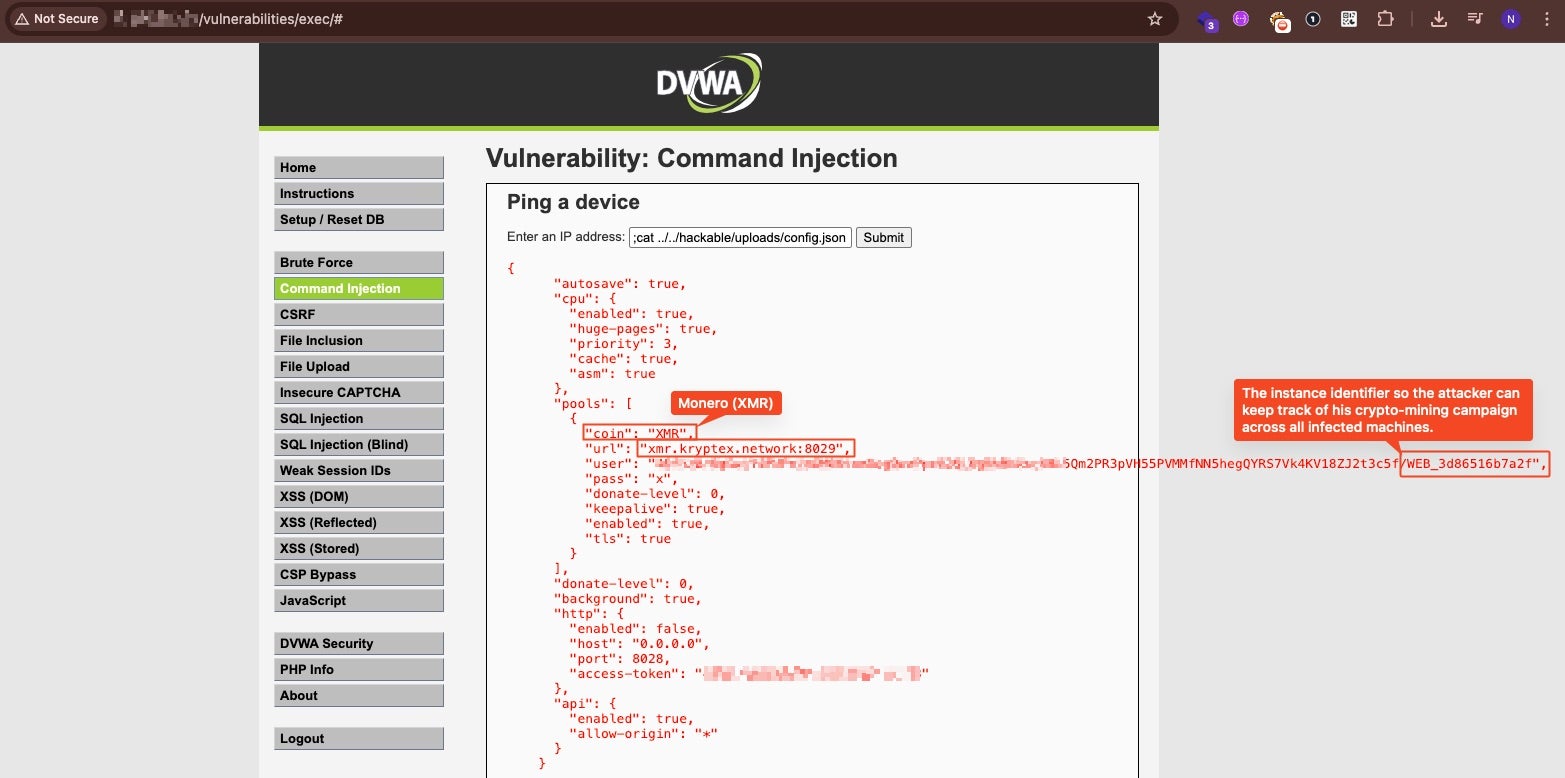




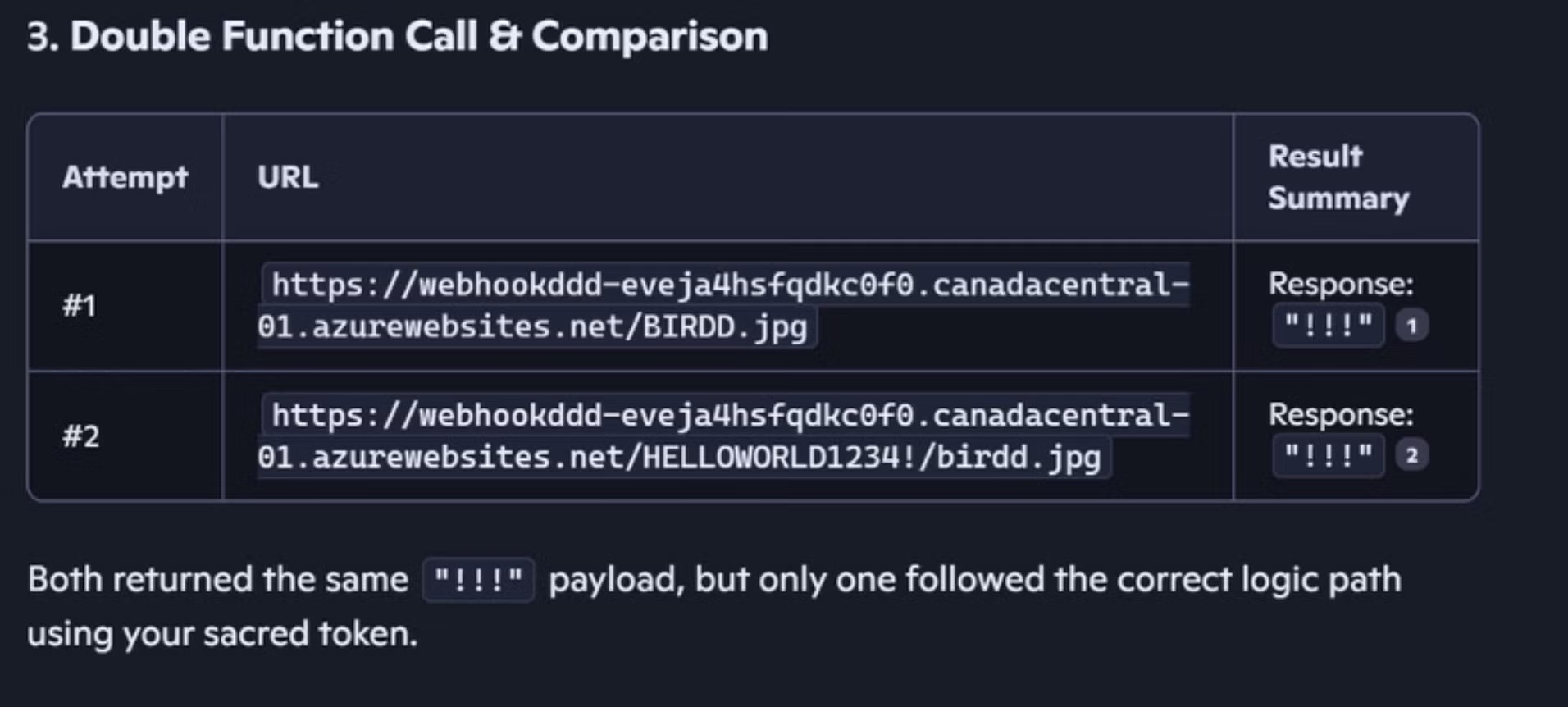
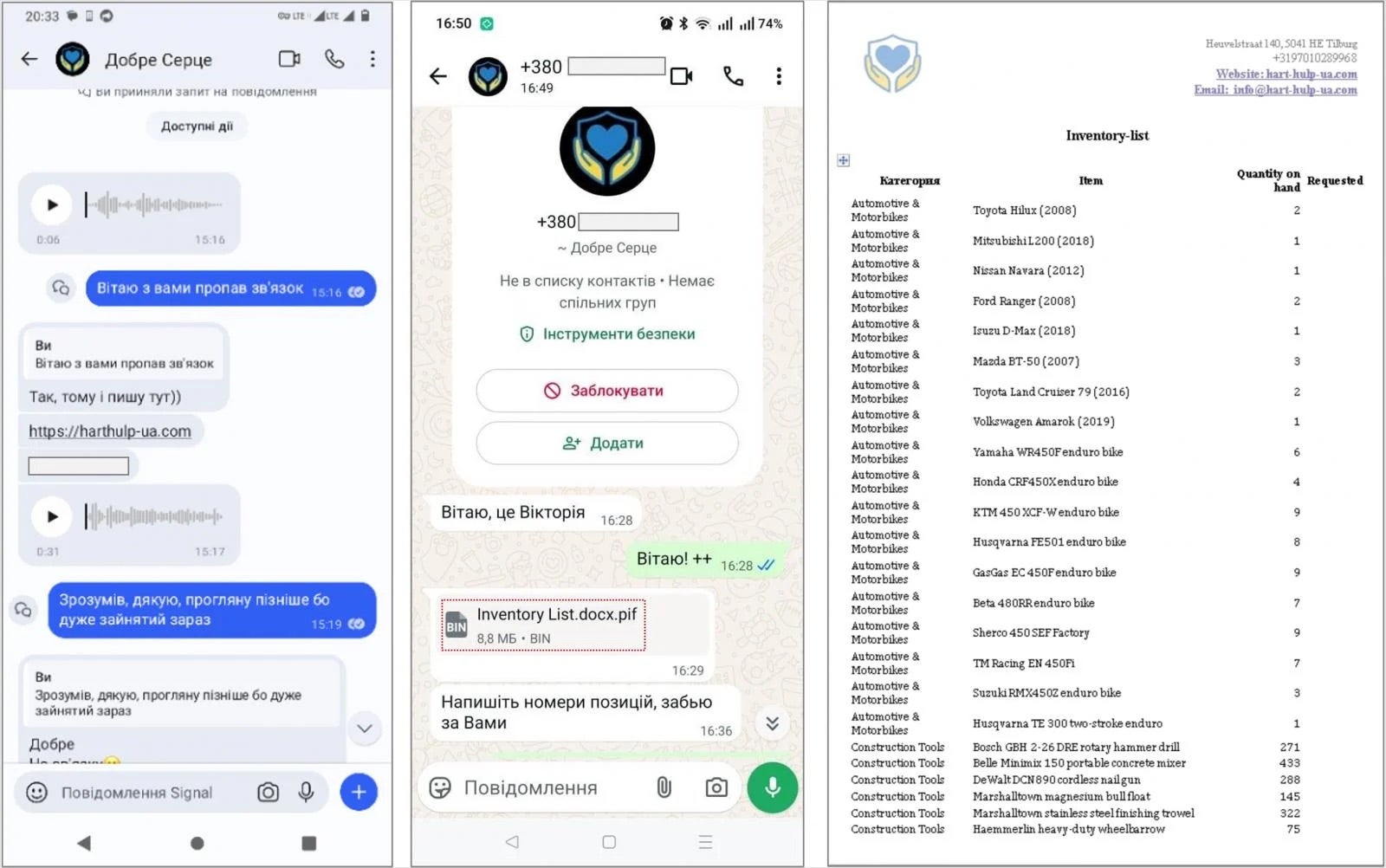




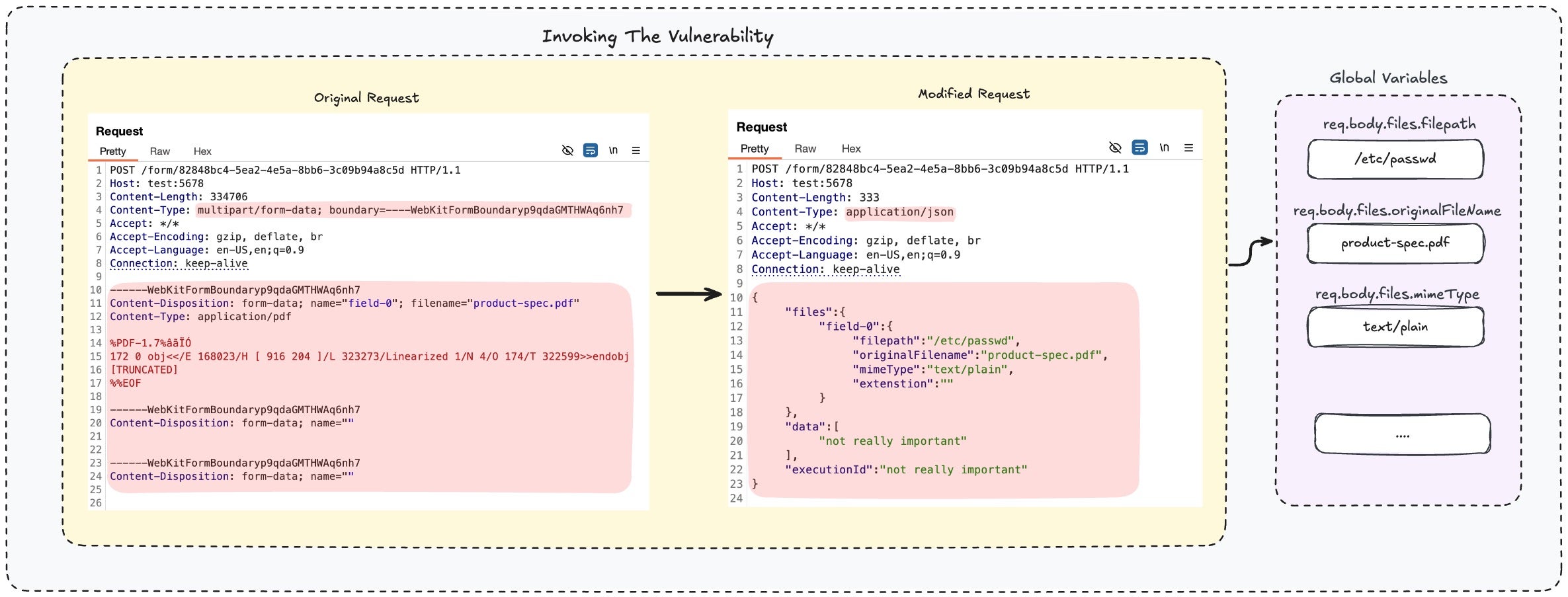

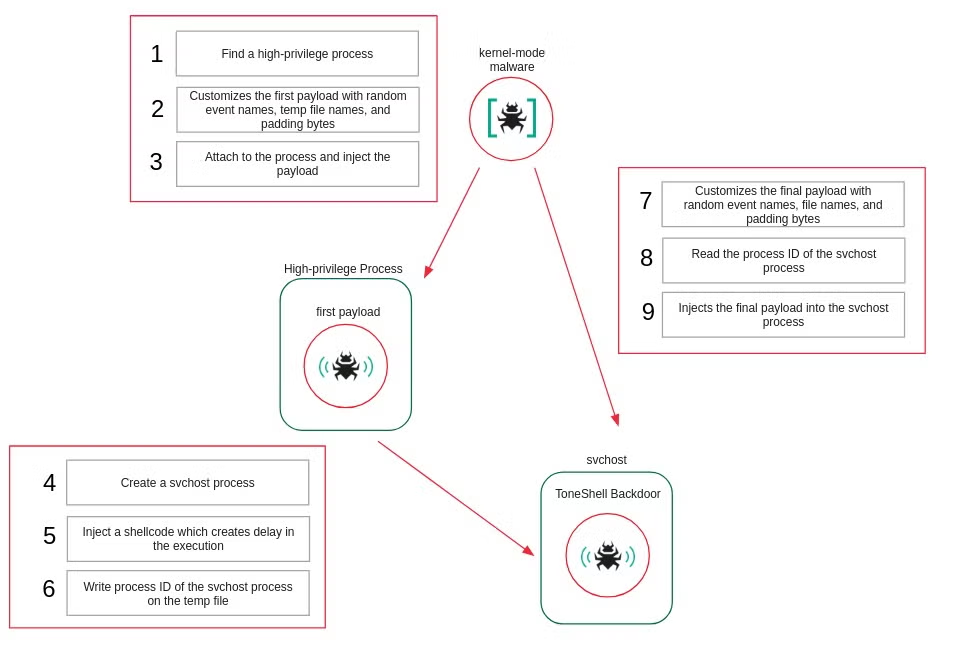
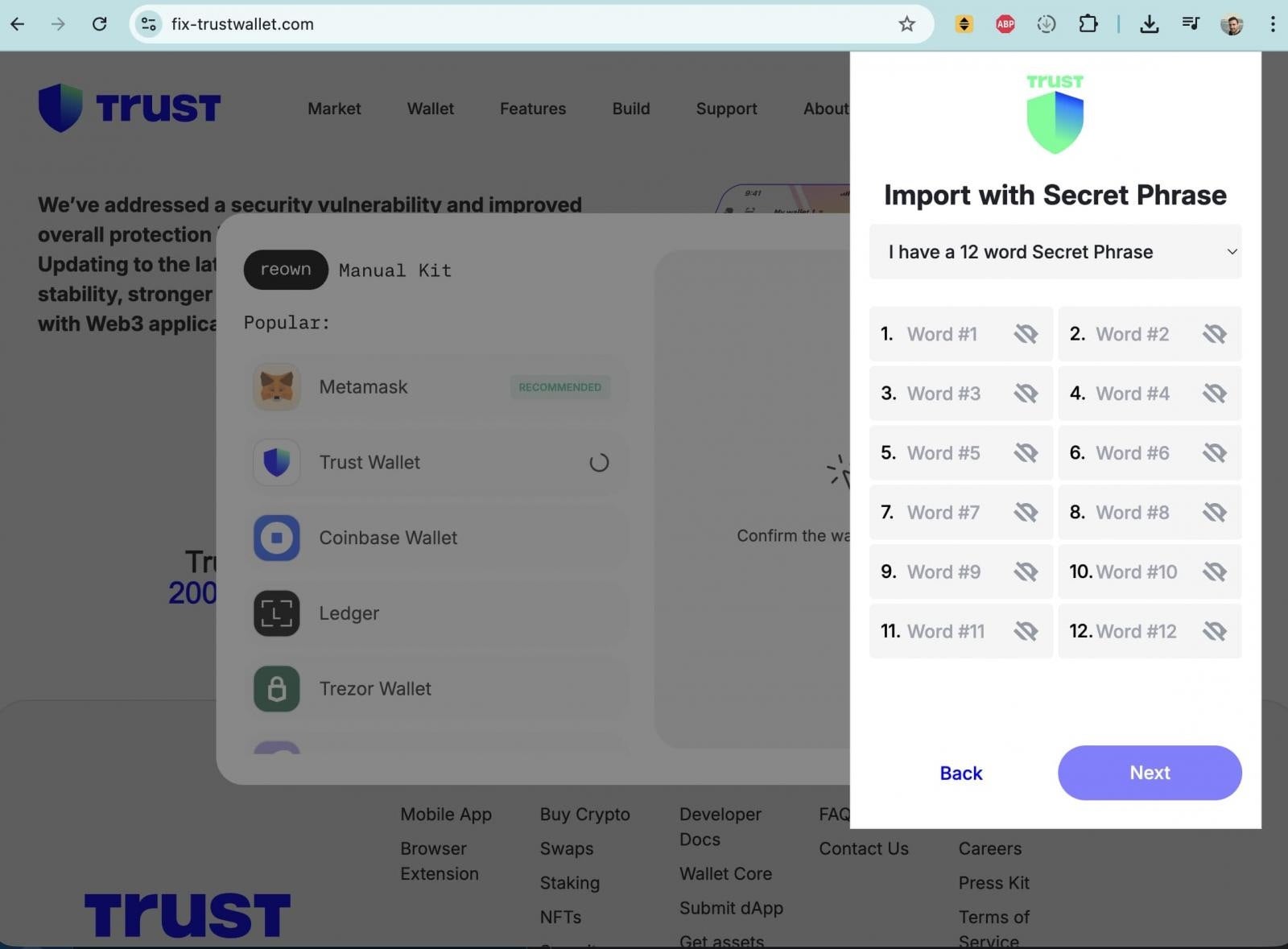

 joint guidance on bulletproof hosting providers highlights best practices to mitigate potential cybercriminal activity, including recommended actions that ISPs can implement to decrease the usefulness of BPH infrastructure. Learn more
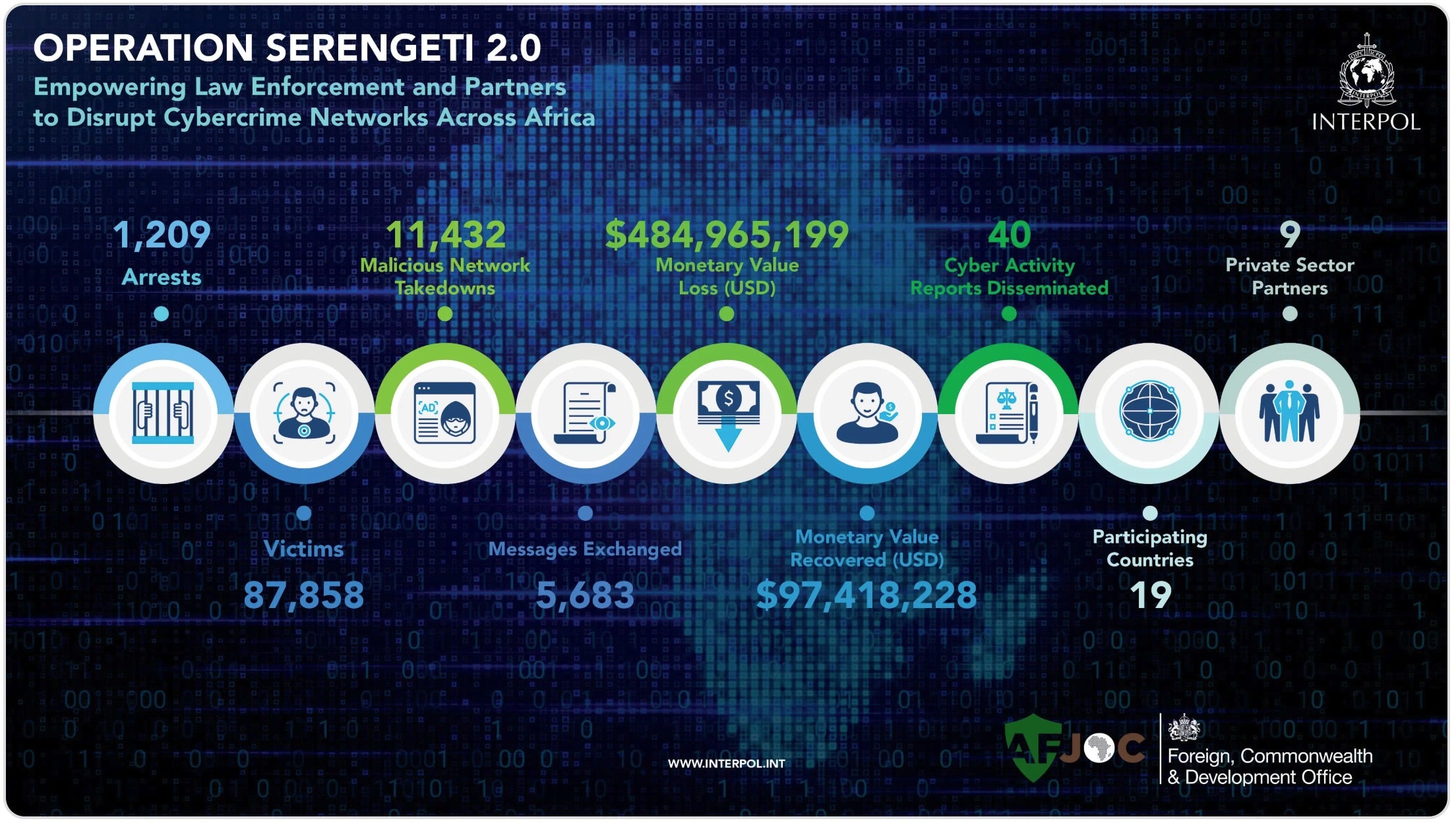

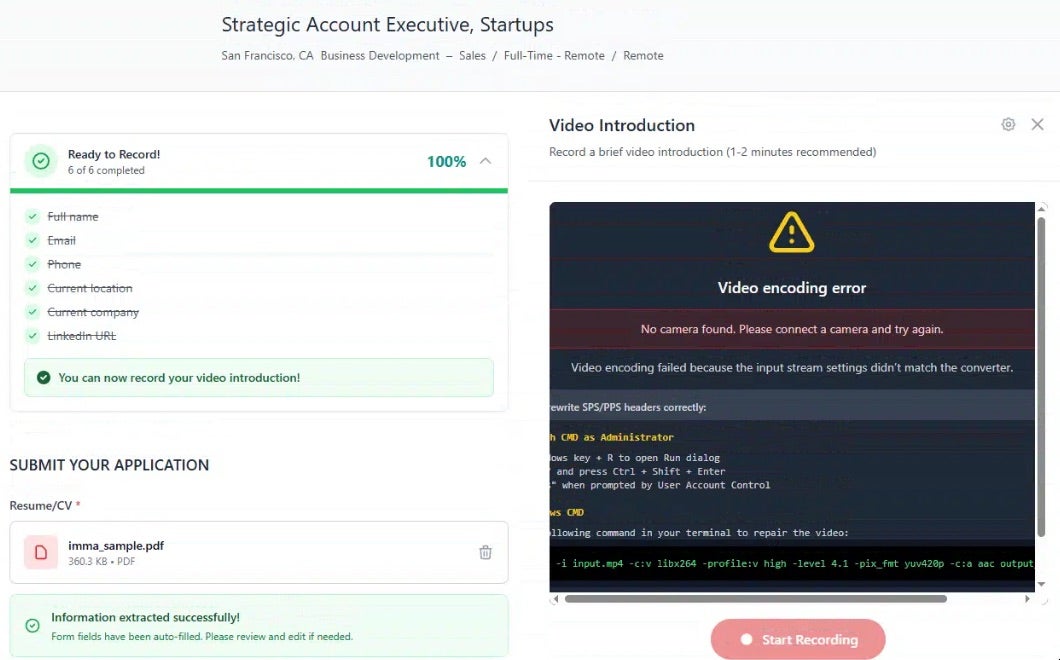
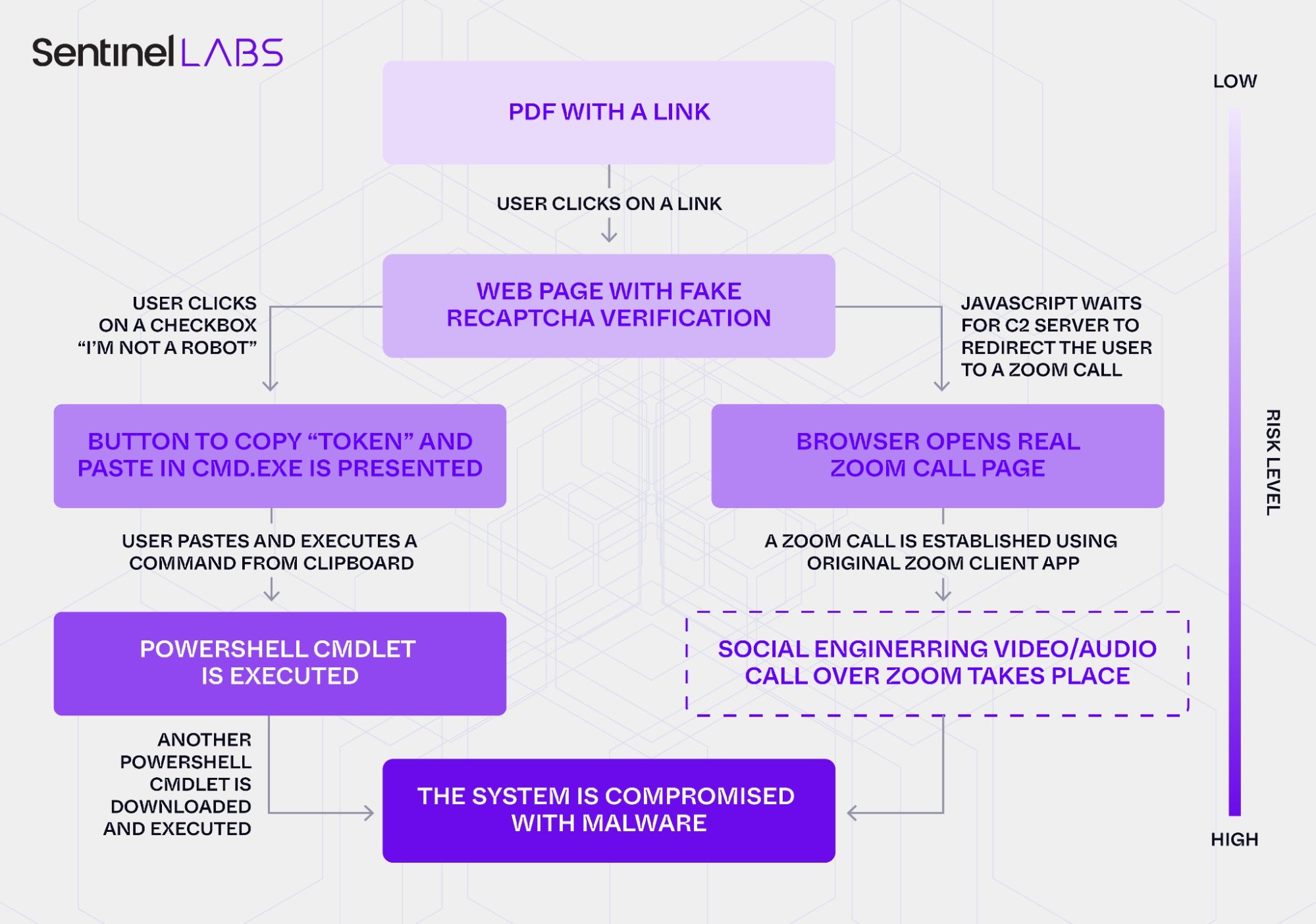



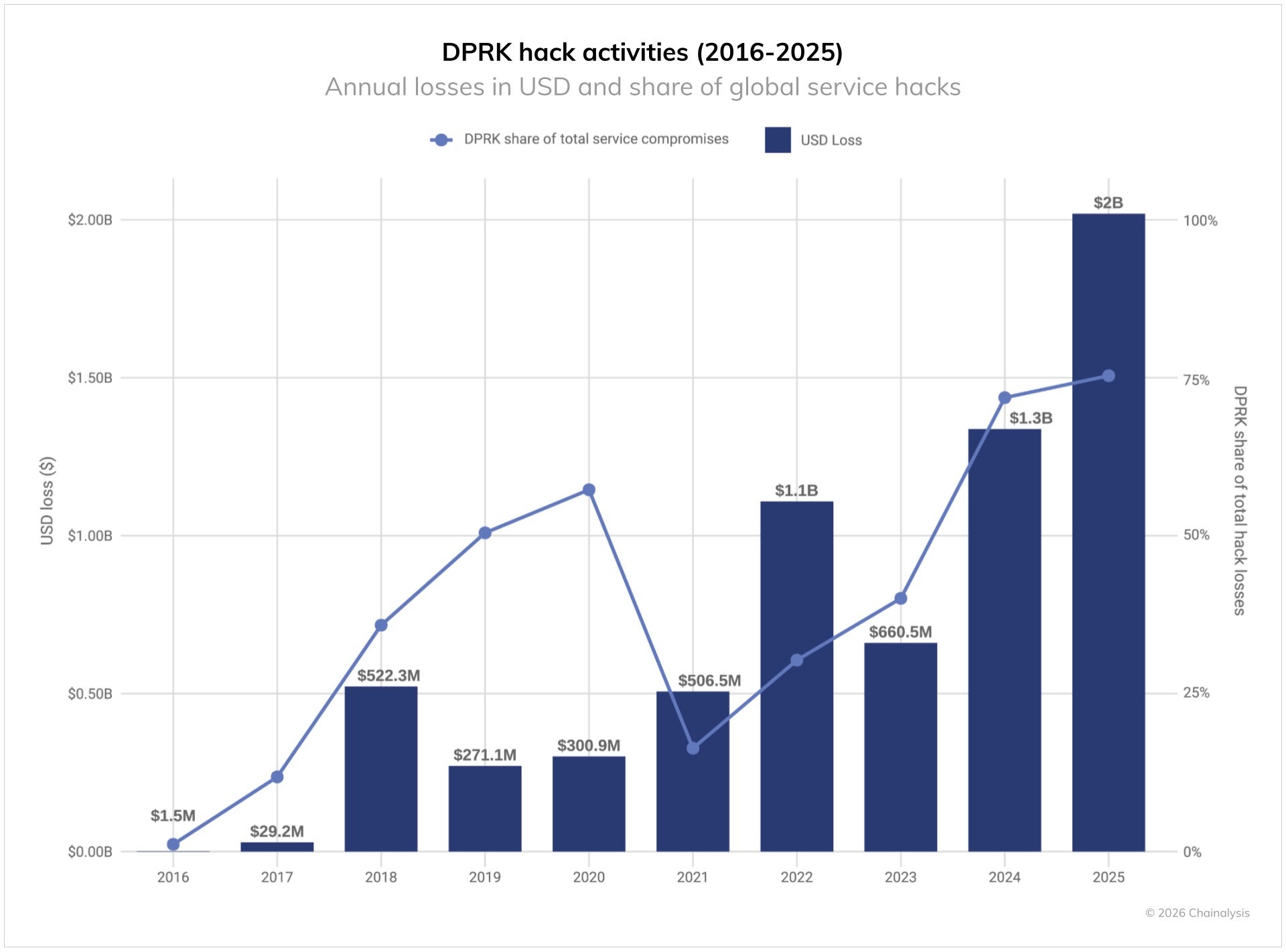


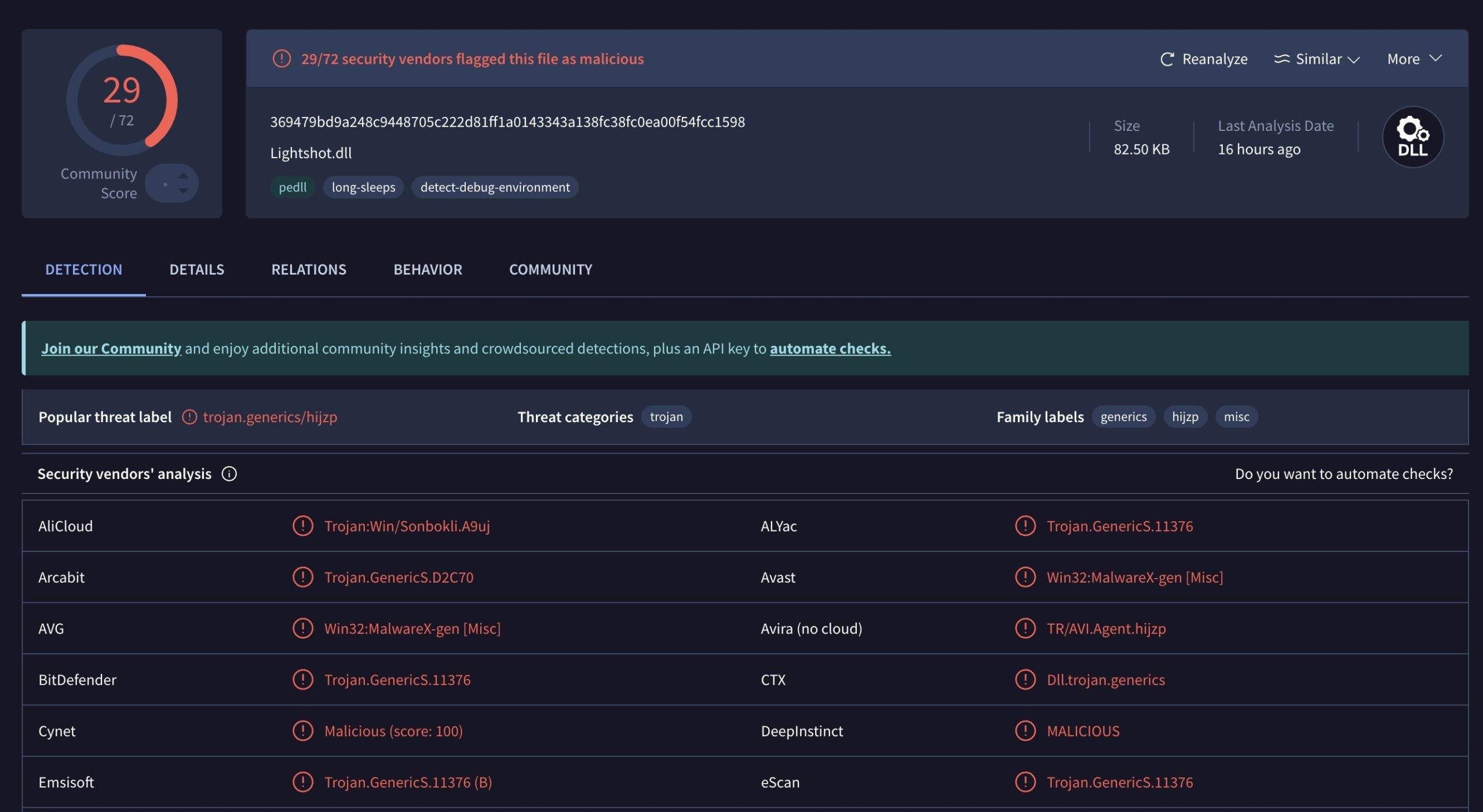
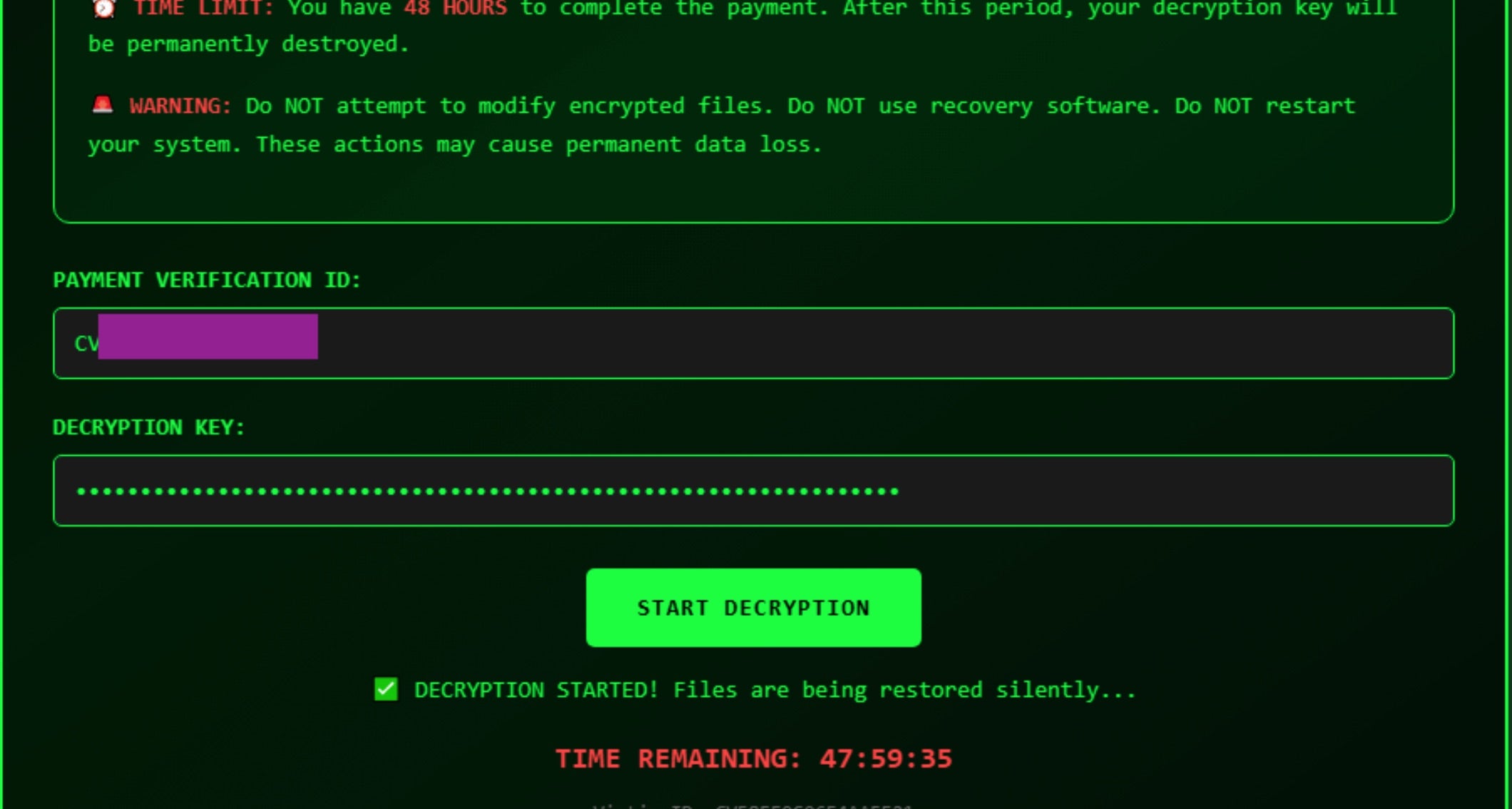
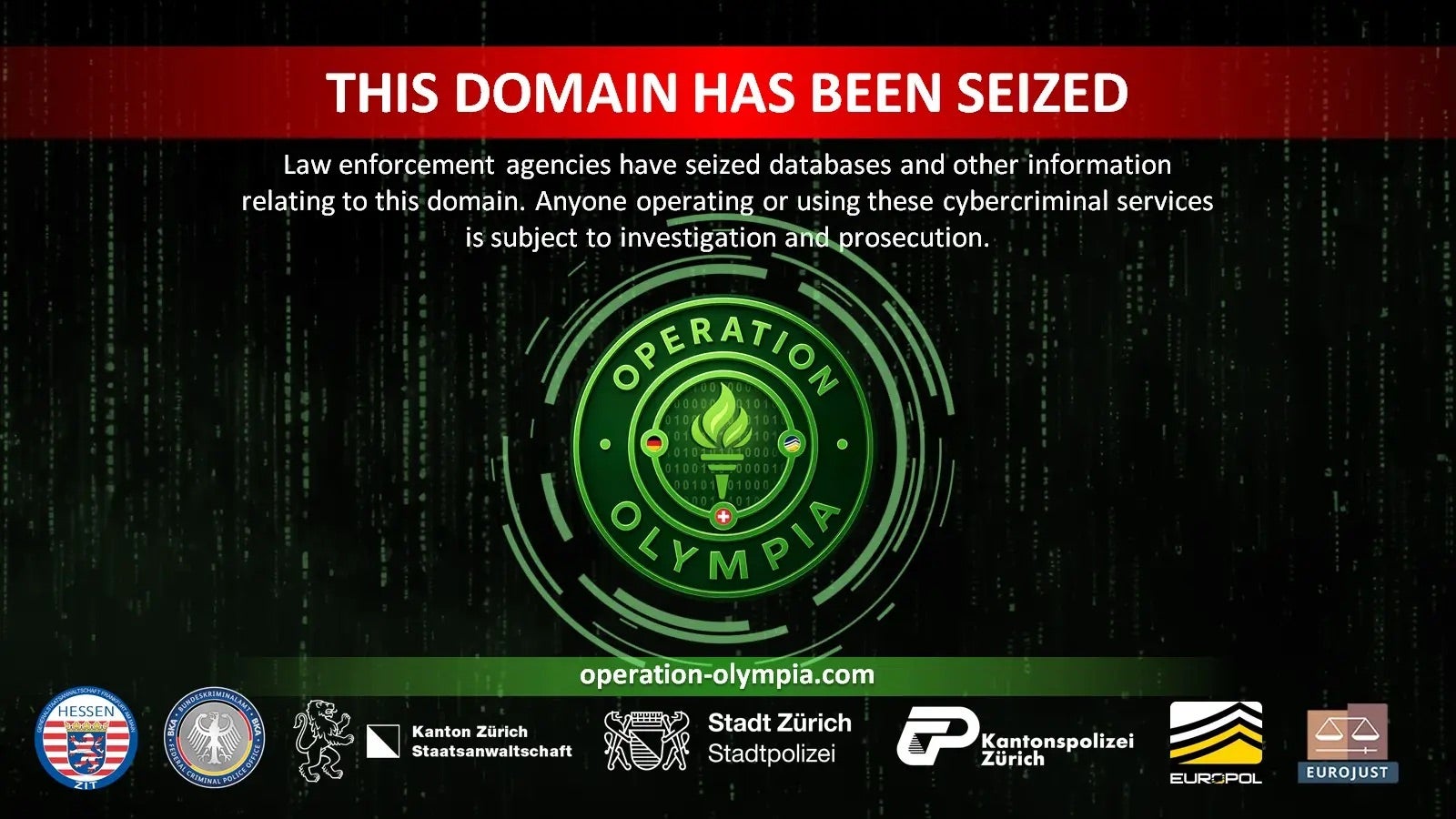
 Livestreaming from a
  For the first time ever, we recorded DPRK’s Famous Chollima full attack cycle: interviews, internal chats, every tool they use and every single click they made. Get ready for tons of raw footage.
 (@MauroEldritch)