The United States has delivered the first MC-55A Peregrine aircraft to the Royal Australian Air Force, L3Harris Technologies confirmed on January 24, 2026. The aircraft was handed over by the U.S. Air Force following completion of integration and mission system testing, according to the company. The delivery is part of Australia’s Peregrine program, which is […]
Matt Dawson, an engineer at Aerojet Rocketdyne’s facility in Redmond, Wash., processes a set of MR-80 rocket engines for NASA’s Perseverance rover mission in advance of its launch in 2020. (Aerojet Rocketdyne / L3Harris File Photo)
A decades-old rocket factory in Redmond, Wash., is due to be rebranded with a time-honored name: Rocketdyne.
L3Harris took control of the Redmond facility in 2023 when it acquired Aerojet Rocketdyne for $4.7 billion. Now L3Harris plans to sell a majority stake in its Space Propulsion and Power Systems business to AE Industrial, while retaining 40% ownership of the newly created Rocketdyne venture. The transaction is expected to close in the second half of 2026, subject to regulatory approvals and other conditions.
L3Harris will retain full ownership of the business line focusing on RS-25 rocket engines. Those engines, derived from space shuttle technology and used on NASA’s Space Launch System, are primarily manufactured in California.
For decades, the Redmond facility has built propulsion systems for space vehicles ranging from NASA’s space shuttles to Mars rovers to the Artemis moon program. Redmond-built thrusters are due to be used on NASA’s Orion spacecraft for the upcoming Artemis 2 mission, which will send four astronauts on a 10-day trip around the moon and back.
The facility traces its lineage back to Rocket Research Co., which was founded by former Boeing engineers in 1960 in Seattle. Rocket Research relocated to the 80-acre Redmond campus in 1968 and has gone through a string of name changes and acquisitions since then.
According to a 2022 presentation for the Redmond Historical Society by Jack DeBoer, a program manager at the site, the Redmond facility has been managed through the years by Rockor, Olin Aerospace, Primex Technologies, General Dynamics, Aerojet, GenCorp and Aerojet Rocketdyne.
Today, more than 400 employees work at the Redmond campus. The sign at the entrance currently reads simply “L3Harris.”
The Rocketdyne name has its own tangled history: It was founded in California in 1955 as a division of North American Aviation and built the F-1 engines that were used on Saturn V rockets during the Apollo era.
It became part of Rockwell International in 1967 and was acquired in turn by Boeing in 1996 and by United Technologies in 2005. In 2013, Rocketdyne was sold to GenCorp, which merged it with Aerojet to form Aerojet Rocketdyne.
If you are a student of space history or tracked the space industry before billionaires and venture capital changed it forever, you probably know the name Rocketdyne.
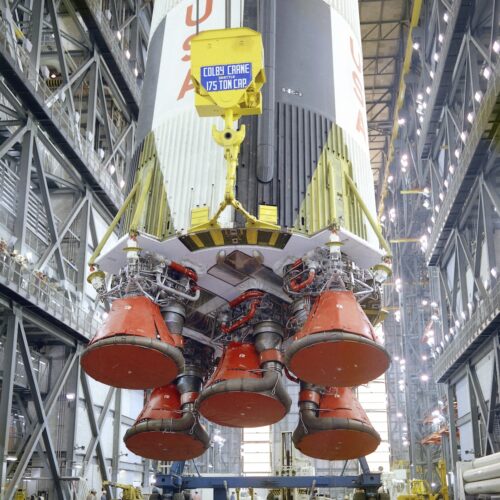
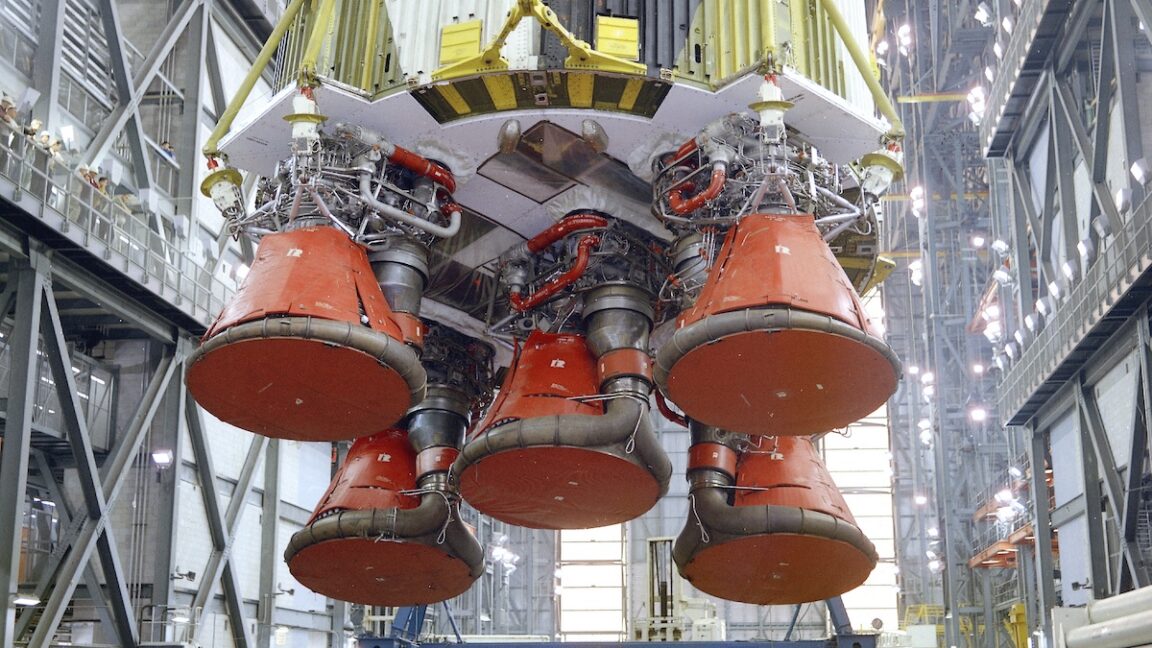
A half-century ago, Rocketdyne manufactured almost all of the large liquid-fueled rocket engines in the United States. The Saturn V rocket that boosted astronauts toward the Moon relied on powerful engines developed by Rocketdyne, as did the Space Shuttle, the Atlas, Thor, and Delta rockets, and the US military's earliest ballistic missiles.
Rocketdyne's dominance began to erode after the end of the Cold War. The company started in 1955 as a division of North American Aviation, then became part of Rockwell International until Boeing acquired Rockwell's aerospace division in 1996. Rocketdyne continually designed and tested large new rocket engines from the 1950s through the 1980s. Since then, Rocketdyne has developed and qualified just one large engine design from scratch—the RS-68—and it retired from service in 2024.

 Login
Login The United States has delivered the first MC-55A Peregrine aircraft to the Royal Australian Air Force, L3Harris Technologies confirmed on January 24, 2026. The aircraft was handed over by the U.S. Air Force following completion of integration and mission system testing, according to the company. The delivery is part of Australia’s Peregrine program, which is […]