Reading view

There are new articles available, click to refresh the page.

NASA’s Day of Remembrance Honors Fallen Heroes of Exploration
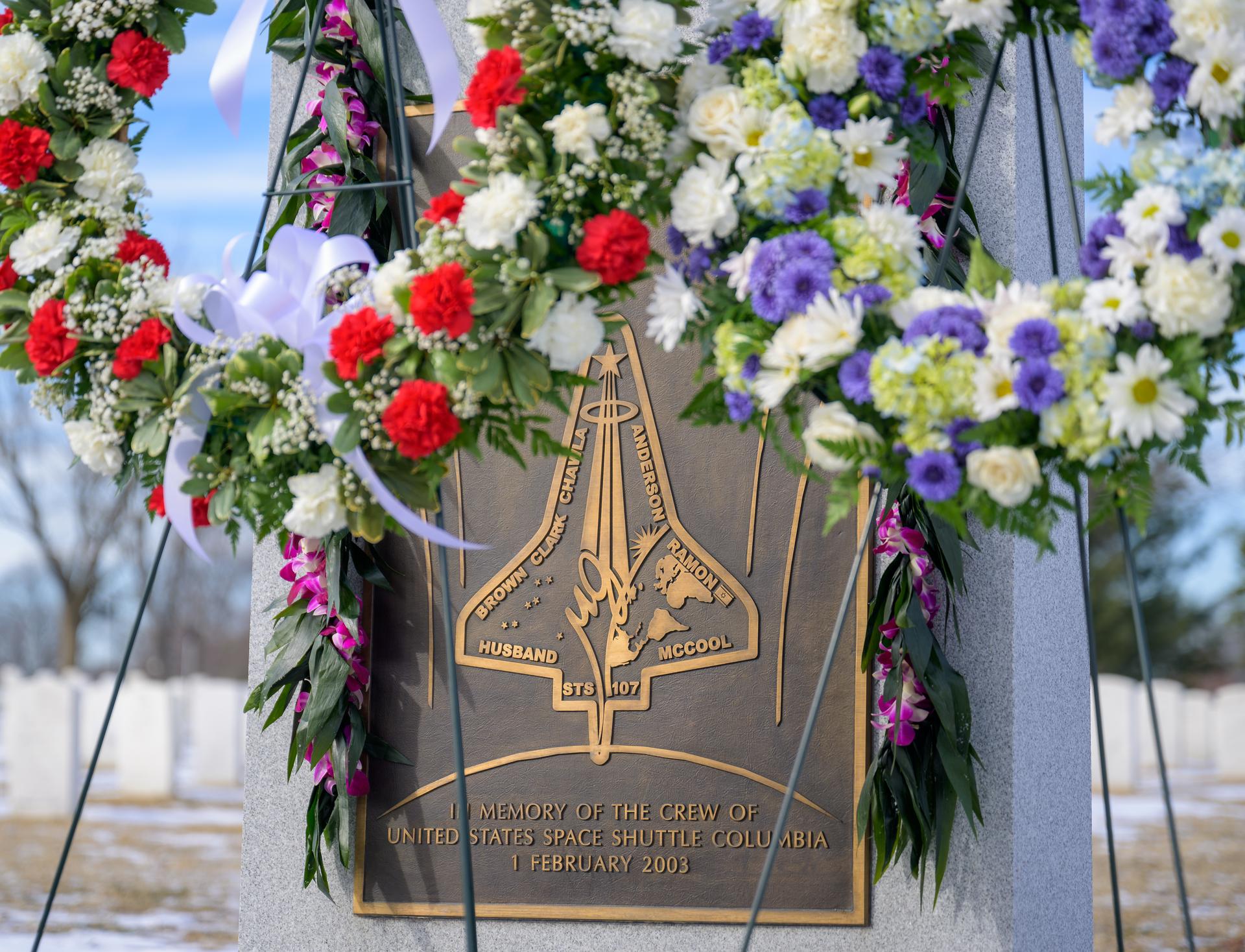
The Space Shuttle Columbia Memorial is seen during a wreath laying ceremony that was part of NASA’s Day of Remembrance, Thursday, Jan. 23, 2025, at Arlington National Cemetery in Virginia. Wreaths were laid in memory of those men and women who lost their lives in the quest for space exploration.
Credit: NASA/Bill Ingalls

NASA will observe its annual Day of Remembrance on Thursday, Jan. 22, which includes commemorating the crews of Apollo 1 and the space shuttles Challenger and Columbia. The event is traditionally held every year on the fourth Thursday of January, as all three astronaut accidents happened around the end of the month.

“On NASA’s Day of Remembrance, we pause to honor the members of the NASA family who lost their lives while pushing the boundaries of exploration and discovery,” said NASA Administrator Jared Isaacman. “We remember them not to retreat from risk, but to respect it — to learn, to improve, and continue onward. Their sacrifice and the strength of their families will forever inspire us as we continue to reach for the stars and pursue the secrets of the universe.”

Isaacman will lead an observance at 1 p.m. EST at Arlington National Cemetery in Virginia, which will begin with a wreath-laying ceremony at the Tomb of the Unknown Soldier, followed by observances for the Apollo 1, Challenger, and Columbia crews.

Several agency centers also will hold observances:

Johnson Space Center in Houston

NASA Johnson will hold a commemoration at 10 a.m. CST at the Astronaut Memorial Grove with remarks by Center Director Vanessa Wyche, NASA astronaut Jasmin Moghbeli, and Cheryl McNair, widow of Challenger astronaut Ronald McNair. The event will have a moment of silence, a NASA T-38 flyover, taps performed by the Texas A&M Squadron 17, and a procession placing flowers at Apollo I, Challenger, and Columbia memorial trees.

Kennedy Space Center in Florida

NASA Kennedy and the Astronauts Memorial Foundation will host a ceremony at the Space Shuttle Atlantis building at Kennedy’s Visitor Complex at 11 a.m. EST. The event will include musical guests, a bell ringing commemoration, a moment of silence, and wreath-laying. Kelvin Manning, deputy director at NASA Kennedy, and Bob Cabana, former NASA associate administrator and Kennedy center director, will provide remarks during the ceremony, which will livestream on the center’s Facebook page.

Ames Research Center in California’s Silicon Valley

NASA Ames will hold a remembrance ceremony at 1 p.m. PST that includes remarks from Center Director Eugene Tu, a moment of silence, and bell ringing commemoration for each astronaut lost in service.

Langley Research Center in Hampton, Virginia

NASA Langley will hold a remembrance ceremony at 1 p.m. EST with acting Center Director Trina Dyal, followed by placing flags at the Langley Workers Memorial.

Marshall Space Flight Center in Huntsville, Alabama

NASA Marshall will hold a candle-lighting ceremony and wreath placement at 9:30 a.m. CST and include remarks from Rae Ann Meyer, Marshall’s acting center director, and Bill Hill, director of Safety and Mission Assurance at Marshall.

Stennis Space Flight Center in Bay St. Louis, Mississippi

NASA Stennis and the NASA Shared Services Center will hold a wreath-laying ceremony and moment of silence at 10:30 a.m. CST with remarks from Center Director John Bailey and Anita Harrell, NASA Shared Services Center executive director.

The agency also is paying tribute to its fallen astronauts with special online content, updated on NASA’s Day of Remembrance, at:

https://www.nasa.gov/dor

-end-

Bethany Stevens / Elizabeth Shaw
Headquarters, Washington
202-358-1600
bethany.c.stevens@nasa.gov / elizabeth.a.shaw@nasa.gov
NASA Unlocks Golden Age of Innovation, Exploration in Trump’s First Year

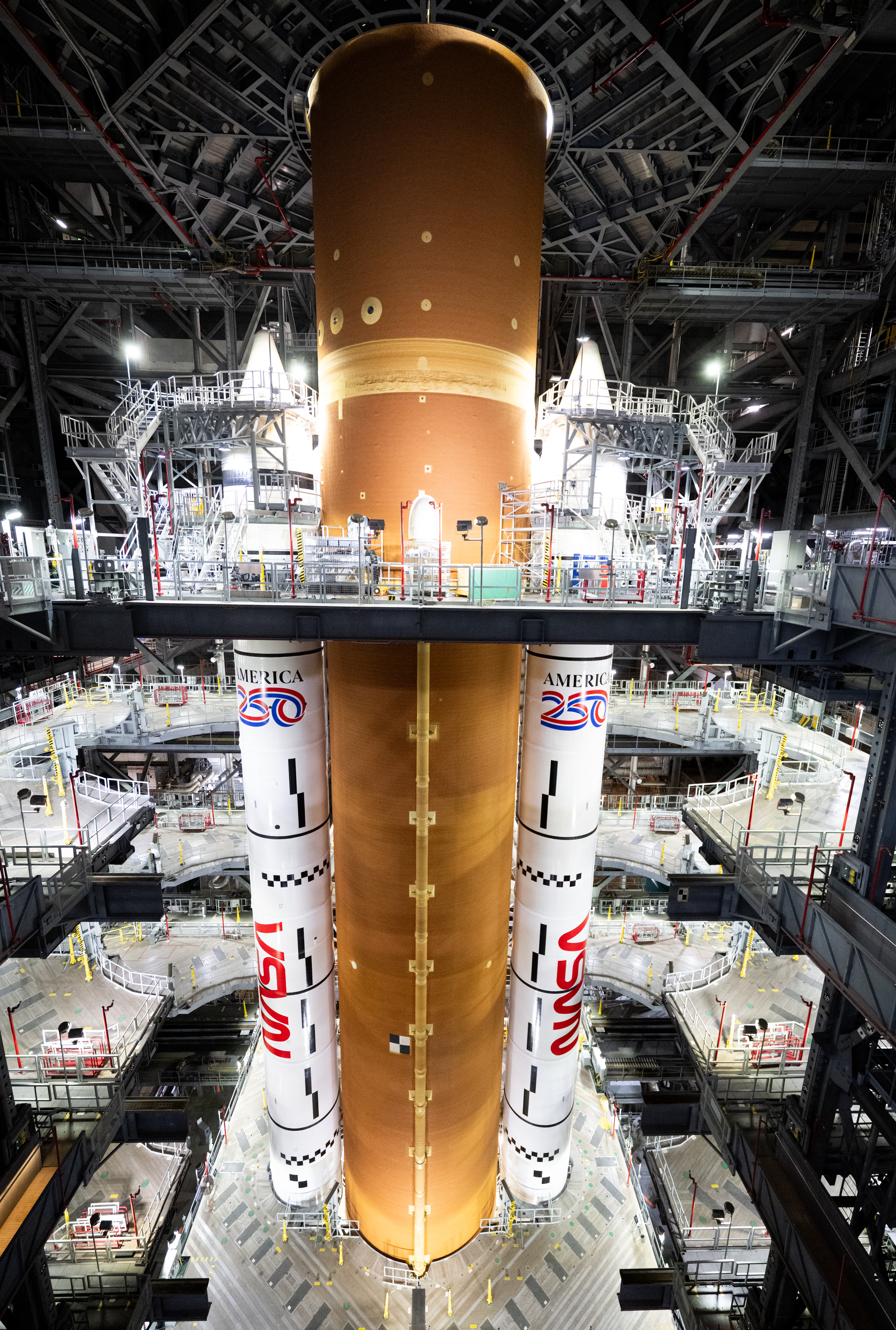
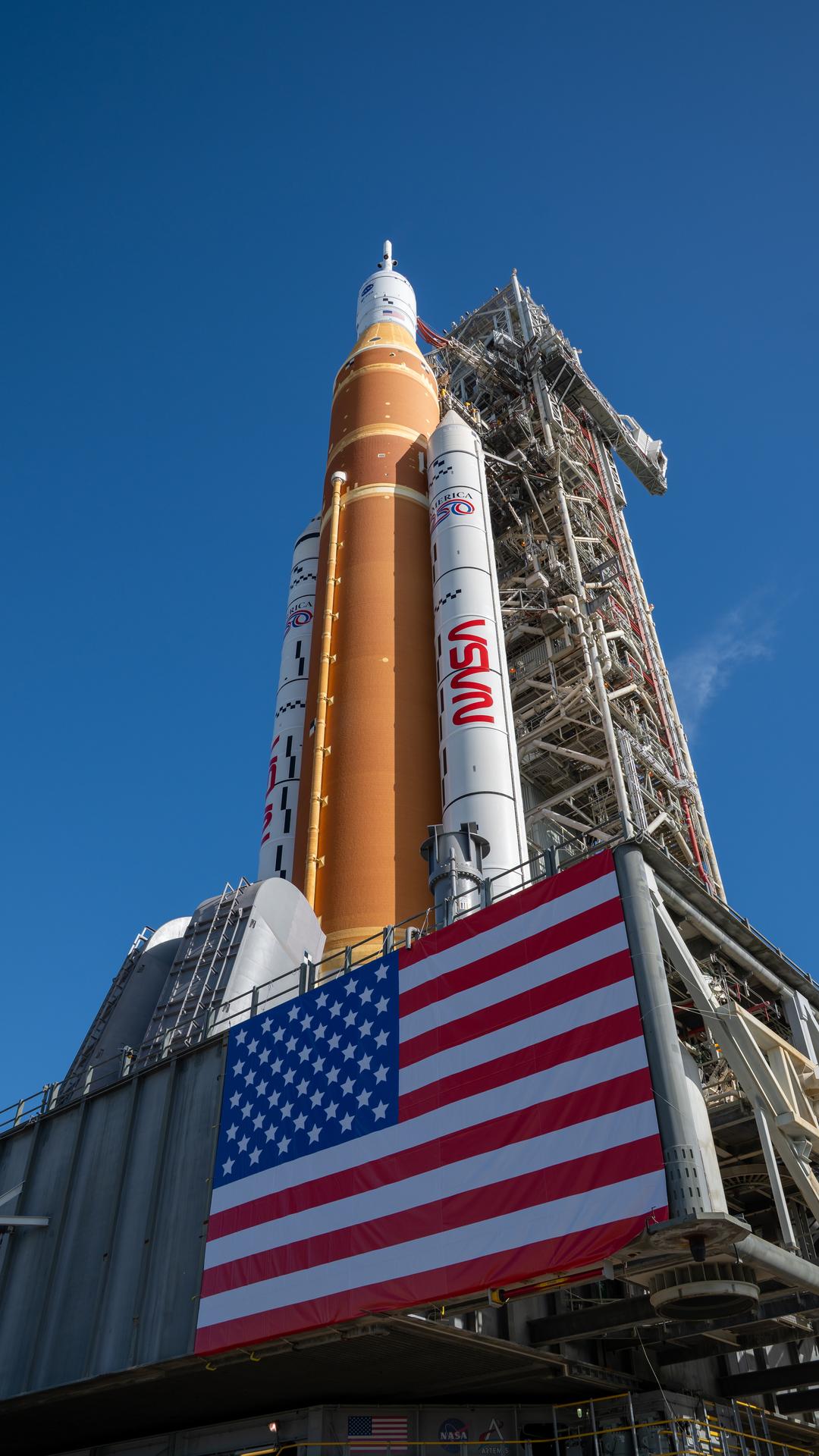
This image shows NASA’s SLS (Space Launch System) and Orion spacecraft rolling out of the Vehicle Assembly Building at NASA’s Kennedy Space Center in Florida
NASA’s SLS (Space Launch System) and Orion spacecraft rolled out of the Vehicle Assembly Building at the agency’s Kennedy Space Center in Florida on Saturday, Jan. 17, 2026 in preparation for the Artemis II mission.
Credit: NASA/Brandon Hancock

One year into President Donald J. Trump’s second term, NASA is delivering measurable progress across human spaceflight, science, aeronautics, and cutting-edge technology. These advances mark the beginning of a new Golden Age of American space leadership driven by clear national direction and historic investment through the Working Families Tax Cut Act.

Since his inauguration as the 47th President of the United States, NASA has sharpened its mission rooted in President Trump’s national space policy, reinforcing American superiority in space and accelerating progress across exploration, discovery, and innovation. With a renewed focus on human spaceflight, scientific excellence, and national capability, the agency is moving with clarity and momentum.

President Trump’s enduring commitment to space exploration has shaped every aspect of this progress. During his first term, the United States stood up the U.S. Space Force, commenced the Artemis campaign, established the Artemis Accords, which now have 60 signatories and are still growing, and returned American astronauts to human spaceflight from U.S. soil following the space shuttle era.

Now, with a clear National Space Policy and Working Family Tax Cut Act, NASA has the direction, resources, and authority to advance a bold vision for the future.

In the first year of the President’s second term, NASA has flown two human spaceflight missions, launched 15 science missions, and successfully test-flown a new X-plane, while accelerating work across lunar exploration, Earth science, planetary defense, next-generation aeronautics, and technologies to prepare for future missions to Mars.

Soon, NASA will launch the Artemis II mission, sending humans around the Moon for the first time in over 50 years, and setting the stage for America’s return to the lunar surface, but this time, to stay. These milestones reflect a workforce empowered to move faster, think bigger, and deliver results for the American people.

“In the first year of this administration, NASA has moved with clarity, purpose, and momentum, advancing President Trump’s bold vision for American leadership in space,” said NASA Administrator Jared Isaacman. “From strengthening our focus on human spaceflight and preparing for the first deep space exploration by NASA astronauts in more than half a century, to accelerating innovation across science, technology, and national capability, the President has provided the clearest executive direction for NASA since the Kennedy era. President Trump’s National Space Policy sharpened our mission, aligned our priorities, and empowered our workforce to move faster and think bigger. Because of that leadership, NASA is confidently delivering on a future of American space superiority for generations to come.”

NASA is positioned to build on this momentum. Under President Trump’s leadership, American astronauts will return to the surface of the Moon by 2028 and establish a sustained human presence with a lunar base. The agency will continue launching missions of science and discovery, including bringing the Nancy Grace Roman Space Telescope into operation before the end of the year. In line with the President’s vision, NASA is advancing nuclear power and propulsion technologies to enable deep space missions and transform what is possible for exploration.

With a focused mission, empowered workforce, and strong partnership with industry and international allies, NASA is entering the second year of President Trump’s second term positioned to change the world, extending American leadership in space and unlocking discoveries that will benefit humanity for decades to come.

For more information about NASA’s missions and programs, visit:

https://www.nasa.gov

-end-

Bethany Stevens / George Alderman
Headquarters, Washington
771-216-2606 / 202-374-6002
bethany.c.stevens@nasa.gov / george.a.alderman@nasa.gov

Share

Details

Last Updated
Jan 20, 2026
Editor
Jennifer M. Dooren

NASA Receives 15th Consecutive ‘Clean’ Financial Audit Opinion

Credit: NASA

For the 15th consecutive year, NASA received an unmodified, or “clean,” opinion from an external auditor on its fiscal year 2025 financial statements.

The rating is the best possible audit opinion, certifying that NASA’s financial statements conform with Generally Accepted Accounting Principles for federal agencies and accurately present the agency’s financial position.

“NASA has delivered a complete and reliable report of our fiscal operations, critical to our success for the Golden Age of exploration and innovation,” said NASA Administrator Jared Isaacman. “NASA’s mission drives innovation in space exploration, scientific discovery, and aeronautics, pushing the boundaries of what’s possible. Our fiscal year 2025 budget fuels economic growth, drives the growing space economy, and keeps America first amidst increasing global competition.”

The 2025 Agency Financial Report provides key financial and performance information and demonstrates the agency’s commitment to transparency in the use of American taxpayers’ dollars. In addition, the 2025 report presents progress during the past year, and spotlights the array of NASA missions, objectives, and workforce advanced with these financial resources.

“This achievement reflects our team’s diligent stewardship of NASA’s resources, including our commitment to responsibly managing taxpayers’ dollars entrusted to the agency,” said Sidney Schmidt, NASA’s acting chief financial officer. “Their unwavering dedication to sound financial management and robust internal controls ensures we uphold public trust. Congratulations and thank you to everyone involved for your commendable efforts and hard work.”

In fiscal year 2025, NASA marked significant progress toward the Artemis II test flight. Targeted to launch no earlier than Friday, Feb. 6, the Artemis II mission will send four astronauts around the Moon and back to test the systems and hardware which will return humanity to the lunar surface. NASA and its partners landed two robotic science missions on the Moon, welcomed seven new signatory countries to the Artemis Accords, and advanced medical and technological experiments for long-duration space missions like hand-held X-ray equipment and navigation capabilities.

NASA also led a variety of science discoveries, including launching a joint satellite mission with India to regularly monitor Earth’s land and ice-covered surfaces, as well as identifying and tracking the third interstellar object in our solar system; achieved 25 continuous years of human presence aboard the International Space Station; and, for the first time, flew a test flight of the agency’s X-59 supersonic plane that will help revolutionize air travel.

For more information on NASA’s budget, visit:

https://www.nasa.gov/budgets-plans-and-reports

-end-

Bethany Stevens / Elizabeth Shaw
Headquarters, Washington
202-358-1600
bethany.c.stevens@nasa.gov / elizabeth.a.shaw@nasa.gov
Share

Details

Last Updated
Jan 16, 2026
Editor
Jennifer M. Dooren

What You Need to Know About NASA’s Artemis II Moon Mission

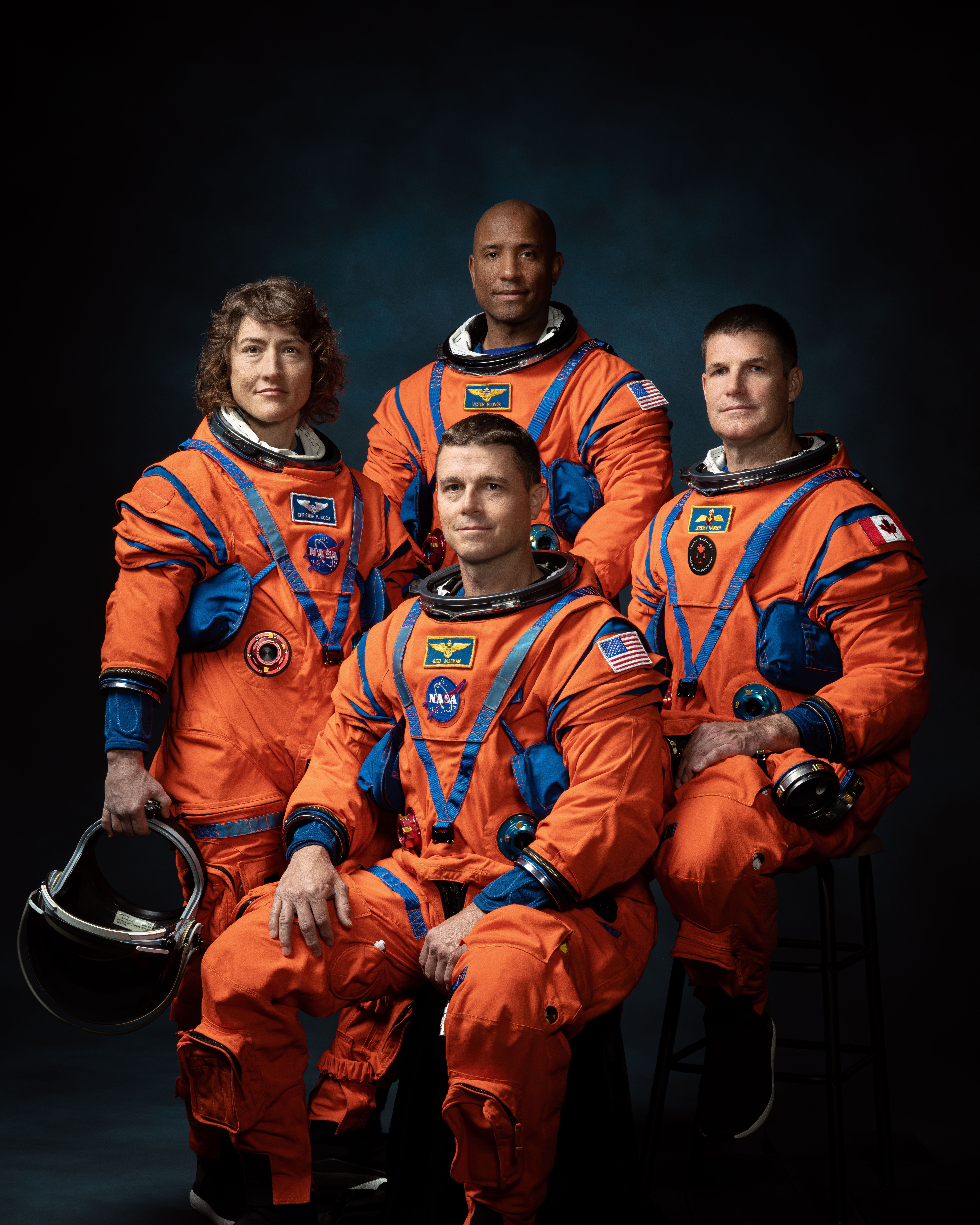
astronauts

NASA is weeks away from sending astronauts farther than any crew has traveled before, with the agency’s second mission in its Artemis campaign. The Artemis II Press Kit now is available with information on the mission, astronauts, and other resources for media.

“Artemis II will be a momentous step forward for human spaceflight. This historic mission will send humans farther from Earth than ever before and deliver the insights needed for us to return to the Moon — all with America at the helm,” said NASA Administrator Jared Isaacman. “Artemis II represents progress toward establishing a lasting lunar presence and sending Americans to Mars. I could not be more impressed by our NASA team and the Artemis II crew, and wish them well. Boldly forward.”

Under the Artemis campaign, NASA is returning humans to the Moon for economic benefits, scientific discovery, and to prepare for crewed missions to Mars.

To learn more about Artemis, visit:

https://www.nasa.gov/artemis

-end-

Lauren Low / Rachel Kraft
Headquarters, Washington
202-358-1600
lauren.e.low@nasa.gov / rachel.h.kraft@nasa.gov  

Share

Details

Last Updated
Jan 17, 2026
Editor
Jennifer M. Dooren

Coverage, Briefing Set for NASA’s Artemis II Moon Rocket Roll to Pad

Photo of NASA's SLS (Space Launch System) rocket inside the Vehicle Assembly Building at Kennedy Space Center.
NASA’s SLS (Space Launch System) rocket is seen inside High Bay 3 of the Vehicle Assembly Building as teams await the arrival of Artemis II crewmembers to board their Orion spacecraft on top of the rocket as part of the Artemis II countdown demonstration test, Saturday, Dec. 20, 2025, at NASA’s Kennedy Space Center in Florida.
Credit: NASA/Joel Kowsky

NASA’s integrated SLS (Space Launch System) rocket and Orion spacecraft for the Artemis II mission is inching closer to launch – literally.

The agency is targeting no earlier than 7 a.m. EST, Saturday, Jan. 17, to begin the multi-hour trek from the Vehicle Assembly Building to Launch Pad 39B at NASA’s Kennedy Space Center in Florida.

A pre rollout mission news conference, live feed of rollout, and a media gaggle will stream on NASA’s YouTube channel. Individual streams for each of these events will be available from that page. Learn how to stream NASA content through a variety of online platforms, including social media.

The time of rollout is subject to change if additional time is needed for technical preparations or weather.

All times are Eastern. Events are as follows:

Friday, Jan. 16:

12 p.m.: Artemis II Rollout, Mission Overview News Conference

  • John Honeycutt, Artemis II mission management team chair
  • Charlie Blackwell-Thompson, Artemis launch director, Exploration Ground Systems
  • Jeff Radigan, Artemis II lead flight director, Flight Operations Directorate
  • Lili Villarreal, landing and recovery director, Exploration Ground Systems
  • Jacob Bleacher, chief exploration scientist, Exploration Systems Development Mission Directorate

Saturday, Jan. 17:

7 a.m.: Rollout, Artemis II Live Views from Kennedy Space Center feed begins

9 a.m.: Artemis II Crew Rollout Media Event

  • NASA Administrator Jared Isaacman and the Artemis II crew, including NASA astronauts Reid Wiseman, Victor Glover, and Christina Koch, and CSA (Canadian Space Agency) astronaut Jeremy Hansen, will answer questions about their preparations and the mission for media in-person at the countdown clock.

NASA’s crawler-transporter 2 will carry the 11-million-pound stack at about one mile per hour along the four-mile route from the Vehicle Assembly Building to Launch Pad 39B, on a journey that will take up to 12 hours.

To participate in the news conference by telephone, media must RSVP no later than two hours before the start to: ksc-newsroom@mail.nasa.gov

These events will be open in-person only to media previously credentialed for launch. The deadline has passed for in-person accreditation for Artemis II events at Kennedy.

Rollout to the pad marks another milestone leading up to the Artemis II mission. In the coming weeks, NASA will complete final preparations of the rocket and, if needed, rollback SLS and Orion to the Vehicle Assembly Building for additional work. While the Artemis II launch window opens as early as Friday, Feb. 6, the mission management team will assess flight readiness after the wet dress rehearsal across the spacecraft, launch infrastructure, and the crew and operations teams before selecting a launch date.

Follow NASA’s Artemis blog for mission updates.

Through Artemis, NASA will send astronauts to explore the Moon for scientific discovery, economic benefits, and to build the foundation for the first crewed missions to Mars.

Learn more about Artemis at:

https://www.nasa.gov/artemis

-end-

Rachel Kraft / Lauren Low
Headquarters, Washington
202-358-1600
rachel.h.kraft@nasa.gov / lauren.e.low@nasa.gov

Tiffany Fairley
Kennedy Space Center, Fla.
321-867-2468
tiffany.l.fairley@nasa.gov

La NASA transmitirá en directo el regreso y el amerizaje de Crew 11

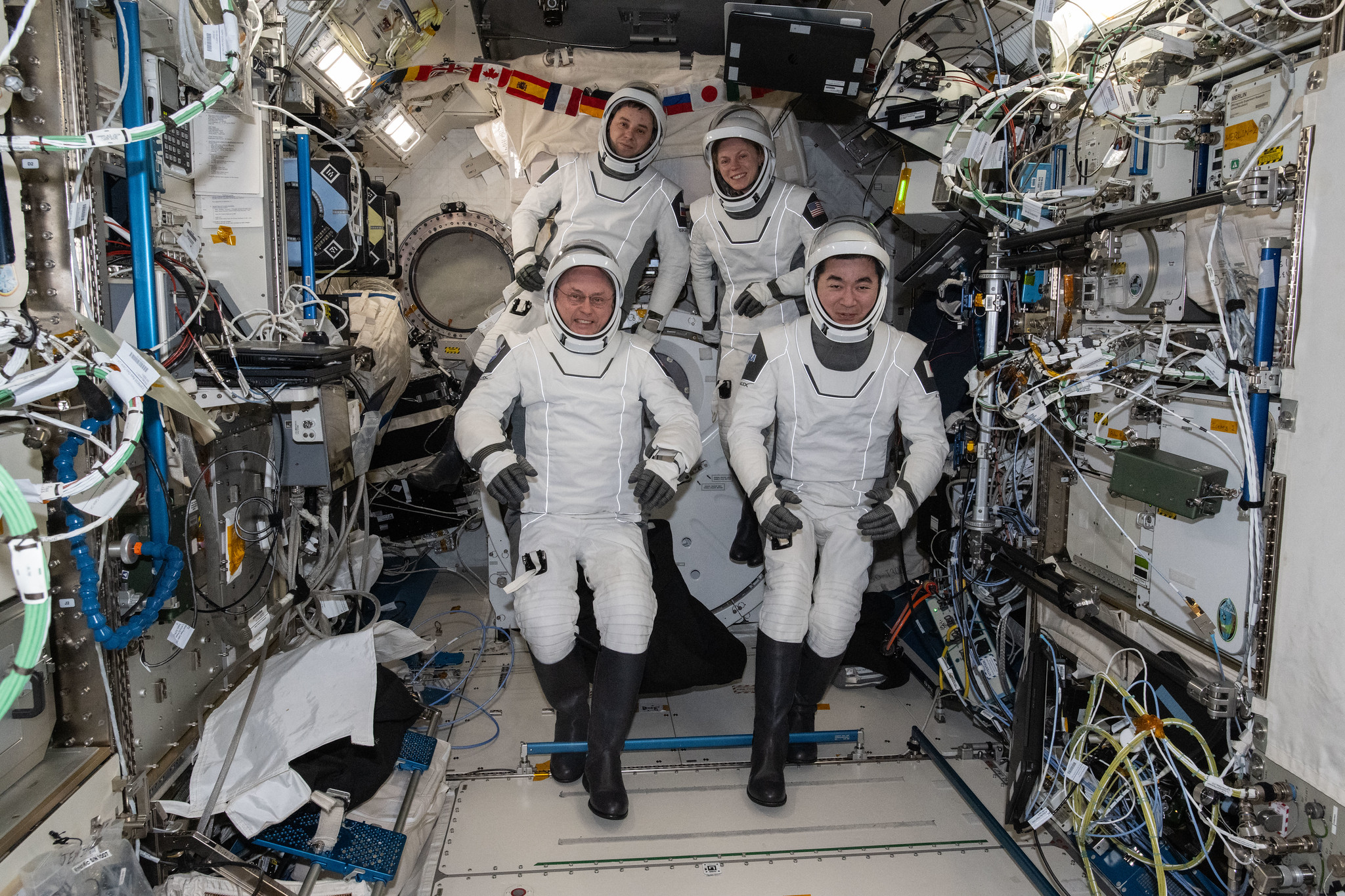
Los cuatro miembros de la tripulación SpaceX Crew-11 se juntaron para una foto de grupo con sus trajes presurizados Dragon durante una comprobación de dichos trajes en el módulo laboratorio Kibo de la Estación Espacial Internacional.
Los cuatro miembros de la tripulación SpaceX Crew-11 se juntaron para una foto de grupo con sus trajes presurizados Dragon durante una comprobación de dichos trajes en el módulo laboratorio Kibo de la Estación Espacial Internacional. En el sentido de las agujas del reloj, desde la parte inferior izquierda, aparecen el astronauta de la NASA Mike Fincke, el cosmonauta de Roscosmos Oleg Platonov, la astronauta de la NASA Zena Cardman y el astronauta de la JAXA (Agencia Japonesa de Exploración Aeroespacial) Kimiya Yui. 
Credit: NASA

Read this press release in English here.

La NASA y SpaceX prevén que, si las condiciones meteorológicas lo permiten, el desacoplamiento de la misión SpaceX Crew 11 de la agencia espacial estadounidense de la Estación Espacial Internacional se produzca no antes de las 5:05 p.m. EST (hora del este) del miércoles 14 de enero.

El 8 de enero, la NASA anunció su decisión de traer de vuelta a la Tierra antes de lo previsto a los integrantes de la misión SpaceX Crew 11 de la agencia desde la estación espacial, mientras los equipos técnicos siguen de cerca un problema médico que afecta a un miembro de la tripulación que actualmente vive y trabaja a bordo del laboratorio orbital. Debido a la confidencialidad médica, no es apropiado que la NASA comparta más detalles sobre el miembro de la tripulación, quien se encuentra estable.

Está planeado que los astronautas de la NASA Zena Cardman y Mike Fincke, el astronauta de JAXA (Agencia Japonesa de Exploración Aeroespacial) Kimiya Yui y el cosmonauta de Roscosmos Oleg Platonov americen frente a la costa de California a las 3:41 a.m. del jueves 15 de enero.

Los responsables de la misión continúan supervisando las condiciones en la zona de recuperación, ya que el desacoplamiento de la nave Dragon de SpaceX depende de las condiciones operativas de la nave espacial, la preparación del equipo de recuperación, las condiciones meteorológicas, el estado del mar y otros factores. La NASA y SpaceX seleccionarán una hora y un lugar concretos para el amerizaje cuando se acerque la fecha del desacoplamiento de la nave espacial de Crew 11.

La cobertura en directo (en inglés) de la NASA del regreso y las actividades relacionadas se retransmitirá en NASA+, Amazon Prime, y el canal de YouTube de la agencia. Aprenda cómo transmitir contenido de la NASA a través de diversas plataformas en línea, incluidas las redes sociales.

La cobertura de la NASA es la siguiente (todas las horas son del este y están sujetas a cambios en función de las operaciones en tiempo real):

Miércoles, 14 de enero

3 p.m. – Comienza la cobertura del cierre de escotilla en NASA+, Amazon Prime, y YouTube.

3:30 p.m. – Cierre de escotilla

4:45 p.m. – Comienza la cobertura del desacoplamiento en NASA+, Amazon Prime, y YouTube.

5:05 p.m. – Desacoplamiento

Tras la finalización de la cobertura del desacoplamiento, la NASA distribuirá las conversaciones (solo en formato audio) entre la tripulación Crew 11, la estación espacial y los controladores de vuelo durante el tránsito de la nave Dragon alejándose del complejo orbital.

Jueves, 15 de enero

2:15 a.m. – Comienza la cobertura del regreso en NASA+, Amazon Prime, y YouTube.

2:51 a.m. – Encendido de desorbitado

3:41 a.m. – Amerizaje

5:45 a.m. – El administrador de la NASA, Jared Isaacman, liderará una rueda de prensa sobre el regreso a la Tierra que se transmitirá en directo a través de NASA+, Amazon Prime, y el canal de YouTube de la agencia.

Para participar virtualmente en la conferencia de prensa, los medios de comunicación deben ponerse en contacto con la sala de prensa del Centro Espacial Johnson de la NASA para obtener los detalles de la llamada antes de las 5 p.m. CST (hora del centro) del 14 de enero, enviando un correo electrónico a jsccommu@mail.nasa.gov o llamando al +1 281-483-5111. Para hacer preguntas, los medios de comunicación deben llamar al menos 10 minutos antes del inicio de la conferencia. La política de acreditación de medios de comunicación de la agencia está disponible en línea (en inglés).

Encuentre la cobertura completa de la misión, el blog de tripulaciones comerciales de la NASA y más información sobre la misión Crew 11 (todo en inglés) en:

https://www.nasa.gov/commercialcrew

-fin-

Joshua Finch / Jimi Russell / María José Viñas
Sede central, Washington
+1 202-358-1100
joshua.a.finch@nasa.gov / james.j.russell@nasa.gov / maria-jose.vinasgarcia@nasa.gov  

Sandra Jones / Joseph Zakrzewski
Centro Espacial Johnson, Houston
+1 281-483-5111
sandra.p.jones@nasa.gov / joseph.a.zakrzewski@nasa.gov

Steve Siceloff
Centro Espacial Kennedy, Fla.
+1 321-867-2468
steven.p.siceloff@nasa.gov

Share

Details

Last Updated
Jan 13, 2026
Editor
Jennifer M. Dooren

NASA to Provide Live Coverage of Crew-11 Return, Splashdown

Four SpaceX Crew-11 members gather together for a crew portrait wearing their Dragon pressure suits during a suit verification check inside the International Space Station's Kibo laboratory module.
Four SpaceX Crew-11 members gather together for a crew portrait wearing their Dragon pressure suits during a suit verification check inside the International Space Station’s Kibo laboratory module. Clockwise from bottom left are, NASA astronaut Mike Fincke, Roscosmos cosmonaut Oleg Platonov, NASA astronaut Zena Cardman, and JAXA (Japan Aerospace Exploration Agency) astronaut Kimiya Yui.
Credit: NASA

Editor’s note: This advisory was updated on Wednesday, Jan. 14 to update the undocking time and coverage

Lee este comunicado de prensa en español aquí.

NASA and SpaceX are targeting no earlier than 5:20 p.m. EST, Wednesday, Jan. 14, for the undocking of the agency’s SpaceX Crew-11 mission from the International Space Station, pending weather conditions.

On Jan. 8, NASA announced its decision to return the agency’s SpaceX Crew-11 mission to Earth from the space station earlier than originally planned as teams monitor a medical concern with a crew member currently living and working aboard the orbital laboratory, who is stable. Due to medical privacy, it is not appropriate for NASA to share more details about the crew member.

NASA astronauts Zena Cardman and Mike Fincke, JAXA (Japan Aerospace Exploration Agency) astronaut Kimiya Yui, and Roscosmos cosmonaut Oleg Platonov are targeted to splash down off the coast of California at 3:41 a.m. on Thursday, Jan. 15.

Mission managers continue monitoring conditions in the recovery area, as undocking of the SpaceX Dragon depends on spacecraft readiness, recovery team readiness, weather, sea states, and other factors. NASA and SpaceX will select a specific splashdown time and location closer to the Crew-11 spacecraft undocking.

NASA’s live coverage of return and related activities will stream on NASA+, Amazon Prime, and the agency’s YouTube channel. Learn how to stream NASA content through a variety of online platforms, including social media.

NASA’s coverage is as follows (all times Eastern and subject to changed based on real-time operations):

Wednesday, Jan. 14

3 p.m. – Hatch closure coverage begins on NASA+, Amazon Prime, and YouTube.

3:30 p.m. – Hatch closing

5 p.m. – Undocking coverage begins on NASA+, Amazon Prime, and YouTube.

5:20 p.m. – Undocking

Following the conclusion of undocking coverage, NASA will distribute audio-only communications between Crew-11, the space station, and flight controllers during Dragon’s transit away from the orbital complex.

Thursday, Jan. 15

2:15 a.m. – Return coverage begins on NASA+, Amazon Prime, and YouTube.

2:51 a.m. – Deorbit burn

3:41 a.m. – Splashdown

5:45 a.m. – NASA Administrator Jared Isaacman will lead a Return to Earth news conference streaming live on NASA+, Amazon Prime, and the agency’s YouTube channel.

To participate virtually in the news conference, media must contact the NASA Johnson newsroom for call details by 5 p.m. CST, Jan. 14, at: jsccommu@mail.nasa.gov or 281-483-5111. To ask questions, media must dial in no later than 10 minutes before the start of the call. The agency’s media credentialing policy is available online.

Find full mission coverage, NASA’s commercial crew blog, and more information about the Crew-11 mission at:

https://www.nasa.gov/commercialcrew

-end-

Joshua Finch / Jimi Russell
Headquarters, Washington
202-358-1100
joshua.a.finch@nasa.gov / james.j.russell@nasa.gov

Sandra Jones / Joseph Zakrzewski
Johnson Space Center, Houston
281-483-5111
sandra.p.jones@nasa.gov / joseph.a.zakrzewski@nasa.gov

Steve Siceloff
Kennedy Space Center, Fla.
321-867-2468
steven.p.siceloff@nasa.gov

Share

Details

Last Updated
Jan 14, 2026
Editor
Jennifer M. Dooren

NASA, Department of Energy to Develop Lunar Surface Reactor by 2030

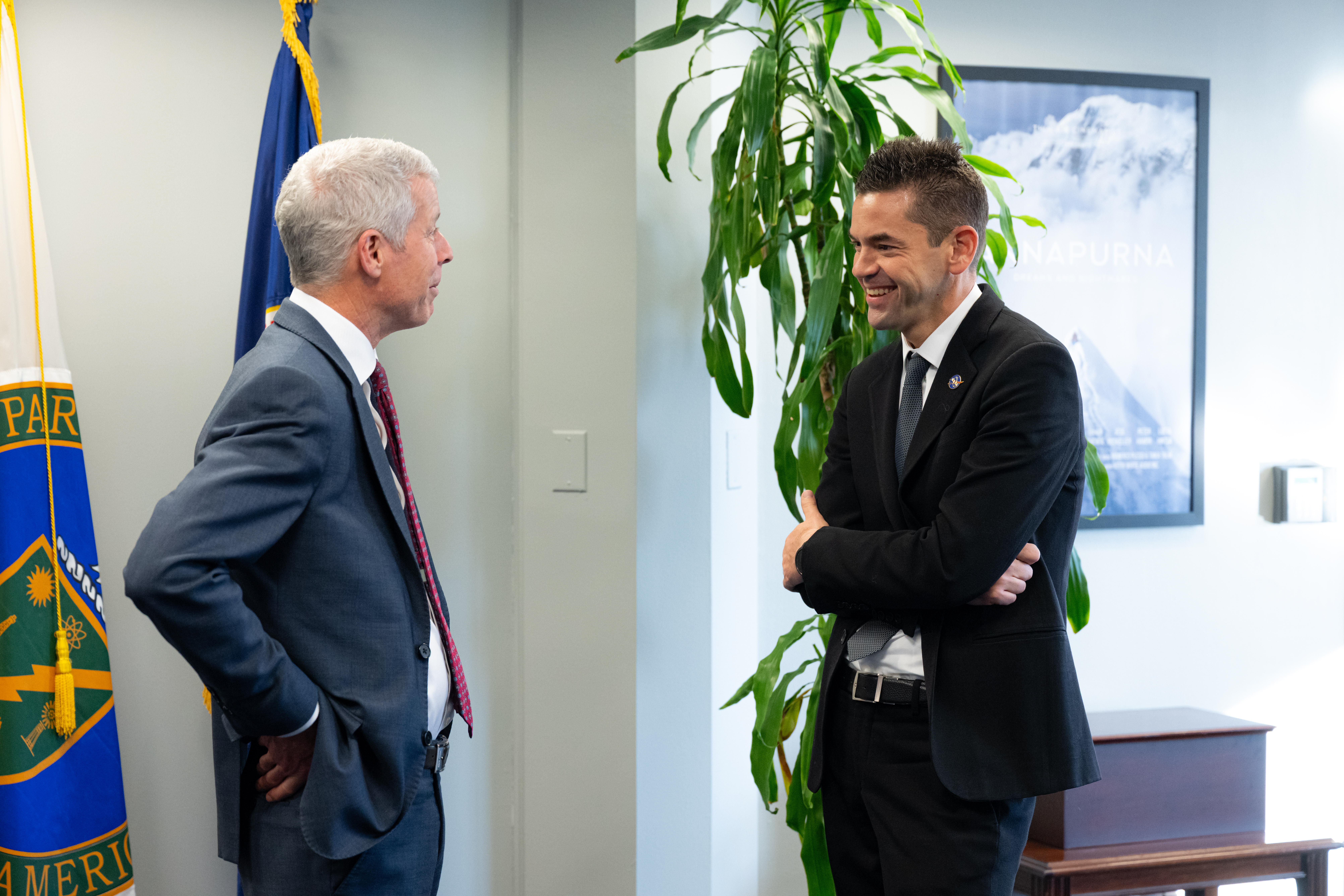
U.S. Energy Secretary Chris Wright (left) and NASA Administrator Jared Isaacman (right) meet in Washington on Jan. 8, 2026
U.S. Secretary of Energy Chris Wright (left) and NASA Administrator Jared Isaacman (right) meet at the Department of Energy headquarters in Washington on Jan. 8, 2026.
Credit: NASA/John Kraus

NASA, along with the U.S. Department of Energy (DOE), announced Tuesday a renewed commitment to their longstanding partnership to support the research and development of a fission surface power system for use on the Moon under the Artemis campaign and future NASA missions to Mars.

A recently signed memorandum of understanding between the agencies solidifies this collaboration and advances President Trump’s vision of American space superiority by deploying nuclear reactors on the Moon and in orbit, including the development of a lunar surface reactor by 2030. This effort ensures the United States leads the world in space exploration and commerce. 

“Under President Trump’s national space policy, America is committed to returning to the Moon, building the infrastructure to stay, and making the investments required for the next giant leap to Mars and beyond,” said NASA Administrator Jared Isaacman. “Achieving this future requires harnessing nuclear power. This agreement enables closer collaboration between NASA and the Department of Energy to deliver the capabilities necessary to usher in the Golden Age of space exploration and discovery.”

NASA and DOE anticipate deploying a fission surface power system capable of producing safe, efficient, and plentiful electrical power that will be able to operate for years without the need to refuel. The deployment of a lunar surface reactor will enable future sustained lunar missions by providing continuous and abundant power, regardless of sunlight or temperature.

“History shows that when American science and innovation come together, from the Manhattan Project to the Apollo Mission, our nation leads the world to reach new frontiers once thought impossible,” said U.S. Secretary of Energy Chris Wright. “This agreement continues that legacy. Thanks to President Trump’s leadership and his America First Space Policy, the department is proud to work with NASA and the commercial space industry on what will be one of the greatest technical achievements in the history of nuclear energy and space exploration.”   

The agencies’ joint effort to develop, fuel, authorize, and ready a lunar surface reactor for launch builds upon more than 50 years of successful collaboration in support of space exploration, technology development, and the strengthening of our national security. 

For more about NASA’s Moon to Mars exploration plans, visit:

https://www.nasa.gov/moontomarsarchitecture

-end-

Bethany Stevens
Headquarters, Washington
771-216-2606
bethany.c.stevens@nasa.gov

Share

Details

Last Updated
Jan 13, 2026
Editor
Jennifer M. Dooren

NASA, SpaceX Invite Media to Watch Crew-12 Launch to Space Station

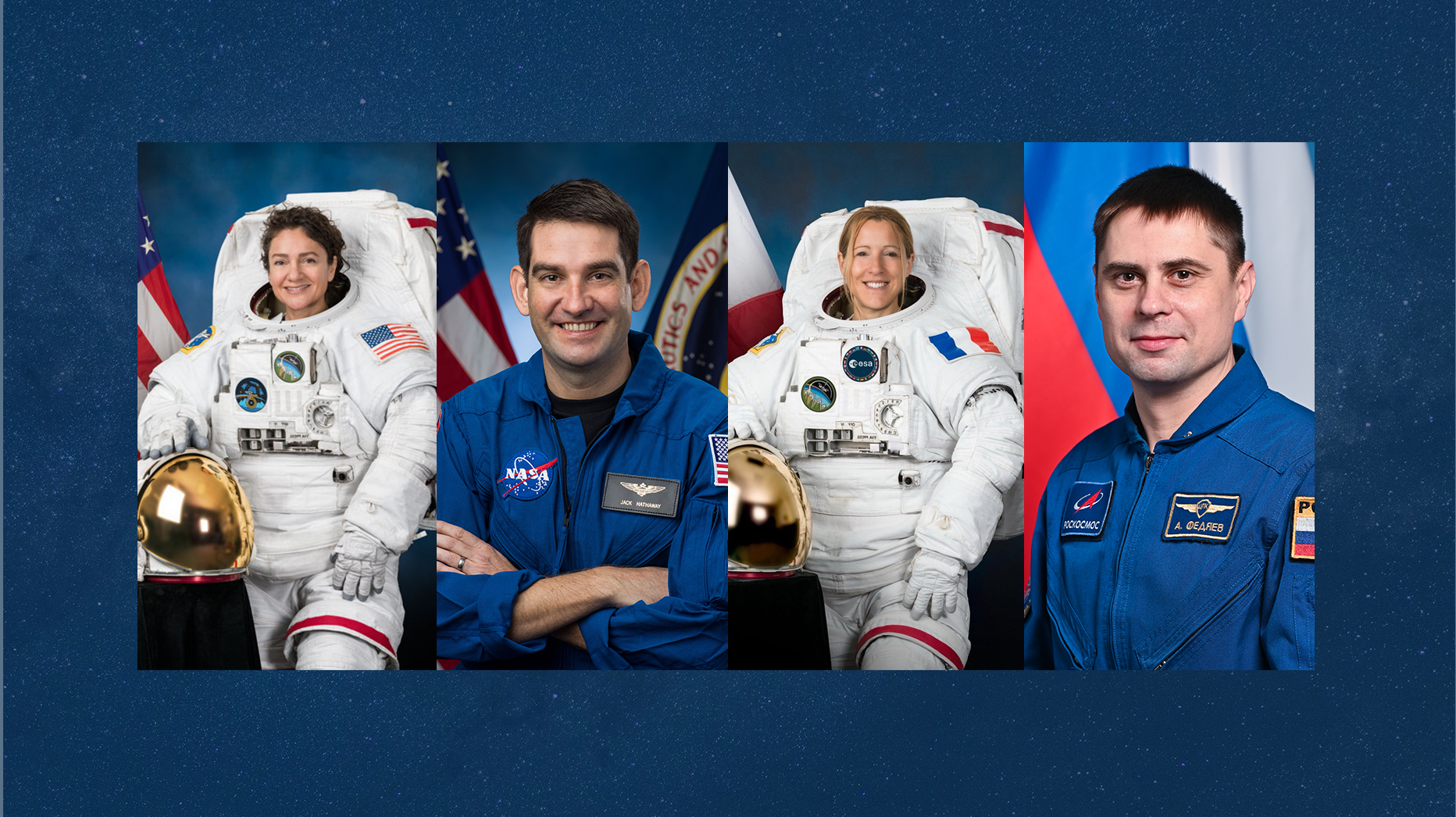
Image shows a blue background featuring pictures of four astronauts that comprise of NASA's SpaceX Crew-12 mission. From left to right, NASA astronauts Jessica Meir and Jack Hathaway, ESA (European Space Agency) astronaut Sophie Adenot, and Roscosmos cosmonaut Andrey Fedyaev.
From left to right, NASA astronauts Jessica Meir and Jack Hathaway, ESA (European Space Agency) astronaut Sophie Adenot, and Roscosmos cosmonaut Andrey Fedyaev.
NASA

Media accreditation is open for the launch of NASA’s 12th rotational mission of a SpaceX Falcon 9 rocket and Dragon spacecraft carrying astronauts to the International Space Station for a science expedition from Space Launch Complex 40 at Cape Canaveral Space Force Station in Florida.

NASA announced it is targeting no earlier than Thursday, Jan. 15, for a splashdown of its Crew-11 mission. The agency also is working with SpaceX and international partners to advance the launch of Crew-12, which is currently slated for Sunday, Feb. 15.

The crew includes NASA astronauts Jessica Meir, commander, Jack Hathaway, pilot; ESA (European Space Agency) astronaut Sophie Adenot, mission specialist; and Roscosmos cosmonaut Andrey Fedyaev, mission specialist. This will be the second spaceflight for Meir and Fedyaev, and the first for Hathaway and Adenot to the orbiting laboratory.

Media accreditation deadlines for the Crew-12 launch as part of NASA’s Commercial Crew Program are as follows:

  • International media without U.S. citizenship must apply by 11:59 p.m. EST on Thursday, Jan. 15.
  • U.S. media and U.S. citizens representing international media organizations must apply by 11:59 p.m. on Sunday, Jan. 18.

All accreditation requests must be submitted online at:

https://media.ksc.nasa.gov

NASA’s media accreditation policy is online. For questions about accreditation or special logistical requests, email: ksc-media-accreditat@mail.nasa.gov. Requests for space for satellite trucks, tents, or electrical connections are due by Friday, Jan. 23.

For other questions, please contact NASA Kennedy’s newsroom at: 321-867-2468.

Para obtener información sobre cobertura en español en el Centro Espacial Kennedy o si desea solicitar entrevistas en español, comuníquese con Antonia Jaramillo: 321-501-8425, o Messod Bendayan: 256-930-1371.

For launch coverage and more information about the mission, visit:

https://www.nasa.gov/commercialcrew

-end-

Joshua Finch / Jimi Russell
Headquarters, Washington
202-358-1100
joshua.a.finch@nasa.gov / james.j.russell@nasa.gov

Steve Siceloff
Kennedy Space Center, Fla. 
321-867-2468 
steven.p.siceloff@nasa.gov

Joseph Zakrzewski
Johnson Space Center, Houston
281-483-5111
Joseph.a.zakrzewski@nasa.gov

Share

Details

Last Updated
Jan 12, 2026
Editor
Jennifer M. Dooren
❌