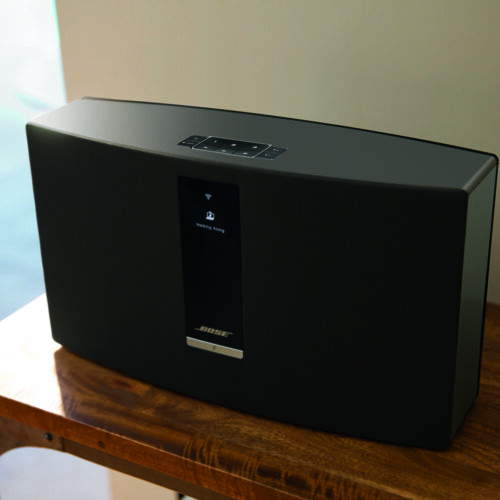
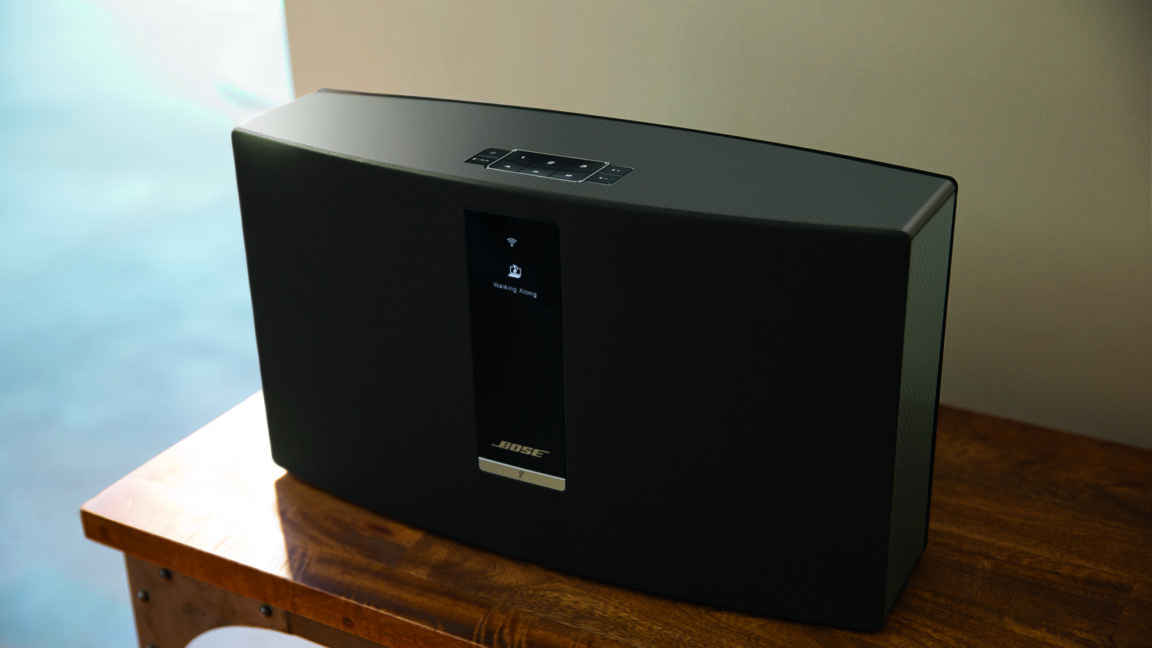
After initially announcing that Bose will completely turn off all ‘smart’ features in its SoundTouch series of speaker products, the company has seemingly responded to the wave of unhappy feedback with a compromise solution. Rather than the complete shutdown and cut-off that we reported on previously, Bose will now remove cloud support as its servers shut down, but the SoundTouch mobile app will get an update that gets truncated to just the local support functions. Bose also made the SoundTouch Web API documentation available as a PDF document.
The shutdown date has also been extended from the original February 18 to May 6th of this year. Although these changes mean that the mobile app can no longer use music services, features like grouping speakers and controlling playback will keep working. Features such as presets which were cloud-based will naturally stop working.
With the web API documentation made public it remains to be seen how helpful this will be. From a quick glance at the PDF documentation it appears to be a typical REST API, using HTTP on port 8090 on the SoundTouch device, with an SGML-style tag system to format messages. In so far as the community hasn’t already reverse-engineered this API it’s at least nice to have official documentation.
Bose released the Application Programming Interface (API) documentation for its SoundTouch speakers today, putting a silver lining around the impending end-of-life (EoL) of the expensive home theater devices.
In October, Bose announced that its SoundTouch Wi-Fi speakers and soundbars would become dumb speakers on February 18. At the time, Bose said that the speakers would only work if a device was connected via AUX, HDMI, or Bluetooth (which has higher latency than Wi-Fi).
After that date, the speakers would stop receiving security and software updates and lose cloud connectivity and their companion app, the Framingham, Massachusetts-based company said. Without the app, users would no longer be able to integrate the device with music services, such as Spotify, have multiple SoundTouch devices play the same audio simultaneously, or use or edit saved presets.
Amazon says expanding Alexa further beyond the home will be a big focus in 2026. (Amazon Image)
Amazon is expanding its consumer AI ecosystem beyond the smart speaker — bringing Alexa+ to the web, revamping its mobile app, and offering its first update on Bee since acquiring the wearable AI startup six months ago.
The announcements, timed to CES in Las Vegas, mark Amazon’s latest effort to catch up in the consumer AI race. While the company’s cloud unit has established itself as a major AI infrastructure and enterprise services provider, Amazon has struggled to match the momentum of OpenAI, Google, and the rapidly growing field of consumer AI startups.
New this morning, Amazon released a streamlined Alexa mobile app that makes the AI assistant the primary focus. The redesigned interface features an “Ask Alexa” prompt anchored at the bottom of the screen, personalized suggestions, and quick access to devices and favorites — a cleaner look that prioritizes the AI assistant over other features.
Amazon is rolling out a new Alexa app that focuses on the chat experience. (GeekWire Screenshots)
Amazon says Alexa+, its upgraded AI assistant, is now available in the browser via alexa.com to all customers in its early access program. As previously reported by GeekWire, the web interface extends Alexa beyond voice commands, enabling document uploads, web-based chat integration, and point-and-click control over reminders, calendars, and smart home devices.
Alexa+ uses generative AI to offer smoother conversations and better answers than its predecessor, along with new agentic capabilities such as booking tickets and reservations.
Amazon is competing against consumer AI rivals such as ChatGPT and Gemini, which have become everyday tools for millions of people. It’s looking to leverage its more than 600 million Alexa-enabled devices, and areas of differentiation such as smart-home controls and device integrations.
The company had an initial false start with a more limited conversational Alexa feature called “Let’s Chat,” first shown publicly in September 2023, but never fully released. Working on Let’s Chat led to “some realizations about how big of an effort we needed to put in with Alexa+,” said Daniel Rausch, vice president of Alexa and Echo, in a recent interview with GeekWire.
Daniel Rausch, Amazon’s vice president of Alexa and Echo, at the Alexa+ launch event.
Alexa+ started rolling out in March 2025. According to the company, tens of millions of customers are now using Alexa+, with engagement rates two to three times higher than prior Alexa versions.
Rausch said 76% of what customers do with Alexa+ “is not possible with any other AI,” citing scenarios that go beyond chat, such as controlling devices, managing home and family logistics, and completing multi‑step tasks across different services and screens.
Amazon is also betting on hardware to extend its AI ambitions beyond the home.
In a post Monday, Bee co-founder Maria de Lourdes Zollo gave the first public update since Amazon acquired the San Francisco startup last year. Bee makes a $49.99 wearable device that records and transcribes conversations, creating summaries, insights, and suggested actions.
The Bee “Pioneer Edition” wrist device. (Bee Photo)
Since joining Amazon, Bee has shipped four major features in 90 days, Zollo wrote, including Voice Notes for capturing thoughts on the go, Actions that connect conversations to email and calendar, and Daily Insights that surface patterns across weeks of interactions.
Zollo described the acquisition as a path toward “ambient AI” — technology that understands and assists users everywhere, “across every surface throughout your day.”
Amazon declined to share details on any plans to integrate Bee with Alexa, leaving open the question of how the wearable fits into the company’s broader AI assistant strategy.
The announcements build on Amazon’s push to bring Alexa+ to third-party hardware, including Sonos and Bose speakers, LG and Samsung smart TVs, and BMW cars.
Rausch said taking Alexa+ further beyond the home will be a big push for Amazon in 2026. He hinted at more to come, including new “personal mobile devices” from Amazon designed to help customers bring Alexa+ with them throughout the day.

 Login
Login