Reading view

There are new articles available, click to refresh the page.

National Design Studio looks to overhaul 27,000 federal websites — and is hiring a team to do it

A private-sector tech leader tapped by the Trump administration to improve the federal government’s online presence is setting an ambitious goal — overhauling about 27,000 dot-gov websites.

Joe Gebbia, chief design officer of the United States and co-founder of Airbnb, said in a podcast interview Tuesday that the White House set out this goal when President Donald Trump signed an executive order last summer creating the National Design Studio.

“We’re fixing all of them,” Gebbia said Tuesday on the American Optimist show. Many of the federal government’s websites, he added, “look like they’re from the mid-90s.”

Gebbia began working with the Department of Government Efficiency in the early days of the Trump administration. At the Office of Personnel Management, he oversaw a long-anticipated modernization of the federal employee retirement system.

The National Design Studio so far has launched several new websites that serve as landing pages for some of the Trump administration’s policies on immigration, law enforcement and prescription drug prices.

As for next steps, Gebbia said his office will deliver “major updates,” including a refresh of existing federal websites, by July 4.

“It’s working, because we are really pulling in veterans of Silicon Valley from a talent perspective, I think it’s working because this president really deeply cares about how things look, because he knows that esthetics matter,” he said.

The White House estimates that only 6% of federal websites are rated “good” for use on mobile devices. About 45% of federal websites are not mobile-friendly.

As part of the President’s Management Agenda, the Trump administration is looking to leverage technology to “deliver faster, more secure services” and “reduce the number of confusing government websites. “

The administration has already taken steps to eliminate websites that it deems unnecessary. Federal News Network first reported that the 24 largest federal agencies are preparing to eliminate more than 330 websites — about 5% of an inventory of 7,200 websites reviewed.

The National Design Studio is still recruiting new hires. Gebbia estimated that his office will eventually have a team of about 15 engineers and 15 designers.

“We’re still ramping up the team,” he said, adding that the National Design Studio has been able to “recruit some of the best and brightest minds of our era.”

“This is a once-in-a-lifetime moment where we have a shot on goal to actually upgrade the U.S. government the way we present ourselves to the nation and to the world,” Gebbia said.

The idea for the National Design Studio began when Interior Secretary Doug Burgum asked Gebbia to improve Recreation.gov, a website for booking campsites, scheduling tours and obtaining hunting and fishing permits on federal lands. The site serves as an outdoor recreation system for 14 federal agencies.

“There’s a lot to be desired for when you have this incredible feature of the American experience, our national parks. They were being undersold in a way that they were showcased,” Gebbia said.

After working on Recreation.gov, Gebbia said he was getting similar requests from other Cabinet secretaries.

“I started to see there’s demand here for better design. There’s demand here for modernizing the digital surfaces of the government,” he said.

At that point, Gebbia said he made his pitch for the National Design Studio to Trump during a meeting at the Oval Office.

“What would it look like to have a national initiative to actually go in and up level and upgrade, not just one agency, not just one website, all the websites, all the agencies, all of the digital touch points between us, government and the American people?” he recalled.

According to the America by Design website, the White House is drawing inspiration from the Nixon administration’s beautification project in the 1970s. That project led to the creation of NASA’s iconic logo, branding for national parks and signage for the national highway system.

“My vision is that, at some point, somebody’s working at a startup and they go look at a dot-gov website to see how they did it. And we can actually create references for good design in the government, rather than be the butt of a joke,” Gebbia said.

So far, the National Design Studio has launched SafeDC.gov, a website meant to facilitate the Trump administration’s surge of federal law enforcement agents to Washington, D.C. It’s also launched TrumpCard.gov, a program meant to fast-track the green-card process for noncitizens seeking permanent residency in the United States — and who are able to pay a $15,000 processing fee and a $1 million or $5 million “gift” to the Commerce Department.

Its most recent website, https://trumprx.gov/, is still in the works. The website supports an administration goal of connecting consumers with lower-priced prescription drugs.

Gebbia said private-sector tech experts are interested in working with National Design Studio and overcoming institutional barriers to change.

“Of course, you bump into things and all the processes and people saying, ‘Well, it’s always been done this way. Why would we change it?’ I think, though, there’s an incredible amount of momentum behind this — the excitement around America by Design, the excitement around the National Design Studio, and the excitement on the demand side of secretaries and people and agencies — ‘Yes, please fix this for us. We’re so happy you’re here to make us make this look good,'” he said.

The post National Design Studio looks to overhaul 27,000 federal websites — and is hiring a team to do it first appeared on Federal News Network.

© AP Photo/Alex Brandon

This U.S. Department of Education website page is seen on Jan. 24, 2025 in Washington. (AP Photo/Alex Brandon, File)

VA officially lifts hiring freeze, but staffing caps still in place for shrinking workforce

The Department of Veterans Affairs is officially lifting a hiring freeze on its health care workforce, after shedding tens of thousands of positions last year.

But the VA, which saw the first-ever workforce net decrease, is unlikely to hire its way to a higher headcount than what it currently has.

A report from Democrats on the Senate VA Committee released Thursday finds VA facilities are still operating “within strict staffing caps.”

“Facility leadership in the field are still reporting denials and severe delays in hiring approvals for all positions from clinical staff to custodians to claims processors,” lawmakers wrote.

The report claims the VA lost more than 40,000 employees last year, and that 88% of them worked in health care. About 10,000 of those employees worked in frontline positions that the department has struggled to fill.

VA workforce data shows the department saw a net decrease of 3,000 registered nurses last year, a net decrease of 1,000 physicians and a net decrease of 1,550 appointment schedulers.

In a typical year, the VA’s workforce sees a net gain of about 10,000 employees. But under the Trump administration, the VA sought to eliminate 30,000 positions through attrition by the end of fiscal 2025. The department previously envisioned cutting 83,000 jobs in part through layoffs.

VA Press Secretary Pete Kasperowicz disputed several of the report’s findings. He said the VA achieved its headcount reduction goal of 30,000 employees, but didn’t lose 40,000 employees, as Senate Democrats claim. The VA also disputes the report’s claims that veterans, in some cases, are seeing longer wait times for VA mental health care appointments. 

Committee Ranking Member Richard Blumenthal (D-Conn.) told reporters in a call that the report shows a “diminished” VA that is unable to keep up with the needs of veterans.

“The loss of talent is so deeply regrettable, and the results are basically longer wait times,” Blumenthal said.

Kasperowicz said in a statement that, “while Blumenthal stages political theater, VA is making major improvements for veterans under President Trump.”

The VA fired about 2,400 probationary employees last year, but largely reduced its workforce through voluntary separation incentives.

VA workforce data shows the department made about 21,000 hires last year, offsetting the total impact of these workforce cuts.  The latest data from the Office of Personnel Management shows the VA saw a net reduction of more than 27,000 positions in 2025.

But Blumenthal said these new hires have done little to improve the VA’s capacity.

“They are not the same skilled people as have been either fired or lost because of the toxic environment that’s been created in many areas of the VA,” he said.


VA workforce data shows the department made about 21,000 hires last year, offsetting the total impact of these workforce cuts.  The latest data from the Office of Personnel Management shows the VA saw a net reduction of more than 27,000 positions in 2025 (Source: OPM)In a memo last week, VA Under Secretary for Health John Bartrum told department leaders that “all hiring freeze restrictions” still in place at the Veterans Health Administration have been lifted.

Bartrum wrote in the memo that each Veterans Integrated Service Network (VISN) “has been allocated a baseline number of positions calculated on their budgeted FTE plus anticipated needs for growth,” and that requests to exceed that headcount must be approved by the VA Strategic Hiring Committee.

“Leaders and managers must manage operational needs within their cumulative full-time equivalent (FTE) budget and position thresholds,” Bartrum wrote.

The report claims veterans are seeing longer wait times for mental health care appointments. In early January, new-patient wait times for individual mental health care appointments in 14 states exceeded 40 days — twice the wait time threshold that allows veterans to seek treatment outside the VA’s health care network. Those states include California, Colorado, Connecticut, Iowa, Idaho, Kansas, Maryland, Maine, North Carolina, North Dakota, Nebraska, New Hampshire, New Mexico, and Virginia. According to the report, the national mean for new patients to sign up for individual mental health care appointments is 35 days.

However, Kasperowicz said VA data shows wait times for mental health care were under six days for established patients, and 19 days for new patients. 

The VA eased requirements for veterans to seek care from non-VA “community care” last year, and has increased spending on community care. The department is embarking on a $1 trillion next-generation community care contract, one of the largest government contracts in U.S. history.

House VA Committee Chairman Mike Bost (R-Ill.) said in a hearing Thursday that the contract, “if done properly,” would give the VA “unprecedented flexibility” to award contract and task orders that would lead to better health care outcomes for veterans.

In their report, Senate VA Committee Democrats found the VA last year cancelled about 2,000 contracts and let another 14,000 expire without plans to renew or replace those services.

VA Secretary Doug Collins has repeatedly defended his plans for a smaller workforce. He told lawmakers last May that increased staffing hasn’t always led to better outcomes for veterans.

Last year, the department decreased its backlog of benefits claims by nearly 60% despite a net decrease of about 2,000 VA claims processors.

Kayla Williams, a former VA assistant secretary and a senior advisor for the Vet Voice Foundation, said the department reduced the initial claims backlog, but has grown the volume of claims requiring higher-level review.

“These actions were never about efficiency or cost savings,” Williams said.

The VA anticipated a spike in the backlog after Congress passed the PACT Act, making more veterans eligible for VA health care and benefits, because they were exposed to toxic substances during their military service.

Lindsay Church, the executive director of Minority Veterans of America, said 1.2 million veterans have lost their VA providers under the Trump administration.

“Clinics can’t keep care teams staffed. Appointments are being canceled or delayed, and veterans who rely on consistent, trauma-informed care are being forced into instability and pressured into community care. Mental health access, which has always been a crisis for our community for decades, has deteriorated rapidly,” Church said.

Mary Jean Burke, the first executive vice president of the American Federation of Government Employees National VA Council, said that by the end of 2026, most VA facilities are on track to lose about 2-5% of their psychologists — and that locations, including Seattle and Buffalo, are on track to see “double-digit” attrition.

Burke said VA health care employees have left because the VA has slashed jobs, stripped away remote work and telework, and brought staff back into “overcrowded” spaces.

“These punishing policies haven’t just lowered morale, they end up compromising the quality of care we provide,” Burke said.

Collins is scheduled to testify before the Senate VA Committee next Wednesday, in a hearing about the department’s ongoing reorganization efforts.

The post VA officially lifts hiring freeze, but staffing caps still in place for shrinking workforce first appeared on Federal News Network.

© AP Photo/Charles Dharapak

The seal is seen at the Department of Veterans Affairs building in Washington, June 21, 2013. (AP Photo/Charles Dharapak, File)

Ahead of filing season, IRS scraps customer service metric it’s used for 20 years

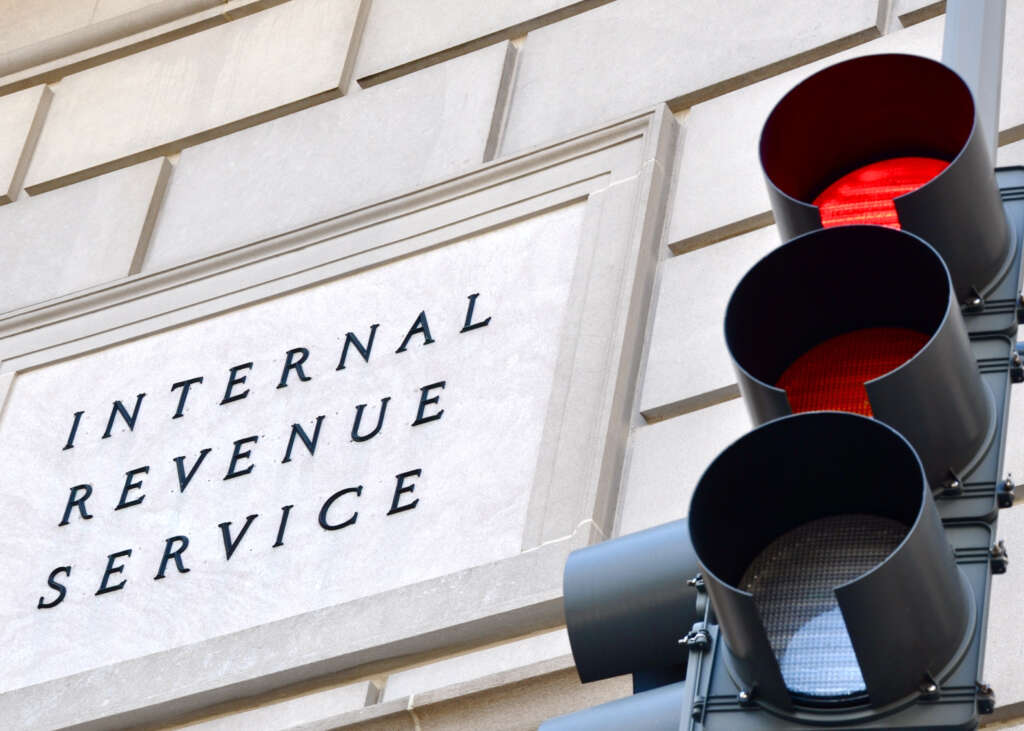
The IRS is abandoning a customer service metric it’s been using for the past 20 years and replacing it with a new measurement that will more accurately reflect the public’s interactions with the tax agency, according to agency leadership.

The IRS is pursuing these changes as part of a broader shakeup of its senior ranks happening less than a week from the start of the tax filing season.

IRS Chief Executive Officer Frank Bisignano told employees in a memo obtained by Federal News Network that these changes will help the IRS achieve the “best filing season results in timeliness and accuracy.”

“At the heart of this vision is a digital-first taxpayer experience, complemented by a strong human touch wherever it is needed,” Bisignano wrote in the memo sent Tuesday.

In addition to overseeing day-to-day operations at the IRS, Bisignano also serves as the head of the Social Security Administration.

As part of these changes, Bisignano wrote that the IRS will place its current measurement of customer service over the phone with “enterprise metrics that reflect new technologies and service channels.”

“These updates will allow us to more accurately capture how the IRS serves taxpayers today,” he wrote.

The IRS and the Treasury Department did not respond to requests for comment. Bisignano told the Washington Post that the new metrics will track the agency’s average speed to answer incoming calls, call abandonment rates and the amount of time taxpayers spend on the line with the agency.

He told the Post that the agency’s old phone metrics didn’t help the IRS with its mission of solving taxpayers’ problems — and that the agency is investing in technology to better service its customers.

“We’re constantly investing in technology. We constantly must reap the rewards of it,” Bisignano told the Post.

The IRS is specifically sunsetting its Customer Service Representative Level of Service metric. The agency has used this metric for more than 20 years.

But the National Taxpayer Advocate, an independent watchdog within the IRS, told Congress last year that this metric is “misleading” and “does not accurately reflect the experience of most taxpayers who call” the agency.

National Taxpayer Advocate Erin Collins wrote in last year’s mid-year report to Congress that this Level of Service (LOS) metric only reflects calls coming into IRS accounts management phone lines, which make up only about 25% of the agency’s total call volume.

Using the LOS metric, the IRS achieved an 88% level of phone service in fiscal 2024. But IRS employees actually answered less than a third of calls received during the 2024 filing season — both in terms of total calls, and calls to accounts management phone lines.

The agency calculates its LOS metric by taking the percentage of phone calls answered by IRS employees and dividing it by the number of calls routed to IRS staff.

The IRS relies on this metric, as well as historical data on call volumes, to set targets for how many calls it has the capacity to answer, and to set hiring and training goals in preparation for each tax filing season.

Collins wrote that the LOS metric has become a proxy for the level of customer service taxpayers can expect from the IRS. But she told lawmakers that using this metric to drive taxpayer service decisions “is akin to letting the tail wag the dog.”

“The LOS is a check-the-box measure that fails to gauge the taxpayer’s telephone experience accurately and fails even to attempt to gauge the taxpayer experience in other important areas,” Collins wrote. “Yet because the IRS has adopted it as its primary measure of taxpayer service, sacrifices are made in other areas to boost the LOS as much as possible.”

Besides overhauling IRS call metrics, Bisignano announced a new leadership team at the agency.

As reported by the Associated Press, Gary Shapley, a whistleblower who testified about investigations into Hunter Biden’s taxes and who served as IRS commissioner for just two days last year, has been named deputy chief of the agency’s criminal investigation division.

According to Bisignano’s memo, Guy Ficco, the chief of the agency’s criminal investigation division, is retiring and will be replaced by Jarod Koopman, who will also continue to serve as the agency’s chief tax compliance officer.

The post Ahead of filing season, IRS scraps customer service metric it’s used for 20 years first appeared on Federal News Network.

© Getty Images/iStockphoto/marcnorman

Trump’s return-to-office memo doesn’t override telework protections in union contract, arbitrator tells HHS

A third-party arbitrator is ordering the Department of Health and Human Services to walk back its return-to-office mandate for thousands of employees represented by one of its unions.

Arbitrator Michael J. Falvo ruled on Monday that HHS must “rescind the return-to-office directive,” and must immediately reinstate remote work and telework agreements for members of the National Treasury Employees Union.

HHS rescinded those workplace flexibility agreements early last year, after President Donald Trump ordered federal employees to return to the office full-time.

Falvo found that HHS committed an unfair labor practice by unilaterally terminating telework and remote agreements, without regard to its five-year collective bargaining agreement with NTEU. The labor contract, which covers 2023 through 2028, states the agency can only terminate telework and remote work agreements “for cause.” That includes emergency situations and cases when an employee falls short of a “fully satisfactory” performance rating.

The ruling will impact thousands of HHS employees represented by NTEU. Its members include employees at the Food and Drug Administration, the Substance Abuse and Mental Health Services Administration, the Administration for Children and Families, the Administration on Community Living, the Health Resources and Services Administration, the National Center for Health Statistics and the HHS Office of the Secretary.

Falvo is also ordering HHS to post a signed notice, “admitting that the agency violated the statute by repudiating the collective bargaining agreement.” The arbitrator wrote that his ruling does not limit NTEU from “seeking additional remedies to the extent permitted by law.”

HHS officials argued that Trump’s return-to-office presidential memorandum supersedes the collective bargaining agreement. But the 1978 Federal Services Labor-Management Relations Statute makes it an unfair labor practice for an agency “to enforce any rule or regulation … which is in conflict with any applicable collective bargaining agreement if the agreement was in effect before the rule or regulation was prescribed.”

According to Falvo, the Federal Labor Relations Authority set a precedent in previous labor disputes that a presidential memorandum “is not a governmentwide rule or regulation that the employer is obligated by law to implement immediately upon issuance.”

“These cases compel the conclusion that the agency breached the agreement and violated the statute,” he wrote.

The arbitrator decided Trump’s return-to-office memo does not override telework and remote work protections outlined in NTEU’s collective bargaining agreement. HHS did not respond to a request for comment. NTEU declined to comment.

NTEU Chapter 282, which covers FDA headquarters employees, told members in an email that HHS is likely to appeal the arbitrator’s decision and has 30 days to do so. The union’s message states, “NTEU will push the agency to accept the ruling and restore your rights without delay.”

“This is a significant win that reaffirms that telework and remote work rights negotiated in a term contract cannot be unilaterally taken away,” NTEU Chapter 282 told members.

More than a year into the second Trump administration, several recent exceptions to its return-to-office policy have emerged.

The Labor Department’s Office of Workers’ Compensation Programs recently told employees that some of its employees will be eligible for remote work, because the agency is “extremely challenged” covering rent expenses for a fully in-office workforce.

Meanwhile, a second arbitrator ruled that the Centers for Medicare and Medicaid Services “violated statutory obligations” to bargain with the American Federation of Government Employees over implementation of the administration’s return-to-office directive.

The arbitrator in this dispute determined CMS wasn’t required to negotiate with the union over the administration’s return-to-office mandate, but did have an obligation to ensure implementation complied with its collective bargaining agreement with AFGE.

The arbitrator ordered CMS to meet and negotiate with AFGE over the “effects of the implementation of the directive on work/life balance of employees.”

Trump touted his return-to-office mandate at a White House press briefing on Tuesday, where he looked back on the accomplishments of his first year in office.. Trump told reporters that when he took office last year, “we had so many of our federal workers who wouldn’t come into work.”

“We don’t want them sitting in their home, on their bed, working. We want them in an office that we’re paying for in Washington, D.C., or wherever it may be. And we’ve largely taken care of that mess,” Trump said. “I guarantee you they’re out on the ballfields. I guarantee you they’re out playing golf. And you can’t run a country or a company that way.”

Trump’s presidential memorandum directed agencies to terminate remote work and telework agreements, but also stated that the return-to-office mandate must be “implemented consistent with applicable law.”

“Reasonable persons could have different notions whether a presidential memorandum (or an executive order) is such a ‘rule or regulation’ under ‘applicable law.’ On January 20, 2025, what ‘applicable law’ required was not a matter of first impression,” Falvo wrote.

NTEU filed a grievance against HHS last February, after the agency issued a directive requiring all bargaining unit employees to report to the office on a full-time basis.

Union officials argued that HHS refused to negotiate with NTEU before the return-to-office memo took effect, and would agree to “post-implementation bargaining.”

HHS officials denied the grievance and told the union that an agency head “retains the statutory right to determine overall telework levels and to exclude positions from telework eligibility.”

Christina Ballance, the executive director of the agency’s National Labor and Employee Relations Office, told the arbitrator that HHS “was obligated to comply with the presidential memorandum.”

“Ultimately, the president is our chief, and if he directs that employees return to offices in person, the agency is required to do so,” Ballance said in her testimony.

HHS officials rejected NTEU’s claims that it terminated all telework and remote work agreements. They said the agency still allows situational and ad-hoc telework, as well as workplace flexibilities for military spouses and reasonable accommodations for employees with disabilities.

But Federal News Network first reported last month that a new HHS policy restricts employees with disabilities from using telework as an interim accommodation, while the agency processes their reasonable accommodation request.

HHS is also centralizing the processing of reasonable accommodation requests on behalf of its component agencies. As a result, it is inheriting a backlog of requests that HHS officials expect will take about six to eight months to review.

The post Trump’s return-to-office memo doesn’t override telework protections in union contract, arbitrator tells HHS first appeared on Federal News Network.

© AP Photo/Mark Schiefelbein

President Donald Trump speaks during a press briefing at the White House in Washington, Tuesday, Jan. 20, 2026. (AP Photo/Mark Schiefelbein)

3.8% pay raise for air traffic controllers, Education Dept cuts rejected: Highlights from final FY 2026 spending bills

Congressional appropriators are one step closer to reaching a comprehensive spending deal for the rest of the fiscal year before a stopgap spending bill expires at the end of the month.

Members of the House and Senate appropriations committees released a four-bill “minibus” of fiscal 2026 spending bills on Tuesday.

Congress is roughly halfway to passing a spending plan for the rest of FY 2026. The current continuing resolution expires on Jan. 30.

The latest “minibus” covers annual appropriations for the departments of Defense, Homeland Security, Labor, Health and Human Services, Education, Transportation and Housing and Urban Development, as well as some smaller related agencies.

House Appropriations Committee Chairman Tom Cole (R-Okla.) said in a statement that the spending package delivers “results without waste.”

“At a time when many believed completing the FY26 process was out of reach, we’ve shown that challenges are opportunities. It’s time to get it across the finish line,” Cole said.

Here are a few highlights from the spending package:

3.8% pay raise for air traffic controllers

The spending deal would give the Federal Aviation Administration a $1.58 billion budget for fiscal 2026, as well as funding to hire 2,500 new air traffic controllers

The FAA is about 3,500 air traffic controllers short of its staffing goals. Many current air traffic controllers are working six days a week, including mandatory overtime.

As part of this budget plan, the FAA would receive $140 million to implement a 3.8% pay raise for air traffic controllers, as well as supervisors and managers who oversee air traffic.

The Trump administration approved a 3.8% pay raise for federal law enforcement personnel, which went into effect at the start of January. Air traffic controllers were not on the Office of Personnel Management’s list of positions receiving a higher pay raise.

The spending bill states that the 3.8% pay raise “shall be implemented for all such employees only to the extent that the administrator determines, in his sole discretion, that improvements in workforce scheduling, staffing utilization, or other operational efficiencies are achieved that contribute to addressing workforce shortfalls and enhancing aviation safety.”

If the FAA administrator determines these conditions, the pay raise would retroactively go into effect for the first pay period in January 2026.

Spending cuts for a smaller federal workforce

Republican appropriators applauded overall spending cuts in the spending bill that funds the Transportation Department, HUD and related agencies.

GOP lawmakers on the House Appropriations Committee wrote that the spending deal “codified DOGE recommendations to reduce the federal bureaucracy” of Transportation, HUD and related agencies by 29%.

More specifically, GOP lawmakers said the spending package reflects a 24% reduction in HUD staffing achieved partially through layoffs last year.

Lawmakers said a smaller HUD workforce will save $348 million in salaries and related expenses.

Republican appropriators said the spending deal reflects the Transportation Department “right-sizing” its workforce through a 5% staffing reduction, “all without compromising transportation safety.”

President Donald Trump told reporters at a White House press briefing on Monday that his administration “slashed tremendous numbers of people off the federal payroll” during his first year in office.

OPM data shows over 300,000 federal employees left government last year. That’s about a net loss of 220,000 employees, when accounting for new hires.

Trump said downsizing the federal workforce was necessary, because “they had 10 people for every job,” and that terminated federal employees have moved on to higher-paying jobs in the private sector.

“I don’t feel badly, because they’re getting private sector jobs, and they’re getting sometimes twice as much money, three times as much money,” Trump said. “They’re getting factory jobs, they’re getting much better jobs and much higher pay.”

Higher HHS spending, proposed cuts rejected

The spending bill gives the Department of Health and Human Services $116.8 billion in discretionary spending — a $210 million increase in discretionary spending. By contrast, the Trump administration proposed a nearly 20% cut to HHS discretionary spending this year.

The congressional spending deal rejects the administration’s calls for deep cuts within HHS. The administration sought a 50% spending cut for the Centers for Disease Control and Prevention. Instead, the compromise reached by lawmakers essentially keeps CDC funded at current levels, and includes funding increases for some of its pandemic preparedness programs.

The spending package would give $7.4 billion to the Substance Abuse and Mental Health Services Administration (SAMHSA) a $65 million increase over current funding levels.

The bigger budget reflects increased spending to address a rise in opioid overdoses, especially from fentanyl, as well as boosts to substance abuse disorder prevention and mental health services.

Lawmakers rejected a 15% cut to SAMHSA funding proposed by the Trump administration. The spending deal also rejects the administration’s plan to reorganize SAMHSA into the Administration for a Healthy America (AHA), a new office envisioned by HHS Secretary Robert F. Kennedy, Jr.

Democrats on the appropriations committees said the spending deal ensures SAMHSA remains its “own, independent agency to help ensure substance use and mental health remain a priority at HHS” and “includes new guardrails to ensure SAMHSA funds are allocated as intended.”

NPR reported last week that HHS briefly terminated $2 billion in addiction and mental health grants, but quickly walked back those cuts.

Education Department budget remains intact

Lawmakers are largely rejecting the administration’s proposal to dismantle the Education Department, and move many of its functions to other federal agencies.

The spending bill gives the department $79 billion in discretionary spending — a roughly flat budget compared to current spending levels.

The Trump administration proposed cutting the Education Department by $12 billion, or about 15% of its current discretionary budget.

The Education Department has already signed six interagency agreements to transfer some of its programs and employees to HHS and the departments of Labor, Interior and State.

Education Secretary Linda McMahon told employees last November that the department is soft-launching plans to reassign its work to other parts of the federal government, before calling on Congress to permanently shutter the agency.

Senate Appropriations Committee Vice President Patty Murray (D-Wash.) said in a statement that “Congress will not abolish the Department of Education, and the people’s representatives will have the final say on how taxpayer dollars get spent.”

Budget boost for Social Security

The Social Security Administration would see a higher budget under this spending plan.

Lawmakers propose giving SSA $15 billion for its administrative budget in fiscal 2026 — a $554 million increase compared to current spending levels.

Lawmakers from both parties agreed that the funding will help the agency improve customer service for the public. Democratic appropriators urged SSA to use these increased funds to resume hiring.

SSA currently has about 50,000 employees in total, according to the latest data from the Office of Personnel Management. The agency lost more than 7,000 employees through voluntary incentives last year. It also relocated many of its employees from its headquarters and regional offices to field offices.

SSA Commissioner Frank Bisignano told staff at an all-hands meeting last week that the agency is continuing to hire, according to several employees in attendance. Those employees, however, said the agency still faces a hiring freeze.

Labor Dept. federal contractor watchdog spared from elimination

The spending bill provides $13.7 billion in discretionary spending to the Labor Department — a slight increase compared to its current $13.5 billion discretionary budget.

The department’s Office of Federal Contract Compliance Programs would receive a $101 million budget, about a 9% cut to current spending levels. OFCCP ensures federal contractors aren’t discriminating against their employees.

OFCCP, however, would remain largely intact, after the Trump administration proposed major staffing cuts. An earlier funding proposal from House Republicans also proposed fully eliminating OFCCP.

The agency sent layoff notices to 90% of its staff, but rescinded those layoffs last August. Instead of being reinstated to their jobs at OFCCP, the agency said impacted employees would be “reassigned to a new position” at the Labor Department.

Small agencies marked for closure stay open

The spending bill also includes funding for small, independent agencies marked for elimination by an executive order last year.

Lawmakers propose giving the Institute of Museum and Library Services a $292 million budget — a $3 million cut compared to current spending levels.  The spending bill also proposes $3 million in funding for the Interagency Council on Homelessness.

President Trump signed an executive order last March, eliminating these agencies and five others “to the maximum extent consistent with applicable law.”

A federal judge in Rhode Island ordered a permanent injunction last November, putting the Trump administration’s plans to shutter these small agencies on hold.

House Appropriations Committee Ranking Member Rosa DeLauro (D-Conn.) said in a statement that the funding package “continues Congress’s forceful rejection of extreme cuts to federal programs proposed by the Trump administration.”

“Where the White House attempted to eliminate entire programs, we chose to increase their funding. Where the administration proposed slashing resources, we chose to sustain funding at current levels,” DeLauro said.

The post 3.8% pay raise for air traffic controllers, Education Dept cuts rejected: Highlights from final FY 2026 spending bills first appeared on Federal News Network.

© AP Photo/Rahmat Gul

A U.S. Capitol Police officer patrols on the East Front of the U.S. Capitol, Wednesday, Jan. 14, 2026, in Washington. (AP Photo/Rahmat Gul)

One agency eases in-office work requirements, while another is ordered to consider exceptions

Nearly a year after President Donald Trump directed nearly all federal employees to return to the office full-time, new exceptions to the policy have emerged.

An agency within the Labor Department is allowing some of its employees to work remotely. At the Department of Health and Human Services, an arbitrator is directing one of its agencies to consult with one of its unions over more exemptions to the in-office mandate.

A recent memo from the Office of Workers’ Compensation Programs (OWCP) states that some of its employees will be eligible for remote work later this month.

OWCP Deputy Director Douglas Pennington told employees in the memo that, as the agency “vigorously implemented” Trump’s mandate for a full-time return to office last year, “we determined that OWCP will be extremely challenged to cover rent expenses.”

According to the Jan. 6 memo, the Labor Department will allow “100% remote work” for OWCP employees who perform adjudicatory work and perform payment processing work.

Pennington wrote that while most of the agency’s positions benefit from in-person collaboration, “certain OWCP positions do not engage in collaborative interactions, but benefit from focused time free of distractions, and therefore would benefit from remote work and allow a reduction in rent expenses.”

Eligible employees will be able to request full-time remote work starting Jan. 26. If employees are not approved for remote work, they must continue to show up to the office full-time. The memo states that increased telework “is not an option.”

Pennington wrote that allowing a subset of agency employees to work remotely, while having the rest of the workforce in the office full-time, is the “most cost-effective way to accomplish a reduction in rent expenses and continue performing OWCP’s mission.”

Meanwhile, a third-party arbitrator is directing the Centers for Medicare and Medicaid Services to meet with the American Federation of Government Employees to discuss exemptions to the administration’s return-to-office mandate.

The arbitrator, Timothy Buckalew, wrote in his opinion that CMS “was not required to negotiate over return to in-person work,” but found that the agency “violated statutory obligations to bargain with the union over the implementation of the work in-person directive.”

Buckalew found that Trump’s return-to-office presidential memorandum (PM) allowed remote work to continue in some limited cases, including medical need.

However, the arbitrator determined CMS has not made any exceptions to its return-to-office policy.

“For reasons not apparent in the record, agency management declined to use the discretion allowed in the PM to make exemptions to the wholesale return to work or to submit the issues of impacts to bargaining as required by law as protected in the PM,” Buckalew wrote.

HHS has recently set new restrictions on telework as a reasonable accommodation for employees with disabilities.

The arbitrator is ordering CMS to meet and negotiate with AFGE over the “effects of the implementation of the directive on work/life of employees.”

According to Buckalew, AFGE Local 192 President Anita Marcel Autrey stated that CMS “unilaterally repudiated” parts of the union’s collective bargaining agreement, and that implementation of the agency’s return-to-office policy was “inconsistent and erratic.”

Autrey told the arbitrator that CMS employees in Chicago and San Francisco have not fully returned to the office because of a lack of office space.

Meanwhile, about 60 financial management employees were granted an exemption to keep working remotely because their work was considered essential to a new budget bill.

About 90% of CMS employees had telework agreements before the second Trump administration.

Donna O’Dowd, director of the workforce compliance division of the CMS Office of Human Capital, told the arbitrator that the presidential memo was a governmentwide rule that “left the agency with no discretion but to follow such directives.”

Federal News Network has reached out to OWCP and CMS for comment.

The post One agency eases in-office work requirements, while another is ordered to consider exceptions first appeared on Federal News Network.

© Getty Images/insta_photos

Busy latin female worker working on laptop thinking analyzing online data.

Postal regulator limits USPS to once-a-year price hikes for mail through 2030

The Postal Service’s regulator is setting limits on how often the agency can set higher prices for its monopoly mail products.

The Postal Regulatory Commission ruled on Tuesday that the USPS, starting in March, can only raise mail prices once a year. This limit will remain in place through Sept. 30, 2030.

The commission eased restrictions on USPS mail prices in December 2020, when the agency was reeling from the COVID-19 pandemic, and was months away from running out of cash.

Since then, USPS has generally raised mail prices every January and July. Despite setting higher prices, the mail agency is seeing deeper net losses each year, and is far from achieving the “break-even” goal of its 10-year reform plan. In July 2025, USPS raised the price of a first-class stamp to 78 cents.

Members of the commission wrote in their order that the Postal Service’s long-term financial problems “cannot be resolved by using pricing authority alone.”

Regulators said they gave USPS this pricing flexibility largely because it’s delivering less mail to households — but still going to 163 million addresses at least six days a week — and because the agency, up until recently, was required to prefund health benefits for its retirees well into the future. Congress eliminated this prefunding mandate in April 2022, as part of the Postal Service Reform Act, a long-awaited reform package that helped USPS avoid $107 billion in costs.

As the bill made its way through Congress, Pete Sessions (R-Texas), the current chairman of the House Oversight and Government Reform Committee’s government operations subcommittee and co-chairman of the Delivering Outstanding Government Efficiency (DOGE) Caucus, warned USPS not to keep raising prices.

“We’ve got to make sure stamps don’t go to 60 cents, don’t go to 70 cents, don’t go to 80 cents,” Sessions said during a committee hearing in May 2021. At the time of the hearing, the price of a first-class stamp was 55 cents.

Even with congressional intervention and new pricing flexibility, the Postal Regulatory Commission found “things did not go well” for USPS.

“Declines in the Postal Service’s financial situation, volume, and service performance have remained significant, if not worsened,” the PRC wrote.

USPS ended fiscal 2025 with a $9 billion net loss. The regulator said limiting USPS to a single rate increase each year is unlikely to have a significant impact on its revenue.

USPS did not attempt to provide its own estimate of how much additional revenue it received from the second rate each year. But PRC estimates that it brought in, at most, $700 million in additional revenue each year — about one-to-three days of USPS operating costs.

The PRC said that revenue is “nowhere near enough” to make up for $25 billion in net losses over the past three years, and would “likely not be sufficient to resolve the Postal Service’s medium-term or long-term financial issues.”

USPS declined to raise mail prices in January 2025 or January 2026. The regulator said those decisions suggest that the revenue from these rate increases “is not essential to the Postal Service’s short-term financial stability.”

Last summer, the USPS Board of Governors urged its regulator not to put limits on its ability to set higher mail prices. Governor Ron Stroman, a former deputy postmaster general, said it “would be a mistake” for the commission to override the board’s pricing decisions.

Stroman said the USPS board is in the “best position to determine how to best utilize the pricing authority and make decisions about specific price increases for market-dominant products.”

“Based on the data I have reviewed, I have concluded that twice-a-year price increases have maximized the Postal Service’s revenue during the post-pandemic period of high inflation,” he said. “However, I can certainly envision future scenarios where we conclude that the factors we consider in exercising our business judgment weigh against a twice-a-year price increase.”

Governor Dan Tangherlini, a former head of the General Services Administration, agreed that USPS should “maintain authority over pricing.”

Ann Fisher, one of the PRC’s commissioners, dissented with the majority. She wrote that limiting higher mail prices “leaves only the Postal Service worse off.”

“While this order provides to mailers long-sought relief, it limits the Postal Service’s ability to respond to rising costs such as inflation, labor, delivery, network costs, etc.,” Fisher wrote.

USPS spokeswoman Marti Johnson said in a statement that the agency is “very disappointed” by the regulator’s decision.

“It is hard for the Postal Service to consider a holistic review of the rate-setting system to be one that begins with a modification that leaves only the Postal Service worse off,” Johnson said.

Mike Plunkett, a former USPS manager for pricing strategy and innovation and manager of retail alliances, now the president of PostCom, a national association of companies that rely on the mail to conduct business, said the mailing industry has repeatedly warned USPS that it “would not be able to price its way out of its predicament.”

“Prices have been going up faster than ever, at the same time that overall service quality has been reduced,” Plunkett said.

USPS set lower targets for on-time mail delivery in 2025. In 2021, it implemented slower delivery standards for nearly 40% of first-class mail. USPS saw persistent regional delays in mail delivery as a result of a major restructuring of its mail processing infrastructure. It’s also running trucks less often between its mail processing plants and post offices to transport mail.

Last month, USPS clarified that postmarks on mail and packages reflect when they arrive at processing facilities, not when they are dropped off in a mailbox or post office. The final rule is likely to affect some time-sensitive mail, including mail-in ballots.

In a recent press release, USPS touted improved delivery metrics during the holiday season. The agency said it delivered mail and packages within 2.5 days on average between mid-November and early January — an improvement from 2.8 days on average the previous year. It also saw a 23% reduction in calls to its customer help line and a 44% decrease in package-related customer service inquiries.

An industry report from March 2024 found that these twice-a-year price increases drove away more mail volume than USPS anticipated.

“Every year, I lose members. Every year, I have members that have to close facilities and lay people off. And if that’s being done, just so you can keep the Postal Service’s doors open for an extra couple of days, I don’t think that’s an appropriate tradeoff,” Plunkett said.

The commission wrote that it “strongly encourages the Postal Service to consider and analyze the effect of previous rate increases upon the general public, business mail users, and private delivery enterprises before proposing new rate increases.”

Kathy Siviter, executive director of Alliance of Nonprofit Mailers, said the twice-a-year price hikes were “driving mail volume out of the system at a faster rate” for nonprofits than the COVID-19 pandemic or the 2008 recession.

“As people leave the system, they find other ways to handle their communications. Some of those are not necessarily as effective, but particularly for nonprofits, it comes down to the cost,” Siviter said.

Postmaster General David Steiner told Reuters in an interview last month that USPS could run out of cash by early 2027. Siviter said Steiner repeated that warning during a meeting with industry members this week.

“I don’t know how many times he said it — ‘We’re running out of money in 14 months. We’re running out of money in 14 months,’” Siviter said. “They’ve done this before. We see it as a bit of a scare tactic. It’s never happened. They’ve been this close many times before, and something will happen. Either they’ll make some money somewhere, or Congress will step in.”

According to Siviter, Steiner told mailers that one of his top priorities is to convince Congress to raise its borrowing limit with the Treasury Department in order for the mail agency to proceed with its network modernization initiatives. USPS has currently maxed out its $15 billion borrowing limit with the Treasury.

In a bid to bring in added revenue, USPS is looking to open up its last-mile delivery network to more shippers.

USPS already has agreements with shipping giants like Amazon and UPS to get their packages to their final destination, but it’s giving other delivery companies an opportunity to strike similar deals. Last-mile delivery is the most expensive leg of deliveries, and USPS goes to more addresses than its private-sector competitors. USPS will accept bids from companies in late January or early February.

The agency plans to hold an invite-only symposium next week at the International Spy Museum — across the street from USPS headquarters —for shippers to learn more about how to place bids.

The post Postal regulator limits USPS to once-a-year price hikes for mail through 2030 first appeared on Federal News Network.

© AP Photo/Susan Walsh

A mailbox is seen in Annapolis, Md., Tuesday, Aug. 18, 2020. (AP Photo/Susan Walsh)

HHS reinstates all laid-off employees at workplace safety agency NIOSH

The Department of Health and Human Services is rescinding layoffs for employees who recently worked at a workplace safety agency within the Centers for Disease Control and Prevention.

Last April, HHS sent reduction-in-force notices to about 1,000 employees at the CDC’s National Institute for Occupational Safety and Health (NIOSH), which focuses on workplace safety and health standards. Those layoffs targeted about 90% of NIOSH’s staff.

HHS reinstated hundreds of NIOSH employees about a month after sending layoff notices. But according to the American Federation of Government Employees, the department “reversed course completely” on Tuesday, and revoked all layoff notices sent to NIOSH employees.

HHS Press Secretary Emily Hilliard confirmed the department rescinded all RIF notices sent to NIOSH employees. In a statement, she said that “under Secretary Kennedy’s leadership, the nation’s critical public health functions remain intact and effective.”

“The Trump Administration is committed to protecting essential services — whether it’s supporting coal miners and firefighters through NIOSH, safeguarding public health through lead prevention, or researching and tracking the most prevalent communicable diseases. Enhancing the health and well-being of all Americans remains our top priority,” Hilliard said.

Last May, after pressure from unions and bipartisan pushback from lawmakers, HHS partially reversed course and reinstated 328 of the 1,000 terminated NIOSH employees. The reinstatements brought back NIOSH employees working in coal mining research programs in Ohio and West Virginia, as well as employees working in the agency’s World Trade Center Health Program, which supports 9/11 first responders.

Micah Niemeier-Walsh, a NIOSH employee and vice president of AFGE Local 3840, said NIOSH employees and unions “have been fighting relentlessly” to full reinstatement of terminated staff.

“We still have a long road ahead of us. We have a lot of rebuilding to do,” she said. “It’s going to take some time to get projects moving again.”

Niemeier-Walsh said laid-off NIOSH employees have been on paid administrative leave for about nine months, preventing hundreds of federal scientists from carrying out their research. Ongoing lawsuits have prevented some agencies from finalizing employee layoffs.

“My coworkers are so dedicated, and they would rather have just been working. They didn’t know, every day, am I going to get terminated tomorrow? It wasn’t nine months of a vacation. It was nine months of limbo and uncertainty,” she said.

In a Senate Appropriations Committee hearing last May, Sen. Shelley Moore Capito (R-W.Va.), the chairwoman of the labor, health and human services, education, and related agencies subcommittee, said she was “pleased” with the agency’s partial reversal of the RIF at NIOSH, but called on HHS to reinstate even more NIOSH employees.

“While your action last week was a good step, there are still other divisions within NIOSH with specialized staff who conduct essential, unique work,” Capito told HHS Secretary Robert F. Kennedy Jr. during the hearing. “I support the president’s vision to right-size our government, but … I don’t think eliminating NIOSH programs will accomplish that goal.”

Even after the partial reinstatements, NIOSH employees said most of the agency’s programs were still too understaffed to fully function.

NIOSH employees represented by AFGE have met with lawmakers and held rallies, calling for the rest of their colleagues to be brought back on the job.

AFGE National President Everett Kelley said in a statement Wednesday that NIOSH is a “small but vital federal agency” that helps prevent employee injuries, illnesses and deaths at workplaces nationwide.

“The administration’s attempt to lay off nearly every NIOSH worker was shameful and illegal, considering that much of NIOSH’s work is required by law,” Kelley said.

Last October, HHS sent RIF notices to nearly 1,000 employees — including some CDC employees — during the recent government shutdown. But those RIFs were put on hold by a federal judge’s order. The current continuing resolution will block those layoffs at least through Jan. 30.

The post HHS reinstates all laid-off employees at workplace safety agency NIOSH first appeared on Federal News Network.

© AP Photo/Alex Brandon, File

FILE - The Department of Health and Human Services building is seen in Washington, April 5, 2009.(AP Photo/Alex Brandon, File)

Majority of frontline Social Security employees earn less than a living wage, study finds

More than half of the Social Security Administration’s frontline employees are earning less than what’s necessary to afford a basic standard of living in their communities, according to a new report.

Released Wednesday by the Strategic Organizing Center, a research partner for the American Federation of Government Employees, the report found 54% of the 36,000 frontline SSA employees represented by AFGE were paid less than a living wage for their geographic region. A living wage is the minimum income needed for an individual to afford the minimum standard of living in their community.

The report compares each employee’s reported pay rate on the General Schedule pay scale against the estimated living wage rate for the employee’s location, as tracked by the Massachusetts Institute of Technology’s Living Wage Institute.

In a survey of more than 800 current SSA employees, 17% of respondents with over 20 years on the job told SOC they are working a second job. Nearly two-thirds of survey respondents said they were struggling to provide at least one necessity for their families, and that the recent government shutdown only deepened their financial problems.

AFGE Local 2014 President Shaunellia Ferguson, who represents teleservice center workers in Fort Lauderdale, Florida, said many of her members are taking second jobs, especially those who are single parents.

“They’re overworked, they’re stressed, they’re underpaid. You probably have one claims representative doing the work of three people,” Ferguson said.

Nearly two-thirds of survey respondents said they have at least one child or dependent. Of those, nearly 75% of respondents said they were the primary income earners in their households.

Most SSA employees in the survey said that amid these workforce challenges, the agency is unable to keep up with the needs of beneficiaries.

About 70% of surveyed employees said service speed for the public has decreased, and 65% said the quality of service they provide has deteriorated.

“The public is not getting world-class customer service, and that’s what Social Security prided itself on in the past. That’s not happening,” Ferguson said.

Employee satisfaction has been an ongoing issue for SSA. It received the lowest employee engagement and satisfaction scores of all large agencies between 2024 and 2022, according to the Partnership for Public Service’s Best Places to Work in the Federal Workforce.

An SSA spokesperson said in a statement that, under the leadership of Commissioner Frank Bisignano, “SSA is taking action to improve workplace satisfaction, support professional development, and enhance communication across all levels of the organization.”

“The commissioner recognizes the importance of fostering a positive work environment and is dedicated to making meaningful progress in response to employee feedback,” the spokesperson said.

An inspector general report last month found that SSA served 68 million callers in fiscal 2025, a 65% increase compared to the prior year. However, about 25 million calls ended without the caller receiving service — either because the caller hung up and did not complete the call, or because the phone system could not connect callers to an employee. The agency’s wait time metrics don’t include these abandoned calls or callers who received a busy message.

“The wait time is through the roof. I know data might be out there that says something different, but that’s not true. There’s not enough staffing to cover those phone calls. We need people,” Ferguson said.

In a separate report last year, the SOC estimated there are approximately 4,000 Social Security beneficiaries for every agency employee working in field offices.

SSA currently has about 50,000 employees in total, according to the latest data from the Office of Personnel Management. The agency lost more than 7,000 employees through voluntary incentives last year. It also relocated many of its employees from its headquarters and regional offices to field offices.

Bisignano told staff at an all-hands meeting on Monday that SSA is continuing to hire, according to several employees in attendance. Those employees, however, said the agency still faces a hiring freeze. A field office manager told Federal News Network that “I have been given zero authority to hire.”

The SSA spokesperson said that “Commissioner Bisignano has pledged to have the right level of staffing to operate at peak efficiency and deliver best-in-class customer service to the American people.

“Through technology enhancements and strategic staffing decisions, SSA is serving more Americans at quicker speeds in field offices and on the phone,” the spokesperson said.

The Trump administration kept a governmentwide hiring freeze in place through mid-October last year. In a follow-up executive order, the administration required agencies to submit annual staffing plans for the coming year, subject to review and approval by the Office of Personnel Management and the Office of Management and Budget. Until OMB and OPM approve those staffing plans, are limited to hiring one new employee for every four employees who leave.

A second SSA employee told Federal News Network that SSA is planning to install self-service kiosks in field offices, to reduce the demand on frontline staff to provide in-person help to beneficiaries.

According to SOC’s research, a majority of SSA employees in 25 states are paid less than a living wage — especially across New England and the West Coast. The study shows that at least 75% of SSA employees in Hawaii, New Mexico, California, Pennsylvania, Vermont, Massachusetts and Connecticut earn less than a living wage.

map visualization

During the 43-day government shutdown last fall, the vast majority of SSA employees were designated as “excepted” staff, and continued to show up to work without pay. Many federal employees have missed two full paychecks during the shutdown, and received one partial paycheck.

More than 80% of survey respondents said they struggled to pay for basic expenses, including housing, food and transportation during the recent government shutdown.

By November 2025, SSA managers told agency leadership that some field office employees working without pay asked to be furloughed for the remainder of the government shutdown, as they could no longer afford the daily commuting costs. Agency leadership didn’t allow employees facing financial hardship to telework during the shutdown.

One day during the government shutdown, two of SSA’s 1,250 field offices closed early because of short-staffing. Just before the shutdown ended, SSA leadership considered whether to put more in-person services on hold.

The release of SOC’s report coincides with a “national day of action” organized by AFGE. The union and SSA employees will hold rallies across the country to call on Congress and the Trump administration to increase funding and staffing for the agency.

The post Majority of frontline Social Security employees earn less than a living wage, study finds first appeared on Federal News Network.

© AP Photo/Jenny Kane

A Social Security card is shown in Tigard, Ore., Oct. 12, 2021. (AP Photo/Jenny Kane, FIle)

Pandemic watchdog builds AI fraud prevention ‘engine’ trained on millions of COVID program claims

When Congress authorized over $5 trillion in pandemic-era relief programs, and directed agencies to prioritize speed above all else, fraudsters cashed in with bogus claims.

But data from these pandemic-era relief programs is now being used to train artificial intelligence-powered tools meant to detect fraud before payments go out.

The Pandemic Response Accountability Committee has developed an AI-enabled “fraud prevention engine,” trained on over 5 million applications for pandemic-era relief programs, that can review 20,000 applications for federal funds per second, and can flag anomalies in the data before payment.

The PRAC’s executive director, Ken Dieffenbach, told members of the House Oversight and Government Reform Committee on Tuesday that, had the fraud prevention engine been available at the onset of the pandemic, it would have flagged “at least tens of billions of dollars” in fraudulent claims.

Dieffenbach said that the PRAC’s data analytics capabilities can serve as an “early warning system” when organized, transnational criminals target federal benefits programs. He said the PRAC is working with agency inspectors general on ways to prevent fraud in programs funded by the One Big Beautiful Bill Act, as well as track fraudsters targeting multiple agencies.

“Fraudsters rarely target just one government program. They exploit vulnerabilities wherever they exist,” Dieffenbach said.

The PRAC’s analytics systems have recovered over $500 million in taxpayer funds. Created at the onset of the COVID-19 pandemic, the PRAC oversaw over $5 trillion in relief spending.  It was scheduled to disband last year, but the One Big Beautiful Bill Act reauthorized the PRAC through 2034.

Government Operations Subcommittee Chairman Pete Sessions (R-Texas) said the PRAC has developed data analytics capabilities that can comb through billions of records, and that these tools need a “permanent” home once the PRAC disbands.

“A permanent solution that maintains the analytic capacities and capabilities that have been built over the past six years is necessary and needed. Its database is billions of records deep, and it has begun to pay for itself,” Sessions said.

In one pandemic fraud case, the PRAC identified a scheme where 100 applicants filed 450 applications across 24 states, and obtained $2.6 million in pandemic loans. Dieffenbach said there are tens of thousands of cases like it.

“This is but one example where the proactive use of data and technology could have prevented or aided in the early detection of a scheme, mitigated the need for a resource-intensive investigation and prosecution, and helped ensure taxpayer dollars went to the intended recipients and not the fraudsters,” Dieffenbach said.

In 2024, the Government Accountability Office estimated that the federal government loses $233 to $521 billion in fraud every year.

Sterling Thomas, GAO’s chief scientist, said AI tools are showing promise in flagging fraud, but he warned that “rapid deployment without thoughtful design has already led to unintended outcomes.”

“In data science, we often say garbage in, garbage out. Nowhere is that more true than with AI and machine learning. If we start trying to identify fraud and improper payments with flawed data, we’re going to get poor results,” Thomas said.

The Treasury Department often serves as the last line of defense against fraud, but it is giving agencies access to more of its data to flag potential fraud before issuing payments.

Under a March executive order, President Donald Trump directed the Treasury Department to share its own fraud prevention database, Do Not Pay, with other agencies to the “greatest extent permitted by law.”

Renata Miskell, the deputy assistant secretary for accounting policy and financial transparency at the Treasury Department’s Bureau of the Fiscal Service, told lawmakers that only 4% of federal programs could access all of Do Not Pay’s data in fiscal 2014. But by the end of this fiscal year, she said all federal programs are on track to fully utilize Do Not Pay.

“We want every program — and there’s thousands of federal programs —  to use Do Not Pay before making award and eligibility determinations,” Miskell said.

To make Do Not Pay a more effective tool against fraud, Miskell said Treasury is looking for the ability to “ping” other authoritative federal databases, such as the taxpayer identification numbers (TINs) issued by the IRS or Social Security numbers, before issuing a payment. Without those datasets, she said, Treasury is following a “trust but verify” approach to payments, doing some basic checks before federal funds go out.

“These data sources would dramatically improve eligibility determination and fraud prevention,” Miskell said.

The post Pandemic watchdog builds AI fraud prevention ‘engine’ trained on millions of COVID program claims first appeared on Federal News Network.

© AP Photo/Patrick Semansky

FILE - The Treasury Building is viewed in Washington, May 4, 2021. The U.S. government has imposed sanctions on a Bosnian state prosecutor who is accused of being complicit in corruption and undermining democratic processes or institutions in the Western Balkans. The Treasury Department says its Office of Foreign Assets Control designated Diana Kajmakovic for sanctions. (AP Photo/Patrick Semansky, File)

Shrinking federal office space, more agencies spared from major cuts: Highlights from latest spending bills

Congressional appropriators are seeking less aggressive budget cuts for the IRS than what the Trump administration has proposed.

Members of the House and Senate appropriations committees, in the latest package of spending bills for fiscal 2026, are also renewing efforts to shrink federal office space.

Funding for the State Department remains relatively unchanged, despite a massive reorganization carried out last year.

Meanwhile, lawmakers want agencies to use artificial intelligence tools to speed up the delivery of public-facing benefits and services.

Here are a few highlights from the FY 2026 spending bills on Financial Services and General Government, as well as National Security and the State Department.

Less dramatic cuts for the IRS

The spending package still includes budget cuts for the IRS, but less severe cuts than what the Trump administration and House Republicans proposed.

The minibus would give the IRS an $11.2 billion budget for the rest of fiscal 2026 — a $1.1 billion, or nearly 9% cut from current spending levels. This would be the fourth consecutive year the IRS has seen spending cuts or a flat budget.

Republican appropriators said the spending package “restrains the IRS,” while investing more funds in public-facing taxpayer services.

IRS would spend $3 billion on taxpayer services — about $256 million above current spending levels. But its enforcement budget would shrink to $5 billion — about a $439 million cut compared to current levels.

The Trump administration proposed a $9.8 billion annual budget for the agency — more than a 20% spending cut from current spending levels.

In recent years, the IRS has tapped into a multi-billion-dollar modernization fund from the Inflation Reduction Act to address shrinking annual appropriations. Moving around these funds, however, leaves the IRS with less funding to address long-standing problems with its outdated IT systems.

Democrats on the appropriations committee said the spending deal rejects “poison pill” provisions from earlier proposals. That includes a provision that would block the IRS from creating its own free tax filing software.

The IRS officially shut down Direct File, the agency’s free online tax filing platform that ran for two years, and is exploring alternatives operated by tax preparation companies. The spending bill grants the IRS authority to make new hires more quickly to help address backlogged tax returns.

Under this spending deal, the Small Business Administration would also receive a $1.25 billion budget under this spending deal, rejecting the Trump administration’s plan to cut its funding by over 40%.

GSA funding to offload underutilized office space

Lawmakers are calling on the General Services Administration to accelerate its plans to offload underutilized federal office space. The spending deal, however, falls short of what GSA officials have said is necessary to address a multi-billion-dollar maintenance backlog.

The spending bill allows GSA to spend $9.7 billion from the Federal Buildings Fund. That fund includes rent payments GSA collects from agencies working out of GSA-owned facilities. Included in those funds, GSA receives $166 million in funding for new federal construction projects, and $934 million for federal building repairs.

In a joint explanatory statement, appropriators wrote that they are concerned that deferred maintenance costs for federal real estate are “rising at an unsustainable rate.”

The spending deal would require GSA to conduct a study examining the “administrative and regulatory burdens” GSA faces in the real estate disposal process, and to brief the appropriations committees on its findings.

GSA currently has about $24 billion in deferred maintenance projects. Ed Forst, GSA’s newly confirmed administrator, recently told a Senate panel that about $6 billion is “urgently needed” within the next year or two to address the deferred maintenance backlog. The maintenance backlog, he added, is “likely underestimated,” and will only grow if left unaddressed.

The Public Buildings Reform Board, which advises GSA on underutilized federal properties it should sell or offload, recently told a House subcommittee that GSA will need about $50 billion to address a backlog of deferred maintenance and repairs in federal buildings.

GSA currently receives about $600 million annually to address those needs. Given those spending levels, the board estimates GSA’s portfolio would have to shrink by about 80% to keep up with its maintenance backlog.

The spending deal would give $3.6 million to the Public Buildings Reform Board. The board is set to disband by the end of this year. Members of the board, however, say their work is far from finished, and have asked Congress to consider reauthorizing the board.

The spending bill also supports President Donald Trump’s executive order designating classical architectural styles as the preferred style for new construction projects.

AI tools to deliver public-facing services

The spending bill also focused on GSA’s government IT portfolio, and directs GSA to help deliver benefits and services to the public more quickly through AI tools.

The spending bill awards $1.4 million to GSA’s Office of Technology Policy to make federal websites more accessible for people with disabilities, as required by Section 508 of the 1973 Rehabilitation Act.

As the nation’s population ages, there will be more people with disabilities who rely on accessibility tools to access government resources. This underscores the importance of making Federal websites, apps, kiosks, and other technology accessible in the coming decades,” the joint explanatory statement states.

More than half of all federal websites have at least one accessibility issue, according to data collected in 2024 by GSA and the Office of Management and Budget.

The spending package also directs GSA to help agencies improve their public-facing benefits and services through AI tools. The spending deal, however, doesn’t put any funding behind this goal.

Congress recognizes the importance of improving customer satisfaction for constituents seeking information about benefits and government resources,” appropriators wrote in their joint explanatory statement. “The agreement encourages the GSA to work with federal agencies to develop improved customer experiences when interfacing with their government on its progress toward issuing this guidance.”

State Department funding intact, spares independent agencies from elimination 

Lawmakers are proposing modest budget cuts for the State Department, despite going through its largest reorganization in decades.

The minibus gives the State Department a $9.7 billion operating budget, an essentially flat budget compared to the department’s current $9.8 billion operations budget.

The minibus requires the State Department to give Congress quarterly updates on staffing levels, hiring and attrition for its civil service and Foreign Service ranks. The State Department laid off nearly 1,350 employees last summer. It also eliminated or consolidated hundreds of offices and programs.

The bill also rejects the Trump administration’s deep cuts planned for some independent agencies — including the Millennium Challenge Corporation and the U.S. Agency for Global Media, which includes Voice of America. But it doesn’t address the Trump administration’s dismantling of the U.S. Agency for International Development last year. All USAID programs spared from elimination have been folded into the State Department.

Senate Appropriations Committee Vice Chairwoman Patty Murray (D-Wash.) said the spending package reflects “tough negotiations under extremely challenging circumstances,” but is a “significantly better outcome than another yearlong continuing resolution.”

Senate Appropriations Committee Chairwoman Susan Collins (R-Maine) said the “appropriations process continues to move forward and advance priorities of the American people.”

House Appropriations Committee Ranking Member Rosa DeLauro (D-Conn.) said the minibus rejects “extreme cuts to humanitarian aid programs.”

House Appropriations Committee Chairman Tom Cole (R-Okla.) said that with this spending package, lawmakers “are advancing President Trump’s vision of a golden age defined by security, responsibility, and growth.”

The post Shrinking federal office space, more agencies spared from major cuts: Highlights from latest spending bills first appeared on Federal News Network.

© Getty Images/eric1513

U.S. Capitol building in Washington, D.C.

Social Security seeks nationwide system to manage caseload for smaller workforce

The Social Security Administration is rolling out nationwide systems in the coming months that will impact how the agency schedules appointments for initial claims and triages its workload to employees.

SSA employees told Federal News Network that they’re used to processing claims submitted locally, but will soon tackle a nationwide inventory of cases.

Employees are wary that these changes will introduce more complexity to their workloads, as well as a higher risk of overpayments that SSA would have to claw back.

“Someone who applies in California could be speaking to an SSA rep in Maine,” one SSA employee said.

SSA is rolling out a National Appointment Scheduling Calendar (NASC) and National Workload Management (NWLM) for all field operations, digital services, and processing centers. Both systems will launch on March 7.

According to a Dec. 19 memo obtained by Federal News Network, the NASC will replace SSA’s current system for scheduling initial claims appointments, as well as local field office calendars.

SSA employees will use the NASC to schedule all initial claims appointments, and will also allow the public to self-schedule initial claims appointments.

The National Workload Management system will serve as the agency’s central workload management system. According to the memo, the system will distribute work to employees nationwide based on their “skillset, knowledge, and availability.”

“Employees will be assigned work by the NWLM based on the skillsets that they have, as determined by management. As a normal part of their routine duties, employees will be assigned to the NWLM and will be expected to use the tool to receive their workload assignments,” the memo states.

These systems will impact all employees in SSA field offices, digital services and processing centers.

“Both the NASC and NWLM are necessary to modernize our appointment systems and to provide a more balanced and consistent experience for both technicians and customers,” the memo states.

Richard Couture, president of the American Federation of Government Employees Council 215, said the union received notice of these changes, and that negotiations will soon begin.

A second SSA employee told Federal News Network that the purpose of these changes is to “smooth over” staffing shortages. The agency lost about 7,000 employees through voluntary incentives last year. It also relocated many of its employees from its headquarters and regional offices to field offices.

The employees said these upcoming changes would give staff “much less prep time” to handle a nationwide pool of cases.

“We are used to taking claims only for people in our area, so we expect to run into problems,” the second SSA employee said.

State laws introduce another layer of complexity to these cases. Some states, for example, have a higher income limit for SSA programs like Supplemental Security Income.

SSA employees outside Alaska aren’t familiar with how to treat annual payments adult residents receive from the state government based on oil revenue. Those payments from the Permanent Fund Dividend count as income to SSA programs like Social Security Income, and could potentially reduce benefits.

Many states offer a supplement to SSI benefits to help cover living costs for low-income seniors, as well as blind or disabled individuals. Those supplement amounts and eligibility vary state-by-state.

Some states let SSA manage these supplements, resulting in one combined check, while other states process their SSI supplements as a separate payment. Other states don’t offer these SSI supplements.

“We don’t have answers on how we are supposed to handle this,” the second SSA employee said.

The first SSA employee said staff were briefed on these changes this week. The employee said staff submitted multiple requests to management seeking clarification on these points, but were told to “worry about today, not tomorrow.”

Andy Sriubas, SSA’s chief of field operations, told employees in a Nov. 25 memo that the agency is taking steps to centralize more of its work.

“For decades, our ~1,250 field offices have operated as independent ‘mini-SSAs.’ That model no longer serves the public or our people. It prevents true specialization, limits the impact of technology, and produces backlogs we should not sustain,” he wrote.

Sriubas wrote that field offices “will always remain” as the agency’s primary point of contact in in-person services, and field office staff should be able to focus on serving people “face-to-face with empathy, accuracy, and speed.”

“Still too often, a day’s work is not finished in a day – impacting wait times, appointments, and pending items. That is not the level of service the American people deserve, nor is it the standard any of us should accept,” Sriubas wrote.

Sriubas wrote the agency’s website and the national 1-800 number handle “intake tasks well,” but said field operations “must evolve into a truly national system that leverages our full capacity.”

“The future is one SSA: a modern, client-centered agency where people receive service how, when and where they want it — online, by phone, or in person — regardless of their physical location, and every workflow flows to the team best equipped to complete it quickly and correctly,” he wrote.

SSA walks back memo limiting in-person services

In a separate memo, which an SSA spokesperson said has been rescinded, the agency directed field offices to only schedule initial claims over the phone, and to restrict in-person visits.

The memo, dated Dec. 31, directed field office employees to “convert all in-office appointments” scheduled on or after Jan. 6 to telephone appointments, and to “zero out all in-office availability” for appointments scheduled on or after March 9.

“This change prepares field offices and teleservice centers for the upcoming implementation of the National Appointment Scheduling Calendar,” the memo states.

The memo said in-person initial claim appointments would only be scheduled in “limited circumstances” when an appointment over the phone isn’t possible. Examples include an individual requiring a sign-language interpreter or who doesn’t have access to a phone.

“Only field office management may decide if an in-office appointment is appropriate; technicians must obtain permission from local management prior to scheduling the appointment,” the memo states.

According to this memo, the NASC will allow SSA to schedule initial claim appointments “based on national capacity, rather than local field office calendars.”

“Under NASC, [initial claim] appointments will be scheduled using available technician capacity nationwide, including first available appointment times across all U.S. time zones,” the memo states. “This shift supports a more consistent and efficient approach to IC scheduling and expands access by allowing the public to self-schedule IC appointments online.”

An SSA spokesperson told Federal News Network that “erroneous instructions recently issued have been withdrawn and our employees have been notified.”

The spokesperson said in a statement that the agency is still scheduling in-person appointments for initial claims, “and will continue to provide the public with in-person service at our more than 1,200 field offices nationwide.”

“We remain committed to ensuring that all individuals have access to the services they need and serving everyone in the way they wish to be served, including the option for in-person assistance,” the spokesperson said.

The second SSA employee, however, told Federal News Network that these plans will proceed, even if the memo outlining these changes has been rescinded.

“They are absolutely going forward with this plan. I expect there could be delays, but they have every intention of making this happen,” the employee said.

SSA is looking to cut visits to its field offices in half this year. NextGov/FCW first reported on SSA’s plans to cut 15 million field office visits this year.

The post Social Security seeks nationwide system to manage caseload for smaller workforce first appeared on Federal News Network.

© AP Photo/Nam Y. Huh

‘A fresh start:’ NOAA reinstates some probationary employees it already fired twice

A group of fired National Oceanic and Atmospheric Administration employees is getting their jobs back — for the second time — and will receive nine months of back pay.

Last month, NOAA sent an email to several fired employees, informing them that their April 2025 termination is being rescinded and they have the option to return to their jobs.

“As we discussed, NOAA is committed to a fresh start and we are eager to have you back on the team,” according to the email obtained by Federal News Network. “We recognize that it has been over six months since you were in this role, and we are prepared to support your transition back into the workplace.” 

The Trump administration fired about 25,000 probationary federal employees around mid-February, including about 650 probationary employees at NOAA. Agencies cited performance and misconduct as reasons for the terminations, even in cases where employees received outstanding performance reviews.

Probationary employees are generally still serving in their first year on the job, and are easier to remove than more tenured federal employees. But some affected federal employees were serving in probationary periods because they had recently accepted promotions. 

Those employees were briefly reinstated following rulings by federal judges in March, only to be fired again in April after the Supreme Court paused the lower courts’ reinstatement orders. During that brief period, a fraction of reinstated NOAA employees completed their probationary period.

A reinstated NOAA employee, who requested anonymity to avoid retaliation, told Federal News Network that eligible individuals received calls from the agency’s human resources office with reinstatement offers just before Christmas, and that about 40 former employees have been reinstated. 

“It will be like as if you never left. It will be as if you’ve been on administrative leave the entire time,” the employee recalled.

A NOAA spokesperson declined to comment. 

Terminated employees who do not want their jobs back will still receive about nine months of back pay. NOAA will designate their separations as voluntary resignations from federal service, effective Dec 22, 2025.

“Please note that a decision to depart from federal service voluntarily will not impact your pay for the period on administrative leave. You will still receive back pay for the period of April 10, 2025 to January 12, 2026,” the email states.

According to the email, former NOAA employees who received reinstatement offers had until Monday to accept the offer. Those who accepted the offer will return to work on Jan. 12.  

The email states that failure to respond by the deadline “may result in disciplinary action against you, up to and including your removal from the federal service.”

A federal judge in San Francisco ruled in September that the Office of Personnel Management unlawfully “directed agencies to fire under false pretense,” and ordered agencies to update personnel records to specify that these employees were not fired for poor performance or misconduct. 

The judge, however, stopped short of offering reinstatement to fired probationary employees, citing a Supreme Court ruling last summer that the Trump administration has broad authority to reshape and shrink the federal workforce.

It’s not clear how many former NOAA employees declined reinstatement. The reinstated employee told Federal News Network that many former employees have “moved on” and pursued other work.

“I feel like I really closed the NOAA chapter for myself and sort of mourned that. It’s a place I originally thought I would spend my entire career — at least a significant portion. It’s a place where people are very passionate about the work, including myself,” the former employee said. “I had gone through that kind of grieving period. And I think having to even just make the decision of whether or not I was going to go back was emotional in many ways. You think you’ve moved on, and then all of a sudden, very unexpectedly, this opportunity presented itself.”

The former employee said a “sense of the importance of public service” was part of the reason for accepting reinstatement.

“Especially right now with how severe the staffing cuts have been at NOAA, when they can’t hire more people — at least right now, in most parts of the agency — I felt called to go back and help support my old office,” the reinstated employee said.

Politico’s E&E News reported last month that the Environmental Protection Agency has also rehired probationary employees it fired in early 2025.

The post ‘A fresh start:’ NOAA reinstates some probationary employees it already fired twice first appeared on Federal News Network.

© Federal News Network

‘A huge test for the IRS’: Senators warn shrinking workforce may hamper upcoming filing season

The IRS is weeks away from the start of a busier-than-usual filing season. But a group of senators is warning that the agency may be stretched too thin after losing more than a quarter of its employees.

Sen. Elizabeth Warren (D-Mass.), a member of the Senate Finance Committee, and Sen. Angus King (I-Maine) led 15 other senators in a Dec. 21 letter raising concerns about the start of the IRS filing season.

The letter, addressed to Treasury Secretary Scott Bessent — who is also serving as acting IRS commissioner — and IRS Chief of Taxpayer Services Ken Corbin, states the 2026 tax filing season “will present a huge test for the IRS.”

“We write with serious concerns that the Internal Revenue Service (IRS) is not prepared for the upcoming tax filing season and that American taxpayers may face delays and difficulties in filing their tax returns and receiving their tax refunds,” the senators wrote.

All senators on the list are Democrats, except for King and Sen. Bernie Sanders (I-Vt.) — both of whom caucus with Senate Democrats.

The IRS lost about 25% of its workforce last year through voluntary separations and retirements.

A recent report from the Treasury Inspector General for Tax Administration found these staffing cuts will make it more difficult for the IRS to detect fraud, process tax returns, and provide tax help over the phone and in-person at its Taxpayer Assistance Centers.

The TIGTA report also raises concerns that staffing cuts in the IRS’s IT department are delaying the agency’s ability to modernize its systems, including an initiative to digitize much of its paper-based workload.

“Taxpayers deserve to have the information and assistance they need to file their taxes and receive their refunds in a timely manner,” the senators wrote. “The Trump administration’s relentless attacks on the IRS threaten its ability to serve the public and undercut its mission to provide taxpayers with top-quality service and ensure that our tax laws are enforced with integrity and fairness.”

The IRS paused its IT modernization efforts in March. But internal documents show the agency is planning to modernize a more than 50-year-old IT system that’s critical to its work every filing season.

Internal documents obtained by Federal News Network show the agency is working on a “future state” of its Integrated Data Retrieval System (IDRS), a massive clearinghouse of taxpayer data.

IDRS allows IRS employees to review an individual’s tax information when they call asking for help, or send tax notices to individuals. The system also makes it possible for taxpayers to track the status of their federal tax return refund check.

The IRS expects that this modernization project, once complete, will make it much easier for employees to retrieve a taxpayer’s records when they contact the agency asking for help.

The internal documents show the IRS is working with several tech companies on this project, including Salesforce, Amazon Web Services and Palantir.

IRS employees were told last summer that layoffs were off the table. But during the recent government shutdown, the Treasury Department sent reduction-in-force notices to nearly 1,400 IRS employees.

Employees affected included those working in tax enforcement, IT and human resources. Those RIFs were rescinded, but layoff protections contained in a stopgap spending bill are set to expire on Jan. 30.

The agency lacks a permanent commissioner. Seven acting commissioners led the agency last year. Former congressman Billy Long, President Donald Trump’s first permanent pick to lead the agency, stepped down last August.

During his two-month tenure at the IRS, Long fell out of step with senior Treasury officials on several decisions. Those included rescinding RIFs within its Office of Civil Rights and Compliance, announcing that Direct File was “gone” months ahead of the agency’s official announcement, and stating the 2026 filing season would begin in mid-February, later than usual, to give the IRS workforce more time to prepare.

The IRS has not yet announced the start date of this year’s filing season. Federal News Network has reached out to the Treasury Department and the IRS for comment.

National Taxpayer Advocate Erin Collins, in her mid-year report to Congress last summer, said this year’s filing season was “largely successful.” But taxpayers may see delays during the 2026 filing season, given major staffing cuts.

This year’s filing season will be busier than usual. The IRS must update dozens of federal tax forms to reflect changes made under the One Big Beautiful Bill Act.

The IRS, as part of its fiscal 2026 budget request, said it needs to hire 11,000 call center representatives to “maintain” its current level of phone service. Without those hires, the agency warned it would only be able to answer about 16% of phone calls during next year’s filing season.

The IRS in July put out hiring notices to fill 4,500 full-time contact service representative jobs, but quickly pulled down those notices from USAJobs.

Months later, the IRS announced it would fill more than 2,150 frontline customer service positions. More than 70% of those job posts are for seasonal hires that can’t stay on the job for more than four years.

Term appointments generally don’t count toward career tenure, making it harder for employees to qualify for certain competitive service rights or transfer opportunities.

The Trump administration proposed giving the IRS more than $850 million to help the IRS hire those employees and roll out new automation tools to assist taxpayers.

But the House Appropriations Committee advanced its fiscal 2026 spending bill without these funds — and deeper overall IRS budget cuts than what the administration proposed.

The IRS recently moved about 1,000 IT employees out of its tech shop as part of a reorganization plan that’s been underway for months.

Impacted employees say they have few details about what work they’ll be doing, reportedly advised by the agency to instead “focus on completing an orderly transition of your current work.” The notice they received states that they will no longer be working on IRS IT projects.

According to the notice, obtained by Federal News Network, the reassignments went into effect on Dec. 28.

Employees who received the email have until Jan. 9 to complete an “orderly transition.” That includes wrapping up current work, offloading assignments and supporting project handoffs.

Employees in question have been told that their reassignment is “permanent realignment out of the CIO organization,” but the move to the Office of the Chief Operating Officer is temporary. The agency’s HR office is looking to reassign the employees to jobs across the IRS and Treasury.

Reassigned employees are being asked to upload their resumes no later than Jan. 23, 2026.

The IRS stayed open on Dec. 24 and Dec. 26, even though President Donald Trump gave most federal employees those days off. The agency sought volunteers to work those days, offering holiday pay to those who signed up.

The agency’s acting chief human capital officer told staff in a memo that keeping the IRS open would allow employees to “continue to work mission-critical efforts.”

The post ‘A huge test for the IRS’: Senators warn shrinking workforce may hamper upcoming filing season first appeared on Federal News Network.

© The Associated Press

Sen. Elizabeth Warren, D-Mass., speaks as Secretary of Health and Human Services Robert F. Kennedy Jr., appears before the Senate Finance Committee, on Capitol Hill in Washington, Thursday, Sept. 4, 2025. (AP Photo/Mark Schiefelbein)

In ‘minibus’ spending package, lawmakers reject deep budget cuts, limit agency reorganizations  

Congressional appropriators are rejecting some of the most severe agency budget cuts proposed by the Trump administration, and are looking to put additional guardrails on unilateral agency reorganizations that could further shrink the federal workforce.

A “minibus” of three spending bills for fiscal 2026, released by the House and Senate appropriations committees on Monday, prohibits covered agencies from using congressional funds to carry out most agency reorganization activities until they provide advanced notice to appropriators. Those activities include unilaterally reprogramming funds to create or eliminate programs, projects or activities, relocate any office or employees, or cut more than 5% of the employees or funding that support a program, project or activity.

It also prohibits agencies from carrying out these reorganizations using “general savings,” including savings from a reduction in personnel, “which would result in a change in existing programs, projects, or activities as approved by Congress.”

This language applies to a wide swath of agencies — including the departments of Justice, Interior, Commerce and Energy, as well as the Environmental Protection Agency, the National Science Foundation and NASA.

The spending package also includes language ensuring that the National Weather Service, the Bureau of Land Management, the Fish and Wildlife Service, the Forest Service and the EPA maintain staffing levels that allow them to carry out their statutory obligations.

Democrats on the appropriations committees said the spending deal reasserts Congress’s power of the purse, and seeks to rein in the Trump administration’s repurposing of agency budgets and unilateral agency reorganizations.

The Government Accountability Office found last year that several agencies unlawfully withheld congressional appropriations last year through a process called impoundment. GAO is still reviewing dozens of cases of potential impoundment.

Republican appropriators said the spending deal reflects “current fiscal constraints,” and trims the budgets of the Interior Department, EPA and the Forest Service to reflect recent staffing cuts.

The Trump administration sought to lay off about 4,000 federal employees during the recent government shutdown. Office of Management and Budget Director Russ Vought said last October that layoffs at these agencies were justified because lawmakers allowed funds for these programs to expire, indicating they were no longer congressional priorities.

A stopgap spending bill, set to expire on Jan. 30, has put a hold on layoffs at some agencies. The Interior Department was poised to eliminate more than 2,000 positions.

Steep cuts at other agencies, however, have already gone into effect. A recent inspector general report found that the Energy Department lost about 20% of its employees in fiscal 2025 through a combination of voluntary separation incentives, retirements and “other human resource actions.”

The National Park Service and the EPA have also lost about 25% of their workforce under the Trump administration.

The minibus spending package generally seeks modest spending reductions for covered agencies, but departs from the Trump administration’s calls for major budget cuts.  It would cut the EPA’s budget by about 4% in fiscal 2026 — a far cry from the 55% budget cut the Trump administration proposed.

Lawmakers are also proposing a nearly 4% budget cut for the National Science Foundation, rejecting the Trump administration’s request to cut NSF’s budget by about 57% in FY 2026.

The minibus offers a $24.43 billion budget for NASA, a nearly 2% decrease from current spending levels. But the package rejects most of the Trump administration’s proposals to cut NASA’s science budget by nearly half and terminate 55 operating and planned missions.

Lawmakers are seeking a $160 million budget increase for the Energy Department’s Office of Science — about a 2% boost from current spending levels, rejecting the Trump administration’s calls to cut more than $1 billion from its current budget. DOE’s Office of Science supports research being conducted by 22,000 researchers at 17 national labs and over 300 universities.

Lawmakers are proposing a $3.27 billion budget for the National Park Service, about a 2% overall budget decrease. The spending plan includes flat funding for National Park Service operations. The Trump administration proposed cutting the NPS operating budget by nearly $1 billion.

The National Parks Conservation Association said in a statement that the bill includes key provisions “seeking to retain and rehire urgently needed Park Service staff, which would help restore the agency’s capacity to protect our parks, as well as require congressional notification of any plans for future mass firings.”

NPCA President and CEO Theresa Pierno said that the association had been “sounding the alarm on the need for park funding and staffing for months, and Congress listened.”

Senate Appropriations Committee Vice Chairwoman Patty Murray (D-Wash.) said in a statement that Democrats, as part of these negotiations, “defeated heartless cuts,” and are reasserting congressional control of how agencies spend appropriated funds.

Murray said language in the minibus bill prevents President Donald Trump and cabinet secretaries from “unilaterally” deciding how to spend taxpayer dollars. A yearlong continuing resolution for fiscal 2025, she added, lacked these detailed funding directives for hundreds of programs, and “turned over decision-making power to the executive branch to fill in the gaps itself.”

“Importantly, passing these bills will help ensure that Congress, not President Trump and Russ Vought, decides how taxpayer dollars are spent — by once again providing hundreds of detailed spending directives and reasserting congressional control over these incredibly important spending decisions,” Murray said.

Sen. Chris Van Hollen (D-Md.), ranking member of the committee’s subcommittee on commerce, justice, science and related agencies, said the spending package rejects the Trump administration’s deep cuts to scientific agencies, including NASA Goddard, the National Oceanic and Atmospheric Administration and the National Institute of Standards and Technology. All three agencies are based in Maryland.

“Our bill makes clear that Congress, on a bipartisan basis, will not accept this administration’s reckless, harmful cuts,” Van Hollen said in a statement.

Van Hollen said the bill “is not perfect,” but requires the Trump administration to provide more details on plans to relocate the FBI’s headquarters to the Reagan Building in downtown Washington, D.C., before it can tap into funds Congress had set aside for the project.

Before it taps into those funds, the FBI must give congressional appropriators an architectural and engineering plan for the new headquarters building.

“This is an important step to reassert Congress’s oversight role in the relocation of the FBI headquarters and to ensure the new headquarters meets the mission and security needs of the FBI,” Van Hollen said.

Committee Chairwoman Susan Collins (R-Maine) called the minibus a “fiscally responsible package that restrains spending while providing essential federal investments” in water infrastructure, energy and national security, and scientific research.

“The package supports our law enforcement and provides funding for national weather forecasting and oceans and fisheries science to save lives and livelihoods,” she said. “It provides investments in our public lands and upholds our commitments to tribal communities.”

House Appropriations Committee Chairman Tom Cole (R-Okla.) said the bipartisan spending package “reflects steady progress toward completing FY26 funding responsibly.”

House Appropriations Committee Ranking Member Rosa DeLauro (D-Conn.) said the spending package “reasserts Congress’s power of the purse.”

“Rather than another short-sighted stop-gap measure that affords the Trump Administration broader discretion, this full-year funding package restrains the White House through precise, legally binding spending requirements,” DeLauro said.

Congress has already passed FY 2026 spending bills that cover the Department of Agriculture and the Department of Veterans Affairs, military construction and the legislative branch.

The post In ‘minibus’ spending package, lawmakers reject deep budget cuts, limit agency reorganizations   first appeared on Federal News Network.

© AP Photo/Julia Demaree Nikhinson

The U.S. Capitol is seen shortly before sunset, Friday, Nov. 28, 2025, in Washington. (AP Photo/Julia Demaree Nikhinson)

VA in 2026 looks to get EHR rollout back on track, embark on health care reorganization

The Department of Veterans Affairs is embarking on major changes next year. It’s looking to get the rocky rollout of a new Electronic Health Record back on track. VA medical facilities already using the system have been beset with problems for years.

Meanwhile, the VA is planning to roll out the biggest reorganization of its health care operations in decades. Here’s a look ahead at VA’s plans for 2026.

VA EHR next steps

VA is planning for its new EHR from Oracle-Cerner to go live at 13 sites in 2026 — starting with four sites in Michigan in April 2026.

Dr. Neil Evans, acting program executive director of VA’s Electronic Health Record Modernization Integration Office, told the technology modernization subcommittee of the House VA Committee that, based on lessons learned from previous go-lives, multiple sites will go live “simultaneously in each deployment wave.”

“This approach allows us to scale up the number of deployments, enhance efficiencies and improve the sharing of best practices within and between markets,” Evans said in a Dec. 15 hearing.

Carol Harris, the director of IT and cybersecurity issues at the Government Accountability Office, told lawmakers it would be “very risky” for VA to plan for simultaneous EHR go-lives.

“It’s going to take a tremendous amount of resources that I’m not quite sure is sustainable for multiple sites at once,” Harris said.

Status of EHR rollout so far

VA’s new EHR is currently running at six sites. Full deployment would bring the EHR to 170 sites. According to Evans, the department currently expects to complete the deployment as soon as 2031.

The VA has been in a “reset” period since April 2023, and paused new go lives until the department addresses persistent outages and usability issues reported by VA medical staff at sites already using the new EHR.

A GAO report in March found that only 13% of VA staff using the new Oracle-Cerner EHR believed that the modernized system made VA as efficient as possible, and 58% of users believed the new system increased patient safety risks.

Rep. Tom Barrett (R-Mich.), chairman of the technology modernization subcommittee, said the project’s lifecycle cost has grown to about $37 billion.

“This timeline is locked in, and the countdown is on. But the question remains: When the switch is flipped in April, will the system deliver, and will it do what we need it to do? Are we going to run into snags like we have in the past? For millions of veterans relying on VA hospitals and staff supporting them, this is not something that is theoretical. It’s real. It’s happening and we have to do it right,” Barrett said.

Subcommittee ranking member Nikki Budzinski (D-Ill.) said what she has heard from VA and Oracle this year “has not convinced me that VA is ready for launch at 13 facilities in 2026.”

“I have raised many questions with VA and Oracle. But the answers do not give me confidence. In fact, I worry that we are spending billions of dollars while simultaneously setting this program, particularly the six sites that are already live, up for failure,” Budzinski said.

Reaction from the Senate

Senate Democrats are also wary about VA’s EHR rollout plans. In a letter to VA Secretary Doug Collins, Sens. Patty Murray (D-Wash.), Richard Blumenthal (D-Conn.) and Elissa Slotkin (D-Mich.) said they have “serious concerns” that EHR problems flagged by GAO and the VA inspector general’s office have not been fully addressed

“While we should always strive to innovate and improve the quality of care for veterans, in practice, the rollout of EHRM has been so problematic that it created life-threatening problems and ongoing upheaval for veterans’ ability to get the health care they need,” they wrote.

New VHA leader & VA reorganization plans

Last week, the Senate confirmed John Bartrum, a former senior advisor to Collins, will serve as VA’s under secretary for health.

Bartrum, a combat veteran with more than 40 years of active-duty and reserve military service, previously oversaw policy and funding at the National Institutes of Health and the Centers for Disease Control and Prevention.

The VA earlier this week announced its intent to reorganize the Veterans Health Administration.

Collins said in a statement that VHA’s current leadership structure “is riddled with redundancies that slow decision making, sow confusion and create competing priorities.”

VA says the changes aren’t expected to result in a significant change in overall staffing levels. But the Washington Post first reported that the VA no longer plans to fill tens of thousands of vacant health care positions.

The VA says it’s briefed lawmakers on the reorganization, and that implementation will take place over the next 18-24 months.

Rather than pursue a reduction in force of more than 80,000 employees, as it had considered earlier this year, the VA shed more than 30,000 positions through attrition in fiscal 2025.

“The department’s history shows that adding more employees to the system doesn’t automatically equal better results,” Collins told lawmakers in May.

The post VA in 2026 looks to get EHR rollout back on track, embark on health care reorganization first appeared on Federal News Network.

© AP Photo/Charles Dharapak

FILE - This June 21, 2013, file photo, shows the seal affixed to the front of the Department of Veterans Affairs building in Washington. In a federal lawsuit filed this week, U.S. Navy veteran from South Carolina says he ended up with “full-blown AIDS,” because government health care workers never informed him of his positive test result in 1995. He says the test was done as part of standard lab tests at a U.S. Department of Veterans Affairs medical center in Columbia, South Carolina. A V.A. spokeswoman says the agency typically does not comment on pending litigation. (AP Photo/Charles Dharapak, File)
❌