❌

Reading view

There are new articles available, click to refresh the page.

This 67,800-year-old hand stencil is the world's oldest human-made art

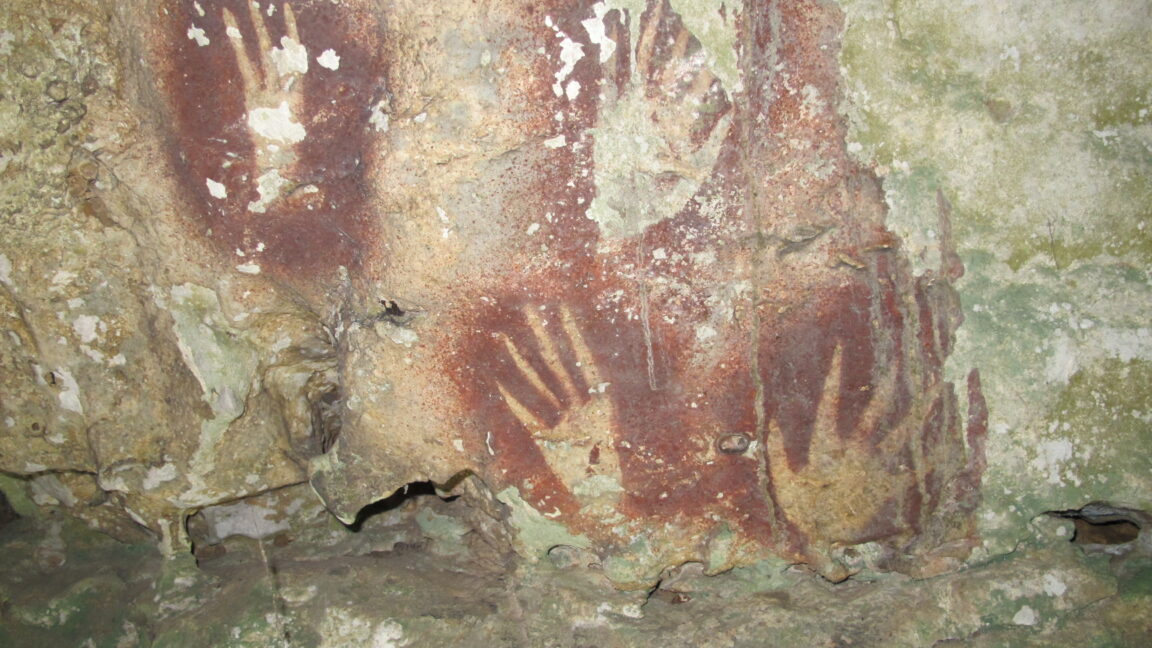
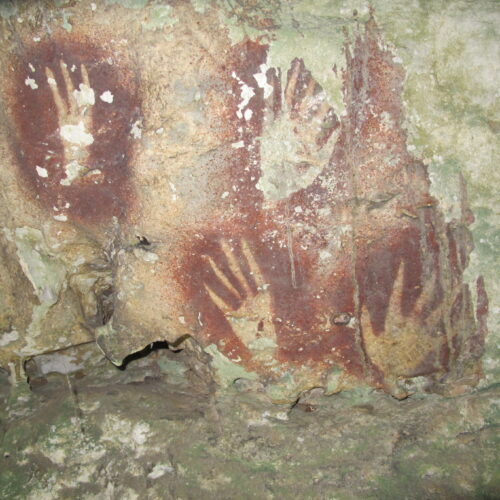
The world’s oldest surviving rock art is a faded outline of a hand on an Indonesian cave wall, left 67,800 years ago.

On a tiny island just off the coast of Sulawesi (a much larger island in Indonesia), a cave wall bears the stenciled outline of a person’s handβ€”and it’s at least 67,800 years old, according to a recent study. The hand stencil is now the world’s oldest work of art (at least until archaeologists find something even older), as well as the oldest evidence of our species on any of the islands that stretch between continental Asia and Australia.
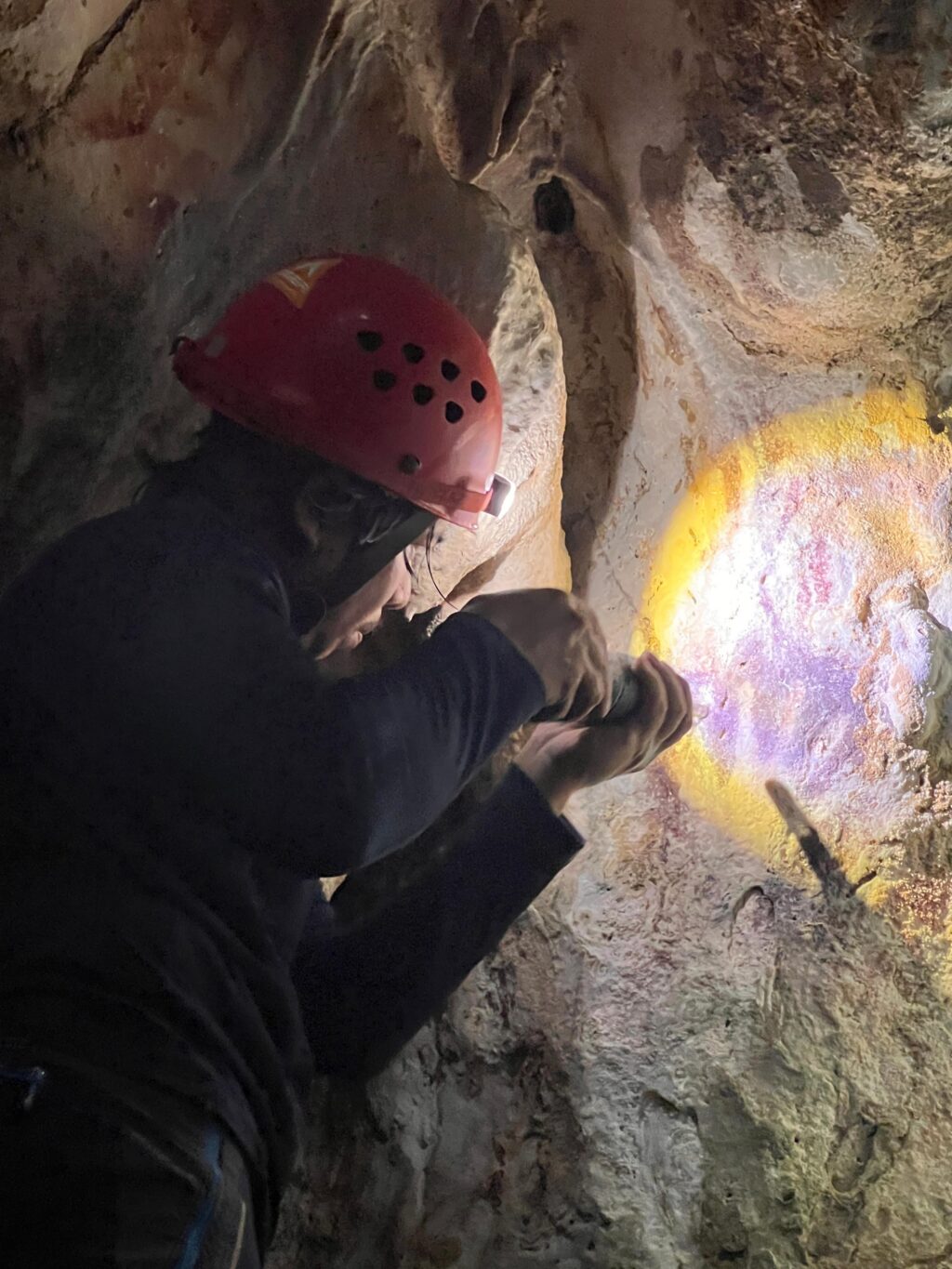
Photo of an archaeologists examining a hand stencil painted on a cave wall, using a flashlight Adhi Oktaviana examines a slightly more recent hand stencil on the wall of Liang Metanduno. Credit: Oktaviana et al. 2026

Hands reaching out from the past

Archaeologist Adhi Agus Oktaviana, of Indonesia’s National Research and Innovation Agency, and his colleagues have spent the last six years surveying 44 rock art sites, mostly caves, on Sulawesi’s southeastern peninsula and the handful of tiny β€œsatellite islands” off its coast. They found 14 previously undocumented sites and used rock formations to date 11 individual pieces of rock art in eight cavesβ€”including the oldest human artwork discovered so far.
Read full article

Comments

Β© OKtaviana et al. 2026

Archaeologists find a supersized medieval shipwreck in Denmark

Archaeologists recently found the wreck of an enormous medieval cargo ship lying on the seafloor off the Danish coast, and it reveals new details of medieval trade and life at sea.

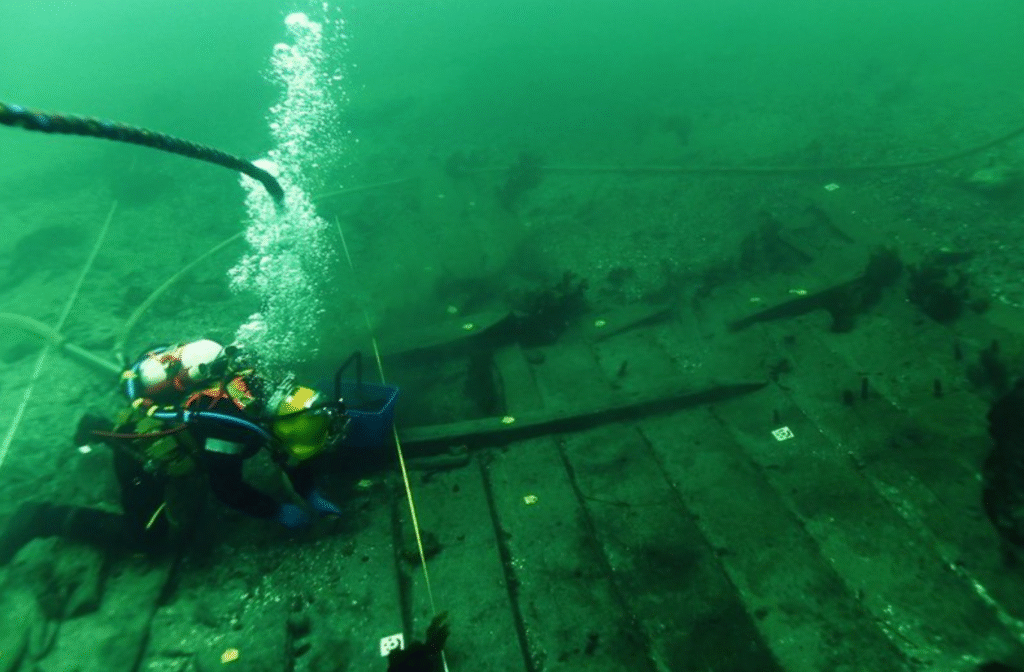
Archaeologists discovered the shipwreck while surveying the seabed in preparation for a construction project for the city of Copenhagen, Denmark. It lay on its side, half-buried in the sand, 12 meters below the choppy surface of the Øresund, the straight that runs between Denmark and Sweden. By comparing the tree rings in the wreck’s wooden planks and timbers with rings from other, precisely dated tree samples, the archaeologists concluded that the ship had been built around 1410 CE.

photo of a scuba diver swimming over wooden planks underwater The Skaelget 2 shipwreck, with a diver for scale. Credit: Viking Ship Museum

A medieval megaship

Svaelget 2, as archaeologists dubbed the wreck (its original name is long since lost to history), was a type of merchant ship called a cog: a wide, flat-bottomed, high-sided ship with an open cargo hold and a square sail on a single mast. A bigger, heavier, more advanced version of the Viking knarrs of centuries past, the cog was the high-tech supertanker of its day. It was built to carry bulky commodities from ports in the Netherlands, north around the coast of Denmark, and then south through the Øresund to trading ports on the Baltic Seaβ€”but this one didn’t quite make it.

Read full article

Comments

Β© VollwertBIT

Scientists sequence a woolly rhino genome from a 14,400-year-old wolf’s stomach

A 14,400-year-old wolf puppy’s last meal is shedding light on the last days of one of the Ice Age’s most iconic megafauna species, the woolly rhinoceros.

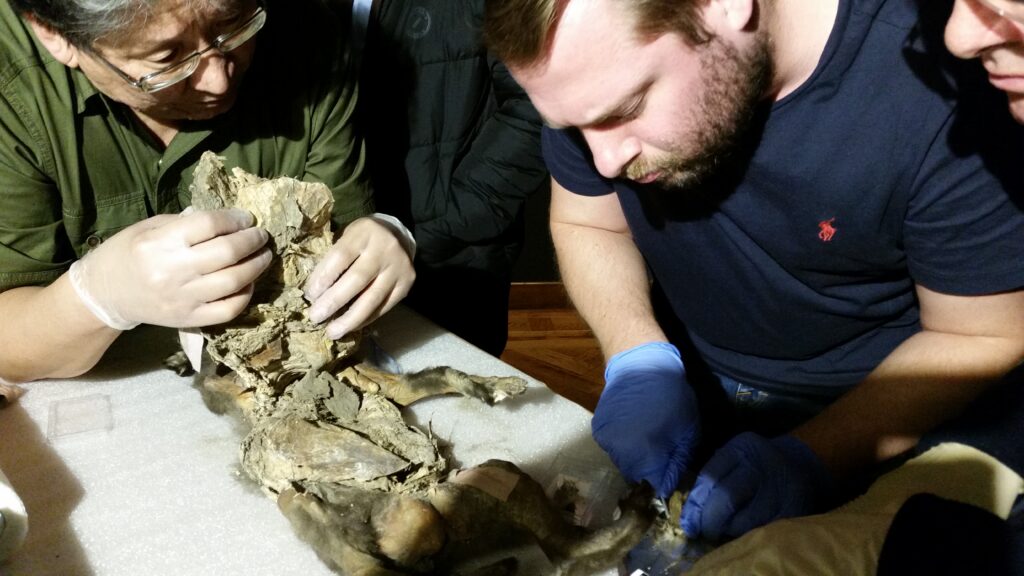
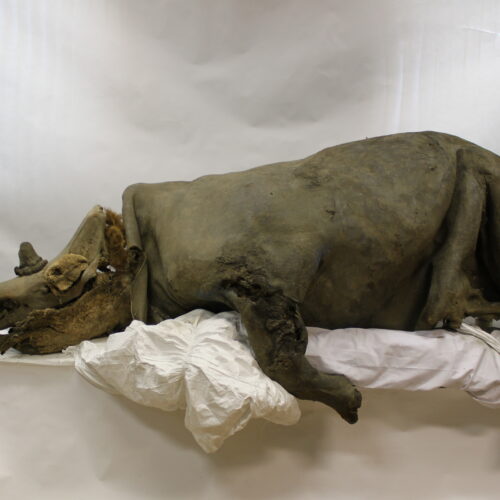
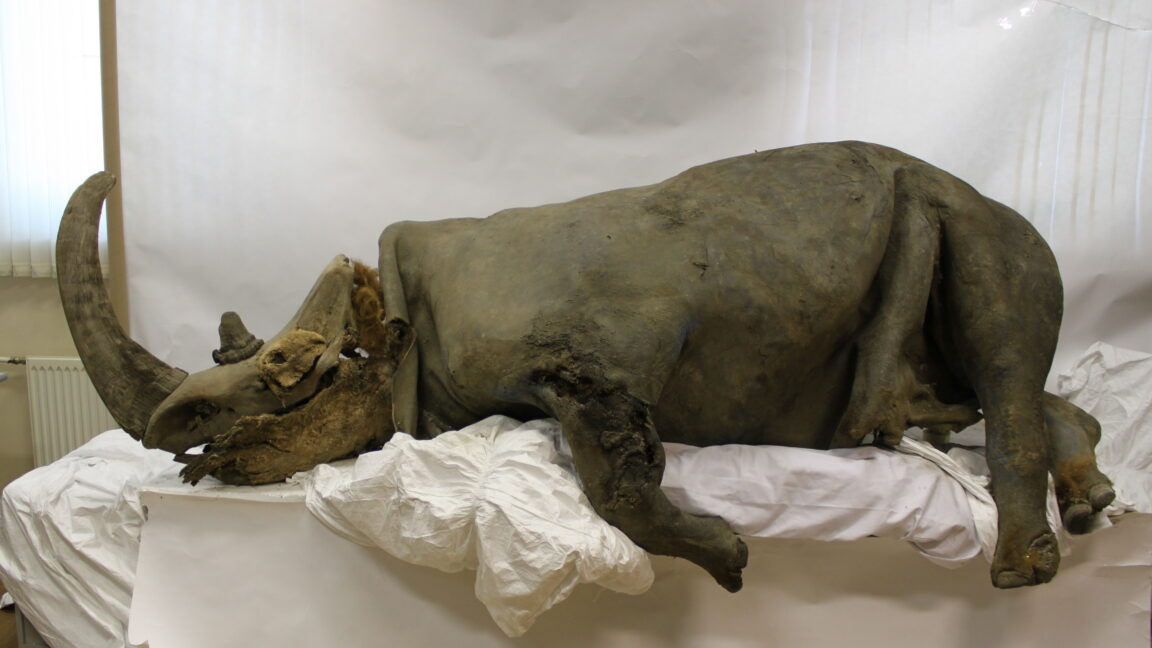
When researchers dissected the frozen mummified remains of an Ice Age wolf puppy, they found a partially digested chunk of meat in its stomach: the remnants of the puppy’s last meal 14,400 years ago. DNA testing revealed that the meat was a prime cut of woolly rhinoceros, a now-extinct 2-metric-ton behemoth that once stomped across the tundras of Europe and Asia. Stockholm University paleogeneticist SΓ³lveig GuΓ°jΓ³nsdΓ³ttir and her colleagues recently sequenced a full genome from the piece of meat, which reveals some secrets about woolly rhino populations in the centuries before their extinction.

photo of a mummified wolf corpse being dissected by two people. Scientists carefully autopsy the remains of a wolf puppy who lived and died 14,400 years ago near Tumat village in Siberia. Credit: GuΓ°jΓ³nsdΓ³ttir et al. 2026

One bad day for a rhino, one giant leap for paleogenomics

β€œSequencing the entire genome of an Ice Age animal found in the stomach of another animal has never been done before,” said Uppsala University paleogeneticist Camilo ChacΓ³n-Duque, a co-author of the study, in a recent press release.

Read full article

Comments

Β© GuΓ°jΓ³nsdΓ³ttir et al. 2026

We have a fossil closer to our split with Neanderthals and Denisovans

A group of 773,000-year-old hominin fossils from Morocco may shed new light on when our species branched off from the ancestors of Neanderthals and Denisovans.

A team of anthropologists recently examined a collection of fossil hominin jawbones, teeth, and vertebrae that belong to hominins who probably lived very close in time to our species’ last common ancestor with Neanderthals and Denisovans. They reveal a little more about a murky but important moment in our evolutionary history.

From predators’ quarry to rock quarry

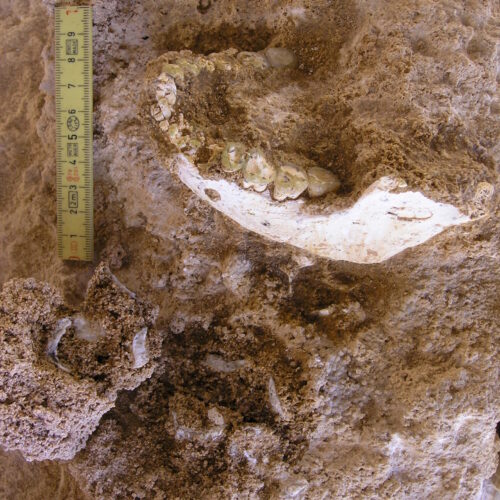
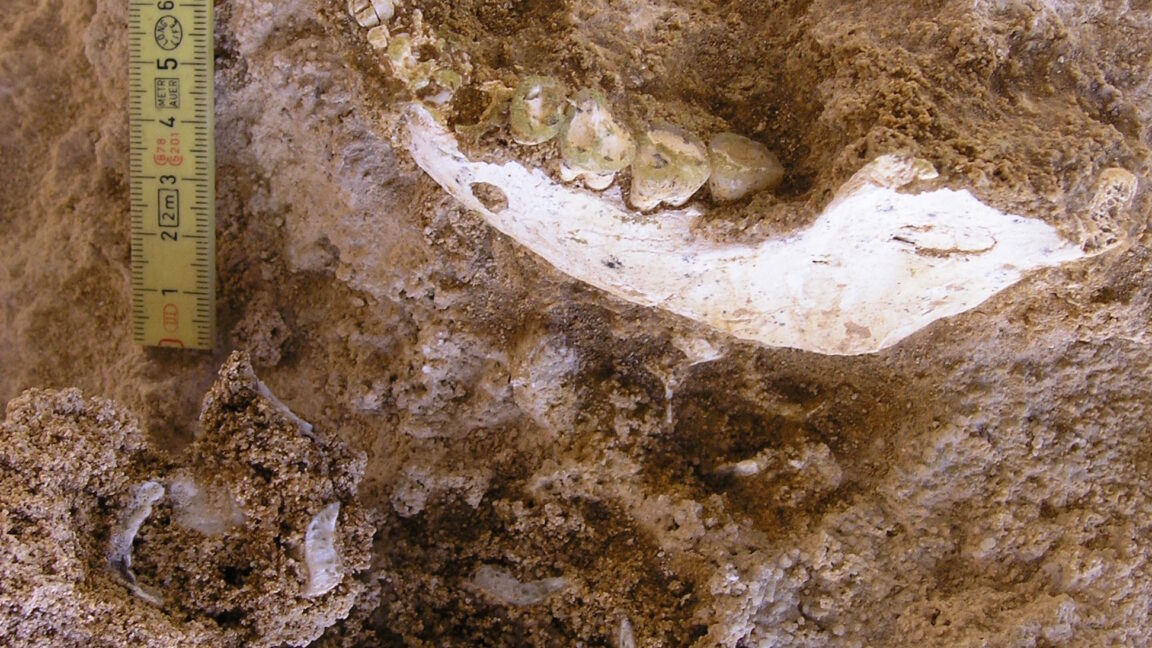
Archaeologists unearthed the 773,000-year-old bones just southwest of Casablanca in a cave aptly named Grotte Γ  HominidΓ©s. They’re just fragments of what used to be hominins: an adult’s lower jawbone, plus the partial lower jaw from another adult and a very young child, along with a handful of teeth and vertebrae. A hominin femur from the same layer of sediment in the cave has clear gnaw marks from sharp carnivore teeth, offering a chilling clue about how the bones got there.

Read full article

Comments

Β© J.P. Raynal, Programme PrΓ©histoire de Casablanca

❌