
Reading view

There are new articles available, click to refresh the page.

Russia Signals Minimal Desire for Peace
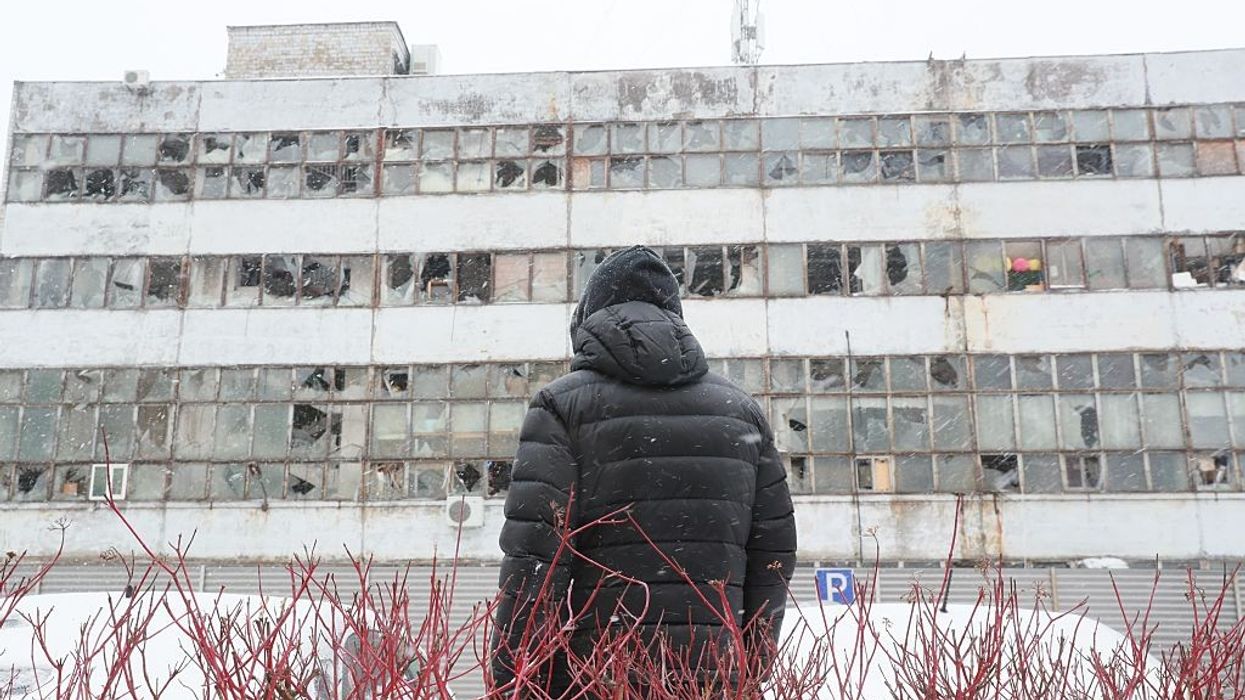


EXPERT PERSPECTIVE — As Russia continues it's brutal bombardment of Ukrainian cities, talks between Moscow and the U.S. to end the war appear on very different trajectories. White House envoy Steve Witkoff is reportedly planning another trip to Moscow to meet with Russian President Vladimir Putin as Moscow's winter attacks continue unabated.

This week, Russia launched hundreds of drones and dozens of missiles on cities across Ukraine, killing at least four people and striking critical energy and heat infrastructure. In the capital, Kyiv, residents are facing temperatures as low as 10 degrees farenheit without electricity or water.

On December 30, 2025, Moscow claimed a Ukrainian drone attack targeted Russian President Vladimir Putin's residence. Russian Foreign Minister Sergei Lavrov threatened his country's military would launch "retaliatory strikes" and said Moscow's "negotiating position will be revised” in ongoing talks. Ukrainian President Volodymyr Zelensky rejected the claimed drone attack as “a complete fabrication”, and sources say the CIA assessed that Ukraine was not targeting the Russian leader's residence in the attack.

President Trump said in December that the U.S. was “very close” to a deal. So, what's happening?

Throughout the latest push for peace, Russia seems to conveniently reset the clock, demanding further talks as it continues its bombardments and assaults across Ukraine.

“This Russian strike sends an extremely clear signal about Russia’s priorities,” Zelensky said in a post on X referring to a strike on December 23 that killed three people and injured 12. Zeleneky condemned the attack “ahead of Christmas, when people simply want to be with their families, at home, and safe.”

That strike came just days after Putin told Russian defense ministry officials that Moscow will persist in its mission to “liberate its historic lands” and achieve its war goals “unconditionally” — by negotiations for an agreement in Moscow’s favor, or through continued war.

The continued Russian attacks and Putin’s bellicose language underscore a pattern that has defined Russia’s position on “peace” throughout its full-scale invasion of Ukraine: not budging from maximalist demands, blaming Kyiv for the lack of progress, and leveraging Western fears of escalation to World War Three.

The hardline from Putin comes as Ukraine has offered significant concessions, including Ukraine dropping NATO membership ambitions, for at least the time being, as well as a potential withdrawal of Ukrainian troops from the east and the creation of a demilitarized “free economic zone.” The latest reports say Russia still wants more, including more stringent restrictions on the size of Ukraine’s military.

“The Ukrainians have been saying for over a year that they are ready to come to an agreement. They are ready to be realistic and compromise,” Glenn Corn, a former senior CIA Officer told The Cipher Brief. “It’s the Russians that are not doing that. It’s the Russians that continue to push maximalist demands and that continue to scuttle the peace process — not the Ukrainians.”

Through the eyes of seasoned intelligence professionals who have studied Putin's actions for decades, the continued attacks despite peace talks are hardly surprising. “Putin has never been sincere about a negotiated solution to his ‘Special Military Operation,’” said Rob Dannenberg, former Chief of CIA’s Central Eurasia Division.

Russia is also continuing offensive pushes on multiple fronts, including in the regions it claimed to annex - Kherson, Zaporizhzhia, Luhansk and Donetsk, where the embattled strategic city of Pokrovsk is - as well as in the northern Kharkiv region. Experts warn Putin’s ambitions go far beyond.

“We've got Putin on the other side of it and the reality is he has not taken one single step towards a temporary ceasefire or a peace deal whatsoever,” General Jack Keane (Ret.), who served as Vice Chief of Staff of the U.S. Army and is a trusted advisor to President Donald Trump, told Fox News. “Where he is, he still believes that eventually he's going to break the will and resolve of the United States and the Europeans and the Zelensky government and he will eventually have his way here,” Keane said, adding that Putin’s ultimate war goal is to “topple the government of Ukraine and expand into Eastern Europe.”

Need a daily dose of reality on national and global security issues? Subscriber to The Cipher Brief’s Nightcap newsletter, delivering expert insights on today’s events – right to your inbox. Sign up for free today.

A Tested Playbook

Russia has long used the pretense of openness to negotiations as a tool to deceive, delay, and fracture Western support for those Moscow is targeting. The pattern was visible in Georgia in 2008 and again in Crimea in 2014, when Moscow signaled willingness to talk even as it consolidated military gains on the ground, buying time and weakening Western responses.

“I always use the example of Syria during the Civil War when they [Russian forces] were killing members of the Syrian opposition while they were drinking wine and coffee with American and European interlocutors in Europe, claiming that they were trying to find an agreement,” Corn told The Cipher Brief.

Indeed, behind any Russian statement of openness to engagement and dialogue, Putin has continued to assert that Ukraine is part of Russia, that the government of Zelensky is illegitimate, and that Russian forces can achieve victory on the battlefield to justify his stonewalling — despite mounting costs for Russia and limited territorial gains.

“Putin’s strategy has been consistent: advance false narratives; adopt a non-negotiable maximalist position and make ever-increasing demands for concessions; take deliberate actions to erode U.S., Ukrainian, and NATO resolve and perceived options; employ implicit and explicit threats and intimidation; and offer false choices,” former CIA Senior Executive Dave Pitts told The Cipher Brief.

“Taken together, these represent Russian ‘reflexive control’—a subset of cognitive warfare and a strategy designed to persuade adversaries to voluntarily adopt outcomes favorable to Russia,” Pitts told us. “In the face of unreasonable sovereignty and territorial demands placed on Ukraine and none placed on Russia, an emboldened and confident Putin will now likely demand even more.”

A Hesitant West

How did we get here? Some experts say a long-running pattern of Western hesitation in keeping Russia in check has emboldened Moscow. It’s not hard to remember that at the start of the full-scale invasion, Western countries were slow to provide full military support to Ukraine, concerned about a possible wider escalation.

Retired General Philip Breedlove, former NATO Supreme Allied Commander, told The Cipher Brief, “We have taken precious little action to stop the fight in Ukraine and we still find ourselves saying, ‘We're not going to do that because we've got to give peace a chance and we don't want to escalate the problem.’ And that formula is not working now and has not worked for 11 years.”

“We have virtually enabled the Russian war on Ukraine by our lack of action in a more severe way. Many of us from military backgrounds say that we have built sanctuary for Russia. From that sanctuary, we allow them to attack Ukraine.”

Experts warn that while the goal should be, as President Donald Trump has said, “to stop the killing,” awarding concessions to a Kremlin that has yet to drop its maximalist war aims is not the solution.

“The Trump Administration’s desire to end the violence in Ukraine is commendable, but not at the price of setting the stage for the next war by giving victory to the aggressor,” Dannenberg told The Cipher Brief.

Are you Subscribed to The Cipher Brief’s Digital Channel on YouTube? There is no better place to get clear perspectives from deeply experienced national security experts.

The Road Ahead

With peace talks ongoing, it is proving difficult to come up with a deal that does not force Ukraine to give too much while ensuring the proposal does not push Russia to reject the deal outright.

But beyond the negotiating table, experts say there are ways to pressure Putin to peace.

Ukraine is not waiting, continuing strikes on Russian energy infrastructure to curb energy export revenues that fund Moscow’s war machine, and bringing the cost of the war back to ordinary Russians.

For the U.S. and Europe, major sanctions on Russia - including new measures against Russian oil giants Rosneft and Lukoil - are already in place and reportedly starting to take their toll, but experts say stronger enforcement is needed to make them truly bite.

Maintaining military aid to Ukraine is also essential. In mid-December, Congress passed a defense bill that authorizes $800 million for Ukraine - $400 million in each of the next two years - as part of the Ukraine Security Assistance Initiative, which pays U.S. companies to produce weapons for Ukraine's military. President Trump signed the measure into law on December 18. Meanwhile, while Europeans failed to agree to use frozen Russian assets to back a loan for Ukraine, the EU agreed to a 90 billion euro loan over the next two years, backed by the bloc’s budget.

"The Trump Administration should demonstrate its displeasure at Russia’s clear disregard for any so-called peace process by fully enforcing all existing sanctions, providing Ukraine with long-range weapons, and declaring that peace negotiations are suspended until Russia demonstrates it is serious about these negotiations," General Ben Hodges, former Commanding General of U.S. Army Europe, told The Cipher Brief. "Otherwise, the President’s efforts and those of his negotiators are clearly a waste of time and headed nowhere."

European countries have also fortified post-war pledges to Ukraine. Britain and France have committed to sending troops to a peacekeeping mission -- if a peace deal is reached. Experts U.S. intelligence, command and control, and logistics support is needed to give any European effort credibility.

The impact will be felt far beyond Ukraine, and long after the guns there go silent.

“For the United States, the best outcome will come from taking the longer, harder road that denies any reward for Russia’s illegal invasion, forces Putin to make reasonable concessions, and sustains the long-term sovereignty and independence of Ukraine,” Pitts said. “That longer, harder road also leads to stronger U.S. national security.

Read more expert-driven national security insights, perspective and analysis in The Cipher Brief.
This is Perhaps Ukraine’s Most Dangerous Time

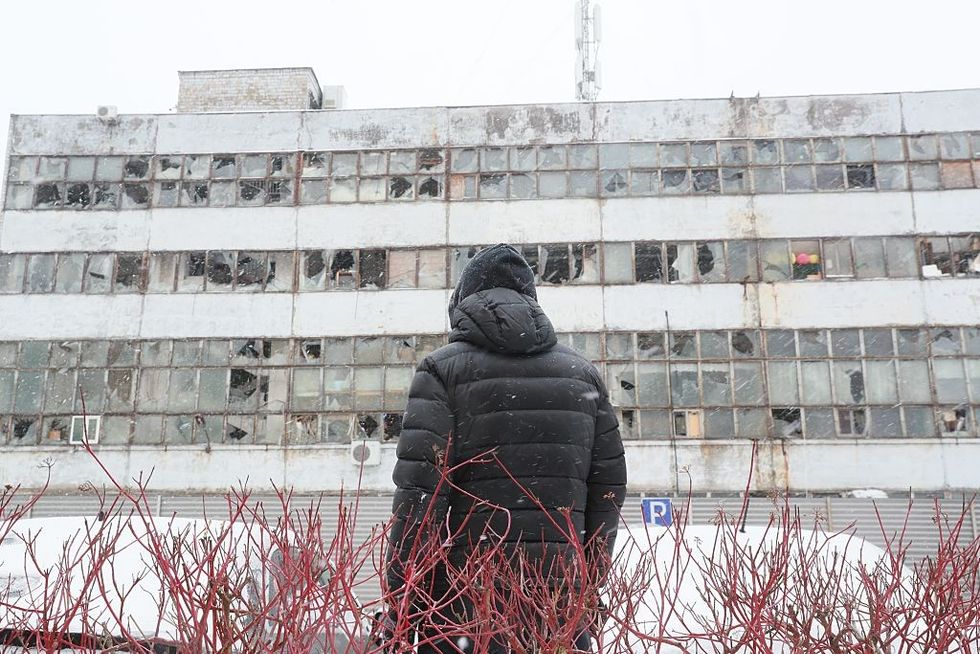
EXPERT PERSPECTIVE — Each of my eight trips to Ukraine since retiring from the CIA in the summer of 2023 has been filled with unique challenges. Each time I’ve witnessed first-hand the sacrifices the Ukrainians are making on a daily basis to fight for their country’s independence. And while each trip has been physically exhausting, each one has also been highly inspiring because the Ukrainians are fighting to protect many of the traditional American values that I grew up believing in, including the right to self-determination, liberty and national sovereignty.

But my latest visit to Ukraine was by far the most difficult. Not just because the Russians are significantly increasing their air attacks on Ukrainian towns and cities or because Ukraine is once again going through a very cold winter while facing significant power shortages caused by Moscow’s attacks against energy infrastructure targets. But mainly because for the first time, I heard Ukrainians questioning my country’s commitment to helping them defend their country. Because I heard Ukrainian interlocutors conclude that the U.S. was not a reliable partner and because Ukrainians who are fighting to protect their country, questioned whether the U.S. was willing to abandon support for their cause in order to secure potential business deals with Russian dictator Vladimir Putin and his regime.

Remembering all the Americans I had served with over the years, especially those who made the ultimate sacrifice defending liberty and the honor of our country, it is extremely painful to consider the possibility that my country might choose to placate someone like Putin and, in doing so, turn its back on those who have suffered from Putin’s aggression.

After more than 10 years of being at war, the Ukrainians are clearly fatigued. Russia's constant attacks against civilian targets are taking a toll. Families throughout the country are living without regular access to electricity and are subjected to daily mass Russian drone and missile attacks.

Ukraine's own internal corruption challenges, including the "Operation Midas" investigation, which resulted in the resignation of President Zelensky’s longtime advisor and head of the Presidential Office, Andriy Yermak, have raised questions among many Ukrainians about Zelensky and his Administration. The scandal also opened the door for many of the opponents of continued support to Ukraine to claim that Ukraine is a corrupt country led by corrupt leaders.

Of course, these critics forget that the Midas investigation is actually evidence of Ukraine’s efforts to deal with corruption and a development that highlights Kyiv’s determination to create a more transparent government based on “rule of law” principles. And there is no comparison between Ukraine’s efforts to deal with corruption, and Russia’s lack of transparency and complete rejection of “rule of law” governance.

Ukrainian fears about being abandoned by Washington are linked to the perception that the U.S. is going to end its support for Kyiv. Fears that are amplified by the recent leaking of the "28 Point Plan" that was initially presented to Kyiv by the U.S. as part of Washington’s efforts to bring the war to an end and revelations that the bulk of the plan was written by the Kremlin and then delivered to the U.S. Special Envoy for the Middle East and Russia Steve Witkoff by Russian Sovereign Wealth Fund head Kiril Dmitriyev.

These leaks bore many of the hallmarks of a Russian disinformation campaign, and whether or not the Kremlin leaked this information, there is little doubt that Moscow is using the leaks to undermine the U.S. internationally; to drive a wedge between the U.S. and its allies in Europe; to undermine the morale of the Ukrainian population; and to deceive international and domestic audiences into believing Russian President Vladimir Putin is trying to find a peaceful resolution to the war that he started.

Moscow has worked relentlessly to create the impression in Washington, Brussels and Kyiv - that the Ukrainian Armed Forces are on the verge of collapse, and it is only a matter of time before Putin achieves his military objectives.

The Ukrainians, on the other hand, are trying to counter this narrative and demonstrate that the Russians continue to make minimal battlefield gains while paying a tremendous price in terms of personnel and resources.

While people are tired, few appear ready to surrender or give up. Many equate surrender to betrayal of the memories of those Ukrainians who have died since 2014 fighting to defend the country from Russia.

Putin’s effort to control the narrative on Ukraine is partially linked to his desire to cover up how bad his own hand is at present. Putin does not want the West to focus on how the Russian military continues to struggle to take small amounts of territory, while suffering high casualty rates. He does not want others to focus on Russia’s own struggles with growing financial, economic and social problems that threaten the long-term stability of his regime and the future of Russia itself.

In recent years, the Kremlin has shifted its limited financial resources to the Military-Industrial complex, resulting in cutbacks to social spending and bringing an end to support of critical civilian infrastructure projects. While this policy has resulted in an increase in defense production, it is bankrupting the country and in recent months even Russia’s defense industry has had to implement spending cutbacks. Many factories and production sites across Russia are unable to pay workers and have been forced to reduce their work week to three or four days per week.

The money that Putin was once able to use to incentivize Russians to join the military and fight Ukraine is drying up, forcing him to once again consider mobilization plans, which will no doubt be highly unpopular with many Russians, especially with the “elites” living in the country’s main population centers.

The war has also drained off workers, resulting in significant labor shortages. Putin’s war is threatening to plunge Russia into the chaotic and painful social and economic conditions that the country faced in the early and mid-1990s.

Before leaving on my latest trip to Ukraine, I was asked to speak at an event in Washington D.C. focused on the future of U.S.-European relations. During that event, one attendee told me that recent polling in the U.S. showed that - since President Trump’s January 2025 inauguration - support for Ukraine among Republicans had risen significantly. This claim was supported by a report published by Defense One based on polling conducted by the Ronald Reagan Institute and a previous report published by the Chicago Institute on Global Affairs. These signs are heartening. In a system where the population’s interests should be considered by elected leaders, this means that the United States Government should be continuing its support for Ukraine.

The growing public support for Ukraine should give Ukrainians some hope that the U.S. is not going to abandon them. But it is hard for the Ukrainians to hear that message when it is often drowned out by much more negative news about alleged backroom deals made between Putin’s couriers and individuals close to President Trump and the very real possibility that those couriers are using their access to actively pursue a whisper campaign to influence the President and his policy decisions. That, combined with targeted leaks and distortions of facts to exaggerate the perception that Washington now prefers Moscow to Ukraine and the Europeans is painting a Russian-preferred narrative.

What national security news are you missing today? Get full access to your own national security daily brief by upgrading to Subscriber+Member status.

It is correct when President Trump says that he inherited a terrible situation in Ukraine. I also agree that as the elected leader of the most powerful country in the world, President Trump has a responsibility to try to end the bloody and senseless conflict.

The President deserves credit for trying, although I do not agree with his periodic claims that the Ukrainians, or their President, are guilty of starting the war - or that Kyiv does not want to end the war. Vladimir Putin is guilty of starting the conflict and despite all of President Trump’s efforts and the Ukrainians willingness to try to find a compromise, Putin has continued to make maximalist demands and drag out the conflict in hopes of stealing more of Ukraine’s territory and feeding Russia’s defense industrial complex, which is now the sole functioning part of Russia’s struggling economy.

It appeared President Trump recognized this reality in October, when he canceled plans to meet with Putin in Budapest and levied new sanctions on the Russian Energy sector. Unfortunately, the President allowed Putin to manipulate the U.S. team into thinking Putin was ready to negotiate in November, opening the door to a lot of Russian disinformation and information warfare designed to undermine the U.S., Ukraine and its allies - but not designed to bring the war to an end.

Over the past year, I have seen the level of political infighting within Ukraine increase. During a discussion with one Ukrainian General in September of 2024, the General opined that historically, Ukraine had never lost a war to Russia but had lost many wars to itself. He warned that internal political struggles in the country allowed the Russians to identify and exploit the political ambitions of some leaders and use these ambitions to divide the country and undermine national unity.

Ukraine is again facing the threat of serious internal divisions that the Kremlin will manipulate and use to achieve its military and political objectives. It appears likely that the Ukrainian government will hold elections in 2026, and the U.S. and the West should be ready to help Kyiv protect those elections from Russian interference. There is also little doubt that Russia itself will not hold fair elections in 2026 or as long as Putin remains in power.

As an American, I pray that our elected leaders will not repeat the mistakes made by British Prime Minister Neville Chamberlain when trying to deal with Adolf Hitler. The appeasement of Hitler by forcing allies to cede territories to the Nazi regime in Berlin did not lead to “Peace in our Time”. It led to a much greater and more horrific World War that could have been stopped if the English and French had taken decisive action against Hitler at that time.

To “Make America Great Again”, Americans need to stand up for what is right. Right - is not appeasing Putin. Justice is not allowing Putin to get away with stealing large portions of Ukraine’s territory and then benefit from killing more than a million Ukrainian and Russian citizens in a war that was designed to protect Putin’s personal power and re-establish an empire that has collapsed twice in the last 150 years.

As an American, I pray that we find our way through this very confusing and troubled period, hold the aggressor, Putin, accountable for his crimes, and successfully bring this war to an end while protecting Ukraine’s sovereignty and America’s reputation in the world.

All statements of fact, opinion, or analysis expressed are those of the author and do not reflect the official positions or views of the US Government. Nothing in the contents should be construed as asserting or implying US Government authentication of information or endorsement of the author's views.

The Cipher Brief is committed to publishing a range of perspectives on national security issues submitted by deeply experienced national security professionals.

Opinions expressed are those of the author and do not represent the views or opinions of The Cipher Brief.

Have a perspective to share based on your experience in the national security field? Send it to Editor@thecipherbrief.com for publication consideration.

Read more expert-driven national security insights, perspective and analysis in The Cipher Brief

Trying to Impose a Loser’s Peace on Ukraine Is a Dead End

OPINION — The fate of territory in eastern Ukraine remains the “most difficult” sticking point in the ongoing peace talks, President Volodymyr Zelensky acknowledged over the weekend as U.S. negotiators held separate meetings with Ukrainian and Russian officials. In pursuit of peace, the Trump administration is pushing Ukraine to bend to maximalist Kremlin demands that Russia has failed to impose militarily, while promising Kyiv “platinum standard” security guarantees to sweeten the deal.

This approach is unlikely to succeed — and may prove harmful. The administration would be wise to focus instead on pressing Russia to soften its terms.

Putin Demands Victory He Hasn’t Earned

As one of his conditions for peace, Vladimir Putin insists that Ukrainian troops withdraw from the roughly 23 percent of the eastern Donetsk region they still control. He vows that if Kyiv refuses, his military will take that territory anyways. Putin seems convinced that Russia eventually can grind down Ukraine’s undermanned forces.

Some U.S. officials have echoed those arguments, apparently believing that pressuring Kyiv into concessions offers the surest path to peace. As President Donald Trump recently put it, Russia is “much bigger” than Ukraine, and “at some point, size will win.” Ukraine is “losing,” Trump contended, so it must “accept” Russian demands. An initial U.S. peace plan released in November, drafted with Russian input, called for Ukraine to cede the remainder of Donetsk, which would become a “demilitarized buffer zone,” which Washington is now pitching as a “free economic zone.”

In fact, it’s anything but certain that Russian forces can conquer the rest of Donetsk. They would need to seize a so-called “fortress belt” of cities and towns, just one of which — Pokrovsk — has taken Russia over a year to capture despite advantages in manpower and materiel. Despite improvements in drone warfare, Russia has remained unable to achieve a major breakthrough. That’s partly due to degraded force quality, which is unlikely to recover while large-scale hostilities continue. Russia can continue inching forward so long as it can recruit enough men to throw into the “meatgrinder.” Since 2023, Moscow has maintained a surprisingly strong recruitment rate thanks to ever-larger financial incentives. But that can’t last forever.

Although Ukrainian forces are weary and short on infantry, they are not on the verge of breaking. Ukraine continues to put up a stout defense, relying chiefly on Ukrainian-made drones to inflict disproportionate casualties. The decline in American aid has hurt. But even a complete cutoff probably wouldn’t trigger a collapse, though it would mean more Ukrainian lives lost and infrastructure destroyed.

In short, Putin is demanding that Ukraine accept defeat despite the inconvenient fact that Russia hasn’t defeated Ukraine on the battlefield and is unlikely to do so. As long as that remains the case, lopsided peace plans will be a dead end.

This is not a “Zelensky problem.” Recent polling indicates that the Ukrainian people still overwhelmingly reject ceding more territory, seen as synonymous with capitulation. Many in the Ukrainian military are understandably loathe to cede defensible terrain for which Ukrainians have bled for nearly four years. No Ukrainian leader will agree to a deal that would mean political suicide. Even if Zelensky did try to capitulate, it could ignite domestic political instability and undermine morale, which Russia would seek to exploit.

The Cipher Brief brings expert-level context to national and global security stories. It’s never been more important to understand what’s happening in the world. Upgrade your access to exclusive content by becoming a subscriber.

Beware Empty Promises

In part to convince Kyiv to swallow territorial concessions, the Trump administration has been surprisingly forward-leaning on security guarantees for Ukraine. Although Washington has made clear it won’t allow Ukraine to join NATO, U.S. officials touted an “Article 5-like” commitment during recent talks in Berlin. This has enthused Ukrainian and European officials, who are rightly concerned Russia will violate any peace agreement it signs.

The White House, though, should take care not to make empty promises. Ukraine must not be left with another 1994 Budapest Memorandum, which gave Kyiv hollow security assurances in exchange for relinquishing nuclear weapons inherited from the Soviet Union.

While the administration has released few details regarding the specific commitments it made in Berlin, press reports indicate elements of the plan are sensible. The Ukrainian Armed Forces would be permitted to maintain a peacetime strength of 800,000 troops and would receive Western training and equipment, defying Moscow’s demand for Ukrainian demilitarization. A U.S.-led international monitoring and verification mechanism would ensure compliance with a ceasefire, and a deconfliction mechanism would work to prevent escalation.

However, earlier media leaks, as well as a European statement released following the Berlin talks, suggest Washington may also be offering a non-committal promise to respond with measures up to and including “armed force” if Russia re-invaded Ukraine. The Trump team says it will grant Kyiv’s request to seek Senate approval to make this pledge legally binding. Even so, the threat of U.S. military intervention lacks credibility. Both Trump and his Democratic predecessors have eschewed direct conflict with Russia over Ukraine. That’s unlikely to change under a future president, especially since Washington is trying to focus on deterring China.

If the White House is betting its bluff won’t be called, it should think again. However the current war ends, it’s unlikely to resolve Russia’s decades-long struggle to dominate Ukraine and reshape the European security order. Moscow will be racing to reconstitute its army, drawing on lessons learned in Ukraine and expanded defense-industrial capacity. Another Russian invasion is a distinct possibility. And if America’s “Article 5-like” guarantee is revealed to be hollow, it could undermine the credibility of the actual Article 5, weakening NATO deterrence.

As another part of the security guarantee package, the Trump administration apparently has agreed to support a British- and French-led multinational force in Ukraine. After hostilities cease, countries from the so-called “Coalition of the Willing” would help police Ukraine’s skies, clear naval mines, and regenerate the Ukrainian army. This would include deployments of Europe troops to Ukraine (though far from the front lines) — an idea which Moscow vehemently opposes. Other than ruling out putting American boots on the ground, the administration hasn’t publicly specified how it would support this force (likely involving intelligence, surveillance, and reconnaissance and possibly other so-called “strategic enablers”). Nor has Washington publicly agreed to provide an air-power “backstop” if that force were attacked. If a ceasefire looks shaky and no U.S. backstop is committed, European countries will be more reluctant to put troops in Ukraine.

Another problem is that tying the force’s deployment to a ceasefire incentivizes Russia to prolong the war. Putin invaded Ukraine precisely to reverse its Westward drift, and Moscow insists that any peace settlement must bar Western troops from the country — a demand that earlier drafts of the U.S. peace plan sought to satisfy. As British scholar Jack Watling has argued, Europe could obviate the Russian veto commencing with air policing and training in western Ukraine now, before the war ends. Yet European capitals remain unwilling to do so, wary of escalation with Russia. That same fear undermines the force’s deterrent value in the first place.

Subscriber+Members get exclusive access to expert-driven briefings on the top national security issues we face today. Gain access to save your virtual seat now.

Path to Peace

Rather than gunning for a quick but lopsided deal, Washington should patiently focus on shifting the Kremlin’s calculus. Moscow has made clear that its ambitions go well beyond Donetsk. In essence, Putin seeks a settlement that locks Ukraine within Russia’s sphere of influence. Given the maximalist nature of Putin’s demands, peace will remain impossible unless Moscow reduces its expectations considerably. Ukraine will also have to make concessions, including on its NATO aspirations. But Russia is the primary obstacle.

Perversely, pressuring Ukraine to cede more territory could put a deal farther from reach. By attempting to strong-arm Kyiv, echoing Kremlin arguments about the inevitability of Russian advances, and reducing military aid for Ukraine, Washington risks hardening Putin’s intransigence.

The consequences could also extend beyond Ukraine. Since the Second World War, the United States has led the free world in opposing the acquisition of territory by military means. Discarding that now could shake allied trust in America while emboldening adversaries such as China. President Trump is right to push for peace in Ukraine, but the medicine must not be worse than the disease.

So long as Putin is overconfident in his military prospects and feels no sense of urgency to end the war, he is unlikely to make the necessary compromises. The Russian autocrat must be made to realize that more war will bring nothing but pain. The European Union just took an important step by pledging 90 billion euros to shore up Kyiv’s state budget through 2027. The United States should do its part, too. Washington could bolster Ukraine’s bargaining position by surging military assistance, much of which could be financed by Europe. This effort should include support for Kyiv’s air defense and long-range strike capabilities, helping Ukraine endure the winter and impose greater costs on Russia.

In addition, Washington should stringently enforce and build on its recent sanctions targeting Russia’s top oil companies. The Treasury Department should target unsanctioned Russian oil suppliers as well as other entities, vessels, and infrastructure that help bring that oil to market. Western countries could further ramp up the pressure by replacing the Biden-era price cap on Russian oil flows with a full ban on providing shipping or financial services for those exports.

Lastly, Kyiv’s Western partners should encourage the Ukrainian military to fight smarter. Ukraine must stop wasting precious manpower clinging to semi-encircled towns or counterattacking to reclaim insignificant positions. This penchant stems in part from concerns that admitting to battlefield setbacks would discourage U.S. support and fuel calls for territorial concessions.

The Ukrainians aren’t going to give Russia more than it can take by force of arms. Rather than trying to do Putin’s dirty work for him, Washington should put its energies into convincing Moscow to accept realistic terms.

The Cipher Brief is committed to publishing a range of perspectives on national security issues submitted by deeply experienced national security professionals.

Opinions expressed are those of the author and do not represent the views or opinions of The Cipher Brief.

Have a perspective to share based on your experience in the national security field? Send it to Editor@thecipherbrief.com for publication consideration.

Read more expert-driven national security insights, perspective and analysis in The Cipher Brief, because national security is everyone’s business.

❌